Rewards of Longevity

0

10.08.08

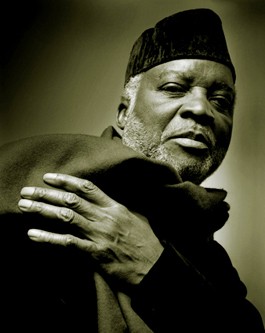
Once upon a time, in deep Southside Chicago—past the railroad tracks, past old Comiskey Park and just past Washington Park—one could find an opulent, 200-room building called the Pershing Hotel. Located at 64th Street and Cottage Grove, the Pershing boasted a grand ballroom, a cabaret with chorus girls and a street-level lounge where the late-night action was. Home to the jazz greats of the day—Charlie Parker, Lester Young, Dizzy Gillespie—the Pershing Lounge also yielded a surprise hit album in 1958: At the Pershing: But Not for Me, by a young pianist named Ahmad Jamal.

When kids ask, “What is jazz?,” At the Pershing is an unarguable album to reach for. Full of buoyancy, surprise, exploration and drive, it’s everything that a piano trio date should encompass. At the time, the 108 weeks it spent on the charts (thanks to the bouncy “Poinciana”) was an unbelievable feat for a jazz album, but today, it’s easy to hear the appeal. Consisting mostly of standards like “Surrey with the Fringe on Top” and “Moonlight in Vermont” expertly brought to life in adventurous, swinging arrangements, the recording is quite simply in a class by itself.

After the success of At the Pershing, Jamal rerecorded “Poinciana” for a few different labels, many of which hoped he would revisit the pop realm. But Jamal would leave that to his old Argo label mate Ramsey Lewis (who recorded such commercial junk as “Hang on Sloopy”) and set off on his own unique path instead, almost always with rewarding results. Signed to Impulse Records in the late 1960s, his playing voluntarily, and successfully, toyed with the outer edges that label so firmly courted, and in the 1970s, he fell under a brief Caribbean spell awash in strings and female backup singers. But one key aspect of his live set remained unchanged. Ahmad Jamal never stopped playing standards.

These days, at age 78, Jamal tours constantly, reaping the rewards of longevity. One wonders if he ever drives by the site of the old Pershing Hotel when he’s in Chicago, the place that captured one brilliant night of absolute magic 50 years ago. Looking at the exact address from a Google satellite image, it’s now part weeds, part dirt—just another empty lot in a depressed neighborhood. Ten cars are parked haphazardly. Leaning walls of dilapidated buildings make up the surrounding area. But oh, if those walls could talk.

 Ahmad Jamal performs with bassist James Cammack and drummer Idris Muhammad on Saturday, Oct. 11, at the Napa Valley Opera House, 1030 Main St., Napa. 8pm. $45. 707.226.7372.


Riding That Train

0

10.08.08

LUXURY TRAVEL: Opponents of Measure Q argue that the SMART train costs too much and serves too few. Proponents counter our need to revamp suburban transit.

On weekdays, the morning commute along Highway 101—the main transportation corridor in the North Bay and ranked by Caltrans as one of the most congested freeways in the Bay Area—is akin to hanging out in a crowded parking lot. Cars slow and then stop at a snail’s pace as frustrated drivers hope for relief from rampant brake lights.

Sonoma-Marin Area Rail Transit (SMART) advocates want voters to think about this congestion when they hit the voting booths Nov. 4. If Measure Q passes, Sonoma and Marin Counties will see the implementation of a 70-mile passenger train service on the existing publicly owned right of way between Cloverdale and Larkspur. The proposal also includes a parallel bicycle-pedestrian pathway connecting all 14-train stations between the two counties.

“We need to do something about global warming. Alternatives to the freeway will help prevent global warming and relieve traffic congestion. The train will remove 1.4 million car trips per year,” says Cynthia Murray, president and CEO of the North Bay Leadership Council. “This is an investment in our future,” Murray says, adding, “We need alternatives.” SMART’s environmental impact report states that the projected number of daily passenger trips on the train would be 5,300, while approximately 7,000 to 10,000 people daily would use the bike-pedestrian pathway during the work week.

According to SMART’s white papers, the train and pathway project will cost an estimated $541 million to build. Annual operating costs, including maintenance, labor and the operation of SMART shuttle vehicles, will total a little more than $19 million. Most of the construction and maintenance costs will be covered by a quarter-cent sales tax dedicated to SMART, adding 25 cents to every $100 in retail services. Other revenues will come from passenger fares, leasing property along the rail line and bonds. Service is estimated to start up in 2014.

Dr. Robert Eyler, director of the Center for Regional Economic Analysis at Sonoma State University, declares the 20-year funding plan to be “reasonable and conservative,” but opponents of Measure Q insist that the public is not being told the full story. The Sonoma County Taxpayers’ Association (SCTA) believes that the SMART train initiative is a costly mistake.

“There has never been a public works project in the Bay Area that has ever come in on schedule and on budget,” says SCTA executive director Fred Levin. “What they don’t take into consideration is the cost of their bonds. They need to sell $350 million worth of bonds. They are not taking into account the interest that is placed on the bonds. When you see that, it is a very expensive system.”

According to an informal study by SCTA, dividing the number of one-way rides projected by SMART—approximately 5,050 on the weekday—by the projected population in the year 2025, a negligible amount of people will use commuter rail. “A train is not a silver bullet. Congestion is here to stay. It is not going to be eliminated or reduced substantially,” Levin says. “Even if you compare 2008 ridership estimates for just weekday commuter service to the current population of both counties, less than 1 percent of the 750,000 population would be using the train.” Citing the large budget for the project, SCTA wants voters to think about whether their tax money is being spent with appropriate caution.

“It is a lot of money for a very small amount of people,” Levin says. Other SMART opponents believe that investing capital into already existing modes of commuter transportation is a more viable and economically feasible solution.

“We don’t think that quarter-cent sales tax is enough to fund the service. The danger is that if it won’t, they’ll have to come back to the voters for more money. Or they could raid the monies that support Golden Gate, Marin County and Sonoma County Transit,” says Joy Dahlgren, co-chair of the North Bay Citizens for Effective Transportation. Dahlgren’s advocacy group has been fighting the SMART proposal since 2006, when the former Measure R was approved by 65.3 percent of voters—1.4 percent short of the super-majority needed to get the proposal passed.

Opponents see increased bus service and high occupancy vehicle lanes as “smarter” alternatives to the train. “The train is a luxury, not a necessity. We have buses going around that are virtually empty. By definition, trains are inflexible. Buses can drop people off in their own neighborhood,” Levin says. He points out that SMART has spent $1.2 million in community outreach, money that could have been spent on promoting bus use.

Murray disagrees. “With buses you will always be caught up in freeway congestion. You’ll be caught in traffic. On the train, you can use your wireless; you can get up and walk around. You can get up and go to the bathroom. It’s less stressful and you’ll get to your destination quicker.”

In addition, Murray believes that having alternative modes of transit between job centers in the North Bay will be important as businesses work to come into compliance with the California Global Warming Solutions Act of 2006. The act requires California businesses to reduce greenhouse gas emissions back to 1990 levels by 2020. Employers will need to reduce vehicle miles traveled by their employees to be in compliance. Since the Association of Bay Area Governments has projected that Sonoma County will add 98,480 jobs between 2000 and 2025, and Marin County will add 35,280 jobs over the same period, transit options might help employers comply.

As gas prices surge, SMART supporters point to the success of other suburban commuter rail models such as Caltrain and the Sprinter. Running between San Francisco and San Jose, the Caltrain system saw record revenues and ridership in 2008. Ridership on the Sprinter—a new east-west mobility link between congested corridors in San Diego County—reaches up to 8,000 people a day along a pre-existing 22-mile stretch of railway.

Controversy surrounding Measure Q continues to build during the lead-up to the election. In September, county judges recently threw out sections of the ballot arguments against Measure Q, ruling that opposition statements contained false or misleading information. In Marin, the Superior Court Judge Terrence R. Boren deleted five passages from the ballot argument.

While SMART looks to be environmentally friendly in that it will reduce greenhouse gases by at least 124,000 pounds per day, Dahlgren cites concerns that the cleanup of the railway between Novato and Healdsburg might bring other dangers.

“The main business opportunity identified by the North Western Pacific Railroad is gravel mining up near the Eel River,” Dahlgren says. “The only way they can do it would be to ship it out by train. SMART would facilitate the success of this rail venture by repairing the track all the way from Novato to Healdsburg.”

According to Murray, this argument does not have basis in current reality. “Freight trains can run without any vote from the people. They don’t need SMART to run. They’re making these claims without studies. It’s all very speculative.”


As supporters and opponents of Measure Q try to get the public to listen to their side of the story, Christine Culver, executive director of the Sonoma County Bicycle Coalition, hopes that voters will see past the politics of it and toward the SMART ballot measure as being a sheer social necessity. “We need this alternative,” Culver stresses. “Gas prices are rising, and already so many more people are getting on their bicycles and leaving their cars at home.” She adds, “We are at a critical turning point in history where people want to make change, they want to get out of their cars and many of them have no choice with the costs of gasoline continuing to climb. This will be a fantastic separate access from Highway 101, giving us much needed alternatives.”


Local Lit

0

10.08.08

CREATRIX: Sonoma Collage Studio cofounder Audrey von Hawley’s work is showcased in ‘Living into Art.’

By Suzanne Daly, Gretchen Giles, Gabe Meline, Hallie O’Donnell and P. Joseph Potocki

The Sonoma Collage Studio is so much more than a place where aspiring artists gather to use found images, cutouts and the magic of glue to create work. In Sonoma author Lindsay Whiting’s telling of the studio and 10 of its students, Living into Art: Journey Through Collage (Paper Lantern; $24.95), it is a place of healing, reflection and an outlet for deep personal knowledge. Whiting tells her own story of coming into herself through collage and profiles nine other Collage Studio members, generously reproducing the surprising juxtapositions of their work in full-color gloss, adding thoughtful quotes from famous thinkers and studio notes for the aspiring collage artist. —G.G.


Delving into the depths of sexual and romantic nuances, Graton author Justine Michaels documents her experiences with a select few men using poetry and prose in The Cock Chronicles (Justine Michaels Publications; $16.95). The first half of the book contains the majority of the poetry, some of which is erotic and some of which pertains to the experience of being a woman. The book has a decidedly different change of graphic scenery and tone midway through, when we are suddenly introduced to a third-person prose narrative, in which the author writes about herself as a character, replete with sexual fantasies that take place in Safeway supermarkets while waiting in line at the meat counter. An ephemeral rendezvous with a sea captain and then a marine (their members also make a few guest appearances to help the show along) follow, and there is even a sitar-playing heartbreaker by whom she is jettisoned, as he feverishly jaunts back and forth to Thailand, finally returning to the mother of his child and leaving Michaels with a gaping void and a sense of betrayal that can only be filled with the next Great Phallic Hunt. —H.O.

As the birthplace of electric guitars, motels, skateboarding and fortune cookies, the Golden State boasts diversity unmatched by any other place in the nation. Golden Numbers, a California Numbers Book (Sleeping Bear Press; $17.95) is a delightful children’s book that focuses on the wonders our beautiful state has to offer, and teaches the principles of counting at the same time. Written by Alexander Valley resident David Domeniconi and skillfully illustrated by Pam Carroll, Golden Numbers reaches out to readers of all ages. Little ones will love the colorful pictures of volcanoes, wildlife and activities, while adult readers can absorb interesting facts that range from deserts to snow-capped mountains to redwood forests. Short rhymes and Illustrations including cable cars, snapshots of national parks and monarch butterflies describe the numbers one through 12 and—counting by tens—from 20 to 100. Sidebars on each page give detailed information about a variety of topics interesting for all ages.

Golden Numbers is a companion to G is for Golden, a California Alphabet (Sleeping Bear Press; $17.95), also written and illustrated by Domeniconi and Carroll. Following the same format, each letter of the alphabet is explored through the state’s golden lens. Adults can refresh their knowledge of literary figures (“J is for John Steinbeck”), history (“M is for missions) or geography (“Y is for Yosemite”). Both books are sure to be enjoyed continuously as the little ones grow. —S.D.

In Hollywood’s sci-fi creature-feature Independence Day, a technologically advanced race of unappeasable locustlike aliens sets to devouring every earthly resource, intent on eliminating its every human inhabitant as well. In The American West at Risk: Science, Myths, and Politics of Land Abuse and Recovery, by Sebastopol writers Howard G. Wilshire and Jane E. Nielson with Richard W. Hazlett (Oxford University Press; $35), the three detail how, since the European “discovery” of the New World, we Americans have been both the moral and the literal equivalent of Hollywood’s loathsome alien conquistadors, specifically when it comes to how we have mistreated our previously wild West.

The American West at Risk has “college textbook” written all over it, and that’s a shame, because this is an engaging and clearly writ account of what horrendous deeds we have done and continue doing to the 11 contiguous states which form the arid Western United States.

Depressing stuff, for sure, but if we’re to inform ourselves in order to intelligently deal with powerfully negative forces, you’ll be reading this excellent volume and keeping it close at hand for ongoing reference. Highly recommended. —P.J.P.

Paula Deen may be the Food Network’s grand dame of butter, sugar and lard, but another Paula—Paula Thomas Oandasan—gives Deen a run for her Crisco with There’s Not a Healthy Recipe in This Whole Damn Book: A Guide to Southern Comfort Food (Publish America; $19.95). With as many truly laugh-inducing passages as there are charming typographical errors, Oandasan’s book is a no-bullshit primer on dishes such as Leftover Tater Tot Omelet, fried squirrel, fried Spam sandwiches and A Damned Good Cheese Ball. (Vegetarians are begrudgingly accommodated with One Hell of a Green Salad.)

Reading less like a cookbook and more like a primer on enjoying life—her recipe for pancakes says “use Bisquick mix,” then goes on to recommend stomping in puddles on rainy days—Oandasan’s book comes directly from her life experience as a cook at Occidental’s Morningstar Ranch commune in the 1960s. Opinionated, kind, anti-PC and a firm believer in random acts of kindness, Oandasan is on a one-woman mission to make food fun again, but more importantly, to make life worth exploring. The last chapter of the book is titled “Any Day Is ‘Special Day.'” Why not make fried venison backstrap with gravy? —G.M.

Hector Lee was a well-educated, down-home Western storyteller. Picture him holding forth around a campfire, the logs popping, sparks flying up toward clear skies and the harvest moon, gesturing dramatically while spinning out one of his many tales. Lee, who died in 1992, was a Sonoma State University professor who once served as president of the California Folklore Society. Over the years, he recorded hundreds of legends and folktales for radio. His posthumous 20 Tales of California (Rayve Productions; $12.95) is a collection of previously published works showcasing Lee’s narrative literary chops.

Between the covers, Lee twists California history up with folklore, humor and mystery into a series of pithy vignette-like yarns. There’s no shortage of the usual subjects in 20 Tales of California. Legendary figures Lola Montez and Lotta Crabtree have their time in the spotlight, while famed outlaws Joaquin Murieta and Black Bart crop up along with early Alta California star-crossed lovers Concha Arguello and Count Nikolai Petrovich Rezanof.

Pure folktales are also included. A lubricious corker titled “High Spirits” pits man against wife to see who’ll get most from a jug of liquor. “Once Upon a Winter Night,” is a fine Western fable mixing the brutality of the Old West with the generous spirit of Christmas. Numerous North Bay towns, sites and long-gone personages play prominent roles in these entertaining stories. 20 Tales contains stories to be read aloud to the kids or to settle in to with a steaming mug and a stuffed chair as late-season rain pours down, greening California’s golden hills of summer. —P.J.P.

Wrapping together a futuristic nightmare of environmental obliteration and political corruption, Queenelle Minet’s novel In Memory of Central Park: 1853–2022 (Synergy Books; $13.95) comes with a soft side. In 2050, New York City is interconnected in a terrorist-proof, rising-ocean-tide-proof shell, and Central Park has been turned into a community of luxurious flats by the Liberty Party (which, like the Clear Skies Act, stands for anything but its actual namesake). Noah is a psychotherapist who has never known the “old” New York City and who finds love with his brother’s wife, Margaret. The problems accumulate when New Yorkers start dying mysteriously and the Liberty Party vanquishes anyone who dares talk about it.

Minet, a Larkspur psychotherapist, draws on her field for the problems facing Noah regarding his place in society and his relationship with Margaret. Their quandary—to stay encased in the dangerous structures of the city, or to escape to the long-abandoned outside world—resonates more than ever today. But perhaps more than anything, Minet draws on her own love of her late husband, Aron Spilken, who began the manuscript for In Memory of Central Park and who died suddenly in 2003. Part environmental warning, part political satire and part elegy to a loved one, Minet’s book reads like the personal work that it is. —G.M.

Are beans vegetarian? Heirloom Beans (Chronicle Books; $22.95) by Napa Valley Family Farm League founder Steve Sando and Oakland’s Vanessa Barrington, begins with Sando being asked just that question. OK, so perhaps it’s a silly question to ask, but just goes to show how little some of us know about these delicious essentials. New World cultures rose and fell because of the bean, and I seem to recall that some cultures used them as currency, but there’s more to this book than just beans. Indeed, there’s everything that goes together with the cute little musical bubbas. Like the fennel, radicchio, hazelnuts and bacon in the authors’ Mayacoba bean salad, or the picadillo and corn enchiladas with spicy rio zape bean sauce. How can anyone go wrong with a steaming pot of Black Calypso, Christmas Lima, Eye of the Tiger or Red Nightfall beans?

Heirloom Beans combines sumptuous photographs of these shiny little tummy pleasers, together with appetizing and adventuresome recipes and purchase, storage and cooking tips and a tantalizing foreword by the French Laundry’s Thomas Keller. The book is dedicated to “anyone who has ever put a seed in the ground and enjoyed the miracle that follows.” I can’t wait to go home tonight and fix me up some. —P.J.P.

Catharine Bramkamp is a licensed real estate agent who began her career with abominably terrible timing: she entered the market two years ago. How to spend her empty days during the market lull? Why, write Death Revokes the Offer (A Few Little Books Press; $14.99), of course, a murder-mystery novel about a realtor who discovers a dead body in a $4 million Tiburon home that she’d just placed on the market. To Allison Little, Mr. Mortimer Maximillian Smith (“He had two interesting first names to make up for the third”) collected bad art, preferred bad décor and had a dull house. But she needs the sale, and his dead body gets in the way.

Little, who makes a return appearance after Bramkamp’s first book, Time Is of the Essence, is determined to close escrow—even though the house’s $15,000 front doors have strangely disappeared. Through a series of sketchy situations and clues that come out of nowhere, Little even manages to find a good man. Throughout Death Revokes the Offer, the Rohnert Park author utilizes her insider’s knowledge of the real estate market, and elicits awareness of just how dangerous an agent’s job can be. If the market stays stagnant long enough, it’s good bet that the third in the series will be on its way. —G.M.

When an abused parrot enters Nancy Ellis-Bell’s life, she knows she is in for more responsibility and adventure than she has previously experienced with the many stray animals she has cared for. But the Willits author does not anticipate how much more she is taking on when she adopts Sarah, a one-legged blue and gold macaw with a nasty distrust of humans. The Parrot Who Thought She Was a Dog (Harmony Books; $23) chronicles the relationship between longtime animal lover Ellis-Bell and Sarah, a parrot who hasn’t been out of a cage in almost four years. Ellis-Bell’s Willits farm is also home to husband Kerry, two dogs, two cats and a pond full of koi, all of which undergo adjustments to accommodate the newest member of the family.

Once uncaged, Sarah embarks on a path of destruction, scattering food all over the floor, tearing up dog toys, defecating throughout the rooms and even opening drawers and strewing the contents all over the house. Ellis–Bell’s business also suffers due to the macaw’s penchant for cussing and screaming loudly when the author is on the phone. Gradually, Sarah settles in and, through patience and love, adapts to her new home.

A final physical and emotional challenge presents itself when the macaw is allowed outside to relearn how to fly, and rediscovers complete freedom. This informative and heartwarming book can be appreciated by both animal lovers and readers who enjoy the antics of a wild pet from the safety of a dander-free armchair. —S.D.

Violence erupts on the playground and a child is injured. Though 50 kids might have witnessed the event, none will come forward. Their code is silence, unless they want to be the next one face-flat on the tarmac. Teachers and administrators are stymied, a camera is installed, a police officer alerted, everyone is just a little bit less free. It doesn’t have to be that way, according to the Santa Rosa–based nonprofit Community Matters. They have released a new workbook that may be essential reading for parents and school staff alike that introduces in plain language their main tenets.

Named after their program, Safe School Ambassadors: Harnessing Student Power to Stop Bullying and Violence (Jossey-Bass; $19.95) is a joint efforts of Graton resident and Community Matters executive director Rick Phillips with Santa Rosa’s Chris Pack, Community Matters’ program director, and youth development trainer John Linney of Texas. The best way to stop schoolyard bullying and other harassment techniques before they impact a person’s adulthood, they argue, is to engage and empower the students themselves so that becoming a mute witness with a wrong-headed code of silence is no longer acceptable in the school’s culture. Heady stuff. Better yet—it works. —G.G.

The Images of America series is to history books what poesy is to poetry. That’s not a bad thing, particularly when the reader is more interested in quick illumination rather than a long, serious read. Judging by their title numbers, the series publishers have hit upon a formula that really works. The series boasts more that 4,000 titles, each sketching out a historical portrait of an American town, hamlet or city through collected photos and limited text in order to convey a sense of place, starting from a given settlement’s first recorded beginnings.

Images of America: Calistoga, authored by John Waters Jr. in conjunction with Calistoga’s Sharpsteen Museum (Arcadia Publishing; $19.99), is another in this enormous and still-growing series of softcover archival picture books. Calistoga can lay claim to being the most Old West–like of today’s North Bay towns. Accordingly, a lone cowpoke astride his pinto graces the book’s cover. There’s plenty of Sam Brannan and Robert Louis Stevenson inside, along with facts and photos attesting to the seismic and geothermal activity these environs are noted for. This little book won’t replace a leisurely trip to the Sharpsteen Museum, but for those hungering for a little Calistoga history from home, it’ll do just fine. —PJ.P.

Longtime San Rafael residents will thrill to Early San Rafael (Arcadia Publishing; $19.99), a recent installment in the Images of America series, but they might be smart to introduce the book to their children to keep the flames of heritage alive. A rich history unfolds in the book’s many photos, from the old courthouse, destroyed by fire in 1971 after a hundred years of service (and hangings in the basement), to the steamer ships at Point San Quentin that took passengers to San Francisco, to the early construction of the Golden Gate Bridge, a landmark that would change San Rafael forever.

There’s the San Rafael Improvement Club building, which was used by the Victor Talking Machine Company at the 1915 Panama Pacific International Expo in San Francisco and was subsequently floated across the bay to San Rafael; the San Rafael Golf Club, located on what’s now the Marin Civic Center site; the many beautiful old movie theaters, like the Orpheus and the El Camino; and the San Rafael Municipal Baths, a Sutro Baths-style indoor pool. Numerous dry-goods stores, haberdasheries, cobblers, and milliners abound from the era when the plumber could also be the mayor (1913), and the book concludes with the San Pedro peninsula, picturing Italian immigrants working for the McNear Brick Company alongside hardworking residents of China Camp who would eventually be forced out by anti-Chinese sentiment. All in all, a fascinating dip into the past. —G.M.

When Lucille Campilongo’s youngest daughter, Gina, flew the nest for a year abroad in Italy, she didn’t leave unprepared. Her mother lovingly penned Lucia’s Survival Guide and Cookbook (iUniverse; $12.95) to assist her daughter in the art of living on her own. The hand-written notebook contained favorite family recipes, a shopping list useful in stocking a pantry for the first time and household hints for the absolute beginner.

  Twenty-eight years later, Gina Campilongo-Friedman, a resident of San Rafael, surprised her mother with a published copy of the now well-worn notebook. When Campilongo-Friedman was copying it for her own departing daughter, she realized it could be of use to many fledglings setting up house. Lucia’s Survival Guide and Cookbook is written in the chatty, no-nonsense style of an Italian Nona. Locals can also enjoy Lucia’s Italian dinners through Oct. 31 at Vasco Restaurant, 106 Throckmorton Ave., Mill Valley. Call 415.381.3343 for further information. —S.D.

Founded in 1909 by such members as Jack London, the California Writers Club now has 18 branches in the Golden State, including the Redwood Writers Club, based in the North Bay. Devoted to helping writers hone and market their craft, Redwood Writers host monthly meets and annual contests and also collects its members work. The third and latest such compilation, Vintage Voices: Four-Part Harmony, edited by Karen Batchelor, Ana Manwaring and Pat Tyler (iUniverse; $11.95), consciously weaves the prose, poetry and essays collected into a songlike rhythm.

Writing instructor Marlene Cullen’s short sketch of a woman’s life, “Hannah Mae,” is followed abruptly by James Seamarsh’s two-page vignette in a prostitute’s room (“Second Story Bedroom”), which in turn is followed by “Beneath the Canopy,” Helen Pitt’s memoir of a widow taking her young son to the Queensland tropics. With the intimate voice of first person predominating, Vintage Voices gives a palimpsestic glimpse into the lives of our neighbors that is well worth searching out. —G.G.  


iPlay’s the Thing

Photograph by Lisa Keating
IAMBIC APPLICATION: A quarter of a million users have downloaded Ron Severdia’s Shakespeare texts since July.

The Bard is alive and well in Marin. Indeed, the Bard is alive and well all over the world. Thanks to Mill Valley actor Ron Severdia, the Bard is alive, well and better represented than he may have been in the 400 or so years since the First Folio was released. That’s because Severdia has a strange notion of what constitutes a day job. While many actors have a straight gig that they work to support their nighttime passion of trodding the boards, Severdia makes his living on the stage and does his nine to five work for free.

Launching PlayShakespeare.com last year on what would have been the good man’s 444th birthday, Severdia estimates that he has earned almost $20 for his singular passion: putting all of William Shakespeare’s works—the plays, the sonnets, the poems—on the Internet. That’s a lot of words, and they quite literally pack a lot of heft—particularly if one is carrying the 10 pounds or so of The Complete Works around at night, which Severdia was regularly and utterly sick of doing.

“It seemed natural that an actor working on Shakespeare would want that to be as easily accessible as possible,” he says. “And really, it started off being a website for me just to put everything online. If other people found it, that’s fine, but that’s not what it was about.”

Severdia, 39, regularly performs with Cal Shakespeare, Marin Shakespeare and the Ross Valley Players, where he will perform a one-man version of Dickens’ A Christmas Carol this winter. Once he began building the website, he ran into the tricky matter of what, exactly, is correct when it comes to Shakespeare’s original language and intent. Citing MIT’s online Shakespeare library as one that is riddled with typos and other plain-out errors in the text, Severdia has combed the work line by line in conjunction with scholars to create what he believes is the cleanest online version yet.

“There are places in Shakespeare’s work where it’s a little ambiguous, and for me to put a stake in the ground and say that’s what we’re calling gospel is something that will naturally stir a little bit of controversy,” Severdia admits. “The end goal is, here’s an interpretation, we think that this is the best interpretation and unless it’s a photocopy of the original folio, this is the best, most correct way to represent the author’s work.”

Which brings us to the next most obvious step. Wouldn’t it be great to have all of this rich stagecraft available on a telephone? At the time, way back in 2006, the best application for this would have been through the iPod, which could handle all of Shakespeare’s work rearranged as “notes,” about 4,000 of them. Quickly tiring of tediously ripping the work of the English language’s greatest poet into shreds, Severdia stumbled across Readdle.com, which allows users to upload intact texts for later use. He contacted them about adding Shakespeare to their public domain library, and the idea took. From there, the work went to Apple for iPhone usage when they opened up to third-party applications this summer. Almost a quarter of a million iPhone and iTune users have downloaded Severdia’s version of Shakespeare’s work since July.

“For me,” he says, “it was sort of the Trojan horse for the website. We’ve been getting a quarter to a half a million hits a month, and when that released, we got close to a million hits in September.”

Not only does PlayShakespeare offer a complete text of every play, poem and sonnet, it has forums for often-heated debate, a glossary of words and hyperlinked text that pops up definitions for particularly gnarly Elizabethan verbal inventions. Severdia was careful to create a special forum—imagine it as a room distinctly placed in the back of a castle—for the vehement rabble who like to raise the specter of Christopher Marlowe, Francis Bacon and Edward de Vere.

“Shakespeare scholars are a prickly lot, to put it nicely, and that’s not even including the ones who are neck deep in the authorship controversy,” Severdia sighs. “When you get into that, it’s even pricklier. I’m not into debating the authorship stuff, and I created an area so that it doesn’t spill out into other areas.”


As for his labor of love, Severdia is sanguine. “I don’t do it for the money; it’s something that I do because I enjoy it,” he says. “I’m anticipating that at some point, there might be an educational organization or a Google come along and say that they’d like to support this or buy it from me.

“My wife,” he laughs, “would like that.”


The Wimp Gene

10.08.08

Dear Democratic Party Office Holders:

November’s election should be a Democratic rout. Our nation is suffering through endless, costly and criminal BushCo wars, through one crushing Republican financial cataclysm piled upon the next, and through the wholesale evisceration of our once sacrosanct Constitutional rights, freedoms and liberties. Plainly, the Republican Party has devolved into a kleptocratic cancer cluster, and most everyone knows it.

So with Methuselah McSame and his brain-challenged pit bull still yapping at his heels—why doesn’t Barack Obama blast these Repugs right out of their slimy, lying Swiftboats? Where is the rage, indignity and push-back to tactics that even Karl Rove, the infamous fart blossom of Mordor, cites as going a wee bit too far? To be fair, both Obama and Biden seem to be coming off the mat, but the problem with you elected Dems goes far deeper than this year’s presidential race.

One issue, of course, is money. Since corporate America got hip to playing both ends against the middle, and now funds you guys pretty much co-equal with their own pachyderm compadres, you Dems have turned into jellyfish. Frankly, you never really were the working-class party, but at least you made like you were trying. While you curry our favor and, once installed in office, throw us the occasional bone, we common folk are all too often force-fed corporate-writ legislative offal.

Republicans are waging and will continue to wage economic war against 90 percent of their fellow Americans. Republicans are and will remain the party of the rich and the microminded. So why do you elected Dems feel compelled to bend your spines to accommodate them? On the state level, for instance, why the Republican victory in the California budget war? Why cave to opponents when you are the majority, when your opponents offer no substantial compromises and, moreover, when they stand for precisely what’s reprehensible to you and your voting base?

Unfortunately, your proclivity for wimping out is nothing new. Had Congressional Democrats the intestinal fortitude to fully investigate, and FDR’s attorney general the gravitas to prosecute, the fascist simps involved in the 1933 White House putsch, houses Morgan, du Pont and Remington—as well as Prescott Bush and the rest of those treasonous bastards—would have been removed from the political landscape, and our democracy today would look a lot more democratic.

Generations later, we’re still struggling with the very same ultrarich robber barons—those antidemocratic aristocrats with their considerably time-enhanced political powers and money. So what happens? You Democrats hand them $700 billion of our dissipated lucre to pay for outrages they’ve inflicted upon the economy!

So listen up, Dems: According to voter registration, there are at least 11 million more of us than them. Articulate and hammer away at a truly new New Deal, and you’re sure to garner still more. Learn, dammit, to stick to your liberal guns. Proudly broadcast a shopper’s comparison of your progressive agenda with the alternative—that moldering stench of more greedy, conniving, violently Machiavellian years of Dark Age Republican “reform.”

But you Democrats have a ways to go. Hell, you don’t even honor your own identity. You’ve let the word “liberal” get smeared so badly few of you dare even utter the attribute in mixed company. You’re the Democratic Party, and yet bullies taunt you, labeling you the “Democrat Party.” Have you no self-respect? Fire back. Call ’em Repubs, Repugs or Republican’ts or, at the very least, for chrissake, stand up for your own name!

Decorum, while admirable, counts for nothing against a gilded cult of space-age, lizard-brain barbarians. Ever since 1994, when former Republican House Speaker Newt Gingrich put out the Repugs’ “Contract on America,” the emergent mutant brood has swung “nukular” clubs, their yowling mouths frothing with fact-defying grunts. In your heart of hearts, do you not believe that their jack-boot operatives would not spy on you, steal every last election, then torture your silly ass before crushing you like bugs, were it not for frayed remnants of our serially abused United States Constitution? Yes, that same Constitution you elected Democrats have so little interest in protecting. I’m fingering you, Ms. Speaker Pelosi, along with your cowardly, calculating Congressional-leading cohorts.

Three generations of the Bush family have been directly involved in high crimes and misdemeanors. Prescott in 1933’s Business Plot, GHW with Iran Contra and now Dubya, who’s broken too many laws to enumerate here.

Why did you Dems give each a pass and go? Talk about upholding our Constitution! So, as Drew Weston, author of The Political Brain, observed, “You can take almost any position you want on any issue, as long as it’s not the fetal position.”

 P. Joseph Potocki plans to re-embrace the Greens, should elected Democrats remain invertebrate. Open Mic is now a weekly feature in the Bohemian. We welcome your contribution. To have your topical essay of 700 words considered for publication, write [ mailto:op*****@******an.com” data-original-string=”sNTzIqZnjn2LOHhT9XgdHg==06a8dNor7Ks6uy6rVCtr2X5ZJe/XjOC8BWLHROnzanopukkE6U8DnqxchQaGWZOYj/IJv1TfAM+q+dfz99aG6kH8TelknRi3sZt24MKJ6eKPuE=” title=”This contact has been encoded by Anti-Spam by CleanTalk. Click to decode. To finish the decoding make sure that JavaScript is enabled in your browser. ]op*****@******an.com.


Joy Dancing

Jack London

0

Evolution of Wordz

10.08.08

SPOKEN WORD:MTC’s Jasson Minadakis oversees an ambitious staged reading program.

By David Templeton

When a playwright finishes a draft of a new play, they just desperately want the thing to be done,” says up-and-coming New York playwright Sharr White. “The fact of the matter is, in nearly every single case, as much as the writer wants that play to be finished, it is usually not. And that is why ‘workshop productions’ and staged readings of plays—and series like Marin Theatre Company’s Nu Werkz series—were invented, so playwrights would have a way to work out the bugs in their work.”

While most professional theater companies have the occasional staged reading of a new play, few local troupes are as committed to the development of new works as Marin Theatre Company, which, over the last few years, has turned up the fires of theatrical creativity by reengineering its annual Nu Werkz staged reading series, adding two major playwriting awards as part of the package. Now in its fifth year, Nu Werkz was created as a way for the staff of MTC to test-drive new plays while getting to know promising young playwrights, all part of the company’s ongoing effort to grow strong creative relationships with a large number of emerging artists.

Originally, the Nu Werkz series included worthy plays that the company would, for one reason or another, not normally have as part of its regular season of fully staged shows. Now, under the leadership of Jasson Minadakis, who was named artistic director two years ago, the Nu Werkz series only includes plays that MTC is seriously considering for full productions in the future, with four plays included in the reading series each season.

“We’re trying to keep the series structured as a way of giving people a glimpse of where we could be going in the future,” Minadakis explains. “There’s no guarantee that if a play is in the Nu Werkz series it will automatically end up getting a full production in the future, but what it does mean is that we are seriously considering doing the play, and that we are very interested in building a lasting relationship with that playwright. For audiences, it’s a taste of the future of American theater. These are writers in the early stages of their literary careers. This is a way to preview what is coming in the future, both at MTC but also on the wider American theatrical landscape.”

The 2009 Nu Werkz series kicks off next week with two free staged readings of Sharr White’s Sunlight, a four-person play set on the campus of a prominent New England university, involving an explosive personal and professional conflict between the liberal president of the university and the conservative dean of its law school, who happens to be the president’s son-in-law. At the heart of the play is a conversation about the post-9-11 legality of state-sanctioned torture, with each man on opposite sides of the argument.

Sunlight was commissioned by South Coast Repertory Company in Southern California, but when that company, after giving it a partially staged workshop production, decided not to do a full run of the play, Minadakis, who saw the workshop of the show, decided to pick it up for Nu Werkz, which also will feature Kate Walber’s Elsewhere and Zel Williams’ Blood Money; the fourth play in the series has yet to be announced.

“We are probably going to do Sunlight in our next season or two, after a little bit of tweaking,” Minadakis says. “So it’s kind of exciting. Audiences will be able to watch part of the evolution of this wonderful play.” For the Nu Werkz reading, the focus will be on the words, as the actors will likely be sitting on stools with their scripts in front of them on music stands.

“These kind of staged readings of plays are a really great way to find out how the document as a whole is set,” White says. “Even with a play like Sunlight, which has gone through a very productive workshop experience at South Coast Rep, it’s always an intense experience, learning anew how a piece is sitting.” Sunlight being a very timely and topical play, White’s primary concern is making the piece feel more timeless. “Because it deals with elements of the Bush administration, I feel that, if not handled right, that could end up feeling a bit dated,” he admits. “So my big question is in finding out how to make sure the play has as relevant a life five or six years from now as it does now.”

White also has questions about pace. “It’s a very quick, fast-paced play, but I have moments where I take it down in tone and let it be a little restful, and the question is should I be doing that or not. The reading will, I think, prove to be very valuable in the development of this play.”

Clearly, for many of the playwrights whose work is included in the Nu Werkz series, the hope is that the staged readings will be followed somewhere down the line by a full production as part of MTC’s theatrical season. In some cases, the wait between the Nu Werkz reading and the full production will not be long. Last season’s series included Zayd Dohrn’s Magic Forest Farm, which won MTC’s first-ever Sky Cooper New American Play prize ($10,000 and a guaranteed slot in the next year’s season), and the play is now slated for its first full production in April of 2009 as part of the regular season.

“Readings like these,” Dohrn, also of New York, explains, “are a big part of what a playwright needs, just to hear the piece out loud and get a sense of what it looks like onstage a little bit. For me, the Nu Werkz reading was a particularly useful process. There’s a very special kind of pressure a playwright feels when something is going up onstage before an audience, and it’s a creative pressure that can be incredibly fertile, so in getting to do the readings and work toward the actual full staging, to test-drive the piece, I was able to take the play apart and look at it and see what was working and what wasn’t working. It’s a very valuable experience to me as a playwright.”

In these “test-drive” experiences, Dohrn explains, audience members are a major part of the process, because their reactions gauge whether the play is doing what the playwright intended while he or she was writing it alone in a studio. Also valuable is getting to hear the play spoken aloud by professional actors, another indicator of whether the piece is working or not.

“You get some good actors in a room,” Dohrn says, “and suddenly some stuff you didn’t know would work is actually working, and other stuff you thought was working, once you’re sitting there listening to it, you realize it’s not quite fitting the character the way you thought it would. And then when you get the audience in there, their reactions are so important. Just observing whether they’re slouched back in their seats or sitting forward to catch every word, that alone can be incredibly valuable.”

 In the case of Magic Forest Farm, a play about the 1960s’ back-to-nature commune movement, in which flashbacks play an important part, Dohrn was interested to see if those flashbacks proved confusing, and whether the audience was able to tell where things fit chronologically. As a result of the readings, he has made significant changes in the structure of the play. Anyone who caught the reading last year will probably recognize where the fully staged 2009 production deviates from the Nu Werkz version.


 “If you’re interested in the nuts and bolts of how the theatrical process works, then, as an audience member, this could be a very appealing experience, to see a play grow from script to production,” Dohrn says. “Most people just get to see the last part, without any idea how it got there, so the Nu Werkz series allows people an opportunity to see how a playwright gets from A to Z.”

 Nu Werkz readings of Sharr White’s Sunlight takes place Oct. 6 and 13 at the Marin Theatre Company, 397 Miller Ave., Mill Valley. 7:30pm. Free. 415.388.5208.


Oktoberfest

10.08.08

S tudded with that craggy letter k and bearing a couple of throat-raking syllables, “Oktoberfest” has returned to the collective vocabulary for the 2008 party season—and it’s almost gone. Known best by many as a time for drinking beer, the annual 16-day event was first held in Munich 198 years ago to celebrate the marriage of Crown Prince Ludwig and Princess Therese of Saxony-Hildburghausen. What made their wedding so special is anyone’s guess, but today more than 6 million people descend upon the city in October, and by the end of this year’s festival, they are expected to have bellied down more than 1.5 million gallons of beer. Meanwhile, the party has gone global, and in the North Bay there may be no faster way to celebrate than with a stein of local Oktoberfest beer.

Beer was always the sauce that fueled this annual celebration, alongside sausages with such fearsome names as bratwurst, knockwurst and weisswurst, but the first time a brewery made a beer specifically for Oktoberfest was 1872. That fall, the famed Spaten put out the smooth creamy lager of between 5 and 6 percent ABV that still flows today and which has become the prototype of the style. “Fest” beers are generally of higher alcohol content than their year-round counterparts, and beer fans familiar with the monsters of Russian River, North Coast and Lagunitas brewing companies may scratch their heads in bewilderment and wonder what watered-down swill we’d otherwise be drinking if not a “festive” 5 percent yellow lager.

Yet Oktoberfest beers are touted as malty and relatively thick-bodied, and, at the end of the day, satisfying. Moylan’s has released such a beer, only on draft at the Novato brewpub. Third Street Aleworks has done the same. Mendocino Brewing Company just bottled one up. Samuel Adams’ Oktoberfest is available nationwide, and that of San Francisco’s Gordon Biersch, also a 5-percent-or-thereabouts Bud-colored lager, is now in bottles as well. And if you’re in a real hurry to get festive, you might open a 22-ouncer of Avery’s Kaiser Imperial Oktoberfest. At more than 10 percent ABV, it’s yet another beer typical of the Colorado brewery’s bad-boy attitude, and would likely knock the lederhosen off one of those dweebs we’ve all seen at some point dancing in clogs.

Several more Oktoberfest events will provide local venues for festivities, beer, kraut and wurst. You might or might not don lederhosen or slip into dirndls, the traditional dress of big-bosomed maids shuttling beer steins, but there’s still one more weekend to drink light beer and party like it’s 1810.

The Petaluma Lodge hosts Oktoberfest on Sunday, Oct. 12, from 5pm to 10pm, replete with German folk dance performances, German food and dancing to the music of a live band. 860 Western Ave., Petaluma. $10. 707.664.0375. The Napa Valley Culinary Centre and Napa Smith Brewery host Oktoberfest food and beer pairing dinner Thursday, Oct. 16, at 6:30pm. 388 Devlin Road, Napa. $65 per person. 707.603.3250. Also, John Ash & Co. celebrates Oktoberfest with seasonal and local foods Oct. 20&–24. 4350 Barnes Road, Santa Rosa. 707.527.7687.

Quick dining snapshots by Bohemian staffers.

Winery news and reviews.

Food-related comings and goings, openings and closings, and other essays for those who love the kitchen and what it produces.

Recipes for food that you can actually make.

Page to Screen

0

Rewards of Longevity

10.08.08Once upon a time, in deep Southside Chicago—past the railroad tracks, past old Comiskey Park and just past Washington Park—one could find an opulent, 200-room building called the Pershing Hotel. Located at 64th Street and Cottage Grove, the Pershing boasted a grand ballroom, a cabaret with chorus girls and a street-level lounge where the late-night action was. Home to...

Riding That Train

10.08.08LUXURY TRAVEL: Opponents of Measure Q argue that the SMART train costs too much and serves too few. Proponents counter our need to revamp suburban transit. On weekdays, the morning commute along Highway 101—the main transportation corridor in the North Bay and ranked by Caltrans as one of the most congested freeways in the Bay Area—is akin to hanging out...

Local Lit

10.08.08CREATRIX: Sonoma Collage Studio cofounder Audrey von Hawley's work is showcased in 'Living into Art.' By Suzanne Daly, Gretchen Giles, Gabe Meline, Hallie O'Donnell and P. Joseph PotockiThe Sonoma Collage Studio is so much more than a place where aspiring artists gather to use found images, cutouts and the magic of glue to create work. In Sonoma author Lindsay Whiting's...

iPlay’s the Thing

Photograph by Lisa Keating IAMBIC APPLICATION: A quarter of a million users have downloaded Ron Severdia's Shakespeare...

The Wimp Gene

10.08.08Dear Democratic Party Office Holders:November's election should be a Democratic rout. Our nation is suffering through endless, costly and criminal BushCo wars, through one crushing Republican financial cataclysm piled upon the next, and through the wholesale evisceration of our once sacrosanct Constitutional rights, freedoms and liberties. Plainly, the Republican Party has devolved into a kleptocratic cancer cluster, and most...

Joy Dancing

Jack London

Evolution of Wordz

10.08.08 SPOKEN WORD:MTC's Jasson Minadakis oversees an ambitious staged reading program. By David TempletonWhen a playwright finishes a draft of a new play, they just desperately want the thing to be done," says up-and-coming New York playwright Sharr White. "The fact of the matter is, in nearly every single case, as much as the writer wants that play to be finished,...

Oktoberfest

10.08.08S tudded with that craggy letter k and bearing a couple of throat-raking syllables, "Oktoberfest" has returned to the collective vocabulary for the 2008 party season—and it's almost gone. Known best by many as a time for drinking beer, the annual 16-day event was first held in Munich 198 years ago to celebrate the marriage of Crown Prince...
11,084FansLike
4,446FollowersFollow
6,928FollowersFollow