Mūz

0

music & nightlife |


No one wants to admit they like Christmas carols, but come on! What’s not to love about “O Holy Night” or “Carol of the Bells?” And if the whole Jesus thing is a turnoff, there’s still “Rudolf the Red-Nosed Reindeer” and “Winter Wonderland.” We caught up with a handful of local musicians to see if they’d ‘fess up about the holiday tunes that make them jolly.

Larry Hosford  The first song I thought of was “Up on the Rooftop.” Might be because that’s the first one I remember knowing. Took a trip to Illinois in 1948, age 5, for Christmas in my parents’ motherland; buncha kids, sisters and cousins all piled into a 1930s Chevy sedan. We sang that song all the way there and all the way back. Thing is, all us dudes had received brand new cap guns prior to the journey. Guess what happened every time we got to the “Click, click, click” part. Yes. You’re right.

Mighty Mike’ Schermer Well, I’m not a huge fan of Christmas music (bah, humbug, you might say) but Charles Brown’s “Merry Christmas Baby” and “Please Come Home for Christmas” are both soulful blues tunes with a good Christmas message. Tough to beat Nat King Cole’s classic version of “The Christmas Song,” which many people don’t know was written by Mel Torme. … But my all-time favorite Christmas music is probably the Christmas Jug Band, especially the timeless classic “Santa Lost a Ho”: “Well he used to go ‘ho ho ho’/ Now he only goes ‘ho ho’/ Oh No! Where’d the other ‘ho’ go?/ Santa lost a ‘ho.'” Happy holidays!

Russ Leal (singer, extra large) I have two favorites: “My Favorite Things” (as played by John Coltrane) and “Merry Christmas Baby” by Charles Brown. Also, Tuck Andress (of Tuck and Patti) plays beautiful instrumental Christmas standards.

Rachel Williams (birds fled from me) I’ve always been a fan of the classics done by old country artists. Or Patsy Cline singing “Blue Christmas,” but I usually don’t listen to much Christmas music otherwise.

Greg braithwaite (the huxtables)   I love Christmas (really!). The Huxtables just played their second annual Christmas spectacular at the Red in Santa Cruz featuring our own Christmas song (“The Huxta-bells”) and “Father Christmas” by the Kinks. Elvis’ version of “Winter Wonderland” (specially the end when the king is unleashed) is awesome. Nat King Cole’s “A Christmas Song” is killer (especially with his short introduction where he refers to the song as a “real dandy”).

Bob Burnett (who has a new Christmas album available at www.bobburnettmusic.com) My favorite is the title cut, “Do You Hear What I Hear?” It features flute, guitar, mandolin and cello.

Kevin Dorn (bass player, sambada) Favorite holiday tune is “Little Drummer Boy”: parumpa pum pum.

Marcel Menard (percussion, sambada)   Hmmm … Our singer Papiba said “Little Boy Blue” by Nina Simone. It brings tears to his eyes!

 Got a tip for Mu_Z? Email [ mailto:cc******@*****uz.com” data-original-string=”duVajKRLpDfA1kVe5YOFWw==06aXxbYWMCWaFWMw2B7K7prl3aGXW23HvIYuyWiIaNQM9tsBHzxc7/i/M3FL+9jERffRbtk397oh98ZYgLLyDB3U59SLsZdxRG1OkRWL9mXwdsFGfFoWMNUXwP9GV7dZaVHDWHkUbv8+Ng1yyqiZSmLDRXHTB01eVwx8e6045BTq/gwr0wNN2wj0P5bqQEfuOYM” title=”This contact has been encoded by Anti-Spam by CleanTalk. Click to decode. To finish the decoding make sure that JavaScript is enabled in your browser. ]cc******@*****uz.com.


View All

Give and Let Live

0

santa cruz |

IT’S A WONDERFUL LIFE: Rowland Rebele takes a break at the River Street homeless shelter he helped fund.

Interview by Paul Wagner
Photographs by Curtis Cartier

Rowland Rebele has always seemed to know what he wanted. After rising from the role of student journalist to the position of editor at the Stanford Daily in 1951, he went on to purchase and sell three newspapers in the growing suburbs south of San Diego with business partner Lowell Blankfort. As the two purchased and improved other papers as well, Rebele discovered a significant obstacle to the objective reporting he desired: namely, public agencies’ refusal to conduct their business publicly. When his Northern California publication, Paradise Post, asked for police officers’ salaries and was refused, Rebele took the city to court and won. Thus began a campaign for government transparency.

In subsequent years Rebele sued Gov. Pete Wilson all the way up to the state Supreme Court to get the names of applicants for a vacant county supervisor’s appointment. That one he lost, but the crusade continued. He went on to serve as president of the California Newspaper Publishers Association and from there headed the California First Amendment Coalition. He served as executive director and board member of the California Freedom of Information Committee, infusing it with $300,000 to fund its nonstop campaign to keep public information available to the public. He and his wife, Patricia, gave a $300,000 endowment to the California Weekly Newspaper Internship Program at Stanford, which funds the salaries of Stanford journalism students so they can intern out in the real world.

The press wasn’t the only beneficiary of Rebele’s drive and vision. The arts flourished as well. The couple used $250,000 to establish UCSC’s Patricia and Rowland Rebele Chair in Art History to bring in visiting professors and provided two new rooms for Stanford’s Cantor Arts Center. They’ve supported the Museum of Art and History of Santa Cruz County, the Cabrillo Music Festival, New Music Works, radio station KUSP, Santa Cruz Actors’ Theatre and Tandy Beal–and, of course, the Homeless Services Shelter, which bears their names. Rebele has served on the shelter’s board for 11 years.

GAME PLAN: Rebele and wife,Patricia, anticipate ‘giving it all away before we die.’

What is it, we wondered, that makes this unusual gentleman–born in San Francisco just a year after the crash of 1929 and a lifelong challenger of mediocrity, defender of the whole truth and frequent contributor to the presidential run of John McCain–keep on churning like a controlled burn? What is it like to still radiate this constant heat even in an economy drowning in buckets of cold water? What drives his giving, and what advice does he have for nonprofits seeking benefactors during a downturn?

We picked up the phone one day last week and Rebele, 78 years old and smart as a whip, told us what he thought.

METRO SANTA CRUZ: What is the organizing principle of your giving? What do you look most for in a cause or an application?

REBELE: The organizing principles are education, the arts and human services. We give small amounts to many agencies because so many are doing worthwhile work. But overall, our giving tends to go to those we have strong feelings about. We’re also involved in a multimillion-dollar building project at St. John’s church in Capitola and committed to [faith-based community action group, focusing on affordable housing] COPA. Our goal overall is to empower people to be all they can be.

The main thing we look for is a return on investment. Not a financial return, although that sometimes follows; we’re looking for a human return–evidence that the giving works. We look into giving pretty thoroughly. After all, it’s the follow-up, the efficacy, that matters. That’s been a big problem in Africa.

How has that, and does that now, change during downturns–after 9/11, after the high-tech bust or now?

It really doesn’t change. Since I’ve retired–I’m now 78, and my wife is a similar age–I’ve built a body of mature, profitable investments. We’re blessed enough to own three businesses–a health club, motel and mini-storage facility–that have been doing pretty well. The returns have been reduced a bit, but overall, our principles are the same. And so are the rewards. Giving keeps you young.

Do downturns change your strategy for management?

Not really, no. I’m as busy now with giving as I was when managing newspapers. It’s our life’s work. It’s good for the mind, good for the soul, we’re blessed, so why not do it? Besides which, It’s important to give now–more fun to give it away now, while we’re alive.

What do recipients, most importantly nonprofits, need to know about approaching philanthropists during a downturn? Should they drop capital improvement plans and just focus on operational costs? Should they partner with other nonprofits to share expenses? Show fiscal discipline by cutting personnel?

All of the above–they should redouble their efforts to save money. That’s always important, but especially now.

Do you have thoughts about the bigger picture, such as the balance between addressing the needs of our safety net through philanthropy and through government-sponsored programs?  

I believe service to our fellow human beings needs to be shared by government and private philanthropy. Take our homeless shelter: 35 percent of our funding comes from private sources, 65 percent from government. And that’s the way it should be. Private giving provides the human touch; public sources the accountability and insistence on good outcomes.

In short, the responsibility has to be shared. We, realistically, all make up our government, all make up our police force and all make up our fire fighting force and our welfare force.

Is philanthropy, overall, working well now? What could make it work better?

It’s working well in that it induces a consciousness–the joy of giving and the need for giving. We need to encourage others to get involved. It’s a consciousness-raising we all need to do. A lot of people don’t know this, but some 500 homeless folks get mail there, as well as get fed, housed and counseled. They also get lockers to put their stuff in. They can do laundry, take showers. It’s a one-stop service to those who are homeless, but they have to leave in midmorning to work on their lives, then come back in late afternoon for the evening meal. … And while people complain this produces a “magnet effect,” we know from several studies that some 60 to 70 percent of our clients have lived in Santa Cruz for at least six years. So we’re serving primarily whom we should–our own residents who are homeless.

What is the most discouraging moment you’ve had in your charitable career? And what is the most gratifying?

The most discouraging times are when I’ve received a “no” from people I know have the capacity to give, and seem willing to give, but won’t. I’ll take them on a tour of the Homeless Services Center, and they’ll see all that’s being done there, but they just walk away and I don’t hear from them. That can be disappointing.

The most gratifying? Seeing the money well spent. Seeing it make a real difference.

For example, there’s the Stanford journalism internship program Pat and I started 23 years ago which supports 20 to 30 students every year. … To see those kids really blossom and grow and develop a consciousness about providing the public what it needs to know about government–through reporting and writing for the newspaper–is very gratifying.

If you could change anything about social relations in our nation, what would it be?

We have to make sure the estate tax does not go away. I just hope Congress lets this cut in that sunset and reestablishes the tax–maybe exempting two or three million dollars so people don’t have to sell farms or businesses–but let the money recycle. That’s very important.

How do you feel about the recent change in political direction nationwide?

We do need a national conversation about the importance of giving, and I think we’re going to see that in the new administration.

What are you most looking forward to in your work for the future?

Giving it all away before we die.


Dark Nights

12.24.08

When the World Trade Center went down, the more superstitious among us might have looked at all that broken glass and thought, “Seven years bad luck.” And indeed, in the seventh year, the fear grew great enough to be reflected in cinematic terms. Spielberg, being Spielberg, chose to anticipate the terror in his 2005 remake of War of the Worlds. But what this year summed up what critic David Thomson (writing about Fritz Lang) called “state-of-emergency filmmaking”? Certainly that movie everyone saw, The Dark Knight.

In 10 or 20 years, you could show this film to someone and say, “This is how scared we were.” This sums up how we wondered if there was going to be an election at all, if some unthinkable even might make them pull the plug. After all, the administration openly reserved that right.

Eventually, USA Today divined the source of the Joker’s voice: Heath Ledger was trying to imitate the hollowness of a ventriloquist dummy’s speech, the clack of the staggered t‘s (“You’re crazy!” “No, I’m nottttkt. “). Here was our Lord of Misrule, a gangster who, God help us, goes from thief to sociologist. (He probably would have funded a think tank eventually.)

Opposing him was a half-seen figure. The Wall Street Journal’s Andrew Klavan descried Bush’s face under the bat mask. Alas, misunderstood warrior, Bush did what needed to be done on the war on terror, even under the cover of darkness. Some critics pounced: Christopher Nolan’s hit endorses vigilantism! This was a deliberate misreading of the film. The majority opinion, though, understood the film’s double edge. Even if the child at the end of the film pleads that Batman “didn’t do anything wrong,” adults knew he was a criminal: Gordon knew, Bruce Wayne knew, even Batman knew.

And here was the least aesthetic screen version of the adventurer, the oversized casaba-shaped helmet, the seal-like black eyes shining like oiled ball-bearings out of the mask in the interrogation scene, when Batman foolishly tries to beat some info out of Osama Bin Joker. Clown that he is, Joker sees the funny side of it all: “I just wanted to see what you’d do. You didn’t disappoint.”

Two lines of dialogue summing up how we capitulated in the face of panic—how to our shame, we turned over the weapons and the armies to schemers. Two lines that sum up seven years of war and financial ruin.

Given this bleak picture, others escaped to see Wall-E the robot. The Dark Knight takes a first place for Zeitgeist this year and a second place for film quality. Sure, it’s too long. Director Christopher Nolan, being Nolan, tried to invent a new shape for a movie, an arc with an annex. But the single best movie of the year was Wall-E, and that was one-and-a-half hours of bliss.

Showing, not telling, his story, director Andrew Stanton sweetened the mood with Thomas Newman’s soundtrack. He is one of the smartest and most feeling composers working, in modes as different as this and Revolutionary Road. The love theme, combining Irish harp figures with Michel Legrande&–style strings, is profound movie music. Maybe I’m overpraising. Wall-E appealed to cinephiles who cherish a snippet of some forgotten movie the way that Wall-E adored his few minutes of Hello, Dolly. If a villain is a movie lover, we will forgive him; if a hero is a movie lover, we will cherish him.

The critic Robert Warshow’s famously tough attack on Chaplin should be considered. Watching Chaplin, Warshow wrote, “He has no love to spare, he is too busy pushing his own demand: love me, love me, poor Charlie, sweet Charlie.” But this puttering strange robot was so much in his own world that we could meet him half way. It may be that, like Chaplin before him, director Andrew Stanton didn’t understand the nerves he was pulling. In interviews, he downplayed the seriousness of his satire, depicting American humanity as devolved, all-consuming blobs, hovering away from the planet they had fouled.

Stanton insists that the love story is where he turned his attention. That is inarguable. The Wall-E and Eva love duet was primal stuff—Joe Lunchpail in love with an unearthly beauty, probably too good for him. In it was the idea of hope from some unlikely union, set against an earth that endures and forgives.

The rest of the top 10 films of 2008 are of less impact but of highest quality. Milk, timely as could be, is a success because of an actor showing unlikely lightness and grace. Can we hope for a new Sean Penn afterward, eschewing the temptation to go “full retard”? The documentary Up the Yangtze offered a deliberately flooded China and a clear vision of the next century, and I am so glad I won’t be here to see it happen.

My Winnipeg: Oh rare Guy Maddin, thank you for this memorial to your home town, both fragrant warm blanket and smothering sweaty pillow. (What a rebuke to the crabby cryptic Synedoche, New York. ) The Fall was the most visually glorious film of the year, if too rich, too sweet and spicy for most. Here’s to old Roger Ebert, who helped get it released. (And thanks again, Roger, for that fine Dec. 3 essay against intelligent design in general and Ben Stein in particular with Expelled. Sometimes film critics can join Mencken and the muckrakers.)


Happy-Go-Lucky showed the upside of optimism, with an aged director generously conceding that it has an upside. More about Revolutionary Road later, but it was by far the most successful of the holiday prestigeers, and Kate Winslet is a stormy and fascinating tragedian. A Christmas Tale’s satisfying heft and tanginess made it the best of a good crop of French films. Finally, let’s remember Around the Bay, an ultra-low-budget movie still on the film-fest circuit, with the kind of incisiveness and generosity that ought to have been found in many a blockbuster.

As for the worst, why belabor it? A movie with a number in its title (Fistmaster 4: The Beatening) is usually going to be more crap than one without (see Chapter 27, 10,000 BC and the ineffable Seven Pounds).


New and upcoming film releases.

Browse all movie reviews.

Volunteer

0

12.24.08

A west Sonoma County nonprofit group is seeking volunteers tohelp plant redwood trees in four separate locations throughout theWest County area. Forest Unlimited, a 501c3 based in Cazadero, isplanning two planting days, Friday–Saturday, Jan. 9–10.Volunteers are encouraged to attend, regardless of their plantingskills, and even if they can only help for half the day.

Approximately 1,500 two-year-old bare-root redwood seedlingswill be planted over the course of both days for reforestation anderosion control. The sites for planting include Sunset BeachRegional Park, Steelhead Beach Regional Park, Shone Farm and St.Dorothy’s Rest. On each day, volunteers will meet at 9am, with abreak for lunch, and with work ending around 4:30pm. At leasttwo-dozen volunteers are needed.

Forest Unlimited Board president Larry Hanson says thatvolunteers require no special skills, although navigating steepterrain is a plus. “We had a great turnout last year,” Hanson says,”and it’s a wonderful thing to do for the New Year. It’s some verybeautiful property, and there’s usually a nice little mist in themorning.”

The Jan. 9 planting will focus on St. Dorothy’s Rest, anEpiscopal retreat center and camp of the Diocese of Californialocated near Camp Meeker. Jan. 10 will see planting at the countyparks and at Shone Farm, the agricultural educational facility ofthe Santa Rosa Junior College. Lunch is provided to volunteers,with vegetarian options available.

The redwood seedlings, about 18 inches high, come from theCalifornia Department of Forestry and are easy to plant. Alllocations are protected by either an easement or land trust, so”after we spend all this time and effort to plant trees,” Hansonsays, “we can be sure they’re going to be around for a while.” Tovolunteer, call project manager Carl Wahl at 707.874.9268.

Volunteers are also needed for the annual gala benefit for anonprofit that serves the mental health needs of Sonoma County.Moon Over Mardi Gras raises funds for Family Service Agency, whichprovides low-cost mental health services to families andindividuals. The Family Service Agency has been in existence since1966.

Moon Over Mardi Gras features live music and both a live andsilent auction. Young volunteers are needed to help set up andserve food. It takes place March 28 at the Friedman Center in SantaRosa. To volunteer, call Shan Magnuson at 707.545.4551, ext.211.

to theeditor about this story.


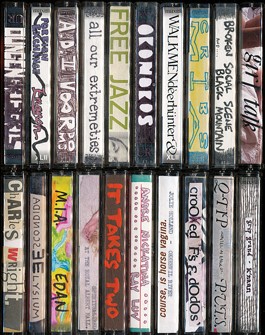
I Still Make Tapes

0

Nūz: Santa Cruz County News Briefs

0

Shakespeare Santa Cruz meets big-bucks goal; Second Harvest Food Bank, not so much. Also, Santa Cruz parking tickets go up $10 and Watsonville handles its first day of furlough.

Calling Mr. Twister!

At the restive Dec. 9 Santa Cruz City Council meeting, a long list of parking citation increases was passed without so much as a peep. The packed audience spilling out into the City Hall courtyard was more concerned with across-the-board cuts to city services and employee layoffs than a $10 increase to all parking citations—and rightly so. But just so our readers are not surprised when a $30 expired meter fine appears on their windshields after parking in front of one of the city’s soon-to-be-closed community centers, Nu_z got the lowdown on the jackups.

As of last week, a hike of $10 was added to each of the city’s 140 different parking citations, including the expired meter charge, which is now set at $30. Parking permit fees are also going up by $5 starting Jan. 1, and meter rate increases are scheduled for public hearing at the Jan. 13 meeting. With an average of 55,000 tickets written each year, the increases are estimated to raise $550,000 annually—nothing to scoff at for a city $7 million in the red.

 The bump in rates makes the city’s citations pricier than several similarly sized cities but well below major metropolitan areas. Monterey’s expired meter citation runs $25, the same as Walnut Creek. San Jose stands at $28 and Carmel equals us at $30. Forget to feed the meter in Chicago, however, and you can look forward to a $50 ticket. San Francisco’s expired meter citations just went up to $60, and topping the list is Manhattan with an ugly $65 fine for the offense.

 Santa Cruz Director of Public Works Mark Dettle said the move is a common way for cash-strapped cities to make extra coin. San Francisco raised its citations by $10 in August and Hayward doubled its fines in September.

 “It’s a strategy to bring in revenue,” says Dettle. “We’re trying to look into development fees before we do any cuts.”

Dettle says residents usually don’t object to citation increases because they are avoidable expenses. But for people like chef Thomas Connors, the citations are a mixed blessing.

 “I’d be hard-pressed to say it’s a bad idea because the city is pressed for cash,” says Connors. “This is a difficult situation we’re in and we’ve got to generate as much revenue as we can.”

 A Tale of Two Causes

 Shakespeare Santa Cruz got its Christmas miracle on Monday, handily exceeding the $300,000 goal needed to keep it alive in a declarative outpouring of support from the community. By presstime, managing director Marcus Cato reported $415,417 in donations, and the calls were still coming in. “They’re saying, ‘You’re still going to need money for next season,'” he said. Though the company cracked a celebratory six-pack of Budweiser in lieu of champagne, the seeming ease of the accomplishment makes SSC seem very rich indeed.

 Not so other charitable organizations with deadlines looming. While donors rushed to the aid of SSC, Second Harvest Food Bank is still 500,000 pounds of food short of its 1.8 million pound goal, the amount needed to accommodate the 30 percent increase in families asking for help, according to executive director Willy Elliott-McCrea. “It’s people who never in their wildest dreams thought they’d need Second Harvest,” he says. “Our biggest concern is, will we have the resources to not be turning families away in the New Year.”

 This year corporate gifts to the charity sank 50 percent while the number of families needing help each month shot up from 12,000 to 15,500. Elliott-McCrea is hoping for an 11th-hour surge in support, such as SSC got, before his Jan. 6 deadline. “Everyone has worked their tails off. We’re all tired. But we can’t let up for these last two weeks,” he says. “A lot of people make their decision between Christmas and New Year’s. It’s a crucial, crucial time.”

 So really, why Shakespeare and not poor people? In truth, it’s a bit like comparing apples to oranges. For one thing, SSC got lots of support from all over the country, while every geographical location has its own local food bank to help. But the two stories do make one wonder. “To me it’s a sign that even when the economy is down, the arts are vital to people’s lives,” says Cato. “It’s surprising and it isn’t surprising.”

 Second Harvest still has two weeks to go. Though Elliott-McCrea, who has run the organization for 20 years, says this year is comparable to the ’89 earthquake and ’82 flood years, he refuses to accept that the goal will not be met. “I’m a believer in being positive. You’ll never hear me say the sky is falling,” he says. “People say that the Shakespeare Santa Cruz thing was easy, it just happened like magic, but believe me, the folks there put in a lot of hard work. We’re going to have to step up like never before.”


 On Monday, the first day of Watsonville’s citywide furlough, the most obvious sign of economic pain was in the front yard of the Salvation Army, where men waited with empty trash bags to take home donations. But just across the street, there was further evidence in the pronounced hush around the main Watsonville Police Station, where the blinds were drawn in administrative offices and signs were taped to the locked lobby doors explaining in English and Spanish that due to “temporary layoffs” the building would be closed until Jan. 5.

 Patrol Lt. Ed Gluhan said day one appeared to be uneventful, despite the fact that 90 of the 390 people being placed on enforced two-week leave are Police Department employees. “So far, we’ve had no major incidents to test us,” he said. “It’s not so much manpower on the street [that is being affected]. It’s a lot of behind-the-scenes management decisions and discussions.”

 Those positions are being called “nonessential” and include employees in the records department, administrative positions and some 8am–5pm officers, like traffic accident investigator Detective Rus Orlandos, who is none too pleased about the forced time off. “It hurts,” he said. “From the janitor all the way up to Chief Medina, it upsets the apple cart.”

What does that mean for the average Watsonvillian? The closing of the main lobby means residents will be unable to get information about their cases or their police records. Anyone who has a car impounded by a city officer will not be able to get it released. People involved in traffic accidents may wait longer for help. And behind those closed blinds, voicemail and email inboxes are filling up with all those ignored requests.

 Though all patrol officers are on duty, each will have to take 48 hours leave without pay before June 30, a necessity that worries Chief Terry Medina, who commands a police force that is already nine officers short. “We will have less police service, because that is a lot of hours to be off. A few thousand hours, actually. We’re going to do our best to lessen the impact on the public,” says Medina. “We’ll let you know how that works on June 30.”

 The furloughs, which total some $568,000, are the city’s attempt to deal with a projected $561,000 shortfall from tumbling sales taxes, the loss of the vehicle license fee and the failure of Measure C, the 911 tax.

 As for whether this is a viable solution to save the city money, Lt. Gluhan says he hopes this will be the first and last time the WPD is asked to do this. “We’ve agreed to take a bite out of the apple, but we don’t feel public safety being laid off—temporary or not—is the way to go,” he says.

Nūz just loves about Santa Cruz County politics.


View All

God Only Knows

0

Pet Sounds, four guys mostly not old enough to drink, display every hallmark of a young 21st-century band. Their first show, from four years ago, is available in six separate installments on YouTube; they self-record their music and release it on CD-R; and their singer, Cory Oleson, has been known to take the stage in nothing but tight-ass booty shorts.

But hinted at in the band’s name—taken from the 40-year-old Beach Boys album—is a subscription to the idea that a band should believe in its music as an original force in the world, and not merely a condensed representation of its modern iPod playlists. Their grasp of this kind of urgency harks back to bands like the Get Up Kids or Desaparecidos, bands that were elevated, then subsequently decried, with one single word: “emo.” Pet Sounds may well reclaim the word as a compliment again.

“I want to make songs that, when we’re singing ’em, people are like, ‘They’ve seen some shit,'” says 20-year-old singer-guitarist Dominic Agius. On their EP Everyone Is Wrong, whether howling about drugs and forgiveness in “Five Lines” or seizing fleeting moments in “Situations,” shit is definitely on display; even in an acoustic setting, the band is intense. They’re danceable without falling back on hi-hat disco beats, and epic without relying on delay pedals.

“Old Tequila Skeleton March” sounds like just that: after four bars of a wordless a cappella vocal, a super-low fuzzed-out bass takes sharp stabs at the comfort. “Our inhibitions are our only disease / And I need you like you need me,” sings Oleson, while extended drum rolls fill random space. Later, a drunk carnival guitar solo brings it all reeling back hazily, and it might not be a coincidence that the song clocks in at exactly 4:20.

Pet Sounds are heading back out on the road in January with fellow locals A Pack of Wolves, and they’ll soon start recording a full-length album. A recent lineup change with Steve Ziesche and Tony Serronato has reinvigorated the band, and Oleson and Agius continue to push each other with their writing. “When he does something that’s really cool, and I admire, and I’m proud to be in a band with him,” says Agius of Oleson, “it motivates me to write something on par with it.”

Pet Sounds perform with A Pack of Wolves, History and Tight Bikes on Sunday, Dec. 28, at the Casbar, 3345 Santa Rosa Ave., Santa Rosa. 8pm. $5. 707.568.1011.

Waste Not, Want Not

12.24.08

As the parties and gift-giving wind down, we can findourselves surrounded by piles of holiday debris. Not surprisingly,Americans generate an additional 25 million tons of waste betweenThanksgiving and New Year’s. But that volume means that it’s also agreat time to make a difference by disposing of our wastewisely.

The first step in a post-holiday sort is to look for what can bereused. For instance, we can save ribbons, bows and wrapping paperfor future years. I’ve read that if we all reused just two feet ofribbon, we could tie a bow around the planet. Yeah, it’s corny, butit demonstrates how small actions do add up. Artistic folks canalso save pretty pictures from holiday cards to paste onto blankcards next year, perhaps with creative embellishments.

Along with the season’s gifts of new clothes, toys and morecomes the inevitable disposal of the old ones. By donating theseunwanted items, we can brighten someone’s day while making betteruse of the resources they represent. Higher quality discards can goto a consignment store, perhaps even netting a little cash.Unneeded paper and plastic bags can also be dropped at a thriftstore for reuse, and shipping “peanuts” and foam packaging at aprivate mail center.

To explore more ideas and resources for repairing and reusingunwanted items, check out Choose to Reuse by Nikki and DavidGoldbeck.

Next is the question of what can be recycled. Garbage serviceshave different rules, often posted on their websites. (Many Sonomaand Marin County folks are served by North Bay Corporation, whichis at www.unicycler.com; Napa is served by Napa Recycling and WasteServices, www.naparecycling.com.) Generally, we can put glass,cans, cardboard, paper and plastic in the blue single-stream can;this includes holiday cards and wrapping paper, except those withmetallics.

Much of our holiday waste is food. After we offer appropriateleftovers to a friend or food bank, what remains can often go inthe green yard waste container for composting. By this simple act,landfill waste is magically transformed into a useful resource. Myservice accepts vegetables and dry foods like bread and pasta;meat, bones, cheese and oil are not allowed. Christmas trees canalso go in the green can, if cut to fully fit within.

With many folks getting new techno-toys (including phones,computers, TVs and other gadgets), it’s important to keep oldelectronic items out of the trash. That’s because this high-teche-waste contains toxics such as lead, cadmium, copper and mercury,which can leach from landfills to poison humans, wildlife andecosystems. For example, a TV or computer monitor contains up toeight pounds of lead, which can cause brain damage andhyperactivity, especially in children. Of the lead in U.S.landfills, 40 percent is from electronics.

Nonprofits such as the Computer Recycling Center (www.crc.org;707.570.1600) accept donated e-waste, which they refurbish, reselland responsibly recycle. Donators even get a tax write-off. Somecurbside services and household toxics centers also take smallelectronic devices.

Which brings me to household toxics. Since these also don’t goin the trash, I gather mine in a designated spot in my house, thenperiodically drop them at the Sonoma County Household ToxicsFacility, community toxics collections days or appropriate stores.Household toxics include batteries, fluorescent bulbs, glues,paints, solvents, treated wood, car fluids and fuel, householdcleaners, pesticides, medications, even nail polish andremover.

To discover all the nitty-gritty of local recycling and disposaloptions, I love the Sonoma County Eco-Desk (www.recyclenow.org;707.565.3375). Both their website and handy recycling section(under “R” in the AT&T Yellow Pages) list places to dropunwanted appliances, bikes, books, building materials, cars,eyeglasses, hangers, medical supplies, scrap metal, gardeningsupplies, cooking oil, car tires, video tapes and more. Theirwebsite’s “Recycling” page also lists free Christmas tree drop-offspots.

Another vital way for us to help this process is by purchasingrecycled products, making use of these rescued resources andencouraging the market. The economy’s slump makes this even moreimportant, as drastically lower materials prices have created anexcess of recyclables and discouraged some recycling.


We can also look at our current waste patterns for ideas toreduce future flow, an essential part of lowering our planetaryimpact. Thus, we might decide to buy a battery charger, keepelectronics longer, or even start our very own compost pile thatallows us to turn everyday food scraps into gardening gold.

 The Computer Recycling Center accepts drop-offsMonday–Friday, 9am to 5pm. and Saturday, 9am to 2pm. 3227Santa Rosa Ave., Santa Rosa. If you have more than 15 largecomputer items, please contact them in advance.707.570.1600.

to theeditor about this story.


Pieface

0

Mūz

music & nightlife | ...

Give and Let Live

santa cruz | IT'S A WONDERFUL LIFE:...

Troubled Waters

Dark Nights

12.24.08When the World Trade Center went down, the more superstitious among us might have looked at all that broken glass and thought, "Seven years bad luck." And indeed, in the seventh year, the fear grew great enough to be reflected in cinematic terms. Spielberg, being Spielberg, chose to anticipate the terror in his 2005 remake of War of the...

Volunteer

12.24.08A west Sonoma County nonprofit group is seeking volunteers tohelp plant redwood trees in four separate locations throughout theWest County area. Forest Unlimited, a 501c3 based in Cazadero, isplanning two planting days, Friday–Saturday, Jan. 9–10.Volunteers are encouraged to attend, regardless of their plantingskills, and even if they can only help for half the day.Approximately 1,500 two-year-old bare-root redwood seedlingswill...

Nūz: Santa Cruz County News Briefs

Shakespeare Santa Cruz meets big-bucks goal; Second Harvest Food Bank, not...

God Only Knows

Pet Sounds, four guys mostly not old enough to drink, display every hallmark of a young 21st-century band. Their first show, from four years ago, is available in six separate installments on YouTube; they self-record their music and release it on CD-R; and their singer, Cory Oleson, has been known to take the stage in nothing but tight-ass booty...

Waste Not, Want Not

12.24.08As the parties and gift-giving wind down, we can findourselves surrounded by piles of holiday debris. Not surprisingly,Americans generate an additional 25 million tons of waste betweenThanksgiving and New Year's. But that volume means that it's also agreat time to make a difference by disposing of our wastewisely.The first step in a post-holiday sort is to look for what...

Pieface

11,084FansLike
4,606FollowersFollow
6,928FollowersFollow