I Stood Up

0

01.28.09

Iwas a Boy Scout. I stood every morning at school for the Pledge of Allegiance and at football games for the national anthem, and felt some self-righteous scorn at the ignorance of people who applauded when it ended. (You are supposed to remain standing briefly in silence, then sit without demonstration. It is not a performance.)

Some time during the Vietnam War I decided that I would not rise to show agreement with the anthem’s martial theme, that holding my hand over my heart was a sign of disrespect to the people of the nations we were oppressing and showed tacit support for leaders who were calling on us to be neither brave nor free, but craven in protection of privilege.

Over the decades, it became a deep habit to grit my teeth at the hypocrisy of that song in the face of countergraduated tax rules, foreign misadventures and wars of choice, homeland oppression, shortsighted energy and environmental practices and a widespread lack of national mission beyond self-indulgence in the private and public realms. I remained seated, distant from my nation’s anthem.

The past several months I have experienced many teary moments as I felt that we really might be embarking on what Bruce Springsteen has called the “long walk home.” Last week, I watched the inaugural with a small group of friends and friends of friends, all people of similar persuasions with a deeply patriotic skepticism about Patriotism-with-a-capital-P. I heard our new president say nearly all the right things about our history, our values, our mission and our intended behavior as a polity. At the end of the ceremonies, Old Glory waved and the military band struck up. I asked myself, “Are you going to stand up for this?” but habit remained strong. Then one woman rose to her feet and faced the TV. I still felt silly; my legs could not do what my heart yearned for. At the lyric “What so proudly we hailed,” my friend Catherine rose and turned to the first woman with a thank you. The woman gently replied, “If not now, then when?”

It felt so wonderful to come home to America. I even took off my hat (it was cool in that environmentally attuned house) and held it over my heart. All these years, I have been proud of what this country could stand for. But standing for those things has felt like a conspiratorial endeavor, outside the declared mainstream, like demonstrating against invading Iraq before we went in or nodding to the rare fellow citizen doing their errands on a bicycle.


All these years, living in the land of the free and the home of the brave has felt like a private matter—me and a few of my homeys making ice cubes while the glaciers crash into the sea. That doesn’t work for me now. Yes, it’s gonna be a long walk home. But we’re marching together, picking up steam, with a leadership that calls us forth to write the next chapter with a loving, steady hand. Old Glory’s out in front, unfurled, and it is right once more to show her my full measure of respect.

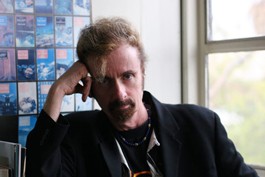
i>Ken Roberts is a financial planner, gardener, father of two adult sons and a 25-year resident of western Sonoma County.

Open Mic is now a weekly feature in the Bohemian. We welcome your contribution. To have your topical essay of 700 words considered for publication, write op*****@******an.com.


Thank You, Mr. President

01.28.09

There have been several firsts lately. Here’s one. Last week in Napa I found myself in an elegant wine bar on a weekday morning, not winetasting but rather crying and hugging and cheering along with about 90 strangers, all of us watching the live broadcast of President Obama’s inauguration.

Mostly I cried. But I wasn’t embarrassed, since so many other people were crying. Even the manager shed tears. With no tissues available, my friend Beth grabbed a stack of cocktail napkins and set them within easy reach of us and five others. Given the occasion, it seemed natural for her to cheerfully assist strangers and friends alike.

The feeling in the room was electric as Obama pointed out to over a million attendees (and tens of millions of web streamers plus uncounted millions of television viewers) a number of resonating truths. Among these was the fact that we’re living on a warming planet, and for our survival we need to harness the sun and wind and earth for power.

Thank you, Mr. President. How uplifting to hear those words spoken after the Bush administration sneered at global warming along with human rights and ecological justice. For the past eight years in particular, oil interests have held us hostage. Oil contributes to less than 5 percent of our energy, but Cheney and Bush, whose families profited, made oil-market wars a national priority, sending ill-equipped soldiers into combat while cutting benefits to their families. Morale plummeted.

Soil and water quality sank, too. Under Bush-Cheney leadership, the Environmental Protection Agency was functionally dismantled, along with the EPA research library that provided documentation essential to controlling the sale and use of over 800,000 potentially dangerous pesticides. What did this accomplish besides the business-as-usual profit making and interspecies poisoning? Underhanded and underreported, it spread the toxin of discouragement, a condition that makes people feel hopeless, disconnected and powerless. This condition has been more threatening to the planet than pollution.

So far in the global crises, the obstacle preventing our country’s withdrawal from fossil fuels has not been a lack of technology but a lack of organized will. The power source within the human spirit has not been fully tapped—yet. But it just might happen after all.

When Obama acknowledged global warming and endorsed renewable energy in his first presidential speech, cheers broke out all over the room and I cheered the loudest. Another first! But underneath it was the most significant first, the key to our sustainable future.

The foundation of Obama’s campaign strategy, where social networking met grassroots organizing, was a reconstruction of our collective hope. It produced a rebirth of community involvement. Encouraged people feel connected to one another, empowered. And empowered people make changes. Our new president made it clear that this isn’t going to be a picnic, that there are difficult days and “hard choices” ahead of us. But he reminded us that we will move forward with hope and unity. We’ll function as a true democracy now.

It sure felt that way to me, looking around the crowded wine bar during the inauguration broadcast and seeing the happy, proud faces. It felt the same watching video clips of other happy, proud faces gathered in other cities to watch change come to the White House. We got Obama there. We overcame two major obstacles—discouragement and big money—and we did it together.

So together we celebrated. I remember feeling close to everyone that morning, experiencing a heightened sense of purpose and optimism. Those few who could sip wine or Champagne that early in the day raised their glasses while others raised coffee mugs. And near the end, almost everyone stood and raised their voices to sing along with “The Star-Spangled Banner.” It has been harder to sing that song in recent years. But now it seems right. Beth improvised a terrific harmony and we sang at the top of our lungs.

I went home elated, wondering how long it would take us to make the behavioral changes required to become a sustainable “land of the free and home of the brave.” I don’t know the answer, but I’m feeling very hopeful.


Zin I Am

0

ZIHN-fuhn-dehl. noun. A red wine grape originally thought to be indigenous to California. Recently, however, experts have concluded that the Zinfandel grape was brought to the United States from Italy’s Puglia region.”

Wrong, wrong, wrong. Alas, the experts reached their conclusions on the provenance of America’s heritage grape somewhat after the World Wide Web devoured their false leads. Thus, all kinds of deathless half-truths abound, like the one above from Answers.com.

Fittingly for the grape of myriad disguises, the theme of this year’s Zinfandel Advocates and Producers (ZAP) festival is “masquerade.” Zin’s a robust, simple mate to the plate; a sweet and blushing ingénue; a brooding bramble-berry beast. But as for the vino incognito’s famously mysterious origins—the subject of much fun over the years—well, that party’s over.

Like the genealogy-obsessed folk we are, diligent Americans have nailed Zin through DNA matching and by scouring the historical record. And although it turns out that the vine was, in a way, ordered from a catalogue like a packet of peas, its story remains no less a great American story.

An obscure subject of the Austro-Hungarian empire, Zinfandel was imported to be grown under glass as a table grape by New England garden enthusiasts, as was the fashion in the early 1800s. When a sea captain brought it around the Horn to California, it found new life as a rough-and-ready claret to slake the thirst of the ’49ers; later it became a prolific mortgage payer for burgeoning Italian wineries. Following Prohibition (hiss from the balcony), Zinfandel was “rediscovered” by iconoclast vintners of the 1960s.

Got it? Good. Now let’s return to the business of drinking it. The ZAP festival draws as many as 10,000 attendees, who knock back some 550 of the hottest, the smoothest and the most unusual wines under two roofs. There are tasty everyday values like Carol Shelton’s new “Zinami,” a nonvintage brilliant ruby version of her fruit-packed vineyard designates. It’s easy to like, with warm, toasty aromas of roasted cashew, herbs, fruitcake and cinnamon. Its velour-like tannins inspire the tongue to search out every last drop of strawberry and grape jelly on the palate, a lively companion to pork chops or fried tofu and green beans in garlic sauce.

Or ask a seagull what pairs best with Zinfandel. If that seagull were to answer you, he would say “french bread.” The ZAP tasting invariably ends with a fatigued but recklessly merry crowd ringing the quay between the festival piers, throwing scraps to a hungry nation of birds.

The 18th annual ZAP Festival’s public tasting is slated for Saturday, Jan. 31, from 2pm–5 pm. Fort Mason Center, San Francisco. $59–$69. 530.274.4900. [ http://www.zinfandel.org/ ]www.zinfandel.org.


View All

Hard Truths

0

01.28.09

Thami: “Yours were lessons in whispering. There are men now who are teaching us to shout. Those little tricks and jokes of yours in the classroom liberated nothing. The struggle doesn’t need the big English words you taught me how to spell.”

Mr. M: “Be careful, Thami. Be careful. Don’t scorn words. They are sacred. Magical. Without words, a man can’t think.”

Few writers living today command the same volume of respect and admiration—bordering on worship and awe—as has been earned over the last several decades by South African playwright Athol Fugard. Born in 1932 to white parents, Fugard grew up in a country still operating under the segregationist laws of apartheid, which gave all the privileges and power to the minority white population. From his earliest efforts as a playwright, working with a mixed-raced theater company he founded in the late 1950s in Johannesburg, Fugard’s plays have stood as eloquent challenges to his country’s racist system of government, telling the story of black South Africans’ struggle for freedom and equality in their own country.

Eventually marked as an enemy of the state, and constantly under the watch of South Africa’s secret police, Fugard continued to write scathing works that soon drew the attention of the outside world. Though many of these plays had to be published and performed outside of South Africa, their impact was still strongly felt in Fugard’s homeland, where, until apartheid finally ended in 1994, a white man writing about the country’s many injustices against black people was seen as a kind of high treason.

As a result, Fugard’s body of work has achieved an unprecedented reputation in the world, with the author’s plays now viewed, and rightly so, as radical acts of brave individual heroism and personal honor as much as they are also dramatic entertainments meant to be staged in a theater. It’s difficult at times to separate Fugard’s reputation as a national hero from his job as a producer of words on a page, and as a result, even his lesser plays are often approached as a pilgrim might draw near to a sacred shrine.

The truth, of course, is that not all Athol Fugard plays were created equal. Though Sizwe Bansi Is Dead, The Blood Knot and “Master Harold” and the Boys are among the greatest political plays ever written, some of Fugard’s works, including 1989’s My Children! My Africa! , currently staged at the Marin Theatre Company in an elegant new production by director Josh Costello, are clearly among those “lesser plays.”

Rambling, preachy and overlong, with a near total avoidance of visual action as its three characters debate, sermonize and discuss their way through the violent real-life student boycotts of 1985, My Children! My Africa! is nevertheless impossible to dismiss. As emphasized in MTC’s powerful production, its very wordiness is part of its message—that words, in many cases, are better weapons than violent action.

On a simple, elegant classroom set (a thing of stark beauty by Erik Sinkkonen) depicting a poor black school in Candaboo, South Africa, the dedicated black high school teacher Mr. M (a wholly riveting L. Peter Callender) has staged a debate between his black students and those representing a white girls’ school from outside the “location.” Recognizing a rare opportunity to give his students a lesson in the unifying civility of spirited conversation, Mr. M asks one of the visiting girls, Isabel (Laura Morache, a sensation three years ago as Anne Frank at the Oregon Shakespeare Festival), to team up with his prize student, Thami (an excellent Lloyd Roberson II), and act as debate partners in an upcoming festival.

The timing is unfortunate, however, as the growing friendship between Isabel and Thami is soon shaken by the growing unrest over the country’s discriminatory system of education, and rumors of an impending school boycott, with the threatened possibilities of burned schools, pit the increasingly militant Thami against Isabel and Mr. M. Under Costello’s tightly focused direction, the cast give their own lesson in the power of performance to transform pages of gorgeous text into vibrant, living, thinking flesh and blood.

The play leaves many questions hanging over the stage like smoke after a blaze. Chiefly, since the school boycotts are now seen as a pivotal event in the undoing of apartheid, does Mr. M’s noble defense of education actually place him on the wrong side of history, and does it also turn Thami’s insurrectionist comrades, with their torches and clubs, into the real agents of change? It’s an uncomfortable debate, to be sure, but a debate well worth having, and surely that’s the point of this unwieldy, imperfect but sharply intelligent play.

John Patrick Shanley’s Pulitzer-winning Doubt: A Parable is another play about the power of words and ideas to transform and condemn, but in its script’s structure and tone, Doubt—newly opened at Spreckels Performing Arts Center in a production by the Pacific Alliance Stage Company—is quite the opposite of My Children! My Africa! Written as a series of escalating scenes arranged over the course of a few weeks, the play, set in 1964, in a Catholic church and school in the Bronx, is a tense, ambiguous mystery.

The parish’s likable new priest Father Flynn (a superb Michael Wiles), is not liked by the school’s hard-as-nails principal, Sister Aloysius (Carmalita Shreve, a little too monotone and repetitive until her impressive final scenes). When the young, naive Sister James (a lively Shannon Veon Kase) reports a possible indiscretion between Father Flynn and the school’s only African-American student, Sister Aloysius is confident that her priest is a pedophile, despite the absence of any real evidence and Sister James’ eventual retraction. Even the boy’s mother, Mrs. Muller (first-time actress Marilyn Waters, impressively confident but still too underexperienced for a role this complex and pivotal) wants Sister Aloysius to drop her crusade against Father Flynn.


The play, with that word “parable” slipped purposefully into the title, is clearly about more than child abuse; Shanley illuminates the frail, dangerous differences between certainty and truth. In the PASCO production, directed by Hector Correa with an emphasis on keeping the mystery a mystery, the unevenness of the acting hurts the overall power of the play but can’t obscure the fact that Doubt is an important and vital new American masterpiece.

  ‘My Children! My Africa!’ runs Tuesday&–Sunday through Feb. 15. Tuesday and Thursday&–Saturday at 8pm; Wednesday at 7:30pm; Sunday at 7pm. Matinees Thursday at 1pm, Saturday&–Sunday at 2pm. Marin Theatre Company, 397 Miller Ave., Mill Valley. $20&–$51. 415.388.5208.

‘Doubt: A Parable’ plays Thursday&–Sunday through Feb. 8. Thursday at 7:30pm; Saturday&–Sunday at 8pm; also Sunday at 2:30pm. Spreckels Performing Arts Center, 5409 Snyder Lane, Rohnert Park. $17&–$24. 707.588.3400.


Museums and gallery notes.

Reviews of new book releases.

Reviews and previews of new plays, operas and symphony performances.

Reviews and previews of new dance performances and events.

Bruce by Numbers

0

01.28.09

Working on a Dream, Bruce Springsteen’s second release of new studio material in the rare short span of 18 months (following 2007’s rousing Magic), is a piece that breathes specifically in its own cultural moment. The great American roots-rock populist has as much stake in America’s new era of hope as any rock star, having advocated progressive causes and candidates for three decades, including debuting the thrilling, uplifting title track from this new album at Obama campaign stops in Ohio days before last November’s election.

Working on a Dream isn’t a political celebration at all, but it does find the Boss enjoying additional victories. He’s already won a Golden Globe award for his new track “The Wrestler” (heard in the acclaimed film), finally has songs available in the popular Guitar Hero video game series (the new single “My Lucky Day” and his classic “Born to Run”), and he’ll no doubt rock some of these new songs when he headlines the hugest gig in America at Super Bowl XLIII this Sunday.


All this cultural relevance belies a new album that’s less about Springsteen creating a special moment than about his confirmed presence in a collective moment that suits his classic instincts. When Americans want to believe again, he assures us that there’s nobility and comfort in knowing that we’re all working on it. If the bold retro shine of Magic found him wrestling with doubt and faith, then the booming, uneven simplicity of Working on a Dream finds him accepting the possibility that we may be OK. Much of this incomplete wisdom is just Bruce-by-numbers; opening track “Outlaw Pete” recalls his early extended character-based storytelling, while “This Life” sounds like a worthy outtake from the busy, melodic ’60s-style pop-rock sessions of Magic. “Good Eye” is stomping, slurry hard blues, while the sweetly resigned mid-tempo rocker “Kingdom of Days” offers the aged grace and beauty that will make it a meaningful favorite of Boss fans for years to come.

For the most part, today’s Boss sounds mature and convincing. But on one real clunker, the nearly condescending “Queen of the Supermarket,” Springsteen awkwardly milks his stock working-class metaphors with an assumption of guaranteed real-world credibility. In America’s new era of hope, real people may need more than well-tested sentiments from popular icons. Working on a Dream is Springsteen’s tired comfort zone, but more importantly, it’s his momentary acknowledgement that in our collective desire to move forward, the campaign still continues.


Bus Riders and Budget Bozos

01.28.09

GOING, GOING, GONE? Public transit is among the threatened services in California’s current budget drain.

Just as he’s hopping aboard the Route 48 bus heading up to Santa Rosa, Rohnert Park senior Jon Miles, calling himself a “forced commuter,” enthuses, “I couldn’t be happier with the bus service.” Asked where he places public transit on his list of state budgetary priorities, Miles replies, “Public transit should be the last thing to go. I can go almost anywhere I want for a couple bucks—anywhere I want to go!”

But Miles and his fellow transit bus riders may be among the biggest losers in the state’s budget meltdown. A Sacramento budget accord seems less than imminent. With no budget, transit provider decisions are not yet set in stone, but the way things are headed serious regional bus-service curtailment should be expected by May or June of this year, according to Bryan Albee, Sonoma County Transit’s systems manager. Albee confirms that as many as 30 or more hours of bus service could be eliminated daily from Sonoma County Transit routes alone.

Sonoma County Transit’s woes are hardly unique. All five of the North Bay’s fixed-route bus carriers expect to launch fewer runs, and many routes will run less frequently. What’s more, should Gov. Schwarzenegger’s plan to entirely eliminate state public-transit funding snake its way through the Democratic-led state Legislature, 2010 cutbacks could far outstrip those feared for this upcoming spring.

Meanwhile, public transit is lauded as a proven means by which to combat environmental degradation, ridership continues to grow and demand for expanded service is repeatedly voiced via voter initiatives. Transit cutbacks put jobs both on and off the bus at risk—and transit cutbacks are shown to negatively affect the entire region’s economy.

Ed Duarde is an accomplished landscape artist who is partially blind. Duarde depends upon two North Bay public bus services, Sonoma County Transit and Golden Gate Transit, to get from Petaluma to both Santa Rosa and San Rafael, where he teaches oil painting. Additionally, Duarde and his students hop summer buses out to the coast for painting classes. Duarde says he wouldn’t mind paying a little more to ride, but that regular, dependable bus service is essential. “I get to work on transit,” he explains. “If they cut it, I can’t work.”

While slashing marquee budget items like education, parks and healthcare grab the headlines, what’s little discussed is that public transit, providing more than 1.5 billion passenger trips statewide last year, may take the biggest hit of all. According to a recent Rider Alert issued by Sonoma County Transit, close to $3 billion in designated transit funds have already been diverted from such use in the past two years alone. If the governor gets his way even the few crumbs still left on the budget table will be swept entirely and permanently away by next year.

Deputy director of Santa Rosa City Bus Mona Babauta cautions against alarming bus riders. “If we see a dip in funding,” she says, “we’ll reassess at that point. But we are concerned with the elimination of the funding altogether. Then we’ll have to cut back.” Like other North Bay transit lines, City Bus has seen continued increases in ridership. “We typically see a 2 to 3 percent increase each year,” Babauta notes, “and last year we saw a little over 5 percent increase in fiscal year 2008.”

Cutbacks in public transportation are particularly problematic in a recessionary atmosphere. A study conducted in October of 2007 by the Department of Economics and Political Economy Research Institute at the University of Massachusetts, Amherst, compared economic impacts of mass transit funding with education, healthcare, defense, construction and tax cuts for personal consumption. They found that dollar-for-dollar, mass transit produces more jobs than any of the comparable sectors, and is only surpassed by education in total wages and benefits from employment injected into the economy.


In a Nov. 14, 2008, letter addressed to California State legislative leaders, industry advocacy group California Transit Association (CTA) stressed that “every $1 invested in public transportation projects and services generates approximately $6 in local economic activity.” The CTA further poses the question, “What other state expenditure . . . directly supports so many critical state goals, like jobs creation, air-quality improvement and congestion relief?”

Twenty-three-year veteran bus driver Yvonne St. Clair wrote her own impassioned letter to Gov. Schwarzenegger, strongly suggesting he withdraw his transit annihilation plan. But it was St. Clair’s conversation with bus riders at the Santa Rosa Transit Mall that brought to life what’s actually on the chopping block. Those boarding the bus engaged in lively dialogue with other riders already seated concerning what cuts would mean for their jobs, childcare costs and arrangements, grocery shopping, schooling, social services or medical appointments. Their concerns mirrored what St. Clair wrote to the governor: “Please, think hard about it, before you affect so many lives.”


Odds & Sods

House History

0

01.28.09

The year was 1963, and Doug Bosco, age 18, happily joined the several hundred thousand people at the National Mall for the March on Washington on Aug. 28. Working as a page on the House floor at the time, he would go on to have an inside look at Washington during the assassination of John F. Kennedy and, later, during his service as Congressman for the First Congressional District from 1983 to 1991, an inside look at the Reagan-Bush years. But for the Sonoma County lawyer and chairman of the Coastal Conservancy, it was the March on Washington that resurfaced before his eyes last week while watching the inauguration of Barack Obama.

“It just brought back all of those memories,” he says from his Santa Rosa office. “It also brought back a period of time where we were all young and idealistic and wanted to change the country. I got the exact same adrenaline running through my blood when I heard Obama’s speech. People are very, very excited now.”

Bosco’s lecture on history this Thursday at the Sonoma County Museum brings the national excitement down to a local level when the former assemblyman and congressman speaks on the history of politics in Sonoma County and the First Congressional District, peppered with his own reflections and insight. “I’m obviously not a historian; I can’t admit to doing hours and hours of research,” he says, “but I think I have a pretty good idea of how things were and where things are going.”

Campaign finance, special interests and lobbyists have changed politics entirely, Bosco charges. “We never had any special interests!” he says of his campaigns 30 years ago. “We just had anybody we could get to give us money, to borrow money. Our families helped. It was not nearly the intensity it is now. I think we spent maybe $300,000, maybe $400,000 on our race then. But now an open congressional seat would be a $10 million race and would definitely attract the attention of every special interest in the country.”

As for all those young people who want to change the country? Despite the money and interests involved, Bosco recommends running for Congress. “All of us old guys can speak at historical societies,” he says with a laugh, “but they’re the ones who are going to have to move us into the future.”

Doug Bosco speaks on Thursday, Jan. 29, at the Sonoma County Museum, 425 Seventh St., Santa Rosa. 6:30pm. $5–$7.50. 707.579.1500.


The YouTube Democracy

0

01.28.09


Anyone who doesn’t yet understand what an unstoppable cultural force YouTube has become should consider this latest bit of news: Even while it was pursuing a billion-dollar lawsuit against YouTube’s owner Google for copyright infringement, Viacom was secretly uploading promotional videos to the site. They may hate it, but they need it.

The allegation was made by Google in papers filed in federal court, and when corporate executives suing a supposed copyright pirate recognize that they need that pirate to survive, it illustrates how far behind the curve intellectual-property law has fallen in the digital culture of the 21st century.

One man who was making this very argument years before most people even knew the subject existed is Mark Hosler, founder of the pioneering Bay Area&–based group Negativland. Negativland’s history of making music by pushing the boundaries of sonic form and content opened up the very notion of what “music” was allowed to be in the formerly verse-chorus-verse rock world, paving the way for artists like Danger Mouse, Girl Talk and an entire generation of mashup artists.

Negativland’s history of making art by pushing people’s buttons is legendary. Their landmark 1987 album Escape from Noise tweaked American culture and politics with songs like “Time Zones,” “You Don’t Even Live Here” and “Christianity Is Stupid.” Then they pranked the media by connecting the latter song to a real-life axe-murder case, which led to their 1989 sound-collage masterpiece Helter Stupid.

In 1991, their controversial single “U2” sucked them into a legal maelstrom in which they were sued by everyone from U2’s label Island Records to radio personality Casey Kasem.

Hosler and his band mates turned that experience into perhaps the definitive book on fair use and copyright law, called Fair Use: The Story of the Letter U and the Numeral 2. As they continued to experiment, a funny thing happened: pop culture went Negativland.

From Napster to The Grey Album to YouTube, the very issues Negativland have explored—earning themselves labels like “pirates,” “anarchists,” “sonic outlaws” and much, much worse in the process—suddenly exploded into the mainstream.

Even weirder, at age 46 Hosler has now been embraced as the elder statesman of the digital-culture revolution. He lectures frequently about Negativland’s work and fair-use issues, and just last fall was invited to Capitol Hill to speak about copyright law.

In true contrarian spirit, meanwhile, Negativland’s newest album, Thigmotactic, is their first collection of “normal” songs—normal by their standards, anyway.

Hosler spoke to us about YouTube v. Viacom, his new role as remix diplomat and the issues facing digital culture.

Bohemian: How did you get invited to Capitol Hill to speak about copyright issues?

Mark Hosler: The Consumer Electronics Association, who represent Microsoft, Apple, Sony, Dell, Panasonic—all the big electronics manufacturers—as well as Google, Yahoo, Verizon, they have the largest trade show on the planet Earth every year, CES. It turns out that organization and who they represent—the people who make the hardware—want to have all of their systems be as open and portable and allow you as much flexibility as possible for you as the consumer to move your data around. The people who make the content, the movie studios and the music labels, the big ones at least—they want everything as closed as possible. They want strict copy protection. They don’t want you to have a DVD and be able to then copy it and put it into all the computers in your house or transport the data around.

So they’re kind of in a war with each other, and it’s really over these issues of fair use—what constitutes fair use of intellectual property when you’ve purchased it? Those folks realized they wanted to educate the public and college students and politicians more about fair use issues as the years go by, and they’re trying to duke this out. ‘Cause there’s going to be legislation and bills and laws and all that.

Well, they decide to form a sub&–lobbying group called DigitalFreedom.org. DigitalFreedom then realizes, I guess, that fair use issues do extend beyond the hardware into cultural and artistic areas, and they ended up asking Negativland to be on their advisory board a year ago. So with some caution, we agreed.

They said, “We’d love to have you come to D.C., and we’ll take you around to some different congressional, Senate and judiciary offices, and there are people who would like to meet you. We want you to put a face to these ideas about culture and art and the reuse and remixing and repurposing of things that’s becoming so prevalent.” There are people who are interested, but they quite often just don’t have a clue about what’s going on. You know, they’re older, maybe their idea of popular culture is the Rolling Stones. Many of them are Republicans. They don’t know what’s happening.

What Negativland’s seeing happen is that these kind of cultural artistic practices of appropriation have been moving over the last 100 years from the fringes of fine art into music and sound and film, but always being in the fringe, experimental area. And in the last five or six years, particularly in the last couple of years, they’ve absolutely exploded into the mainstream, where this is now a completely normal practice. A 13-year-old kid is going to take a bunch of corporate logos and some song he likes and some animation, a TV show or news footage, maybe something he animated himself, some footage he shot with his friends, and cut it together and make some funny thing.

Do you think our culture is becoming more comfortable with the idea that the public rather than artists or corporations has control over any piece of art that can be distributed digitally?

That’s a good question, and it depends on who you’re talking to. If you’re anyone involved with the business of culture and information and media and you’re over the age of 25, then maybe no, you’re not so comfortable. But if you’re younger, well, I do lectures a lot about our work at universities, and I’ve been doing it for the last 10 years. I used to have to really explain our whole rationale for why Negativland thought it was OK to appropriate things that we don’t own, that we didn’t make, and use them in our work. “Why in the hell do you think that’s OK? That’s just stealing!” Well, there is a whole explanation I can walk somebody through, and most of the time, in the end, people are convinced. I’m good at convincing them.

But what I’m finding in the last year is that when I’m talking to people in their late teens and early 20s in a university setting, I don’t have to explain it anymore. They already know. And it’s not even that they know they know, it’s just how things are. And that’s when things get really interesting. Even though the copyright laws are completely behind the curve here, the practices are becoming so normal that the public is in the driver’s seat. The public is going to decide what to do with your logo. In fact, if you’re a smart corporation, you don’t go sue kids who take your logo and fuck with it on MySpace. You see that as great advertising. You’d be stupid to go after them. I mean, how many times have you had someone forward you what looks to be some weird, screwed-up, homemade video, and it turns out to be an ad for something?

It’s bizarre that pranking has become a corporate practice in the digital age.

It’s inevitable. When we were doing the stuff we were doing in the late ’80s and early ’90s, I thought, well, there’s going to be some people who are interested in what we do, and are following this type of work and attitude, and they’re going to end up in advertising and government. In fact, some of the staff people of these members of Congress know who we are. They’re like, “Oh, I listened to you in college. Cool, we get to talk to the Negativland guy!”

And all of this is in spite of how we’ve maintained a truly outsider position. Our work is still in a legal gray area, we do everything ourselves, we’re totally self-managed. We’re total do-it-yourselfers. I still feel like I’m struggling and doing everything in the same way I was doing it when I was a teenager. That doesn’t feel any different. It’s not any easier, either. But to see that ideas have percolated into people’s brains is amazing.

I’m not boasting; I’m involved in making this stuff, but I’ve also always been an observer and a student of seeing how ideas move from the fringe to the mainstream. The vice president of the Consumer Electronics organization, Michael Petracone, he has a vinyl copy of our “U2” single. I was introduced to the president, and he knew all about our legal cases. And he in fact was the guy who litigated the Sony v. Betamax case—he’s that guy!

So even though I may not agree with these guys on their ideas about free trade, it’s like, “Oh my God, these guys are actually kind of the same age as me, and they actually get it.” I can have a conversation with them, and I’m not an alien being from another planet. They say, “Oh yeah, we know what you do. Yeah, you’re a little bit extreme, but basically we get what you’re saying and we understand and, yes, you have a legitimate point of view.” That’s the shift. Because in the early ’90s, when we were talking about this in the wake of the “U2” lawsuit, it was like, “Well, you guys are kind of crazy. Why is this even important?”

But as an artist, do you ever struggle with issues of artistic control yourself?

Well, no. People have sampled from us going way back to when sampling started. We would run across records where people had sampled from us. The most famous one was Marky Mark, the actor Mark Wahlberg. He did an album called Music for the People, and it starts off with about five or 10 seconds straight off of our album Escape from Noise. It’s a really stupid, fake, white-boy hip-hop record. It’s a terrible record. But it sold about a million copies. They did not ask our permission to use it, and I don’t care for what they did with it, but our opinion doesn’t matter. It’s basically none of my business what someone does who appropriates a little bit of our work.

I wonder what someone like Beck, a master repurposer himself, thought of all the repurposing of his work on the album ‘Deconstructing Beck.’

He didn’t like it. The story of that is that record was curated and put together by the label Illegal Art. It was their first release 10 years ago. Illegal Art is still around; they’re the label that’s been putting out Girl Talk. Illegal Art put [Deconstructing Beck] out, it came to the attention of Geffen Records, which was Beck’s label at the time. Geffen’s lawyers were threatening them about the release, saying you can’t do this and we’re going to sue you. We heard about it, and we teamed up with RTMark, sort of an early parent group that spawned the Yes Men. We said, “Hey, if these guys are trying to shut it down, let’s go even bigger, let’s help you publicize it even more.”

So RTMark is very good at viral promotion, and then we proposed to Illegal Art, “Let’s reissue it on our label, Seeland Records,” Negativland’s label. “We have a much better distributor than you, we can get this much further out there in the world.” And I asked him, “For all the trouble this is causing Geffen”—now they’re getting bad publicity and all this—”how many record copies have you sold?” And he said, “Three hundred.” That was all it was! It was just that the idea was so disturbing to Geffen.

And you were able to intervene on their behalf?

The first thing we did was to send Geffen a letter on behalf of and in defense of the project and to signal our involvement. We used to be on SST Records, and one of the guys who worked on SST, this guy named Ray Farrell, had moved to Geffen Records along with Sonic Youth. So I contacted Ray and said, “Can you give me the phone number of Beck’s management?” I got it, and after they got the letter and we got this really rude and patronizing reply from Beck’s lawyer basically saying, “Hey, you guys are artists, so what the hell do you know about copyright law?,” I called them on the phone and basically just asked them, “What are you people doing? This is no threat to you.”

We were hoping that they knew who we were, because by this point we’d gotten a lot of attention for the “U2” single, and it was a shot in the dark, but I thought if they happen to know who we are, and if they know that we generated so much bad PR for U2 when Island Records sued us, I wonder if we could use that as leverage to kind of shield this record from getting more hassle. I said, “Given Beck’s background, coming from independent music and the fact that he samples from all kinds of people”—and I’m sure he doesn’t clear all of his samples either—”why is there such a problem?”

At that point, the woman told me that Beck had instructed the law team at Geffen to back off, that he thought it was “bad karma,” I believe is what she said, to pursue this. I said, “That’s great, but would he be willing to make a public statement about that, because that would be powerful if he came out and said, ‘I’m allowing this to exist.'”

You have to realize the climate back then was very, very different, it was very tense around these issues. We were looking for any way to move the argument ahead, and getting a big pop star like Beck to kind of sign off on Deconstructing Beck would have been great. Her response was, “Well, he doesn’t like the record, and he won’t do that.” I said, “It’s actually even better that he doesn’t like it! He could say, ‘I don’t like it, but it doesn’t matter that I don’t like it.'”

It’s the same thing when we were dealing with U2. We said, “If you guys just suddenly got on board and helped us, or reissued our records as a B-side to a U2 single or something creative like that, it would make you look very cool.” Years later, I spoke with Brian Long from Geffen and was told that one of the main reasons Beck’s lawyers backed off really was because of our involvement. They saw it as turning into a big PR nightmare. So our intuition paid off.

Do you think the ‘U2’ lawsuit would have even existed if you’d put that record out in 2008?

I think probably not. But the record wouldn’t have the kind of impact now that it had back then, because appropriation and mashing up and reusing and repurposing things has become so popular and so mainstream. It was the perfect moment to do it; I mean, U2 was absolutely the biggest band on the planet. We put it out because we wanted someone to pick this thing up in a record store and look at it and have this moment of thinking, “This thing can’t even exist. How could anyone have even done this? And yet, it’s in my hand. They did do it. Oh, my God!”

Now with YouTube, ProTools, iMovie and countless other programs, people not only know it can be done but are doing it themselves.

Just look at how Girl Talk has emerged with such a vibe of coolness that anyone who gets sampled by him wouldn’t want to sue him because they would look so bad, so uncool. As a shield, he’s working hard to keep his kind of underground, DIY, whole illegal art thing, and I think that helps to keep people from seeing it as lawsuit bait.

They can’t sue everyone who’s recut a trailer or a movie on YouTube. The majority of people used to consume films as fantasy, but now they’re producers too, inserting themselves into the process.

We’re having a much more expanded cultural conversation. And really, regardless of what the laws say or big business thinks, that’s just healthy for democracy. That’s good for free speech. It’s encouraging for people in so many ways. I may be being overly optimistic, but I’d like to think it encourages a little bit of media literacy, in that you’re sort of understanding how this stuff works, and how you edit and put things together and “I can do it too.”

Again, I might be overly optimistic, but perhaps it means that this priesthood of the experts in media and culture and movie stars and rock stars and all that is taken down a notch, and then another notch and another notch. In fact, going back to Girl Talk, I think one of the reasons his stuff works is he lets the audience onstage with him, and there’s this sense of “Hey, this is just us. I could do that, too, and I’m literally the performer onstage while this guy plays collaged stuff off the laptop that was all made by someone else.” Now the reality is, what he’s doing is actually so intricate and amazing and brilliant that not everyone could do it. But I think it has that quality to it, like, “He’s just taking the pop songs on the radio, and I hear them, too! I know what that is!” There’s something very democratizing as an experience when I saw his show. It was kind of ultimate punk rock.

It used to be ‘anyone can learn to play guitar.’ Now anyone can learn to play a laptop, too.

That all dovetails with Beck and things like Napoleon Dynamite, the ascension of geek cool, where the nerd is now sexy. Being the guy who can edit together these sounds on the computer, it’s like you’re the star. DJ culture has introduced the idea that a show can be someone just standing there. As Gregg [Gillis of Girl Talk] mentioned to me, he said, “Can you believe there’s a thousand people who will come into a room and watch me just leaning over a laptop, and they think it’s a great show! All I’m doing is leaning over my laptop!” Well, and he’s sweating. I discovered one of his great tricks; he sweats so much when he performs that he covers his laptop completely with saran wrap before going onstage. He pulled it out when I was backstage with him and was like, “I gotta wrap it up before I go out.” It’s very practical.

Do you think there’s any future in Viacom’s billion-dollar lawsuit against YouTube?

It’s hard to know with that lawsuit—are they for real, or to what degree is it strategic, where they’re trying to draw a line in the sand? Maybe they’re not expecting to get that much money, they’re not expecting it to ever go totally in their favor, but perhaps they’re just trying to slow it down in some way. It’s like the RIAA [Recording Industry Association of America]. I have spoken to people from the RIAA about all of their different lawsuits, and I said, “As an observer, this is a very strange business model where you’re suing your customers.”

The Viacom lawsuit has gotten strange, too. It was just alleged that even after they sued YouTube they were secretly uploading promotional clips to the site—and not requesting those to be taken down, of course.

I remember thinking two years ago as YouTube was exploding, “OK, 2008—the YouTube election.” All of a sudden, that ridiculous interview that Sarah Palin gave with Katie Couric that’s just terrifying in what an imbecile she is—well, I didn’t see it. Most people didn’t. But a thousand different people uploaded it to YouTube, and that’s how I saw it. Went to YouTube, typed in “Palin” and “Couric,” and there it is. Or the parody of the Biden/Palin debate on Saturday Night Live. I have a feeling it’s going to be argued that that actually had an impact, because you looked at it and thought, “God, this is a comedy show, but that’s how she actually is.” That was a case where a little bit of comedy may have had an impact in the shifting public perception from her into being someone very dubious.

And the story about the vile things that were being said at Palin and McCain rallies by their supporters. I could be wrong, but my impression was that the way that got into the news was that it spread virally on YouTube first. Because the news is paying attention to YouTube. You see YouTube clips used on comedy shows and news shows all the time now. It’s interesting when these horribly crappy-looking videos show up on an HDTV show.

In this new landscape, do old-school media companies like Viacom or the RIAA have a chance?

The reality is nothing’s black or white. It’s not all going to be over tomorrow. But it’s like Marshall McLuhan said, major new technologies, when they emerge, can literally destroy existing models of business and power and culture. When radio came along, people thought that no one would go to baseball games anymore because everyone would just listen to them on the radio and it was going to destroy baseball. It’s entirely possible, and I think likely, that we are literally in the middle right now of seeing a whole new way of creating music and culture and getting it out there, and having a so-called career in the arts. It’s all being invented out of thin air right now, and it’s all being done by individuals and small groups and little companies and do-it-yourselfers. 


Gold in California

0

01.28.09

Early-bird pricing is in effect through March 20 for the Kate Wolf Music Festival, held June 26&–28 this year at Black Oak Ranch in Laytonville, and the announced lineup is one of the best in the festival’s history. Emmylou Harris (above), Richard Thompson, Patty Griffin, Mavis Staples, the Blind Boys of Alabama, Shawn Colvin, Dave Alvin, Buddy Miller, Ramblin’ Jack Elliott, Preservation Hall Jazz Band, Girlyman and Utah Phillips’ son Duncan Phillips are just a handful of the featured performers who tend to return time and again to a festival that is about relaxation as much as it’s about music.

“We’ve managed to put a scene together that really tends to get people to drop their shoulders,” says festival founder and producer Cloud Moss. A casual backstage scene, a nighttime campfire for song-swapping and the remote atmosphere amongst the trees make for a cathartic, mind-clearing weekend. “Even the most ardent traveling road warrior leaves considerably slowed down in their RPMs than when they came in.”

Such a loose atmosphere lends itself to spontaneous interplay, and it’s not uncommon to see performers hop onstage to join other performers, as when Steve Earle and Jackson Browne joined in on a set of Woody Guthrie songs together in the festival’s Revival Tent a few years back right after Joan Baez’ headlining set. And of course, the audience plays a huge part in the festival. “It wasn’t designed to always reiterate Kate’s music,” Moss says. “It was designed in the style in which she used to do things when she was alive here, and she did that in a very low-key, friendly, blur-the-lines-between-stage-and-audience kind of vibe. And it’s been successful on that level.”

For tickets and more info, see www.cumuluspresents.com or call 707.829.7067.


I Stood Up

01.28.09Iwas a Boy Scout. I stood every morning at school for the Pledge of Allegiance and at football games for the national anthem, and felt some self-righteous scorn at the ignorance of people who applauded when it ended. (You are supposed to remain standing briefly in silence, then sit without demonstration. It is not a performance.)Some time during the...

Thank You, Mr. President

01.28.09There have been several firsts lately. Here's one. Last week in Napa I found myself in an elegant wine bar on a weekday morning, not winetasting but rather crying and hugging and cheering along with about 90 strangers, all of us watching the live broadcast of President Obama's inauguration. Mostly I cried. But I wasn't embarrassed, since so many...

Zin I Am

Hard Truths

01.28.09Thami: "Yours were lessons in whispering. There are men now who are teaching us to shout. Those little tricks and jokes of yours in the classroom liberated nothing. The struggle doesn't need the big English words you taught me how to spell." Mr. M: "Be careful, Thami. Be careful. Don't scorn words. They are sacred. Magical. Without...

Bruce by Numbers

01.28.09Working on a Dream, Bruce Springsteen's second release of new studio material in the rare short span of 18 months (following 2007's rousing Magic), is a piece that breathes specifically in its own cultural moment. The great American roots-rock populist has as much stake in America's new era of hope as any rock star, having advocated progressive causes and...

Bus Riders and Budget Bozos

01.28.09 GOING, GOING, GONE? Public transit is among the threatened services in California's current budget drain. Just as he's hopping aboard the Route 48 bus heading up to Santa Rosa, Rohnert Park senior Jon Miles, calling himself a "forced commuter," enthuses, "I couldn't be happier with the bus service." Asked where he places public transit on his list of state budgetary...

Odds & Sods

House History

01.28.09 The year was 1963, and Doug Bosco, age 18, happily joined the several hundred thousand people at the National Mall for the March on Washington on Aug. 28. Working as a page on the House floor at the time, he would go on to have an inside look at Washington during the assassination of John F. Kennedy and, later,...

The YouTube Democracy

01.28.09Anyone who doesn't yet understand what an unstoppable cultural force YouTube has become should consider this latest bit of news: Even while it was pursuing a billion-dollar lawsuit against YouTube's owner Google for copyright infringement, Viacom was secretly uploading promotional videos to the site. They may hate it, but they need it.The allegation was made by Google in papers...

Gold in California

01.28.09Early-bird pricing is in effect through March 20 for the Kate Wolf Music Festival, held June 26&–28 this year at Black Oak Ranch in Laytonville, and the announced lineup is one of the best in the festival's history. Emmylou Harris (above), Richard Thompson, Patty Griffin, Mavis Staples, the Blind Boys of Alabama, Shawn Colvin, Dave Alvin, Buddy Miller, Ramblin'...
11,084FansLike
4,446FollowersFollow
6,928FollowersFollow