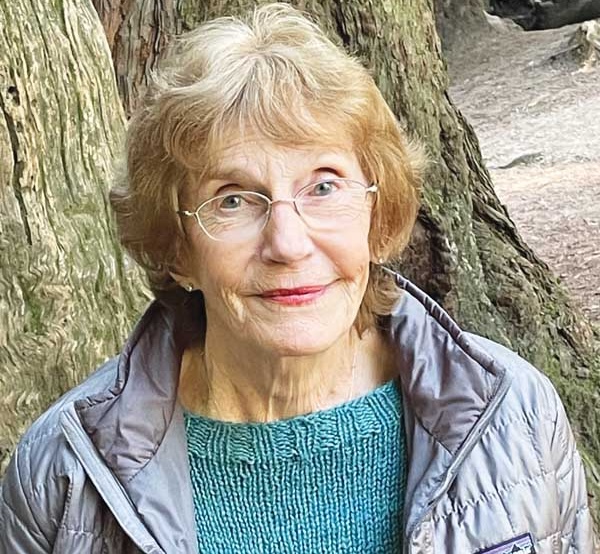
‘Life Span’: Molly Giles’ New Memoir

Woodacre writer Molly Giles has traveled back and forth across the Golden Gate Bridge for more than eight decades. Those trips dot the diaries she began keeping at age nine.

“My daughters have volunteered happily to burn all these journals when I die. And I thought, well, maybe I should use them before that,” Giles, 82, told me during a recent interview.

Readers will certainly be delighted with that decision, which spawned Giles’ first nonfiction book, an incisive and revelatory memoir released earlier this month. However, the acclaimed writer says her family, ex-husbands and former lovers may not feel as enamored with Life Span: Impressions of a Lifetime Spent Crossing and Recrossing the Golden Gate Bridge.

Throughout Life Span, Giles cleverly uses the iconic structure as the connective tissue for her heart wrenching, humorous and hopeful stories—from her earliest recollections to the present.

For eight or nine years, Giles worked on writing brief scenes from her life, many with the Golden Gate Bridge making an appearance as a bit player. Those wry, penetrating stories form the basis of Life Span. But Giles credits friend, neighbor and fellow writer DB Finnegan—“who gives great advice”—for identifying the landmark as the memoir’s throughline.

“The first piece I wrote was about my grandmother and my mother slapping each other over the 25-cent bridge toll, which is now, what, $10, practically?” Giles shared. “I read it out loud at a reading, and it got a good reception.”

No surprise that people loved the story, which became an early chapter in Life Span. It provides deliciously wicked insight into Giles’ mother, who almost causes a car accident during a petty squabble with her own mother. Never mind the two young girls, Giles and her cousin, being tossed around in the back seat.

Life Span by Molly Giles, 268 pages, published by WTAW Press.

Life Span opens in 1945, when Giles’ father returns to his family after serving in the Army during WWII. Giles, then a three year old, gets to ride with her unfamiliar father in the moving van from San Francisco to their new Sausalito home. The little girl marvels at the bridge approach—“it is like entering a tall orange palace with no walls and no roof.” And she likes taking a deep breath of her father’s cigarette smoke, the taste “warm and burnt toasty.”

Although only a tot at the time, Giles vividly recalls the moving day ride and the feelings she experienced. It’s one of her first memories.

“Don’t ask me what I did yesterday, but I did remember that one,” Giles said. “Driving. How proud I felt sitting in the front seat of the truck. And because my father was so new to me, he was shy. The two of us were very shy with each other all the time. So, it was an awkward ride, but a very happy one too.”

Complicated family relationships remain front and center in Life Span. Almost no one is spared from Giles’ razor-sharp observations, including her three daughters, who have decided they won’t read the book.

“It’s probably for the best, but I told them that I wish they told me that when I was writing it,” Giles said. “I could have really taken the gloves off. Most of us don’t write about our parents until they’ve passed away, but I’m writing about people that are still alive. And I feel very vulnerable about it.”

While Giles doesn’t want to hurt anyone, including her exes—who she’s still good friends with—she confesses that her defense may not be good enough. Her goal was to cull through her journals and write honestly about how she felt at the time of the events, rather than how she feels now.

“I want my children to understand that it’s not about them,” Giles said. “It’s about me, you know? It’s all about me. They can write their own Mommy Dearest when they’re finished. But this is more about my inadequacies and my failures.”

It’s easy to relate to Giles’ foibles—and her flash writing, a concise, crisp style that she has mastered in her award-winning fiction. In Life Span, she employs the technique, carefully crafting complete and powerful stories in pithy chapters, some just a paragraph long.

Giles prefers writing flash pieces. The process of “chopping” prose appeals to her, getting rid of the extraneous to expose the deeper meaning.

“To me, it’s a little like play,” Giles explains. “Moving the pieces around the Rubik’s Cube until everything clicks.”

Life Span certainly clicks. From the opening pages about her father and mother, Giles leads us through her marriages, children, lovers, teaching, writing and what she calls the late Summer of Love, when she falls for Ralph at age 75. She keeps the reader engaged by making all the words count.

Each chapter in the book represents a year—usually a single experience in Giles’ life—until she meets Ralph in 2017. She purposely slowed the pace for the reader by devoting 12 chapters to the first year of their relationship, one for every month.

Those 12 chapters have the reader vacillating on whether the couple will make it. Giles told me that she felt the same way while she was living through it. Between her need for alone time and Ralph’s beautiful young female friends, it was a tough call.

“When it comes to dinner, I am happy with a bag of Fritos, eating over the sink, but Ralph is, you know, let’s have meat and potatoes and salad and vegetables,” she told me. “It’s just that before, I could wear the same outfit three days in a row.”

Eventually, Giles’ trepidation waned. Today, their relationship serves as inspiration to her friends looking for love later in life. Ralph keeps his home in San Francisco, and Giles remains in Woodacre, although they spend several days and nights a week together.

The arrangement keeps both Giles and Ralph traveling across the Golden Gate Bridge on a regular basis. And I can’t think of a better beginning for their next chapter.


Upcoming Events With Molly Giles

In conversation with Peg Alford Pursell

  • 6pm, Saturday, June 29
  • Books & Letters, 14045 Armstrong Woods Rd., Suite B, Guerneville

In conversation with Jane Ciabattari

Celebrity secrets and what we owe the dead

Two weeks ago, the Pacific Sun and the Bohemian published an article (“A Local Remembers Sinéad,” July 27) about singer and activist Sinead O’Connor, who died last month at age 56. 

The writer identified herself as a night shift caregiver to O’Connor, seemingly having no qualms about revealing her association with a “secret client.” O’Connor, the writer said, had undergone an undisclosed procedure and was recovering in a “rehab room.”

A description of the singer’s compromised physical appearance made it into the article a few times, as did the writer’s claim that O’Connor’s celebrity status made her want to protect her client.

“Each of us, in our vulnerable moments, deserves privacy and dignity,” the writer stated.

Yet, in the article, I don’t think the writer protected O’Connor. In addition to the unflattering comments about the way O’Connor looked, she also made reference to—but didn’t elaborate on—“gory details,” apparently regarding the procedure.

The caginess about the procedure and the rehab room left me wondering whether O’Connor had back surgery and was in a physical therapy rehab facility or if she had undergone electroshock therapy at a mental health rehab center. Not that I’m entitled to know.

The piece, clearly intended to be an homage to O’Connor, worked on a certain level. The writer compared her challenging life experiences with O’Connor’s, giving the reader a window into why the outspoken performer had such an impact on her.

But I couldn’t get past the fact that a caregiver violated the trust of a patient.

Caregivers see us when we’re weak, when we need help, when we must turn over some control to another person.

O’Connor entrusted her care, her privacy, her personal health information to a professional caregiver. I don’t think that her death should void the expectation of confidentiality.

I asked the writer about the issue. Frankly, I was unimpressed by her defense.

“I will say that I didn’t share anything that isn’t already public knowledge,” the writer told me. “It’s all on Wikipedia. She has revealed all the things that were alluded to in the piece.”

O’Connor certainly did share her struggles—from surviving child abuse to a difficult hysterectomy to multiple suicide attempts—with the public. That was her prerogative.

However, I firmly believe that a caregiver should never disclose observations about a patient recovering in a rehab room, especially in newspapers that remain on the internet. While O’Connor is no longer living, her children and other loved ones are still here.

To be clear, I would disagree with a butler, housekeeper or chauffeur broadcasting private details about their famous employer. Heck, I’m nobody, and I don’t even want my handyman telling my neighbors about my messy hair or unkempt home. It’s nobody else’s business unless I deem it so.

Of course, the Pacific Sun and the Bohemian had a role in this scenario. I asked my editor why he published the O’Connor piece. The privacy issue didn’t occur to him, he said. It didn’t occur to other people either. I know because I asked quite a few friends about it.

Interestingly, most of my millennial and Gen Z buddies were fine with the article. They told me that since O’Connor shared her troubles with the world, the writer didn’t cross the line.

Folks in the 55+ age group and those with health problems agreed with me. Health care providers, too, frowned on the caregiver/writer providing personal information about O’Connor.

Perhaps my younger friends will feel differently when they get a few gray hairs. As our population ages, the need for caregivers will increase.

Caregivers provide vital services in hospitals, rehabs, assisted living facilities and our homes. They feed us, wipe our tushes and tuck us into bed. While there are laws in place regulating a patient’s privacy, not every situation is covered.

We need to set some ground rules about what is permissible for a caregiver to divulge when they leave us, whether we’re Grammy winners or just regular Joes needing assistance with our bodies or mental health.

Rule number one: What happens in the room stays in the room. Two: Death doesn’t negate rule number one.

And if a caregiver breaks the rules, the media should carefully consider whether to publish their revelations.

Tick Talk: Blood-sucking arachnids spread disease in Northern California

What the heck is that thing in the photo? A hazelnut? A small dumpling with eight legs? Perhaps an odd seed pod? Nope.

Behold the engorged tick, swollen with blood stolen from its host. Not only do the little suckers feast on our vital red fluid, but they can also leave behind parting gifts, including the bacteria that causes Lyme disease and other tick-borne illnesses. It’s possible for ticks found in California to transmit seven different diseases to humans, according to the California Department of Public Health.

Exactly a decade ago, I wrote an article about Lyme disease featuring “Jane,” a Marin County native who had been suffering from a myriad of debilitating symptoms for three years.

“It started with a violent flu—the worst flu I ever had in my entire life,” Jane told me in 2013. “Then, I would wake up with numb arms and hands. My vision was slightly blurry.”

New symptoms continued to emerge. Severe headaches, extreme fatigue, joint and bone pain, memory loss and dizziness. Jane spent more and more time in bed.

She trudged to 14 doctors, who poked, prodded and misdiagnosed her. Finally, in May of 2013, the 15th doctor tested her for Lyme disease. Although Jane didn’t recall being bitten by a tick, nor had she noticed the tell-tale bullseye rash some people develop, she had Lyme.

While she was relieved to finally have a diagnosis, she was also confused—and rightfully so.

“First, I was told there was no Lyme in Northern California,” Jane said. “Then, I was diagnosed with chronic Lyme, a disease that I was told didn’t exist.”

In 2012, about a year before Jane’s diagnosis, a group of women in Silicon Valley started the Bay Area Lyme Foundation and convinced a couple of tick ecologists to conduct a study. The results, which came out in 2014, caused a stir in the science community. Sure enough, Borrelia burgdorferi, the bacterium that causes Lyme, was present in 1% to 7% of the western blacklegged ticks collected from Bay Area trails and parks, depending on the location.

“We found ticks carrying B. burgdorferi in nearly every park that we looked, and not just in wooded areas …” said Dr. Dan Salkeld, an ecologist and epidemiologist who was one of the study’s lead authors.

Based on this study and others, the medical community no longer quarrels about whether Lyme exists in Northern California. However, there are still many controversies surrounding the disease.

“No one is denying that Lyme disease is real,” said Dr. Matt Willis, Marin County’s public health officer. Willis contracted the disease years ago and had a bullseye rash. Fortunately, he was diagnosed and cured rather quickly.

“Lyme disease has been well established,” he continued. “The debate is around its prevalence.”

The Marin/Sonoma Mosquito and Vector Control District collects ticks year-round from trails, parks and recreation areas in both counties. The adult and young ticks, called nymphs, are tested for the bacterium that causes Lyme disease, and Borrelia miyamotoi, a bacterium that causes tick-borne relapsing fever.

In conjunction with the state, the district also tests for other pathogens, including the bacterium that causes anaplasmosis, a disease that is on the rise in Marin County, according to Willis.

About 2% of the adult ticks in Marin are infected with the bacteria that causes Lyme. Sonoma County fares a bit better at 1.5%.

Those percentages more than double when looking at the infection rate for the nymphs, which are about the size of poppy seeds. In Marin, almost 4.2% of the nymphs harbor Lyme-causing bacteria. The rate is 4.1% in Sonoma County.

“We’re in nymphal season now, from spring through summer,” said Dr. Kelly Liebman, an entomologist and the scientific programs manager for the Marin/Sonoma Mosquito and Vector Control District. “The ticks are out there, and the pathogens are there at low levels.”

But hotspots exist in certain areas, where a much higher percentage of the ticks carry pathogens, said Wendy Adams, research grant director for the Bay Area Lyme Foundation. And those locations can change from year to year.

In a Bolinas Lagoon study, 31% of the collected ticks harbored at least one pathogen, including the bacteria that causes Lyme, tick-borne relapsing fever and anaplasmosis, according to a 2021 research article by Salkeld that was published in the American Society for Microbiology Journal.

While the number of reported cases of Lyme disease remains low in the Bay Area—eight in Marin County and seven in Sonoma County in the last two years—experts agree underreporting occurs.

Consider the backflips by the Centers for Disease Control and Prevention, which states that “many cases do not get reported” because health care providers are “busy.” The CDC receives 35,000 reports of Lyme disease cases annually, yet the agency uses insurance records to estimate that approximately 476,000 Americans are diagnosed and treated for Lyme disease each year.

It’s no wonder that the Bay Area Lyme Foundation is funneling millions of dollars into research at dozens of esteemed institutions, such as Stanford University, Johns Hopkins University and the Massachusetts Institute of Technology. The organization aims to make Lyme disease easy to diagnose and simple to cure.

Diagnosis is difficult because the two-tiered Lyme antibody test recommended by the CDC, which has been around for 29 years, is known to provide false negatives. It often takes a few weeks for the body to produce enough antibodies to measure, causing a delay in treatment, according to the National Institute of Allergy and Infectious Diseases.

“Accurate diagnostics are the linchpin for being treated appropriately for Lyme Disease,” said Adams, the research grant director. “We are hoping that with new, more sensitive detection technologies, we will be able to detect the bacteria itself in a blood sample, and not just the immune response which varies from infection to infection.” 

Adams knows firsthand the importance of early and accurate diagnostics. She went five years before being diagnosed with Lyme disease, and it took her several more years to fully recover.

Many Lyme patients and their doctors believe delayed treatment plays a factor in chronic Lyme, a condition the CDC refers to as Post-treatment Lyme Disease Syndrome. Even after the prescribed course of antibiotics, some people are still plagued by illness.

Last week, I revisited Jane, whose name is actually Kirsten Seifert-Stein. During our first interview, she insisted on a pseudonym because she feared her family’s health coverage would be canceled due to her Lyme diagnosis.

Ten years post diagnosis, Seifert-Stein, now 53, has not fully recovered. Her health insurance was never canceled, but it doesn’t cover much anyway. She stopped tallying her out-of-pocket medical expenses years ago when the total hit $100,000.

“I’m concentrating on my health and getting better,” she said. “But I’ve sacrificed a lot to do that, Including my career, education and relationships with friends and family.”

Ditto for Sarah Reid, 59, who was also diagnosed with Lyme in 2013. The Santa Rosa resident’s experience is eerily similar to Seifert-Stein’s. Reid doesn’t remember removing a tick or having a bullseye rash. Despite a decade of treatment, she hasn’t been cured.

“I have a persistent disease that pretty much is with me constantly,” Reid said. “Lyme has caused me a lot of trauma, both financially and emotionally, in trying to get diagnosed and treated.”

Remarkably, both women still venture into the great outdoors when they feel up to it. Reid volunteers for the horse trail patrol and rides in Sonoma County parks and preserves, while Seifert-Stein mountain bikes and walks her dog throughout Marin. They agree that preventing tick borne illnesses is the key.

“Take precautions,” Seifert-Stein said. “Use tick repellent, wear the right clothing and do tick checks. It’s OK to go outside.”


For tips on preventing tick bites, visit the Marin/Sonoma Mosquito and Vector Control District and the Bay Area Lyme Foundation.

Petaluma-based mobile crisis intervention program expands to San Rafael

The “subject down” call came into the San Rafael police dispatcher on Thursday morning at 10:22 a.m. A passerby reported that a man was lying on the ground at the corner of Second and A.

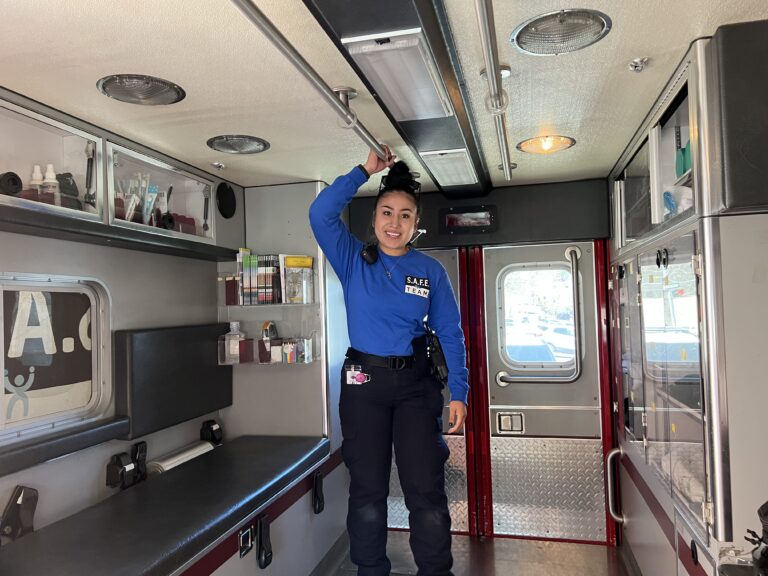
Instead of dispatching paramedics or the police to assess the situation, San Rafael’s new mobile crisis intervention team, Specialized Assistance for Everyone (SAFE), responded to the call. On March 29, San Rafael became the first city in Marin County to launch a mobile crisis program. Several such programs already exist in Sonoma County.

Two civilian first responders, specially trained to provide services for vulnerable community members, found the man prone and groaning on the sidewalk. Priscilla Ferreira and her trainee, La Tasha Knighten, noted the smell of alcohol on the man, but also saw that he had head injuries.

Under gentle questioning from Ferreira, the man explained in Spanish that he had been robbed and beaten the previous evening. Ferreira, who is fluent in Spanish, said that SAFE would take him to the hospital in their rig, and he readily agreed.

However, the man kept falling back down when Ferreira and Knighten tried to help him up. Equipped with police radios and tied-in to the 911 dispatchers, they called for paramedics to transport the man to the hospital.

Within a few minutes, five paramedics from the San Rafael and Central Marin fire departments were on scene. Perhaps it was the presence of the large group or a moment of confusion, but the victim suddenly changed his mind about receiving services.

“I want to die,” he yelled. “Leave me alone.”

Ferreira, who had established a rapport with the man, spoke with him again. He calmed down, cooperated and was soon on his way to the emergency room in the paramedics’ ambulance.

It was a typical call—if there is such a thing for a mobile crisis unit—with the desired outcome.

“He could have just walked away, but we got him the medical attention he needed,” Ferreira said. “It feels good.”

My assignment this particular morning was to observe the San Rafael SAFE team in action. While I wasn’t permitted to accompany Ferreira and Knighten in their vehicle, I did a ride along with Sergeant Justin Graham of the San Rafael Police Department. Graham and I shadowed the crisis response team.

“SAFE is a separate entity,” Graham said. “It’s the fourth leg of public safety in San Rafael, alongside police, fire and medical.”

It is unusual for the police to follow a SAFE team, SAFE director Aziz Majid said. The teams respond alone to 80% of the calls, with the police dispatched only when a safety issue arises. 

After just three weeks, the program is already having a positive impact in San Rafael. The SAFE teams have handled 10 to 14 calls during each 12-hour shift, allowing the overburdened police and emergency medical personnel to focus on situations requiring their expertise.

“We don’t work for the police—we work with them,” Majid said. “Our team doesn’t carry weapons or handcuffs. We have radios and come armed with empathy.”

SAFE primarily serves the homeless community, which accounts for 40% of their calls, and people with mental health and substance use issues. In addition to de-escalating crisis situations, team members provide a variety of services, including transportation, referrals to other organizations and harm reduction methods, such as needle exchanges.

The City of San Rafael signed a three-year contract with SAFE for $750,000 annually, according to Majid. The program currently operates seven days a week, from 8am to 8pm. 

Ferreira and Knighten had responded to two calls prior to helping the man with the head injury. They began their morning by assisting eight homeless people who were being evicted from an unauthorized encampment on private property. Although the campers declined transportation, SAFE gave them clean clothes, food and information about services in the area.

The SAFE duo also went to The Pink Owl, a downtown coffee shop, in response to a public disturbance call. A man known to have mental health issues reportedly entered the shop and accused staff of poisoning his coffee. The man was gone by the time Ferreira and Knighten arrived; however, they checked on the baristas to ensure everyone was OK after the incident.

It wasn’t even 11am, and Ferreira and Knighten were preparing for their fourth call of the day —one that this reporter couldn’t attend. They would be meeting with the Downtown Streets Team, a nonprofit organization with programs for homeless people, to discuss the confidential needs of a specific client.

SAFE launched in Petaluma in July 2021. Since then, it has expanded to Rohnert Park; Cotati; Sonoma State University, making it the first mobile crisis program on a California state university campus; and now San Rafael. All of the SAFE teams are under the auspices of the Petaluma People Services Center, which runs more than 70 human services programs.

Majid, SAFE’s director, likes to say that there is “no call too small” for SAFE. Teams can transport a homeless person to St. Vincent’s for a free meal or hand out bottles of water. Then there are the more challenging calls, like a three-hour family mediation.

“A lot of these calls are mental health or substance related—nonviolent,” Majid said. “Police officers are trained for violent or criminal issues. SAFE provides trauma informed care. We watch gestures and body posture, won’t overact and respect personal space. We sit there, listen, give empathy and take our time on a call.”

SAFE employs 34 people across Sonoma and Marin counties, most working in the field as first responders. The needs are different in each community that SAFE serves. In San Rafael, every shift is staffed with a bilingual, Spanish-speaking person. Bilingual SAFE team navigators follow up with clients and refer them to resources in their area.

All team members have a background in the mental health or behavioral fields. Upon joining SAFE, staff go through two weeks of SAFE classroom training and five weeks of field training.

Recently hired, Knighten, who is completing her field training in San Rafael, has more than 13 years of experience working with youth on probation and managing diversion programs. She’s also attending school to become a licensed therapist.

Ferreira started with SAFE a year ago in Petaluma and has transferred to work in San Rafael’s new program. Her psychology and sociology degrees helped prepare her for the job, as did her experience working with autistic children and at a domestic violence shelter. Ferreira is currently working on her master’s degree in conflict resolution and negotiation.

Majid onboarded to the first SAFE team in Sonoma County as an EMT. The Marin native previously worked at San Quentin teaching financial literacy.

The varied expertise of the team members is beneficial because of the wide range of calls they receive. A team could go from working with a family on a dispute about child custody, to an eviction call, followed by responding to someone attempting suicide.

“Then there are those calls where a person doesn’t want to engage,” Majid said. “We respect that. It might take four or five calls to break the ice and make a connection with someone in need, but we keep trying. As long as we’re building rapport, it’s a success.”

Introducing the 2023 ‘Best Ofs’

How We Wrote the Your Favorite Edition

Quick Links: Readers’ Picks | Writers’ Picks

There are two reasons I figured I was safe from being replaced by artificial intelligence.

A) They don’t mint currency small enough to pay writers any less and B) for what it’s worth, I have the heart of an artist (and, yes, it’s amazing what you can buy on eBay).

So, imagine my chagrin when ChatGPT sashayed into my office (and by office, I mean my eight-year-old laptop) and showed me the future of writing for pay by removing “for pay” from the preceding clause. I prompted the AI with this: “Write an introduction to the 2023 Best of the North Bay edition of the Bohemian in the style of Daedalus Howell.” ChatGPT wrote:

“Greetings and salutations, fellow denizens of the North Bay! It is my great pleasure to welcome you to the much-anticipated ‘Best Of’ edition of the Bohemian for the year 2023. As a proud resident of this vibrant region, I am always thrilled to see our local establishments and personalities recognized for their excellence, and this year’s edition is no exception… Our beloved North Bay is teeming with creativity, innovation, and passion, and it is these qualities that are celebrated in the pages that follow.”

It was fast. It was free. And it was good—enough. I immediately killed the piece and reached out to a group of writers who I knew would yield the messy, emotional and irreplaceably human reflections of the North Bay experience that you, dear reader, deserve.

You see, back in the day, I’d assemble our Best of the North Bay team as though I was planning a bank heist. I’d carefully choose a crack team of professionals, each with expertise in an esoteric skill necessary to pull off that one last job. Not this time. There are fewer of us doing more for less, so I convened a suicide squad of merry pranksters so riotously authentic that an AI would rather self-destruct than pollute its precious algorithm with their pungent humanity.

Read on and you’ll laugh, you’ll cry and you’ll be reminded why Sonoma and Napa are still two of the best counties left to live in if you dare to be human in a world that insists that you be anything but.

Here’s to the wily free spirits who penned this year’s writers’ picks—news editor Will Carruthers and contributors Isabella Cook, Evan Davis, Mark Fernquest, Michael Giotis and Chelsea Kurnick. Thanks for being dandelions in the Astroturf. — Daedalus Howell, editor

Freshman assemblymember pushing hard for constituents’ concerns


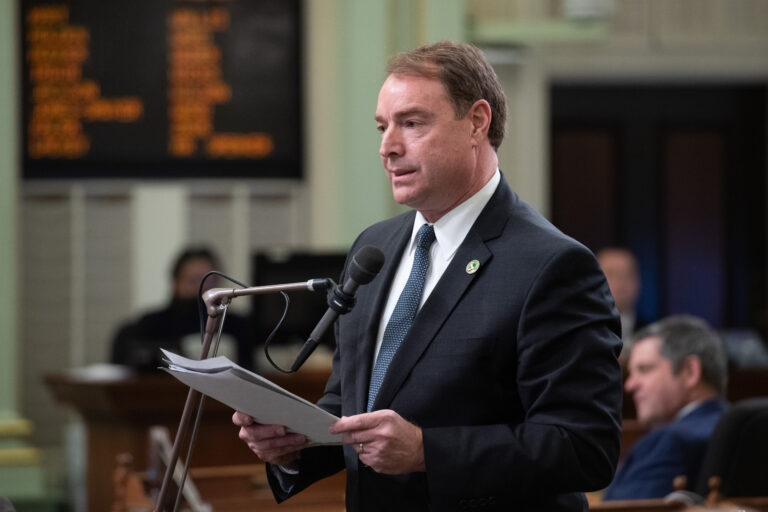
Assemblymember Damon Connolly
listened carefully to voters while on the campaign trail last year for a seat in the California State Assembly. Now, 100 days into office, those conversations with constituents have already inspired his decisions on policymaking.

After narrowly winning the November election, squeaking by opponent Sara Aminzadeh with a 3.6% lead, the freshman legislator says he hit the ground running and hasn’t stopped. On Dec. 5, Connolly was sworn in as the representative for Assembly District 12, which covers Marin and southern Sonoma County.

By mid-February, he had introduced 21 bills to the legislative session. It’s a robust number for a new assembly member, according to Connolly.

“A number of my bill ideas have come from local folks and the issues that they identified,” Connolly said during an interview with this publication.

Connolly also launched a new Select Committee on Wildfire Prevention, which he will chair, a rarity for a freshman. Surprisingly, with catastrophic, out of control wildfires causing unprecedented death and destruction in California, no similar committee existed before Connolly suggested it.

During his term, Connolly will preside over hearings on wildfire prevention, and the committee will provide oversight on fund allocation.

The assemblymember is also serving on several high-profile committees, including the Utilities and Energy Committee. Currently, he is participating in hearings on the soaring costs of utility bills.

“’Hold utilities accountable,’” Connolly said. “I hear that all the time from constituents. And particularly now when we’re seeing energy prices rise two to three times higher than usual.”

As a member of the almighty Budget Committee, Connolly has a role in controlling the state’s purse strings. The assemblymember requested an appointment to the Budget Subcommittee 3, which allows him to focus on the climate crisis, resources, energy and transportation.

Other assignments include serving on the Judiciary Committee and the Environmental Safety & Toxic Materials Committee. Connolly seems particularly proud of his appointment as the vice chair of a joint committee.

“I’m one of four freshmen who received a committee chairmanship, so I’m the Assembly leader of the Joint Legislative Committee on Climate Change Policy,” Connolly said.

That committee is currently “digging deep” into the California Air Resources Board scoping plan, which was criticized in a January report by the Legislative Analyst’s Office. It’s imperative that the state meet ambitious greenhouse gas reduction goals by 2030 to 2045 and provide transparency on the path to achieving those lofty targets, according to Connolly.

Agriculture also tops Connolly’s concerns. With the North Bay’s unique contributions to California’s 54-billion-dollar ag industry—from the ranches and dairies in West Marin to Sonoma County’s wineries, livestock and crop production—serving on the Agriculture Committee is a natural fit for the assemblymember.

Although Connolly admits that agriculture is a relatively new area for him, he is particularly excited about how some aspects of farming dovetail with his interest in reducing climate change.

“Part of the solution on mitigating climate change, and I have been leading in that regard, is carbon farming, carbon sequestration, the healthy soils program,” the assemblymember said. “One of my bills relates to that.”

Indeed, AB 406, introduced by Connolly, if passed, will provide millions in grant funding for sustainable farmers by including organic farming in the Healthy Soils and California Farmland Conservancy programs.

The assemblymember also authored AB 404 and AB 405. Both ag bills streamline the process of obtaining organic farming certification by removing some of the red tape that puts small and mid-size farming operations at a disadvantage.

Other bills introduced by Connolly run the gamut, demonstrating the demands of running the most populous and wealthiest state in the country. From a bold bill that protects youth from nicotine and tobacco addiction to legislation that places a cap on fire insurance premium increases for seniors, the assemblymember is covering the bases for his constituents.

Connolly’s AB 935 phases in a ban on tobacco use for people born on or after Jan. 1, 2007, similar to the statewide ban on flavored tobacco that was approved by voters.

The needs of seniors are a priority for Connolly. In addition to the cap on fire insurance premiums, AB 582 provides seniors living in a high-risk fire zone with a tax credit to shore up their property against wildfires.

The idea for restricting pesticide spraying by the California Department of Transportation (Caltrans) came from district constituents, according to Connolly. Too often, Caltrans has sprayed pesticides such as glyphosate, a key ingredient in Roundup, around public highways, even in counties like Marin and Sonoma, which have passed resolutions against the use of such toxic chemicals. Connolly’s AB 99 will ban Caltrans from deploying the pesticides along highways in counties with restrictions against using the poisons.

Saving the whales made it into the assemblymember’s bill package with AB 953. A vessel speed reduction program provides a two-fold benefit by lessening the risk of whale strikes off California’s coast and diminishing pollution from oceangoing vessels.

Marin and Sonoma commuters may soon breathe a sigh of relief if AB 1464 is passed. The bill creates a pilot program to find a fix for the traffic congestion on the Richmond-San Rafael Bridge. Relieving the headache-inducing gridlock will help decrease pollution, too.

Some of Connolly’s other bills include protections for mobile homeowners and the wetlands; extending healthcare coverage for children with metabolic disorders; restricting the sale of sodium nitrite in high concentrations to prevent teen suicide; and phasing out older, polluting combustion biomass facilities.

The tightening economic conditions will certainly play a role in what the state legislature is able to accomplish in the upcoming sessions. Connolly acknowledges the unpredictability of the state finance system is a problem.

“We rely a lot on the highest income earners, and quite often their income derives from capital gains and investments—as opposed to salary—and that fluctuates,” Connolly said. “It’s been an issue over the years, and we’re seeing it again this year. Tremendously volatile swings make it challenging, and that could very well be an issue we need to take up through the budget.”

In the meantime, the assemblymember plans on continuing his dialogue with constituents. Connolly recently had productive “community get togethers” at coffee shops in Petaluma and San Rafael, and he’s been meeting with environmental groups.

“People who live here have subject matter expertise and they’re engaged,” Connolly said. “It’s been helpful for me, in representing this area, that people are willing to speak and provide ideas on bills. We’re blessed to have an active district.”

Petaluma Senior Dog Sanctuary Leads National Campaign to Save Elder Pups

Formed in 2009, North Bay nonprofit organization Lily’s Legacy Senior Dog Sanctuary rescues, re-homes and fosters senior large-breed dogs throughout Northern California.

This week, Lily’s Legacy extends its reach across the country once again with its third annual Saving Senior Dogs Week, partnering with two dozen other senior dog rescues throughout the US to raise awareness about the needs and benefits of senior dogs everywhere.

Saving Senior Dogs Week, running Oct. 25–31, is a weeklong national social media campaign to highlight the struggles of homeless senior dogs as well as the joys of adopting them. The campaign also aims to reduce unnecessary euthanasia, and to provide existing senior dog rescues in the United States with much needed funding to carry out their missions.

“We are thrilled to be going into our third year of Saving Senior Dogs Week and seeing all the support we have gained for our cause over the last two years,” says Alice Mayn, Executive Director of Lily’s Legacy Senior Dog Sanctuary, and creator of Saving Senior Dogs Week. “The continued and growing support from our sponsors and rescues has been phenomenal. We still have a long way to go but I feel incredibly positive about the progress and difference we are making.”

This year’s Saving Senior Dogs Week features 25 participating senior dog rescues from across the United States who will be sharing several adoption stories, facts and myths of adopting senior dogs, resources to assist senior dog owners, and how the public can help.

New for 2021, Saving Senior Dogs Week is also partnering with the New York Dog Film Festival, which supports animal welfare organizations across the country that focus on the most vulnerable dogs. A portion of every ticket sold across the country will benefit all the participating rescues of Saving Senior Dogs Week.

It is estimated that approximately 670,000 shelter dogs are euthanized each year in the United States. Although there are an estimated 14,000 animal rescue organizations nationwide, approximately 50 of them are dedicated exclusively to rescuing, rehabilitating and re-homing senior dogs.

In 2020, the Covid-19 pandemic presented a new set of problems for homeless senior dogs. While the pandemic led to a surge in pet adoptions across the United States, it also saw an increase in pet surrenders due to Covid-19 financial hardship.

“We still haven’t seen the full effect of the pandemic as it relates to homeless senior dogs, and I don’t think we will for some time,” said Mayn. “We are seeing more owners having to surrender due to Covid-19 financial hardship, and we are also seeing surrenders due to owners re-entering the work force who no longer have the means to care for their dogs. We certainly have our work cut out for us now more than ever.”

All of the funds raised during the weeklong campaign will go towards saving thousands of homeless senior dogs. Seventy-five percent of the proceeds from the fundraising campaign will be divided equally among the participating senior dog rescue organizations. The remaining twenty-five percent of the funds will go into the Saving Senior Dogs grant fund to provide veterinary care and dog supplies for new nonprofit senior dog rescues.

For more information on Saving Senior Dogs Week, or to donate, visit savingseniordogsweek.org.

Open Mic: Juneteenth Belongs to All of Us

By Reno Keoni Dono Franklin

As a CA Indian, I feel a strong tie to the celebration of emancipated Black people. It is a celebration that crosses racial and cultural boundaries. A shared set of broken chains. But while it did not end there for tribal people living here in CA, it was the road to the end of the enslavement of CA Indians.

In his book, Unholy Traffic in Human Blood and Souls, author Benjamin Madley details the gruesome history of slavery in California and documents instances of Indians being worked or beaten to death. In other cases, enslaved people were abandoned in the wilderness after their labor was complete.

A financial solution to the cheap labor need, CA slavery was propagated by the state’s first non-Indian residents. Those Anglo Americans, Europeans and Mexican land owners used religion as their moral pacifier to weaponize their churches and the Mission system here in CA against CA Indians.

The celebrated priests and monuments to genocide built along the El Camino Real stand today as a reminder of the church’s use of the Missions as their slavery distribution centers for CA Indian women, children and men.

In 1863, five months after the emancipation proclamation, California repealed its Indian apprenticeship laws. These prohibitions were strengthened by the 13th Amendment, which California immediately ratified in 1865.

We were not set free on June 19th, 1865, but the writing of freedom had been set in the pages of history and it would only be a matter of time until we were. Slavery in CA ended in 1873 when tribal people were given the right to testify in court, ending the ability to claim an indian was a vagrant.

I say today we celebrate that the freedom for one is the freedom for us all. I say we embrace our brothers and sisters of all races who were enslaved, and acknowledge the lives that were lost and the trauma our communities still suffer from. This day belongs to all of us. Happy Juneteenth to all of you.

Reno Keoni Dono Franklin lives in Santa Rosa. We welcome your contribution. To have your topical essay of 350 words considered for publication, write op*****@******an.com.

Museum Matters: Carnegie’s Gift Keeps Giving

There was a time not so long ago when the wealthy class of Americans gave back for the greater good of us all rather than hoarding billions for the sake of themselves.

Surely, steel baron Andrew Carnegie (who started his path to billions in the 19th century—his worth would’ve been $309 billion in today’s dollars) has some skeletons in the proverbial closet, but by the 20th century he had evolved into a philanthropist who gave out grants to more than 1,600 communities across the country to help build free public libraries. 

Two of those library buildings are still standing in Sonoma County and are now the Petaluma Historical Library & Museum and the Healdsburg Museum and Historical Society, each of which will soon receive a $10,000 gift from Carnegie Corporation of New York. Not only did Carnegie give away millions; he also established a way to keep on giving well beyond his death.

The awards are part of “Carnegie Libraries 250,” a special initiative celebrating the upcoming 250th anniversary of the signing of the Declaration of Independence and honoring the roughly 1,280 Carnegie libraries still serving their communities across the United States. 

Sonoma County Library director Erika Thibault said, “The grant will be added to the library’s general fund, helping us continue to provide welcoming spaces and valuable resources for all of our community members.”

Located at 221 Matheson St., just off the square in Healdsburg, the Healdsburg Museum and Historical Society exists to “collect, protect, preserve and interpret the artifacts, documents and photographs that trace the rich history of Healdsburg and surrounding area.”

The space served as the town’s library from 1911-1987, when some local shuffling moved organizations around and a new library was built. The Carnegie library—designed by Petaluma architect Brainerd Jones and built by Santa Rosa contractor Frank Sullivan—was slated for demolition, but the Healdsburg Historical Society joined forces with locals and saved the building. It opened as the Healdsburg Museum and Historical Society in 1990 and is now listed on the National Register of Historic Places.

The museum houses a permanent collection of rich, local history. Their current exhibition is “Our Favorite Toys.” Curated by Lauren Villacorte and Frances Schierenbeck, the exhibition features classic toys, games and crafty activities to engage visitors. The exhibit runs through Jan. 4.

Located at 20 Fourth St., the Petaluma Historical Library & Museum’s history is a bit different. It  took the initiative of the Petaluma Ladies Improvement Club, whose members wrote letters to Carnegie asking for funds to build the library.

In 1901, Carnegie offered $12,500, conditional upon site donation. Addie Atwater, president of the Ladies Improvement Club, owned property at the corner of Fourth and B streets. She sold it to the city for much less than market value, under the terms that it must be used for a library and if that changed, it would be returned to her or her heirs.

Jones was brought in to design the building. The crown jewel of the design is a gorgeous stained-glass dome that to this day remains one of the largest free-standing stained-glass domes in Northern California. It even survived the 1906 earthquake with minimal damage.

The Petaluma Museum is also having a toy related exhibition, titled “Toys Through Time: From Machine Age to Space Age.” Featuring a collection of antique mechanical toys on loan from a local collector, alongside Star Wars toys from Rancho Obi-Wan, the exhibition traces a journey from the ingenuity of clockwork mechanisms to the imagination of cinematic spaceflight. It runs until Feb. 1.

For more information, visit petalumamuseum.com and healdsburgmuseum.org.

See/Say, Communication via Cinema

It’s hard to say what we feel, right? Hard to find the right words, and sometimes harder still to conjure up the courage to say them out loud. 

In these winter months, when catching up with distant family members and old school chums who are in town for the holidays, I often find myself tongue-tied, struck dumb, awkward and lost for words. 

I take comfort in the fact that, according to director Chloe Zhao’s new film, Hamnet, William Shakespeare—yes, the most famous wordsmith in history—may himself have suffered from similar communication issues. The film, based on Maggie O’Farrell’s 2020 novel of the same name, fictionalizes The Bard’s family life, exploring his marriage to Agnes (Jessie Buckley in the film). When the two meet early in the movie, Shakespeare (Paul Mescal) confesses to Agnes: “It’s difficult for me to talk to people.”

“Then tell me a story,” Agnes entreats him. “One that moves you.” And, to no one’s great surprise, Bill happily—and skillfully—obliges, entrancing Agnes with the myth of Orpheus and Eurydice. What he couldn’t express to her in plain speech—perhaps the depth of his feelings about love, devotion and loss—he is able to convey through his abilities as a storyteller. Agnes understands. Later in the film, when the couple are shattered by the death of their child, it is only by watching one of his plays that Agnes can understand the depth of William’s grief. 

In the film Sentimental Value, similar themes are explored. We get to know a dysfunctional family: two adult sisters, and their estranged filmmaker father, who now wants to reconnect after the death of his ex-wife (the sisters’ mother). Specifically, the father wants one of his daughters, Nora, to star in his new film.

“I can’t work with him,” Nora (Renate Reinsve) says. “We can’t really talk.” But, as Nora will eventually discover, her father has written his new film with that exact problem in mind. He knows they can’t communicate conventionally, but he hopes that perhaps they can understand each other through other means—namely, artistic collaboration on a film.

Cinema, and art in general, has the wonderful ability to communicate that which is hard, or impossible, to communicate in words. So if one, like me, ever finds themself at a loss for words, or perhaps not feeling brave enough to say the words they’d like to, maybe their best bet is to seek out (or create) a movie or some other piece of art that captures what they feel, and then share it with someone they hope will understand.

‘Life Span’: Molly Giles’ New Memoir

Woodacre writer Molly Giles has traveled back and forth across the Golden Gate Bridge for more than eight decades. Those trips dot the diaries she began keeping at age nine. “My daughters have volunteered happily to burn all these journals when I die. And I thought, well, maybe I should use them before that,” Giles, 82, told me during a...

Celebrity secrets and what we owe the dead

Two weeks ago, the Pacific Sun and the Bohemian published an article (“A Local Remembers Sinéad,” July 27) about singer and activist Sinead O’Connor, who died last month at age 56.  The writer identified herself as a night shift caregiver to O’Connor, seemingly having no qualms about revealing her association with a “secret client.” O’Connor, the writer said, had undergone...

Tick Talk: Blood-sucking arachnids spread disease in Northern California

What the heck is that thing in the photo? A hazelnut? A small dumpling with eight legs? Perhaps an odd seed pod? Nope. Behold the engorged tick, swollen with blood stolen from its host. Not only do the little suckers feast on our vital red fluid, but they can also leave behind parting gifts, including the bacteria that causes Lyme...

Petaluma-based mobile crisis intervention program expands to San Rafael

The “subject down” call came into the San Rafael police dispatcher on Thursday morning at 10:22 a.m. A passerby reported that a man was lying on the ground at the corner of Second and A. Instead of dispatching paramedics or the police to assess the situation, San Rafael’s new mobile crisis intervention team, Specialized Assistance for Everyone (SAFE), responded...

Introducing the 2023 ‘Best Ofs’

How We Wrote the Your Favorite Edition Quick Links: Readers' Picks | Writers' Picks There are two reasons I figured I was safe from being replaced by artificial intelligence. A) They don’t mint currency small enough to pay writers any less and B) for what it’s worth, I have the heart of an artist (and, yes, it’s amazing what you can buy...

Freshman assemblymember pushing hard for constituents’ concerns

Assemblymember Damon Connolly listened carefully to voters while on the campaign trail last year for a seat in the California State Assembly. Now, 100 days into office, those conversations with constituents have already inspired his decisions on policymaking. After narrowly winning the November election, squeaking by opponent Sara Aminzadeh with a 3.6% lead, the freshman legislator says he hit the...

Petaluma Senior Dog Sanctuary Leads National Campaign to Save Elder Pups

Formed in 2009, North Bay nonprofit organization Lily’s Legacy Senior Dog Sanctuary rescues, re-homes and fosters senior large-breed dogs throughout Northern California. This week, Lily’s Legacy extends its reach across the country once again with its third annual Saving Senior Dogs Week, partnering with two dozen other senior dog rescues throughout the US to raise awareness about the needs and...

Open Mic: Juneteenth Belongs to All of Us

Microphone - Kane Reinholdtsen/Unsplash
By Reno Keoni Dono Franklin As a CA Indian, I feel a strong tie to the celebration of emancipated Black people. It is a celebration that crosses racial and cultural boundaries. A shared set of broken chains. But while it did not end there for tribal people living here in CA, it was the road to the end of the...

Museum Matters: Carnegie’s Gift Keeps Giving

The Petaluma Historical Library & Museum and the Healdsburg Museum and Historical Society will each soon receive a $10,000 gift from Carnegie Corporation of New York
There was a time not so long ago when the wealthy class of Americans gave back for the greater good of us all rather than hoarding billions for the sake of themselves. Surely, steel baron Andrew Carnegie (who started his path to billions in the 19th century—his worth would’ve been $309 billion in today’s dollars) has some skeletons in the...

See/Say, Communication via Cinema

Cinema, and art in general, has the wonderful ability to communicate that which is hard, or impossible, to communicate in words.
It’s hard to say what we feel, right? Hard to find the right words, and sometimes harder still to conjure up the courage to say them out loud.  In these winter months, when catching up with distant family members and old school chums who are in town for the holidays, I often find myself tongue-tied, struck dumb, awkward and lost...
11,084FansLike
4,446FollowersFollow
6,928FollowersFollow