Each spring and fall, we at the Bohemian shine a light on local authors’ work, and each spring and fall, we receive more and more submissions. This is due in part to the rise of self-publishing, sure—anyone with a Word file, an internet connection and a few hundred dollars can produce slick-looking paperbacks to give to friends and sell in local bookstores. Because of the runaway success of Fifty Shades of Grey—originally a print-on-demand book that turned into a New York Times juggernaut—there’s a virtual gold rush craze on self-publishing.
But there’s something else at play here, and that’s this: more accessibility to publishing means more of an impetus to open that Word document titled “Novel.doc” on one’s desktop and start to let the words flow. The numbers of writers, especially in our region, is growing, and so are the opportunities for writers to be read. Without that shot, where might some of our best writers be? What if Salinger followed in his father’s footsteps and sold cheese for a living?
Below are our twice-annual synopsized works from local authors—both with and without publishers. Until we get simply too many submissions on our doorstep here at the Bohemian, we feel that all are deserving of notice.—G.M.
Thirty-three years after the groundbreaking The Way of the Shaman was published, Mill Valley resident Michael Harner has produced a follow-up guide showing more evidence of heavenly realm. ‘Cave and Cosmos: Shamanic Encounters with Spirits and Heavens’ (North Atlantic Books; $19.95) is written like a scientific thesis, using personal accounts and interviews of others to support Harner’s explanations and conclusions. Many of these experiences involve ayahuasca, a strong psychedelic brew with effects similar to DMT, widely used in ceremonies by Peruvian shamans. Harner explores ayahuasca as well as drumming as ways to make the connection to other worlds. This is heady stuff. To be able to agree or disagree with its principles, one must first be able to understand them, and that’s easier said than done. But by using shamanistic techniques, Harner argues, now tens of thousands are able to “enter another reality to travel to other worlds as well as work here in this world to provide healings and other shamanic help.” Harner also posits that, in the future, shamanic treatment of illness will become as important and useful as anything in the Western medical world. If the Western world continues the trend of focusing on profit over patients, he might be right.—N.G.
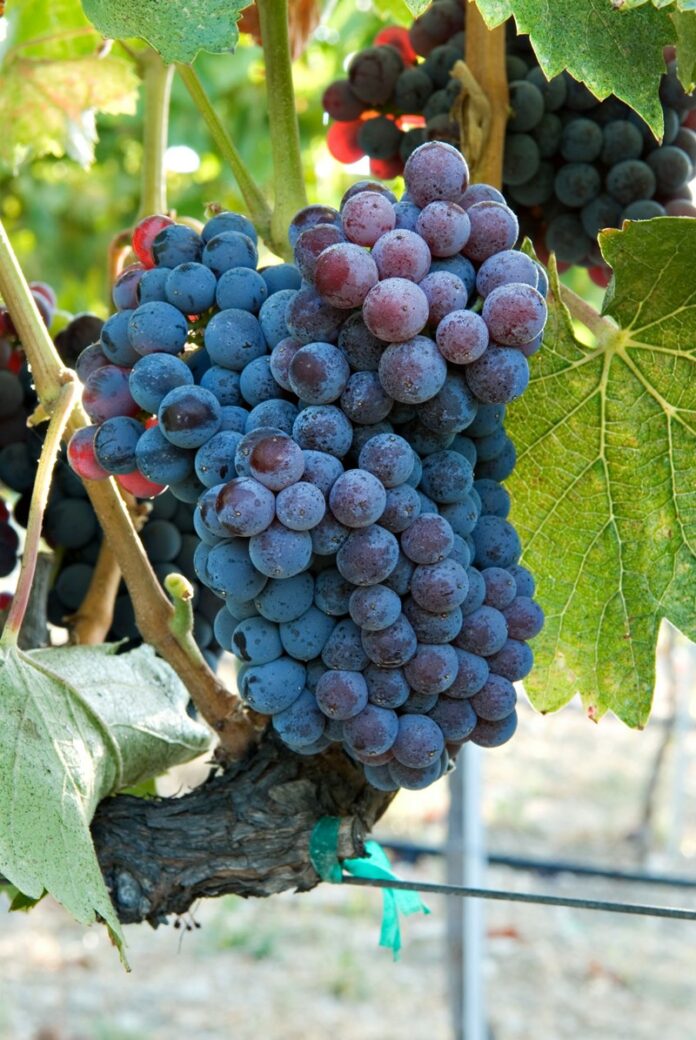
Because wineries don’t receive nearly enough coverage in this world, ‘The California Directory of Fine Wineries: Central Coast’ (Wine House Press; $19.95) is sorely needed. Before the publication of this veritable Rosetta Stone of grape-production facilities—and its predecessor, the Sonoma / Napa / Mendocino addition—thirsty aficionados of the vine used to drive for days in zigzags across the state to discover, if luck smiled, the Golden State’s ultra-rare sites of vinological practice. We kid, we kid. Still, readers can consider this book a treasure map to those hidden makers of the vine that one only hears about in generations-old lore. And Sideways—this edition covers the land of Paul Giamatti & Co., focusing on wineries from Santa Barbara, San Luis Obispo and Santa Ynez. Residents in Sonoma and Napa will no doubt think, “The Central Coast? Why bother?” The book, published in Sonoma, answers the shrugged question convincingly, with writing by K. Reka Badger and Cheryl Crabtree, evocative photographs by Robert Holmes and detailed information on 51 wineries from down South edited and assembled by Tom Silberkleit. Elegantly bound and packed with maps, profiles, tips and more, the book might be just the impetus for a three-day reservation in the “Jungle Room” at the famed Madonna Inn.—G.M.
North Bay writer David Madgalene is back with another letter-sized, self-published anthology of stories, poetic verse and sexual fantasy, ‘The Hoodoo Dog’ (Israfel; $7). I have grown to love Madgalene’s work, although my favorite way to read his books is not to start at the beginning, but to open to any page and read aloud whatever first couple sentences the eye falls upon. Examples of random passages picked in this style follow: “The monster had the face of a pussycat with the bill of a duckbill platypus. It had the ears of an elephant and it has a squirrel for a toupee.” “Several small children join the crowd–demon children obviously sired upon Devil’s Prick. A couple of blue-footed boobies in heat run by and pink cockatoo, its gargantuan head bob, bob, bobbing like a red, red robin, lands on Yoko the Houseboy’s shoulder and takes a shit.” “Daniel picked up that there stick and ran to shove it up Rambo’s ass. Rambo was nowhere to be found.” Man!—N.G.
Reading ‘Because You Have To: A Writing Life‘ (University of Notre Dame Press; $18) by Santa Rosa author Joan Frank, my right forearm begins to tingle. Then it starts to tense up, like it’s being stretched like taffy on the boardwalk. It could be my tendonitis flaring up, or it might be a psychosomatic reaction to reading a book about writing. This isn’t a Dummies guide or a “Secrets to Success” book; it’s more like therapy for those who wield a pen or a keyboard to survive. The desire to write doesn’t live in everyone alongside the ability to do so, and vice-versa. But the gift lies in the ability, and the curse lies in the desire. Even when both match up equally, the results are more often than not less than satisfactory. Thus, the title of this book, set in lowercase typewriter font (as are the chapter titles), beams as a lantern in a dark, lonely forest to those underdog, underappreciated artists of the alphabet. This is for the minds that cannot turn off, with moleskin journals of caffeine-fueled rants and burning forearms from pen-scrawled manifestos in flipbook notepads. This is for writers.—N.G.
When William Koval’s wife is tragically murdered, he is left alone, withdrawn and absorbed in his work. He’s forced to use, or lose, his accrued vacation days, so he decides to go on the English walking tour he was planning with his wife three years earlier. The tour does not go exactly as expected. He and his fellow tourists deal with complications, and each other, as they explore the English countryside. Santa Rosa author JC Miller’s ‘Vacation’ (Last Light Studio; $14.99) is a story about love, loss and friendship that blends humor and romance and shows how new experiences can heal old pain.—T.M.
[page]
Brevity is the soul of flash fiction, and to do it well, one must have a concept and execute it with no wasted words. Far too often, logorrhea remains hard to restrain for most authors. Conversely, ‘The Ice Cream Vendor’s Song’ (Wordforest; $8.95) benefits from Sonoma County author Laura McHale Holland’s compact vision. In stories as short as four sentences, she’s able to convey a full picture, or at least enough of the full picture for readers to want desperately to fill in the details on their own. There’s a subtle Raymond Carver streak running beneath Holland’s stories, and a story like “Still There,” in which a man is telling a woman he’s had enough, appears to veer into “Little Things” territory from the start. Holland is smarter than that, though, and the twist that comes five paragraphs later is entirely unexpected. Those who enjoy short reads with plenty of imagery and context left the imagination will want to seek out this collection.—G.M.
Mystical, earthy, poetic gardening advice becomes intertwined with recipes, cooking suggestions and appreciation for natural beauty in the 33-page ‘Sonoma County Garden Cookbook’ (Wild Ginger Press; $15.95) by Jorinda Gravenstein. Sections of the book begin with short verses praising Sonoma County, which sometimes take over the narrative. Some sections are entirely devoted to describing symbolism of local trees and plants; others serve as helpful guides to identifying local trees and plants, most of which are not usually considered edible. Still, here one can find a recipe for manzanita: “Eat fresh or sprinkle over-dried berries on salads.” Keeping it real, the book then offers a description of a buckeye tree—but under recipes, it reads, “All parts of the buckeye are poisonous.” These recipes read more like a menu, giving only the most basic of instructions and ingredient lists. This is great for seasoned chefs to glean ideas, but for home cooks, it can be confusing and intimidating. At any rate, this isn’t your standard cookbook. There are no glorious, close-up food-porn photos of duck eggs atop burgers on fresh, glistening brioche buns; rather, like a college literary review, the layout design simply centers the text on paper. Because of this, it’s best to read it as a food-poetry book rather than a cookbook.—N.G.
Jacob Needleman is a philosopher who has had a distinguished career of writing and teaching for over 50 years, and has seen his influence spread to D. Patrick Miller, a leading writer in the journalism of consciousness. Napa native Miller has followed Needleman closely for decades, and has recently released his book ‘Necessary Wisdom’ (Fearless Books; $14.95). The book is a series of conversations between himself and Needleman on subjects like time and love, the meaning of money, the soul of America and meeting God without religion. From this book, readers will learn to question deeper and to practice their own philosophy, which has been the goal of Jacob Needleman’s career.—T.M.
Sonoma’s extensive history is massive, but ‘A Short History of Sonoma’ (University of Nevada Press; $21.95) instead succinctly wraps up key events in the town that was once the county seat. One thing’s welcome: it’s much more in-depth than those Arcadia postcard galleries so cheaply passed off as history books, thank heavens. Those might begin at the Bear Flag revolt, if you’re lucky. Written by fifth-generation Sonoma resident Lynn Downey, this history goes all the way back to the Native Americans, when Sonoma was a border area for Patwin, Pomo, Miwok and Wappo tribes. Downey swings into the Bear Flag Revolt and General Vallejo’s era nicely, and covers surrounding areas like Agua Caliente, Fetters Hot Springs and El Verano. Jack and Charmian London receive a whole chapter, as does “The Tourist Trade,” which shows that out-of-towners have always received a mixed welcome. Downey’s success here is in writing an accessible story that never delves too much into historian nerdiness; it would be just as appropriate on hotel nightstands for visitors as it is bookshelves for Sonoma residents.—G.M.
In the vein of Michael Pollan, ‘Hungry For Change: Ditch the Diets, Conquer the Cravings and Eat your Way to Lifelong Health’ (Harper One; $26.99) brings in several doctors, case studies and scientific facts to support the claims we should all know to be true. James Colquhoun and Laurentine ten Bosch, producers of the documentary of the same name, put down the information on paper and give suggestions as to why we, as a nation, are so unhealthy. Solutions explored include: eat organic; use a juicer; limit gluten intake; no processed sugary foods; read labels; and eat good fats.
There are also healthful alternatives to everyday foods like milk, white bread, white sugar and soda. Sure, some are far-fetched; not many people are going to immediately adopt pumpernickel in lieu of the starchy white bread or start drinking macadamia milk in place of moo juice. But there are plenty of good ideas, and about half the book is made up of simple recipes to get the ball rolling. It doesn’t take a crazy diet to lose weight; it just takes information and a little extra effort to cook that burger at home instead of idling in the drive-through.—N.G.
‘Know Yourself, Forget Yourself’ (New World Library; $14.95)—the very title is a paradox, and that’s no mistake, writes Marc Lesser. In fact, the Mill Valley author’s five “core truths” also include “be confident, question everything,” “fight for change, accept what is,” “embrace emotion, embody equanimity” and “benefit others, benefit yourself.” Lesser, an “executive coach and mindfulness teacher” who lived for 10 years at the San Francisco Zen Center, explains these seeming paradoxes with the goal of helping readers see the bigger picture. Why, Lesser asks, do we do what we do? Is our daily work building to a higher goal in life, or is it mere tedium? Optimistically, Lesser presumes the former, and hopes to tease it out of the reader. Those who work minimum wage may not connect with some of the book’s loftier language, and that’s OK; Lesser is not paid to aid those toiling at Target to find the joy inherent in restocking shelves. Founded in the Silicon Valley at Google, his Search Inside Yourself Leadership Institute assists companies, like Farmers Insurance, in finding balance and direction. The good news is that Lesser’s writing style is plain and direct, and the book makes its point in anecdotes, citations from Buddhist texts and personal reflection.—G.M.
Fred Abercrombie, who organizes an annual facial-hair appreciation festival known as the Petaluma Whiskerino, now has a book honoring the beer-beard connection. ‘Craft Beerds’ (Abercrombie Alchemy; $19.95) collects photos of craft beers from around the world (mostly from the United States) with label artwork celebrating the inexplicable love of beards by brewers. This could be a kitschy coffee-table book, but thanks in large part to a fun layout and professional photography by Tyler Warrender and David Hodges, it’s actually tough to put down. Funded by a Kickstarter campaign that received 134 percent of its goal, this hardcover book is packed with over 250 pages of photos and perfectly brief explanations of beer labels, with the North Bay well represented. Lagunitas, a proud sponsor of the Whiskerino, is featured with the mustached dog logo, as is North Coast’s burly Rasputin imperial stout, which was cited as inspiration for the book. Rouge, Bell’s and other beard-friendly breweries make several appearances in chapters like beardly beerds, Vandyke beerds, red beerds, devilish beerds and more—17 in total. Even looking only at the labels in the book, with no mention of flavors, popularity or technique, inspires a dip into a cask-pulled stout and a lick of the foam off a bushy moustache.—N.G.
[page]
In today’s ever-increasing digital age, you’re either online or you don’t exist. That being the case, it’s crucial to have a sparkling online reputation. Sonoma County social-media consultant Kerry Rego has written ‘Take Control of Your Online Reputation’ ($14.99), which combines a no-nonsense approach with a humorous touch to tackle all of the necessary information to create a stellar online presence, be it for individuals or for businesses. Whether you’re Chris Rock and you’ve just thrown out one of the worst-ever first pitches in baseball, or you’re Beyonce’s publicist and you want to get rid of some unflattering pictures from the Super Bowl, or if you’re simply a small local business hoping to attract positive attention in people’s Google searches, Rego will tell you what to do next.—T.M.
San Leandro author Scott Terry grew up believing that the world would end in 1975. After all, Terry was raised as a Jehovah’s Witness, and that’s what his church told him. Needless to say, said Armageddon didn’t arrive as predicted, and that’s not the only belief Terry began questioning. ‘Cowboys, Armageddon, and the Truth: How a Gay Child Was Saved From Religion’ (Lethe Press; $18) is Terry’s story of leaving the church, joining the rodeo and embracing his sexuality while overcoming parental physical abuse and religious homophobia. Terry’s tumultuous childhood, with beatings and bruises, is spent in Fillmore, Calif., whose motto is “The Last, Best Small Town.” A sense of traditional small-town values pervades Terry’s story, with one conspicuous, modern upgrade. Terry travels from Missouri to Chico and comes to terms with being gay, no longer needing to pray to God to wash his desires away. He finds community in the rodeo, and then is amazed at his first trip to the Castro to learn that most men he meets are like him. Told in simple language redolent of the range, Terry’s memoir serves both as a reminder of a more repressed era in America and an empathetic tale for those who’ve left their religious upbringing in the dust. Recommended.—G.M.
Dogs always know when something’s wrong with us. Dog owners know this, but few can explain why. It’s just nature’s way, some say. This inexplicable connection can be used to train dogs, says Marge Cantwell in ‘Good Puppy Academics: Using Nature’s Way to Raise Your Dog’s GPA’ (Self Published, $19.99). The key is to apply positive reinforcement, she argues, because the natural home for negative reinforcement lies in life and death situations in the wild, and constant training in this way causes undue stress in animals. Think of pets as stress reducers, not stress producers; if a dog is causing stress in a person’s life, chances are the same is happening for the dog. After volunteering at Canine Companions for Independence in Santa Rosa, Cantwell trained at the Assistance Dog Institute on the same side of town with Bonnie Bergin, who placed the first service animal with a person with disabilities in 1975. Her studies led to the creation of the nonprofit Service Dogs for Self Reliance and numerous other endeavors, including this book.—N.G.
Joelle Burnette had already seen cancer disrupt or take the lives of several family members when she was tested for and diagnosed with the BRCA genetic mutation. In other words, Burnette was likely to get cancer herself, and for the sake of her children, she began the preemptive process of removing perfectly healthy parts of her body most prone. ‘Cancer Time Bomb: How the BRCA Gene Stole My Tits and Eggs’ ($14.99) is just as frank as its title implies, and though the specific subject matter is the BRCA gene and Burnette’s resultant oophorectomy and masectomy, the themes of anxiety, courage and family are universal. Burnette, who covered Rohnert Park for the Press Democrat’s Towns section from 2010 to 2012, chronicles her three-year journey in great detail, with what seems like nearly every step, conversation and thought along the way presented on the page. The story of meeting with the doctor to discover the results of her initial test takes up 24 pages, including such passages as an argument with her daughter about what to wear in the morning and an idle musing on the exterior colors chosen for Port-a-Potties. In the midst of all this, deeper philosophical truths emerge in blunt fashion. After telling her mother she needs to get laid, Burnette writes, “I’ve had one sister who has already died, and that’s when most people start echoing the well-established mantra to appreciate every day and live life as if it’s your last. Fuck that. I was 12 when my best friend in the world was yanked out of my life. The horrible experience didn’t turn me into a cheery person. Yes, life is precious, Yes, life is short. And blah, blah, fucking blah . . .”—G.M.
The earth speaks to authors Ellae Elinwood and Mary Lanier, and they in turn speak back. Now the two speak for the earth in ‘Earth Is Your Sweet Spot: A Woman’s Guide to Living Beautifully’ (Confluence Books; $12.95). This book is an interactive guide of feminine wisdom that offers practical and supportive information for living beautifully. Through femininity and aligning oneself with the earth’s pulse, this book teaches how to enjoy a clear, comfortable and confident mind, body and spirit.—T.M.
Reading ‘The Lotus Cross’ (Dark Planet; $16.99), I found myself constantly thinking loudly to no one in particular, “It belongs in a museum!” Ray Anderson, Santa Rosa resident and minister in the United Centers for Spiritual Living, has penned an adventure novel revolving around a historical religious artifact that many had thought to be a myth. The Lotus Cross contains traces of blood from a risen Christ, and once its existence is confirmed, agencies from the British Secret Service to fanatical religious groups vie for possession. The premise sounds familiar: an archeology professor fends off others in an international expedition riddled with clues to find an artifact of religious significance, but in this case, it happens to contain DNA from a long-dead being. It’s the long-awaited combination of Indiana Jones and Jurassic Park. The chapters are short, and most of the book is dialogue; this puppy is tailor-made for Hollywood. There’s even a preface stating the people and events in the book are completely fictional, though the settings may be historically accurate. I’ll be in my Jeep with fedora and bullwhip, ready for the midnight screening.—N.G.
Much of the story of ‘The Gift of Guylaine Claire’ (Two Rock Press; $14.95) consists of a family sharing memories of a murdered Canadian sculptor. Taking place in the days preceding the funeral after the sculptor was slain in a cross-fire between Mounties and an indigenous splinter faction, the family is forced to dodge media inquiries and piece together the missing threads of the murder on their own. The gathering reveals as much about the family members as Guylaine (pronounced “gee-lain”). The result is a celebration of the woman who found her own meaning through living a creative life and staying true to her beliefs. Sonoma County author A. V. Walters was born in Canada, but has lived in California for 37 years. Though her accent may have waned, her love of French names has not, and there is a pronunciation guide in the beginning of the book to help with phonetics—just about every character in the book has a French name.—N.G.
Sonoma author Jill Koenigsdorf has penned a poignant, comedic novel with ‘Phoebe & the Ghost of Chagall’ (Macadam Cage; $24). Phoebe is a struggling artist making a living by painting labels for wineries, but it’s getting tough to pay the bills, and her home falls into foreclosure. The ghost of 20th-century Russian painter Marc Chagall appears and helps her find a painting of his that he intended for her father to keep after the liberation of France. The valuable painting would surely help Phoebe pay her bills, but the adventure leads her to France to uncover hundreds of missing Chagall paintings. The two main characters are engaging on their own, but the kooky folks they meet along the way really give the book a lighthearted touch that helps the freewheeling story fly right by enjoyably.—N.G.
‘The NapaLife Insider’s Guide to Napa Valley’ ($24.99) is an unusual reference book for the Napa Valley. “It’s written to be used with a smartphone or tablet,” writes author Paul Franson, who explains that this basic list of tips, information and opinions doesn’t “waste space on details of attractions, which are readily available online and change often.” Thus, the book is essentially one man’s Yelp reviews of everything in the Napa Valley. Instead of explaining destinations in detail, the author suggests that, with his expertise, it’s best just to take his word on these things. In Franson’s 16 years of living in and writing about the Napa Valley, he’s been just about everywhere and done almost everything; he also publishes a paid weekly newsletter with his insider news about the Napa Valley. This book is geared toward tourists, and Franson is their no-nonsense tour guide.—N.G.