Letters to the Editor: April 2, 2013

Breaking: Fluffy Is Alive and Well

James Knight mentioned in his recent article about Buena Vista Winery the fact that a colony of feral cats lived on the grounds for generations (Swirl, March 27). But the story of that colony is missing, and there is one glaring inaccuracy.

The origination of the colony, or “clowder,” can be found in the museum of neighboring Bartholomew Park Winery, where there are displays about the history of the cat colony and pictures of the cats in the home of Robert C. and Kate Birdsall Johnson, who built a monstrous Gothic Victorian “castle” on the property in 1880.

Kate Johnson would today be considered a cat hoarder, but at the time, as she was rich, she was considered “eccentric.” Mrs. Johnson had a home in which she could easily accommodate and properly care for several dozen Persian and Angora cats; in fact, they occupied one entire floor of the mansion.

Local legend had it that Kate hoarded as many as 200 cats, but according to F. Turner Reuter Jr., author of Animal and Sporting Artists in America (2008), “at the time of her death [she] had thirty-two cats and may have had as many as forty-six at one point.” Reuter wrote about Austrian artist Carl Kahler, a cat and horse painter of international reputation who was commissioned by Kate for $5,000 to paint a portrait of her 42 cats in 1891. Kahler was living in San Francisco from 1890 to 1893, and his portrait was life-sized, measuring 6-by-8.5 feet, and is titled My Wife’s Lovers.

To “amuse” the cats, Kate Birdsall also kept parrots and cockatoos, and even housed on the property “donkeys imported from Jerusalem, said to be descended from the one that Christ rode.”

Her husband preceded her in death in 1889 (leaving her in his will half his estate and the castle), and their adopted and disabled daughter, Rosalind, died of tuberculosis in 1890. All alone in the castle now with her cats, Kate stipulated in her own will that the castle and a full third of her estate should pass, upon her death (which occurred in 1893), to the local Roman Catholic archdiocese to be used as a home for disadvantaged women. But she also bequeathed $20,000 to a distant relative to use to care for the cats in perpetuity.

The relative took care of the cash, but the cats may have been left to care for themselves. The church let the property sit untouched until 1920, at which point it was sold to the state of California, which used the so-called Johnson Castle as the “State Farm for Delinquent Women,” namely prostitutes, drug addicts, con artists and petty thieves. One of the “wayward women” supposedly torched the mansion in 1927. It burned to the ground, and the Johnson cats were forced to live in the wild on the property as a feral clowder.

Now, as for Fluffy, the last member of the Johnson clowder to survive on the property, Mr. Knight reports that Fluffy “passed away only months ago.” This is incorrect.

I used to visit Buena Vista Winery four days a week when I was hosting tours aboard the Sonoma Valley Wine Trolley. Fluffy and I became friendly, and I often told the staff that one day I should take her home to live with me and my husband and our cat and dogs. When the winery’s renovation began, staff members came to me and said, “Jean Charles [Boisset] said we have to get Fluffy off the property. Will you please take her home?”

So, as a matter of fact, Fluffy Birdsall Johnson, the last surviving member of the historic Johnson clowder living ferally on the former Buena Vista Ranch and Bartholomew Park, is still alive and well, living at my house in Petaluma since Jan. 16, 2012.

Thank you for your attention.

Petaluma

Editor’s note: Christopher’s letter has prompted this reply

I just read Christopher Linnell’s letter to the editor and then checked out the original Buena Vista Winery article by James Knight. I know something about the history of Buena Vista Winery as I was a co-author of the winery’s National Register Nomination (1986) and historical consultant to Bartholomew Park Winery in 1994 when they created their museum. I have been researching Kate Johnson’s life for many years. I would like to make a few corrections/additions to the submitted information. Robert C. Johnson and his father, George C. Johnson, were investors and trustees of the Buena Vista Vinicultural  Society; Robert Johnson’s purchase of Buena Vista in December 1879 was directly related to recovering that investment. (The historical significance of the Buena Vista Vinicultural Society (1863-1879) is described in the National Register narrative; Agoston Haraszthy’s active role in the BVVS corporation lasted only three years (1863-1866).)


The Johnsons’ primary residence was in San Francisco but they owned extensive properties elsewhere, including a suburban retreat in Menlo Park. Robert Johnson turned his attention to building a mansion at Buena Vista in the early 1880s. His idea was apparently to build a country estate similar in the style of other wealthy San Francisco “capitalists.” He was also interested in pure bred animals, keeping several “blood” race horses on the ranch.


Mrs. Johnson was known to have kept a favorite cat most of her life, but her cat “collection” appears to have started around 1883 when she began buying Angoras in Europe. She did indeed leave $20,000 to Helen Shellard to care for her cats but there was some delay in the legal transfer. The Sonoma Index-Tribune (Dec. 15, 1894) reported “the thirty Angoria (sic) cats that belonged to the late Mrs. Johnson are snugly housed…on Telegraph Hill, San Francisco.” In an interview with the San Francisco Chronicle (March 13, 1894), Miss Shellard explained she had visited Buena Vista after Mrs. Johnson’s death and found the “valuable Angora cats in a sad state of neglect.” She brought 32 cats (not 200, she emphasized), to her home, spending part of the inheritance converting rooms for the animals. There is no indication in either newspaper article that any cats were ever set free on the grounds in the interim. Because the Kate Johnson estate remained in probate for several years, the residence property was used first by family members, then as a resort. In 1906, all of the remaining property was sold at auction. A sbsequent attempt to create a real estate subdivision failed and the remaining owners, Henry & Augustine Cailleaud, sold a large portion to the state of California in 1920.


When Kate Johnson died in December 1893, one third of her estate was willed to the Catholic Church to found Mary’s Help Hospital in San Francisco, now the Seton Medical Center in Daly City.  Mrs. Johnson had researched the latest innovations in health care and hospital architecture, made recommendations concerning the original hospital board and staff, and designated certain income producing properties to be used for financial support. A highly intelligent woman, it’s unfortunate that she has been labeled an eccentric. Kate Johnson’s charitable and cultural contributions to the Bay Area were significant.


Barbara Skryja

Forestville

In Defense of Capitalism

I was enjoying the latest issue of your publication until I read “The Cost of Privilege” by Carl Patrick (Open Mic, March 13). The article was all right, until I got to the last sentence. His statement that “it’s time to get free of capitalism” bothered me. Yes, capitalism isn’t perfect, but you wouldn’t have a newspaper without capitalism. If I were an advertiser of yours I think I would be upset that such statements are made in the Bohemian.

Via online

Hi Rick, thanks for writing. Open Mic is an op/ed section where readers are free to express their opinion.—The Ed.

Write to us at le*****@******an.com.

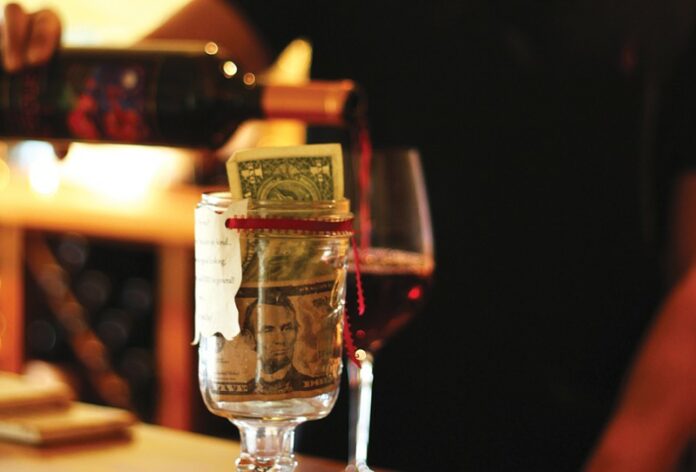
A Fair Pour

0

According to Arthur Hartunian, it’s easier to operate a microdistillery in socially conservative Utah than in California.

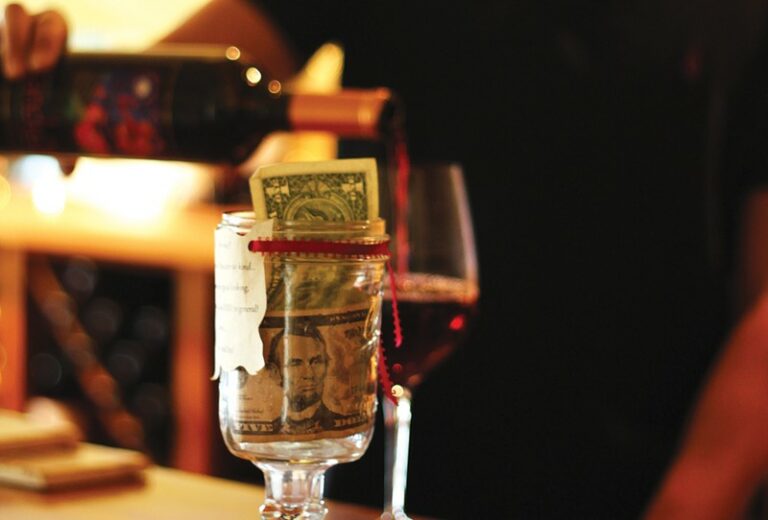
Hartunian is president of the California Artisanal Distillers Guild, a collective of beverage makers taking aim at the Golden State’s byzantine hard-alcohol laws, some of which are downright counterintuitive. For example, distillers cannot sell their product directly to consumers. With one kind of license, a type 4, they can offer tastings, but they can’t charge for them. This creates a scenario akin to walking into Russian River Brewing Company, sampling a very small amount of Pliny and then being told that nobody can order a pint, or visiting a winery tasting room and being barred from buying a bottle of wine.

“It’s been extremely crippling to my business,” says Marko Karakasevic, owner of Charbay in St. Helena and another member of the guild. “This year is our 30th anniversary. For 30 years, I’ve never been able to sell a single bottle to anyone coming to our distillery.”

Instead, California distillers are bound to what’s known as a three-tier system. They sell to distributors. Distributors sell to retailers and bars. Bars can then serve the vodka or scotch to the fair consumer. All these middlemen increase costs, and for makers of hard alcohol, cutting out these middlemen is illegal.

Partially, this is due to a well-meaning but antiquated bit of legislation left over from Prohibition.

“A lot of the social problems that led to Prohibition were the result of cross-ownership,” says Matthew Botting of the state’s Alcohol Beverage Control, describing a time when temperance leagues targeted saloons for the commonly attendant gambling, prostitution and theft.

Coming out of the national dry spell, states like California imposed regulations that, in the ’30s, made cultural sense, the idea being “to mitigate the relationship between alcohol manufacturers and retailers, to limit the economic motive of retailers to sell as much alcohol as possible,” Botting says.

But fast-forwarding 80 years, a simple question must be asked: If liquor laws for winemakers and brewers have changed, why not for distillers?

Higher alcohol content is a factor, according to the ABC. But there’s something else causing this lopsided regulatory system, which even the state regulator describes as “restrictive.”

[page]

“The wine industry has a strong economic industrial base,” Botting says.

According to Botting, this simply means that the wine industry “has more political influence. We [ABC] don’t go out to the State Legislature. It’s an industry-driven legislative process, and [the wine industry] has been more involved in that process over the years, and thus has affected more change.”

The microdistillery industry, on the other hand, is still small; according to Hartunian, there are only around 30 craft distillers in California.

“It comes down to money,” Hartunian says. “If you’re bigger, you can make more changes that will benefit your industry.”

Hartunian says that several bills have been crafted to address the three-tier system for distillers in the past, but none has even made it to the floor for a vote. He believes national distribution companies like Southern Wine & Spirits, which reported $9 billion in revenue in 2011, have a vested interest in keeping the system intact.

The guild is currently backing AB 933, a bill introduced by Assemblymembers Nancy Skinner and Isadore Hall, which would allow distilleries to operate tasting rooms that charge for samples. The bill does not delve further into the three-tier system.

“The three-tier system is fine,” Karakasevic says. “We need our distributors, but the reality is that microdistilleries are businesses and should be able to sell their own product. So let me have my products available to taste and let me sell them, and therefore pay my distributors more money.”

Hartunian says the guild envisions a California-sourced microdistillery scene, in which Golden State farmers and distillers work together to create a product that is completely California-made. To help in the legislative process, the guild has contracted with lobbying firm DiMare, Van Vleck & Brown, which represents companies that aren’t exactly players in the go-local scene; the firm also represents Safeway and multinational manufacturer Siemens Corporation, among others.

“They have good relationships with the distributors and are able to make our pitch,” Hartunian explains. “We have the need for an experienced, well-connected lobbying firm to help us navigate some of the political waters that we don’t have experience in, being a smaller, younger industry.”

As it is now, he says, “we’re unable to help [our distributors] help us. We want to apply the business model that has worked for wineries and breweries. Distillers are getting the short end of the stick.”

Pieces of April

0

Sometimes, a change of scenery is all that’s needed to alter a gloomy outlook. It doesn’t hurt when that change includes old Italian castles and a great deal of wisteria.

The Enchanted April, Elizabeth von Arnim’s forgotten 1922 novel, might not be known at all today were it not for the 1992 film adaptation starring Miranda Richardson, Alfred Molina and Joan Plowright. It was that low-budget charmer by director Mike Newell that fluttered into the hearts of moviegoers, making possible playwright Matthew Barber’s magical stage adaptation in 2003. A hit on Broadway, it came out of nowhere to take the Tony for best new play. And now it comes to the Ross Valley Players, running through April 14.

Enchanted April is the story of four very different British women who are joined together by a newspaper ad inviting renters to a fortnight in Italy. Nicely directed by Cris Cassell, with a dash of puppy love and a pinch of old-fashioned farce, Enchanted April features strong performances, an eye-pleasing set and even a tasteful bit of (very funny) nudity. A story of unexpected transformations, this irresistible offbeat charmer is a trip well worth visiting. For showtimes and prices, see wwwrossvalleyplayerscom.

Planting Ideas

Hairy arms, legs and your boyfriend’s hairy ass—these aren’t the only similarities between humans and chimps, according to Jane Goodall.

Goodall should know—she spent 45 years studying wild chimpanzees in Tanzania. Since, she’s spent a large portion of her time devoted to advocacy on behalf of chimpanzees, established the Jane Goodall Institute, written numerous books and even had a Simpsons character based on her. And somehow, in the midst of her many projects, Goodall found time to write a new book, Seeds of Hope: Wisdom and Wonder from the World of Plants.

A book on plants might seem unlikely from the woman known for going ape, but Goodall’s love for botany started at a young age, when she spent her days climbing trees and making elderberry wine with her grandmother. Her book introduces readers to botanists around the world, unveils the secret world of plants, and discusses the potential plants contain for healing the human body and the planet. Presented by Copperfield’s Books, Goodall appears in Santa Rosa on Saturday, April 6, at the Santa Rosa High School Auditorium. 1235 Mendocino Ave., Santa Rosa. 8pm. $35 includes book. 707.578.8938.

Cover Me

0

Sure, we knew there were some creative musicians out there who might enter our Neutral Milk Hotel cover song contest. But how could we have expected what musical treasures you, dear readers, sent in?

There was the in-the-red, gleefully distorted version of “Gardenhead/Leave Me Alone” sent in by Ted Farber, and the horn-flavored version of “A Baby for Pree / Where You’ll Find Me Now” by Chris Alarie. John Gaby’s autotuned “Communist Daughter” changed the time signature to 6/8 with a circus feel, and Brian O’Connor played with chromatics and fretboard slides in a version of “The King of Carrot Flowers, Part II.” We even got a crazy cut-and-paste edit called “Two-Headed Sex Machine Man” from Ricardo M’ohaire that chopped together samples of James Brown, Neutral Milk Hotel and various spoken-word recordings.

But when it came time to select a winner, we went with Dustin Heald’s imaginative cover of “You’ve Passed,” played on guitar, darbuka, zils and melodica. Without trying to emulate the letter of Mangum’s delivery, the version captures the slight Middle Eastern spirit of the intro lick and takes the song to another place entirely. Congratulations, Dustin, you’ve won two tickets to Jeff Mangum’s sold-out show at the Phoenix Theater on Tuesday, April 9.

Hear Dustin’s winning cover song here.

Thanks to everyone who sent in their songs!

No Happy Day

0

“Happiness,” says playwright and educator Robert Caisley, “is the perpetual act of deluding oneself.”

Caisely, who teaches playwriting and dramatic literature at the University of Idaho, didn’t actually say that. It’s a quote (“And probably a totally butchered quote,” he laughs) from the famously unhappy English author Lytton Strachey, who preferred sad people to happy ones.

The sentiment—that a sense of happiness may be just a pathetic delusion—is front and center in Caisley’s new comedy-drama, opening this weekend in the Studio at Sixth Street Playhouse, where the playwright’s popular show Kite’s Book had a run in 2011.

Directed by Lennie Dean, and featuring Ed McCloud, Liz Jahren, Brian Glenn Bryson and Rose Roberts, Happy is part of a “rolling world premiere” that includes productions in Miami, Montana and New Jersey. According to Caisley, the idea for Happy came about while grading papers for a literature class he teaches every year.

“One of the assignments I give,” he explains, “is for students to write a paper about the tragic flaws of a famous protagonist from the Western canon. A few years ago, as I was reading paper after paper, I realized that a character’s tragic flaw, in most literature, is something negative. It’s bloodlust or avaricious ambition or blind folly, or something recognizably bad like that.”

As he read, Caisely began set himself an interesting challenge: to write a play in which the protagonist’s fatal flaw was not negative at all, but something typically regarded as a positive thing. Something like . . . happiness.

“What happens,” he asks now, “if a person, a sculptor—by all reports the happiest person you’ll ever meet—encounters someone who doesn’t believe in the concept of happiness, who believes that happy people are deceitful and devious, are lying to themselves and others? What would happen if, over the course of an evening, that sense of contentedness is chipped away at, little by little, until the protagonist begins to question his own sense of identity completely?

“Whatever happens next,” Caisley laughs, “it’s got to be pretty interesting, right?”

Interesting—and unpredictable. One has to wonder, with such a potentially farcical set-up, loaded also with conflict and drama, is Happy, the play with the upbeat name, a comedy or a tragedy?

To answer that question, Caisley paraphrases yet another quote, this one from the great playwright Harold Pinter.

“It’s a comedy,” he says with a laugh, “until it stops being a comedy.”

‘Happy’ runs Thursday–Sunday, April 5–21 at the Sixth Street Playhouse. 52 W. Sixth St., Santa Rosa. Thursday–Saturday at 8pm; 2pm matinees on Sundays. $10–$25. 707.523.4185.

Beer Here Now

0

Beer connoisseurs rejoice this week as hundreds of brewers come out of the garage, kitchen, cellar or wherever dark, cool place their business is done to participate in two beer celebrations.

One could spend an entire lifetime, or several lifetimes, hoping to attain Beervana. But this weekend, the body, mind and taste buds coalesce into eternal oneness simply with a trip to Sonoma. The third annual Beervana celebration boasts over 30 breweries and over 125 homebrewers sampling their wares. There will be food pairings and live music by the Jason Bodlovich Group and Ragtag Sullivan.

In Santa Rosa, Battle of the Brews features almost 40 breweries in fierce competition for the crown of People’s Choice. And in its second incarnation, the Craft Cup brings in professional brewmasters to taste and judge beer with a sophisticated palate. To sop up the suds, there’s a sandwich competition dubbed the ‘Wich Hunt, and music by the Pat Jordan Band and Cover Me Badd provides drinkers a way to get nice and sweaty on the dance floor.

Beervana gets sudsy on Friday, April 5, at the Sonoma Community Center. 126 First St. W., Sonoma. 5:30pm. $45. www.svbo.org. Battle of the Brews fills the Grace Pavilion on Saturday, Apr. 6, at the Sonoma County Fairgrounds. 1350 Bennett Valley Rd., Santa Rosa. 1-8pm. $95. www.battleofthebrews.com.

Genetically Engineered Marketing: A New Reality

0

genetic.jpg

Sonoma County’s Go Local campaign exists because a “more economic self-reliance a community achieves the greater the economic health for them,” according to its website.

Zack Darling, head honcho at Zack Darling Creative Associates and local legend of dance party fame, recently introduced Go Local to the Ladybug Demographic, something University of Kansas demographer Dr. Harold Swanson calls “mostly 18-24 year old women skulking the underground club scene in mid-western small towns.”

Thinking it was a joke, Go Local dismissed Darling’s claims until today, April 1, when they realized Darling’s cutting-edge conception is indeed a reality – and decided to tap into that demographic with a new branding concept.

It promises to be a brilliant breakthrough for Go Local, which until now was reaching somewhat older small business owners, local bankers and overly-hippied-out Sebastopudlian Earth mamas.

The catch? To reach the “Ladybugs,” as they like to be called, Go Local has teamed up with genetic engineers and is creating a ladybug that, instead of spots, has “Go Local” and “Local First” and “Grown Local” all over its back.

Sorry Mother Nature, Zack Darling is in the house, and it’s about to get crazy up in here.

The Weeknd Printed Fake Signatures On His $200 “Signed” Trilogy Vinyl Box Set

10


Well, here’s a weird one: The Weeknd has faked his own signature on his $200, individually numbered-and-limited-to-500-copies, “signed” vinyl box set of Trilogy.
Chatter around the announcement of the ‘Trilogy’ vinyl box set was mostly about how expensive the damn thing was$66 per double album—but in the ever-increasing trend of pricey deluxe vinyl editions that sell out quickly, lots of fans and drooling record-collector dorks decided it was worth the cost for something special. After all, there’s only 500 copies, and hey, the thing’s signed.

Except the Weeknd’s ‘Trilogy’ vinyl box set isn’t actually signed.

Is Darius Anderson Buying the Napa Valley Register?

0

nvr.jpg

According to a post earlier today by the Sonoma Valley Sun, the “word on the street” is that Sonoma Media Investments will soon buy the Napa Valley Register.

The investment group—which already owns the Sonoma Index-Tribune, the Press Democrat, the North Bay Business Journal and the Petaluma Argus-Courier, along with the rest of the Press Democrat’s magazine and online properties—is headed up by lobbyist and developer Darius Anderson, a man of increasing infamy around these parts.

Anderson, speaking at a CNPA convention in Sacramento earlier this year, emphasized his desire to own more newspapers (to wit: he wants to “rape and pillage” other media properties). The Napa Valley Register, located just over the hill from Anderson’s home in Sonoma, makes for a convenient newspaper to rape.

It might also be an easy one: I called the Napa Valley Register repeatedly today for a confirmation or denial of the rumor, and for hours, there was no answer. How does a newsroom get tips without answering the phone? (Neither the Sonoma Valley Sun nor William Hooper, one of the main investors of Sonoma Media Investments, responded today to calls either.)

The Napa Valley Register predates the Civil War—it was founded in 1853. Now, 160 years later, the paper is published by Napa Valley Publishing, which also publishes a series of smaller newspapers throughout the Napa Valley: the St. Helena Star, the Weekly Calistogan, the American Canyon Eagle and Hispanos Unidos. (Presumably, those papers would be included in a sale of the Register.) Napa Valley Publishing is owned by Lee Enterprises, which is headquartered in Iowa.

Meanwhile, Darius Anderson has been in the pages of his own paper quite a bit this week.

Letters to the Editor: April 2, 2013

Letters to the Editor: April 2, 2013

A Fair Pour

New bill would allow microdistilleries, like wineries, to have tasting rooms

Pieces of April

Enchanting, Tony-winning play in Ross

Planting Ideas

Jane Goodall's new book is not about chimps

Cover Me

Neutral Milk Hotel contest winner announced!

No Happy Day

Happiness is mere delusion in new play

Beer Here Now

Beer connoisseurs rejoice this week as hundreds of brewers come out of the garage, kitchen, cellar or wherever dark, cool place their business is done to participate in two beer celebrations. One could spend an entire lifetime, or several lifetimes, hoping to attain Beervana. But this weekend, the body, mind and taste buds coalesce into eternal oneness simply with a...

Genetically Engineered Marketing: A New Reality

Genetic Branding, or a Blight to the Ladybug Population? You Decide...

The Weeknd Printed Fake Signatures On His $200 “Signed” Trilogy Vinyl Box Set

Well, here's a weird one: The Weeknd has faked his own signature on his $200, individually numbered-and-limited-to-500-copies, "signed" vinyl box set of Trilogy. Chatter around the announcement of the 'Trilogy' vinyl box set was mostly about how expensive the damn thing was—$66 per double album—but in the ever-increasing trend of pricey deluxe vinyl editions that sell out quickly, lots of...

Is Darius Anderson Buying the Napa Valley Register?

According to a post earlier today by the Sonoma Valley Sun, the "word on the street" is that Sonoma Media Investments will soon buy the Napa Valley Register. The investment group—which already owns the Sonoma Index-Tribune, the Press Democrat, the North Bay Business Journal and the Petaluma Argus-Courier, along with the rest of the Press Democrat's magazine and online properties—is...
11,084FansLike
4,606FollowersFollow
6,928FollowersFollow