You Need Coolin’

0

Led Zeppelin and dancing babes—could there be anything more perfect?

If you’re looking for a way to spend your Valentine’s Day other than at home watching The Notebook and eating Ben & Jerry’s, look no further than the Whole Lotta Love Valentine’s Day Celebration at Aubergine.

Cabaret de Caliente promoter and performer Eva D’Lucious (above) wanted to introduce a new audience to burlesque by providing something for both men and women to enjoy. “A few ladies have emailed me that Whole Lotta Love will be their first Burlesque show,” she notes, “and a big part of the reason their partners want to attend is because we’re featuring Led Zeppelin.”

Raven-haired, tattooed lady Siren Sapphire will strut the stage to “Black Dog,” while the Scarlet Harlot plans a dance to the one and only “Immigrant Song.” Other performances include pole dancer Carrie Bare, Pearl E. Gates, the iCandy Dancers, Boylesque group Bohemian Brethren and more. Zeppelin mashups and live recordings play during intermission, while a raffle for those who bring a new book or children’s pajamas for charity offers choice prizes. Whole Lotta Love, featuring Eva herself dancing to “Dazed and Confused,” gets steamy on Thursday, Feb. 14, at Aubergine. 755 Petaluma Ave., Sebastopol. $15–$35. 8pm. 707.861.9190.

Not Fade Away

0

Erma Murphy lets out a loud laugh when I suggest that she might want to watch for Mickey Hart lurking in the shadows at her shows this weekend.

“I know!” chuckles the Marin promoter. “He’s the only one who hasn’t got a club yet!”

The laughter is well-deserved. Murphy, with partner Daniel Patrick, has promoted concerts in Marin County for the past nine years. The last venue the two booked on a regular basis was the Palm Ballroom at the Seafood Peddler restaurant—which attracted the attention of Phil Lesh, who famously reopened it as Terrapin Crossroads.

Before that, Murphy had stumbled upon and began regularly booking an unused, virtually forgotten room at the Mill Valley Masonic Hall—which proved such a natural place for music that it eventually reopened as the Sweetwater Music Hall, owned in part by Bob Weir.

If any other members of the Grateful Dead out there want to open a club, they’d be smart to follow Murphy’s keen eye. Not that Murphy, a Marin native since the age of three, wants to relinquish another site. “I’ve been feeling so lost for a year,” she says. “It’s nice to be back in.”

“Back in” refers to Murphy’s two shows this weekend: David Lindley at the Kanbar Center on Feb. 16, and the David Nelson Band at the Mill Valley Community Center on Feb. 15 and 16. The Kanbar has its own in-house programming, but the MVCC has asked Murphy to help expand its offerings—and Murphy Productions is rolling again.

Murphy’s love of music goes back to childhood, listening to the Beatles and Stones, reaching an obsessive zenith in college. REM, Talking Heads and others were standbys on her radio show on KDVS-FM at UC Davis, but she called the show Schizophrenic Pitch for a reason: her tastes were all over the map. “In college,” she says, “everyone was so snobby, you had to be really avant-garde. But I played Stevie Ray Vaughan.”

Not a musician herself (“I took piano lessons for 10 years and I cried the entire time,” she jokes), Murphy nonetheless liked bringing musicians together, especially if it meant she could dance. Hence, for five years, she hosted house parties with up to 125 people—inside, outside—at her Mill Valley home, with extended jam sessions by amateur musicians and professionals such as the Rowan Brothers alike.

Soon after, Murphy and Patrick started booking the Larkspur Cafe Theater, a “listening room” environment, and in the years since, with the help of comrade Larry the Hat, have brought in the likes of Jackie Greene, ALO, Dan Hicks and many other local favorites.

“People are just so nice,” Murphy says, grateful for the community fostered around her shows. “And they love to dance. It feels like family.”

Letters to the Editor: February 13, 2013

Tom Sawyer Days

I read your article about the redwood tree removal on Airport Boulevard and the sale of taxpayers’ trees for the company’s profit (“Deadwood Hwy.,” Jan. 30). That money should be at work patching the potholes or employing someone. Instead, the owner of Ghilotti Bros. is already planning that vacation or new car.

I grew up along Mark West Creek when they built the freeway. My brother and I used to fish that creek for trout, steelhead, blue gill, turtles, frogs, toads, salamanders, crawdads—it was all there, like Tom Sawyer. Then they built the freeway and Wikiup, and after a few years of construction the creek changed. Now water flow is blocked and swimming holes are dried up to be little more than moss-covered ponds.

Vineyards stealing water resources, new construction and now the theft of the taxpayers’ trees—all thanks to officials who did not grow up in Sonoma County. Thanks for your armed robbery without a gun, only with profit in mind.

Santa Rosa

Cool Down, Man

Reading your letters edition, I was blown away by the radical letters from J. B. Grant and Moss Henry. Obviously these people don’t like the government or President Obama. (I like the president, but I don’t like the war we’re in.)

J. B. Grant takes the Ron Paul copout that violence overseas brings violence here—jive! Moss Henry: whistleblowers, torture—please!

Are you guys men or are you babies? You remind me of a bunch of Republicans. Raids on pot clubs, the war in Afghanistan—those things I could complain about, but this other stuff is nonsense. I like Obama. He is cool. You other guys are crybabies, radicals and malcontents.

Grow up, people. Would you rather have Romney running the country? I think not.

Gilroy

Funny Valentine

I told my girlfriend the other day, “Love is but lonely voids. Baby, I know it sounds weird and super emo, but I heard even Einstein believed love was empty space. To exist in space is to be lonely. To exist in space is to be in love. You wouldn’t be lonely if you didn’t need love. You wouldn’t be in love if you weren’t lonely. Lonely love = ‘lovely’ forever and everywhere always . . . even when we’re assholes about it.”

Stars undulate, giving birth to each other, filling empty space for the loneliness of it all. But I feel bad sometimes, feverishly questioning everything worth believing in, out of fear for the loneliness of it all. Shit’s cold up there between warm bodies. She gets scared at things I say, and I can’t blame her. Things like, “Love may be an abstract neurosis beyond the necessity for survival” and “I wonder if the planets ever feel like they’re being held hostage.” Or even, “Love is but lonely voids.” I’m aware that sometimes I fill the aforementioned empty space with stone-jaded plugs of an asshole. But please print this so she knows how much I love her, empty spaces and all.

Cotati

Historic Past

I am not eager for the development of Sonoma into a resort destination and wine country theme park. (Even though many citizens might argue we are already beyond the tipping point.)

The proposed luxury hotel brings us closer to the selling of the town, the plaza for profit, not for the people who live and work here. Perhaps a better vision for Sonoma is one that takes pride in our historic past, our beloved plaza and a community rooted in agriculture. An authentic place, not “branded” to enrich investors. Why would we be eager to install a luxury hotel whose investors profit by Sonoma’s intrinsic values, all the while eroding what we love about our town?

Sonoma

Bad Date

The photo for your cover story (“Worst. Date. Ever.,” Jan. 23) is puzzling. A slickly dressed young man with a cigarette in his hand flirting with a young lady with a plunging neckline states confusing messages. Is he waiting for his Johnnie Walker Blue Label scotch while the target of his affection is waiting for a highly rated Russian River Pinot Noir?

Let’s be more responsible and take that cigarette out of his hand.

Bodega Bay

Write to us at le*****@******an.com.

Frenchie Winery

0

Every winery has a story, and is pleased to tell it. On the website, look for the tab labeled “Our Story.” You’ll find that the people who get into this business are most often accomplished, well traveled and passionate about wine. You’ll also find that, after while, all of these wonderfully unique stories begin to run together, sounding a bit like “blah blah blah.” So this week, we’re taking a look at a different sort of story. This one goes “bow wow wow.”

One warm afternoon, as Jean-Charles Boisset strolled through the parking lot of Raymond Vineyards, he found that a car had been left running, air conditioning on. The vehicle’s only occupants were two hapless pooches, left waiting while their masters lapped up Chardonnay. Being the owner of the winery, and possessing no deficit of people-whispering charm, Boisset took the liberty of shutting off the car and bringing the dogs into the tasting room and to their surprised owners. It was on that day that Boisset, native son of Burgundy who voyaged west in search of new opportunity, declared: There shall be a winery just for the dogs.

Frenchie is named for a French bulldog, a gift from Boisset to his wife to keep her company while he’s away on business—leaving her, Gina Gallo, with naught to do but run her own international wine empire. The “winery” is really just a Frenchie-themed shed set amid Raymond’s biodynamic gardens, which are best appreciated in spring and summer. Winter highlights include newborn lambs, and clucking chickens and peafowl year-round. While dogs snooze inside their own private wine barrels furnished with pillows, or cavort with others in the gated kennel, their human guardians can keep an eye on them via live video link in the tasting room. In June, there’s a “Bark-b-que.”

There’s only water on tap out here; Frenchie sports his own line of wines at the tasting bar inside, where one dollar from the sale of each bottle is donated to the SPCA. The spoof labels are solid cute; the wines, seriously appealing. A 60/40 Sonoma and Napa blend, the 2009 Napoleon Red ($30) starts with young aromas of plum, licorice and graphite, finishing all sweet plum jam and puckery tannins. In the way that a freshly washed dog smells like a dog, only less so, the 2009 Louis XIV Cabernet Sauvignon ($30) smells shyly of fresh brambleberries and cedar, but licks the tongue with assertive tannin, and plush, sweet, ripe blackberry fruit. So who’s drooling and yapping now?

Frenchie Winery at Raymond Vineyards, 849 Zinfandel Lane, St. Helena. Daily, 10am–4pm. Tasting fees vary. 707.963.3141.

No Rules

0

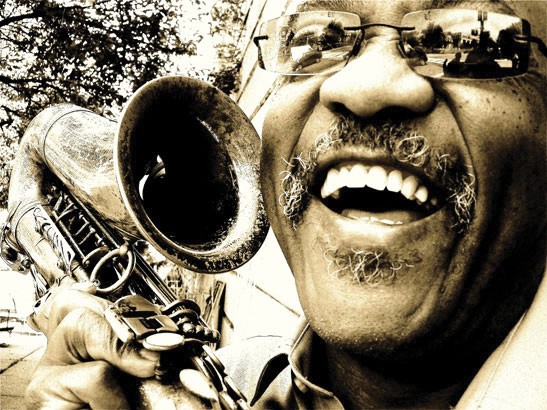
The ominous, unclassifiable tones of the waterphone have been favorites of sci-fi and thriller movie composers for 40 years, and experimental musicians love its nearly-impossible-to-predict sound. Played underwater with a bow dragged across metal tines, it speaks the language of the whales for miles in every direction. The chance to hear its creator Richard Waters play it live is rare.

This week, Waters plays his most famous instrument and other handmade specialties in Petaluma with the Gravity Adjusters Expansion Band and Full Disclosure in a concert dubbed “When Worlds Collide.” “This kind of music is different,” says bassist Rob Wright, a member of free-jazz group Full Disclosure. “We’re combining avant-garde and free-improv. Our only rule is that there are no rules.”

Gary Knowlton, who will play the flaming hyena, a stringed instrument of his own creation, will add to the program of ephemeral music created entirely in the moment. “I wanted to do something that includes elements of the soundscapes that Richard does with his special instruments with the traditional high-energy, jazz-driven stuff with Full Disclosure,” says Wright.

This might sound beautiful, strange, soothing or scary, but the musicians are all formally trained, including Wright, a bassist and teacher. “For me, this kind of music is an expression of the moment,” he says. “No one who plays this music seriously comes out of a void—it comes out of technique and background.”

The music will feature “lots of invented instruments, and some invented-long-ago instruments,” says Cinnabar executive artistic director Elly Lichenstein, looking forward to the concoction of jazz, blues, classical, experimental music and poetry.

The musical stylings are reminiscent of one-time Petaluma resident Harry Partch. The avant-garde American composer invented hundreds of instruments, and composed music based on speech patterns, fashioning melodies out of the timbre of sentences. One of his most popular works is the 1963 piece “And on the Seventh Day, Petals Fell in Petaluma.”

Another source of inspiration is Tony D’Anna, a musician who passed away at the age of 71 in January of last year. D’Anna spent roughly 25 years as the accompanist of Cinnabar’s summer children’s music program. “He just had a gift working with kids,” says Lichenstein. Though more a jazz player than a musical theater fan, D’Anna fit right in with the program, and, Lichtenstein says, “the kids miss him terribly.”

D’Anna himself played the waterphone, as well as piano and other instruments. Wright played with him for about 15 years, recalling D’Anna’s bebop piano gigs to which he would bring a baby grand piano using a truck and dolly. Between late-night gigs, he’d play Beethoven sonatas each morning. The concert is dedicated in part to his memory.

Wright, whose first bass teacher played in Partch’s orchestra, says though the two never played together to his knowledge, D’Anna and Partch were on a similar path. “There’s some sort of spiritual connection,” he intones, “between Richard and Harry.”

Park Life

0

Skateboarders, gardeners, hikers and coffee lovers in Monte Rio just got great news. An abandoned school site has been approved for conversion into a park that will include a skatepark, community farm, hiking trail and cafe. The $1.4 million project is possible through a $329,000 grant from the Sonoma County Agricultural Preservation and Open Space District and $995,000 of former redevelopment funds. The skatepark is assisted by $5,000 from the Tony Hawk Foundation.

Construction of the 2.8-acre park will begin this week and should be finished this year. After a 20-year vacancy, children’s laughter (and possibly some crying from the skatepark) will once again be heard at the former school site. Efforts are also planned to restore Schoolhouse and Dutch Bill creeks for salmon and steelhead.

Another boon to outdoor recreation saw the Sonoma County Board of Supervisors approve the transfer of 1,100 acres of open space overlooking Santa Rosa on Taylor Mountain to the Regional Parks Department last week. The public grand opening is scheduled for Feb. 23.

This marks the culmination of almost two decades of planning and purchasing land by the Open Space District, which spent about $21 million on the project. Much of the land had been open to the public since 2010 through a permit program run by Santa Rosa nonprofit LandPaths. Trails, including a staging area off Petaluma Hill Road, are planned in the future thanks to a $750,000 state grant. The main access point in the meantime is still off Kawana Terrace in south Santa Rosa.

Now if only the proposed clearcut-to-vineyard site of Preservation Ranch could be turned into protected open space, we’d be all set. Hmm . . .

Psych Reel

Numerous twists make Side Effects a film about which the less said, the better; the one scene the celeb reporters have been talking about spoils the impact. Stephen Soderbergh’s allegedly last movie has a witty, plausible subject, playing on the shudders one gets from seeing cartoony advertisements on television and billboards for antidepressants.

In the film, a serious crime is committed by a deeply depressed Manhattanite named Emily. She’s played by Rooney Mara, who is a revelation. Emily’s defense is that she cannot recall the crime because her meds have turned her into a sleepwalker. This leaves her psychiatrist (Jude Law) legally vulnerable, caught between his own corporate dealings and the reporters from the New York Post. Some clues come via Emily’s former psychiatrist (Catherine Zeta-Jones).

While Soderbergh’s beautifully turned series of flashbacks made Out of Sight a classic, the jumping around here keeps Side Effects remote. Law’s skeeviness (this shrink forgets to shave) is well worked; as always with Law, you can never tell if he’s crooked, right up until the end. But the casting of an actress with a Viking warrior vibe (Vinessa Shaw) as the shrink’s wife can’t counterbalance the ambient evil with tenderness—and increases the script’s lean toward misogyny.

Among his many gifts, Soderbergh has a sense of the erotic, for making you feel you’ve seen far more than you have. His soundscapes intensify the paranoia: the prattling of a child during an important TV broadcast, the soughing of a skyscraper, the cutting out of sound entirely. The cleverly matched beginning and ending say “You don’t have to be a homicidal maniac to live in New York, but it helps.”

Soderbergh is claiming this is his last film, and that he now wants to paint. Without sarcasm, I note that his studies of blood splotches on a hardwood floor are very painterly. Hope, then, that he has a nice long vacation, and that one morning, the Eon studio execs try to tempt him out of retirement with a meeting about Bond 24.

‘Side Effects’ is in wide release.

New Spork City

For many people, the word “spork” conjures a plastic-wrapped utensil common to cafeterias, prisons and takeout containers. Leave it to chef Andrew Casey to place the fork/spoon hybrid atop the white tablecloths of his new fine dining establishment, Spork, which opens on Valentine’s Day. “The Italians have the fork, the French have the spoon and Americans have the spork,” says Casey, a graduate of the Culinary Institute of America in Hyde Park.

With its charcuterie and seasonal ingredients, Spork is further proof that quality cuisine can indeed be found north of Healdsburg. Sharing a space with Cloverdale’s beloved Eagle’s Nest Deli and Grill—which has been serving huge, satisfying sandwiches for 15 years—Spork will be open for dinner only on Thursday, Friday and Saturday evenings beginning at 6:30pm.

The four-course Valentine’s menu offers diners a choice between surf (baked oysters and shrimp risotto) or turf (pork meatballs and hangar steak), with gluten-free and vegan “earth” options available as well. Friday and Saturday’s menu also includes lemon zest ravioli ($16), Prince Edward Island mussels ($18) and house-made Toulouse sausage ($16). And whether you order the dark chocolate mousse and blackberry ice cream or apple crisp and salted caramel ice cream, count on dessert being served with a 1950s vintage pastel Tupperware spork.

Spork (inside Eagle’s Nest), 113 N. Cloverdale Blvd., Cloverdale. 707.687.8795.

Oceanic Opera

0

New experiences are a major part of why students go off to school. The same, one could argue, is true of the theatergoing public.

This year, SSU’s theater arts department has been producing a string of performances all based on the subject of water, from environmental issues to this month’s production: two little-known one-act operas, both set on inhospitable islands. Titled Island Passions, the operatic two-pack runs daily through Sunday, Feb. 17, at the Evert B. Person Theatre.

Joseph Haydn’s tuneful morsel The Deserted Island is so thin, plotwise, it could be summed up in a haiku: two sisters marooned / on a deserted island / find rescue and love. Vaughan Williams’ weightier Riders to the Sea takes place off the coast of Ireland, where a grieving widow waits to learn the fate of her last two sons, her other four having already been drowned at sea.

Gracefully directed by Danielle Cain, featuring a first-rate orchestra under the direction by Lynn Morrow, each mini-opera features students from SSU’s music department, many taking a first stab at acting onstage. For some, audience and students alike, Island Passions provides a tantalizing first taste of opera, as new and exciting as a spontaneous island holiday.

Island Passions runs through Feb. 17 at the Evert B. Person Theatre at SSU. See www.sonoma.edu for details.

Bottling the Tradition

0

‘That’s a load of crap! That’s not mate!”

I’m in Patagonian Argentina, and Vivi Pitrelli is reacting to an American chocolate-raspberry yerba mate organic energy shot. Including some friends of the family, there are seven of us lounging around the table after dinner.

Catalina Vicintini, a 20-year-old dance student, swigs off the little brown bottle, covers her mouth and crinkles her face.

“It’s the grossest thing! It’s disgusting! It’s disgusting! It’s disgusting!” she cries out in Castellano, Argentina’s dialect of Spanish. Everyone busts out laughing.

“What the fuck’s in it?” asks Pitrelli.

Though the bottle’s label identifies it as a yerba mate energy shot, it is a yerba mate unrecognizable to Pitrelli, the 16 other Argentines I interview and the cultural historians I read during a recent month in Patagonia

As mate-based products have exploded in popularity in the United States, the infusion has been redefined to meet American tastes, with Sebastopol’s Guayakí leading the way. To American-born consumers, the well-respected Guayakí is synonymous with mate: Guayakí sells around two-thirds of all mate consumed in the United States, the remainder consisting of South American brands popular with native mate-drinking immigrants.

Adapting mate to American palates is central to Guayakí’s success. “We’re making it available to the gringo in the way the gringo wants to take it,” remarked David Karr, cofounder of Guayakí, in a 2010 Bloomberg article titled “Guayakí Wants to Take Yerba Mate from Niche to 7-11 Staple.” And the gringo certainly wants to take it: around 60 percent of Guayakí’s approximately $15 million annual revenue comes from pre-made mate products sold in bottles and cans—products unheard of in mate’s native Southern Cone.

However, globalizing and redefining mate has larger implications than most commodities. Americans aren’t surprised to know that cultural U.S. icons like Coca-Cola, for example, are consumed worldwide. Mate, on the other hand, represents and influences life in the Southern Cone much more than anything we eat or drink in America. While drinking a mate latte in the States isn’t sacrilegious, per se—like runway models flaunting mock American Indian headdresses—native mate drinkers aren’t happy with how their infusion is represented here, and they have some words for American consumers.

First of all, what is mate, and what does the act of consuming it mean? As Argentine geographer Felix Coluccio puts it, “Drinking mate is the most significant popular custom in Argentine life, from the deepest roots of the existence of people in South America.” Formally, mate is both the infusion and the receptacle, usually made of gourd, wood or metal. The infusion of water and loose yerba, the leaves and stems of a species of caffeinated holly, is drunk from the mate through a bombilla (straw filter).

The indigenous Guaraní have consumed it for thousands of years in Paraguay, northeastern Argentina, southern Brazil, and parts of Bolivia and Uruguay. After colonization, mate and the rural gaucho became inseparable, and the infusion became deeply entrenched in social life in the rest of Argentina and parts of Chile.

[page]

Unlike other infusions, mate doesn’t stand and steep; the mate is filled and refilled with water, but the yerba endures. As a result, drinkers have developed countless techniques to keep the infusion even and delicious. Additionally, because custom calls for multiple people sharing the same straw and gourd, the act of drinking mate connotes trust and hospitality. A complex culture and vocabulary has reflexively evolved around its ceremony.

“To drink mate is to share,” Pitrelli explains. “It’s something intimate.”

In the language of mate, quotidian objects take on new properties. Water can be tempered, burned or served raw. Kettles can spout wings and fly, or they can dance around the stovetop. Figuratively, mate can be saddled up or plugged, served tufted, in the formation of a star, or like a rancher. It can be hung up or drunk peeled, or it can be long or short. Layered into this vocabulary are jokes and insults and cultural nuances sometimes more powerful than the spoken word.

At least one figure in gaucho folklore has been killed for serving mate lukewarm. Drinking bitter mate like the gauchos is masculine; tempering its strength with sugar or herbs is vaguely inauthentic, for those who can’t handle the “real deal.” To run out of yerba is a sexual reference; if there’s none left, a hypothetical couple deciding whether they want to drink mate or get it on now only have one option.

The Argentine military dictatorship of the 1970s prohibited workers in some industries from drinking mate on the job, fearing that its power to bring people together would facilitate workers organizing. When a girl takes a new boyfriend to her parents’ house, suspicious parents serve him especially hot mate to try to keep his hands busy and away from their daughter. And because parents don’t offer it to children due to its bitter taste and stimulative properties, Argentines consider the first time a child drinks mate home alone as a noteworthy rite of passage.

As their country has acquired a more cosmopolitan character, many Argentines attach less significance to the intricate rituals that characterize mate in its former provincial context. For example, most Argentines today would not interpret receiving mate with lemon balm as a symbol of the server’s sadness or distress, as Coluccio writes it once meant. However, many widely observed customs and symbols concerning mate still exist, and mate’s definition is clear. None of the Argentines I interviewed abroad knew that mate is now sold in the United States, and none of them considered Guayakí’s bottles or cans to be authentic types of mate.

Amid a series of interviews I conducted with strangers in town, I spoke with Alejandro Benitez, a tourist in his 20s from Buenos Aires, who spit out the sample of the mate energy shot I offered him. He defined mate like my other sources.

“Mate” he says, “has three basic elements: the mate [receptacle], yerba and bombilla.” To Benitez, Guayakí’s single-use bottles and cans are “very individualistic,” and he adds an important reminder: “Mate is shared.”

On the porch one afternoon, I discuss American mate with Vivi’s visiting relatives. “Those have nothing to do with what mate is,” says Fernando Pitrelli, Vivi’s brother, referring to some printout labels of Guayakí’s bottles and cans. “Mate isn’t drunk from a bottle; you don’t get it from a can.”

“It’s all for business,” he says. “They’re losing out on what mate is, what mate means to us.”

[page]

“What they’ve got wrong is the definition,” says Nahir Pitrelli, 21, Fernando’s daughter. She points to the printout labels of Guayakí’s cans, featuring Argentine-styled people drinking mate from gourds. “If you look closely in the drawing, that’s mate how we drink it here, but they sell it to you in a can—I mean, nada que ver.

Nahir continues, stopping short of vilifying the American palate. “If [Americans] like them, they should drink them,” she says. “It’s just mediocre.”

However, my sources don’t see Americans’ interpretations of their infusion as necessarily sacrilegious. As Fernando puts it, “What people do with their culo is up to them.”

“It’s all good,” says Sergio Rojel, an elderly campesino I spoke with in town, of mate in bottles and cans. Though wearing the loose bombacha pants and beret characteristic of gauchos, he adds that “we’re already losing traditional Argentine culture here.”

Some were less enthusiastic. “I’m not offended, but they’re deceiving people,” says Iris Ramirez, Benitez’s partner.

Indeed, most Argentines I interview don’t express grudges against Guayakí; in fact, in the progressive area where I stay, some appreciate the idea of organic yerba. (Others, in Ramirez’s words, regard Guayakí’s organic, fair-trade and shade-grown certifications as “marketing.”) They acknowledge that cultural objects take new forms when they cross borders, and that isn’t inherently negative.

“We drink mate,” says Ricardo “El Colo” Romero. “But one of the most popular types of music here is rock.”

It should be noted that Guayakí is well aware of mate’s significance in the Southern Cone; Alex Pryor, a founding member, is from Buenos Aires. (Karr, the other founding member, is from the South Bay; the two met at college in San Luis Obispo.) Pryor writes over email that he feels “honored by the American culture who embraces with respect and admiration the cultural and health attributes” of yerba mate. And though only 20 percent of Guayakí’s sales consist of loose-leaf, from which traditional forms of mate are made, the company does pay homage to mate’s history and ceremony on its website.

When I read Karr some quotes from my Argentine sources reacting to Guayakí’s bottles and cans, he pauses.

“A-ha . . . Um, yeah, I could understand how they would say that,” he says.

Karr has likely been faced with this question before. “We’re trying to bring yerba mate culture to the world. And so for us, that means you have to make it available to different lifestyles,” he says. “We’re doing everything as authentically as we possibly can,” he adds, mentioning Guayakí’s rainforest-protection efforts and relationships with indigenous mate farmers.

“Just because we brew it and package it in the bottles and cans so that more people can have access to it—because that’s the way they drink things—fine,” Karr says. “Not everyone has to feel great about it.”

Back in Argentina, I’d wanted to know on what terms drinking mate is OK; where do Argentines place the limits of its authenticity? At Vivi’s dinner table, I ask if it’s all right that gringos drink mate traditionally outside of the Southern Cone.

Si!” responds my host family in chorus. “It’s great!” Romero says.

“Drinking mate isn’t anyone’s birthright; to drink mate is to share,” repeats Vivi. “It’s fine that gringos drink mate, but let’s make it mate, not those clown things.”

You Need Coolin’

Have a Led Zep–themed burlesque Valentine's Day

Not Fade Away

Erma Murphy's keen eye for live music

Letters to the Editor: February 13, 2013

Letters to the Editor: February 13, 2013

Frenchie Winery

The pooch's own hooch

No Rules

Experimental sounds, handmade instruments in once-in-a-lifetime concert at Cinnabar

Park Life

Skateboarders, gardeners, hikers and coffee lovers in Monte Rio just got great news. An abandoned school site has been approved for conversion into a park that will include a skatepark, community farm, hiking trail and cafe. The $1.4 million project is possible through a $329,000 grant from the Sonoma County Agricultural Preservation and Open Space District and $995,000 of...

Psych Reel

If truly Soderbergh's last, 'Side Effects' is a cleverly paranoid bow-out

New Spork City

For many people, the word "spork" conjures a plastic-wrapped utensil common to cafeterias, prisons and takeout containers. Leave it to chef Andrew Casey to place the fork/spoon hybrid atop the white tablecloths of his new fine dining establishment, Spork, which opens on Valentine's Day. "The Italians have the fork, the French have the spoon and Americans have the spork,"...

Oceanic Opera

Haydn and Vaughan Williams at SSU

Bottling the Tradition

In which our reporter travels to Argentina and discovers that when it comes to mate, Americans are doing it all wrong
11,084FansLike
4,446FollowersFollow
6,928FollowersFollow