Like a Diamond

0

The view from Iron Horse Vineyards, the rustic, respected sparkling wine producer tucked into the hills above Green Valley, would seem to be of an earth that hardly requires much saving.

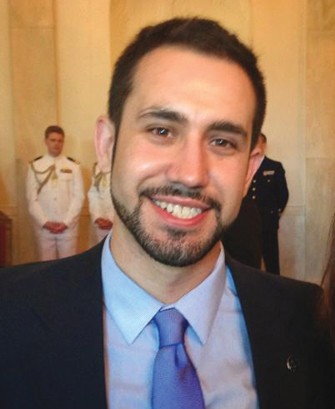
But when Iron Horse CEO Joy Sterling was casting about for another high-profile guest speaker for the winery’s semiannual Earth Day lecture series, she picked Jared Diamond, author of the 2005 doom-and-gloom opus Collapse, which compares our situation today with the uncomprehending, doomed society of ancient Easter Island.

Sterling says that it was Diamond’s positive message that attracted her attention, in a speech several years ago. “He was saying we’re in a neck and neck horse race between the horse of hope and the horse of doom. Fortunately, he said he’s betting on the horse of hope.”

The Pulitzer Prize–winning author of Guns, Germs, and Steel is the scheduled guest speaker at the winery’s Earth Day celebration on April 21.

Diamond was an explorer-in-residence at the National Geographic Society in Washington, D.C., which Sterling supports with donations from Iron Horse’s sparkling Ocean Cuvée. “We met over a glass of Joy’s wine,” Diamond explains from his home in Los Angeles, recently returned from a trip to New Guinea.

Diamond’s most recent book, The World Until Yesterday: What Can We Learn from Traditional Societies?, derives its title from his assertion that “traditional societies . . . retain features of how all of our ancestors lived for tens of thousands of years, until virtually yesterday.”

The idea that Westerners might glean a useful tip from the mercifully less civilized is older than Margaret Mead’s Coming of Age in Samoa, of course. Diamond proactively demurs that he does not romanticize what he calls traditional societies, societies that exist outside of the “WEIRD” world: “Western, educated, industrialized, rich and democratic societies.”

“I’m not telling people what they should do,” Diamond says in a phone interview. “Instead, I’m describing the enormous range of human behavior around the world, much greater than we have in the United States.”

Diamond draws from his experiences among the highland people of New Guinea, where he has done fieldwork since 1964, as well as anecdotes from around the world. Fans, such as Sterling, feel that Diamond’s broad reach is his genius. “His books are considered required reading if you care about the future of this planet,” she says. “He is able to connect the dots in all kinds of disciplines.”

In 2009, two New Guinea tribesmen filed a $10 million lawsuit against Diamond because of his article “Vengeance Is Ours,” published in the New Yorker. Daniel Wemp, who had been Diamond’s driver while he conducted unrelated ornithological research, alleged that Diamond falsely named him as instigator of a clan war that resulted in dozens of deaths and atrocities. A high-profile lawyer went on the case, which was supported by the investigative website iMediaEthics, published by Rhonda Shearer, widow of evolutionary biologist Stephen Jay Gould. The suit was withdrawn after the lawyer’s untimely death.

“My notes were very accurate of what he said,” Diamond tells the Bohemian. “But New Guineans, like Californians, are very litigious people, and if they see an opportunity to gain financially, they will take that. But that’s something that you see in Northern California as well.”

The time-consuming resolution of conflict by face-to-face, relationship-rebuilding interaction is, perhaps ironically, one of the hallmarks of traditional societies, according to Diamond.

Nevertheless, the episode with Wemp does not appear in Yesterday. Instead, Diamond draws on accounts of a 1961 “war” in New Guinea to support his assertion that life in traditional societies, and, thus, that of all of our ancestors in the relatively recent past, is more rife with violence than today’s WEIRD society.

The so-called Dani War, as depicted in anthropologist Robert Gardner’s 1963 documentary Dead Birds, served as a much different inspiration for the author of Ecotopia, the ultimate environmental “what if?” book. Berkeley’s late Ernest Callenbach said that the ritualized but largely harmless warfare in his fictional society was modeled after the film.

Much of Yesterday concerns uncontroversial subjects like the high salt and sugar diets of modern populations. But Diamond only goes so far in his recommendation that we adopt the practices of tribal societies. “I love the fact that he’s a foodie,” says Sterling. “He’s a huge foodie. His first question was whether I could get him a reservation at the French Laundry.”

Apple Blossom Time

0

Everyone loves a parade, and especially in Sebastopol, the town that made the Gravenstein apple world-famous.

The 67th annual Apple Blossom Festival kicks off on Saturday, April 20, with a parade that begins at 10am at Analy High School and ends downtown around noon. The theme for this year’s festivities is “Hometown Reunion,” with food, music and down-home hospitality as bands blare, floats drift by, school kids march and vintage autos cruise. Where else can one see floats from vineyards side by side with floats from marijuana dispensaries?

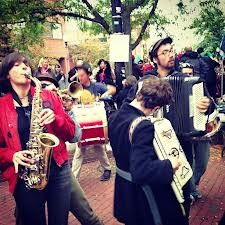
On Sunday, April 21, inimitable bluesman Bill Bowker hosts an outdoor festival of music in Ives Park with Rick Estrin and the Nightcats, Volker Strifler and San Francisco’s Tia Carroll and Cathy Lemons—but don’t miss warmup act the Red Hot Mamas, this weekend comprising Nancy Wenstrom, Jackie Enx, Diane McFee, Diva Ladee Chico and the Queen of North Bay blues, Sarah Baker.

“We’re definitely red hot, and we’re definitely mamas who deliver rhythm and blues,” Baker says. “When we play together we connect with our musical roots. I think we’ll do much the same for you, so come on down and listen.” Festival runs 10am–6pm on Saturday and 11am–5pm on Sunday in Ives Park, Sebastopol. $10 general admission. For more info, visit www.sebastopol.org.

Letters to the Editor: April 17, 2013

In Sympathy

I am praying for the whole Herczog family. Houston should not be added to that statistic of 400,000 mentally ill in prison. In a hospital, Houston can teach doctors more about his disease so this doesn’t happen to another family. I am holding the right thought that he will not be sentenced to prison. I am beyond sad for this whole family.

Via online

What a sad story. My sympathy to the family. I remember Mark, Annette and Marilyn from the mid-1980s in San Francisco. May God have mercy.

San Francisco

I absolutely agree with the thrust of this article. After having known Mark personally, and having a nephew who suffers from this disease, I believe that a delicate balance between mercy, wisdom and keen judgment desperately needs to be exercised. Mark was a deeply caring individual, and probably would be the first to testify on Houston’s behalf.

Calistoga

From NAMI’s website: In 1992, the National Alliance on Mental Illness (NAMI) and Public Citizen’s Health Research Group released a report titled Criminalizing the Seriously Mentally Ill: The Abuse of Jails As Mental Hospitals, which revealed alarmingly high numbers of people with schizophrenia, bipolar disorder and other severe mental illnesses incarcerated in jails across the country. A report issued by the United States Department of Justice in 1999 revealed that 16 percent of all inmates in state and federal jails and prisons have schizophrenia, manic depressive illness (bipolar disorder), major depression or another severe mental illness. In the years following these reports, the situation has not improved. This means that on any given day, there are roughly 283,000 persons with severe mental illnesses incarcerated in federal and state jails and prisons. In contrast, there are approximately 70,000 persons with severe mental illnesses in public psychiatric hospitals, and 30 percent of them are forensic patients. NAMI’s position is for treatment, not punishment.

My thoughts and prayers are with all affected by this tragedy, including Mark, his family, friends, acquaintances and our whole community.

Executive Director, NAMI Sonoma County

Internet Access at SSU

Last Friday I went to the Jean and Charles Schulz Information Center at Sonoma State University to inquire about SSU’s recently implemented restrictions to internet access. With incredulity, I listened to an IT employee inform me that inside the Information Center (where most people on campus access the internet), the university can do as it pleases with the endowment it received from the Schulz family. I was then instructed to direct my complaint in writing to the Information Center CIO.

In response, Information Center CIO Jason Wenrick explained that because of bandwidth limitations and security concerns, internet access is now only granted at the university to students, staff and faculty (current and former), and, on a temporary basis, to those “sponsored by an official SSU person.”

While perhaps within his legal right to restrict access, I remind Mr. Wenrick that the mission of a public university is to provide higher education opportunities for everyone, not just current students. The university should follow the lead of other public institutions, such as San Francisco State University and the Rohnert Park Public Library, and continue to grant internet access to all.

I am highly skeptical that this new policy honors the spirit with which the Schulz family originally donated monies for the construction of the center more than 13 years ago.

Rohnert Park

Dept. of Milkshakes

In last week’s profile of Pick’s Drive-In in Cloverdale, we accidentally named the owner as Claudio Clow. The owner’s name is, in fact, Claudia Clow. Rather than spend any more time apologizing in print, however, we’re headed up there now to regret the error in person with a bacon cheeseburger and a side of fries.

Pulling up a barstool

Write to us at le*****@******an.com.

Burn Notice

0

Someone is burning down houses.

In Aurora Theatre Company’s outstanding, entertaining new staging in Berkeley of Max Frisch’s The Arsonists, a sly fable about a town beset by an epidemic of arson, the playwrights (this version is a translation by British playwright Alistair Beaton) cleverly demonstrate the insidious banality of evil, and the ways in which good, well-meaning people often allow danger to exist and escalate, right beneath their noses.

While the town’s firefighters patrol the streets, Mr. Biedermann (Dan Hiatt), a wealthy homeowner and unscrupulous businessman, is self-righteously convinced of his own invulnerability. Hearing that a band of anarchistic troublemakers have been setting fires in the attics of houses all over town—growing increasingly bold with each new act of arson—he smugly rails against the stupidity of all who would unwittingly invite such incognito firebugs into their homes.

Then comes the knock at his door.

Schmitz (Michael Ray Wisely) is a charmingly eccentric, unemployed circus wrestler, who drops by asking for a sandwich and a bed. Biedermann is initially suspicious, but whatever he expects an arsonist to look like, this unmenacing goofball is not it. In fits and starts, Biedermann gradually warms to the sweet-faced newcomer, his easily manipulated sense of decency tangled into knots by Schmitz’s stories of his life as the orphaned son of a poor coal miner.

Biedermann’s wife, Babette (Gwen Loeb), is also suspicious, resenting the presence of the strange man lurking in her attic, but despite the gut-feeling warnings of their no-nonsense maid, Anna (Dina Percia), and a chorus of resolute firefighters (Kevin Clarke, Tristan Cunningham and Michael Uy Kelly), she eventually consents to Schmitz’s guilt-tripping guile.

Even after the arrival of the straight-talking, tuxedoed ex-con Eisenbing (Santa Rosa’s Tim Kniffin, menacingly cordial), and the rapid accumulation of gasoline barrels, fuses and detonators in the attic, the Biedermanns are afraid of appearing judgmental, their self-justifications pushing them closer and closer to complicity in the disaster that seems to be formulating right in their home.

Brilliantly directed by Mark Jackson, with a tense and escalating sound design composed of ambient noise and overlapping melodies, The Arsonists is crisp, superbly performed and deliciously fun to muse over afterwards, at once challenging, playful, and thought-provoking.

As the firefighters ominously demand, in one plaintive voice, “If the odor of change frightens you more than the odor of disaster . . . how will you stop disaster?”

Rating (out of 5): ★★★★★

If You Dare

‘Tis not folly to be Wiseau. Tommy Wiseau, star and director of The Room, is the man behind the cult film that, in some cities, has played for two or four or even 10 years.

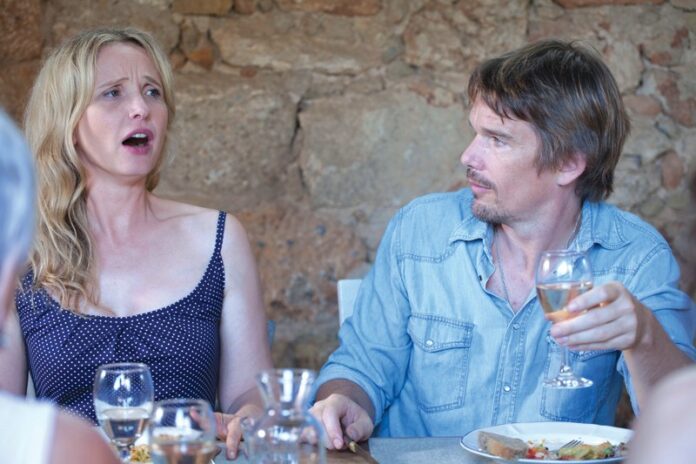
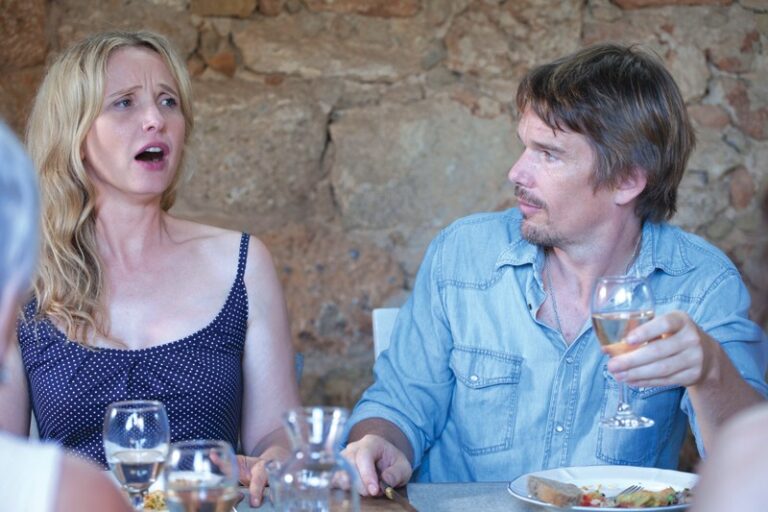
The Room is an unusual movie. It’s mumblecore and melodrama wrapped into one big burrito. It’s a love story in a cinematic culture that pigeonholes such films as chick flicks. On April 25, it finally makes its way to Santa Rosa as part of the Roxy Theater’s weekly cult film series, which in the last seven months has brought fan favorites like Creepshow, Evil Dead, My Bloody Valentine, Troll 2 and dozens of others in popular double features every Thursday.

Local improv troupe Opposing Media will riff on the movie, MST3K-style, during the screening, and they’ll have plenty of source material. Like Troll 2, The Room is routinely cited as one of the worst movies of all time. And—by “Roomies”—one of the best.

“What people don’t understand,” says Santa Cruz filmmaker Jesse Goldsmith, “is that The Room isn’t a bad movie at all. The Room is a masterpiece. Really. One of the few essential San Francisco movies since Vertigo.”

Considering Wiseau’s international promotional tours, CNN interviews and a choice line-drop on The Simpsons (“Lisa, you’re tearing me apart!”), he must have done something right. Loosely, The Room is the story of a brooding, long-haired and heavily accented man savaged by romantic betrayal in San Francisco.

“It was a movie made by design,” Wiseau explains by phone from Los Angeles. “I spent a lot of money to create this little baby. As a filmmaker, the more colors you use, the better; the more details, the better. The elements of the story—the drugs; two are better than three; three’s a crowd—all this stuff is based on life and the interaction between humans.”

The 10th-anniversary edition of The Room on Blu-Ray includes new documentary footage that Wiseau says proves that there was a method to his romantic madness. Wiseau’s source was his own 800-page novel, which he then shortened into a play—and then a film script. (The source book may be published soon.)

The origin of the film’s cult status can be traced to an Oscar-qualifying Los Angeles screening in a theater where the only available slot was late at night. Wiseau purchased a billboard (“With good traffic—it wasn’t cheap”) to promote the screening. Thanks to word of mouth, the film drew a crowd. Wiseau ended up extending the billboard contract for five years.

The Room‘s fame has even changed the opinions of people who worked on it. “After 10 years,” Wiseau relates happily, “I’m running into people who quit the film who now want credit on it.”

‘The Room’ screens in a double feature with ‘The Big Lebowski’ on Thursday, April 25, at the Roxy Theater. 85 Santa Rosa Ave., Santa Rosa. 7pm. $10. 707.522.0330.

Heavy Machine

0

Peter Williams came from Yoshi’s San Francisco to the Napa Valley Opera House last year, and as artistic director wasted no time booking world-class jazz talent: Branford Marsalis, Jack DeJohnette, Joshua Redman, Bill Frisell and many others.

This week, the Opera House’s jazz offerings continue with avant-funkalicious trio Medeski Martin & Wood. The cacophony of these bad daddies of cool are sure to light a fire under the usual provincial wine-and-cheese audiences. Many recent MM&W albums have been live, like last year’s Free Magic, and this show sees them on acoustic instruments, just like their early days of the 1990s.

MM&W get into some serious jams, but don’t compare them to Phish—these guys bring in hip-hop and funk, and even released a children’s album. Will they lay down a clown carnival of confusion and dissonance? Will it be a night dedicated to Thelonious Monk? Whatever’s on the itinerary, the show will no doubt unsettle the town with psychedelic soundscapes and unresolved riffs resting on beautiful musical architecture. Ready to take the trip? Medeski Martin & Wood lead the way on Friday, April 19, at the Napa Valley Opera House. 1030 Main St., Napa. 8pm. $25–$30. 707.226.7372.&

Invested Interests

0

An overview of the city of Santa Rosa’s investment portfolio raised several eyebrows at a city council meeting on April 9.

According to a presentation by the city’s investment management team, PFM Asset Management, Santa Rosa’s $298.2 million portfolio is invested in a variety of federal, state and corporate pools. The city’s corporate investments, totaling $44.7 million, include JPMorgan Chase, General Electric and the Walt Disney Company in amounts of roughly $6 million each, and Wells Fargo, Pepsi and Toyota in amounts of roughly $3 million each, among others. Additionally, roughly $3 million is invested in the Metropolitan Water District of Southern California.

While PFM advocates so-called socially responsible investment policies by refusing corporate investments in the tobacco, firearms, alcohol, pornography, gambling and petroleum industries, councilmember Gary Wysocky pointed out that many Sonoma County residents may not consider JPMorgan Chase, GE and Wells Fargo to be socially responsible. He also questioned investments in Southern California’s water district.

Councilmember Jake Ours agreed with some of Wysocky’s concerns, calling the water district in question “the big bad guy.” Councilmember Julie Combs expressed a desire for the city to invest more in the local economy, ultimately voting not to amend the city’s current practice to allow municipal investments out of state.

While the amendment passed, council asked city staff to research the boundaries of the poorly titled social responsibility clause, to be discussed at a later date.

Rollin’ Deep

0

“This Is the Roll You’ve Been Looking For,” proclaims the Jedi mind trick at Haku Sushi in Santa Rosa. Except it’s no trick—upon tasting the tuna, salmon, yellowtail, avocado and tobiko roll wrapped with cucumber and drizzled with sunomono sauce, it’s apparent that this is, indeed, the roll you’ve been looking for all along.

This crunchy, super-fresh delight is one of the dozens of rolls with deliciously witty titles at Haku Sushi, which opened last month in Santa Rosa’s Brickyard Center. Others include “What She’s Having” (if the table next to you starts to shake, this is probably what was ordered) and the deep-fried cream cheese-and-salmon spectacular, “Thunder Down Under.”

Haku also offers udon, bento boxes and other traditional Japanese fare; it’s not easy to choose with so many enticing options. Perplexed diners could just yell out, “Roll Me a Fatty!” and find themselves rewarded with a tasty combination of tuna, white tuna, salmon, avocado and cucumber wrapped in daikon radish sprouts and crab. But try to avoid eye contact with the live betta fish used as shelf decoration: after too many “fatties,” things could get weird. 518 Seventh St., Santa Rosa. 707.541.6359.

Radio Days

0

Radio Days

KSRO 1350-AM and its radio-dial siblings (97.7 the River, Hot 101.7, Froggy 92.9 and Mix 104.9) have been sold to local owners by Connecticut-based parent company Maverick Media. The assemblage of new investors is led by former KSRO owner and Sonoma County resident Lawrence Amaturo.

The sale was announced to employees on Monday, says KSRO news producer Tony Landucci. “I’m definitely optimistic with the ownership being local,” he says. “I’m excited to see how it will be different having local ownership rather than someone on the other side of country.”

Amaturo, who is a co-owner of Nissan and Kia of Santa Rosa, sold KSRO and three other stations in 2000 for $30 million, reportedly paying $4.5 million for the radio properties in this deal.

Maverick Media was not exactly popular with local listeners. When afternoon host Steve Jaxon of The Drive was cut in 2010, listeners protested and he was back on the air within weeks. In 2011, the company killed popular hard-rock station 101.7 the Fox and replaced it with a Top 40 format, prompting a protest outside the station. And when the Good Food Hour with John Ash was axed from KSRO last year, the response was a mix of anger and confusion.

“Everybody’s very happy, because no one liked being owned by a company in Connecticut that didn’t know anything about Sonoma County,” says Jaxon of the sale. On Amaturo’s ownership, Jaxon has nothing but enthusiasm. “I was there in 1996 when he bought the stations,” he says. “He was new to the market then, but now he’s been here 25 years, and he knows the market inside out. It’s gonna be a great day for radio.”—Nicolas Grizzle

Hands in the Air

0

Recently, after an audition at a local theater company in one of Sonoma County’s popular tourist towns, I was looking for a place to eat. It was a balmy spring evening, and as I walked from one restaurant to another, perusing the posted menus and sticking my head in the doors to check out the atmosphere, I realized that none of these white-tablecloth places were calling my name.

“Oh, my God,” I exclaimed to my partner. “Hi Five has ruined me.”

“We could go back to Guerneville,” she responded patiently.

“No, no,” I said. “I’m too hungry. Let’s eat here.”

The next evening, we were back at Hi Five.

We ordered bibimbap—a rice bowl with vegetables, fried egg, seaweed, kimchi and a choice of protein—and giant beer-battered shrimp with sushi rice and a variety of Korean condiments. Our appetizer was a paper cone of hand-cut french fries, smothered in whole chili peppers, garlic cloves, seaweed and scallion rings. It was all deeply satisfying, as expected.

Those who haven’t been to Guerneville in the past few months might be wondering what I’m talking about. The truth is, you could walk right by Hi Five without noticing it. That’s because it’s a dinnertime pop-up situated in the 1950s-style diner Pat’s, where the Hines family has been serving breakfast and lunch since they purchased the place in 1943.

At 3pm, Pat’s closes for the day and the Hi Five crew rush in to prep for dinner, stashing all the Pat’s paraphernalia in a back kitchen and bringing out the Hi Five platters and condiments.

David Bloomster, who owns Hi Five with business partner and chef Eugene Birdsall, says he’s had his eye on Pat’s for years, and sharing the space with a dinner-only restaurant is a not-too-risky way to begin.

“It’s so authentic,” he says, noting its old-fashioned soda fountain, giant wall map of Russian River fishing holes and minimalist décor. “I could never have designed it myself.”

Bloomster and Birdsall met next door at Boon Eat + Drink, one of the first major contributors to Guerneville’s culinary renaissance. At the time, Bloomster was the manager and Birdsall was the chef. They worked together for four years, developing respect for each other’s expertise.

Bloomster, whose background is in art and design, had an idea for what he calls a “postmodern” restaurant, where the setting is laid-back, the food is sophisticated, and the approach is about having fun. Birdsall, he decided, was the man who could pull this off, with years of hardcore experience and a fearlessness about which foods work together.

And it is working. So far, the restaurant is crowded every night, chock-full of locals, tourists from the Bay Area and day-trippers from Santa Rosa, Healdsburg and beyond. Clearly, there is something unique happening here, between the vintage décor, the ’80s disco music (they will turn it down if you ask), the personable, intelligent waiters and the food.

Oh, yes, the food. Birdsall combines his intimate knowledge of the Korean dishes his mother cooked in Solano County with a whimsical appreciation of American comfort cuisine and an artist’s sense of how to make food on a long, gleaming white plate look like a yummy still-life.

This results in everything from bossam—a lettuce-wrap plate with kimchi, garlic, chiles, rice, Korean soybean paste, a choice of tofu, chicken, shrimp or pork, and a huge mound of fresh butter lettuce — to mac and cheese with Korean-style beef short ribs and Asian garnishes.

Many of Birdsall’s ingredients are locally sourced, including whole pig that he butchers each week in a back kitchen. His mother joins him to make the kimchi.

The menu is divided into five sections, priced at increasing increments of $5. Each section features five dishes, except for the last one, the weekly surprise.

Many of the selections are already vegetarian and/or gluten-free. The amazing Korean fried chicken (KFC) is dipped in rice flour, instead of the usual wheat flour, before frying, and then finished with a spicy soy-ginger mixture that is made from organic, gluten-free soy sauce. The noodle bowl comes with soba, udon or rice noodles, and meat or vegetable stock. Many of the entrées offer a choice of tofu, shrimp, chicken, pork or beef.

Bloomster, who has been a vegetarian for most of his adult life, is proud that at least half of the dishes can be prepared vegetarian-style, and that one even includes tempeh.

“It’s so West County,” he says.

There’s also a small selection of local wine by the glass, good beer and designer sake, all served from the bar.

It might be an exaggeration to say that eating at Hi Five could spoil you for other restaurants, but try it once, like my partner and I did, and you’ll be back.

Hi Five, 16236 Main St., Guerneville. 707.869.8006.

Like a Diamond

Author Jared Diamond brings teachings from tribal societies to Sebastopol for Earth Day

Apple Blossom Time

Parade, Red Hot Mamas, vintage cars and more

Letters to the Editor: April 17, 2013

Letters to the Editor: April 17, 2013

Burn Notice

Aurora's 'Arsonists' is incendiary

If You Dare

Is 'The Room' the worst movie ever, or a masterpiece?

Heavy Machine

Medeski Martin & Wood lay down grooves in Napa

Invested Interests

An overview of the city of Santa Rosa's investment portfolio raised several eyebrows at a city council meeting on April 9. According to a presentation by the city's investment management team, PFM Asset Management, Santa Rosa's $298.2 million portfolio is invested in a variety of federal, state and corporate pools. The city's corporate investments, totaling $44.7 million, include JPMorgan Chase,...

Rollin’ Deep

"This Is the Roll You've Been Looking For," proclaims the Jedi mind trick at Haku Sushi in Santa Rosa. Except it's no trick—upon tasting the tuna, salmon, yellowtail, avocado and tobiko roll wrapped with cucumber and drizzled with sunomono sauce, it's apparent that this is, indeed, the roll you've been looking for all along. This crunchy, super-fresh delight is one...

Radio Days

Santa Rosa's oldest radio station returns to local ownership

Hands in the Air

Hi Five in Guerneville an unassuming, rewarding pop-up
11,084FansLike
4,606FollowersFollow
6,928FollowersFollow