Not So Hard to Get

0

Parents and peers tell them to be assertive but not aggressive, feminine but not fiercely feminist, sexually alluring but not sluttish. They’re twenty-something women, and they’re caught in the crossfire of a double standard pinning them down to invisible rules that don’t apply to men in the same generation. Targeted by ads and apps, catered to by TV shows like Girls, they’re intensely studied, analyzed and packaged.

They’re also the subject of a new book, Hard to Get: 20-Something Women and the Paradox of Sexual Freedom (University of California Press; $29.95) by Leslie C. Bell, a psychotherapist in Berkeley, the college town that boasts more therapists per capita than any other place in the country. Bell, 42, specializes in issues that hit women especially hard—from low-self esteem to eating disorders, and that great bugaboo, personal relationships. Twenty-something women flock to her office.

Hard to Get offers compelling narratives from the North, East and South Bay, from women who are gay, straight, Latino, Asian, white, Catholic, Buddhist, wealthy and poor. Bell tells their stories, in their own words, about dating, oral sex, hooking up, good girls and bad girls. With so much to say about sex, she has trouble getting a handle on the subject. Still, her book opens a rich and fascinating Pandora’s box that will be useful to therapists and young women in therapy—or eager for psychological help.

“In recent years, it has become unclear what it means to be a woman, especially a liberated woman,” Bell writes. Still, she places twenty-something females in three clear categories: the “sexual woman”; the “relational woman”; and the “desiring woman,” who manages to have both meaningful sex and a meaningful relationship.

In a recent interview, Bell tells me she didn’t mean the book’s title to suggest that young women “play hard to get” or that they’re hard to understand. “They’re hard to get,” she explains, “in the sense that they’re unable to reach their own goals for personal fulfillment.”

Like Arlie Hochschild, the renowned Berkeley sociologist and one of her intellectual mentors, Bell acknowledges the force of the marketplace and the power of technology. “In our culture, there’s the expectation that you’ll be on the job 24 hours a day,” she tells me. “With cell phones and laptops, people work crazy hours. Under conditions like these, it’s increasingly hard to have a career and to enjoy a meaningful personal relationship.”

Bell finds fault with parents, teachers and the culture at large. “Young women don’t have role models, and they don’t have frank conversations with mothers and fathers about how to take the initiative, expose themselves and be vulnerable sexually,” she tells me. “As a society, we’re not teaching these essential skills, and young women are befuddled.”

Bell insists that we don’t really know what goes on behind bedroom doors and that the sexual activity of “ordinary” women is little known and understood. Indeed, Bay Area therapists say that clients are unreliable sources when it comes to their own sexual activity. Still, young women are often willing to provide clues about their adventures in the erogenous zones, if not lurid details themselves. After all, twenty-something women love to talk about sex.

At a packed bar on Fourth Street in Santa Rosa, Camille, 23, nurses a beer with close friends, all in their 20s, all sharing intimacies. What’s noticeable to me about Camille’s circle of friends is that they’re bi-cultural and interracial. Blue-eyed blond guys are engaged to Asian women, and blue-eyed blonde women are with dark-complexioned men. They may not have broken every sexual barrier, but they’ve knocked down walls that once divided members of ethnic groups.

Camille insists that she wants sex, intimacy and creative work. A recent college graduate, she has a job, but she’s not in a relationship now. She wants, she says, “to be the most attractive woman in the room, so when I denounce a man as sexist, I won’t be dismissed as just another unhappy women’s-libber.”

Bell might find Camille as protective of her emotions, and as unwilling to be vulnerable, as the dazed and confused women who populate Hard to Get.

“I don’t want the men that I like to know that I like them,” Camille tells me. “I’ve pioneered new ways to be rude to guys.”

Sonoma State University professor Deborah Kindy, 65, teaches Nursing 480, “Health, Society and Human Sexuality.” In the last decade, 2,000 or so undergraduates have learned, she hopes, “to be comfortable with themselves as innately sexual beings.”

Kindy follows in the pioneering footsteps of professor Bernie Goldstein, a showman in the classroom who taught legendary courses for decades about human sexuality at San Francisco State University and SSU. Her own teaching methods have been informed by the surveys she’s conducted with thousands of students, all of whom sign an agreement that that they’ll respect others and their opinions.

On a campus where girls outnumber guys three-to-one, the competition for men is fierce, though women students tend to be more sexually repressed and less sexually adventurous than Bell’s cohort.

“A lot of students enter the class naïve about sex,” Kindy tells me. “They come from conservative families, and they’ve been told that they ought to abstain from sex until after their wedding night. Some women insist that they’re virgins, even though they’ve had oral and anal sex with boyfriends.”

Kindy’s class serves as a kind of group therapy session in which students make startling discoveries about their sexuality and understand that gender roles aren’t as limited and limiting as parents and teachers tell them. If there’s one single lesson that they learn in Nursing 480, it’s that they can create and recreate their own sexual identities.

The college environment is, of course, imperfect. Dorms provide fertile ground for casual sex that leaves participants feeling empty. Rapes on campuses are hushed up all too often. There’s sexual harassment, and, after all these years, still prejudice against students who are gay, lesbian, bisexual or in doubt about their sexual identity. Classes like Kindy’s provide opportunities for undergraduates to learn about real sex and sexuality, and not the ersatz varieties on TV and the internet that Bell finds troubling, if not downright harmful.

“TV shows send a message that career comes first and love and marriage come afterwards,” she tells me. “That division of personal life from professional life doesn’t help.”

Decades after the advent of women’s liberation, women have indeed come a long way, but books such as Hard to Get suggest that the journey has only just begun.

Pop-Ups with Pop

0

Santa Rosa’s Moonlight Brewing Company is a kind of hidden gem. Fans of the brewery’s Guinness-like stout Death and Taxes have hand-marked maps of where it’s available on tap, and will happily wait over four months for their sweatshirt order to be processed. Pop-up dinners pairing the brews are rare, to say the least. That in mind, Spoonbar’s four-course meal seems even more spectacular than the menu would dictate. Wagyu beef tartare, slow-roasted duck and butterscotch tart with tobacco ice cream and a macaroon are paired with Twist of Fate, Points North and Uncle Ollie, respectively. A drool-inducing, eye-saucering menu, indeed.

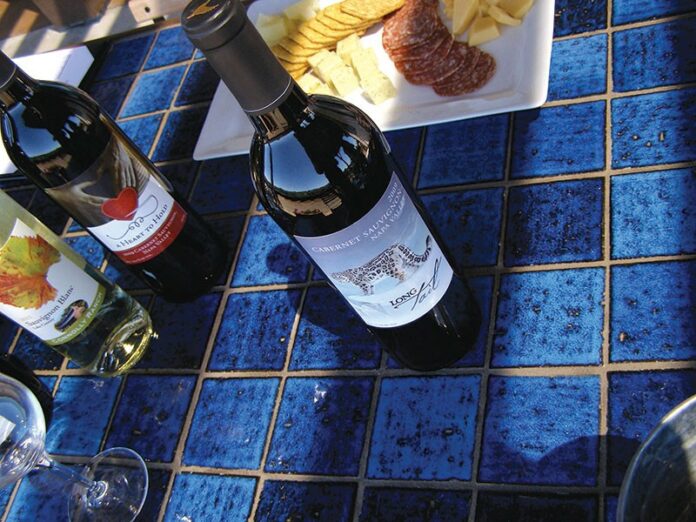
For fans of wine and butchery, Long Meadow Ranch is hosting its “Live Fire Lamb” event featuring Long Meadow chef Stephen Barber with Fatted Calf butcher Taylor Boetticher. The chefs will demonstrate how to butcher a whole lamb and give tips on what to look for when buying meat (“marbling” is sure to be mentioned). The menu includes lamb brochettes, meatballs, lamb asado and grilled leg of lamb, with sauces and vegetables to accompany, all paired with Long Meadow Ranch wines.

The Moonlight Brewing dinner is Thursday, April 25, at Spoonbar (219 Healdsburg Ave., Healdsburg; 6:15pm; $65; 707.433.7222); the lamb dinner is Sunday, April 28, at Long Meadow Ranch Winery & Farmstead (738 Main St., St. Helena; 3pm; $150; 707.963.4555).

In Our Backyard

Daniel Kedan was fired suddenly from his first serious cooking job. In 2004, just a few years out of college, he’d landed a position as sous chef at Il Palio Restaurant in Shelton, Conn., running the kitchen virtually by himself. Then the restaurant was sold, and the new owner brought in a fancy chef from New York. “I thought if that’s the way this business is,” Kedan tells me on a recent morning, “I don’t want anything to do with it.”

Soon, however, he went to Europe and had a gastronomic epiphany. While in Rome, he dined on a whole fish with salsa verde accompanied by a bowl of pasta and truffles. “That was the moment I knew what I was going to do with my life,” says Kedan, who, along with his wife, pastry chef Marianna Gardenhire, opened Backyard in Forestville six months ago.

After returning from Europe, Kedan quit his corporate deli job and moved to the Napa Valley to be part of the first Associate in Occupational Studies degree program at the Culinary Institute of America’s St. Helena campus. It was there that he met Marianna, the only other person at the school who liked the Grateful Dead.

Kedan talks about California like a classic East Coast transplant who followed the late-’90s jam band scene across the country, philosophy degree in one pocket, compass set to west in the other. “The first time I visited, I fell in love,” gushes Kedan, who hasn’t missed a summer on the Yuba River since 1999. “That’s where I proposed,” he says, “and that’s where Marianna and I married ourselves.”

While still in school, Kedan honed his technical skills in the newly opened kitchen of Ad Hoc in Yountville. After stints at the General’s Daughter in Sonoma, Solage in Calistoga and Cantinetta Piero in Yountville, Kedan and Gardenhire heeded the call of West County, with its earthier, less corporate, decidedly locavore vibe.

In 2010, the culinary couple started working in Sebastopol—Kedan at Peter Lowell’s, Marianna at P30, whose fire burned bright and brief. Lowell’s introduced Kedan to local farmers, as well as to Luke Hefele and two other cooks who now work with him at Backyard. Kedan euphemistically “parted ways” with Lowell a little more than a year later.

“Working at Peter Lowell’s was one of the best things that could’ve happened to me,” says Kedan. He grins. “But leaving there was even better.”

Both he and Gardenhire realized that they were too stubborn to work for other people; it was time to become their own bosses. Given the easy camaraderie and efficiency of the long, open kitchen, it’s hard to believe that Backyard (formerly Sarah’s Forestville Kitchen) is still in its infancy. “It’s been a rollercoaster,” says Kedan, who gives equal shrift to both the ups and downs. “We borrowed every dollar to open this restaurant,” he explains, including a serendipitous—and sizable—investment, at the last minute, from a man he’s only met once.

They opened on Nov. 1, just in time for the winter gloom to keep people hovered over their soup pots at home. But despite inconsistent business—recently, their best week was followed by their very worst—the owners have had a chance to work out the kinks, including parting with an early partner who didn’t work out.

If Kedan weren’t so sincere, he’d be a cliché. He starts his day by doing qigong with Hefele, who in addition to cooking also teaches capoeira at Sebastopol’s Shugyo Center. His restaurant is named for the abundance of locally grown ingredients that find their way onto his simple white plates. The homey décor consists of glass bowl terrariums, rustic plant boxes and local artwork. A bundle of sage sits by the cash register.

And yet Kedan never once utters the phrase farm-to-table—he doesn’t have to. During the hour that I’m here, watching him slice potatoes and scoop polenta, we are interrupted several times by farmers making deliveries. Kedan negotiates a price with Brad who’s brought a bounty of beets, leeks, and frisse from his Roots of Creation Farm. An egg delivery comes in from RLR Vineyard, owned by Randolph Johnson, whose paintings decorate the walls of the dining room.

The diverse menu—Backyard serves brunch, lunch and dinner—reads like a guidebook, with items like the duck egg frittata that includes Wyland Orchards duck eggs, Strong Arm Farm leeks and fava leaves, Redwood Hill chèvre, crispy First Light Farm potatoes and wild foraged watercress ($12). Wherever possible, the ingredients’ source farms are listed on the menu.

At one point, Kedan waves me over to the refrigerator. “You’re not a vegetarian, are you?” he asks before showing me the half pig that he’ll finish butchering later that day. As we talk, the very last of the locally grown potatoes are crisping in the fryer. Hefele is seasoning the kale chips that he’s created as their substitute.

“The cooks in this kitchen are truly amazing,” says Kedan, who mentions the phrase “high standards” more than once. “I feel really lucky,” he says. “We all learn from each other.”

Tale of Two Counties

0

There are two Sonoma counties, says the North Bay Organizing Project (NBOP). One is made up of workers and their families suffering economic hardship during this time of financial uncertainty, while the other, comprising wealthy white-collar types, continues to rake in big bucks. This isn’t exactly news, but on Saturday, the NBOP is holding a conference to discuss a study commissioned by the Living Wage Coalition and the NBOP that uses census data to confirm the existence of these realities.

The Equity Summit is a daylong event with workshops led by community members and policy experts. The keynote speaker is Chris Benner (pictured), a professor of community and regional development at UC Davis, who will discuss the study being released at the event. Some highlights of the study: about 11 percent of Sonoma County residents live below the federal poverty threshold of $10,180; compensating for cost of living in Sonoma County, over 27 percent of residents from the 2010 census are living in economic hardship, and in Santa Rosa, it’s 32 percent; the county’s median household income fell 5.7 percent from 2007 to 2010; African Americans earn 61 cents for every dollar earned by whites, Latinos earn 69 cents per dollar, and women earn 79 cents for each of their male counterparts’ dollars.

These statistics are just the tip of the iceberg, but it’s not all negative. The community sessions will discuss what to do to actually face the problem in a grassroots way, like targeting the roots of inequality, rather than just crying over spilled milk.

The Equity Summit is Saturday, April 27, at the Glaser Center. 547 Mendocino Ave., Santa Rosa. 10:30am to 3pm. 707.481.2970. Free; RSVP required.

Paul Mathew Vineyards

0

The first thing to understand about Paul Mathew is that there is no Paul Mathew. It’s a combination of names, like Kosta Browne—and that’s not entirely unrelated, as you’ll see.

The second thing to understand is, there is no Paul. While working as sommelier at John Ash & Co., Mat Gustafson persuaded his associate that starting a winery would be a really good idea. If this story sounds familiar, it’s because when he left John Ash, Gustafson trained future Pinot Noir upstart Dan Kosta to be his replacement.

There’s more to the story. While the associate, Paul, dropped out, Mat kept the name. Gustafson, experienced in wine sales and buying positions in the industry, took a winemaking position with Dutton Estate, and now manages the “gravity flow” custom crush facility at Moshin, where he also vints his product. Now, with the opening of their sunny, corner tasting room in downtown Graton, the story of Mat and Barb and a grape named Valdiguié just got a little less obscure.

The tasting room has a full-wall chalkboard for monthly wine and food seminars. Barb Gustafson says that she thinks a great winemaker is someone who understands food. “Mat’s an incredible cook. To me, it doesn’t come naturally,” she admits. “But Mat has always loved cooking.”

The 2012 Turner Vineyard Valdiguié ($20) mightn’t make it to the main course. From an old, two-acre patch in Knights Valley, a survivor from the days when this obscure-sounding grape was the workhorse misnomer “Napa Gamay,” it’s a dark, cloudy pink, smells like a bucketful of fresh-crushed black grapes and tastes like strawberries—think Beaujolais Nouveau, although Barb says they like to think Cru Beaujolais. Different, and fun.

More familiar aromas of hard butterscotch candy jump right out of the 2010 Weeks Vineyard Chardonnay ($32) and hit the nose, while the dry, and dried herblike, slightly bitter palate demands to be taken seriously. The 2010 Russian River Valley Pinot Noir ($32) is a blend of lots from Horseshoe Bend, TnT and Ruxton, all small, family-run vineyards at the western edge of the AVA. It’s got thyme and oregano spicing up bright raspberry flavors and a sort of sour cherry Chianti finish, while the individual vineyard releases ($45) slip progressively from hay, pine duff and bright cherry, into darker allspice, oily oak, and black cherry territory. The best recommendation? I’m told that nine out of 10 visitors choose to refund their tasting fee with a purchase. The fresh, crisp 2012 Rosé ($20) makes that choice easy.

Paul Mathew Vineyards, 9060 Graton Road, Graton. Thursday–Sunday, 10:30am–4:30pm. Tasting fee, $10. 707.865.2505.

Fit to Print

0

The recent release of Project Censored: The Movie, which encourages media consumers to pay attention to what they’re being fed and by whom, is well-timed for readers in Sonoma County and beyond.

This past month, five radio stations—KSRO, the Mix, Hot 101.7, the River and Froggy—were sold by East Coast corporate parent Maverick Media back to the local ownership of Sonoma Media Group, helmed by Lawrence Amaturo. Similarly, rumors have continued to spread about Sonoma Media Investments, which already owns the Press Democrat, Petaluma’s Argus-Courier and the Sonoma Index-Tribune and other associated publications, and which founder Darius Anderson has hinted will be buying even more newspapers.

Project Censored: The Movie, which premiered at the Sonoma International Film Festival earlier this month, chronicles the nonprofit located at Sonoma State University whose mission is to “teach students and the public about the role of a free press in a free society—and to tell the news that didn’t make the news and why.”

Some news, as the film suggests, is simply junk food. In an attempt to be honest about what news is and isn’t, Google’s senior director of news and social products this month came out against news outlets printing thinly veiled marketing campaigns as news.

“Google News is not a marketing service, and we consider articles that employ these types of promotional tactics to be in violation of our quality guidelines,” said Richard Gingras, in a statement. Additionally, it was announced that if an online site mixes news content with marketing materials, the entire publication may be excluded from appearing in Google News searches. A win for media credibility!

It is difficult, in this day and age, to know which are the credible news sources. From small publications influenced by both advertisers and local government to huge corporate news outlets promoting larger agendas, there is often a disconnect from what is written and what is really going on. In the Project Censored film, Khalil Bendib, a political cartoonist, talks about how corporate ownership of news can stifle the truth: “General Electric owns NBC. General Electric is a bomb maker. NBC is not going to be against war.” This dynamic isn’t foreign to smaller local media outlets either, as demonstrated by the scrutiny applied to Anderson’s affiliations and those of his partners.

In the era of junk food news, as Project Censored: The Movie says, it’s vital for news consumers to truly understand the reason stories appear, and to constantly question what’s presented.

Jenna Loceff is a former reporter for the North Bay Business Journal, a speaker on ethics and business journalism for the Journalism Association of Community Colleges, and a new contributor to the Bohemian. She writes about media at bohemian.com.

Imaginists Receive Grant to Fund Summer Show

Art is Medicine Show, 2012

Santa Rosa’s Imaginists theater company announced today it’s touring summer show will be fully funded thanks to a $10,000 grant from the National Endowment of the Arts.

Imaginists Artistic Director Amy Pinto is excited about the possibilities this funding opens up. “Because of it, we can take more performances to the Redwood Empire Food Bank Summer Lunch sites,” she says. “And tour Federico Garcia Lorca’s ‘The Billy-Club Puppets’ to local parks on the weekends. This is the beginning of a new era for the Medicine Show.”

The grant supports the Art is Medicine Show (El Show el Arte es Medicina), a series of free, bilingual performances in Santa Rosa. The shows will tour by bicycle caravan through July and August. Along with a core group of professional actors, the Imaginists offers internships to high school seniors and college level students.

Academic self-selection

0

This weekend, Mother Jones posted an article entitled “Yes, Liberals Rule the Ivory Tower—But Why?”

ivory.jpg

It examines a new book by sociologist Neil Gross, “Why Are Professors Liberal and Why Do Conservatives Care?” which debunks that old myth that professors are brainwashed, radicalized lefties who want to do the same to impressionable freshman. Advanced academia, it points out, is hardly a mill in which corn-fed, constitution-lovers go in and tattooed Marxists come out. Instead, all the Marxists want to go and be with other Marxists, creating a kind of self-selection that might uphold the maxim that the Ivory Tower leans left, but shows that it’s not quite why you would think.
You can read it here.

Huey Lewis’ Laptop Still Missing

HueyLewis06.jpg

There’s a couple things about the Huey Lewis car theft story that caught my interest. The gist of it is a 31-year-old woman stole his rental car, which contained his laptop, from a Holiday Inn Express in Mill Valley. She was caught and sentenced this week, but the laptop is still missing.

1) The laptop has not been recovered. Was he working on new tracks for Huey Lewis & the News? Will the unfinished masters be leaked to the Internet?

2) Lewis, a longtime Marin County icon, now lives in Montana. Further investigation shows he also does not like people hunting ducks on his property, and that the way to deal with this is to set out duck bait, signaling to hunters (and legally declaring) that duck hunting is not allowed on the property.

3) He was staying at a Holiday Inn Express. I’m sure that is a nice place and all, but really? That’s one step up from a Best Western. Let’s get Huey Lewis a real hotel to stay in. A nice B&B or something.

4) The woman only received a 50-day sentence and it can be reduced to a misdemeanor in a year. Stealing a candy bar and stealing a car with a laptop inside are the same crime now? Really?

5) This is only news because the victim is the front man of a band called the News, and journalists love to use that word in print.

Mortgage Modifiers under federal investigation

0

The Press Democrat reports that a Petaluma-based mortgage company is currently under investigation by the Department of Justice. According to the article, several people who were in the midst of foreclosures claim they were swindled by owner Miguel Lopez, who allegedly charged an up-front fee to restructure their mortgages. They claim that he took $2000 and then never actually did anything to help them.

foreclosure-1.jpg

You can read the story here. It reports that the offices of Lopez are apparently unmarked. His Website is down as well.
We have covered the foreclosure crisis before, showing the desperate measures people will take when faced with losing their homes. In Leilani Clark’s story House and Home, about the Homeowner Bill of Rights, a Forestville resident tells her: “There have been times that suicide was an option for me.”
You can read her story here.

Not So Hard to Get

Sex and the single girl today

Pop-Ups with Pop

Santa Rosa's Moonlight Brewing Company is a kind of hidden gem. Fans of the brewery's Guinness-like stout Death and Taxes have hand-marked maps of where it's available on tap, and will happily wait over four months for their sweatshirt order to be processed. Pop-up dinners pairing the brews are rare, to say the least. That in mind, Spoonbar's four-course...

In Our Backyard

Hyperlocally sourced patio dining in Forestville

Tale of Two Counties

There are two Sonoma counties, says the North Bay Organizing Project (NBOP). One is made up of workers and their families suffering economic hardship during this time of financial uncertainty, while the other, comprising wealthy white-collar types, continues to rake in big bucks. This isn't exactly news, but on Saturday, the NBOP is holding a conference to discuss a...

Paul Mathew Vineyards

Boutiquey Valdiguié—just don'tcall it Napa Gamay

Fit to Print

The recent release of Project Censored: The Movie, which encourages media consumers to pay attention to what they're being fed and by whom, is well-timed for readers in Sonoma County and beyond. This past month, five radio stations—KSRO, the Mix, Hot 101.7, the River and Froggy—were sold by East Coast corporate parent Maverick Media back to the local ownership of...

Imaginists Receive Grant to Fund Summer Show

Bilingual tour of Art is Medicine in Santa Rosa begins in July.

Academic self-selection

Why academia leans left

Huey Lewis’ Laptop Still Missing

Were there unreleased tracks on the iconic 80's pop bandleader's computer?

Mortgage Modifiers under federal investigation

The Press Democrat reports that a Petaluma-based mortgage company is currently under investigation by the Department of Justice. According to the article, several people who were in the midst of foreclosures claim they were swindled by owner Miguel Lopez, who allegedly charged an up-front fee to restructure their mortgages. They claim that he took $2000 and then never actually...
11,084FansLike
4,446FollowersFollow
6,928FollowersFollow