To Cook or Not to Cook?

The racial history of whole-hog barbecue. How to sweat a perfect mirepoix. Why we are so drawn to umami, that elusive fifth taste.

These topics and many more are dissected in Michael Pollan’s seventh book, Cooked: A Natural History of Transformation. The bestselling author of The Botany of Desire and The Omnivore’s Dilemma, Pollan understands more than most the plants and animals that humans consume—for better and for worse—in this post-industrial age.

As a writer, Pollan, who speaks at the Petaluma Seed Bank on June 17, has hit on a winning recipe: Mix equal parts history, science and personal narrative. Season with sharp sociopolitical analysis and a liberal dose of how-to instruction. Serve earnest, with a side of wit. Hold the bravado.

Whether he’s being splattered with hot pig fat or analyzing the role of the cauldron in ancient Greece, Pollan’s prose is dense yet easy to digest. By exploring the role of each of the four elements—fire, water, air and earth—in transforming raw ingredients into edible meals, Pollan reveals the intricacies of grilling, braising, baking and fermenting.

For those who come away inspired to wrest their nutrition from corporate hands, Pollan includes his own recipes for pork shoulder barbecue, sauerkraut, whole wheat country bread and meat sugo. But don’t be intimidated by his gastronomic piety. As Pollan recently admitted to Stephen Colbert, he does enjoy a box of Cracker Jacks every now and then.

Michael Pollan, presented by Copperfield’s Books, speaks on Monday, June 17, at the Petaluma Seed Bank. 199 Petaluma Blvd., N., Petaluma. 7pm. (Note: Event is now SOLD OUT.) 707.762.0563.

Royalty’s Brush

0

Miles Davis. The very utterance of the jazz pioneer’s name evokes the sound of a muted trumpet, lyrical and soaring. Kind of Blue, the most popular jazz album of all time with over 4 million copies sold, and Birth of the Cool, the album that put cool bop on the map, are just two of the many Davis albums that shaped not only jazz, but the entire music world.

Somehow, Davis also found time to paint hundreds of works of art, 42 of which are on display at the Napa Valley Museum.

“He was the Mozart of jazz,” allows Kristie Sheppard, executive director of the museum. “He completely transformed American music.” But what she’s most interested in is his lesser-known visual arts side. “He was a very talented painter,” she says.

Sheppard isn’t alone in only recently discovering this other side to Davis’ career. “Miles did visual art for fun,” she says. “It was his release.”

The exhibit in Napa is a rare chance for the public to see Davis’ paintings. This is the first time in five years his work has been on display, Sheppard explains, and the first time that so many pieces have been shown in one place in the United States.

Influenced by Picasso and African tribal art, Davis’ paintings and mixed-media pieces often show the curvature of the female figure. Many pieces prominently feature lines and abstract bits of trumpet, often with lots of color. Just like his music, some pieces are more abstract than others. Many evoke the same strangeness of Bitches Brew, but some are elegantly straightforward, like Kind of Blue.

An artist through and through, Davis was also very interested in fashion. His fondness for mixed-media spilled over into his wardrobe, where his penchant for bombastic jackets and suits put him at the forefront of fashion trends. One of his suits, a red and black stunner, is on display in the exhibit. Other personal effects include Davis’ high school diploma, a plaque commemorating the Grammy award for Kind of Blue and one of his trumpets. The beautiful, dark brass trumpet with his name etched in cursive on the bell is a rare sight; not only are Davis’ instruments rarely displayed, but it’s one of the few that he hadn’t painted.

The main exhibit is a cooperative effort between the museum and the neighboring Lincoln Theater. In addition to several other events, there’s a screening of the 1986 film Round Midnight on June 29 presented by Dexter Gordon’s wife, Maxine Gordon, and a performance by 84-year-old drummer Jimmy Cobb, who played on Kind of Blue and several other of Davis’ albums, on July 27. Edmund Ian Grant’s “Jazzland and Other Stories,” a complement to Davis’ art, is a moderately cubist view of the musicians and clubs of the genre’s golden age on exhibit downstairs from the museum’s main gallery.

Though Davis died in 1991, his legacy of aural and visual art lives on. For those familiar with his music, experiencing his paintings gives another perspective of the artist’s personality, and connects one more deeply with the elusive man behind the horn.

Direct Deposit

0

With a price tag of $6 billion, the Bay Bridge retrofit is one of most expensive engineering projects in California’s history. And in the end, taxpayers will pay nearly double that cost—an amount that won’t be paid off until at least 2049—with a huge chunk of interest paid to the banks funding the project.

If a state-owned bank had backed the project, say proponents of a growing public bank movement, the interest could have gone back into public coffers, benefiting California taxpayers rather than bank shareholders.

“We’ve given a free pass to Wall Street,” says Marc Armstrong, executive director of the Public Banking Institute. “We’re paying them millions in interest. We’ve never held that piece under the microscope, and it’s about time that we did. If we funded the Bay Bridge retrofit ourselves, the net cost would be zero because we’d be paying interest to ourselves.”

Unlike privately owned banks like Bank of America, a publicly owned bank is ostensibly run for the people of any sized government—county, state, national—or community able to meet the requirements for setting up a bank. Currently, private banks are the only entities large enough to handle the huge amount of funds generated by cities, counties and states. But what if tax revenues were placed in a public bank, one run by salaried public employees with a transparent pay structure? What if these tax revenues then became a source of credit to be lent out to the community for things like infrastructure or student loans?

This story of lost potential was just one of the items discussed at the second annual Public Banking Conference, held June 2–4 at Dominican University in San Rafael. Over 300 people attended the conference to learn about banking with public—and not private—interests as the priority.

High-profile supporters like Matt Taibbi have come out in support of the idea. Taibbi, the Rolling Stone investigative journalist who famously described Goldman-Sachs as a “great vampire squid wrapped around the face of humanity, relentlessly jamming its blood funnel into anything that smells like money,” spoke at the conference’s “Funding the New Economy” conversation on opening night. Taibbi has made a career of calling out the malfeasance and misdemeanors of too-big-to-fail banks, and “corruption at the molecular level of the economy.”

Armstrong and his cohort have been working to educate the world on public banking since 2009, after getting their sea legs at an Economics of Peace conference at the Praxis Institute in Sonoma. They were inspired by Ellen Brown, author of Web of Debt: The Shocking Truth About Our Money System and How We Can Break Free. President of the Public Banking Institute and a featured speaker at the conference, Brown has argued that banking should be a public utility, and money a public asset, protected from the “parasitic pyramid scheme” of loans and interest perpetrated by private banks.

The movement has a precedent. Formed in 1919, the Bank of North Dakota is the nation’s only state-owned bank. In 2008, as other state legislatures contended with huge revenue shortfalls, the state of North Dakota came out on top, with low foreclosure rates and a large surplus.

The history of the Bank of North Dakota is detailed in an April 2013 American Prospect article, in which writer Abby Rapoport describes how the bank was founded over 90 years ago when populist farmers grew tired of being exploited by the big banks. With a deposit base of $5 billion, which comes from state taxes and funds, the bank partners with community banks and credit unions to provide loans to farmers, students and others, who then pay interest that goes back into the public coffers, to be used to fund more lines of credit.

Called “Bolshevik” and “socialist” by detractors at the beginning, the bank now has supporters among the state’s most conservative, who’ve seen the economic benefits of keeping capital in-house.

In the end, Armstrong says, big banks are looking for short-term profits, rather than what might work for the good of individual communities, and that’s why public banks deserve a second look.

“The Wall Street banks are redirecting a lot of the money that we’re putting in as deposits to other countries,” Armstrong explains. “They’re buying bonds in Brazil or funding Chinese manufacturers. That credit is not being used for the good of the people that pay the taxes that are deposited into the bank in the first place.”

Farm-to-Closet Fashion

0

You know the drill. You go to a store, maybe Forever 21 or Target, only to be confronted with a hundred different T-shirts, in every shape and color. It seems so easy. Pick out a shirt, plunk down $10, take it home, wear it a few times, and when the threads start unraveling, toss it out and buy another one.

Recent tragedies at Bangladesh clothing factories? Chinese rivers overflowing with toxic runoff from industrial garment factories? You push these images out of your mind as you leave the store, even while knowing that somewhere in the Third World, there are real environmental and human costs to your new cheap T-shirt.

Rebecca Burgess didn’t push it out of her mind. Instead, she envisioned an alternative, and now heads a national network of localized farmers, textile makers and clothing producers who sell clothes not only made entirely in the United States, from sheep shearing to sweater knitting, but in one’s own local region.

Burgess calls it Fibershed. Just about everybody else calls it an idea whose time has come.

Or, if you will, a time that has come and gone. Just 23 years ago, in 1990, 50 percent of our clothing was made in the United States. Today, according to Elizabeth Cline, author of Overdressed: The Shockingly High Cost of Cheap Fashion, that figure stands at about 2 percent.

Fibershed’s very beginnings were borne of such awareness. Burgess had understood the true cost of a cheap T-shirt from years of working with textiles, and in 2010, she put her beliefs about ethical fashion into action, making a personal pledge to wear a wardrobe whose dyes, fibers and labor were sourced from no more than 150 miles from the project’s base.

“I was committed to using local labor, locally farmed materials and locally grown dyes,” explains Burgess, who recently moved from San Geronimo to Petaluma. The project proved to be an “unbelievable endeavor,” she says, if only for the sheer amount of work it took to build a functional and wearable locally sourced wardrobe—all the way down to her underwear.

“The most challenging aspect was getting the clothes,” says the 35-year-old natural dye expert, weaver and educator. “We don’t have a lot of people that know how to make something that fits. Just finding a garment that I could wear functionally and appear semi-normal was hard.” So she reached out to artisans and farmers, building a wardrobe one step at a time.

Burgess still wears the sweaters, skirts and other items created for her by an all-volunteer labor force three years ago. And just like in the old days, before Americans had access to 100 million new pieces of clothing each year—12.7 million tons of which are thrown away—Burgess spends part of each week mending and repairing those clothes to extend their life.

The inspiration to grow into something bigger arose as Burgess wondered how to harness the community built around her project. How could she keep together the community of designers and farmers, and how could she democratize the process, making it accessible to everyone?

Working with her brother and a friend—and a budget of nothing—she launched the Fibershed Marketplace, an online consortium of clothing, kits, yarn and raw fiber from a variety of producers. What started as a personal endeavor soon grew into a nonprofit movement that’s spreading across the nation; Fibershed affiliates have sprung up in Vermont, North Carolina, Utah, Los Angeles and internationally in England and Canada, all united by the goal of creating livelihoods around a garment’s lifecycle, from soil to skin.

The way that Fibershed works is simple. A knitter in Santa Rosa might procure skeins of organic Merino wool from sheep raised by Sally Fox, a weaver and rancher dedicated to a sustainable approach to agriculture at her Capay Valley ranch. That knitter would take the yarn, create a pattern, knit a sweater, and then sell it to, say, a client over the hill in Forestville.

“We wanted to treat it as a place where the community could have access to one another,” she adds. “If someone in Berkeley didn’t want to drive to Napa for the yarn, the farmer could institutionalize the process of getting the yarn out the door.”

This is clothing without the toxic runoff, the pesticides, the incredible dependence on fossil fuels, the unbounded dyes that wash off onto the skin and into waterways, and the horrific deaths of Bangladeshi garment workers feeding the insatiable American demand for cheap clothing.

While the price tag for certain items might seem exorbitant to some—Fibershed sells a coat that costs over $1,000—there are entry points for everyone. “If they can’t afford a Fibershed item, they can make it themselves with the kits,” says Burgess. “We can teach them how to knit. We can teach them how to dye. We can provide them with seeds to start their own dye garden, and we can provide training to learn how to do these things. Someone might say, ‘I don’t want to buy a $200 shirt, but I want to take sewing lessons from the artisan who made the shirt.'”

[page]

Once those people learn to knit, dye and sew their own coat, the true-cost price tag for labor and materials that go into Fibershed’s handmade clothing starts to make more sense.

For those who can’t afford the kits, or the time commitment of learning how to knit (a reality that Burgess readily acknowledges), there are other ways to help beat the exploitative cheap-clothing system. Burgess recommends shopping at thrift stores and buying clothes made from natural fibers—100 percent wool or 100 percent cotton is best.

“Plastic, acrylic and polyester blends are extremely toxic when washed,” she says. “Microfibers have been getting through municipal water treatment systems and out into rivers, bays and oceans.” A 2011 University College Dublin study revealed that during an average wash, one piece of clothing might shed up to 1,900 fibers—microplastics that are polluting beaches worldwide.

It’s facts like these that push Burgess to think in a long-term, visionary fashion about Fibershed’s future.

“The harvesting, the processing, through to the sale—all of that, to me, should be inspiring,” says Burgess. “This isn’t just a product. It’s a way of life. It’s not like you’re just buying a shirt. We’re creating a whole new way of societal functioning.”

For more, see www.fibershed.com.Leilani Clark

SHEAR DELIGHT TWIRL RANCH, NAPA

An afternoon at Twirl Ranch—the 2,000-acre Napa ranch where Mary Pettis-Sarley and her husband raise sheep, angora goats, cattle, llamas and even alpacas—is an invitation into jolly chaos. After graduating from UC Berkeley with a degree in textile design and spending a few years teaching, Pettis-Sarley moved to the ranch in 1979 to embrace “cowboying” in the wilds of Northern California. Now she spends her time among the animals and plants that provide the materials for her fiber work.

On a Wednesday afternoon, Pettis-Sarley welcomes me into her upstairs studio, her blue eyes and green shirt under denim overalls as bright as the sky outside, and begins bringing out skein after skein of the naturally dyed yarn that’s sold in the Fibershed Marketplace.

“I just have fun,” says Pettis-Sarley, explaining the process behind colors like “thistle” and “onion.” “It’s all a game,” she adds with a laugh, an attitude obvious in her approach to pretty much everything on the ranch, including her animals. With names like Tidbit, Noodle, Mrs. Sprout and Peanut Butter, the sheep and goats sound like cast members from Yo Gabba Gabba. Seventeen dogs run happily across the property, acting as guardians from mountain lions and coyotes.

Up on a ridge above the house, we’re greeted by curious, sweet-faced alpacas—they were “rehomed” to the ranch nearly two years ago—and freshly sheared sheep of all sizes. Pettis-Sarley shows me to the shearing room, where I feel three raw alpaca fleeces. Incredibly soft and lustrous, they are surely the material for the dreamiest of future Fibershed sweaters. It’s in this same space that she cleans and washes the fleece, and then transfers it outside where it dries in the sun before heading to the Yolo Wool Mill to be processed into yarn.

[page]

Walking toward the garden, we pass cast-iron cauldrons sitting over an outdoor stove. “I use those pots for the natural dyes,” says Pettis-Sarley. “I’m just going through the whole plant base of this property. I started with the worst weeds first. It ended up being fabulous.” Overgrown kale from the garden gets thrown into the pot, producing a muted, buttery white color. Eucalyptus from the cow pasture has ended in yarns of red, light green and yellow, depending on the variety. Euphorbia, a plant that looks straight out of a Dr. Seuss book, creates an entrancing, bright mustard-green.

“At the end of the day, I just want to play,” Pettis-Sarley says, standing in the garden over the land that she stewards—glimmering pond, sloping, green valley and all. “I don’t dream that I’m going to get rich, but I dream that I’m going to have a really good time.”

Twirl yarn is available at Knitterly in Petaluma, and can be purchased online at Fibershed.—Leilani Clark

SPUN BY HAND BLACK MOUNTAIN WEAVERS, PT. REYES STATION

Black Mountain Weavers was founded in Point Reyes Station 25 years ago as a co-op for clothing makers, but for the past 10 years, Marlie de Swart has run it with a hyperlocal bent. Of its 30 or so members, five actively participate in running the storefront, and four are handspinners, including de Swart herself. “Handspun yarn is very rare,” she says excitedly, clutching a skein of her own soft, fluffy, undyed yarn. “Because it takes so much work, it’s not always lucrative to sell.”

And yet Black Mountain’s handspun yarn draws knitters from miles around, she says, surely in part because of de Swart’s emphasis on locale. Her skeins are marked with the farm where the wool was sourced—always within 150 miles of the store (most are within 20). “The carbon footprint is virtually zero,” she says, drawing a comparison to fabric from China.

Transportation isn’t the only impact on the earth; in China, wool is heaped into machines the size of her entire store, and excess material is simply burned off into the atmosphere. Chemical dyes run off into waterways, which then seep into the ground or carry out to the ocean. In contrast, de Swart spins yarn on a wheel in her home, and she and fellow co-op members use natural dyes like indigo (plant) or cochineal (insect).

It takes de Swart about two to three hours to make a skein of yarn, not including soaking the wool overnight three times. From there, it takes about two to three days to knit a sweater, and that’s making good time; she’s been doing it her whole life. Her mother was a spinner and knitter in her native Holland, and de Swart moved to California to attend school in Los Angeles about 35 years ago (she still has a slight accent), met the man who became her husband and moved north soon after.

[page]

Feeling good about minimizing one’s impact is great, and the sweaters de Swart knits are incredibly soft and beautiful. (Even if you managed to find something that feels as good inside and out for $265 on the top floor of Nordstrom, it still wouldn’t be hand-made with organic materials.) It’s not just de Swart’s crafts that catch attention in her tiny store on the bustling street, either. Fingerless mittens knitted with angora rabbit fur are in stock, as well as beautiful scarves made to last a lifetime, unique shirts from tightly knitted fabric and even hats made from dog fur. (Dog fur items are usually made by request from pet owners, who bring in their own “wool.”)

The only place to get these handmade items is at de Swart’s store, though a limited number of items are available online through Fibershed. Black Mountain itself does not have an online store, explains de Swart, for one simple reason: “We can’t make it fast enough.”

Black Mountain Weavers, 11245 Main St., Pt. Reyes Station. 415.663.9130.Nicolas Grizzle

THE ABCs OF CLOTHES HIJK, SEBASTOPOL

Heidi Iverson became a clothier almost by accident. “I make dolls for a living, it’s my day job,” she says inside her small studio that sits among towering trees in west Sonoma County. But an epiphany came while working in a yarn store: the university-trained ceramicist and sculptor realized that yarn is a raw material just like clay. “I thought, I’m a sculptor, I can build clothes,” she says.

HIJK, the hyperlocal clothing line Iverson produces with Jen Kida, uses raw materials that are grown, harvested and processed by people she’s met face-to-face. She uses the material to design, sew and dye—in other words, build—clothes. “You give me the yarn, and I will make something amazing with it,” she says.

The clothes are high-quality, and the price reflects both the finished product’s durability and the work put into making it. These aren’t $10 shirts from a big-box store—there’s one from HIJK that retails for $200. But its functionality has a certain style that isn’t readily available from a kiosk in the mall. One design, large and flowing, is almost like a tunic, with pockets perfect for burrowing chilly hands in—thick yet breathable.

Though her clothes are available through Fibershed, Iverson admits that her priorities aren’t solely about making money. “Most of what this is about is building community,” she says. The cotton comes from a producer in the Capay Valley near Sacramento, the indigo dye is handmade in Novato, and the all the clothes are hand-sewn and designed at Iverson’s studio, making the term “hyperlocal” most appropriate.

Iverson, who moved here from Iowa, also makes dye, which is quite an involved process. For instance, she finds oak galls around her studio and grinds them into a fine powder before soaking them in water for 24 hours. Then she adds iron, procured by letting metal scraps sit in jars of water. The length of time they sit determines how much iron will be added to the dye, which influences the final color. This process has been used since ancient Roman times, and it’s much safer for the environment and less wasteful than synthetic dyes. The tradeoff is that it costs about $37 to dye one $130 shirt—and much more, say, for HIJK’s $300 pair of fisherman’s pants.

Instead of buying clothes over and over again, Iverson would like to see people appreciate what they have, and take good care of it. “People used to fix their clothes,” she says. “In most of Europe, that never really went away. But in the U.S., we’re all about cheap and fast. I would like to see the idea of the ‘slow food’ movement for clothes.”

HIJK maintains a Facebook page, and clothing can be purchased online at Fibershed.Nicolas Grizzle

Grand Rapids

0

A buddy adventure movie is only as good as the adventure itself. Two hours of guys exploring the mall on Segways? Count me out. Two hours of guys going to junk stores seeking an exhaust manifold for a 1958 Edsel? Count me in, but count almost everybody else out.

What almost everybody else wants is two hours of a poignant adventure movie featuring father and son, formerly at odds, who retrace a historic exploration via canoe and, in the process, build a stronger bond. WaterWalk, even with its shortcomings—not the least is budgetary—offers exactly this with charm to spare.

Steven Faulkner (Robert Cicchini) is an editor at a small-town West Michigan newspaper who, despite receiving top trophy at the dubious National Obituary Awards, gets canned and is forced to apply for menial jobs. That’s not the least of his troubles. Faulkner’s adopted son, Justin (Chase Maser), had a party last weekend and gave his young sisters beer. Yelling ensues, where Justin laments the effects of his dad’s busy schedule: some other kid’s dad had to show him how to shoot a gun, and, worse, a genuine real-life female had to show him how to throw a baseball. “How pathetic is that?” Justin pleads.

Justin proposes that the two paddle a canoe 1,000 miles to St. Louis, just like explorers Jacques Marquette and Louis Joliet, and pay for the trip via crowdfunding (of course). You know how most of the rest goes. There’s bickering, but mostly there’s triumph of the human spirit, and a father and son coming together, and other things the man’s voice tells you in so many heart-tugging movie trailers. I won’t give away the end.

WaterWalk has several unconvincing smaller characters, mostly of the female kind, which discredits the film slightly. Its ultra-low-budget production, however, works in its favor; looking (and especially sounding) like home footage, WaterWalk seems to say, “This could be your story, too.” And who doesn’t live for adventure?

‘WaterWalk’ opens Friday, June 7, at Rialto Cinemas in Sebastopol.

Moving Forward

Rachel Dovey’s recent analysis of the final four potential energy suppliers for Sonoma Clean Power (“The Final Four: So just how ‘clean’ are the companies vying for the Sonoma Clean Power job?,” May 15) misled readers while trying to throw darts at the large power companies vying for the contract.

The Sonoma County Board of Supervisors has approved Sonoma Clean Power (SCP), and cities are now determining whether to provide their residents and businesses a choice of power providers. Even if some cities elect to join later, residents in the unincorporated parts of the county will be able to get on board starting in January 2014. Anyone not wanting to participate can easily opt out and stay with PG&E.

Competition always benefits the consumer, and providing a choice of energy providers will do the same for Sonoma County residents.

Sonoma Clean Power is negotiating for the greenest mix of power we can afford, while keeping rates competitive with PG&E. Based on the proposals, residential rates will range from almost 2 percent below PG&E to about 1 percent more. Commercial rates will be as much as 3 percent below PG&E to just 0.5 percent more—with more renewables.

It’s important to note that every major energy supply company in the United States—those large enough to supply the needs of Sonoma County—will have some fossil fuels in its national portfolio. But SCP isn’t buying their national portfolio; SCP is telling those companies what we want for our power supplies here in Sonoma.

By forming Sonoma Clean Power, the county will be able to reinvest the net income from energy sales back into local energy resources and infrastructure, thus keeping our money local. Your energy bill will be reinvested right here to benefit everyone.

Sonoma Clean Power will bring energy consumers in Sonoma County more choice, a reduced carbon footprint and a growing local economy. If you believe in “Go Local,” here’s another chance to show it.

Cordel Stillman is program manager for Sonoma Clean Power and deputy chief engineer of the Sonoma County Water Agency.

Open Mic is a weekly op/ed feature. We welcome your contribution. To have your topical essay of 350 words considered for publication, write op*****@******an.com.

Je ne sais whaaaaat?

0

Adios, Doyle Park; bonjour, Santa Rosa French-American Charter School. When the mostly Latino Doyle Park Elementary School in Santa Rosa officially closed last year, the unexpected uproar caused the school board to strike a deal keeping it open for one more year. Now that year is over, Doyle Park is closed, and from the outside, it appears the school board is implementing various forms of segregation.

Take the cafeteria of the French-American public charter school taking Doyle Park’s place. Last month, the school board approved spending an extra $95,000 annually for fancier food at the school. Healthy food is a good thing, but it sure doesn’t feel fair to the kids who formerly occupied the campus, who will still be grazing next year on lukewarm tater tots and pizza that even Little Caesar’s would be ashamed to serve. The lunch program at the new, mostly white charter school was approved 6–0.

Seven out of 10 noncharter elementary schools in the city have over 85 percent of their students qualifying for free or reduced lunches, one of which was Doyle Park. In 2011, when the French-American Charter School was approved, 71-year-old school board president Larry Haenel was quoted as saying that “there was no downside” to the proposed school. (Another board member, Tad Wakefield, provided the swing vote to close Doyle Park even while planning for his own children to attend the French-American Charter School.)

While the kids on Sonoma Avenue students enjoy quinoa and free-range duck, perhaps the school board members behind the decision to strengthen economic-racial segregation in our already-segregated schools should enjoy a large bowl of big, fat crow.

Banding Together

0

There I was, in Whole Foods about six years ago, standing in the checkout line near a small handful of Putumayo and Norah Jones CDs on an impulse rack, when I heard the guy in front of me ask the checker, “Hey, do you know any record stores in town that sell CDs?”

“Uh, probably Best Buy,” the checker replied, to my astonishment. The bag boy also suggested Best Buy—as did a nearby customer.

I guess I was naïve. I assumed the average Whole Foods employee, and customer, might be more in tune with the local community, and would have at the time been able to name several independent mom-and-pop record stores.

Which makes the local music program at Oliver’s Market, spearheaded by vice president Tom Scott, all the more welcome.

“Tom Scott had a meeting,” says Last Record Store owner Doug Jayne, “and said he was in a Whole Foods and saw people buying Lady Gaga and Elton John CDs. He said, ‘Wouldn’t it be cool if we had local artists in our stores?'”

Thus, Oliver’s, in a partnership with the Last Record Store, began selling local bands’ CDs at their checkout lines. Additionally, Jayne, who’d released several local-music compilations on his Jackalope Records imprint, suggested that Oliver’s do the same. The Real Music series, an incredible, wide-ranging document of the Sonoma County local music scene with proceeds going to the Redwood Empire Food Bank, was born.

Frank Hayhurst, who most local musicians know from Zone Music, administrates the local-music program at Oliver’s, which is gearing up to release the third volume of Real Music with a record-release show on June 7 at the Sebastopol Community Center featuring a whopping 25 bands.

Twenty-five bands may sound big, and going big is all Hayhurst’s doing; so far there have been 99 bands represented in the Real Music series, with double-CD packages and long run times. Yet even those who suggested that Hayhurst keep the CDs shorter now concede that the community inclusion has been successful.

Real Music Vol. 3 features 33 Sonoma County artists on new and old tracks. Included are local Americana staples—the piano of John Allair, the harmonica of Charlie Musselwhite, the guitar of Nick Gravenites—alongside newer groups like Girls in Suede, Little Lost Boys, the Brothers Comatose, the Steve Pile Band, Dan Imhoff & Cahoots and many others.

“Tom Scott and Steve Moss, I think the reason they’re doing so well is they really have a sense of being part of our community and contributing to it in a way where everyone starts wining,” says Hayhurst.

As for the local artists on consignment at Oliver’s, sales have been brisk—last month, the stores sold over 50 CDs. Incredibly, Oliver’s takes no cut whatsoever of the profits. Let’s see Whole Foods try that one, shall we?

The record-release show for ‘Real Music Vol. 3’ features 25 bands on Friday, June 7, at the Sebastopol Community Center. 390 Morris St., Sebastopol. 6-11pm. Admission is $10 plus a can of food. 707.823.1511.

Lady in Red

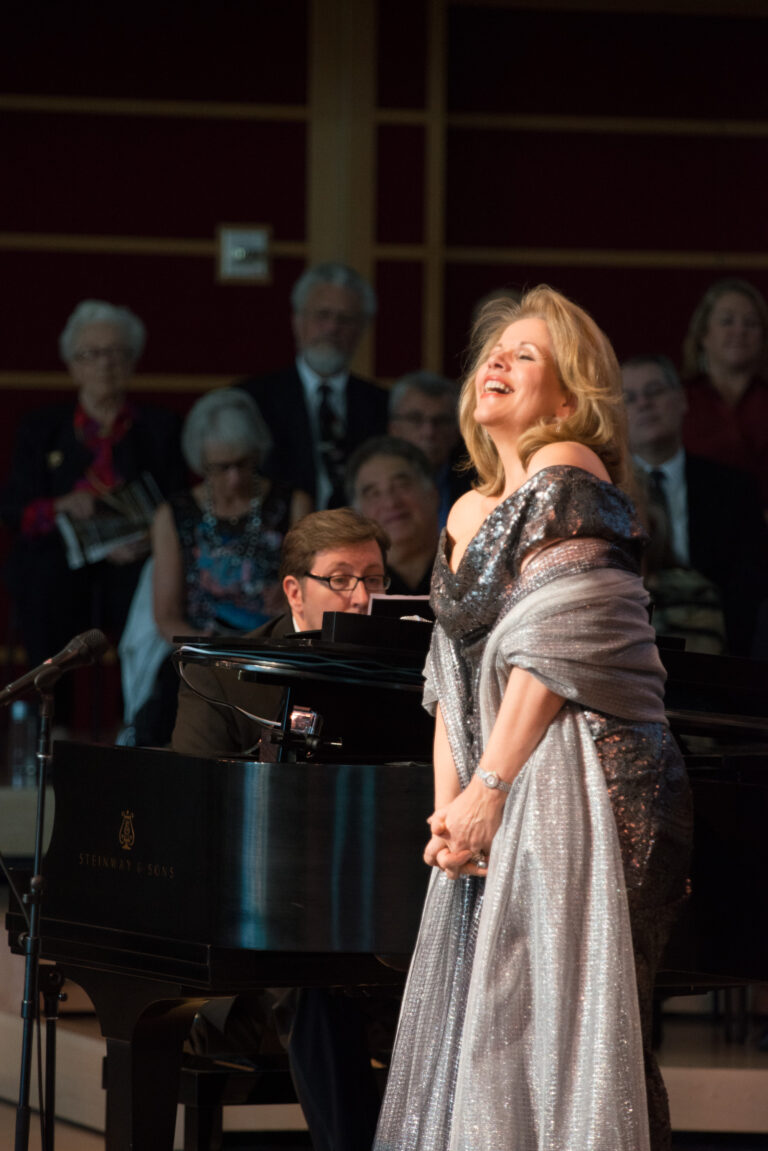
Georges Bizet’s Carmen is one of the most popular operas ever written. Why then has Petaluma’s Cinnabar Theater, known for 40 years as the primary North Bay presenter of chamber opera, never once staged it? Audiences have clearly been waiting for it; the current three-weekend run was sold out before opening night (prompting the addition of one Wednesday-night performance on June 12).

Perhaps Cinnabar’s cozy theater space made the character-heavy Carmen seem like too ambitious an undertaking. If so, director Elly Lichenstein, along with musical director Mary Chun, has ably met that challenge, presenting a nicely crammed but cleverly realized, emotionally rich—and super sexy—staging of the 1875 opera that once shocked audiences with its provocative images (females smoking cigarettes! soldiers cavorting with “loose women”!) and morally questionable subject matter: seduction, sexual obsession, jealousy, madness and murder.

With a strong central cast and a veritable army of ensemble players, the stage overflows with energy and action, sometimes quite literally, and Lichenstein, whose work here represents some of her finest ever, packs every scene with eye-popping visuals and clever details.

The beautiful and asymmetrical set by David Lear works upon ominous collapsing slabs with gaping holes in a rock-like facade. This gives the stage a suitably chameleon-like quality, rapidly shifting with the addition of a piece or two of furniture to become a smuggler’s lair, the interior of a lively tavern or the bustling village square where women from the local cigarette factory cavort with soldiers stationed in town.

One of those factory workers is Carmen (played with plenty of fire and voracious confidence by mezzo-soprano Rebecca Krouner, magnificent!). A Victorian-era force of nature, Carmen is “a naughty girl and a gypsy too,” as she describes herself early on. She knows she can have any man she wants, and since most men want her, she sets her eyes on the straight-laced, duty-obsessed soldier Don José (Mark Andrew Kratz, whose glorious tenor has been featured at the Kennedy Center in Washington).

Carmen uses men before they have a chance to use and abuse her, and once José has given up everything for her, she shifts her affections to a handsome bullfighter (Jason Detwiler).

The result, set to some of the most memorable music ever written for the stage, well played by Chun’s first-rate chamber orchestra, is an emotionally complex tragedy. As staged at Cinnabar, it’s also one of the best shows, opera or otherwise, of 2013.

Rating (out of 5): ★★★★½

St. Anne’s Crossing

0

St. Anne’s Crossing: does it make you think of Australia, too? Lots of this-or-that’s “crossing” Down Under. I’m thinking Shiraz, but no, it’s got nothing to do with that. This Sonoma Valley tasting room is focused almost exclusively on Zinfandel. Dry Creek Valley Zinfandel. And don’t you mind that bright, blue sign screaming “Naked Wines” beneath the staid St. Anne’s sign. It’s got nothing whatsoever to do with that, either.

Loving the dissonance? Then let me sell you a little more on this joint. Inside, music from different sources clashes in that special, audio/video store way—remember those? Now, this isn’t the normal state of affairs. This particular evening, the tasting-room roommate, Naked Wines, is hosting an industry mixer, complete with trendy banh mi truck, although I’m told that when members of some St. Anne’s parish or other wander in, tickled to buy a so-labeled bottle of the good old sacrament, they don’t mind sharing the room with the “Naked.”

Here’s what is known: owner Ken Wilson had a grandmother named Anne. But why “crossing,” nobody here knows, besides offering that Ken Wilson is a man of mystery.

The staff I meet at St. Anne’s on a random weekday afternoon just before closing are well-informed and downright personable. And there are only four of them—five including St. Anne’s-dedicated winemaker Chris Barrett. In barrel at Pezzi King, a Sonoma Valley Zin will soon join 15 other Zins. But let’s start with white.

If you’re familiar with this vineyard, the 2011 Ritchie Vineyard Sauvignon Blanc ($24) may seem a little wild—rich caramel, supercharged lychee fruit. You want to know if it’s more “New Zealand” or more “Sancerre”? Try Willy Wonka. The 2010 Alexander Valley Chardonnay ($28) is not buttery, but creamy—apple pie milkshake.

Blushing with raspberry perfume, beckoning with multigrain toast aromas, the 2010 Serracino Dry Creek Valley Zinfandel ($50) slathers the palate with tart plum. Nothing wrong with the 2010 Old Vine DCV Zinfandel ($32), it’s just the kind of big, woody, blackberry syrupy Zin that had me going “ho hum” the first time I breezed through here during their opening. I’m glad I gave them another chance.

Top pick: 2010 Kettleby DCV Zinfandel ($60), which goes down like warm red cherries and ice cream. You want to pay more, you get the 2010 “Kennethwood” DCV Zinfandel ($150), packing extra cracked pepper and Mexican chocolate with the raspberry jam. Yeah, some of these Zins are a bit high, but they do make such sweet music for the mouth.

St. Anne’s Crossing, 8450 Sonoma Hwy., Kenwood. Daily, 11am–5pm. Tasting fee, $10. 707.598.5200.

To Cook or Not to Cook?

The racial history of whole-hog barbecue. How to sweat a perfect mirepoix. Why we are so drawn to umami, that elusive fifth taste. These topics and many more are dissected in Michael Pollan's seventh book, Cooked: A Natural History of Transformation. The bestselling author of The Botany of Desire and The Omnivore's Dilemma, Pollan understands more than most the plants...

Royalty’s Brush

The art of Miles Davis at Napa Museum

Direct Deposit

The Public Banking Institute says there's a way to build a stronger and more resilient local economy

Farm-to-Closet Fashion

Fibershed brings together farmers, weavers and knitters for clothes made locally and ethically

Grand Rapids

Father and son communion in sensitive dude flick 'WaterWalk'

Moving Forward

Sonoma Clean Power: still better, cheaper than PG&E

Je ne sais whaaaaat?

Adios, Doyle Park; bonjour, Santa Rosa French-American Charter School. When the mostly Latino Doyle Park Elementary School in Santa Rosa officially closed last year, the unexpected uproar caused the school board to strike a deal keeping it open for one more year. Now that year is over, Doyle Park is closed, and from the outside, it appears the school...

Banding Together

'Real Music' at Oliver's Markets

Lady in Red

Cinnabar gets 'Carmen' right

St. Anne’s Crossing

Yet another Zin label from Wilson empire—oh, wait, yum
11,084FansLike
4,446FollowersFollow
6,928FollowersFollow