The Organ Trail

The year is 2368, and Lt. Worf is paralyzed from a spinal column injury. The USS Enterprise officer would rather die than live paralyzed, so a prototype medical device called the “genitronic replicator” is brought on board in an attempt to save him. The device is programmed to create a new spinal column, which the starship’s surgeons would implant. It has not yet been tested on a humanoid patient, but seems like the only way to save Worf.

This fictional scenario takes place in an episode of Star Trek: The Next Generation called “Ethics,” which first aired March 2, 1992. The genitronic replicator is one of those fictional Star Trek tools that surely could never exist: a machine that scans a patient, then prints replacement body parts for implantation.

But if advances in the world of 3D bioprinting continue at their current pace, this technology will be far past the prototype stage by 2368—it will be commonplace.

The idea of “printing” a vital organ is lifesaving. Over 120,000 people are on the Organ Procurement and Transplantation Network waiting list in the United States (98,142 need kidneys and 15,839 need livers), and many more who need transplants don’t qualify because of health risks, such as the risk of bodily rejection. By printing a kidney from one’s own cells, the organ is more likely to be accepted by the body and thus function normally.

As recently as five years ago, experts mused on the possibility of printing internal structures like heart valves or complex systems like the pancreas, or even a complete heart, on demand and with a patient’s own cells. The technology has the potential to revolutionize the way we view not only organ transplants, but drug research, cosmetic surgery and even space travel.

HOW IT WORKS

Though similar in theory, 3D bioprinting is vastly different from the 3D printing which has exploded in popularity in the past few years. Standard 3D printing uses a variety of inorganic materials (mostly plastics) to print everything from bobbleheads to handguns. One cannot simply print out a living tissue structure at home with a downloaded CAD drawing and a MakerBot home 3D printer. (“Hobby” versions of bioprinters do exist—a co-op lab called Biocurious in Sunnyvale offers one—but they’re expensive and only print flat rows of cells.)

A modern 3D bioprinter looks somewhat similar to a conventional 3D printer except it’s larger, has much more circuitry and uses multiple printing nozzles—one for modeling material, called “hydrogel,” and others containing cells called “bioink.” Early versions actually cannibalized inkjet cartridges, which were cleaned and sterilized, because human cells happen to be roughly the same size as older ink droplets (new ink cartridges are too fine for this).

Since living tissue is composed of many cell types, the different print heads expel the correct amount of a specific cell type along with the biodegradable hydrogel to hold it in place. The biogel structure creates a skeleton of sorts, called a scaffold, which degrades once the cells grow into the right shape. The trick is to find the right scaffold material that will support each different organ, promote cell growth and degrade after the right amount of time.

Because its cells regenerate on their own, the liver is a likely candidate to become the first bioprinted complex organ to be transplanted into a human. But as Wake Forest University’s Institute for Regenerative Medicine director Anthony Atala tells the Bohemian, “It is really impossible to predict when this technology would be available to patients through clinical trials.” He estimates it will take at least a decade, “and likely much longer.”

One major hurdle scientists face is building the intricate blood vessel networks needed to keep an organ alive. “In efforts to engineer solid organs such as the kidney and liver,” says Atala, “it is a challenge to incorporate the large number of cells required and to engineer a vascular system that can keep the structures alive until they integrate with the body after implantation.”

[page]

GROWING VS. PRINTING

Twelve years ago, Wake Forest University’s Institute for Regenerative Medicine, based in Winston-Salem, N.C., was the first group in the world to successfully implant a lab-grown bladder in a human. The same group announced in 2011 that it had grown a miniature liver, one inch in diameter, that functions, at least in the lab, as a human liver does.

So if organs can simply be grown in a lab, what’s the fuss about 3D printing? Why not just get some cells in a Petri dish and pour in the cellular Miracle Grow?

Well, for perspective, the first kidney transplant from a living donor happened a mere 59 years ago, with several unsuccessful attempts preceding it. Growing a complex organ from stem cells and then making it function normally when hooked up to the human body will take time to get right. As the process is perfected, it will need to become continuously faster and more streamlined, because organ-transplant patients’ time is limited. As Wake Forest’s website puts it, “One challenge is to learn to grow billions of liver cells at one time in order to engineer livers large enough for patients.” This is where bioprinting comes in.

Atala, a researcher at the forefront of tissue-engineering technology, explains the painstaking process of the 2001 bladder breakthrough. “The bladder scaffold was fashioned by hand and the cells were applied by hand with a pipette,” he tells the Bohemian. “With 3D printing, our goal is to make this process more precise. The scaffold would be printed using data from a patient’s medical scans, and the computer controls the placement of cells. This allows for the exact placement of multiple cell types.”

In other words, 3D printing makes an exact replica of a patient’s own organ using his or her own cells. It does this fast, with no breaks, and with precise execution—like an assembly line for organs.

DRUGS & SURGERY

As the only publicly traded bioprinting company, San Diego–based Organovo has been making the most headlines in the industry. In April, Organovo announced it had printed a 1mm-thick functioning human liver, which had lived for almost a week. “It grew to about twice as thick as we would have expected,” says spokesman Mike Renard in a phone interview with the Bohemian. By printing cells that grew into blood vessels, in addition to ones that make the liver function, “it allowed nutrients to go deeper in than would normally be the case,” says Renard.

Though this is still far away from being implantable in a human, it’s a big step in another facet of bioprinting: drug research.

Organovo’s focus right now is making living tissue for use in pharmaceutical research, specifically cancer drugs. Only about one in 5,000 drugs currently in development will make it to market, with an average cost of
$1.2 billion per product and 12 years in development. If drug companies were able to test prototypes on specific, living human tissue, time and money needed to produce effective pharmaceuticals would be reduced significantly. “Many drugs fail only after they get into humans,” says Renard. The ability to work on living, human tissue “helps make good decisions about safety and efficacy early in the process.”

TeVido BioDevices, in Austin, Texas, is focused on another area of tissue structures: reconstructive surgery. Led by Dr. Thomas Boland, University of Texas in El Paso faculty member and one of the founding fathers of bioprinting technology, the company is hoping its work on breast tissue will pay off.

Recovery from lumpectomy or mastectomy surgery is often a painful process, physically and emotionally. As far as reconstructive surgery, “right now, there’s really no good option,” says Scott Collins, TeVido’s vice president of research and development. The best scenario may include a tissue graft from a patient’s belly, but that doesn’t allow nipple or areola reconstruction, and it doesn’t react or feel the same. TeVido is working on a process in which living tissue from a patient’s own cells could be printed to exact size and shape specifications within an hour, taking on the body’s natural functions after implantation. “The real work is being done by the cells,” says Collins. “We just have to put them in the right environment so they do what we want them to do.”

This is good news for breast cancer patients and those with the risk-inherent BRCA mutation, which was brought to the wider public eye when actress Angelina Jolie chose to have a preventative double mastectomy after discovering she had an 87 percent chance of developing breast cancer. It’s also good news for plastic surgeons: what can be done to replace what’s been removed can also be done to add to what’s perceived to be lacking.

TeVido was awarded a $150,000 federal grant from Small Business Innovation Research this year. It reads, “The results of this research will help the field move towards larger, clinically relevant tissues and potentially whole organs. The commercial impacts of this research will be the availability of an autologous option for women in the lucrative $10 billion market for breast augmentation.”

[page]

BURN VICTIMS REJOICE

The team at Wake Forest is also working on printing skin cells directly onto burn victims with severe injuries who otherwise might need skin grafts culled from their back or buttocks. Kyle Binder, a lab scientist at Wake Forest’s Armed Forces Institute of Regenerative Medicine, explains in a video from Lab TV that the process involves “taking a normal desktop ink-jet printer, and you load the cartridge with cells instead of ink, and just using the normal method . . . you can print out human tissue instead of ink.”

The video shows a stunningly lo-fi version of a bioprinter, literally a home desktop printer with the cover removed, its guts modified to save lives instead of to print tax forms. Burns can account for 10 to 30 percent of all casualties on a battlefield, hence the Army’s interest in the technology, but it will also be able useful for treating burn victims on-site, like firefighters or other emergency personnel.

How it works is pretty simple: a camera scans the wound, making a 3D map with lasers, and a computer sorts out where and what to print onto the skin. The wound is filled, and—presto—the cells grow into new skin. Though this already sounds futuristic, the video of this demonstration is three years old. Since then, the Wake Forest team has updated the machine and has had success working on mice, closing a wound in two weeks that normally takes five weeks to heal. Most human victims of burns that severe will die within two weeks due to infection.

LIFE ON MARS

Sculptor and NYU art professor Robert Michael Smith is also involved in advancing bioprinting technology, but not for obvious reasons. “I want to be the first sculptor with a sculpture on Mars, except that it will be a created living form,” says the artist, who counts Montgomery High School and Santa Rosa Junior College among his alma maters. Smith, whose work was featured at Healdsburg’s Hammerfriar Gallery earlier this year, has already designed and printed 3D sculptures for this purpose, even integrating living cells using a bioprinter like the one at Wake Forest. His hope is to use the technology with his own DNA to perform tests on living, human cells during space missions to Mars. This would, in a way, make him the first human being to travel to Mars.

Smith reached out to Dr. Atala, who was receptive to the idea. “When you are exploring new venues in science, you always have to break through dogma,” says Atala in a discussion with Smith on YouTube. Atala says the idea is possible with current technology, though it would be an “expensive proposition.”

Smith says his vision includes a version of Wake Forest’s bioprinter for further experiments on the Red Planet. Like testing new treatments in drug research, Smith sees the possibility of evaluating the effects of intense, prolonged space travel on a cellular level using living tissue systems created with a bioprinter. “Why should any sentient creature be sacrificed when we can be creating physical simulators?” he asks, citing reports of people already signed up for a one-way “suicide mission” to study the planet’s potential for colonization. “Human beings are going to do whatever human beings are going to do,” says Smith. “Whether I’m involved or not, this is going to move forward.”

LAWS & REGULATIONS

Due to the United States’ regulatory system and insurance billing codes, Collins says TeVido’s breast-tissue research is likely to be implemented in the cosmetic market before the medical industry is able to take full advantage of it. Collins estimates that cosmetic procedures using this technology could be taking place within 10 years, while the FDA is looking at clinical trials and making up its mind on using the technology in medical applications. “Medical technology is getting a lot more complex very quickly, and we’re kind of overloading the system,” Collins says.

Waiting for the tortoise-like government-approval process to finalize means that, in the meantime, there’s no money coming in. One way to combat this is to license the technology for use in other countries. “That is not ideal,” says Collins, “but it’s the way many companies work in this space right now.”

Just a few months ago, Hangzhou Dianzi University in China announced it had made a 3D tissue printer that successfully printed functional miniature liver samples and ear cartilage. An orthopedic surgeon in Southern California is working on a technique involving printing cartilage from a patient’s own cells that might eventually replace dangerous and limiting spinal-fusion surgery. And perhaps most promising, a company in New England recently engineered a small kidney that produced a urine-like substance when implanted in a steer. The technology is here. It’s just in the “making sure it’s safe” phase.

“Making sure it’s safe” is a primary concern, even in the extreme, fictional future. In the Star Trek episode, Lt. Worf’s surgery was successful, but he technically died on the operating table; it was only his redundant Klingon anatomy, with backup systems of vital organs, that saved his life.

Once the technology is shown to be safe, which is on track to happen in our lifetime, new organs will appear out of thin air more often than from another human. The “organ donor” section on a drivers’ license application could become a whimsical nod to the past. The waiting list for transplants could be eliminated.

In the world of 3D bioprinting, the future may be closer than you think.

Worldly Grasp

0

In 1986, Sam Baker was on a train in Cuzco, Peru when a bomb exploded. The people he was sitting with were killed; Baker suffered a cut artery, blown-in eardrums and brain damage, and “should have died,” he says, but he didn’t.

Baker, a smart, oftentimes sad songwriter, has resisted the impulse to weave his tragedy into a larger statement about the world. Then Boston happened. Then the images of the explosions, of the half-appendages, of the bloody rescue efforts. Then Sam Baker, the train passenger who lived while a small German boy sitting next to him did not, could stay silent no longer about the senselessness of it all. “It’s not OK to blow kids up, for any reason in the world,” he says in a recent video. “I’ve not been overly vocal about this, but I am now. I’m sick of it. This stuff has got to stop.”

Baker’s new album, Say Grace, continues the artistic vision shown in his previous “Mercy Trilogy,” with economic prose and vivid imagery. But it’s Baker’s strong empathy that surfaces in everything he does. See him in person on Friday, Oct. 25, at the Occidental Center for the Arts. 3850 Doris Murphy Court, Occidental. 7:30pm. $25–$27. www.northbaylive.com.

Harvest Share

0

Nick Papadopoulos is a farmer now, but he has a professional background in conflict resolution. So, standing in a vegetable cooler on a Saturday night last March, surrounded by surplus produce that hadn’t been sold, his mind began to wander.

“We had all this food that wasn’t going to people,” the general manager of Bloomfield Farms in Petaluma recalls. “It’s edible and it’s grown for the purpose of feeding people, and we don’t make any money when it’s wasted.”

Later that week, he posted a message on Facebook advertising farmers market leftovers at a reduced price. That was the beginning of CropMobster.com, a social media hub addressing local farm waste and hunger—both issues hinging on a centralized, assembly-line food system that, according to Papadopoulos, is full of holes.

The terms “food waste” and “food access” fill national headlines, but connections between the two are rarely made. In September, the United Nations’ Food and Agriculture Organization released a report claiming that each year “food that is produced but not eaten guzzles up a volume of water equivalent to the annual flow of Russia’s Volga River, and is responsible for adding 3.3 billion tonnes [sic] of greenhouse gasses to the planet’s atmosphere.” Environmental damage aside, food producers lose an annual $750 billion on goods that feed no one. Meanwhile, 842 million people are hungry worldwide.

On a local scale, Papadopoulos saw the potential for overlap. A National Resources Defense Council study released last year states that waste occurs pre- and post-harvest, with variables like weather and labor shortages making it difficult to perfectly match a grower’s supply and demand.

If farmers weren’t making money anyway, Papadopoulos reasoned, why not discount those surpluses, or just give them away?

Gleaning operations, nonprofits like Respecting Our Elders and discount marts have come to similar conclusions. CropMobster aims to be a sort of virtual hub between such organizations and farms. Anyone can post an “alert”—a surplus of discounted blueberries, a need for gleaning volunteers—for free on its pages, which is then distributed via Twitter, Facebook, email and phone. For Papadopoulos, it’s a way of synching up the small-scale, local food scene that by nature is more decentralized than the one created nationally by factory farms.

“We wanted to address food waste and loss, and help people who are hungry or just priced out of the good stuff,” he says. “But we also wanted to help people in the cottage food industry and the gleaning industry, and build trading relationships.”

Laguna Farm in Sebastopol has used CropMobster several times.

“We’re raising our families in Sonoma County, so we really need to be able to sell our produce at retail price,” says Jennifer Branham, co-owner of the farm’s CSA program. “But in the peak of summer months, when we have an abundance and are unable to move all of our produce, it’s unique because it opens up other channels. So even though we only sold $1,000 worth of produce for $500—which doesn’t make ends meet—they publicized us, which led to new customers.”

She adds that Laguna’s waste occurs mostly pre-harvest, in their fields. If the staff knows they’ll have an abundance, they can’t afford the labor required to pick their crops, so they let them rot. This fertilizes next year’s crop, but it’s another step in the food cycle where hunger could be met—which is where gleaners come in.

Suzi Grady is a program director for gleaning outfit Petaluma Bounty. The nonprofit connects farmers with abundance to low-income housing complexes and food pantries, and also maintains a network of community gardens and a farm. As a hub in its own right, Grady says the increased reach offered by CropMobster—thousands of eyes in 12 Northern California counties—has been helpful for commodities like produce, which are highly perishable.

“We need to mobilize very quickly when we get a call,” she says.

With federal subsidies going primarily to large-scale farms, small organic growers often have to seek out a higher income bracket for their goods, which are not artificially cheap. Also, selling their leftover produce at lower prices could be seen as devaluing their regular inventory. Papadopoulos acknowledges this, but says he sees the potential for a wider market with surplus.

“That’s the inherent conflict in the local food system,” he says. “The farmers have to demand a premium price. Meanwhile people are struggling and farmers are struggling, and food surplus isn’t being traded or exchanged or sold.”

Gun Club

0

Columbine. Newtown. Oak Creek. Sparks. The list of places where gun-fueled tragedies have occurred grows weekly—and even daily, if you live in the poorer sections of Chicago or Oakland. In response, a group of concerned Napa citizens have organized Napa County Gun Safety Day. Aimed at gun owners, potential gun owners and those interested in learning more about gun safety and regulations, the event offers gun-safety instruction from the Napa County Sheriff’s Office as well as free gun locks for the first 300 attendees. Mental health and suicide-prevention information will be available from the Napa County Health and Human Services, and at 10am, Congressman Mike Thompson offers an update on his proposed legislation to expand background checks. Voluntary and anonymous firearm disposal through the Napa Police Department will be offered. Gun Safety Day is on Saturday,
Oct. 26, between Napa City Hall
and the Napa Police Department. 1539 First St., Napa. 9am–1pm.
Free. 707.265.0200.

TRAILING OFF

The Arts Council of Sonoma County has laid off its four-person staff and will be transitioning to an all-volunteer organization, citing financial woes. At least four board members resigned in the wake of the news. Formed in 1984, the council was established as an umbrella organization for the vast array of visual, performing and literary arts in the county. The yearly ARTrails program was one of the group’s more successful projects. Board chairman Tom Lombardo told the Press Democrat that Jennifer Sloan, the group’s executive director, had withheld critical financial information that “could have informed decision making.” Sloan, along with staff members John Moran, Courtney Arnold and Vicky Kumpfer were given termination notices on
Oct. 14.

Libretto for Rats

0

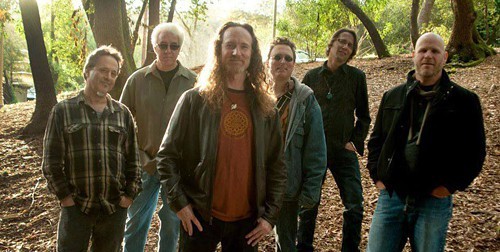
Bertolt Brecht, the 20th-century Marxist playwright and poet, made him do it. That’s how Josh Windmiller, the voice behind Gypsy-punk-Americana act the Crux, explains the origin of his band’s acclaimed collaboration with experimental theater troupe the Imaginists that resulted in the 2012 stage production The Ratcatcher.

“I’d seen their production of
The Wizard of Oz and I thought, this could work really well with what the Crux is doing,” says Windmiller. “Their style is not hokey. You can feel the experimentation. They are trying to do new stuff, and they show you the gears working.”

Part social satire, part poignant commentary on what happens to the children in a community when the creative arts are shoved into a dusty corner in favor of bourgeois branding and profit margins,
The Ratcatcher took Sonoma County (and critics in the greater Bay Area) by storm during its month-long run.

Subsequently, a successful Indiegogo campaign raised $5,000, allowing the band to release the songs as a new full-length Crux album, also titled The Ratcatcher. Don’t expect a cast recording of the original play, however; as Windmiller puts it, the album should be taken as another entry in the Crux discography, which also includes last year’s Be Merry and their debut, Now, Ferment.

“I consider this album an important step in the band’s development,” says Windmiller, about the decision to sing songs himself that were voiced by different actors in the original production. “My voice being constant throughout the band is one of the few things I can have to keep that consistency going.”

The strongest tracks include the haunting “The Gate (What the Children Saw),” written and sung by Annie Cilley, the Crux’s saxophone and fiddle player. Another standout song is the epic “Dogs Made of Rust (The Mayor’s Ballad),” originally voiced by Imaginists cofounder Brent Lindsay as the town’s mayor but given a wearier, heavier weight in Windmiller’s album interpretation, sounding like a lost track from Tom Waits’ Rain Dogs.

“The play is fantastic, it’s really great, but it just played for a month or so in this town,” adds Windmiller, who plans to take the songs on the road nationally for people who might never have seen the original play. “If we’re going to put all this time and energy into this album, it needs to be able to stand on its own.”

The Crux perform ‘The Ratcatcher’ in its entirety (with help from the Imaginists) as part of the All Hallow’s Eve Multicultural Variety Showcase on Thursday, Oct. 31, at the Arlene Francis Center. 99 W. Sixth St., Santa Rosa. 7pm. $10–$15. 707.528.3009.

Who Art in Theaters

The independently made film I’m in Love with a Church Girl is a genre-blender, with Ja Rule lending his street cred to a story of born-again conversion. The film is materialistic enough for Not of This World gear shopping sprees, private planes and pricey real estate, but sacred enough that it literally credits God as an executive producer.

Church Girl had its world premiere last week to a packed house at San Jose’s California Theatre, an awe-inspiring picture palace where I caught up with Santa Rosa’s Marjorie Mann, who plays Ja Rule’s mother in the film. Not too long ago, Mann was playing a far bigger palace, the Radio City Music Hall. There, she did flying stunts, 50 feet off the stage, for a live production of The Wizard of Oz.

Of her character, Mann says, “She’s warm, nurturing, trying to do right by her son, which is sometimes not easy because he hasn’t been on a very good path.” She and rapper Ja Rule have an easy chemistry onscreen for several scenes in the film, which was shot in San Jose.

This isn’t the first film for the vivacious Mann—she also appeared in 1992’s Class Act, and onstage has done everything from Shakespeare to Andrew Lloyd-Webber. From Detroit originally, Mann went to the University of Michigan, where she and a student named Madonna Ciccone took a choreography class together. “I stayed in touch with Madonna after I moved to New York,” she tells me. “I used to get into her shows for free at New York’s Roxie Theater.”

Lately, Mann’s been bringing history to life in performances at local schools, portraying Harriet Tubman and Coretta Scott King. But Mann is also working on a one-woman show, playing a series of characters, each under the influence of one of the Seven Deadly Sins. Her favorite? “Pride.”

With Church Girl, Mann has a reason to be proud—and not the sinful kind.

‘I’m In Love with a Church Girl’ opens Friday, Oct. 25, at the Roxy Stadium 14 in Santa Rosa.

Letters to the Editor: October 22, 2013

Cat Call

“Black Panther” by fall writing contest winner Don Stoddard (“It Showed Up on My Doorstep,”
Oct. 16) was especially endearing; a special reminder of growing up in the ’50s. My 93-year-old mother still has her black panther proudly displayed.

Via online

What’s a Forest?

Artesa would clear-cut 1.25 million board-feet of redwood and Douglas fir at the site, based on 2004 inventory, according to what the project description in the EIR says would be logged (“Chainsaw Wine,” Oct. 16). That sure sounds more like a forest than “agriculture,” unless you define “forest” as “tree farming”—except that it’s a final harvest forever, converted to monoculture vineyards, not regenerating young forest after clear-cut.

Via online

Hemp, Not Wine

There is not one original oak left in Oakland. For 75 years, we have been destroying our forests instead of growing hemp. How many golf courses and “vineries” full of pesticides and harmful chemicals do we need?

Via online

Refusing Waste

Bea Johnson can fit her household’s annual trash inside a small jar because she defers her waste to someone else—sending back the plastic strip from her Netflix envelope is a great example of how she’s letting someone else clean up her mess (“The Simple Life,” Oct. 9). It’s important for everyone and anyone to reduce their waste output, but ooh-ing and aah-ing over the antics of a material anorexic is not the point. Industrial and corporate waste is the prime source of our ecological crisis. If Bea Johnson wants to deprive herself and her family of everything except seven pairs of shoes, let her, but I’d personally rather see articles about p eople who are fighting the real actors in the environmental breakdown we’re witnessing: Big Oil, Big Ag, Big Pharm and Big Coal. Nothing Bea Johnson is doing, so far as I can tell, impacts that.

Author, ‘Urban Homesteading’

Petaluma

Now is a good time to clarify that since 2011, the Johnson household has taken advantage of Netflix streaming, a fact that we neglected to mention in our original article.—The Ed.

No New Taxes

It’s voting time again, and many cities are asking for a sales tax increase. When is the Sonoma County taxpayer going to take a stand and say no to any sales tax increases until cities start seriously reforming the gigantic pension hole that we taxpayers are burdened with? Should we just pay higher and higher taxes so public employees can retire on twice the amount we will? Vote no to our tax dollars going to fat county and city pension plans and lifetime medical benefits. Are you getting that when you retire?

Willits Bypass

I’m a one-year, eight-month resident of Willits, a community activist and ex-biology student. I’ve been protesting this bypass project by Caltrans for more than seven months. This project has not, cannot and will not help the environment. It will probably not affect “traffic” significantly, which in any case has almost never existed in Willits, especially if locals just get off Main Street. (Honestly, 99 percent of the time it sees less traffic than the average in West Los Angeles, where I lived for 28 years.) And it will cost $300 million to $600 million, that latter balloon figure reflecting the true adjusted-for inflation bond price(s).

That’s why over one-third of all area residents have signed the petition against it. That’s why people contact their uncaring “representatives.” And that’s why people have and will continue to get arrested (some of us don’t need to, I joke, having been exposed heavily to poison oak, reducing our mobility heavily, along the way).

This is bad, but we are peaceful.

Via online

Write to us at le*****@******an.com.

Live Review: Treasure Island Music Festival 2013

View from the Ferris Wheel on Treasure Island

Treasure Island Music Festival is more than just music, it’s an experience. The festival is so well produced that it wouldn’t be difficult to have a good time having never heard of any of the bands playing. The seventh incarnation of the two-day festival wrapped up yesterday, and it was another beaming success. In addition to music, there is a shopping area, arts and crafts tent, zine and comic library, silent disco (live DJ spinning for wireless headphone-wearing listeners), food trucks, a Ferris wheel, bubbles and the best people watching money can buy. Wow, that last part sounded creepy, but you get the idea.
But there’s also music—lots of it. Each stage is timed down to the minute, so there is never a dull moment. There’s also never a moment to let the ears relax, and the only booth with earplugs was selling them for a buck a pair. Note for next year, guys: GIVE AWAY FREE EARPLUGS.
I’ve listed some favorites and least favorites, not based on the quality of their set (I’m sure there are fans of the bands who might think it was the band’s best performance ever), but on entertainment quality from an outside perspective. I must stress that even what I found to be the most banal of musical performances still turned out to be quite entertaining.
Saturday’s Favorites
Atoms For Peace
Atoms For Peace: 4.5/5 Incredible texture from this group of musically sensitive players, with Flea leading the charge via driving, lead-focused bass guitar. Felt almost like a post rock version of Radiohead with Flea on bass (he is his own adjective). Very cold weather led to most people leaving before the end of the second encore (myself included), which is a shame since that’s when they played the Thom Yorke song “Black Swan,” arguably the best from his solo album.
Little Dragon: 3.5/5 Good stage presence and real instruments made this a highlight on a day of laptop-driven DJ tunes and pumping bass. Singer Yukimi Nagano flows musically and visually as the leader of this electronic music group. They split the difference with a live drummer playing an electronic drum kit.
Danny Brown
Danny Brown: 3.5/5 Once the sound engineer figured out how to properly mix rap vocals (it took a couple songs), Danny Brown’s nasally, violent delivery emerged and piqued the ears of festivalgoers that might not have come specifically to see the last-minute replacement for Tricky. The early performance was a good boost of live human energy to contrast the repetitive bass and synthesizer drum sounds the rest of the day had in store.
Saturday’s Least Favorites
Major Lazer
Major Lazer: 2/5 About 20 minutes into the set, we figured out that Major Lazer is actually just a group of hype men. There are no real instruments, no actual music being made. The three dudes in suits trade off turns at the elevated laptop station at the back of the stage, but there was no singing no playing of anything. Just guys on wireless mics yelling at everyone to jump and put their hands up. By the end of the set everyone was so tired they chose to be berated for not following directions rather than expend one more joule of energy on this choreographed high school dance.
Disclosure: 2/5 In haiku: such low energy / could not keep my eyes open / what was that you said?
Sunday’s Favorites
STRFKR: 4.5/5 Not surprised that this electro-indie group was top notch, but surprised at how well their albums translated to live performance. They know their music is, at times, slow to develop. But they spruce up the show with visuals, like two dudes in padded sumo suits going at it for a couple tunes. They even played along with the bits, and it didn’t sacrifice the quality of the music.
James Blake: 4/5 Great soundtrack for the day shifting gears into cold night. Focused songs had energy in their own way, giving a nice break from nonstop dancing. Blake is an excellent performer whose passion is evident when he plays. His songs feature piano and good songwriting, a timeless, classic combination.
Haim
Haim: 4/5 Wow. These girls rocked harder than anyone at the festival. The three sisters and their male drummer had a sound reminiscent of Prince, during his more rocking moments, and even captured some funk to go with it. Their “girl power” shtick was a little heavy at times, like when they spoke at length how they now know what Beyonce feels like when the wind blows hair into their mouths, and when they squealed with delight when handed candy from the crowd. But I’m not a young girl, so maybe it was indeed the perfect concert set for their target audience. Either way, it was impressive.
Sunday’s least favorites:
Animal Collective: 1.5/5 Sometimes art is so conceptual that it goes over my head. I was hoping this was the case with Animal Collective, and at one point I actually asked a friend if they knew what the point was supposed to be. Nobody knew. I’m not sure Animal Collective knew. A very cool stage set (inflatable teeth with individual projections made the stage look like a gigantic open mouth) and light show helped slightly, but the music was so repetitive and the melodies so simply and leading nowhere that I left to watch football about two-thirds of the way through. I still heard the music (it was impossible not to from anywhere on the island, really), and still was not impressed.
Beck. Still going after all these years. Still good, pretty much the same as the last time you saw him.

Oct. 22: UFO expert Jim Ledwith at the Sonoma Community Center

0

ufo_abducting_a_cow_by_johannes01.jpeg

The phrase “parental discretion advised” is a surefire attention-grabber. When it’s used in conjunction with a lecture about alien abductions titled “Strange Harvest,” it’s begging it. This week, UFO expert Jim Ledwith talks about the 10,000 animal abductions since 1967—why are farms the target of alien research? Are extraterrestrials curious, or just really hungry? With actual footage of a bovine abduction and substantiating FBI files on the subject, the answers will surely be revealed on Tuesday, Oct. 22, at the Sonoma Community Center. 276 E Napa St., Sonoma. 7pm. $5—$10. 707.938.4626.

Oct. 19: Pink Floyd Laser Spectacular at the Lincoln Theater

0

PinkFloydSpotlight.jpg

It’d be easy to make a joke connecting the Pink Floyd Laser Spectacular and psychedelic drugs, but that’d be doing the spectacle a disservice. A Pink Floyd laser show is awesome, even at age 10, even at age 70, and should be experienced at least once in everyone’s life. With a 50,000-watt stereo system, the Lincoln Theater is just the place to witness this glorious combination of audio and visual stimulation. And be sure to high-five the veterans in wheelchairs who might be there—the theater routinely gives free tickets for its events to residents of the nearby veterans home. Shine on Saturday, Oct. 19, at the Lincoln Theater. 100 California Drive, Yountville. 7pm. $20—$30. 707.944.9900.

The Organ Trail

The year is 2368, and Lt. Worf is paralyzed from a spinal column injury. The USS Enterprise officer would rather die than live paralyzed, so a prototype medical device called the "genitronic replicator" is brought on board in an attempt to save him. The device is programmed to create a new spinal column, which the starship's surgeons would implant....

Worldly Grasp

In 1986, Sam Baker was on a train in Cuzco, Peru when a bomb exploded. The people he was sitting with were killed; Baker suffered a cut artery, blown-in eardrums and brain damage, and "should have died," he says, but he didn't. Baker, a smart, oftentimes sad songwriter, has resisted the impulse to weave his tragedy into a larger statement...

Harvest Share

Nick Papadopoulos is a farmer now, but he has a professional background in conflict resolution. So, standing in a vegetable cooler on a Saturday night last March, surrounded by surplus produce that hadn't been sold, his mind began to wander. "We had all this food that wasn't going to people," the general manager of Bloomfield Farms in Petaluma recalls. "It's...

Gun Club

Columbine. Newtown. Oak Creek. Sparks. The list of places where gun-fueled tragedies have occurred grows weekly—and even daily, if you live in the poorer sections of Chicago or Oakland. In response, a group of concerned Napa citizens have organized Napa County Gun Safety Day. Aimed at gun owners, potential gun owners and those interested in learning more about gun...

Libretto for Rats

Bertolt Brecht, the 20th-century Marxist playwright and poet, made him do it. That's how Josh Windmiller, the voice behind Gypsy-punk-Americana act the Crux, explains the origin of his band's acclaimed collaboration with experimental theater troupe the Imaginists that resulted in the 2012 stage production The Ratcatcher. "I'd seen their production of The Wizard of Oz and I thought, this could...

Who Art in Theaters

The independently made film I'm in Love with a Church Girl is a genre-blender, with Ja Rule lending his street cred to a story of born-again conversion. The film is materialistic enough for Not of This World gear shopping sprees, private planes and pricey real estate, but sacred enough that it literally credits God as an executive producer. Church Girl...

Letters to the Editor: October 22, 2013

Cat Call "Black Panther" by fall writing contest winner Don Stoddard ("It Showed Up on My Doorstep," Oct. 16) was especially endearing; a special reminder of growing up in the '50s. My 93-year-old mother still has her black panther proudly displayed. —Vicki S. French Via online What's a Forest? Artesa would clear-cut 1.25 million board-feet of redwood and Douglas fir at the site, based...

Live Review: Treasure Island Music Festival 2013

Treasure Island Music Festival is more than just music, it’s an experience. The festival is so well produced that it wouldn’t be difficult to have a good time having never heard of any of the bands playing. The seventh incarnation of the two-day festival wrapped up yesterday, and it was another beaming success. In addition to music, there is...

Oct. 22: UFO expert Jim Ledwith at the Sonoma Community Center

The phrase “parental discretion advised” is a surefire attention-grabber. When it’s used in conjunction with a lecture about alien abductions titled “Strange Harvest,” it’s begging it. This week, UFO expert Jim Ledwith talks about the 10,000 animal abductions since 1967—why are farms the target of alien research? Are extraterrestrials curious, or just really hungry? With actual footage of a...

Oct. 19: Pink Floyd Laser Spectacular at the Lincoln Theater

It’d be easy to make a joke connecting the Pink Floyd Laser Spectacular and psychedelic drugs, but that’d be doing the spectacle a disservice. A Pink Floyd laser show is awesome, even at age 10, even at age 70, and should be experienced at least once in everyone’s life. With a 50,000-watt stereo system, the Lincoln Theater is just...
11,084FansLike
4,606FollowersFollow
6,928FollowersFollow