After the Courtship

We get films of nostalgia or films that critique the past, but very few that do the same thing at the same time.

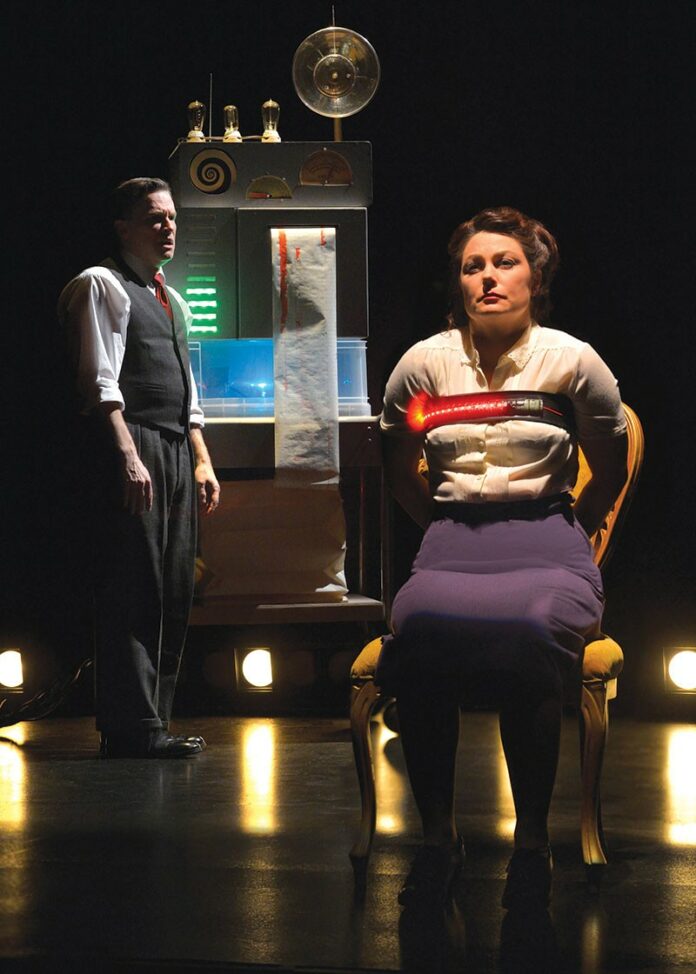
Thérèse is the late Claude Miller’s adaptation of Francois Mauriac’s Thérèse Desqueyroux, filmed some 50 years ago by Georges Franju. Then, Emmanuelle Riva (Amour) played Thérèse, “an Emma Bovary who strikes back,” as Franju said at the time. Eerily, there is a noticeable physical resemblance between Philippe Noiret in the Franju version and the very good Gilles Lellouche, here as Thérèse’s stuffy propertied husband Bernard, whose only indication of his having a heart is persistent angina.

It’s the late 1920s. After an unspeakable honeymoon, Thérèse is impregnated. Her discontent grows after the child is born, her restlessness cinematically symbolized in images of forests containing valuable timber owned by their conjoined families—trees as dry as tinder and waiting for the spark of destruction.

In the lead role, Audrey Tautou may be a bit old for the virginal early scenes, but, realistically, she’s not a star because of eternal youthfulness. Tautou made the world fall in love with her in Amélie, and then commenced more ambitious work afterward. She’s quite a not-nice female antagonist: mean, grasping, disapproving, with no interest in sex because “my head is too full of ideas.” But this isn’t a desiccated movie; it’s more of a cold-fusion version of Bette Davis in rebellion (Beyond the Forest, with its pines and its blazing kiln, comes to mind).

Some have dismissed Thérèse as Masterpiece Theater, and the framing is often televisionistic; it’s likely Thérèse Desqueyroux would never be popular cinematic material, even though it’s more tangy than dusty. But Tautou’s precision lures the viewer. With her impassive black eyes, bobbed hair and air of callousness, Tautou’s real skills show in the transformation, and in her death-warmed-over scenes close to the finale.

‘Thérèse’ opens Friday, Sept. 6, at the Rafael Film Center in San Rafael.

The History of Thinking

0

Entering Mark Perlman’s West County home is like entering a small art gallery. His own large, luscious abstract canvases—clothed in the signature encaustic wax that both forbids and beckons examination—hang everywhere. Complemented by delicate sculpture encased in plastic vitrines and serene flower arrangements, there is plenty of work on the walls by former students.

Ready to retire this year from full-time duties as an art professor at Sonoma State University, Perlman characteristically celebrates his students rather than his quarter century of service as he dials down his academic life. The result is an exhibit, “25 Years, 25 Artists: The Painting Students of Mark Perlman,” opening at the SSU Art Gallery on Thursday, Sept. 5. A one-man homage to his own career follows on Nov. 7. Perlman grimaces briefly when a visitor suggests that this autumn is All Mark All the Time.

He’d rather focus on the careers he’s helped to foster during his tenure. Thinking over his 25 years at SSU, Perlman tidily chose 25 former students whose dedication and learning arc remain fresh in his memory.

“It’s a pretty diverse group,” Perlman says, settling down in his backyard studio, a barnlike structure bristling with works in progress that bears no resemblance to the tranquility of his home. “It wasn’t like I was looking for anything specific. So the work is all over the place: it’s realist, it’s abstract, it’s naïve—and I don’t think it’s an accident that every one of the 25 were probably the hardest working people who were there. They were there when I got there in the morning, they were there when I left at night. Their commitment pushed that.”

Not all of them became working artists; Perlman isn’t concerned. Rather, he looked for alumni who impressed him with the changes they underwent as they learned.

“I remember when some of them first came in and they were among the worst people in the class,” he laughs. “They were late for everything and not engaged. And then gradually seeing them grown into adults and become committed was so satisfying.”

While an undergraduate himself, Perlman was asked by a professor to fill in for two weeks, teaching the class while the teacher mounted an exhibit overseas. Perlman found that what he calls the “translation of ideas” appealed to him enormously.

“As I continued in school, I started to really respect my teachers and to see how they
were really serious painters and
it wasn’t just like a day job,” he says. “They had these two careers going. The idea of just painting, all day, by myself . . . The social interaction is just really a key element for me. I think I’d go nuts if I had tried to do this and, I don’t know, wait tables.”

It’s a safe bet that Perlman would never have to wait tables. His work is collected by a group ranging from the actress Halle Berry to the Hirshhorn Museum in Washington, D.C., to the Gap’s corporate offices to those at IBM.

Rigorously abstract, Perlman’s canvases have an irresistible dynamism to them that encourages the viewer to look and rest and look again. He speaks of the “history of thinking,” one he graphs afresh each time.

“While I’m painting,” he says, “I’m painting the moment, I’m trying to stay in the moment, and whatever is occurring to me is what I want in there. I also don’t trust my reaction to the initial marks. Sometimes they look clever or kind of fresh, but I know that I have to have those things historically underneath, and maybe the history will evolve and you’ll see the different layers of time as the painting evolves. That’s the hope.”

In fact, Perlman scrapes off almost as much paint as he puts on.

“I try to create systems that break down,” he says. “Everything seems to work within a system or code, and once I’m in there, I become very bored with the predictability of the system, and so like breaking that system down to see what evolves out of that.”

Within each frame, Perlman says he weighs beauty against awkwardness against destruction, all within the limits of line, form, composition and hue—the traditional constructs of a painting.

“I really like destruction,” he smiles. “I like those opposing forces, and I want to seduce myself into loving the painting somehow. Something that’s going to draw me or the viewer to it, but once there, I also want enough disturbance or things that aren’t working quite right to be presented as a challenge to offset the expectations, the predictability.”

Encaustic wax, a form of sealing the skin of a work that’s been used since the ancient Egyptians, was popularized in the last century by artists Jasper Johns and Brice Marden, but Perlman didn’t know what it was. He just liked it.

“I started using wax because I really wanted a contradiction between space and surface to be working,” he says. “I love surface, I love texture; I also love atmosphere and space, and I thought that I could only have one or another. And then I realized that this wax was transparent but also had a materiality to it, and so I thought I’d start working it into the paint.”

And while Perlman admired Johns’ and Marden’s work, he would never emulate it. He encourages his students to do the same.

“I’ve worked really hard to help them to find out who they really are,” he says. “What their voice is. It would be such a weird coincidence if their voice were the same as mine.

“I understand about apprenticeship, but I really think that since the dawn of the 20th century, it really is about the individual road that you have to travel.”

Rush to War

0

Ten years ago, George W. Bush and his henchmen were planning their war against Iraq mere days after 9-11. But conning Congress and the public into invading a country that posed no threat delayed the invasion until March 2003. And where it took Bush a year and a half to pour on enough lies of omission, contextual lapses and leaps of logic to gin up an illegal war in the Middle East, our current president did it in a week.

Now is a good time to think about some things the American mainstream media is omitting from its coverage—concerns strikingly similar to issues that never got discussed back in 2002 and 2003.

1. “Chemical weapons were used in Syria,” Secretary of State John Kerry says. Probably. But by whom? Maybe the Syrian army, maybe the rebels. NPR reports that certain chemical-weapons experts maintain the Free Syrian Army “has the experience and perhaps even the launching systems to perpetrate such an attack.” Maybe we should ease off on the cruise missiles before we know which side is guilty.

2. Assuming the attack was launched by the Syrian army, who gave the order to fire? Maybe it’s Assad or his top generals. Assad denies this, calling the West’s accusations “nonsense” and “an insult to common sense.” As Barbara Walters and others who have met the Syrian dictator have found, Assad is a well-educated, intelligent man. Why would he brush off Obama’s “red line” about the use of chemical weapons last year? His nation borders Iraq, so it’s not like he needs reminders of what happens when you attract unwanted attention from the United States. Why would Assad take that chance? His forces are doing well. If the attack came from Assad’s forces, it may have originated on the initiative of a lower-level officer. Should the United States go to war over the possible actions of a mid-ranked army officer who went rogue?

3. “The options that we are considering are not about regime change,” says the White House PR flack. So why is Obama asking Congress to authorize a military strike? To “send a message,” in Beltway parlance. But the air war that the attack on Syria is reportedly being modeled after, Clinton’s campaign against Serbia during the 1990s, caused the collapse of the Serbian government. If toppling Assad isn’t Obama’s goal, why chance it?

4. When you bomb one side in a civil war—a side that might be innocent of the chemical attack—you help their enemies. Assad is bad, but as we saw in post-Saddam Iraq, what follows a dictator can be worse. Syria’s rebel forces include radical Islamists who have installed Taliban-style Sharia law in the areas they control, issuing bizarre edicts (they’ve outlawed croissants) and carrying out floggings and executions, including the recent whipping and fatal shooting of a 14-year-old boy for making an offhand remark about Mohammed.

5. Why are chemical weapons considered especially bad? Because the United States has moved on to other, more advanced ways to kill people. Paul Waldman of The American Prospect notes: “We want to define our means of warfare as ordinary and any other means as outside the bounds of humane behavior, less for practical advantage than to convince ourselves that our actions are moral and justified.” And, as Dominic Tierney argued in The Atlantic, “powerful countries like the United States cultivate a taboo against using WMDs partly because they have a vast advantage in conventional arms.” If 100,000 people have died in Syria during the last two years, why are these 1,000 deaths different?

6. White phosphorus is a chemical weapon that kills people with slow, agonizing efficiency, melting their bodies down to their bones. The United States dropped white phosphorus in Iraq, notably in the battle of Fallujah. The United States uses depleted uranium bombs in Afghanistan, which are basically chemical weapons. Assuming the Assad regime is guilty as charged of the horrors in Damascus, why does the United States have the moral standing to act as jury and executioner?

7. Why us? Assuming that military action is appropriate in Syria, why is the United States constantly arguing that we should carry it out? Why not France, which has a colonial history there? Or Turkey, which is right next door? Why is it always us?

Because our political culture has succumbed to militarism. Which has made us so nuts that we’ve gone from zero to war in a week.

Ted Rall is an award-winning political cartoonist and columnist whose most recent book is ‘The Book of Obama: How We Went from Hope and Change to the Age of Revolt.’

Trader Joe’s

0

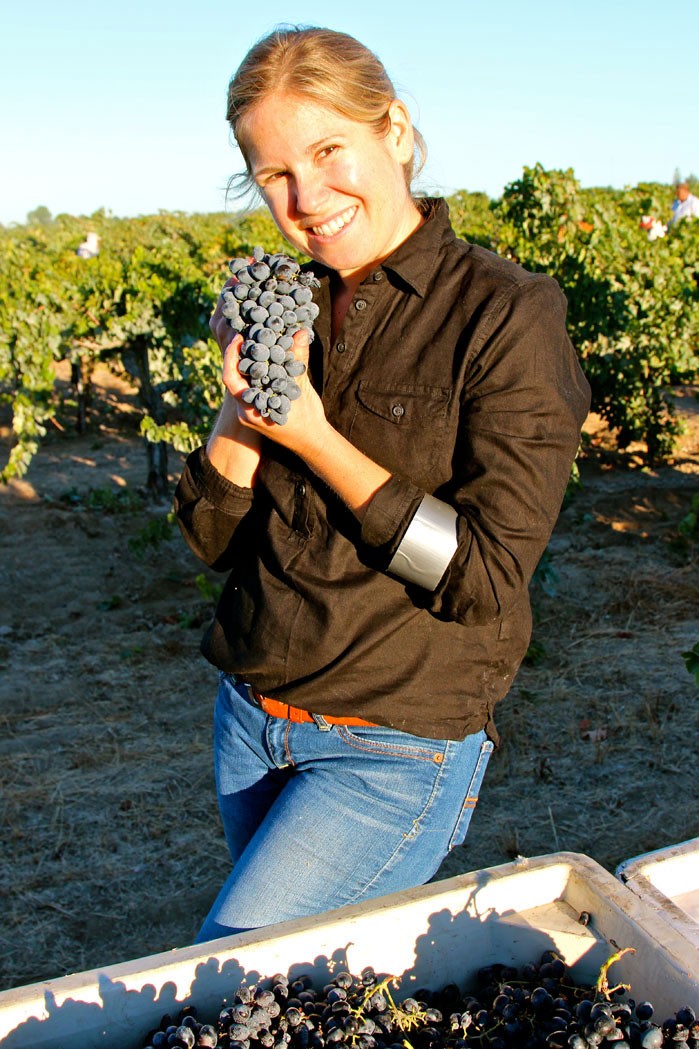
Everybody knows that Trader Joe’s has the best price on drinkable, cheap wine—the inimitable “Two Buck Chuck.” If you are in the fortunate position of being able to spend $10 or $12, however, the discount retailer’s house-branded “Reserve” wines offer value on a different level. Many are locally made by mid-sized Sonoma and Napa County wineries that sell similar wines for $30 and up. Which wineries? It’s not always easy to tell, but often there’s a wine manager on hand who’s actually tasted the product and can offer shoppers helpful suggestions—unlike almost every other chain supermarket or discounter that you can think of. Not to toot TJ’s horn too much. A recent sampling:

VINTJS Napa Valley Chenin Blanc ($5.99) Like those kitchen-sink white blends with Gewürztraminer and Sauvignon Blanc and what-all, but drier, this smells floral, sulfurous, with fresh banana, pear and nasturtium. Mixed review? It’s the one I saved to drink after tasting. Chill it, and nuke the frozen vegetable Pad Thai.

TJ’s Reserve 2011 Napa Valley Chardonnay ($9.99) Like lemon-scented furniture polish, i.e., expensive oak barrels, with a hint of roasted cashew nut bar snack and apple syrup—but not cloying. One might imagine that it was unloaded on “Joe” because it lacked mid-palate weight, but for $9.99 that’s splitting hairs. Bake a plate of mushroom appetizers and put on a rom-com.

TJ’s Grand Reserve 2012 Russian River Valley Pinot Noir, Lot #22 ($12.99) There’s a lot more to this than many a “cheap” Pinot. It benefited after being open a day. Toasted oak, allspice, dried raspberry, strawberry conserve and a light finish reminiscent of a Côte de Beaune-Villages. Is the vanilla in front of the weeds, or behind? Is that sarsaparilla or ginseng extract? It has me thinking, anyway, and that’s a job well done. Sip it in reverie and forget to make dinner.

TJ’s Reserve 2011 Dry Creek Valley Zinfandel, Lot #71 ($9.99) Plum and boysenberry syrup drizzled over cheesecake with graham cracker crust? Yes, please. With flavors and tannin knit together like a Merino sweater, and a sticky, lingering finish, this is a standup wine for sitting down and yakking with a friend long into the night. Doctor up a frozen pizza with extra sausage, Romano and broccoli florets, and you’re in business.

TJ’s Reserve 2009 Dry Creek Valley Cabernet Sauvignon, Lot #72 ($9.99) Leather bomber jacket and gothic fruits meet plain vanilla oak. It’s enduringly tannic, but how many shoppers are going to cellar this wine? Crème de cassis, cocoa powder, blueberry—drink the second day after opening, and it’s juicy enough.

Hold It, There

The American-Arab Anti-Discrimination Committee calls on the Obama administration to exercise restraint and not take military action against Syria. As a civil and human rights organization, the ADC condemns the use of chemical weapons by any entity and agrees that such acts must not be tolerated.

The ADC recognizes the authority and the responsibility of the United Nations Security Council to deal with this violation of international law, and calls on all nations, including the United States, to encourage the Security Council to address this illegal and immoral act. Yet pulling the United States into another needless, purposeless and costly war is not in the best interest of the country or the region.

As the conflict in Syria continues, and the death toll rises, we continue our call for a peaceful negotiated resolution, which will allow for a transition to a unified, secular and democratic Syria. This transition must be achieved by respecting the principle of self-determination, and must be free of foreign intervention.

The ADC supports those working for a peaceful transition of the Arab world to a secular and democratic system, respecting the human rights, freedom of religion and dignity of all.

The popular uprisings in a number of Arab countries signify a historic quest for peoples living in these countries to secure protections for their civil rights and civil liberties, and to establish true democracy and the rule of law in their political and legal infrastructures. We believe in the futility of resorting to violence to achieve these objectives and condemn all efforts leading to sectarian or ethnic incitement and civil strife in any Arab country. This shift in Arab domestic politics will inevitably impact U.S. foreign policy in the relationship between these countries and the U.S.

We understand that the current conflict in Syria has given rise to a serious humanitarian crisis which has led to hundreds of thousands of refugees, and call on all peoples to ensure that those in immediate need are provided with adequate resources and aid.

Again, we ask the Obama administration to refrain from military action against Syria.

The American-Arab Anti-Discrimination Committee is a grassroots civil rights organization based in Washington, D.C.

Open Mic is a weekly op/ed feature in the Bohemian. We welcome your contribution. To have your topical essay of 350 words considered for publication, write op*****@******an.com.

Coursey Runs

0

Longtime Press Democrat writer Chris Coursey has announced a run for Santa Rosa City Council. The columnist and public-relations consultant, who was also a reporter for many years, has taken strong stances on transportation and environmental issues, and his columns have generally supported the SMART Train and annexation of Roseland. As a political candidate, he has ceased blogging and writing for the Press Democrat. “After a lot of thought,” he says, “I decided I can contribute more to this city as a council member than I have as a journalist.”

A resident of Santa Rosa for three decades, Coursey says his campaign will focus on infrastructure, particularly on the west side of 101, and city budget transparency, especially with public pensions.

Coursey has been dating county supervisor Shirlee Zane for two years.

ANOTHER DELAY FOR CARRILLO

Seven weeks after he was arrested outside a woman’s bedroom window wearing only underwear and socks, county supervisor Efren Carrillo remains uncharged. On Aug. 30, prosecutors delayed for a second time slapping the local politico with an offense, claiming several unnamed documents were still needed. Carrillo has been ordered to return on Oct. 11.

After responding to two 911 calls, police stated their belief that the supervisor was attempting sexual assault at 3am on July 13, noting that the woman’s window screen was freshly ripped and that Carrillo seemed drunk at the time. Soon afterward, Carrillo checked himself into rehab, admitting he struggled with binge drinking.

Carrillo’s latest blunder comes less than a year after he was arrested for fighting outside a San Diego nightclub. He was never charged.

Sep. 1: Donald E. Lacy Jr. at Fenix in San Rafael

0

theater.jpg

Actor, director, comedian and devoted father Donald E. Lacy Jr. has the type of well-rounded talent making him one to watch. He’s been on TV’s Hangin’ with Mr. Cooper, announced for Bay Area radio stations and released several comedy albums. He also directed the film LoEshe, about his daughter’s life and untimely death at age 16; he subsequently founded the LoveLife Foundation. Performing alongside Lacy are Vallejo up-and-comer G. King, and Northern California comedian and Improv club regular David Lew. Get your laughs on when these three comedy pros take the stage on Sunday, Sep. 1, at Fenix. 919 Fourth St., San Rafael. 7pm. $10. 415.813.5600.

Aug. 31: Junior Toots at the Hollydale Community Club

0

Junior-Toots1.jpg

Toots is in the house this weekend—Junior Toots, that is—in a fundraiser for the Taylor Atkins Memorial Scholarship. The night features a dinner, raffle and music by the reggae favorite and son of legend Toots Hibbert, of Toots & the Maytals. Junior’s latest album, A Little Bit of Love, fuses reggae, ska and R&B; he’s clearly inherited the dynamism and personality of his father. Also performing is Irae Divine and the Fyah Squad Band, a session group that frequently backs touring bands in the Bay Area. Get tickets early for this annual fundraiser on Saturday, Aug. 31, at Hollydale Community Club. 10250 Field Lane, Forestville. 5pm. $30. 707.887.0330.

Aug. 31-Sep. 2: Sausalito Art Festival at Marinship Park

0

images.jpg

When there’s so much art that it starts to pour from your ears, it must be time for the Sausalito Art Festival. The 61st annual fest arrives this weekend and never disappoints, with more art than often fits in a museum and, this year, a special nautical exhibit featuring the work of legendary marine photographer Diane Beeston. The live entertainment can’t be missed as well, with music by the Psychedelic Furs, Dave Mason, Lisa Marie Presley, former TV star Crystal Bowersox and many more right on the water. Whether canvas or lyric, bask in the art of life on Aug. 31—Sep. 2 at Marinship Park, Sausalito. Saturday—Sunday, 9am—6pm. Monday, 9am—5pm. $5—$25. 415.332.3555.

Aug. 30: Lisa Marie Presley at the Uptown Theatre

0

Lisa-Marie-Presley-2013.jpg

Stepping back to evaluate her career, Lisa Marie Presley came to a conclusion: stop hiding behind the noise. The result? Her current album Storm & Grace, which features a more tender side to Presley, puts the spotlight squarely on her own voice. (Obviously, singing is in her DNA.) Now, with a new record label, the songstress is back with a country, folk and blues bent, with songs like “You Ain’t Seen Nothin’ Yet.” Presley performs with openers the Deadlies, an Americana/surf band that frequents Napa, on Friday, Aug. 30, at the Uptown Theatre. 1350 Third St., Napa. 8pm. $30. 707.259.0123

After the Courtship

We get films of nostalgia or films that critique the past, but very few that do the same thing at the same time. Thérèse is the late Claude Miller's adaptation of Francois Mauriac's Thérèse Desqueyroux, filmed some 50 years ago by Georges Franju. Then, Emmanuelle Riva (Amour) played Thérèse, "an Emma Bovary who strikes back," as Franju said at the...

The History of Thinking

Entering Mark Perlman's West County home is like entering a small art gallery. His own large, luscious abstract canvases—clothed in the signature encaustic wax that both forbids and beckons examination—hang everywhere. Complemented by delicate sculpture encased in plastic vitrines and serene flower arrangements, there is plenty of work on the walls by former students. Ready to retire this year from...

Rush to War

Ten years ago, George W. Bush and his henchmen were planning their war against Iraq mere days after 9-11. But conning Congress and the public into invading a country that posed no threat delayed the invasion until March 2003. And where it took Bush a year and a half to pour on enough lies of omission, contextual lapses and...

Trader Joe’s

Everybody knows that Trader Joe's has the best price on drinkable, cheap wine—the inimitable "Two Buck Chuck." If you are in the fortunate position of being able to spend $10 or $12, however, the discount retailer's house-branded "Reserve" wines offer value on a different level. Many are locally made by mid-sized Sonoma and Napa County wineries that sell similar...

Hold It, There

The American-Arab Anti-Discrimination Committee calls on the Obama administration to exercise restraint and not take military action against Syria. As a civil and human rights organization, the ADC condemns the use of chemical weapons by any entity and agrees that such acts must not be tolerated. The ADC recognizes the authority and the responsibility of the United Nations Security Council...

Coursey Runs

Longtime Press Democrat writer Chris Coursey has announced a run for Santa Rosa City Council. The columnist and public-relations consultant, who was also a reporter for many years, has taken strong stances on transportation and environmental issues, and his columns have generally supported the SMART Train and annexation of Roseland. As a political candidate, he has ceased blogging and...

Sep. 1: Donald E. Lacy Jr. at Fenix in San Rafael

Actor, director, comedian and devoted father Donald E. Lacy Jr. has the type of well-rounded talent making him one to watch. He’s been on TV’s Hangin’ with Mr. Cooper, announced for Bay Area radio stations and released several comedy albums. He also directed the film LoEshe, about his daughter’s life and untimely death at age 16; he subsequently founded...

Aug. 31: Junior Toots at the Hollydale Community Club

Toots is in the house this weekend—Junior Toots, that is—in a fundraiser for the Taylor Atkins Memorial Scholarship. The night features a dinner, raffle and music by the reggae favorite and son of legend Toots Hibbert, of Toots & the Maytals. Junior’s latest album, A Little Bit of Love, fuses reggae, ska and R&B; he’s clearly inherited the dynamism...

Aug. 31-Sep. 2: Sausalito Art Festival at Marinship Park

When there’s so much art that it starts to pour from your ears, it must be time for the Sausalito Art Festival. The 61st annual fest arrives this weekend and never disappoints, with more art than often fits in a museum and, this year, a special nautical exhibit featuring the work of legendary marine photographer Diane Beeston. The live...

Aug. 30: Lisa Marie Presley at the Uptown Theatre

Stepping back to evaluate her career, Lisa Marie Presley came to a conclusion: stop hiding behind the noise. The result? Her current album Storm & Grace, which features a more tender side to Presley, puts the spotlight squarely on her own voice. (Obviously, singing is in her DNA.) Now, with a new record label, the songstress is back with...
11,084FansLike
4,446FollowersFollow
6,928FollowersFollow