Flow Masters

0

In Dry Creek Valley, there’s at least one place where a jumble of felled trees doesn’t spell trouble for coho habitat. It’s part of a multimillion dollar project meant to restore Dry Creek’s salmon population—and possibly save the Sonoma County Water Agency an additional $150 million bill.

On Friday, Nov. 22, representatives from four government agencies, the Dry Creek Rancheria Band of Pomo Indians and members of the press gathered by a slow-moving channel just downstream from Warm Springs Dam to witness the release of 2,000 juvenile coho as part of the six-mile Dry Creek Habitat Enhancement Demonstration Project. Dressed in fatigues, U.S. Army Corp of Engineers district commander
Lt. Col. John Baker carefully lowered the first aquarium net full of small, wriggling fish to their uncertain fate.

The impetus behind the effort is a 2008 opinion issued by the National Marine Fisheries Service (NMFS). By 2004, the coho population in the Russian River system had declined to the point where little more than a dozen individuals could be counted. A crash program at the Don Clausen Fish Hatchery at Lake Sonoma has successfully reared coho salmon that return to the hatchery, but that’s just a start. “We want to restart the populations in historic coho salmon streams,” says Derek Acomb, an environmental scientist with the California Department of Fish and Wildlife. “We don’t want the fish to stray back to the hatchery.”

A few miles farther downstream, behind Amista Vineyards, the project’s ambitious scale may be viewed at a site just completed last month. Right now, the scene is weird and raw. A four-acre amphitheater was scooped out of the bank, draped with nets and spiked with a thousand sprigs. The scene is punctuated by 20-foot redwood stumps driven into the ground, cut clean at the top, rising out of a murky backwater.

If there’s something familiar here, it may be because many of these redwoods were cut down for the Highway 101 widening project near Airport Boulevard in Santa Rosa, and, in a move profitable for Ghilotti Construction, sold back to Sonoma County Water Agency for $98,000. Others came from a sustainable timber operation in Gualala, according to David Manning, SCWA environmental resources coordinator. Working with property owners like Amista’s Mike and Vicky Farrow, Manning secured long-term easements crucial to the project.

It may be surprising to learn that the trouble with Dry Creek, from the coho’s point of view, is that there’s too much water—especially in the summer. As the Bohemian has reported in recent years, vineyard frost protection draws and irrigation wells have compromised water levels in some of the watershed’s tributaries. But because of the constant summer flow released from the dam for the benefit of water customers, the creek is turning into a flume that limits the kinds of meandering channels that provide habitat for salmon. Paradoxically, cold water stored by the same dam will also benefit the salmon reared in this constructed pond, which is seven feet deep and studded with boulders tied to the redwood snags with steel cables. By next summer, willow trees planted along the banks—already sprouting—will begin to shade the water.

There is a plan B. The water agency and its partners have until 2020 to restore the coho to the satisfaction of the NMFS, which has the last word. The alternative calls for digging up Dry Creek Road and burying a pipeline bypass to route excess water all the way around the creek, at an estimated $150 million price tag.

With all that’s at stake, the four-inch fish aren’t being sent off with only a hope and a prayer. Since it was reinstituted, the hatchery’s program has benefited from genetic advances. Each coho female, according to Acomb, is matched to a list of breeding males ranked in order of preference. Each fish released has a small, staple-sized insert just above the nose, which can be identified with a microscope after dissection, if it’s later caught by fishermen.

An additional percentage are outfitted with passive integrated transponders, similar to the chips embedded in pet cats and dogs. These will be read by antennae as the fish check out of their quiet backwater for the long journey to the ocean. If they manage to return home after five years, they’ll be checked back in just like widgets in a modern warehouse.

Go West

0

As the family gathers around the table this year, talk will veer into all the usual territories: what Aunt Meg is doing for a job, how much everyone misses Buster the dog, the price of gas. But then, inevitably, some niece or other will mention the popular cultural topic that, sadly, you are ill-equipped to discuss: Kanye West.

The paralysis is immediate to you, who deplore all “controversy” surrounding this “artist,” whose “attitude” you can’t stand. You could try to steer the conversation into friendlier musical territory (isn’t that Macklemore great?). But let’s face it: you don’t get this Kanye asshole, and you never will.

Never fear! Here’s your easy, five-point guide to talking about Kanye West during the holidays.

1. Question: “Have you guys seen the ‘Bound 2’ video”? Explanation: This refers to a new video showing Kanye and his wife Kim Kardashian simulating sex while riding a motorcycle though a Thomas Kincade backdrop. It’s alternately chintzy and artistic, and you could reference Jeff Koons here, but that’s too esoteric. Answer: “Yeah, messed up! And why did they airbrush out Kim Kardashian’s nipples? It’s not like she has a problem being naked and having sex on camera.” Zing!

2. Question: “Did you see Seth Rogen and James Franco’s spoof?” Explanation: This refers to a remake of the video with two popular comedic actors; they emulate the sex scenes and make out with each other. Showing you’re merely aware of it isn’t enough. Go for the gold. Answer: “Yeah, and did you see Kim tweeted that Kanye loved it? I thought he was going to go on another tirade!” There you go!

3. Question: “What did you think of Yeezus?” Explanation: This is Kanye West’s latest album, which is experimental, noisy and divisive. You can say you really need to listen to it more to make up your mind, and this is safe and understandable. But to show your prowess, remark on at least one song. Answer: “I like his old songs with that slowed-down soul sample element, so ‘Bound’ is my favorite.” You’re a champion!

4. Question: “But isn’t he such a jerk?” Explanation: Ooooh, the gauntlet is thrown! But you can do this. Say you’ve thought long and hard about his interviews, and his beef with Jimmy Kimmel—a popular late-night host—and his onstage “rants.” And then play it safe. Answer: “I think he’s misunderstood, and trying too hard. Why would anyone want to break into the stupid fashion world anyway?” Hooray!

5. If your interrogator starts getting too specific and remarks on something you can’t possibly fake knowledge of, simply get up, go to the computer and watch the Seth Rogen video together, and laugh. There’ll be a suggested video in the sidebar of Tom Brady yelling at referees on the football field—this is your savior! Click on it, call over Uncle Mitch and let the holiday talk resume to the tried and true. All is well again!

Live Review: Barrington Levy in Petaluma

Reggae dancehall legend Barrington Levy blazed through Petaluma on Thursday night in classic dub train style. Barrington’s voice is sounding cleaner than ever and his form is looking fantastic as he approaches 50 years old. The show was part of the Road to California Roots Festival tour, a push towards spreading the word about the massive three-day event next May. There will be many more – look for J Boog and Los Rakas in January.

Barrington Levy at The Mystic Theater, Petaluma | Photo by Joe “Bulldog Media” Wilson

The house was packed at the Mystic Theater; a heady crowd leaning on the farther side of thirty and forty. Barrington paid court to his long time fans with studio-style versions of “My Time” and “Too Experienced”, letting them flow off the mic like he has played them for decades (he has). His encore of “Black Rose” hushed the crowd until everyone started singing along. But the real depth of his performance was in the heavy duty b-side takes on lesser known tracks like “A Ya We Deh” and “Bounty Hunter”.
Holding the decks was WBLK selector Jacques Powell-Wilson, founder of Monday Night Edutainment at Hopmonk Tavern in Sebastopol. The sound system is rounding out 12 years as the North Bay’s longest running reggae genre night. Jacques brought down some of his massive collection of vinyl rarities including the Meditations’ “Stranger In Love” and Dennis Brown’s “Come Home With Me”. If you can dig it, WBLK is hosting their first in a series of all-vinyl appreciation nights starting December 9th with Ras Gilbert of Shashamani Sound.

Barrington Levy | Photo by Joe “Bulldog Media” Wilson

Opening for Barrington was former Sonoma County, now Santa Cruz transplant, band Thrive. The group recently joined forces with California Roots Festival organizers and have been touring the country spreading sunny, post-Sublime positive reggae, which they have now infused with RnB pop. I see them shying away from their reggae-rock roots in the coming months, but we’ll see where they take their sound come festival season.
I gotta say this: The Mystic Theater hasn’t seen this much smoke in years. Ever since management started really cracking down on puffing inside the venue, Petaluma’s reggae scene hasn’t been the same. Undercover goons jam their way through the crowds, flashlights scanning for joints, grabbing hold of skinny hippies and short frat dudes with their menacing stares that promise, “try that again, so I can haul your ass out in front of everyone”. But it’s no fun when the homies can’t have none… Thankfully, Thursday was a chill alternative to the type of muscle attitude we’ve gotten used to at Sonoma County shows. Probably because the show was too expensive for the college kids to raid. Although many of them could have benefited from knowing the roots of where their beloved Cali Roots Rock comes from.
On another note: Rather than releasing full albums of new material, Barrington seems to be focusing on recent collaborations with newer generations of established artists, namely JadaKiss and Vybz Kartel, Kardinal and Busta Rhymes. Check this made-for-MTV Jams 2010 release “No War” featuring Kardinal. The original features Busta Rhymes and quotes President Obama’s inaugural speech.

Review: Pinot Noir and Chardonnay Extended Mix

0

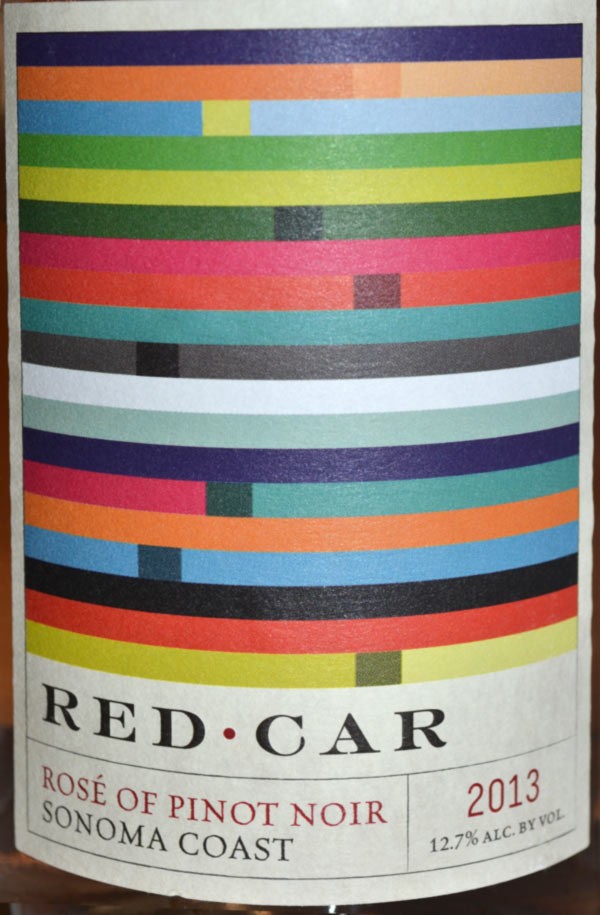
In this week’s Swirl we looked at wine pairings for meatless wonders. Turns out, the familiar Burgundian dyad of Pinot and Chard hits most of the right notes with Turtle Island Foods Tofurky and Field Roast brand Celebration Roast, with all the trimmings. Here’s a longer list of samples from 2011 and 2012, rated up to five stars (asterisks).

Murphy-Goode Pinot Noir

“It’s a perfectly good crop, and they’re screwing it up!” a winemaker complained to me in the fall of 2012. He was talking about the overabundant grapes some growers were hanging on their vines to make up for the skimpy, supposedly poor 2011 harvest. Here is no apples-to-apples comparison, to be sure, but let’s see how the years compare:

2011 Francis Ford Coppola “Director’s” Sonoma Coast Chardonnay ($17) Chilled lemon cheesecake aroma with muted butterscotch and oak, peppermint candy cane. Golden Delicious apple, bit of a sweet palate, plus tangy citrus zip. Nice. ***1/2

2011 La Crema Monterey Chardonnay ($20) Nutty, peanut brittle. Or musty? Soft, billowy palate, lemon-apple. ***

2012 Murphy-Goode California Chardonnay ($14) Concession stand “butter,” a little toasty oak; drinking a tub of kettle corn. If you like this flavor, this is the ticket. **1/2

2011 “Director’s Cut” Russian River Valley Chardonnay ($21) Muted sulfur, hamper aroma. Cidery flavor, but hot. Recommend the “Director’s.” **1/2

2012 Frank Family Carneros Chardonnay ($34.75) Floral, toasty oak and buttery pie crust, green apple skin; thick, lemon-custard palate, trending bitter. **1/2

Jordan 2011 RRV Chardonnay ($30) Touted as a top restaurant wine, the smoky, oaky, burnt butter-soaked Jordan was frankly unpleasant on its own. But this was also tasted with the faux fowl products, and we agreed that it was better with food. Pretty good, actually—guess they know what they’re doing. **1/2

2012 KJ “Vintner’s Reserve” California Chardonnay ($17) Ye olde ever-popular Chard seems to have ceded the signature style to others. Murky, old barrel smell with slightly tingly-sweet palate and hard, bitter edge. **

2012 KJ “Avant” Unoaked Chardonnay ($17) I smell oak, buttered oak. Nutty, soggy cashew, too, going down with cloying, butterscotch candy. What, why? **

2012 Martin Ray Unoaked RRV Chardonnay ($16.99) Nice lemon blossom notes, but nowhere near the zippy style implied by the “unoaked” label, this also flops all over. **

2012 Balverne RRV Estate Reserve Pinot Noir ($50) Translucent cherry glaze color with aroma to match, fennel spice, and sweet cherry lollipop flavor. It’s a nice quaff. ***

2012 Murphy-Goode California Pinot Noir ($15) Quite similar to the Balverne, but smokier, with vanilla and cherry, and an odd plummy gummy candy note in there. Easy to like. ***

2011 La Crema Monterey Pinot Noir ($23) Dark strawberry jam, vanilla, cinnamon. Inviting; darkly tannic. ***

2011 Cambria “Bench Break” Santa Maria Valley Pinot Noir ($34) Rosemary, pine sap aromas, with currants, turn to licorice after a day. For prime rib, not lentil loaf. ***

2011 Martin Ray Anderson Valley Pinot Noir ($NA) Kinda closed; cool red fruit smelled through charcoal and horse blanket. Pure palate, though, promising; start your “cellar” with this one. **1/2

2011 Pedroncelli RRV Pinot Noir ($NA) Light-bodied, not awful. **

A Dream Interrupted

1

For those of us who remember, it’s hard to believe it’s been 50 years since that black Friday in November when John F. Kennedy was shot.

I was a 17-year-old freshman at Brooklyn College, a political science major who could feel the world opening up to new ideas after the stodgy Eisenhower years. When I heard the news, my entire world was turned upside down, and bright hopes shattered into a million pieces. That night, I saw my father crying. I had only seen him cry once before, when his sister passed away.

My best friend and I spent the next two days walking, walking, walking, trying to make some kind of sense of the act and trying to imagine a future. We walked across the Brooklyn Bridge to Manhattan and back. I missed the broadcast of Oswald being shot by Jack Ruby, because I was still out there, trying to walk off the massive hurt.

America hasn’t ever really recovered from that day.

In 1958, when the Pew Foundation began doing its polling on the topic, 73 percent of Americans polled trusted their government. At the time Kennedy was in office, that figure had spiked to nearly 80 percent. Today? The 2013 Pew poll reports that just 19 percent say they trust the government. Is that an amazing coincidence? Or did what so many Americans perceive as a betrayal at the highest levels turn us inexorably down a road of despair, denial, apathy and cynicism?

In the 50 years since the assassination, there have been some 2,000 books written on the subject. The books tend to fall into several categories: one, that there was no conspiracy and the official story stands (not many, but some books proclaim this); two, that there was a plot, which points to the Soviet Union or Castro’s Cuba; three, that the Mafia did it; and four, that the CIA and the Mafia did it.

I certainly haven’t read all of those books, but I did at least come to the conversation early. As a freshman teacher in Washington, D.C., in 1967 as part of the Urban Teaching Corps, I was given the material to teach a unit on alternative views of the Kennedy assassination. As I delved into a mystery I’d never examined before, two red flags jumped out at me. One was the Zapruder film showing the back of Kennedy’s head as he was shot and how it indicated that a bullet came from the front and not from the Texas School Book Depository building, where Oswald supposedly carried out his deed. The other red flag was the surprising number of witnesses to the assassination who met unfortunate and untimely ends.

Seeds of doubt were planted in me, and the one thing that I knew to be true about the Kennedy assassination is that the official story was not true.

Apparently, I’m not alone. According to a recent AP poll, just 24 percent of Americans believe in the official “Oswald acted alone” story, and some 59 percent are convinced there was indeed a conspiracy. But you will never see these alternative stories aired on mainstream media, and if mentioned, they are quickly dismissed as “conspiracy theories.” So if you’ve read extensively on the subject and believe the official story is a pack of lies, you are never to say so publicly lest you lose credibility and find yourself classified as one of those “conspiracy nuts.”

You are being asked to deny, and then deny you are denying. Perhaps this central disconnection from authenticity and integrity is why there is such seething and misdirected anger in this country, and political discourse has devolved into “detestimonials and insinuendos.” It might also explain why we are a country at war with itself, and our government is watching us—instead of the other way around.

The body politic is most certainly in need of healing, and of all those 2,000 books that have been written about the Kennedy assassination, there is one book that stands out as a potential pathway to metabolizing our huge political toxin.

JFK and the Unspeakable: Why He Died & Why It Matters is authored by James W. Douglass, a progressive Catholic deeply influenced by the American Trappist monk Thomas Merton (1915–1968). Though Merton lived a monastic life and rarely traveled, he was influential as a religious philosopher whose correspondents included well-known Catholics of all political persuasions, from Clare Boothe Luce to Ethel Kennedy.

Because of his fierce inner convictions and willingness to stand for these convictions, Merton was able to gaze unflinchingly into the heart of darkness. He used the word “unspeakable” to describe “a suicidal moral evil and total lack of ethics and rationality with which international politics tend to be conducted.”

[page]

It’s hard to imagine a book about the death of a beloved president at the hands of “the unspeakable” as inspiring, but Douglass’ book courageously acknowledges the likeliest scenario, and by facing the dark implications, shows us a way toward redemption. In many ways, JFK and the Unspeakable is a spiritual book. It seems so old-fashioned to speak about “evil,” and yet it may be that our unwillingness to use this term and face the darkness head-on is why evil seems to have snuggled up with us and moved in next door.

Douglass introduces three main “characters” in this book: John F. Kennedy, the Unspeakable and you, the reader.

Kennedy’s story in this book is a tale of transformation, from cold warrior to peacemaker. His moment of epiphany came during the Cuban Missile Crisis, as the world stood on the brink of nuclear war. The transcripts of Kennedy’s interactions with the Joint Chiefs of Staff (the book is over 500 pages, 100 of which are footnotes and references) show how he resisted war and how angry the generals were—even after he dodged the bullet and the missiles were removed from Cuba.

After the fall of the Soviet Union, the Russian foreign ministry released documents showing the cables between Kennedy and Soviet premier Nikita Khrushchev during the crisis. A message sent by the president’s brother Robert F. Kennedy to Soviet ambassador Anatoly Dobrynin put it bluntly: “If the situation continues much longer, the President is not sure that the military will not overthrow him and seize power.”

Premier Khrushchev, having similar misgivings about plunging the world into nuclear holocaust, agreed to pull the missiles out of Cuba, and the crisis evaporated. In exchange, President Kennedy made a verbal promise to remove our missiles from Turkey within six months, which came to pass.

In a significant sense, both Kennedy and Khrushchev had what we might term today near-death experiences. In returning from the brink of massive destruction, both of them dedicated themselves to doing whatever they could to end the Cold War. For Kennedy, it was the thought of all those children who would never grow up to live a full life had he pushed the button. His generals, on the other hand, were perfectly willing to gamble the lives of millions of Americans and millions more Russians on a first strike that they believed would immobilize the Soviet Union.

Kennedy and Khrushchev communicated often during the last year of Kennedy’s life. They often spoke about having more in common with one another than with their generals. Kennedy initiated three policy changes that put him at odds with his generals, with most of his party leaders and most definitely with the military industrial complex. He sought a nuclear test ban treaty as a way to slow, if not stop, the Cold War escalation; he opened secret lines of communication to Fidel Castro, with an eye toward rapprochement with the Cuban communist regime; and he made firm plans to end the Vietnam War before it started.

All of this—and the resistance Kennedy got from nearly all quarters—is well-documented in Douglass’ book. It may well be that had Kennedy lived, the Vietnam War Memorial we are all so familiar with wouldn’t exist today, and those who died would have lived full and fulfilling lives. Those who still suffer from PTSD would likewise have been able to focus on healthier pursuits. And the culture wars that have divided America might never have happened. Take, for example, when Kennedy appeared in Salt Lake City—even then a conservative bastion—and proposed a nuclear test ban. The audience, largely Mormon, gave him a standing ovation that lasted for minutes.

Enter the other main character in this immorality play: the Unspeakable. If Douglass is right, and elements in our own government were responsible for the assassination—you will have to read the book to make your own conclusions—John F. Kennedy’s transformation from war maker to peacemaker was stopped dead in its tracks. In regards to Vietnam, according to Stanley Karnow’s 1983 book Vietnam: A History, Lyndon Johnson reassured the Joint Chiefs in December 1963, a month after succeeding to the office, “Just let me get elected, then you can have your war.”

[page]

And so it was. And here we are today, armed to the teeth, as dangerous as any rogue state, gazillions in debt and mired in despair, decay and dysfunction.

So who or what is this Unspeakable?

When he first used the term, Thomas Merton was referring to the secret and silent power that gave itself dominion some 15 years before Kennedy was killed. The National Security Act of 1947 established the National Security Council and the Central Intelligence Agency, and officially renamed the Department of War the Department of Defense. Not content to leave Orwell-enough alone, in 1948 President Harry Truman’s National Security Council approved the top secret direction NSC 10/2 that would empower the CIA to carry out covert acts under the veil of secrecy. Truman’s original understanding of the CIA was as an intelligence-gathering (i.e., spying) organization, but under this new mandate, the CIA became another arm of warfare-waging propaganda campaigns, sabotage, and “executive action” (their own benign term for assassination).

It was another seemingly innocent phrase, “plausible deniability,” that gave this secret government carte blanche. Because NSC 10/2 blatantly violated international law, it required some form of “lie-ability” insurance. The directive stated that all such activities were to be “so planned and executed that any U.S. government responsibility is not evident to unauthorized persons, and if uncovered the U.S. government can plausibly deny any responsibility for them.”

So did elements from our secret government have anything to do with a plot to kill John F. Kennedy? Douglass presents no definitive proof of any particular higher-up calling the shots, although the circumstantial evidence—if one is willing to see the patterns—is overwhelming. Again, you will have to read the book and make your own conclusions.

And this is where the third character in the story enters: the American people.

Several years ago, I read an article by journalist Doug Thompson published by OpEdNews.com. In it, Thompson recalls a 1981 encounter with the late John Connally, the former governor of Texas who was wounded in the Kennedy assassination. In an unguarded moment, Thompson asked Connally, “Do you think Lee Harvey Oswald fired the gun that killed Kennedy?” “Absolutely not,” Connally said. “I do not, for one second, believe the conclusions of the Warren Commission.” “So why not speak out?” Thompson asked. “I will never speak out publicly about what I believe,” Connally replied, “because I love this country and we needed closure at the time.” Now, half a century after that devastating perpetration, a dozen years since 9-11 and months after revelations that, via the NSA, the government is indeed “listening to the people,” we might want to ask, how well did “closure” serve us?

As I read the story of how Kennedy and Khrushchev and Pope John XXIII were secretly plotting for peace during that year following the Cuban Missile Crisis (“Nothing is impossible,” wrote the pope shortly before he died), I see a dream interrupted. And only by immersing ourselves in this dark history and shining the light of awareness, love and understanding can we pick up the pieces and renew this journey, with greater unity, wisdom and resolve. Read this book. Speak about the unspeakable. It may well be America’s pathway to redemption.

Steve Bhaerman, aka Swami Beyondananda, is a humorist, political ‘uncommontator’ and author. He can be found at www.wakeuplaughing.com.

Nov. 25: Alice Cooper at the Wells Fargo Center

0

cooper-b399ad8913837f4516765f1e46d09d33128207a1-s6-c30.jpg

What can you expect from an Alice Cooper show? You can count on Cooper onstage with mascara-streaked eyes performing violent stunts featuring gruesome props. On his lifelong mission to break taboos, the shock-rock icon and pioneer of theatrical rock concerts returns with his 25th studio album, Along Came a Spider. Cooper brings his unconventional stage antics to town on Monday, Nov. 25, at the Wells Fargo Center. 50 Mark West Springs Road, Santa Rosa. 8pm. $40—$64. 707.527.7006.

Nov. 24: ‘The Singularity’ at Rafael Film Center

0

ieee-spectrum-technological-singularity-thumb.png

Nano-robots. In less than 50 years, these tiny machines could change our world to a place where “the concept of one mind, one body will be obsolete.” Humans will live in a virtual world with control over aging, health and physical characteristics. Scientific evidence shows that ‘The Singularity’ has already begun: the point at which technology and its creator are no longer mutually exclusive. Bay Area filmmaker Doug Wolens presents his new film on Sunday, Nov. 24, at Rafael Film Center. 1118 Fourth St., San Rafael. 7pm. $10.75. 415.454.1222.

Nov. 24: Ramblin’ Jack Elliott at Hopmonk Tavern

0

Ramblin-Jack-Elliott-006.jpg

As a 14-year-old, Ramblin’ Jack Elliott learned to play guitar when he ran away from home to join the rodeo—and he hasn’t put it down since. A friend of Woody Guthrie, by 1969 he was on the Johnny Cash Show. The friends he influenced include Cash, Tom Waits, the Grateful Dead and the Rolling Stones. After generations of making timeless country folk music, Ramblin’ Jack plays a low-key performance on Sunday, Nov. 24, at Hopmonk Tavern. 224 Vintage Way, Novato. 7:30pm. $25. 415.892.6200.

Nov. 22: Generation Esmeralda at Sausalito Seahorse

0

index.jpg

Remember that band Santa Esmeralda, the ’70s one-hit wonder with the groovy disco remake of “Don’t Let Me Be Misunderstood”? After more than 30 years MIA, the band has reunited as the older and groovier Generation Esmeralda. The band’s sound blends Latin rock dance grooves with melodic hooks, impressive guitar licks and cha-cha with a splash of gypsy-infused Flamenco. The band returns from their tour of Brazil to play on Friday, Nov. 22, at Sausalito Seahorse. 305 Harbor Drive, Sausalito. 9pm. $10. 415.331.2899.

Nov. 16: Lego Building Contest at the Brick Hutt

0

index.jpg

Maybe you used to create huge castles and dragons when you were a kid, and want to recapture that youthful creativity. Maybe you have kept up with ongoing developments and think you’ve got the ultimate plastic architectural creation. Or maybe you’re a parent who steps on the damn things in the middle of the night and wants to see if your kid can win a grand prize. Either way, the Lego Building Contest is nigh, with free entry, three skill levels and prizes ranging from Lego figures to a $200 gift certificate. Test your trickery on Saturday, Nov. 16, at the Brick Hutt. 420 Mendocino Ave., Santa Rosa. 1pm. Free. 707.479.3698.

Flow Masters

In Dry Creek Valley, there's at least one place where a jumble of felled trees doesn't spell trouble for coho habitat. It's part of a multimillion dollar project meant to restore Dry Creek's salmon population—and possibly save the Sonoma County Water Agency an additional $150 million bill. On Friday, Nov. 22, representatives from four government agencies, the Dry Creek Rancheria...

Go West

As the family gathers around the table this year, talk will veer into all the usual territories: what Aunt Meg is doing for a job, how much everyone misses Buster the dog, the price of gas. But then, inevitably, some niece or other will mention the popular cultural topic that, sadly, you are ill-equipped to discuss: Kanye West. The paralysis...

Live Review: Barrington Levy in Petaluma

Reggae dancehall legend Barrington Levy blazed through Petaluma on Thursday night in classic dub train style. Barrington’s voice is sounding cleaner than ever and his form is looking fantastic as he approaches 50 years old. The show was part of the Road to California Roots Festival tour, a push towards spreading the word about the massive three-day event next...

Review: Pinot Noir and Chardonnay Extended Mix

In this week’s Swirl we looked at wine pairings for meatless wonders. Turns out, the familiar Burgundian dyad of Pinot and Chard hits most of the right notes with Turtle Island Foods Tofurky and Field Roast brand Celebration Roast, with all the trimmings. Here’s a longer list of samples from 2011 and 2012, rated up to five stars (asterisks). ...

A Dream Interrupted

For those of us who remember, it's hard to believe it's been 50 years since that black Friday in November when John F. Kennedy was shot. I was a 17-year-old freshman at Brooklyn College, a political science major who could feel the world opening up to new ideas after the stodgy Eisenhower years. When I heard the news, my entire...

Nov. 25: Alice Cooper at the Wells Fargo Center

What can you expect from an Alice Cooper show? You can count on Cooper onstage with mascara-streaked eyes performing violent stunts featuring gruesome props. On his lifelong mission to break taboos, the shock-rock icon and pioneer of theatrical rock concerts returns with his 25th studio album, Along Came a Spider. Cooper brings his unconventional stage antics to town on...

Nov. 24: ‘The Singularity’ at Rafael Film Center

Nano-robots. In less than 50 years, these tiny machines could change our world to a place where “the concept of one mind, one body will be obsolete.” Humans will live in a virtual world with control over aging, health and physical characteristics. Scientific evidence shows that ‘The Singularity’ has already begun: the point at which technology and its creator...

Nov. 24: Ramblin’ Jack Elliott at Hopmonk Tavern

As a 14-year-old, Ramblin’ Jack Elliott learned to play guitar when he ran away from home to join the rodeo—and he hasn’t put it down since. A friend of Woody Guthrie, by 1969 he was on the Johnny Cash Show. The friends he influenced include Cash, Tom Waits, the Grateful Dead and the Rolling Stones. After generations of making...

Nov. 22: Generation Esmeralda at Sausalito Seahorse

Remember that band Santa Esmeralda, the ’70s one-hit wonder with the groovy disco remake of “Don’t Let Me Be Misunderstood”? After more than 30 years MIA, the band has reunited as the older and groovier Generation Esmeralda. The band’s sound blends Latin rock dance grooves with melodic hooks, impressive guitar licks and cha-cha with a splash of gypsy-infused Flamenco....

Nov. 16: Lego Building Contest at the Brick Hutt

Maybe you used to create huge castles and dragons when you were a kid, and want to recapture that youthful creativity. Maybe you have kept up with ongoing developments and think you’ve got the ultimate plastic architectural creation. Or maybe you’re a parent who steps on the damn things in the middle of the night and wants to see...
11,084FansLike
4,446FollowersFollow
6,928FollowersFollow