Napa GOP Hosts Obama-is-Hitler Tweeter

0

The Napa County Republican Party Central Committee hosted a Tuesday-night event with State Assemblyman Tim Donnelly on the heels of a recent tweet Donnelly sent out that compared President Barack Obama to Adolph Hitler and Joseph Stalin.

Donnelly, a GOP candidate for governor who represents California’s 33rd District, said his eyebrow-raising accusation was made in the context of Obama’s gun-control policies. Obama-as-Hitler comparisons are nothing new in this, the sixth year of his presidency. In that time, the Twin Peaks–based lawmaker has clearly learned the Tea Party trick of character assassination by way of meat-fisted obfuscation: see, he wasn’t comparing Obama to Hitler, per se, but it’s just that they both support “taking your guns away”—and you know where that can lead.

Faced with criticism over the Hitler comparison, Donnelly doubled-down and accused Obama of being a dictator. Donnelly himself had his gun taken away, as numerous press outlets have reported, when he tried to bring a loaded Colt .45 handgun onto a Sacramento-bound airplane in Ontario in 2012. At first he claimed that he’d forgotten he was packing, then danced around questions from the Sacramento Bee about whether he had a concealed weapons permit (he didn’t) before accepting a plea deal that included three years of probation on misdemeanor gun charges. A Feb. 25 report in the L.A. Times noted that the gun wasn’t registered to Donnelly, but to an elderly woman in San Bernardino.

Donnelly will square off in a June GOP primary against Neel Kashkari, the telegenic former U.S. Treasury official who gained national attention for his congressional testimony following the 2008 near-collapse of the American economy.

The Napa Republican Party didn’t respond to inquiries from the Bohemian. Nor did Donnelly.
—Tom Gogola

There’s Always (Tom) Tomorrow

0

Since debuting in the SF Weekly nearly 25 years ago, Tom Tomorrow’s satirical cartoon strip This Modern World has skewered the politically powerful and the gullible masses with colorful art and deadpan humor.

Beloved by liberals, held in contempt by conservatives, Tomorrow is the pen name for editorial cartoonist Dan Perkins, whose work appears across the country week after week, delivering big laughs over serious issues.

This week, Tom Tomorrow, 2013 winner of the esteemed Herblock Prize for editorial cartooning, speaks at the Charles M Schulz Museum in Santa Rosa. As part of the museum’s ongoing Second Saturday Cartoonist series, Tomorrow will present a talk, meet with guests and sign books. Focusing primarily on This Modern World, which he has self-syndicated since 1988 (and currently running in the Bohemian), Tomorrow will discuss and demonstrate the signature style of clip art aesthetics and
retro ’50s charm he employs to belie an assaulting wit.

Rail-Trail Fail

0

North Bay bicyclists take note: a Supreme Court ruling this week may affect area bike trails created under “rails to trails” initiatives that reclaimed abandoned rail-beds and easements and turned them into recreational corridors.

On Monday, the court ruled 8–1 in favor of a landowner in Marvin M. Brandt Revocable Trust et al v. United States. At issue in Brandt
was a Wyoming landowner whose property is crossed by a now-abandoned Pacific Railroad Company rail line that goes on for several dozen miles. The 1875 General Railroad Right-of-Way Act sought to retain the government’s “reversionary interest” in land under rail-beds and easements. Brandt sued the federal government to stop a proposed extension of a rail-trail through his property. He lost in appellate court but found favor with the Roberts Court.

Chief Justice John Roberts posed the pivotal question in his majority opinion: “When the railroad abandons land granted under the 1875 act, does it go to the Government, or to the private party who acquired the land underlying the right of way?” The court said ownership should revert to the landowner.

Justice Sonia Sotomayor filed the lone dissenting opinion. “By changing course today, the Court undermines the legality of thousands of miles of former rights of way that the public now enjoys as means of transportation and recreation. These former rail corridors are public assets in which we all share and benefit.” Residents here know that. The Washington, D.C.–based Rails to Trails Conservancy turned its attention to Sonoma County in November 2009 when it named the West County and Joe Rodota trails its “Trail of the Month.”

It noted that the more urbanized Joe Rodota Trail backs up onto numerous businesses and backyards. In a statement, the conservancy said the Supreme Court ruling threatens existing rail-trails, “mainly in the West, that utilize federally granted rights-of-way.” Sotomayor warned that the court’s ruling opens the door to landowners along rail-trails whose financial interest in making a property claim may trump public-interest altruism.

Citing a Justice Department study, Sotomayor wrote, “Lawsuits challenging the conversion of former rails to recreational trails alone may well cost American taxpayers hundreds of millions of dollars.”

Tom Gogola is contributing editor at the ‘Bohemian.’

Open Mic is a weekly feature in the ‘Bohemian.’ We welcome your contribution. To have your topical essay of 350 words considered for publication, write op*****@******an.com.

Petaluma or Bust

The Miwok called it “Péta Lúuma.” The Spanish reduced it to “Petaluma.” I tried to get “Lumaville” to stick when “P-Town” seemed to be gaining ground, only to have the annual bumper crop of teens rechristen it “Deadaluma,” just like always. Now, if anecdotal reports prove true, a sizable influx of thirty- to forty-somethings from San Francisco and the East Bay are moving to Petaluma who simply call it “home.”

“I hear the story almost every day,” says Natasha Juliana, owner of WORK, a co-working space in the city’s downtown. “It’s gotten comical. Especially young families with young kids and parents in their 30s and 40s. They’re coming from San Francisco, the East Bay, and even farther away, like New York and Chicago,” she says. “And then we also see a lot of people who grew up here, went away for a long time, had children and have moved back.”

What Juliana hasn’t seen are people younger than 30 moving to Petaluma. “There are very few twenty-somethings,” she observes. This stands to reason, since it’s traditionally the twenty-somethings, like my younger self, that flee the suburbs and head straight for the cities.

I split from my native Petaluma 15 years ago on a self-imposed exile to pursue big-city ambitions, only to ultimately wish I hadn’t. When my wife was enticed to leave her natural foods company marketing position in the East Bay to take one in Sonoma County, it meant we could move to Petaluma. I could repatriate to my home town. But, as anyone with any years on them will tell you, where you grow up is a time, not a place. Petaluma is barely recognizable to me. Now it’s so much cooler than when I was an angry young man—or at least I’m finally able to get over myself and enjoy Petaluma on its own terms.

Actually, make that its new terms.

[page]

COOL ‘BURBS

While showing us our future home, the woman showing the house namedropped critically lauded singer-songwriter Sean Hayes, who had moved with his young family to Petaluma only months prior. I’d known and appreciated his work in the city and found his presence on the block somehow assuring. Could the ‘burbs be cool?

“Why Petaluma?” asks Hayes, who had lived in San Francisco for 20 years. “Intuition. Mostly my wife’s. We were living in a small one bedroom in the Mission in San Francisco. We knew we were going to have a second baby. Decided north. We’ve been very happy up here—great town.”

The Hayeses aren’t the only ones who have “decided north” in recent months. Dozens upon dozens of mostly creative professionals, many of whom have young children, are moving to Petaluma. Albeit, all evidence of this migration is unsubstantiated; there is no hard data—yet—just observations made by myself and others. For example, a new preschool opened in Petaluma last fall in which every single student is the child of a transplanted family that moved from the East Bay or San Francisco, mostly in the last year. And this kind of situation arises again and again in local conversations.

Who are these people and why are they moving to Petaluma?

The reasons are myriad but cluster around three primary themes: economic pressures in the surrounding cities driving up the cost of housing; a desire for a community-centric creative and sustainable lifestyle with a bucolic backdrop; and the need to accommodate the spate of kids everyone had when they panicked and realized they were staring down the barrel at 40.

Speaking with some newly minted Petalumans is a bit like watching a supercut of the Manchurian Candidate: “Petaluma is the kindest, bravest, warmest, most wonderful small town I’ve ever known in my life.” I’ve heard the same breathless sentiment coming from my own mouth when asked why I moved here. It’s all true, but hearing it aloud helps me believe it, helps me believe that ditching a hip neighborhood in Oakland for the comparatively staid environs of Sonoma County was the right decision. Sure it was, because (a) I always felt 15 years too old for it anyway, and (b) where the hell else could I go to feel even vaguely relevant?

Try as I might to find a Petaluma naysayer for a reality check, none would go on record. They fear, I surmise, as I do, that we might become the twist in a Shirley Jackson story wherein the townsfolk stone us to death. (And not in the “Sonoma Coma” kind of way.)

REDEFINING “SMALL TOWN AESTHETIC”

Prior to moving back, I clued into certain cultural indicators that the city had changed from one groping for an identity (saddled as it was between Sonoma’s wine trade and Marin’s cultural clinch on what many imagined Northern California to be) to one that’s rapidly redefining the potential for a small town to support creativity, entrepreneurism and sustainability in an affordable and family-friendly package.

Take, for example, WORK, where entrepreneurs and freelancers of various stripes get the job done in the heart of downtown—finally, a place where building one’s own personal empire is embraced and encouraged. Across the street is Acre Coffee, where one can get single-origin, direct-trade, French-pressed drinks, just as one would at the cafe’s San Francisco location. There are three wine bars within staggering distance of each other. The New York Times recently fawned over the city’s restaurants. Even the cows and their pervasive stink contribute to the local charm—and you can have them delivered to your door as organic steaks through a community-supported agriculture service. For that matter, food—especially locally cultivated grub—is a big draw.

“It’s nicely located, and centrally located. Have you seen the restaurants?” says Don Frances over mason jars of beer from Petaluma’s own Lagunitas Brewing Company at Ray’s Tavern. The neighborhood hub, with weekly live music and a menu rife with specialty sammies boasting local street names (the Western Avenue BLT is self-explanatory), has evolved from family-owned corner store into microbrew mecca and artisanal sandwich shop.

Frances and his family moved from Davis to Petaluma when he was appointed news editor of the Sonoma Index-Tribune last February. “I want that nice blend of city and country, and we have got it. I like a city that ends—meaning you get to the actual end of it—and this is one,” he says. “There aren’t that many, especially if you want a city that’s worth a damn as a city but not part of some megalopolis that never really ends.”

But are we all drinking the Pinot-flavored Kool-Aid and calling it Lagunitas? With its hands on the spigot is the city itself, which has made a concerted effort to market Petaluma and its various attractions to businesses seeking to employ “knowledge workers.”

A letter from Mayor David Glass, printed in an advertising supplement circulated last October, declares that “Petaluma has been a center of industry and innovation in the Bay Area for 150 years. Today it’s the corporate home of global brands like Lagunitas, CamelBak, Traditional Medicinals, Enphase and Athleta.”

[page]

The approach dovetails nicely with a larger county-wide effort to attract businesses in fields populated by creative professionals, which the Sonoma County Economic Development Board broadly defines as those working in science and engineering, architecture and design, management and finance, education, the arts, and music and entertainment.

Last month the EDB convened a “Creative Arts Focus Group” to assess how it might help this “cluster” become a steady economic driver.

Participants were asked to break into groups and answer questions like “what are the three biggest opportunities for growing/sustaining your business in the next three to seven years?” A consistent theme, writ large on the groups’ self-adhesive flipcharts, was the notion of attracting and retaining talent through Sonoma County’s copious lifestyle offerings. After all, we’re “America’s premier wine, spa and coastal destination,” as our tourism bureau happily reminds. And, as the southernmost tip of the county, Petaluma is the gateway to this Xanadu.

“I do not have any specific statistics that would allow me to confirm your observations about creative professionals moving to Petaluma,” says Ingrid Alverde, the city of Petaluma’s economic development manager, via email. “That said, I, too, have met many creative professionals in my work with the city. I can say that Petaluma’s quality of life is unmatched in the Bay Area because of its affordable living, mixed with its great location and its historic downtown. Petaluma also has a strong sense of community and many venues for art, music and theater.”

THE G-WORD

Notions of gentrification arise every time a demographic shift occurs in a specific locale. Is that what’s happening here? By the strictest definition, no. It was already like this when we got here.

“It feels more real and it doesn’t feel so suburban. It’s not like suburban sprawl,” says WORK’s Juliana. “[I can go] four minutes outside of town and be in real working farmland. There’s a quality to Petaluma that’s really authentic, partly just because of the history and the agricultural history. It has a diversity of people still living here. It’s not Mill Valley.”

The Mill Valley factor has long loomed over Petaluma. In the ’80s there was a palpable sense of Marin County envy—we were so close yet so far away from the money, hot tubs, Beemers and cocaine. The ’90s did no favors for Petaluma, resulting in a decade of “alternative” self-deceptions and dotcom dilettantism that made us look like Marin’s self-mutilating younger sibling.

It wasn’t until this century that Petaluma realized the intrinsic lifestyle value of its rural village roots and embraced it wholly. Couple this with Sonoma County’s upgrade from “Redwood Empire” to “Wine Country,” and suddenly we’re trendsetters. But does influence necessarily lead to affluence, specifically of the kind that would make Petaluma fear it was turning into Mill Valley?

“I have a lot of friends who worry about that,” observes Juliana, who is confident Petaluma will maintain its community-driven values. “But you also have to evolve as a town, otherwise you become a desolate ghost town.”

Anyway, Petaluma tried gentrification before. The results were meh. In the early aughts, plug-‘n’-play developments like the so-called Theater District were designed to emulate the urban density of cities—retail and restaurants downstairs, loft-like apartments upstairs. It’s urban design by way of a prêt-à-porter mentality, and may attract a certain kind of Prêt-à-luman, but by and large the recent arrivals are specifically attracted to the older (by a century) west-side architecture and a decidedly small-town way of life.

More to the point, the families moving to Petaluma are not gentrifiers themselves so much as the fallout from the latest waves of gentrification occurring in the urban neighborhoods they departed. Demand for real estate in San Francisco has driven the market into the stratosphere. A three-bedroom fixer-upper in the Glen Park neighborhood near
Noe Valley recently sold for
$1.425 million. Homes in Petaluma can be had for one-third as much, though this is likely to change as inventory decreases.

“Homes are selling as soon as they come on the market,” says Martha O’Hayer, a realtor at the Petaluma branch of Coldwell Banker. “Savvy investors are buying their homes now, renting them until they are ready to leave the City and East Bay with the intention of heading here when they are ready for a lifestyle change.”

Homes on Petaluma’s tonier, older west side start at the mid-$300,000s but can reach a cool million in the prestige neighborhoods in the “number and letter” streets. Comparatively, homes east of Highway 101, where track developments limned by strip malls dominate, hover between $300,000 and $500,000.

Seven months ago, therapist Rachael Newman purchased a home with her husband near Petaluma’s downtown. Since the arrival of their son, they were rapidly outgrowing their houseboat in Sausalito. It was time to take the plunge (north—not into the Bay).

“It just felt like the town of Sausalito wasn’t really quite right for ‘forever’ for us,” says Newman. “Petaluma feels like a place where we can really raise our children and grow old.” She adds with a laugh, “We’re a cliché at this point, I guess.”

Juliana puts it this way: “Honestly, this is the first place where I feel really at home. I feel like I fit in.”

I concur completely. Sweet home Deadaluma, Lord, I’m coming home to you.

Bottlerock v.2.0

0

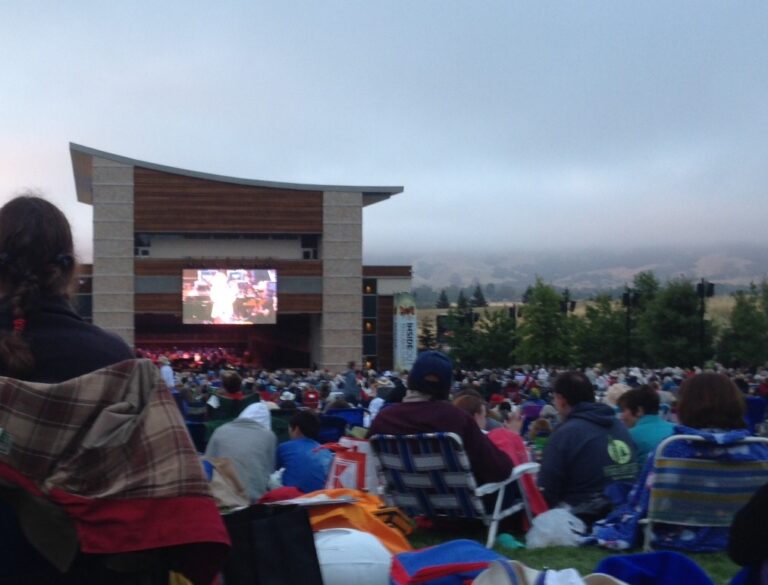
Bottlerock, the largest festival Napa has ever seen, is back for a second year—but this time with new owners and producers, a shorter schedule, fewer bands and, hopefully, fewer outstanding debts left to pay at the end of it all.

Last year’s festival was a hit with music fans, but left vendors singing the blues, with first-time festival producers Bob Vogt and Gabe Meyers eventually filing for bankruptcy after owing nearly
$10 million to several business that provided services to the event. This year’s producer, Latitude 38 (formerly known as GSF Entertainment LLC) is also made up of local investors hosting a major music festival for the first time. But they promise it will be different.

The group includes David Graham, Jason Scoggins, Joe Fischer and Justin Dragoo. Fischer has worked with Copia, the defunct wine museum and tasting center that now serves as will-call ticket pickup for Bottlerock. Graham is involved with tech startups, Scoggins cofounded an automotive media group and Dragoo is president of a Napa winery. The festival director is Steve Macfadyen, who was most recently entertainment director of a 2,000-seat concert center at an Indian casino in Central California.

According to the L38’s website, “The company is completely separate and in no way connected with BR Festivals, the producer of the 2013 Bottlerock festival. No one from BR Festivals is a part of the management team at L38.” It also states that L38 has purchased the name, some festival equipment and the deposits with the Napa Valley Expo, but not the debt.

“L38 is not assuming BR Festivals’ obligations, and does not control how BR Festivals handles its debts,” says the site. One paragraph later it adds, “Through a combination of negotiated agreements and future work arrangements with vendors that are critical to future festivals, L38 is reducing the overall pool of claims awaiting payment.” The company has “worked to eliminate over half of the debt on the records,” the purchasers say, but do not explain how or in what way L38 was involved in the debt restructuring.

The stagehands’ union, Local 16, is still owed $300,000, but is back on board for this year’s festival. L38 has paid the $300,000 owed to the Expo Center and over $100,000 owed to the city from last year’s event. They’ve promised to pay the $800,000 Expo Center rental fee for this year’s festival, as well as estimated costs to the city for traffic management, police and other expenses before the festival takes place.

Officials from L38 were not available to comment on questions regarding finances before press deadline, but spokesperson Gwen McGill says there will be over 40 bands on four stages at this year’s event. “There are a lot of things still falling into place in terms of schedules, stages and artists.”

About $20 million was spent to host the first-time festival—with about $7 million reportedly going to bands like the Black Keys, Kings of Leon, Zac Brown Band, Jane’s Addiction and others (there were over 60 bands). Most of them required up-front deposits. “It’s insane that they were so reckless,” says concert promoter Rick Bartalini, who currently books talent at the Green Music Center, among other venues. The focus in 2013 wasn’t entirely on music, with dozens of wineries featured in popup tasting rooms and even standup comedy in the main expo hall.

The ambitious project is now being scaled down. Bottlerock 2014 will run three days instead of last year’s five, and there will not be any standup comedy. Food and wine will still be a large draw, but the bands remain the focus of the event, say the producers.

Napa’s Uptown Theatre, a partner in last year’s event, will not be involved this year, says McGill. BR Festivals lost $500,000 after a deal last year to buy it for $12 million fell through. The theater also lost its booking agent, Sheila Groves-Tracey, who was also owed a substantial amount of money in the wake of Bottlerock 2013. She now owns the Twin Oaks Tavern in Penngrove and has significantly raised the profile of live music at the historic venue thus far.

Details are scant about this year’s Bottlerock, with the lineup announcement coming Friday. But some information has been trickling out from the L38 camp. Presale tickets for Napa residents only went on sale for three days on March 7, at a discounted rate of $129 for single day, $229 for three-day and $529 for VIP three-day passes. Tickets purchased last year for Bottlerock 2014, which went on sale in the rock and roll afterglow of 2013’s festival, will be refunded or honored at the gate, since the date has changed since then. The dates of the festival are May 30–June 1.

Wes Anderson Gets a Room

Approaching Wes Anderson‘s mostly delightful Grand Budapest Hotel can give you that same foreboding you feel when encountering the word “artisanal.” It’s seriously underfemaled, and it pauses to congratulate itself for its cleverness. At worst, Anderson is a director of ducky films, but this nested story of European skullduggery seems to have more of a spine than anything he’s made since Fantastic Mr. Fox.

The Grand Budapest Hotel is a tale told by the proprietor of a declining luxury hotel during the 1960s in the Slovenia-like nation of Zubrowka. F. Murray Abraham is the turtlenecked proprietor Moustafa, a man who looks as haunted as Aleksandr Solzhenitsyn.

In a conversation over dinner, Moustafa tells a young writer (Jude Law) about the life he led between the wars. In those days, he was mentored by the suave concierge M. Gustave (Ralph Fiennes, terrifically louche), a heavily scented, indifferently heterosexual squire to wealthy elderly women. When Gustave’s oldest client (Tilda Swinton, grotesque in old-age makeup) bequeaths him a valuable painting the upstart hotelier becomes involved with blueblooded fascists played by Adrien Brody and Willem Dafoe as his leather-wrapped thug, Jopling.

Jailbreaks, alpine assassination, harrowing castles and political discord make this an unusually ripsnorting Anderson film. Far more like him are his asides: mentions of a far-off land called Dutch Tanganyika, rides on the trams of the gloomy capital city, Lutz, and a visit to the Bureau of Labor and Servitude.

Anderson styles his productions American Empirical, and he finally seems to have a fully running studio: a script department, a tabletop special effects lab, a first-rate music department and a stable of actors, including an artistically disfigured Saoirse Ronan, Harvey Keitel as a bald convict and Jeff Goldblum in spectacles that make him look like Sartre.

‘The Grand Budapest Hotel’ opens soon in select theaters.

The Chekhov List

0

Anton Chekhov’s plays are like magic tricks.

Whether writing vast multi-actor epics or slapstick short-form farces, Chekhov had a way of burying the typical forward action of his plots in the evolving emotional lives of his characters. In so doing, Chekhov keeps audiences looking for the story in the wrong places until—abracadabra!—we suddenly see that the real story was happening somewhere else.

For an audience willing to be patient and enjoy the musicality and ingenious humor of the language, an evening of Chekhov—if performed by actors who get what they’re doing—can be an awe-inspiring experience. And for actors, the chance to bounce one’s craft against the massive wall of Chekhov’s genius can be transformative and life-changing.

Which is why theater companies love doing Chekhov.

In Santa Rosa, two separate companies have just opened shows by Chekhov, giving audiences a chance to see the vast range of his talent, from a cluster of his playful one-acts being staged by the Imaginists to what many believe to be Chekhov’s crowning achievement, the mournfully brilliant Cherry Orchard, presented by a cast of student actors and professionals at Santa Rosa Junior College.

Asking beginning actors to tackle Chekhov is a little like sending a rookie out during the Super Bowl, but college theater arts programs would not be doing their job if they didn’t allow students to have a go at a Chekhov play now and then.

Director Leslie McCauley has built an actual cherry orchard inside the Burbank Theater, with faux trees all over the place, including a few out in the seats. The story of a family of once wealthy landowners making all the wrong decisions as they face the loss of their once-thriving estate will have plenty of resonance for modern audiences, some of whom might be surprised to discover Chekhov used the phrase “the 99 percent” to describe the have-nots in a play 110 years old.

At the Imaginists, Tobacco, Sparks, Fireworks, Chekhov looks to be a typically inventive bit of experimental theater, with three of Chekhov’s funnier shorts. On the Harmfulness of Tobacco is a one-person play in which a man attempts to give a lecture but can’t stay on the subject. The Proposal is a farce about marriage and the art of arguing. And Dirty Tragedians and Unclean Playwrights is, well, flat-out indescribable.

Whether in the mood for Chekhov as a full meal or as tasty little bites, now is a good time to sink your teeth into one of the greatest writers who ever lived.

Thursday’s Here

0

Pop-smart and rock-solid, the eclectic indie music of San Francisco’s Ash Thursday shines, with vocalist-guitarist Ash Scheiding turning in an impressive and expressive batch of songs on the band’s latest EP, Bravery.

Raised in Point Reyes Station, Scheiding spent her formative years in Sonoma County, fronting acts like Escape Engine and No More Stereo, and building an intensely personal catalogue of rock albums with an ever-evolving flair. Along with Scheiding in Ash Thursday are Niki Marie (vocals, keyboards), Betsy Adams (guitar), Andrew Ryan (drums) and Anderai Maldonado (bass).

Naturally collaborative, the band sound tightly focused on Bravery, the follow-up to the band’s 2013 debut EP, The Strength to Come Apart. Over the course of Bravery’s six tracks, Ash Thursday deliver electro-backed foot stompers, straight-up pop ballads and emotionally charged rock anthems. They appear with Santa Rosa indie ruffians Manzanita Falls in Santa Rosa on Saturday, March 15, at Heritage Public House. 1901 Mendocino Ave., Santa Rosa. 9pm. 707.540.0395.

Beef Don’t Fail Me Now

0

For eons, I’ve eaten ravenously in the spiffy restaurants on the plaza in Sonoma. From now on, however, my first choice will be Burgers & Vine (“B&V” to those in the know), the much buzzed-about eatery, saloon, live music joint, ice cream parlor and mini dance palace.

Co-created by Codi Binkley and Carlo Cavallo, B&V is sweeping stolid Sonoma off its feet. Sure, there are other destinations on the plaza that offer burgers, but there’s no real competition.

B&V is a bold experiment for Cavallo, though he’s already an award-winning chef who has prepared gourmet food for years at the Sonoma-Meritage Oyster Bar & Grille. “I’m going in a radically different direction from what I’ve done my whole career,” he says, a week before his new haunt opened to the public.

At B&V, the all-American hamburger is king, barbecue is the crown prince, and milk shakes—with or without booze—are a banquet by themselves. Beers, with names like Draft Punk Pale Ale, are brewed in the vast basement of the building, which was once the old Sonoma Creamery. At the elegant 42-foot-long burnished redwood bar, savvy bartenders serve exotic cocktails. There’s also an old-fashioned lounge on one side of the room and a nifty dance floor for romancing cheek-to-cheek on weekends when bands take the stage.

Seven years ago, Binkley, who was born and raised Dallas, Texas, and Cavallo, who hails from Verona, Italy, put their heads together and came up with the bright idea for a wine country barbecue joint that would appeal to kids, parents, tourists and townies. Texas barbecue and Willie Nelson’s brand of country music fueled Binkley’s boyhood; Cavallo didn’t wolf down his first hamburger (a Whopper at Burger King) until he arrived in America.

Still, barbecue isn’t totally new territory for the chef. In 2009, Cavallo won the top prize in the National Beef Cook-Off, sponsored by the National Cattlemen’s Beef Association. Now, after seven years of prep, he’s having the time of his life flipping burgers at B&V’s state-of-the-art grill. “If chefs like Thomas Keller at the French Laundry can flip burgers, I can, too,” Cavallo says.

Now he’s cooking juicy one-third-pound hamburgers that come with all the fixings on brioche or gluten-free buns ($8). The beef is locally sourced, and lovingly handled. There’s a tasty vegan burger ($10) and a scrumptious surf-and-turf plate with Kobe beef, prawns and truffle aioli ($16). The snazzy kitchen will also serve up hefty portions of oak-smoked brisket, ribs, prime rib and chicken (prices to be set).

“We’ve created a place for the whole community to relax, have a good time and feel at home,” Brinkley adds with a smile.

On opening day, I sample the spicy chicken wings ($6), the hand-cut fries ($3) and the wild Alaskan salmon burger ($13). I can’t resist a milkshake with bourbon, vanilla gelato and caramel ($6). Bartender Ashley Cuellar watches me eat with glee. “This place is very bohemian,” she says. “We’re going with the flow. I see you are, too.”

Irish Ales are Smiling

0

One afternoon in the week leading up to Saint Patrick’s Day, it was harder to locate a single Irish-style red ale than to find a four-leaf clover (of which I once found three in an afternoon).

Bless Moylan’s Brewery and their faithful for keeping Paddy’s Irish Red Ale (22-ounce) readily available in local markets. Once a personal favorite, this bronze-hued ale (quite a bit lighter than Smithwick’s, for Irish ale geeks out there) seems less robust than past batches, but there’s something about the sweet, malty aroma that distinguishes it from the average California pale ale. Sister company Marin Brewing makes a St. Brendan’s Irish Red Ale.

Bless also newcomer Warped Brewing in Sebastopol. Assistant brewer Mark Lagris says that in their fifth week of operation, they already have an Irish red ale settling in the tank. It will be available on tap by Saint Patrick’s Day. Tentatively called Red Circle of Death, it’s “Irish” because of the particulars of the mash bill, says Lagris, and it’s fermented with a specific yeast strain.

In Petaluma, Dempsey’s Brewery has, at times, released its Sonoma Irish Ale in 22-ounce bottles. On a darker note, despite advertised bottles, Third Street Aleworks’ Blarney Sisters Dry Irish Stout is currently only available on tap. For me, Blarney Sisters is a successful Irish-style stout largely because it doesn’t remind me of soy sauce (which is not necessarily a bad quality). Mellow but substantial, it’s a smooth mouthful of charred grain and cocoa, with a reasonably compact head. Also rich and dark, but weighing in at just 5 percent alcohol, Moylan’s releases Dragoons Dry Irish Stout in keg and bottle (which I was unable to locate this time around), while in Cloverdale, Ruth McGowan’s Dry Irish Stout is just 4.5 percent ABV.

It might be argued that the whole point of these sorts of themed drinking holidays is to obtain said nation’s bestselling alcoholic beverage, drink up, and be done with it. There’s plenty of Guinness, so who needs Irish-style stout? Well, there was a time when the term “beer snob” was as laughably incongruous as, say, “Irish real estate bubble.” It’s a different time. And I like to have delicious choices from this style of ale that, like Guinness, tastes best when fresh and served not many miles from where it’s made.

Napa GOP Hosts Obama-is-Hitler Tweeter

The Napa County Republican Party Central Committee hosted a Tuesday-night event with State Assemblyman Tim Donnelly on the heels of a recent tweet Donnelly sent out that compared President Barack Obama to Adolph Hitler and Joseph Stalin. Donnelly, a GOP candidate for governor who represents California's 33rd District, said his eyebrow-raising accusation was made in the context of Obama's gun-control...

There’s Always (Tom) Tomorrow

Since debuting in the SF Weekly nearly 25 years ago, Tom Tomorrow's satirical cartoon strip This Modern World has skewered the politically powerful and the gullible masses with colorful art and deadpan humor. Beloved by liberals, held in contempt by conservatives, Tomorrow is the pen name for editorial cartoonist Dan Perkins, whose work appears across the country week after week,...

Rail-Trail Fail

North Bay bicyclists take note: a Supreme Court ruling this week may affect area bike trails created under "rails to trails" initiatives that reclaimed abandoned rail-beds and easements and turned them into recreational corridors. On Monday, the court ruled 8–1 in favor of a landowner in Marvin M. Brandt Revocable Trust et al v. United States. At issue in Brandt...

Petaluma or Bust

The Miwok called it "Péta Lúuma." The Spanish reduced it to "Petaluma." I tried to get "Lumaville" to stick when "P-Town" seemed to be gaining ground, only to have the annual bumper crop of teens rechristen it "Deadaluma," just like always. Now, if anecdotal reports prove true, a sizable influx of thirty- to forty-somethings from San Francisco and the...

Bottlerock v.2.0

Bottlerock, the largest festival Napa has ever seen, is back for a second year—but this time with new owners and producers, a shorter schedule, fewer bands and, hopefully, fewer outstanding debts left to pay at the end of it all. Last year's festival was a hit with music fans, but left vendors singing the blues, with first-time festival producers Bob...

Wes Anderson Gets a Room

Approaching Wes Anderson's mostly delightful Grand Budapest Hotel can give you that same foreboding you feel when encountering the word "artisanal." It's seriously underfemaled, and it pauses to congratulate itself for its cleverness. At worst, Anderson is a director of ducky films, but this nested story of European skullduggery seems to have more of a spine than anything he's...

The Chekhov List

Anton Chekhov's plays are like magic tricks. Whether writing vast multi-actor epics or slapstick short-form farces, Chekhov had a way of burying the typical forward action of his plots in the evolving emotional lives of his characters. In so doing, Chekhov keeps audiences looking for the story in the wrong places until—abracadabra!—we suddenly see that the real story was happening...

Thursday’s Here

Pop-smart and rock-solid, the eclectic indie music of San Francisco's Ash Thursday shines, with vocalist-guitarist Ash Scheiding turning in an impressive and expressive batch of songs on the band's latest EP, Bravery. Raised in Point Reyes Station, Scheiding spent her formative years in Sonoma County, fronting acts like Escape Engine and No More Stereo, and building an intensely personal catalogue...

Beef Don’t Fail Me Now

For eons, I've eaten ravenously in the spiffy restaurants on the plaza in Sonoma. From now on, however, my first choice will be Burgers & Vine ("B&V" to those in the know), the much buzzed-about eatery, saloon, live music joint, ice cream parlor and mini dance palace. Co-created by Codi Binkley and Carlo Cavallo, B&V is sweeping stolid Sonoma off...

Irish Ales are Smiling

One afternoon in the week leading up to Saint Patrick's Day, it was harder to locate a single Irish-style red ale than to find a four-leaf clover (of which I once found three in an afternoon). Bless Moylan's Brewery and their faithful for keeping Paddy's Irish Red Ale (22-ounce) readily available in local markets. Once a personal favorite, this bronze-hued...
11,084FansLike
4,606FollowersFollow
6,928FollowersFollow