May 31: Events Beyond Bottlerock

0

All of Napa is getting into the swing of the area’s biggest music festival of the year. Bottlerock is going to dominate the Napa Valley for the weekend, and local venues and restaurants know that if you can’t beat ‘em, join ‘em. Oxbow Public Market (610 First St) offers Bottlerock breakfast specials all three days with live music from festival acts. After-parties can be found all over town, with music and food trucks at City Winery (1030 Main St), local bands live at Silo’s (530 Main St), and late night lounge fun at Uva Trattoria (1040 Clinton St). If you’ve had all the music you can handle, there’s always Giggle Rock, a standup show with local stand-out comedians on Saturday, May 31 at Slack Collective Studios and Gallery, 964 Pearl St, Napa. 10pm. $5.

June 1: Sonoma County Pride Parade

0

pride.jpg

Sonoma County Pride returns to the Russian River this year for a weekend-long celebration of the LGBTIQ community, friends and families (“IQ” stand for intersexed, questioning). The event boasts dozens of local merchants and businesses offering special events and extended hours for the “Free to Be” themed festival. Highlights include dance parties and appearances by Pandora Boxx of “Ru Paul’s Drag Race.” Family activities abound, and Sunday offers the ultimate Pride Parade down Main St. Sonoma Pride takes place from Friday, May 30th to Sunday, June 1st, around downtown, with a parade on June 1st, Main St, Guerneville. 11am. Free. 415.218.9835.

Bottlerock Preview: Camper Van Beethoven


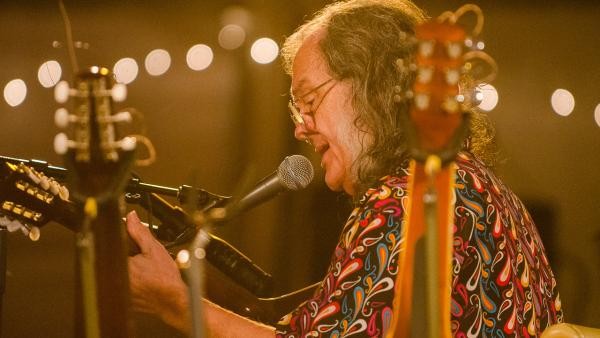
Could there be a better act to play the uniquely Northern California festival BottleRock than Santa Cruz’s own Camper Van Beethoven, with their conjoined twin band Cracker in tow?
After all, Camper is the group that on their 2013 album La Costa Perdida delivered “Northern California Girls,” perhaps the ultimate NorCal anthem—meaning an anthem that’s way too laid back to actually be an anthem.
“Right, it takes seven minutes to get where it’s going,” admits David Lowery, the frontman for both Camper and Cracker. “The drums come in a little bit like three times before they finally kick in about three-and-a-half minutes into the song.”
Lowery had already written his share of great California songs for both Camper and Cracker over the years—most recently, “Where Have Those Days Gone”—in which he mistakes Good Times’ astrologer Rob Brezsny for Thomas Pynchon in a bar in Mendocino County—but also “Big Dipper,” “Miss Santa Cruz County,” “Come On Darkness” and more.
But with his latest cycle, he’s outdone himself. While La Costa Perdida was a NorCal-influenced album, the songs on Camper’s latest, El Camino Real (which comes out June 3), are all set in, or otherwise related to, SoCal.
“We wrote these songs at the same time, then thematically we broke off most of the Northern California ones for the last album, and then kind of took these songs that were Southern California, and built another album around them, by adding another five songs or something like that,” says Lowery. “There’s kind of this opus going now, this theme going. There’s also a Cracker album, which comes out next year. It’s a double disc—one is Berkeley, one is Bakersfield. One is the punk side of the band, one is the country side.”
So, basically, four albums worth of California songs. And it all started because of…Joan Didion?
“I think it started with me and Victor [Krummenacher] and Jonathan [Segel] reading a bunch of Joan Didion,” confirms Lowery. He can’t remember which collection of essays specifically sparked it, but it would almost have to be the first section of Slouching Toward Bethlehem, in which Didion rips to shreds the “golden dream” of the Inland Empire—where Lowery, his Camper bandmates Krummenacher and Segel, and Cracker co-founder Johnny Hickman all grew up.
“Those essays really captured the feel of it. It’s not really that flattering about the area, but that’s sort of what people from the Inland Empire are proud of,” says Lowery. “There was actually some sort of referendum on a theme for the Inland Empire, like ‘Virginia is for Lovers’ or how California is the Golden State. And we all wrote in: ‘We will kick your ass.’”
The most noticeable difference between the two Camper albums is the overall feel—La Costa Perdida is more easygoing and gentle, while El Camino Real is darker and more intense, with a deep streak of paranoia that runs through songs like “The Ultimate Solution,” “It Was Like That When We Got Here” and “I Live In L.A.” Clearly, Lowery has very different views on the two halves of the state.
“Yeah, but I like ’em both,” says Lowey.
At the BottleRock festival in Napa May 30-June 1, Lowery’s bands will join an eclectic mix of five dozen other acts across four stages, including the Cure, OutKast, Weezer, LL Cool J, Robert Earl Keen, TV on the Radio and Smash Mouth. Some of those musicians have been around longer than Camper, while others benefited from the college-radio-to-gold-records trail that CVB and Cracker blazed in the ’80s and ’90s. It’s very likely, however, that Camper is the only band on the schedule that has been reunited longer than they were originally together. After recording their first album in Santa Cruz in 1985, the band imploded on a European tour in 1990. But after reforming in the early 2000s, they’ve been back together now for over a decade. Part of the reason, Lowery says, is that they all agreed to do the band on a more part-time basis, or at least do fewer tours, which puts less pressure on them as a group. But maybe it’s even simpler than that.
“Jonathan says it’s just because we’re not in our twenties,” says Lowery. “And it’s kind of true.”
Camper Van Beethoven and Cracker play BottleRock Napa, which runs May 30-June 1 at the Napa Calley Expo, 575 Third St., Napa. Tickets are $149 for single-day passes, $279 for a three-day pass, at bottlerocknapavalley.com. 877-435-9849.
—Steve Palopoli

Pleasures of the Flesh

0

I was going to start this by saying you should visit Petaluma’s Thistle Meats because the three-month-old butcher shop serves a lineup of beef, pork, goat, rabbit, and lamb sourced from a who’s-who of local, sustainable, and humanely minded producers and that the shop makes the most of that meat with nose-to-tail, use-every-part-of-the-animal butchery right down to freshly made stock from leftover bones.

And I was going to say that the meat cost more, yes, but compared to what—factory-farmed, antibiotic-jabbed industrial meat wrapped in cellophane on a Styrofoam tray?

I was going to say all that because those things are true, and important. Even in a slow-food wonderland like the North Bay, Thistle is a rarity. But that all sounds too prescriptive, like you should recycle and call your mother more often.

Instead, I think Thistle Meats is worth your time and money because it’s such a pleasurable experience. And pleasure is a great motivator.

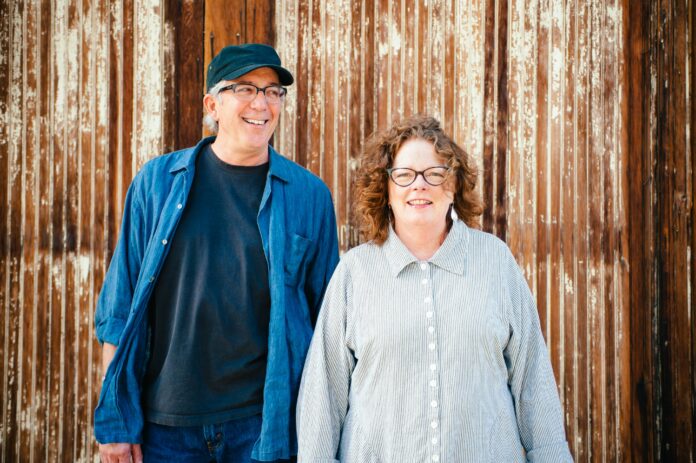
Thistle Meats takes the old school ideal of the butcher shop— wisecracking men in white aprons cutting meat to order—and does it one better. Actually, two better. There are three talented male butchers on hand who each has his specialty (sausage, butchery, charcuterie), but the store is owned and operated by two smiling, exuberant women, friends-turned-business partners, Lisa Modica and Molly Best. The shop is their vision come to life.

Best grew up in Petaluma and realized one day that her ag-friendly town was missing something.

“It’s Petaluma,” she says. “Why isn’t there a butcher shop?”

Modica came from Colorado to help her friend remedy that situation. Backed by a team of architects and builders, they gutted a North Petaluma Ave. storefront and turned it into a place of beauty. Exposed-brick walls, white subway tiles and a big butcher table give the light-filled shop a classic feel. The gleaming meat display showcases various cuts in an artful tableau that could serve as a subject for a latter-day Norman Rockwell. Bouquets of fresh flowers hang next to house-made sausages and local cheeses.

But this is a butcher shop, not a precious art gallery. The store breaks down whole animals from local producers like Stemple Creek Ranch, Green Star Farms and Monkey Ranch. The beef is dry-aged in-house. They make a variety of sausages. Salumi is coming. Look for the patties of harrisa-spiked goat sliders.

“That is the gateway to goat,” Best confides.

The small kitchen in back also turns out a head cheese to make you forget that speckled meat jelly from the supermarket. There’s a “sandwich of the day” served on a crusty ciabatta from nearby Della Fattoria bakery. In short, the shop is loaded with good food that checks just about every box: sustainable, local, humane. But what makes the place such a winner is that it is a work of passion and a celebration of the pleasures of good food.

It’s a delicious truth that the most hedonistic pleasures, like a sun-warmed tomato plucked from your backyard garden or a grass-fed ribeye raised by a conscientious local rancher, tend to be the best thing for the planet. We eat them not because we should—but because they taste so good.

Now go call your mother.

Let There Be Light

0

“What if the Bay Bridge was a canvas of light?”

The Bay Bridge is often overshadowed by its cross-bay counterpart. When conceptual visionary Ben Davis, founder of Illuminate the Arts in Larkspur, first posed this question, it seemed an ambitious project at best and an impossible dream at worst. Not to be deterred, Davis enlisted Leo Villareal, a New York-based sculptor and interactive artist, and dozens of technical and creative partners who spent two years conceiving and installing the Bay Lights, the largest LED light sculpture in the world.

Filmmaker Jeremy Ambers was there every step of the way. Now, a year after the Bay Lights opened in stunning fashion, Ambers’ new documentary, Impossible Light, captures the dreamers from far out idea to reality with breathtaking footage and inspiring interviews. In an interview, Ambers talks about the exhilaration and challenges that came with making his debut independent documentary.

“I’ve always felt a personal affinity to the bridge. It represents home to me,” he says. The Bay Bridge was the first sight of San Francisco that Ambers ever saw, coming down Route 80 in a U-Haul van, moving to the Bay Area from New York. “It’s an engineering marvel, and it deserves more attention.”

Living near the bridge in the South of Market neighborhood, Ambers was introduced to Ben Davis at a party in 2010, and that’s when Davis posed the impossible question to him.

“He started telling me about this crazy idea,” recalls Ambers. “His vision was to make the Bay Bridge into an abstract light sculpture.”

Ambers immediately knew he wanted to document the experience on camera.

In the film, Ambers follows Davis, artist Villareal, and the host of dedicated people who designed and constructed the 1.8-mile long light sculpture. The 25,000 LED lights that adorn the towers and suspension cables across the west side of the Bay Bridge are all individually programmed, creating sparkling displays that never repeat. The suspense in Impossible Light comes mainly from the arduous task of installing the light sculpture on a bridge that constantly shakes from traffic and 40-50 mph winds. “There is no book on how to do this, they pretty much made it up as they went along,” explains Ambers.

Completing such a daunting project mirrors Ambers’ own struggle to fund and complete the film. A self-described “one-man crew,” Ambers scaled the bridge himself several times to capture the vast scale of the work.

Ambers moves the film at a brisk and suspenseful pace, while composer Kevin T Doyle creates a stirring, emotionally resonant score. The result is a captivating document of a once in a lifetime art project.

Debriefer: May 28, 2014

0

Fillet of Feinstein

Sen. Dianne Feinstein’s Emergency Drought Relief Act of 2014, passed in the Senate last week, much to the dismay of salmon and their statewide advocates.

“This measure could decimate California’s salmon industry and seriously harm Oregon’s ocean salmon fishery,” says a statement from a coalition of fishermen and others led by the Golden Gate Salmon Association.

S. 2918 would allow more pumping from the San Joaquin River to farms and municipalities than government studies determined to be safe for juvenile salmon. The practice would continue until Gov. Jerry Brown lifts the state drought emergency. The fishermen’s concern is that the last drought emergency lasted three years, and that more pumping from spawning grounds could be catastrophic. —Nicolas Grizzle

The Mailer Man

A new mailer from Vote the Coast contains endorsements for Gov. Jerry Brown, Sonoma County District Attorney Jill Ravitch, state Controller candidate Betty Yee, Sonoma County auditor candidate Gary Wysocky and state Assembly candidate Erin Carlstrom. Vote the Coast notes, in very small print, that everyone but Brown paid for and authorized the endorsement from the organization.

It doesn’t note, however, that Carlstrom is the registered agent of Vote the Coast’s parent company, Tidal Voice, Inc. Her husband, Nick Caston, is its president, according to filings with the California Secretary of State.

The Vote the Coast website explains that “all the candidates we support have pledged to make protecting the coast and bays a top priority.”

Calstrom’s campaign manager, Carrie McFadden, says there is no conflict of interest and that the candidate used campaign funds to pay her husband’s company for the endorsement, “just like every other candidate on the slate.” —Nicolas Grizzle

Andy Lopez Update

An attorney working with the Justice Coalition for Andy Lopez contacted Debriefer about last week’s item on the circumstances around Sonoma County District Attorney Jill Ravitch’s review of Sheriff’s Deputy Erick Gelhaus.

Jonathan Melrod had been the source of information reported in local news outlets that said Ravitch was poised to make a decision on charges against Gelhaus, who shot Andy Lopez last year.

Melrod told Debriefer that he was signaled that a move from Ravitch could be forthcoming because of recent filings in federal district court over a separate lawsuit against the Sonoma County Sheriff’s Department.

That lawsuit was prompted by the Lopez shooting.

Melrod says that Ravitch had previously supported delays in proceedings on the suit, which rests on broad use-of-force issues at the sheriff’s office.

“In the past, the D.A. had sought a stay in the proceedings,” says Melrod. “A number of attorneys extrapolated that there was no declaration [by Ravitch] in support of continuing the stay to mean that a decision is imminent.”

Lopez activists launched a “Andy Lopez countdown clock” effort last weekend to highlight what they call Ravitch’s politically motivated foot-dragging on the case. Ravitch is up for re-election June 3.

—Tom Gogola

Sausage Party

Butchery is an art, but in an ironic twist, two former processing facilities, in Fulton and Healdsburg, have been turned into art galleries, leaving meat cutters with nary a space to show off their work. “There’s a demand again for locally raised meat,” says Jenine Alexander, co-owner of Sonoma County Meat Company. “We are providing the infrastructure for processing meat. It’s pretty simple, but it didn’t exist.”

The custom butcher shop holds its grand opening Saturday, celebrating with a whole smoked pig party open to the public. The event marks the first day their meat cases will hold retail cuts available to the public, from both local, highest-quality, pasture-raised animals and “economy priced” options from other parts of the country, says Alexander.

The rub here is that this is the only facility in the area that’s USDA and state/custom exempt. “We’re able to take in meat from hunters, FFA, ranch kills and all that, and we’re able to process it,” explains Alexander. “We’re also USDA-inspected, meaning we can also take meat coming from any USDA-inspected slaughterhouse like Marin Sun Farms, etc., and cut and wrap for resale at places like farmers markets.” There are only two other facilities in the state like this that she knows of, and it’s no riddle as to why: the permitting process is onerous.

The grand opening party takes place Saturday, May 31 at Sonoma County Meat Company. 35 Sebastopol Ave., Santa Rosa. 2-5pm. Free. 707.521.0121. —Nicolas Grizzle

Having a Ball

The history of baseball in the Bay Area goes beyond “Say Hey Kid” Willie Mays, the Oakland A’s World Series “three-peat” in 1972–74 and controversial home-run king Barry Bonds. It extends beyond the broadcasts, bobbleheads and billionaire owners—and it started long before the Major Leagues even came to town. North Bay fans fondly remember the Sonoma County Crushers, the independent Rohnert Park team that ran from the ’90s to the early 2000s and featured an ATV-driving Bigfoot lookalike as its mascot and a Major League MVP as its manager. But independent teams were playing here as far back as the 1930s, when the Sonoma Merchants entertained baseball fans around the Bay Area. They played games at Sonoma’s Arnold Field and San Rafael’s Albert Park. This summer, those parks will play host to a new era of North Bay baseball.

The Sonoma Stompers, an expansion team in the independent Pacific Association, are fixing up historic Arnold Field and will share it with high school baseball and football teams. The league has no connections to Major League Baseball and spun off from the larger North American Baseball League last year after beginning in 2012 with six teams. This year it includes four Bay Area teams: The Sonoma Stompers, San Rafael Pacifics, Pittsburg Mettle and Vallejo Admirals.

Fan Experience

In the 1950s, “all the towns would play against each other,” says San Rafael Pacifics general manager and co-owner Mike Shapiro. “Community-based teams would play on the weekends, and they would also play barnstorming teams.” Those visiting teams included major leaguers like Frank Robinson, Billy Martin and Satchel Paige.

“This is the real heart and soul of baseball,” he says.

“Being independent gives us freedom we wouldn’t have otherwise,” says Stompers general manager Theo Fightmaster. It’s also a way to get around the San Francisco Giants’ territorial rights granted by Major League Baseball, which dictates that MLB teams, including A, AA or AAA minor league teams, can’t call the area home without the Giants’ approval. The MLB recently quashed the Oakland Athletics’ decade-long attempt to move to San Jose, a city even farther away from San Francisco than Sonoma, citing the Giants’ territorial rights.

Between the drive, the parking, the ticket prices and the inevitable concessions, attending a major league game for anyone who lives north of the Golden Gate is an all-day affair that starts at around $100.

Independent teams, based in smaller markets, set their prices lower and plan fun and off-the-wall promotional events. At these games, rooting for the team is almost secondary to having a good time.

“I remember going to Crushers games, sitting right at the field, and when the game was over, 15 minutes later I’d be home and have no idea who won any of those games,” says Fightmaster. “If you can be competitive and create a great fan experience, you’re doing your job.”

Tickets for Sonoma Stompers games at the 1,300-seat Arnold Field start at $3, and the most expensive seat is literally on the field, includes food and drink service, and costs $20. At 1,200-seat Albert Park in San Rafael, tickets range from $10 to $25, and should the nuances of a pitcher’s dual in a scoreless game prove to be less than enthralling for younger fans, there are plenty of activities for kids like a separate Whiffle Ball park and between-inning challenges on the field.

As for promotions, creativity is the key. Pacifics media relations manager Vincent Espinosa says the team toyed with having a monkey throw out the first pitch this year, but the logistics might be too much to overcome. Last year, the Pacifics gave one lucky fan a casket, sponsored by a local funeral home, and during one game, umpires wore eye charts on the back of their jerseys, promoting a local optometrist.

This year, giveaways include shirts, beach balls and rally thongs, and there will be special appearances by Jose Canseco, Eric Byrnes, Jerry “the Beav” Mathers and, for the third consecutive year, “Spaceman” Bill Lee. Byrnes, 38, and Lee, 67, are former major leaguers who will play on the Pacifics on one-day contracts. Byrnes is donating between $500 and $100,000—that high figure is for a grand slam—to the Pat Tillman Foundation for each play he makes.

Players

It’s not all about gimmicks and former stars on one-day contracts. The players aren’t millionaires complaining on Twitter about instant replay— they’re mostly minor leaguers proving they’ve still got something left or former college stars looking for an opportunity to get signed by a pro team. The team finds them host families or shared rental spaces, and they make about $800 a month, says Fightmaster. “These guys are committed and devoted and understand that this is professional, this isn’t a recreation league.”

Joel Carranza, the Sonoma Stompers’ power hitting first baseman, has been playing professional baseball for four years. Like all other players, he says, he has a job in the off-season. Carranza is an administrative assistant as an elementary school, a job he loves. But his first love is baseball. “We’re out here, all trying to live the dream,” he says after the Stompers’ first-ever scrimmage against the Pacifics in Sonoma Sunday afternoon.

Not just anyone can walk on the field and play. “We’re a little bit more scrupulous than people expect,” says Fightmaster. “If you couldn’t play in college, you probably couldn’t play for us.”

“Players in this league are really playing for the love of the game,” he adds. “They understand that a big part of this level of baseball is community baseball.”

In Sonoma, that means accepting that fans can walk up to a waist-high fence and ask pitchers warming up in the bullpen what they had for lunch. And it means being OK with wearing a dress for “A League of Their Own” night, in reference to the movie about a women’s professional baseball league. And sometimes that means playing against guys who made it and made it big like Byrnes, who earned $10 million per year.

As for Carranza, he understands the nature of the league, and he’s OK with the promotional nights. “It goes hand in hand with baseball,” he says. “You’ve got to keep people into the game.”

Crushers

A pennant hangs in the Sonoma Stompers unassuming office in the city’s town square. It’s a pennant from the Sonoma County Crushers 1995 inaugural season, and it’s in mint condition—as if the season started last week. “I put it up as a reminder of the legacy the Crushers left in Sonoma County,” says Fightmaster, “and to try motivate us to try our best to recreate the great atmosphere they created.”

The Crushers, who existed for eight years as part of the Western Baseball League, still evoke fond memories. Fightmaster says the comment he hears most when he talks about Sonoma’s new team is, “You’re bringing back the Crushers?” Well, not exactly. Instead of the Abominable Sonoman teasing the opposing team between innings, it will be Stomper the Bull, a mascot rescued from the former San Francisco Bulls minor league hockey team.

The Rohnert Park team had its share of fun promotions and former Major Leaguers, too. Former San Francisco Giant Kevin Mitchell, the National League MVP in 1989, signed on as a player-coach for the Crushers final two seasons, giving fans a chance to snag autographs and watch him hit the daylights out of the ball—and sometimes opposing players (he was suspended twice for the latter as Crushers manager).

The Crushers were always competitive. They won a league championship in 1998, and pitcher Chad Zerbe, who later went on to record a win in the 2002 World Series with the Giants, started out as a Crusher. Games were consistently well attended throughout the team’s history, but the Crushers never played after the 2002 season when the WBL folded. Crushers Stadium, built in Rohnert Park in 1981 for the California League’s Redwood Pioneers, was razed in 2005 for a shopping center that was never built, and attempts since then to bring baseball back to the North Bay have failed.

The Business
of Baseball

Shapiro, who also co-owns the Stompers, knows the Crushers’ saga well; as a lawyer, one of his clients was looking into buying the team, and Shapiro did a lot of research into the league. “Bob Fletcher, who owned the Crushers, did a terrific job of entertaining the fans and making it a great experience,” he says. “But a league is only as strong as its weakest owner. If you have one weak owner in the league, it jeopardizes the entire league.

“What happens to a lot of these independent leagues is you get these owners who become absolutely enamored with the idea that they are going to be a baseball team owner, and they have no business being a baseball team owner,” says Shapiro. “They get swallowed up by the whole sizzle of it and lose all their business sense.”

Shapiro has been involved with MLB teams for decades, including a stint as counsel for the San Francisco Giants. “We’ve done a lot of thinking and a lot of smart things to ensure that the mistakes of the past aren’t repeated.”

“There’s no ‘business of baseball,'” Fightmaster says. “There’s marketing, public relations, hot dog and beer businesses, and bringing those elements together creates the element of a baseball game.” The actual sport is secondary. “We’re not competing with the A’s and the Giants in terms of product on the field,” says the Stompers’ general manager. “The product you see on the field is ancillary to the operation. You’re creating an atmosphere.”

Let It Bleed

0

I like dry, pink wine because it’s cool, crisp, and mostly honest. Ready within months of the vintage, it delivers the fresh flavor of the grape with little wait and no fuss.

There are those who would make a fuss over whether whole-cluster pressed rosé is more authentic, or more French than that made from the saignée method, which sounds a lot more honest when translated from the, er, French—it means the juice has been “bled” from a tank of crushed grapes. That’s why a lot of rosé is available in limited quantities—it’s basically a byproduct, but one with a respectable tradition. For me, Rhône grapes like Syrah and Grenache are particularly well suited to the task. But when life, or current trends in the wine market give you Pinot Noir, make rosé of Pinot Noir.

Red Car 2013 Sonoma Coast Rosé of Pinot Noir ($25) Pressed whole cluster, aged in both stainless steel and neutral oak, it’s the palest blush of salmon pink. Lush nose of strawberry, pink rose, orange sherbet; maybe fresh sourdough. Dry and searingly acidic, it’s a tough customer on its own—maybe better with brunch fare—and I can’t help but wonder if it would be happier if it was sparkling and aged in the company of its dead yeast for several years. Still, quality stuff, and my top pick. 12.7 percent abv.

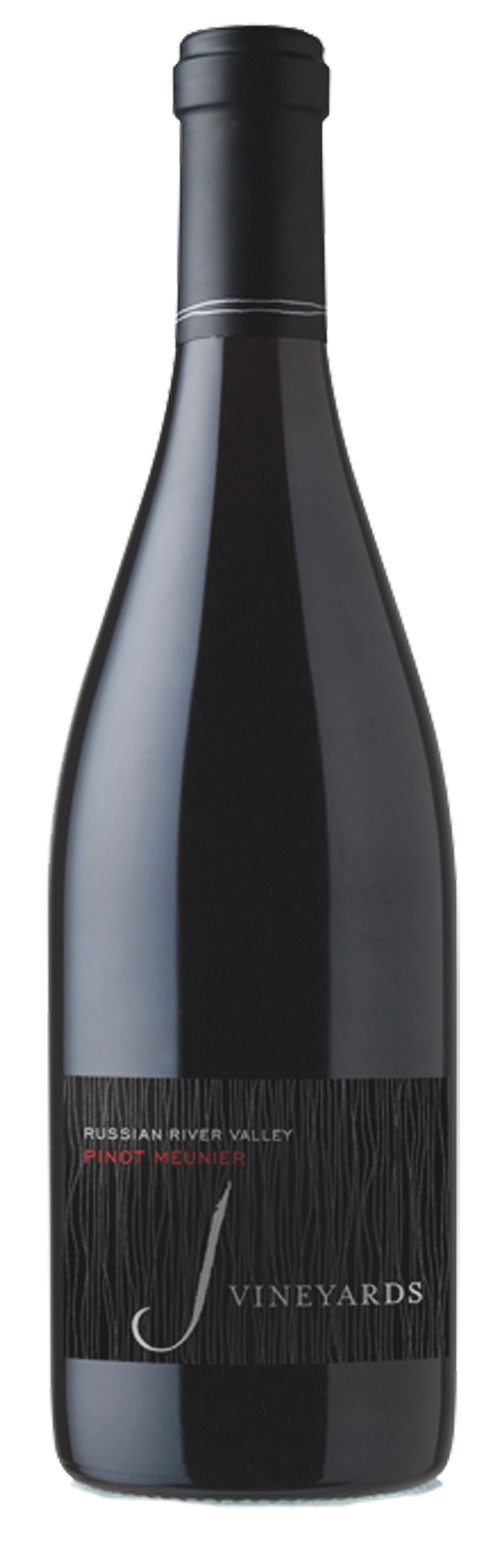
J Vineyards 2013 Russian River Valley Vin Gris ($20) Mostly saignée, pale hue, with strawberry candy and pink bubble gum aromas; ditto on the palate. Crisp, dry, with weight—maybe from the higher alcohol. Just imagine a cold slice of strawberry-flavored honeydew melon, there’s the gist. 14.3 percent abv.

Balletto 2013 Russian River Valley Rosé of Pinot Noir ($18) A blend of whole-cluster pressed and free run juice. Reticent aroma, like a strawberry daiquiri on the other side of the ice bar at an ice hotel. Some clean, fresh, vinous flavor, but a little watery. 13.9 percent abv.

Fort Ross 2013 Fort Ross-Seaview Rosé of Pinot Noir ($24) Saignée. The deepest hue of the lot, rhubarb red, with Red Vines and raspberry candy, plus a hint of smoke and earth reminsicent of a light, “red wine” Pinot Noir. Still, the chewy, cherry skin flavor remains fresh. Good for rich cheeses and salumi. 13.5 percent abv.

Toad Hollow 2013 Eye of the Toad, Sonoma County Dry Rosé of Pinot Noir ($11.99) “Third pressing.” Good pink color. Bubblegum snaps the nose; the ice melted in your crantini. Refreshing, dry, if a bit watery, but at 11.5 percent abv it won’t hurt much to knock back a few cold glasses at the end of a hot afternoon.

May 31: Events Beyond Bottlerock

All of Napa is getting into the swing of the area’s biggest music festival of the year. Bottlerock is going to dominate the Napa Valley for the weekend, and local venues and restaurants know that if you can’t beat ‘em, join ‘em. Oxbow Public Market (610 First St) offers Bottlerock breakfast specials all three days with live music from...

June 1: Sonoma County Pride Parade

Sonoma County Pride returns to the Russian River this year for a weekend-long celebration of the LGBTIQ community, friends and families (“IQ” stand for intersexed, questioning). The event boasts dozens of local merchants and businesses offering special events and extended hours for the “Free to Be” themed festival. Highlights include dance parties and appearances by Pandora Boxx of “Ru...

New Headline

Bottlerock Preview: Camper Van Beethoven

Could there be a better act to play the uniquely Northern California festival BottleRock than Santa Cruz’s own Camper Van Beethoven, with their conjoined twin band Cracker in tow? After all, Camper is the group that on their 2013 album La Costa Perdida delivered “Northern California Girls,” perhaps the ultimate NorCal anthem—meaning an anthem that’s way too laid back to...

Pleasures of the Flesh

I was going to start this by saying you should visit Petaluma's Thistle Meats because the three-month-old butcher shop serves a lineup of beef, pork, goat, rabbit, and lamb sourced from a who's-who of local, sustainable, and humanely minded producers and that the shop makes the most of that meat with nose-to-tail, use-every-part-of-the-animal butchery right down to freshly made...

Let There Be Light

"What if the Bay Bridge was a canvas of light?" The Bay Bridge is often overshadowed by its cross-bay counterpart. When conceptual visionary Ben Davis, founder of Illuminate the Arts in Larkspur, first posed this question, it seemed an ambitious project at best and an impossible dream at worst. Not to be deterred, Davis enlisted Leo Villareal, a New York-based...

Debriefer: May 28, 2014

Fillet of FeinsteinSen. Dianne Feinstein's Emergency Drought Relief Act of 2014, passed in the Senate last week, much to the dismay of salmon and their statewide advocates. "This measure could decimate California's salmon industry and seriously harm Oregon's ocean salmon fishery," says a statement from a coalition of fishermen and others led by the Golden Gate Salmon Association. S. 2918 would...

Sausage Party

Butchery is an art, but in an ironic twist, two former processing facilities, in Fulton and Healdsburg, have been turned into art galleries, leaving meat cutters with nary a space to show off their work. "There's a demand again for locally raised meat," says Jenine Alexander, co-owner of Sonoma County Meat Company. "We are providing the infrastructure for processing...

Having a Ball

The history of baseball in the Bay Area goes beyond "Say Hey Kid" Willie Mays, the Oakland A's World Series "three-peat" in 1972–74 and controversial home-run king Barry Bonds. It extends beyond the broadcasts, bobbleheads and billionaire owners—and it started long before the Major Leagues even came to town. North Bay fans fondly remember the Sonoma County Crushers,...

Let It Bleed

I like dry, pink wine because it's cool, crisp, and mostly honest. Ready within months of the vintage, it delivers the fresh flavor of the grape with little wait and no fuss. There are those who would make a fuss over whether whole-cluster pressed rosé is more authentic, or more French than that made from the saignée method, which sounds...
11,084FansLike
4,446FollowersFollow
6,928FollowersFollow