Hyperlocal

0

Early this spring, there was a knock at my door. It was Lowell Sheldon, owner of Peter Lowell’s restaurant in Sebastopol. He wanted to know if I would trade some of the lemons from my prolific backyard tree for a meal.

Of course I said yes. I couldn’t use all the lemons, and there was something cool about sharing them with a local restaurant. While this winter’s killer freeze put a big dent in my lemon crop, Sheldon was able to fill two five-gallon buckets. In return, I got a great breakfast. I felt like I played a small role in the lemon-curd tarts the restaurant made.

Turns out Sheldon sources a lot of his produce this way. Once he was out for a run and discovered a pineapple guava tree overloaded with fruit. Now he harvests some of the crop each year. He also barters for neighborhood figs, persimmons, quince, peaches, apples and other fruit.

Restaurants that tout their local and seasonal produce are now the norm. Defining local is a gray area, but not at Peter Lowell’s. They are hyperlocal. They don’t just serve produce from Sonoma County. The focus is on fruit, vegetables, fish and meat from western Sonoma County. Some of that comes from the numerous small-scale farms that dot the area. Some comes from Two Belly Acres, the restaurant’s two-acre farm on Green Valley Road. And some comes from people like me, residents with a tree or bush that overflows with fruit once a year.

“During certain times of the year there is always going to be a glut of something,” Sheldon says.

Now that the word is out about restaurant’s west-of-101 sourcing, customers and local residents call when they have a surplus crop.

This gleaning started out as an economic necessity. When the restaurant opened in 2008, Sheldon’s commitment to locally sourced ingredients proved costly. He grew up in Sebastopol and his family had several fruit trees. Why buy apples when he could harvest a few boxes from his mom’s tree? Ditto bay leaves and lemons. In time, that neighborhood sourcing became part of the restaurant’s business plan. While food costs are still high, chef Natalie Goble says seeking out neighborhood growers makes economic sense.

“There is a real sense of ownership and they also help us keep the doors open.”

Of course there is a culinary benefit, too.

Goble waits for local tomatoes or blueberries to ripen to their “absolute best.” The produce doesn’t spend time in transit or in a distributor’s refrigerated warehouse.

“We’re letting the fruit or vegetable really shine,” she says.

Fish and meat comes from local sources, too, but those are commercial suppliers. For legal and practical reasons, there aren’t any backyard sources for beef or lamb. The restaurant also purchases some of its produce from local distributors, especially during the winter months.

There are challenges to the restaurant’s über-local focus. Some diners are miffed when their burger doesn’t come with a slice of tomato, even if they are available in warmer climates just a few miles to the east.

“The challenge is usually waiting,” Goble says.

But it’s food worth waiting for.

Recipe: Cherry Almond Tart with Pineapple Guava Cream

This tart recipe is a little tricky at first but once mastered it is easy and versatile. Substitute cherries for apricots, plums, raspberries, or Asian pears. The wetter the fruit the harder it can be so try to use dry dryer fruit.

Tart Shell

2.5 cups whole wheat pastry flour

2 sticks butter

1 cup sugar

3 whole eggs

1 pinch salt

In a food processor, add flour and butter and cut till relatively even. Add sugar and salt and pulse. Add eggs and pulse till evenly distributed but not overly mixed. Remove from food processor and divide into 2 halves shaped in discs. Wrap both tightly in plastic wrap. Refrigerate 1 for 1 hour. Freeze the other for next time (up to 2 weeks)

Once thoroughly chilled remove and grate into flakes on course grater. Gently spread 1/2 in removable bottom tart pan and use plastic wrap to gently press into bottom of pan. Once evenly pressed spread remaining around the edges and press to make walls of tart. Once you are happy with its looks, bake for 10 minutes or until light golden brown. Remove and gently compress bottom and sides with the back of a spoon without overly working. Let cool.

Almond Filling

1 3/4 cup pulverized almonds

1 1/2 cup sugar

3 sticks unsalted, softened butter

3 eggs

Combine butter and sugar in kitchen aid mixer until creamy. Add pulverized almonds and continue to beat adding 1 egg at a time until filling is light and fluffy.

1 lb fresh cherries (pitted with with a pitter or by halving them)

Pat cherries dry and spread in tart shell. Gently spread 1/2 of filling over cherries and bake at 300 for 40 minutes, checking after 25 minutes. Make sure to put foil or a baking sheet under because butter will leek out. Top should be hardened slightly having a light golden brown color. Remove and let cool for at least 1/2 hour. Use second half of tart filling with remaining tart shell within 2 weeks.

Serve seasonally with whip cream. We like to steep different flowers and our cream. In early summer pick Pinapple Guava Flowers, using spongy petals(taste them as they are delicious fresh). Steep 20 picked flours in 1 cup cream for 10 minutes. Let cool, chill and whip with a touch of sugar.

Peter Lowell’s, 7385 Healdsburg Ave., Sebastopol. 707.829.1077.

Tested

Chris Mason Johnson’s low-budget romance
The Test does a startlingly good job of evoking San Francisco in 1985, not through CGI, but by finding the corners that haven’t changed in 30 years.

Johnson keeps the camera up on the rooflines of the Upper Castro’s Victorians, scoping the wedding-cake turrets, cornices and decorated gables. It’s a tight yet handsome story of the early days of HIV testing, when the form of the plague and its rules were starting to materialize.

The sonic-scape helps transport you back, with an original soundtrack by Ceiri Torjussen and a dozen oldies—a lot of Martha and the Muffins and the-lady-or-the-tiger menace of Laurie Anderson’s spoken word piece “Born, Not Asked.” The Bronski Beat’s lament “Smalltown Boy” gives us as much backstory as we need about the callow kid Frankie (Scott Marlowe), who was likely bullied out of some nice town by some nice people.

Frankie is an understudy in the McManus dance troop; he has a growing crush on his fellow dancer, the swarthy and sardonic Todd (Matthew Risch). Todd is open about his side-job as a hustler, and that makes Frankie hold off—he has a fear of disease, made manifest in the subplot about the mouse problem Frankie has in his flat.

The Test is a dance movie as much as it is reminiscence. We see the tensions of Frankie’s life through the sort of moments Degas caught, the dancer’s stretches and warm-ups, and the intimate moments—in Frankie’s case, searching among his freckles for a hidden sarcoma. The men of the ensemble are in a piece called “After Hours,” a
pretty unmistakable dance about cruising. Sidra Bell, who did the choreography, may have been trying to evoke the contortionism of the Twyla Tharp era.

According to Johnson, the title has a trifold meaning, with the ultimate test of responsibility being the last. I don’t know if that test is as vital—who could ever stay faithful in San Francisco? Still, this is a memorable movie about the city’s edge-of-doom days, the quiet fear and the remorseless beauty.

‘The Test’ opens June 6 at Rialto Cinemas, 6868 McKinley St., Sebastopol. 707.525.4840.

A-to-Z Bills

0

Assemblyman Wesley Chesbro’s shellfish resolution would help build the state’s aquaculture industry. It awaits a committee vote June 17. (AJR 43)

Bicycle taxes in a bill by Sen. Mark DeSaulnier would fund trails with a new tax. It pedaled to the Assembly May 29. (SB 1183)

Campaign-finance reform was tackled by Assemblyman Bob Wieckowski, whose resolution has been languishing in committee since April. (HR 37)

Dogs in restaurants! Assemblywoman Mariko Yamada’s bill would let localities welcome dogs in alfresco areas. Keep your paws crossed as the Senate considers it. (AB 1965)

Electric cars are coming, and your landlord has to help set up a charging station, per a bill from Assemblyman Al Muratsuchi. It sped to the Senate last week. (AB 2565)

Fish identification at the grocer’s can be a little . . . fishy. Sen. Alex Padilla would mandate the labeling of yer lingcod. It swam through the Senate, 36–0. (SB 1138)

GMO labeling struck out.
Sen. Noreen Evans’ bill failed by two freaking votes. (SB 1381)

Hound-dog hunting for bears is a pet issue of Assemblyman Tim Donnelly, whose attempt to overturn a ban on dogs-hunting for bears failed. (AB 2205)

Immigration was taken up by Assemblyman Luis Alejo, who would end the deportation of tax-paying immigrants. His bill has yet to cross the border out of the Assembly. (AB 2014)

Juvenile justice initiatives include Assemblywoman Nora Campos’ inclusion of youth in corrections programs. But it’s been incarcerated in the Senate since May 8. (AB 1920)

Low-income persons can thank Yamada for her bill offering water-bill help. Her bill flowed out of the Assembly and headed to the Senate. (AB 1434)

Marijuana-dispensary laws are a mess, and Sen. Lou Correa created a single set of state regs in a bill that passed the Senate last week and awaits a toke in the lower chamber.

Naloxone’s known to save addicts, and Assemblyman Richard Bloom’s bill makes it easier to access the drug. There’s a Senate hearing June 9. (AB 1535)

Oil vey! Sen. Holly Mitchell’s fracking moratorium bill failed to make it out of the Senate last week. (SB 1132)

Paid sick leave is the subject of a bill from Assemblywoman Lorena Gonzalez, which passed May 29. Your turn, senators. (AB 1522)

Reverse mortgages prey on the elderly and Jose Medina offered an Assembly bill to reform the practice. It passed; a Senate hearing was scheduled for June 4. (AB 1700)

Sen. Bill Monning wants to slap a warning on your soda, and his bill passed the Senate last week, 21–13. This Coke’s for you, Assembly. (SB 1000)

Trafficking in humans: bad. A Senate bill would impose a three-day jail bid for johns. It passed May 27 and awaits a happy ending in the Assembly. (SB 1388)

Unsafe handguns include semiautomatic and single-shot pistols in Roger Dickinson’s bill adding the weapons to a state registry. The Assembly agreed and sent the bill to a Senate committee for a June 10 shootout. (AB 1964)

X-rated actors would have to engage in safer-sex practices under a bill from Assemblywoman Isadore Hall. A 48–13 vote sent it over the hump to the Senate. (AB 1576)

Ziplines at Yountville veteran’s home prompted Yamada’s bill to regulate the state VA. Her bill zipped through the Assembly
May 28. (AB 1580)

Music Maker

0

John Vanderslice is all business when it comes to quality audio. The San Francisco–based singer, songwriter, producer and studio owner is a champion of analog recording, vintage gear and 45 rpm vinyl.

When Vanderslice first opened his now iconic Tiny Telephone studio in 1996, it was a co-op rehearsal space, but it quickly became a recording space after the co-op dissolved and Vanderslice took the reins. Tiny Telephone recently opened a second studio in the city, and a third Oakland location is in development, all strictly dedicated to analog goodness.

In addition to his day job, Vanderslice has also carved out an impressive musical body of solo albums, with 10 releases to his name since 2000. His latest, 2013’s Dagger Beach, is also Vanderslice’s first self-released album after moving away from his previous label, Dead Oceans. A songwriter who regularly stays well within the indie rock and alternative circles, Vanderslice marks new territory on Dagger Beach, a spacey and surprisingly jazzy departure, and one of his best efforts to date.

This all means Vanderslice is an exceedingly busy man and has few live dates planned for the summer, yet somehow S.F. promoter extraordinaire KC Turner lured Vanderslice up to the North Bay for a special cookout concert this week alongside acoustic songwriter Amber Rubarth. It’s expected to sell out, so don’t sleep on the news.

John Vanderslice performs Sunday, June 8, at Hopmonk Novato, 224 Vintage Way, Novato. 4pm. $10–$25. 415.892.6200.

Always Open

Having a social venue with an eclectic gathering of people, a diverse culture and a wide range of stories to share is vital to our community.

The concept of peace and sustainability can truly be nourished in a collective of people who trust one another and build strong bonds based on simple conversation that involves listening, learning and sharing. Santa Rosa’s Arlene Francis Center for Spirit, Art and Politics was founded with these ideas in mind.

It’s fun to be yourself here. Whether you are having a bad hair day, going through a lot personally or are just super-stoked about life 24/7, you will leave this place knowing your time was well spent.

The center is a nonprofit organization run with the help of dedicated volunteers. We host benefits for other nonprofit groups and classes taught by members of the community. Our Wednesday weekly open mic is always a blast, and if you walk by and see Bruce on his laptop, you can pretty much bet on him opening the doors to you, even if we’re “technically” closed.

In addition to entertainment, another primary focus of the AFC is the encouragement of lifelong learning. We have special guest speakers, spoken word events, jazz ensembles, dance parties, free-style artists, folk singers, punk singers, independent film screenings, trapeze artists, symphony orchestras, comedy shows, rock musicians, Black Panther parties, world-renowned poets, flamenco dancers and, for the first time ever, the center’s director, Martin Hamilton, will be staging Shakespeare.

Groups such as Americans for Safe Access, Justice Coalition for Andy Lopez and the Heru Network meet to discuss issues. There’s also a weekly improv jam, Saturday morning capoiera, and Green Party and Homeless Task Force meetings. And every Wednesday afternoon, the break-dancing crew takes the floor.

At the Arlene Francis Center, the space is yours. The ideas are free, and the possibilities are endless.

Angela Gonzalez is assistant to the director of the Arlene Francis Center.

Open Mic is a weekly feature in the ‘Bohemian.’ We welcome your contribution. To have your topical essay of 350 words considered for publication, write op*****@******an.com.

Naughty by Nature

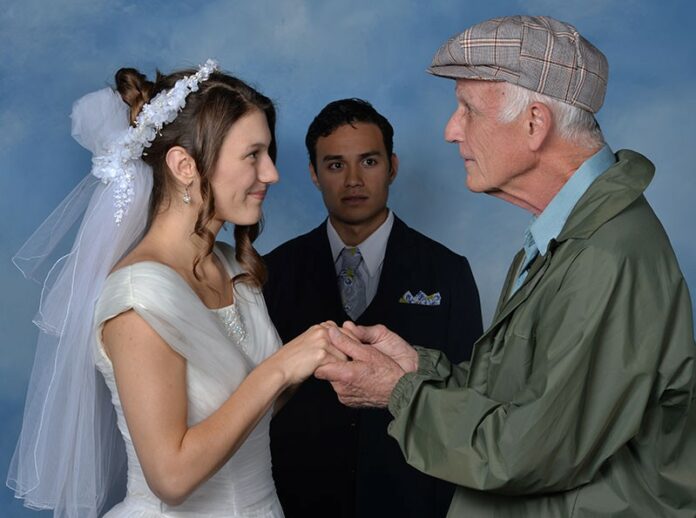
Mozart’s comic opera The Marriage of Figaro was composed 228 years ago, and was based on a play so openly and outrageously sexual that it was banned in Vienna.

Though Mozart, with librettist Lorenzo Da Ponte, toned down the licentious stuff just enough to slip it past the censors of the day, the story retained much of its naughty nature, and became an enormous hit among opera-goers of the 18th century. Of course, what once was considered shocking is often only moderately so today. That said, The Marriage of Figaro, even in 2014—as evidenced by Cinnabar Theater’s hilarious and at times ingenious staging—is still pretty darn filthy.

And it still sounds great.

The 17-piece orchestra, under the crystal-clear direction of Mary Chun, nails the rousing (and instantly familiar) overture, and does wonders with Mozart’s playfully intricate score. The principal singers (many of them professional opera talent with New York, San Francisco and even Carnegie Hall experience) are also marvelous actors.

Under the unceasingly clever direction of Elly Lichenstein, the cast, including a large ensemble of local veterans, is given a string of funny, silly, antic, outrageous and delightful things to do, including some inspired physical comedy. This is definitely not one of those “stand there and sing” kinds of operas. And with a sharp English translation by Jeremy Sams, the jokes in the libretto land with precision, ease and pitch-perfect timing.

Figaro (an inspired Eugene Walden) is a servant in the household of the morally flexible Count Almaviva (Christiaan Smith-Kotlarek), who’s married to the beautiful, steady-hearted Countess Rosina (Bharati Soman). On the day of Figaro’s wedding to the countess’s maid, Susanna (Kelly Britt), a series of outlandish coincidences and calamities occur, most of them having to do with someone maneuvering furniture and circumstances in order to end up sleeping with someone.

In four cleverly coordinated acts, the duke attempts to seduce Susanna, who conspires with the countess and Figaro—and the count’s deliciously randy yet sincere page Cherubino (Cary Ann Rosko)—to exact their comic revenge. Subplot upon subplot leads to some surprise twists and the requisite happy ending, all layered in and around Mozart’s gorgeous music—and the occasional erection joke.

Still as smutty after all these years, and just as irresistible, Cinnabar’s Marriage of Figaro is scandalously good fun.

Rating (out of 5): ★★★★½

Live Review: Bottlerock Day 1, 2, (3)

Robert Smith of the Cure: Aqua Net's crowning achievement

Friday, May 30: Day One
The weather was the first surprise of the weekend. Friday offered a cool, even breezy afternoon at the Napa Valley Expo that turned to a chilly evening. Five stages, including one for VIP ticket holders only, played to 24 bands throughout the day. It was a relatively calm affair that would see less attendees than following day, but for the most part, the logistical aspects of food and drink lines and bathroom cleanliness was kept in good order. Some festivalgoers themselves, even, helped throw away garbage and just be generally decent—maybe Headliners like the Cure and Sublime with Rome (the guy, not the city) simply brought out equal parts of older and more sedated fans who were content to throw down blankets and relax.
Jewish reggae-rapper Matisyahu delivered an effortless and nicely rocking set of smooth jams and authentic beats, many from his upcoming album, “Akeda,” released this week. TV on the Radio wowed me with a continuously intensifying set of eclectic indie rock and soulful electro pop. Gin Blossoms brought the “county fairgrounds” vibe to, well, the county fairgrounds. Overall, crowds seemed to care about the fact that ‘90s radio rock leftovers filled out the lineup. They sang along with “Follow You Down,” and clapped, mostly in time, with the band through their back catalogue of, ahem, lesser-known hits.
The Cure really was the gem of this show. They are one of my longtime favorites, yet I’ve only been able to see them live twice before, and it’s been 7 or 8 years since the last time. They were amazing. No way around it. They sounded perfect, and their set list was a mash of surprises and staples from 30 plus years of new wave, postpunk, emo-goth melodic pop angst. Robert Smith’s hair was a glorious tangled web of Aqua Net, and Napa winds and Simon Gallup’s tight denim and slicked back hair still make him look like he stepped out of a 1982 Clash video.
The Cure opened with “Shake Dog Shake,” a surprise choice off their 1985 album, The Top. They played for two-and-a-half hours with hits old and new, making me realize how much I do, in fact, like their more recent material—pitch-perfect pops songs and raw, soaring rock riffs alike. It was only when the festival had to cut the power at 10pm (the price one pays for hosting an outdoor fest in a Napa neighborhood) that the Cure finally left the stage, and only after the crowd of about 10,000 helped Smith finish singing the band’s encore of “Why Can’t I Be You?”
Saturday, May 31: Day Two
Smash Mouth rocked the house like I could never have expected. I was having fun, dammit—at a Smash Mouth show! And lead singer Steve Harwell was cursing Third Eye Blind—who was playing at the same time on the main stage—in a fit of ‘90s Civil War. It felt too weird, and I had to get out of there. But I could barely move, suddenly finding myself in the middle of a horde of festival goers packing tighter and tighter with every song. And then it hit me: there are far more people here today than yesterday.
Estimates on Saturday were that 30,00 people came out to the Napa Expo, about 10,000 more than the most optimistic estimates of the previous day. That wasn’t the only difference, though—the whole vibe of Saturday different. This was a younger crowd—beefier, more seasoned for alcohol. Beer and wines lines were a dozen deep by 2pm, twice that by 4pm. Food trucks felt the pinch as wait times for orders hit a half hour. Bathrooms got gritty. The whole thing got gritty. Suddenly, people were competing for space, competing for views. There was a tension in the air.
The day started out well enough; Petaluma band Trebuchet played a fun set of indie folk rock with great harmonies and a cute little ukulele. Brooklyn indie duo Matt & Kim were the highlight of the early afternoon, running out to meet the crowd from the main stage and practically beaming throughout their energetic and hip set of synth rock. Drummer Kim Schifino’s smile infected the whole crowd; I’ve rarely witnessed a duo with the ability to get a party going more effectively than these two. Los Angeles noise punks No Age blew out some eardrums, but sounded awesome on the smaller stage, right before Smash Mouth started taking jabs and downing drinks that weren’t just Coca-Cola.
After that, the mood seemed to change. Couples were bickering more around me; people were stumbling—either from not eating right or not hydrating enough in the sun after drinking heavy craft beers and Napa wine. I started to watch my step, if you know what I mean.
But, I’ve totally buried the lead here. The recently reunited hip-hop dream team of Andre 3000 and Big Boi, aka Outkast, was introduced to the crowd in a giant cube, like Magneto at the end of that first X-Men movie. Soon enough, they escaped their confines to perform a blistering, dizzying and all-out electrifying set of hits. Happily, the masses that bottlenecked the fields unified under the banner of songs like “Hey Ya!” and “B.O.B.” The duo has been headlining many festivals lately, including Coachella, and the general consensus is that they were the big “get” of Bottlerock (they choose the Napa festival over the larger Outside Lands festival in San Francisco).
The other big evening draw was classic rock sister act Heart. Anne and Nancy Wilson proved that they’ve still got it. They sounded amazing and looked spectacular—it was a rock and roll show every step of the way. Like the Cure, they were cut off at 10pm, and Outkast has just wrapped minutes prior on the main stage. That’s when 30,000 sweaty, tired, dirty, possibly drunk festival goers converged into mass chaos.
Everyone was trying to form one line to get to the shuttles that would take them the three miles to their cars at Napa Pipe. There was no supervision for this. I got the bright idea to leave an hour early, and it still took 45 minutes to go from festival gate to car door. I heard reports of people waiting three hours, and fights breaking out over line cutting.
Sunday, June 1: Day Three
Eric Church, Barenaked Ladies, Spin Doctors: meh. Nothing on this day really caught my attention other than, maybe, Thee Oh Sees or Deerhunter. It would have been awesome to see LL Cool J, if for no other reason than to say I did it, but after two long days of escalating madness it was best I stayed out of Wonderland on Sunday. I must say, though, the festival was much more fun than I had anticipated. Would I try it again next year? Maybe, we’ll have to see the lineup—if the Crash Test Dummies are going to be there, I’ll buy a ticket right now.
—Charlie Swanson

Live Review: Bottlerock Day 2 with Outkast, Weezer & Smash Mouth

Outkast at BottleRock Festival. Photo by Matt Crawford.

It’s 2am and this is what I’m feeling after getting home from Bottlerock’s biggest and best day: tired, deaf, a little hungry, tired, thirsty as hell, musically fulfilled, nostalgic, sore, tired, and, most of all, happy.

Local Bands Play Big Part of Bottlerock Lineup

0

The three-day extravaganza known as Bottlerock began today in Napa, the city known more for restaurants and winetasting than music. To wit, the festival, now in its second year and under new ownership, has focused more on music this year—in addition to bringing internationally famous acts like the Cure and Outkast to Napa, there will also be over two dozen local bands playing at the festival, meaning that over one-third of the bands playing will be from the Bay Area.
This isn’t a new idea—local acts were featured at last year’s festival—but there are more of them this year, and it’s more than just an afterthought. Latitude 38, the company behind this year’s Bottlerock festival, says including local bands was the plan from the start.
“A lot of people didn’t know there were a lot of bands in Napa,” says Latitude 38 CEO Dave Graham. He says they’ve made a new tradition of kicking off the festival with a local band on the main stage. This year, it’s the Napa–based group Grass Child.
On Saturday, the first band to strum a chord, pluck a note, or bang a drum will be local favorites Trebuchet, the indie-folk quartet known for its original songs with glorious harmonies and wide-ranging instrumentation. They’ll be playing on the City Winery Lounge stage at Noon, greeting attendees just inside the main entrance with their explosive tunes and catchy melodies.
The opening slot at a festival is a blessing and a curse. “We don’t have any headliners to contend with,” says Eliott Whitehurst, the band’s mandolinist, guitarist and lyricist. “But at the same time, it’ll be a challenge because we’ve never been in that situation where it’s like, ‘Oh, look there’s all these people,’ and they continue to walk by.”
Whitehurst, who lives in Napa, says he is excited for this year’s festival—not in the least because he’ll be playing in it, but also because the concerns of last year are being mitigated. “Last year, we actually got out of town,” he says. “People in Napa were of one of two minds: either this is going to be awesome… or oh my god, we do not have the infrastructure to handle what is going to be thrown at this city.” With a festival expecting 30,000 people per day for an entire weekend, in a city of 78,340, that’s to be expected. Though he’s sure there will still be challenges, Whitehurst says, “I’m not as afraid of it this year as I was last year.”
Local acts playing in the festival come from as far away as San Francisco, and Whitehurst says about 150 bands sent entries to Thea Whitsil, who also organizes the annual Napa Porchfest, to fill 32 spots. Instead of having an “in” or being owed a favor, as is the case when so many bands are booked for a festival like this, Trebuchet and the other local acts were picked on merit. “That’s why we’re so stoked on it,” says Whitehurst, who knows the industry well, coming from a musical family.
The group made a one-shot montage video as an homage to the big names at Bottlerock, rearranging pieces of about a dozen songs into their own style. It was a hit—garnering over 1,200 Youtube views in just over two weeks. “It didn’t take us too long,” says Whitehurst. “We practiced for a day and maybe did 10 shots of us doing it live.” The festival is filled with nostalgia for those who grew up with the soundtrack of the ‘90s. Whitehurst is no exception. “I can’t deny how fun it will be,” he says. Outkast and Weezer will be great, and, because they’re a sure-fire way to heat things up, he’s also stoked to see Blues Traveler.

Throwback Thursday: Satchel Paige and San Rafael’s Albert Park

Satchel_Paige.jpg

In 1948, Hall of Fame pitcher Satchel Paige was the oldest rookie to play in Major League baseball when he signed with the Cleveland Indians at 42, one year after Jackie Robinson broke the color barrier to become the league’s first black player. Paige had been a wildly successful pitcher in the Negro Leagues before that, and went 6-1 in his rookie year as a starter and reliever. When the Indians’ owner sold the team in 1949, Paige lost his roster spot despite posting a 3.04 ERA that season. He returned to “barnstorming,” playing on independent league teams traveling by bus to small towns before returning to Major League Baseball in 1951. In that brief time, he may have played at San Rafael’s Albert Park.

Clowns souvenir program from the 1960s

  • Clowns souvenir program from the 1960s

“At Albert Park, they would bring in All-Star teams from the major leagues,” says Mike Shapiro, co-owner and general manager of the San Rafael Pacifics independent baseball team. “We found an old program… for the Indianapolis Clowns, featuring their pitcher Satchel Paige.”

[jump]

The Clowns featured other stars, like Hall of Famer Hank Aaron, All-Star relief pitcher John Wyatt and All-Star catcher Paul Casanova. The games were a combination of skill and laughs, similar to the Harlem Globetrotters basketball team, priding itself on the fan experience. The Clowns and other teams were typical of barnstorming teams taking the field on weekends at Albert Park, which was built in 1950, and other Bay Area fields.

Paige was named to the MLB All-Star Team in 1952 before returning to barnstorming two years later. He continued to pitch into his 60s, including pitching three shutout innings in a game against the Boston Red Sox at age 59 for the Kansas City Athletics in 1965. Paige continued playing until 1967, ending his career with the Clowns, baseball’s last black team. In Paige’s own estimation, he pitched 55 no-hitters and won over 2,000 of the 2,500 games in his semi-pro baseball career. His major league career numbers, which included a significantly smaller sample size, are also impressive: a record of 28-31 with a 3.29 ERA in 476 innings pitched.

Satchel Paige featured in the Clowns souvenir program from the 1960s

  • Satchel Paige featured in the Clowns souvenir program from the 1960s

While it can’t be said for certain if Paige played at Albert Park, even if he did while playing with the Clowns at age 61, he wouldn’t be the oldest player to take the field in a professional game. Major league pitcher Bill Lee, who played in the 1973 All-Star game as a member of the Boston Red Sox, has a one-up on Paige—sort of. The Bay Area native pitched a complete game win for the Pacifics as a 65-year-old on a one-day contract two years ago, becoming the oldest player in professional baseball to do so. His hat and the game’s lineup card were sent to the Hall of Fame.

Lee will play in one more game for the Pacifics this year, batting in the DH spot on the night his No. 31 jersey is retired by the team, Friday, Aug. 22.

Clowns souvenir program from the 1960s

  • Clowns souvenir program from the 1960s

Hyperlocal

Early this spring, there was a knock at my door. It was Lowell Sheldon, owner of Peter Lowell's restaurant in Sebastopol. He wanted to know if I would trade some of the lemons from my prolific backyard tree for a meal. Of course I said yes. I couldn't use all the lemons, and there was something cool about sharing them...

Tested

Chris Mason Johnson's low-budget romance The Test does a startlingly good job of evoking San Francisco in 1985, not through CGI, but by finding the corners that haven't changed in 30 years. Johnson keeps the camera up on the rooflines of the Upper Castro's Victorians, scoping the wedding-cake turrets, cornices and decorated gables. It's a tight yet handsome story of...

A-to-Z Bills

Assemblyman Wesley Chesbro's shellfish resolution would help build the state's aquaculture industry. It awaits a committee vote June 17. (AJR 43) Bicycle taxes in a bill by Sen. Mark DeSaulnier would fund trails with a new tax. It pedaled to the Assembly May 29. (SB 1183) Campaign-finance reform was tackled by Assemblyman Bob Wieckowski, whose resolution has been languishing in committee...

Music Maker

John Vanderslice is all business when it comes to quality audio. The San Francisco–based singer, songwriter, producer and studio owner is a champion of analog recording, vintage gear and 45 rpm vinyl. When Vanderslice first opened his now iconic Tiny Telephone studio in 1996, it was a co-op rehearsal space, but it quickly became a recording space after the co-op...

Always Open

Having a social venue with an eclectic gathering of people, a diverse culture and a wide range of stories to share is vital to our community. The concept of peace and sustainability can truly be nourished in a collective of people who trust one another and build strong bonds based on simple conversation that involves listening, learning and sharing. Santa...

Naughty by Nature

Mozart's comic opera The Marriage of Figaro was composed 228 years ago, and was based on a play so openly and outrageously sexual that it was banned in Vienna. Though Mozart, with librettist Lorenzo Da Ponte, toned down the licentious stuff just enough to slip it past the censors of the day, the story retained much of its naughty nature,...

Live Review: Bottlerock Day 1, 2, (3)

Friday, May 30: Day One The weather was the first surprise of the weekend. Friday offered a cool, even breezy afternoon at the Napa Valley Expo that turned to a chilly evening. Five stages, including one for VIP ticket holders only, played to 24 bands throughout the day. It was a relatively calm affair that would see less attendees than...

Live Review: Bottlerock Day 2 with Outkast, Weezer & Smash Mouth

It’s 2am and this is what I’m feeling after getting home from Bottlerock’s biggest and best day: tired, deaf, a little hungry, tired, thirsty as hell, musically fulfilled, nostalgic, sore, tired, and, most of all, happy. We arrived just in time to see Trebuchet kick off the day on the local stage, representing well with power-packed singalongs and sky-blue, skin-tight...

Local Bands Play Big Part of Bottlerock Lineup

The three-day extravaganza known as Bottlerock began today in Napa, the city known more for restaurants and winetasting than music. To wit, the festival, now in its second year and under new ownership, has focused more on music this year—in addition to bringing internationally famous acts like the Cure and Outkast to Napa, there will also be over two...

Throwback Thursday: Satchel Paige and San Rafael’s Albert Park

Hall of Famer still played, between MLB teams, because he was just too good not to
11,084FansLike
4,446FollowersFollow
6,928FollowersFollow