Feb. 15 & 17: Eight Seasons in San Rafael

0

In the history of the Marin Symphony, violinist and concertmaster Jeremy Constant has been one of the most admired members of the company. This year, Constant marks two decades with the symphony, and this week he is featured as the violin soloist for Marin Symphony’s third Masterworks concert, ‘Eight Seasons.’ Performing Vivaldi’s The Four Seasons with tango master Astor Piazzolla’s The Four Seasons of Buenos Aires, Constant delves into both the complex differences and similarities between the works in an interweaving musical program of juxtapositions and surprises. Constant’s talent and wit are on display when he and the Marin Symphony perform “Eight Seasons” on Sunday, Feb. 15, and Tuesday, Feb. 17, at Marin Center’s Veterans Memorial Auditorium, 10 Avenue of the Flags, San Rafael. Sunday at 3pm; Tuesday at 7:30pm. $15–$20. 415.473.6800.

What Ails the Whales

Heart’s Desire beach on Tomales Bay is deserted this morning as my three companions and I put in our kayaks for a day of paddling. The bay is still and glassy with a blanket of fog above us. We are headed north, paddling steadily toward Hog Island, the mouth of the bay—and the possibility of seeing some of the marine life this area is so well known for.

Within just a few minutes, a seal pops its head up out of the sea a few yards away. She watches us for several minutes before diving under again. Overhead, an osprey scans the depths for a meal while we marvel at the ease and grace of its flight.

An hour and a half later, we pass Pelican Point, and as we come parallel to Hog Island, we pause for a better view of the myriad birds roosting there about a quarter of a mile to the east. There are pelicans, gulls, cormorants and more as we scan with binoculars.

We then turn west, approaching White Gulch Bay, and suddenly, about 20 feet in front of me, there is an enormous 15-foot-high spray.

“Look! It must be a whale!” I shout to my companions.

“Can’t be a whale in Tomales Bay,” my friend replies, incredulous.

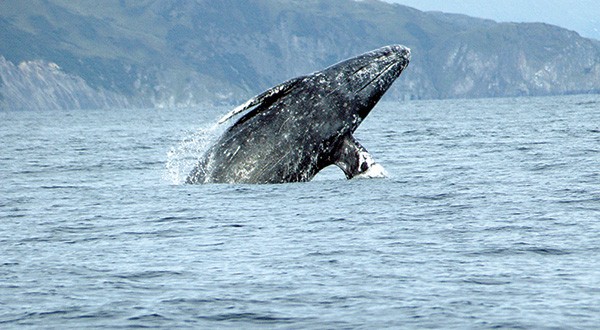
And then the magnificent creature breaches, arcing its 40-ton, 45-foot-long body out of the sea for us all to see. It was definitely a whale.

The Pacific gray whale is named after its predominantly gray skin color. As we got closer, we saw that the color was patchy and mottled with white spots, which were barnacles. Various scars were also visible, possibly teeth marks from attacking orcas. Orca whales, also known as “killer” whales, are known to cause fatalities among gray whales. Gray whale cows are very protective of their calves, having developed violent defensive behavior.

Making an annual migration of 10,000 to 14,000 miles, the longest of any mammal, gray whales inhabit the shallow coastal waters of the Pacific as they travel south in October from the Bering and Chukchi seas off the coast of Alaska to the mating and calving lagoons in Baja, Mexico. The journey takes two to three months, and the whales stay in the lagoons for the same period of time.

When the whales make the return trip north, usually from March through May, the cows and calves swim closer to shore than at any other time of the year. The calves move more slowly than the adults and are still nursing, so both cow and calf may stop in the shallower areas and surf zones to rest or nurse. Given the geography of the Sonoma and Marin country coasts, the Point Reyes Lighthouse and Bodega Head are particularly good vantage points for viewing whales year round, but especically in the spring months due to this proximity to cows and calves.

Tomales Bay was formed by a cleft in the earth that is an extension of the San Andreas Fault line. The Point Reyes peninsula is actually a piece of Southern California that has been carried northward several hundred miles by the fault over the last 25 million years. As it moved northward, the peninsula accumulated rocks from several different places in south and central California, making it very interesting from a geological perspective.

But the whales find Tomales Bay interesting for another reason. Tomales Bay is just 15 miles long and averages a mile wide, but is surprisingly deep in places due to its fault-line origins. The narrow mouth and elongated shape of the bay offers shelter and shallower water to the whales, perhaps representing to them a tiny version of the calving lagoons in Baja. The Point Reyes peninsula shelters the bay from the more intense winds out of the west and northwest. The narrow mouth at the end of Dillon Beach, at approximately 30 feet deep, is deep enough to offer passage to the immense whales while still minimizing the effects of ocean currents.

There were once three major populations of gray whales: the north Atlantic; the Korean, or western Pacific; and the existing north Pacific population that includes northern California. The north Atlantic population is now extinct, and the western Pacific is severely depleted, both probably due to over-hunting. Twice hunted to near extinction, the north Pacific gray whales at one time numbered only 2,000 individuals. Granted full protection from hunting in 1947 by the International Whaling Commission (IWC), their numbers have rebounded.

But now global warming and the melting polar ice caps are endangering the north Pacific population. According to scientists, the gray whales numbered 26,000 in 1990 but are currently at 21,000 with the drop attributed to a change in habitat caused by the warming water and consequent loss of food sources that require cooler ocean temperatures.

When they’re in the Arctic waters of the Bering and Chukchi seas, for example, whales eat small organisms, called “benthic arthropods,” from the ocean floor; these organisms are in turn fed by algae, most of which fall from the bottom side of the polar ice sheets. With the sheets melting under climate change, less food is becoming available to the benthic organisms, which depletes their numbers, and so provides less food for the whales in their summer habitat.

So though the current Pacific gray whale population may be near its original numbers, there seems to be a decreasing trend which concerns scientists and all who are interested in the health of our planet.

There is another effect of a warming climate on the Pacific gray whale. Since the ice sheets are melting, the whales need to go farther and farther north in order to find available food. This lengthens the distance of their migration when they return to the birthing lagoons in Mexico. This longer migration means the whales are not as well fed as they used to be, and, according to scientists, many probably rest more often in the shallower coastal waters along their migration route.

Additionally, one of the navigational techniques that whales use is visual geographic reference. A whale may orient itself vertically in the sea with its head above water as it “looks around” for visual references. This is called “spy-hopping,” and the most coastal of all whales, the Pacific gray whale, is particularly known for this type of behavior.

All of these factors make whale sightings more likely year round, but also beg a caution: whale watchers, fisherman and all boating and shipping traffic should take care not to harass or molest any whale, particularly any that appears to be compromised.

[page]

ABOUT THE GRAY WHALE

Scientific Name Eschrichtius robustus

Length Adult males: 45–46 feet; adult females: 46–48 feet

Weight 30–40 tons

Physical Description A streamlined body with a narrow, tapered head. No dorsal fin, but about two-thirds of the way back on its body there is a prominent dorsal hump followed by a series of six to 12 knuckles along the dorsal ridge that extend to the tail lobes or “flukes.” Its flippers are paddle-shaped and pointed at the tips. Its fluke is about 10–12 feet across, pointed at the tips and deeply notched in the center.

Natural History Migrating gray whales have predictable breathing patterns, blowing three to five times in 15- to 30-second intervals before submerging for three to five minutes. A gray whale can stay submerged up to 15 minutes and travel at three to six miles per hour.

DO’S AND DON’TS OF WHALE WATCHING

Whales can be seen off the Sonoma and Marin coasts almost year-round, but sightings peak from December to May. Best places to spot them from land include Bodega Head, Point Reyes Lighthouse, Salt Point State Park, Stillwater Cove Regional Park and the Jenner Bluffs.

Whale watching boat trips also launch from Bodega Charters in Bodega Bay ($50 per person).

Boaters should not:

• Approach within 300 feet (length of a football field) of any whale

• Cut across a whale’s path

• Make sudden speed or directional changes

• Get between a whale cow and her calf; if separated from its mother, a calf may be doomed to starvation.

(Courtesy National Oceanic and Atmospheric Administration)

Topsy Turvy

0

When Spreckels Performing Arts Center announced plans to present a “staged concert” of Rodgers and Hammerstein’s 1945 musical Carousel, more than a few folks wondered what that actually meant.

How does a “concert-sized” musical compare to a “regular-sized” musical. Asked to explain what audiences can expect from the three-weekend run of the show, musical director Janis Wilson is quite clear.

“It’s not a concert,” she laughs. “It’s a show! It’s Carousel. It’s very dynamic. People are moving around. There are costumes. There is gorgeous choreography. There are very good actors performing every line of the play and singing every word of the songs with fantastic voices. It’s a bit stripped-down, but what makes the show wonderful is all there onstage.”

Under the direction of John Shillington, the production’s most concert-like element is that the orchestra has been moved from the pit to the stage, arranged on platforms of varying heights just upstage of the performers, the grand piano front and center.

“There are minimal sets, so no scene changes,” Wilson says. “There is lighting on the actors, changing from scene to scene just like a normal stage musical. It’s like a black box theater piece. It feels very intimate, very exciting.”

While stripping away some of the more cumbersome elements of a fully staged musical—there is no actual carousel in this Carousel—Wilson says the production does put a bit of extra focus on the beauty and brilliance of Hammerstein’s lush, dramatically intertwined music.

“The score is deceptive,” she says. “I wasn’t that familiar with Carousel at first. I knew a few of the better-known songs, but then I saw how the music is woven into the story, just flowing along with it and carrying it, like a raft on a river.”

The songs—including “If I Loved You,” “June Is Bustin’ Out All Over” and the enduring “You’ll Never Walk Alone”—tell the story of a carnival worker (Ezra Hernandez) whose numerous mistakes land him in purgatory, until he’s allowed to return to earth for a day to make things right with his wife (Jennifer Mitchell) and child.

“I get drawn right into it,” she says. “The story is very visually beautiful, it’s very powerful. Unlike a lot of Rodgers and Hammerstein musicals, which are often about big, big themes—war and racism and hatred—this is about normal people, regular people, making mistakes and trying to correct them. It’s beautiful.”

Fatten Up

0

Tuesday, Feb. 17, marks this year’s Mardi Gras celebration, the day of carnival fun and costumed revelry. While the event is obviously tied to New Orleans history, the North Bay is no slacker when it comes to Fat Tuesday. Here are three festive spots to hit up.

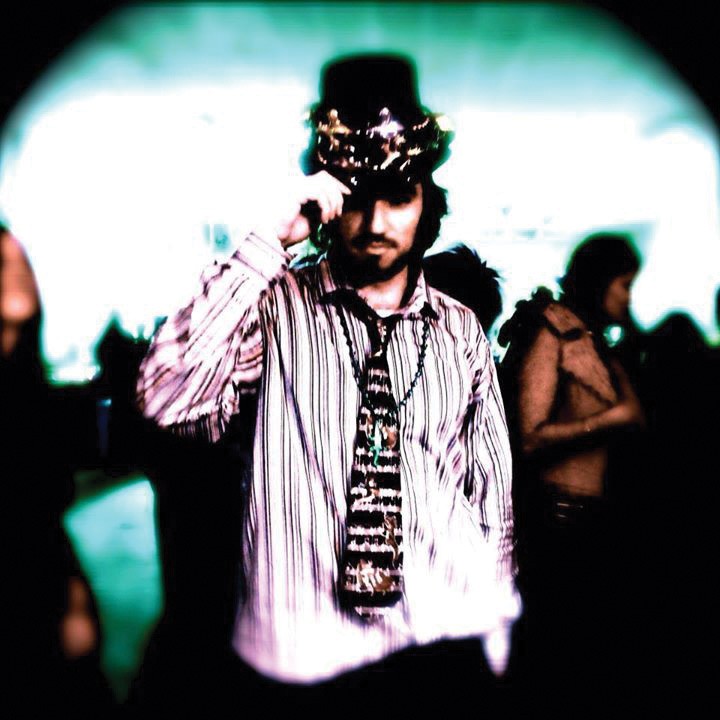
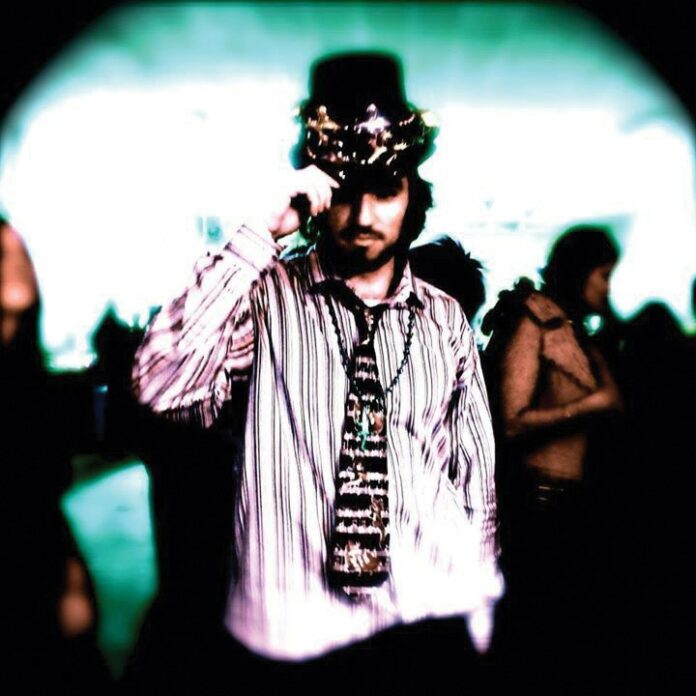
In Sebastopol, the North Bay Hootenanny is throwing a Mardi Gras party when they host T-Luke & the Tight Suits at 775 After Dark. Guitarist and vocalist Lucas Domingue, son of Gator Beat founder Richie Domingue, started the Tight Suits a few years back, carrying on his family’s legacy for red-hot zydeco fun. T-Luke (pictured) always brings a good time with his soulful vibe and Cajun groove. (775 Petaluma Ave., Sebastopol. 8pm. $8–$12. 707.829.2722.)

In Petaluma, Rhythmtown Jive, the local masters of Mardi Gras, continue their own tradition of leading the annual parade through downtown, kicking off at 5:30pm at Putnum Plaza on Petaluma Boulevard and winding their way up to Zodiacs, where popular Bay Area singer Keta Bill and New Orleans blues rockers Tri Tip Trio join in on the festivities. (256 Petaluma Blvd. N., Petaluma. 5pm. $7–$10. 707.773.7751.)

In San Rafael, Fenix chef Glenn “Gator” Thompson creates a fabulous Fat Tuesday spread with Cajun sausage jambalaya, crawfish étouffée, New Orleans–style bread pudding and more, while local favorites the Pulsators create their own spices when they play a set of upbeat and funky blues. (919 Fourth St., San Rafael. 8pm. $10. 415.813.5600.)

Oil Glut

0

Estate-grown olive oil and wineries that also produce their own olive oil have become de rigueur in the North Bay. Add it to our embarrassment of culinary riches.

But given that olives fare so well in our Mediterranean climate, why aren’t there more locally produced table olives? In a word: money. There is more money in pressing olives for oil than curing them for eating. But that doesn’t mean there aren’t good, locally made olives. You just need to know the right people.

Don Landis is the right people.

Landis, who moved to Sonoma County from New York two decades ago, became an avid table-olive hobbyist once he tasted his first homemade olives.

“They were so good and so different,” he says. “I just got a bug up my butt, and I’ve been doing it for 20 years. It’s been a great ride.”

Nine years ago he created the Olive Odyssey, a free, all-things olive event. This year the olive bash is Feb. 14–15 at Jacuzzi Winery in Sonoma. It’s part of the larger Sonoma Valley Olive Festival, but it’s really a stand-alone event.

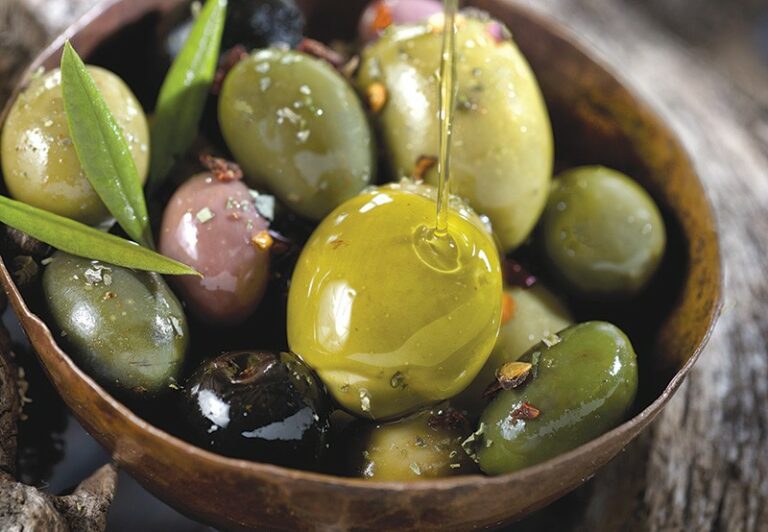
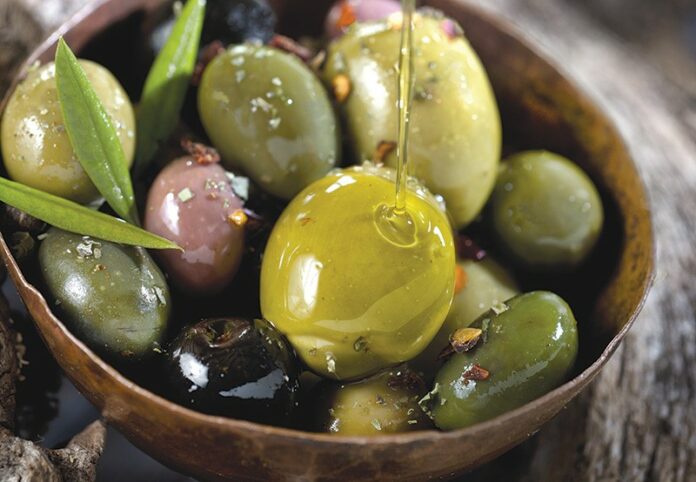
Picked off the tree, olives are intensely bitter and inedible. Most commercial brands of olives are cured in lye to make them fit to eat. But Landis rejects that method in favor of more natural and slow ones. And he calls the process “de-bittering” instead of curing. He uses one of three methods: salting, brining or flushing with water after piercing the olives with a needle.

Lye-cured olives will be ready to eat in 18 to 36 hours; Landis’ brining method, by contrast, takes five to eight months, a time commitment that’s unattractive to commercial producers. But they’re worth the wait, says Landis, who teaches workshops on de-bittering olives.

“You’re eating olives that taste like olives,” he says.

Most locally made olives come from mission, Manzanillo, Sevillano or Lucques varieties.

Olive Odyssey won’t just be about edible olives. There will be olive oil as well as olive-centric food, olive-inspired photography, painting and ceramics, and wine from Jacuzzi. But Landis is most excited about the edible olives from local, backyard producers. You won’t find a greater concentration of locally made olives anywhere, he says.

“You can’t identify with tables olives except at Olive Odyssey.”

For more information, go to donsolives.com or jacuzziwine.com.

Sunny Skies at the Barlow

0

I’m writing this on behalf of the current 38 tenants at the Barlow in Sebastopol in response to the article “Barlow Blues” (Feb. 4).

First of all, as a member of the Barlow Tenants Association’s elected board, I feel it is fair to say that the article was a poor representation of what is really going on for the majority of us who are managing thriving businesses at the Barlow. We are local producers, artisans and collaborators who love what we do and feel privileged to share our creativity with such a receptive and supportive community. There are just a few tenants who have left, each for their own reasons. But there are far more of us who are still here and have high hopes for the growth of the Barlow, as well as the subsequent success of our businesses.

While it is true that there is an audit being conducted, this is a very common practice that happens regularly between tenants and landlords with commercial lease properties, and nothing newsworthy in our collective opinion. An audit is simply a way to bring in a neutral third party to examine the fine print and make sure that nobody is being under- or overcharged.

The Barlow management has been extremely cooperative and supportive throughout the process, and we all believe that only good can come out of this. Regardless of the findings, the process has brought the tenants together to form an association with an elected board that works very closely with the Barlow management team to make decisions beneficial for everyone. Whatever changes come about will bring clarity and consistency to the way in which lease terms are calculated, which is good for tenants and the Barlow alike. We are all very positive that this process will result in increased efficiency as we continue to work together to create a shared vision of the Barlow as the wonderful destination that brought us all there to build our businesses in the first place.

From all of us at the Barlow, we want you to know that “this train is bound for glory.” It’s time to get on board and support your local economy! We are all in this together, so shop local, drink local, eat local and get on over to the Barlow to see what we’re all up to.

Gia Baiocchi is a member of the Barlow Tenant’s Association board of directors and manager of the Nectary.

Open Mic is a weekly feature in the ‘Bohemian.’ We welcome your contribution. To have your topical essay of 350 words considered for publication, write op*****@******an.com.

Debriefer: February 11, 2015

SKUNKED

Can you smell it? There have been dead skunks everywhere on the road these past few weeks. Why?

There’s an increase in skunk road kill in spring, says Fraser Shilling, co-director of the road ecology center at UC Davis.

“The young are dispersing, and this is very early for this to be the case,” Shilling says. Also, the rate and range of foraging both spike this time of year. “The adults have to do more foraging to feed the young,” he says.

People generally care more about “charismatic mega-fauna” in our midst—deer, elk, coyotes— but if you want to save skunks, slow down and “look out into the broad cone of light” ahead of you car.

And don’t throw crap out the window or take your garbage cans to the curb too early. You want to discourage these creatures from hanging out roadside, where they are quite comfortable.

Shilling adds that “from Bolinas to Santa Rosa, you’re going through the kind of habitat where you have the occasional farm and a long legacy of predator suppression from farming people. There’s less downward pressure on skunks, raccoons and possums.”

NOBODY HOME

A family feud has left about 20 Latino farmworkers without a place to live.

The Tacherra ranch in Bolinas had provided housing for undocumented workers, who lived in illegal trailers for decades. A complaint was filed in 1989, which led Marin County officials to “red-tag” the site. That kicked off a decades-long effort to bring the property into compliance with county and local codes. The county wanted Teixeira to get rid of the trailers and build housing that was up to code.

According to Brian Crawford at the Marin Community Development Agency, the trailers were unsafe for those who lived there; there are no sewage or domestic water systems in place.

In 2000, the ranch filed a master plan to bring the site into compliance, but the county kicked it back. “It was found to be inadequate,” says Crawford.

In the meantime, a family disagreement over ownership of the ranch played out in court. The property was loaded with debt and went into receivership. The court included an abatement order in its ruling to clean up the property for future sale, with nothing to protect the people who lived there.

“We have been trying to find a way to keep the people on the land or find another location for them to move to, but that’s been unsuccessful so far,” says Crawford.

BIBI JEEBIES

“To Bibi, or not to Bibi—that is the question: / Whether ’tis nobler in the Congress to suffer / The slings and AIPACS of outrageous fortune, / Or to take alms in a Red Sea of trouble, / And by opposing Hamas as well, mend them.”

Three prominent Democrats, and now Joe Biden, will boycott the Benjamin Netanyahu appearance before Congress on March 5.

So what are our guys up to, in light of House Speaker John Boehner’s invite to the Israeli prime minister?

They’re up to not really wanting to answer the question. Rep. Jared Huffman’s office pointed to a previous statement: Huffman would love to host Netanyahu, but not until after Israeli elections and the next phase of Iranian diplomacy.

Rep. Mike Thompson is keeping his options open. “We’re not sure what his schedule will be the week of March 5th,” says his office via email.

Intriguing. March 5 is National Tree Planting Day in Iran. See you there, maybe?

Correction: An earlier version of Debriefer misspelled the name of the Marin ranch family. It is Tacherra, not Teixeira.

Moveable Feast

0

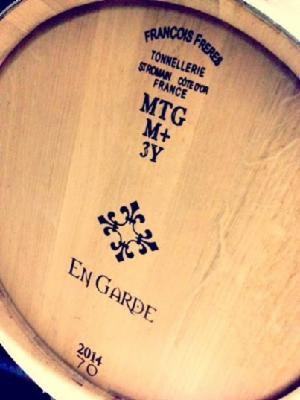
Six Kenwood wineries have teamed up to offer what sounds like a fun day of eating, drinking—and walking. The wineries, Paradise Ridge, En Garde, B Wise, Mayo, Deerfield and Muscardini, will offer an all-inclusive series of progressive meals starting Feb. 22 from 11am to 5pm. Each winery will offer one course of a six-course meal and appropriately paired wines. The first five stops are all reachable on foot. A Platypus bus will then take you to the last stop at Deerfield Ranch Winery and then back to your vehicle. (Where you designated driver can safely get you home). The cost? Ninety-nine dollars.

The Kenwood Progressive Food and Wine tour begins on a Sunday, but starting March 5 until May 24 they will go down on Thursdays in the same 11am–5pm time slot.

Some of the first food and wine pairings include a wild rice and mushroom salad and a skirt steak, blue cheese and balsamic onion crostini with B Wise Vineyards’ 2012 Sonoma Coast Pinot Noir, 2011 Cabernet Sauvignon and 2010 Brion Monte Rosso Cabernet Sauvignon; a mushroom-brie bisque paired with En Garde Winery’s 2013 Albarino, 2012 Russian River Valley Pinot Noir and Magdalena Berry Port; and tahini short ribs with Mayo Family Winery’s 2012 Duke’s Vineyard Napa Valley Malbec, Katie’s Reserve.

Alternating Kenwood wineries, wines and menu choices will be updated weekly on the Paradise Ridge website at prwinery.com and others. Tickets available at progressivetasting.eventbrite.com or call 707.282.9020.

Practical Passion

0

‘There were real, living Shakers when we first started collecting,” notes Toby Rose, her voice as rich and textured as an oak breadboard, “but there aren’t any Shakers now. They’re gone. All that’s left of them is their furniture.”

Though Toby and her husband Ben Rose aren’t the only folks who collect authentic Shaker furniture and other items, they do rank among the art form’s most exuberant fans. A large number of handcrafted Shaker items now reside in their home in San Francisco—all but about a hundred pieces, that is. Those pieces are currently on display at the Sonoma Valley Museum of Art.

The two-month exhibition, titled “Shaker Stories: From the Collection of Benjamin H. Rose III,” looks at the origins of the Shakers’ uniquely American design aesthetic, a sleek, streamlined style that has had a profound influence on artists, architects, woodworkers and furniture designers.

Long before LSD-dropping hippies experimented with living together on rural, clothing-optional communes, the concept of a working communal society was pretty much owned, in America, by the Shakers. Officially known as the United Society of Believers, the Shakers—so called for the ecstatic, full-bodied fervor of their worship services—first established themselves on the East Coast in the 1800s, at one point claiming as many as 6,000 members living in sprawling, mostly celibate settlements from Massachusetts to Kentucky. After the Civil War, the movement slowly went into decline, leaving a legacy of pacifism, simple living and, as it so happens, brilliantly designed furniture.

“This really doesn’t look like any other kind of furniture made by anybody else,” says Toby Rose.

The Roses began collecting almost half a century ago, never dreaming their collection would ever gain the distinction, or enormous size, of what it’s become.

“My husband and I bought a house in Massachusetts about 45 years ago,” Rose explains. “It had seven bedrooms—and no furniture. He’d always been particularly fond of Shaker furniture, so we started collecting the basic things we needed to live with—tables and chairs, a bed, those kinds of things. And on weekends, we went around to antique stores, looking for more.”

Working with dealers specializing in Shaker objects and furniture, they eventually amassed one of the largest collections in the state, every piece used daily, the way furniture is meant to be used, in their home.

“I refuse to live in a museum,” Rose says with a laugh.

Today, she says, the collecting has pretty much stopped.

“It’s so prohibitively expensive now,” she says. “And besides, at this point, we couldn’t cram another stick of furniture in our house anyway.”

Classical Country

0

Author and activist Dan Imhoff is nationally known for his work on ecological sustainability and conservation. Here in the North Bay, he is also known as a prolific songwriter and guitarist with Americana band Cahoots.

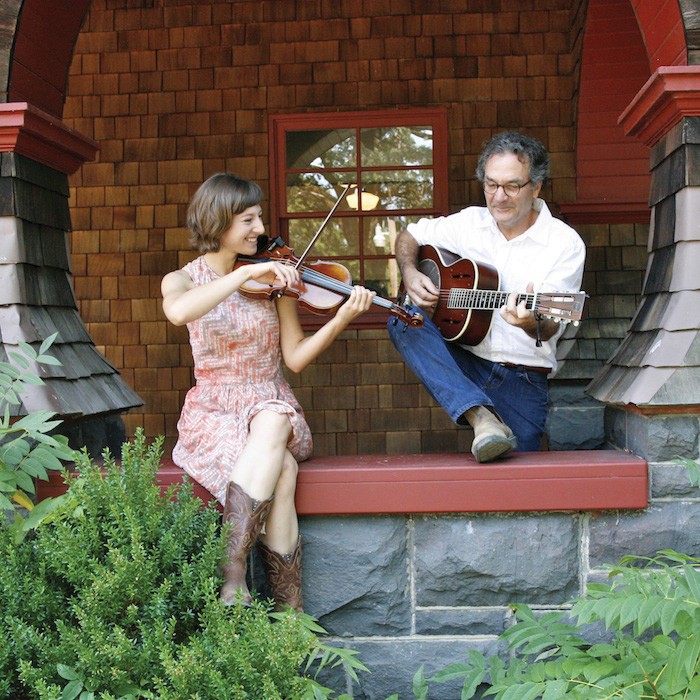
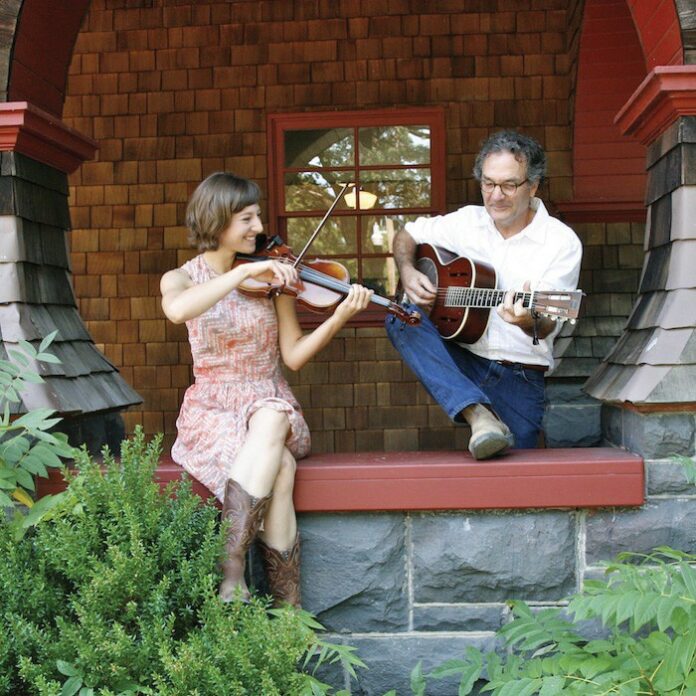
This week, Imhoff unveils a new collaborative with classically trained violinist, vocalist and composer Yvette Holzwarth called Owl Country. The duo’s debut self-titled album, released Feb. 10, is old-timey folk with a fresh, eclectic approach.

Speaking by phone from his home in Healdsburg, Imhoff praises his musical partner and the varied guests that all played on Owl Country’s debut, including blues man Charlie Musselwhite and mandolin genius David Grisman.

Holzwarth migrated to Sonoma County after working in Los Angeles. She met Imhoff at a benefit in 2013 and soon joined Cahoots as a regular player. “Her violin was stunning, and she was a fearless harmonizer and singer. And though she knew very little about Americana music, she just jumped right in—a born musician,” says Imhoff.

Interested in working in a duet format, Imoff and Holzwarth decided to focus their efforts on recording an album.

“We really did learn how to work together and collaborate,” says Imhoff. “The first song we wrote together [‘Atonement’] started from an Aldo Leopold essay, and we just pushed it around lyrically and melodically. She could always hear rich string arrangements and I could hear pedal steel guitar, so those came together as one musical idea.”

The involvement of Grisman and Musselwhite also influenced the sound of the record. Imhoff actually had Grisman’s autograph as a kid growing up in Pennsylvania.

“This guy was a huge hero of mine, and to have him on this record was one of the great days of a really good musical project,” says Imhoff. “It was really special. Nobody plays like him; he made the songs he’s on really sparkle.”

Speaking of Musselwhite’s contribution, Imhoff exclaims, “It was a total thrill!” The famed harmonica player couldn’t make it to the studio, but he overdubbed parts on the bluesy track “Sacred Ground,” and transformed the track into a soulful jam.

Other acclaimed Sonoma County musicians like pedal steel player Dave Zirbel and bassist Chris Amberger filled out the rest of the cast. There’s even an R&B influence in the rhythm section courtesy S.F. hip-hop drummer PC Munoz, mixing a jazzy undertone into the Americana palette for a well-rounded sound.

With Holzwarth currently enrolled in a masters program at the California Institute of the Arts, any upcoming Owl Country live dates are uncertain, though Imhoff looks forward to sharing these new songs in the future. For now, Owl Country’s album can be heard and purchased at owlcountrymusic.com.

Feb. 15 & 17: Eight Seasons in San Rafael

In the history of the Marin Symphony, violinist and concertmaster Jeremy Constant has been one of the most admired members of the company. This year, Constant marks two decades with the symphony, and this week he is featured as the violin soloist for Marin Symphony’s third Masterworks concert, ‘Eight Seasons.’ Performing Vivaldi’s The Four Seasons with tango master Astor...

What Ails the Whales

Heart's Desire beach on Tomales Bay is deserted this morning as my three companions and I put in our kayaks for a day of paddling. The bay is still and glassy with a blanket of fog above us. We are headed north, paddling steadily toward Hog Island, the mouth of the bay—and the possibility of seeing some of the...

Topsy Turvy

When Spreckels Performing Arts Center announced plans to present a "staged concert" of Rodgers and Hammerstein's 1945 musical Carousel, more than a few folks wondered what that actually meant. How does a "concert-sized" musical compare to a "regular-sized" musical. Asked to explain what audiences can expect from the three-weekend run of the show, musical director Janis Wilson is quite clear. "It's...

Fatten Up

Tuesday, Feb. 17, marks this year's Mardi Gras celebration, the day of carnival fun and costumed revelry. While the event is obviously tied to New Orleans history, the North Bay is no slacker when it comes to Fat Tuesday. Here are three festive spots to hit up. In Sebastopol, the North Bay Hootenanny is throwing a Mardi Gras party when...

Oil Glut

Estate-grown olive oil and wineries that also produce their own olive oil have become de rigueur in the North Bay. Add it to our embarrassment of culinary riches. But given that olives fare so well in our Mediterranean climate, why aren't there more locally produced table olives? In a word: money. There is more money in pressing olives for oil...

Sunny Skies at the Barlow

I'm writing this on behalf of the current 38 tenants at the Barlow in Sebastopol in response to the article "Barlow Blues" (Feb. 4). First of all, as a member of the Barlow Tenants Association's elected board, I feel it is fair to say that the article was a poor representation of what is really going on for the majority...

Debriefer: February 11, 2015

SKUNKED Can you smell it? There have been dead skunks everywhere on the road these past few weeks. Why? There's an increase in skunk road kill in spring, says Fraser Shilling, co-director of the road ecology center at UC Davis. "The young are dispersing, and this is very early for this to be the case," Shilling says. Also, the rate and range...

Moveable Feast

Six Kenwood wineries have teamed up to offer what sounds like a fun day of eating, drinking—and walking. The wineries, Paradise Ridge, En Garde, B Wise, Mayo, Deerfield and Muscardini, will offer an all-inclusive series of progressive meals starting Feb. 22 from 11am to 5pm. Each winery will offer one course of a six-course meal and appropriately paired wines....

Practical Passion

'There were real, living Shakers when we first started collecting," notes Toby Rose, her voice as rich and textured as an oak breadboard, "but there aren't any Shakers now. They're gone. All that's left of them is their furniture." Though Toby and her husband Ben Rose aren't the only folks who collect authentic Shaker furniture and other items, they do...

Classical Country

Author and activist Dan Imhoff is nationally known for his work on ecological sustainability and conservation. Here in the North Bay, he is also known as a prolific songwriter and guitarist with Americana band Cahoots. This week, Imhoff unveils a new collaborative with classically trained violinist, vocalist and composer Yvette Holzwarth called Owl Country. The duo's debut self-titled album, released...
11,084FansLike
4,606FollowersFollow
6,928FollowersFollow