Buzzworthy

0

The last five years have taken Guerneville from a sleepy vacation spot to a talked-about foodie destination. Sure, the charm was always there, but it took stylish spots like Big Bottom Market, Boon and, most recently, Seaside Metal to get the buzz going.

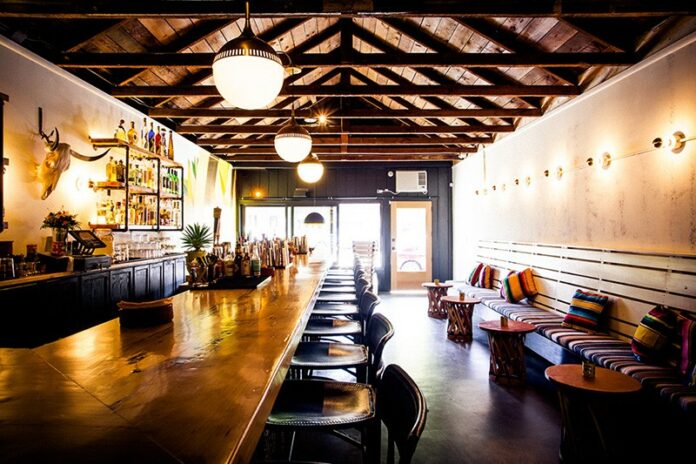
Some may claim, however, that a town’s transformation into a lucrative gourmet empire couldn’t be complete without a niche bar. Now Guerneville has one of those too. El Barrio, an agave and bourbon bar, has joined the nondescript sports bars and LGBT-favored disco-ball-spinning clubs.

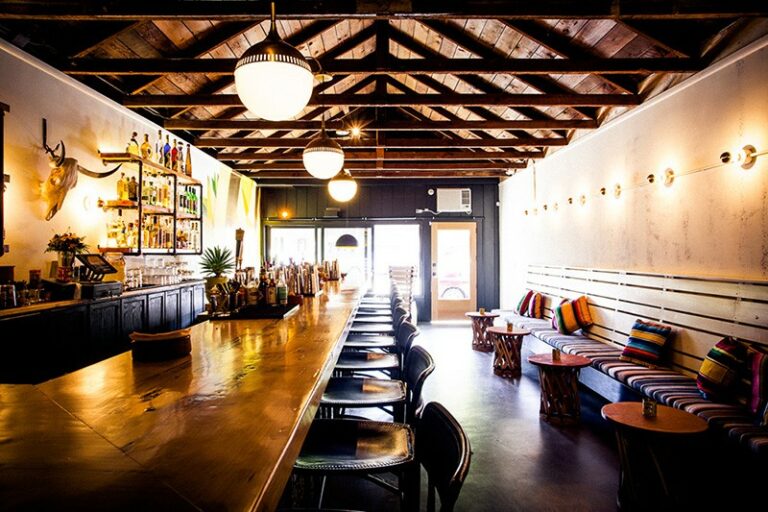
El Barrio is the new venture by Crista Luedtke, a partner at Big Bottom and the one-woman force behind Boon Hotel and Spa, and it’s a curious one. Earthy tones and Mexican-inspired stripes tastefully dictate the decor, and the lights are muted but bright enough for everyone to enjoy the meticulous styling. Lacking the happy-go-lucky abandon typical to the local bars, El Barrio opts instead for a classy, relaxed vibe.

“Guerneville has changed a lot in the last eight years,” says Luedtke. “While it still remains a great gay scene, we have such a mix of Bay Area travelers that come to explore.”

Chances are, those travelers are into mixology and complex flavors, and El Barrio greets them well prepared. The cocktail menu is based on tequila, mescal, bourbon and coffee liquors, and lists more than a hundred labels. “I love the smoky qualities of these spirits, and how they work so well together,” gushes Luedtke. “There are so many different flavor profiles present.”

The cocktails were crafted with Christina Cabrera, Leudtke’s San Francisco–based bar consultant, and their names carry a fun girl-power message. There’s La Jefa, a fiery concoction of rye, lemon, maple, ancho chile, Angostura bitters and egg whites ($11), and the refreshing La Patrona, featuring tequila, Aperol and grapefruit bitters, adorned with smoked salt ($11). For the less adventurous, there’s Michelada ($7), a house-made sangria with a twist, bottled and drafter beer, and wine by the glass.

Prices may be a little steep, but El Barrio seems to be connecting with the locals. “We have already developed groups of locals who love it and have become regulars,” contests Luedtke. “My ladies group who leaves the hubbies behind and comes for girls night out; the group of restaurant-industry peeps, before or after their shifts; the local Latin crowd who loves Mexican beers on tap and great tequilas.”

All of the above may enjoy the winter Wednesday-night pozole dinner, which includes the famous pork stew and a seasonal vegetable side for $11. On regular nights, snacks include chips with salsa and guacamole, queso dips, a plate of crunchy, spicy cucumbers and, more exciting, Mexican devilled eggs. The classic appetizer undergoes an exotic upgrade here with cilantro lime pesto and chili dust (5$).

El Barrio does exotic, delicious and upscale really well. With time, its novel zest and polished serenity should mix with the potent local flavor—and another winning cocktail will emerge.

El Barrio, 16230 Main St., Guerneville. 707.604.7601.

High Times at Emerald Cup

Last month in Las Vegas, marijuana advocates were horrified to watch cannabis culture collide with corporate greed at the National Cannabis Industry Association Conference.

Debby Goldsberry, 2013’s Emerald Cup Lifetime Achievement Award winner and a 25-year medical-cannabis activist, described the scene to a reporter over the weekend as “suits and ties with dollar signs in their eyes.”

This year’s well-attended Emerald Cup at the Sonoma Fairgrounds served as a welcome antidote to the Vegas scene. It was not only the best weed fest in the West—or any other direction—but functioned as a spiritual cleansing with thick clouds of skunky smoke and the fruity smells of world-class extracts (thanks to Baked in Humboldt and the Sonoma County Collective).

Besides record crowds (about 10,000) and all sorts of merchandise for sale, the Emerald Cup was a showcase of open minds committed to freedom, health and wellness. As California looks at a likely future of highly regulated, legalized cannabis in 2015, it’s inevitable that some people will get into the business strictly for the money. That’s the American dream for lots of people, after all.

But members of the cannabis community have always valued freedom over safety, compassion over currency and wellness over material wealth.

The Emerald Cup’s medical emphasis highlighted many patient-centered services and products that will enable humans to live healthier, more productive lives. As such, the Santa Rosa event represented the victory of cannabis capitalism over cannabis corporatization.

Canadian panelist Phillippe Lucas brought the point home Saturday. He noted that Canada pays for medical cannabis for its veterans, which requires a well-regulated system to ensure a consistent product. You’ll need at least
$4 million to break into Canada’s medical cannabis industry, says Lucas, who is the vice president of patient relations and research at Tilray, a large medical cannabis corporation in Canada.

Tilray has been able to “harness the power of capitalism,” says Lucas, to provide safe, consistent cannabis to suffering patients. The company is also involved in groundbreaking research. One upcoming study will test cross-applicability in post-traumatic stress disorder patients by examining military veterans, police officers and sexual assault victims who utilize cannabis to treat their PTSD.

There’s a similar study underway in Colorado focused on military vets, but elsewhere in the States, research is stifled by cannabis’ federal classification as a Schedule I controlled substance—which says it has no medical value whatsoever.

As California lurches toward legalization—all roads are leading to 2016 as the Year—access to medical cannabis still varies county to county and city to city. For example, Marin County’s oldest licensed dispensary was shut down years ago for being too close to a baseball field. Patients there are currently being served by delivery services, or by going out of county.

This reporter goes to the Cannabis Buyer’s Club of Berkeley (CBCB), which also offers yoga, aura readings and peer support. Director of CBCB Aundre Speciale spoke at the Emerald Cup’s women’s panel on Saturday. She was asked: What business practices make for a successful cannabis operation?

She says “love” has always been her business model.

Pop-Up Ramen

0

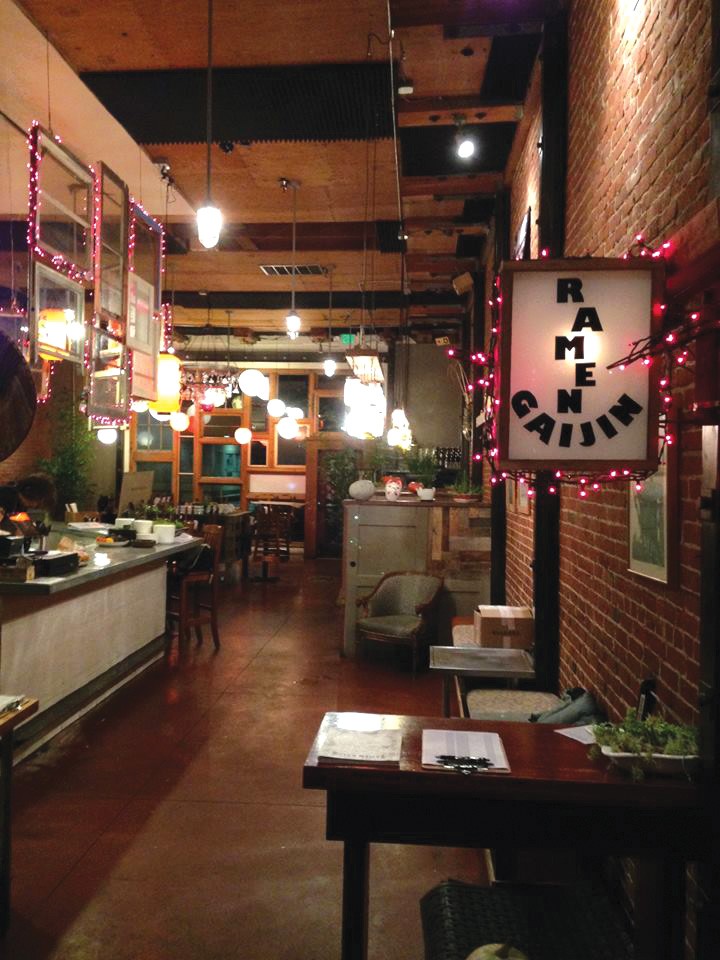
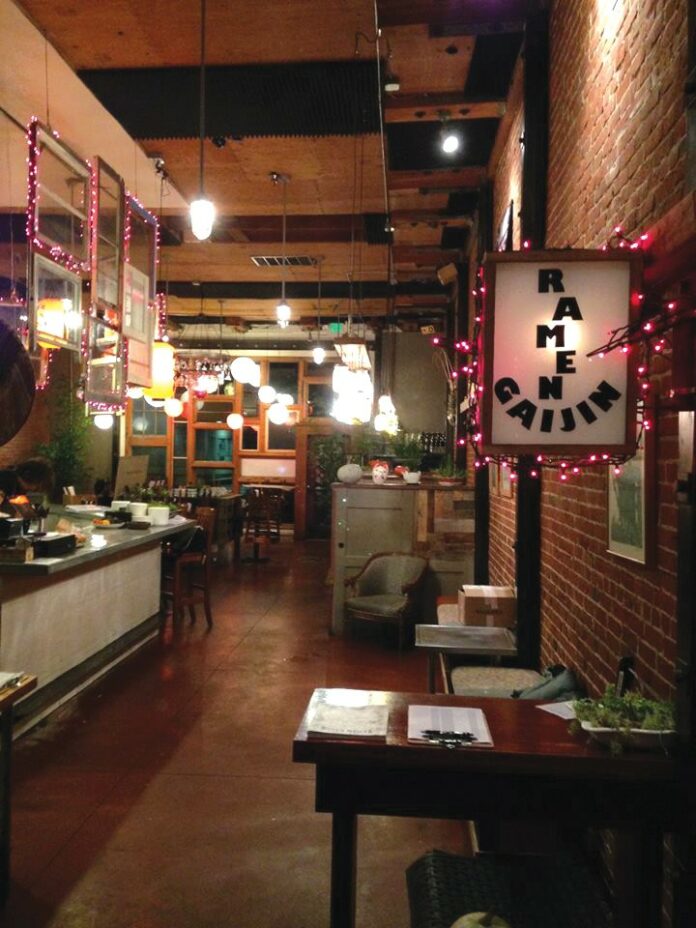
Sebastopol’s excellent Ramen Gaijin opened the doors to its new home Friday. The restaurant now occupies the space formerly held by the Forchetta half of Forchetta/Bastoni, a combo Italian and Southeast Asian restaurant. The Italian side of the restaurant never quite caught fire, so now it’s a combo Japanese and Southeast Asian restaurant.

Ramen Gaijin owners Matthew Williams and Moishe Hahn-Schuman moved from Woodfour Brewing Co. where they ran a once-a-month pop-up restaurant. Ramen Gaijin is still a pop-up, but it feels more permanent with the art they’ve hung from the ceiling, a community board that lists all their Sonoma County suppliers and other touches. And they’re open four days a week. West County is a better place for it.

The “Sonoma County–style” ramen is as delicious as ever. The infinitely deep flavors of the soup in the shoyu ramen ($14, a combination of chicken and dashi broth) are coaxed from hours of slow simmering in big pots. Add springy house-made rye noodles and outstanding toppings like wood ear mushrooms, pork belly, half a soft boiled mirin- and soy-sauce-marinated egg, and bamboo shoots, and you’ve got a great meal in bowl. While the menu will change, currently there is also a vegetarian sesame- and miso-based ramen, and a fiery “tan tan” ramen on the menu. Other options include albacore tataki ($11), karaage chicken ($9), a winter vegetable salad ($6) and an excellent black sesame ice cream ($7).

There’s also a great lineup of beverages: Japanese and local brews, Japanese whiskey and short list of sake chosen by master sake sommelier Stewart Morris.

Ramen Gaijin is open for lunch and dinner Wednesday-Saturday. 6948 Sebastopol Ave., Sebastopol. 707.827.3609. www.facebook.com/RamenGaijin.

Feeling the Pinch

0

This month, Congress announced it would work to reduce the financial strain on commercial fishermen who participated in a federal buyback of permits and fishing boats, mostly draggers, in California back in 2003.

There’s a bill in the House to refinance a buyback loan at a lower rate than the 6.97 percent set by the feds when the buyback was enacted. It also reduces fees collected under the program from a maximum of 5 percent to 3 percent.

It’s welcome news for commercial fishermen—but what good did the original buyback do, if any?

Liz Ryan, a fisheries expert with the National Oceanic and Atmospheric Administration (NOAA), says that the buyback program, aimed at reducing fishing pressure, worked under the principle of the reverse auction.

Fishermen who offered the lowest for-sale price to the government were the first to
have their boats and permits bought out.

Those fishermen got cash in exchange for giving up their boats and permits. The boats were permanently retired from fishing, the permits torn up. The remaining California groundfish fleet was then on hook for a combination loan-grant program that sent $37.5 million via the government loan, and another $10 million in grant money, to fishermen willing to hang up their skins.

“The loan has to be paid back by the industry itself,” says Ryan. Under the program, loan payments are taken directly out of fish sales, and sent to the feds by the buyers. But more than a decade after the buyback, which affected 91 boats and 239 permits, NOAA can’t say whether the program helped save collapsing groundfish stocks in California, which comprise 90 species.

“It was the buyback’s intention that the fisheries recover, but it’s not as if we have the staff,” says Ryan, to monitor the efficacy of the program. “You can’t say that the buyback has helped these fisheries to recover.”

What you can say, adds NOAA spokeswoman Connie Barclay, is that “it’s one of the tools contributing to the ending of overfishing.”

For Bodega Bay fisherman Tony Anello, the buyback program was an example of “closing the gate after the cows have already left.”

Anello supported the move to reduce the number of draggers in the state commercial fleet. It’s a destructive, wasteful way to harvest the ocean’s bounty.

Anello and his family run crab boats in Bodega Bay and own the Spud Point Crab Co. He says pressures on Dungeness crab, combined with a very shaky salmon fishery, means uncertainty is still the rule of the day—and fishermen are hitting the crab hard to make ends meet.

Anello has already seen a drop-off in his crab catch this year. His traps are now coming out of the briny with one to four crabs, he says.

“Right now, the crab industry is overcapitalized,” he says. “I’m surprised that the fishery has held up as well as it has.”

And forget the salmon, he says. “If you don’t catch enough crab during the season, you’re going to starve. There aren’t enough salmon.”

Humboldt State University economics professor Dr. Steven Hackett has researched the socioeconomics of fisheries management and asks the question: “How do you sustain fishermen and the industry cluster that surrounds them?”

Bodega Bay has an interlocking economy driven by fish and crabs: there are slip fees, fuel docks, fish processors, marine engine repair shops. The main impediments to sustaining a healthy industry cluster, says Hackett, are a tight regulatory climate factored in with prohibitive costs to enter and maintain a commercial-fishing business.

“We’ve seen years where people really struggle,” he says. “And it doesn’t take too many of those before you have to find another line of work—and that cascades into the industry cluster.”

Note: This article has been updated and corrected to reflect the accurate interest rate currently charged to fishermen, and with additional information about a proposed adjusted fee schedule for participants in the buyback program.

Darkness and Light

0

Cinderella, a beaten-down member of the 99 percent, works her fingers to the bone providing luxuries for her spoiled step-sisters, living off the crumbs left over from their daily servings of birthday cake.

In Crumbs: A Cinderella Story, the Imaginists unleash a modern fable for the post-Occupy age. Inventively and passionately performed—the ensemble taking turns playing musical accompaniment—Crumbs blends elements of dark comedy, political satire and horror with frequent
and brilliant alternating flashes
of gruesome violence and breathtaking beauty.

Make no mistake, while there are princes and slippers and magic spells, this is no Disney tale. Packed with striking imagery—a tree made of rags, a mountain of cast-off clothes, a butchered goat made of shredded red ribbons—this is more nightmare than fairy tale, a powerful, poetic, deeply angry critique of greed and consumerism, one in which any happy ending comes with a cost.

Rating (out of 5): ★★★★

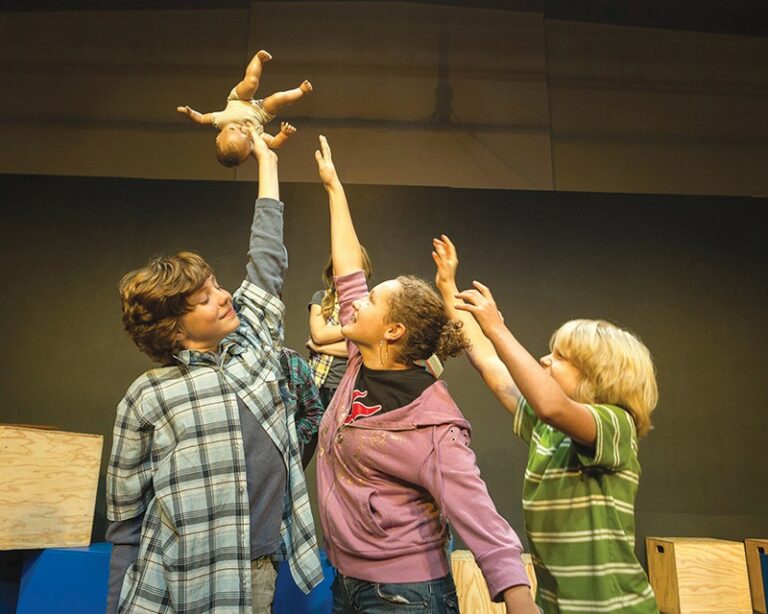
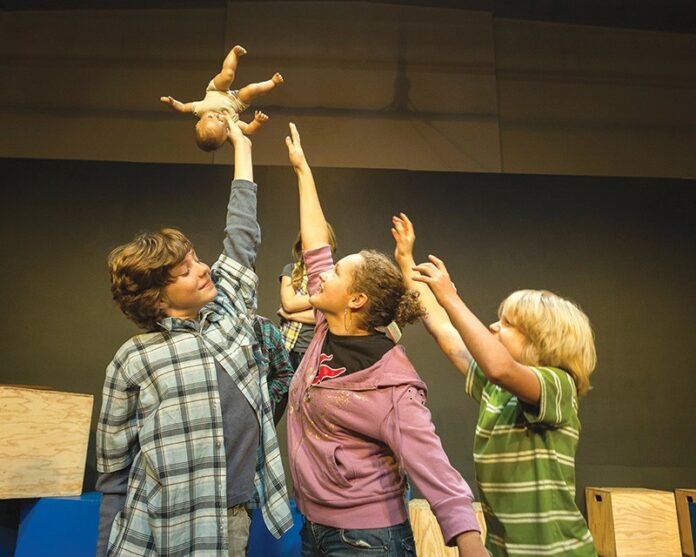
The tone is decidedly lighter—but hardly lacking in feeling—in Raven Player’s uneven but emotionally rich (and very funny) staging of Barbara Robinson’s Best Christmas Pageant Ever. A warm slice of big-hearted, made-for-the-holidays confection (with a delightfully subversive edge), the story of a small-town Nativity pageant gone wrong was adapted from Robinson’s 1971 novel of the same name.

As the local church prepares for its Christmas pageant, the annual event looks to be no different than any other year. Then the town terrors, the juvenile delinquent Herdman kids, learn free snacks are served during rehearsal. They manage to snap up all the major roles—and the pageant now appears to be doomed.

It’s the way the Herdmans approach the Nativity story that gives the play its charm, calling out the injustice of a baby forced to sleep in a manger—”Where are the protective services people in this town?”—and pointing out the inefficiencies in the messenger angel’s choice of words to the shepherds. Ultimately, it turns out that the horrible Herdmans might understand the Nativity story better than just about anyone else.

Directed by Steven David Martin, Pageant is the definition of community theater: a play for the community, filled with members of the community, in a story about the power of community.

Rating (out of 5): ★★★½

‘Crumbs: A Cinderella Story’ runs through Dec. 21 at the Imaginists,
461 Sebastopol Ave., Santa Rosa. $15–$20. 707.528.7554. ‘The Best Christmas Pageant Ever’ runs through Dec. 21 at Raven Theater Windsor.
195 Windsor River Road, Windsor. $10–$20 707.433.6335.

Hobbled

Bleary visuals, a blearier narrative and a stage groaning with characters in search of a stopping point—The Hobbit: The Battle of The Five Armies is the keystone in the arch between the two trilogies, and the masonry is shaky.

Once upon a time, the fate of Middle Earth depended on locating the dread ring of power; now it’s all about debt collection. Refugee Lake Town people try to pick up their share of the dwarves’ loot. Following them, an army of elves arrives, trying to retrieve a pawned necklace. The toxic gold hoard of the dear departed Smaug is poisoning Thorin Oakenshield (Richard Armitage), handsomest and tallest of the dwarves. Battalions of orcs arrives, riding their giant hyenas. Also coming in for the fight: Thorin’s relative, a hog-mounted dwarf named Dain (Billy Connolly).

There are only a few scenes in all the scrimmage where it seems that director Peter Jackson doesn’t get his yarn tangled. One is the moment where we see the huge orc Azog the Defiler (Manu Bennett of TV’s Arrow) floating in the water under a layer of ice after his fight with Thorin. Better still is the weirdly intimate way these two combatants, dwarf and orc, look at each other when they’re temporarily exhausted—it’s the observant detail that would have been noted in Beowulf. During another fray, Legolas (Orlando Bloom) tosses his fine silver braids and reaches back for an arrow with that sure smooth gesture we love—only to find his quiver empty.

The rest, one can shrug off. The CG is as thick as mayonnaise, and is often used to laughable effect. In one scene, as a castle falls, Legolas runs up the tumbling stones of the building like a staircase, as if he were Bugs Bunny.

Other parts just seem ill-advised. When the orc Bolg (Lawrence Makoare) corners the only female in the picture to get more than five minutes onscreen, Evangeline Lilly’s warrior elf Tauriel, he licks the place where his lips would be. Rapiness isn’t quite what you expect from this epic.

‘The Hobbit: The Battle of The Five Armies’ is playing in wide North Bay release.

Reunion

0

Milan Kundera called nostalgia “the suffering caused by an unappeased yearning to return.” For generations of North Bay punk and indie bands and fans, that yearning will be appeased at Nostalgia Fest 2014, Dec. 20 at the Phoenix Theater in Petaluma.

A benefit for the venue, the show boasts a rare lineup of local punk bands Schlong, the Skirt Boys, Dr. Frank and Chomp Hard, with indie rockers the Librarians and Escape Engine/Fight Like Fight, and ska revivalists Slow Gherkin filling out the bill. We asked some of the artists to wax nostalgic and share their musical memories of the North Bay.

James Rickman (Slow Gherkin) I remember way more awesome bands than I thought could come out of a cluster of sleepy towns: the Conspiracy, Blind Spot, Kid Dynamo, Adjective Noun! Remember those mad bastards? Jesse Wickman. Caitlin Love. Logan Whitehurst. And the Velvet Teen, who played in Brooklyn this year to a packed room full of people who loved them as much as I do. Most of all, I remember the Phoenix, epic and intimate all at once. A nook for every mood—the quarter pipe, the shady balcony, the backstage room. I can almost smell it right now, and I can’t believe we get to go back.

Ash Scheiding (Escape Engine/Fight Like Fight) Mostly, I recall the awesome community we all had in Sonoma County throughout the 2000s. We had a giant group of prolific friends, and we inspired each other. Musicians and supporters collaborated on each other’s recordings and helped each other record albums, made merch and album art together, provided resources for each other’s shows and tours. Our musical idols were other independent artists that we could actually contact, befriend and play shows with. That was super-rad and still sometimes blows my mind.

Damon Larson (the Librarians) Although most of the Librarians lived in Oakland and thereabouts, we were really proud of being welcomed into the North Bay indie scene. We loved the way the bands and fans stuck together. You had institutions like Section M magazine and Pandacide Records helping make the scene what it was and giving the bands some visibility. We played more North Bay shows than we can remember, many of our favorites at the Phoenix Theater.

One night playing there, our frontman Ryan decided to invite the crowd up onto the stage with us. If you know the size of the stage at the Phoenix, you’ll understand the chaos this might cause. It was pretty insane having 50 fans jumping around us, singing into the mics, bumping into our instruments. We couldn’t hear what we were doing and I doubt we hit any of the notes, but it ranks up there with my all-time favorite live-performance experiences.

Nostalgia Fest takes the trip down memory lane on Saturday, Dec. 20, at the Phoenix Theater, 201 Washington St., Petaluma. 6pm. $10–$35. 707.762.3565.

Hello, Rain!

0

‘Tis the season to be jolly, not just because it’s the holidays, but because of all the rain we’ve received this month. Since Dec. 8, Mother Nature has delivered us a series of late autumn storms followed by a significant atmospheric river on Dec. 11. This “river in the sky” has increased storage in our local water supply reservoirs, bringing Lake Mendocino up to 66 percent of water storage capacity from 45 percent earlier this month, and Lake Sonoma to 70 percent, compared to 55 percent.

In terms of rainfall, our region (the Santa Rosa Basin) had only received 40 percent of average before the storms, but since the deluge, our region is at 158 percent of average, or 13.33 inches since Oct. 1. That’s a lot of numbers thrown at you all at once, so let’s get down to the bottom line: we can’t declare that the drought is over just yet. But the rain has certainly taken the edge off the drought, and we are headed in the right direction. What do we need to get out of this drought? Three things:

1. We need above average rainfall to continue into the winter and spring months (36 inches of average rainfall in Santa Rosa, for example).

2. Timing of rainfall is critical. We need a steady stream of rainfall through spring, not one large storm, due to how lakes Mendocino and Sonoma are operated under the U.S. Army Corps of Engineer’s flood control operation manual. (See “Reservoir Cogs,” Dec. 3.)

3. Save what we get. The rain we do get needs to be saved in case we don’t get any more this year. Keep up those conservation habits and turn off that irrigation system!

What we don’t need: December 2012! That month saw heavy rainfall fill our reservoirs, followed by an extremely dry winter and spring; i.e., the drought.

For now, appreciate the rain. It’s a good thing, and we need more of it. But please don’t stop those water-conservation habits. We need to save every drop. Stay up to date on drought conditions at www.sonomacountywater.org or follow us on Facebook.

Shirlee Zane is director of the Sonoma County Water Agency and a member of the Sonoma County Board of Supervisors.

Open Mic is a weekly feature in the ‘Bohemian.’ We welcome your contribution. To have your topical essay of 350 words considered for publication, write op*****@******an.com.

Stormageddon (the Heck out of Here)

0

Let us pause a moment, a moment for Napa, which, and according to their reliable local sheet, has escaped the wrath of this storm, by about half, and good for them they had an earthquake.

West Marin is flooded, is gushing, is alive and flowing. Gulping it. Gorging on the endless drops, but this too shall pass, to the south. There’s some good luck with this storm, its timing, say the Marin emergency folks – we’re edging off a “low” high tide, which helps to keep the surge at bay. A blessing in that. 

I took a bike ride around the Big Mesa in Bolinas earlier. Saw a couple of big evergreen branches that bit it in the whipping night, one was yards from the house and obliterated a section of fence. Had to look real high to see where that branch fell from. What a crash. Nobody’s home. 

Of course, there’s chicken soup with a bacon and mushroom extender, bubbling away all day back home, made sure to have a big mug before heading out into the squalling.

A street-cleaner is working the bigger roads, the trash collectors are coming around too. Schools out, but these trucks can take it. 

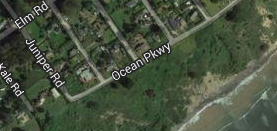
Houses up here aren’t always occupied and some very rarely so. Now there’s a purple van in that one luxe driveway along Ocean Parkway at the very edge of the continent. I’ve seen that guy once in a year. The road here is straight and still paved, but the remorseless erosion claws at the edges up and down – up this way, it curves to a dirt road with county berms (and a large branch in the road, today) to discourage entry. The other way, the cool hippie house on the really fragile corner. They’ve moved out, there’s a  gravel berm at the fringe of asphalt, a fresh one, but the road is just rippling into the cliff and down to the churning relentless sea. 

Along the way down, an earthslide’s spotted, a black-brown gash of dirt-root in the greening cliff. Chewing the road.

The winds died down in the afternoon, a gentle cold pour. The sun is up there somewhere, afternoon gale before the long droning raindrops to sunset. The raingear is inadequate but bless those good rubber boots and thick socks. Warm and dry head and feet, and the awaiting soup, extended with bacon. Rich roasting coffee and the drips. 

Outside the storm is holding on, pounding out the inches, and people are clearing the roadside culverts of the leaves and debris and checking their sandbags, they take care of business up here. 

StormPost: Good news on the Russian River; Loose cows on the Drake Blvd

0

As the winter storm grinds across the region, the good news in Sonoma County is county emergency ops people are “significantly downscaling” their expectation of the high water mark for the Russian River.

After forecasting a possible peak of 37.5 feet, officials now expect about a 34 foot peak in the river, tomorrow at 10 a.m. “There still will be flooding at the Russian River but we expect a much lower impact,” says Rebecca Wachsberg at the emergency ops center.

Still, they’re ready to ramp up evac procedures if needed, Noah, even as the county downscales the voluntary get-out planning and its pre-plan expectations of low-lying residents in light of the re-scaled storm expectations. Emergency workers “have the capacity to scale it up if they need to,” says Wachsberg, “but we’re not anticipating it.”

For commuters: There are still 61 roads closed around the county, says Wachsberg. Take it for what it’s worth, and next time: stay home.

Hey, more good news from Wachsberg: Power’s been restored to about half of the 20,000 who lost it at the high point of darkness earlier today.

In Marin County, there are cows presently blocking the road on Sir Francis Drake Boulevard as crews try to clear power lines that came down with a tree not long ago.

The Drake’s now closed in both directions in Lagunitas, says Talia Smith, a public information officer with the Marin County Emergency Services.

Along with other daylong road closures in West Marin, the closed and then reopened, 37 Connector at Highway 101 is now CLOSED. For the time being, they hope.

The biggest problem in Marin is flooding, downed trees and lines, and Mill Valley is taking the biggest hit on the flood front. Latest to wash out, says Smith, is Sycamore Park, between Miller Ave and East Blithesdale.

No crushed cars anywhere in the county, Smith reports – and one downed branch put some minor damage on a house.

High tide is now, or just about a half our after, as we crank out this blog in Bolinas, where it is pouring even as as the storm moves south, according to Smith and all the weather folks out there.

The biggest damage this reporter could see in Bolinas, at least in the immediate ’hood: The Paul Collet memorial bench along Ocean Parkway, crushed – a fallen branch from the big evergreen that provides shade.

Many days you can see S.F. from this spot. Today?! Hah! There’s brown muck churning at the surge-point as it eats the cliffs below, with sluices of sheer runoff roiling everywhere – piles of debris, water just pouring and tearing the place up. It’s pouring again.

Buzzworthy

The last five years have taken Guerneville from a sleepy vacation spot to a talked-about foodie destination. Sure, the charm was always there, but it took stylish spots like Big Bottom Market, Boon and, most recently, Seaside Metal to get the buzz going. Some may claim, however, that a town's transformation into a lucrative gourmet empire couldn't be complete without...

High Times at Emerald Cup

Last month in Las Vegas, marijuana advocates were horrified to watch cannabis culture collide with corporate greed at the National Cannabis Industry Association Conference. Debby Goldsberry, 2013's Emerald Cup Lifetime Achievement Award winner and a 25-year medical-cannabis activist, described the scene to a reporter over the weekend as "suits and ties with dollar signs in their eyes." This year's well-attended Emerald...

Pop-Up Ramen

Sebastopol's excellent Ramen Gaijin opened the doors to its new home Friday. The restaurant now occupies the space formerly held by the Forchetta half of Forchetta/Bastoni, a combo Italian and Southeast Asian restaurant. The Italian side of the restaurant never quite caught fire, so now it's a combo Japanese and Southeast Asian restaurant. Ramen Gaijin owners Matthew Williams and Moishe...

Feeling the Pinch

This month, Congress announced it would work to reduce the financial strain on commercial fishermen who participated in a federal buyback of permits and fishing boats, mostly draggers, in California back in 2003. There's a bill in the House to refinance a buyback loan at a lower rate than the 6.97 percent set by the feds when the buyback was...

Darkness and Light

Cinderella, a beaten-down member of the 99 percent, works her fingers to the bone providing luxuries for her spoiled step-sisters, living off the crumbs left over from their daily servings of birthday cake. In Crumbs: A Cinderella Story, the Imaginists unleash a modern fable for the post-Occupy age. Inventively and passionately performed—the ensemble taking turns playing musical accompaniment—Crumbs blends elements...

Hobbled

Bleary visuals, a blearier narrative and a stage groaning with characters in search of a stopping point—The Hobbit: The Battle of The Five Armies is the keystone in the arch between the two trilogies, and the masonry is shaky. Once upon a time, the fate of Middle Earth depended on locating the dread ring of power; now it's all about...

Reunion

Milan Kundera called nostalgia "the suffering caused by an unappeased yearning to return." For generations of North Bay punk and indie bands and fans, that yearning will be appeased at Nostalgia Fest 2014, Dec. 20 at the Phoenix Theater in Petaluma. A benefit for the venue, the show boasts a rare lineup of local punk bands Schlong, the Skirt Boys,...

Hello, Rain!

'Tis the season to be jolly, not just because it's the holidays, but because of all the rain we've received this month. Since Dec. 8, Mother Nature has delivered us a series of late autumn storms followed by a significant atmospheric river on Dec. 11. This "river in the sky" has increased storage in our local water supply reservoirs,...

Stormageddon (the Heck out of Here)

Let us pause a moment, a moment for Napa, which, and according to their reliable local sheet, has escaped the wrath of this storm, by about half, and good for them they had an earthquake. West Marin is flooded, is gushing, is alive and flowing. Gulping it. Gorging on the endless drops, but this too shall pass, to the south....

StormPost: Good news on the Russian River; Loose cows on the Drake Blvd

As the winter storm grinds across the region, the good news in Sonoma County is county emergency ops people are “significantly downscaling” their expectation of the high water mark for the Russian River. After forecasting a possible peak of 37.5 feet, officials now expect about a 34 foot peak in the river, tomorrow at 10 a.m. “There still will...
11,084FansLike
4,446FollowersFollow
6,928FollowersFollow