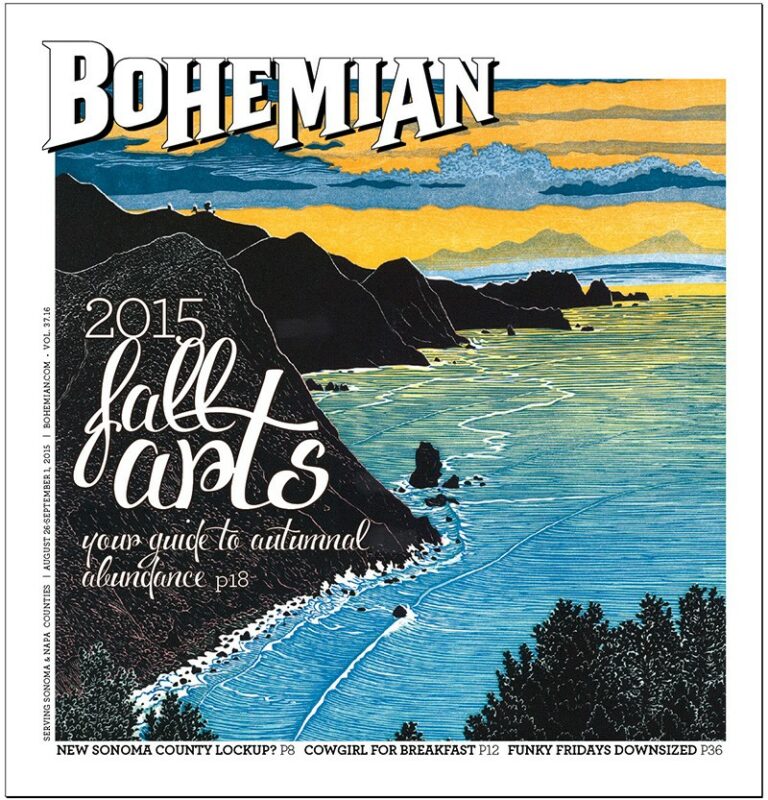
Without a doubt, fall is our favorite season. The heat from summer has subsided, sweaters come out of closets, harvests commence, leaves float down from trees, and the North Bay offers up a bounty of entertainment. From Labor Day to Thanksgiving, there are huge music festivals, live theater productions, extravagant wine country weekends, festive art fairs and so much more happening in Sonoma, Marin and Napa counties. You can’t do it all, but our annual Fall Arts Guide lays it all out.
SEPTEMBER
6th Street Playhouse Housed in the heart of Railroad Square, the popular playhouse continues to engage the community with plays and musicals designed to delight and entertain. Currently, an all-female cast leads the Playhouse’s revival of The Wizard of Oz, running now through Sept. 20. Next up, a cantankerous novelist is haunted by the clever ghost of his late wife in Noël Coward’s Blithe Spirit, running Oct. 16 to Nov. 8. Just in time for the holidays, Dickens’ classic Christmas Carol opens on Nov. 20. 52 W. Sixth St., Santa Rosa. 707.523.4185.
Main Stage West Sebastopol’s intimate theater space presents another schedule of impressive works. Running Sept. 3–27, the company stages the Northern California premiere of Amy Herzog’s family drama 4000 Miles, in which 21-year-old Leo seeks solace from his 91-year-old grandmother in her West Village apartment. Next, from Oct. 15 to Nov. 8, the acclaimed Circle Mirror Transformation follows an unlikely group of strangers who form a creative unit in this charming comedy that also explores real-life drama. 104 N. Main St., Sebastopol. 707.823.0177.
Smokey Robinson As the reigning “King of Motown,” Robinson has, by some accounts, written over 1,000 songs in his chart-topping career. He’s an inductee in the Rock and Roll Hall of Fame and is still as smooth as ever onstage. Sept. 4. Green Music Center’s Weill Hall, 1801 East Cotati Ave., Rohnert Park. 7:30pm. $25 and up. 866.955.6040.
Wine Country Weekend Get up close and personal with Sonoma County winegrowers, winemakers and chefs in one of America’s top wine-focused fundraisers. Friday includes Sonoma Starlight, an evening of wine, dinner and live music under the stars at Francis Ford Coppola Winery. Saturday’s Taste of Sonoma event at MacMurray Estate Vineyards immerses you in over 200 wineries pouring thousands of glasses. Sunday’s Sonoma Harvest Wine Auction at Chateau St. John lets you take it home. Sept. 4–6. sonomawinecountryweekend.com.
Cinnabar Theater The revered Petaluma theater presents the 43rd season full of musicals, dramatic works and, of course, the annual opera. In the fall, the musical comedy City of Angels opens
the season and runs Sept. 4–20. Then, award-winning playwright Trevor Allen breathes new life
into Mary Shelley’s electrifying novel Frankenstein with
The Creature, running Oct. 16–
Nov. 1. 3333 Petaluma Blvd. N., Petaluma. 707.763.8929.
Sausalito Art Festival Sausalito has long been hailed as an artist’s paradise, so hosting this excellent arts fest is a no-brainer. This year marks the 63rd festival, and features top-name musical entertainment on three stages, including Jefferson Starship and Jimmy Cliff. Plus, there’s gourmet food and beverages—not to mention more art than most museums! Sept. 5–7. Marinship Park, Sausalito. Saturday–Sunday, 10am–7pm; Monday, 10am–5pm. $5–$25; children under five, free. 415.332.3555.
North Bay New Orleans Festival The inaugural concert event, presented by the North Bay Hootenanny and SOMO Concerts, boasts New Orleans institution Rebirth Brass Band headlining a day of traditionally spirited music that also features El Radio Fantastique and the Dixie Giants. Authentic Creole cuisine and marching-band antics will all
be a part of the show. Sept. 6. Sonoma Mountain Village Event Center, 1100 Valley House Drive, Rohnert Park. 2pm. $32.
www.somoconcerts.com.
The Bluegrass Situation The annual Live at Lagunitas concert series picks the best in veteran performers and up-and-coming indie acts for free performances, and this year, the Brewing Company unveils its latest bluegrass-centric mini-fest, featuring Texas-based country-
rock duo Jamestown Revival and San Francisco string band the Brothers Comatose. Sept. 7. Lagunitas Mini Ampitheaterette
at Lagunitas Brewing Company, 1280 N. McDowell Blvd., Petaluma. 6pm. Free. Tickets only available through artists’ websites.
Fishstock There will be fun and food at Fishstock, the fourth annual fundraiser for the Jenner Community Club. Enjoy chowder tasting, barbecue salmon, offerings from local wineries and breweries, live music, an ice cream parlor,
a raffle and more. Sept. 6.
10398 Hwy. 1, Jenner. 11am–5pm. Free. 707.865.2574.
National Heirloom Exposition Dubbed the “World’s Pure Food Fair,” this massive expo of food providers and enthusiasts brings together chef demos, displays, live music, a giant pumpkin contest, antique tractors and plenty of good food benefiting school gardening education. Sept. 8–10. Sonoma County Fairgrounds, 1350 Bennett Valley Road, Santa Rosa. $15–$30. theheirloomexpo.com.
Chautauqua Revue The revue is back for its lucky 13th year. New twists with musicians, dancers, storytellers, performers and clowns keep audiences on their toes while honoring the traditions of the original Chautauqua events from a hundred years ago. Sept. 10–12. Occidental Arts and Ecology Center, 15290 Coleman Valley Road, Occidental. Thursday–Saturday, 7:30pm; children’s matinee, Saturday, 2pm. $29–$45. Kids under five, free; ages five to 15, $10. 707.874.1557.
Marin Theatre Company Producing provocative and passionate works from the best playwrights of the 20th century and today, the company starts its season with the West Coast premiere of Sarah Ruhl’s The Oldest Boy, running Sept. 10 to Oct. 4, about a family whose son may be a reincarnated lama. There’s also the Bay Area premiere of Elizabeth Irwin’s fast-paced and funny
My Mañana Comes, running from Oct. 29 to Nov. 22. 397 Miller Ave., Mill Valley. 415.388.5200.
Wine Country Ukulele Festival The festival starts on Thursday, Sept. 10, with a rollicking campfire jam at Bothe-Napa Valley State Park (3801 St. Helena Hwy., Calistoga). The fun continues
on Friday, Sept. 11, first at the
St. Helena Farmers Market, followed by the Happy Hour String-Along, with lots of ukulele fun, and finishing with an acoustic set by duo the Quiet American at Farmstead Restaurant at Long Meadow Ranch (738 Main St.,
St. Helena). Saturday, from 10am to 5pm, the festival will host jam sessions, flea market and ukulele lessons. The festivities conclude on Sunday, 10am–2:30pm, at the Upper Valley Campus of the Napa Valley College. $15–$20; kids under 12, free (extra charge for workshops). 707.226.7372.
Sebastopol Village Building Convergence Annual community event is all about collaborating neighbors, groups and civic partnerships working to beautify public spaces in Sebastopol through “placemaking projects” that involve building and landscaping projects happening over the course of 10 days.
Sept. 11–20. 707.228.8400.
www.sebastopolvbc.org.
Raven Players The 2015–16 season at the Raven Theater, in Healdsburg and Windsor, is a lively concoction of plays that run the gamut from farcical to frightful. First, in Healdsburg, sidesplitting slapstick lends itself to a production of Lend Me a Tenor, Sept. 11–27. Then, three talented actors zip through the Good Book in The Bible: The Complete Word of God (Abridged), Oct. 9–25 in Windsor. And don’t miss history’s greatest vampire in the Healdsburg production of Dracula, Oct. 16–Nov. 1. 115 North St., Healdsburg, and
195 Windsor River Road, Windsor. 707.433.6335.
Wells Fargo Center for the Arts The fall lineup is sure to please, beginning with the
astutely abrasive standup of Lewis Black on Sept. 11, a solo show from prolific grunge and rock frontman Chris Cornell on Sept. 24 and classic bad boys George Thorogood & the Destroyers on Sept. 25.
Two famous musical family torchbearers appear in October when Frank Sinatra Jr. presents a multimedia concert as a centennial celebration of his father’s legacy on Oct. 8, and Rosanne Cash is joined by John Leventhal on
Oct. 16. And don’t overlook Motown stars Sharon Jones & the Dap-Kings, who play on Nov. 3.
50 Mark West Springs Road,
Santa Rosa. 707.546.3600.
www.wellsfargocenterarts.org.
Sebastopol Cajun Zydeco Festival This marks 20 years of old-fashioned New Orleans spice. All rumps under the redwoods are guaranteed to be shakin’ as Lil’ Buck Sinegal, Mark St. Mary & His Louisiana Blues and Zydeco Band, Curley Taylor & Zydeco Trouble and others take the stage, with drinks and fine Cajun cuisine on hand. Sept. 12. 11:30am–7pm (rain or shine). Ives Park, 400 Willow St., Sebastopol. $22–$25; kids under 12, free. www.winecountrycajun.com.
[image-2
Floating Homes Tour The Sausalito water-bound community invites visitors into some of the world’s most unique and beautiful homes for this 30th annual tour. On offer are food and drinks, local music and an art show and sale, but it’s the houses that are the main attraction. Sept. 12. Kappas Marina, Sausalito. 11am–4pm. $40–$45. 415.332.1916.
Letters from Russia Under musical director Nadja Salerno-Sonnenberg, the New Century Chamber Orchestra returns with a debut appearance by soprano and Metropolitan Opera star Ailyn Pérez, in a program that features masterworks by Russian composers. Sept. 12. Osher Marin JCC, 200 N. San Pedro Road,
San Rafael. 5pm. $29–$61. 415.444.8000.
Petaluma Craft Beer Festival This event is all about the beer. A short list of the breweries participating includes Henhouse, Petaluma Hills, Lagunitas, 101 North, Moylan’s, Baeltane, Woodfour, Fogbelt and St. Florian’s Brewery. There’s also music from Randy & the Special Agents and Sugar Moon,
Sept. 12, Water Street, Petaluma (21 and over only). 1–5pm. $40; $20 for designated drivers.
www.petalumarivercraftbeerfest.org.
Russian River Jazz & Blues Festival A rich tradition of blues and jazz continues with Dave Koz, Buddy Guy, Rick Braun, Taj Mahal Trio, Kenny Lattimore, Jackie Greene, War and others performing at the best little beach on the Russian River. A wine garden, international food court and kayaking and canoeing await.
Sept. 12–13. Johnson’s Beach,
16241 First St., Guerneville.
10am–6pm. $55 and up; kids five and under, free. 707.869.1595.
www.russianriverfestivals.com.
[page]
Fiesta de Indepencia Celebrate Mexico’s independence with a day-long fiesta featuring authentic food, music, games and activities for the entire family. Dance to live mariachi bands and swing at piñatas—and don’t miss out on the salsa contest. Sept. 13. Wells Fargo Center for the Arts, 50 Mark Springs Road, Santa Rosa. 1pm. Free. 707.546.3600.
‘Kara Women Speak’ Solo exhibit from Sonoma Valley photographer Jane Baldwin gives voice to the women of the Omo River Valley of southwestern Ethiopia and northern Kenya through life-size photographs,
film and accompanying stories. Sept. 12–Dec. 6. Sonoma Valley Museum of Art, 551 Broadway, Sonoma. Wednesday–Sunday, 11am–5pm. 707.939.7862.
The Left Coast Juried group exhibit features several West Coast artists offering up interpretations on their home states, ranging in scope from agriculture to politics, with multimedia works. Sept. 17–Oct. 24. Marin Society of Artists, 30 Sir Francis Drake Blvd., San Anselmo. Wednesday–Sunday, noon–4pm. 415.454.9561.
Unity Festival The party comes back for a fifth year on the Russian River, celebrating unity through diversity, and mashing up bluegrass, reggae and electronic dance music. Focus the energies of the human spirit through music, dance, art and education in a joyful community atmosphere. The lineup includes Steve Kimock, Moonalice, Spafford, Riotmaker and others. Along the Russian River at the Guerneville Lodge. Sept. 18–20. 15905 River Road, Guerneville. $35 and up. www.unityfestival.com.
Mountain Film Festival Fourth annual event packs 55 documentaries covering extreme sports and environmental activism into three days of screenings, with guest speakers and special events. Last year’s event sold out, so advance tickets are suggested. Sept. 18–20. Throckmorton Theatre, 142 Throckmorton Ave., Mill Valley. $14–$140 (full weekend pass). 415.383.9600.
Lucky Penny Productions Opening at the beginning of this year, the Lucky Penny Community Arts Center is the new home of Lucky Penny Productions, and an incubator for exciting and imaginative arts. This fall, the theater company brings a slew of classics and new plays to the heart of Napa. The season starts with a musical version of the beloved children’s story The Secret Garden, Sept. 18–Oct. 4. Next, Gruesome Playground Injuries, an off-Broadway hit from 2011, explores heavy themes through an intimate character study, Oct. 16–25. Then, the delightful comedy Beyond Therapy brings one of playwright Christopher Durang’s best works to the stage, Nov. 6–22. 1758 Industrial Way, Napa. 707.266.6305.
Ross Valley Players Operating in Marin continually since 1930, the players once again present a season packed with classic works and world premieres. First up, the true story of the worst singer in the world kicks off the season when Glorious! runs Sept. 18–Oct. 18. Other works, like The Ladies of the Camellias, The Diary of Anne Frank and Robin Hood, keep the season exciting. 30 Sir Francis Drake Blvd., Ross. 415.456.9555, ext. 1.
Spreckels Theatre Company The semi-professional resident theater company presents another season of critically acclaimed productions and show-stopping musicals. The swashbuckling adventure Treasure Island sets sail Sept. 18–Oct. 4. Next, soprano Jennifer Mitchell returns to star in The Light in the Piazza, Oct. 9–25. Other classic plays, like Little Women and Kismet, continue the season. 5409 Snyder Lane, Rohnert Park. 707.588.3400.
‘Alchemy / Memory’ Exhibit from Inverness-based, husband-and-wife artists and Gallery Route One members Tim Graveson and Zea Morvitz explores the dual themes of alchemical potions and memories in a variety of media. Sept. 18–Oct. 25. 11101 Hwy. 1, Ste. 101, Point Reyes Station. Wednesday–Monday, 11am–5pm. Opening reception, Sept. 20 at 3pm. 415.663.1347.
‘Nourish’ Guest curator and artist Nancy Willis presents a multifaceted exhibit that examines the intersection of dining, hospitality and art within Napa Valley and how it’s viewed by the global community. Sept. 18–Nov. 29 (opening reception Sept. 18), Napa Valley Museum, 55 Presidents Circle, Yountville. Wednesday–Sunday, 11am–4pm. 707.944.0500.
Art for Life 2015 Support Face-to-Face/Sonoma County AIDS Network in their mission to end HIV in the North Bay, and get some fine art from hundreds of generous donators at this 28th annual auction and party. Sept. 19. Sebastopol Center for the Arts,
282 S. High St., Sebastopol. 2–6pm. $75. 707.544.1581.
Old Grove Festival It’s hard to find better acoustics in the heart of the Armstrong Woods than the 1930s-era, open-air Redwood Forest Theater, home of the annual Old Grove Festival. Headlining the festival this year is Hot Buttered Rum and openers One Grass Two Grass. Bring flashlights, seat cushions and warm clothes. Sept. 19. Redwood Forest Theater, 17000 Armstrong Woods Road, Guerneville. 4:30pm. $30–$75. One child free with paying adult. 707.869.9177.
Bob Mould Beginning with the formation of Hüsker Dü in 1979, Bob Mould has consistently reimagined the restrictions of hardcore punk rock with ambitiously conceptual and experimental albums. His current Solo Electric tour sees the songwriter playing both his newest material and revisited classics. Sept. 19. City Winery Napa.
1030 Main St., Napa. 6pm. $25–$35. 707.260.1600.
Poetry Walk Petaluma’s Poetry Walk is back for its 20th year. Events are scattered throughout Petaluma within easy walking distance of each other, featuring celebrated poets and music.
Sept. 20. 11am–7pm. Check
website for venues and poets.
www.petalumapoetrywalk.org.
Napa Valley Aloha Festival The Manaleo Hawaiian Cultural Foundation hosts this eighth annual event that expands to two days and includes live music and dance, Hawaiian food, and arts and crafts. Sept. 19–20. Napa Valley Expo, 575 Third St., Napa. Saturday,10am–6pm; Sunday, 10am–4pm. Free (bring a canned food for donation). 707.418.8588.
Mill Valley Fall Arts Festival The sculpture, painting, ceramics and photography of some 150 different artists are on display under the redwoods at the foot of Mount Tamalpais. This 59th annual festival, with live music by Midnight North, Blithedale Canyon and others, and plenty of children’s activities, makes sure that all profits go to local schools and charities. Sept. 19–20. Old Mill Park,
320 Throckmorton Ave., Mill Valley. 10am–5pm. $5–$10; kids under 12, free. 415.381.8090.
Napa Valley Open Studios Studios from all stretches of Napa Valley are open for this 28th annual event, taking place over the last two weekends in September. Self-guided tours feature more than 70 diverse artists working in several media. The event is juried, and unlike other open studio tours in the North Bay, the entire affair is run by the artists. Sept. 19–20 and 26–27. 10am to 5pm. Maps and info at nvos.sbw.org.
Redwood Arts Council The 35th season of this world-class chamber-music series presents renowned performers in an intimate space for truly unforgettable concert experiences. On Sept. 20, the Swensen LaDeur Duo and clarinetist Brenden Guy perform a program of sonatas. On Oct. 12, El Mundo, under the direction of guitarist Richard Savino, presents The Kingdoms of Castille. On Nov. 15, the Escher String Quartet offers up works by Haydn, Shostakovich and others. Occidental Center for the Arts, 3850 Doris Murphy Court, Occidental. www.redwoodarts.org.
‘Fire & Water’ Juried group exhibit showcases Bay Area artists utilizing innovative techniques, unusual materials and unconventional interpretations revolving around the elemental power of fire, water or both. Sept. 23–Nov. 13. Art Works Downtown,
1337 Gallery, 1337 Fourth St., San Rafael. Tuesday–Saturday, 10am–5pm. 415.451.8119.
Kristin Chenoweth Known for her Tony-winning roles on Broadway, including Sally in the 1999 revival of You’re a Good Man, Charlie Brown, Oklahoma native Kristin Chenoweth is a petite powerhouse of a vocalist. The actress and singer brings the Green Music Center’s summer season to a rousing conclusion on Sept. 25 at the center’s Weill Hall and lawn, 1801 East Cotati Ave., Rohnert Park. 7:30pm. $35 and up. 866.955.6040.
[page]
Beyond the Book Bash The benefit for Mill Valley’s public library brings letter-wielding big shots to a local haunt, and features Mark Pitta as its master of ceremonies, along with other top-tier literary guests. Proceeds from the event will help provide funds for the library’s programs, technology and services. Sept. 25. Throckmorton Theatre, 142 Throckmorton Ave., Mill Valley. 8pm. www.mvlf.org.
SRJC Theatre Arts An exciting and varied assortment of plays and musicals highlights the Santa Rosa Junior College’s performance season. The quirky romantic comedy, Almost, Maine, tugs at your heartstrings in Newman Auditorium, Sept. 25–Oct. 4. And, just in time for the holidays, everyone’s favorite nanny flies into Burbank Auditorium for a run of Mary Poppins, Nov. 20–Dec. 6. 1501 Mendocino Ave., Santa Rosa. 707.527.4307.
Santa Rosa Toy Con Lando Calrissian himself, Billy Dee Williams, headlines a roster of special guest celebrities, writers and artists who will be on hand for the all-day event. This year, a cosplay competition, Lego exhibition and other highlights join the over 200 vendors offering vintage and collectible toys and comic books. Sept. 26. Sonoma County Fairgrounds, 1350 Bennett Valley Road, Santa Rosa. Early-bird opening at 9am. $25; regular opening, 10am. $15. santarosatoycon.com.
Earle Fest A swingin’ afternoon spent in wide-open west Santa Rosa, this year’s benefit for the Earle Baum Center for the Blind features John Hiatt & the Combo, Lazyman, Doyle Bramhall II, John Courage, Amy McCarley and others. There’ll be cold beer, as well as local wine and veggie options to fill sun-warmed bellies. Sept. 26. 4539 Occidental Road, Santa Rosa. 11am–6pm. $45–$50; kids under 10, free. 707.523.3222.
Stepping Out to Celebrate Life Marin’s premier breast-cancer gala and fundraiser returns for its 20th year with the theme “An Evening of Enchantment.” Cocktails and a silent auction will kick off the festivities, followed by a fashion show featuring men and women who have been diagnosed with breast cancer. The Fundamentals will provide the music for dancing, and a live auction will raise money for the Marin-based nonprofit that provides support for underserved breast-cancer patients. Sept. 26. Marin Center Exhibit Hall, 10 Avenue of the Flags, San Rafael. 5:30pm. $250. www.tocelebratelife.org.
Much Ado About Sebastopol The sixth annual fair again
partners with the many Renaissance guilds in the area to reproduce a merry autumn day in dear old Elizabeth’s time, replete with fencing workshops, food
and drink, vendors, turkey legs and—oh, the costumes! Sept. 26–27. St. Ives Park, 7400 Willow Ave., Sebastopol. Saturday, 10am–
6pm; Sunday, 10am–5pm.
$10–$16; kids under 10, free.
www.muchadoaboutsebastopol.com.
Sonoma County Philharmonic Community-based nonprofit organization celebrates a new season of orchestral performances with “¡Latin Fiesta!” Conductor Norman Gamboa leads the symphony for a program of classical and highly festive pieces from Latin American composers. Sept. 26–27. Santa Rosa High School Performing Arts Auditorium, 1235 Mendocino Ave., Santa Rosa. Saturday, 7:30pm; Sunday, 2pm. $10–$15; students, free. www.socophil.org.
Storm Large & Le Bonheur The musician, actor and author shot to national attention when she was a finalist on CBS’s Rock Star reality show in 2006. Now Storm Large and her band, Le Bonheur, are back and performing their beautifully twisted music. Sept. 26–27. Green Music Center’s Schroeder Hall, 1801 E. Cotati Ave., Rohnert Park. Saturday, 7:30pm; Sunday, 3pm. $30. 866.955.6040.
The 39th Annual Italian Film Festival A chance to savor the Italian experience, this festival is an often sold-out event featuring critically acclaimed Italian films shown over eight days with special guests and more. Saturdays and Sundays, Sept. 26–Nov. 7. Marin Center, 10 Avenue of the Flags, San Rafael. 5:30pm. $15–$112 (series ticket). 415.473.6800.
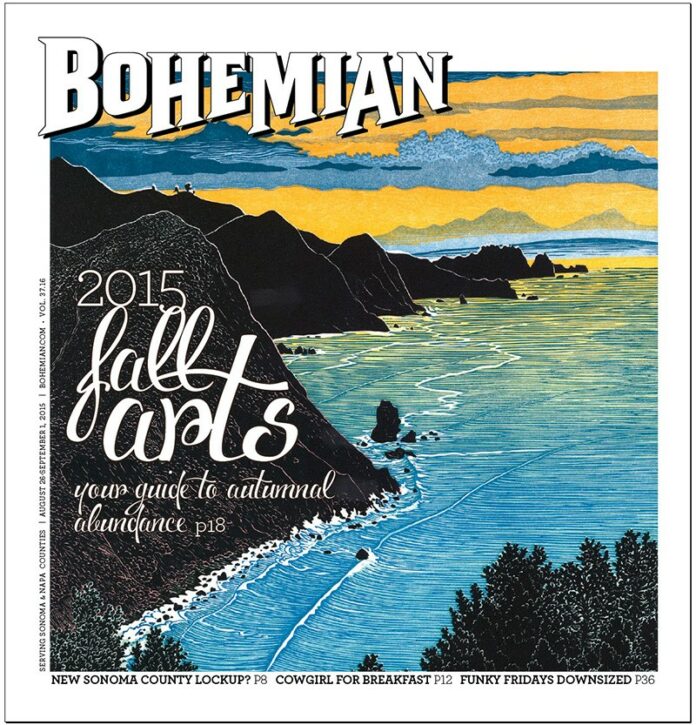
‘California’s Wild Edge’ Marin artist Tom Killion’s woodcut prints stunningly recreate landscapes around California, depicting coastal scenes and several North Bay icons, like Mount Tamalpais, with amazing detail and color. Killion’s original woodblocks, sketch journals and more will also be on display. Sept. 26–Nov. 14. Bolinas Museum, 48 Wharf Road, Bolinas. Friday, 1–5pm; Saturday–Sunday, noon–5pm. 415.868.0330.
Mavis Staples & Joan Osborne The singing legend from ’70s group the Staples Sisters teams up with the platinum-selling songwriter in the highly anticipated Solid Soul tour. Sept. 27. Uptown Theatre, 1350 Third St., Napa. 8pm. $40–$75. 707.259.0123.
Bonnie ‘Prince’ Billy Singer-songwriter and occasional actor Will Oldham’s musical alter ego Bonnie “Prince” Billy has
remained an exciting and mysterious persona in music since the late ’90s, and his experimental output of rustic Americana roots never fails to satisfy. Sept. 27.
Gundlach Bundschu Winery,
2000 Denmark St., Sonoma.
8pm. $40. 707.938.5277.
OCTOBER
Sonoma Music Festival BR Cohn Charity Events presents a stellar lineup of music icons in the heart of wine country. Headliners include Chicago, Ringo Starr & His All-Starr Band and the Doobie Brothers, with America, Pablo Cruise, Michael McDonald,
Gregg Allman and others also performing. Exclusive VIP and onstage packages are available. Oct. 2–4. Field of Dreams,
151 First St. W., Sonoma. $89
and up. sonomamusicfestival.com.
Sonoma County Harvest Fair Hit up the World Championship Grape Stomp competition, slurp some wine and hitch a hay ride, or simply get down to some swingin’ music at this annual tradition. Oct. 2–4. Sonoma County Fairgrounds, 1350 Bennett Valley Road, Santa Rosa. Friday, 4–9pm; Saturday–Sunday, 10:30am–5pm. Free with donation of four nonperishable food items; otherwise, it’s $5 (kids 12 and under, free). Tasting Pavilion tickets (all-inclusive), $55. 707.545.4203. www.harvestfair.org.
Marin Symphony Waterfront Pops Concert Martin Herman conducts the annual Waterfront Pops outdoor concert, this year offering “Classical Mystery Tour,” a Beatles tribute with more than two dozen of the band’s most influential songs. Bring a picnic and a blanket, and stick around for the fireworks display at the finale. Oct. 3. Marin Center, 10 Avenue of the Flags, San Rafael. Gates at 3pm, show at 6pm. $20 and up; children under 12, free. 415.479.8100.
Lang Lang The world-famous pianist, who has appeared at the Grammys and the Olympics, brings his fiery and inspirational performance style to classical selections from Bach, Chopin and others when he opens the Green Music Center’s 2015–16 Performance Series. Oct. 3. Green Music Center’s Weill Hall. 1801 East Cotati Ave., Rohnert Park. 7:30pm. Subscription purchase required. 866.955.6040.
Richard Dawkins Book
Passage presents the evolutionary biologist and outspoken atheist
on the occasion of his new book (due Sept. 29), Brief Candle in
the Dark, in which the author looks back on his life in the intellectual spotlight. Oct. 4. Angelico Hall,
50 Acacia Ave., San Rafael.
4pm. $35 (includes signed book). 415.927.0960.
Calabash The 15th annual benefit supporting Food for Thought, the Sonoma County AIDS Food Bank, features a selection of fine food and wine, a silent auction of gourd art, tours of Food for Thought’s organic gardens and live music played on hand-made gourd instruments. Oct. 4. 6550 Railroad Ave., Forestville.
1–5pm. $45–$50. 707.887.1647.
Mill Valley Film Festival Presented by the California Film Institute, this 38th annual event is always full of stars, with a complete lineup to be announced early in September. Known for its contributions to the upcoming Academy Awards, the fest features the best of independent and world cinema screening at four venues in Marin, and this year the fest adds live music to its offerings. Oct. 8–18. mvff.com.
ArtQuest The long-running program at Santa Rosa High School nurtures talented youngsters from Sonoma
County in seven different
artistic disciplines and offers
an above-and-beyond experience for students. Each fall, the students of ArtQuest present a showcase of their studies and work, including music, live theater, digital arts, dance and more. Oct. 8. SRHS Auditorium, 1235 Mendocino Ave., Santa Rosa. artquestonline.org.
Dean Ween Group One half of Ween, Dean Ween, aka Michael “Mickey” Melchiondo, is a wild man on the guitar and an infectious performer who’s spent the last two decades shredding on stages and amassing fans around the world. Oct. 9. Sweetwater Music Hall,
19 Corte Madera Ave., Mill Valley. 9pm. $40–$42. 415.388.1100.
Cloverdale Performing Arts Center The nonprofit center continues its 2015 theater season with the political farce Sin, Sex & the CIA, written by the bawdy playwriting duo of Michael and Susan Parker. Poking fun at American diplomacy and hypocrisy, this entertaining romp runs Oct. 9–18. 209 N. Cloverdale Blvd., Cloverdale. $12–$18. 707.894.2214.
Cooks with Books: Jacqués Pepin The celebrated French chef shares over 200 recipes in the companion book to his final PBS series, Heart & Soul in the Kitchen. In the book, Pepin shows his close relationship to the land and sea as he cooks for close friends and family, and now he comes to Napa to cook up a couple of the book’s best meals, with wine and conversation. Oct. 10. Peju Winery, 8466 St. Helena Hwy., Rutherford. 5:30pm. $145 (includes signed book). 800.999.7909.
Petaluma Whiskerino The Brothers of the Brush have an old saying that goes, “Whether pencil thin or full Ozark-ian, any mannered whisker makes you brothers kin.” Their 57th annual Whiskerino embraces that ideal with facial-hair competitions ranging from peach fuzz to sideburns to full growth, with live music and family-friendly fun. Oct. 10. Phoenix Theater, 201 Washington St., Petaluma. 2pm. Admission for onlookers is free; contestants pay $5–$10. 707.762.3565.
Twin Stars Conductor Bruno Ferrandis and the Santa Rosa Symphony open their 88th season with a performance of Pax Universalis, a world premiere commission by renowned Arab-American composer Mohammed Fairouz, followed by twin sisters Christina and Michelle Naughton playing like mirror images on two pianos for two enchanting concertos. Oct. 10–12. Green
Music Center’s Weill Hall,
1801 East Cotati Ave., Rohnert Park. Saturday and Monday, 8pm; Sunday, 3pm. 707.546.8742. www.santarosasymphony.com.
Sonoma County Art Trails With more than 170 participating artists, this annual tradition offers a self-guided opportunity to enjoy the abundance of creative local talents and to buy directly from artists while peeking into their workspaces. Oct. 10–11, 17–18. 10am–5pm. Free. Preview exhibit, Sept. 26–Oct. 19, at Sebastopol Center for the Arts, 282 S. High St., Sebastopol. Tuesday–Friday, 10am–4pm; Saturday, 1–4pm. 707.829.4797. sonomacountyarttrails.org.
‘Black Artists on Art: The Legacy Exhibit’ Group show features nearly 40 fine artists celebrating the vibrant creativity that black artists, musicians and performers have given to American and world culture, as first chronicled in the Black Artists on Art book series dating back to the 1960s. Oct. 10–Nov. 22. Petaluma Arts Center, 230 Lakeville St., Petaluma. Thursday–Monday, 11am–5pm. 707.762.5600.
‘Adela Akers/West Coast Fiber Arts’ Spanish-born textile artist Adela Akers, now living in Guerneville, reflects on her career at a group exhibit of West Coast artists, including Gertrud Parker and Rachel Brumer, while taking the medium of textiles in several exciting directions. Oct. 10–Nov. 29. Art Museum of Sonoma County, 505 B St., Santa Rosa. Tuesday–Sunday, 11am–5pm. 707.579.1500.
Sonoma County Jewish Film Festival The SCJFF returns for its 19th year of showcasing films about Jewish life the world over, featuring documentaries, dramas and comedies. Oct. 13–Nov. 17. Rialto Cinemas, 6868 McKinley St., Sebastopol. 707.528.4222.
www.jccsoco.org.
Bioneers Summit Conference Learn about groundbreaking ideas and discuss building a blueprint for sustainable systems. Notable speakers include activist Sister Simone Campbell, writer Kim Stanley Robinson and filmmaker Louie Schwartzberg, with performances and workshops. Oct. 15–17. Marin Center, 10 Avenue of the Flags, San Rafael. $175–$495. 877.246.6337. www.bioneers.org.
[page]
The Bollywood Masala Orchestra In this original theatrical event, lavishly costumed dancers, acrobats, fire-eaters and sword-dancers writhe and twirl to driving rhythms played on a combination of Western and Indian instruments. Oct. 16. Green Music Center’s Weill Hall. 1801 East Cotati Ave., Rohnert Park. 7:30pm. Subscription package required. 866.955.6040.
di Party di Rosa The di Rosa hosts its 14th annual gala benefit art auction celebrating artists of Northern California. After a silent auction, frolic over to the lake for cocktails, dinner, desserts and, of course, dancing. Oct. 17. di Rosa, 5200 Sonoma Hwy., Napa. 5pm. $300 and up. RSVP deadline, Oct. 9. 707.226.5991. www.dirosaart.org.
Dick Dale The 78-year-old surf guitar legend has been in the news for health and financial woes that have kept him touring to save his life. Still, giving it his all every time he hits the stage, which he does twice in the North Bay. Oct. 19 at City Winery, 1030 Main St, Napa. 8pm. $30–$40. 707.260.1600. Oct. 21 at Sweetwater Music Hall, 19 Corte Madera Ave., Mill Valley. 8pm. $35–$40. 415.388.1100.
‘Snoopy & the Red Baron’ Learn about the real Red Baron, and how Charles Schulz’s inventive storylines with Snoopy’s famous alter-ego, the World War I Flying Ace, contained an obsessive attention to historical detail through rare artifacts, original artworks and an expansive selection of cartoons. Oct. 24–Apr. 24, 2016. Charles M. Schulz Museum, 2301 Hardies Lane, Santa Rosa. Weekdays, 11am–5pm; weekends, 10am–5pm. 707.579.4452.
Lake Street Dive Named by Rolling Stone magazine as “Best New Voice” last year, Brooklyn-based singer Rachael Price leads Lake Street Dive in playing an infectious blend of Southern rock, indie pop and jazz that has already propelled the band to world tours and appearances on television shows like Conan. Oct. 28. Green Music Center’s Weill Hall,
1801 East Cotati Ave., Rohnert
Park. 7:30pm. $25 and up. 866.955.6040.
Dave Davies As a founding member of the Kinks, Dave Davies is best known for some of the most iconic guitar riffs in rock history, including massive hit songs like “Lola” and “You Really Got Me.” Now in the Rock and Roll Hall of Fame, Davies brings a full band with him as part of his Rippin’ Up Time tour. Oct. 30. Uptown Theatre, 1350 Third St., Napa. 8pm. $35–$60. 707.259.0123.
‘Drawing/Secrets’ MarinMOCA presents a national juried exhibit based on the theme of “drawing” with artists from around the country, as well as a juried member exhibit, on the theme of “secrets,” that works as a practice course for teaching the next generation of curators from Sonoma State University. Oct. 31–Dec. 6. MarinMOCA, 500 Palm Drive, Novato. Wednesday–Friday, 11am–4pm; Saturday–Sunday, 11am–5pm. 415.506.0137.
Robert Kinmont Kinmont first came to prominence in the late 1960s and ’70s before stepping away from art for 15 years to study Buddhism. This show marks the first Bay Area solo exhibit by the Sonoma-based Kinmont in over 45 years. Selecting a variety of career-spanning works, including photography and sculpture, Kinmont explores the interdependency between man and nature. Oct. 31–Jan. 24, 2016. di Rosa, 5200 Sonoma Hwy., Napa. Wednesday–Sunday, 10am–4pm. 707.226.5991.
NOVEMBER
George Clinton & Parliament Funkadelic The godfather of funk has been getting down since the late ’60s, and to this day shows no signs of slowing, both as a performer who regularly sells out shows across the globe, and as
an activist fighting for artists’
rights and advocating for youth programs across the country.
Nov. 1. Uptown Theatre,
1350 Third St., Napa. 8pm.
$35–$65. 707.259.0123.
Russian Spectacular The Marin Symphony opens its season with a masterworks concert featuring two Russian titans of classical compositions, Rachmaninoff and Tchaikovsky, with guest artist Gleb Ivanov, a young piano virtuoso. Nov. 1 and 3. Marin Center’s Veterans Memorial Auditorium, 10 Avenue of the Flags, San Rafael. Sunday, 3pm; Tuesday, 7:30pm. $40 and up; kids, $15 and up. 415.473.6800.
Isabel Allende World-renowned author and Sausalito resident Isabel Allende returns with her latest novel, The Japanese Lover. Escaping 1939 Poland, young Alma Belasco is sent to live with relatives in San Francisco, where she falls in love with a young Japanese man who gets detained in an internment camp run by the United States military. Allende talks about her new work with travel writer Don George. Nov. 4. Angelico Hall, Dominican University, 50 Acacia Ave., San Rafael. 7pm. $35 (includes signed copy of book). 415.927.0960.
‘Chasing Shadows’ Warren Miller Entertainment releases its annual winter sports film with this fall’s Chasing Shadows. This 66th edition of the touring film series is an inspiring celebration of wintertime passion with the world’s best skiers and snowboarders casting shadows on the world’s biggest mountains. Nov. 4. Roxy Stadium 14,
85 Santa Rosa Ave., Santa Rosa. 707.525.8909. Nov. 14. Marin Center, 10 Avenue of the Flags, San Rafael. 415.473.6800.
Whose Live Anyway? Ryan Stiles, Greg Proops, Joel Murray and Jeff B. Davis improvise comedy scenes with suggestions from the audience, just like their popular TV show Whose Line Is It, Anyway?— but without the FCC to worry about. Nov. 6. Marin Center’s Veterans Memorial Auditorium, 10 Avenue of the Flags, San Rafael. 8pm. $30–$60. 415.473.6800. Nov. 7. Wells Fargo Center for the Arts, 50 Mark West Springs Road, Santa Rosa. 8pm. $39–$59. 707.546.3600.
A Wine & Food Affair Russian River Wine Road gathers over a hundred local wineries for another delicious extravaganza of the two best things in the world. Nab early tickets starting on Sept. 1—they sell out, and quickly. Nov. 7–8. Various locations in Alexander, Dry Creek and Russian River Valley. 11am–4pm. $30–$70. wineroad.com.
Hospice by the Bay’s Annual Ball Celebrating 40 years of care, the hospice puts on its yearly gala, including hors d’oeuvres, dinner, cocktails and wine. Live auction, live music and lively dancing.
Nov. 7. Marin Center Exhibit
Hall, 10 Avenue of the Flags,
San Rafael. 6pm. $250. 415.526.5500. www.hospicebythebay.org.
Surround Sound: Symphony No. 1 Bosnian-born pianist Pedja Muzijevic performs two concertos with the Santa Rosa Symphony before the orchestra performs Brahms’ Symphony no. 1. Nov. 7–9. Green Music Center’s Weill Hall, 1801 East Cotati Ave., Rohnert Park. Saturday and Monday, 8pm; Sunday, 3pm. 707.546.8742.
Napa Valley Film Festival The North Bay’s top film, food and wine extravaganza returns to Napa Valley with 125 films playing in four towns over the course of five days. Red-carpet screenings, sneak previews, industry panels, gala parties and appearances by many A-list Hollywood actors and filmmakers are only the beginning, as the fest also boasts several culinary and winery events to satisfy any taste.
Nov. 11–15. www.nvff.org.
Rain Dance The Mill Valley Philharmonic community orchestra contributes to the efforts to end the drought in California with music to bring on the rains: Brahms’ Symphony no. 3 and Virgil Thomson’s “Soil Erosion and Floods,” a suite from his documentary film score The River. Nov. 13–15. Osher Marin JCC Center, 200 N. San Pedro Road, San Rafael. Free. 415.383.0930.
American Portraits George Gershwin’s 1930s masterwork Porgy and Bess highlights this Sonoma County Philharmonic performance that also includes selection from Samuel Barber, Aaron Copland and Frank La Rocca. Nov. 14–15. Santa Rosa High School Auditorium,
1235 Mendocino Ave., Santa Rosa. Saturday, 7:30pm; Sunday, 2pm. $10–$15. www.socophil.org.
Blitzen Trapper Over the course of 15 years and seven full-length albums, Blitzen Trapper have crafted one of the most compelling and varied catalogues in contemporary rock and roll.
Nov. 16. Sweetwater Music Hall, 19 Corte Madera Ave., Mill Valley. 8pm. $20–$22. 415.388.1100.
Patti Smith The rock and roll icon’s last memoir, Just Kids, was an unforgettable journey through 1970s New York. Now Patti Smith returns with M Train, part memoir, part reflection on the nature of artistic inspiration and the creative life. Smith appears in conversation with another bestselling author when she sits down with Dave Eggers to talk about her new book. Nov. 18. Angelico Hall, Dominican University, 50 Acacia Ave., San Rafael. 7pm. $35 (includes signed copy of book). 415.927.0960.
The Misfits The famed horror-punk band, fronted by original member Jerry Only, revisit their roots and play their 1978 album Static Age in full along with a set of their other fiendishly hardcore punk classics. Nov. 20. The Phoenix Theater, 201 Washington St., Petaluma. 8pm. $25. 707.762.3565.
Janeane Garofalo As her career enters its third decade, American comedy institution Janeane Garofalo is still an unflinchingly honest and brutally funny voice. From her roles in films like Reality Bites and Wet, Hot, American Summer (which she just revisited in the hilarious new Netflix series) to her sellout national standup tours, Garofalo has remained an integral comedic figure whose biting wit only gets drier with time. Nov. 21. City Winery, 1030 Main St., Napa. 7pm and 9:30pm. $28–$35. 707.260.1600.