Mind the Gap

The tracks are laid, the cars are here—but the train stations?

As the highly anticipated Sonoma-Marin Area Rail Transit (SMART) service rolls down the line to a late 2016 opening, an October document released by SMART indicates it will eventually need an additional $120 million to fully develop nine stations along a 43-mile “Phase I” route from San Rafael to Airport Road in Santa Rosa.

The station funds are a piece of the $600 million SMART needs to raise to realize the vision of the rail as a sleek, green and efficient alternative to unrelenting congestion on Highway 101 for commuters in Marin and Sonoma counties.

The SMART project list includes another $124 million for a promised bike and pedestrian parkway along the tracks; $11 million for a presently unidentified second station in Petaluma; $42 million for a Larkspur track extension; and, eventually, $178 million for the Phase II SMART extension, about 25 miles of track north to Windsor, Healdsburg and Cloverdale.

The station build-out has reached a new phase. On Nov. 17, contractors poured the top layer of concrete for a station in San Rafael and were headed north once they finished.

“This really marks the beginning of the station-finish process,” says Matt Stevens, community education and outreach manager at SMART.

The head of the rail district says the $120 million represents station enhancements that would take place over the next 25 years, as he stresses that the document in question is a planning document requested by the regional Metropolitan Transportation Commission.

“We are building the stations from downtown San Rafael to the airport,” says SMART general manager Farhad Mansourian. He insists that the money to build the stations in time for late 2016 is available now. “Absolutely. By
the time we finish our project, we’ll have spent just under
$500 million for the entire system of 43 to 45 miles.”

The station designs were approved by the SMART board of directors earlier this year. According to a report from the May 6 board meeting, the approval came with a board request for a range of improvements that totaled $12 million across the system. Those are listed as “unfunded requested improvements” in SMART documents.

Marin and Sonoma County residents voted to support Measure Q in 2008, which imposed a quarter-cent sales tax for 20 years to fund SMART’s construction, and which has sent over $200 million SMART’s way, according to revenue estimates. SMART has pieced together multiple revenue sources to supplement Measure Q.

Based on information contained in the Oct. 21 planning document, the total price tag will approach
$1 billion by the time the 70-mile system is complete. The additional $120 million for station enhancements would go to pay for more furniture, better access for the disabled under the Americans with Disabilities Act [ADA], and landscaping, along with maps and “bicycle parking/sharing, real-time transit signage, intermodal improvements, security enhancements and other capital improvements for programs such as car sharing,” according to the document.

At least one Marin County official was more than surprised by the late October news of a
$120 million sticker price for enhanced SMART stations. During an Oct. 22 board meeting of the Transportation Authority of Marin, executive director Dianne Steinhauser told the Marin County supervisors that her office, which helps set funding priorities for local transportation projects, was “just receiving information this week about a very large unfunded need around our station sites in Marin, pretty astounding numbers, actually.”

Steinhauser suggested that the county wait and see if other “SMART partners” come forward before sending any money to the rail agency. She spoke of “$10 to $12 million in unfunded needs at each station in Marin. This is a little astounding, this is an immediate need—but I think we’ve got to get our arms around what this is before we make a recommendation.”

Mansourian says that “there is a big confusion here,” as he reiterated that the document in question is actually a planning document requested by the MTC and represents more of a “wish list” of improvements that would be addressed as the rail doubles in ridership, which he anticipates it will, by 2040. Mansourian insists that the trains and stations coming online next year would be ADA-compliant and said the $120 million would be for “more landscaping, more secure facilities and more ADA facilities,” at the stations. He wouldn’t address Steinhauser’s comments about the “immediate needs” of the items.

The SMART plan calls for four Marin County stations. A fifth, the Larkspur extension, has a $20 million pledge from President Obama to pay for part of it, but that money is held up in a transportation bill presently stalled in Congress. SMART officials say stations may have multiple project sponsors as they are being contemplated or completed, and in Petaluma a sponsor has come forward to build a proposed second, eastside station just outside the city limits.

The first station in Petaluma will be on Lakeville Street, site of the Petaluma visitors center. The would-be partner for one of the second stations is the Cornerstone Group, a Petaluma-based commercial real estate company. (Coincidentally, Cornerstone owns and occupies office space in the building that houses the SMART headquarters at 5401 Old Redwood Hwy. in Petaluma.) The firm has been based in Petaluma since moving from San Mateo in 2013, and in just a few years it has made several headline-grabbing buys, including the 2014 purchase of the Press Democrat building on Mendocino Avenue in Santa Rosa.

[page]

Cornerstone’s proposal was the subject of much debate at the last SMART board of directors meeting, held Nov. 18 at SMART headquarters. The meeting served to highlight areas where the promised environmental benefits of the decades-in-coming train are meeting the realities of development and real-estate pressure along the SMART corridor. Nowhere is this more evident than at the edge of the Petaluma urban-growth boundary.

The SMART board is now considering two sites for a second Petaluma station. The first is a privately owned rail yard on Corona Road that was presumed for decades to be the site of any future-looking rail project in town. The other is the Cornerstone site, about a mile east at the former Adobe Lumber site on Old Redwood Highway in unincorporated Sonoma County.

Cornerstone has offered to build the eastside station at the shuttered Adobe Lumber space for “free”—free in the sense that in exchange for an $11 million investment at the Old Redwood Highway station, Cornerstone would get development rights to properties near the downtown Petaluma station.

A growing chorus of critics has highlighted the sensitivity of the Adobe Lumber property, which is outside the “urban growth boundary” established by city voters in 2008 to keep the sprawl at bay as development pressure intensifies in the historically agricultural town.

During last week’s SMART board meeting, the Greenbelt Alliance’s Teri Shore emphasized that the Cornerstone proposal needed to go through a full public process and environmental review before any local decisions were made about it as a potential second station. Mansourian says that it would, but no decisions have been made. “Upon approval by the board, we’ll begin the public process, the environmental reviews. All we’re doing now is real estate negotiations.”

The property, Shore noted, is a “community separator” at the edge of the urban-growth boundary. She reminded the board that Petaluma’s urban-growth-boundary is up for renewal in 2016.

SMART board member and Sonoma County supervisor David Rabbitt, whose district includes Petaluma, has long been a proponent of a second Petaluma station, and said last week that he didn’t have a preference where it was built—only that whatever gets built gets built soon.

Rabbitt said that the Corona Road site was only on the board’s agenda last week because of the emergence of the Old Redwood Highway plan.

“I don’t have a particular choice for either,” Rabbitt said. “I just want a second station.

“We have zero dollars, as does SMART,” Rabbitt added. He warned the board last week that if a second Petaluma station wasn’t built within the “Phase 1” SMART timetable, “it will take years.”

The railroad hopes to start the Phase I service by next December.

The emergence of the Cornerstone proposal put renewed focus on the Corona Road site, and in a letter to the board from Sonoma County Conservation Action (SCCA), director David Keller noted that “Corona Road has been examined and approved as the station location through a long, rich and engaged public process over the past two decades.”

The organization says the consensus in Petaluma is to utilize the Corona Road site, but that’s not how the local paper sees it.

Back in August, the Petaluma Argus-Courier, part of the Sonoma Media Group that owns the Press Democrat, editorialized in favor of the Adobe Lumber site, and noted that it could include a freight train spur to the Lagunitas brewing facility. Fewer dog-faced trucks hauling kegs of beer on Highway 101 is good environmental news, the paper argued.

Absent in the editorial was any mention of the urban-growth-boundary that could wind up an “urban growth exemption” zone in boomtown Petaluma. The Cornerstone site would be closer to the new offices of the 500 or so former Fireman’s Fund employees who were absorbed into the German insurance giant Allianz this month, but SCCA says that while the site “is within the voter approved Urban Growth Boundary, it is nevertheless at the outer edge of the UGB and should therefore be used for lower density development in accordance with the UGB.”

The relocation, Keller wrote, “would inevitably be a first step in pressures for development of new and intensified commercial retail, or residential construction” along and adjacent to the Adobe site.

Petaluma is not the only SMART town with a station in limbo. Also under discussion by the SMART board last week: a
$43 million Larkspur extension and station in that that southeastern Marin County town and transit hub. The board signed off on a $1.4 million contract for the engineering firm RailPros to do the the preliminary design work for the Larkspur project, a 2.1-mile track from San Rafael. The contract was approved even as money to seed construction of the extension remains in Congressional limbo, a point highlighted by board member and Sonoma County supervisor Shirlee Zane.

“This was for design,” Zane says. “The president’s budget is for actual construction.”

Mansourian says the funding picture for the Larkspur track extension “will be more clear on Dec. 11,” when the Senate and House pass a resolution on how they will proceed with the bill.

Walk It Off

0

At some point over the course of the holiday weekend, a turkey will become perhaps the last thing you will want to look at. So why am I directing readers to a winery whose logo is principally that, a turkey? Because to remedy the turkey, one must become as the turkey, which roams around the woods and estate vineyards of Fritz Underground Winery.

Fritz is one of the few local wineries now offering vineyard hikes for active wine tasters. Too often, when wineries talk about a vineyard tour, they’re taking you just a few steps into the nearest vine row to the tasting room. Then they talk about how their vines “struggle,” a fashionable and dramatic way of saying that their terroir is enviously suited for growing fine wine, while pointing to grapevines that are growing something like two-stories tall and still screaming toward the sun.

The Fritz experience takes visitors through several blocks in the 110-plus-acre estate. You see some Zinfandel vines and learn about the St. Peter’s Church clone. Still holding a glass of Sauvignon Blanc, you shelter in the shade of some unruly vines, and find out how the shade affects the flavor. Even folks well versed in wine, my tour guide reports, are thrilled to learn something new while tramping among the vines.

Take the advisory about appropriate footwear seriously, because now the trail gets steep. Up past the culinary garden, the pumpkin patch and a head-trained block of older Zinfandel, the trail wends through a grove of second-growth redwoods. At the end is a spring: though it trickles slowly, it feeds two ponds that provide the vineyard’s water needs.

“Underground” was added to the name around 2000, to emphasize the energy-saving design of the winery, which was set into the hillside in 1979. But keeping wine cool and wine tasters comfortable are two different projects, so the tasting room was recently remodeled and updated with temperature control. Too bad they ditched the wood stove that was necessary to keep the formerly drafty place cozy in cool weather, but in fair weather, the tour ends with a seated, outdoor tasting on the terrace.

Fritz Underground Winery, 24691 Dutcher Creek Road, Cloverdale. Daily, 10am–5pm. Tasting fee, $10–$15. Vineyard hike at 10:30am by reservation, $45. 707.894.3389.

Go to sonomavineyardadventures.com for more information on other vineyard walks.

Season of Giving

0

Singer, songwriter and Marin County resident Michelle Schmitt is a believer in giving back.

Schmitt’s annual holiday concert on the first Thursday of December is a staple of the season, and with the release of her newest holiday album, Another Christmas Story, she’s expanding her charitable efforts and donating 100 percent of album sales and concert tickets to Marin-based nonprofit ExtraFood. She performs Dec. 3 at the Throckmorton Theatre in Mill Valley.

Schmitt credits her father for introducing her to holiday music. “He was a huge inspiration for me,” she says. “He was kind and patient, and he loved holiday music. We learned every song.”

Born and raised in Detroit, Schmitt also grew up on the rock and roll of bands like MC5, as well as folk rock like Crosby, Stills & Nash and Joni Mitchell. She has been playing music since she was 12 years old.

“I think it just became part of my cellular makeup,” she says.

Schmitt moved to California in 1977 and briefly sung alongside Norton Buffalo and others. She stopped performing to raise two sons.

Fast forward 20 years, and Schmitt once again found herself drawn into music in the early 2000s.

“I decided to make a small holiday album as a way to raise funds for St. Vincent’s School for Boys in Marinwood,” she says. The album eventually found its way to music manager Robert Hayes, owner of San Jose’s Sound Management Inc., who offered her a recording contract.

In 2005, Schmitt appeared on a benefit album alongside heavyweight artists like Bonnie Raitt, who would become a friend. Raitt encouraged Schmitt to step out of the studio and perform in front of audiences again.

Schmitt was soon fronting a band that included Raitt’s longtime drummer Ricky Fataar and guitarist George Marinelli. “This whole weird thing happened,” says Schmitt, “where this is the only part of my life that I let go of, that I didn’t try to control, and everything’s working. And I’m happy to pass it along.”

In 2008, friend and restaurateur Heidi Krahling approached Schmitt to help raise funds for ExtraFood, of which Krahling is a board member. Schmitt came up with the idea of a concert, and every year she plays that show with her ultra-talented band.

As part of this year’s concert, everyone will receive a copy of Another Christmas Story, which infuses much of Schmitt’s personal and Detroit influence into rocking, upbeat renditions of classics and eclectic originals.

“At the end of the day, I want to show my gratitude to the community,” says Schmitt. “This is what the holidays are about for me.”

Crab Comeback?

The latest information on Dungeness and rock crab fisheries, posted by the California Department of Public Health (CDPH) last week, shows a continued decline in domoic acid levels where the state has tested them.

But there’s no signal from the California Department of Fish and Wildlife that the declines are enough to trigger a reopening of the fisheries, which were shut down in early November due to high levels of the potentially fatal neurotoxin appearing in the otherwise delicious crustaceans.

The CDPH has updated its handy domoic-acid chart week by week as it monitors crab populations up and down the California coast, from Crescent City in Humboldt County to Morro Bay in San Luis Obispo County.

In order to reopen the crab fisheries, state health officials need to see an average two-week statewide drop in domoic acid levels to below 30 parts per million (ppm).

To the south, domoic levels have dropped far below that mark, but the levels remain high in ports north of Bodega Bay, even as the general trend is looking good across the California coastline as a whole.

Crabs near the Russian River
are coming in at an average of
25.8 ppm of domoic acid, but half the sample set collected on
Nov. 16 had levels that remained above 30 ppm.

To the north, Eureka and Trinidad are both showing high levels of domoic acid in the Dungeness crabs, but the state hasn’t taken samples there since late October, when levels averaged 66.5 ppm in those Humboldt County port towns. Eureka and Trinidad are due for a domoic checkup—keep your claws crossed in the meantime.

Big Woman

0

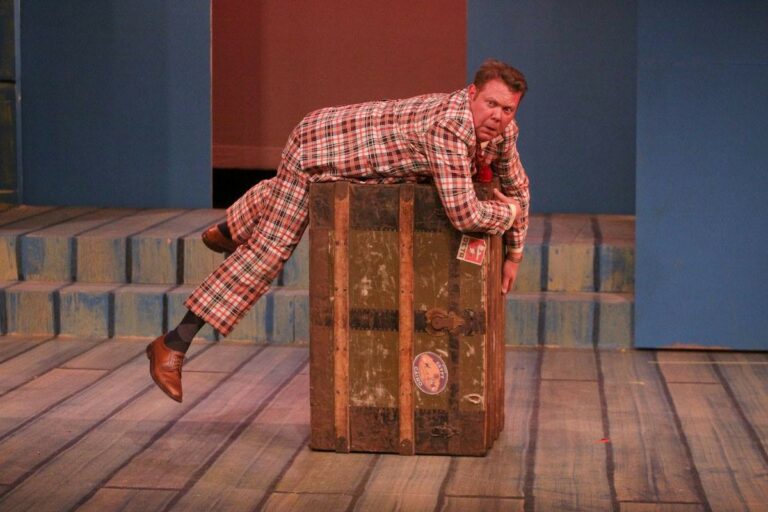
Rebekah Pearson has never seen Little Women in any of its acclaimed screen adaptations, including the renowned 1994 Winona Ryder version. In preparing to play the role of Jo March in Spreckels upcoming production of Little Women: The Musical, Pearson has only allowed herself to read the original novel, by Louisa May Alcott.

“It was a very deliberate choice I made not to watch any of the films,” explains Pearson. “I really didn’t want them to influence my own take on the character. I wouldn’t want to accidentally copy anything that’s been done before by any of the wonderful ladies who’ve played Jo.”

In a season bursting with stage adaptations of classic stories Little Women is one of the few holiday musicals. Directed by Thomas Chapman (who directed last year’s giddy Bell, Book and Candle), this 2005 adaptation by Jason Howland, Mindi Dickstein and Allan Knee was a hit on Broadway, where it helped make stage-and-screen songstress Sutton Foster a star.

Though the musical strays a bit from the detail of the book, it’s a mostly faithful rendering of the indelible tale of the March family, which endures a series of hardships and Civil War–era setbacks with courage, humor and a strong sense of family loyalty.

“It’s just such a wonderful story,” says Pearson, “and Jo March is an incredible role, especially in the musical version. Sutton Foster’s performance makes for some big shoes to fill, but it’s been so wonderful finding ways to make the character my own.”

Asked what she’s learned about Jo that helped her bring life to the character, Pearson doesn’t hesitate.

“Jo is a very passionate person, I think that’s the biggest thing,” Pearson says. “She’s very excited about her life and her own future, beyond the boundaries of what society, at that time, had set for women. She wants to go beyond that, and she does.”

Pearson adds that the musical version, with the added emotional oomph that comes with a great score, helps illustrate Jo’s inner life.

“Jo can be very emotional,” Pearson laughs. “She gets upset easily. She’s rather dramatic. In the musical version, we see that especially well.”

Children of Folk

0

Songwriters Kenneth Pattengale and Joey Ryan were both at a musical crossroads when they met in 2011. Each was going nowhere fast in their hometown of Los Angeles, so they joined flat-picking forces and their harmonizing voices to form the Milk Carton Kids.

Four years later, they’ve got a Grammy nomination under their belts, and their fourth LP,

Monterey, is wowing Americana audiences across the country. The Milk Carton Kids play the Uptown Theater in Napa on Wednesday, Dec. 2.

“We did not want to make [Monterey] in the studio,” says Ryan. “We feel a little stifled in the studio—a heightened sense of pressure where you’re always critiquing and making judgments about your performance.”

For Ryan and Pattengale, the last five years of constant touring meant that their most natural state of creativity was on the stage, and they used that as inspiration for the new record.

“We wanted to make the album in the natural course of the day while we were on tour,” says Ryan. “We tried to have it feel more akin to our performances every night.”

The album was recorded during the Kids’ 2014 tour, on the very stages of the venues where they were performing, rolling tape during the day before the evening’s show.

Live, the pair perform an intense, but approachable set of songs, playing mere inches from each other with their acoustic guitars and often singing into a single mic. Monterey impeccably embodies this aesthetic with up-close-and-personal tales of “Asheville Skies” and “High Hopes” delivered seemingly right to your ear. No backing bands, no fancy productions, just two talented songsmiths picking strings and singing from their hearts.

Recording at venues that included a church in Edmonton, Alberta, a condemned theater in Birmingham, Ala., and the Musical Instrument Museum in Phoenix, Ariz., Ryan says the experience was liberating.

“Knowing that there was always tomorrow, that each take didn’t have to be the one, we never put pressure on ourselves,” he says.

They also didn’t listen to a single recording for the entire length of the tour, which meant that returning to the sessions three months later allowed them to hear and appreciate the songs more objectively.

“It’s hard to be yourself when you’re constantly evaluating,” says Ryan. “This album is a little looser that way. There are imperfections, but it sounds right.”

Paris in my Heart

0

Ever since the abominable attacks on Paris, I’ve been emailing French friends for first-hand news. From what I understand, I believe that my friends have been carrying on as best they can, as though nothing has happened, all the while knowing that something terrible has happened.

I carry on, too, though I feel the weight of sadness and grief. I can’t get Paris out of my head. I remember the city’s cafes, streets, bars, bakeries and the Parisians I have known since 1961 when I first went to Paris, when the French were at war with the Algerians. Bombs exploded. Bullets punctured the walls, and life went on then as now.

Yesterday, to make myself feel better, I took to wearing my French beret. I suppose I look a bit absurd, though no one has laughed or pointed a finger. I don’t know what else to do except go on wearing my silly hat, sending and receiving emails, reading the news, looking for rays of hope and talking to friends here in Sonoma County, which has long maintained cultural ties to France, through French wines, French food, French culture.

I would like to be in France now. I would like to see my friends, to share their sorrow with them, though I know that now isn’t a good time to go. I don’t want to be a voyeur or an emotional thief living off the tragedy of others. I will have to nurse my own wounds, remember my adventures in Paris, the French language and French words, the music and the movies, the City of Light tugging at my heart.

It feels strange to have this kind of connection to a place so far away, geographically speaking, yet so close to my innermost feelings. I wish that my friends here in Sonoma County might put away their bickering, their big and their little annoyances, and pay homage to the spirit of the French who have welcomed Americans to their shores and brought their ideals to America.

Jonah Raskin is the author of ‘A Few French Scenes.’ He lives in Santa Rosa.

Open Mic is a weekly feature in the ‘Bohemian.’ We welcome your contribution. To have your topical essay of 350 words considered for publication, write [email protected].

Letters to the Editor: November 25, 2015

A Musician
and More

John Trubee (“Music at the Margins,”
Nov. 18) is a wonderful, crazy guy whom I met first in the mid-1970s when he was a teenager. He performed at the Avant Garde Festival in Trenton, N.J., and slowly grew into one of the most interesting and quirky musicians I’ve ever known. And he is more than “just” an unknown musician. He donated a kidney. He recorded and distributed prank phone calls. He was the subject of a lecture at Rensselaer Polytechnic Institute by a guy who’d never met him. A famous composer flew across the country just to meet him in person. He’s been the subject of a documentary. And he had (still has?) a mechanical monkey. And much more. Too much more. This article is well deserved!

Via Bohemian.com

It’s About Time

I concur 100 percent with each and every one of the excellent points that you have expressed (Open Mic, Nov. 18). And to this, I will add that we are now living in a post–Andy Lopez world where the marginalization of our disempowered youth, as well as the disparagement of the neighborhoods in which they just happen to reside, is no longer going to be tolerated. It is my sincere hope that those who have been so deeply affected by this horrific incident will continue to speak out about the injustices which still plague us, many of which were catapulted to the forefront of the public’s consciousness after Andy was gunned down. In the meantime, let us continue to do all that we can to ensure that a park in Andy’s neighborhood— which, as of Oct. 22, 2013, hadn’t even been conceptualized, 25 years past the original date that one was promised—will finally come to fruition and that it will, indeed, bear Andy’s name.

Via Facebook

Sea Sick

I was very distressed by this article (“Wait and Sea,” Nov. 18). While I can commiserate with the crab fisherman and the good organizations affected, I was struck by the failure to see the big picture.

We all need to be extremely concerned about what’s going on with the health of our oceans. Toxic algae and the resulting domoic acid problems are getting increasingly worse. This latest event is unprecedented. Coral reefs are dying. Whales are dying. Entire ocean ecosystems are breaking down because of warming and acidification. If our oceans die, we all die.

The other thing that struck me when reading the article is the absurdity that fire departments, educational facilities and health facilities need to rely on such fundraising events for a major part of their budgets. We’re a rich country, and Sonoma County is one of the richest areas of a rich country. If corporations and the wealthy were paying their fair share, all these vital services would have adequate funding. It’s simply despicable that our economic system is so skewed and corrupted by the 1 percent that we can no longer provide basic services to American citizens. It’s time to say enough is enough. The working people of this country deserve much better.

Madison, Wis.

Write to us at [email protected].

Lighting Up

0

The buzz around Matthew Lightner’s Ninebark in downtown Napa preceded the restaurant’s opening last month.

The curly-haired, bespectacled chef came to Napa from New York, where his cooking at Atera earned him wide acclaim, including two Michelin stars. The Tribeca restaurant offers an 18-course tasting menu that goes for $235, with an additional $195 for wine pairings. That’s not what you’ll find at Ninebark.

Ninebark’s à la carte menu is much more casual and far less pricey than Atera, but Lightner’s approachable yet exciting and technically precise cooking is a wonder. The three-level restaurant and bar is a gem that somehow feels like New York to me with its tin-stamped ceiling, brick walls and tiny bathroom sinks made to fit in small spaces. The handsome, first-floor bar offers a few well-chosen snacks—and by all means, order the salt cod beignets ($10), a savory dish of two moist, honey-dabbed, doughnut-like buns piped full of a garlicky cod and potato purée.

The top floor is a swankier lounge with a more inventive cocktail menu (try the Old Ball Game, $16, a riff on an Old Fashioned made with popcorn and peanut–infused rye—think Cracker Jack) and a whiff of leather-steeped grain alcohol served with a single, hand-shaped ice globe. It’s supposed to taste like a baseball game complete with essence of catcher’s mitt).

The top floor’s list of “provisions” is a more sophisticated menu of snacks. The beautifully composed pickle plate ($12) is a must. Seasonal vegetables, like turnips, cherry tomatoes, chile peppers and green beans, are each individually pickled and served with edible flowers on a bed of crushed ice, as is the bracingly fresh flavors of the smoked and cured fish (market price). In addition to the food and drink, the main attraction of the third floor is the rooftop terrace with its sweeping view of the Napa River and Third Street Bridge. The ideal plan is to grab a cocktail on the roof terrace before descending to the second floor to the dining room. That’s where the real action is.

An elevator takes you to each floor, and given the distinct personality of each, it feels like riding in a department-store elevator of old (“First floor, women’s lingerie; second floor, housewares . . .”). Stepping onto the second floor reveals an open-air kitchen with a tabletop-size Big Green Egg smoker perched on the counter.

The poised kitchen staff is clothed not in the stiff kitchen whites you’d expect of a crew from a top New York restaurant, but in a combination of civvies and snap-button kitchen shirts, a casual style the befits the easy-going vibe of the restaurant. Several of the staff followed their chef out West, a fact that speaks well of Lightner, who runs the kitchen with a cool but careful eye for detail as he sends plates out.

The professionalism extends to the dining room floor. Bartenders, servers and managers move with grace and ease, and know the menu cold. There’s a difference between rote memorization and true knowledge of the menu.

My one gripe is the overloud classic rock played in the restaurant. I know this is California and we’re cool and casual and all, but the Doobie Brothers and smoked foie gras are a poor match.

Lightner is known for his use of smoke in savory and sweet dishes alike. The Big Green Egg, a ceramic-lined smoker, is a key tool in his kitchen. But this isn’t barbecue. Lightner uses smoke as an accent, applying it with a fine brush rather than a mop. Case in point is the smoked foie gras ($25), a quivering orb of duck liver lanced with a needle-like skewer and waved over the smoke, then served with saucy white beans and flecks of fermented black truffle. The barely warmed foie gras picks up the smoke flavor but not enough to overwhelm the dish. It’s outstanding.

I also loved the smoke-perfumed roasted sturgeon belly paired with the piney sweetness of shaved raw matsutake mushrooms ($14). So good. The citrus-dressed, barely grilled avocado salad ($12) with kohlrabi was chilled and firm yet retained the flavor of its moments on the grill.

It’s not all smoke. The aged beef tartare ($25), coarsely diced ground beef, lobster tail, ahi, pickles and raw egg yolk gets my vote for best of class. I could go on. And I did.

From the list of entrée-sized plates, the charcoal-roasted duck ($38), fanned out like a winning hand of cards, was juicy, tender and meaty. My favorite was the roasted pork neck ($28). I expected pork pulled from the fatty and cartilaginous upper vertebrae, but instead got uncommonly moist slices of meat, like pork tenderloin but with no hint of dryness. Where have butchers been hiding this cut of meat?

The hits kept coming with dessert, also made by Lightner. I’ve had several variations of s’mores, molar-aching sugar bombs of gummy marshmallow and chocolate, but here the campfire classic ($9) never tasted so good. Best of all was the fig leaf softserve ice cream served with a dried fig wafer dotted with fig and red wine jus and nasturtium petals ($9). Beautiful, light and delicious.

Napa’s once moribund dining scene continues to grow in depth and I predict Lightner’s elevated but approachable cooking will blow it wide open. Welcome to Napa, chef.

Ninebark, 813 Main St., Napa. 707.226.7821.

Bruno Ferrandis to Depart from Santa Rosa Symphony

photo credit: Clay McLachlan

Santa Rosa Symphony board president Sara Woodfield recently announced that music director and conductor Bruno Ferrandis will end his tenure with the Symphony when his contract expires at the end of the 2017-2018 season.
Ferrandis, only the fourth musical director in the Symphony’s 88-year history, plans to pursue an international role as a guest conductor.
Of the decision, Ferrandis said he hopes to conduct more opera, collaborate with contemporary composers and travel the world. He also thanked the community in Sonoma County for their “fabulous faith and support for the Santa Rosa Symphony over so many years.”
Highlights of Ferrandis’ time with SRS include the Symphony’s move to the Green Music Center’s Weill Hall in 2012. Also, in 2013, the Symphony was awarded an ASCAP Award for Adventurous Programming of Contemporary Music, in recognition of Ferrandis’ balance of traditional classic repertoire with newer works.
Woodfield also announced the Symphony’s board of directors will begin an international search for the next music director, with finalists conducting five of the seven classical concerts in the 2017-2018 season before Ferrandis leads the orchestra for the final two concerts, both of which are sure to be filled with personal favorites and emotional works.

Mind the Gap

The tracks are laid, the cars are here—but the train stations? As the highly anticipated Sonoma-Marin Area Rail Transit (SMART) service rolls down the line to a late 2016 opening, an October document released by SMART indicates it will eventually need an additional $120 million to fully develop nine stations along a 43-mile "Phase I" route from San Rafael to...

Walk It Off

At some point over the course of the holiday weekend, a turkey will become perhaps the last thing you will want to look at. So why am I directing readers to a winery whose logo is principally that, a turkey? Because to remedy the turkey, one must become as the turkey, which roams around the woods and estate vineyards...

Season of Giving

Singer, songwriter and Marin County resident Michelle Schmitt is a believer in giving back. Schmitt's annual holiday concert on the first Thursday of December is a staple of the season, and with the release of her newest holiday album, Another Christmas Story, she's expanding her charitable efforts and donating 100 percent of album sales and concert tickets to Marin-based nonprofit...

Crab Comeback?

The latest information on Dungeness and rock crab fisheries, posted by the California Department of Public Health (CDPH) last week, shows a continued decline in domoic acid levels where the state has tested them. But there's no signal from the California Department of Fish and Wildlife that the declines are enough to trigger a reopening of the fisheries, which were...

Big Woman

Rebekah Pearson has never seen Little Women in any of its acclaimed screen adaptations, including the renowned 1994 Winona Ryder version. In preparing to play the role of Jo March in Spreckels upcoming production of Little Women: The Musical, Pearson has only allowed herself to read the original novel, by Louisa May Alcott. "It was a very deliberate choice I...

Children of Folk

Songwriters Kenneth Pattengale and Joey Ryan were both at a musical crossroads when they met in 2011. Each was going nowhere fast in their hometown of Los Angeles, so they joined flat-picking forces and their harmonizing voices to form the Milk Carton Kids. Four years later, they've got a Grammy nomination under their belts, and their fourth LP, Monterey, is wowing...

Paris in my Heart

Ever since the abominable attacks on Paris, I've been emailing French friends for first-hand news. From what I understand, I believe that my friends have been carrying on as best they can, as though nothing has happened, all the while knowing that something terrible has happened. I carry on, too, though I feel the weight of sadness and grief. I...

Letters to the Editor: November 25, 2015

A Musician and More John Trubee ("Music at the Margins," Nov. 18) is a wonderful, crazy guy whom I met first in the mid-1970s when he was a teenager. He performed at the Avant Garde Festival in Trenton, N.J., and slowly grew into one of the most interesting and quirky musicians I've ever known. And he is more than "just"...

Lighting Up

The buzz around Matthew Lightner's Ninebark in downtown Napa preceded the restaurant's opening last month. The curly-haired, bespectacled chef came to Napa from New York, where his cooking at Atera earned him wide acclaim, including two Michelin stars. The Tribeca restaurant offers an 18-course tasting menu that goes for $235, with an additional $195 for wine pairings. That's not what...

Bruno Ferrandis to Depart from Santa Rosa Symphony

Santa Rosa Symphony board president Sara Woodfield recently announced that music director and conductor Bruno Ferrandis will end his tenure with the Symphony when his contract expires at the end of the 2017-2018 season. Ferrandis, only the fourth musical director in the Symphony's 88-year history, plans to pursue an international role as a guest conductor. Of the decision, Ferrandis said he...
11,084FansLike
4,606FollowersFollow
6,928FollowersFollow