Picturesque

Studio Space Santa Rosa was born out of a need for more space.

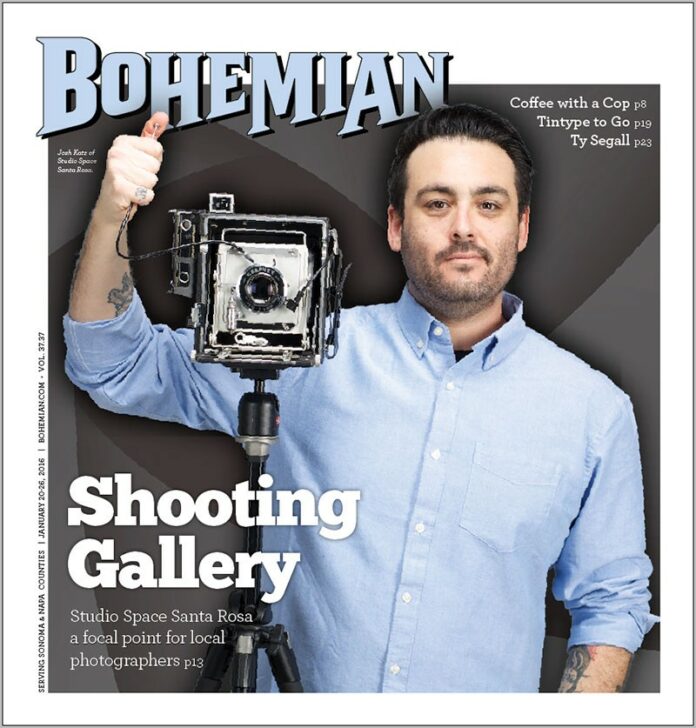
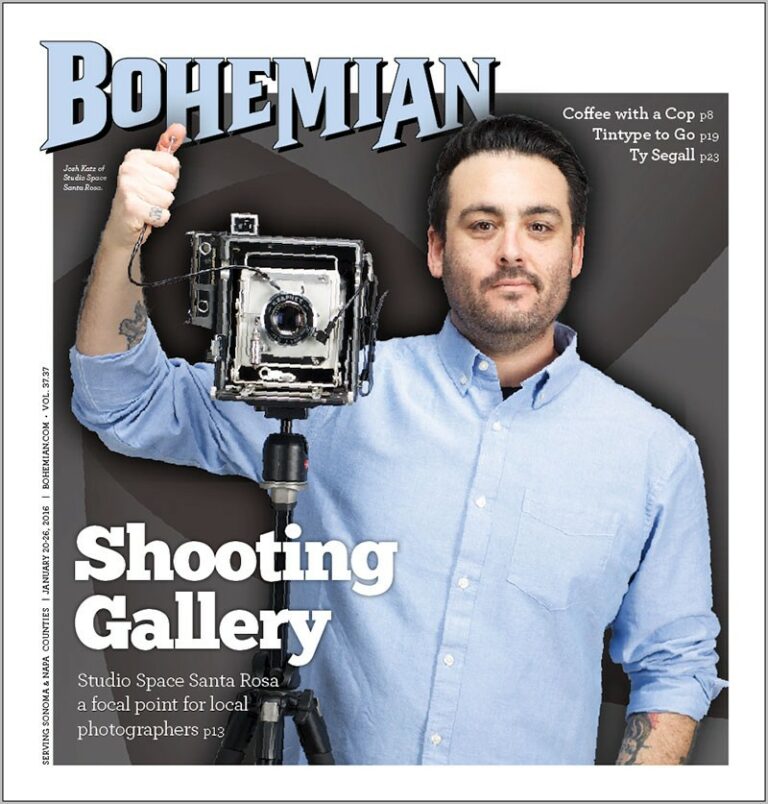
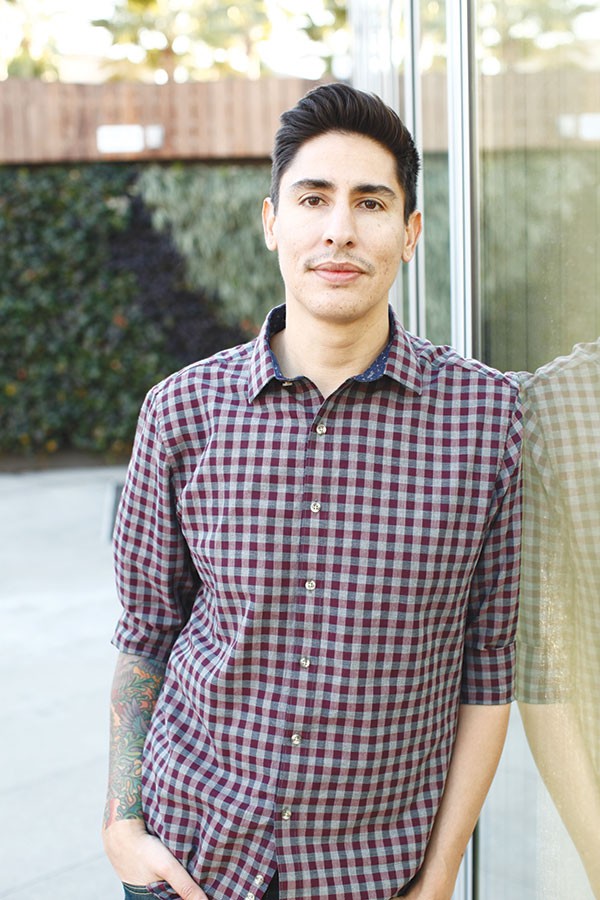
“We were all working out of our garages and cramped bedrooms,” says Josh Katz, co-owner of Studio Space Santa Rosa, Sonoma County’s new and only full-service, professional photography studio for rent and hire.

Katz, a long-time professional photographer, was fed up with shooting clients in his home, and two years ago started looking for a place where he could expand his work. When he couldn’t find a full-service workspace to shoot in, he decided to create one.

Katz joined forces with friend and fine artist Jeff D’Ottavio, and now the two co-own and operate Studio Space Santa Rosa in an industrial block on Piner Road where they offer photography and video studio rentals complete with seamless backdrops, photographic light packages and their expertise, available at reasonable rates.

The photography came first. The business was an afterthought.

“I’ve been taking pictures ever since I was a kid,” says Katz. “My grandfather was a journalist and shot also; that’s where I got my interest in photography originally.” Katz’s grandfather, David Zeitlin, worked for Life magazine, covering Hollywood in the ’50s and ’60s.

“I was really fortunate that my parents noticed early on that I had an interest and gave me a camera when I was four or five,” continues Katz. “And I’ve had a camera in my hand since.”

Both Katz and D’Ottavio grew up bouncing between family in the North Bay and Los Angeles. Katz went to film school “a couple of times,” he says, attending City College in San Francisco and Los Angeles. “I have six years’ worth of a two-year college under my belt,” Katz laughs, “so I feel pretty confident in my skills.”

Katz worked for years in Los Angeles in film and television production before moving to Sonoma County permanently a decade ago. He met D’Ottavio while working at the Rialto Cinemas in Sebastopol, and the two quickly bonded over their artistic interests.

With a client list that ranges from Russian River Brewing Company to local bands, Katz knew he needed something more than a room in an apartment if he was going to take his photography to the next level. In addition to his professional gigs, Katz’s ongoing personal photo project is an intimate and expressive portrait series, snapped on peel-apart instant film shot with a large-format camera.

D’Ottavio excels in several fine art media, recently working in “pyrography,” or wood-burning art. Like Katz, he was dissatisfied working from his home. “We talked about renting a space that we could share for our own work, but never very seriously. Then one day I got a bug up my butt and started looking,” says Katz.

He and D’Ottavio found the small Santa Rosa space in August 2014. “There are a lot of places for rent in Sonoma County, but nothing super-affordable,” Katz explains. Originally, there were four partners splitting the rent, though two of the original partners moved out of the North Bay to pursue other projects, leaving Katz and D’Ottavio holding a lease that doubled in price overnight.

“We did all the work to get it up and running, get it clean and usable, and all of a sudden it was just us paying the rent,” explains D’Ottavio. “It’s not really easy to survive off of selling art work. It took about five years for me to get to that point where regular checks were coming in, and it’s the same with photography; you can’t just snap a bunch of pictures and sell them off and pay your rent.”

The two had to find a way to make the space work for them.

“Someone said to me, if you turn this into a studio that people can rent, there’s nothing else like that around here,” says Katz. “There wasn’t a place around here that did what we were talking about doing. I think the closest is San Rafael.”

Together, Katz and D’Ottavio built the warehouse space into a professional studio boasting, among other things, a large cyclorama wall that curves from wall to floor seamlessly. Cyc walls are often used in the background of photo and video shoots to suggest an unlimited space behind the subject.

They also bought professional lighting gear that included several soft light boxes and a massive crane for positioning. “A lot of photographers around here don’t own lights. They’re an expensive investment,” says Katz. “Oftentimes, someone will come in to use the space and go, ‘Wow, what the hell are those? Can you show me how to use that?'”

“Pretty early on, we realized that it could cater to a lot of different people,” says D’Ottavio. “One of our first clients came in and she only shot in natural light, and we have plenty of good natural lights from skylights. And we can mimic any kind of lighting with our equipment.”

[page]

The space has been used for product work, fashion work, music video shoots, “and some work I don’t know what they’re doing in there,” adds Katz. “It’s pretty open to whatever someone can think of.”

Still, even with everything coming together, Katz and D’Ottavio could never have imagined what happened last April.

“We ended up moving due to circumstances that were out of our control,” says Katz.

“The neighbor burned the place down,” interjects D’Ottavio.

Just as the business was starting to gain traction, an accidental fire in the unit adjacent to them damaged the facility and all the equipment and work they had put into it. “I got a call from the landlord in the middle of the month, which I let go to voicemail, and then we came in that morning and the place was boarded up,” remembers Katz.

Luckily, their landlord and insurance helped them out of a potentially business-ruining mess. They moved to another, larger space in the same block and set about building Studio Space Santa Rosa from the ground up—again.

“It is what it is,” says Katz. “We were out of business for a couple of months, but in the end, it all worked out. It’s weird to say that a fire shutting down your business is a pretty painless experience, and I wouldn’t recommend it to anyone, but it worked out.”

It took another three months to get back up and running, including buying all the lighting again and building a new, 18-foot cyclorama wall. Still, they both see the move as a blessing in disguise.

“We have a huge amount of space now, and people seem to enjoy having that large space to work in,” says Katz.

Since reopening last September, Studio Space Santa Rosa has continued to grow its client list and has been busier than ever.

The new, bigger space also allowed Katz and D’Ottavio to begin hosting monthly pop-up gallery art shows, an idea they talked about but never realized in the original space.

Each month, Studio Space opens its doors for a one-night showing of photography and art from local talents like Sara Sanger and Zohn Mandel (see “Behind the Lens,” p14), as well as Katz and D’Ottavio’s works and those from emerging artists who wouldn’t have the chance to display their art publicly anywhere else.

“We know how hard it is to get your work seen. So we decided once we got this space and could do the gallery shows, we wanted to give people a place to show their work where they haven’t been able to before,” says D’Ottavio. “And if that can encourage more people to do this stuff, get people painting and taking pictures and learning their craft, that’s perfect. That’s what we’re here for.”

For photographers interested in utilizing Studio Space Santa Rosa,
the time is now, as Katz and D’Ottavio are also offering a New Year’s
special with 20 percent off the usual rates. For more information, visit
www.studiospacesantarosa.com.

[page]

BEHIND THE LENS

SARA SANGER

What is your Hometown?

I grew up in Forestville, but moved to Santa Rosa the minute I could.

How did you first get into photography?

I was attending the Santa Rosa Junior College as a teen, and had done some modeling as well. I felt really uncomfortable in front of the camera. A lot of my early experience around photographers didn’t leave a great example for me. I really didn’t even see myself in that position, as I wasn’t really pushy or driven to manipulate people, which was my experience working with photographers as a young woman.

Once I started taking classes at the JC, I realized that I could put my own vision into what I wanted to photograph. By the end of the semester, I was building my own darkroom and scraping all the camera stores for affordable options. I went fast from 35mm to medium format to large format. Within a year, I was hanging out at the local photo stores all day, eventually getting a job at a photo store with some great folks.

Do you have any other formal training?

I have a BA in fine art with an emphasis in photography from Sonoma State University. I’m glad to have gotten a broad degree that included general education, sculpture and drawing; the skills learned in other classes are the ones that I come back to really often. Even math class has proved itself useful to me!

After college, I transitioned to assisting other photographers in Sonoma County and the Bay Area, and the humbling nature of finding out that college didn’t really prepare me for much in the professional photography world was pretty jarring. I learned fast, and at the time, film was being replaced by digital in the pro world, so I got to learn Photoshop and some amazing technology on the job.

Who are your favorite photographers? Are you inspired by any particular photographer’s work, either growing up or currently?

Much like the local music scene, my inspiration is my peers, for sure. Brian Gaberman has always been a great photographer, and extraordinarily technical but with so much soul in his photos. He photographs a lot of skateboarding images, which is something I don’t even know much about, but his composition and use of blacks is great.

It’s always inspiring to see photographers who can work in the commercial world and still have their own voice. As far as “famous” photographers, I’ve always loved Wolfgang Tillmans, who I will never photograph like at all, but his sense of humor and use of a flat natural light is something I am pretty in love with. Anton Corbijn has taken some of the most iconic music portraits of my generation.

What cameras do you use the most and why?

I use Canon cameras. I shoot with a Canon 5DSr and a Canon 5D Mark III. I’ve invested in some great lenses, like tilt shift and wide aperture lenses, which have helped me transition my look in digital photography from the one I developed using a Mamiya 645 film camera and 4-by-5 field camera.

And lights! Everyone always wants to know about the camera, but it’s equally about controlling light. I use a lot of strobes in my work, but am trying to get back to more natural-light shoots.

What kind of photography do you do professionally?

I currently work as a full-time commercial advertising photographer specializing in wine, food and cool people.

What kind of photography do you do for fun or art?

I still have some fun projects with musicians, which is what I originally wanted to do. I occasionally even shoot a music video. I shoot a lot of stuff for my own band, the New Trust, which feels really good to represent our music and us in a visual way we can control. I’m so lucky to get to work with great friends and artists locally like the Velvet Teen, Emily Whitehurst, Ashley Allred, and will forever keep doing it.

Do you have any dream photo projects?

My goal this last year was to work with a larger team, using stylists and professional models more for projects, and it’s made a huge difference in my work. I got to shoot an amazing campaign for Sonoma County Tourism, and I feel weirdly emotional about getting to have a small part in representing this place and helping to make our imagery for tourism inclusive, diverse and fun.

sarasanger.com.

ZOHN MANDEL

What is your Hometown?

I’ve never really known how to answer that question, since I grew up in so many different places in California and other states. My mom currently lives in Napa, so that’s usually my go-to answer. I’ve lived in Santa Rosa for eight years.

How did you first get into photography?

I always had disposable cameras as a kid. I grew up enjoying observing people and life around me and capturing things that seemed really special.

Do you have any other formal training?

My mother showed me the ropes of a 35mm film camera before high school. Since then, I have taken photography classes as high school electives, college courses and some alternative courses at the RayKo Photo Center in S.F. But honestly, most of those classes felt really restraining to me, although fundamentally important. I tend to learn more by messing around and experimenting on my own.

Who are your favorite photographers? Are are you inspired by any particular photographer’s work?

I’m really inspired by Sally Mann, Mary Ellen Mark, Diane Arbus and Francesca Woodman. All of these women capture a darkness in humanity that I really admire and appreciate. I have always been intrigued by the concept of Cindy Sherman’s work, although I have never been comfortable with her actual images. I love the amount of vulnerability she encompasses, and that her work reflects self-exploration.

What cameras do you use the most and why?

For 35mm film, I use an old Minolta that I scored from Sacks thrift store years ago. That thing is my baby. I have an ongoing love affair with my old Polaroid land camera, although I haven’t been using it much lately. Digitally, I just upgraded from a Nikon D80 to a Nikon D750, and I often use that for paid work. I’ve noticed that Santa Rosa isn’t a big Nikon community, so I hope there won’t be a mob standing outside of my house with pitchforks now that I outed my love for the Nikon digital platform.

What kind of photography do you do professionally?

Portraiture is my niche. Portraits of women are my strong suit, although I have been trying to break out of shooting primarily females. I have done a lot of fashion work as well, and I also love working with musicians. Some years, I run a special on awkward/weird holiday family portraits, which is always a blast.

What kind of photography do you do for fun or art?

I enjoy quirky stuff and getting creative with people in collaboration. I have a habit of doing very impromptu shoots when they’re for fun. Creatively, I work best on the fly. Spontaneity has always added something magical to my work, and I cherish the creative energy that comes with it. I haven’t ever really been one for planning, but I love grabbing a friend and going out to the coast or setting up my lighting in my studio and just having fun together.

Do you have any dream photo projects?

I have always secretly wanted to be a photojournalist and travel the world capturing moments of the human experience. I think imagery is such a strong way of communicating, maybe more so now than ever, with how the internet and social media supplement our daily lives. Our culture is so tapped-in right now in such a fast-paced way that I would want to capture some real grit and glow of the world, and share it in hopes it can reach people in some way and connect people’s hearts to the bigger picture for a moment.

zohnmandel.com;
zo********@***il.com.

COLLIN MORROW

What is your Hometown?

I was born in Healdsburg. I have continued to live in Sonoma County for the last 25 years. Right now, I live in Roseland with two roommates in a wonderful restored 1930s turquoise home with a colorful garden and a wood stove.

How did you first get into photography?

Since about the age of 13 I remember playing with cameras. It wasn’t until I purchased my first camera [Olympus Stylus] at the local Goodwill when I was 17 that I began photographing more purposefully and intentionally. My grandfather always had a camera on hand. He didn’t treat photography like a fine art per se, but was a big believer in preserving memories, especially of his family. My grandmother, on the other hand, explored photography for the fine art that it is. She shot film, both 35mm and 120. She even built a darkroom attached to her house and began printing.

Do you have any other formal training?

I’ve played with cameras for many years, but it wasn’t until about four years ago that a friend named Zachary Sumner took me under his wing and showed me the ropes. I started taking classes at the Santa Rosa Junior College, where I have been a student off and on again for the last five years. I also work at Jeremiah’s Photo Corner in Santa Rosa. Working there is helping me stay consistent in my desire to experiment more in photography.

Who are your favorite photographers?

Alec Soth is someone who I recently discovered. He is a Minneapolis-based photographer, who works primarily with an 8-by-10 land camera. His work entitled Sleeping by the Mississippi was what got me hooked. Ren Hang is a phenomenal photographer, I am deeply inspired by his portraiture. He is a master at flash photography.

What kind of photography do you do for fun or art?

I’ve currently been focusing on portraiture, combined with some landscape. I spent the fall working with my roommates, creating a portfolio of masked portraiture. This coming year, I am taking time off from school so I can start working on personal projects and client-based work. I also plan on scanning and compiling a body of work of my grandmother’s negatives and photographs, and sharing them.

Do you have any dream photo projects?

I would love to photograph the drag community. I am deeply drawn to drag culture, and I would love to document the process, the motivation, the creative energy, the love, the struggle, the fight they endure while crafting female/male illusion. I am obsessed with queer culture.

ca***********@***il.com;
cmorrowphotography.tumblr.com.

NEIGHT ELDER

What is your Hometown?

I was born in Santa Rosa in 1975, raised in Sebastopol.

How did you first get into photography?

I’ve always loved music, photos and videos. In 2004, I had a bicycle accident that caused a spinal-cord injury and landed me in a wheelchair. At the time I owned a pizza shop, Borolo’s Pizza. In 2009, I sold the pizza shop and started a record label with my good friend Jeff Mahoney called Burning Token Records. We bought a professional video camera and began making as much content as possible for our website. We grew Burning Token into a multimedia company, making commercials, wedding videos, sport videos and music videos.

Do you have any other formal training?

In 2010, I bought my first DSLR camera as a second video camera, and I started shooting photos with it, mainly of bands at live shows. Through the process of filming and taking photos of hundreds of bands, wedding and sporting events, I learned how to work my cameras and compose a decent shot.

Who are your favorite photographers?

I watched documentary’s on the legends of landscape photography like Ansel Adams and Edward Weston, as well as modern photographers like Trey Ratcliff , Aaron Nace and John Paul Caponigro. The photography community in Sonoma County is full of so much talent. Bob Bowman, Mike Shoys and Diane Hill have all been such a huge influence on my work.

What cameras do you use the most and why?

Nowadays, I’m using the Sony
a7r II for my landscape photography, and I use the Canon 5D Mark III for portrait and product shots. The Sony makes beautiful large prints.

What kind of photography do you do professionally?

I still film and take photos of bands or business products through Burning Token. I also have prints of my work available at my website.

What kind of photography do you do for fun or art?

Once I discovered night photography, it became a full-blown addiction. I started to photograph around sunset and into the night. Sonoma County is an amazing place for night photography. We have the Milky Way visible at our coast and the brilliant lights of San Francisco one hour to the south. There’s something so peaceful about being out at night and capturing it with photography. In 2015, I started making prints and showing at galleries and coffee shops. And for 2016, I made my first Sonoma County calendar.

Do you have any dream photo projects?

I plan on doing a calendar every year and maybe even a Sonoma County coffee-table book by the end of 2016. Also this year, I plan to venture out into California. Places like Yosemite and Death Valley are at the top of my list.

neightelderphotography.com;
burningtoken.com.
For more work by profiled photographers, read this story at bohemian.com.
Metal Head

0

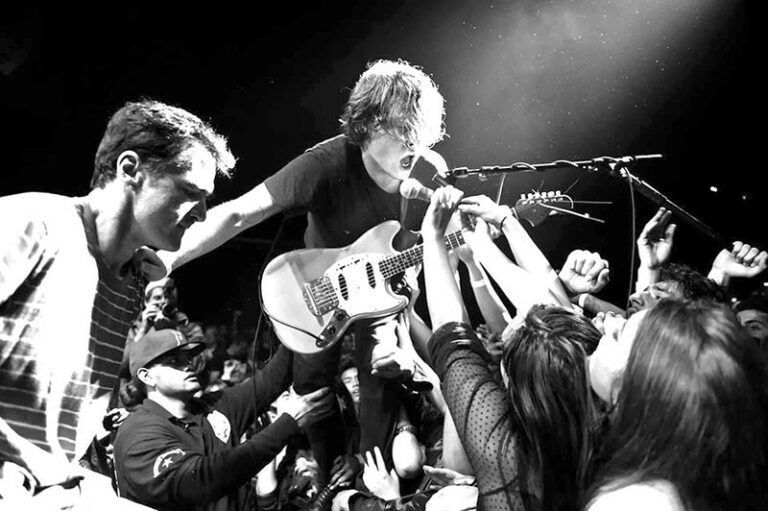
North Bay fans of metal and hardcore may have noticed a resurgence in the genres since 2011. That’s the year Ernest Wuethrich took the reigns of the local metal scene as a music booker and promoter.

Wuethrich’s next major show is on Saturday, Jan. 23, at Annie O’s Music Hall in Santa Rosa, and features Mississippi rock and rollers Saving Abel sharing the bill with Petaluma’s Motogruv, who are celebrating a reunion after spending the last few years on hiatus.

The next week, Wuethrich hosts an album-release show on Jan. 29 at the Arlene Francis Center for Sonoma County doom-metal lords Oden Sun, lead by infamous North Bay metal icon, regurgitator and Skitzo frontman Lance Ozanix.

Wuethrich, a 36-year-old San Jose native, moved to Santa Rosa after getting a degree in landscape architecture from UC Davis. A passion for hardcore metal led him to booking live shows, though, with no previous experience in organizing concerts, he had to learn by trial and error.

“There was definitely some problems I had to overcome at first,” says Wuethrich. “I talked with [Phoenix Theater manager] Tom Gaffey at length about this. It seemed like the scene was very organic during the early and late ’90s, and everyone came out to concerts.”

Wuethrich wanted to recapture that spirit. Sonoma County didn’t have much of a local metal scene when he started in 2011, and aside from the occasional national act coming through, booking agents were largely passing on the market for shows in San Francisco and Sacramento.

By soliciting local bands and scouring the internet for national acts, Wuethrich soon started booking shows at underground Sonoma County venues like the Transient Lounge in Santa Rosa, a short-lived punk warehouse, under the name Gather Booking and Management, the moniker he still uses for his business.

In the last couple of years, Wuethrich has booked large-scale national, regional and local hardcore bands including Sacramento’s Conducting from the Grave, Santa Cruz’s Arsonists Get All the Girls, Los Angeles outfit Otep, Houston thrashers DRI, Baltimore’s Misery Index and many others.

Today, the bands are starting to come back to the North Bay because of Wuethrich’s efforts. Currently, he is booking events as Sonoma County Metal and Hardcore in an effort to bring some cohesion into a widely diverse music scene.

“There are kids who are starting to identify with a positive metal community,” Wuethrich says, “and that’s what I want to develop.”

Letters to the Editor: January 20, 2016

Chickens Are Bad

It was interesting to read that there is a new “-atarian” in town, the climatarian! (“Climate Menu,” Jan. 13). The growing awareness of the impact of our food choices on the planet is encouraging, but this article only takes us halfway across the road of climate disaster.

While it’s true that beef and dairy contribute significantly to climate change, when compared to plant foods, pork and chicken are extremely harmful as well. If everyone in the United States skipped one serving of chicken per week, the carbon dioxide savings would be the equivalent of taking more than half a million cars off our roads. From an ethical standpoint, because chickens’ bodies are so much smaller than cows’, they feed less people, so choosing chicken over beef can cause more animals to suffer and die. Don’t just switch from beef to pork or chicken; get the slaughterhouse out of your kitchen and choose a carbon-friendly, compassionate vegan diet.

Executive director, Compassionate Living, Penngrove

While it is true that a single bovine has a larger greenhouse-gas footprint than one of the smaller animals we breed for human consumption, switching to eating chicken is not the way to solve the climate problem. Over 8 billion of the 9 billion animals bred for human consumption every year in the United States are chickens. The sheer number of chickens being bred every year puts their environmental footprint on par with the larger animals. It may even be worse.

For example, billions of chicks are hatched in incubators, which require vast amounts of energy to run, for the egg-laying industry. Half of those chicks will be male and therefore no use to the egg industry and will be killed within hours of their birth. The bottom line is that animal agriculture cannot be made sustainable in a
world with a growing human population and demand for animal products,
and a dwindling supply of resources to support it.

Santa Rosa

Seeing Redwood

Santa Rosa, in a wiser era, provided spacious decks for cars in the heart of the city. This current council plans to pave Courthouse Square and create two new streets with bumper-to-bumper traffic encircling a small, unappealing plaza (Debriefer, Jan. 13). Idling vehicles will fumigate outdoor diners and kids nearby. Majestic, thriving redwood trees will be sacrificed to appease a few short-sighted business owners who want street parking for themselves.

No design offered for the new Courthouse Square invites pedestrians to shop downtown and enjoy events; there are no areas with seating for family or friends, no public restrooms, no bus stop in any proposal. If the people driving this multimillion dollar boondoggle did their research, they would know (maybe they do?) that prescient urban architects are advising cities to stop adding parking spaces.

Surely Santa Rosa residents do not support more traffic congestion. They would choose an attractive, pedestrian-friendly downtown that values the natural beauty and history of the plaza we know, moves people about in electric carts, and ensures pleasure, not pollution, by design.

Santa Rosa

Write to us at le*****@******an.com.

Emotional Finale

0

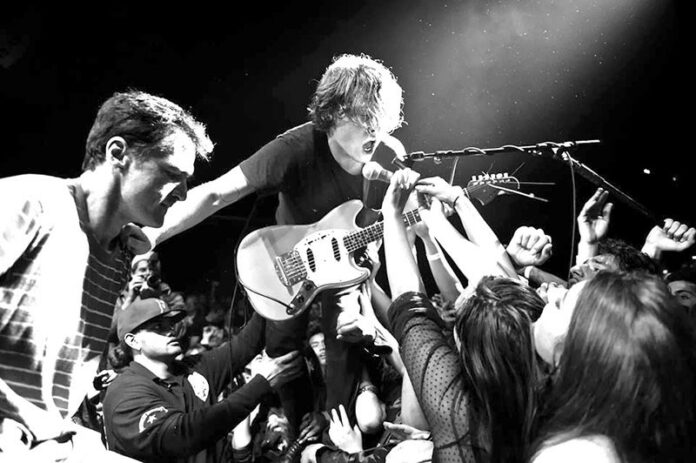
No one does it like Ty Segall. The Bay Area rock and roll multi-instrumentalist, who has played in San Francisco rock bands like Sic Alps and his own power trio Fuzz, announced his latest solo album, Emotional Mugger, by mailing the album on old VHS tapes to media outlets last November.

This Friday, Jan. 22, Emotional Mugger comes out in non-VHS formats via Drag City, and Segall, who just played two consecutive nights at the Fillmore, comes to Santa Rosa on Jan. 24 for a concert at the Arlene Francis Center hosted by the Pizza Punx.

Emotional Mugger is a big, burly, fuzzed-out beast of a record, containing 11 thumping tracks of garage-rock weirdness. To celebrate the new album, Segall has assembled a new backing band, the Muggers, to join him on tour.

Segall’s show in Santa Rosa will be the last concert put on by the industrious Pizza Punx, who are disbanding after three years of putting on some of the best underground rock shows in the North Bay. The group is reportedly transitioning into a few different projects, including a new concert booking collective called Shock City. For this final send-off, the punx are paying it forward and donating a portion of the proceeds to the Rape, Abuse and Incest National Network, the largest anti–sexual violence group in America.

Ty Segall & the Muggers play on Sunday, Jan. 24, at Arlene Francis Center, 99 Sixth St., Santa Rosa. 7pm. $12. facebook.com/pizzapunx666.

Warmer-Upper

0

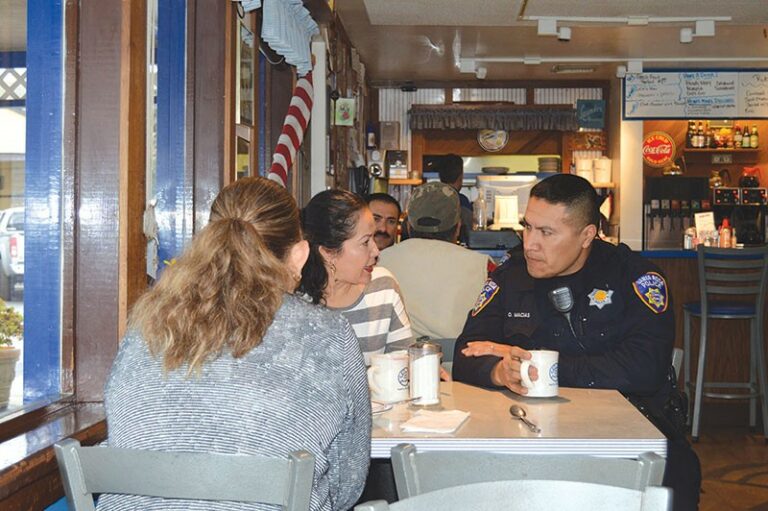
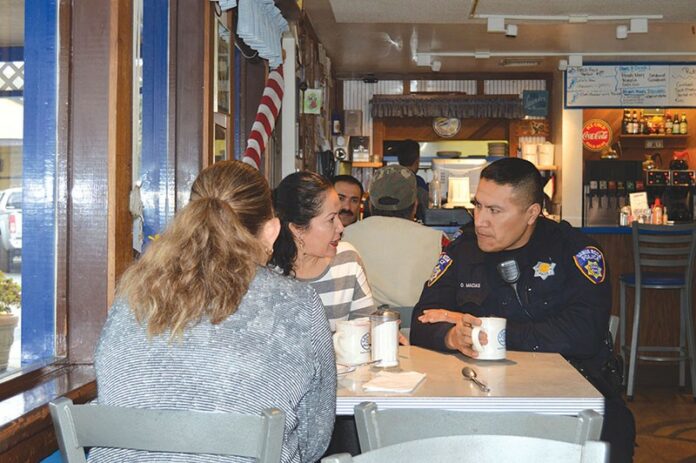
Sgt. Jeneane Kucker greets a steady flow of police officers coming in and out the door of Sam’s For Play Cafe on a cool and cloudy Thursday morning in unincorporated Roseland.

It’s the sixth “Coffee with a Cop” event hosted by the Santa Rosa Police Department, and the place is bustling with chatter: property owners are in discussion with an officer at the counter, a volunteer officer stands at the ready with pamphlets, and uniforms engage with citizens at the tables over bottomless cups. There’s a lot to talk about.

Coffee with a Cop is a program started in 2011 by the Hawthorne, Calif., police force that has quickly grown into an informal best practice for law enforcement organizations that have been under especially intense scrutiny recently through high-profile, viral-video encounters with the public. Close to home, there is the lingering shadow of the 2013 death of Andy Lopez in nearby Moorland, and the anticipated annexation of Roseland into the city limits by 2017—and what that means for the local police force.

Kucker runs the Coffee with a Cop program in Santa Rosa, and says it’s a multifunction opportunity for officers to field complaints and engage with the public engagement in a calm, if hypercaffeinated, environment. The program aims to build trust and community partnerships and fight a pernicious “They’re all bad apples” anti-police bias fueled in part by explosive viral videos.

These events “help with the perception of the police and break up the stereotype,” says Kucker. “This humanizes the badge,” lets the public know that cops are parents, regular people too—”Hey I have a life outside this uniform and badge.”

In five events, she says, the response to Coffee with a Cop is that “overwhelmingly . . . everybody has this craving for the communication, the relationship,” Kucker says. “The hard part is still the job. We drive around in cars that we consider to be our offices, responding to emotionally charged situations. Here, we’re not responding to an emergency; we’re here to lower the barriers. This program is becoming part of our culture—it has become part of our culture at this point.”

Santa Rosa Police Chief Robert Schreeder is at a table with
Capt. Craig Schwartz, and says the coffees are a piece of community policing that addresses the difficulty in getting “officers to talk to people when they’re not in crisis, one on one.” The biggest challenge with a program like Coffee with a Cop, he says, is police culture itself, and changing it with the necessary buy-in from the officers.

It’s not uncommon for officers to resist change, Schreeder says, and what better way to reform the culture than in a “comfortable, positive environment,” such as a diner. His officers, he says, get “10 to 12 calls for service a day, a crisis, a problem, people always in need. You want to meet them in a low-stress way.”

He expects all police trainees to attend the coffees.

[page]

The program has special impact in Roseland, which Schreeder says “needs to be part of the city of Santa Rosa. This is a part of town where people often feel nobody is looking out for them.”

The Sonoma County Sheriff’s Office is the lead law enforcement agency in several pockets of unincorporated Roseland, including where we are sitting this morning along Sebastopol Road. Kucker, an 18-year veteran of the SRPD, says “the beats intertwine and overlap,” but the plan is to slowly incorporate the Sheriff’s Office sections into the Santa Rosa Police Department’s jurisdiction.

In anticipation of annexation, Schreeder has asked for 10 additional employees for the SRPD roster. There are now 65 beat officers on the force out of a total staff of 247, including civilians. “I tell people, every law enforcement organization has a culture,” Schreeder says. “We are trying to create that one here.”

The new hires would join a force that has put an emphasis on criminology concepts around “procedural justice” and “implicit bias” as it works to build trust. Part of that is explaining how policing works, or should work, which is what procedural justice is all about, Schwartz says. “Give people their voice; be neutral in the conflict; make sure you are basing your actions on the Constitution and law, not on biases; get them to trust that you have their best interest at heart.”

Schwartz says the coffees can also help with misperceptions of policing that arise from unchecked bias and videos offered to the internet without context. He acknowledges that some are “spectacular” in the sense that the use of force is unjustified, but adds that in other instances, the “difficulty is reconciling the different viewpoints of the video.”

Officers can watch an incident and think, “That’s lawful use of force, even if it looks ugly on video,” says Schwartz. “A critic’s impression: That’s a bad apple.”

As police culture shifts, so too does the law, and Schwartz says Coffee with a Cop provides an opportunity for officers to explain those changes and defuse frustrations in situations where the police themselves can’t do anything. “We try to get people to recognize that the police are not always going to meet their needs. There are times we can’t, it’s not our role, and that’s frustrating to the citizen,” Schwartz says. “Laws change, societal expectations change over time, and while the laws may change, the expectations remain the same.”

Schwartz notes the “frequency of complaints about [medical] marijuana grows. People still call us all the time because someone is growing three plants in their backyard.”

Kucker says she plans on a Coffee with a Cop event every six to eight weeks and expects the next one will be in the Coddingtown mall area. “I am pretty sure officers are running into people they meet at these events,” she says. “There is a boomerang effect because of these conversations we are having.”

One of those boomerangs made it to the Sonoma County Sheriff’s Office, which reached out to Kucker for advice and held its first Coffee with a Cop earlier this month.

Debriefer: January 20, 2016

0

QUIZZICAL COYOTES

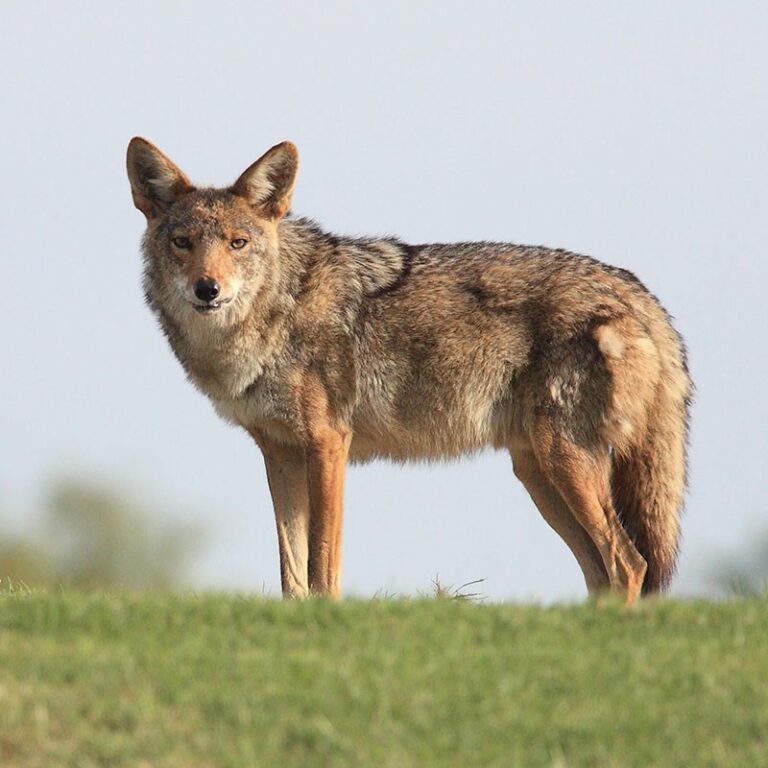
A mystery of sorts has been solved that involved a coyote, a car and a problem. It seems one or two coyotes have been hanging by the side of Highway 1 down in West Marin, near the Slide Ranch. The coyotes have been staring down drivers and then attacking the cars. Nobody’s been hurt, but someone is going to get hurt if they don’t stop feeding the coyotes, which Lisa Bloch at the Marin Humane Society says is the likeliest culprit for the ongoing attacks on vehicles.

There’s a slogan, she says, that people in Sonoma and Marin counties need to abide: “A fed coyote is a dead coyote.” The idea is that the coyotes get comfortably aggressive around humans once they’ve been fed by the hand of one. “We want them to be afraid of us naturally,” Bloch says. “If they are not afraid of us, they come close to our cars, get hit, fight with domestic dogs and can possibly become aggressive.”

WROTH SETTLEMENT

Last week, the Sonoma County Board of Supervisors voted to approve a settlement reached late last year in the U.S. District Court that will find the county paying $1.25 million to Esa Wroth, who sued the county
after he said he was Tasered
more than 20 times at the Main Adult Detention Center. In the settlement, the county agreed to pay $1.25 million while Wroth agreed to drop his lawsuit against individual sheriff’s department officials named in the suit. The county also admitted no liability in the agreement, says Deputy Sonoma County Counsel
Josh Myers.

STATE OF THE HYSTERICS

A funny thing happened during last week’s presidential State of the Union address, Barack Obama’s final send-off to congress—unless Glenn Beck is right and Obama’s going to seize power for all eternity. You never know. Failing that, the SOTU speech was delivered while 10 American Navy sailors were being held by Iran after their boats had inadvertently entered Iranian waters the day before. Republican hysteric-candidates to a man, and woman, condemned the weak Obama for not immediately bombing Iran for taking “hostages” and making them sit there in
their socks, on Persian rugs no less—yet they made no similar demand about other imprisoned Americans in Iran, even as the brother of Jason Rezaian was
Rep. Jared Huffman’s guest at the SOTU. No calls for the bombing of Iran over an American journalist held in captivity for many months on bogus charges, but lots of calls for bombing the country even as Secretary of State John Kerry secured the release of the sailors within 24 hours?

That seemed a little weird, and showed the candidates for what they are: a bunch of opportunistic hotheads. Rezaian is (or was) the Washington Post reporter held on espionage charges in Tehran, and after Obama refused to bomb Iran and instead resorted to that pesky and un-American concept of diplomacy to free the 10 soldiers—there he was again a couple of days later, another moment of goddamned American weakness as he freed even more Americans from Iran, as the GOP sputter-monkeys kept up the call for bombs, bombs and more bombs. Welcome home, Jason Rezaian.

Learn and Lose the Fear

0

Islamophobia has many shades, from a little voice in our head to the full-fledged hate speech that we’re seeing so much of today. I get it, because I used to have it—not the hate-speech stuff, but the general fear of Islam.

After college, I went to work on an economic report on Palestine to be distributed in the Washington Post. I was scared of being around “terrorists,” because that was really all I had heard about Muslim countries. But I went there, and I met kind, gentle and tolerant people.

In 2001, I developed a serious, undiagnosable illness. I was referred to a group that was helping chronic and terminally ill people through spiritual practices in Islam. My immediate response was, I am not a Muslim! But out of sheer desperation, I tried it, and it helped me.

It also led me to a shaykh of the Al-Aqsa mosque in Jerusalem. He was teaching things that I already felt inside, such as the notion that if we all knew our religion, we would know they are the same: the religion of love, peace and mercy. He taught that it’s in God’s wisdom that He created different people and different faiths. He taught that God doesn’t love most those who say they are this religion or that religion, but those who help mankind the most.

I already felt these things inside, because they are universal truths. But I was scared of Islam because it was not what I had been told. For this young Texan, a former cheerleader and sorority a girl, raised in a Catholic family with a grandfather who was friends with George Bush Sr. and helped convince him to run for his first public office, I was the poster child of someone who did not know about Islam. I was afraid of it.

But I learned. Those who are afraid of Islam should learn about it too. Check out Hamza Yusuf, Safi Kaskas and Reza Aslan, American Muslims and scholars who beautifully articulate the real Islam. I hope to share through my memoir what I have learned: that Islam is a faith of peacefulness, tolerance, compassion and love.

Author Denise DuBois lives in Mountain View. Listen to a reading from her memoir, ‘Mercy Me,’ at Copperfield’s Books in Napa on Jan. 20. inkshares.com/projects/mercy-me.

Open Mic is a weekly feature in the ‘Bohemian.’ We welcome your contribution. To have your topical essay of 350 words considered for publication, write op*****@******an.com.

Benghazi Blitz

In 2012, four American personnel were killed in the Libyan city of Benghazi, the first two at a gated compound where the U.S. ambassador Christopher Stevens (Matt Letscher) was temporarily staying. Two others died later that night in defense of a secret CIA base nearby.

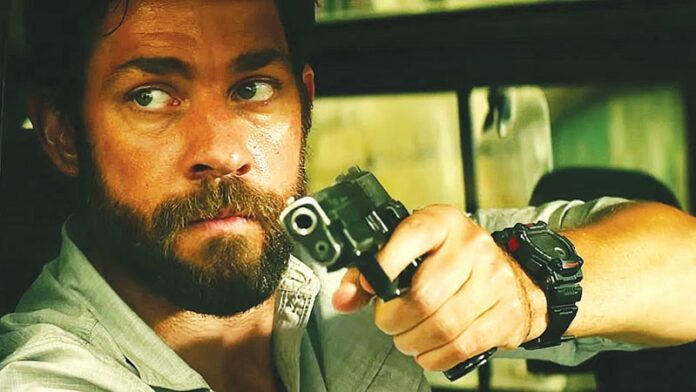
The firefight has been interpreted by conservatives as evidence of a massive policy failure by the Obama administration. It’s also been seen as an opportunity for issues-bereft Republicans seeking to make some hay out of a disaster that you are guaranteed to know less about after seeing Thirteen Hours: The Secret Soldiers of Benghazi. Director Michael Bay, it seems, aims to drive the thought out of your head though massive firepower and chest-bumping.

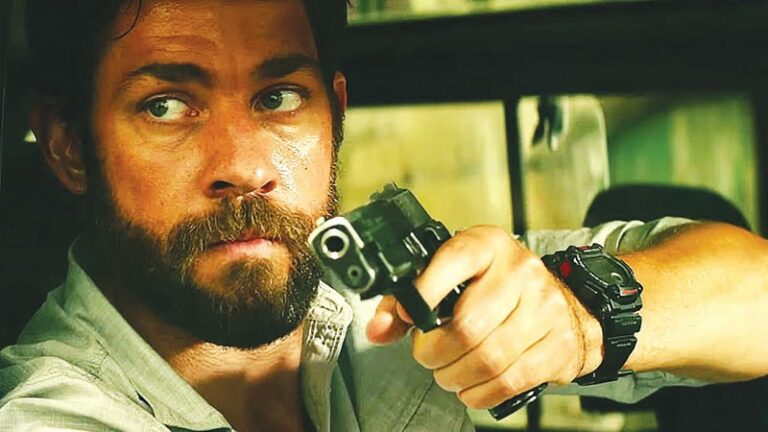
The group of soldiers, Navy SEALs and contractual hires by the CIA are masked with beards and mirrored sunglasses; the one gentle face we can read belongs to a buffed-up John Krasinski (The Office) as Jack Da Silva, a SEAL whose thoughts are of home.

Bay is the opposite of someone like director Paul Greengrass (Captain Phillips), who can see through the chaos and give you an idea of targets and trajectories. Bay likes stuff up front, and the visuals are, thus, shallow—we only get an idea of the lay of the land when we see it through drone shots and sniper scopes, and then only as backdrop to the greasing of several hundred opponents.

The love of impact is so strong in Bay’s films that it is demonstrated in the smallest moments: a boot thumping into the asphalt, a metal lighter tossed slo-mo into a pool of gasoline. Studly dialogue includes lines like “I hate to piss on your party, ladies” and “They’re all bad guys until they’re not.” This is the kind of film in which a solemn memorial service in Langley shares space with video footage of a dog eating Doritos.

‘Thirteen Hours: The Secret Soldiers of Benghazi’ is playing in wide release in the North Bay.

Vintage Images

0

It’s hard to believe, in the era of Instagram and iPhones, but photographs actually used to be made of film.

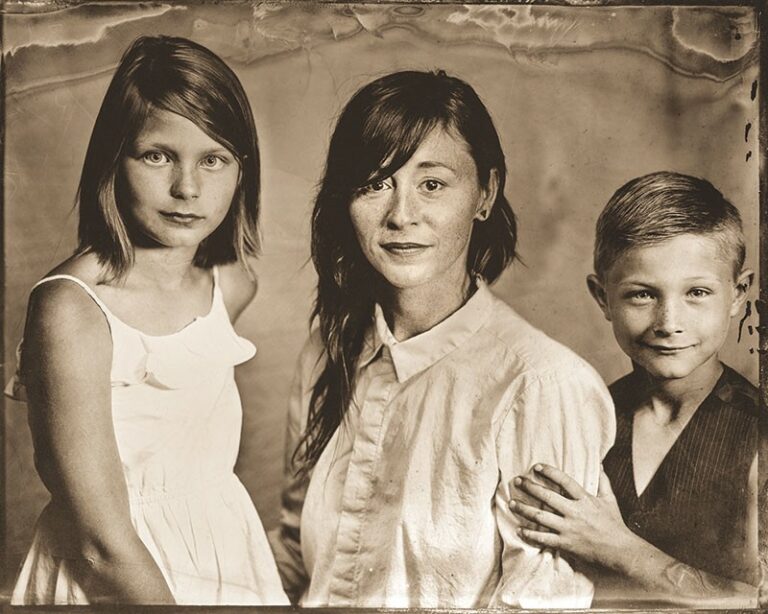
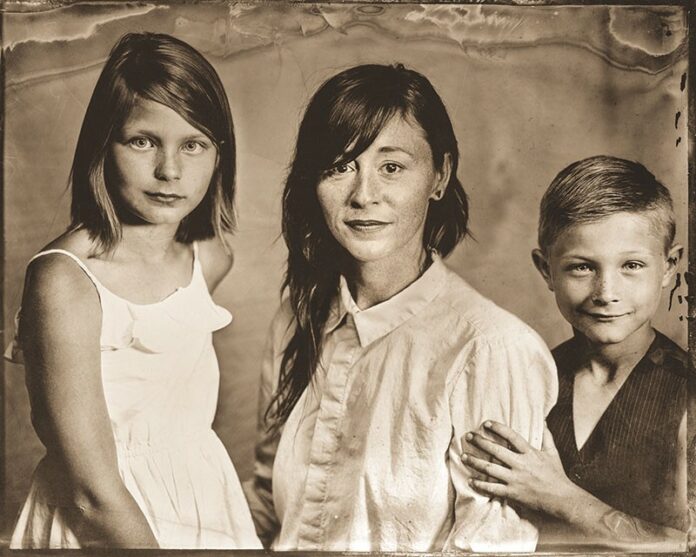
Even crazier, way back in the early days of photography, in the 1850s, the images were made on metal, created through a technique known as “collodion wet-plate process” or, more simply, tintype.

One hundred and fifty years later, not many people have ever heard of tintype, yet in Santa Rosa, the process lives on in a modern way. And this year, it’s gone mobile.

Sonoma County photographer Jeremiah Flynn has owned and operated Jeremiah’s Photo Corner in Santa Rosa’s South A Street Arts District for six years, offering services and products to professionals and aspiring shooters alike. He’s also dedicated to mentoring photography students.

“I’ve realized that you get the fundamentals from school, but you also learn a lot going into a shop,” says Flynn.

Flynn has long had a particular fascination with the old tintype photos, allured by the complicated chemical process and striking image. “I always like the look of the final product. Tintypes record UV light, so there’s something slightly surreal, slightly radiant to them. They have a kind of luminescence.”

Tintype, in fact, never utilized tin. Back in the 1800s, when the process was used to capture images of Civil War soldiers and portraits of Abraham Lincoln, it was done on iron. Nowadays, it’s aluminum, backed with black velvet. Emulsifying chemicals are applied wet on a rigid metal plate that’s then loaded into a large-format camera and exposed. The positive image appears directly on the aluminum.

About two years ago, Flynn perfected the process and started taking tintypes at events around the North Bay. “It’s definitely reignited my interest and passion in photography across the board,” he says.

Last year, Flynn was at the former Maker Media location in Sebastopol when he saw the company’s old-school fire truck.

“It was obvious that it was something weird,” says Flynn. The vehicle, really more of a van, was a mobile workshop for Maker Media. The boxy, red, German fire truck, made by Mercedes-Benz in the 1970s, had seating for nine and a large cab in the back, where Flynn envisioned a mobile tintype studio.

Flynn talked with Maker Media, and procured the vehicle. After six weeks of late-night modifications, he had created a photography studio where he can shoot and process his tintypes.

Since going mobile, Flynn has been a crowd-pleasing figure at South A Street arts events and elsewhere.

“We have our pictures taken so much, but how many of us get formal portraits unless it’s our wedding day or something like that?” asks Flynn. “Nobody ever sits down deliberately to take our picture, or I should say we don’t seek out somebody to take our picture.”

Jeremiah’s Photo Corner is located at 441 Sebastopol Ave., Santa Rosa. 707.544.4800. See more of Jeremiah Flynn’s tintypes at jeremiahflynn.com.

Shaken

0

The martini is no disguise for liquor. It only wears vermouth like one wears cologne, and there’s no hiding under the fat olive foundered at the bottom of the glass and leaking just enough oil to produce a shimmer on the ice-cold, crystal-clear surface. So it’s the perfect frame for showing off the kind of sweet-smelling quality gin and vodka that local craft distillers are making from organic winter wheat and grapes.

That was the lure of Martini Madness, the 15th annual cocktail competition held as part of Sonoma Valley Olive Season, a month-long series of olive-centric events. On Jan. 8, a dozen bartenders from area restaurants and bars set up in Saddles Restaurant at MacArthur Place Hotel & Spa, and started shaking. The event was sponsored by local distillers Prohibition Spirits, Hanson Vodka and Spirit Works.

But the bartenders of Sonoma love their disguises—or costumes, anyway. With typical enthusiasm, HopMonk Tavern went with a Wizard of Oz theme—their “Flying Monkey,” a crazed concoction of Uncle Val’s Gin and FigCello with lemon juice, orange flavor, water and black pepper simple syrup, winning the hearts of attendees for the popular vote, and the palates of the judges, as well. The brewpub crew served their olive—beer-battered—on the side of the tiny martini cocktail cup.

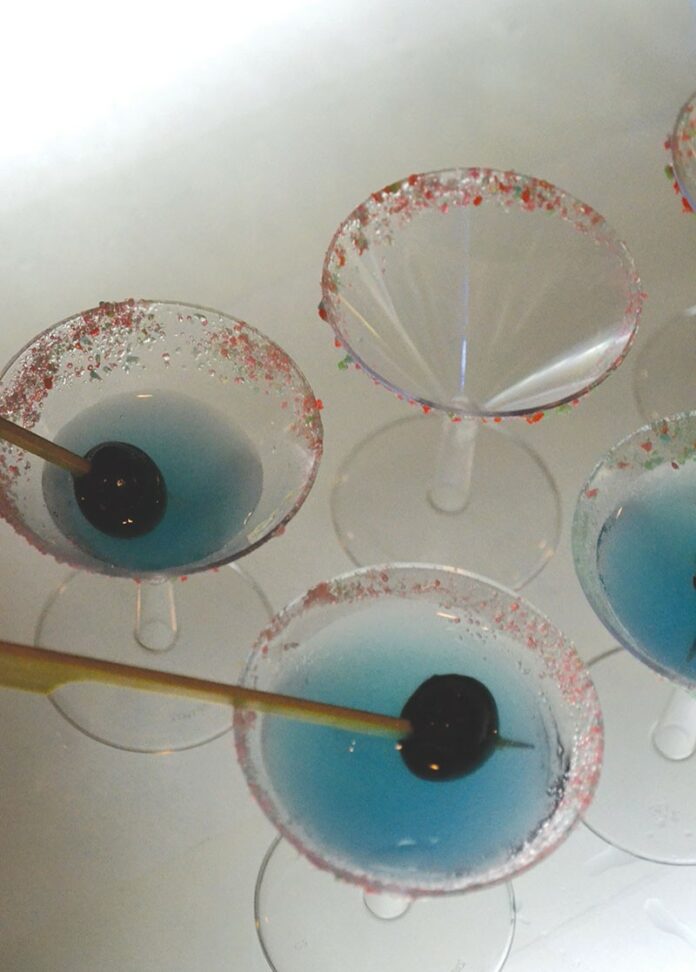
Over at the Saddles Steakhouse booth, a Star Wars theme played in bright blue Curaçao, Hanson ginger vodka and multicolored Pop Rocks (pictured). Fun, but is it a martini? More gourmet but stranger still, 38° North Lounge (the bar at the Fairmont Sonoma Mission Inn) interpreted the martini via the French baked dish Coquille St. Jacques with gruyere-infused gin and a smoked scallop-stuffed olive. Easier to try at home, the Girl & the Fig’s effort was infused with sake and kimchi, and spiced with a sesame-and-chile-flake rim.

The folks from Carneros Bistro just skipped the clear stuff altogether and offered a Manhattan with Hooker House bourbon and a compressed olive. What’s a compressed olive? I wanted to know too. “You know what,” the bartender said, throwing up her hands, “you just compress it, and you enjoy it!” Extra points to B&V Whiskey Bar & Grille for floating Haraszthy Zinfandel on their Manhattan-style Zinful Cowboy.

Finally, I ran into someone who had a big, traditional martini in her hand. She got it at the hotel bar.

Tickets may still be available for the main event, the Feast of the Olive Dinner on Saturday, Jan. 30, 6–10pm, at Ramekins, 450 W. Spain St., Sonoma. Dinner features wine pairings, three menus and five courses made by 19 chefs. 707.996.1090. www.olivefestival.com.

Picturesque

Studio Space Santa Rosa was born out of a need for more space. "We were all working out of our garages and cramped bedrooms," says Josh Katz, co-owner of Studio Space Santa Rosa, Sonoma County's new and only full-service, professional photography studio for rent and hire. Katz, a long-time professional photographer, was fed up with shooting clients in his home, and...

Metal Head

North Bay fans of metal and hardcore may have noticed a resurgence in the genres since 2011. That's the year Ernest Wuethrich took the reigns of the local metal scene as a music booker and promoter. Wuethrich's next major show is on Saturday, Jan. 23, at Annie O's Music Hall in Santa Rosa, and features Mississippi rock and rollers Saving...

Letters to the Editor: January 20, 2016

Chickens Are Bad It was interesting to read that there is a new "-atarian" in town, the climatarian! ("Climate Menu," Jan. 13). The growing awareness of the impact of our food choices on the planet is encouraging, but this article only takes us halfway across the road of climate disaster. While it's true that beef and dairy contribute significantly to climate...

Emotional Finale

No one does it like Ty Segall. The Bay Area rock and roll multi-instrumentalist, who has played in San Francisco rock bands like Sic Alps and his own power trio Fuzz, announced his latest solo album, Emotional Mugger, by mailing the album on old VHS tapes to media outlets last November. This Friday, Jan. 22, Emotional Mugger comes out in...

Warmer-Upper

Sgt. Jeneane Kucker greets a steady flow of police officers coming in and out the door of Sam's For Play Cafe on a cool and cloudy Thursday morning in unincorporated Roseland. It's the sixth "Coffee with a Cop" event hosted by the Santa Rosa Police Department, and the place is bustling with chatter: property owners are in discussion with an...

Debriefer: January 20, 2016

QUIZZICAL COYOTES A mystery of sorts has been solved that involved a coyote, a car and a problem. It seems one or two coyotes have been hanging by the side of Highway 1 down in West Marin, near the Slide Ranch. The coyotes have been staring down drivers and then attacking the cars. Nobody's been hurt, but someone is going...

Learn and Lose the Fear

Islamophobia has many shades, from a little voice in our head to the full-fledged hate speech that we're seeing so much of today. I get it, because I used to have it—not the hate-speech stuff, but the general fear of Islam. After college, I went to work on an economic report on Palestine to be distributed in the Washington Post....

Benghazi Blitz

In 2012, four American personnel were killed in the Libyan city of Benghazi, the first two at a gated compound where the U.S. ambassador Christopher Stevens (Matt Letscher) was temporarily staying. Two others died later that night in defense of a secret CIA base nearby. The firefight has been interpreted by conservatives as evidence of a massive policy failure by...

Vintage Images

It's hard to believe, in the era of Instagram and iPhones, but photographs actually used to be made of film. Even crazier, way back in the early days of photography, in the 1850s, the images were made on metal, created through a technique known as "collodion wet-plate process" or, more simply, tintype. One hundred and fifty years later, not many people...

Shaken

The martini is no disguise for liquor. It only wears vermouth like one wears cologne, and there's no hiding under the fat olive foundered at the bottom of the glass and leaking just enough oil to produce a shimmer on the ice-cold, crystal-clear surface. So it's the perfect frame for showing off the kind of sweet-smelling quality gin and...
11,084FansLike
4,606FollowersFollow
6,928FollowersFollow