Dodd and Country: Talking with Senate Candidate and Assembly Ag Committee Chair Bill Dodd

Napa State Assemblyman Bill Dodd served as a Napa County Supervisor for 14 years before winning his Assembly seat in 2014. He was named to the Assembly agriculture committee upon his election, and in December was picked to be its chairman. Dodd, a former Republican (he switched parties in 2013 and has said the tipping point was gay marriage) is running for State Senate in the Fifth District against former Napa Assemblywoman Mariko Yamada. I’ll post an interview with Yamada in coming weeks. I met with Dodd at the bustling Oxbow Market in Napa on a recent rainy afternoon; what follows is a lightly edited transcript of the interview; I’ve boiled down some of my more mush-mouthed questions for clarity’s sake. The first question to him was about his rapid rise in state politics—and that he’s the first-ever Committee on Agriculture chairman who doesn’t hail from the Central Valley. Why him, and why now?

Bill Dodd: It’s probably better stated that I’m probably the first guy from Northern California maybe north of the Delta to be the chairman of the ag committee. I think that…I haven’t spent a lot of time thinking about it but…I think that they’ve seen in my year in the Assembly that I’m pretty balanced. I have a pretty good ability to balance business interests and environmental interests and my experience in Napa County just along those veins is that I reject the notion that agriculture and the environment are mutually exclusive items, or entities. I really believe that we’re in big trouble if you can’t if the environmental community and the agricultural community can’t come together, we’re in big trouble. Because of environmental interests, we have sustainable farming, which has completely taken off. I’m also chair man of the Select Committee on wine, we held a hearing at Sonoma State University, Lois Wolk and I. Normally what those committee hearings try to do is bring out what an industry is lacking, and what we try to emphasize is what the agricultural or the viticulture industry in northern California is really doing well. And that’s organic farming, that’s those are operations that have put sustainability plans into practice and even ones that have gone to dry farming. What we should do is celebrate those environmental farmers for the great job that they’ve done and use them as examples of best practices to farmers that have not yet seen the light in some of those areas.

Bohemian: What is your view on this notion of “peak wine,” that we’ve got too many vineyards in Napa County and the North Bay?

Dodd: When I was working as a county supervisor here, we had our general plan, and we worked really hard on this general plan to try and identify what was left, and have some goals, not only on acreage of grapes that could be planted, but also, how many more wineries do we really need, or want, you know, in this day and age. And, in addition to that we’ve had big community discussions even when I was first in office, in the early 2000s, on grape-growing, and frankly, Napa County’s got the most stringent agricultural rules of any agricultural region in the world, and my guess is that Sonoma county is a close second—and I think I think it was somewhere around 45,000 acres of grapes, that Napa has about 45,000 acres of grapes and the conventional wisdom says that we’d be lucky—not lucky, that’s not the word I want to use—the industry would be lucky to increase that by 10 percent or another 5,000 acres or so. Now there’s some people who wouldn’t want that at all. But my standpoint is that I think that the erosion control plans that are required, the careful scrutiny of large projects having to have full environmental impact reports, are important to the discussion. Nowhere else are they making them do the full environmental impact reports.

Bohemian: How do you translate the dynamics on the ground in Napa now that you have statewide authority as chairman of the Committee on Agriculture?

Dodd: I think there’s a realization with climate change being such an important policy discussion in the state of California, that many farmers see the writing on the wall and are already working with technology to become more sustainable. Case a point, irrigation: the day and age where we are going to flood-irrigate our crops I think should have come and gone by now. But it is a huge investment to change this, it doesn’t happen overnight but I believe that it’s incumbent upon the industry and the market to move them towards solutions to these problems. You understand what I mean about the market? Because you know what? The cost of water is not going to be the same. I mean, people want more and more regulation but the reality is there is going to be a statewide market for water that is going to be priced on availability and demand. In fact I’m writing a bill this year that seeks to get information for all water transactions in the state of California. It would be a public record, and the idea here is that many of these water transaction are done in the shadows, nobody knows about it, nobody knows how much they are paying, but if there were a clearinghouse that all water sales would have to be recorded, recorded with a state agency, that helps us establish the market, so we understand the prices that are being paid.

Bohemian: What kind of transfers are we talking about here?

Dodd: A rice farmer, for example, who finds a way to sell his water to a water agency somewhere in the central valley or Southern California and leave his field fallow for a year or two, or ten, because he can make more money on that water. If everyone knows the price that’s being paid, that market becomes a public market. And it also gives decision-makers, based on that information, some opportunity to maybe understand some of these other proposals that are being put forward on water issues.

Bohemian: You worked for the water company Culligan, and there’s a big controversy in California and elsewhere over the Nestlé CEO saying that water is not a human right, that it’s a commodity first, you should have to pay for water. Where do you fall on this idea—accept that water is a commodity, sell it, but at the end of the day do people die of thirst because of that? How much of a say should the market have on people’s ability to access fresh water?

Dodd: I think, the market can give us a good indication of future, in terms of where we can go with this. I think, the idea that water plants like Nestlé—the reality is that they should be subject to the same rules and regulations as any other land use, you know, and in today’s day and age, they shouldn’t get any better breaks more than anybody else—whether it’s agriculture or business coming into a community. That one was a little bit dicey because [Nestlé’s bottling plant] is located at the headwaters of the Sacramento River…. Let me put it a different way. If you look at how Israel has dealt with this situation, and they have a similar situation—let’s face it, that was a desert too. They had a lot of arid conditions all over the Middle East, and for sure Israel. And in a span of about 10 to 15 years, they went from a 30 percent deficit to a 20 percent surplus and now they are actually exporting water to other areas of the Middle East and getting paid for it. I think there’s an order to which you do these things, but I think first and foremost we need more water storage both above-ground and underground storage, I think we need to get more adroit on how we are doing water reclamation and you know, I gotta tell you, there’s probably no better agency than the Sonoma county water agency at doing that. They have done a phenomenal job, really before it was fashionable. In Napa County I led the charge supervisor Keith Caldwell to do the purple pipe [water reclamation pipes] on vineyards and golf courses on the east part of Napa. To tell you how long it took, I started working on this in 2001, 15 years later, it’s just about completed. It’s not something that comes easy, but we need to multiply the number of times we are able to use our water and that needs to be used in those types of practices, throughout the state of California. Finally I know the environmental community doesn’t appreciate desalination—very expensive, not a long of bang for the buck—yes, but if the market determines that it is very expensive, water is already very expensive and with new technology, and particularly more renewable energy being used, we might find that like Israel that could be something that we could duplicate, but first things first.

Bohemian: What’s the driver behind your opposition to Gov. Brown’s Delta Tunnels proposals?

Dodd: First and foremost the Delta is already environmentally fragile, it’s an environmentally sensitive area and you know, anything that goes wrong there could jeopardize the whole ecosystem of the delta, and that would be devastating. Secondly, I don’t understand the cost structure because the cost per acre-foot would eclipse those costs for desalination, so…. And at least they say they’re not going to take any new water but if they’re going to build two tunnels that are so large and have so much capacity, that makes one a little suspect to what their true motives are.

Bohemian: which is to sell more water to the Central Valley—

Dodd: Yeah. Southern California, populated area.

Bohemian: The Democratic Party highlights social issues, immigration reform, environmental issues—do you think that if you were to have remained in the GOP, you might perhaps have been a more effective advocate for a more sort of reasonable-Republican push on some of these issues?

Dodd: No. Their tent is not big enough for people who have strong social values who really believe in immigration reform, who really believe that it’s our responsibility for future generations to impact change on climate.

Bohemian: Well, here you are, a Democrat who is “pro-business,” but on the other hand, you could still be a Republican who is pro-immigration reform, pro-environment. If that was national model…

Dodd: Yeah, that would be a lot better, wouldn’t it! If you look at that kind of national model, our congressmen, Mike Thompson and Jared Huffman, would be able to do the kind of great things that they are in Washington, D.C., to do, but the environment out there doesn’t make it conducive to advance the great things that they want to advance.

Bohemian: Your predecessor on the ag committee [former Assemblyman Henry Perea] was part of the moderate caucus of the state Democratic Party, and when he left the Assembly, he almost immediately took a job with the pharmaceutical lobby. You’re moving very quickly through governance here—what are your ambitions beyond elective office?

Dodd: It is very, very simple: I intend to serve my eight years, two terms in the state Senate and advance policies that will—we haven’t even talked about education—that will make California a better place for future generations. I have five kids and five grandkids, and I just think that the next generation or two of Californians, if we don’t advance these important policies, in the state, we will not have anywhere near the California that my parents and grandparents left me.

Bohemian: You’ve been a supporter of charter schools—

Dodd: I’m talking about public schools. We’re forty-seventh in the nation in per-pupil spending, and we’re the seventh largest economy in the world. You tell me how those two things make any sense. I believe we have, going forward, we have some really ambitious goals for carbon reduction in our atmosphere. I would like use that model to place some really serious goals on increasing our funding for public education in the state of California and I do believe that investments in our future, in Pre-K, and selected, targeted investments in career technical education, will pay for itself in one generation in reduced prison costs and reduced social services costs. In fact, Sen. [Mike] McGuire and I have—we had a budget bill last year and we were able to get $400 million for career technical education, and we’re very proud of that. [McGuire] has been an outstanding partner, and I’m looking forward to working with him.

Bohemian: What’s your view on the “Fight for $15” minimum wage and how it has played out in the state, locally and nationally?

Dodd: I see advancement in the state toward a higher minimum wage. We have to be careful. We represent the entire state of California. And it’s kind of like there’s a tale of two cities, if you will. You have the interior part of the state of California where the economy has not come back anywhere near as strongly as it has from Sonoma Count to San Diego County on the coast. But if you look at the interior counties—from San Bernadino to Modoc County—unemployment is high, business are not back and people are suffering. So, I think what we’ll see is cities take this on, on a regional basis for the foreseeable future.

Bohemian: It sounds like what you are saying is it would be great to have a $15 minimum wage but what’s the point of having it if there isn’t a job to pay that wage?

Dodd: I guess I’d say that. But the fact of the matter is that with the increased cost of living, and the cost of housing and all of that throughout my district and future Senate district, demands that people get more than the minimum wage that’s there today. And that’s not lost on me. I will tell you that as a former businessperson for 25 years, that when the unemployment rate goes down, as it is in the stronger counties, I would full expect that wages will go up because the demand for high quality workers and the lack of supply.… One thing I want to bring up—you brought up Hendy Perea, he was a moderate. The two people that picked me in concert was the Speaker right now, Toni Atkins, and the new one that’s coming in, gave his approval. too, Anthony Rendon. They’re both progressive, strong-democratic-value leaders that know me and work well with me and know that I have the balance to balance these real important issues. And I’m really appreciative of their confidence.

Bohemian: Do you think there’s anything to the idea that undocumented workers are taking jobs from American workers?

Dodd: I reject that notion. I don’t think there’s a significant workforce willing to do the type of jobs that our immigrant—legal or illegal—provides for our economies.

Bohemian: We’re not seeing a lot of white high school kids going and working in the fields for their summer jobs…

Dodd: Let me tell you, I picked grapes—I was with a group and we were making wine, going through the whole process. And the deal was, you couldn’t just make the wine. You couldn’t just pick the grapes. You had to go through everything, from A-to-Z, and let me tell you, after two days of picking, I thank my lucky stars that I wasn’t a farm worker. It’s back-breaking, and I’m sure nobody put me through the paces that [the workers] are being put through. I think that a lot of the workforce that we have today, their kids are getting a great opportunity. And that’s what they are doing it for. They are advancing the economy, our local economies, which are renowned worldwide, their kids are going to our schools and in many cases excelling, and many times are the first generation in their families to go to college, and they’re not looking to be farm workers in the future. So this issue is not going to go away, we’ve got to have programs that are going to satisfy our need for labor in these agricultural areas.

Bohemian: What’s the biggest complaint you hear from constituents?

Dodd: You know, I don’t hear a lot of complaints specifically about state government, and clearly, I’ve seen the polls, the closer you get to the people, the local and city and county governments poll very well—maybe not Sonoma County this year, or at least if the SEIU has any say—but generally, that’s the case. The state does well. But right now the federal government is polling really, really low. I think that’s the example, and unfortunately we all get painted with that same, broad brush, just because of the fact that there’s gridlock in Washington D.C. But I’m honored to work in Sacramento where it’s not like that at all, where you can have a civil discussion or a dinner or coffee or whatever with people you agree with, people you disagree with, regardless of political parties. That’s the one thing that I think people, that sometimes the easy way out with me is, ‘Oh, the impression with him is that he’s pro-business, so I’m not going to go see him.’ I learn things every day. And my office is always open, to everybody. I’m interested in learning and understanding more and more about all positions.

Bohemian: In your 2014 Assembly run, you had lots of local endorsements from elected officials, where your opponent had lots of support from organized labor. You seem to have more of the precinct-level, committee-level of support from the Democratic Party…

Dodd: I’m a firm believer that particularly in this case, right now I have the Sonoma Valley and Rohnert Park in my district. This [Senate] district will add Petaluma, Cotati and Sonoma. So in communities where I’m not a household name, I really do believe that if the majority of the local elected officials are supporting a district or statewide candidate, that resonates with voters. And I’ve got over 70 percent of the city councils, the boards of supervisors and the school boards that have endorsed in this race. That’s what I did in the Assembly race and that’s what I’ve done again in this race. This time I do have some pretty incredible statewide figures, some strong women, like [U.S.] Sen. Dianne Feinstein, [State] Sen. Lois Wolk, just to name a couple. That’s helpful. Because they’ve seen how I operate, they trust me and they know that I’ll represent their communities well.

Bohemian: I met with Mariko Yamada when she was the outgoing Assemblyperson. We really liked here dogs-in-restaurants bill. As Senator, will you pledge to not try to repeal that law?

Dodd: I have a great deal of respect for the former Assembly member and I would never undo her most important bill.

Bohemian: That was a good one. She’s a supporter of capital punishment. You?

Dodd: She is? Yeah, you know I am torn between the families of victims and how they would feel about this, particularly violent, violent murders, rape, etc., but I also understand the almost barbaric nature of the death penalty, certainly that is going to be an issue that I am going to have to work hard on the policy moving forward. I think the other thing is, the cost of our prison systems—we used to be the fifth, top five in nation in spending for pupil, and at the bottom five in per-prisoner spending. Today, we’re at the top five in prisoner spending and the bottom five in education spending. So that balance has got to be there as well.

Bohemian: What did you think of Gov. Brown recently flip-flopping on his previously held support for mandatory minimum sentences? He is now saying that it has really backfired.

Dodd: You know, I’m not an expert in that area but as I’ve gone around the district I’ve had judges tell me that it has been an absolute problem for them, and I think the Governor is probably right. We need to take another look at that.

Bohemian: The Napa Register quoted you a couple of years ago as basically saying that just because you were “pro-business” didn’t mean you turned a blind eye to labor or environmental issues. Can you expand on that?

Dodd: If you look at my voting record the first year, there’s a number of people in the business community that are very unhappy with me. And, I just think that my responsibility is not to represent business, it’s not to represent labor, it’s not to represent the environment, but to represent people by keeping the focus on—the environment, look, this is what we’re going to leave the next generation—policies that promote a cleaner, less carbon-intensive environment need to be advanced. Our shrinking middle class and labor force is important to, frankly, business and the economy moving forward and I just think it’s our responsibility to balance those things and make sure that we make good decisions for the future of the state of California. It’s pretty straightforward to me. I look at the issues, and I care about who is on what side, that’s part of the debate, but at the end of the day I have to look at my district and the state of California overall and make a nuanced, balanced decision that’s best for the people.

Bohemian: Last question. Hillary or Bernie?

Dodd: You’ve just spent like 45 minutes turning your readers on about me, I hope, and now I’m going to piss ’em off in one breath [Laughs]. No, I am all in with Hillary. I am all in with Hillary. Matter of fact, she’s called me, I talked with her while she was in Napa Valley, I had dinner with her in a very small group. And she’s talking about the same things that I am talking about, and our Congressman is talking about—schools, the education of our kids, jobs and the economy, the environment—and the one thing that I was really impressed with was her wanting to change the status quo on mental health in the United States. As Patrick Kennedy has said—he’s become kind of a friend, he comes to the mental health thing at the Staglin winery every year—you know, it really makes you wonder about our society that when you need a ‘check-up from the neck up’” that all of a sudden you can’t get it and, or they don’t take you seriously. We need to do a better job. We talked about that, and about gun control issues—we haven’t even ventured down the line when it comes to suicides in California and our country, and just the veterans and what they are going through, the post-traumatic syndrome. I’m telling you, this is a real challenge to our system today and people are not being taken care of and that’s what I heard her tell me. And that got me. Number one, it was fun being with potentially the first woman president of the United States, but somebody that if she never got there would have had a career as Secretary of State, as First Lady, as Senator, with distinction. I really enjoyed it.

Bohemian: I think about that famous line from Mario Cuomo that you campaign in poetry but govern in prose. Are Democrats basking in the poetry of the Sanders campaign but will eventually accept the prose of Clinton?

Dodd: I think so. That’s not to say, if you go back and listen to Bernie’s stuff, go back to 2000, 1990s, I don’t know how early he was making those predictions about income inequality—or what was going to happen in Iraq. He may not be the next president of the United States but you’ve got to give him some props for being a very smart public servant.

Bohemian: I will make sure that comment makes it into the story.

Dodd: [Laughs]. I’ll tell you. I’ve been going up and down to Democratic clubs, they’re going to do an endorsement, and here I am—actually I’m not getting a lot of that “former Republican” stuff this time around, but still there’s that underlying with real progressives. There’s a lot of the grassroots that I see every day, lots of Bernie Sanders support by Democratic activists…

Feb. 11-14: Barrels of Art in Santa Rosa

0

Wine Road celebrates 40 years of promoting and hosting Sonoma wine country events with an art show that brings together local artists and businesses. Coordinating with the Sebastopol Center for the Arts, Wine Road hosts ‘The Art of Oak,’ an exhibit of 40 used wine barrels transformed into works of art that vary from paintings to furniture. Each barrel is sponsored by a local business, and many have been purchased, though some are still up for grabs. The list is tight for the show’s preview on Feb. 11, but the public is invited to view the art from Friday, Feb. 12, to Sunday, Feb. 14, at DeLoach Vineyards, 1791 Olivet Road, Santa Rosa. 10am to 5pm each day. Winetasting fees apply. 707.526.9111.

Feb. 12-15: Juice It Up in Cloverdale

0

Northern California’s first fair of the year for over a century, the Cloverdale Citrus Fair is a sweet treat for the whole family that features live music, gourmet chefs, winetasting and activities for all ages. Friday is seniors’ day and crowns the annual Citrus Fair Queen. Saturday is parade day, taking the action to the streets of downtown Cloverdale. Saturday and Sunday also feature a musical revue, “Shipwrecked,” performed by the Cabaret Players. Monday, President’s Day, is for the kids, with circus antics, magic and more, capped off by the orange-juicing championships. Fair rides, exhibitors and classic concessions round out the sweet weekend, taking place Friday, Feb. 12, to Monday, Feb. 15, at Cloverdale Fairgrounds, 1 Citrus Fair Drive, Cloverdale. $5–$7 general admission. 707.894.3992.

Feb. 13: Seal Watch in Bodega

0

They look utterly adorable, but the fact is the harbor seals and other marine mammals at Goat Rock State Beach suffer more from human (and unleashed dog) interaction than anything else. For 30 years, the Stewards of the Coast and Redwoods have monitored and protected those seals under the Marine Mammal Protection Act. With pupping season upon us, the stewards are offering a pinnipeds (seals) presentation and seal-watch training this weekend. First, hear marine ecology expert Sarah Allen speak on the latest news concerning seals and sea lions, then learn how you can help protect them on Saturday, Feb. 13, at the Bodega Bay Fire Station, 510 Hwy. 1, Bodega. Talk ($20), 9am; orientation, 1pm. Registration required. 707.869.9177.

Feb. 13: Love Stories in Sonoma

0

If there’s anyone you can trust to be indiscreet about his or her indiscretions, it’s a writer. This weekend, the Sonoma Writers’ Workshop celebrates the long, storied tradition of spilling the beans with a reading event titled Kiss & Tell. Featured writers include authors and Bohemian contributors Jonah Raskin (Marijuanaland) and Daedalus Howell (Quantum Deadline) as well as A. J. Petersen, Stacey Tuel and Lisa Summers. Each contributor will share new original poetry and fiction based on the romantic theme, and after the show, members of the community are invited to share their own themed stories. The telling event happens on Saturday, Feb. 13, at Bump Wine Cellars, 521 Broadway, Ste. A, Sonoma. 7pm. 707.228.9214.

Superdouche

There isn’t an aspect of superhero lore that isn’t rubbished by the action-comedy Deadpool. By the lights of this decade’s movie making, that’s a lot of rubbishing.

The nocturnal sacrifice of Batman; the touching shyness of the Thing; Superman’s crushing sense of responsibility—all the noble qualities these movies usually ask us to honor are tossed aside in favor of mindless, speedy sadism. Deadpool is all about the importance of quipping while killing. It’s the kind of movie that comes along when a genre is running out of ideas and patience.

Wade (Ryan “the Arch-Bro” Reynolds) was once a violent mercenary, temporarily redeemed from his cruel life by love for a prostitute, Vanessa (Morena Baccarin). Seeking a solution for terminal cancer, Wade is fried in a genetic hyperbaric chamber by a vicious criminal mastermind known as Ajax (Ed Skrein). When the DNA fixing is all done, Wade looks like a pizza.

A thoroughly disfigured but nigh immortal vigilante with mutant healing skills, Deadpool claims, “I’m not the hero; I’m the bad guy who fucks up worse guys.” Carrying samurai swords and a pistol, this zany maniac busts heads while breaking the fourth wall, an amazing novelty for those who never saw Bob Hope and Bing Crosby. During his mission, he’s forced into partnership with a (relatively) sane pair: Brianna Hildebrand as the sulky yet explosive Negasonic Teenage Warhead, and the X-Man known as Colossus, a big, oversincere hulk of living chrome.

Deadpool is as laughable as it is mean, but it’s strange how one starts to respond to a half-coalesced moment of moral centering, in what’s supposed to be a boring speech by Colossus. What’s so funny about justice and mercy?

Director Tim Miller’s frankness about how much of a superhero farrago Deadpool is can be caught from the titles, which literally claim “Starring Some Douchebag” and “Produced by Asshats.” How can you not applaud such truth in advertising? Yet how exactly would they characterize their audience?

Inventive Indian

0

Dining at a new ethnic restaurant can go either way. It may be comforting and familiar or it can take you to places you’ve never been before.

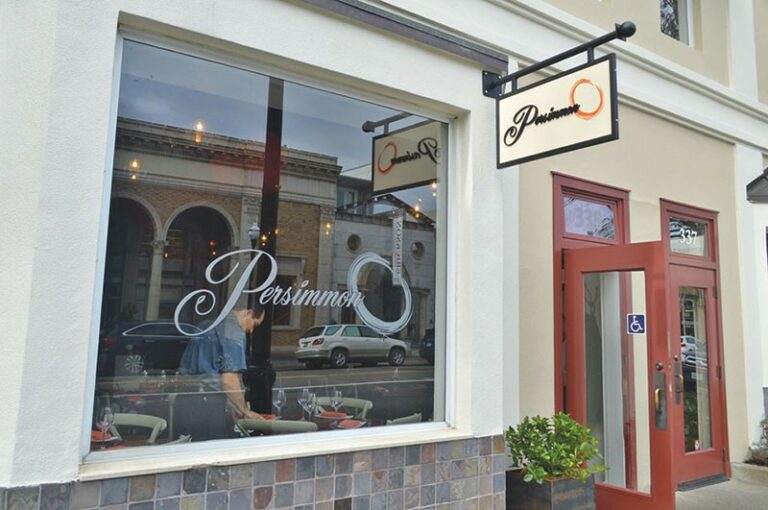
While true to its traditional Indian roots, Delhi Belly Indian Bistro, a new addition to Sonoma’s bursting dining scene, offers a few surprises to make this anything but a typical naan-and-curry joint.

Located a few blocks from Sonoma’s plaza, Delhi Belly is an upscale Indian restaurant with embroidered parasols hanging from the ceiling, a dessert wine menu and a buttoned-up, elegant ambiance.

The menu isn’t as vast as most Indian restaurants and is dotted with appearances of scallops, salmon and other less common ingredients. Service is professional and the kitchen is impressively fast. In spite of its full capacity, all our food was delivered within 10 minutes.

From the appetizer list, the organic avocado chaat ($7) combines avocado, chickpeas, potatoes, pomegranate seeds and wheat crisps with yogurt and tamarind chutney. It’s the exotic cousin of the all-American potato salad. Another original appetizer, simply called lamb and cheese ($9), turns out to be a dense, flavorful lamb kebab stuffed with goat cheese, battered and fried and then cut on a diagonal and served with a trio of chutneys and sauces. It’s a fun, spicy take on bar food at its best. Also noteworthy is a scallops appetizer ($10) made with cumin, cilantro and lime, and topped with roasted peppers.

Inspired by the starters, we moved to the entrées. From the vegetarian section, the baingan bharta ($13) is a classic Indian dish described on the menu as “tandoor roasted eggplant with hand pounded spices, tomato and yogurt.” It amounted to a gooey, spicy hot spread of eggplant and peas. The eggplant contributed its smokiness, the spices added a familiar Indian kick, and the yogurt added a wonderful richness. It’s excellent, especially when eaten with the generous “assorted bread basket” ($10), chewy paratha, buttery cilantro naan and fragrant onion kulcha.

The tandoori mixed grill ($27)—made with juicy chunks of chicken, succulent rosemary-scented lamb, salmon in mint chutney and, best of all, the cardamom- and cilantro-accented murg malai chicken—is highly recommended. The dish is served on a bed of pickled red onion, a nod to the current obsession with pickling, perhaps. Less traditional entrée choices include the wild salmon marinated in yogurt, garlic, ginger, mint and other spices ($18), and the basil seekh kebab ($16), minced lamb, cheese, garlic and basil.

The dessert menu ranges further afield with the carrot pudding ($7). The dish showed up hot in a small coffee mug with condensed milk, shredded carrots and spices. It was hard to classify: an earthy, moist paste, not too rich, and impossible to stop eating.

It’s a long way from the customary rice pudding we’ve come to expect at the end of an Indian meal. But then Delhi Belly is not your average Indian restaurant. It’s a culinary destination that invites exploration off the beaten path, especially if you’re willing to cheat on the curry and the tandoori with some new flavors and textures.

Delhi Belly Indian Bistro. 522 Broadway, Sonoma. 707.343.1003.

Zinhead Nation

0

For Zinfandel fans, this year is a special kind of leap year: although it’s February, you have not missed the annual bacchanal begun by Zinfandel Advocates and Producers in 1991.

I’m guessing that Super Bowl 50 nudged ZAP’s 25th anniversary event down the calendar from its usual slot in late January. Also unmoored from its longtime home at San Francisco’s Fort Mason, the event has been peripatetic for the last few years, showing up south of Market and at the Presidio. This year, the grand tasting lands front and center at the new Pier 27, with a trade tasting and other events at the Bently Reserve in the Financial District.

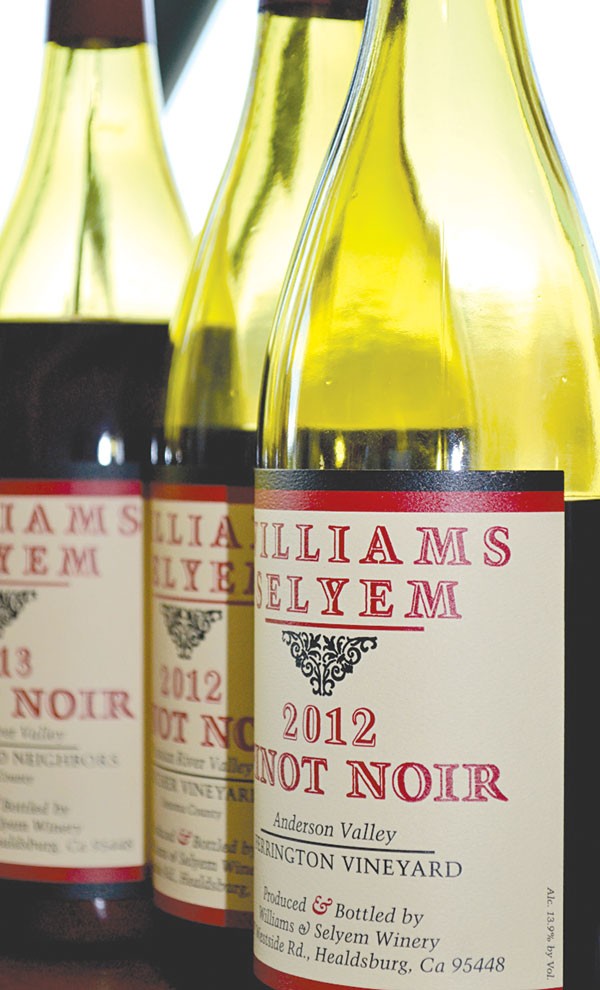
But is there still some question whether the event has lost its way? Turning to ZAP co-founder Storybook Mountain Vineyards for perspective, I was scandalized to find they will not attend. In the Fort Mason heyday, they were regulars, but the hard-drinking scene wasn’t their cup of claret, says Colleen Williams, second-generation member of this family winery. But they have no sour grapes over the matter—in fact, Williams says she just recently floated the idea of rejoining the festivities. I hope they do, and I hope that red wine lovers give the revamped fest a try. Here are some Zins that I recently tried:

D’Argenzio 2012 Old Vine Chalk Hill Zinfandel ($40) Hit pieces on Zin complain of a lack of elegance in its more porty examples. Here’s a wine with aromas of dark, raisined fruit and port-saturated old barrels as if made from oiled teak; the palate runs with candied liqueur and olallieberry wine flavors until landing firmly on a rubbery mat of tannin. There exists good poise that is not wan elegance.

Storybook Mountain Vineyards 2012 Mayacamas Range Napa Valley Zinfandel ($37.50) Though no Storybook Zin has repeated quite the same, intoxicating level of sweet spice character as the first that I sampled, all echo that with a refrain of anise and cardamom. A singular blend of dried and crisp, fresh cherry aromas reminds me of amarone, while the palate is amicably shared by tart lingonberry and sweet plum jam.

Alexander Valley Vineyards 2012 Sin Zin Zinfandel ($20) The winery’s 35th vintage of a hedonistic classic. Classic boysenberry jam, Mexican chocolate and maybe a little jalapeño pepper jelly.

Francis Ford Coppola Director’s Cut Dry Creek Valley Zinfandel ($27) There’s nothing same-old about this “typical” Dry Creek Valley Zinfandel—call it “typicité” and some folks will do somersaults. Plush, warm brambleberry fruit doesn’t overheat the palate.

ZAP’s Zinfandel Experience 2016, Feb. 25–27. Tickets start
at $80 for the Grand Tasting, Saturday, Feb. 27, at Pier 27, the Embarcadero, San Francisco. Information and tickets at zinfandelexperience.com.

Music Maker

0

‘Let me show you a couple of instruments to pique your interest,” says John Knutson, reaching for the cases at his feet, “so you can get a feel for what I do.”

Seated in the corner of a noisy Santa Rosa cafe, Knutson pulls out his go-to instrument, a 1940s-style archtop electric/acoustic guitar he calls Nightlife with a smooth black finish. Next, he unveils a Songbird archtop acoustic mandolin that’s shaped like a small jazz guitar, complete with cutaways in the body, and strums a few notes.

Knutson not only plays these instruments as a member of the Susan Comtock Swingtet and his own band, Shake the Blues, he built both by hand from his shop in Forestville. The owner and sole employee at Knutson Luthiery since 1981, the 67-year-old has designed and built over 370 such instruments over the course of his career.

“My whole interest in building was music-based,” Knutson says. He grew up listening to Elvis on the radio and watching Duke Ellington on TV. His first guitar was a Sears acoustic steel string, and Knutson immediately began tinkering with it.

After a wood technology class at San Francisco State, he says he’s been eating, drinking and dreaming guitars ever since.

“I’ve always designed and built my own instruments from day one,” he says. Knutson’s designs eventually caught the eye of musicians like bluegrass mandolin legend David Grisman, and ever since, his business has been built solely on word-of-mouth.

Today, Knutson’s list of clients includes David Lindley, David Miller, (Asleep at the Wheel), Jimmy Fulbright (Oak Ridge Boys) and Chris Wyse (Mick Jagger, Ozzy Osbourne). His most popular design is the Messenger upright bass, a compact standup that sounds natural either acoustic or electric, and is small enough for traveling musicians to take on a plane. Knutson is seeing a resurgence in the mandolin, spurred by a new brand of Americana.

“To me, this is the most exciting time in music that I’ve seen since the late ’60s,” says Knutson. “What’s happening now, what I call porch punk—it’s very exciting because it’s vital. It has a lot of energy and truth and politics. And like the ’60s, it’s being followed by a wave of progressive political energy in a time when it’s greatly needed. In 10 years, nobody will recognize the world we’re in. And that inspires me.”

Last year, Knutson assembled his bevy of instruments and recruited Grisman and bassist Bill Fouty to record his debut solo album, Shake the Blues, a collection of 13 original songs, written over Knutson’s lifetime, that highlight his musicianship and finely crafted instruments.

Though Knutson admits his production pace is slowing, he’s got no plans to retire from his craft. “I’ll probably die with a chisel in my hand and a smile on my face.”

Letters to the Editor: February 10, 2016

Happy Couples

Oh, I wistfully hope that, after losing my mate to cancer almost five years ago and being suddenly ready to move forward, I someday find someone like the happy couple who found each other in the beginning of this lovely article (“Old-Fashioned Love,” Feb. 3).

Via Bohemian.com

It’s a Disaster

Loans won’t help those who are already having trouble paying their bills; it will only add more debt to the list (Fishing Report, Feb. 4). A disaster declaration is the only thing that would help at this point.

Via.Bohemian.com

For the Trees

I agree with Mike Shea’s letter (Feb. 3) about cutting the trees in Santa Rosa’s Courthouse Square and turning that pleasant park into a parking lot. I also have decided not to spend any money in downtown Santa Rosa—ever. I canceled a restaurant date there last week and attended a movie in Sebastopol instead of Santa Rosa.

One of the reasons we never heard about cutting the trees and the parking lot plans is that Sonoma County has a newspaper that is totally worthless when it comes to informing us about what is going on with the county and city government and the police. This whole county stinks of corruption.

Santa Rosa

I totally agree with Mike Shea who advocates for saving the trees in downtown Santa Rosa. Any person who considers cutting trees in favor of creating more parking space needs to be immediately cut out of a group who is working for preserving the essence of a town. Put the parking elsewhere and create roundabouts. If there is a will, there’s a way! Is the enemy within?

Santa Rosa

The Four Isms

Your readership should know the difference between the four isms. Capitalism is the legal right to invest in stocks, bonds and derivatives, and sell goods and services for a profit. Socialism is when the workers and management own all means of production. Communism is the spiritual ideal of sharing all in common. Communalism is like a living on a kibbutz; everyone shares and lives together and provides common services like communal child care. Communalism shares the most of all the isms. Thanks for educating your readers to know more rather than less.

Santa Rosa

Write to us at le*****@******an.com.

Dodd and Country: Talking with Senate Candidate and Assembly Ag Committee Chair Bill Dodd

Napa State Assemblyman Bill Dodd served as a Napa County Supervisor for 14 years before winning his Assembly seat in 2014. He was named to the Assembly agriculture committee upon his election, and in December was picked to be its chairman. Dodd, a former Republican (he switched parties in 2013 and has said the tipping point was gay...

Feb. 11-14: Barrels of Art in Santa Rosa

Wine Road celebrates 40 years of promoting and hosting Sonoma wine country events with an art show that brings together local artists and businesses. Coordinating with the Sebastopol Center for the Arts, Wine Road hosts ‘The Art of Oak,’ an exhibit of 40 used wine barrels transformed into works of art that vary from paintings to furniture. Each barrel...

Feb. 12-15: Juice It Up in Cloverdale

Northern California’s first fair of the year for over a century, the Cloverdale Citrus Fair is a sweet treat for the whole family that features live music, gourmet chefs, winetasting and activities for all ages. Friday is seniors’ day and crowns the annual Citrus Fair Queen. Saturday is parade day, taking the action to the streets of downtown Cloverdale....

Feb. 13: Seal Watch in Bodega

They look utterly adorable, but the fact is the harbor seals and other marine mammals at Goat Rock State Beach suffer more from human (and unleashed dog) interaction than anything else. For 30 years, the Stewards of the Coast and Redwoods have monitored and protected those seals under the Marine Mammal Protection Act. With pupping season upon us, the...

Feb. 13: Love Stories in Sonoma

If there’s anyone you can trust to be indiscreet about his or her indiscretions, it’s a writer. This weekend, the Sonoma Writers’ Workshop celebrates the long, storied tradition of spilling the beans with a reading event titled Kiss & Tell. Featured writers include authors and Bohemian contributors Jonah Raskin (Marijuanaland) and Daedalus Howell (Quantum Deadline) as well as A....

Superdouche

There isn't an aspect of superhero lore that isn't rubbished by the action-comedy Deadpool. By the lights of this decade's movie making, that's a lot of rubbishing. The nocturnal sacrifice of Batman; the touching shyness of the Thing; Superman's crushing sense of responsibility—all the noble qualities these movies usually ask us to honor are tossed aside in favor of mindless,...

Inventive Indian

Dining at a new ethnic restaurant can go either way. It may be comforting and familiar or it can take you to places you've never been before. While true to its traditional Indian roots, Delhi Belly Indian Bistro, a new addition to Sonoma's bursting dining scene, offers a few surprises to make this anything but a typical naan-and-curry joint. Located a...

Zinhead Nation

For Zinfandel fans, this year is a special kind of leap year: although it's February, you have not missed the annual bacchanal begun by Zinfandel Advocates and Producers in 1991. I'm guessing that Super Bowl 50 nudged ZAP's 25th anniversary event down the calendar from its usual slot in late January. Also unmoored from its longtime home at San Francisco's...

Music Maker

'Let me show you a couple of instruments to pique your interest," says John Knutson, reaching for the cases at his feet, "so you can get a feel for what I do." Seated in the corner of a noisy Santa Rosa cafe, Knutson pulls out his go-to instrument, a 1940s-style archtop electric/acoustic guitar he calls Nightlife with a smooth black...

Letters to the Editor: February 10, 2016

Happy Couples Oh, I wistfully hope that, after losing my mate to cancer almost five years ago and being suddenly ready to move forward, I someday find someone like the happy couple who found each other in the beginning of this lovely article ("Old-Fashioned Love," Feb. 3). —Vicki Via Bohemian.com It's a Disaster Loans won't help those who are already having trouble paying their...
11,084FansLike
4,446FollowersFollow
6,928FollowersFollow