Ban Roundup

0

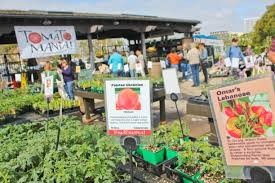
Protests against Monsanto’s Roundup, a poisonous, weed-killing herbicide, have spread around the globe. An arm of the World Health Organization declared it a probable cause of cancer in 2015. California’s Environmental Protection Agency recently decided to label it as such.

Environmental groups and activists in Northern California, a region known for its wines, advocate a moratorium on this herbicide as health concerns mount. Roundup is the world’s most widely used pesticide.

Roundup’s active ingredient, glyphosate, was the focus of an informational event at the Sebastopol Grange on Jan. 28. The event was sponsored by the Watertrough Children’s Alliance as a fundraiser for a lawsuit against winemaker Paul Hobbs. Hobbs converted a Sebastopol apple orchard adjacent to schools into a vineyard, putting the health of about 500 children at risk by spraying the herbicide Roundup. The Sierra Club Sonoma Group co-sponsored the evening.

Sebastopol mayor Sarah Glade Gurney moderated a panel of the three experts: attorney Jonathan Evans of the Tucson-based Center for Biological Diversity; organizer Ella Teevan of the Washington, D.C.–based Food & Water Watch; and former Petaluma city council member Tiffany Renée.

“Glyphosate has become a pervasive presence in the environment,” said Evans. “Sixty-five percent of water in some countries has traces of it. Exposure can create a number of problems, including liver and kidney damage. It can even change one’s DNA. Our goal is to protect health and keep these products out of the market.”

After the state EPA moved to label Roundup as a probable cause of cancer, Monsanto filed a lawsuit against it. The company claimed that its First Amendment rights to free speech were being violated.

“We need to become educated consumers and not buy these products,” added Evans. “We need to empower elected officials to act.”

Richmond, Calif., banned all pesticides a year ago. Renée advocates similar action in Petaluma. “Glyphosate is a public health threat,” she said. “The many costs are suffered by humans, animals and plants. The benefits are only to a few humans.”

The highest use of glyphosate in Sonoma County is for wine grapes.

“We need activism,” said Renée. “Eat locally, hopefully organic or biodynamic. Grow part of your own food.”

Shepherd Bliss (3s*@*****st.net) teaches college at Dominican University, farms and has contributed to 24 books.

To have your topical essay of 350 words considered for publication, write op*****@******an.com.

Dodd & Country

0

Napa State Assemblyman Bill Dodd served as a Napa County Supervisor for 14 years before winning his Assembly seat in 2014. He was named to the Assembly agriculture committee, and in December was picked to be its chairman.

Dodd, a former Republican, is running for State Senate against former Assemblywoman Mariko Yamada. I met with Dodd at the Oxbow Market in Napa on a recent rainy afternoon. The full interview is online at my Fishing Report blog. The first question to Dodd was about his rise in state politics—and that he’s the first-ever Committee on Agriculture chairman who doesn’t hail from the Central Valley. Why him, and why now?

Bill Dodd: It’s probably better stated that I’m probably the first guy from Northern California, maybe north of the Delta, to be the chairman of the ag committee. I haven’t spent a lot of time thinking about it, but I think that they’ve seen in my year in the Assembly that I’m pretty balanced. I have a pretty good ability to balance business interests and environmental interests, and my experience in Napa County, just along those veins, is that I reject the notion that agriculture and the environment are mutually exclusive entities. I really believe that we’re in big trouble if the environmental community and the agricultural community can’t come together. Because of environmental interests, we have sustainable farming, which has completely taken off. . . . What we should do is celebrate those environmental farmers for the great job that they’ve done and use them as examples of best practices to farmers that have not yet seen the light in some of these areas.

Bohemian: What is your view on this notion of “peak wine,” that we’ve got too many vineyards in Napa County and the North Bay?

Dodd: When I was working as a county supervisor, we had our general plan, and we worked really hard to try and identify what was left and have some goals—not only on acreage of grapes that could be planted, but also, how many more wineries do we really need, or want. We’ve had big community discussions, even when I was first in office in the early 2000s, on grape-growing.

Frankly, Napa County’s got the most stringent agricultural rules of any agricultural region in the world, and my guess is that Sonoma County is a close second. I think that Napa has about 45,000 acres of grapes, and the conventional wisdom says that the industry would be lucky to increase that by 10 percent or another 5,000 acres or so. Now, there are some people who wouldn’t want that at all. But my standpoint is that I think that the erosion control plans that are required, the careful scrutiny of large projects having to have full environmental impact reports, are important to the discussion. Nowhere else are they making them do full environmental impact reports.

Bohemian: How do you translate the dynamics on the ground in Napa now that you have statewide authority as chairman of the Committee on Agriculture?

Dodd: I think there’s a realization, with climate change being such an important policy discussion in the state of California, that many farmers see the writing on the wall and are already working with technology to become more sustainable. Case in point, irrigation. The day and age where we are going to flood-irrigate our crops I think should have come and gone by now. But it is a huge investment to change this; it doesn’t happen overnight, but I believe that it’s incumbent upon the industry and the market to move them towards solutions to these problems. . . .

Bohemian: Your predecessor on the ag committee [former assemblyman Henry Perea] was part of the moderate caucus of the state Democratic Party, and when he left the Assembly, he almost immediately took a job with the pharmaceutical lobby. You’re moving very quickly through governance here—what are your other ambitions beyond elective office?

Dodd: It is very, very simple: I intend to serve my eight years, two terms in the state Senate and advance policies that will—we haven’t even talked about education—that will make California a better place for future generations. I have five kids and five grandkids, and I just think that the next generation or two of Californians, if we don’t advance these important policies, in the state, we will not have anywhere near the California that my parents and grandparents left me.

Bohemian: What’s your view on the “Fight for $15” minimum wage and how it has played out in the state, locally and nationally?

Dodd: I see advancement in the state toward a higher minimum wage. We have to be careful. We represent the entire state of California. And it’s kind of like there’s a tale of two cities, if you will. You have the interior part of the state of California, where the economy has not come back anywhere near as strongly as it has from Sonoma County to San Diego County on the coast. But if you look at the interior counties—from San Bernardino to Modoc County—unemployment is high, businesses are not back and people are suffering. So I think what we’ll see is cities take this on, on a regional basis for the foreseeable future.

[page]

Bohemian: It sounds like what you are saying is it would be great to have a $15 minimum wage, but what’s the point of having it if there isn’t a job to pay the wage?

Dodd: I guess I’d say that. But the fact of the matter is that the increased cost of living, and the cost of housing and all of that throughout my district and future Senate district, demands that people get more than the minimum wage. And that’s not lost on me. I will tell you that as a former businessperson for 25 years, that when the unemployment rate goes down, as it has in the stronger counties, I would fully expect that wages will go up because of the demand for high-quality workers and the lack of supply. . . .

One thing I want to bring up—you brought up Henry Perea, he was a moderate. The two people that picked me in concert were the Speaker right now, Toni Atkins, and the new one coming in gave his approval, too, Anthony Rendon. They’re both progressive, strong-Democratic-value leaders that know me and work well with me, and know that I have the balance to balance these real important issues. And I’m really appreciative of their confidence.

Bohemian: Do you think there’s anything to the idea that undocumented workers are taking jobs from American workers?

Dodd: I reject that notion. I don’t think there’s a significant workforce willing to do the type of jobs that our immigrant population—legal or illegal—provides for our economies. . . . I think that a lot of the workforce that we have today, their kids are getting a great opportunity. They are advancing the economy, our local economies which are renowned worldwide, their kids are going to our schools and in many cases excelling, and many times are the first generation in their families to go to college, and they’re not looking to be farm workers in the future. So this issue is not going to go away. We’ve got to have programs that are going to satisfy our need for labor in these agricultural areas.

Bohemian: Your opponent in this race is a supporter of capital punishment. You?

Dodd: She is? I am torn between the families of victims and how they would feel about this, particularly violent murders, rape, etc., but I also understand the almost barbaric nature of the death penalty. Certainly that is going to be an issue that I am going to have to work hard on the policy moving forward. I think the other thing is the cost of our prison systems—we used to be the fifth, top five, in the nation in spending per pupil, and at the bottom five in per-prisoner spending. Today, we’re at the top five in prisoner spending and the bottom five in education spending. So that balance has got to be there as well.

Bohemian: Last question. Hillary or Bernie?

Dodd: You’ve just spent like 45 minutes turning your readers on about me, I hope, and now I’m going to piss ’em off in one breath. [Laughs] No, I am all in with Hillary. Matter of fact, I talked with her while she was in Napa Valley, I had dinner with her in a very small group. And she’s talking about the same things that I am talking about, and our congressman is talking about: schools, education of our kids, jobs and the economy, the environment . . . And the one thing that I was really impressed with was her wanting to change the status quo on mental health in the United States. . . .

Bohemian: I think about that famous line from Mario Cuomo, that you campaign in poetry but govern in prose. Are Democrats campaigning in the poetry of Sanders but will eventually accept the prose of Hillary Clinton?

Dodd: I think so. That’s not to say, if you go back and listen to Bernie’s stuff, go back to 2000, the 1990s, I don’t know how early he was making those predictions about income inequality, what was going to happen in Iraq. He may not be the next president of the United States, but you’ve got to give him some props for being a very smart public servant.

Bohemian: I will make sure that comment makes it into the story.

Dodd: [Laughs]

Slurry Fine

0

The Sonoma County District Attorney fined an engineering firm and vineyard management company last week for their roles loosing an unknown quantity of slurry into Dry Creek in Healdsburg during a vineyard replanting. Together, the companies were fined $74,500 for two violations from the county Agricultural Commissioner’s Office related to the project.

According to a statement from District Attorney Jill Ravitch, the ag commish issued a permit in Oct. 2014 “on a project with steep slopes to replant a vineyard,” on land owned by Robert Covert and Mary Roy (they were not cited in the civil complaint). That December, a big storm prompted a big landslide on the property, and the ag commissioner found that “plans that would have protected runoff from leaving the property were not followed,” and cited the firms. The commissioner’s office then OK-ed stabilization plans to keep the hillside at the site stable, but the firms failed to follow those temporary plans. That earned them a second violation, and a referral to the district attorney.

In November 2015, Ravitch filed unlawful business practice and water-pollution charges against the defendants, who later agreed to resolve the case. Along with the fines, each will be subject to a 10-year injunction prohibiting violations of environmental protection laws, according to Ravitch’s office, which meted out the fines thusly: Valdez & Sons Vineyard Management agreed to pay “approximately $50,000 in civil penalties, restitution and costs while Kelder Engineering agreed to pay $24,500 in civil penalties, restitution and costs. Restitution will go to the Russian Riverkeeper for equipment and monitoring of the Dry Creek and Russian River watersheds and to the Sonoma County Fish and Wildlife Propagation Fund.

Mirror Images

0

Mirrors are both set dressing and metaphor in a pair of recently opened plays in which the characters take a hard look at their world, their choices and their naked souls.

Set in a tiny South African community in 1974, Athol Fugard’s three-actor The Road to Mecca, running at Main Stage West, was inspired by the life of Afrikaans artist Helen Martins, but takes fictional flights of fancy as fanciful as the cement sculptures of owls and camels Martins surrounded her house with.

Martins (Laura Jorgensen) a lapsed Christian, is feeling the encroaching darkness that first inspired her to fill her yard with such self-made creatures, and to cram her home with mirrors, mosaics and candles. Frail and uncertain, Helen considers relocating to a church-run retirement home, a move supported by her one-time minister, Marius (John Craven), who secretly loves her and worries about her soul. Opposing the notion is Martins’ schoolteacher friend Elsa (Ilana Niernberger), a strong supporter of Martins and a fierce opponent of the church, who arrives from the city in a state of deep sadness and barely controlled rage, the reasons for which take most of the play to reveal themselves.

The resulting three-way showdown unfolds in gradual waves of emotion, revelation, self-recognition and a sense of heartbreaking and hard-won resolve. The set, designed by director Elizabeth Craven and David Lear, is a marvel. It’s as much a character as everyone else in the play, a marvelous, thoughtful, deeply complex and human examination of the power of light, outside and in.

Rating (out of 5): ★★★★

Mirrors are equally prominent in Theresa Rebeck’s one-woman comedy-drama Bad Dates, running at Cinnabar Theater. Starring Jennifer King and directed by Molly Noble, this is a ferociously funny rollercoaster of a show, in which a hard-working New York restaurant manager prepares herself for a series of dates, few of which turn out the way she hopes.

Observing her reflection as she tries on an array of outfits, King’s marvelously performed “long night of the soul” includes hilarious descriptions of each date-gone-wrong, as she realizes that finding a person to love won’t happen until she finally figures out what she really wants, and who she really is.
★★★★

Skiffle On

0

Skiffle is as a blend of jazz, blues and roots music dating back to the early 20th century that’s often homemade and improvised. And for musician and bandleader Farmer Dave Scher, it’s also a way of life.

“I think the idea of skiffle and the function it serves in the human story appears again and again in all kinds of cultures,” says Scher by phone from his home in Los Angeles. “There’s something cobbled together, something unpredictable, there’s a certain disregard for propriety that ensures beauty, fun, truth, authenticity and some good sounds.”

With that mindset, Scher, a keyboardist whose previous bands include alt-country outfit Beachwood Sparks, formed the Skiffle Players with folk songwriter Cass McCombs, guitarist Neal Casal (Chris Robinson Brotherhood), bassist Dan Horne and Beachwood Sparks drummer Aaron Sperske. The ensemble’s debut album, Skifflin’, comes out Friday, Feb. 12, and the group performs live in the North Bay on Feb. 15 at Sweetwater Music Hall in Mill Valley.

“The idea is to work with what you have. It’s not about polish and procedure, it’s scrappy,” says Scher. “It’s a reflection of the human spirit, and the human spirit cannot be bought and sold.”

The players were originally assembled in Big Sur as a backing band for McCombs, who’s been a close friend of Scher since 2004.

“The vocabulary was good, the camaraderie was good,” says Scher of that initial performance. “We decided to pop into the studio, and we got about two albums worth of stuff in three days. It was like an old car or something—it started right up.”

Scher sees that ease with which the band created as the essence of skiffle. Without contrivance, the accomplished musicians each let forth a flow of roots-inspired music that ranges from moody to whimsical. “The guys I’m playing with have a lot of knowledge and really go back with songs and stories from the past,” says Scher. “I’ve learned a lot from them over time.”

Pairing that massive collection of recorded tunes into their debut full-length, Skifflin’ is a record that covers a lot of melodic territory, from traditional blues to stark Southern folk and more. Many songs on the album prominently feature a repetitive hook, with McCombs singing sonorously over a weeping lap pedal steel-guitar solo. Other tracks nearly verge on honky-tonk, with barroom pianos and blazing harmonicas. Collected together, Skifflin’ is a satisfying road trip through the Americana landscape.

“Skiffle is an open invitation, without limitations,” says Scher. “We cover as much ground as we can, because that’s what makes it so fun—sort of like you’re jumping from one box car to the next.”

Sacred Ground

0

On the second day of 2016, I have gathered with Federated Indians of Graton Rancheria tribal councilmembers Lorelle Ross and Gene Buvelot to observe the southern view from the eastern ridge of Sonoma Mountain, about seven miles east of Petaluma. From this world-at-your-feet platform, the smooth blue expanse of San Pablo Bay rises against San Francisco’s Financial District, with Mt. Diablo and Mt. Tamalpais visible on the water’s fringes.

The main object of these indigenous leaders’ attention, however, is a far smaller body of water that historically occupied a 200-acre depression directly beneath the ridge. For thousands of years, this shallow lake, today known as Tolay, was a sacred gathering place for Coast Miwok people—including the ancestors of Ross and Buvelot.

The lake had been, as Graton Rancheria shairman Greg Sarris informed me, a Miwok version of Stanford Medical Center: a place of extraordinary healing power that called together indigenous people from throughout the region now known as the western United States.

In the late 1880s, however, an industrious farmer dynamited the southern berm that held back the lake’s water, draining it to San Pablo Bay. The land became gridded and platted with ranches, cutting off the indigenous people’s access to it.

This was one in a long line of deadly and devastating insults against the Miwok. When the Spanish arrived in the late 18th century, they introduced population-destroying diseases and incarcerated Coast Miwok and other California natives in crowded, disease-ridden labor camps at missions in Petaluma, San Rafael and Sonoma.

The Graton Rancheria’s membership, which includes descendants of the Coast Miwok and Southern Pomo linguistic groups, trace their ancestry to only 14 known survivors of Spanish and U.S. colonization. Their combined pre-contact population had been 20,000–30,000.

These cultures’ stubborn endurance, however, ensured that their connection with sacred places was not fully severed. Shortly after the Sonoma County Regional Parks department purchased 1,900 acres that includes Tolay Lake in 2005, the Graton Rancheria tribal council saw an opportunity—and took it.

The councilmembers borrowed $500,000 against their future casino and donated it to the county to support the park. In turn, they gained an influential role in determining everything from trail locations to the restoration techniques the county parks department will rely on to restore the area’s streams and vegetation, and the lake itself. For the Graton Rancheria Indians, the healing place of their ancestors has become an important communal gathering area, and a focal point of healing in an altogether more modern sense.

“If you don’t have a connection with the land, you’re lost,” says Ross, who has been a tribal councilmember since 1996, when she was 19 years old. “Now we have kids in our tribe who are growing up experiencing revitalization and re-engagement with this place their ancestors took care of.”

They are not alone. Throughout the North Bay, the North Coast and multiple other regions of California, indigenous people are reclaiming stewardship of ancestral territories from which they were once violently evicted.

PICKING UP THE PIECES

The struggle of the Federated Indians of Graton Rancheria, as with any sovereign entity, has been defined by access to land. A major turning point occurred in 1851–52, when treaty commissioners, sanctioned by Congress, negotiated 18 agreements setting aside roughly 7.5 million acres of California territory as reservations for 500 indigenous nations whose ancestral land base was being overrun by gold miners and land speculators. But the Senate rejected the treaties and ultimately sealed them.

The documents were unsealed more than 50 years later. Amid the resulting public outcry, Congress provided a very modest form of redress, passing legislation authorizing the purchase of small tracts of land called “rancherias” on behalf of “the homeless Indians of California.” In the case of the Graton Rancheria Indians, a 15.5-acre rancheria northwest of Sebastopol was set aside for “the homeless Indians of Tomales Bay, Bodega Bay, Sebastopol, and the vicinities thereof.”

Before long, even this small vestige of the Graton Indians’ aboriginal territory was stripped away. In 1958, Congress revoked Graton’s federal recognition (and that of 39 other California tribes), auctioned most of the rancheria land and turned the residents out of their homes—part of a larger push to “terminate” Indian reservations and thereby hasten the people’s assimilation into the dominant U.S. society.

“We became like the white man: homeless in our own homeland,” Sarris, the Graton Rancheria chairman, explains.

Sarris is a man with an impressive résumé. He is a longtime college professor, author, Hollywood producer and screenwriter. He played a key role in his tribe’s restoration to federal status. In 2000, President Bill Clinton signed into law the Graton Rancheria Restoration Act, which Sarris co-authored. Formerly an English professor at UCLA, he is now the endowed chair of Writing and Native American Studies at Sonoma State University—a position funded by the Graton Rancheria itself.

That endowment, as with other tribal line items, is largely made possible by the Graton Resort and Casino, an $800 million monolith in Rohnert Park, on the west side of Highway 101, that opened in 2013. Though the casino originally faced an intense backlash from a segment of the local populace, it has earned support from many critics as the tribe’s intentions have become better known. The tribal council agreed to donate $12 million and
$9 million in annual revenue, respectively, to Rohnert Park and Sonoma County to offset its impact on public services.

Along with federal grants, the casino underwrites many social services for tribal members, including housing assistance, healthcare, nutrition and health counseling, a cultural resources library, a language preservation program, and more. Sarris says that, in contrast to the hospitality and wine industries, which he says generally exploit their workers, the casino was built and is operated by union employees who earn above living-wage rates. His tribe is also investing in ecologically minded farms that will employ undocumented people and, pending permission from the county, low-risk prisoners at living wages.

Amid this larger social justice agenda, the tribe is working to pick up the pieces of a shattered history—a history fundamentally tied to the landscape. Sarris notes that his people’s entire historical land base, including places like Tolay and the Laguna de Santa Rosa, are akin to their holy text. “Most of the Bible, if you want to use that analogy, has been destroyed—has been burned,” he says. “All we have are shards of the text, bits and pieces of it. Tolay Lake is a place where we can make a start.”

Currently, the park is only open for special events. It will likely open to the public in 2017.

[page]

RIGHTING WRONGS

Because indigenous cultures are inextricably linked to the lands they have historically inhabited, their survival necessarily depends on preserving those lands, which face countless threats at any given time. In California and beyond, contemporary indigenous people are engaged in battles over mineral rights, water rights, federal recognition, honoring of treaties, repatriation or honorable treatment of sacred sites, healthcare, language preservation and much more.

In California alone, there are 109 federally recognized tribes and another 78 that are petitioning the Bureau of Indian Affairs for recognition, often waiting for decades to receive a verdict. Many others do not bother to apply for recognition at all, often viewing it as a waste of energy and resources.

Beth Rose Middleton, associate professor in the department of Native American studies at UC Davis, cites several examples of how even indigenous people who lack federal recognition are finding ways to exercise sovereignty over their original territories. Middleton is the author of Trust in the Land: New Directions in Tribal Conservation, which explores conservation partnerships led by California native nations. In contrast to many conservation land trusts, which prioritize species conservation that diminishes human contact with land, she notes that Native American–led projects focus on restoring humans’ historical role as land stewards.

Such projects provide a tangible way “to right historical wrongs and provide long-term protection and enhancement of lands and waters we all depend upon,” Middleton says.

California’s first-ever indigenous land trust was born out of a figurative and literal battlefield in the “Redwood Wars.” In the 1980s, large corporate timber firms—including Louisiana-Pacific, Georgia-Pacific (now owned by the Koch Brothers) and Maxxam—were in the process of felling most of the largest remaining redwoods and Douglas firs on their private lands along California’s northern coast.

People chained themselves to trees in the heart of a roughly 7,000-acre parcel Georgia-Pacific was actively logging, located within the ancestral territory of the Sinkyone people. A lawsuit by the Arcata-based Environmental Protection Information Center, the International Indian Treaty Council and other parties halted the logging operation.

Those that protected the forest named the largest stand of old redwoods the Sally Bell Grove, after a Sinkyone Indian woman who had survived a massacre of her people as a young girl in the 1860s.

At the outset, many of the forest protectors—transplants from urban life and white, for the most part—might easily have viewed Sally Bell as a token of their struggle. They would soon find out that her legacy was very much alive. In 1986, seven tribes from Mendocino and Lake counties formed the InterTribal Sinkyone Wilderness Council, with the intent of acquiring a portion of the Georgia-Pacific land for traditional cultural purposes.

After co-founding the Sinkyone Council, Priscilla Hunter of the Coyote Valley Band of Pomo Indians (a federally recognized tribe), and numerous others, led a political and fundraising campaign that involved grants and small donations. In 1997, the InterTribal Sinkyone Wilderness Council land trust became the proud owner of 3,900 acres of rugged and beautiful Sinkyone terrain, establishing the first intertribal wilderness park in the United States.

The council’s current executive director, Hawk Rosales, notes that the Sinkyone has been a touchstone of a broader social movement, which focuses on restoring land to indigenous stewardship as a means of protecting the land from industrial activity, while also enhancing it through wise human intervention. “We have shown the world that there is a way in which indigenous people can, and will, return to their role of traditional caretakers on the land when given the opportunity,” Rosales says.

There are now at least four other indigenous land trusts in California. In Oakland, for instance, the first women-led, urban land trust in the country formed last year. The Maidu Summit Consortium land trust formed in the early aughts on behalf of Mountain Maidu people in the vicinity of Mt. Lassen.

The Mountain Maidu got their breakthrough in the wake of the early-2000s Enron scandal, which forced PG&E into bankruptcy. Since the early 1900s, the utility giant had owned title to one of the tribe’s most sacred areas, Humbug Valley, a miraculously undeveloped 2,000-acre meadowy area southwest of Lassen. As part of the bankruptcy proceedings, a state judge ordered the utility giant to relinquish thousands of acres it owned to conservation stewards.

In a lengthy process, Mountain Maidu traditionalists demonstrated to the court-appointed stewardship council their worthiness as stewards of their ancestral land. By 2013, the Maidu Summit Consortium had claimed title to the valley from one of the wealthiest and most powerful corporations in the western United States.

In 2014, Maidu Summit consortium executive director Kenneth Holbrook, a 40-year-old Mountain Maidu traditionalist with a broad and boyish smile, led me on a tour through Humbug Valley. It is a remarkably beautiful place, featuring a meadow fringed by tall conifers and a soda spring bubbling out of the ground on one end to help form Yellow Creek, a tributary of the upper Feather River.

In 1908, Holbrook’s great uncle was murdered by two California game wardens as he fished near there. Roughly a hundred years later, key support for the consortium’s stewardship proposal came from the California Department of Fish and Wildlife, which regards Yellow Creek as one of the most promising areas in the state for native salmon restoration.

“We’re all hopeful that the song of the salmon will return to this valley under our people’s stewardship,” Holbrook says. “Getting the land is really the first step.”

Hawk Rosales says that recognition of indigenous people’s knowledge of tending the land has broad implications for environmentalists in general.

“Among various segments of society, I think we now see an increasing interest in restoring a better relationship with nature,” Rosales says. “But without key principles of ancient traditional tribal knowledge, which honor and protect the many complex interrelationships and functions of the natural world, then the well-intended efforts of non-native groups to restore environmental balance will only go so far.”

[page]

INDIGENOUS STEWARDSHIP

Sonoma County Regional Parks has developed a well-regarded process of consulting with local tribes. Its relationship with the Graton Rancheria in the management of Tolay Lake Regional Park, however, is entirely unique. “I think this collaboration is a testament to Greg [Sarris] and the tribe, and to the great working relationship we’ve had, even prior to the Tolay project,” says Sonoma County Regional Parks director Caryl Hart.

Much of that collaboration involves planning out the land’s restoration. A Graton Rancheria tribal citizen named Peter Nelson, a Ph.D. candidate in UC Berkeley’s department of anthropology, is playing a crucial role in that process. Nelson’s dissertation focuses on the history of human use of the Tolay Lake Regional Park land. “I’m basically speaking the language of ecologists and other scientists in support of what the tribe is doing,” Nelson says.

The area surrounding Tolay Lake now consists of open grasslands characterized by non-native annual species such as wild oat, which turns golden in the summer. The land is dotted with cow patties. According to Hart, the agricultural heritage of the land will remain a fixture of the park, allowing for limited grazing. At the time of European contact, the area remained green year-round due to the prevalence of perennial bunch grasses, which the cattle later trampled out.

Stands of gnarly live oaks occupy only niche habitats on the Tolay Lake Park grounds today, while they were far more abundant 200 years ago, Nelson says. Shrubs that were once prolific, such as California lilac and California coffeeberry, are now entirely absent. A variety of colorful bulbs, like those in the Brodiaea genus (a staple food source that California Indians actively cultivated), are now consigned to marginal areas.

This former abundance of vegetation depended on the Coast Miwok people’s tending practices, Nelson says, particularly their careful use of fire. In oak savannahs, fire removes oak leaves and litter, opens up the soil so that plants can grow faster, helps to control harmful insects and diseases, improves wildlife habitat (by, for example, removing brush from around water sources) and recycles nutrients from the litter into the soil. That resulting cornucopia of plant life, in turn, supports a greater array of wildlife.

The lake itself was also actively managed by indigenous people, Gene Buvelot tells me. Again, Nelson’s research reinforces traditional knowledge. He notes that ecologists and geomorphologists have told him that “the land formation of this valley should not naturally hold water, and there is no evidence of landslides, so there must have been a dam constructed by native people in order for there to have been a lake.”

Even after U.S. colonization, the Coast Miwok continued to conduct multi-day ceremonies at the lake. Warren Moorehead’s 1910 book, The Stone Age in North America, refers to a letter from Petaluma ranching pioneer J. B. Lewis: “When I came here in the early [1850s],” Lewis wrote, “there used to be large numbers of Indians who go by my ranch in the fall, down to the creek to catch sturgeon and dry them, and they always went back by the way of [Tolay Lake] and stayed a day or two and had some kind of powwow. After the lagoon was drained, they never came back.”

RESTORING WHAT WAS

When I visited Tolay Lake, the old lakebed—roughly 200 acres in size—held no standing water. The California Department of Fish and Wildlife has developed a plan to restore it with the tribe.

“You can’t recreate what once was, but you can use the knowledge of the past as a baseline to imagine and create a space that is of the here and now, as a guide into the future,” Ross says.

After leaving Tolay Lake Regional Park, Ross and Buvelot led me on an eastern drive along Highway 37, around the base of Sonoma Mountain. Our destination was a 2,100-acre parcel the Sonoma Land Trust is donating as an addition to the park. Highway 37 itself, the “Lakeville Highway,” gets its name from the former town of Lakeville—which was named for Tolay Lake.

We stop at the Sears Point marsh on the edge of San Pablo Bay. As Buvelot notes, the area’s indigenous people formerly maintained themselves on sturgeon, Sacramento hitch and bat rays, which they fished out of the tidal marshes. The abundance of fish is a major reason Sonoma County was home to one of the highest concentration of indigenous people in the Western Hemisphere.

But the fish’s habitat was largely destroyed by dikes and dams along the bay’s fringes in the early 1900s. Starting in the 1980s, the Bay Institute and other environmental organizations adopted a program to restore 100,000 acres of these tidal wetlands, which has entailed buying the lands and removing the dikes. By 2006, the 1,000-acre Sears Point area was the proverbial “last hole in the doughnut,” the Bay Institute’s Marc Holmes, a wetlands-restoration expert, tells me.

Ironically, Graton Rancheria had purchased an option on the Sears Point property for $4.7 million, using an advance from their Las Vegas–based casino development funder, Station Partners. The tribe was exploring building its casino there. As soon as they learned of the conservation groups’ intention, however, they donated the purchase option to the Sonoma Land Trust. Finally, in October 2015, tribal members joined environmentalists and regulatory officials in a ceremony where the levy was breached, and water once again washed into an area of crucial habitat that had been drained and dried.

Buvelot is one of the most respected elders in North Bay Indian country. His memory is filled with landmarks and watersheds of his people’s historical occupancy of this region. On the way to the levy breach site, he points out a former village site, which the California Highway Department (now CalTrans) bulldozed to construct the highway.

Buvelot’s grandfather, the locally famed Coast Miwok fisherman William Smith, is largely credited with founding the Bodega Bay fishing industry in the early 1900s. He recalls being eight years old when the Highway Department built an extension of Highway 1 through Bodega Bay—and also through some of his people’s ancestral burial grounds—during the 1950s. As the relics of his ancestors were excavated and cast alongside the highway, he and his relatives scurried around shoving them into burlap sacks, hurrying before the bulldozers returned.

THE HONOR OR RESPONSIBILITY

As with the rest of Tolay Lake Park land, the Sonoma Land Trust’s new addition consists of beautiful rolling meadows. It sits at the crossroads of highways 37 and 121. And like so many parts of the North Bay, it is a place where industrial civilization’s imperative to expand visibly collides with the need to protect the earth from despoliation and greed. A sprawling new vineyard and a winery are slated for development on one side of the land; the Sonoma Raceway lies on the other. Hundreds of cars course past on Highway 121 in the half-hour we spend there.

Ross’ life, like Buvelot’s, has paralleled the larger journey of the Graton Rancheria people. Her grandmother was forced to attend an American-Indian boarding school in Sherman Oaks. When the original, Sebastopol-based Graton Rancheria was terminated, their family held onto a one-acre parcel where Ross’ parents raised her in a small cabin. She says the discrimination and racism she grew up with was more subtle than what her parents experienced.

“I feel like I get to live through a time when I have the honor of responsibility,” she says. “There’s not a bounty on my head. I’m not forced to stand at the back of the line due to segregation. It’s a different time. It wouldn’t be right if I didn’t take the privilege I have, which is born from the sacrifices of those that came before me, to try to advance our community.”

Record Breaking

0

When punk-rock musician and journalist Larry Livermore first adopted the Lookout moniker for a small-run magazine in the early ’80s, punk was still underground. Little did Livermore know the role he would play in bringing the genre into the mainstream—and the hardships that would ensue.

Turning the magazine into a record label in 1987, Livermore moved from his base in the mountains of Mendocino County and set up shop in Berkeley, where Lookout Records would become synonymous with the East Bay punk scene that boasted the Gillman Street venue and bands like Operation Ivy.

In 1988, Livermore saw a young band by the name of Green Day, at that time going by the name Sweet Children, playing an afternoon show, and signed them to Lookout. After two albums and several EPs, Green Day went on to sell millions of records on major labels.

In spite of his successes, Livermore struggled to keep control and ultimately left Lookout in 1997, but he has remained an influential journalist and author documenting the punk scene. Last year, Livermore released his rock and roll memoir, How to Ru(i)n a Record Label, which he
reads from on Saturday, Feb. 13, at the Last Record Store, 1899-A Mendocino Ave.,
Santa Rosa. 2pm. Free. Books available for sale. 707.525.1963.

Brown Says Dungeness Shutdown a Disaster In Letter to Commerce Department; Could Open door to Cash Assistance to Crabbers

I just heard from Jordan Traverso at the state Fish and Wildlife agency who informs the Fishing Report that today, Gov. Jerry Brown sent a letter U.S. Secretary of Commerce Penny Pritzker, that “requested federal declarations of a fishery disaster and a commercial fishery failure in response to the continued presence of unsafe levels of domoic acid, a potent neurotoxin, in Dungeness and rock crab fisheries across California and the corresponding closures of those fisheries.”

Brown’s move follows on the feds declaring a de facto disaster last week, at Brown’s request, which opened the door to low-interest Small Business Administration loans for out-of-work crabbers in the state. But the crabbers don’t want loans, they want and need cash assistance to deal with the immensely bad fallout from a crabbing season that is all but canceled. There’s still no word on if, or when, the fishery shutdown will end; the state moved to delay the Nov. 15 season opener until the domoic levels dropped to a safe level. They haven’t. Now, this direct state push for a disaster declaration from California’s chief executive opens the door to cash assistance in over a dozen counties affected by the closure.  “Economic assistance will be critical for the well-being of our fishing industry and our state,” Brown wrote Pritzker. The move by Brown comes one day before a big fisheries hearing in Sacramento is to commence, with the Dungeness fishery-closure atop the agenda. 

Beyond the SBA loan offering, “the federal declaration of a commercial fishery failure will help hardworking Californians who have lost their livelihood to this natural disaster to receive vital economic assistance,” Charlton H. Bonham, Director of the California Department of Fish & Wildlife, says in the CDFW statement. “We remain committed to doing everything we can for the affected fishing families and businesses—and communities that depend upon them—across every sector of the crab industry.”

In the release, Traverso notes that “the Governor’s request to the Secretary of Commerce initiates the evaluation of a federal fishery resource disaster under the Interjurisdictional Fisheries Act of 1986 and a commercial fishery failure under the Magnuson-Stevens Fishery Conservation and Management Act of 1976. Should a determination be made to declare a disaster and failure, this enables state and federal agencies to work together to determine the full economic impact of the disaster and to provide economic relief to affected crabbers and related businesses.” The Dungeness economy generates between $60 and $90 million a year in California. This year: $0. 

Healdsburg Sen. Mike McGuire, a leading voice in Sacramento on the crippling impacts wrought by the Dungeness shutdown—and who co-convened Thursday’s big fisheries meeting—was quick to heap praise upon Gov. Brown for advancing the disaster declaration to the feds. McGuire was one of about 11 lawmakers who sent Brown a letter in late January that implored him to push for the disaster declaration. McGuire noted in a statement that today’s move “will provide desperately needed assistance to the crab industry and local businesses who are struggling. Fishermen are losing homes, racking up debt they can’t afford, and selling off assets, and the impacts are even greater in coastal towns that depend on a healthy crab harvest for their livelihood.”  

Watch the Music Video for Misner & Smith’s “Lovers Like Us”

0

[youtube]https://www.youtube.com/watch?v=h_xpUQ7RWV4[/youtube]
Folk and acoustic duo Misner & Smith, winners of a Norbay Music Award last year, are sharing their latest music video, a sweetly simple performance of their song “Lovers like Us.” Produced by Pint of Soul, the video shows off the pair’s perfectly-pitched harmonies and effortless instrumentation under the shade of trees.
Misner & Smith’s next North Bay performance is scheduled for March 6 at Rancho Nicasio, 1 Old Rancheria Rd in Nicasio. Tickets available at 415.662.2219.

Napa County Library Turns 100

A century ago today, the Napa County Board of Supervisors’ unanimously approved the formation the Napa County Library System. Now, the county runs libraries in Napa, Yountville, American Canyon and Calistoga, and they celebrate a special centennial birthday at the first and oldest location in downtown Napa today, Feb 9, with games, entertainment and more.

First housed in the Goodman building, which currently houses the Napa County Historical Society, the Napa Main Library is now located at 580 Coombs St., where the festivities take place today. Things kick off with a proclamation and reading by Beclee Wilson, Napa County Poet Laureate. Then, barbershop quartet Napa Valley Harmonizers will lead the birthday song before games and sweet treats fill the building. 

For more information call 707.253.4235 or visit their website at napalibrary.org.

Ban Roundup

Protests against Monsanto's Roundup, a poisonous, weed-killing herbicide, have spread around the globe. An arm of the World Health Organization declared it a probable cause of cancer in 2015. California's Environmental Protection Agency recently decided to label it as such. Environmental groups and activists in Northern California, a region known for its wines, advocate a moratorium on this herbicide as...

Dodd & Country

Napa State Assemblyman Bill Dodd served as a Napa County Supervisor for 14 years before winning his Assembly seat in 2014. He was named to the Assembly agriculture committee, and in December was picked to be its chairman. Dodd, a former Republican, is running for State Senate against former Assemblywoman Mariko Yamada. I met with Dodd at the Oxbow Market...

Slurry Fine

The Sonoma County District Attorney fined an engineering firm and vineyard management company last week for their roles loosing an unknown quantity of slurry into Dry Creek in Healdsburg during a vineyard replanting. Together, the companies were fined $74,500 for two violations from the county Agricultural Commissioner's Office related to the project. According to a statement from District Attorney Jill...

Mirror Images

Mirrors are both set dressing and metaphor in a pair of recently opened plays in which the characters take a hard look at their world, their choices and their naked souls. Set in a tiny South African community in 1974, Athol Fugard's three-actor The Road to Mecca, running at Main Stage West, was inspired by the life of Afrikaans artist...

Skiffle On

Skiffle is as a blend of jazz, blues and roots music dating back to the early 20th century that's often homemade and improvised. And for musician and bandleader Farmer Dave Scher, it's also a way of life. "I think the idea of skiffle and the function it serves in the human story appears again and again in all kinds of...

Sacred Ground

On the second day of 2016, I have gathered with Federated Indians of Graton Rancheria tribal councilmembers Lorelle Ross and Gene Buvelot to observe the southern view from the eastern ridge of Sonoma Mountain, about seven miles east of Petaluma. From this world-at-your-feet platform, the smooth blue expanse of San Pablo Bay rises against San Francisco's Financial District, with...

Record Breaking

When punk-rock musician and journalist Larry Livermore first adopted the Lookout moniker for a small-run magazine in the early '80s, punk was still underground. Little did Livermore know the role he would play in bringing the genre into the mainstream—and the hardships that would ensue. Turning the magazine into a record label in 1987, Livermore moved from his base in...

Brown Says Dungeness Shutdown a Disaster In Letter to Commerce Department; Could Open door to Cash Assistance to Crabbers

I just heard from Jordan Traverso at the state Fish and Wildlife agency who informs the Fishing Report that today, Gov. Jerry Brown sent a letter U.S. Secretary of Commerce Penny Pritzker, that "requested federal declarations of a fishery disaster and a commercial fishery failure in response to the continued presence of unsafe levels of domoic acid, a potent...

Watch the Music Video for Misner & Smith’s “Lovers Like Us”

https://www.youtube.com/watch?v=h_xpUQ7RWV4 Folk and acoustic duo Misner & Smith, winners of a Norbay Music Award last year, are sharing their latest music video, a sweetly simple performance of their song "Lovers like Us." Produced by Pint of Soul, the video shows off the pair's perfectly-pitched harmonies and effortless instrumentation under the shade of trees. Misner & Smith's next North Bay performance is scheduled for March...

Napa County Library Turns 100

Centennial celebration set to kick off today, Feb 9, at 4pm.
11,084FansLike
4,446FollowersFollow
6,928FollowersFollow