Dan Hicks Passes Away

1

12654553_10153983825567146_1126250734754794668_n
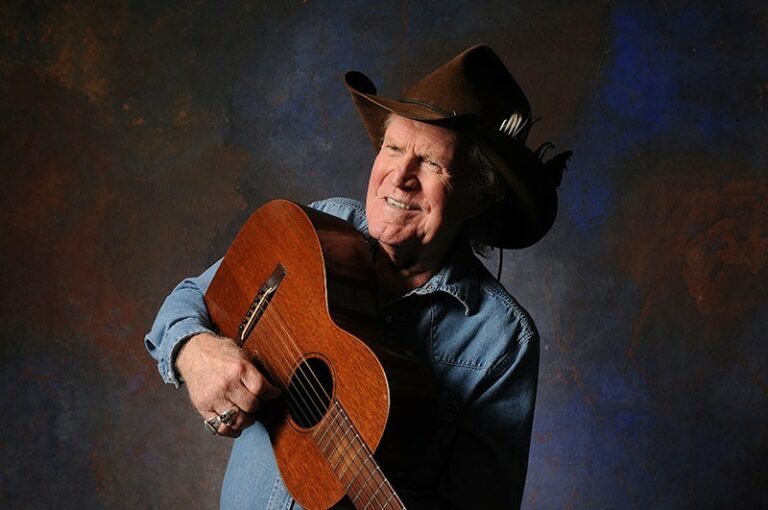
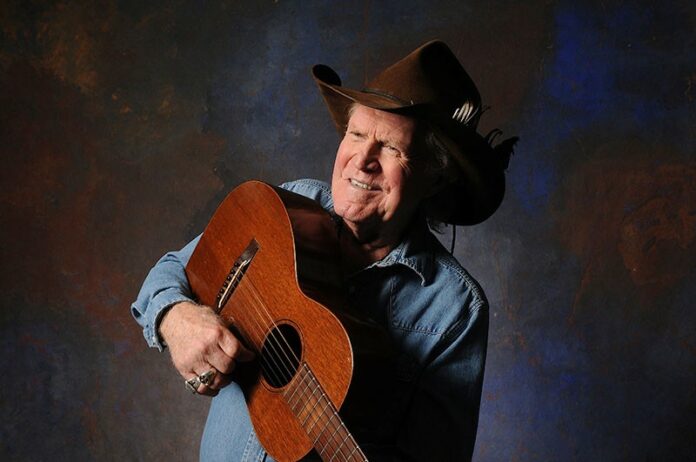
The 2016 avalanche of legendary musicians passing on from this mortal coil now includes Bay Area figure and Mill Valley resident Dan Hicks, leader of the long time laidback roots and western swing band Dan Hicks & the Hot Licks, who died on Saturday, Feb 6, at his home. He was 74.
The cause of death is reported as liver cancer, according to Hicks’ widow Clare. Though he had been battling the disease for some time, Hicks and his outfit still regularly toured around the North Bay and beyond, performing in Napa last December and scheduled to perform at Throckmorton Theatre next month.
Born in Little rock, Ark. and raised in Santa Rosa, Hicks was a contemporary of classic rock icons like Jefferson Airplane and the Grateful Dead. And though he may not have sold millions of records, his toe-tapping revivalist roots country rock was a popular staple of North Bay music lovers for over 40 years. He will be missed.
[youtube]https://www.youtube.com/watch?v=xZAKPVaWyZ4[/youtube]

Listen to Sheer Mag’s “Can’t Stop Fighting”

0


Philadelphia punk rockers Sheer Mag today released their new single “Can’t Stop Fighting,” the first taste of their forthcoming 7″ release, due out next month on Static Shock Records.
Also next month, the group takes their crunchy riffs and exuberant energy on the road for a massive tour that brings them to Santa Rosa on April 24 in the first show put on by new Sonoma County concert booking venture Shock City, USA. Sounds like a perfect pairing. For more details on the upcoming show, click here.

After Illness, Merle Haggard Will Perform in Santa Rosa

 
MHaggard_9007a
Yesterday, a flurry of rumors surfaced that country music legend Merle Haggard had cancelled his upcoming appearance at the Wells Fargo Center for the Arts in Santa Rosa due to illness. Well, now the good news has come in that Haggard’s recent bout with double pneumonia will not keep him from the stage and his recovery is such that his show is BACK ON!
Haggard’s management released the following statement this morning-

The Merle Haggard show scheduled for Feb. 10, 2016 in Santa Rosa, CA will now take place as originally planned.  Mr. Haggard received some medical care earlier this week, responded positively to the treatment and looks forward to seeing his fans next Wednesday at the Wells Fargo Center for the Arts.

It’s great news to hear that Merle is healthy and ready to play. Tickets were temporarily put on hold yesterday as the venue monitored Haggard’s situation, though they should be back on sale by the end of the day today. Call the Wells Fargo Center for the Arts box office at 707.546.3600 with any questions.


Flurry of Fines as Federal Fluvial Geomorphologist Assists Sonoma D.A. in Slurry Case

The Sonoma County District Attorney yesterday fined an engineering firm and vineyard-management company for their role in unloosing an unknown quantity of slurry into the Dry Creek in Healdsburg during a vineyard replant. Together, the companies were fined $74,500 after getting two violations from the county Agricultural Commissioner’s Office related to the project. According to a statement from DA Jill Ravitch, the Ag Commish issued a permit in Oct. 2014 “on a project with steep slopes to replant a vineyard,” on land owned by Robert Covert and Mary Roy (they were not cited in the civil complaint). That December, a big storm prompted a big landslide on the property, and the Ag Commish found that “plans that would have protected runoff from leaving the property were not followed,” and cited the firms. The investigation found that the subsequent slurry from the landslide was directed towards Dry Creek, according to a release from the DA’s office, “although it is unknown how much slurry entered the creek.” The Ag Commish then okayed “stabilization plans to keep the hillside at the site stable,” but the firms failed to follow those temporary plans, “and made permanent repairs to the project.” That earned them a second violation, and a referral to the DA. 

About a year later, in November 2015, the DA filed unlawful business practice and water pollution charges against the defendants, who “agreed to resolve the case,” according to the Feb. 3 release. Along with the fines, “each will be subject to a 10-year injunction prohibiting violations of environmental protection laws,” according to the DA, which doped out the fines thusly: Valdez & Sons Vineyard Management agreed to pay “approximately $50,000 in civil penalties, restitution and costs while Kelder Engineering agreed to pay $24,500 in civil penalties, restitution and costs. Restitution will go to the Russian Riverkeeper for equipment and monitoring of the Dry Creek and Russian River watersheds and to the Sonoma County Fish and Wildlife Propagation Fund.”      

There were a bunch of folks involved in the investigation, from the Ag Commish’s office, state Fish and Wildlife, the Regional Water Quality Control Board. The federal National Oceanic and Atmospheric Administration provided support from a fluvial geomorphologist, which, let’s face it, is a rather cool-sounding job title. 

Feb. 5: In Residence in Yountville

0

Dedicated to promoting the arts in Napa Valley, the Performing Arts Center at Lincoln Theater presents world-class arts and music and fosters arts education, having partnered with the San Francisco Conservatory of Music to bring graduate and post-graduate students to the valley as artists in residence. This week, current artists-in-residence and alumni come together for a concert event, ‘For the Love of Music,’ that also features Napa sensation Marnie Breckenridge. Presenting classical and contemporary works, the music comes to the community on Friday, Feb. 5, at Napa Valley Performing Arts Center at Lincoln Theater, 100 California Drive, Yountville. 7pm. Free; reservations are required. 707.944.9900.

Feb. 6: Fire of Love in Santa Rosa

0

Returning for a 16th year, Rumi’s Caravan once again offers the North Bay a day of reading and musical performances done in an ecstatic religious tradition. The mystical poems of Rumi, Hafiz and others come to life courtesy a volunteer group of impassioned readers, backed by live music and Sufi-inspired whirling dervish dancing. Rumi’s Caravan presents two shows, divided by an optional feast. Proceeds go to the Center for Climate Protection. Rumi’s Caravan enlightens on Saturday, Feb. 6, at the Glaser Center, 547 Mendocino Ave., Santa Rosa. 2pm and 7pm, feast at 5pm. $25–$35; feast, $50. www.facebook.com/Rumi.Caravan.

Feb. 6: Radical Art in Napa

0

As we move increasingly away from the natural world into a digital, artificial one, landscapes in art are getting more abstract and experimental. This week, di Rosa opens ‘Radical Landscapes,’ which captures this movement through the eyes of seven Bay Area artists. With works that are both complex and contemplative, landscapes have never looked so unusual; whether it’s the dystopian cityscapes of painter Robert Minervini or the large-scale photographs of Trevor Paglen, which give form to the idea of mass government surveillance. “Radical Landscapes” runs through April 3 and opens on Saturday, Feb. 6, with a reception at di Rosa, 5200 Sonoma Hwy., Napa. 4pm. Free. 707.226.5991.

Feb. 9: Street Party in Petaluma

0

With January already behind us, everyone is looking forward to February’s most popular holiday—Mardi Gras! In the spirit of the extravagant event, the town of Petaluma is once again taking Fat Tuesday to the streets with the 25th annual Mardi Gras Mambofest. This year, the all–New Orleans R&B revue act Rhythmtown Jive once again leads the lively parade from Putnam Plaza through downtown Petaluma, and back up American Alley, before the festivities move indoors for a dance party in the coolest underground jazz club in the county. The Mambofest kicks off on Tuesday, Feb. 9, at the Big Easy, 128 American Alley, Petaluma. 5:30pm. $5–$7. 707.776.4631.

Sex Fumble

0

Sex trafficking has become a major focus of Bay Area law-enforcement agencies in recent months. They’ve been especially fretful leading up to the Super Bowl at Santa Clara’s Levi’s Stadium this weekend.

The marquee event and human trafficking are connected by widespread predictions that hordes of cash-flush chauvinists will swarm into town for the costumed war play, then ravish tens of thousands of women and children—brought here against their will—to quell their surging testosterone.

The problem is it just isn’t true.

Maggie McNeill, an “unretired call girl” and nationally published writer, has been debunking this myth ever since its first rumblings at the 2004 Athens Olympics. At the 2006 World Cup in Germany, human rights organizations estimated that 40,000 prostitutes would flock to the event. By the time of the 2010 Super Bowl in Miami, the number had stayed the same, except that it was no longer voluntary prostitutes, but captive women and children.

“It morphed,” McNeill says. “It became a more and more interesting lie—because force, fraud and coercion are more interesting than voluntary prostitution. Voluntary prostitution, that’s old hat. It’s known. Nobody cares about that.”

The hysteria has led to short-term prevention efforts. During the 2012 Super Bowl, host city Indianapolis passed harsher sex laws, trained 3,400 people to recognize the signs of human trafficking and distributed 40,000 bars of soap branded with the trafficking hotline number to all area hotels. Authorities made 68 commercial sex arrests; two qualified as human-trafficking cases. During the 2015 Super Bowl, Phoenix law enforcement identified 71 adult prostitutes, arrested 27 sex solicitors and found nine underage sex workers who may or may not have been trafficked.

A soon-to-be-released Stanford case study of the last five Super Bowl cities confirms that there is no significant statistical basis for the claim that sex trafficking, or the demand for paid sex, increases around marquee sporting events.

The Super Bowl sex-trafficking sirens fly in the face of conventional prostitution economics. Most sex workers build a cache of reliable clients that provide most of their income through steady year-round visits. For the myth to be true, traffickers would have to travel from event to event, board their captives in hotels at inflated rates, advertise to attract dozens of new-in-town customers, then charge less than the local prostitutes to undercut the competition. All while law enforcement is on its most
alert status.

“It’s just not a viable business model,” McNeill says. “From an economic standpoint, the whole trafficking myth is bogus. It doesn’t make sense.”

Plus the market is thin, McNeill says. Road-tripping bros blow their life savings to pack themselves 10 to a room. Many can’t afford paid sex, much less a private space for the deed. And other potential customers are often family men with the whole brood in tow.

“What are they going to say? ‘Oh, um, pardon me, Mabel, could you take the kids while I go to see a whore?’ It’s ridiculous,” McNeill says. “Trade shows, that’s where we make our money. There are expense accounts, so the company is taking care of their food and their lodging. They can take their own money and pay for girls.”

The Super Bowl sex rumor helped spawn a moral panic surrounding human trafficking that has become a cottage industry for local law enforcement agencies. In 2014, the California Legislature appropriated $5 million to begin developing “multi-disciplinary protocols” to combat human trafficking; following that, annual funding of $14 million will keep the programs going.

These anti-trafficking efforts respond to some truly shocking—though highly questionable—estimates of a worldwide epidemic: 14.2 million people
in global labor trafficking, up to 300,000 U.S. children “vulnerable” to sexual exploitation.

Citing the disparity between spending and results, sex workers believe that they have become targets under the moral banner of trafficking-prevention to fund politically fashionable law enforcement activities at the expense of marginalized communities.

Cha-ching—it’s money. It’s all about more money, more manpower,” McNeill says.

Still, champions of the crackdown cite the Bay Area as among America’s highest risk areas for human trafficking, especially labor trafficking, which is three times more prevalent than sex trafficking worldwide. Our region’s ethnic diversity and proximity to ports means that victims can be moved around without attracting suspicion, especially since most victims are smuggled in from other countries.

“What we’ve seen in the majority of those cases is that the victims know their traffickers—family members, a friend, neighbors—from their home country, and are brought here under the pretense that they’re going to have a job, make good money, and so on,” says Perla Flores of Community Solutions, a service provider to human-trafficking survivors in Santa Clara and San Benito counties. “But once they arrive, it’s a completely different situation. The smugglers keep their passport and put them into a situation where they’re being exploited for their labor and they don’t have the freedom to leave.”

Authorities are working to develop awareness strategies ahead of Super Bowl 50. Santa Clara County funded and published a 12-minute movie detailing red flags that might signal human trafficking, but the finished product reeks of amateurish iMovie editing and plods along far too slowly for the modern attention span. It has been viewed fewer than 900 times.

But measures like this are considered necessary because trafficking victims cannot identify themselves. In an effort to do something about this concealed crime, California shifted its focus to the sex trafficking of minors and passed Proposition 35 in November 2012. The law beefed up the penalties for sex trafficking, registered the convicted as sex offenders and funneled any funds received from raised fines into law enforcement and victim services. Prosecutors no longer had to prove force, fraud or coercion for survivors under 18, because they’re too young to consent to any form of sex.

Following this, anti-trafficking efforts jumped, but as anti-trafficking agencies patrol websites linked to prostitution, they sweep up voluntary prostitutes in their nets. In 2013 and 2014, the Santa Clara County Sheriff’s Office arrested five prostitutes total. In 2015, they arrested 31, a more than six-fold increase in half the time.

Sex worker Maxine Doogan fumes over the increased arrests brought on by anti-trafficking efforts. “A prostitution arrest is a pink slip,” she says. “It forces people to migrate to another area to find work. Any time you’re a worker in the underground economy and you come into a new area, you are at high risk for a violent act—rape, theft, sexual assault. That’s where you start to see the force; fraud and coercion start to happen. Because of the criminalization, you can easily have a volunteer situation and turn it into something that’s involuntary, and you don’t have any recourse, any access to equal protection under the law.”

Under California code, anyone who receives any money resulting from the labor of a sex worker can be considered a pimp, a felony charge punishable for up to six years in state prison.

“My son, who I was helping through school, would be qualified as a pimp,” says the pimp-free Doogan, who arranges meetings with clients online. “People that we are living with, and who are benefiting from our earnings, in that we contribute our fair share of rent, are pimps. Our landlord is a pimp. Our dry cleaner is a pimp. Everybody is a pimp.”

Decriminalizing sex work in the Bay Area is a ways off, considering that San Francisco, a mecca of open-mindedness, failed to pass a measure in 2008. “What decriminalization does is bring sex work out into the open,” says Jerald Mosley, a retired deputy attorney general for California who spoke at a recent hearing.

Sex workers could be brought into the anti-trafficking crusade. Instead, this ideological wall has alienated a potentially valuable ally.

“They don’t care about me. None of those people ever come to me,” Doogan says. “The prostitute nation is alive and well in the Bay Area. We’re very visible. And they don’t have the respect to call me up and say, ‘I want to save trafficking victims.’ Great. Go save trafficking victims. But you don’t need to do it on my back, and on the back of everyone in my community.”

The Green Way

0

This could be the pivotal year for the Southeast Greenway Campaign, a community-based effort to convert the Highway 12 right-of-way in Santa Rosa into a two-mile greenway connecting Farmers Lane with Spring Lake.

The Southeast Greenway offers a great opportunity to convert vacant land into a valuable resource that will benefit the whole community, providing alternative transportation through bike and pedestrian paths, an educational resource, open space for recreation and community gardens, and a restored natural habitat with three streams, oak woodlands and grasslands. It will also provide an east-west link from Sonoma Valley to the SMART path and to West County trails.

Studies show that, besides offering new possibilities for exercise and recreation, similar greenways in other communities are an economic asset, attracting tourists as well as employers seeking quality amenities.

Since Caltrans has abandoned plans to extend the freeway and the Santa Rosa City Council voted unanimously to initiate a general plan amendment to rezone the property, there will be public meetings this year to determine the best use of the land, appraisals will be prepared to arrive at a fair price, and efforts will be launched for its transfer to local ownership.

The Greenway Campaign was recently awarded a Rivers, Trails and Conservation Assistance grant from the National Park Service to promote the Greenway story through the media, and completed a very successful fundraising effort this fall.

This year’s campaign kicks off with a community event called “Southeast Greenway 2016: The Time Is Now” on Feb. 20, from 10am to noon, at Montgomery High School in Santa Rosa. The meeting will provide an opportunity for members of the community to learn more about the Greenway and how to participate in the planning and fundraising process.

David Koehler, the new executive director of Sonoma Land Trust, the Greenway’s fiscal sponsor, will give a talk called “Greenways: Their Power to Connect Us.” Those interested in attending this free event can register at southeastgreenway.org.

Tony White is a retired Sonoma State history professor living in Santa Rosa and a volunteer on the Southeast Greenway Campaign.

Open Mic is a weekly feature in the ‘Bohemian.’ We welcome your contribution. To have your topical essay of 350 words considered for publication, write op*****@******an.com.

Dan Hicks Passes Away

The 2016 avalanche of legendary musicians passing on from this mortal coil now includes Bay Area figure and Mill Valley resident Dan Hicks, leader of the long time laidback roots and western swing band Dan Hicks & the Hot Licks, who died on Saturday, Feb 6, at his home. He was 74. The cause of death is reported as liver cancer, according to...

Listen to Sheer Mag’s “Can’t Stop Fighting”

Philadelphia punk rockers Sheer Mag today released their new single "Can't Stop Fighting," the first taste of their forthcoming 7" release, due out next month on Static Shock Records. Also next month, the group takes their crunchy riffs and exuberant energy on the road for a massive tour that brings them to Santa Rosa on April 24 in the...

After Illness, Merle Haggard Will Perform in Santa Rosa

  Yesterday, a flurry of rumors surfaced that country music legend Merle Haggard had cancelled his upcoming appearance at the Wells Fargo Center for the Arts in Santa Rosa due to illness. Well, now the good news has come in that Haggard's recent bout with double pneumonia will not keep him from the stage and his recovery is such that his show...

Flurry of Fines as Federal Fluvial Geomorphologist Assists Sonoma D.A. in Slurry Case

The Sonoma County District Attorney yesterday fined an engineering firm and vineyard-management company for their role in unloosing an unknown quantity of slurry into the Dry Creek in Healdsburg during a vineyard replant. Together, the companies were fined $74,500 after getting two violations from the county Agricultural Commissioner's Office related to the project. According to a statement from DA...

Feb. 5: In Residence in Yountville

Dedicated to promoting the arts in Napa Valley, the Performing Arts Center at Lincoln Theater presents world-class arts and music and fosters arts education, having partnered with the San Francisco Conservatory of Music to bring graduate and post-graduate students to the valley as artists in residence. This week, current artists-in-residence and alumni come together for a concert event, ‘For...

Feb. 6: Fire of Love in Santa Rosa

Returning for a 16th year, Rumi’s Caravan once again offers the North Bay a day of reading and musical performances done in an ecstatic religious tradition. The mystical poems of Rumi, Hafiz and others come to life courtesy a volunteer group of impassioned readers, backed by live music and Sufi-inspired whirling dervish dancing. Rumi’s Caravan presents two shows, divided...

Feb. 6: Radical Art in Napa

As we move increasingly away from the natural world into a digital, artificial one, landscapes in art are getting more abstract and experimental. This week, di Rosa opens ‘Radical Landscapes,’ which captures this movement through the eyes of seven Bay Area artists. With works that are both complex and contemplative, landscapes have never looked so unusual; whether it’s the...

Feb. 9: Street Party in Petaluma

With January already behind us, everyone is looking forward to February’s most popular holiday—Mardi Gras! In the spirit of the extravagant event, the town of Petaluma is once again taking Fat Tuesday to the streets with the 25th annual Mardi Gras Mambofest. This year, the all–New Orleans R&B revue act Rhythmtown Jive once again leads the lively parade from...

Sex Fumble

Sex trafficking has become a major focus of Bay Area law-enforcement agencies in recent months. They've been especially fretful leading up to the Super Bowl at Santa Clara's Levi's Stadium this weekend. The marquee event and human trafficking are connected by widespread predictions that hordes of cash-flush chauvinists will swarm into town for the costumed war play, then ravish tens...

The Green Way

This could be the pivotal year for the Southeast Greenway Campaign, a community-based effort to convert the Highway 12 right-of-way in Santa Rosa into a two-mile greenway connecting Farmers Lane with Spring Lake. The Southeast Greenway offers a great opportunity to convert vacant land into a valuable resource that will benefit the whole community, providing alternative transportation through bike and...
11,084FansLike
4,446FollowersFollow
6,928FollowersFollow