Bon Voyage

0

One show takes place under the sea; the other above it. Both are worth a voyage to the theater.

Visually inventive and surprisingly emotional, writer-director Mary Zimmerman’s richly reimagined Treasure Island, adapted from Robert Louis Stevenson’s novel, is a show that literally rocks, employing a stunningly engineered stage that actually swings back and forth like a ship rolling on the ocean.

It’s just one of many delights as Zimmerman launches her wildly effective, subversively psychological pirate adventure at Berkeley Repertory Theatre. With Zimmerman at the helm, the production cleverly uncovers the buried beauty, pathos and human comedy in the classic tale of Jim Hawkins (John Babbo), an adventurous boy who befriends the one-legged pirate Long John Silver (Steven Epp) and embarks on a journey that will test his strength and transform him into a man.

One can hardly say that Treasure Island was a deep book, despite the depths of fondness many still feel for it. That’s why it’s such a surprise that Zimmerman has so deftly turned the tale into something so rewarding. Packed with poetic touches, this rollicking success is achingly lovely, frequently sweet, occasionally weird and a tad upsetting. Which is just as it should be. It is, after all, a tale of murder and pirates. Arrrrrr.

Rating (out of 5): ★★★★½

In Spreckels Theater Company’s splashy new production of Disney’s Little Mermaid, colorful, costumed fish appear to swim across the stage. Seagulls fly and mermaids frolic, huge waves splash and crash, and octopus women grow to six times their normal size (thanks to massive screened projections).

But of all the special effects unfurled in this elaborate, Gene Abravaya-directed production, the most impressive is the strong-voiced, agile and energetic cast. Led by Julianne Thompson Bretan as the adventurous title character, Ariel, with memorable turns by Mary Gannon Graham as the villainous sea-witch Ursula and Fernando Sui as Ariel’s BFF (best fish friend) Flounder, the show succeeds primarily due to the delightfully cartoonish and moving performances.

Despite some glaring script flaws, an overstuffed score and a confusing, undercooked climax, this Mermaid delivers a level of onstage dazzle that is largely unmatched by any other local musical in recent memory. ★★★★

Revealing Dance

0

Showcasing new dance works from local students, as well as a world-renowned artist, Secrets is the Santa Rosa Junior College dance department’s biggest performance of the year. The show features modern, ballet, jazz, hip-hop and contemporary dance, all of which are used to explore our deep and sometimes dark aspects, such as depression and obsession.

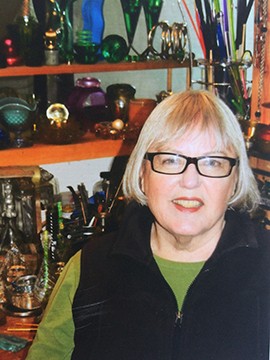
This performance is significantly more personal and enigmatic than previous shows put on by the department. Guest artist and choreographer Malaya (pictured), an international talent who teaches master classes at the famous Edge Performing Arts Center in Los Angeles, will perform a lyrical dance piece based on the idea that each dancer has his or her own form of addiction—a relevant contemporary topic.

Secrets will also be the last show that director Susan Matthies choreographs after working with the SRJC for 25 years. Matthies is a longtime icon of Sonoma County dance, best known as a major influence in the aerobic dance movement of the ’80s and ’90s. She and co-director Lara Branen, along with faculty member Carrie Stillman, chose student choreographers through a competitive selection process, and their work will be featured as well.

Secrets reveals itself Friday through Sunday, May 13–15, at the Burbank Auditorium, SRJC, 1501 Mendocino Ave., Santa Rosa. Friday–Saturday, 8pm;
Saturday–Sunday, 2pm. $10–$17. 707.527.4343.

Letters to the Editor: May 11, 2016

It’s a Scam

Phil Graf (Letters, May 4) denounces rent control as a scam lottery that would be unnecessary if Santa Rosa decreased its building fees and respected the “laws of economics.”

The truth is slightly deeper. Since Proposition 13, cities must collect their costs for infrastructure, schools and security (police and fire) up front in building fees or Mello-Roos assessments, or diminish the level of service for the rest of the community.

A more intelligent solution to the shortage of affordable housing is mandating mixed-income neighborhoods. This means that multi-family housing would have to be scattered among the mansions. Mansion owners might pay slightly more, but would have neighbors who were not quite so preoccupied with the almighty dollar (never mind those mythical “laws of economics”).

Mr. Graf is correct in pointing out that “planning” as conducted throughout most of California is an illegitimate abuse of power, but building fees aren’t the nexus of that abuse.

Orangevale

Call Me a Dreamer

The Hil gets indicted over her emails. The Donald gets exposed for his ties to organized crime. Bloomberg and Bernie each emerge as third party/write-in candidates. The country gets its first New York Jewish president.

Where is Hunter Thompson when we need him?

Santa Rosa

GMOs No, Noreen Yes

The citizens of Sonoma County have long been concerned with the risks associated with the planting of genetically modified crops. The vast majority of GMO crops are engineered to be herbicide-resistant. As a result, farmers who plant them tend to use more herbicides per acre than if they had planted conventional crops.

In 2006, a proposed ordinance to ban GMOs, Measure M, was defeated here in the county, thanks to an expensive campaign largely funded by the Monsanto Corporation. Monsanto (surprise!) makes a lot of money from GMOs.

In November, a new ordinance to ban GMOs will be on the ballot. You can read it at www.gmofreesonomacounty.com/ordinance. It is very clear: it does not ban the sale of GMO products; it does not ban research into GMOs; it only bans their cultivation.

In the 5th District supervisorial race, one major candidate has hired the consultant who ran the campaign to defeat Measure M. The other, Noreen Evans, is very clear on where she stands: for the ordinance and opposed to the planting of GMO crops. Noreen has my vote.

Sebastopol

Write to us at le*****@******an.com.

It’s All Gravy

0

Poet, activist, clown, ice cream flavor—Wavy Gravy has been many things. An icon of the counterculture movement since the 1960s, Wavy Gravy, born Hugh Romney on May 15, 1936, turns 80 this month.

To celebrate, he’s throwing two festive birthday parties. On May 15, Gravy welcomes Doobie Decibel System, Steve Kimock and others to the Sweetwater Music Hall in Mill Valley. On
May 22, Gravy hosts a blowout bash with headliners Yonder Mountain String Band, Steve Earle, John Popper and many others at the SOMO Village Event Center in Rohnert Park.

Both shows also act as benefit fundraisers for Gravy’s Seva Foundation, an organization that restores eyesight to millions of people around the world through cataract surgery, in addition to other health programs.

Though he’s entering octogenarian territory and doesn’t get around as spryly as he used to, Wavy Gravy says he still feels like a teenager.

“I think I approach [life] one breath at a time, and I try to be enthusiastic with each breath,” he says from his home in Berkeley.

Looking back on a life spent spreading messages of peace and love, Gravy’s philosophy boils down to a line he took from author Ken Kesey. “Always put your good where it will do the most,” he says. “Where my good will do the most is Seva and Camp Winnarainbow,” his ongoing circus summer camp.

Gravy’s professional journey started as a beat poet in Boston in the late 1950s, putting together jazz and poetry shows in the basement of a local bar. He soon moved to New York City and began reading in Greenwich Village coffee houses, finally landing at the famous Gaslight Cafe, where he he started hosting folk-music nights.

“God, I remember when [Bob] Dylan came into the Gaslight, he was wearing Woody Guthrie’s underwear,” says Gravy. “He asked me if he could go on. I grabbed the mic and said, ‘Here he is, a legend in his own lifetime—what’s your name kid?'” Gravy would end up sharing a room above the Gaslight with Dylan.

By the mid 1960s, Gravy and his Hog Farm collective of performers and pranksters were roaming across the country touring and opening shows for acts like Peter, Paul & Mary and Thelonious Monk.

That’s when Gravy’s hippie nature took hold. “I began to realize there was more to the universe than ‘Hey mom, look at me,'” he says. He worked tirelessly to stop the war in Vietnam, and appeared at Woodstock, where he famously said “Good morning, what we have in mind is breakfast in bed for 400,000.”

His adventures and performances range from building moats of Jello around a stage to building playgrounds in Kathmandu and distributing medical supplies to Tibetan refugees.

In 1978, Gravy joined forces with his friend Dr. Larry Brilliant (a leader in the World Health Organization’s smallpox-eradication efforts), spiritual philosopher Ram Dass and others to form the Seva Foundation, which has helped restore sight to millions.

“Eighty percent of the people in the world who are blind don’t need to be blind,” Gravy says. “They could get their sight back for about five bucks an eyeball when we started it. It’s about $50 per eye today. Seva is going towards 4 million people who aren’t bumping into shit anymore.”

The upcoming birthday bashes, both at the Sweetwater and at the SOMO Event Center, will raise money on behalf of Seva. While the Sweetwater show is an intimate celebration, the SOMO concert is a full-scale music festival.

In addition to icons like Steve Earle and John Popper, the daylong concert also features New Riders of the Purple Sage, Achilles Wheel, Dead Winter Carpenters, Grateful Bluegrass Boys, T Sisters and other surprise guests. Food and craft vendors, an art gallery and silent auctions are also part of the fun.

As dear as Seva is to Wavy Gravy, he is equally proud of his work with Camp Winnarainbow, his longtime summer camp located in Mendocino County near Laytonville. The camp teaches circus and theatrical arts, but is at heart a community and a compassion-building enterprise. “We’re creating universal human beings who can deal with anything that comes down the pike,” says Gravy.

“In 20 years, I’ll be 100,” he says. “Methuselah says the first 100 years are the hardest—it’s all downhill from there.”

Soul Food

0

The soup has crossed the 30-ingredient line, but is still missing something; it’s a little bland, it needs help, some key but as-yet-unidentified addition that will bring it all home.

I open the refrigerator door, but every last scrap of vegetable has been scoured from the produce bin, given a bath and a trim, and chucked into the simmering pot, which now bubbles and froths, casting a fragrant steam through my silent cottage.

It’s quite a rolling experiment in kitchen frugality and efficiency—the sort of thing you do when the wolf is at the door and the refrigerator’s brimming at the edge of stinky decadence with uncooked gatherings. You cook that wolf, as the protean foodie M. F. K. Fisher famously wrote in 1942. My aunt would not have been interested—her culinary tastes lined up more with the likes of Guy Fieri, and this soup is coming in as a self-involved exercise in the creation of sanctimonious medicine. You should have seen my aunt the time I suggested she become a vegan, after the doctors removed a foot of her large intestine. That just wasn’t going to happen, and she’d have thrown all those vegetables away if they’d been in her fridge.

The red potatoes are a little soft but, hey, I want them to break down and become one with the broth, so in they go. I find two half-cut onions from previous stovetop adventures, brown and dry at the fragrant edge but salvageable at the core. I save from oblivion a trio of delicious, withered parsnips at the bottom of the vegetable box, along with some wee old sugar beets I’d forgotten about, and a wad of old butter stuck to a jar of salsa. It goes on and on like this down to the last wilt of parsley, every damned daikon and flaccid carrot—in you go!

But the soup, sadly, still isn’t quite there yet, after hours of simmering and lots of salt to ramp up the flavor factor. I reach in the fridge for another ingredient-grab and poach that box of blue-tinged local eggs, crack three of them right there into the bubbling mess. A light stir, keep those yolks intact. Then I find another onion wedged between an old half-bagel smeared with peanut butter and an empty mayo jar.

Up to this point, the soup has been a meatless and generally local and organic affair, with allowances for, say, that half-bag of Trader Joe’s shredded Brussels sprouts, which kicked off the soup hours earlier as ingredient number one, along with some similarly shredded broccoli from TJ’s.

I peer into the freezer for another hopeful look, and locate some frozen ginger on the door and run it through the grater and into the soup. I take another look and rummage around the freezer, and then—there it is, emerging like a vision from my blue-collar family roots: the key ingredient, lost under a frozen loaf of flavorless spelt bread, something I used to see in my late Aunt Mary’s freezer. Total white-trash trayf. The soup needs some of that.

I pull the red bag out of the freezer and stand over the soup pot awhile and think about Don DeLillo and a scene at the beginning of his novel Running Dog. Two detectives have just come onto a murder scene in an apartment:

“I don’t know what it is but with me the body’s in the kitchen. Always the kitchen.”

“Poor people like to be close to the food.”

“What do you think, seriously here, one entry?”

“They don’t like to stray from the food, even in the middle of a knife fight.”

II

If I had told Aunt Mary I had gone to Garlic Johnny’s in Santa Rosa? I could only imagine the conversation that would ensue. Was he there?! Did you meet him?! What did you eat?!?

Diners, Drive-Ins and Dives was one of Mary’s favorite television shows—right up there with Dancing with the Stars and Atlanta Braves baseball on TBS. It was one of those shows where, if I dared to call my aunt while Guy Fieri’s Food Network hit was on the air, I’d get a quick and harried order to “call back later, Tommy! Guy’s on!”

I was waiting on a meeting in the late afternoon at Johnny Garlic’s in Santa Rosa recently, Fieri’s formerly co-partnered joint in his home turf, out on Farmers Lane at Neotomas. Fieri’s not there anymore, and neither is Aunt Mary, who died just over a year ago. I’ll have these funny imagined what-if conversations with myself in the car, and I know she’d have gone totally nuts if she knew I was headed to Johnny Garlic’s.

And Fieri’s signature, branded dishes are still part of the menu, even though Fieri is no longer a partner in the business. The Fieri menu holdovers are highlighted as Guy’s Thangs or something like that on the menu—and the biggest jumbo signature dish of them all is, of course, his elaborately comforting and award-winning burger.

I visited the place in the in-between time before dinner; there was more staff than patrons and a kind of pre-bustle feel filled the air. It was just me for a while before a family four-top came in. I eased back alone and checked out the three televisions that offered sports, noted that the lemonade and iced coffee were both tasty, as was the boar special offered on a board and in the menu proper. The pig-with-apples dish is sort of a he-man offering that lends to a feeling here of sub-exotic culinary survivalism of the Anthony-Bourdain-meets-Bear-Grylls variety, if such a thing can be imagined. You’re not slaying that boar, but they sure make you feel as though you did at Johnny Garlic’s.

But there’s another hybrid feel to tough-guy, micro-chain Johnny Garlic’s (there are two other locations): its everyman signage and slick, fun menu clearly offer mass-market aspirations that would bespeak a celebrity starchild fronting the place, even if he’s nowhere to be seen. Sorry, Aunt Mary.

Even the receipt can’t decide whether, moving forward in the post-Fieri era, this place is “Johnny Garlic’s” or “Johnny’s Garlic.” And that, to me, is a kind of homey, appreciated touch.

I read a foodie story online recently that wondered what happened to the food-tower trend of the 1990s? Gee, I wonder. It’s right here at Johnny Garlic’s, whose burger represents a recasting of the trend from its 1990s haute cuisine pretensions to an everyman theme in this era of reality TV and blue-collar how-to hits of the Dirty Jobs persuasion.

Aunt Mary would not have cared about any of that gibberish and would have changed the subject to when was I going to try out for Jeopardy. She would have asked after that burger, and she would really have wanted to know: What happened with Guy?

[page]

The mac’n’cheese bacon burger, at its most rarefied state of stacked Guyness, contains 22 ingredients, a whole bunch of fromage among them to gild the lily. The burger is a steaming pile of comfort on a brioche bun slathered with garlic, and there is no way you are picking this thing up and taking a bite, unless you are drunk.

Lift this burger at your peril, and watch as the Donkey sauce—Fieri’s siggie combination of mayonnaise, Worcestershire, mustard and roasted garlic—ruins your shirt, and quite possibly your mood. But the masses have spoken, again and again, with awards and endless greasy-lip accolades from the likes of Rachel Ray.

Properly dissected, the burger is a delicious encounter with varied flavors, lightly intermingled in the separation. The bacon, for example, is revealed as a full-flavored glory of smokiness met with a hint of dripping cheese-tang excess.

As for Guy Fieri himself, if I was forced to explain the situation to Aunt Mary, it seems that he was kind of run out of his own hometown. His proposed winery/event center conjured images of unhinged biker bacchanals and terrified citizenry forced to endure Twisted Sister winetasting events. The burger can stay, but Guy’s got to go. And so he went.

Aunt Mary wouldn’t have liked that version of events. She loved Guy, and I worried that she loved him more than she loved me.

Who was I in the face of Fieri’s latest Emmy-winning, gullet-shove moment of high-volume mastication? The grunts, the groans, the shouts—Aunt Mary shouted right along with him, squealed with delight at his high-critic “This is good” observations and badgered me about when I’d get my own act together, which to Aunt Mary meant: “You should go on Jeopardy.”

I was the college-educated nephew in the face of Aunt Mary’s love of lumpen couch potatoes, and Fieri was so burly and accessible, I never had a chance.

He occupied the highest pinnacle of comforting anti-intellectualism that’s all over TV these days, where blue-collar hit shows depict the dirty parts of life with heroic panache. With Guy, you also saw the sausage being made. It was kind of disgusting to behold the full demonic frenzy of Fieri’s assault on meat, an assessment about which Aunt Mary would no doubt take issue.

We shared a lot of meals at and near Aunt Mary’s condo outside of New Orleans over the years; we watched her favorite TV shows on Sundays with the nuked turkey meatloaf and the iceberg salad with the Dollar Store dressing; we slammed the heavy and rich buffet at the Piccadilly and gorged to the heights of mad spectacle at mighty Golden Corral; and we settled on Chinese lo mein that was right out the door when no-one felt like cooking or driving. One thing was for sure: Aunt Mary never let me cook. That was Guy’s job.

III

The simmer has come to a full boil and the soup is all but ready for its final desecration—or, more fairly, its necessary leavening with the rich, old spice of the blue-collar palate-pleaser.

We’re at 40 ingredients and counting this Sunday afternoon, the Braves are playing the Mets and they are losing—and this would have been a day I headed to Aunt Mary’s for dinner. Sundays are for family and what you make of it, and the meals we enjoyed together weren’t “comfort food” in the sense of some superficial and meaningless “authenticity” around cheese and macaroni. But they were comforting in the sense of your soul and what it craves—which, above all else, is connection. A connection with your world, with the people closest to you, with strangers who then become friends.

I lived in a neighborhood in New Orleans that Aunt Mary did not approve of. That isn’t saying anything, since she didn’t approve of any New Orleans neighborhood, whether I lived in it or not. But Hollygrove was a fine place to live, and I used to frequent the local Dollar Store and a corner market pretty often.

The market was one of those tight-corner grocers that had a meat-and-sandwich counter in the back and offered various options for boxes of meat-for-the-week. You could get the one with the beef liver, the turkey necks and the ham hocks, or you might load up on a box with chopped meat, a bag of chicken wings and some pork chops. It is fair to say that none of this meat enjoyed any free-range time, and the living conditions were probably deplorable. But the food was cheap and plentiful; at the Dollar General, it was cheap and plentiful, but you couldn’t actually call some of that canned stuff “food,” though I ate it anyway.

Right down the street from these places there was a polar opposite encounter with food. The Hollygrove Market and Farm grew and offered an array of organic foods from regional farms and ranches. I volunteered there for a few months and they’d let me load up a big box with food at the end of your shift—oranges, jars of honey, herbs, yams, lots of great goodies to fill the unemployed larder.

I’d make collard greens and kale from the farm in the skillet, and throw in a turkey neck or two from the hoochie mart to give it the proper balance of conceits.

IV

I was reading Allen Ginsberg’s “A Supermarket in California” recently, a poem that finds the great Beat poet imagining Walt Whitman in a neon-lit California grocery store, among the cans and the vegetables.

Where will they go when the store closes, Ginsberg asks:

Will we walk all night through solitary streets? The trees add shade to shade, lights out in the houses, we’ll both be lonely.

Will we stroll dreaming of the lost America of love past blue automobiles in driveways, home to our silent cottage?

I’m standing over the simmering pot, in my silent cottage with the contents of the red bag ready to go. The first little bits pour out, and then the full pour, the gushing of garbage that is nonetheless so very vital and comforting.

Mmmm, who doesn’t love them some Jimmy Dean sausage in what would otherwise be bland if disgustingly healthy soup? I know Aunt Mary would, and Guy, too.

Dinner is served.

Pipe Down

0

As spring weather greets the Napa Valley, we are again disturbed by loud noise from motorcycles that have illegally altered exhaust systems.

Most of the noise is created by Harley-Davidsons, which have large V-twin engines. Statistics indicate that somewhere between 60 and 80 percent of V-twin motorcycles have had their legal (and quiet), factory-installed, EPA-approved mufflers modified (baffles or muffler removed) or removed and replaced with loud, noncompliant, aftermarket exhaust mechanisms. These modifications make the bikes very loud. They emit two to six (or more) times the legal maximum motorcycle noise emissions specified by the EPA. Yet police officers look the other way, even when they hear and see these bikes and could easily issue citations to offenders.

For over seven years, I have asked local police, CHP, the sheriff and politicians why no citations are issued. I have spoken before city council meetings, have had meetings and discussions with police and politicians, and have written many letters to the editor. Excuses are always made as to why nothing can be done. I have been told that they don’t want to discourage bikers from spending money here (from a city council member); that it is not a priority and is too difficult to do (from a police chief); that we need more bikes coming here, not fewer (a mayor); that this issue would not be addressed as long as he held his job (city manager); and that it is a unique problem, as the bikes are “transient” (from the head of local CHP).

When you consider the degree of disturbance of the peace caused by the bikes, combined with the millions of taxpayer dollars that support the local police departments, sheriff’s office and CHP, allowing the noise to continue unabated is a travesty and a rip-off imposed upon all of us who reside here. We deserve to have the authorities address this problem. We pay our taxes, and with that, there is an implied contract with the government that it is the duty of law enforcement officers to protect the public.

Don Scott lives in Napa Valley. He retired from a career as a land agent for the county of Sonoma. He is passionate about conservation of the environment and preserving old MG sports cars.

Open Mic is a weekly feature in the ‘Bohemian.’ We welcome your contribution. To have your topical essay of 350 words considered for publication, write op*****@******an.com.

Debriefer: May 11, 2016

0

Sonoma County’s border with San Francisco Bay is underexplored, but that could change with a soon-to-open trail.

Sonoma Land Trust, the San Francisco Bay Trail and the San Pablo Bay National Wildlife Refuge are hosting an event on Sunday, May 15, to officially open a new 2.5-mile section of the San Francisco Bay Trail through the land trust’s Sears Point Wetland Restoration Project.

The new stretch of trail is at Reclamation Road, south of the Highway 37 and Lakeville Highway intersection.

The celebration will begin with a ribbon-cutting ceremony at 2:30pm with emcee Doug McConnell of NBC’s OpenRoad. Speakers will include U.S. Representative Mike Thompson’s chief of staff Stephen Gale, Sonoma County Supervisor David Rabbitt and representatives of the Sonoma Land Trust, San Francisco Bay Trail, San Pablo Bay National Wildlife Refuge and Nancy Wiseman of the Dickson Family, former owners of the ranch. Following the speech-making, the trail will be opened to the public and will remain open daily. McConnell will lead the first official hike down the trail.

“We are overjoyed to be sharing this long-planned trail with the community, and to also be turning this property over to the San Pablo Bay National Wildlife Refuge to manage for the future,” said Sonoma Land Trust executive director Dave Koehler in a statement. “This is the best access point to the bay in Sonoma County, and people are really going to enjoy walking along here and watching the new tidal marsh evolve.”

The new trail flanks the tidal wetlands at Sears Point, the focus of a marsh-restoration project 10 years in the making. Last fall, Sonoma Land Trust breached the levee at Sears Point to allow the tides to return to 1,000 acres of land that was diked off from the bay in the late 1800s. The new trail section is part of a planned 500-mile path around the entire San Francisco Bay.

The Sears Point Wetland Restoration Project could become part of larger restoration plans if voters pass Measure AA in June. The measure, on the ballot in all nine Bay Area counties, is a $12 parcel tax to raise funds for trash removal, habitat restoration and enhancing wetlands and increasing public access. If approved, the measure will raise $25 million a year for 20 years.

The new trail will also link to the older 1.5-mile Bay Trail at Sonoma Baylands, which starts at Port Sonoma, allowing hikers and birders to trek four miles each way.

“This new 2.5-mile segment of Bay Trail represents the best in collaboration and highlights the myriad benefits that can accrue from wetland restoration,” says Laura Thompson, San Francisco Bay Trail project manager. “Between the Sonoma Land Trust and its many partners, the U.S. Fish and Wildlife Service and the Association of Bay Area Governments’ San Francisco Bay Trail Project, the public at large will be able to access
yet another spectacular piece of the Bay shoreline.”

New Day

Times are changing for cannabis cultivators across the state. To meet the rigorous demands of the Medical Marijuana Regulation and Safety Act (MMRSA), set to take effect in just 18 months, growers who want to be compliant are having to develop new business models, apply for new permits and hire attorneys and business consultants. Many operators are also evaluating their dwindling return on investment.

“The cost of operations for indoor cultivation is starting to outweigh the revenue,” says Adam, a Sonoma County cultivator for 15 years who didn’t want to use his full name. “The price per pound has been steadily declining over the past 10 years.”

In Washington state, where recreational marijuana is legal, prices are dropping for wholesale and retail by about 2 percent per month—that’s a drop of 25 percent a year. A recent forecast by industry analyst the ArcView Group shows the national cannabis market soaring to $21.8 billion by 2020 with an annual growth rate of 31 percent. This is incredible growth, but it may mean falling wholesale prices as supply grows.

State policymakers crafted MMRSA in 2015 in part to protect California’s environment by incentivizing growers to adopt more sustainable practices. But the lack of available space for indoor growing (there’s only a 2 percent vacancy rate for industrial space, according to commercial real estate company Keegan & Coppin) makes running a cannabis business even harder. With the space crunch, where to turn for manufacturing, processing, testing, storage and distribution?

Innovation and increased efficiency are the best path forward. Advances in water catchment and remediation practices can reduce demand on water. Indoor technology has reached a point where closed-loop systems can reuse up to 70 percent of water used in production.

In Boulder, Colo., incentives are in place to encourage renewable-energy technology, something that’s sorely needed in the energy-intensive indoor-cannabis industry.

What does this mean for Sonoma County? Collaboration and innovation between cannabis operators, environmental consultants, advocacy groups, policy makers and local businesses will be the pathway to market viability. Increasing efficiency by blending new technology with old wisdom is a successful tactic for competing in this growing market.

Tawnie Logan is the executive director of the Sonoma County Growers Alliance. Go to scgalliance.com for more info. Send comments to co******@*********ce.com.

Groceries, Then Beer

0

Oliver’s Market is opening a new store in Windsor on May 18. That’s good news for fans of the Sonoma County–centric market.

Among other things about OIiver’s, I appreciate the market’s vast selection of beer. The new store will go one better with the opening of Tavern Off the Green, a taproom and pub built right into the market.

The taproom will feature 24 mostly local beers, wines and ciders, as well as a pub-style menu with multicultural items like asparagus and burrata flatbread, Korean beef street tacos, tandoori chicken skewers and spicy mac ‘n’ cheese with bacon.

You can also bring food purchased from the store into the pub to go with your beer. Also look for live local music, brewer and winetasting events. There will be a happy hour starting May 23 from 4pm to 6pm on weekdays.

If you ever needed a reason to volunteer to do the family’s grocery shopping, Oliver’s new market and pub is it. Oliver’s Market in Windsor will be at 9230 Old Redwood Hwy.

Pharm to Table

0

I drove by the two-month-old Pharmacy probably half a dozen times before I realized it wasn’t a pharmacy, but a smart, new, casual restaurant that draws nearby medical-office workers and downtown Santa Rosa sandwich aficionados looking for a quick bite without the health hazards of fast food.

There must be a name for the building’s particular kind of architecture, but I don’t know what it is. I’ve seen similar structures
in similar-looking medical campuses throughout the Bay Area that serve as pharmacies. With the high ceiling, big windows and steep roof angles, I’m going with 1970s California-modern-meets-Balinese-pagoda. It’s a distinctive place.

The healthful slant of the menu—locally sourced eggs and meats, housemade almond milk, wholesome salads, turmeric-ginger lassis—and riffs off the medical theme in the cafe’s name makes sense. Food is thy medicine, etc. For a pick-me-up, I’d go for one of their delicious sandwiches over pharmaceuticals any day.

I love the open-faced avocado sandwich ($8) topped with sea salt, Katz olive oil, sunflower sprouts and red chile flakes served on sourdough bread from Petaluma’s outstanding Revolution Bakery. It’s simple and simply delicious. The BN Ranch roast beef sandwich ($10) is also served open-faced, with caramelized onions and spicy aioli. The rose-tinted ribbons of sliced beef are piled high and are uncommonly tender, so buttery they almost melt in my mouth. How do they do that?

Another winner is the turkey and avocado sandwich ($12). You’ve had a million turkey and avocado sandwiches before, but this one stands out for the quality of its ingredients and clean, fresh flavors—calabrian chile pesto, aioli, sunflower shoots, juicy turkey and more of that excellent, crusty Revolution bread.

Best of all is the croque-monsieur ($10), another open-faced gem made with Llano Seco ham topped with bubbling, torch-browned béchamel sauce. So good.

The country-cute interior (baskets of bread, heirloom beans, old rolling pins in big crocks) doesn’t hide the lack of seating. There is none, unless you count the few lawn chairs out front. Patrons sit on planter boxes or stand up against the counter snaking along the windows inside. Bear with them. Owners Kim Bourdet and Jennifer McMurry are planning to a build seating area atop a mound of ivy and lava rocks out front in a setting that is still very much an office park. You can always get it to go.

Hours are breakfast and lunch Monday through Friday, 7am to 3pm. My one gripe is the chai latte ($4). It tastes like watery milk, but they say they’re working on it.

Desserts consist of freshly baked cookies, pastries and lemon meringue, and salted chocolate and caramel treats served in tiny Mason jars ($6). If the dose of chocolate and caramel doesn’t make you feel better, have another one and call me in the morning.

The Pharmacy, 990 Sonoma Ave. #1, Santa Rosa. 707.978.2801.

Bon Voyage

One show takes place under the sea; the other above it. Both are worth a voyage to the theater. Visually inventive and surprisingly emotional, writer-director Mary Zimmerman's richly reimagined Treasure Island, adapted from Robert Louis Stevenson's novel, is a show that literally rocks, employing a stunningly engineered stage that actually swings back and forth like a ship rolling on the...

Revealing Dance

Showcasing new dance works from local students, as well as a world-renowned artist, Secrets is the Santa Rosa Junior College dance department's biggest performance of the year. The show features modern, ballet, jazz, hip-hop and contemporary dance, all of which are used to explore our deep and sometimes dark aspects, such as depression and obsession. This performance is significantly more...

Letters to the Editor: May 11, 2016

It's a Scam Phil Graf (Letters, May 4) denounces rent control as a scam lottery that would be unnecessary if Santa Rosa decreased its building fees and respected the "laws of economics." The truth is slightly deeper. Since Proposition 13, cities must collect their costs for infrastructure, schools and security (police and fire) up front in building fees or Mello-Roos assessments,...

It’s All Gravy

Poet, activist, clown, ice cream flavor—Wavy Gravy has been many things. An icon of the counterculture movement since the 1960s, Wavy Gravy, born Hugh Romney on May 15, 1936, turns 80 this month. To celebrate, he's throwing two festive birthday parties. On May 15, Gravy welcomes Doobie Decibel System, Steve Kimock and others to the Sweetwater Music Hall in Mill...

Soul Food

The soup has crossed the 30-ingredient line, but is still missing something; it's a little bland, it needs help, some key but as-yet-unidentified addition that will bring it all home. I open the refrigerator door, but every last scrap of vegetable has been scoured from the produce bin, given a bath and a trim, and chucked into the simmering pot,...

Pipe Down

As spring weather greets the Napa Valley, we are again disturbed by loud noise from motorcycles that have illegally altered exhaust systems. Most of the noise is created by Harley-Davidsons, which have large V-twin engines. Statistics indicate that somewhere between 60 and 80 percent of V-twin motorcycles have had their legal (and quiet), factory-installed, EPA-approved mufflers modified (baffles or muffler...

Debriefer: May 11, 2016

Sonoma County's border with San Francisco Bay is underexplored, but that could change with a soon-to-open trail. Sonoma Land Trust, the San Francisco Bay Trail and the San Pablo Bay National Wildlife Refuge are hosting an event on Sunday, May 15, to officially open a new 2.5-mile section of the San Francisco Bay Trail through the land trust's Sears Point...

New Day

Times are changing for cannabis cultivators across the state. To meet the rigorous demands of the Medical Marijuana Regulation and Safety Act (MMRSA), set to take effect in just 18 months, growers who want to be compliant are having to develop new business models, apply for new permits and hire attorneys and business consultants. Many operators are also evaluating...

Groceries, Then Beer

Oliver's Market is opening a new store in Windsor on May 18. That's good news for fans of the Sonoma County–centric market. Among other things about OIiver's, I appreciate the market's vast selection of beer. The new store will go one better with the opening of Tavern Off the Green, a taproom and pub built right into the market. The taproom...

Pharm to Table

I drove by the two-month-old Pharmacy probably half a dozen times before I realized it wasn't a pharmacy, but a smart, new, casual restaurant that draws nearby medical-office workers and downtown Santa Rosa sandwich aficionados looking for a quick bite without the health hazards of fast food. There must be a name for the building's particular kind of architecture, but...
11,084FansLike
4,446FollowersFollow
6,928FollowersFollow