Sept. 15 & 17: Performance/Art in Healdsburg

0

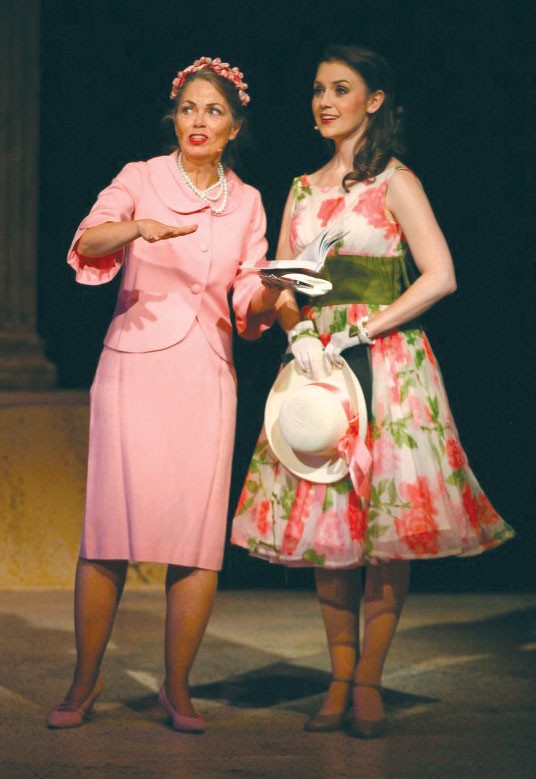
Healdsburg Center for the Arts’ ‘Masks, Puppets & Games’ features live performances centered on themes of identity and imagination. On Thursday, Sept. 15, the Raven Players stop by HCA for a dramatic reading of a new script, The Germans Upstairs, by playwrights Francine Schwartz and Jack Leidner and based on events that Schwartz’s family went through in German-occupied Paris during WWII. Then on Saturday, Sept. 17, performance artist Eliot Fintushel shows how we all use facial recognition in our daily lives with his show Masks: Inside & Behind. 130 Plaza St, Healdsburg. 707.431.1970.

Sept. 16: 8-Bit Memories in Yountville

0

The Napa Valley Museum’s “Down the Rabbit Hole” is an exciting, playable exhibit of innovative video games that explores not only what video games are capable of now, but also where they might be headed in the future. And while we’re all looking ahead, the museum invites patrons to look back with a Retro Game Marathon that lovingly revisits the pioneers who cemented video games into our collective consciousness. This 21-and-over event will dust off the old Ataris and serve beer and wine while players conquer classic games like Super Mario Bro. and Sonic the Hedgehog on Friday, Sept. 16, at the Napa Valley Museum, 55 Presidents Circle, Yountville. 8pm. $10. 707.944.0500.

Sept. 17: Top Sounds in Mill Valley

0

Hosted by San Francisco nonprofit group Roots & Branches Conservancy, the second annual Sound Summit festival once again offers top-notch musical acts performing in the scenic surroundings of Mt. Tam. Headlining this year’s summit is veteran rock and roll band Wilco. Led by songwriter Jeff Tweedy, Wilco just released their 10th studio album, Schmilco, this month and bring their electrifying live show to the North Bay with a little help from fellow performers Los Lobos, Bill Frisell’s Guitar in the Space Age, the Stone Foxes and Matt Jaffe. The musical summit happens Saturday, Sept. 17, at the Mountain Theater, 801 Panoramic Hwy., Mill Valley. 11am to 7pm. $50–$100 and up. soundsummit.net.

Sept. 17 & 21: Relaxing Jazz in Santa Rosa & Petaluma

0

Born in London to Jamaican parents, raised in New York City and now living in the North Bay, classically trained pianist and songwriter Eki Shola brings a multicultural wealth to her original compositions and embraces music’s healing properties. In her life as a doctor, Shola sees how stress and fatigue take a physical toll. She creates a relaxing blend of jazz and ambient piano on her debut album, Final Beginning. Shola performs on Saturday, Sept. 17, at 8pm at Brew, (555 Healdsburg Ave., Santa Rosa) and offers and a performance on Wednesday, Sept. 21, at 6:30pm at Heart Space Music Healing Center (1445 Technology Lane, Petaluma; musichealingcenter.org).

Splash Hit

Giving the audience what they want—a fantastic aerial disaster in which no one gets hurt—Clint Eastwood’s often pretty good Sully is highlighted by the self-effacing underacting of Tom Hanks as Chesley Sullenberger. Eastwood is certainly lionizing a higher grade of person than American sniper Chris Kyle this time.

Appropriately, Hanks plays the Diablo Valley–based pilot as a dream movie hero, soft-spoken, reluctant to accept praise. Nerveless in the cockpit, the fear only strikes him later when he’s alone in the bath or out running off the anxiety on late-night jogs.

Winging to Charlotte, N.C., from La Guardia on Jan. 15, 2009,
US Airways Flight 1549 encountered a flock of Canadian geese. The birds entered and exploded both engines on the plane. Eastwood’s film suggests the real ordeal was to come: inquiry from the government agents who believed that Sullenberger could have brought the jet home to one of two nearby airports, instead of splashing down on the river.

The story of Sullenberger’s forced water landing on the Hudson is natural material for a movie. Hanks handles the wheel with his fear swallowed down, leaving a rugged Aaron Eckhart (as Flight 1549’s first officer Jeff Skiles) to handle the reactions. Eckhart does the slow burns, the skepticism, and utters the seeming sole joke in the movie—an aside about water temperature.

Opening on the 15th anniversary weekend of Sept. 11, Sully is consoling counterprogramming: “We don’t get much good news here in New York . . . especially regarding airplanes,” says a minor character here, lest we forget. And Sully is a particularly touching film, given that age discrimination is considered a smart business practice. No one of a certain age forgets that Sullenberger was 57 when he saved the lives of some 150 passengers.

‘Sully’ is playing in wide release in the North Bay.

Zen Life

0

Nyoze Kwong was only three years old when his family came to Sonoma Mountain in 1973, and he’s been there off and on for most of his life.

His parents, Jakusho and Laura Kwong, founded the Sonoma Mountain Zen Center, one of the first such centers in the United States, on 80 acres of land atop the summit, and Nyoze Kwong continues the center’s mission of spreading Soto Zen under the lineage of the late Shunryu Suzuki, one of the main figures of Soto in the United States.

“The Zen center in the West is a combination between traditional temple and monastic training and American community life,” says Kwong. Back in the 1960s, when Suzuki first came to America and founded the San Francisco Zen Center, Kwong says that a growing Western existentialism, highlighted by the Beat and hippie movements, bolstered the West’s embrace of Zen.

Soto, the largest sect of Japanese Buddhism, emphasizes sitting meditation. “You breathe and your mind and body become what you would say ‘one with the universe,'” Kwong says. “Soto Zen is not praying to a deity; it’s not becoming anything other than the universal self that we already are and that we already have been born with.”

The Sonoma Mountain Zen Center is a residential space, housing between eight and 15 people at a time, with resident programs that last between three months to a year. Ten residents currently call the center home.

Days at Sonoma Mountain start at 5am, with two periods of meditation in the morning. Residents share communal meals and work in capacities that range from gardening to cooking to administration duties; two periods of meditation end the day.

For Kwong, the cultivation of Soto Zen and the enrichment of the quiet mind is something he especially wants to share with the younger generation. “And its not to say we have to be a certain way or that the internet is bad; I think it’s all good,” says Kwong. “But this is a way that we can live our life without being driven by things and we can make choices that are a lot deeper.”

This weekend, the Zen center opens its space to the general public for its annual fundraising bazaar. Now in its seventh year, the bazaar will feature art pieces by a diverse group of artisans and craftspeople including Sonoma County ceramicist Bill Geisinger, sculptor Takayuki Zoshi and many others. There will also be a Omotesenke tea ceremony demonstration by Soei Mouri Sensei, homemade baked goods and freshly made mountain jam picked from berries in the center’s gardens, Taiko drumming performances, music by Black Sheep Brass Band and activities for all ages.

Snowballs in Hell

The nation’s oldest established environmental group gets upwards of $60 million in annual donations from various interest groups and individuals. But they aren’t on easy street.

On the one hand, the Sierra Club, founded by legendary California naturalist John Muir in 1892, has for years endured the wrath of former supporters and way-left detractors who have pilloried the group for its establishment posturing and for some money it has accepted, which includes donations tied to the fracking industry.

On the other hand are relentless efforts from climate-change hoax proponents to assail the Sierra Club at every turn, who see nothing but self-interest and eco-hypocrisy at play whenever a Sierra Club member boards a jet, in the manner of Al Gore, to go ramble on somewhere about all those polar bears floating around on ice cubes in the distant waters of Antarctica.

You say global warming and the deniers say, “Hey, here’s a snowball from the streets of Washington, D.C.—what are you talking about?” Readers may recall that choice bit of hoax-posturing from Oklahoma Sen. Jim Inhofe in 2015 when he famously threw a snowball in the direction of climate-change sanity. Fast forward to 2017, and the United States Geologic Survey just warned Oklahomans to take a page from California and prepare for even more catastrophic and unusual earthquakes. The quakes have been prompted by an unapologetic embrace of fracking in that state, whose scant pile of electoral votes will likely accrue to climate-denier Donald Trump this November.

Meanwhile, President Barack Obama was talking with New York Times reporters two weeks ago and said that when his science guy brings the latest graphs and charts into the Oval Office depicting climate change impacts, it’s downright “terrifying” to behold.

With these dynamics in mind, what can North Bay residents expect from a visit from the Sierra Club’s executive director, Michael Brune, who gives a talk on Friday, Sept. 16, at the Glaser Center in Santa Rosa at 7pm?

Brune says the purpose of his visit is to highlight the organization’s efforts to beat back climate-change effects with the acknowledgement that it’s getting kind of hot out there, even if it’s kind of cool in Santa Rosa this week.

Sonoma County is a national leader in an emergent shift toward renewable power sources being funneled into the grid, via its community choice effort that saw the rise of the local utility Sonoma Clean Power. Brune says that “while we are making great strides in transferring to clean power here and around the country, the pace of climate change is also accelerating. It’s worse than we thought, and it’s happening more quickly than we thought. Everything is falling apart even as it is coming together.”

Well, that’s exactly the rub of the matter, says Ann Hancock, director of the Santa Rosa–based Center for Climate Protection. “Are we doomed already? That’s the question. Is there reason for hope, scientifically? Scientists say there is, and we affirm that. Solutions do exist,” she says, “and the science is terrifying.”

Brune took over as executive director of the Sierra Club in 2010, in the aftermath of a rolling scandal at the organization centered on the fact that Sierra Club had accepted donations totalling more than $26 million from the gas-and-oil industry. The organization had by then also been in a green-washing deal with Clorox for several years, which got the Sierra Club seal of approval for its emergent eco-friendly product line in exchange for $1.3 million.

Brune came aboard and did not renew the Clorox contract, and the Sierra Club later declined
$30 million in pledged donations from the oil-and-gas industry.

Woody Hastings is also with the Center for Climate Protection and specializes in “community choice aggregates,” local power companies that have sprung up all over the nation in recent years. Like Hancock, he is a longtime member of the Sierra Club, and proudly so, and says its dalliance with fracking money “is old news and that is really a former and long gone set of policy priorities” at the organization. He’s been a member since the 1980s and says that of course he doesn’t agree with everything the organization has done over that time, but it has been critical and pivotal to statewide efforts to enact community choice aggregates.

Hastings’ colleague Geoffrey Smith chimes in that the Sierra Club has a membership base of around 1 million, and that “for better or for worse” it’s a democratically run organization. He describes it as an organization that is “constantly in transition but with a solid foundation at the grassroots level.”

Six years after Brune took over the Sierra Club, he now says the organization is far more likely to join forces with Silicon Valley tech giants in the fight against climate change than with the oil-and-gas industry that was at the gate under his predecessor, Carl Pope.

[page]

It’s ironic that the Sierra Club has worked with the likes of Google, Apple and Facebook given that the Sierra Club was driven out of its longstanding San Francisco headquarters precisely because of the tech-driven acceleration of rents in that town. “After 124 years, we moved to Oakland,” Brune says, after the organization saw its rent jacked by $1.5 million earlier this year.

A lot has changed in the renewables industry since Brune came aboard, and he highlights that solar and wind power have become more feasible alternatives from a cost perspective.

“We’re seeing solar and wind becoming cheaper than nuclear, oil, gas, and there are more available jobs, and that all gives regulators more authority to quicken the pace of change,” he says.

But the switch to renewables is also highly disruptive on public utilities and their shareholders, “so you see many utilities that are fighting further deployment of solar or are looking to slow it down or to burden taxpayers with fees and interconnection charges,” Brune says.

Another big change since 2010: a concerted effort by the Sierra Club and the Obama administration to shut down heavy-polluting coal plants; Brune says 240 have been taken offline or been scheduled for closure over that time. He says this as he notes that there are lots of jobs out there in the renewable-energy market, a refrain that has lately been taken up by Hillary Clinton. According to the Bureau of Labor Statistics, the No. 1 job in demand in the first quarter of 2016 was for wind-power service technicians. Solar panel installers were also in the top 10, Brune notes.

Renewables have become more economically viable in short order, and the Sierra Club has abandoned its previous embrace of the American natural-gas industry as a “bridge energy” toward an all-renewables future. This has been the operating modality under Obama, who embraced an “all-of-the-above” strategy toward energy independence as a candidate and through his first term.

The Sierra Club was along for that ride before 2010, but under Brune, the organization has shifted to a leap-frog position when it comes to the confounded natural gas bridge. Given the terrifying contours of the global-warming moment, that can’t happen soon enough for the organization, or the planet.

“Coal and nuclear are dying out under the weight of their own failings,” Hastings says. “That’s all going away, anyway, and there has been double-digit growth in renewables, in wind and solar.” Hastings credits the community-choice movement for pushing utilities away from tried-and-true energy sources and for “putting pressure on the market to get the cleaner sources,” which also include hydropower and, especially in these parts, geothermal energy.

But still there are jobs and the economy to consider, and Obama is not the first Democratic president to encourage or otherwise unencumber an industry experiencing economic growth despite its cost to the environment or negative impact on greenhouse gas emissions. Obama launched his presidency with a commitment to all forms of energy that is mirrored in Gov. Jerry Brown’s embrace of fracking. Before Obama, dial back to the era of the first Clinton who stood by the side of the road during his presidency and watched the SUV-ization of American highways at the urging and insistence of an auto industry that saw big growth potential—if only domestic consumers could access those gas-guzzling, high-emissions vehicles.

For his part, Brown has pushed the state forward with nation-leading carbon-emissions standards, even as he has accepted millions in donations from the gas-and-oil industry and vigorously resisted calls and legislative efforts to ban fracking in California outright.

Brune says that the Sierra Club engages these high-tone political dynamics in distinct ways. When politicians refrain from getting in the way of a recovering economy despite the environmental consequences, the organization “will point out the risks of all-of-the-above or with a reliance on SUVs,” he says.

They’ve worked with the hand dealt by lawmakers, and when it came to the Obama all-of-the-above strategy, the Sierra Club put an emphasis on making sure that all-of-the-above meant that all energy producers were operating on a level playing field “where they would have to account for their pollution,” Brune says.

The relentless, and some would say ruthless, anti-coal posture, in tandem with new environmental standards from the federal Environmental Protection Agency, has made it virtually impossible for the coal industry to compete in the new energy economy, much to the chagrin of climate change deniers and defenders of the coal-blackened white workers of Virginia and elsewhere.

At the same time the Sierra Club engaged and enraged the polluters, it was also “pushing as hard as we possibly can to advance clean energy,” Brune says, which took all sorts of forms including direct negotiations with utilities and corporate polluters. “We want to help any company large or small become more environmentally responsible and move to 100 percent clean energy,” Brune says.

Depending on the company, the Sierra Club will either take a very confrontational approach (i.e., the coal industry) or will work in a more collaborative manner “to help those companies change their energy strategies.”

Despite the terrifying state of global-warming affairs described by Obama, Brune says not to expect any future president, or Gov. Brown, to back away from fracking or other job-creating enterprises of questionable environmental wisdom.

“It’s the same thing with Brown or with Clinton, should she become president,” he says. “Both will point to the jobs associated with fracking, and we will point to the environmental risks associated with fracking.”

Drinks All Around!

0

After 14 years in the saloon business, I think I have a fairly good, if cynical, take on the dark side of the booze business. Sonoma, Marin, Napa and Mendocino counties form a quartet of the highest percentage of problem drinkers in the state. Booze defines our economy and culture. Don’t be fooled by the soft vs. hard liquor myth. A standard drink of beer, wine and distilled spirits each contains the same amount of absolute alcohol.

There was a time when you needed to serve a modicum of food to get a beer and wine license. Not anymore. How about free wine and beer in your no-food barber shop or hair salon? Check the lady spending hundreds to add some hair extensions taken from the head of an orphan in a Third World country while knocking back a glass of $50-a-bottle Cab. Hair salon/saloon reviews now include how a Chardonnay pairs with a bob cut. Why not free booze at your tattoo parlor or nail saloon or laundromat? A touch of craft beer at your used bookstore? Why not “wine flavored” yogurt?

What if the econo-SMART train becomes a wino train to “enhance” its revenue? The wine train was born to lose money, and now it wants to drink its way out of bankruptcy? Train attendants with full benefits in “smart” new outfits, serving wine and beer. Start drinking in Cloverdale, carry your glass over to the ferry in Larkspur. A person could be three drinks drunk by the time they get to the ferry building.

Booze in a theater near you. Time was, serving popcorn and candy was a good job for a teenager. Now you have to be over 21 to serve a glass or bottle of wine to a 21-year-old guy so he can take it into the theater and share it with his 17-year-old girl-friend. Same guy can share his beers (in the dark) with his underage buddies. And how about the lady lush who just spilled her drink (giggle-giggle)—pardon me while I go out and get a refill. Take your child to a “G” movie and knock back a (“What are you drinking daddy?”) glass or two.

The ABC doesn’t, and won’t have, enough agents to police this runaway booze train/barbershop/movie debacle. You want to “enhance” revenue? Free or not, just start drinking more wine and beer and get a “drink local” card for extra points.

Neil E. Davis lives in Sebastopol and owned Sausalito’s Bar With No Name Bar from 1959 to 1974.

Open Mic is a weekly feature in the ‘Bohemian.’ We welcome your contribution. To have your topical essay of 350 words considered for publication, write op*****@******an.com.

Two by Sea

0

Hotel restaurants were once shunned in favor of more adventurous standalone options. But now some of the best eateries, from Vegas to Macau, are a step away from a reception desk.

The Hotel Petaluma, a city landmark going through a major makeover, is on its way to becoming a boutique destination, and its month-old restaurant, the Shuckery, fits perfectly into the hotel’s relaxed vibe. Clean walls, good lighting and an open kitchen add to a lively buzz in the often-crowded dining room.

The buzz goes beyond the novelty of a new restaurant. If you’ve attended a few Sonoma County weddings or special events, chances are you encountered the Oyster Girls, the traveling oyster bar by sisters Aluxa and Jazmine Lalicker. Shucking Tomales Bay oysters since 2007, the sisters invited chef Seth Harvey to build a seafood-centric menu in which the oysters are only part of the opening act. Following in the footsteps of modern hotel restaurants, the Shuckery isn’t afraid to take risks. The menu is ambitious and adventurous, and in most cases, it pays off.

The raw oysters ($3 each; six for $16; 12 for $30) are natural winners. The Humboldt Kumamoto bivalves, which the waitress recommended, are smooth and satisfying, with a hint of sweetness. Compared to them, the baked oysters in salsa verde (three for $11; six for $20) are too skinny and didn’t deliver the same delicious mouthful.

When an ingredient is prepared “two ways,” the chef’s goal is typically to demonstrate creativity and technique, and Trout Two Way ($14), from the Bites sections, does the trick, displaying a delicate trout tartar next to a crispy, skin-on fillet served with yogurt sauce.

The vegetarian appetizer, cauliflower Hot Wings ($14), was equally revelatory. Coated in rice flour and gochujang paste and sprinkled with green onion, it was crispy on the outside and surprisingly rich on the inside. The generous portion makes it a worthy option for non-fish eaters.

Many North Bay restaurants make decent fish tacos, so it makes sense to opt for something less ordinary at the Shuckery, like the calamari relleno ($26). On the Mediterranean, fried squid is stuffed with crab meat and served with sweet and creamy yellow corn soubise and a refreshing, electric-green tomato and poblano pepper purée. Both sauces are great, and so is the filling, but the squid could have used more salt.

The Shuckery has only two desserts on the menu: dueling budinos ($9), a couple of rich mousses, and a bread pudding with peaches and crème anglaise ($9). On the menu, they appear under a heading that reads “If you still got room . . .” We didn’t, and after oysters and seafood, it would be nice to have a lighter, fruitier option.

The Shuckery is a promising new restaurant with plenty of pleasant surprises that is already fulfilling the Lalicker sisters’ vision as well as that of a reimagined Hotel Petaluma.

Americana Radicals

0

First formed in 1989, the Mavericks have developed a formidable and devoted fan base. And even though the group has endured more transitional periods than should be allowed, including a hiatus that ran from 2004 to 2012, the highly ambitious tour in support of their latest release, 2015’s Mono, thankfully seems to have no end in sight and features an extended West Coast run of dates.

“During [Mono‘s] writing process, I found myself wanting certain things,” says bandleader Raul Malo. “When you hear Cuban or world music of any kind, you may have no idea what the singer is saying, but you can feel it. That was what I wanted: to evoke a feeling.”

On Mono‘s standout songs like “Stories We Could Tell” and “The Only Question Is,” the group excels at several different music styles including (but not limited to) country, Americana, blues and swing, without sounding dated or derivative.

This weekend, the Mavericks play Earle Fest alongside Lucinda Williams, the Paladins, Girls + Boys and others. The annual event supports Santa Rosa’s Earle Baum Center, which serves to heighten awareness of the visually impaired and blind through numerous services.

Earle Fest happens Saturday, Sept. 17, at the SOMO Village Event Center,
1100 Valley House Drive, Rohnert Park.
2pm. $55 advance. All ages. 707.664.6314.

Sept. 15 & 17: Performance/Art in Healdsburg

Healdsburg Center for the Arts’ ‘Masks, Puppets & Games’ features live performances centered on themes of identity and imagination. On Thursday, Sept. 15, the Raven Players stop by HCA for a dramatic reading of a new script, The Germans Upstairs, by playwrights Francine Schwartz and Jack Leidner and based on events that Schwartz’s family went through in German-occupied Paris...

Sept. 16: 8-Bit Memories in Yountville

The Napa Valley Museum’s “Down the Rabbit Hole” is an exciting, playable exhibit of innovative video games that explores not only what video games are capable of now, but also where they might be headed in the future. And while we’re all looking ahead, the museum invites patrons to look back with a Retro Game Marathon that lovingly revisits...

Sept. 17: Top Sounds in Mill Valley

Hosted by San Francisco nonprofit group Roots & Branches Conservancy, the second annual Sound Summit festival once again offers top-notch musical acts performing in the scenic surroundings of Mt. Tam. Headlining this year’s summit is veteran rock and roll band Wilco. Led by songwriter Jeff Tweedy, Wilco just released their 10th studio album, Schmilco, this month and bring their...

Sept. 17 & 21: Relaxing Jazz in Santa Rosa & Petaluma

Born in London to Jamaican parents, raised in New York City and now living in the North Bay, classically trained pianist and songwriter Eki Shola brings a multicultural wealth to her original compositions and embraces music’s healing properties. In her life as a doctor, Shola sees how stress and fatigue take a physical toll. She creates a relaxing blend...

Splash Hit

Giving the audience what they want—a fantastic aerial disaster in which no one gets hurt—Clint Eastwood's often pretty good Sully is highlighted by the self-effacing underacting of Tom Hanks as Chesley Sullenberger. Eastwood is certainly lionizing a higher grade of person than American sniper Chris Kyle this time. Appropriately, Hanks plays the Diablo Valley–based pilot as a dream movie hero,...

Zen Life

Nyoze Kwong was only three years old when his family came to Sonoma Mountain in 1973, and he's been there off and on for most of his life. His parents, Jakusho and Laura Kwong, founded the Sonoma Mountain Zen Center, one of the first such centers in the United States, on 80 acres of land atop the summit, and Nyoze...

Snowballs in Hell

The nation's oldest established environmental group gets upwards of $60 million in annual donations from various interest groups and individuals. But they aren't on easy street. On the one hand, the Sierra Club, founded by legendary California naturalist John Muir in 1892, has for years endured the wrath of former supporters and way-left detractors who have pilloried the group for...

Drinks All Around!

After 14 years in the saloon business, I think I have a fairly good, if cynical, take on the dark side of the booze business. Sonoma, Marin, Napa and Mendocino counties form a quartet of the highest percentage of problem drinkers in the state. Booze defines our economy and culture. Don't be fooled by the soft vs. hard liquor...

Two by Sea

Hotel restaurants were once shunned in favor of more adventurous standalone options. But now some of the best eateries, from Vegas to Macau, are a step away from a reception desk. The Hotel Petaluma, a city landmark going through a major makeover, is on its way to becoming a boutique destination, and its month-old restaurant, the Shuckery, fits perfectly into...

Americana Radicals

First formed in 1989, the Mavericks have developed a formidable and devoted fan base. And even though the group has endured more transitional periods than should be allowed, including a hiatus that ran from 2004 to 2012, the highly ambitious tour in support of their latest release, 2015's Mono, thankfully seems to have no end in sight and features...
11,084FansLike
4,606FollowersFollow
6,928FollowersFollow