Aug. 20: Tribute to Lady Ella in Napa

0

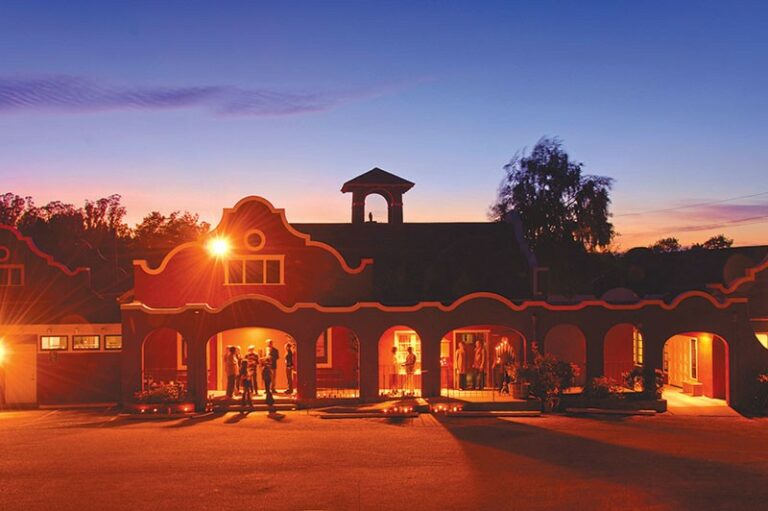
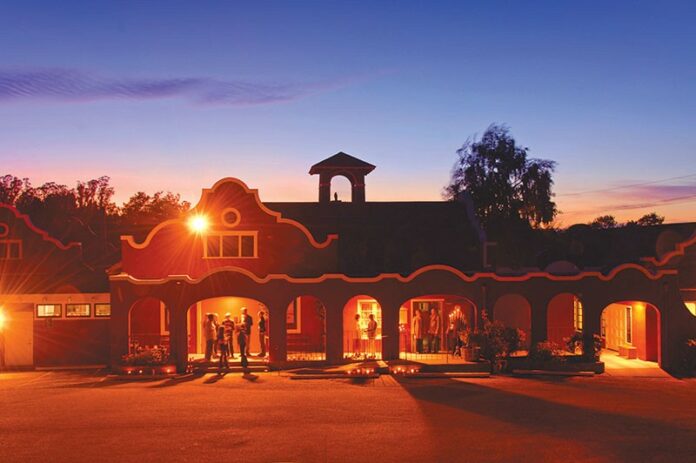
Known as the “First Lady of Song,” jazz vocalist Ella Fitzgerald took the world by storm in the 1930s with an impeccably pure voice that earned her several chart-topping hits, more than a dozen Grammy awards and countless lifetime achievement recognitions. This weekend, Napa Valley performers Kellie Fuller and the Mike Greensill Quartet pay tribute to the queen of jazz with two performances titled ‘Ella I Sing’ that delve deep into Fitzgerald’s timeless songbook. Fuller’s engaging alto voice and Greensill’s masterful piano playfully celebrate Ella, with dinner and cocktails available at both shows, happening on Saturday, Aug. 20, at Silo’s Club, 530 Main St., Napa. 5:30pm and 8pm. $20–$23. Reservations recommended. 707.251.5833. silosnapa.com.

Dream On

Here’s a cannabis-related observation that I feel compelled to share. I know I’m not alone in this phenomenon, but maybe I am—”I don’t know, you tell me,” as Trump would say. But anytime I go a few days without consuming marijuana, I start to remember my dreams. Not the dreams I have for my life, but the actual sleepy-time purges of the unconscious.

That’s kind of an ironic statement given that cannabis does have the power to ramp up one’s visions for a life well-lived, to follow one’s true path, to provide a kind of smoke-eye clarity to what must be done. Except I don’t want to do that now. It’s 3pm on a Saturday, and where has the day gone? Where have the dreams gone? Right here—fire up the Youtube for a mid-afternoon sing-along to Afroman’s “Because I Got High.” These are the waking dreams of a pothead, ones that die a hard death, subsumed into the hapless monomania of ambition paralysis.

The rule for telling stories about your actual dreams is the same as the one for telling stories about your genealogical history: It better be a goddamned interesting dream, or your genealogy better include a story of how one of your forefathers was a marauding Teuton on the high steppes of Mongolia, otherwise these things—your dreams, your family history—tend to be boring.

Let me tell you about a recent dream I had. I only remember it because I ran out of pot, payday was a ways off, and I was already into my guy for an ounce, which had gone up in smoke over a weekend of Netflix bingeing. So I had this crazy dream the other night, one of those “I’m on a journey” deals that took place in what felt like San Francisco but that involved a long-shuttered restaurant in New York City called Florent, where I used to spend a lot of time as a young McPuffups, staring off into space in a dreamlike state of worry.

In the dream, I wore a knapsack and walked a while in the urban swirl, on a mission to find Florent, which was no longer a tight, tiny bistro but had morphed into this giant expanse of noise and slobbering customers. I grabbed a four-top, but the table was wobbly so a staffer came and fixed it, then crushed his thumb under one of the legs in the process. I felt his pain, in the dream.

I scanned the menu and did the ritualistic maneuver of ordering the thing I’d ordered dozens of times at Florent, the burger served on an English muffin and dripping with melted cheddar.

The last thing I remember before waking up, and I remember it vividly, was taking a bite of that burger, seared on the outside and with a pillowy pink interior of medium-rare juiciness within. I could literally taste the charbroil of that burger in the dream, which is more than I can say for the steak I just burned in the broiler after I rolled another joint and obsessed for an hour over Nate Silver’s latest poll findings, if only to keep the nightmares at bay.

Heading Toward Nowhere

A few years after deciding to write a novel about a young man named Matthew who sets out to see America, I met Mr. Stett Holbrook of the Bohemian, with whom I contracted to deliver what we officially agreed would be a short piece about something or other. The only stipulation was that whatever I turned in show some relation to the Bohemians area of readership. Since I live in Sacramento, I settled on Redding, which was not only a fairly straight shot north, but also virtually unknown to me.

In Sacramento, which can get plenty hot, some people smugly console themselves that at least we often get the famous Delta breeze, while poor Redding, etcetera, etcetera. The only information I had on Redding was from my local newspaper, which, as newspapers will, retailed accounts of drug busts and violent crimes. Thinking to follow up along those lines, I telephoned a Redding private eye, who, unlike all the others of his kind whom I have hired over the years, was gruff, suspicious and sullenly unhelpful. None of the other PIs returned my calls. I set out expecting to find a sweltering, downtrodden place. In fact, Redding was cool and green just then, and its inhabitants turned out to be some of the nicest people I have ever met.

The following draft is one iteration away from my original notes. All the conversations in it come nearly or entirely verbatim from actual interviews. The novel will be called A Table for Fortune. I hope to finish it in about 2018. I thank the Bohemian for the opportunity, and my friend Greg, who was my driver and companion on the trip; the avocado stories come from him. And I thank the people of Redding.—WTV

[page]

At this time the young man named Matthew discovered a certain kind of sunshine unlike Sacramento’s, which is to say fiercer and more withering, one of time’s best weapons for degrading newsprint yellowish-orange and wrinkling people before their time; once upon a certain August which measured somewhere below far and gone in his ephemeral existence he had been hitchhiking south from Susanville and was set down in Redding where he waited five midday-girdling hours at an on-ramp whose dusty blackberry brambles were actually dripping with melted black sun-made jellies; but in the strange cool May of this current year as he hitchhiked north toward Redding the sunshine had shifted to an opposite otherness from Sacramento’s, being somehow greener in its goldenness and more wild, as if the mountains were tinting it.

The truth is that Matthew had sought sublethal sunshine in which to hide from his father, expecting most Reddingtonians to be lurking indoors in the fashion of Mohave, Calexico and Mexicali; he too would lurk, while perfecting his disappearance. On triple-digit days in Sacramento, the hardiest of the homeless trundle into thickets and culverts; those who remain sit stupefied, with heads hanging down, or else lie on the sidewalk, while flies crawl slowly over their faces. Richer souls shelter behind drawn curtains, listening to their air conditioners; and I for my part believe the city to be sustained by invisible armies of sweating, hollow-eyed air conditioner men. The sun clangs in everyone’s ears; even police veterans can get deafened . . .

So it should have been in Redding, but this wild green sunshine changed everything. And by “green” I do not mean what you might think this color should convey; it had nothing to do with the restful or menacing green glooms of Oregon. Venus flytraps and emeralds were as far away from it as palm fronds. Yes, it was green, but not exactly. It refreshed Matthew because there was nothing of him in it. No one in Redding would put a spoke in his wheel. The complementary consideration was nobody would help him, but as long as the green sunshine kept on, what could he need from this world?

In his boyhood there must have seen something that made him want to go way out into America, to find out what our country was, but whether he had been enticed by the best golden loneliness or hounded by the loneliness that lives in our homes and gnaws misunderstood children, or perhaps heard something about faraway hills in a bedtime story, whatever had provoked the wish was lost. He himself was not lost, except to his parents, who troubled over him with loving bewilderment; nor did he feel in want of anything; thus as I begin writing this I myself cannot tell you what he was going to find on what Thomas Wolfe called the last voyage, the longest, the best—in other words, the only voyage, the one toward the grave. And so, hitching a ride, Matthew left behind all the other times of his life.

As they rolled north into Colusa, with the Sutter Buttes’ dusty blue knuckles over and behind the olive orchards, the driver was saying: You know, I grew up on a citrus farm in Southern California. I picked avocados for another farmer all summer, but we used a manlift. I think avocado trees get forty to sixty feet at least. We’d have about four big bags in the cage. One flatbed truck with four bins of avocados in it, it took us all day to pick that! That gave me a real sense of accomplishment . . .

Right away, Matthew, who believed that anything he did could be undone, or done better, because it lay in his power to live any number of lives, began contemplating hiring on in an avocado orchard. First he’d grow sunburned, and then confident. Women might possibly love him.

The driver was saying: One year when prices spiked we were getting fifty cents an avocado wholesale. Wholesale! . . . —by which time Mount Shasta was glowing double-nippled against the milky clouds.

And the driver said: The boss was a real good Christian guy who’d been in the Marine Corps, and he had a mental breakdown, had to take some time off. We
were unloading avocados from
a manlift when the hydraulic
brakes failed. The thing picked
up speed, crashed into a tree. He was super-understanding when
we visited him in the mental hospital—

Just then they came into Red Bluff: red rock, long yellow grass, cool clouds. Green sunshine sped into their eyes, intoxicating their hearts. They were almost in Redding. Matthew kept grinning at the driver without knowing why. Beaming back at him, the driver said: A big tree can make more than a hundred avocados but all at different times; it takes six years to grow an avocado; I’m talking about the Hass kind, which is what I know . . .

Redding offered half a dozen exits. The driver let him off in the old downtown, not far from City Hall. —I sure appreciate it, said Matthew, and they shook hands. He lifted his backpack. Opening the passenger door, he still expected to be sunblasted in his forehead, wrists and ears, breasting an upsurge of reflected sidewalk heat which would come dryly into his lungs. But Redding was like that. He looked back at the driver, who waved, then pulled away, bound for Eugene.

There stood Matthew in Redding, wondering what to do. First he felt anxious; then he began to get excited. His plan was to have no plan. He crossed the street and began walking in the most pleasing direction, saying to himself: I do not know where I am going. I do not know where I am going. —And he exulted in this. If not even he knew this, how could anyone ever find him?

Within 10 minutes he arrived at a bar whose midafternoon quietude compelled him through the window, so he walked straight in, and the tattooed barmaid raised her beautiful face like a sunflower following light. The counter shone clean and empty. He seated himself beside the only other customer, an old hospital engineer who had just seen a bald eagle carrying a trout in its mouth. The engineer smiled at him, then said: This area is loaded with historical stuff and beautiful visual stuff. All the clouds go up and the sun goes down and you get the best sunsets.

Accordingly, Matthew decided to watch the sunset. It is true that his impressionability sometimes made him foolish. But his foolishness might have been no worse than the way that old people so often visit a new place in order to project their brilliant pasts upon its mediocre indifference. He was drawn to the engineer because neither of them were afflicted with the chronic disease called irony.

The engineer told him: It’s been a hardscrabble life. See, my dad came up here; he was a Ford mechanic; you had to love nature to come here. So this basically was the turnaround for the railroad. This was as far north as it went. You wanted to go north from here . . . Before Shasta Dam was built, you used to have to come here by boat. This is five hundred and twenty-eight feet.

Wiry and aware, he exemplified strength in age. His name was Jacob. The tendons were corded on the backs of his workman’s hands. Matthew supposed that they were becoming friends. He asked: Where would you go if you wanted to see America?

The old man said: I’ve been to Montana; I’ve built factories in the Midwest, but I’ve never been to the Deep South . . .

And right away Matthew could imagine himself in the Deep South! There he would discover what to live for. Jacob already knew how to live his life, but that knowledge must be good only for him. Matthew must find his own way; that was why he had come to Redding.

[page]

Matthew’s beer was cold and clean. When he finished it, Jacob set his down and said: I think that this election’ll be fought out on television. Here’s why there’s delegates: Here’s my good friend who has money. But I live way up in French Gulch and can’t afford to get down here. But then it gets corrupted. Like all this campaigning in this state, winner take all, and the popular vote gets set aside. But I still think we live in the greatest country on earth.

And Matthew believed. Looking right in front of him, he could see how wonderful America was! Why shouldn’t it be the greatest? And he was out in it now; he would go farther and farther . . .

Laying a cell phone on the bar, the old engineer activated its screen and showed off a photograph of his daughter, who was a smiling, freckled brunette of about twenty-five. —She’s hiked the Pacific Crest Trail, Jacob said. She loves snow camping. She’s hardcore. She and her boyfriend, they’ll go out more than thirty miles in the hills by themselves.

Matthew imagined being with Jacob’s daughter, or with any woman who would lead him into the mountains. He could not picture this angel very well; her hair altered from brown to blonde and back again. But she was holding his hand. And she knew the country—or, better yet, she didn’t, and they would explore it together. The more beer he drank, the more joyous he felt. One day he too might be happy and old, with his pockets full of eagle stories and a mountain or two in his backyard! Or else he would die in some woman’s arms.

And now the tattooed barmaid began to confide in him, saying: I told her, look, we need to get out of here. He shares custody with his ex . . . —Matthew felt lucky and grateful that she trusted him. Tenderly she set another beer before him; he had told her to pick out her favorite kind. —Once you get through altitude sickness you’ll be fine, the engineer explained. But you have to want to. You know what’s cool when you get up there? You can see the curvature of the earth. That makes you feel you’ve done something.

Matthew made up his mind to go high enough in life that he could see the earth curving down before him. He wondered if it were too late for him to become an astronaut.

Jacob was saying: We went for eleven days through the mountains. First we prepared. We buried whiskey caches, and we had fun, drinkin’ beer, cookin’ trout . . .

Matthew bought him another beer, and Jacob said: If I’d’ve known you’d be comin’, I’d’ve made a whole bunch of smoked albacore.

Will you be here tomorrow?

Sure.

I’ll come back then.

They fixed a time, and Matthew rushed out into the green sunlight to have more adventures. After the cool dimness of the bar, Redding enlarged itself all the more. He could see to the mountains. Here was Shasta County Superior Court on Yuba and West; and he stopped in the middle of the empty street, feeling as if he had found someplace where it would always be early on a summer morning. There was Placer and then Tehama; and right here stood Matthew, looking around him in hopes of learning where in America he should go.

In one of the bays behind the Greyhound station he met a bearded little man, almost elfin in profile, who had parted ways with several teeth. His face shone red and his pores were coarsened by hard living. The woman beside him looked tired and old. Their daughter was sixteen going on forty-six. They sat on the blacktop, waiting for something to happen. How this world could contain both them and Jacob was a question for moralists, sociologists and theologians, but not for Matthew, who wanted to make friends, which was why he gave the man ten dollars, and asked about his life.

The man said: Originally I’m from Georgia, Louisiana and Texas. My wife, she wanted to come back home. Now she wants to get back out of here. We came from Spokane. Everybody knows everything about everybody. Trying to rip everybody off . . . I got in trouble with the law. And then got out, found the manager of the money I had, and he never paid it, ripped me off . . .

His name was Roy. Matthew told his own name. They sat down on a bench away from the wife and daughter, and Roy began again to speak, perhaps because that strange May weather had opened the hearts of everyone, although the ten dollars could have had something to do with it. He lisped a little, on account of his missing teeth. He said: First time I been on the streets, I was seven years old. Got away from Washington, ran away to Fresno. You see, I decided to get in people’s cars and trucks and kept on goin’. Fresno was lot of killings. I started doin’ dope and went to heroin. Started doin’ it all. You name it, I done it.

Now, my wife, her dad was the head of the Hell’s Angels and I been workin’ with him since I was about seven. I made him a hundred eighty grand in about six months. And I’m one he’s afraid of. I have no problem pullin’ a gun, pullin’ the trigger and laughin’ about it. I don’t care. I got no heart.

Matthew did not care if this was true or not. He just felt happy that Roy was telling him things. And Roy said: Some guy swung on me. I walked up and popped him. When I hit him, my hands turned illegal; they’re registered. I have killed but not on purpose. I killed the head leader of the Fresno State Bulldogs. They’re Bloods and that, or I call ’em, slobs. I been a Crip since I was seven. They’re makin’ us into so many new gangs. In Portland they got the Dragon Eyeballs. A bunch of fuckin’ niggers. Oh, you’re prejudiced. No I’m not. I’m a cracker. I’m fuckin’ white trash!

And Matthew, being Matthew, could not help but wonder whether he himself might enter upon this sort of life, warring and begging and hiding, free and angry or free and scared—or had Roy paid for nothing this price of becoming bitter and maimed?

He disliked the mean things that Roy said. But since he never stopped hoping for answers and had just today in this marvelous green sunshine realized what he cared about most of all, he said: Tell me what you think about America.

Sucks, said Roy, staring into his face. —Because we keep givin’ Iraq weapons and then they’re tryin’ to bomb us. And all these people who got money and they think they been better than us.

Right away, Matthew decided that America sucked. How then could he make America better? He would start by going to the best place, and learning what made it good. So he said: I’m hiding out. Where should I go?

Fresno. People are actually really, really nice. There’s this one lady who look works out there, a Mexican lady; we call her Mama; she makes us fresh watermelon juice and won’t take no money for it . . .

Matthew thought to himself: Fresno sounds just like Redding. I think I’ll stay in Redding.

[page]

So what I wanna do, said Roy, is to be gettin’ out of here and findin’ something somehow to help us get to Fresno. I can get a one-bedroom apartment for six hundred. I was on SSI but I have a misdemeanor warrant. I got caught with thirteen days in the county jail. I have a problem with authority; I’m unextraditable.

And then what?

I wanna own some more land and be happy.

Should I do that, too?

Why fuckin’ not?

Up until now Matthew had supposed that his life would somehow make something, not a child but something else. It might be that he would improve the world, or even save it—but never bit by bit, as if he were some nine-to-fiver ageing for the sake of a paycheck from which he would save nothing but money. But maybe land, a woman and a child would be his destiny.

Trustingly he asked Ray: What’s the most beautiful kind of woman’

Smart. Looks, I don’t care about looks. I mean, I dated girls this big. I dated girls that big. This one here, I did fifteen years in the slammer and she never left. She never wrote me but she was there when I got out. Plus, I got eight kids, and she don’t mind.

That’s good, said Matthew. Where can I find a woman?

Roy called over to his wife: Baby, where’s a good place to buy a bitch?

Off of Cypress, by the park.

When does what’s-her-name the black bitch show up there?

About nine-thirty, ten o’clock.

Roy remarked evenly, with triumphant contempt: I know every Spokane ho in there. In Pullman I know ’em all cause they’re all mine. There was one nigger and I took every one of his prostitutes except one, and I didn’t take her because she’s fucking ugly.

Thanking him for his advice, Matthew walked on. Should he make a child, wander the Deep South or pick avocados? His eyes were on the bright green sunlight of Redding. Had he told anybody, your sunlight is green!, it might not have turned out especially well for Matthew, so he kept quiet as always, studying the people and trying to decide whether he should become one of them.

Against the outer wall of the Amtrak station lay a homeless man who explained: This place is my living room. —Gesturing at the tracks and the Greyhound station behind them, he said: There’s my TV.

Matthew leaned up against the wall beside him. He asked: Do you have a good life?

The man said: I’m from Alturas. That’s a really small town. If you’re on the main street after ten o’clock at night the police are gonna take you in. Here, nobody bothers me because I keep it clean. I pick up after myself and others. And I’ve learned how to be happy. I’m happier here every day. I want to stay right here, all my life.

Matthew thanked him. He decided he believed him. Perhaps the man was Christ, or one of His relatives, in which case what Matthew should do was sit down right here and watch the tracks for half a century. But for some reason he found himself continuing on.

He walked up and down, then closed his eyes, pretending that something better or worse than Redding would appear when he opened them; that was a game he had often played, and until today the results had been consistently disappointing; just now he opened his eyes and was glad to still see Redding.

Now he had better find a room. Twenty minutes later he was watching the paling of the cloudy sky from the second floor deck of the Sunshine Motel where somebody in Room 29 was plinking on a ukulele and singing in imitation of Neil Young while a cool breeze came from the cottonwoods and the cars in the parking lot did nothing but sparkle. It was all new to Matthew.

He looked around his room and loved it. No one would find him here. He had paid the Gujarati desk clerk thirty-two dollars cash, no identification required. He lay down on the big double bed and decided to get a girlfriend and bring her straight here. He still wanted to make a child.

Locking his door, he descended to the street, found a restaurant and ordered a hamburger. The waitress was sweet; he felt happy just gazing shyly at her hands; so he asked whether she would like a drink. He never expected her to say yes, but she did, because this was Redding, where everyone was friendly, at least while the green sunshine lasted. He was drinking beer; she poured herself a shot of vodka and thanked him. Then she went to attend to her other customers while he returned to his hamburger—the best ever, of course.

Ten minutes later she was back at his table, so he bought her another drink. She told him about her marriage, her child and her vacation; he bought her shots and she kept giggling and saying: What are you trying to do to me?

Make you happy, he said. —And in truth that was all he wanted.

Then she brought her friend the barmaid who she said was amazing, and the two women stood drinking together sweetly, flirting with him, after which they offered him a free dessert. Matthew thanked them and said he was too full.

The waitress leaned her hip against his table, smiling, and now he could see the bright green sunlight rising up from her; she might have been the one he was meant for.

When he went up to pay, the barmaid took his hand. This too was ever so sweet. He almost felt as if she would have gone with him, which unnerved as much as flattered him. Which one should he make a child with? Feeling happy and embarrassed, he quickly walked away. As soon as he had rounded the corner he began to feel ashamed; he had probably disappointed the barmaid. But what if she had only meant to be kind to him? He did not go back.

It was dark now. He returned to the motel, then went into his room feeling happy. He thought about the homeless man whose television was the railroad tracks and everything beyond them. He might be the most fulfilled person on earth. Why shouldn’t Matthew do the same? Opening the door, he took out a chair and sat awhile looking out across the world. The lovely shadows of the railing kept curving around on the bright deck and a man ran across the parking lot, while the smell of stale food rose up in the cool breeze, mosquitoes biting Matthew silently, and across the parking lot the jumbled white squares of the letters MOTEL supported a great yellow sun with orange neon rays shining out from it.

He realized that he had failed to watch the sunset. The old engineer in the bar had told him about Redding sunsets, and he had forgotten. Well, he would do that tomorrow night.

At ten o’clock, Virginia, who was sixty-three but looked a hard, sexy forty-three, came knocking at the door of the adjacent room because some girl had stolen the vacuum cleaner; he promised that it wasn’t him and that he lacked any connection to that unknown girl. Virginia believed him. He asked her how the motel was, and she said: Oh, they’ve cleaned it up real good. We’re not even on the bad list no more.

She had been living in Room One for two years. Her son lived there also. He asked what she thought about America, and she said: What’s not to love? —Right away he realized that she was right; how could he not love his own country? He wanted everybody to be right. He would feel better believing in everything.

Virginia rushed off and he could see her sweeping the sidewalk down by the office. She wanted the place to look good for the Greyhound drivers who checked in at night and slept during the daytime.

Matthew wandered in and out of his room. It was ten-thirty; Virginia kept sweeping the sidewalk. Two doors down, the magnificent black woman who had been haunting the doorway upstairs now stood patiently facing the parking lot, half-smiling, with her arms folded across her big breasts.

Reminded by her of the prostitute who according to Roy’s wife would now be working “off of Cypress by the park,” he considered hunting for her, but decided that he liked Virginia better. Maybe when she had finished sweeping he would ask her if she wanted to travel the Deep South with him and buy land.

And Matthew stood listening to the world. To him it was all very wonderful.

Reel Stories

0

After making a huge splash in May with The Little Mermaid, director Gene Abravaya is back in the water with Big Fish, a musical about tall tales—not, you know, tails. Big Fish, adapted from the 2003 Tim Burton movie and the 1998 Daniel Wallace novel that inspired it, is the kind of musical that evaporates in your mind almost as soon as it’s over. But it’s so sweet-natured and crammed with positivity, one can’t help but walk away feeling good.

A recently married reporter named Will Bloom (Mark Bradbury, his face an open book of emotion), upon learning of his father’s terminal illness, sets out to discover the real Edward Bloom. A travelling salesman with a knack for telling tall tales (in which he’s always the hero), the elder Bloom (Darryl Strohl-DeHerrera, joyously playing a variety of ages from teenage to old age), has spent his life gleefully fabricating encounters with mermaids and giants, werewolves and witches. But why?

Will’s mother Sandra (Heather Buck, also playing numerous ages) is clearly the love of Edward Bloom’s life and the “plot motivation” for most of his outlandish stories. She encourages her son to get to know his father before it’s too late. But that’s hard to do when your dad can’t answer a question without adding a detail about once seeing his own death in the crystal ball of a witch (Serena Elize Flores) or becoming an indentured servant to a lycanthropic circus ringmaster (Larry Williams). That Edward is hiding something is clear. But is his secret really what Will assumes it is?

The script by John August keeps things mostly grounded and focused, and the songs by Andrew Lippa (The Addams Family) feature genuinely clever lyrics, though somewhat hampered by repetitive, oddly unmelodic music. Abravaya’s staging makes ingenious use of Spreckels’ acclaimed projection system, which provides much of the ever-shifting scenery, along with a number of nifty visual effects, including a man being shot from a cannon.

Told in a combination of flashback and present tense, Big Fish avoids some of the more outlandish elements from the film. Don’t expect Siamese twins or the mysterious town of Specter. Of course, the best part of a story is the ending, and ultimately, this ambitious and satisfying production delivers a surprising climax. It might even inspire you to call up your own parents or children, to tell them you love them—and perhaps to share a story or two.

Rating (out of 5): ★★★★

Bill and Me

0

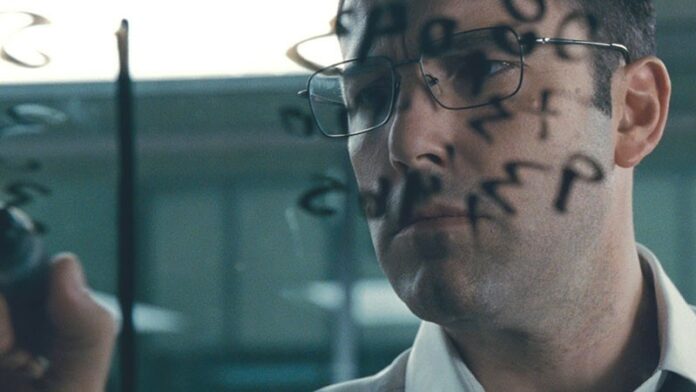
I was at SFO about a year ago waiting for my flight to Salt Lake City to attend a journalism conference when a man shuffled into a seat across from me. At first I thought he was homeless or maybe a bit crazy because of his disheveled, rather greasy hair and the bulky, tactical-looking vest he was wearing. But then I recognized him. Holy shit. That’s William T. Vollmann.

I quickly Googled him on my phone to confirm his identity. The wire-rim glasses and distinctive mole on his face matched the photos I was looking at.

“Are you William T. Vollmann?” I asked, stuttering a bit.

“Yes, I am.”

Vollmann is a literary hero of mine. It was his outrageously ambitious and honest works of nonfiction that fueled my interest in journalism back when I was in my 20s and living in San Francisco. What a coincidence that, heading off to a journalism conference, I should meet one of my first literary inspirations.

Vollmann proceeded to ask me where I was going and about my work. A journalism conference? What is your favorite story you wrote, he asked.

That led to a discussion of mushrooms, Cambodia and radioactive contamination, at which point Vollmann pulled out a yellow Geiger counter he was carrying in his backpack. He was headed to West Virginia to research fracking for a book he’s working on about carbon and climate change. The device was part of his research. How’d you get the Geiger counter past security, I asked.

“They don’t even know what it is,” he smiled.

Before we parted, I asked if he’d be interested in writing for the Bohemian. He immediately said yes, provided the assignment was “fun.” Vollmann doesn’t use email or a cell phone, so we began corresponding and talking on the phone about possible stories. Is there some kind of lesbian commune or maybe a marijuana encampment in the North Bay, he asked. Probably, but I don’t think I could grant you access. After spending a night drinking beer and painting a nude model he had at his studio in a razor-wire-surrounded building in Sacramento, we settled on a story about Redding.

Vollmann is writing a novel about the black sheep of a famous political family who goes underground to escape his past. It was fascinating for me to see how he blends fact with fiction. I hope you like the story.

Stett Holbrook is the editor of the ‘Bohemian.’

Open Mic is a weekly feature in the ‘Bohemian.’ We welcome your contribution. To have your topical essay of 350 words considered for publication, write op*****@******an.com.

Grab Bag Blanc

0

Soon after you begin a voyage of discovery beyond the familiar sea of Chardonnay and Sauvignon Blanc, you may find yourself marooned on the Aisle of Miscellany.

Besides a skimpy section that the old-school stores reserve for both Gewürztraminer and Riesling, it’s tough to find a sample from the world’s many great white wine varietals that are shoehorned into the “alternative whites” niche. That’s what late-summer Sunday winetasting joyrides are for.

Priest Ranch 2015 Napa Valley Grenache Blanc ($22) This sounds like it might come from one of those nearly forgotten heritage vineyards that winemakers find on old vine safaris, but Priest Ranch winemaker Craig Becker planted the vines in 2008. Inspired by the white wines of the Rhône, which is lousy with the grape, Becker crushed a good portion of the mere 28.9 tons of Grenache Blanc that Napans crushed in 2015. In plain English, Grenache Blanc means “white Grenache,” but it’s nothing like white Zinfandel, although this fleshy wine does remind me of white wine made from Pinot Noir. A true white grape that’s related to red Grenache, it shares that grape’s tendency for a high alcohol expression, coming in at 14.8 percent. But it’s sweet-bodied, not hot, with a candied fruit aroma and flavor, as though the juice from a can of “fruit cocktail” had been made into a refined, pricey little pastille.

Imagery Estate 2015 Russian River Valley Viognier ($29) Pronounce “Sauvignon Blanc” and you’re a past master of French wine names already, so what’s the fuss about Viognier? Just say “vee-un-yay” and hold your glass out for a taste. Originating from the same northern Rhône neighborhood as the blackest, smokiest styles of Syrah, Viognier is light, floral and stone-fruit fruity. When overdone, the aromatics can be almost too much for me, but this wine has such a light, pretty apricot aroma it’s like a perfume of Viognier, and bright acidity adds sparkle to the finish.

Clif Family 2015 Anderson Valley Gewürztraminer ($30) Another varietal deserving of a second swirl, if past samples have put you off, Gewürztraminer is also fun to say. Germanic but not exclusively German, Gewürz is actually a bigger deal in France, where it’s made in the sweet and spicy style as well as bone-dry and spicy, like this fine example. While unmistakable, the “spicy” character is hard to describe: is it piney, floral or like white pepper? No doubts about the crisp lychee flavor, this dry Gewürz is refreshing on its own, but might be paired with more than the oft-advocated spicy Asian cuisines. Clif Family says try the porchetta bruschetta from the food truck at their bicycle-friendly St. Helena tasting room.

Palms Not Bombs

0

The early evening sun is sinking and rays of light cut through a line of swaying palm trees as residents amble down the outdoor hallways at the Palms Inn, a converted motel in unincorporated Santa Rosa.

The Palms Inn has become a major success story for formerly homeless veterans—and others—in short order. You can hear the nearby rush-hour traffic zoom by on Highway 101 as visitors tour the residential center, which houses 60 veterans and another 44 residents who came here via Catholic Charities.

All around there are signs of stability and personal touches offered by the tenants. Residents are growing tomatoes near an outdoor gazebo—the smoking zone—and someone has hung a couple of small disco balls from a balcony that fronts onto the parking lot. Under a stairway, a shopping cart rests with a couple of bicycle frames in it, and a man with long hair in a wheelchair zooms over to the gazebo for a smoke.

The story of how the Palms project came together is rare indeed, as numerous speakers tell an overflow crowd that’s gathered here on a Thursday evening for the Veterans Housing Crisis Summit, an event pulled together by volunteers with Organizing for Action and spearheaded by OFA organizer Linda Hemenway, a former school teacher and enthusiastic booster for the Palms project.

Hemenway was joined by Sonoma County Supervisor Shirlee Zane and other speakers, and the theme of the gathering was quite simple: the Palms is a success; how can we replicate this model elsewhere, in a county and city that has an outsized homeless population relative to the rest of the country—about three times the national rate?

Rex Bishop was, until very recently, one of those homeless people. Bishop is 64 years old and from a well-to-do family in Oregon with a long tradition of serving in the military. He did his part in 1970 and joined the Navy, and served in Vietnam. He flew 13 bombing missions over North Vietnam in an A-7 Corsair II, and he talks about how he took “many chopper rides to pick up brutally wounded soldiers” during his deployment. Bishop’s job was to collect information from mortally wounded men and their fellow soldiers on where to send the soldiers’ personal effects, who to contact, upon their death. Now he’s an advocate for veterans trying to get off the streets.

Bishop had a long career working for Robert Half International, the staffing agency, and lived with his partner, Rudy Pieraccini, until his death in 2015, at which point Bishop became homeless, lacking the resources to hold down their shared home in Forestville. “It felt like my life was blown to smithereens,” he says, recalling those first few months after his partner’s death, and his subsequent exodus to his car—where he lived for months before finding his way to the Palms.

“I was in a daze for months afterward,” Bishop says. Living in his car, he came down with pneumonia and his weight dropped to 121 pounds. He wasn’t taking his meds. “I was not doing any of the things you ordinarily do when you have a home.”

It was daunting, he says, to come to the Palms, but he’s happy he did. There’s currently one unoccupied room here and visitors are granted access, a quickie tour. It’s your basic small hotel room, and residents are allowed to use a microwave and a crockpot in their rooms; the staff here even provide a cooking-education program to make the best use of those devices.

The Palms takes its cue from the Housing First model, which is self-explanatory (all good things lead from a roof over your head) and begins with the so-called harm-reduction model on how to properly oversee facilities such as the Palms. From concept to opening day, the project took a total of three months to complete earlier this year, an extraordinary effort in red-tape cutting but with an unfortunate undercurrent of a crisis situation in Sonoma County when it comes to housing.

In her presentation, an enthusiastic Zane, recounting the story of how her dad was a Marine pilot in the Solomon Islands during WWII, made the very basic point that “people who fight for freedom shouldn’t have to fight for housing.”

Jennielynn Holmes is a native Santa Rosan and shelter-and-housing specialist at Catholic Charities, which helped to place 44 of their clients here—many of whom, as Bishop observes, have pretty intense case-management needs, which are well met by a sturdy staff of social workers, in-house support workers and other outreach efforts. Holmes took a moment to marvel at the overflow crowd as volunteers hurriedly brought more chairs into a conference room to accommodate the interest, remarking that, despite the successful placement of 60 veterans here, “do not let it be said that it is not a crisis here,” referring to Sonoma County in general. The project, she says, came together so quickly because at every step, up to the federal level, “nobody stood in the way.”

Bishop also addressed the crowd and emphasized the word “courage” in his moving presentation. After, organizers broke out into groups that delved into the different issues around homelessness among veterans, while enjoying some tasty chow cooked up by residents.

There has been a big national push, starting with President Obama, to reduce homelessness among veterans. Cities around the country have taken up the call, and Obama recently spoke of how the attention had managed to cut the national homeless count in half, to below 40,000. And yet there’s still the awful reality of 22 veteran suicides a day on average, and many thousands still out on the streets.

Bishop says vets can be a tough nut to crack, especially among younger veterans of Iraq and Afghanistan who might not be aware of the resources that are available to them—and who might even prefer to rough-it in the great outdoors over the long term, a not-uncommon phenomenon. Bishop hopes to reach some of those men to let them know that they’ve got options that they may not even know they have, words of wisdom that anyone who’s been in an AA meeting has likely heard before.

The units at the Palms are offered as a long-term solution, though residents can also use it on a short-term basis as they work to find more traditional housing—they’re encouraged but not required to do so. This is a drug-free zone, but there aren’t any heavy-handed restrictions on residents; there are no room checks or staff barging into rooms if they suspect unsavory behavior. They are tenants, and they have rights—and they can be evicted should any tenant be determined to be a menace to other residents.

“I’m sticking this out for a while,” says Bishop. The sharp and passionate veteran is fully settled and acts as the resources coordinator at the Palms; he’s a full-time volunteer, working 35 to 40 hours a week, and the first person potential tenants or visitors meet when they come through the doors.

“My life has taken an extraordinary turn of events,” Bishop says, then heads off to one of the breakout-workshop groups, where a speaker from Vet Connect is telling a small group that there are still about 275 homeless veterans out there in Sonoma County. Somewhere.

Lunar Tunes

0

‘In the beginning, there was a big bang and things started to develop rapidly after that,” says Moonalice guitarist and vocalist Roger McNamee.

Moonalice formed in San Francisco in 2007 with guidance from producer T Bone Burnett, part of Burnett’s series of new bands playing in classic Americana styles. The other projects included the duo of Alison Krauss and Robert Plant.

“We had an amazing experience making a record with T Bone and having a band because of him,” McNamee says.

Moonalice also features drummer John Molo (Bruce Hornsby & the Range), keyboardist and multi-instrumentalist Pete Sears (Jefferson Starship, Hot Tuna) and guitarist Barry Sless (the David Nelson Band). Jason Crosby, who also plays with McNamee in the Doobie Decibel System, has joined the band frequently onstage over the past year.

McNamee sums up Moonalice as “San Francisco psychedelic”— original songs written in a classic-rock style. “We’re effectively a tribute to a vibe rather than a specific band or kind of music,” he says. “We were striving for this vibe of a time long gone.”

Inspired by T Bone’s advice to build a legend around the band, Moonalice created a backstory that the members were a tribe of “ne’er-do-well men and really smart women” (McNamee’s wife Ann was an original member), which they built up through concert posters drawn by renowned local artists and offered at every show they play.

Offstage, the band is anything but stuck in a bygone era, and was one of the first in the region to take up social media platforms like Facebook and Twitter to connect with fans. Their 2009 hit single, “It’s 4:20 Somewhere,” was downloaded more than 4.6 million times from their website, a first for any band without a label.

Moonalice also broadcast every show live in HD and make them available to watch on their website. “This kind of homegrown thing is very San Francisco psychedelic, but updated to the 21st century,” McNamee says.

Next month, Moonalice release their first full-length album since 2009,

High 5, built around a thematic idea of “the tribe as a community in hard times.”

“This is a time when music can be very helpful; it can be a way to express sentiments that are hard to bring up in conversation,” McNamee says.

“The part I’m most proud of is that we really do have a tribe,” he adds. “We’ve found a beautiful home and people who make the whole experience really special.”

Letters to the Editor: August 17, 2016

What’s the Matter?

I greatly appreciate your insightful piece about law enforcement’s continuous efforts to withhold critically important video evidence from public scrutiny (“Eyes Wide Open,” Aug. 10). However, I would like to address an oft-repeated misunderstanding that seriously muddies the question. You write: “The ongoing debate over public access to police body- and dash-cam videos can be viewed through the lens that sees a national tug-of-war over whether black lives or blue lives matter more.”

I don’t qualify for membership in Black Lives Matter, but I do belong to a number of allied groups, and according to published BLM information that I have seen, that movement has never suggested “that your lives matter any less,” but rather “that Black lives matter just as much.” Another slogan that has recently taken traction among some allies is “How can All Lives Matter when Black and Brown lives don’t?” This essential point is frequently missed by those blinded by white privilege, but it’s easily understood when the will to do so is there.

Santa Rosa

Meat? Murder

Today’s 10 highest-grossing box office releases are about animals: Finding
Dory
, The Jungle Book, Zootopia,
The Secret Life of Pets and Kung Fu Panda 3. Nearly half of our households include a dog and nearly 40 percent have a cat. Two-thirds of us view them as family members and cherish them accordingly. We love our animals to death. Literally.

For every cat, dog or other animal that we love and cherish, we put 500 through months of caging, crowding, deprivation, mutilation and starvation, before we take their very lives, cut their dead bodies into little pieces and shove those into our mouths. And that doesn’t even include Dory and billions of her little friends, because we haven’t figured out how to count individual aquatic animals that we grind up for human or animal feed.

The good news is that we have a choice every time we visit a restaurant or grocery store. We can choose live foods—yellow and green vegetables, legumes, fruits, nuts, grains, as well as a rich variety of grain and nut-based meats and dairy products. Or we can choose dead animals, their body parts and other products of their abuse. What will it be?

Santa Rosa

Friendly Correction

Sonoma County Public Defender Kathleen Pozzi was a supporter of District Attorney Jill Ravitch when she last ran for office in 2014. Pozzi called the Bohemian this week to clarify that while she may have supported Ravitch and considers her a colleague, she is not a friend of Ravitch, as last week’s news story, “Eyes Wide Open,” claimed. We regret the error.

Write to us at le*****@******an.com.

Greens Is Good

0

Vegetables are the stars at the Sonoma County Veg Fest on
Aug. 20, the third annual event sponsored by the nonprofit Compassionate Living. The organization first hosted the popular no-meat event in 2014, in honor of Brad Larsen, a dedicated member of the nonprofit whose death inspired donations to Compassionate Living in his name. The Veg Fest features a series of speakers, cooking classes, vegan vendors and, a first for this year, a vegan film festival. A trio of movies will make their Northern California premiere this weekend—Food Choices, Unlocking the Cage and Vegan: Every Day Storieseach of which aims to shine the light on the animal-food industry and the vegan lifestyle.

Festival organizer Hope Bohanec anticipates an event that’s equal parts informative and entertaining, and says it’s “going to be a fun day and a festive day, but we want to educate, especially.” Compassionate Living got its nonprofit certification in 2013, but has been advocating for plant-based living since the 1990s. “What we mainly want,” says Bohanec, “is for people to be using less animal products and more plant-based products.”

Sonoma County Veg Fest, Aug. 20 at Luther Burbank Center for the Arts,
50 Mark West Springs Road, Santa Rosa. 10am–5pm. $5 entry; film tickets, $10 each. socovegfest.org.

Aug. 20: Tribute to Lady Ella in Napa

Known as the “First Lady of Song,” jazz vocalist Ella Fitzgerald took the world by storm in the 1930s with an impeccably pure voice that earned her several chart-topping hits, more than a dozen Grammy awards and countless lifetime achievement recognitions. This weekend, Napa Valley performers Kellie Fuller and the Mike Greensill Quartet pay tribute to the queen of...

Dream On

Here's a cannabis-related observation that I feel compelled to share. I know I'm not alone in this phenomenon, but maybe I am—"I don't know, you tell me," as Trump would say. But anytime I go a few days without consuming marijuana, I start to remember my dreams. Not the dreams I have for my life, but the actual sleepy-time...

Heading Toward Nowhere

A few years after deciding to write a novel about a young man named Matthew who sets out to see America, I met Mr. Stett Holbrook of the Bohemian, with whom I contracted to deliver what we officially agreed would be a short piece about something or other. The only stipulation was that whatever I turned in show some...

Reel Stories

After making a huge splash in May with The Little Mermaid, director Gene Abravaya is back in the water with Big Fish, a musical about tall tales—not, you know, tails. Big Fish, adapted from the 2003 Tim Burton movie and the 1998 Daniel Wallace novel that inspired it, is the kind of musical that evaporates in your mind almost...

Bill and Me

I was at SFO about a year ago waiting for my flight to Salt Lake City to attend a journalism conference when a man shuffled into a seat across from me. At first I thought he was homeless or maybe a bit crazy because of his disheveled, rather greasy hair and the bulky, tactical-looking vest he was wearing. But...

Grab Bag Blanc

Soon after you begin a voyage of discovery beyond the familiar sea of Chardonnay and Sauvignon Blanc, you may find yourself marooned on the Aisle of Miscellany. Besides a skimpy section that the old-school stores reserve for both Gewürztraminer and Riesling, it's tough to find a sample from the world's many great white wine varietals that are shoehorned into the...

Palms Not Bombs

The early evening sun is sinking and rays of light cut through a line of swaying palm trees as residents amble down the outdoor hallways at the Palms Inn, a converted motel in unincorporated Santa Rosa. The Palms Inn has become a major success story for formerly homeless veterans—and others—in short order. You can hear the nearby rush-hour traffic zoom...

Lunar Tunes

'In the beginning, there was a big bang and things started to develop rapidly after that," says Moonalice guitarist and vocalist Roger McNamee. Moonalice formed in San Francisco in 2007 with guidance from producer T Bone Burnett, part of Burnett's series of new bands playing in classic Americana styles. The other projects included the duo of Alison Krauss and Robert...

Letters to the Editor: August 17, 2016

What's the Matter? I greatly appreciate your insightful piece about law enforcement's continuous efforts to withhold critically important video evidence from public scrutiny ("Eyes Wide Open," Aug. 10). However, I would like to address an oft-repeated misunderstanding that seriously muddies the question. You write: "The ongoing debate over public access to police body- and dash-cam videos can be viewed through...

Greens Is Good

Vegetables are the stars at the Sonoma County Veg Fest on Aug. 20, the third annual event sponsored by the nonprofit Compassionate Living. The organization first hosted the popular no-meat event in 2014, in honor of Brad Larsen, a dedicated member of the nonprofit whose death inspired donations to Compassionate Living in his name. The Veg Fest features a...
11,084FansLike
4,446FollowersFollow
6,928FollowersFollow