Letters to the Editor: September 27, 2016

Deplorable

Donald Trump is an obese version of James Dean from the 1955 classic film Rebel Without a Cause. At the heart of Trump’s appeal during this presidential race is his authentic childish rage and devil-may-care attitude, but do his supporters really want a sullen teenager with nuclear launch codes at his disposal? The glamour of overt contempt is the flip side of a culture that, perhaps, has gone too far with the “have a nice day” philosophy, but Trump fails miserably in every other respect.

But, with all due respect to Trump supporters, I have to ask: What the hell are you thinking by supporting this candidate? For every sin that Trump commits, for every lie that he spins, the Trumpistas have ready excuses. Trump insults and denigrates blacks, Asians, Jews, Hispanics, Muslims and women. But the pro-Trump folks find this refreshing and dismiss it all as “Trump being Trump.”

Trump advocates ignore the fact that Trump stiffed contractors and never even bothered to pay upper-level campaign staff! He doesn’t behave in an honorable manner, but I guess that’s OK. The corruption at Trump University and the Trump Foundation is met with silence.

Trump insulted John McCain, who almost died as a prisoner of war, and spoke derisively of a Gold Star family who lost their son. He claimed to have donated millions of dollars to veterans organizations, but the money did not arrive until the media looked into it! No problem.

Then there is his abysmal ignorance. Trump wasn’t even aware that the Russians invaded the Ukraine! “He’ll surround himself with the best minds,” earnestly argue the advocates of Trump. So it’s OK that he’s a dunce.

I’ve argued with a number of Trump supporters, and they are positively delusional about this guy. There’s no getting through to them, even though the future and safety of our country is at stake.

Kentfield

Shaky Ground

Similar to “hoax-posturing” of a certain senator from Oklahoma, the Bohemian has jumped on board with the popular mythology regarding the cause of the recently increased earthquake activity (“Snowballs in Hell,” Sept. 14). The preponderance of scientific literature finds that fracking is not causing most of the induced earthquakes. While there may be some relation between fracking and earthquakes, the relation is indirect at best. Research has instead found the culprit to be deep well injection of drilling wastes and byproducts, regardless of the method of extraction.

Santa Rosa

Hopkins No

Mr. Tansil (“Hopkins Yes,” Sept. 14) projects many admirable qualities on Lynda Hopkins. However, I cannot convince myself that someone who would bail on the most important job she’ll ever have (raising her young children) to pursue political aspirations is a good choice for 5th District supervisor.

Guerneville

Write to us at le*****@******an.com.

Debriefer: September 27, 2016

0

SLEEPLESS IN SANTA ROSA

The Sonoma County chapter of Organizing for Action (COFA) gave us the heads-up that the Santa Rosa City Council would soon vote on a proposal to stem the city’s growing homeless problem. OFA’s Linda Hemenway went to city hall yesterday (Sept. 27) to lobby the council on a Safe Camping proposal that would extend options to the homeless-in-cars local population by allowing homeless people in the city limits to occupy new campsites—and perhaps cook on propane barbecues or camp stoves.

The organization Homeless Action! proposed the Safe Camping initiative that was taken up by the council’s Homeless Policy Sub-Committee, which unanimously approved the plan on Sept. 19. Homeless advocate Adrienne Lauby expects it will be taken up by the full council in October. One of the key aspects of the plan would be to allow homeowners to participate by “opening the door for people with private property to set up campsites,” Lauby says. The guidelines passed by the committee, she says, set “a legal framework so that nonprofits, churches and private property owners can allow encampments on their properties this winter.”

Still on the Homeless Action! agenda is a push to get the city itself to set aside some land for camping, and to fund portable bathrooms and trash pickups wherever the campsites are ultimately located. Public education efforts are meanwhile ongoing. There’s a Homeless Talk kick-off event on Sept. 29, 5:30–7:30pm at Santa Rosa Christian Church, 1315 Pacific Ave., Santa Rosa. Lauby asks that attendees RSVP at ho**********@***il.com

MCGUIRE THE MONITOR

On Sept. 24, Healdsburg state senator Mike McGuire got the good news that Gov. Jerry Brown had signed his bill designed to monitor the transition of patients out of the Sonoma Developmental Center as it heads toward a planned closure next year. The SDC currently houses “nearly 400 of the most medically fragile patients in the state system,” says McGuire in a statement, and until Brown signed his bill, there was no way for authorities to monitor and evaluate the transition from the development center to the community.

SAVING THE WHALES

McGuire cares about whales, too, and Gov. Brown signed another of his bills last week—SB 1287, which aims to reduce incidents of whales entangled in lost or abandoned crabbing gear. The Whale Protection and Crab Gear Retrieval Act builds on a voluntary pilot program enacted two years ago which McGuire says has led to the recovery of 1,500 crab pots. The entanglements are “skyrocketing” off the California coast, McGuire says, and 2015 was the worst year since the National Marine Fisheries Service started tracking the problem in 1982: last year, 57 whales were entangled in line attached to crab pots, even as the Dungeness crab season was shut down because of domoic-acid-related health risks.

The whales are getting entangled in crab pots that have been on the ocean floor for years. Dungeness crabbers will now be issued a retrieval permit at the end of every crab season and will be paid a “recovery bounty” through industry fees for every pot they salvage. The bill also establishes a fee to be paid by owners who lose or abandon their crab trap. The new law also has claws to it: any crab fisherman who “doesn’t buy back their lost or abandoned crab traps will not be able to get their vessel permit the next season.”

Light the Way

0

Born and raised in the city of Napa, singer-songwriter Shelby Lanterman perfectly encapsulates the town’s musical ascension in the last 20 years.

“The music scene in Napa has definitely grown a lot,” says Lanterman. “When I was a little kid, there were three or four local bands, and that was it. But now we have the BottleRock festival and the Porchfest that we do every year. That’s helped the local scene, and it’s brought out a lot of musicians.”

Lanterman is one of Napa’s, and the North Bay’s, busiest performers today. This week, she unveils her debut solo record, Paper Thin, with a show at Rossi’s 1906 in Sonoma.

Though she grew up with her dad’s classic rock LPs, the 23-year-old Lanterman also considers herself a child of the ’90s, and her sound captures an alternative folk somewhere between the wistfulness of Dar Williams and the grunge of Kathleen Hanna.

Playing guitar at 12 years old, Lanterman entered the Napa School of Music’s Garage Band 101 program. “That got me interested in doing rock and roll, and that segued into writing my own music.”

In 2014, Lanterman took up a six-month residency in Nashville, where she studied audio engineering at Dark Horse Institute and immersed herself in the music scene there. “It was awesome to be in that environment,” she says. “Everyone you meet is a musician, and it’s music first before anything.”

Upon returning to Napa, Lanterman was approached by City Winery Napa to lead an emerging local artist concert series at the Napa Valley Opera House. With City Winery closing last year, Lanterman moved the series to the HopMonk Tavern in Novato this year, and is now looking to continue the show somewhere else in the North Bay.

Throughout all this, she’s been refining and recording her songs at Purple Cat Recording Studios in American Canyon, working with engineer Rob DaSilva and a full band.

Paper Thin is an earnest album of folk rock. A self-professed bookworm, Lanterman crafted each song into a short story inspired by literary references that come alive with the backing band and overlaid harmonies.

This fall, Lanterman will take the album across the country on a massive tour, hitting the East Coast for the first time before headlining San Francisco’s Great American Music Hall in December. First, she invites fellow Napa songwriters Zak Fennie and Kristen Van Dyke to help her celebrate the album’s release this week.

Light and Dark

0

Two murderous Victorian yarns have just unspooled in North Bay theaters.

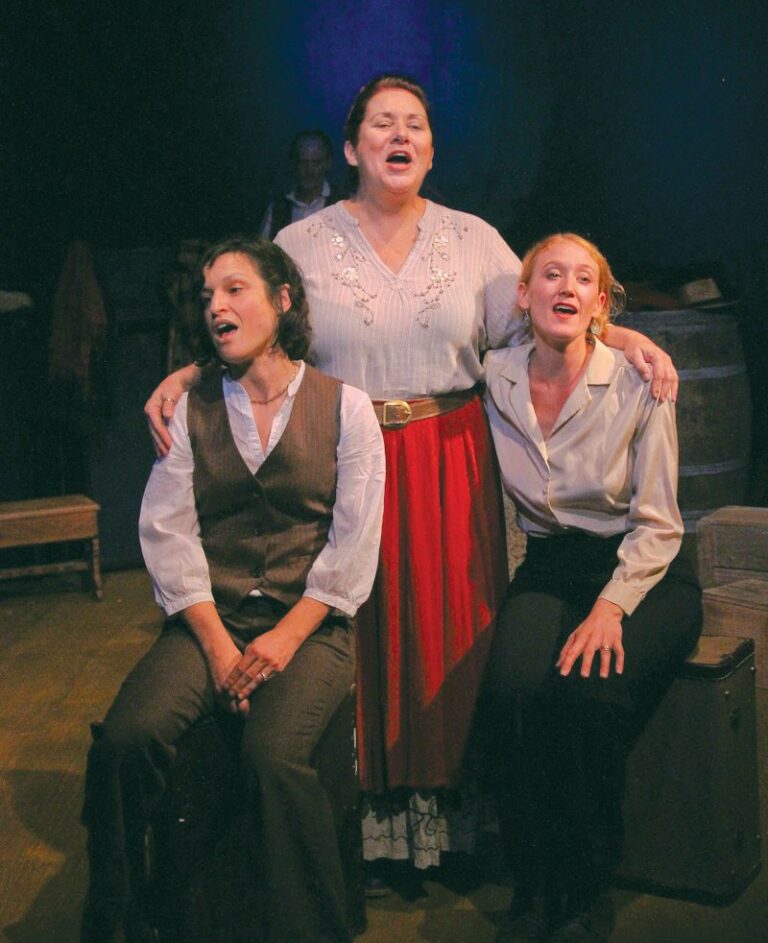
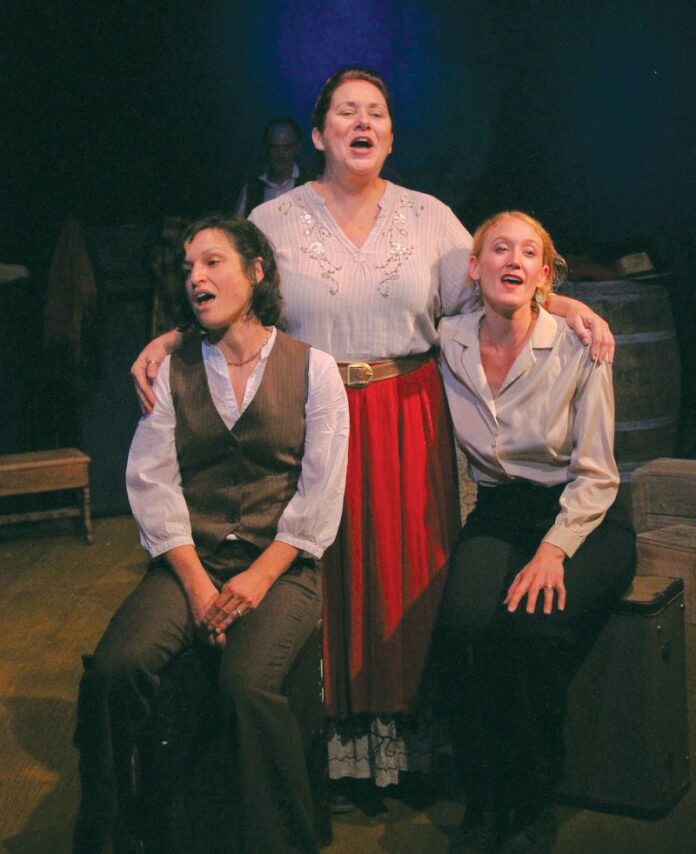
Baskerville, a Sherlock Holmes Mystery (Spreckels Theater Company) is Ken Ludwig’s spoofy take on Arthur Conan Doyle’s Hound of the Baskervilles. Raven Players’ Sweeney Todd: The Demon Barber of Fleet Street follows a vengeful ex-convict teaming up with a pie-maker for a cannibalistic killing spree. Surprisingly, the livelier of the two is not the show with slashing razors; it’s the one where a guy gets mauled by a big stuffed dog.

Baskerville, directed by David Yen (with obvious affection for Monty Python), follows Sherlock Holmes (Steve Cannon) and Watson (a marvelous Chris Schloemp) as they take the case of a man killed by a mysterious beast. The play is jam-packed with pratfalls, outrageous accents, silly walks—and a massive cloud of machine-made fog that seems to have a mind of its own.

Though Cannon’s ultra-dry delivery as Holmes reads mostly as lifeless and unfunny, the rest of the cast is a brisk and bouncy delight, especially Larry Williams, excelling in an array of hilariously over-the-top roles. Kim Williams and Zane Walters do exceptional work as numerous potential murderers and/or victims. The best performance of the show, though—thanks to Williams’ utter commitment to the moment—is from the floppy stuffed-animal appearing as the mysterious hound itself. Rarely has an inanimate object been funnier.

Rating (out of 5): ★★★★

If only Sweeney Todd had the same level of energy.

Though it features one of the best orchestras I’ve heard in the North Bay—with expert musical direction from Lucas Sherman—Steven Sondheim’s spirited, darkly fun tale feels disappointingly dour. Directed by Carl Hamilton (who delivered one of 2015’s best shows in All My Sons), this Sweeney suffers a mortal blow from stiff staging that, despite several nice visual touches (loved the falling red fabric when key characters die), often feels flat, leaving the actors looking constrained and frozen. A bit more melodramatic vitality and dynamism is called for in this kind of show.

As Todd, Matt Witthaus cuts a fine figure, and reveals a powerful singing voice, but the larger-than-life intensity of presence for which he’s become known is rarely capitalized on. Far more lively and on-the-mark is Tika Moon as the pie-making Mrs. Lovett, balancing her characters’ dark humor and comic tragedy with masterful ingenuity. ★★★

For dates and times for ‘Baskerville,’ visit ci.rohnert-park.ca.us; for ‘Sweeney Todd,’ check raventheater.org.

Far and Wide

0

An intense police thriller, an inspiring inner-city drama, a darkly comic mystery, a gastronomical expedition: the 21st annual Jewish Film Festival has a little bit of everything.

Hosted by the Jewish Community Center of Sonoma County (JCC), this seasonal series of films, running on select Wednesdays through November at Rialto Cinemas, presents an enlightening lineup of recent films from Israel, France, Hungary, the Netherlands and the United States.

Inspired by the San Francisco Jewish Festival, the oldest fest of its kind in the world, Sonoma County’s own festival is part of a movement that JCC executive director Ellen Blustein says has spread around the globe.

“We’re a relatively small JCC, but we have a lot of cultural programs for anyone in or interested in the Jewish community,” says Blustein. Like the center’s other offerings, the festival was formed, and is still run by, a grassroots group of people.

Blustein says the JCC selects films each year that appeal to the local community. “We watch about 80 movies a year to pick the seven or eight films we end up showing,” she says. Keeping up with film festivals the world over, the JCC’s films are not yet in distribution, meaning all the films screened are making their North Bay premiere.

Wounded Land, the 2015 Israeli drama that opens the fest on Wednesday, Oct. 5, chronicles an intense chain of events following a suicide bombing in which the bomber survives. The film, nominated for nine Ophir Awards (the Israeli equivalent of the Oscars), comments on the unsettling effects such violence wreaks upon culture.

For audiences seeking something more light-hearted,
the JFF screens the uplifting Once in a Lifetime, about a French teacher sparking inspiration in her inner-city students, on Oct. 19. Following that, on Nov. 2, the powerful East Jerusalem/West Jerusalem features a cast of American, Israeli and Palestinian artists finding common musical ground amid old tensions.

One of Blustein’s favorite selections this year is Fire Birds, screening Nov. 9, in which three octogenarian widows investigate a mysterious murder with dark humor and inventive craft.

Nov. 16’s presentation of Fever at Dawn offers an unlikely love story between two Hungarian Holocaust survivors, and on
Nov. 30 the festival screens its quirkiest selection, Moos, a Dutch coming-of-age film that follows a wallflower who dreams of becoming an actress.

Wrapping the festival on Sunday, Dec. 4, is celebrity chef Michael Solomonov’s delicious documentary, In Search of Israeli Cuisine, that goes deep into the country’s current foodie revolution and presents a microcosm of diverse cultures co-existing in a compact region.

The Sea Forager

0

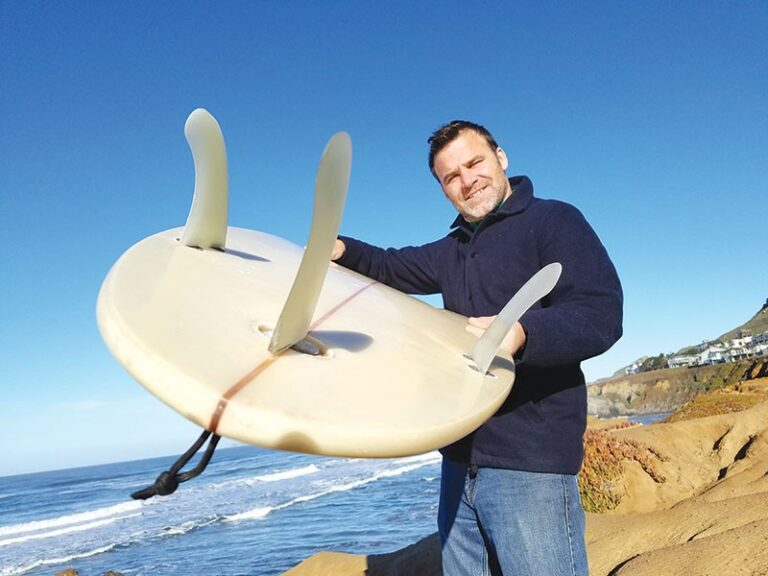
Kirk Lombard scans the shoreline and the surf, and says he hasn’t been to this spot in West Marin for a couple of years—but he has a knack for knowing just where the surfperch are and the best time for catching them.

It’s nearing the end of a flood tide in Bolinas, and I’m fishing with Lombard along the channel that leads into the Bolinas Lagoon. He whistles sharply in my direction and points to the spot, a cut in the shoreline where there’s a drop-off and the perch are hanging out, very close to shore.

“The big ones are close in,” he says. “Don’t over-cast.” I keep catching little ones. The ubiquitous surfers of Bolinas paddle nearby as heavy surf washes across the channel and seals pop their heads up. We’re fishing with light-tackle spinning poles, perfect for these small, scrappy panfish, with rigs consisting of three small hooks attached and baited with bits of rubber sandworms. We’ve got small pyramid sinkers that are supposed to grab the bottom; the tide’s still running a little strong but will ease off before too long. It’s a pitch-perfect, blue-skies day.

Lombard is the author of the just-published Sea Forager’s Guide to the Northern California Coast (Heyday; $22), and the Half Moon Bay resident has driven up the coast and through the city for a late-morning outing in West Marin. For his effort, I’ve presented him with a hand-hewn wooden gaff I plucked off a remote spot last year north of Agate Beach in Bolinas. He’s psyched (“I need a gaff! Thanks!”) and tells the story of a guy who lost a big halibut boatside just the other day—because Lombard’s boat didn’t have a gaff on it.

The tide is just about right and the fish ought to be biting. Lombard is a little hoarse after the previous night’s outing—a publication party for his book that featured him and his wife, Camilla, singing sea shanties for a boisterous and appreciative crowd in Oakland. He’s a 50-year-old man with two young children and says that his three-and-a-half-year-old boy already has the fishing bug—about the same age when Lombard got bit.

Lombard’s guidebook is a lot of fun to read and a real standout from your typical fishing guides, which tend to be heavy on the “how to catch the big one” information but usually do not come with evocations of Marcel Proust or Tuvan throat singers (the latter are mentioned by way of comparison to croaking bottom-dwellers). Lombard is a passionate angler who admits that he weeps for certain baitfish. And Lombard’s book also comes with a heavy and appreciated through-line that highlights his conservation ethic, delivered lightly, as one might encrust a halibut fillet with corn meal—along with lots of entertaining, fish-specific haiku and footnotes that are by turns hilarious and informative, or both.

Lombard has a real knack with the sharp observation delivered deadpan (“Anecdotally speaking, the least inhibited people catch the most clams”; “To be clear, it’s no problem shoving your hand into the gills of a lingcod. Pulling your hand back out is where the problem lies”). Lombard thinks you should work a little for the fish or other creature you’ve foraged, and distinguishes between fishing consumers and fishing citizens. The former will pry big fat mussels off a rock with a crowbar. The latter will put on a glove and get down and dirty with the work. Lombard wants you to get down and dirty.

Kirk Lmbard is a New York City native who moved to the Bay Area in 1993 to get married. That didn’t pan out. When that relationship went south—”The chick ran off with a modern furniture designer”—he stayed in the Bay Area and started working for the Pacific States Marine Fisheries Commission as a fish observer (the job was part of a joint program with the then–California Department of Fish and Game; it’s now called Fish and Wildlife). He’d jump on party boats and do fish surveys for the agency from public piers, which served to help him grow his expertise in the fishes and fauna of Northern California.

Before he worked with Fish and Game, Lombard fronted a band called the Rube Waddell, named for an early 20th-century professional baseball player who was famous for his on-the-field antics that included abruptly departing the pitcher’s mound to go fishing. The band toured all over the country and Europe. “Waddell was sort of my life before I started working for Fish and Game,” he says.

Lombard is influenced by old blues recordings and the music of Captain Beefheart, and he played harmonica and tuba for Rube Waddell, which got its name after a house party in San Francisco that found Lombard regaling attendees with stories about the old baseball player—they really loved the one about how he wrestled crocodiles. One of his band mates listened in and afterward told Lombard, “We need to call this band the Rube Waddell.” To that point the band had been called Hellbender. Lombard was going to write a book about Waddell but instead left the pitcher’s mound himself and wrote a book about fishing.

Youtube is now replete with Rube Waddell songs and Lombard instructionals on how to properly dress a squid. The former videos are characterized by songs like “Down in the Hole” (hey, that’s where the surfperch are today!), a barrel-house blast of crunchy, gutbucket honky-tonkery. The instructionals are quite useful if you don’t know how to dress a squid, and The Sea Forager’s Guide also has lots of handy hints for prepping fish for cooking, and recipes too.

Performance and entertainment is in Lombard’s blood—and Sea Forager jumps off the page like a school of manic flying fish, a lively and learned book with writing of playful bluntness on subjects such as the relative culinary value of surfperch which may be described as “meh.” Performance is met with his personal ethic around fishing. Lombard recalls one career day in nursery school when he was a youngster growing up in New York’s West Village—his father and grandfather were both Broadway actors—and he declared that he wanted to be a conservationist when he grew up.

Fast forward four-plus decades when Lombard was working as a conservationist and came to understand firsthand that there’s a lot of unethical fishing and poaching going on along the piers and boat-rails, and that “if everyone’s going out there and winging it and following their own rules, it’s not sustainable.”

Indeed, Lombard’s concerns about overfishing created an ethical dilemma for him over whether to write this book at all. Did he really want to be encouraging more people to go fishing? “I thought about it long and hard,” he says, and talked with his publishers at the nonprofit publisher Heyday, in Berkeley, who convinced him to write the book. His guide provides the technical basics, the how-tos, but Lombard says, “I didn’t give anyone any advantage they couldn’t get from a Fish and Game pamphlet.” But there are also lots of advantages to his book that you won’t find in those handy, state-issued how-to guides, including many illustrations by San Francisco artist Leighton Kelly.

Some of Lombard’s first fishing adventures took place, as they often do, with his father, the late actor Peter Lombard (he died in 2015, and Kirk dedicated his book to him). Peter Lombard was in a bunch of Broadway plays and perhaps most notably played Thomas Jefferson in the bicentennial-era production of 1776.

With a laugh, Lombard says his dad wasn’t much of a fisherman, but grandpa was—Lombard’s first-ever fishing trip was with his grandfather in Santa Cruz, when he was around four years old. We’ll save that story for the moment, but after that first fishing adventure, Lombard’s next memorable outing was when his father was doing summer stock theater on the East Coast and took young Kirk fishing on a rented boat on Lake Winnipesaukee in New Hampshire. Lombard recalls the fishing-with-dad story with relish, or perhaps tartar. “Dad didn’t know anything about fishing, but he knew that I loved fishing. He always tried. He knew that me and my grandfather had this bond,” Lombard says.

They got in the boat and headed out onto the lake and “we just started trolling this gigantic lure all over the lake,” Lombard recalls. “A giant muskellunge hit it and I got that fish all the way up to the boat and the line snapped. I cried and I cried and I cried. My dad would tell the story about that fish at parties, at dinner, and finally, after the pain of having lost it had disappeared, the fish was replaced by this really good story, and that was the consolation and the lesson from it.” The other lesson is that to this day, Lombard will jump into the water to make sure he doesn’t ever lose a big one like that again. Jumping in the water and chasing fish is kind of his signature.

[page]

But Lombard’s very first actual fish story doesn’t even involve a fish. He was visiting his grandfather, Milton Watson, who had grown up in the Monterey area, and was fishing out on the Santa Cruz pier. Lombard recalls that he had a bite on his very first cast. Wow. Except it was a seagull that took his bait, and the bird tried to fly off with it, like a kite. The youngster reeled it in and the bird was released unharmed. “That’s my first fish story: I caught a seagull. It’s been all downhill since then. I haven’t caught anything since then from the sky.”

We’re out on the beach in Bolinas and Lombard is drilling the surfperch and catches his limit (10 per person per day) within an hour or so, and I catch a few too. He’s wearing waders and I’m dodging the crashing surf in jacked-up blue jeans, barefoot. His fishing book is replete with recipes and commentary on the tastiness of various sea creatures and plants one can forage in these parts. The surfperch, alas, come up a little short in that department, though Lombard swears by ceviche made with the fish, and that’s how he’ll prepare his catch—squeeze that lime till the juice transforms the mushy meat.

Without wanting to sound all pretentious about it, Lombard considers himself a writer first and a fisherman second. He has a couple of boats in Half Moon Bay, but makes it abundantly clear that he doesn’t compare himself to a typical commercial fishermen who is out there day after day, year after year, grinding it out amid a sea of regulations and dwindling resources. “I’m not some guy making a living as a salmon fisherman,” he says as he throws props in the direction of the commercial guys. “They are brilliant in a lot of ways that I am not—they can take engines apart, for one thing.”

After he was laid off from Fish and Game, in the middle-aughts, Lombard started offering weekend tours of the San Francisco littoral zone, which became immensely popular and were declared by the SF Weekly to be the best walking tours available in San Francisco. He was also supplementing his income catching night smelts and monkey-faced eels (which are not, in fact, eels, and which grace the cover of The Sea Forager’s Guide). On the shoreline tours, he’d give lessons to participants on the byzantine California fishing regulations and he’d teach people how to throw a cast-net in the parking lot—”A very good way to catch the smaller fish that I like to talk about, the herring or surf smelt, two really amazing species.” He describes the tours as a rolling sort of stream-of-consciousness adventure heavy on the on-the-spot explanation. A performance.

Lombard noticed at the end of every tour, he’d be hearing the same thing from its participants, who were concerned and interested but not necessarily motivated to catch fish or forage seaweed themselves: I’m not going to go fishing, I don’t have the time for it, but I want to buy and eat fish in an ethical and sustainable manner.

“I would do these tours and teach people how to get stuff, but then I noticed that people weren’t interested in foraging but we were getting high Yelp ratings,” he recalls. Interest in the tours grew with the big shout-out from the SF Weekly, and Lombard leveraged the interest in his tours into a subscription-based seafood service, which is now his primary business (at least when he is not promoting his book—he brought the whole family on a book tour that’s ongoing and that stopped in at Pt. Reyes, Gualala, Crescent City, Yachats and Portland).

Lombard contacted Kenny Belov at Fish restaurant in Sausalito and told Belov that he’d been sending his tour customers his way when they asked about sustainable fish. “Kenny said, ‘Shit, why don’t you start a business?'”

So Lombard started a business, Sea Forager Seafood, a community supported fisheries company. He sent out a mailer to everyone on his Sea Forager Tours mailing list and within a month had 75 people signed up. He thought, “Wow, man. This could work.” Another month went by, and he doubled his mailing list and thought, “Holy shit! This is a business.” Then his wife quit her job to work full-time at Sea Forager, and within another few months they were up to 375 subscriptions. Camilla, aka Fishwife, throws down some of the recipes that populate the guide.

Today Lombard has 630 subscribers who pay $24 a week and receive either weekly or biweekly deliveries of fish fillets, sourced either through Belov “or fishermen that I trust,” he says. “There are only two or three wholesalers in [San Francisco] that when they sell you a fish, it is traceable to the captain, the boat and the port it came from.” There are pick-up spots around the Bay Area for subscribers, including one in Sausalito.

Lombard is a family man and a self-described eccentric (“I used to play a tuba on the street-corner in San Francisco!”) who regales a listener with a seemingly endless basket of stories that somehow always wind up back at something having to do with fishing, if not catching. For example, the one about how Grandpa Milton Watson used to play basketball with John Steinbeck when they were kids, and that one day Steinbeck was in New York—one of his books was then on Broadway—and recognized Watson during a Broadway performance of either Oklahoma or Annie Get Your Gun. After the show, Lombard’s grandfather was backstage in his dressing room and all of a sudden some guy was outside singing the fight song from Santa Cruz High School, and wouldn’t you know it, but it was the author of Cannery Row. “He opens the door, and it’s Steinbeck,” Lombard says. “They went out and had drinks after that.”

I‘m hanging with Lombard at an outdoors table at the Coast Cafe in Bolinas after our outing, and he’s sharing pictures of his family from the iPhone as we trade fishing stories and talk regulations and other subjects. Turns out Lombard and I have fished some of the same party boats on the East Coast. As usual, there are fish and chips on the lunch menu at the Coast, but we’ve both got a fish dinner on ice for later, or at least that’s why I ordered a bacon sandwich instead of the fish and chips. Later, we catch up on the phone and talk about the jewel that is the North Bay and the Marin-Sonoma coastline. I ask him to compare it to other waters he’s fished. “There’s just so much there,” he says. “I don’t want to say it’s better or it is more significant, but it sure is unspeakably beautiful.”

And he says there are shore-bound hotspots all over the North Bay for raking clams or catching stripers or crabbing for the mighty Dungeness off the beach. Lombard tells me a few of them on one condition: Don’t tell anybody. No worries. It’s all about the stories, anyway.

He tells another one by way of explaining the point of his book—which he kicks-off by first talking about the late Dr. Isaiah Ross who, like Lombard, is a harmonica player (or was—the Mississippian died in 1993). Unlike, say, blues-harp titan Little Walter, hardly anybody has ever heard of Ross, but Lombard loves him and says he’s generally inspired by “the things that fall through the cracks. I just love that guy, but you have to dig a little to find him.”

And ditto the stories and asides and creatures you’ll find that populate his book—or even the ones you won’t find, since they didn’t involve catching a fish but releasing one. One story that didn’t make the cut in the final edit of his guide is about the guy Lombard encountered on a public pier who had hooked a sturgeon that was about 200 pounds. “He masterfully pulled it in, but it was a foot too long and he had to throw it back,” Lombard recalls. “I’m more interested in the story of the guy who didn’t get the big fish, the story of the heartbreak of having to throw it back, and why he threw it back.”

The sturgeon is a beleaguered species, explains Lombard, and you can’t tell the difference between a male and a female, so this one might have been a female “with millions of little sturgies” waiting to be born. “This guy threw it back because he understood all of that.”

It’s worth noting that when Lombard first started telling this particular fish tale, the sturgeon weighed north of 300 pounds. The weight kept dropping as Lombard told the story and laughingly copped to his exaggeration. Okay maybe 250. Probably around 200. I wondered if Lombard turned to angler-writer John Gierach for inspiration. Gierach’s 2014 book on fly-fishing is called All Fishermen Are Liars.

Surf Night

0

Watching a surf movie is a special event for aficionados of the genre. The films are often short on plot but long on footage of surfing in epic locations. The crowd hoots and hollers as surfers get spit out of tubes and free-fall from the pitching lips of waves as beer bottles smuggled inside roll down the theater floor.

This Thursday, Sebastopol’s Rialto Cinemas is hosting a surf movie night, but it’s going to be a little different. The one-night-only event will feature Saltwater Buddha, a documentary based on Jaimal Yogis’ 2009 memoir of the same name. The book is a series of short stories that follow Yogis as he runs away from his home in Sacramento to learn how to surf in Maui and figure out what do to with his life. Along the 10-year-long journey, he discovers Buddhism and a deeper appreciation for waves and the world.

The film, made by director Lara Popyack and producer Mike Madden, includes footage shot in Hawaii, Costa Rica, El Salvador, New York and San Francisco’s Ocean Beach.

Popyack and Madden approached Yogis about turning his book into a film shortly after it was published, and it has been in production ever since. “It’s taken a really long time,” says Yogis from his home in San Francisco. “There were times when I thought it would never amount to a film.”

The film, made for about $50,000, takes an impressionistic approach to the book with Yogis’ narration and diverse music.

In addition to Saltwater Buddha, the event will feature a performance by Nine Pound Shadow and a screening of the short documentary “Thank You, Please Surf Again,” a film about Surf for Life, a nonprofit “voluntourism” organization that takes surfers to volunteer in impoverished coastal communities.

Berkeley’s Nine Pound Shadow played before Yogis’ bookstore appearances when he was promoting his book. The band has recently been signed to Columbia Records and recorded with produced Danger Mouse.

“It feels like being back where we started,” Yogis says.

Oh, and no need to smuggle in the brews. Beer is for sale, along with wine and a full food menu at the theater.

Abundance

0

A tasty tradition 42 years strong, the Sonoma County Harvest Fair is back this weekend for three days of food, wine, beer and family fun. The highlight of this year’s fair is the Wine Country Marketplace, a one-stop shopping experience where you can browse, sample, buy and take home the best local wines and food while enjoying chef demonstrations from cheese master Sheana Davis, John Ash & Co. executive chef Thomas Schmidt and pastry chef Doug Cavaliere of Costeaux French Bakery in Healdsburg.

Another favorite of the fair is the annual World Championship Grape Stomp. A grand prize of $1,500 will get the competitive juices flowing. Sign up with a friend, decide who’s going to be the stomper and who’s going to be the swabby, and make sure you dress up in a colorful costume for creative flair. There’s even a kids round for stompers
under 13.

Wine and food seminars, live music, a classic car show, a rotten apple catapult, an art show and sale and a harvest pumpkin patch are all part of the fair. Celebrate harvest season Sonoma County–style
Friday, Sept. 30, through Sunday, Oct. 2,
at the Sonoma County Fairgrounds,
1350 Bennett Valley Road, Santa Rosa.
Friday, 4–9pm; Saturday–Sunday, 11am–5pm. $5 gate admission; some events cost extra. 707.545.4200.

Footwork

0

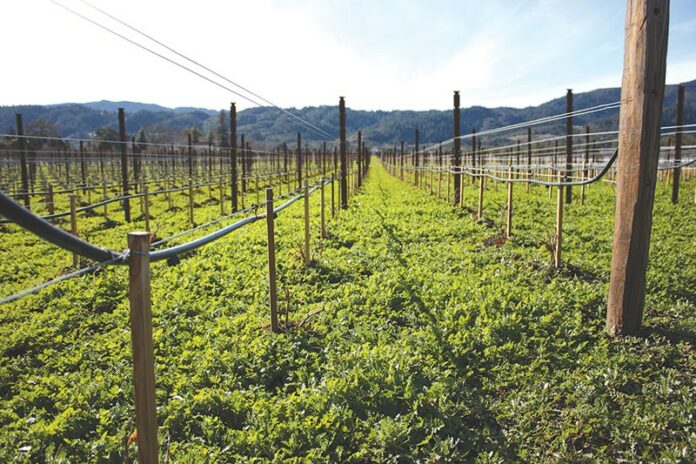
The grape is nature’s original smack pack. Inside each sturdy package is all the sugar required to make wine, and outside is the yeast needed to ferment that sugar. All you’ve got to do is break the grape.

Over the centuries, the ancient method of simply treading grapes underfoot has been replaced by technology of ever-increasing sophistication, from hand-cranked crushers to computerized sorting machines. Yet in some of the savviest new wineries, from New Zealand to Napa Valley, foot-stomping has come back into vogue.

“I don’t know enough people that do it to say that it’s in vogue,” demurs Scott Schultz, assistant winemaker at Wind Gap Wines. “But we foot-stomp everything here.” By everything, besides a few bins of Cabernet Sauvignon and Pinot Noir they destemmed mechanically this crush, Schultz is talking about a lot of grapes—at least 250 tons, each ton coming in two half-ton bins.

“We have great interns this year,” says Schultz. “They see those bins come in—they run over, pop their shoes off, put their shorts on, and they’re after it.” Located in the Barlow in Sebastopol, Wind Gap’s crush pad is just around the corner from its popular tasting room. People walk by all the time and exclaim, “I didn’t know people still did that!”

“It began as the only logical way to do it, because we didn’t have a crusher,” Wind Gap founder Pax Mahle explains. “Now that’s just how we do it.” Since the grapes are often picked in the middle of the night and come in well chilled, it’s not all glamor and fun. Still, most of the time, the team goes without the boots provided for the task.

And when they step on it barefoot, says Schultz, “we know what that fruit feels like pretty intimately.” Their feet relay information that may be helpful to winemaking, like temperature and condition of the grapes and stems. “It tells you a lot without really doing anything—you’re just relying on your senses.”

Winemaker Duncan Meyers, cofounder of Healdsburg’s Arnot-Roberts, gets more technical: “The stems also bring aromatic lift to the wine and help to slow down the fermentation kinetics by providing a more permeable mass for the juice to channel through, resulting in cooler peak temperatures and a gentler fermentation curve.” Other benefits include color stabilization and other features that expensive enological products offer, to similar effect. “Many of our favorite producers in the Rhône Valley, Burgundy and the Jura in France use this ancient technique to good result,” says Meyers.

There’s still time to try your hand—or foot, rather—at stomping grapes at the Sonoma County Harvest Fair, Friday, Sept. 30, through Sunday, Oct. 2, at 1350 Bennett Valley Road, Santa Rosa.

The Big Squeeze

Due to major changes in the law, everyone in the cannabis industry will soon have a choice to make: get licensed, stay (or go) black market or quit.

As an attorney, I cannot, and will not, recommend anything other than full compliance with state and local law for those who want to be involved. Unfortunately, it is my opinion that many of those who opt to get licensed will still get squeezed out of the industry. There are two main ways that I see this happening.

First, I don’t think the average person realizes the storm of bureaucracy that is approaching. The industry is about to go from basically unregulated to highly regulated. Costs are about to go up. Way up. Margins will drop considerably. This is inevitable.

While there are many factors that will influence how long this storm lasts, I see a giant reshuffling of the deck. Many of those in the industry, and who want to remain, will simply not be able to. Many new people will come in. This is because there will soon be many hands in the pockets of growers. Growers will either have to accept dramatically reduced margins or increase prices. The age-old tension then comes into play: how much can you raise prices without customers turning to the black market?

The second way people may be squeezed out is if local land-use ordinances become too restrictive. I worry that local government will greatly narrow where commercial cannabis activity (and especially cultivation) is allowed. It’s important to remember that government will have many voices in its ear, including those opposed to the industry.

The wine industry is a powerful one in this county—what position will it take? Local government may simply legislate many farmers out of existence; they simply won’t be able to use their land for cultivation. This is a one-two punch because we live in a county with insane land prices. Most farmers simply won’t be able to afford to sell land zoned “agriculture-residential” and buy land zoned “diverse agriculture.”

What will happen to all those independent small farmers who produce just enough to support their families? Will they be driven out entirely? Or will they be forced to work for those who can navigate the new rules and have the capital reserves to survive a period of low margins?

I am not confident in the future of the small farmer. The short term will likely be filled with unexpected expenses and dislocation. Prepare yourself!

Ben Adams is a local cannabis attorney. He has been practicing law for almost 20 years and concentrates his practice on cannabis compliance and defense.

Letters to the Editor: September 27, 2016

Deplorable Donald Trump is an obese version of James Dean from the 1955 classic film Rebel Without a Cause. At the heart of Trump's appeal during this presidential race is his authentic childish rage and devil-may-care attitude, but do his supporters really want a sullen teenager with nuclear launch codes at his disposal? The glamour of overt contempt is the...

Debriefer: September 27, 2016

SLEEPLESS IN SANTA ROSA The Sonoma County chapter of Organizing for Action (COFA) gave us the heads-up that the Santa Rosa City Council would soon vote on a proposal to stem the city's growing homeless problem. OFA's Linda Hemenway went to city hall yesterday (Sept. 27) to lobby the council on a Safe Camping proposal that would extend options to...

Light the Way

Born and raised in the city of Napa, singer-songwriter Shelby Lanterman perfectly encapsulates the town's musical ascension in the last 20 years. "The music scene in Napa has definitely grown a lot," says Lanterman. "When I was a little kid, there were three or four local bands, and that was it. But now we have the BottleRock festival and the...

Light and Dark

Two murderous Victorian yarns have just unspooled in North Bay theaters. Baskerville, a Sherlock Holmes Mystery (Spreckels Theater Company) is Ken Ludwig's spoofy take on Arthur Conan Doyle's Hound of the Baskervilles. Raven Players' Sweeney Todd: The Demon Barber of Fleet Street follows a vengeful ex-convict teaming up with a pie-maker for a cannibalistic killing spree. Surprisingly, the livelier of...

Far and Wide

An intense police thriller, an inspiring inner-city drama, a darkly comic mystery, a gastronomical expedition: the 21st annual Jewish Film Festival has a little bit of everything. Hosted by the Jewish Community Center of Sonoma County (JCC), this seasonal series of films, running on select Wednesdays through November at Rialto Cinemas, presents an enlightening lineup of recent films from Israel,...

The Sea Forager

Kirk Lombard scans the shoreline and the surf, and says he hasn't been to this spot in West Marin for a couple of years—but he has a knack for knowing just where the surfperch are and the best time for catching them. It's nearing the end of a flood tide in Bolinas, and I'm fishing with Lombard along the channel...

Surf Night

Watching a surf movie is a special event for aficionados of the genre. The films are often short on plot but long on footage of surfing in epic locations. The crowd hoots and hollers as surfers get spit out of tubes and free-fall from the pitching lips of waves as beer bottles smuggled inside roll down the theater floor. This...

Abundance

A tasty tradition 42 years strong, the Sonoma County Harvest Fair is back this weekend for three days of food, wine, beer and family fun. The highlight of this year's fair is the Wine Country Marketplace, a one-stop shopping experience where you can browse, sample, buy and take home the best local wines and food while enjoying chef demonstrations...

Footwork

The grape is nature's original smack pack. Inside each sturdy package is all the sugar required to make wine, and outside is the yeast needed to ferment that sugar. All you've got to do is break the grape. Over the centuries, the ancient method of simply treading grapes underfoot has been replaced by technology of ever-increasing sophistication, from hand-cranked crushers...

The Big Squeeze

Due to major changes in the law, everyone in the cannabis industry will soon have a choice to make: get licensed, stay (or go) black market or quit. As an attorney, I cannot, and will not, recommend anything other than full compliance with state and local law for those who want to be involved. Unfortunately, it is my opinion that...
11,084FansLike
4,446FollowersFollow
6,928FollowersFollow