Farm to Bong

I’m probably dating myself, but as a kid I remember going to the mall at Christmastime and seeing those festive Hickory Farms gift packages, the ones with beef sticks, salami, smoked cheeses and little strawberry candies all tucked into a bed of fake grass. Remember those?

That’s what I thought of when I saw the Natural Cannabis Company’s California Farmer’s Showcase Best of Harvest Box. Only, as you might guess, the grass in the package is anything but artificial.

The gift box features 28 strains of cannabis in little one-gram canisters—one ounce. For the weed connoisseur, it’s a treasure chest. The grid of jars in the box corresponds to little blurbs about the properties of the herbs and the mom-and-pop farms that grew each strain.

“The Farmer’s Showcase collection was created to give more exposure to some of the small, local farmers that Natural Cannabis Company partners with,” writes Kerry Quintiliani, company spokesperson, in an email. “With cannabis legalization a reality, many people fear that small farms will be destroyed, along with people’s livelihoods. Dona Frank, founder and owner of Natural Cannabis Company, intends to make sure that doesn’t happen. The company works with more than 200 small farms and artisan cultivators annually.”

Quintiliani says the target customers are people who “truly appreciate high-quality products, akin to wine or cigar enthusiasts.” But leaving aside the quality of any of the cannabis, what strikes me most about the product is that it offers a glimpse into the growth of the recreational cannabis industry. The farm-to-bong era is here.

The description of farms in the box pulls back the veil on the hitherto hidden world of growers. There’s Zsa Zsa Gardens in Sonoma Valley, organic producers of the “amethyst rose” indica/sativa hybrid. Ever heard of Glen Tucky Family Farm on Sonoma Mountain? Me neither. They are biodynamic growers who produce “limited production, high-quality, mountain grown cannabis” like “pre-98,” an indica strain. That sounds like a description of any number of mountain winegrowers.

Mendocino County’s McNabb Cannabis grows the “memberberry diesel” indica/sativa hybrid “above the biodynamic vineyards of Bonterra wine.” I wonder when vineyards will start adding in a few rows of cannabis, if some aren’t doing that already.

The box sells for $190, but you can’t get it at the mall—at least not yet. It’s available at Natural Cannabis Company’s locations in Santa Rosa, Hopland and Oakland. Go to naturalcannabis.com for more info.

Dear Fellow Christians

A small and violent minority of Americans is pushing hard for things like mandatory registration of Muslims, mass deportation of illegal immigrants and an openly, violently, unapologetically white-supremacist America.

Those who voted for Donald Trump—and an agenda that included hatred of women, incitement to racial violence and total disregard for facts, among other inhuman and un-Christian plans of action—may not all be actively violent racists, but they have agreed to be on the same team as those violent racists.

And though I cannot understand how, many of these people are Christians.

Somehow, many Trump supporters think that they have done the world, and even God, a holy service by renewing violence, oppression—or tacit acceptance of the same—toward people who have never been given the rights and freedoms afforded to white Christians.

My fellow Christians, I am begging you: Do not remain silent, even to keep peace with one another. To prevent violence, we must face the violent. We white male Christians, especially, must put an end to our complacency and speak truth to power—and to our neighbors and families—before more lives are lost.

It should be us: we can do so with the least risk of being shot.

Our fellow Christians have hardened their hearts to the needy and hungry, often cherry-picking from the pre-Jesus parts of the Bible to justify their judgment. But we believe in Jesus Christ. We believe in a gentle, tolerant, self-sacrificing savior who is the way, the truth and the life. His example is what we are called to follow. Though it drive us into poverty ourselves; though it be very painful, we have an opportunity, and a mission, to be like Christ.

Let’s not wait until violence is breaking out against black, LGBTQ, native and female Americans. Let’s put ourselves at the front. Let’s show Jesus to Christians. Gently, kindly, in a way that diffuses violence, let’s do our best to be Jesus to those who may have lost him most. Let’s stand up now, before we are the only ones who can.

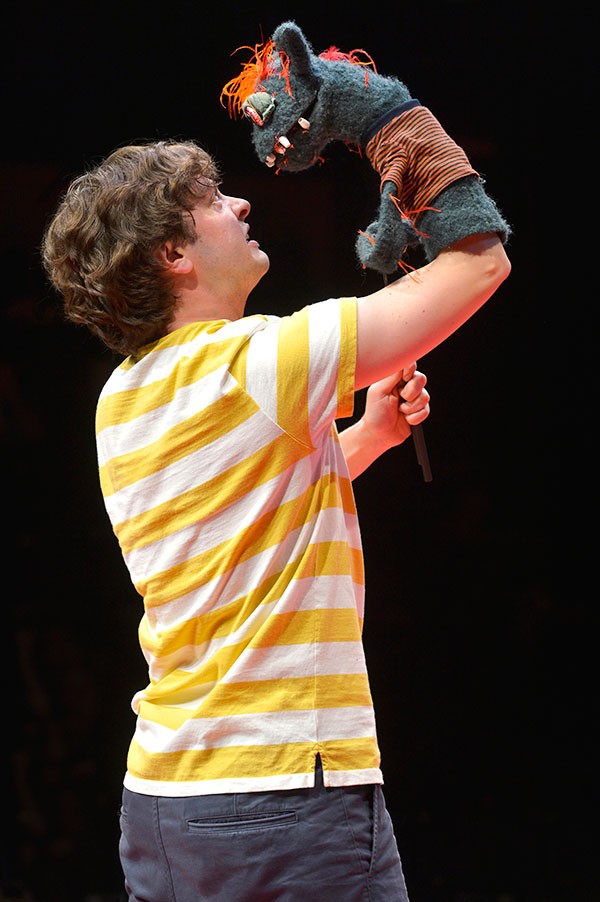
Trevor Hoffmann is a Petaluma-raised actor and director.

Open Mic is a weekly feature in the ‘Bohemian.’ We welcome your contribution. To have your topical essay of 350 words considered for publication, write op*****@******an.com.

New Era on Tap

0

Call it a tale of two counties. A new state law requires that local governments regulate groundwater for the first time.

Sonoma County has begun a lengthy process to create long-term sustainable groundwater management plans for its at-risk water basins. Napa County, by contrast, is taking an alternate route, as it argues its groundwater use is already sustainably managed.

While Sonoma County has been praised for its go-slow process, critics say Napa County is fast-tracking its plan in an effort to avoid substantive changes to water use dominated by the wine industry. But Napa County officials counter that a recently written groundwater analysis says that, in effect, while there are challenges, the county’s groundwater is sustainable and it has a plan to keep it that way. Approval of the plan comes before the Napa County Board of Supervisors on Dec. 13.

Up until last year, when the law went into effect, groundwater could generally be pumped with impunity. “It was in essence a race to the bottom,” says Michael Kiparsky, director of UC Berkeley School of Law’s Wheeler Water Institute.

But in the wake of the state’s unprecedented drought and widespread well failure in the Central Valley, Gov. Brown signed the Sustainable Groundwater Management Act (SGMA) in 2014. The legislation requires groundwater management plans that avoid half a dozen “undesirable results,” such as lowering groundwater levels, degraded water quality, land subsidence and saltwater intrusion into groundwater.

The SGMA will usher in a new era for agricultural areas like Napa and Sonoma counties. Since agriculture consumes the greatest amount of groundwater in the state, the law represents a sea change for farmers who used to be able to pump water without concern for impacts on water supply.

In water basins designated medium- and high-priority by California’s Department of Water Resources, the state requires the creation of a groundwater management plan, a blueprint for managing groundwater over the long-term.

But rather than dictate how local governments manage their groundwater, the SGMA directs local agencies to create their own sustainability plans, lest the state impose one on them. To do this, local jurisdictions must form a groundwater sustainability agency (GSA). It’s these agencies’ responsibility to create and implement a plan.

Sonoma County has three medium-priority basins and is in the process of creating GSAs for each of them. The Sonoma County Water Agency, which is spearheading the county’s groundwater management plans, has reached out to about 30 organizations in response to the SGMA and has conducted some 20 public briefings on the process at various boards of supervisors and city council meetings around the county. The county has until 2017 to create its GSAs and until 2022 to submit groundwater sustainability plans (GSP).

Napa County has one medium-priority basin, the Napa Valley Sub-Basin, which runs along the valley floor from Calistoga to Napa. Because it believes its groundwater has been sustainably managed for the past 10 years, the Napa County Board of Supervisors is taking advantage of a loophole that allows it to avoid the lengthy public process required to create a GSA and GSP. The SGMA allows local jurisdictions to submit an alternative plan if they can prove their groundwater is being sustainably managed. Alternative plans must be submitted by
Jan. 1, 2017.

[page]

Part of the rationale for Napa’s alternative plan is that the county has already conducted extensive work on groundwater sustainability before the SMGA came along, said Patrick Lowe, natural resources program manager with Napa County’s Department of Public Works. He pointed to the 16 meetings held by the county’s groundwater resources advisory committee between 2011 and 2014.

“We were already in a pretty good position,” Lowe says.

Napa County presents a test for the SGMA and state regulator’s ability to enforce it. “SGMA is monumental, path-breaking and game-changing,” says Kiparsky. “But it’s only as good as the backstop.”

The backstop is the state Water Resources Control Board. Part of a political tradeoff for the new regulatory regime is allowing local authorities to come up with their own plan, he says. It will be up to the the Department of Water Resources to vet Napa County’s plan. If the plan doesn’t meet sustainability standards, the state board could reject it and require the county to form a GSA and GSP.

That’s what Chris Malan would like to see. Malan, executive director of the Institute for Conservation Advocacy, Research and Education in Napa County, an environmental nonprofit group that focuses on water issues, calls the county’s pursuit of an alternative plan an “end run” around the SGMA.

In particular, she says the Napa Valley Sub-Basin shows signs of undesirable results, like subsidence and poor water quality, and says plans for monitoring are inadequate and based on poor well sampling. She says the alternative plan sidesteps the conversion of Napa Valley hillside woodlands into vineyards, a practice she says reduces critical groundwater recharge.

“This is the hallmark water issue of our time,” says Malan.

Geologist Jane Nielsen doesn’t think Napa’s plan will pass muster with the state. Nielsen is a California-licensed geologist who worked for the U.S. Geological Survey. She co-founded the Sebastopol Water Information Group and the Sonoma County Water Coalition. She represents the water coalition on the Santa Rosa Plain Groundwater Management Panel.

After reading Napa County’s sub-basin analysis, she said the groundwater monitoring program is “aspirational” and lacks sufficient enforcement to bring its goals and into reality.

She adds that the report provides a “very barebones” sketch of the kind of data that SGMA requires and there is no integration of the data sources.

“I would not be too optimistic that this program will be accepted as equivalent to a GSP,” she says

Nell Green Nylen, a senior research fellow at Berkeley’s Wheeler Water Institute, says it’s important to note that the SGMA is still a work in progress.

“I would think the state will take a hard look at [Napa County], but I don’t know how it will play out,” she says. “The devil is in the details.”

Cooks’ Book

0

Cookbooks published by restaurants give a glimpse into the tastes, techniques and worldviews of their chefs and owners.

Such books generally come out once a restaurant becomes an institution, famous enough to attract readers. Santa Rosa’s four-year-old Spinster Sisters is a lively, culinary oasis in the city’s South of A arts district that now has a book out, too—but it’s not what you might expect.

Instead of offering a collection of recipes, author Lizzie Simon created

The Spinster Sisters’ Guide to Sonoma County as a book full of tips, recommendations and insights, out of conversations with the restaurant’s staff and customers, and its neighbors and suppliers.

“Oftentimes, travel coverage focuses on the luxury market, which is frankly way beyond the realm of most people, including 99 percent of the people in our book,” says Simon.

Simon and her husband, Eric Anderson, a Santa Rosa native and one of the restaurant’s founders, live in New York City but visit Santa Rosa often. A writer for the Wall Street Journal and American Theatre, Simon fell in love with the area and the restaurant over time, and interviewed all parties involved over a month-long stay that was fueled by dinners and lunches at Spinster Sisters. “I wrote the book in exchange for free food,” she jokes.

The main motivation for the guide is an upcoming Spinster Sisters inn, currently in development above the restaurant. “I wanted to figure out a way for future guests to connect both with locals and with exceptional experiences in Sonoma County,” says Simon.

The result is an insider’s guide from the perspective of Sonoma County’s leading tastemakers and foodies. Among them: Spinster Sisters head chef Liza Hinman; winemakers like Duncan Arnot Myers from Arnot-Roberts winery, Eric Sussman from Radio-Coteau, and Kelly and Noah Dorrance from Reeve Wines; Sonoma County Meat Company’s Jenine Alexander and Rian Rinn; Weirauch Creamery cheesemakers Joel and Carleen Weirauch; Moonlight Brewing Company’s Brian Hunt; and Flying Goat Coffee’s Phil Anacker. Each specialist recommended local favorites in their category, from small-batch wines to secret creameries and biking trails.

“It was important to try and represent the diversity and multitude of people who come together to make the restaurant what it is,” says Simon. “You’re getting recommendations from people who are experts, and it puts a human face, many faces, really, to the county.”

‘The Spinster Sisters’ Guide to Sonoma County’ is available at the restaurant, 401 South A St., Santa Rosa or at thespinstersisters.com ($15).

Debriefer: December 7, 2016

0

Last week we learned one Lord Christopher Monckton would be hosted at the Lomitas Schoolhouse in Santa Rosa in a talk titled “Using ‘Climate Change’ to Attack Rural America.” But by popular, if not populist, demand, the event was moved late last week to the city-owned Finley Community Center, which will host Monckton Dec. 7 in its senior wing.

The Monckton talk in Santa Rosa is one of four taking place in California this week sponsored by the Eagle Forum (and co-sponsored locally by North Bay Patriots). The Eagle Forum is the hard-right organization founded by the late Phyllis Schlafly, known for its stridently anti-immigration, anti-feminist, “pro-family,” anti-globalist agenda.

The president of the California Eagle Forum is a woman named Orlean Koehle, who founded the Sonoma County Land Rights Coalition back in 2006. The county resident recently published a book that warned of an upcoming one-world religion. Her website warns that “many believe [it] will be an Islam/New Age/pagan religion.”

Monckton is a British climate-change denier and Brexit proponent, and a press release announcing his appearance says the issues are indeed related. “The control that the European Union was exercising over the British people and their property and water rights is similar to the controls we are experiencing in rural America today—using the excuse of climate change.”

A review of online resources and reports that have popped up over the years highlights that Monckton, besides the climate-change denial, has been a proponent of the birther lie about President Barack Obama and has also, in the past, called for the quarantine of HIV-AIDS patients in internment camps. That’s a pretty grim tidbit to read during a week of moving World AIDS Day remembrances—and during a month when hard-right fearmongers have raised the specter of similar camps for American Muslims.

The press release for the event says to contact Sebastopol Eagle Forum member Carol Pascoe to reserve a space for the event. I did so while it was still booked at the schoolhouse and asked Pascoe, while I had her on the phone, about Monckton’s embrace of birtherism. She says she “wasn’t sure about that one” but has seen “a lot of evidence,” including the movie on the subject by Dinesh D’Souza, who is both a conservative and a convicted felon. “It does bring up a lot of questions.”

The city official who oversees the rentals says there is one standard for potential renters of city-owned space: “I rent to any group that pays,” says Loretta Van Peborgh, an administrative secretary with the city. That would include David Duke or the Ku Klux Klan, if someone wanted to host them in Santa Rosa, she says. “We would have to rent to them” under First Amendment free-speech protections.

Long live the First Amendment, which also protects the free speech and free assembly rights of citizens who might take issue with the assertion that Lord Monckton is, as the press release announcing his imminent arrival says, “a very well informed authority on the fraud of climate change.”

The Monckton talk takes place Dec. 7 at the Finley Community Center, Person Senior Wing Auditorium, 2060 West College Ave., Santa Rosa. There’s a potluck dinner at 6pm and the program runs from 7pm to 9pm.

Letters to the Editor: December 7, 2016

Left Coast Writhing

In reading the article by Robert Reich (“Left Coast Rising,” Nov. 30), I was surprised by his argument, extolling California’s virtues, that the state’s high tax rate gives it the ability to insure more than 12 million poor Californians. He concludes that California’s progressive policies are far better for the citizenry than those of conservative states like Texas and Kansas. Mr. Reich misses the most obvious and glaring fallacy of his argument: that he classifies nearly one-third of California’s population as poor. The policies he lauds are indeed at the heart of the wealth and income disparity in California. The reality of Mr. Reich’s California is that the wealthy are doing quite well; the poor, not so much. There are many great things about California, but those argued by Mr. Reich condemn a third of Californians to a certain and lasting life of poverty.

Sebastopol

Fracking Funders

Thank you for shining a bright and badly needed light on the practices of some Marin-based investment firms that make huge investments in oil pipelines, oil wells and the fracking industry (“The Spigot,” Oct. 26). It is very disappointing and a shame that, at the same time that thousands of people are at Standing Rock, N.D., to bravely demand protection of our water and environment, the named Marin financial firms are “fracking funders.”

I applaud [your] investigative journalism and also naming some of the national firms that continue to invest in industries that pollute our planet and our lungs. The investing public should know that many of the very largest mutual fund companies, such as Vanguard, continue to heavily invest in oil and tobacco industry holdings such as ExxonMobil, Dominion Resources, Chevron Corporation, Philip Morris International, British American Tobacco, Suncor Energy and Occidental Petroleum.

The investing public should also know that there are other local investment and financial planning firms that work hard to limit or completely avoid investing in these and other dirty industries. There are many other ways to responsibly and prudently invest capital. Thank you again for calling attention to this important issue.

Via Pacificsun.com

Tread Here

Please find attached my much-improved version of the Gadsden flag. The sooner we put this particular snake underfoot, the better.

Healdsburg

Write to us at le*****@******an.com.

Raining Music

0

At the heart of longtime North Bay jam band New Monsoon is the instrumental and songwriting collaboration among founding members Bo Carper (acoustic guitar and banjo), Jeff Miller (electric guitar) and Phil Ferlino (keyboards).

Yet the sound that set New Monsoon apart when they debuted nearly 20 years ago was their robust and worldly four-man rhythm section. This week, New Monsoon—
a quintet since 2008—welcomes original percussionists

Brian Carey and Rajiv Parikh for a special Rhythm Reunion show on Dec. 10 at Terrapin Crossroads in San Rafael.

New Monsoon’s origins date back to 1997, when Jeff Miller moved from Boston to Marin County, where Bo Carper, an old college buddy from Penn State, was living in Bolinas. “I just fell in love with the whole thing,” Miller says.

The first incarnation of New Monsoon had Miller and Carper playing Fairfax cafes as a duo, with their mutual friend Parikh on the tabla, an Indian percussion instrument.

“It was really unique. Not too many electric rock and roll projects have a tabla,” Miller says. “That was inspiring. And it was the impetus of a lot of the music we wrote in that world-influenced style.”

Also largely influenced by Bay Area legend Santana, New Monsoon’s up-tempo jams and global rhythms were further bolstered when Brian Carey, who plays congas and timbales, joined the group soon after, offering his own Afro-Cuban influence and style. “That was the engine as we call it. The percussion set the table for our sound,” Miller says.

By 2003, New Monsoon was a full seven-piece touring band that regularly traveled the country with jam bands like the String Cheese Incident and Umphrey’s McGee, and played festivals like Bonnaroo and Austin City Limits.

Yet the waning viability of supporting seven members through touring forced the band to scale back. Carey moved to the East Coast to teach music and Parikh moved to the South Bay, while New Monsoon retooled into a tighter, more vocally fronted five-piece in 2008. Today the band features Miller, Carper and Ferlino with bassist Marshall Harrell and drummer Michael Pinkham.

“The sound of the band changed pretty drastically then,” Miller says. “So we’ve got a lot of different musical facets of the group we can tap into now.”

Which is precisely what Miller plans to do for the upcoming reunion show, featuring Carey and Parikh for a night of old jams and deep tracks. “For fans that know our music, they’ll hear some surprises on our set list for sure,” Miller says.

Musical Growth

0

Sonoma County’s annual Emerald Cup cannabis convention is expecting record crowds this year, thanks to
the passing of Proposition 64. To accommodate the masses, the Cup announced its first official pre-party concert for Friday, Dec. 9, to go along with the already packed lineup of music happening during the event on Saturday and Sunday, Dec. 10–11.

Hosted by Emerald Cup headliner Damian Marley (pictured), the Friday-night concert will feature a performance by popular Bermuda reggae artist Collie Buddz, a DJ set by Jamaican multi-instrumentalist and producer Kabaka Pyramid, and more. The show is sure to set a positive vibe for the weekend-long convention, which boasts a strong musical element complementing the weekend’s informational panels, keynote talks, live art and cannabis competition.

Saturday’s lineup includes California acts Thrive and Arden Park Roots, as well as up-and-coming Jamaican band Raging Fyah performing in the afternoon, before the California Honeydrops, Stick Figure and Damian Marley headline in the pavilion.

Sunday’s lineup is no slouch either, with electro-funk duo Vokab Kompany, world-beat vocalist Nattali Rize, San Diego group Tribal Seeds and veteran multi-genre rockers Dirty Heads rounding out the weekend.

The Emerald Cup happens Dec. 9–11
at the Sonoma County Fairgrounds,
1350 Bennett Valley Road, Santa Rosa. Friday’s events start at 5pm ($35); Saturday and Sunday, at 11am ($70 and up). theemeraldcup.com.—Charlie Swanson

Best Fin Forward

0

After an evening surf session at Dillon Beach, Klaus Dilling sat in his hot tub for a relaxing soak. As a woodworker and avid tinkerer, he’d been pondering surfboard fin design. Sitting in his tub, an idea popped into his head.

“It was that quintessential light-bulb moment,” says Dilling. “I realized in an instant that the center fin could become steerable. The design came to me in that moment.”

The next morning he headed into his workshop and set to work.

Dilling lives in Santa Rosa and teaches woodworking at Sebastopol Charter school and coaches soccer at Credo High School (disclosure: I serve on the board of directors at Sebastopol Charter). He built a prototype out of wood and was eager to see how his invention worked.

“Right off the bat, I felt it,” Dilling says. “Instantly, I knew it was something worth pursuing.”

For the past six years, Dilling has been developing his design, a device he says improves a flaw in modern surfboards and boosts performance. His patent for the fin was approved in September.

Most modern surfboards use a three-fin system: one center fin and two smaller side fins. The side fins are toed in slightly relative to the center fin. That helps hold a board on a wave, but creates drag and a slight snowplow effect as a surfer glides over the water.

Dilling says he’s solved the problem with a foot-activated tiller that pivots the center fin a few degrees during a turn to align with the side fin that’s making the turn, to create what he says are turns with more speed and flow. When the turn is complete, the center fin snaps back into place. He calls the design the TunaFin, and says it “just cuts through the wave cleaner and faster. It’s not really open to debate. It is a fundamental truth that less drag equals more speed.”

Brad Sykes, a surfer and product developer from Marin County, hasn’t seen or tested the latest model of the fin, but he’s excited about Dilling’s invention.

“The fin is an area that needs a lot for evolution and his fin is really radical,” he says. “I really think it’s going to go somewhere.”

The design is admittedly nichey stuff that only surfers could love, but since the patent for a key fin design recently expired, Dilling hopes his innovation will be the next big thing in the $7 billion U.S. surfing industry.

After countless iterations and design changes (it’s made with fiberglass and PVC fittings now), Dilling has retrofitted many of his old boards with the fin system, as well as having his brother, who shapes surfboards, make him new boards using the TunaFin.

“It has helped keep me going all these years,” he says, “because every time I ride one it’s like, ‘Wow.'”

The Southern California–based surfing industry can be hard for newcomers to break into with new concepts and products. So what chance does Dilling have way up here in Santa Rosa? He’ll soon find out. He’s launching a Kickstarter crowdfunding campaign later this month to raise money for a fleet of demo boards that he wants to take on a tour of West and East Coast beaches next summer to give surfers a chance to try them.

“It could well be the next big thing in surfboard design,” he says, “but I don’t know where this whole thing is going to lead.”

For more info, visit thetunafin.weebly.com.

Lord Monckton of the House of Wingnuts

Last week an email came to the office that said Lord Christopher Monckton would be hosted at the Lomitas School House in Santa Rosa in a talk entitled “Using ‘Climate Change’ to Attack Rural America.” But by popular if not populist demand, the event was moved late last week to the city-owned Finley Community Center, which will host Monckton Dec. 7 in its senior wing.

The Monckton talk in Santa Rosa is one of four taking place in California this week sponsored by the Eagle Forum (and co-sponsored locally by North Bay Patriots).

The Eagle Forum is the hard-right organization founded by the late Phyllis Schlafly, known for its stridently anti-immigration, anti-feminist, “pro-family,” anti-globalist agenda.

The president of the California Eagle Forum is a woman named Orlean Koehle, who founded the Sonoma County Land Rights Coalition back in 2006. She lives on land outside of Santa Rosa and recently published a book that detailed plans for an upcoming one-world religion. Her website warns that “many believe [it] will be an Islam/New Age/pagan religion.”

Monckton is a British climate-change denialist and Brexit proponent, and a press release announcing his appearance says the issues are indeed related. “The control that the European Union was exercising over the British people and their property and water rights is similar to the controls we are experiencing in rural America today—using the excuse of climate change.”

A review of online resources and reports that have popped up over the years highlight that Monckton, besides the climate-change denialism, has been a proponent of the birther lie about President Barack Obama and has also, in the past, called for the quarantine of HIV-AIDS patients in internment camps. That’s a pretty grim tidbit to read about during a week of moving Worlds AIDS Day remembrances—and during a month when hard-right fearmongers have raised the specter of similar camps for American Muslims.

The press release that was sent to the Bohemian says to contact Sebastopol Eagle Forum member Carol Pascoe to reserve a space for the event. I did so while it was still booked at the school-house and asked Pascoe while I had her on the phone about Monckton’s embrace of birtherism. Pascoe says she “wasn’t sure about that one” and has seen “a lot of evidence,” including the movie on the subject by Dinesh D’Souza, who is both a conservative and a convicted felon. “It does bring up a lot of questions.”

As for the Eagle Forum’s “pro-family” views when it comes to equal rights for gays, Pascoe notes that lawmakers like Jerry Brown defied the will of the people when they ignored the California gay-marriage ban enshrined in Proposition 8, which passed in California in 2008 only to be overturned in court two years later.

Pascoe didn’t return a follow-up call about the move to the larger venue, which is owned by the city of Santa Rosa. The city administrator who oversees the rentals says there is one standard for potential renters of public space: “I rent to any group that pays,” says Loretta Van Peborgh. That would include David Duke or the Ku Klux Klan if someone wanted to host them in Santa Rosa, she says. “We would have to rent to them,” under First Amendment free-speech protections.

Long live the First Amendment, which also protects the free speech and free-assembly rights of citizens who may take issue with the assertion that Lord Monckton is, as the press release announcing his imminent arrival says, “a very well informed authority on the fraud of climate change.”

The Monckton talk takes place Dec. 7 at the Finley Community Center, Person Senior Wing Auditorium, 2060 West College Ave. Santa Rosa. There’s a potluck dinner at 6pm and the program runs from 7-9pm.

Farm to Bong

I'm probably dating myself, but as a kid I remember going to the mall at Christmastime and seeing those festive Hickory Farms gift packages, the ones with beef sticks, salami, smoked cheeses and little strawberry candies all tucked into a bed of fake grass. Remember those? That's what I thought of when I saw the Natural Cannabis Company's California Farmer's...

Dear Fellow Christians

A small and violent minority of Americans is pushing hard for things like mandatory registration of Muslims, mass deportation of illegal immigrants and an openly, violently, unapologetically white-supremacist America. Those who voted for Donald Trump—and an agenda that included hatred of women, incitement to racial violence and total disregard for facts, among other inhuman and un-Christian plans of action—may not...

New Era on Tap

Call it a tale of two counties. A new state law requires that local governments regulate groundwater for the first time. Sonoma County has begun a lengthy process to create long-term sustainable groundwater management plans for its at-risk water basins. Napa County, by contrast, is taking an alternate route, as it argues its groundwater use is already sustainably managed. While Sonoma...

Cooks’ Book

Cookbooks published by restaurants give a glimpse into the tastes, techniques and worldviews of their chefs and owners. Such books generally come out once a restaurant becomes an institution, famous enough to attract readers. Santa Rosa's four-year-old Spinster Sisters is a lively, culinary oasis in the city's South of A arts district that now has a book out, too—but it's...

Debriefer: December 7, 2016

Last week we learned one Lord Christopher Monckton would be hosted at the Lomitas Schoolhouse in Santa Rosa in a talk titled "Using 'Climate Change' to Attack Rural America." But by popular, if not populist, demand, the event was moved late last week to the city-owned Finley Community Center, which will host Monckton Dec. 7 in its senior wing. The...

Letters to the Editor: December 7, 2016

Left Coast Writhing In reading the article by Robert Reich ("Left Coast Rising," Nov. 30), I was surprised by his argument, extolling California's virtues, that the state's high tax rate gives it the ability to insure more than 12 million poor Californians. He concludes that California's progressive policies are far better for the citizenry than those of conservative states like...

Raining Music

At the heart of longtime North Bay jam band New Monsoon is the instrumental and songwriting collaboration among founding members Bo Carper (acoustic guitar and banjo), Jeff Miller (electric guitar) and Phil Ferlino (keyboards). Yet the sound that set New Monsoon apart when they debuted nearly 20 years ago was their robust and worldly four-man rhythm section. This week, New...

Musical Growth

Sonoma County's annual Emerald Cup cannabis convention is expecting record crowds this year, thanks to the passing of Proposition 64. To accommodate the masses, the Cup announced its first official pre-party concert for Friday, Dec. 9, to go along with the already packed lineup of music happening during the event on Saturday and Sunday, Dec. 10–11. Hosted by Emerald Cup...

Best Fin Forward

After an evening surf session at Dillon Beach, Klaus Dilling sat in his hot tub for a relaxing soak. As a woodworker and avid tinkerer, he'd been pondering surfboard fin design. Sitting in his tub, an idea popped into his head. "It was that quintessential light-bulb moment," says Dilling. "I realized in an instant that the center fin could become...

Lord Monckton of the House of Wingnuts

Last week an email came to the office that said Lord Christopher Monckton would be hosted at the Lomitas School House in Santa Rosa in a talk entitled “Using ‘Climate Change’ to Attack Rural America.” But by popular if not populist demand, the event was moved late last week to the city-owned Finley Community Center, which will host Monckton...
11,084FansLike
4,446FollowersFollow
6,928FollowersFollow