Meet the Winners

0

Our annual NorBay Music Awards got beefed-up this year with a whopping 21 categories, including new spots for venues, festivals and more. The readers have spoken and the winners are:

Blues

The Dylan Black Project Soulful band of veteran musicians is a fixture at community concerts and gets the crowds moving with up-tempo rhythms and scorching solos. thedylanblackproject.com.

Country

Ammo Box New Southern rock and country outfit featuring members of Bay Area party band Notorious is already making noise on the scene. ammoboxband.com.

Americana

The Rhythm Rangers Led by songwriter and multi-instrumentalist Kevin Russell, the Rhythm Rangers perform timeless and laid-back Americana musings that never fail to please. kevinrussellmusic.com.

Folk

Oddjob Ensemble Accordionist Kalei Yamanoha
leads this Vaudevillian string
band and produces an eclectic
array of traditional folk. oddjobensemble.com.

Rock

Charley Peach Vocalist Kaylene Harry’s powerful pipes front this hard-hitting and recently revamped power-rock outfit out of Santa Rosa (pictured). charleypeachband.com.

Hip-Hop

Above Average Young and high-rising MC writes raps and plays video games, matching his lightning quick hand-eye coordination with a silver tongue that’s steadily maturing. soundcloud.com/aboveraps.

R&B

The Soul Section The eight-piece rhythm and blues revue boasts a veteran core of players who draw from influences like Otis Redding and the Meters. thesoulsection.com.

Jazz

Cabbagehead We recently caught up with the improvisational sextet and fell in love with
their spontaneous energy and advanced musicianship. Now is the perfect time to get in the cabbage patch for yourself. cabbageheadmusic.com.

Indie

The Highway Poets The North Bay’s longtime favorite DIY band has been hard at work on their new album, Chasing Youth, slated for release next month. highwaypoetsmusic.com.

Reggae

Sol Horizon North Bay purveyors of roots reggae and world music are favorites at local festivals and beyond. solhorizon.com.

Punk

One Armed Joey There’s a melodic quality to Petaluma punks One Armed Joey that calls to mind ’80s bands like NOFX in the best way—fun, fast, catchy and cool. onearmedjoey.bandcamp.com.

Metal

2 Minutes to Midnight Summoning the power of Iron Maiden, this tribute act has the chops it takes to rock like the British metal heads they emulate. facebook.com/pg/norcalmaiden707.

Electronica

Eki Shola The synthesized sounds of solo pianist and performer Eki Shola is influenced by her world travels and shares a spiritually connected message. ekishola.com.

Acoustic

Nate Lopez The instrumental solo guitarist makes the most of his eight-string guitar for dynamic melodies and inviting atmospheres. natelopez.com.

Singer-Songwriter

Dave Hamilton Hamilton has been playing music for nearly 40 years in the North Bay, perfecting an award-winning mix of folk and Americana. davehamiltonfolkamericana.com.

DJ (Live)

Joshua Bluegreen-Cripps Musician, event producer and DJ, Joshua Bluegreen-Cripps does it all—and does it with a passion for local projects. partyevententertainment.com.

DJ (Radio)

Bill Bowker Longtime North Bay radio host is a champion of the blues and the arts both on-air at the Krush and in real life, co-organizing the Sonoma County Blues Festival on Aug 19. krsh.com.

Open Mic

Tuesday Open Mic at Brew The weekly gathering
of musicians, poets, comedians and others that join in the
open mic at Brew is quickly gaining momentum. brewcoffeeandbeer.com.

Venue or Club

HopMonk Tavern With three North Bay locations, the HopMonk Tavern’s family of venues can’t be beat for outdoor entertainment. hopmonk.com.

Promoter

Josh Windmiller The founder of North Bay Hootenanny is once again recognized for producing events and showcasing local music in projects like the new Out There Tapes compilation featuring over a dozen bands from the North Bay. northbayhootenanny.com.

Music Festival

Railroad Square Music Festival Not even a downpour of hail (in June!) could take the fun out of this popular summer event in Santa Rosa’s lively railroad square. railroadsquaremusicfestival.com.

The NorBay Awards will be handed out at Santa Rosa’s Wednesday Night Market on Aug. 16 at 5pm.

Infectious ‘Rhythm’

0

Since Transcendence Theatre Company’s first transplanted itself to Sonoma County in 2012, its Broadway Under the Stars shows, at Jack London State Historic Park, have become a consistently popular wine country summertime event.

Consistency is the key.

After six years, with four distinct Under the Stars shows produced each summer, the company’s centerpiece productions have not really evolved much, though they’ve certainly morphed, shifting subtly, while always retaining their basic shape. Dependably built on a strong foundation of song and dance, blending Broadway showstoppers and popular tunes—with the occasional recitation of a Jack London quote—every show is designed for maximum emotional and inspirational impact.

As its roots in Sonoma County grow deeper, Transcendence has so far resisted any pressure to replace its crowd-pleasing revues with full musicals. Which, for some reason, is what many of us, including me, once expected. Remember those early years, when the local air was full of juicy rumors that Transcendence might soon be bringing a production of Wicked, or something similarly exciting, to Jack London? Well, after six years of unprecedented success—with only minor visible tinkering to the format—perhaps it’s finally time to replace the question, “When is Transcendence going to do a full musical?” with the question, “Why, exactly, should they?”

The current dance-focused mid-season production, Fascinating Rhythm, is a prime case-maker as to why the company would be foolish to shake things up too drastically, and why we’d be foolish to want that.

Directed and choreographed by Eric Jackson, with musical direction by Matt Smart, the show differs from previous productions in small but powerful ways—introducing a number of first-time Transcendence performers, allowing the “characters” from one number to carry over, occasionally, into the next number or two, and other appealing choices. Artistic director Amy Miller has even adjusted the company’s signature use of Jack London’s famous “meteor” quote, to satisfying effect.

Highlights include a clever all-female rendition of the jazzy “Cool” from West Side Story, Stephan Stubbins’ delicately soaring rendition of Andrew Lloyd Webber’s “Unexpected,” from the show Song and Dance and a stirring performance of “Rise Up” by the marvelous Avionce Hoyles.

Meticulously designed and joyously carried out, Fascinating Rhythm may not have a plot or a story, but—just as we’ve come to expect—it carries more beauty, drama, excitement and sheer emotional power than a lot of other full musicals ever do.

High Notes

Behind every great rock star, there’s a Morty Wiggins.

In a career that spans more than four decades, Wiggins has worked with and for the biggest names in music as an artist and a record company manager, as well as a concert organizer and promoter.

Formerly a VP of Bill Graham Presents and general manager for A&M Records, Wiggins is now the CEO of Sonoma County–based talent management and promotion and booking agency Second Octave, which represents several local bands and hosts the SOMO Concerts series in Rohnert Park.

Working alongside a young and hungry staff at Second Octave, Wiggins revels in sharing his lifetime of experience with a new generation and reflects on how his journey in the industry is tied to the North Bay.

WITNESS TO THE WALTZ

Born in Toronto to a Canadian father and an American mother, Wiggins spent his childhood moving back and forth between Toronto and several spots in New York and New Jersey. There was virtually no music in Wiggins’ home, as both his parents were deaf.

“I started working in music more as an offshoot from an original interest that I had for theater,” Wiggins says. “I just loved the liveliness of theater.”

Coming of age in the early 1970s, Wiggins made the transition from working in live theater to live concerts, seduced and enamored by what he calls “the alchemy that happens in concerts.” In New York, Wiggins first hooked up with an organization called the College Coffeehouse Circuit, booking and touring with folk-rock bands on college campuses.

In 1976, at 19, Wiggins joined a band he was working for on a Midwest tour. From there, he hitchhiked to California and landed in Santa Rosa at the suggestion of the band’s lead singer, whose brother worked in town for IBM. “That’s how I ended up here,” he laughs. “It was a series of events that had nothing to do with me.”

Shortly after Wiggins arrived in California, legendary San Francisco concert promoter Bill Graham produced the Last Waltz at San Francisco’s Winterland Ballroom on Thanksgiving Day, 1976. Wiggins somehow snagged tickets and sat in the cheap seats for the event, which was a farewell show for iconic outfit the Band and featured guest appearances from Bob Dylan, Neil Young, Ringo Starr and many others.

“I was blown away, just blown away,” he says.

From the vibrant atmosphere to the incredible Thanksgiving dinner spread, Wiggins took it all in, including seeing Graham running around with a clipboard and wearing white tuxedo tails and a top hat. “That’s when I decided, I’ve got to work with this guy,” says Wiggins. “It took a few years, but I finally got there.”

In the North Bay, Wiggins immediately went about organizing shows at the various veterans halls in Sebastopol and Petaluma. A year later, the River Theater in Guerneville became available to lease, and Wiggins brought in acts like John Prine, the Jerry Garcia Band and a young Tom Waits, a big coup for Wiggins.

“He was one of the first people I met when I came up in ’79,” says Bill Bowker, the longtime on-air personality for the Krush radio station. Bowker had relocated to Sonoma County from Los Angeles and was at KVRE when he first worked with Wiggins in promoting shows at the River Theater.

“My first meeting with him, he was a guy in overalls and extremely long hair,” Bowker laughs. “But there was something about him. You could tell right off he knew what he was doing. He had a love for music and for artists, and was knowledgeable and caring about the community. I liked that.”

Wiggins found some success in Sonoma County, but the Bay Area was Graham’s territory, who enjoyed a near monopoly on booking concerts in the region.

STARTED FROM THE BOTTOM

“I was hitting this glass ceiling, so I applied for a job at Bill Graham Presents, and they hired me,” recounts Wiggins. “Somewhere right below the receptionist’s position.”

Between schlepping in the office and running lunch-order errands, Wiggins started at the bottom and worked his way up through sheer conviction, eventually signing and managing bands for the company. His first signing at Bill Graham Presents was the Neville Brothers in the early 1980s, and he helped usher the New Orleans R&B icons into the decade by landing them a spot on Huey Lewis & the News’ massive U.S. tour and brokering a record deal with the Rounder/EMI label. From there, Wiggins’ roster of acts over the years would include Gin Blossoms, Sheryl Crow and others. Wiggins credits Graham’s unwavering support for helping him succeed.

“First of all, he had incredible musical taste,” says Wiggins. “He was definitely one of those larger-than-life guys. In most cases, he was the biggest celebrity in the room.”

Professionally, Wiggins describes Graham as a dedicated entrepreneur. “He was very concerned about the customer experience,” says Wiggins. “If someone sent a letter in complaining about this or that at a concert, Bill took it seriously and would find out what the cause was.”

In addition to managing bands, Wiggins joined Graham on the road for the Amnesty International tour, even bringing the event to Delhi, India. For that concert, Wiggins and the team had to truck gear in from Hungary, some 3,000 miles away. “With all the people at Bill Graham Presents there was definitely a bond,” he says.

While working with the company, Wiggins made friends with engineer, producer and longtime Petaluma resident Jim Stern. “Morty was always very professional, very honest, a great heart and a great humanist. He’s quite a mover and shaker in the industry, I think,” says Stern, whose own 45-year career includes building and running Fantasy Studios in Berkeley in the 1970s and recording artists like Van Morrison, who joins Stern in the studio next month for a new album.

When Graham died in a helicopter crash in 1991 at the age of 60, Wiggins was a VP at his company and one of those who bought the company from his estate. Meanwhile, he’d developed a relationship with A&M Record Company through his work with Graham’s company. He took a job as an executive with A&M in 1996 and moved to Los Angeles about six months before Bill Graham Presents was sold to SFX Entertainment, which later became Live Nation. Wiggins is still on the board of the Bill Graham Memorial Foundation.

Throughout it all, Wiggins eschewed the egomania that often comes with “being in the room,” as he describes it, when million-dollar meetings are taking place. “I like to think that I wasn’t that identified with power, and that’s why I was able to walk away from that aspect of the business,” says Wiggins. “But I could see, and I got a little taste of why people hold on to power and why they don’t want to give it up.”

[page]

CHANGING TIMES

At the turn of the century, the music industry changed, and Wiggins saw the former cash cow A&M fold in the wake of Napster and file sharing. “Even though they saw it coming, no one wanted to make the transition and give up the money and the power,” Wiggins says.

Whereas his work at Bill Graham Presents involved developing artists and taking time to hone success, companies like A&M demanded quarterly results. “Selling albums is not like selling vacuum cleaners,” says Wiggins. “You could see there was no climate for anyone to say, ‘Well, we need to transition [to digital], so we’re going to take a hit for a few years.’ No one had any tolerance for that.”

When A&M Records ceased operations in 1999, Wiggins moved back to the Bay Area with his family and ran 33rd Street Records and Bayside Distribution, both of which were owned by mega-retailer Tower Records.

Since the dawn of digital music, Wiggins has seen the music-industry revenue model change from buying music to using music as a vehicle for advertising online, like the ads that pop up on Youtube or in between songs on streaming services like Pandora. “The whole treatment of the music has become secondary,” says Wiggins. “Like music should be free and ubiquitous so that we can make money off the technical side of it or the advertising side of it. And it rubs a lot of people the wrong way that music is not at the forefront. And to this day, that’s kind of a drag.”

NEW OCTAVES

Tower Records went the way of A&M in 2006, liquidating and closing all of its U.S. stores. Wiggins found himself starting over, and he was determined to build a new company in the North Bay.

“I love Sonoma County; I hope I never have to leave again. I love the beauty of it, the culture, the progressive politics. I think it’s an evolved place,” says Wiggins.

Wiggins also loves the music scene. He teamed with music licensing and sales guru Steve Senk to form Second Octave in Sonoma County, first to book jazz and blues acts in the region. The scope quickly expanded to booking and managing an eclectic array of Bay Area rock, folk and indie acts like roots-reggae group Sol Horizon, soul swingers Royal Jelly Jive, songwriter the Sam Chase and laidback rockers the Coffis Brothers.

“We’re trying to break an act out of Sonoma County,” says Wiggins. “And we’re determined to do so. Just like Austin or Seattle or other markets that bands have popped out of, because there’s a scene or a sound in that city, I think that can happen in Sonoma County.”

And he’s got a plan to do it. “I have my ‘big three’ for acts that I want to work with,” says Wiggins. “First and foremost, they have to be great live. They have to have a star onstage and they have to have great songs, or at least the potential for great songs. We’ve been working with some of these bands for two or three years, and it’s a long runway, but we see progress.”

Through his work in Second Octave, Wiggins has also connected with a new generation of music professionals in the North Bay, including North Bay Hootenanny founder Josh Windmiller, who is Second Octave’s production designer. Second Octave’s marketing team, director Bryce Dow-Williamson and assistant director Isabelle Garson, are also North Bay natives who cut their teeth booking and/or promoting local shows on their own.

“It’s been so interesting to work with [Wiggins] because there’s so much wealth [of experience],” says Dow-Williamson. “There’s one wall in the office that’s entirely full of his platinum albums, gold albums and Grammys, and he brings them in because he knows there’s a value to the younger bands he’s working with to see that.”

The display also inspires the young staff, though Dow-Williamson notes that Wiggins is dedicated to building Second Octave with a balance of professionalism and mutual respect.

“Morty is always asking, ‘How can I help you?'” adds Garson. “He treats you as someone who’s working for him, but also as his peer, which is electrifying because I know what he’s done.”

“I never thought I would get an opportunity to work in the entertainment industry staying in Sonoma County,” says Garson, who handles Second Octave’s social media accounts, digital marketing and the SOMO Concerts box office. “The whole concept behind the company is that they’re mentoring young Sonoma County professionals on how to be music executives.”

“Morty is very into bringing in new, young people into the business, just like Bill [Graham] did,” says Jim Stern. “He’s mentoring young professionals and building a pretty good business here for them.”

Three years ago, when Second Octave again expanded its scope and began holding a series of concerts at the SOMO Village Events Center in Rohnert Park, Wiggins did so with input and ideas from his young staff. The industrial space was turned into a sustainably powered 3,000-capacity outdoor venue that often combines headlining musical acts with local talent onstage, and features art and food vendors in the courtyard for a pop-up festival vibe.

This year’s SOMO Concert schedule opened with the venue’s first sold-out event, a double bill of reggae with Dirty Heads and SOJA. The rest of the season includes the upcoming Sonoma County Blues & Arts Festival with Blues Hall of Fame headliner Charlie Musselwhite on Aug. 19. SOMO Concerts will also host the annual Earlefest, a benefit for Santa Rosa’s Earl Baum Center for the Blind, in September, with headliners Los Lobos and the Funkendank Oktoberfest beer and music extravaganza in October. Each of these shows is also packed with North Bay bands on the bill.

“Everything that he does is at a high level, and it shows,” says Stern. “I think he’s brought a dynamic thrust of the music industry into Sonoma County. Not that we don’t have a lot of people who are professionals on a high level, but he’s added a lot to the ambiance of the community and the viability of the music business in this area.”

Bowker and veteran talent booker Sheila Groves-Tracey have worked alongside Wiggins and the Second Octave staff on the blues fest and the Earlefest for the past two years, and Bowker says that Wiggins’ commitment to music is as strong as ever. “It’s a calming influence to have him around,” says Bowker. “You feel everything’s going to be all right if you’re working with him. It’s good that he’s in our court.”

Bowker also commends Second Octave’s young staff and says that Wiggins is a natural mentor. “Under his guidance, they can learn the right way.”

In his laidback way, Wiggins says he’s the lucky one to be able to share his experiences with the next wave of North Bay music professionals. “You know, I’m on the tail end of my career,” he laughs. “I’m in my 60s, and no one in their 60s should be in the music business—it’s ridiculous.”

Joint Venture

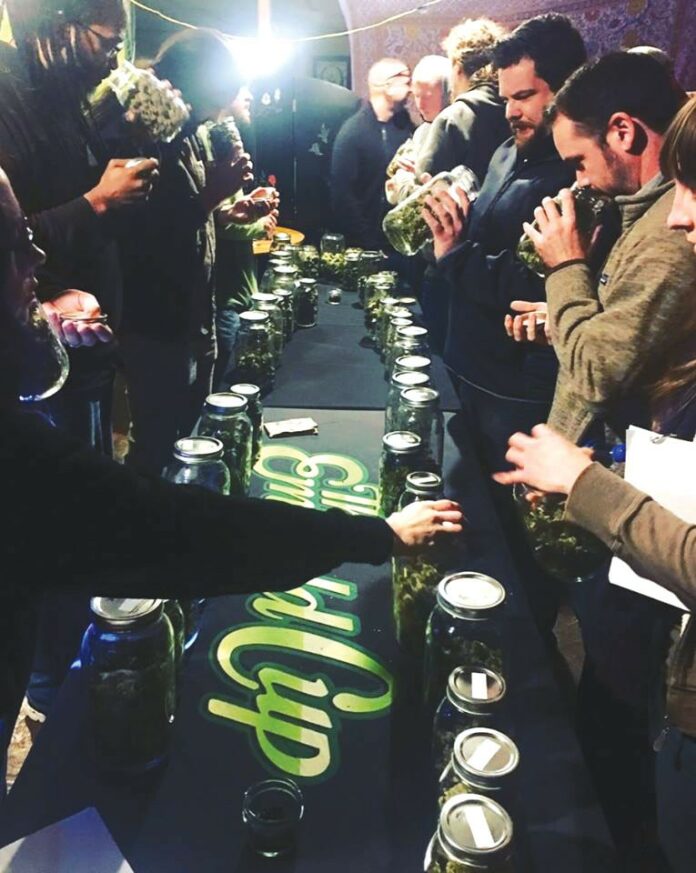
As the law stands now, wine and cannabis cannot be produced on the same licensed property. Nor can a winetasting room sell cannabis. But folks are working on changing that.

This past Thursday’s Wine & Weed Symposium at the Hyatt Vineyard Creek in Santa Rosa attracted a sold-out crowd of more than 200 attendees from the wine and cannabis industries. The event, organized by the Wine Industry Network, will go down as a historic meeting of the minds.

“I’ve been waiting most of my life to see these two groups come together,” said Hezekiah Allen, executive director of the California Growers Association, a cannabis industry trade group.

Lay a map of the North Bay’s wine country over a map of cannabis country, and you’ll see a great deal of overlap—and revenue potential. But that overlap is only theoretical. The thicket of state laws and pesky federal prohibition prevent any joint ventures.

While there is certainly a lot of money to be made in the booming cannabis market, Allen stressed that it won’t come without work. “The biggest misconception is that this is easy money,” he said.

Because of the cost of getting the 18 required state and local licenses, he estimates 70 percent or more growers will stay in the black market or find something else to do.

California’s cannabis industry is conservatively valued at $7 billion, and that’s before recreational sales hit the market next year. The state’s grape crop is pegged at about $5 billion, while the total value of the state’s agriculture is $42.7 billion.

“Now that cannabis is a regulated crop, it is going to be the big gorilla in the room,” said state Sen. Mike McGuire in opening remarks to the symposium.

While he extolled the quality of Northern California cannabis, McGuire said bringing the industry under regulation is going to take a while. The state has until Jan. 1, 2018, to create its regulatory apparatus, but he freely admits they’ll miss that goal. “It’s impossible. It’s just too big of an industry.” He says it will probably be five years before all the kinks are worked out.

But the likely delay did nothing to kill the buzz in the room. The crowded vendor tables in the lobby revealed how easy it may be to integrate the two industries. Wine-industry vendors selling labeling, water testing, soil amendments and wine-cave services were ready to offer their products and services to dope growers.

One cannabis entrepreneur predicted that the wine industry will soon own the cannabis industry.

“They have the land,” he said darkly. But, he added, the wine industry doesn’t know how to grow weed and will need to partner with cannabis industry to realize their, yes, joint potential.

Letters to the Editor: August 9, 2017

Size Doesn’t Matter

A note to Pat Morris (Letters, Aug. 2), who was trying to compare the Bohemian to the Sonoma County Gazette: It’s not how many pages, my friend, but what’s on the pages.

Occidental

Pay No Attention

When Dorothy, Toto, Scarecrow, Tin Man and Cowardly Lion finally get to the Land of Oz, they have to navigate their way to a meeting with the “all-powerful” wizard in his castle. They state their case of wanting his assistance to transport Dorothy back home, but are dismissed rudely by his intimidating image on a screen before them. With an amplified voice, he sets off explosions, fire and smoke, all in an effort to frighten them to flee.

But it is Toto, Dorothy’s pet dog, to the rescue as he pulls back the curtain to show a little man (who can’t possibly be the almighty wizard?), operating the various control panels, wheels, etc., to portray his “image.” Their discovery elicits a most disingenuous response: “Pay no attention to the man behind the curtain.”

Since Donald Trump has been in office, he has fired staff and had appointees tender their resignations—and even had candidates decide against accepting appointments in his administration. He has managed to frustrate, anger and generally alienate cabinet members, Congress, the nation’s police departments—and let us not forget the Boy Scouts!

Yet Mr. Trump’s response seems to be taken straight from the “powerful” Oz’s character and script—pay no attention to what is unfolding at the White House; contrary to what you are seeing, “there is no White House chaos, everything is running fine.” This is becoming a rather bizarre situation as we all scratch our heads and wonder in unison—what is this man not seeing that everyone else is?

But what is truly frightening is that the script Mr. Trump may be operating under is not the childhood fantasy of L. Frank Baum, but the George Orwell’s dystopian novel 1984, where everything is the opposite of what is seen and heard—in other words, Trump’s own fake news.

Santa Rosa

End of the Road

I think that this article may seem logical to some, but to others it is just folly (“Eternity 2.0”, July 12). My supposition is that life is eternal anyway and that much of what we choose to manifest in this lifetime or the next is usually in sync with the metaphor we are currently living out. Mine included. This does not mean that I am in denial of the finality of death as some would choose to believe.

Via Bohemian.com

Write to us at le*****@******an.com.

Turn It Up

If there were a more thorough account of second-wave punk than Corbett Redford’s documentary Turn It Around: The Story of East Bay Punk, would you even be able to sit through it? The film covers about 30 years and about a thousand bands, from the kids to the elders.

Surprisingly varied musicians mounted the small stage at the
924 Gilman Street space in Berkeley. Though alcohol-free and with
an unofficial ban on major-label bands, this nonprofit venue still draws performers from around the world.

Turn It Around is narrated in a skeptical sort of voice by Iggy Pop. If there are no stars, there are recurring figures. One was Tim Yohannan, publisher of the zine Maximum RocknRoll. Yohannan was a Berkeley Maoist who felt that punk heralded the revolution to come. Larry Livermore, writer and a founder of Lookout! Records, captured the sounds of the times. Throughout this film are the still photos of Murray Bowles, who caught hundreds of images of this underground movement.

The East Bay punk scene was full of escapees from nowherevilles, all the way up to the Sacramento River and beyond—all those gloomy refinery towns between Berkeley and Crockett. Homely El Sobrante is described as a chunk of Kansas that a whimsical deity transplanted to the Bay Area. Yet “El Sob” was the cradle of Green Day, the one band that really hit the jackpot. Turn It Around is executive-produced by Green Day, but don’t believe the rumor that this film credits the band with inventing East Bay punk. The auteurs of American Idiot were, for a time, Gilmanites and Lookout! recording artists.

Green Day’s rise provokes the shocking sight of Jello Biafra saying something nice about a band that made millions: “I’m just glad that someone from the scene had success carried out on their own terms.”

Best Inlaid Plans

0

A drilling mistake in 1975 changed the course of Larry Robinson’s life.

Robinson was a few weeks into a new job building guitars. “I drilled right through two basses, and my boss said, ‘Put an inlay in it and we’ll cover it up, refinish it and call it custom.'”

It was his first introduction to inlays, and Robinson was hooked. More than 40 years after this “accident,” I drive to the hinterlands of Sonoma County, eventually reaching a small, nondescript trailer. Stepping through the door of Robinson’s home studio feels like traversing the mythical looking glass: this is where the magic happens.

Art adorns the walls, musical amplifiers are everywhere and a desk is covered in tools. A fan labors to cool the air in the cramped space where Robinson works at his craft.

Inlays—artwork that is carved into the wood of guitars and other string instruments and then filled with materials such as shell, metal or plastic—require meticulous attention to detail, and planning is critical. Robinson’s art is in the details. “I try to be really precise and exact. I’m not necessarily obsessed, but I’m careful.”

“Larry has a true passion for inlay, and it shows in his work,” says David J. Marks, a woodworker and friend of Robinson who lives in Santa Rosa. “He wants to pursue techniques and visions that are the most intricate and complex that I’ve ever seen.”

Tom Ribbecke, a woodworker from Healdsburg, says, “Larry’s work is extraordinary because he always pushes the artistic envelope. He sees things in a way that I don’t—I’m so impressed constantly. Sometimes I’m so moved by what he does, I have to sit down.”

Born in Connecticut, Robinson was accepted into the Hartford Conservatory performing arts school but did not finish. He planned on becoming a classical guitar teacher, but when he hired someone to build a custom guitar for him in 1972, he was so entranced by the process that ultimately the luthier taught him how to build his own instrument.

Three years later, Robinson set out for California to visit a friend, landing in San Francisco, where he was hired at Alembic to build guitars for the likes of Fleetwood Mac and Led Zeppelin under Rick Turner. (Rick Turner Guitars is now in Santa Cruz.) It was here that the fateful accidental drilling took place.

When Turner left to start his own company, Robinson went his own way. He worked at Modulus Graphite, a bass guitar company in San Francisco, but soon grew tired of the commute. In 1984, Robinson left his job, determined to fully support himself in Sonoma County through his own inlay creations.

He quickly made a name for himself. “I had a lot of people asking me to be an apprentice,” Robinson says, “but I’m just not that focused on teaching people with that method.” In 1994, he published The Art of Inlay. Now in its third edition, the book is “basically a how-to,” Robinson says, “an instruction manual that has all the eye-candy you could want.”

In May, Robinson released his second book, The Invisible Line: When Craft Becomes Art. Featuring seven artists involved in the creation of custom instruments—including himself, Marks and Ribbecke—the book explores definitions of art and craft. In the book, Robinson reflects on the emotions invoked by his work at a guitar show where one of his creations, dubbed “Meet the Beetles” (an acrylic instrument with real beetles layered inside it), triggered strong reactions. “Some people hated [it] and some loved it. Few were neutral . . .”

Compared to The Art of Inlay, Robinson says The Invisible Line is “more philosophical. There are few instances where people will tell you how they did something. It’s more about an attitude.” He adds, “[Art] permeates every little aspect of our lives. I wanted to give people a look from our perspective.”

Marks agrees. “It’s a lifestyle. We’re eating, breathing and living this stuff all day long, every day. Your life is revolving around what you love to do.”

Robinson recognizes that any definition of art is entirely subjective. “If anything has been solved by this book, it’s that nobody can tell you what [art] is and what it isn’t.” Ribbecke adds. “We’re not fixing people’s hearts, we’re not solving war and peace in the Middle East. We’re scratching a creative itch and making the planet a little bit of a better place.”

When asked about the legacy he hopes to leave behind, Robinson quotes Frank Zappa: “I don’t care, I’m going to be dead.” But his dedication to each guitar contradicts that sentiment.

“If this is the last inlay that I ever do, my life will be judged upon it. My quality remains consistent.” He says he’s “trying to make the world more beautiful—and trying not to step on too many toes along the way.”

But Robinson isn’t finished yet. “Every time I try to get out of this business—and I have, on occasion—somebody comes along and gives me a nice job to get back into it again.”

Dream Job

0

When Rolando Herrera got his first lesson in terroir, he thought it was just a pretty story.

Herrera was eight when his father moved the family from Michoacán to work in a Napa Valley winery, and felt a bit of an outsider when they returned to Mexico five years later. One day while helping his grandmother tend a family garden plot in the remote, brushy hills, he asked why they didn’t grow vegetables instead on their six-acre market farm down on the flats.

Because, his abuela explained, this is where the sun and soil grow the best produce. He suspected she was saying this to make him feel better about the dusty trek. It wasn’t until some years later when working with wine, Herrera says, that he really got the lesson.

Herrera came back to Napa in the early 1980s and worked in restaurants while going to high school. He made an impression on Stag’s Leap Wine Cellars founder Warren Winiarski, who also made an impression on him: “You have to listen to the wine,” Winiarski counseled. “I felt like running away,” Herrera jokes to winery visitors today. “This man is loco!” But listen he did, and earned repute as a good taster, too, while a cellar rat at Stag’s Leap, where he became cellar master.

Herrera’s affinity for Malbec, which he picked up in Argentina while working as director of winemaking at Paul Hobbs Consulting, shows in his Herrera 2013 Victoria Oak Knoll Malbec ($95), a plum- and fig-scented standout that’s coaxed from cracked soil. Wines labeled “Herrera” are special selections named for each of Rolando and Lorena Herrera’s six children; Mi Sueño (“my dream”) wines are less expensive, but also grown in leased vineyards that Herrera farms for optimum control of the vintage—all of which keeps him busy in what he calls, with a chuckle, “my crazy life.”

You’d never guess the Herrera 2013 Perla Sonoma Mountain Chardonnay ($70) was fermented in 100 percent new French oak barrel and aged for several years more than is common in older oak. Just a whisper of volatile and caramel candy notes add intrigue, while lean citrus and—is that loquat? “Agave,” suggests Herrera—juice the palate.

Sample this, the more “classic” Chard lovers’ Mi Sueño 2014 Los Carneros Chardonnay ($42), and more at the winery’s industrial park location, where low lighting, candles and custom-made furniture from a Mexican village workshop add atmosphere to the barrel-room tasting area.

Mi Sueño Winery, 910 Enterprise Way, Napa. Private tastings daily at 10am, 11:30am, 1:30pm and 3pm. $20–$40. 707.258.6358.

Return to Sender

0

The California Department of Forestry and Fire Protection (Cal Fire) issued a point-by-point rejection last month of a proposed logging plan on land that crosses Felta Creek in the forested wilds of Healdsburg.

The creek is home to one of the last coho salmon populations in the Russian River watershed.

Ken Bareilles, a 75-year-old Humboldt County businessman, received notice on July 28—the deadline that had been set for approval—that his timber harvest plan had failed to address numerous concerns raised over the proposed 146-acre harvest.

In advance of the Cal Fire decision to delay his proposal and send it back for further public review and input from the owner, Bareilles told the Bohemian that he fully expected the green light from Cal Fire. On July 31, he fired off a sharply worded rejoinder to the Santa Rosa Cal Fire point person on the Felta Creek THP, Dominik Schwab, that raged against the agency’s apparent and, to Bareilles’ mind, surprise turnabout. “Needless to say, I strongly oppose and totally resent your letter which would lead to opening up the [timber harvest plan] for new and additional public comment and big-time additional delay. . . . Your office has to step up to the plate and do you[r] job, not be intimidated by all the letters from the neighbors, unless they point out some truly significant defect in our proposed THP.”

Cal Fire had signaled its apparent approval of the THP well in advance of the July 28 deadline, by which time public comments to the proposal would be reviewed by Schwab. Many of the comments called for a dramatically scaled down logging plan. Schwab’s letter was all the more surprising since the Cal Fire website that tracks progress of timber harvest plans had checked off the “approved” box at least a week before July 28. That led opponents to believe that the project was a done deal.

Soon after a Bohemian reporter contacted Cal Fire about the apparent pre-approval of a process that was putatively ongoing, the “approved” box was subsequently unchecked.

Opponents from state and federal fisheries management agencies, such as the California Department of Fish and Wildlife and the National Oceanic and Atmospheric Administration and Healdsburg locals, have cautioned mightily against a timber harvest plan that they say could undo significant state and federally funded progress made in Felta Creek to restore endangered coho salmon to some level of viability. In recent drought years, Felta Creek has occasionally been the only tributary of Dry Creek to support coho spawning.

The Cal Fire letter to Bareilles demanded that he resubmit his timber harvest plan with additional details on how he planned to protect the fish on his land and cited new information that had animated the decision to delay and send back the THP for further tweaks. The agency also requested that he revise a truck-access plan along Felta Creek Road which runs parallel to the creek.

In his response to Cal Fire, Bareilles claimed he’d been betrayed by the agency as he reiterated what he called basic facts about the land and his proposal, not the least of which is that it’s zoned for timber production. The parcel hasn’t been logged since 1994.

The Cal Fire decision doesn’t put an end to the proposed plan, and Bareilles’ continues to insist that he is within his rights to harvest on his land—and that he’s already done everything Cal Fire has asked of him as a condition of its approval.

In an interview, before receiving Cal Fire’s letter, Bareilles noted that he’d spent tens of thousands of dollars to clean up the 160-acre tract (which he purchased for $2.5 million in 2015) of debris and abandoned cars that he says were left behind by the previous owner. He says he spent between $15,000 and $20,000 to reinforce a bridge so it could bear the weight of dozens of logging trucks.

“I’ve made huge improvements on the land,” he says, describing it as a “junkyard” when he bought it. The property is now on the market for $7.5 million, and Bareilles says there’s at least
$3 million in timber to be harvested. His plan is to harvest the timber and then sell the land. He has no designs on moving to the property and lives in Eureka.

The Cal Fire letter serves to reopen the public comment period for an additional 30 days and also builds in a two-week window for the agency to review additional comments and decide whether Bareilles has addressed the numerous issues highlighted by Schwab and Cal Fire (and the public comments to date). Elected officials, from State Sen. Mike McGuire to Sonoma County Supervisor James Gore, have weighed in with their significant concerns about the THP, now reflected in the Schwab letter of July 28.

In the meantime, there is hope that a deep-pocketed do-good buyer will come forward, or that Bareilles will prune-down his proposed harvest to a spot-harvest plan targeting individual trees, and perhaps protect the endangered coho’s foothold in the process.

‘Once in a Generation’

0

My name is Jay Foxworthy and I’m running for Sonoma County sheriff. I believe it’s important that everyone have a better sense of the person behind the badge, especially when that person may be our next sheriff.

I’m a local boy, raised in Windsor, sometimes by my mother, but mostly by my grandparents. Much of my childhood was spent in poverty, living with a mentally ill, self-medicating, addict mother who was often in trouble with the law. During times of her incarceration, I was raised by my grandparents, an aunt and, sometimes, foster parents.

When I was nine, my mother had a nervous breakdown and I was comforted by a police officer who arrived at the scene. That one moment forever changed the way I saw law enforcement and the positive impact it can have on people. It’s what inspired me to become a cop years later.

As a young man, I served three years honorably in the Army, got my degree from Santa Rosa Junior College and graduated from the police academy in 1996. I applied to the Sonoma County Sheriff’s Department, but I couldn’t get hired here as an openly gay man. Instead, I found work as a deputy sheriff in San Francisco, where I’ve spent the last 22 years learning and practicing community policing policies.

Today, I live in Santa Rosa with my amazing husband, Bryan, and our two incredible adopted children. We’ve also fostered 15 amazing kids over the last decade.

As a result of all of these experiences, I have a unique perspective on the challenges many communities struggle with when it comes to law enforcement.

Our next sheriff should represent all of Sonoma County, with respect toward all. That means respecting immigrants and rebuilding community trust, reducing use of force, working with the community on homeless concerns, hiring for diversity, modernizing jail services and adopting cannabis policies that reflect our community’s values.

We have a “once in a generation” opportunity to set a new course for our sheriff’s office. As we begin this conversation, I hope you’ll reach out to me at foxworthyforsheriff.com and share your ideas too.

Jay Foxworthy is running for Sonoma County sheriff in the June 2018 election. This is the first in a series of planned Open Mics from declared candidates for sheriff.

Meet the Winners

Our annual NorBay Music Awards got beefed-up this year with a whopping 21 categories, including new spots for venues, festivals and more. The readers have spoken and the winners are: Blues The Dylan Black Project Soulful band of veteran musicians is a fixture at community concerts and gets the crowds moving with up-tempo rhythms and scorching solos. thedylanblackproject.com. Country Ammo Box...

Infectious ‘Rhythm’

Since Transcendence Theatre Company's first transplanted itself to Sonoma County in 2012, its Broadway Under the Stars shows, at Jack London State Historic Park, have become a consistently popular wine country summertime event. Consistency is the key. After six years, with four distinct Under the Stars shows produced each summer, the company's centerpiece productions have not really evolved much, though they've...

High Notes

Behind every great rock star, there's a Morty Wiggins. In a career that spans more than four decades, Wiggins has worked with and for the biggest names in music as an artist and a record company manager, as well as a concert organizer and promoter. Formerly a VP of Bill Graham Presents and general manager for A&M Records, Wiggins is now...

Joint Venture

As the law stands now, wine and cannabis cannot be produced on the same licensed property. Nor can a winetasting room sell cannabis. But folks are working on changing that. This past Thursday's Wine & Weed Symposium at the Hyatt Vineyard Creek in Santa Rosa attracted a sold-out crowd of more than 200 attendees from the wine and cannabis industries....

Letters to the Editor: August 9, 2017

Size Doesn't Matter A note to Pat Morris (Letters, Aug. 2), who was trying to compare the Bohemian to the Sonoma County Gazette: It's not how many pages, my friend, but what's on the pages. —Pieter S. Myers Occidental Pay No Attention When Dorothy, Toto, Scarecrow, Tin Man and Cowardly Lion finally get to the Land of Oz, they have to navigate their way...

Turn It Up

If there were a more thorough account of second-wave punk than Corbett Redford's documentary Turn It Around: The Story of East Bay Punk, would you even be able to sit through it? The film covers about 30 years and about a thousand bands, from the kids to the elders. Surprisingly varied musicians mounted the small stage at the 924 Gilman...

Best Inlaid Plans

A drilling mistake in 1975 changed the course of Larry Robinson's life. Robinson was a few weeks into a new job building guitars. "I drilled right through two basses, and my boss said, 'Put an inlay in it and we'll cover it up, refinish it and call it custom.'" It was his first introduction to inlays, and Robinson was hooked. More...

Dream Job

When Rolando Herrera got his first lesson in terroir, he thought it was just a pretty story. Herrera was eight when his father moved the family from Michoacán to work in a Napa Valley winery, and felt a bit of an outsider when they returned to Mexico five years later. One day while helping his grandmother tend a family garden...

Return to Sender

The California Department of Forestry and Fire Protection (Cal Fire) issued a point-by-point rejection last month of a proposed logging plan on land that crosses Felta Creek in the forested wilds of Healdsburg. The creek is home to one of the last coho salmon populations in the Russian River watershed. Ken Bareilles, a 75-year-old Humboldt County businessman, received notice on July...

‘Once in a Generation’

My name is Jay Foxworthy and I'm running for Sonoma County sheriff. I believe it's important that everyone have a better sense of the person behind the badge, especially when that person may be our next sheriff. I'm a local boy, raised in Windsor, sometimes by my mother, but mostly by my grandparents. Much of my childhood was spent in...
11,084FansLike
4,606FollowersFollow
6,928FollowersFollow