Free Will Astrology, April 8-14

0

ARIES (March 21-April 19): Unexpected deliverance? Lucky rides? Beginner’s grace? Dreamy, gleaming replacements? To the untrained eye, it may look like you are bending cosmic law in your favor. In truth, you’re simply redeeming the backlog of blessings you earned in the past—acts of quiet generosity and unselfish hardship that never got their proper reward. Serendipitous leaps? Divine detours? Shortcuts to victory? Welcome the uncanny gifts, Aries, even if they’re not what you expected.

TAURUS (April 20-May 20): The current phase of your destiny could disturb you if you’re not super patient. Life seems to be teasing you with promises that then go into hiding. You’ve been having to master the art of living on the edge between the BIG RED YES and the GREY MURKY NO. My advice: Imagine your predicament as an intriguing riddle, not a frustrating ambiguity. See if you can figure out how to grow wiser and stronger in response to the evasive mysteriousness. My prediction: You will grow wiser and stronger.

GEMINI (May 21-June 20): Why it’s always triple-great to be a Gemini, drawing on an abundance of mercurial wisdom: 1. You excel at the art of translation and are skilled at finding common ground between different realms. You can oscillate and flow between the lyrical and the pragmatic, the insightful and the comic, the detailed focus and the big picture. 2. You know that consistency is overrated. Your capacity to harbor multiple perspectives is a superpower. 3. You get to be both the question and the answer, proving that wholeness includes all the fragments. All the aptitudes I just named should be your featured approaches in the coming weeks.

CANCER (June 21-July 22): The saga of Troy is one of the most renowned tales from ancient Greece. Yet the fabled setting of Homer’s epic tale, the Iliad, was a settlement of just seven acres. Let that detail resound for you in the coming weeks. It’s an apt metaphor for what’s taking shape in your life. A seemingly modest situation could become the stage for a mythic turning point. An experience that starts small may grow into a story of immense and lasting significance.

LEO (July 23-Aug. 22): Many people have a favorite number they regard as lucky. Some choose it because it showed up at a major turning point in their life. Others derive it from their birthday or from the numerology of their name. Plenty are drawn to “master numbers” like 33, 77 or 99. Personally, I give three numbers my special love: 555, the square root of -2, and 1.61803, also known as the golden ratio in Fibonacci-related patterns. I hope this nudges your imagination, Leo. Your fortunes are shifting now in the direction of an unusual kind of luck, so it’s a potent moment to select a new lucky number. I suggest that you also choose a new guiding animal, a fresh initiation name and a charged symbol to serve as your personal emblem.

VIRGO (Aug. 23-Sept. 22): Do you know what ignorance is causing you to suffer? Is there a teacher or teaching that could provide an antidote? I suspect you are very close to attracting or stumbling upon the guidance you need to escape the fog: maybe a therapist who can help you undo a hurtful pattern, a mentor to inspire your quest to do work you long to do or a spiritual friend who reminds you that you’re not merely your latest drama. Your task in the coming weeks is not to obsess on fixing everything at once, but to seek one or two sources of wisdom that illuminate your blind spots and educate your heart.

LIBRA (Sept. 23-Oct. 22): I’m an honorary Libra, with three planets and my lunar north node in your sign. So I speak with authority when I declare that fostering harmony, which is a Libran gift, is only superficially about smoothing away friction and asymmetry. More importantly, it’s about rearranging reality so that beauty is a central feature. The goal is to accomplish practical wonders by stimulating grace and fluency. When I’m best expressing my Libra qualities, I don’t ask how I can please everyone, but rather, how I can serve maximum goodness and intelligence. Here’s another tip to being a potent Libra: Know that your enchanting charm is a lubricant for the truth, not mere decoration. Here’s your homework: Beautify one system you use every day so it serves you with less friction and more pleasure.

SCORPIO (Oct. 23-Nov. 21): You are potentially an expert in creative destruction. You have a knack for eliminating what’s unnecessary and even obstructive. What has outlived its usefulness? You’re prone to home in on energy drains and unleash transformative energy. And yes, this intensity of yours may unnerve people who prefer comfortable numbness—but not me. I love you to exult in your talent for locating beauty and truth that are too complicated for others. I applaud you when you descend into the darkness to retrieve dicey treasures. P.S.: You’re not shadowy or negative. You’re a specialist in the authentic love that refuses to enable delusion or sanction decay.

SAGITTARIUS (Nov. 22-Dec. 21): My Sagittarian friend Artemisia bemoans “the scarcity of collective delight.” She wishes there were more public acclaim for stories about breakthrough joys, miraculous marvels and surprising healings. Why are we so riveted by reports of misery, malaise and muck, yet so loath to recognize and celebrate everything that’s working really well? She also mourns the odd habit among some educated folks to mistake cynicism for brilliance. If you don’t mind, Sagittarius, I’m assigning you to be an antidote in the coming weeks. Your task is to gather an overflowing harvest of lavish pleasure, fun epiphanies and richly meaningful plot twists. Don’t hoard any of it. Spread it around to everyone you encounter.

CAPRICORN (Dec. 22-Jan. 19): “Id” is a psychoanalytic term. It’s the part of the psyche where basic instincts, needs and drives reside. On the one hand, the id supplies a huge charge of psychic energy. On the other hand, it mostly operates outside conscious awareness. Consider the implications: The fierce, pulsing center of your life force is largely hidden from you. Most of the time, that veil is protective. Encountering the id directly can be overwhelming or unsettling. But in the coming weeks, you Capricorns are poised to cultivate a more interesting and righteous relationship with your high‑voltage core. Do you dare? Treat your id as a brilliant but untamed creature. Extend a careful, curious invitation for it to show you more about itself.

AQUARIUS (Jan. 20-Feb. 18): In architecture, a “clerestory” is a high window that brings light into a space without compromising privacy. It illuminates without exposing. I suggest that you find metaphorical equivalents for clerestories, Aquarius. Look for ways to let spaciousness and brightness into your world without disturbing your boundaries. Your assignment is to avoid swinging between total lockdown and overexposure. The best option: strategic vulnerability and selective transparency. Allow people to see selected parts of you without giving them access to everything. Be both open and discriminating.

PISCES (Feb. 19-March 20): In 1903, the Wright brothers flew a primitive model of the first airplane. How did they prepare the way for their spectacular milestone? Their workshop was a bicycle shop, not a high-tech, state-of-the-art lab. By building and fixing bikes, they learned key insights about flying machines. The lesson for you, Pisces, is that mastery in one area may be transferable to breakthroughs in another. With this in mind, I invite you to evaluate how your current skills, including those you take for granted, might be repurposed. Methods you developed in one context could solve problems in another. You shouldn’t underestimate the value of what you already know.

Homework: Even if you don’t send it, write a letter to the person you admire most. Newsletter.FreeWillAstrology.com

Momentum: What’s Next for the No Kings Movement?

0

It was the largest protest in U.S. history. More than 3,300 rallies in all 50 states and more on every continent across the globe. It’s an understatement to say No Kings III was an overwhelming success.

It wove a rich tapestry of defiance; featured colorful, handmade signs; encouraged friends and family to rally together; and was supercharged by first-time participants. A strategy of “Each One Reach One” contributed to the astonishing turnout. Democracy is not a spectator sport, and citizens can’t afford to stay on the sidelines. 

There is a temptation after an event of this magnitude to replay the powerful images, to bask in the achievements. Sustaining momentum doesn’t just happen. It must be built. Same with solidarity. A single day of protest, as important as No Kings was, cannot alone carry a movement. What comes next does. 

Historian Heather Cox Richardson has written that democracy depends not on institutions alone but on the willingness of ordinary people to defend them. Which points to a simple truth: Participation is the safeguard

Another take-away from March 28 is staying positive. Joy. Humor. Creativity. There was a celebratory air to the rallies, signifying, “We may not have achieved all our goals, but we’re in it together.” It’s about more than opposition; it’s also community building—affirming a collective commitment to a more just, inclusive society.

The No Kings protests were never intended as an end-all-be-all, but they are a dramatic next step for a movement growing stronger after an injection of Vitamin M—momentum. 

No Kings has found its rhythm, not through a sprint to the next grand, nationwide protest, but by pacing itself for the marathon. It’s about keeping its eye on the prize—not just to reclaim democracy, but to make sure it can never again be threatened by a wannabe strongman.

If the antidote to anxiety is action, what are we waiting for?

Rob Okun is editor emeritus of ‘Voice Male,’ which has long chronicled the profeminist men’s movement. 

Your Letters, April 8

Forest Fracas

In response to “May the Forest Be With You” (March 25-31, 2026), while I agree with the letter writer that deforestation for the purpose of creating grazing land and food for farm animals needs to stop, there are two issues that were not addressed:

First, though it is true that if everyone went vegan, animals would not be raised for their meat, dairy and eggs, it is highly probable that those species of animals (cows, sheep, pigs, goats, chickens, turkeys) would simply go extinct, as no one is going to go to the trouble and expense of breeding and raising them to be pets. And if all the existing farm animals were released into the wild, they wouldn’t last a year before they starved to death or predators ate them all.

Second, the underlying issue that is creating the demand for deforestation and driving climate change is human overpopulation. Even if the whole world went vegan, that only solves one piece of the very large puzzle that is “too many people on planet Earth.” Perhaps PETA members and others who are concerned about climate change should pledge to not procreate. If you want children, choose adoption, not reproduction.

Chris Wenmoth
Santa Rosa

No Such Buck

Thanks to Donald Trump tanking the U.S. economy, a dollar ain’t worth the paper it’s printed on. Now that his signature is going to be graffitied on the $1 bill, it’s time for the $2 bill to be reinstated to replace the toilet paper the bastardized buck will become.

Bob Canning
Petaluma

Sisterhood: Latine Production at Mercury Theater

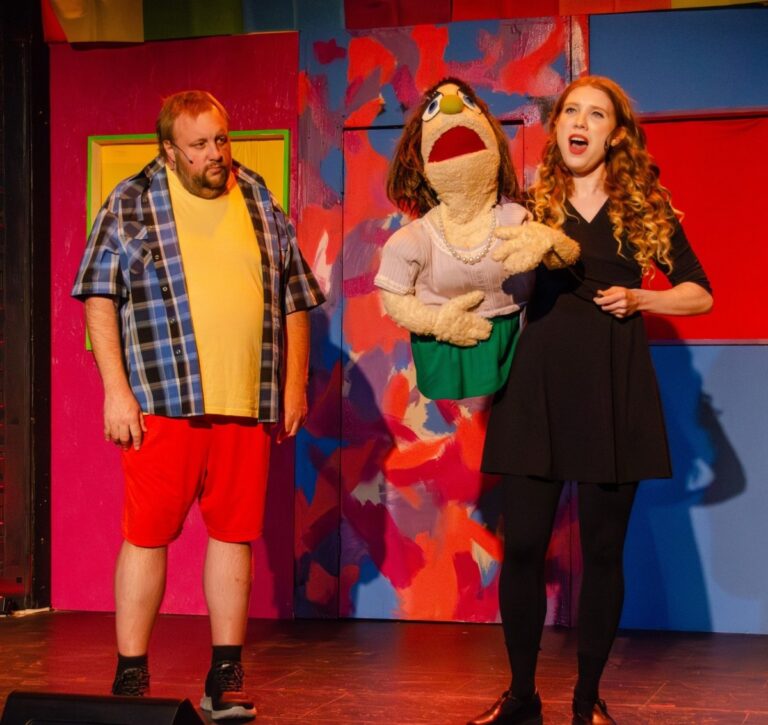
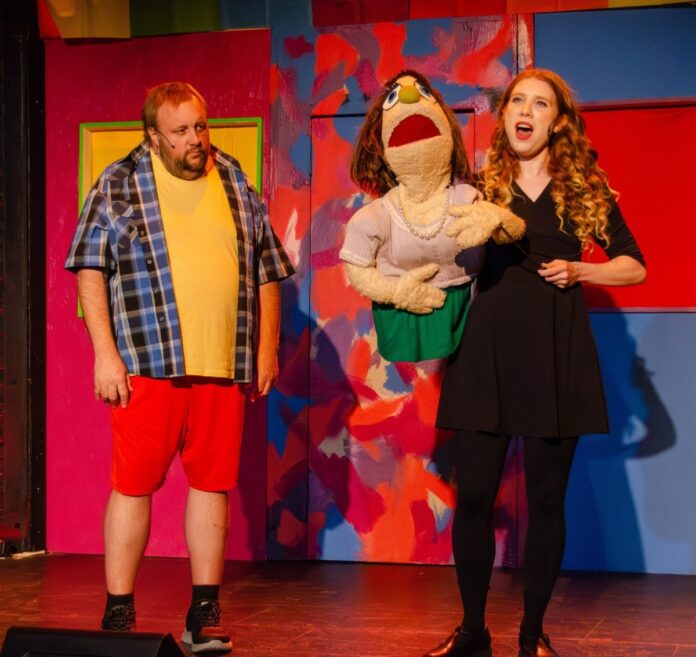
Demonstrating their dedication to diverse, unique plays, Mercury Theater is presenting an all-female cast and crew production of Enfrascada, a dark comedy that blends humor, folk magic and sisterhood. Directed by frequent Bohemian contributor Beulah Vega, the play opens April 24 and runs through May 10 at Mercury Theater in Petaluma.

Vega had been eyeing the Tanya Saracho play for years and relished the opportunity to present a story featuring, as she says, “women of the global majority.” Indeed, the story is about Latina/Latine women and their bonding over the use of Brujería, hoodoo and Santería magic in order to help Alicia (Reilly Milton) win back her boyfriend.

Lexus Fletcher, who plays Yesenia, emphasizes that Enfrascada is unique because it features “a full cast of women of color who get to express themselves in not only English but Spanish. I believe it is important to show female friendship through the lens of women of color, which is something you don’t see often in this county.”

On the script being non-Eurocentric, Vega notes that the show “doesn’t ask for allyship. It’s a play about four women who are friends and are Latine. To me, the simple act of allowing us to tell a story about just existing in the world without having to apologize for it is an act of resistance.” Vega says that the story appeals because it is “literally like hanging out with a group of your female friends, including cookies, tequila and killer stilettos.”

Vega is particularly proud of the all-female representation among the crew, stating: “Recently, I was sent a press release for a show marketed as ‘all female,’ but the design team was all men. Ours is an all-female play, so I did what I always strive to do with an all-female play: All my designers are women or female-identifying. I don’t think that should be newsworthy.” 

She continues: “My hope is that all theaters … have taken a long, hard look at whose story is being told and why… I hope that the mindset of every one of my colleagues is “People of color are allowed to exist on stage without asking for white approval.”

This awareness makes Enfrascada a notable addition to the socially and politically relevant programming that Mercury produces. Art is especially potent when it meets the moment, and Enfrascada, with its emphasis on the female experience of women of color, builds upon that mission.

Mercury Theater presents ‘Enfrascada’ April 24–May 10 at 3333 Petaluma Blvd. N., Petaluma. Thur–Sat, 7:30pm; Sun, 2pm. $20–$35. 707.658.9019. mercurytheater.org.

By Example, Learning from the Best 

It was my first day as a bartender, and in my mind I had arrived. There is a joke, “What’s the difference between God and a bartender? God doesn’t think he’s a bartender.”

But life had other plans. The woman seemed middle aged to me at the time. But when you are 22 years old, anyone over 30 seems middle aged. Whatever her age, she was my very first bar customer. And nobody forgets their first.

“Don’t you know what you are doing?” she asked loudly. Which is not something that you want to hear when you don’t really know what you are doing.

Five minutes in, and I was sure I was going to get fired. She went on for what seemed like an eternity. If one thinks Shakespeare writes long soliloquies, he had nothing on this woman.

Bars are funny places. Sometimes it seems like a spotlight is being shone on you. It happens most frequently from the customer side. If the bartender has to ask a follow-up question about a drink, some people will freak out, as if put on the spot. “How dare you?” they will say, or think, or act. Which is why James Bond’s martini order stays so relevant. Bond clearly knows exactly what he wants. Shaken not stirred leaves absolutely no room for debate. Or for questions.

“Amateur hour,” she exclaimed loudly.

There I was, getting scolded harshly. That white hot spotlight was now on me, and I didn’t like it one bit.

The cocktail waitress looked on with bemused detachment. Some people in this world just love to watch other people fail. But not everybody does. And it was then that my co-bartender came along and rescued me.

“That’s it,” he said to her. “I warned you before.” Then he asked her to leave.

I didn’t know we could do that.

Johnny was that bartender’s name, and I learned an awful lot from him. I not only learned what to do, but I also learned what not to do. And in the greater scheme of things, learning what not to do has proved far more valuable.

Eventually Johnny left that bar and went on to another. And eventually so did I. But we crossed paths again and again. It turns out that the restaurant business is a much smaller community than one realizes. But it is pretty competitive. Who’s the best? Who makes the best drinks? All subjective. But in the restaurant world subjectivity often passes for truth. The best restaurants are not always the most successful, and the most successful aren’t always the best. But even that is subjective.

In between all of that, there are people like Johnny. I don’t think there has ever been a magazine/newspaper article written about him, but anyone who has worked with him has appreciated him. I know I did. We were a great team at three different hot spots. All of which, ironically, were written about extensively.

I’ve also learned that the people who get the most press aren’t always the ones who deserve it. But in our business, the loudest often gets the most attention. And that is unfortunate.

Johnny quietly retired from the restaurant business last week. Forty years at many of the best restaurants and bars the North Bay has ever seen. There was no fanfare, no media send-off, no farewell tour. But for those of us who worked side by side with him, we will never forget him.

And every time that I step in to help a struggling newcomer, I will know that I am doing Johnny proud. Because if there is one thing the restaurant business teaches you, it’s that everyone needs a helping hand once in a while. Those of us in front of the bar, as well as those of us behind it.

Jeff Burkhart hosts ‘The Barfly Podcast.’ More at jeffburkhart.net.

‘Push Back’: Pegasus Theater Company Takes a Stand

Difficult times, like the ones we are living in today, often inspire creative people to get—creative. 

Thus, Pegasus Theater Company members, distraught over the violent and oppressive direction the U.S. government is going, have decided to take a stand by mounting a resistance production they are calling Push Back.

“I thought, what can we do? We’re a theater company. We have a voice. We have an audience,” said Darlene Kersnar, who came up with the idea. “Of course, it won’t create a huge wave in the world. But at least we’re doing what we can.”

In November, they put out a request for submission of plays and, in less than two months, they received 19 newly-minted short plays that deal with the current political climate. 

Out of the 19 plays the company received, the group selected three, and then added a fourth that it had produced several seasons back. The fourth play, Executive Order, explores something that seemed unlikely at the time, but was clearly prescient of what is happening now. 

It deals with an executive order by a U.S. president that overrides the normal democratic process. The playwright, Davis resident L. H. Grant, apparently saw the seed of the current times back in 2018 when he wrote the play.

The other three plays are X’ed by Cary Pepper, a prolific playwright who lives in San Francisco; Tattoo by Ukiah resident Susan Sher; and King Fear, a satire of the current administration, based on Shakespeare’s King Lear. This play was written by Thomas Graven of Monte Rio and Lois Pearlman, who lives in Guerneville.

X’ed takes Donald Trump’s endless stream of executive orders to a ridiculous extreme, and Tattoo imagines a chance encounter between two people on opposite sides of the political spectrum.

Tattoo playwright Susan Sher said she loves creating plays with chance encounters between “people who would otherwise never meet.” The request for submissions of protest plays, she explained, was the perfect opportunity to conceive of two very different characters who come to a kind of mutual understanding.

“Of course, someone can’t completely change in 10 minutes, but at least I can drop the hint that this encounter might get one of the two people to think differently,” Sher said.

Graven said he had been thinking about King Lear as a perfect vehicle to satirize Donald Trump because the main character “has everything and loses it all to vanity.” 

Pearlman took it a step farther, by adding snatches of Broadway tunes with topically revised lyrics.

“We threw King Fear together in a couple of weeks. It was so much fun. The words just flew off my fingertips and onto the computer screen. Now the actors are adding imaginative touches of their own. A true collaboration. We can’t wait to offer it up onstage,” Pearlman said.

‘Push Back’ runs for two weekends, April 17-19 and 24-26, at the Mt. Jackson Masonic Lodge, 14040 Church St., Guerneville. The entrance to the theater is around the corner on Third Street. Show times are 7pm Fridays and Saturdays and 2pm on Sundays. The first two Fridays are pay-what-you-will. Saturdays and Sunday matinees are $20.  

Staircase to History: The Women the Bay Area Tried to Forget

History has a way of pretending certain people didn’t exist. 

In a region that prides itself on progress, women who built institutions, changed laws, fought segregation, defended bodily autonomy and reshaped culture have largely vanished from the public record. Their names are missing from monuments, street signs, statues and textbooks. Their work survives, but their stories do not.

That erasure is what drove journalist Rae Alexandra to rage—and eventually to obsession.

Elizabeth Thorn Scott Flood opened Oakland’s first private school for African American children in 1857, paving the way for desegregated education in California. In 1913, Piedmont nurse Bertha Wright founded Children’s Hospital Oakland and established the state’s first public child daycare center. Frances Albrier became the first Black woman to run for Berkeley City Council in 1939 and the first Black female welder in the Richmond shipyards during World War II.

And that’s just the beginning.

San Francisco lab technician Pat Maginnis helped lead the fight for abortion rights in the 1960s. Del Martin and UC Berkeley graduate Phyllis Lyon co-founded the first lesbian rights organization in the U.S. in 1955—and later became the first same-sex couple legally married in San Francisco. Disability rights activist Judy Heumann co-founded Berkeley’s Center for Independent Living in the early 1970s, laying the groundwork for the Americans with Disabilities Act.

These women, and dozens more, are featured in Unsung Heroines: 35 Women Who Changed the Bay Area, Alexandra’s book, illustrated by San Francisco artist Adrienne Simms and published by City Lights on March 17. The book is adapted from Alexandra’s long-running KQED series, Rebel Girls from Bay Area History, which launched in 2018.

“To be frank, I did not know what I was doing,” Alexandra said. “I was just very angry about women being written out of history.”

That anger was measurable. As Alexandra notes in the book’s introduction, only 13% of San Francisco’s street names, statues, parks and public artworks honor women. So she decided to respond the only way she knew how: by writing them back in.

She committed to producing one profile a month. The research curve was steep. When pandemic closures shut down public libraries, Alexandra began buying every history book she could find online. The collection grew so large she eventually moved to a house in Stockton to make room for it.

But the work also created community. Since 2022, KQED has hosted “Rebel Girls” Bingo Nights, where Alexandra distributes zines featuring the women she’s researched. Extra copies are dropped at bookstores, cafés and record shops across the Bay Area.

One year, she brought zines to City Lights Bookstore and was told to place them on the stairs leading up to the poetry room.

“I was so upset about this,” Alexandra said. “I almost didn’t leave any because I was like, ‘No one’s ever going to find those.’”

What she didn’t realize was that the stairs also led to the publisher’s office. The placement worked. A week or two later, City Lights called.

“There’s a thing we say in my house now when something is happening to us, like a momentary disappointment, and we’re all pissed off about it,” Alexandra said. “We’ll say to each other, ‘Put it on the stairs.’ Just as a reminder that the thing that’s bothering us now might turn into something wonderful later.”

Over seven years, Alexandra’s initially planned five-essay project expanded into 56 installments, with the final piece published on KQED.org in August 2025. Along the way, certain women entirely changed how she understood Bay Area history.

“Those women gave me a complete reframing of local history that I wasn’t expecting,” she said. “We all know about the earthquake and the destruction and the fires. But in telling the story of Mary Kelly, who became homeless and jobless with her family [post-1906], and then had to go to war with the city because the city was not distributing aid to the poorest refugees—reading her story really puts you in the center of the hellish circumstance of being in San Francisco at that time in a way that I haven’t considered before.”

She had a similar reckoning researching Myra Virginia Simmons, a domestic cook and newspaper seller who organized a parade protesting racist exhibits at San Francisco’s 1915 Panama-Pacific International Exposition.

“This is supposed to be the beacon that the rest of the nation is looking at, and also a symbol of San Francisco’s great rebuilding,” Alexandra said. “If I hadn’t ever found Myra Virginia Simmons, I wouldn’t have known about the egregious racism on display at that world fair, because that’s not how we like to remember it. When you start telling the stories of individuals, you get a completely different idea of what was happening as it was happening.”

Alexandra deliberately sought women from across the Bay Area and across lines of race, class and nationality. “This became an obsession,” she said. “If you only write about white women, you’re missing the full story.”

One search took years. Alexandra was determined to include a Palestinian woman. “It took me until May of last year,” she said. Even her best friend, whose family is Palestinian, told her, “It’s all men.” And Alexandra thought—that’s the problem. So she kept going.

WOMEN’S HISTORY ‘Unsung Heroines’ was released on March 17. Image courtesy of City Lights.

Another challenge emerged: images. Many of the women—particularly Black women—were never photographed, or their images were lost.

That absence became the book’s second act.

City Lights publisher Elaine Katzenberger met illustrator Adrienne Simms by chance at a swimming pool. Simms had recently self-published Portraits of Gaza, a zine depicting people whose lives were shaped by Israeli occupation, inspired by ancient Roman-Egyptian funerary portraits which rendered subjects regal and enduring.

Alexandra immediately knew Simms was right for the project.

“I was working with images that I didn’t feel reflected the women in the way that I wanted to,” she said. “Adrienne elevated all of them.”

Simms, a self-taught artist with an art history degree from Mills College, has exhibited her work for more than 25 years. Her influences include religious iconography, gold-leafed halos, ornate symmetry and mythic femininity.

“I always try to imbue my characters with a sense of independence, defiance even,” Simms said. “I like to create things that are beautiful and also powerful.”

For women with archival photographs, Simms created oval portraits framed with visual cues to their lives. Elena Zelayeta, a Mexican-American cookbook author, is surrounded by ornate patterns, peppers, corn and avocados. Palestinian-American activist Nabila Mango’s portrait includes both the Palestinian and American flags, alongside lilies—a nod to her love of gardening.

For women without photographs, Simms designed rectangular “scrapbook” frames built from artifacts. Charlotte L. Brown, who sued a San Francisco streetcar company for segregation in 1863, is represented through a legal complaint, a ticket stub and a horse-drawn carriage from the era.

The illustrations took a year to complete. “I tried to be very methodical because I didn’t want to rush anything,” Simms said. “As you can imagine, it’s very precise work. All those little lines took a while, took a lot of focus. It’s very soothing work in its own way, even though there’s a thin margin for error. But the work itself was very pleasurable.”

As she worked, Simms found herself awed by what these women accomplished under conditions far harsher than today’s.

She points to Dr. Margaret Chung, the first American-born Chinese woman doctor, who opened a Western clinic in San Francisco’s Chinatown in 1916, treated Hollywood stars, supported World War II soldiers, drove sports cars, wore men’s clothing, and dated men and women.

“She lived her life the way that she wanted to,” Simms said. “She succeeded career-wise, and she was also helping other people. Back then, this woman was able to do all that when things were arguably even harder for women and people of color. We don’t have any excuses to hold back, you know?”

Unsung Heroines does more than recover forgotten names. It reframes Bay Area history as something built not just by earthquakes, gold or tech, but by pioneering women who refused to disappear. When we’re bearing witness to rights being rolled back and communities threatened, the book offers something quietly radical: proof that resistance has always lived here—and that the stories we choose to remember shape the futures we’re willing to imagine.

Sometimes all it takes is putting the truth back on the stairs.

‘Unsung Heroines: 35 Women Who Changed the Bay Area,’ written by Rae Alexandra and illustrated by Adrienne Simms. Published by City Lights. Released March 17, 2026. $16.95. Order at citylights.com.

Swap-A-Luma, Novato Cemetery Tours and Fantastical Creatures

0

Petaluma

Swap-A-Luma

Forget “retail therapy.” Take a sustainable turn instead at Swap-A-Luma, Petaluma’s community-minded clothing swap that treats fashion less as consumption and more as circulation. Hosted by Swap Nation, the event invites participants to refresh their wardrobes by trading pieces instead of buying new—diverting hundreds of pounds of clothing from landfills in the process while turning reuse into a social experience. Expect a curated, boutique-style setup with a fashion show woven into the afternoon and a steady undercurrent of environmental awareness. The idea is simple: Swapping extends the life of garments, reduces demand for new production and builds a sense of community around style and sustainability. Proceeds from this edition benefit Cool Petaluma. Noon–3pm (fashion show 2pm), Saturday, April 4, Life on Art, 133 Copeland St., Ste. C1, Petaluma. Tickets at bit.ly/swapaluma.

Novato

Pioneer Park Cemetery Tours

History gets a little more interesting at Pioneer Park, where the Novato Historical Guild resumes its seasonal cemetery tours—walking visitors through the stories, lives and legacies that shaped early Novato. Led by guild board member Sharon Azevedo, the guided experience offers a grounded way to connect with local history, moving beyond plaques and dates into the human narratives tucked among the headstones. The tour traces the roots of Novato Township through those buried there, offering context, color and the occasional surprise. It’s a reminder that local history isn’t distant—it’s right underfoot. 9–10:30am, Saturdays April 11, May 9, June 13, July 18, Aug. 15 and Sept. 19, Pioneer Park (meet near playground), 1007 Simmons Ln., Novato. $10 suggested donation; register at novatohistory.org.

Glen Ellen

Spirit Guides

Mythical creatures take root among oaks and pathways at Sonoma Botanical Garden with Spirit Guides: Fantastical Creatures from the Workshop of Jacobo and María Ángeles. Inspired by Zapotec cosmology, the exhibition installs eight monumental, vividly patterned sculptures across the landscape—hybrid animals imagined as protectors, reflections of personality and carriers of story. The Oaxaca-based artists draw from the idea of the tona and nahual—spirit companions tied to birth and identity—translating those traditions into bold, contemporary forms rendered in color-saturated geometric patterns. Set against a newly expanded native plant garden, the show creates a dialogue between culture and landscape, past and present. Exhibit runs April 10–Sept. 7, Sonoma Botanical Garden, 12841 Hwy. 12, Glen Ellen. Admission $17 adults; discounts available; free for children 4 and under.

Mill Valley

Visual Journalism

Architecture gets a human read in this hands-on workshop at the Studio at MYSTIC, where participants are invited to paint building façades as if they were portraits. Led by creative technologist and artist Michael Scherotter, the session explores line-and-wash watercolor techniques that translate structure into expression—turning windows, lines and shadows into something more personal and interpretive. Part of an ongoing visual journaling series, the class emphasizes process over perfection, offering tools and repeatable exercises designed to keep a creative practice alive long after the session ends. All levels are welcome, with participants encouraged to bring a sketchbook, supplies and a reference photo of a building to work from. The goal is less architectural accuracy than discovery—finding character, mood and story in the built environment. 6–8pm, Thursday, April 2, the Studio at MYSTIC, 31 Sunnyside Ave., Mill Valley. $75. Ages 15+. bit.ly/mysticmv-journo.

A Very Good Boy and His Human

I like to bring the readers of this column weekly optimism and uplift. But I admit, I do have my misanthropic moods. Glancing over the headlines, I am in one now. 

Sick of people and their problems, I thought I would interview a dog for April 1 (more the fool, I). I didn’t have far to look—fortunately, I have a superlative pooch in my circle, dog-influencer Mako, the wonder pooch. Kaya Suncat, his dog mom, met me at my house with Mako and a bugling bag of his favorite snacks and assorted toys.

Cincinnatus Hibbard: Mako, opening question: Will we be able to stop Trump?

Mako : …

Will we be able to reverse environmental devastation?

… [Mako runs in a circle, clockwise, chasing his own tail.]

Will AI liberate or enslave humanity?

Mako. Mako… Who’s a good boy? Who’s a good boy?

[Mako yips and hops up.]

Woof woof you. Woof woof you.

Their tendency to wet on newspapers or tear them up can’t be taken for a political statement. Our dogs’ ignorance of the issues is part of their charm. But if they can’t read newspapers, they can read our energy, and the pure presence that they offer us is a great gift in this over-talked world. And so I turned to Kaya Suncat, who had gathered Mako up into her lap.

Girl, I know you have been going through it. Tell me how Mako supports you…

Kaya Suncat: When I get home from work, Mako is right there by the door, waiting to give me a hug, and he’ll lick my face, and I will come right back into gratitude that I have this cute little fluffy doggie—and everything seems OK. [Laughs brightly.]

Do you consider yourself his dog mom?

I am a dog worshipper [laughs], and yes, he is my dog son—although I think he is nonbinary.

What jobs does he have in your household ?

He is a furry doorbell, he is a flycatcher and he is a towel—if you get out of the shower, he will lick the water droplets off of you.

As well as being a perfect lapdoggie. 

He loves to cuddle and get petted all day. He’s my little teddy bear. He likes to be held like a baby when I need emotional support or be my pillow.

How old is he?

He’s three years old—and a Virgo. Before I got him, I dreamed of him. I didn’t see him in the dream, but I felt his energy, and at the end of the dream I said, ‘Time to come home, Mako.’ When I woke up, I opened my Instagram, and his picture was at the top of my feed [laughs]. I always told the universe that I would have a Pomeranian and a Shiba Inu. I never thought the universe would put the two breeds in one.

Although Kaya and I are old friends, I found myself asking the same old questions strangers ask each other over their butt-sniffing dogs at the park. While there can be concern that inward-turning people can focus their love on their dogs instead of each other, dogs provide us with one of the very few ways that strangers can still spontaneously connect. Love of our pets is one of the things that make us human.

Learn more:Mako is a dog-influencer. His instagram is @makothefirst. His influence is to make us want to be better people (who actually deserve our pets). He was adopted from @lovesecondchances. Consider donating to them or to your local humane society.

The Foolest Month, Celebrating Our Humanity

Given our publication date for this edition, I’ll admit I had some dastardly April Fool’s Day plans—like printing definitive proof that Petaluma Junior High is built on top of a portal to Hell and that my entire tenure in local media is a prolonged performance art piece by conceptual artist Kit Fergus.

And though I’m deep in the trickster hero phase of my professional aspirations, I couldn’t fathom publishing stories that could be perceived as a willful indulgence of “fake news.” That’s not to say I don’t think we all need a laugh right now, given the profound absurdity and horrors of our present moment. As they say, laughter is the best medicine so long as one doesn’t overdose. 

Yes, laughter can kill. The most common way is through laughter-induced syncope, in which a person loses consciousness while laughing and then dies by some other means, i.e., falling, choking, or if they happen to be laughing at ICE.

A famous case from antiquity occurred to Chrysippus of Soli, the noted stoic philosopher active in Greece late in the second century BC, who spied a donkey eating some figs and joked that someone should give it some wine to wash them down. He found his own joke hilarious—guess you had to be there—then proceeded to laugh, until he was shot by ICE. So much for being “stoic.”

The fact that we have an April Fool’s Day at all betokens some hope for humanity. We are the only species on Earth that can laugh at itself, we’ve decided, which speaks to the humility of anthropocentrism as we steward this planet and all its living creatures into the apocalypse.

And though we only reserve one day a year to celebrate our foolishness with jokes and pranks predicated on deception (which we are sooo good at), the truth is many of us are fools every day of the year, if not every day of our lives. Today is the day we celebrate that commitment. It takes a lot of guts to say, “Get in the handbasket, loser, we’re going to hell.”

And for those of us who can’t, the least we can do is laugh about it. Crying about it will only contribute to sea level rise.

Daedalus Howell is editor of this paper, host of ‘The Drive’ on 95.5 FM, director of ‘Werewolf Serenade’ and a newsletterist at dhowell.com.

Free Will Astrology, April 8-14

Free Will Astrology
ARIES (March 21-April 19): Unexpected deliverance? Lucky rides? Beginner’s grace? Dreamy, gleaming replacements? To the untrained eye, it may look like you are bending cosmic law in your favor. In truth, you’re simply redeeming the backlog of blessings you earned in the past—acts of quiet generosity and unselfish hardship that never got their proper reward. Serendipitous leaps? Divine detours?...

Momentum: What’s Next for the No Kings Movement?

It is falling to the American people to do what elected officials are failing to do: unseat a president unfit to serve.
It was the largest protest in U.S. history. More than 3,300 rallies in all 50 states and more on every continent across the globe. It’s an understatement to say No Kings III was an overwhelming success. It wove a rich tapestry of defiance; featured colorful, handmade signs; encouraged friends and family to rally together; and was supercharged by first-time participants....

Your Letters, April 8

Forest Fracas In response to “May the Forest Be With You” (March 25-31, 2026), while I agree with the letter writer that deforestation for the purpose of creating grazing land and food for farm animals needs to stop, there are two issues that were not addressed: First, though it is true that if everyone went vegan, animals would not be raised...

Sisterhood: Latine Production at Mercury Theater

Demonstrating their dedication to diverse, unique plays, Mercury Theater is presenting an all-female cast and crew production of Enfrascada, a dark comedy.
Demonstrating their dedication to diverse, unique plays, Mercury Theater is presenting an all-female cast and crew production of Enfrascada, a dark comedy that blends humor, folk magic and sisterhood. Directed by frequent Bohemian contributor Beulah Vega, the play opens April 24 and runs through May 10 at Mercury Theater in Petaluma. Vega had been eyeing the Tanya Saracho play for...

By Example, Learning from the Best 

Bartender Jeff Burkhart was scolded harshly his first day on the job.
It was my first day as a bartender, and in my mind I had arrived. There is a joke, “What’s the difference between God and a bartender? God doesn’t think he’s a bartender.” But life had other plans. The woman seemed middle aged to me at the time. But when you are 22 years old, anyone over 30 seems middle...

‘Push Back’: Pegasus Theater Company Takes a Stand

Pegasus Theater Company members, distraught over the violent and oppressive direction the U.S. government is going, take a stand by mounting a resistance production they are calling Push Back.
Difficult times, like the ones we are living in today, often inspire creative people to get—creative.  Thus, Pegasus Theater Company members, distraught over the violent and oppressive direction the U.S. government is going, have decided to take a stand by mounting a resistance production they are calling Push Back. “I thought, what can we do? We’re a theater company. We have...

Staircase to History: The Women the Bay Area Tried to Forget

The book "Unsung Heroines" reframes Bay Area history as something built not just by earthquakes, gold or tech, but by pioneering women who refused to disappear
History has a way of pretending certain people didn’t exist.  In a region that prides itself on progress, women who built institutions, changed laws, fought segregation, defended bodily autonomy and reshaped culture have largely vanished from the public record. Their names are missing from monuments, street signs, statues and textbooks. Their work survives, but their stories do not. That erasure is...

Swap-A-Luma, Novato Cemetery Tours and Fantastical Creatures

ake a sustainable turn instead at Swap-A-Luma, Petaluma’s community-minded clothing swap.
Petaluma Swap-A-Luma Forget “retail therapy.” Take a sustainable turn instead at Swap-A-Luma, Petaluma’s community-minded clothing swap that treats fashion less as consumption and more as circulation. Hosted by Swap Nation, the event invites participants to refresh their wardrobes by trading pieces instead of buying new—diverting hundreds of pounds of clothing from landfills in the process while turning reuse into a social...

A Very Good Boy and His Human

I like to bring the readers of this column weekly optimism and uplift. But I admit, I do have my misanthropic moods. Glancing over the headlines, I am in one now.  Sick of people and their problems, I thought I would interview a dog for April 1 (more the fool, I). I didn’t have far to look—fortunately, I have a...

The Foolest Month, Celebrating Our Humanity

The first face-to-face high-level talks between the U.S. and Iran since 1979 have ended without agreement.
Given our publication date for this edition, I’ll admit I had some dastardly April Fool’s Day plans—like printing definitive proof that Petaluma Junior High is built on top of a portal to Hell and that my entire tenure in local media is a prolonged performance art piece by conceptual artist Kit Fergus. And though I’m deep in the trickster hero...
11,084FansLike
4,606FollowersFollow
6,928FollowersFollow