Strong Brew

0

The story of Sottile red is a tale of total disaster averted, then tragic loss and, finally, the spirit of a community coming together for a good cause. And that was way before October 2017. It all started Nov. 6, 2014, when an accidental structure fire broke out in the charity-driven Bon Marche thrift store. The fire threatened the adjacent Sonoma Spring Brewery, which was just getting back on its feet in the Riverside Drive building after being out of production for a year, until 30-plus firefighters showed up at the three-alarm blaze.

“They basically saved our bacon,” says brewery partner Derek Drennan. The following October, with tap room open and head brewer Tim Goeppinger’s kettles steaming with his signature Sonoma-style, German-influenced brews, the brewery invited the local fire department to help make a beer with them that would benefit the Sonoma Volunteer Firefighters Association. They liked the idea, and chose a red ale because, well, fire department—but also because they preferred the brewery’s stronger Lil Chief and SonomaComa ales, for the originally named Firehouse Red.

But while Goeppinger’s custom double American red recipe brewed, Drennan’s main point of contact for the November 2015 release party, a volunteer firefighter named Lino Sottile, suddenly passed away in his sleep. “He was a good guy,” says Drennan. “He was a regular customer of ours, he was a home brewer, and he was super-excited about this event.” The beer was renamed to honor Sottile, and the event—now part-wake, part-celebration—was well received by Sottile’s family and the community. The event expanded in 2016, with firefighters selling brats and T-shirts while a band played in the parking lot.

This year, says Drennan, “it’s taken on a whole new meaning—for obvious reasons.” And you don’t even have to show up to the release party, tentatively scheduled for Nov. 11, to benefit the Sonoma Volunteer Firefighters Association with 10 percent or more of beer sales: this year, Sottile red ale will be available in cans in local markets. 19449 Riverside Drive, Ste. 101, Sonoma.

St. Florian’s Brewery

The first time I walked into St. Florian’s Brewery, a tour of the brewing facility revealed heaps of clothes and other donated items stacked around the tanks, destined for victims of the 2015 Valley Fire in Lake County.

St. Florian’s, founded by Amy and Aron Levin, already donates a minimum 5 percent of its profits to firefighting and community organizations, Now they’re teaming up with local breweries like Crooked Goat, Bear Republic, Fieldwork and others throughout the area and beyond, to make a brew in the Sonoma Pride program spearheaded by Russian River Brewing Company.

Incredibly, the brewery has already held a fundraiser event this month—while brewery Aron Levin, who is a Windsor firefighter, was on the lines for the Tubbs and Nuns fires. Named for the patron saint of firefighters, St. Florian’s makes a malt-forward yet dry and robust style of “Flashover” IPA and other ales. 7704 Bell Road, Windsor. 707.838.2739.

Third Street Aleworks

Annadel pale ale is the signature beer of this Santa Rosa favorite, and that reminds us of Annadel State Park, which has reportedly suffered 75 percent burning. What has become of the trails that so many love to hike or ride?

“That’s definitely at the top of our minds,” says Third Street Aleworks brewmaster Tyler Laverty, who flew back from a business trip to the Great American Beer Festival at the end of the weekend only to be evacuated from his house later that night.

Several years ago during the state park funding crisis, Third Street stepped up, and while a benefit of some kind for the park is still in discussion mode, says Laverty, the brewery’s patrons raised $3,191 in the last few weeks with $1 of each pint sold. Next, Third Street’s own Sonoma Pride IPA is due on tap in the second week of November.

Laverty credits Russian River’s Natalie and Vinnie Cilurzo for getting two malting companies to donate bags of two-row malted barley, which is essential to brewing, to get the suds started. Then, one of Third Street’s hop suppliers reached out just to see how they were doing, and ended up shipping them two boxes of hops, gratis. Thus, 100 percent of the proceeds of the upcoming IPA will go to Levi Leipheimer’s King Ridge Foundation, which also helped out after the Valley Fire. 610 Third St., Santa Rosa. 707.523.3060.

Russian River Brewing Company

Not only has the brewery moved fast to repurpose its Sonoma Pride trademark for a collaborative series of benefit beers, it’s also holding a raffle offering Pliny fans from far and away line-jumping privileges during the next frenetic Pliny the Younger release in 2018.

Sorry—I should have said, “line-cutting privileges,” as I know that many folks, including myself, don’t want to hear about anything that’s jumping a line, anytime soon.

The raffles will be held Nov. 13–15, and each day Russian River will draw four names of who’ll get a fast pass to taste that curiously quenching triple IPA. 725 Fourth St., Santa Rosa. 707.523.2337.

Stations of the Luxe

0

An 2005 independent audit of municipal fire services in Sonoma County concluded that the Santa Rosa Fire Department’s facilities “have not kept up with the city’s growth in recent years,” as it recommended that the city take up the recommendations of a 2004 Sonoma County Grand Jury report that highlighted a number of SRFD shortfalls in service, response times and deployment of resources.

The audit and final report was prepared Economic & Planning Systems Inc., for the Sonoma Local Agency Formation Commission (LAFCO) and released in August 2005. The final report audited all fire districts within Sonoma County and had this to say about the SRFD:

“Inadequate facilities, aging equipment, and insufficient funding have made it difficult for the department to maintain a high level of service in recent years. These challenges were reflected in the findings of the 2004 Sonoma County Grand Jury. Development impact fees and a new sales tax, a portion of which will be dedicated to fire protection, will help fund necessary improvements, allowing the department to better meet current and future demand.”

(The sales tax was supported by Santa Rosa voters in 2004 when they approved Measure O, which set out to fund fire, police and anti-gang efforts in Santa Rosa and protect those budgets from the whims of politics or economic downturns.)

So, how did the numerous Grand Jury recommendations—build more stations, buy more equipment, upgrade systems to improve response times, etc.—play out over the following decade?

Santa Rosa Fire Chief Anthony Gossner says about half the recommendations were implemented by the time of the Tubbs fire. “We haven’t gotten it all done,” Gossner said during a recent interview at the Sonoma County Fairgrounds.

He quickly added that given the scope of the North Bay fires catastrophe, “even if we had, 50 [new] stations wouldn’t have made a difference.”

And one of the recommendations that was implemented turned out to be kind of a bust: The Grand Jury called for the construction of a new firehouse in the Fountaingrove part of town. As long-time Santa Rosa Bohemian readers have recently pointed out, that area had been the subject of intense local debate at the turn of the century over the wisdom of developing luxe homes in a fire-sensitive area.

Those concerns were, however, drowned out by developers and their local enablers in the political and media class who championed the emergence of a new Santa Rosa enclave—complete with its own brand-new fire station.

Then it all burned up.

Fair Questions

0

As the historic North Bay fires are brought under control, data coming out of the state insurance industry tell a tale of massive destruction: nearly 5,500 residential losses, 601 commercial losses, up to 3,500 noncommercial auto losses and 39 boats burned up in the blazes that killed 43 and caused more than
$3 billion in damage.

But there’s one fire-related statistic that’s interesting for its small size: 23.

That represents the number of people who have so far filed insurance claims through the California Fair Plan, the fire insurer of last resort for those who can’t get otherwise get a policy because they live in an area at high risk for wildfires.

As it now appears that high-density parts of Santa Rosa are at high risk for wildfires, what will that mean for the California Fair Plan moving forward and for homeowners’ insurance policies in places like devastated Coffey Park? Will those folks still be able to access the private homeowners’ insurance market? Will the California Fair Plan see a spike in participation as the state insurance industry also grapples with a “new normal” of potentially non-anomalous urban wildfires?

In places like Coffey Park, “we did not have much in the way of market share,” says Anneliese Jivan, president of the California Fair Plan. “Those neighborhoods were not considered high risk brush or wildfire areas, so we weren’t writing there.”

Does she think her agency will be writing policies in the neighborhood as it is rebuilt and which lost some 1,400 homes to the inferno?

“What I can tell you is that I can’t predict what is going to happen, but we will be there for whoever needs us,” Jivan says. “If the insurance industry, en masse—and I don’t think this will happen—says, ‘We won’t write it,’ we are going to be there, regardless of the number.”

Created in the aftermath of the 1968 Watts Riots, the California Fair Plan is based in Los Angeles and was established by the California Legislature in response to inner-city businesses’ inability to secure insurance after those riots. It soon expanded to include insurance options for people in areas at high risk for wildfires, and 50 years after its inception, may be more critical than ever.

The Fair Plan is essentially a privately run high-risk insurance pool that’s audited every three years by the state. It writes policies that are collectively underwritten by all insurance companies that do business in California.

That same insurance industry has been running away from fire policies almost as fast as Coffey Park residents ran from their blazing homes—a phenomenon highlighted in fallout from the 2015 Valley fire in Lake County, says a consumer advocate.

“Before this catastrophe, our organization had been involved with people in certain parts of the state who’ve been dropped or had their rates go up a lot,” says Amy Bach, executive director of United Policyholders, a consumer-advocacy group based in San Francisco.

“We’ve been worrying about this and the [State] Department of Insurance has been worrying,” adds Bach. “Things were a little scary before this—meaning insurers were starting to get the heebee-jeebies about staying in the fire-insurance market in California, and you can’t blame them, right?”

Homeowners insurance is not mandated by the state but is a requirement for anyone who wants to get a home mortgage from a bank. The California Fair plan won’t deny anyone in a once or future high-risk area, says Jivan.

In the aftermath of the devastating Valley fire, access to the California Fair Plan was tweaked to ease access for consumers now faced with an industry in retreat from writing fire policies.

“We went to the [state] insurance commissioner,” says Jivan, “and said, ‘Look, we’re making it hard to let people come in, because three companies would have to have denied them coverage.’ We just made it easier to come to us if they need us.”

The coverage offered by Fair Plan isn’t as comprehensive as one would find in the private market, says Bach.

“The coverage is basic,” she says, while also crediting the state for creating the program and expanding it. The insurance offers two separate tiers of coverage, one more comprehensive than
the other.

“I give props to Insurance Commissioner [Dave] Jones and his team. They’ve tried to expand the benefits that are available with a Fair policy, but after past disasters, we’ve seen that many people were grossly underinsured.”

“Generally speaking,” says Bach, “you don’t want to be in the Fair Plan unless you don’t have a choice.”

The California Fair Plan covers up to $1.5 million in losses at a single residential location, according to online resources. Bach expects that in places like Coffey Park, homeowners will likely experience an increase in their insurance rates, regardless of any new official high-risk designation that may come from state fire officials or insurance actuarians.

Before the fire, says Bach, “their home insurance was probably quite affordable, relatively speaking, and people were paying between $800 and $1,200 a year for their home insurance. I think we are going to see some changes in the market. The days of people paying under $1,000 for fire insurance in California I think are numbered. That is certainly where insurance companies have been saying they are headed.”

As the fires raged, the industry tuned in to the new normal of urban wildfires and their implication for insurers. A report in the online Insurance Journal that appeared while first responders were still plunging into the variously horrible infernos that broke out across three counties on Oct. 8, reported that a hazard-risk analysis undertaken by the Irvine-based analytics firm CoreLogic, found that 172,117 homes “with a combined reconstruction cost value of more than $65 billion are at some level of risk from the wildfires in the Napa and Santa Rosa metropolitan areas alone.”

That’s a lot of newly identified risk—but consumer advocates
say the insurance industry can absorb it.

“As big as the fire was,” says Bach, “it’s still a drop in the bucket in terms of the number of policies that they have in force in the state. They should be fine, and these fires shouldn’t prevent them from doing business in the state. We’ll see some reduced competition, some reduced availability and some increased pricing,” she adds.

Mark Sektan, president of the Association of California Insurance Companies, a Sacramento-based lobby for the insurance industry, says time will reveal how fire insurance plays out in places like Coffey Park. “At this point, it’s too early to really anticipate what companies may or may not do in the aftermath of the North Bay firestorm,” Sektan says. “I would anticipate there would still be availability,” he says, noting that some insurers may leave the fire-insurance market while others may choose to take on more risk.

In the meantime, insurance agents have deployed throughout the region and have already started cutting expense checks for people who will be displaced for many months as their homes are rebuilt. A 2003 reform to the state insurance code now requires that insurers provide up to two years’ worth of expenses to the displaced; other state laws forbid insurance companies from dropping customers for a year after a disaster is declared. That reform was of great help to Lake County fire victims, says Setkan, who notes that one lesson in these cataclysmic fires is that “the cleanup takes forever. Nothing can happen until that happens, and the cleanup is not driven by the insurance industry.”

Consumers are also protected by insurance reforms implemented by Proposition 103 in 1988 that prevents the industry from engaging in price gouging, says Nancy Kincaid, chief spokesperson with the State Department of Insurance.

“[Proposition] 103 mandates that rates are fair and justified,” she says. When the industry models losses in a rare “anomaly” event such as the North Bay fires, and scopes out the losses over a two or three year period, she says, the industry can’t justify a spike in insurance rates to address anticipated losses—they can raise it “maybe 5 percent.”

But how does this storyline change if what was once rendered a rare anomaly by the insurance industry is now the norm?

Jivan says fire-modeling methods that created the “previously defined high [risk for] brush-fire areas won’t work anymore. It is my opinion that this will be a big wake-up call.”

Up to Code

The immediate emergency may be over, but life in Sonoma County will never return to pre-fire “normal.” We are changed—certainly those who lost homes, but all of us to some degree. The question is, how shall we proceed?

Like it or not, we must anticipate more crises. Not just fires and climate-linked weather events, but earthquakes and human-caused disasters (failures of our energy and financial systems) as well. Overgrowth during the last century has set up human civilization as a whole, and Sonoma County in particular, for all kinds of “corrections,” as stock market analysts call them. Let’s rebuild our communities in ways that promote resilience.

The most obvious resilience fix would be a better early-warning system. Many county residents close to the paths of fires complained they had little or no warning of approaching flames (my wife and I were awakened at 3am on Oct. 9 by a neighbor; many were not so fortunate). Why not install a system of sirens? Japan’s warning systems for earthquakes and tsunamis have saved thousands of lives.

Also, rebuild fire-smart: require fire-resistant building materials like concrete, stone and brick; prohibit buildings on steep slopes, where fires move fast; and require homeowners to plant only vegetation that doesn’t easily dry out and catch fire.

Resilience implies the ability to adapt to changed circumstances while maintaining essential functions, and sometimes maximizing adaptability requires redesigning the system. For example, a resilient food system is one with more redundancy of suppliers and more distributed inventories. Just growing grapes while importing the rest of our food may be economically efficient and may help us compete in the global economy, but it sacrifices resiliency.

Since so many threats cluster around climate change, it makes sense to rebuild so as not to exacerbate global warming. Sonoma County could take a cue from Greensburg, Kan., a town devastated by a category five tornado in 2007. Greensburg decided to rebuild as “the greenest town in America,” with renewable energy and LEED-certified municipal buildings.

Crisis can be an opportunity, if we choose to see it that way.

Richard Heinberg is senior fellow at the Post Carbon Institute and a contributor to ‘The ‘Community Resilience Reader.’

Open Mic is a weekly feature in the ‘Bohemian.’ We welcome your contribution. To have your topical essay of 350 words considered for publication, write op*****@******an.com.

Letters to the Editor: October 25, 2017

Not Connected

Stett Holbrook’s article (“The Terrifying New Normal,” Oct. 18) would lead us to believe that the fires in Sonoma County were caused by climate change. The earth has always been a violent place. For example, on Oct. 8, 1871, in Peshtigo, Wisc., a quick-moving fire whipped up by high winds in dry conditions, like the one we just saw, burned 1.2 million acres and killed 1,500 to 2,500 people. These are the very same conditions we have here in Sonoma County every October. Can we connect the Peshtigo fire to climate change? I agree we are changing the weather on earth, but if you look at earth’s history, the disaster list is endless.

Our hearts and prayers go out to the families who lost loved ones, homes and jobs in this disaster.

Windsor

Rebuilding Plan

Thinking forward to rebuilding Sonoma County’s housing stock, it seems now would be the perfect time to accomplish a secondary goal as well—more affordable housing—by creating government incentives/assistance for adding secondary living units to any home lost to the fire whose owner would like to do so. Insurance only covers the cost of replacing what was there, but the city and county could (with adequate political will) negotiate whatever might be required with insurance companies to facilitate such additions, identify and secure a funding source and offer favorable terms, such as perhaps a zero-down loan with closing fees deferred until pay-off to fund the additional cost amortized over 20 years but due in five (giving owners adequate time if needed to establish a rental-income history that could be used to refinance or take out a new second). Repayment could be scheduled to begin only after the construction is completed, so that a homeowner could use the income from renting out the secondary dwelling for repayment if needed. Makes perfect sense to me. Any reason why not?

Via Bohemian.com

Fountaingrove Revisited

I remember when the Santa Rosa City Council gave its final approval for housing developments in the Fountaingrove wilderness area in the early 1990s. Then-mayor Sharon Wright and her colleagues on the council ignored people (myself included) who warned that doing so would expose homes in the area to the threat of wildfire. The council decided that the financial benefits (tax revenue from wealthy residents) outweighed the possibility of a catastrophic tragedy. I wonder if Sharon Wright and her fellow former councilmembers still feel that way? This is one of those rare times when I really wish I had been wrong about something. Being able to say “I told you so.” has never felt so unsatisfying.

Santa Rosa

Write to us at le*****@******an.com.

Ghoulish Charm

0

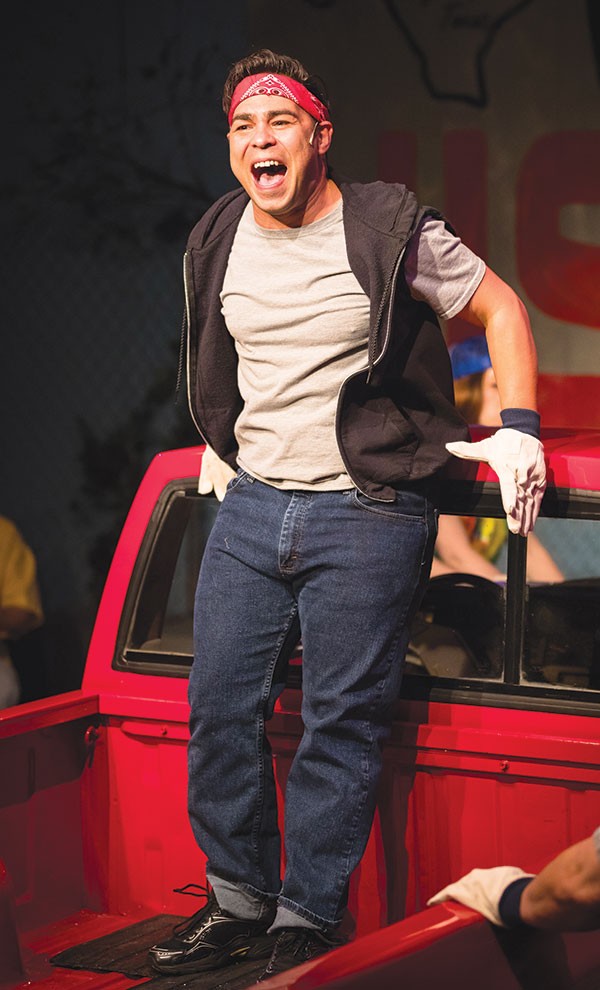
Crackling lightning, mist-shrouded cemeteries, ominous shadows and eerie organ music: playwright and Bohemian contributor David Templeton’s Mary Shelley’s Body, premiering at Main Stage West in Sebastopol, arrives just in time for Halloween.

More ghost’s story than ghost story, the play, adapted from Templeton’s novella of the same name and directed by Elizabeth Craven, gives us a cheeky Mary Shelley narrating the story of her life from the stone slab that is now her tomb. Missy Weaver’s lighting design, recreating flickering bonfires, plunges the stage into an intimately ominous landscape, but Shelley refuses to allow the melodramatic atmosphere to dampen her afterlife. Fist raised, she rails against it, meandering into a chilling narrative filled with gruesome humor and vulnerable reflections on her famous book and its creature, the rejected creation of a young student.

Visceral descriptions of icy winds and the creature’s terrified awakening create a riveting experience, assisted by Doug Faxon’s effective sound design, popping with thunder and pulsing electricity. Sheri Lee Miller as Shelley keeps a mischievous sparkle in her eyes throughout the sassy commentary, but is able to set aside the comedy for moments of challenging revelation. Her pain as she cradles empty air where her child’s head used to rest is raw and mesmerizing in its depiction of motherhood and loss.

Templeton has the ability to bring offstage characters to life through realistic observations drawn from his meticulous research, as with Claire, Mary Shelley’s sister. But Shelley’s preoccupation with interrupting an otherwise spellbinding story with precise dates breaks the supernatural ambience.

Still, I felt shivers at the character’s retelling of the alarming dream that prompted the writing of Frankenstein. Shelley drops dark humor into her tale, pausing to add sensational histories that explain backstories to the creature’s body parts, from how he received a courageous heart to the fiendish “Washerwoman’s Tale” that left the audience gasping with horror.

Gradually, Shelley reveals key events in the novel that correspond to her own life and ventures into despair over rejection by a father who refused to understand how she could love a married man, the tragic loss of her children and being cast out to wander in the gloom, suffering alone without hope of redemption.

Rating (out of 5): ★★★★

No Hurry

0

Contrary to local lore, not all good things start in Sonoma County. Indeed, the Slow Food movement didn’t arrive here until 1997, 11 years after Carlo Petrini founded it in Italy to protest the spread of fast-food restaurants and the opening of a McDonald’s in Rome.

Chapters soon sprang up all over the world like wild mushrooms after winter rains. Now Slow Food Sonoma County North and Slow Food Russian River have pooled resources to create their own version of a long-running international program known as the “Snail of Approval.”

Cloverdale resident Carol Diaz spearheaded a committee of seven who picked four restaurants that met their rigorous standards and those of Slow Food International, which boasts a thousand chapters in 160 countries.

Not every restaurant that receives the Snail of Approval meets the same standards. Each locality, from Boston and New York to Chicago, creates its own criteria, though they all rally behind the watchwords “clean, good and fair.”

Diaz said that she and her fellow committee members in Sonoma borrowed freely from Vermont Slow Food when they created their standards. Indeed, the food must be fresh, restaurant workers treated with dignity, business practices sustainable and produce sourced locally and organically. That’s a tough row to hoe, and not every restaurant in the running for a Snail of Approval can hope for a perfect score.

Four Sonoma County restaurants—Diavola in Geyserville, Shed in Healdsburg, the Naked Pig in Santa Rosa and Estero Café in Valley Ford—met the rigorous criteria.

They will be recognized at a launch for the Snail of Approval program, upstairs at Shed, which has served for years as a meeting place for activists and foodies. (Full disclosure: I’m a member of Slow Food Russian River.)

Cindy Daniel and her husband, Doug Lipton, have made Healdsburg’s Shed a destination and showcase for local farmers. “It meant a lot to me when I was in Italy to see the Snail of Approval in restaurant windows,” Daniel said.

Her goal now is to turn Shed into a carbon-neutral, zero-waste environment. “The Snail of Approval is one way to move the whole conversation forward,” Daniel said.

Indeed, the future of food and sustainability in Sonoma might belong to the likes of Shed’s Meg Rottinghaus, 33, who comes from an Iowa family that raises soybeans and feed corn on hundreds of acres. Organic is a harder sell there than here.

Now Rottinghaus manages Shed, trains its 100 employees and bicycles to and from work. When the Snail of Approval team members came to inspect the restaurant and market, she gave them a tour. She and executive chef Perry Hoffman also answered questions on subjects like sourcing, recycling and cooking.

“We’re transparent,” Rottinghaus said. “We’re also part of a giving and receiving community.”

Bank on It

0

On a recent Sunday morning, there was a long line of cars outside Station 3990, the emergency distribution center for the Redwood Empire Food Bank (REFB).

With the North Bay fires leaving many without a steady source of income and food, the food bank has been a saving grace. So much so that, outside of the building, a group of people is re-lifting a sign that has fallen, reading “Thank You Second Responders.” Everybody appears in high spirits, chatting and laughing together as they fill carload after carload. There’s a sense of community that only catastrophe can bring about.

The REFB has been around the block when it comes to feeding those in need. But never has it witnessed a tragedy like this.

“We normally distribute 15 million pounds of food per year,” says CEO David Goodman, who helped fill the cars with nonperishables. “In the past two weeks alone, we’ve already distributed 1 million pounds.”

Without the fire, the food bank still has plenty of work to do. It runs 12 programs that fall under three initiatives: Every Child, Every Day, which is dedicated to ending childhood hunger; Senior Security, which provides seniors with weekly produce pantries, monthly food boxes and any extra groceries they may need; and the Neighborhood Hunger Network, with the goal of supplying fresh produce and necessary groceries to anyone in need. “This is just what we do,” says REFB communications coordinator Kevin West of the organization’s dedication to serving the community. “We help hungry people.”

The food bank’s website lists facts that are indisputably heroic. From distributing 13.1 million meals to serving over 175,000 meals to children after school and in the summer, the REFB is relentless in its dedication to its mission, even in the face of adversity. “We’re the most misunderstood company,” says Goodman. “People don’t know what we do. During times like this, people get it. But we’ll still be here after the media and national attention fades out.”

Sonoma County has rallied in this time of need, with continuous financial and food donations flowing in within the first two weeks. “The support of our local community and all of the Bay Area has been amazing,” says West. “Donations have come from individuals, community food drives, school food drives, businesses and corporations. We couldn’t do what we do without community support.”

But West reminds the community that the food bank still needs help. “With the fires extinguished, we need community response to last. We are in this together for the long haul, and if support lessens, it will directly affect the response,” he says.

Shotsie’s Sonoma Strong Gallery

0

Shotsie Gorman has been sending us photos of the various Sonoma Strong tattoos he’s done since the fires—all proceeds go to helping victims of the catastrophe now pretty much ended, insofar as containment stands at around 95 percent. Here’s a few scenes and Sonoma Strong tats straight from Shotsie’s shop:

Tax Break

Unlike grape growers, cannabis growers who lost their plants in the fires don’t qualify for crop insurance. But the news isn’t all bad. Qualified cultivators will get some tax relief from Sonoma County.

Tax bills for growers in the legal pipeline are due Oct. 31. But those with damaged or lost crops can request a reassessment of their farms. No crops, no tax.

“They’re not out of luck,” says Andrew Smith, deputy agricultural commissioner for Sonoma County’s Department of Agriculture, Weights and Measures. “You shouldn’t have to pay tax on something that’s not marketable.”

The ag department is helping growers get out to see their property in fire-affected areas. “We anticipate the need for [crop-loss assessments] to be very great,” says Smith.

Eligible growers include those who have applied for permits or those who have filled out a penalty-relief form. Taxes for growers are based on the canopy size of their crops.

According to Tim Ricard, project manager with the county’s Economic Development Board, 122 permit applications have been submitted to the county. The vast majority of those are for cultivation. Ricard said his agency has proposed the board of supervisors extend tax deadlines for the cannabis industry to Nov. 17, and to the end of November for those in the evacuation zones.

Tawnie Logan, president of the Sonoma County Growers Alliance board of directors, counts three permit applicants affected by the fire so far, and of those planning to submit applications, there are at least 10 cultivation sites, three manufacturing labs, two warehouses for mixed-permit use and two genetics nurseries lost or damaged by the fire.

Beyond that, for those disqualified for permits by zoning, Logan counts 15 cultivation sites lost and one lab operation that was looking for property with the proper zoning. As for home grows, she estimates at least 50 were lost in the city limits and another 50 in the unincorporated areas.

But that doesn’t mean there is going to be shortage of cannabis. SPARC and CannaCraft, two major Sonoma County producers and distributors affected by the fires, say they will backfill their inventory from other sources in California. In the run-up to recreational legalization next year, the state’s cannabis production this year is at an all-time high.

Strong Brew

The story of Sottile red is a tale of total disaster averted, then tragic loss and, finally, the spirit of a community coming together for a good cause. And that was way before October 2017. It all started Nov. 6, 2014, when an accidental structure fire broke out in the charity-driven Bon Marche thrift store. The fire threatened the...

Stations of the Luxe

An 2005 independent audit of municipal fire services in Sonoma County concluded that the Santa Rosa Fire Department’s facilities “have not kept up with the city’s growth in recent years,” as it recommended that the city take up the recommendations of a 2004 Sonoma County Grand Jury report that highlighted a number of SRFD shortfalls in service, response times...

Fair Questions

As the historic North Bay fires are brought under control, data coming out of the state insurance industry tell a tale of massive destruction: nearly 5,500 residential losses, 601 commercial losses, up to 3,500 noncommercial auto losses and 39 boats burned up in the blazes that killed 43 and caused more than $3 billion in damage. But there's one fire-related...

Up to Code

The immediate emergency may be over, but life in Sonoma County will never return to pre-fire "normal." We are changed—certainly those who lost homes, but all of us to some degree. The question is, how shall we proceed? Like it or not, we must anticipate more crises. Not just fires and climate-linked weather events, but earthquakes and human-caused disasters (failures...

Letters to the Editor: October 25, 2017

Not Connected Stett Holbrook's article ("The Terrifying New Normal," Oct. 18) would lead us to believe that the fires in Sonoma County were caused by climate change. The earth has always been a violent place. For example, on Oct. 8, 1871, in Peshtigo, Wisc., a quick-moving fire whipped up by high winds in dry conditions, like the one we just...

Ghoulish Charm

Crackling lightning, mist-shrouded cemeteries, ominous shadows and eerie organ music: playwright and Bohemian contributor David Templeton's Mary Shelley's Body, premiering at Main Stage West in Sebastopol, arrives just in time for Halloween. More ghost's story than ghost story, the play, adapted from Templeton's novella of the same name and directed by Elizabeth Craven, gives us a cheeky Mary Shelley narrating...

No Hurry

Contrary to local lore, not all good things start in Sonoma County. Indeed, the Slow Food movement didn't arrive here until 1997, 11 years after Carlo Petrini founded it in Italy to protest the spread of fast-food restaurants and the opening of a McDonald's in Rome. Chapters soon sprang up all over the world like wild mushrooms after winter rains....

Bank on It

On a recent Sunday morning, there was a long line of cars outside Station 3990, the emergency distribution center for the Redwood Empire Food Bank (REFB). With the North Bay fires leaving many without a steady source of income and food, the food bank has been a saving grace. So much so that, outside of the building, a group of...

Shotsie’s Sonoma Strong Gallery

Shotsie Gorman has been sending us photos of the various Sonoma Strong tattoos he's done since the fires—all proceeds go to helping victims of the catastrophe now pretty much ended, insofar as containment stands at around 95 percent. Here's a few scenes and Sonoma Strong tats straight from Shotsie's shop:

Tax Break

Unlike grape growers, cannabis growers who lost their plants in the fires don't qualify for crop insurance. But the news isn't all bad. Qualified cultivators will get some tax relief from Sonoma County. Tax bills for growers in the legal pipeline are due Oct. 31. But those with damaged or lost crops can request a reassessment of their farms. No...
11,084FansLike
4,446FollowersFollow
6,928FollowersFollow