Striking

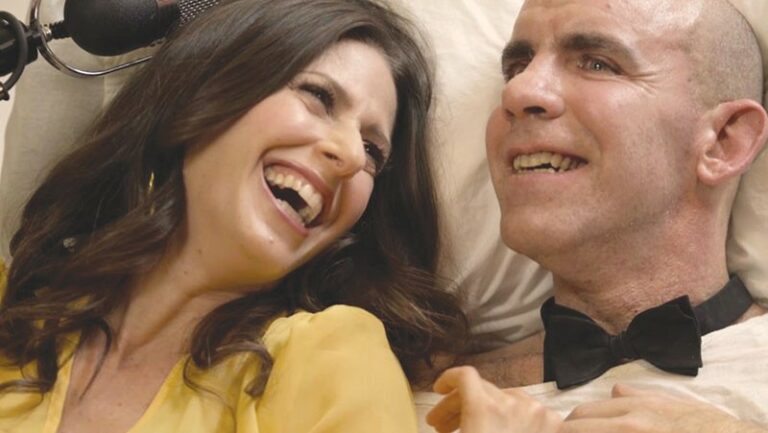
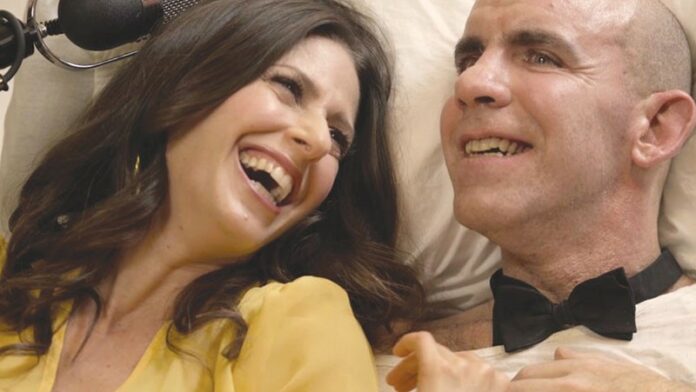
Anyone who has dug up an old book and wondered who it was who wrote his name in it 50 years ago might fall in love with Todd Haynes’ Wonderstruck, the film version of Brian Selznick’s novel.

Nineteen seventy-seven. Young Ben (Oakes Fegley) is orphaned, and then deprived of his hearing by a freak accident. Finding a stash of money left behind by his mother, he decides to search for his father, because of a mysterious message left on a bookmark. His story is contrasted with the tale of Rose (Millicent Simmonds), an affluent shut-in of 1927.

There are all sorts of reasons why the wondrous Wonderstruck should have failed, and the principal challenge was matching a pair of wildly different eras. Haynes (Carol, Far from Heaven) deftly switches back and forth from a silent era of sharp black-and-white angles to mellow color; when a taxi drives through the spray of an uncapped fire hydrant, we think of Travis Bickle’s journeys in Taxi Driver. These ’70s streetscapes are as sterling as the recreations in the HBO series The Deuce, but with a far wider focus. It’s grimy, but nostalgic.

Simmonds, who is deaf and plays a deaf character, has tremendous charm as she pursues a silent film star (Julianne Moore); it’s touching to see brave, dark-eyed Rose take in the last performance of a silent film at a theater where the Vitaphone sound system equipment is about to be installed—were there deaf movie fans betrayed by the arrival of sound film?

Cory Michael Smith and James Urbaniak provide support as Rose’s allies. They really have faces, as Sunset Boulevard character Norma Desmond put it. Moore returns to connect the sundered history in pantomime; our finest living screen actress repairs the broken chains of time with the help of lovely toylike miniatures, in a sequence free of the tweenness of Wes Anderson. This is a film to cherish, and it’s one of the best movies about New York I’ve seen.

‘Wonderstruck’ is playing at Summerfield Cinemas, 551 Summerfield Road, Santa Rosa. 707.525.8909.

Welcome Back

0

When Luther Burbank Center for the Arts president and CEO Rick Nowlin spoke to the center’s insurance company the day after the Tubbs fire destroyed an estimated 30,000 square feet of the center’s campus, they estimated the main auditorium would be out of commission until after the new year.

Thanks to tireless efforts by the center’s staff, the performance center beat the odds and officially reopened to the public on Nov. 6, less than a month after the Oct. 9 disaster. The center has also launched a “pay what you can” program for select upcoming performances, including Australian pop duo Air Supply (pictured) on Nov. 11, Dwight Yoakam on Nov. 26 and Mannheim Steamroller on Nov. 29.

“There were rumors out there that the entire building had burned down,” Nowlin says.

When the smoke cleared, much of the east end of the campus was indeed lost, including classrooms, the east auditorium and the workshop.

“We knew that the main stage theater and the rest of the facility was safe,” Nowlin says. “But we knew that we had a long road to reopen to the public.”

In addition to the structural damage, the center lost over 200 instruments, valued at $120,000 and maintained as part of its instrument lending library. “We are looking to the community to help replace those instruments,” says director of education and community engagement Ray Gargano, who adds that groups like the Santa Rosa Symphony and Sonoma State University are already helping replace and store instruments while the center rebuilds.

One of the first things Luther Burbank Center’s director of programming Anita Wiglesworth did after the disaster was communicate to the music industry that the center was not done for.

“We are still here and viable and a part of this community,” says Wiglesworth, who reached out to artists scheduled to perform in the coming weeks about supporting the community through the “pay what you can” program, offering tickets especially to those affected by the recent fires and to first responders.

Wigleworth adds that the center is looking at long-term goals for giving back to the community beyond the first wave of benefit concerts. “We’ve been talking to artists to work up a plan that will be pretty strategic, not just in the next coming months, but also the next couple of years.”

‘Pay what you can’ tickets for select show are available at 50 Mark West Springs Road, Santa Rosa. 707.546.3600 and lutherburbankcenter.org with the code sonomastrong. Subject to availability; four-ticket limit per show.

Luther Burbank Center Reopens With ‘Pay What You Can’ Program

LBCLess than a month after the Tubbs fire ripped through Santa Rosa and destroyed an estimated 30-thousand square feet of the Luther Burbank Center for the Arts’ campus, the center has defied expectations and reopened to the public today, November 6. 
After cleaning and restoring the main auditorium, which was spared major damage, the center is reaching out to the community by offering a “Pay What You Can” program for select performances during the month of November. Those affected by the recent fires and first responders are welcome to pay any price, and the community is invited to come together, connect and find solace in music and art.
Performances and family-friendly events included in the “Pay What You Can” program are “Shopkins Live! Shop it Up” on Nov 9, Air Supply on Nov 11, Imago Theatre’s “La Belle” on Nov 14, Dwight Yoakam on Nov 26, PJ Masks Live! “Time to Be a Hero” on Nov 27 and Mannheim Steamroller on Nov 29.
“Pay What You Can” tickets are available at the ticket office, 50 Mark West Springs Rd, Santa Rosa. Open daily, noon to 6pm. 707.546.3600. lutherburbankcenter.org with the code sonomastrong. Subject to availability, limit of 4 tickets per show.

Local Punk Bands Invade Bolinas This Weekend

0

22789125_10214638757024453_576235948785421742_n
Of all the mysteries that reside in Bolinas, one that kids are especially curious about is the long incomplete Bolinas Community Skate Park, first conceived of in the skateboarding craze of the ’90s, but left unfinished for years and currently languishing on the Mesa Park property.
Over the last few years, a committed group has made it their mission to see the dream of the Bolinas Skate Park become a reality for Marin youth with an online fundraiser for the skate park that currently sits at over $18,000. This weekend, three heavy-hitting North Bay punk bands show their support for the skaters and converge on the Bolinas Community Center to rock out and raise money towards the effort.
Sonoma County bands Streetbreaker, the Drought Cult and new  group Holy Wood share the stage, and a silent art auction featuring local and visiting artists benefit the completion of the Bolinas Skate Park on Saturday, Nov 4, at Bolinas Community Center, 14 Wharf Rd, Bolinas. 7:30pm. $5-$20 sliding scale. For more info, click here.

Emergency to Emergence

0

Last month’s fires present us an opportunity for real transformation rather than minor, piecemeal change. We need to change on every level.

It’s time to break the pattern. Painful as it is, homes lost in the fire were temporary housing, but the-build-and-burn cycle can stop here. Building for a thousand years, as in Europe, is well within our capability, if we’re not stopped by building-material-supplier lobbyists and antiquated code restrictions.

It’s time to go from wood-framed homes (built the same way for centuries) with highly flammable oil-composition roofs, to healthy mineraled cement and 3D-printed homes. Earthquakes are not an if but a when, and naturally resilient materials and forms can survive quakes, fires, storms and floods. A 3D-printed house can be created in a few days at about $34 per square foot. And they are available now. Earthbag, cob and magnesium-based-cement homes sequester carbon and actually support our health. Look them up.

We need to move from unnecessarily large to smaller, better designed homes. We must transition from “boxes” to more rounded and organic shapes that are more beautiful and far more able to withstand the elements. Let’s replace fire-vulnerable wood fences with masonry structures.

From water wastage to water wisdom, we need to rethink our infrastructure systems. Graywater is not only good for plants, it’s a fire deterrent too. We need energy-neutral and carbon-sequestering buildings, as well, along with more gardens.

Living in intentional communities offers resiliency from natural and manmade disasters through healthy social relations that will help us evolve from isolated units back into a community.

We must go from construction on scraped, decimated land, to being respectful inhabitants and stewards of the natural world.

None of these changes is “up to code”; they are beyond code. For decades, we’ve been precluded from progress by varying elements of the status quo. We know how to do this. “Code” is largely legislated lobbying by the building materials and insurance industries.

Let’s use the disastrous fires to welcome a new, better world.

Judith Iam is a longtime Sonoma County resident, teacher, producer and community builder.

Open Mic is a weekly feature in the ‘Bohemian.’ We welcome your contribution. To have your topical essay of 350 words considered for publication, write op*****@******an.com.

Letters to the Editor: November 1, 2017

On Air with KSRO

As a Sonoma County resident, I deeply appreciate the exceptional contributions of the staff of KSRO radio during the recent fires as reported by Stett Holbrook in “Dialed In” (Oct. 25). At the same time, I deeply regret the lack of mention of the equivalent aid provided by staff and volunteers of KBBF, the oldest bilingual station in the country.

Like contributors to KSRO, our staff and volunteers were on the air night and day throughout the duration of the crisis. It isn’t just that we provide a public service to Sonoma County’s large Spanish-speaking population; we serve a population, many members of which lack internet access and lack the sophisticated skills in English necessary to understand complex directions about evacuation and the like when under the stress of advancing flames. We are a unique source of information for them. KBBF served valiantly as the sole source of information and communication for this large portion of our county’s population, undoubtedly saving lives and providing access to needed services and thus deserves equal recognition for its contribution to our mutual welfare.

Member KBBF board of directors, Sebastopol

Thank you, Bohemian, for your gripping article on KSRO’s anchoring of the fire reporting. My husband and I were tuned in to KSRO for most of this crisis (even though we live adjacent to the fairgrounds, with a rotation of thousands of firefighters camped out in our back yard).

We have many opportunities for gratitude. First responders from Sonoma and Napa counties; Sheriff Giordano and the daily, no-nonsense media briefings from multiple agencies; PG&E crews; fire and police crews from the Western U.S., the greater U.S. and the world.

Shout out to Pete, a water tank crewman, and the responders from Oregon sleeping in the fairgrounds field, as well as firefighters from Lassen, San Mateo and Menlo Park. These are just the folks we met personally. It may be your job, but it was our homes you were working to protect.

KSRO staffers, when the thanks are going around, please understand that we were desperate to know what was happening, and we turned to you. You more than rose to the call of disaster. All of you—Pat, Mike, Michelle, Heather, Alex, the Steves and others behind the scenes. We deeply appreciate the dedication you showed to your listeners, which has strengthened our community.

Thanks for going behind the scenes to laud your colleagues, Stett Holbrook. Boundless gratitude.

Santa Rosa

Great article! KSRO deserves all this praise and more. They literally saved lives. Outstanding professionalism and stunning humanity. I know I was just one of many residents that relied on KSRO during the darkest hours of the storm and absorbed strength and hope through the KSRO radio waves. Thanks to all at KSRO!

Via Facebook

Write to us at le*****@******an.com.

Blazing Speed

0

It would be inaccurate to say that the fire-limiting qualities of so-called urban growth boundaries and community separators were vindicated in the North Bay fires.

After all, as Teri Shore notes, the catastrophic Tubbs fire swept through the Fountaingrove neighborhood, crossed the community separator there, jumped into Santa Rosa’s urban growth boundary (UGB) and then burned it up.

Shore, regional director at the Greenbelt Alliance, has embraced UGBs and community separators. Urban growth boundaries took root decades ago in places like San Jose, Boulder, Colo., and Sonoma County as part of a new urbanism vernacular of “livable cities,” “walkable cities,” “resilient cities” and other sobriquets to indicate a civic emphasis on high-density development in order to keep the surrounding lands pristine in their agricultural and biodiverse glory—as they set out to reduce sprawl, not for fire protection per se, but to save farms and communities and local cultures. The community separators indicate the area between developed areas which comprise the urban growth boundary.

It would be a “huge leap to say that the community separator or urban growth boundary could have prevented [the fires],” Shore says. “On the other hand, it could have been worse if we had built more outside of the city boundaries.”

In other words, the regional UGBs may have played a role in the fires akin to the “chicken soup rule” when you’re sick: in the event of a catastrophic fire, UGBs can’t hurt, and they might even help limit the damage to property.

“We’re thinking through it,” says Shore of the relationship between preventing fires and the rebuilding path forward, and the role of greenbelts in the rebuild.

“I don’t know if there’s a correlation,” she says, “but clearly keeping our growth within the town and cities, instead of sprawling out, potentially reduces the impact from wildfires.”

The subject of UBGs comes up for a vote next week as Windsor and Novato go to the polls Nov. 8 to extend the duration of their already-established local urban growth boundaries. Coming on the heels of the catastrophic fires, which only this week were fully contained, the votes in Windsor and Novato (Measure H and Measure D, respectively) are expected to pass with wide margins, but they raise questions about role of UGBs moving forward.

Now that the fires are all but out, reconstruction and development will soon move into the foreground. Last week saw the emergence of Rebuild North Bay, a public-private coalition that aims to create “a comprehensive plan for recovery and rebuilding.” It’s headed by Clinton-era Federal Emergency Management Agency director James Witt.

In very short order, Rebuild North Bay has found ample support in the local political, media and business class. That’s not a big surprise. Darius Anderson has taken a leading role in the organization’s creation. Anderson is a Democratic lobbyist, managing partner of the Sonoma Media Group, which owns the Press Democrat, and a real-estate investor through his Kenwood Investments California Opportunity Fund.

Urban growth boundaries are designed to protect against unfettered urban sprawl and keep overzealous real estate development at bay. The knock on the popular UGBs is that by limiting growth within high-density urban zones, they set the stage for exactly the sort of dilemma that Santa Rosa and Sonoma County faced before the fires, and which has now become wildly exacerbated with the destruction of thousands of homes and other structures: housing is scarce and the rent is too high.

That’s no reason to dispense with the UGBs, say advocates of the anti-sprawl measures, but rather an opportunity to further leverage their benefits. “Overall, we want to maintain these policies, especially as we move forward and rebuild,” Shore says. The UGBs have done their job in limiting sprawl, which is one reason why the Greenbelt Alliance is endorsing the two votes next week.

The unfolding parameters of the regional rebuilding process has itself raised questions of its own about an incipient regional “rush to rebuild” without ample pause to reflect on 21st-century best practices in urban planning or what new best practices might emerge after a raging fire destroyed entire neighborhoods within the Santa Rosa UGB.

The Sonoma County Board of Supervisors and the Santa Rosa City Council have both pushed out emergency ordinances to expedite the cleanup and find short-term housing options for displaced citizens.

“Elected leaders are trying to move quickly to allow people who were immediately impacted to rebuild,” Shore says, “and we totally support that.” She says she takes comfort that as the rebuilding imperative gathers momentum, no one is talking about building in greenbelts.

As the flames are at last extinguished, the dominant message from civic leaders and the Press Democrat editorial board has been a defiant “Sonoma Strong” posture that says, in effect: We’re going to rebuild, we want to make it easy for people to rebuild, and we’re going to come back stronger.

But that position has so far glossed over any questions about whether certain parts of town should be rebuilt—i.e., Fountaingrove—and what, exactly, it means to “come back stronger.”

As that debate unfolds, Rebuild North Bay has emerged as the go-to organization to lead the charge, as highlighted in a supportive Press Democrat editorial last week that championed Witt as it warned against unspecified “infighting” that might stymie Rebuild’s sudden and self-ascribed mandate as top recovery dog in town.

A press conference last week announcing the effort was highlighted by comments from U.S. Congressman Mike Thompson, State Sen. Bill Dodd and Sonoma County Supervisor David Rabbitt, who all embraced the organization and the public-private nonprofit arrangement now forged between local business interests and federal and state disaster-aid and recovery agencies.

The blue-dog Democrat Thompson tweeted his approval of Rebuild North Bay’s selection of James Witt to lead the organization. “No one I’d rather have lead this organization & help us rebuild,” tweeted Thompson on Oct. 26. At a press conference announcing its creation, Dodd said he was “all in” on Rebuild North Bay. Everyone thanked Anderson for his key role in the creation of Rebuild North Bay.

There is an urgency to the recovery, says Shore. “They don’t want people to leave Santa Rosa or Sonoma, that’s the message now. But there’s an opportunity,” she adds, “to talk about how we rebuild.”

Another new urbanist conceit emphasizes transportation-oriented development. This notion amplified the argument in favor of a build-out of the Sonoma-Marin Area Rail Transit some 10 years ago. At the time, SMART was a big idea whose time had come.

What’s the smart move now?

“You could see [the fire disaster] as an opportunity that goes beyond rebuilding what we lost,” Shore says, “but that also triggers the next phase of smart growth, now that we have the trains running.”

Q&A with Stephen J. Pyne

0

Stephen J. Pyne is a regents professor in the school of Life Studies at Arizona State University, and one of America’s foremost experts on fire and fire history. He is the author of more than 30 books, including Between Two Fires: A Fire History of Contemporary America and Fire in America: A Cultural History of Wildland and Rural Fire, which won the Forest History Society’s best book award. He has twice been awarded National Endowment for the Humanities fellowships, twice been a fellow at the National Humanities Center and received a MacArthur fellowship. Before his academic career, Pyne worked for the forest fire crew on the North Rim of the Grand Canyon for 15 seasons.

I spoke to him Oct. 27 about the lessons of Northern California’s fires and the opportunities that lie ahead. We have to act quickly, he says.

“There is a political ecology to fires, and it’s the same as slash-and-burn agriculture,” he told me. “That is to say, you can plant successfully in the ash, but if you wait a year, you probably can’t. And if you wait two years, the weeds have taken over and you have to start it again. You have essentially six to 12 months, or the opportunity is gone.”

Stett Holbrook

What struck you most about Northern California’s fires?

There were three things that really caught my interest. One, of course, is the scale of damage. This is double the housing loss from the Oakland fire [of 1991], which most people had considered the upper limit of what was possible. And the loss of life—we haven’t seen this scale of loss of life for more than a century.

The second thing is what we might call the collateral damage of fire: smoke. Smoke has been of growing interest internationally for many years. And for the last couple of years, it’s really gotten around in the fire community that smoke is more than just an inevitable side effect; it’s a public health issue. It’s more than just a seasonal nuisance. It’s not something that just affects rural or semi-rural communities. It really is a major issue.

The third is the likely cause, which seems to be power lines. When I first heard of this whole bust of fires, I thought, “This is the signature of an electrical storm. This is what you have with lightning storms.” It’s not confirmed, but it’s looking like this was an electrical storm—but one of our own making, with power lines. Power line fires are becoming a major threat. They have been an issue in Southern California for a long time and in other places. We are starting to see power lines failing, sparking, trees falling on them. It’s really insidious because the fires start under the absolute worst conditions: high, dry winds. The liability issues are just going to go through the roof here.

Have we entered a new era of fire in California?

I don’t think we’ve entered a new era. In some ways it’s the same era. The “California style” of fire escalated after the World War II housing boom. This is more of the same. What we’re seeing is a ratcheting up of the damages. Climate change is probably contributing here, but we can’t just lay all of this on climate change. That’s just a way of evading all the social decisions we’ve made about how we live and where we build. Fire integrates all these things. It’s good news, bad news. It’s good news that it’s not something new. The bad news is we’ve seen this over and over again. It’s getting worse. It’s intensifying.

What are the lessons from the Oakland fire?

That was a real stunner. The United States had not had an urban conflagration since it happened across the bay in 1906. These things don’t happen anymore, and so why was it happening here? A lot of the attention went to Oakland as a kind of troubled municipality. In many ways, that was just a manifestation of its various pathologies, and it doesn’t really generalize [to other fires]. This was not the advent of something new. It’s just a peculiar thing. It was a horrific event. Startling. But for most people, it did not generalize.

But I think with what we’re seeing now maybe with Santa Rosa, I think it will [generalize], particularly if you pair it with Gatlinburg, Tenn., or the big fires in Texas in 2011 and others.

These fires were for a long time a California quirk, something only happening on the Left Coast. And it really didn’t have anything to do with the rest of the county. And that’s not true now. It’s becoming a national narrative. It’s all over the West. I think what we’re seeing now is the fires are going where the houses are. At that point, it’s a national story.

[page]

How did the Oakland fire change fire policy—or not?

There were some lessons from not just Oakland but the growing number of these fires in Southern California and elsewhere. The state had moved to map high-risk areas and put in some general zoning and coding requirements, but clearly they were inadequate. The problem is people really hate to be told what they can and can’t do on their property or with their house. They want to build what they want to build the way they want to build it. But fire is a contagion phenomenon. Your neighbor’s house is a threat to you. Fire is not libertarian; it’s communal. It integrates its surroundings. We can’t all go off on our own.

I don’t know if many changes were made, and even if they were, they only apply to new construction. What about 40 or 50 years of bad construction? You’re talking about a trillion-dollar retrofit. That’s not going to happen. It’s a social problem, but at some point, you may just have to crack the whip. Not doing these things is like not vaccinating anymore.

How has Cal Fire’s role changed in California?

Cal Fire was originally a board of forestry. And then it was a department of forestry. And then it was a division of forestry and fire protection. And now it’s just Cal Fire. It’s a suppression organization, it’s an urban firefighting service in the woods. They’re really good at doing that. But the way you controlled fires historically in cities was not just by having more hydrants and fire engines; it was building codes and by zoning and building fire protection into the cityscape.

And when you convert what are basically land-management agencies or fire agencies that had responsibility for managing that larger land, when you turn them into only a firefighting system, you lose control over the countryside. And that’s where fire derives its power. The power of fire comes from the power to spread. And the power to spread resides in the countryside. The way you control is to take away some of the power so it doesn’t blow up on you.

So every time we have one of these big fires, the natural response is we’ve got to protect our people, and we’ve got to protect these houses from being burnt. And we do, absolutely. But that tends to come at the expense of everything else. What about the other sides of this?

What is the best defense against fire in a place like Santa Rosa?

There has been a national effort mandated by an act of Congress in 2009 called the Flame Act that aimed to fix fire funding at the federal level. It didn’t work because Congress never put in the money the act required. It did require fire agencies to create something called [the National Cohesive Wildland Fire Management Strategy]. There’s no money behind this, but they came up with a three-part strategy and it’s pretty sound.

You need to adapt it locally, but one part was to build “fire-adapted communities.” Many, many of our communities outside of New England are in fire-prone areas and can burn, and we need to accept that fact and build our cities and build our suburbs with that expectation in mind. This is a chance to rethink what fire means in those communities and to accept that urban conflagrations are now back. It’s like measles or polio coming back. We thought we’d fixed that. But they’re back, and we’ve got to start to do the things that took the plague out of these places in the past. We need to harden our cities and redesign them.

The second part was “fire-resilient landscapes” and to think about ways of putting these landscapes into forms that can burn without doing the kinds of damage that we see, and to burn in ways where we have a possibility of containing them and allowing these ecosystems to survive fire, because they are getting fires that are outside their evolutionary experience.

The third part is to build your capability. That’s your workforce, your equipment and all the stuff you need to apply it. That’s what generally gets the attention. “We’ll get more engines. We make more air tankers. We want to see those helicopters up there.” If you don’t do the other stuff, you’re in fire’s cycle. You’re just playing whack-a-mole. It’s just coming back at you.

[page]

What eco-friendly measure can be undertaken to prevent fire in wildlands?

There are a whole lot of things we can do in wildlands, short of paving it or clear-cutting or just nuking the place. We don’t have to. You can let it burn. You don’t have to keep fire out. You just don’t want fires of the sort that are really going to be beyond our control and a threat. Places that used to have surface fires are now overgrown with woody shrubs and young trees, and fires are responding and behaving differently. We can thin those out. It’s a kind of woody weeding. It’s not logging. Logging is not a surrogate for fire. When you log, you take the big stuff and leave the little. Fire burns the little stuff and leaves the big.

There may be a place for some prescribed grazing, say, after really heavy rains when you’ve got extra grass, maybe you bring in some grazing animals and let them knock that down. Mowing is an option. Greenbelts would be a great option as a way of stepping down from a wildland setting. And burning, prescribed fire. You can substitute your fires for wildfires. You have fires of choice rather than fires of chance. There are lots of things to do. It really varies by site, but you don’t have to strip it raw or pave it over.

What kind of political will is necessary to undertake this kind of nuanced approach?

The problem will be defined as a matter of public safety—it is a matter of public safety. A lot of lives were lost, property burned up. Lives were disrupted. I imagine you’ve got an internal refugee problem. Where are these people going to go? What do they do? That is going to dominate the discussion, as it should up front.

But we should have this second discussion that goes back and echoes the National Cohesive Strategy and do the fundamentals and recognize cities can burn in ways we had not imagined. Have that discussion, and now you’re getting something, now the different pieces are interacting in a positive way. Otherwise you just build up the suppression and you’re going to have another blowup like this.

Even if your firefighting force had been doubled, would that have made a difference in those first few hours? No. You’d have to have the fire equivalent of a police state. That can’t solve it.

What opportunities do the fires present?

California is specially placed to make a difference. The National Cohesive Strategy is worth taking as a frame and then operating within it. The state of Utah enacted that into law. I would have never predicted Utah of all places to do that. They have accepted we need to do all of it. If California were to do that in a serious way, it doesn’t necessarily mean tons of money; it means modifying the state fire plan so everything is not stripped to fight a fire in Southern California when they need to be doing burning in Northern California. It means reassessing what you can realistically do and getting a better balance between them. If California were to do that, it would affect the whole country. California is a huge presence nationwide in fire. That would be the hope.

There really is an opportunity to step back and not overturn the system, but move the parts and give better balance so that we can really turn this into a virtuous cycle. Right now, we’re in a vicious cycle. We build up more suppression and the fires get worse, the damages increase.

Nothing is going to change that if we keep doing the same stuff.

Haute Pot Shop

Is it a co-op grocery or a cannabis dispensary? Sebastopol’s Solful is a bit of both.

Solful is the city’s second dispensary, and it represents two trends emerging in the cannabis industry: the boutiquification of the cannabis shopping experience and brand-name farms that focus on sustainable agriculture.

“We really wanted a place that felt normal,” says co-founder and CEO Eli Melrod.

By normal, he means “non-intimidating,” and wholesome even, like going to your local independent grocery store.

Melrod says he opened the business because he wanted a place he could recommend to his friends and family. He says his father suffers from pancreatic cancer and has benefited from the use of cannabis.

“I’ve been a huge believer in the medical benefits,” he says.

The dispensary is done up in wood and earth tones that make it look like a Hayes Street clothes boutique rather than the heavily fortified pot shops of old. There are T-shirts, tote bags and baseball hats for sale, along with a variety of cannabis products. What, no wheatgrass bar?

As for the cannabis, Melrod says he visited more than 50 farms in Sonoma, Mendocino and Humboldt counties to find growers that met his standards.

“We handpicked farmers that were doing things that were kind of special,” he says, calling it “muddy-shoe sourcing.”

That includes farmers like biodynamic cannabis pioneer Mike Benziger of Glen Ellen’s Glentucky Family Farm, and Alpenglow Farms’ Craig Johnson, a Humboldt County cannabis producer with a focus on regenerative agriculture. Flower testing is done at Hayward’s ISO-accredited Harrens Lab.

“In the same way that you’d rather buy a locally grown, organic tomato from a farmers market than one shipped in from hundreds of miles away, we’re giving our community access to a highly curated selection of amazing, locally produced products that they would unlikely find on their own,” says Melrod.

Solful has been in development since 2015. Sebastopol’s planning commission and city council approved of the business with unanimous votes earlier this year.

The business holds a grand opening Nov. 5 from 11am to 5pm. Benziger and Johnson will be on hand, as well as Sebastopol artist Patrick Amiot, who created one of his signature works of junk-art for the store. Ten percent of all proceeds from the event will go to the Redwood Credit Union’s fire victim relief fund.

Solful is at 785 Gravenstein Hwy. S. Go to solful.com for more information.

Still Here

0

The problem with the so-called wine country fires isn’t just that the phrase is so awkward for many locals. For businesses in Sonoma County and Napa Valley Wine Country, it’s that the next thing that might occur to those outside of the area is, “Oh no—wine country just burned up!”

“I think the perception out there is that Napa Valley was completely destroyed,” says Shane Soldinger, general manager at Silver Trident Winery, of the many phone calls, texts and emails the winery received from wine club members and personal contacts across the country. “I think that people are really relieved to find out that the majority of Napa Valley dodged a bullet.” Wineries as far away from the fires as Fort Ross-Seaview soon felt it necessary to send reassuring emails telling customers that, yes, the winery is still standing and, yes, the vineyards are fine.

That people feared the worst is no surprise, given media reports like this CBS news spot: A reporter stands amidst smoking ruins off Old Redwood Highway in the path of the Tubbs fire, mentions California’s $58 billion wine industry, and says, “And now some of that could go up in smoke.” After the video cuts to a flyover of Coffey Park devastation that looks like—well, you know what it looks like—the reporter intones, “Also destroyed, huge expanses of vineyards.” Now, to the viewer, “some” looks like “most.”

“There is a perception,” says Tim Zahner, chief operating officer at Sonoma County Tourism, “and it’s a perception not bound in reality—but it’s understandable—that Sonoma County wine country is completely burnt and it’s completely gone.”

That’s particularly so among people who don’t know the area well and are getting their news from television. Awful as the experience was for everyone here, Zahner notes, locals have processed—or attempted to process—the arc of events from catastrophe toward recovery. “But the people who are just watching it in their living room,” says Zahner, “for them, the camera didn’t swing the other way.” The tourism office is now tasked with reminding out-of-towners that the county is still here, and would be very pleased to have their business. “What also happened is 90 percent of the county did not burn and over 400 wineries are open to the public.”

At Silver Trident, Soldinger takes the long view, noting that parts of French wine country have seen some godawful stuff—bubonic plague, trench warfare—yet managed to carry on and bottle another vintage.

“It was real history we just lived through.”

Striking

Anyone who has dug up an old book and wondered who it was who wrote his name in it 50 years ago might fall in love with Todd Haynes' Wonderstruck, the film version of Brian Selznick's novel. Nineteen seventy-seven. Young Ben (Oakes Fegley) is orphaned, and then deprived of his hearing by a freak accident. Finding a stash of money...

Welcome Back

When Luther Burbank Center for the Arts president and CEO Rick Nowlin spoke to the center's insurance company the day after the Tubbs fire destroyed an estimated 30,000 square feet of the center's campus, they estimated the main auditorium would be out of commission until after the new year. Thanks to tireless efforts by the center's staff, the performance center...

Luther Burbank Center Reopens With ‘Pay What You Can’ Program

Less than a month after the Tubbs fire ripped through Santa Rosa and destroyed an estimated 30-thousand square feet of the Luther Burbank Center for the Arts' campus, the center has defied expectations and reopened to the public today, November 6.  After cleaning and restoring the main auditorium, which was spared major damage, the center is reaching out to the community by offering a...

Local Punk Bands Invade Bolinas This Weekend

Of all the mysteries that reside in Bolinas, one that kids are especially curious about is the long incomplete Bolinas Community Skate Park, first conceived of in the skateboarding craze of the '90s, but left unfinished for years and currently languishing on the Mesa Park property. Over the last few years, a committed group has made it their mission to...

Emergency to Emergence

Last month's fires present us an opportunity for real transformation rather than minor, piecemeal change. We need to change on every level. It's time to break the pattern. Painful as it is, homes lost in the fire were temporary housing, but the-build-and-burn cycle can stop here. Building for a thousand years, as in Europe, is well within our capability, if...

Letters to the Editor: November 1, 2017

On Air with KSRO As a Sonoma County resident, I deeply appreciate the exceptional contributions of the staff of KSRO radio during the recent fires as reported by Stett Holbrook in "Dialed In" (Oct. 25). At the same time, I deeply regret the lack of mention of the equivalent aid provided by staff and volunteers of KBBF, the oldest bilingual...

Blazing Speed

It would be inaccurate to say that the fire-limiting qualities of so-called urban growth boundaries and community separators were vindicated in the North Bay fires. After all, as Teri Shore notes, the catastrophic Tubbs fire swept through the Fountaingrove neighborhood, crossed the community separator there, jumped into Santa Rosa's urban growth boundary (UGB) and then burned it up. Shore, regional director...

Q&A with Stephen J. Pyne

Stephen J. Pyne is a regents professor in the school of Life Studies at Arizona State University, and one of America's foremost experts on fire and fire history. He is the author of more than 30 books, including Between Two Fires: A Fire History of Contemporary America and Fire in America: A Cultural History of Wildland and Rural Fire,...

Haute Pot Shop

Is it a co-op grocery or a cannabis dispensary? Sebastopol's Solful is a bit of both. Solful is the city's second dispensary, and it represents two trends emerging in the cannabis industry: the boutiquification of the cannabis shopping experience and brand-name farms that focus on sustainable agriculture. "We really wanted a place that felt normal," says co-founder and CEO Eli Melrod. By...

Still Here

The problem with the so-called wine country fires isn't just that the phrase is so awkward for many locals. For businesses in Sonoma County and Napa Valley Wine Country, it's that the next thing that might occur to those outside of the area is, "Oh no—wine country just burned up!" "I think the perception out there is that Napa Valley...
11,084FansLike
4,446FollowersFollow
6,928FollowersFollow