Cutting Class

0

I’d heard rumblings of a labor shortage in the vineyards, but I had no idea how dire it was until they started calling in the wine writers for help.

Last week, Sonoma County Winegrowers cancelled their annual Pruning Championship, an event that’s intended to recognize some of the North Bay’s most valued vineyard workers, due to difficulties in getting vineyard managers to give up their best workers for the day. So I answered a request from Silverado Vineyards in Napa Valley to meet them in the vineyard on a recent Tuesday morning to see what I could do to help out.

I hope the three Cabernet Sauvignon vines that I and another media guest trimmed down to “spurs” gives some hard-pressed worker a few minutes of R&R. But most of the hour was spent learning from Silverado Vineyards director of vineyard management Towle Merritt about why the winery was “cane pruning” its estate vineyards. The practice adds up to 20 percent more in cost to have the crew carefully select and tie up a few of last year’s crop of “canes,” instead of mowing those all down to short spurs with their pruning shears—which requires a canny eye and a practiced wrist in itself. But Merritt says the better yield and potentially longer life of the vineyard, which is expensive to replant and can suffer more disease after spur pruning, make up for it.

It takes seven years to work up to a skilled pruning position at Silverado, according to Merritt, and the winery’s starting wage for pruning is about $16.50 per hour. On the other hand, half as many workers are needed for pruning as are need for vineyard operations later in the season.

Founded in 1981 by Ron Miller and the late Diane Disney Miller, daughter of Walt Disney, Silverado Vineyards did indeed get a boost from the Mouse, but this winery, with its old-school style and long-tenured winemakers, does nothing to contribute to the “wine Disneyland” vibe about the valley.

It’s a comfortably appointed joint with a great view and a fireplace, and for starters, the refined 2016 Miller Ranch Napa Valley Sauvignon Blanc ($25) is a stony whisper of grapefruit pulp at a Napa-nice price. Fans of Jordan’s Alexander Valley Cab will surely relate favorably to the savory black olive and char-steeped Silverado Vineyards 2014 Estate Napa Valley Cabernet Sauvignon ($50), while the 2014 Solo Stags Leap District Cabernet Sauvignon ($125) allows mere hints of maple syrup and blackberry fruit to surface, teasingly, from the gravelly depths.

Silverado Vineyards, 6121 Silverado Trail, Napa. Open daily, 10am–5pm. Tasting fee $35; $40 premier reds. 707.257.1770.

Silver Scream Festival Scares Up Good Times in Santa Rosa

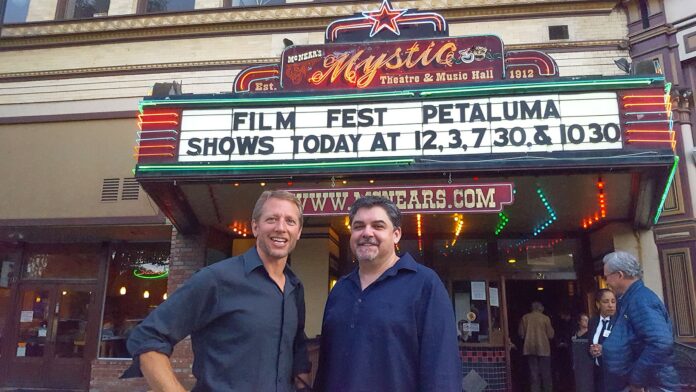
Monster lovers from around Northern California and beyond gathered in Sonoma County last weekend for the third annual Silver Scream Festival, which took place at the Roxy Stadium 14 Cinemas in downtown Santa Rosa and boasted a lineup of both classic and new horror and sci-fi films, with celebrity guests, panel discussions, special effects makeup demonstrations and more.

Hosted by Famous Monsters of Filmland Magazine and the Santa Rosa Entertainment Group, which owns and operates the Roxy Stadium 14, the festival welcomed horror and film fanatics from Friday, Feb 16, to Sunday, Feb 18. Overall, the event was a blast for fans of the genre with dozens of feature-length and short films to see in an intimate setting and many of the genres brightest stars in attendance.
Opening night kicked-off with a ribbon cutting in the Roxy’s upstairs lobby featuring actresses Barbara Crampton, Kelli Maroney and Suzanne Snyder–collectively appearing in the festival’s “Heroines of Horror” panel and each screening one of their films – as well as writer and filmmaker John Russo, best known as the co-creator of 1968’s Night of the Living Dead.

From there, attendees had several options for film screenings and events, starting with 1988’s Killer Klowns from Outer Space, starring Suzanne Snyder, who spoke with affection for the film’s outlandish practical effects and who also revealed that she scares easily in horror films.

A handful of brand-new indie films opened at the festival, including the vampire thriller Living Among Us, with director Brian Metcalf and several members of the cast on hand for a Q&A.

Friday night also held a reception nearby at Third Street Aleworks to celebrate the birthday of Silver Scream’s special guest Ricou Browning, best known as the Gill-Man in The Creature from the Black Lagoon films. Browning is the only living actor to portray one of the classic Universal monsters, and at 88 years old, he still revels in the chance to meet fans and talk films.
Saturday, Feb 17, started with a screening of Barbara Crampton’s not-yet-released film, Replace. Crampton also received Silver Scream’s inaugural Lifetime Achievement Award on Saturday, accepting a large butcher knife trophy with graciousness and thanking the fans for embracing her in the horror genre. Crampton’s 30-year career in horror films includes classic ‘80s fare like Re-Animator and From Beyond, and modern day films like We Are Still Here and Sun Choke.
Kelli Maroney was on hand for the screening of her 1984 cult classic, Night of the Comet, and she spoke of her friendship with co-star Catherine Mary Stewart and recounted how the film depicted an abandoned Los Angeles after a comet turns everybody to dust.

Maroney then joined Crampton and Snyder for the Heroines of Horror panel, moderated by director Jackie Kong. Unfortunately, this was the festival’s only real let down, as Kong seemingly never got the message that this panel was a celebration of these women’s strength rather than their screams, and as a moderator she failed to really let the panelists speak fully on the breadth of their experiences.

Classic horror lovers soaked up Saturday’s lineup of all three Creature from the Black Lagoon films, which mostly hold up to today’s standards with excellent costume design and stunning underwater sequences. Saturday also including the brand-new Criterion Collection edition of Night of the Living Dead on the big screen, and co-writer John Russo appeared for a Q&A in which he spoke about creating the modern zombie movement almost by mistake, and how the film’s legacy has impacted his career in horror.
Saturday concluded with a special VIP dinner across town at the Flamingo Resort, and attendees at that dinner rubbed elbows with the stars and enjoyed live entertainment, all while raising money for North Bay fire relief efforts.

Sunday was a short day, opening with screenings of classic horror/comedy Blood Diner, with director Jackie Kong on hand, and Maniac, with director Bill Lustig in attendance. This reporter was honored to moderate the Q&A with Lustig, who is a natural storyteller. Lustig offered insight into going to grindhouse theaters as a kid in 1970s New York City, and how he made Maniac on a shoestring budget.

Throughout the weekend, dozens of short films also screened in blocks, and selections included films by several local filmmakers like Sean Pettis, who premiered his stop-motion short film Baba Yaga Origins, and Miranda Limonczenko, who directed the Black Mirror-esque short film Sleepo. Many of the shorts were impressive exercises in horror, comedy, science fiction and drama.
During the weekend, the lobby was also filled with the ghastly goodness of horror makeup demonstrations by experts Walter Welsh, seen on the television series Face Off, and Ellinor Rosander, who’s YouTube makeup tutorial channel EllieMacs SFX garners millions of views.

At the end of Sunday, the awards ceremony celebrated the best of the fest, and winners included Horror feature Butterfly Kisses, comedy feature Killing Diaz, documentary Monster Kids, horror short Lunch Ladies and comedy short Late.
All weekend, Silver Scream Festival offered a strong weekend of entertainment, and the fans who made it out were treated to a stellar lineup of cult classics, never-before-seen features, and a supportive horror film community that hopefully keeps the event coming back for years to come.

Feb. 16-19: Sweet Weekend in Cloverdale

0

It’s a bird . . . It’s a plane . . . It’s the Citrus Fair! For the annual Cloverdale Citrus Fair this President’s Day weekend, the long-running community tradition adopts a superhero theme, flying high with live entertainment, exhibits, animal competitions and lots of family fun while packing a punch with events like the acclaimed wine competition and carnival rides. In addition to a fair atmosphere, the weekend features a parade through downtown Cloverdale on Feb. 17, theatrical performances from the Cabaret Players, and a pageant to crown the Citrus Fair Queen. Join the fun, Friday through Monday, Feb. 16–19, at the Cloverdale Fairgrounds, 1 Citrus Fair Drive, Cloverdale. $5–$8 general admission. cloverdalecitrusfair.org.

Feb. 17-18: American Art in San Rafael

0

Now in its 34th year, the American Indian Art Show is recognized as the West Coast’s largest celebration of antique works created by Native American populations from the pre-colonial era. Over a hundred dealers and artists will be on hand with an array of works including jewelry, textiles, woven baskets, pottery and beadwork in addition to paintings, photography and literary works. Whether you’re a seasoned collector or a first-time observer, this show’s look at indigenous art is unparalleled. Saturday and Sunday, Feb. 17–18, at Marin Center Exhibit Hall, 10 Avenue of the Flags, San Rafael. Saturday, 11am to 5pm; Sunday, 11am to 4pm; opening preview, Saturday at 9am. $18–$35. marinshow.com.

Feb. 18: Trio of Voices in Occidental

0

Not one, not two, but three local poets release newly published works at a book launch event this week. Donna Emerson’s first full-length poetry collection, The Place of Our Meeting, moves between coasts and generations in its exploration of human connectedness. Also a first, Phyllis Meshulam’s Land of My Father’s War follows her parent’s journey and separation in World War II. Jodi Hottel’s Voyeur is considered a work of ekphrastic poetry, which reacts to other forms of art through the written word. All three authors read, sell and sign their collections on Sunday, Feb. 18, at the Occidental Center for the Arts, 3850 Doris Murphy Court, Occidental. 2pm. Donations welcomed. 707.874.9392.

Feb. 18: Local Star in Healdsburg

0

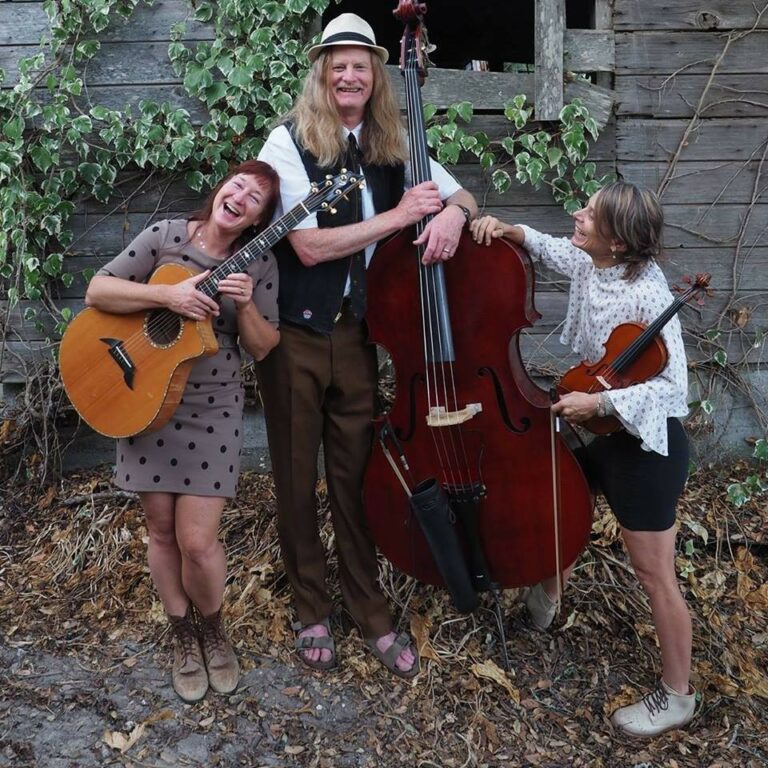
Santa Rosa native Julian Lage was already considered a musical child prodigy and accomplished guitar virtuoso when he formed the Julian Lage Trio with double bassist Scott Colley and drummer Kenny Wollesen. In the last two years, Lage has redefined his sound from a pre-bop jazz motif into an early rock ’n’ roll groove in the vein of Little Richard and Bo Diddley. This week, Lage is back in his North Bay and plays an album-release show to celebrate his new critically acclaimed record, Modern Love. Spend the evening with the Julian Lage Trio on Sunday, Feb. 18, at the Raven Theater, 115 North St., Healdsburg. 7:30pm. $30–$55. 707.433.3145.

Spotlight on Calistoga

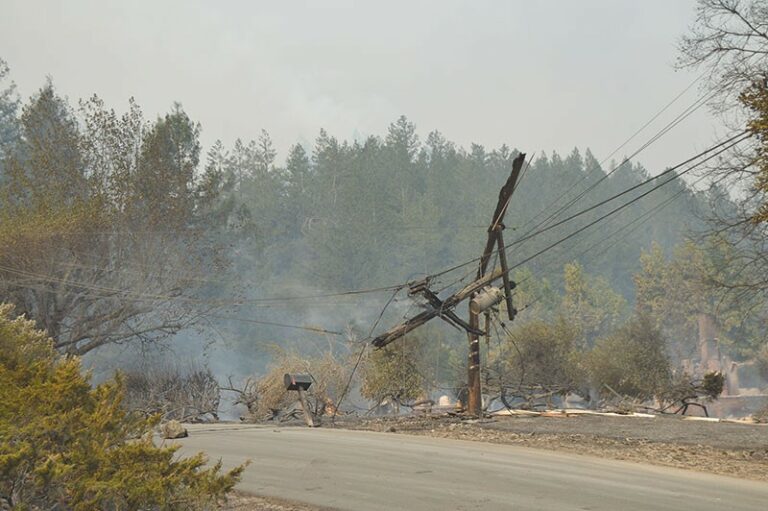
As spring comes to ground zero of the Tubbs fire, nearby winemakers count their blessings

For the winemakers near Tubbs Lane, the coming of spring is bittersweet.

While spring is more than a month away, the unseasonably warm weather seems to have left winter far behind. The sun beams down from azure skies, and white tree blossoms, green grass and yellow mustard flowers paint the landscape in bright swaths of color. The long run of warm weather has given way to early talk of bud break, the first green shoots on dormant grapevines.

Tubbs Lane is where the Tubbs fire got its name. But the deadly firestorm that started the night of Oct. 8 didn’t actually begin here. The wind-whipped inferno started a little farther up Highway 128, near Bennett Lane. But for those who live and work near Tubbs Lane, it was ground zero.

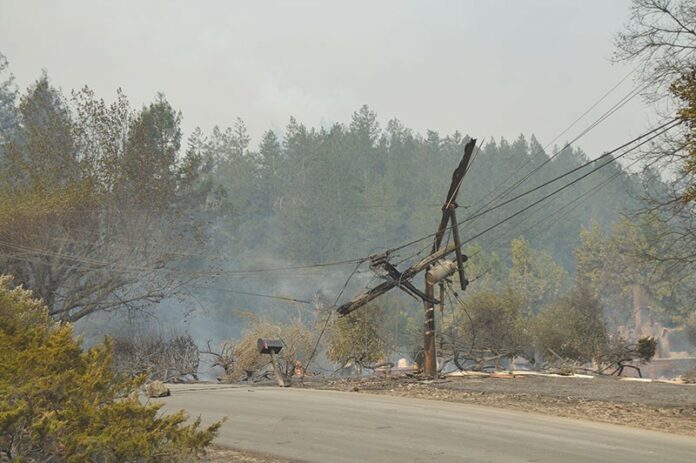
Underneath the growing thicket of green on the hillsides that rise steeply from the valley floor are the black scars of the fire and the charred foundations of homes lost in the disaster. While green seems poised to overtake the black as the landscape heals, it will take those who lived through the fire longer to recover.

“It was bloody terrifying,” says Rachel Gondouin, associate winemaker at Bennett Lane Winery, just around the corner from Tubbs Lane.

The tile-roofed winery survived the fire, but Gondouin says they had only harvested about 50 percent of their grapes when the disaster struck, and much of the crop was lost to smoke damage. But she’s looking to the future.

“It’s such a beautiful time of year right now, with all of the mustards growing—it gives us a sense of renewal into 2018,” she says. “We are excited for the promise the new vintage will bring.”

After riding over Mount St. Helena on his motorcycle from Lake County the morning of Oct. 8, Envy Winery winemaker Banton Kirkendall stayed on site to protect the winery and his fermenting Cabernet Sauvignon. Half the winery’s crop was picked before the fire. The remainder does have a whiff of smoke taint, but Kirkendall says creative blending should take care of that.

A former firefighter, Kirkendall appreciates the role fire plays in California. “The forest needs to burn to regenerate,” he says.

Kirkendall wonders if there will be two Napa Valley 2017 vintages, pre-fire and post-fire. “We will find out,” he says.

For now, Kirkendall’s watching the surrounding landscape change.

“All that green and black,” he says. “It’s pretty amazing.

Chateau Montelena is one of Tubbs Lane’s most celebrated wineries. Its 1973 Chardonnay beat out 11 other French and California white wines at the famous Judgment of Paris in 1976. The winery was founded by businessman Alfred Tubbs in 1888, the man for whom the road is named. The Tubbs fire didn’t damage the winery, but vineyard manager David Vella says 45 tons of grapes still on the vine were lost to smoke damage. The winery did not fare so well in 1964 when a wildfire destroyed the property’s stately mansion and farm building.

“This was history almost repeating itself,” Vella says.

Vella lives on the property and says if the winds had changed direction during the fire, the fate of the winery would have been very different. “It would have been ugly.”

Every morning, Vella looks to the north at the fire-scarred hills and realizes how lucky he was. “It’s a blessing,” he says. “We feel very fortunate.”

While the lack of rainfall has him worried, he takes some solace in the profusion of new growth t

“This is renewal to a certain extent,” he says. “It’s soothing to see all the green.”

[page]

LOCAL KNOWLEDGE

Karan Schlegel knows her way around the city she’s called home for 36 years

Describe your perfect day in Calistoga?

Sitting in my backyard drinking my morning coffee, reading the paper or a book, and waving to the hot air balloons as they fly over town. After that, I walk downtown to the Saturday Market for fresh fruit and vegetables, stopping in at Bella Bakery for a pastry, coffee and a chat with locals. Then I check out what’s new in the stores on Lincoln Avenue. Mid-afternoon would then lead me to one of the spas for a mineral or mud bath, massage and a swim in the mineral pool. The perfect day would end sharing dinner with family or friends.

Where is your favorite place to eat in Calistoga and why?

I enjoy all the various cuisines offered in the local restaurants, but if I have to choose one that stands out it’s Solbar located at Solage. Whether I am sitting outside by the pool looking at the Palisades mountains, or inside on a cold day by the fireplace, the tranquil atmosphere makes me feel like I am on vacation.

Where do you take first-time visitors in Calistoga?

I take first-time visitors to the Sharpsteen Museum of Calistoga History. It was founded by Ben Sharpsteen, who was an Academy Award–winning animator, producer and director for Walt Disney Studios. The memorabilia of Ben’s career and an Oscar are on display in the founder’s room of the museum.

What do you know about Calistoga others don’t?

I have only lived in Calistoga 36 years and am aware there are locals in their 90s that know more about Calistoga’s history. However, I did ask my husband, Ron, who was born and raised in Calistoga. Ron’s family property was located two miles south of Calistoga below Sterling Vineyards on Highway 29. He remembered there was a trail across from their property that was built by Chinese laborers. The trail ran north toward Diamond Mountain and Kortum Canyon just above Calistoga. The land is now covered by vineyards, houses and roads.

If you could change one thing about Calistoga what would it be?

The housing shortage. Family members of Calistogans, including my children, find it challenging to continue living in our community due to the shortage of apartments and the rising cost of real estate. Unless children inherit or take over running a family business, they tend to leave Calistoga and move somewhere more affordable.

The Gav Guv

Lt. Gov. Gavin Newsom is running for governor of California this year, and our colleague at our sister paper the Metro in San Jose, Jennifer Wadsworth, caught up with him at a recent event at the Laborers’ International Union in Silicon Valley, where Newsom talked about education, the tech sector, income inequality, cannabis, affordable housing, Trump and more. Will Gav be guv? He’s facing off against former Los Angeles Mayor Antonio Villaraigosa (who just nabbed the endorsement of San Jose Mayor
Sam Liccardo), California State Treasurer John Chiang and Delaine Eastin, the former California state superintendent of public instruction and the only woman in the race. The latest polls have Newsom and Villaraigosa running neck and neck in advance of the nonpartisan June 5 primary. We interviewed Villaraigosa last month, and before election day we’re aiming to give Mr. Chiang and Ms. Eastin the same opportunity to make their case to our readers.—Tom Gogola

The Bohemian: Bay Area cities are ground zero for income inequality. How do you think we arrived at this point of extreme poverty in the shadow of plenty, and what steps would you take as governor to alleviate those problems—both on a structural level and in the short-term?

Newsom: The only substantive way we’re going to address this issue is you’ve got to begin at the beginning. Our interventions come too late. We’re playing catch-up, we’re triaging it. At the end of the day, if we don’t focus on the first few precious years of a child’s life, we are making a huge mistake—and we’ve been doing that for a generation. The science is in, it’s overwhelming: billions and billions of neurons exploding at the same time; 85 percent of that brain is developed by the age of three. If you don’t capture a kid by the age of three, we’re going to be spending extraordinary amounts of money playing catch-up.

So we have a huge focus on prenatal care, on nurse home visits, early intervention and those first three precious years. Obviously as mayor, I did universal preschool—fully implemented it. That’s profoundly important from a foundational perspective. But that’s, to me, my focus: the readiness gap, and not waiting for it to become an achievement gap.

Do you think that’s something California could pull off without federal funding?

We can. We’d love to see the federal government recognize what all the experts already know, but the state can amplify better behavior at the local level. Local government needs to significantly increase its investment, counties need to increase their investment, and certainly the state needs to incentivize that. And that’s a big part of what we want to do, is incentivize better behavior at the local level.

I think what’s happened in the past is governors have done—we’ve modestly invested in this space, but not to the degree that I’m committed to. This is a very specific distinction between my campaign and the campaign of others, and between the status quo and what I hope to promote as the next governor.

How do you fund something that ambitious?

It’s a question of priority. We did [universal] preschool in the middle of a recession as mayor. I did universal healthcare in the middle of a recession as mayor.

So you’re advocating a bottom-up approach?

It’s the only way to address these issues. Otherwise, I’m just giving you platitudes, I’m just giving you political speak, I’m saying nothing meaningful, because all I would be offering is a strategy to fail more efficiently. And that’s, unfortunately, what we’re doing. And, you know, you just have to—there has to be a recognition and a reconciliation of the failure in our society to substantively address the importance of those critical early years.

You garner a lot of support from the tech sector, and you’ve championed the tech industry as a way to solve some of the inequalities we’re grappling with. But in many ways, Silicon Valley has exacerbated these social ills. As governor, how would you hold the industry accountable to upholding its end of the social contract?

One of my closest friends, the godfather of my firstborn, Marc Benioff [CEO of Salesforce], is a shining example of someone who gets it and gets it done. Follow his example. He’s been an unbelievable leader. He’s walked his talk, on gender pay and pay equity and environmental stewardship. He just announced what they’re doing with the Salesforce Tower in terms of meeting LEED Platinum levels, and the incredible water-efficiency proposals that he’s advancing. My point being that on issue after issue, on homelessness, philanthropy contribution, on what businesses can do in real time—not waiting until a massive amount of wealth is concentrated and then at the end of your life you redistribute it—he has marked, I think, the type of example that others should follow.

Giving while living.

Yeah, and also, you know, amplifying the workforce to do the same individually—not just as an institution. It’s a way of saying this: Look, I’m very close, as you know, with a lot of leaders in the community, and there’s an empathy gap, and that needs to be closed, and I’m committed to working in the valley to address those issues. I’d like to see the kind of ingenuity, the entrepreneurial spirit put to address the issues of social mobility as it is for pushing out products and new iterations of releases.

And to see them repatriate their taxes?

Well, it’s also an opportunity—don’t think for a second that when I read Tim Cook’s announcement [to repatriate Apple’s overseas profits because of the GOP tax measure] that I didn’t think of many things that he could be doing in the state of California with those dollars to address those issues.

By the way, one of the big ways is to deal with the housing crisis in this region. That’s an issue that should immediately galvanize the tech community, particularly when it comes to the missing middle, to workforce housing. We’ve got a $4 billion housing bond that’s on the ballot, but only $300 million is for people earning 60 to 120 percent of [the median income]. So there’s an opportunity to reach out to the corporate sector and address some revolving loans to make up for the gaps in financing, to make up for the gap in workforce housing. I think there’s a tremendous opportunity there to do this at scale—because with what we’re talking about, you can’t play in the margins, you can’t play small ball on affordability. And that’s something I really look forward to engaging with the community on.

In that same vein, how do you plan to make sure local governments are building their share of affordable housing?

They need to be held to account. In our housing plan, we want to assign sanctions for those who aren’t meeting their housing element. We actually want to be punitive. You’ve got to be tough.

How? By withholding transit dollars. It’s an amazing part of our proposal that no one has yet seemingly read. Because if they had read it, they would be critical.

I know the Metropolitan Transportation Commission has talked about that for a long time

Thank you. Yes, and we reference the MTC’s work in our plan. So we’re there. I was inspired by that, in fact. You’re the first person I’ve talked to who’s known that.

I interview a lot of wonky people about this kind of thing.

That’s great.

Would you sign a bill to repeal Costa- Hawkins [the 1995 state law which limits locally written rent-control ordinances]?

[page]

I would promote amendments to Costa-Hawkins. I don’t know that I would come out with an outright repeal. I think the consequences of that could be pronounced, particularly on housing production and construction. I think it could have a chilling effect.

That said, I take a back seat to no one on my strong support for rental protections, eviction protections, [the owner move-in] Ellis Act—you couldn’t be mayor of San Francisco unless you were raising the bar on those issues. I think there’s a real deal to be made with the advocates of that repeal, and some of the larger organizations, from the realtors and the [California] Apartment Association. So I would encourage that.

Let’s talk about cannabis. One of the complaints we’re hearing from consumers is about the high cost of compliance, the high cost of regulation under Proposition 64, which appears to be prompting people to turn back to the black market. What do you think the state can do to strike the right regulatory balance here, to prevent illegal sales and to keep the industry above board?

Look, I was the principal proponent, principal author of cannabis legalization. I spent three years organizing an effort to get it on the ballot, and to get it passed, and I feel, as a consequence, a great sense of responsibility to make sure it’s done right.

I made this point on Election Day, but I’ll repeat it: Legalization is not an act that occurred on Election Day, November last year. It’s a process that will unfold over a course of years, and that’s why you’ve got to be open to argument, interested in the evidence, those kinds of concerns, and iterative in terms of those applications to the rules. As you know, in the initiative we allowed for a simple majority—or a modest majority, forgive me—to amend so we don’t have to go back in front of the voters. So we have the ability to address these issues in a way that won’t allow them to fester.

I’m worried about the small growers—absolutely, unequivocally. I’m worried about the black market being stubborn and persistent because of the regulatory environment, and I want to be in tune and in touch with that and address those issues in real time.

Speaking of which, can you comment on the lawsuit against the California Department of Food and Agriculture, which came after the agency lifted acreage limits designed to protect small growers? There’s a concern that the rescission of the limit will discourage small-time operators from even complying with the new regulations. Do you know why that acreage limit was lifted in the first place and do you think it was justified?

Well, the governor took the spirit of what he believed was Proposition 64, and that was his framework for the first application of the rulemaking. But I completely appreciate the concern, because the spirit of what we were trying to achieve with the five-year prioritization was to protect those farmers.

I went up there personally, in Humboldt, and made that case to everybody there. So I feel a great sense of responsibility to have the backs of those folks, and I’m equally concerned. Again, it’s one of those instances where there’s only so much—well, I’m not the governor. I’m not making excuses, by the way, but respecting what the Legislature and the governor just did. I can assure you that at this time next year there will be some amendments and adjustments.

So do you disagree with the CDFA’s interpretation?

I get the spirit of it, I see the argument. God, I am so black and white in so many ways—because I am the guy who said yes to legalization, marry gays, go after the NRA, etc. On this, though, there are legitimate arguments from both perspectives. I want in real time to see the evidence of what actually occurs on the ground—not what people are asserting, not what people are suggesting. I want to actually see what happens over the next few months when the dust settles. And I will be very, very sensitive to those facts on the ground and the reality of the situation, not the promoted concerns.

On clean energy, you said, “It’s a point of pride and a point of principle for the next governor to change the bar.” In what ways would you raise that bar and turn Gov. Brown’s memoranda of understanding on these issues into actionable steps?

If the governor doesn’t sign a bill to get to 100 percent [clean energy] by 2045, then I will. I want to eliminate diesel by 2030. We have to move forward with regionalizing our grid. We’ve got to focus on storage enhancements. I want to double all local efforts.

Look, I’m the guy who did the plastic-bag ban, I was the one that presided over a city with the first composting requirements in the U.S. and the highest green building standards in the country. San Francisco was the national leader in low carbon green growth. Every year San Francisco is being called out as one of the greenest cities in the United States—if not literally the greenest. Portland, Ore., stubbornly, is right there with us. I’m passionate about these issues. Picking up where Gov. Brown left off is very exciting to me and enlivening, and so this is an area where no one has to convince me to maintain our leadership internationally, not just nationally.

You mentioned in your speech earlier that it’s important to put out a positive, alternative narrative to the Trump administration. What would that “positive, alternative narrative” look like in concrete terms over the coming few years?

All of the above. Everything we just said. From affordability, to healthcare, to the environment, to the issues of promoting our values and the diversity. The entire conversation is framed in terms of what we export that’s so uniquely California. We’re the innovation capital of the world, entrepreneurialism is running through our veins, research and development, diversity is celebrated not tolerated, environmental stewardship,
issues associated with healthcare and taking some more aggressive and bold approaches to
addressing the needs of our uninsured—all of these areas that I think would provide ample evidence of California’s dominance in terms of mind-share, in terms of economic growth, in terms of advancing our agenda for the future.

Stop It Now

0

To the Sonoma County Board of Supervisors: You have the power to end the serial violence that has rained down on the Lopez family for four and a half years.

First, their son was needlessly killed by Sheriff’s Deputy Erick Gelhaus. Second, District Attorney Jill Ravitch perpetuated a fraud on that family and the citizens of this county by hiring an “independent” investigator, William Lewinski, who she knew always found in favor of law enforcement.

Then, there was the demonizing of the Latino community, when its young people, including Andy’s friends, protested.

There was the return of Gelhaus to the streets.

There was the smearing of Lopez’s son’s memory and character by the sheriff’s office.

There was your refusal, when creating a task force, to take a moral stand. You were content to hide behind your legal obligations and restrictions.

Even the park, which the community happily accepts, is bittersweet, built as it is on two decades of foot dragging and over the body of a young boy.

And now there is the long slog of a lawsuit, with your multiple attempts to have it dismissed, despite deposition testimony that makes it clearer and clearer that Andy did not have to die, that he should be alive and celebrating with us when the park opens on his birthday this June.

You can stop this onslaught of violence against the Lopez family right now. You can turn to your attorney and the sheriff’s office and say, “No, it stops now.” You can manifest some of your claimed compassion and empathy and say, “We’re settling this case.” Attorneys are trained to ignore the harm they so often create. You are under no such obligation. You can say, “We refuse to continue inflicting pain on the Lopez family. We want this case settled.”

Please, do it today.

Susan Lamont is a member of the Police Brutality Coalition Sonoma County.

Open Mic is a weekly feature in the ‘Bohemian.’ We welcome your contribution. To have your topical essay of 350 words considered for publication, write op*****@******an.com.

Letters to the Editor: February 14, 2018

Dreamers
Are Americans

In my view, DACA recipients are Americans. Many were brought here quite young, before grade school. All their lives they’ve been American, educated and steeped in our American culture. Their functional language is English, many hold degrees, and a vast majority are employed and lead productive lives.

It wasn’t their decision to come here. They’ve played by the rules since they’ve been here, they pose no threat to anyone, and they’ve become an integral part of the workforce. They are every bit American in every sense of what that means as everyone else. Do we want to boot close to a million such people from this country, people that we grew up with, went to school with, work with and live next door to?

What is their crime that they should be deported, ripped from their families, friends and the only lives they’ve ever known? This is flat-out heartless cruelty compounded with rank stupidity.

It smacks of the darkest days in Europe before WWII. This is Trump’s vision of “America first”—racist and xenophobic, and it’s echoed by a third of the voting public.

We’re led by people who promulgate hatred and fear. These are dangerous times.

Sonoma

What’s in a Name?

Thank you so much for Dani Burlison’s article, “Triggered” (Feb. 7). As a psychotherapist and someone who has worked extensively with people who have experienced sexual assault and abuse, I observe how heightened media coverage of these topics is hard on those who have open wounds. I hope more seek help as a result of your article, and that more men join the movement toward a more equal society

I do want to point out some language that was hurtful, though I’m sure unintentional. When you name “women and transgender women,” the implication is that transgender women aren’t women. They are—that’s the point. In the future, you could just say “women,” or if you have a reason to specify trans women, you might try “women, including transgender women” or “cis-women (non-trans women) and transgender women.”

If anyone is interested in understanding more about transgender people, there is a conference coming up in April in Santa Rosa for non-trans people to learn how to empathize with, welcome and support trans people. Call 707.829.8293 if interested.

Sebastopol

Editor’s Note: Dani Burlison did use the term “cis” in her story, but the word was edited out in an attempt at clarity. Thank for you bringing the issue to light.

Write to us at le*****@******an.com.

Cutting Class

I'd heard rumblings of a labor shortage in the vineyards, but I had no idea how dire it was until they started calling in the wine writers for help. Last week, Sonoma County Winegrowers cancelled their annual Pruning Championship, an event that's intended to recognize some of the North Bay's most valued vineyard workers, due to difficulties in getting vineyard...

Silver Scream Festival Scares Up Good Times in Santa Rosa

Three-day horror and sci-fi film fest brings out the "Monster Kid" in movie lovers.

Feb. 16-19: Sweet Weekend in Cloverdale

It’s a bird . . . It’s a plane . . . It’s the Citrus Fair! For the annual Cloverdale Citrus Fair this President’s Day weekend, the long-running community tradition adopts a superhero theme, flying high with live entertainment, exhibits, animal competitions and lots of family fun while packing a punch with events like the acclaimed wine competition and...

Feb. 17-18: American Art in San Rafael

Now in its 34th year, the American Indian Art Show is recognized as the West Coast’s largest celebration of antique works created by Native American populations from the pre-colonial era. Over a hundred dealers and artists will be on hand with an array of works including jewelry, textiles, woven baskets, pottery and beadwork in addition to paintings, photography and...

Feb. 18: Trio of Voices in Occidental

Not one, not two, but three local poets release newly published works at a book launch event this week. Donna Emerson’s first full-length poetry collection, The Place of Our Meeting, moves between coasts and generations in its exploration of human connectedness. Also a first, Phyllis Meshulam’s Land of My Father’s War follows her parent’s journey and separation in World...

Feb. 18: Local Star in Healdsburg

Santa Rosa native Julian Lage was already considered a musical child prodigy and accomplished guitar virtuoso when he formed the Julian Lage Trio with double bassist Scott Colley and drummer Kenny Wollesen. In the last two years, Lage has redefined his sound from a pre-bop jazz motif into an early rock ’n’ roll groove in the vein of Little...

Spotlight on Calistoga

As spring comes to ground zero of the Tubbs fire, nearby winemakers count their blessings For the winemakers near Tubbs Lane, the coming of spring is bittersweet. While spring is more than a month away, the unseasonably warm weather seems to have left winter far behind. The sun beams down from azure skies, and white tree blossoms, green grass and yellow...

The Gav Guv

Lt. Gov. Gavin Newsom is running for governor of California this year, and our colleague at our sister paper the Metro in San Jose, Jennifer Wadsworth, caught up with him at a recent event at the Laborers' International Union in Silicon Valley, where Newsom talked about education, the tech sector, income inequality, cannabis, affordable housing, Trump and more. Will...

Stop It Now

To the Sonoma County Board of Supervisors: You have the power to end the serial violence that has rained down on the Lopez family for four and a half years. First, their son was needlessly killed by Sheriff's Deputy Erick Gelhaus. Second, District Attorney Jill Ravitch perpetuated a fraud on that family and the citizens of this county by hiring...

Letters to the Editor: February 14, 2018

Dreamers Are Americans In my view, DACA recipients are Americans. Many were brought here quite young, before grade school. All their lives they've been American, educated and steeped in our American culture. Their functional language is English, many hold degrees, and a vast majority are employed and lead productive lives. It wasn't their decision to come here. They've played by the...
11,084FansLike
4,446FollowersFollow
6,928FollowersFollow