Song & Dance

0

‘A lot of people don’t know, but the Bay Area has quite an extensive following of flamenco,” says veteran performer and educator Andrea La Canela. “In the United States, it’s one of the centers where a lot of guitarists and dancers and singers are. We’re really lucky that way.”

Raised in Santa Cruz with a background in ballet and modern dance, La Canela began studying flamenco more than 30 years ago. Now based in Marin, she regularly performs and teaches classes locally, though her flamenco career has taken her across the globe, including a two-year sailing journey to Spain in 2006.

“We took off for Spain and performed wherever we went,” says La Canela, who embarked on the trip with her musical partner at the time. The pair sailed down to Mexico and Costa Rica, crossed over to the Atlantic and made their way back up the eastern seaboard to New York, then shot across the Atlantic Ocean on a 19-day sail before seeing land again. Eventually, they settled in Rota, Spain, and immersed themselves in flamenco culture for over a year.

“Music is a wonderful way to travel,” La Canela says. “Everybody relates to music, if you don’t speak the same language.”

Describing the music of flamenco as both haunting and beautiful, La Canela brought her passion and lifetime of experiences with her when she returned to the Bay Area in 2008.

“Flamenco is very ancient, and it deals with all the emotional scale that a human being has. It’s the blues of Spain,” she says. “You don’t need a stage to do flamenco. This is a lifestyle, and you can do it in the living room. It’s so accessible.”

In addition to performing at parties and wineries throughout the North Bay, La Canela hosts a regular flamenco show at the Sausalito Seahorse on the third Thursday of the month, and teaches dance classes at venues like Marin Ballet in San Rafael and Knights of Columbus Hall in San Anselmo, on her own and through Marin County’s Parks and Recreation department. Her next session of kids classes begins
Sept. 19.

“The teaching has really started to take off,” she says. “Right now, I’m teaching Sevillana, a folk dance that has all the elements of flamenco in it. You can’t get past junior high school in Spain without dancing Sevillana. It’s a great beginner dance.”

Listen to Riesling

0

The last time I ran into Brian Maloney, director of winemaking for Boisset Collection’s DeLoach Vineyards and Buena Vista Winery, it was at a super-exciting event.

We were standing, as Maloney informed me, in the former residence of wine legend Robert Mondavi, at the top of Wappo Hill with a bird’s eye view of Napa Valley, while current resident Jean-Charles Boisset was showing guests the stuffed tiger in a corner of this mega-California ranch-house-turned-eclectic-ultra-lounge, prior to the debut of J’Noon, the first “luxury” Indian wine launched in the United States in partnership with Boisset.

But when we got to talking, what Maloney was excited to tell me about was a trivial amount of Riesling he is making from an obscure Marin County vineyard. Riesling gets a lot of respect among winemakers. Shouldn’t wine drinkers take notice?

Recently, I asked Bohemians to tell me what they thought of a few examples of this varietal, from high and low in the North Bay.

Chateau Montelena 2017 Potter Valley Riesling ($27) Montelena gained fame for Chardonnay, of course, but its Riesling has been an insider’s favorite for decades. Winemaker Matt Crafton, in the winery’s notes, says, “I love sharing our Riesling when I travel.” Typically, Crafton says, tasters beg off because they say they don’t drink sweet wine. But this wine isn’t sweet—in fact it’s hardly off-dry, with juicy acidity, a leesy note buffering sweet honeysuckle and apricot aromas, then nectarine fruit flavor sings across the palate. ★★★★½

Imagery 2016 Pine Mountain-Cloverdale Peak Riesling ($26) Imagine a vape flavor called “Rhineland,” kids, and you’ll get an idea of the classic notes of lime rind, honeycomb and white raspberry this Riesling displays in a subtle, ethereal way. Yet it’s got juicy presence on the palate. This is grown at high elevation. ★★★★

Trefethen 2017 Oak Knoll District of Napa Valley Dry Riesling ($26) Another early hero of Napa Chardonnay that dares not mess with its Riesling program. In fact, Trefethen has it dialed in quite well year to year, although this pale platinum gold wine feels more dialed-back than previous vintages. The honey and lime aromas are muted, as if in a powdered sugar-coated confection and tasted on one of those forever foggy August days we used to have. ★★★★

DeLoach 2017 Petaluma Gap Marin County Riesling ($30) This wine, softer than the others, has cool-climate, malic-influenced aromas of apple and pear cider, spiced with a pinch of cinnamon. Still, it’s not like some kind of appletini-esque “unoaked” Chardonnay—on the finish, it shows class. It’s Riesling. ★★★

Life Cycles

0

Relationships are front and center in two very different shows now running on North Bay stages through Aug. 19.

The Cloverdale Performing Arts Center is presenting Heroes, playwright Tom Stoppard’s adaptation of a 2003 French play about three World War I vets in a retirement home. Gustave (Robert Bauer), Henri (Peter Immordino) and Philippe (Dale Harriman) pass their days sitting on a terrace, annoying each other and plotting their escape from the veterans home. Convinced that the tyrannical nun in charge has it out for Philippe, their latest plan starts out with the goal of running to French Indo-China but ends on settling for a poplar grove within view of their terrace. Now if they can just figure a way to take a 200-pound statue of a dog with them . . .

An odd combination of One Flew Over the Cuckoo’s Nest, Waiting for Godot and The Golden Girls (with Gustave as Dorothy, Henri as Blanche and Philippe as Rose), Heroes is a slight piece with some amusing dialogue and geriatric slapstick.

Rating (out of 5): ★★★

Healdsburg’s Raven Players have converted the cavernous Raven Theatre into an intimate black box performance space, and are presenting an updated version of 1996’s I Love You, You’re Perfect, Now Change. The Joe DiPietro and Jimmy Roberts musical revue holds the record as the second-longest running Off-Broadway show.

The play consists of a series of comedic vignettes that follow the arc of human relationships from dating, sex and marriage through children and aging. Four versatile performers (Bohn Connor, Kelly Considine, Troy Evans and Tika Moon) sing and dance their way through 18 scenes with songs like “Better Things to Do,” “Single Man Drought” and “I Can Live with That.” Recent revisions include 21st-century additions like sexting (“A Picture of His . . .”) and same-sex families (“The Baby Song”).

It’s a very entertaining show, helped immensely by the talented cast. All do well by the multiple roles they play, but the rubber-faced Connor really makes an impression with characters ranging from an incarcerated mass murderer giving dating tips to a hapless husband trying to put the kids to bed so he and the missus can get it on. ★★★★

Starch Search

0

Stop the presses and hold the wheat—there’s a new bakery in Petaluma. And it’s a dedicated gluten-free, community-supported bakery (CSB).

Mama Mel’s, the fruit of a seven-years-long labor, “all started with a baguette pan,” says founder Melissa Wenzel.

Wenzel always suspected she was gluten-intolerant, and baked quick breads for personal consumption for years—but it was the pan that inspired her to make artisan bread without wheat.

Wenzel has a background in art and naturopathic medicine, and unsurprisingly approaches her gluten-free baking as both an art and science. She insists she’s still perfecting her product, and came by her recipes through extensive research on different gluten-free flours and blends—”and a lot of trial and error,” she says.

Wenzel has tried various combinations of sorghum, brown rice, millet, tapioca, potato and flax seed flours, and angles for veganity in as many breads as possible by not adding eggs or milk.

Store-bought gluten-free bread often lacks structural integrity or flavor, but Wenzel demonstrates that gluten-free bread and bagels don’t have to be like that. Mama Mel’s bread is delicious—it rivals any and all glutenous counter-loaves.

How does she do it?

“I treat it like regular bread,” says Wenzell. She doesn’t knead the dough, given the absence of gluten in it, but says the consistency changes after being handled. All Wenzel’s bread is then cold-fermented for at least 24 hours, which breaks down some of the starches and helps give the bread its remarkable consistency.

As Wenzel honed her talent for baking, friends clamored for her lovely loaves and asked to be on her “bread list.” About a year ago, she opened this service up to the public and now operates Mama Mel’s much like a CSA (community supported agriculture): customers sign up to receive the bread bimonthly or monthly, and pick it up at one of the local cafes that carry her products.

Community supported bakeries rely on sustained community support, and in order to flourish, embrace direct relationships between purveyors and consumers. Wenzel says the model works well since she is able to butter people up with her bread without a corporate investor—as long as her customers remember to pick up their orders. “It’s rustic, and in that way, simple,” she says, citing the ease and informality of the CSB business model.

Though Mama Mel’s, which consists of Wenzel, her husband and one employee, takes between 75 and 100 individual orders per month, Wenzel dreams of running a breadmobile—a bakery-like food truck—or opening a brick-and-mortar storefront. For now, she remains hard at work finalizing her flour mixes, and aims to teach others how to go gluten-free.

“I would love to be the neighborhood gluten-free baker.”

Mama Mel’s bread and bagels (and, hopefully soon, the croissant recipe Wenzel’s working on) are available at Retrograde Coffee in Sebastopol, Brew Coffee & Beer House in Santa Rosa and, in Petaluma, Sarah’s Eats & Sweets, Bump City Bakery and the Petaluma Farmers Market.

Scenes from the 2018 NorBay Music Award Winners Party

A couple weeks ago, over twenty North Bay musicians, promoters, venue owners and other musical luminaries came together for the Bohemian’s 2018 NorBay Music Award Winners Party at Beer Baron in downtown Santa Rosa. Scroll through the slideshow to see the fun. All photos were taken by Candace Simmons and Tony Perrot of FourReels Studios LLC.

Letters to the Editor: August 8, 2018

Palms Inn
a Success

Yes, there are more sheriff calls to this property than your usual apartment complex (“Calls for Help,” July 31), but have you considered that the Palms Inn is actually saving the taxpayers money by getting people off the streets and thus cutting down on utilization of ambulance, emergency room, overnight hospitalization, and sheriff responses?

A main purpose of the “housing first” model is to put a roof over the head of the most vulnerable homeless who are costing the city hundreds of thousands in emergency service utilization in order to cut back on these costs. Not to mention all of the moral reasons, which should be reason enough to intervene.

The Palms ultimately benefits law enforcement by cutting down on utilization. I would be interested in the statistics about sheriff responses in Santa Rosa since the Palms inception, and utilization of services among Palms residents previous to moving in versus six months or a year in.

And yes, on-site mental health services would be fantastic and I fully support that, but there are on-site case managers through Catholic Charities and the VA, it is not a free-for-all. These residents have a level of support and access to services.

Sorry if this seems defensive I just feel like this is textbook cherry-picking of the data, and contains some language that is commonly used to disparage the efforts of combating homelessness, at least in the first half. This site is portrayed as some huge inconvenience to law enforcement.

I believe in this project and am willing to put my money where my mouth is.

Santa Rosa

Poignant Punks

I really appreciate the amount of research that went into this article “Mosh Split,” July 31). I felt like I was in Santa Rosa and feeling the crisis. Nice piece glad I read it! I really hope they continue to push music and arts into the community. It’s not easy rebuild people’s spirits after a fire.

Via Bohemian.com

CDs for Me

I’ve been an audiophile for 43 years. I have over 700 CDs that I’m ripping for my favorite songs only, and am looking to expand my collection. So imagine my horror when I found out that about the only music store left with a decent collection of CDs for sale is The Last Record Store (“A Positive Spin,” Aug. 1). I have driven all over Sonoma and Marin counties, and am finding that everyone else is going the LP route and dropping CDs. I say horror not because I have anything against the resurgence of LPs, but having been a major collector of LPs up until 33 years ago, there a lot of downsides to them that perhaps many have not thought through. On the short list, they are bulky and take up a lot of room, they melt, they scratch and they can’t be played on your car system. The new sales pitch is that they sound better then CDs, but that depends on the recording. But what finally turned me off of LPs in the mid-80s was problems getting even newly pressed LPs that were not defective. I remember in 1985 I returned Boz Scaggs’s first album nine times for scratches or skips. It was at that point that I said “never more.” I went CD, and I’m not going back. Good luck to the rest of you with your LPs.

Via Bohemian.com

Write to us at le*****@******an.com.

The Threat Within

0

While we’re often distracted by allegations of Russian efforts to influence our elections, we’re ignoring a much more important danger: the U.S. Supreme Court’s homegrown threat to our right to vote and have confidence in the accuracy of our elections.

A Supreme Court ruling in 2013 facilitated voter suppression. The Shelby v. Holder decision gutted the Voting Rights Act, and rolled back voting rights protections in states that had histories of discrimination in access to voting. Those effects made a huge difference in the 2016 presidential election.

According to a recent study published by the Brennan Center for Justice, the effects of the 2013 ruling included increased voter ID requirements at polling places, redistricting without regard for racial makeup of the districts, disenfranchising minority voters and voter roll “purging,” i.e., removing voters for dubious reasons. The result was that after 2013, two million eligible voters were purged from voting rolls.

In 2016, some elections officials further suppressed the vote by reducing the number of available polling places, making it more inconvenient for people to vote, printing an insufficient number of ballots, forcing voters to mark provisional ballots which have a higher chance of being rejected than regular ballots and allowing malfunctioning voting machines to “lose” votes.

At the same time, the Supreme Court has allowed unlimited corporate money in politics. Three years before gutting the Voting Rights Act, the Supreme Court’s Citizens United ruling erased the prohibition on dark money in politics. Their specious reasoning was that the First Amendment prohibits the government from restricting political campaign spending by corporations. The result has been a deluge of corporate and dark money support for business-as-usual candidates.

Who interfered more in elections: Russia or the Supreme Court? It’s easier to blame Facebook postings by alleged Russian operatives than to reverse Supreme Court rulings, but that’s what we’re going to have to do if we want to get our elections back.

Alice Chan is an elections integrity activist and delegate to the California Democratic Central Committee.

Open Mic is a weekly feature in the ‘Bohemian.’ We welcome your contribution. To have your topical essay of 350 words considered for publication, write op*****@******an.com.

Fickle Fusion

Keynote speaker Dr. Bill Silver kicked off the second annual North Coast Wine & Weed Symposium last week by conjuring a vision of long ago: picture a group of teens hiding out in a basement in New England on a snowy day in the 1980s, sipping some rotgut called Wild Irish Rose with cream soda, and furtively blowing clouds of Acapulco Gold out the window (sub in Bartles & Jaymes wine coolers and a Thai stick, and it sounds like a foggy evening in the North Bay long ago).

It wouldn’t have occurred to one of those teens, Silver tells the crowd, that one day he would smoothly, and quite legally, shift jobs almost overnight from the wine business to the weed business. “There are no words to describe what is happening right now.”

Having Silver headline the event, held at the Hyatt Regency in Santa Rosa, was a coup for its sponsor, the Wine Industry Network, which offers a news service, trade events and other wine business resources. Formerly the dean of the School of Business and Economics at Sonoma State University, where he helped cultivate the school’s wine business program, Silver took a gig as CEO of CannaCraft, the Santa Rosa cannabis extract business, in January, so he, along with the roster of highly accomplished lawyers, investors and entrepreneurs presenting at seminars throughout the day, was well placed to answer the question—

. . . um, what was the question again?

The obvious question has an easy answer, as it turns out. Will there be weed in my wine? Not at this time. Wineries, which are federally regulated, will not touch the stuff. They may, however, co-brand with cannabis companies to offer products to their wine club lists, which panelists in the seminar on cannabis opportunities for the wine industry suggested was a tantalizing prospect for marketing professionals in the wine business. They’ve got wineries lined up in the pipeline, several say. But here’s the thing: they’re all waiting for the other guy to go first.

Other presenters, like Brian Applegarth, founder of Emerald County Tours, enthused about the tourism potential of historic growing regions and other wine-like weed events like food pairings.

Several exhibitors, including the Solful dispensary in Sebastopol, made the case for weed-aroma appreciation. It’s a bit of a head trip, if you will, to see wine glasses full of buds in a corporate hotel lobby, but that much is legal, after all, in 2018—just no samples with active ingredients. It will be a while before you hear someone cry out, “Sommelier, there’s weed in my wine!”

Travelin’ Band

0

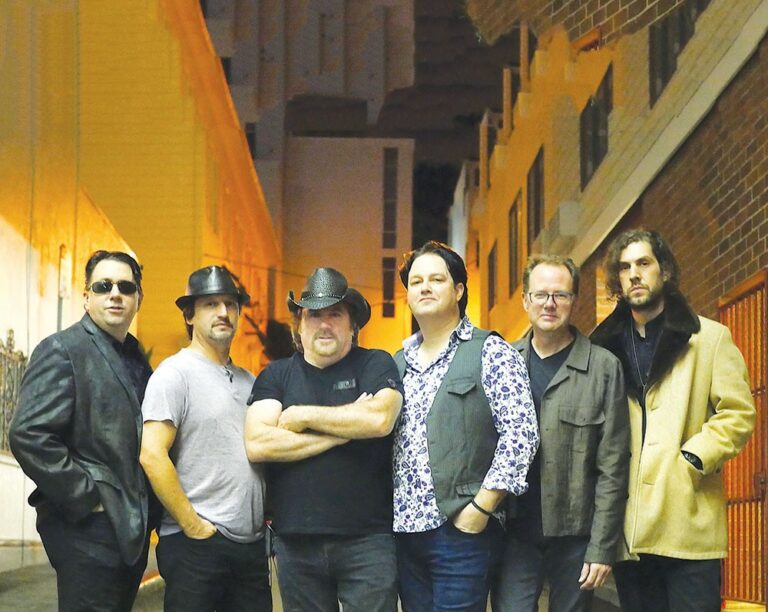
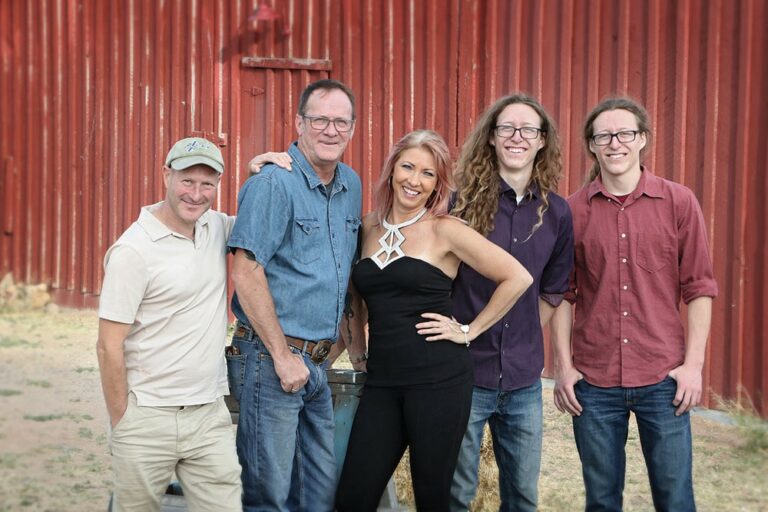
It does not take long for San Francisco Gypsy-rock band Diego’s Umbrella to hook an audience. In fact, it took all of two notes for the five-piece outfit to turn HopMonk Tavern’s session room in Novato from a casual crowd into an ecstatic dance party when they headlined the venue last month.

“That really just comes from years and years of touring and playing as many shows as our bodies will allow,” says percussionist Jake Wood.

After more than a decade together and with nearly a thousand shows under their belt, it’s obvious that Diego’s Umbrella have mastered the craft of performing live, and the group has an unspoken connection onstage when they dive into musical medleys that cross genres between heavy metal riffology, Croatian folk and Klezmer music.

“Pretty quickly, people realize that we’re onstage having fun, and it’s just really infectious,” says Wood. “We have sentimental moments and songs that range from different emotions, but overall, if you put a song like ‘Hava Nagila’ into your set, you’re setting a tone that you can’t really deny. The aspect of having fun is very real. It certainly is for me.”

Wood is joined under the umbrella by guitarists and vocalists Vaughn Lindstrom and Kevin Gautschi, violinist Jason Kleinberg and bassist Johann Hill, aka Red Cup.

“It’s a very special group of people,” says Wood. “I think we all really appreciate the camaraderie we have.”

Before joining the band, Wood was a freelance drummer. Last year he took advantage of some Diego’s Umbrella down time to get back into that world. He landed his first professional theater gig as a percussionist with the touring company of Hamilton: An American Musical.

“The level of musicianship in the orchestra blew me away every night,” says Wood. “It was pretty humbling.”

Diego’s Umbrella is back in full force this summer. There’s a new album in the offing and a performance under the afternoon sun at the Gravenstein Apple Fair in Sebastopol on Aug. 11. There they will be joined by the likes of Sonoma County folk trio Rainbow Girls and blues powerhouse Wendy DeWitt.

“Our latest touring motto is ‘thrash responsibly,'” jokes Wood. “We want to have a ton of fun, but we’re not 23 years old anymore, so we’re exercising some levels of precaution.”

Bye-Bye Babies

0

Small rural hospitals are struggling all over the country—and the North Bay is no exception.

Sebastopol’s Sonoma West Medical Center, formerly Palm Drive, is up for sale. Petaluma Valley Hospital is in talks with St. Joseph Health about the future of the facility. And Sonoma Valley Hospital is reducing services in order to keep its emergency room and diagnostic services open.

On July 26, the hospital announced it would be closing its obstetrics unit in October. That high-cost unit has been operating in the red for several years, says hospital CEO Kelly Mather. A drop in local births, combined with changes in the economics of healthcare delivery have contributed to the deficit, she says. Sonoma is increasingly a community of elders: Fewer young couples are starting families here, in part because of the high cost of living.
Births are down nearly 50 percent since 2010, and as a result, the Sonoma hospital’s OB unit has been operating at a loss of a half-million dollars a year. The decline in birth rates is a national trend. In May, the Centers for Disease Control reported that the U.S. birth rate is the lowest it’s been in 30 years, lower than the replacement rate needed to sustain the population.

Some women are giving up motherhood in favor of careers, which are often set back by a pregnancy. The cost of raising a family today is another constraint, especially for women carrying large student loans. And motherhood often goes unsupported in our society. Women are penalized at work for becoming pregnant, as 88 percent of workers get no paid leave for maternity or other caregiving needs.

The precipitous decline in birth rates isn’t the the only factor in Sonoma Valley Hospital’s decision. Reimbursements are also down, says Mather. “In the last four years, we’ve been reimbursed less. Kaiser has taken over the Bay Area. We end up with Medicare and Medi-Cal, which reimburse less.” Obstetrics patients are predominantly recipients of Medi-Cal, she says. “It doesn’t cover our costs.”

Obstetrics, Mather says, is “a risky service to offer. If anything goes wrong with the baby, you have to have backup on hand—anesthesia, pediatrics, two nurses at all times.”

The hospital’s total yearly revenue is running about $3 million below what it needs to be a sustainable operation. A big chunk of that is reimbursements from federal-government health programs. “Medicare is down over $2 million in the last year alone,” Mather says. “We’re closing services that don’t make money, so that we can continue to offer other services that do.” The OB unit will close Oct. 31.

Competition from Kaiser is another factor, Maher say. Kaiser will cover emergency room costs at local hospitals—but not other services.
Sonoma Valley also plans to eliminate its skilled nursing facility and turn over its home-health care service over to an independent provider.

“These changes reflect a long-term national trend for community hospitals of moving away from inpatient care to outpatient services. Advances in medical care and technology, in addition to insurance mandates, are driving this trend,” writes Joshua Rymer, chair of the Sonoma Valley Hospital board of directors, in a summary of the meeting posted on the hospital’s website.

Losing the OB unit is an emotional issue, as the testimony at a recent public hearing attested: Women spoke of having had all their children at the hospital. Some watched their grandkids emerge from the womb, too. Now moms will have to go to Santa Rosa or Queen of the Valley in Napa. Some objected to having to make the drive.

The OB cuts may also lead to more women having their babies at home. That would be welcome news to Sonoma midwife Kate Coletti, who also teaches yoga classes for birthing mothers. “I applaud it,” she says. “I believe [home-birthing] is an awesome option for women who are low-risk and want to have a natural birth. . . . But the hospital OB will be missed.”

Song & Dance

'A lot of people don't know, but the Bay Area has quite an extensive following of flamenco," says veteran performer and educator Andrea La Canela. "In the United States, it's one of the centers where a lot of guitarists and dancers and singers are. We're really lucky that way." Raised in Santa Cruz with a background in ballet and modern...

Listen to Riesling

The last time I ran into Brian Maloney, director of winemaking for Boisset Collection's DeLoach Vineyards and Buena Vista Winery, it was at a super-exciting event. We were standing, as Maloney informed me, in the former residence of wine legend Robert Mondavi, at the top of Wappo Hill with a bird's eye view of Napa Valley, while current resident Jean-Charles...

Life Cycles

Relationships are front and center in two very different shows now running on North Bay stages through Aug. 19. The Cloverdale Performing Arts Center is presenting Heroes, playwright Tom Stoppard's adaptation of a 2003 French play about three World War I vets in a retirement home. Gustave (Robert Bauer), Henri (Peter Immordino) and Philippe (Dale Harriman) pass their days sitting...

Starch Search

Stop the presses and hold the wheat—there's a new bakery in Petaluma. And it's a dedicated gluten-free, community-supported bakery (CSB). Mama Mel's, the fruit of a seven-years-long labor, "all started with a baguette pan," says founder Melissa Wenzel. Wenzel always suspected she was gluten-intolerant, and baked quick breads for personal consumption for years—but it was the pan that inspired her to...

Scenes from the 2018 NorBay Music Award Winners Party

See the winners and the action from the party in a slideshow.

Letters to the Editor: August 8, 2018

Palms Inn a Success Yes, there are more sheriff calls to this property than your usual apartment complex ("Calls for Help," July 31), but have you considered that the Palms Inn is actually saving the taxpayers money by getting people off the streets and thus cutting down on utilization of ambulance, emergency room, overnight hospitalization, and sheriff responses? A main purpose...

The Threat Within

While we're often distracted by allegations of Russian efforts to influence our elections, we're ignoring a much more important danger: the U.S. Supreme Court's homegrown threat to our right to vote and have confidence in the accuracy of our elections. A Supreme Court ruling in 2013 facilitated voter suppression. The Shelby v. Holder decision gutted the Voting Rights Act, and...

Fickle Fusion

Keynote speaker Dr. Bill Silver kicked off the second annual North Coast Wine & Weed Symposium last week by conjuring a vision of long ago: picture a group of teens hiding out in a basement in New England on a snowy day in the 1980s, sipping some rotgut called Wild Irish Rose with cream soda, and furtively blowing clouds...

Travelin’ Band

It does not take long for San Francisco Gypsy-rock band Diego's Umbrella to hook an audience. In fact, it took all of two notes for the five-piece outfit to turn HopMonk Tavern's session room in Novato from a casual crowd into an ecstatic dance party when they headlined the venue last month. "That really just comes from years and years...

Bye-Bye Babies

Small rural hospitals are struggling all over the country—and the North Bay is no exception. Sebastopol’s Sonoma West Medical Center, formerly Palm Drive, is up for sale. Petaluma Valley Hospital is in talks with St. Joseph Health about the future of the facility. And Sonoma Valley Hospital is reducing services in order to keep its emergency room and diagnostic services...
11,084FansLike
4,446FollowersFollow
6,928FollowersFollow