Family Dynamics

0

Siblings and significant others do battle in two comedies running now on North Bay stages.

Healdsburg’s Raven Players take you to rural Pennsylvania where Vanya and Sonia and Masha and Spike gather at the family homestead. Vanya (Steven David Martin) and Sonia (Diane Bailey) have held down the family fort and taken care of their infirm parents while sister Masha (Christi Calson) went off to be a big Hollywood star. Their psychic housekeeper Cassandra (Athena Gundlach) warns them of impending doom, and the next thing you know, Masha returns with Hollywood him-bo Spike (Bill Garcia) on her arm with some bad news.

Christopher Durang’s comedic take-off on Chekhovian themes won the 2013 Tony Award for Best Play and quickly became a staple of community theatres. Director Sandra Ish has a good cast running though their comedic paces on a nice set by Julie Raven-Smart. The Raven Players continue to up their game with improved technical elements.

The play is amusing, if a bit overlong, with the show’s highlight coming via a lengthy comedic monologue well-delivered by Martin on the drawbacks of modern technology.

Rating (out of 5): ★★★&#189

What’s a theater company to do with the exit of an actor in a key role deep into the rehearsal process? Sonoma Arts Live and director Carl Jordan had to deal with just that situation with their production of Garson Kanin’s 1946 comedy Born Yesterday.

Kanin’s tale of multi-millionaire junk dealer Harry Brock (Ken Bacon) and his mistress Billie Dawn (Melissa Claire) is experiencing something of a renaissance. Seems that a story about a crude, rude, ignorant Washington power-broker who eventually gets his comeuppance has a certain appeal with audiences these days.

It’s a good-looking show, with nice period costume work by Janis Synder and a nicely appointed set by Jason Jamerson.

Bacon came into the production late in the rehearsal process and it shows. Credit to him for doing as well as he did, but his tentativeness with lines really affected the show’s timing and limited rehearsal apparently led to little character development.

There’s good supporting work by Richard Kerrigan as Brock’s self-loathing legal counsel and David Abrams shows distinct chemistry with Claire as her knight in shining armor.

Rating (out of 5): ★★&#189

‘Vanya and Sonia and Masha and Spike’ runs through May 5 at the Raven Performing Arts Theater, 115 North St., Healdsburg. Friday–Saturday, 8 pm; Sunday, 2 pm. $10–$25. 707.433.6335. ‘Born Yesterday’ runs through May 12 at Andrews Hall, 276 E. Napa St., Sonoma. Thursday–Saturday, 7:30pm; Sunday, 2pm. $25–$40. 866.710.8942.

Beer Train

0

The most memorable food pairing experience I’ve had in recent memory did not involve some precious, chef-prepared morsel of seared scallops or a $200 Cabernet.

In fact it two of Petaluma’s best-loved, if humble, signature products. Not butter and eggs, silly—craft brew and artisan cheese.

It was all quite accidental. The occasion was a 50-mile cycling challenge I put myself through just to complete a story in the Bohemian (“Surfin’ Curds,” May 11, 2019) about cheese. The plan was a brisk four-hour ride from the Petaluma SMART train station to Point Reyes Station and back, but by the time I reached the Petaluma Creamery store at 3:30, it was clear enough I wasn’t going to make the 3pm train back to Santa Rosa. So I picked up a wedge of dry goat jack cheese and then stopped in at Dempsey’s Restaurant & Brewery, a brew pub from the old school that holds its own in these days of craft-brew mania, to wait for the 4:30. Dempsey’s old English–style Petaluma Strong Ale, slightly sweet with malt, was a sensation with the tangy, crumbly, and not too “goaty” jack (it’s also less dry than the typical dry jack). Nice of the bartender to provide a full place setting for my cheese eating scheme, as well, and I could’ve lingered there longer, as the river and footbridge traffic meandered by, were it not for that 4:30 train.

Well, Lagunitas Brewing Company could have read my mind, because the next time they sent out a sample of their season Waldos’ Special Ale, in April, it was accompanied by a food pairing of local products that included a pocket-size picnic pouch of handmade flatbread from Petaluma’s Rustic Bakery, blue cheese from Point Reyes Farmstead Cheese Company (which now has a Petaluma production facility) and marmalade created by San Francisco cannabis chef, Stephany Gocobachi.

Now hold on! The Waldos’ is not so much a triple IPA, at 11.7 percent alcohol by volume, as a grotesquely hopped barleywine. Food pairing? Go ahead and cue the guffaws. But it works. Almost riparian in aroma, the ale smells like a dense thicket of hops and bog; dank, but not hazy. It’s no tutti-frutti IPA—more like a grainy, coarse reduction of a classic California pale ale—and it almost overwhelms both blue cheese and flatbread, until topped with a teaspoon of decidedly earthy (I had to be assured that it’s not that kind of edible) marmalade. It works—the Waldos’ turns into the champagne of dank, strong beers—and the darn thing works beautifully.

The $57,000 Question

0

The Santa Rosa City Schools Board of Education gave its tentative approval to a two-year contract with the California School Employees Association on March 30. The union represents non-teaching lower-wage earners in the school district—secretaries, food-service employees, custodial staff and others.

The labor agreement with CSEA comes on the heels of a contract the Board of Education ratified last week for teachers in the Santa Rosa school system. The recent two-year deal with the Santa Rosa Teachers Association includes more than $14 million in increases to salary and benefits starting this school year; it raises salaries by 7 percent by 2020, and will raise teachers’ annual medical benefits cap from $5,300 to $6,800. There’s also a $200 dental benefit increase.

Next up is a highly contentious proposal to raise the salary of the SRCS superintendent, Diann Kitamura, and four assistant superintendents. The SRTA has come out strongly against a plan to increase Kitamura’s $200,000 salary by $57,000, retroactive to 2018, and with additional scheduled raises over the next two years.

The CSEA has yet to take a position on the proposal even as the SRTA has blasted it. The CSEA deal with the Board of Education increases future salaries, in phases, by 7.5 percent, starting in July of this year, and also increases the CSEA’s Health and Welfare cap to $907. The contract has not been ratified by CSEA or the Board of Education. The CSEA is an affiliated member of the AFL-CIO and at 230,000 members, is the largest classified school union in the country (according to Wikipedia).

The Santa Rosa City Schools district has 24 schools, 15,000 students and a total staff of 1,600 according to stats from the district. It’s the largest school district in Sonoma County. The tentative agreement comes after months of negotiation and as California teachers have gone on strike in Oakland and Los Angeles over lagging wages and little help from Sacramento.

Kitamura reiterated a call she’s made numerous times to increase state funding for education in an April 30 press release that announced the tentative deal with CSEA.

“We cannot provide a quality education without our dedicated classified staff, and we are happy to have signed a tentative agreement with CSEA,” she wrote.

“Like other districts throughout California, we know that our budget challenges are not going away. We look forward to joining with our classified staff and demanding that lawmakers in Sacramento provide the full and fair funding that all of California’s students deserve. . .”

Even as it worked to hammer out new labor agreements with the two unions, the seven elected members of the Board of Education have yet to consider the proposed pay hike for the superintendent and assistant superintendents.

According to a late April press release from the school district, a vote on raising management’s pay was put off to another day at the Board of Education meeting where the SRTA contract was ratified.

The SRTA has come out strongly against the proposed 29 percent retroactive pay hike for Kitamura and the assistant superintendents.

“The board also had been expected to consider contracts and salary increases for the superintendent and four assistant superintendents, to reflect increased duties in those positions and to bring salaries closer to those of other comparable—and even smaller—school districts,” the release notes.

“However, the item was pulled from the agenda when two of the seven board members could not attend the meeting. Board Vice President Laurie Fong, who was chairing the meeting, said it will be brought back to the full board at a future meeting.”

That future meeting is coming up on May 8. Here’s some perspective in the meantime:

According to the California Department of Education, the average starting salary for teachers in the state is around $48,000; the state DOE reports that teachers’ annual salaries peak at about $106,000 a year. School principals can earn up to $150,000 annually, while a superintendent can earn up to $271,000 a year.

Online data at transparentcalifornia.com shows that Santa Rosa schools superintendent Kitamura’s total compensation package for 2018 was $237,661,000; $200k was her 2018 base salary. A $57,000 raise would put her total compensation package at over $300,000 a year.

The SRTA has offered numerous points of contention and opposition to the proposal, which would see Kitamura’s salary jump by 29 percent, from 200k to $257,000, retroactive to 2018—and with an additional 7 percent raise between now and 2020.

The SRTA says management’s raise should be in line with their own, at 3 percent annually and without the retroactive pay to 2018. They also note in a press release that many non-teaching staff currently earn less than $15 an hour. In local news reports about the dust-up Kitamura has said she’s earned the raise because of (among other reasons) an increased workload due to the 2017 wildfires.

Kitamura also brought up the specter of bigotry at play when she told the Press Democrat recently that nobody would be taking issue with the proposed pay hike if she were a white man and not a Japanese-American woman.

Meanwhile, the transparentcalifornia.com site lists nearly 900 teachers in the Santa Rosa School District and their 2018 benefits packages; dozens of teachers on the list are earning $80,000 and up and have total compensation packages that exceed $100,000 a year.

Fling Time

0

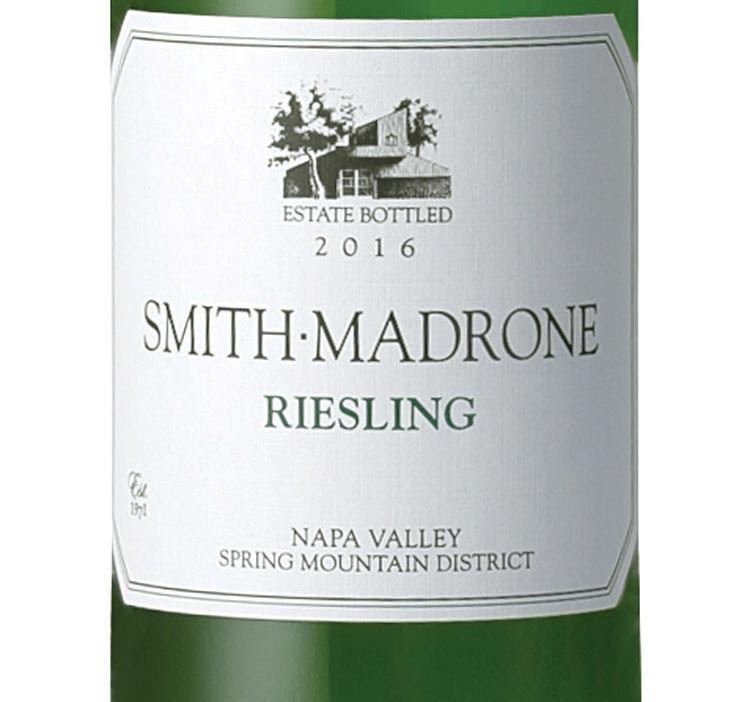
Cabernet Franc isn’t the first varietal I think of for springtime sipping. The spicy, floral white wine called Gewürztraminer—that’s more like it. When samples of both showed up on our doorstep, with a note linking them to a springtime event, it begged for inquiry and a full report. The standard package for Bordeaux-style Cab Franc is the French region’s high-shouldered bottle style. So what’s this one doing in a more gently curved (one hates to say, “feminine”) “Burgundy” glass?

In France’s Loire Valley, the wonder twins of white and red wine are crisp Chenin Blanc and silky Cabernet Franc. There they get to express their true selves instead of playing referee between Merlot and Cabernet Sauvignon.

The Paul Mathew Russian River Valley Cabernet Franc ($29) must be the softest, most supple (again, one hates to say, “feminine”) Cabernet Franc I’ve run across in these parts, showing pretty aromas of red licorice, soft leather and warmed olives. It’s the kind of easygoing bistro wine that plays nice, but doesn’t feel cheap.

This wine is made in 100 percent stainless steel, “and also made by a guy who predominately makes Pinot Noir,” says Barb Gustafson, co-conspirator in Paul Mathew Vineyards with winemaker Mat Gustafson, “so he’s trying to bring up the elegance of the wine, instead of oaking it and making a big, huge, chunky wine.”

You can pair this wine with small bites by Boon Eat + Drink, Agriculture Public House, Big Bottom Market, A La Heart Catering and other food vendors at the fourth annual Spring Fling, a benefit for the Guerneville Chamber of Commerce, which could use a little benefit after a soaking wet winter.

They’re calling it their coming out party after the floods, says Gustafson. Should the weather warm enough to mandate a splash of spicy white, try Paul Mathew’s Russian River Valley Gewürztraminer ($24). This is no sweet thing, like many wine drinkers expect of Gewürz. The aroma’s just a touch creamy, with accents of rosemary and juniper berry, and it drinks like a spicier Sauvignon Blanc, with zesty, kiwi cocktail acidity for days and a nice and dry finish.

For $50 you can bet there’s more wine at the Spring Fling: the seldom-seen Flowers and Wild Hog come down from the mountain, plus Woodenhead, and more. Korbel brings bubbles. The Thugz bring Grateful Dead cover music. And Michelle Anna Jordan brings cookbooks. Bring a thirst and an appetite, and this fling is sprung.

Spring Fling, downtown Guerneville, Saturday, April 27, 1–4pm. $30 food only; $50 food and wine. 707.869.9000. RussianRiver.com.

Musical Saviors

0

Santa Rosa Junior College’s Theatre Arts Department closes out their second season “on the road” with a production of Andrew Lloyd Webber and Tim Rice’s 1971 rock opera Jesus Christ Superstar. With the Burbank Auditorium still undergoing renovations, Maria Carrillo High School’s theater hosts this production through May 5.

Director Leslie McCauley has gathered a multi-generational cast to tell Webber and Rice’s very loose interpretation of the last days of Jesus Christ set to a pounding rock score. Guest Artist Phillip Percy Williams has been brought in to essay the title role—and he’s excellent—but the lead character in this piece is actually Judas Iscariot. Noah Sternhill, last seen as Lord Farquaad in the JC’s production of Shrek, the Musical, tears up the stage as the man whose name is synonymous with “traitor” but whose character is given a lot more shading in Webber and Rice’s world.

Vocals were generally excellent under the direction of Joshua Bailey. Williams, a 12-year veteran of San Francisco’s Bleach Blanket Babylon revue, knows his way around a song and gets several opportunities to prove it. His rendition of “Gethsemane” is wrenching. Sternhill matches him from the get-go with “Heaven on Their Minds.” Ariana LaMark does well by the show’s most popular number—”I Don’t Know How to Love Him”—though her Mary Magdalene seemed curiously disconnected from the goings on. There’s great character work from Anthony Martin as Pontius Pilate, Michael Arbitter as Caiaphas, and Riley Craig makes quite an impression as a Liberace-esque King Herod.

The show’s technical elements are very strong. Scenic Designer Peter Crompton has the events taking place on a utilitarian set of scaffolds and columns that’s well enhanced by Vincent Mothersbaugh’s lighting.

Neither blasphemous nor slavishly pious, Jesus Christ Superstar can be seen as an interesting look at the culture of celebrity, the fickle nature of followers and the hypocrisy of those in leadership roles. Sound relevant?

Rating (Out of Five): ★★★★

‘Jesus Christ Superstar’ runs through May 5 at Maria Carrillo High School Theatre, 6975 Montecito Blvd., Santa Rosa. Recommended for ages 12 and above. Thursday -Saturday, 7:30pm; Saturday & Sunday, 1:30pm; $10–$22. 707.527.4307. theatrearts.santarosa.edu

Letters to the Editor April 24, 2019

On March 31 the Sonoma County Coast MAC (Municipal Advisory Council) met with approximately 80 people from Bodega Bay, Jenner, Occidental and Timber Cove at the Bodega Bay Grange. The meeting was to inform residents about the coastal marathon to be held Sept. 29. Originally, Highway 1 was to be closed from Fort Ross to Bodega Bay.

Because of public outcry, it was decided that the race would be a half marathon which would close one lane of Highway One and begin at Jenner and end in Bodega Bay. At the meeting many people spoke vociferously against the race. Concerns raised included environmental impacts, traffic, business shutdowns and a possibly slower emergency response times. Residents asked the race officials why the community wasn’t contacted first about this planned event. Efren Carrillo, the former 5th district supervisor, and Tina Wallis, the attorney for this event, were supposed to attend this meeting but failed to show up.

For now the race is canceled due to lack of necessary permits. However, if this race is permitted next year, a precedent would be set for years to come.

Occidental

Misplaced
Priorities

World Vision staff say about 14 million children in Ethiopia, Kenya, South Sudan, and Somalia are struggling to get enough to eat. Meanwhile,
$1 billion pours in from around the world to fix a church in France.

Occidental

How’s That Working Out?

Since the ’80s, politicians have told us that a “pure capitalism” economy will solve every problem we have economically. An unregulated free market became more important than democracy to many politicians. Bill McKibben, former New York Times science writer and founder of the climate change organization 350.org, recently said that it “was unfortunate that political point of view developed” just when we needed a response to climate change.

Unfortunate or deliberate, how is that working out for us? Fossil fuel companies are the obvious companies that—had they been mildly regulated or taxed for their carbon footprint—we would be far better off today. This is really true of most, if not all big businesses. The more we consume what they produce, the more carbon is released into the atmosphere. Our worldwide ecosystem is breaking down, and now we are faced with needing to take drastic measures to prevent going over 2 degrees Celsius. So far the interpretation that “a completely free market solves everything” is still our religious type of belief and appears to be elevated even above the ideal of democracy.

Monday was Earth Day, and this year’s theme was extinction. Species are going extinct at a rapid rate—plants, animals, birds, insects, coral reefs, ocean life.

How’s that theory of unregulated growth of production resulting in more and more consumption working out for us?

Boulder Creek

Write to us at le*****@******an.com.

Local Controllers

0

It’s the battle of the housing bills.

First, there’s SB 50, San Francisco Sen. Scott Weiner’s attempt to end local control over zoning decisions in “transit rich” areas of the state. He proposed a similar bill last year, SB 827, which was met with various levels of alarm and support among localities and housing activists—but died in committee.

Then there’s SB 4, Healdsburg Senator Mike McGuire’s response bill to Weiner’s bill. McGuire says his bill seeks similar aims—to streamline the process for building high-desnity housing in transit-rich zones by giving the state a bigger hand in local zoning decisions—but of a less draconian nature, given the number and scope of the exemptions in SB 4.

McGuire, who helped kill Weiner’s bill last year in the Senate Transportation and Housing committee, put up a trio of housing-related bills this year as he was also elevated by Sen. Majority Leader Toni Atkins to his position as second in charge of the senate Democrats.

McGuire emphasizes workforce housing in his legislative package this year and criticized Weiner’s “one-size-fits-all” San Francisco–centric housing bill.

McGuire is also seeking a reanimation of the state’s redevelopment program, with the introduction last month of SB 5. That bill aims to ramp up state and regional efforts at building middle and low-income housing.

With SB 4, he offers a rejoinder to Weiner’s bill, which has received surprising support from construction trade unions and the construction industry, along with “YIMBY” groups, while being condemned by Marin electeds, Marin Independent Journal columnists, and the San Francisco Board of Supervisors.

Both bills passed through their respective committees earlier this month, with both men refraining from voting on the others’ proposal and pledging to hash out their differences in advance of hearings and committee votes on the bills this week.

Critics of Weiner’s proposed SB 827 last year variously accused him of being a “WIMBY” (Wall Street in My Backyard), and for abandoning any pretext of building an affordable-housing component into his bill. He responded with an upgraded bill this year that mandates a 20 percent affordable housing ratio in new housing developments in transit rich zones. The criticisms continue over the bill’s core push to end local control over sensitive zoning issues—even as a broad consortium of developers, housing advocates and unions have supported Weiner’s approach.

McGuire’s bill, by contrast, pushes for a 30 percent affordable housing set-aside for new residential projects in transit-rich areas. That’s twice the average in the North Bay, and represents the Highway 101 and SMART train corridor. Cities up and down the line have development projects in the pipeline that, in their own way, underscore the region’s dilemma when it comes to building affordable housing in a region with the highest valued real estate markets in the country that’s also facing a huge population boom in coming years to go along with various natural and man-made disasters.

McGuire’s bill would limit the new state zoning mandates to cities and towns with a population greater than 60,000 in a county with fewer than a million people. Marin’s population is 250,000; Sonoma is about 500,000.

In McGuire’s district, his bill’s population parameters mean that while Santa Rosa, Petaluma and San Rafael could be subject to new state zoning mandates (and be impelled to approve, for example, three-story mixed-use apartments near SMART stations), smaller cities such as Cloverdale and his own high-end home base of Healdsburg would not.

In Healdsburg, home to Sonoma County’s priciest median home value ($888,000, according to the latest Zillow figures), the city council recently gave the green light to an ambitious build-out of an old lumber yard that’s located yards from a proposed SMART station scheduled to arrive in town by 2022. The plan is very Healdsburg to the extent that it cozies up to the tourism industry while making an earnest effort at dealing with its workforce-housing crisis.

Replay Healdsburg LLC is a corporation under the umbrella of Vancouver-based developer Replay Destinations, which is mostly in the hotel business. Their public-private plan was approved by the city council and, when fully developed, will include 208 new residential dwellings split between 146 market-rate residencies, 40 multi-family rental units, and 48 “micro units” of 500 square feet or less. The latter represents twice the number of low-income units required under Healdsburg’s zoning code.

The Replay plan also calls for a 53-room hotel with a spa, and the company specifically noted in its 2017 proposal to the city that it would “take advantage of . . . the future SMART transit center,” along with providing numerous amenities to the town that include a new park and commercial district. The low and very-low income housing would be managed by Eden Housing, a Hayward-based supportive housing nonprofit that’s emerged as a go-to agency for private-public partnerships that are simultaneously pro-business and pro–affordable housing.

Under McGuire’s bill, Healdsburg, with a population of 12,000, would be exempt from any future state-driven attempts to seize control of local zoning decisions in the downtown area.

Meanwhile in Santa Rosa, there’s a SMART station at Railroad Square but an empty former freight train depot lot across the tracks that’s been a hot potato property since the SMART District was created in 2002 and subsequently purchased the land.

In the aftermath of the 2017 wildfires, which saw Santa Rosa lose five percent of its housing stock, the property has continued to languish under the weight of known soil contamination and complex issues related to the five acre lot’s extensive title history, according to city documents and published reports on the Santa Rosa snafu.

SMART’s been trying to jump-start trackside development where it’s been flagging—especially in Santa Rosa. According to SMART documents, General Manager Farhoud Mansourian tried to fast-track a development deal with the Santa Clara–based ROEM Development Corp. in 2018 with a planned high-density development of 321 apartments, including 48 below-market rate units. But, citing title and oil contamination issues, ROEM backed out of the deal early this year. Cornerstone Properties then stepped into the breach and bought the land from the SMART district for $5.4 million. A project plan is pending from Cornerstone.

What impact might a McGuire-Weiner compromise bill have on Santa Rosa? It’s unclear. Santa Rosa has the highest population in the North Bay, at 175,000, which puts it squarely within the population parameters set by McGuire. But McGuire’s bill also offers exemptions to areas where there’s a high risk of wildfire.

Marin County has been especially vociferous in denouncing Weiner’s bill and any legislative attempt to seize control over local zoning decisions. Marin’s been the much-publicized flashpoint for local control over high-density development along the travel corridor, with its rich “NIMBY” culture of older homeowners who have resisted the renewed rush to develop, met with a new YIMBY push that’s highlighting an outsized cost of living in Marin that’s driven largely by its pricey real estate market. San Rafael has seen several projects in recent years that demonstrate McGuire’s overall point about the “one-size-does-not-fit-all” approach to residential development.

In one pending project, San Rafael and the county have tentatively embraced a public-private partnership model that also makes use of support services from the nonprofit Eden Housing. Several years ago, BioMarin and the Whistlestop senior services facility both put forth ambitious redevelopment plans that were approved by city planners in San Rafael, only to have them face the regulatory buzzsaw of the county and the state—not to mention a funding wall for Whistlestop, thanks in part to the end of redevelopment.

Last year the entities combined their plans into one new project that would see a new plant for the local pharmaceutical firm, a residential tower for seniors and as well as parks, bikeways and other amenities. That plan is now being reviewed by numerous county departments, and an environmental review is underway. The Biomarin-Whistlestop plan serves as a demonstration model for how local control can play out and provide the maximum benefit to all parties—including those who are having a hard time making the rent in Marin. But as the YIMBYs like to point out, Marin County has been very slow to approve new residential developments in the past decade and has exacerbated
its own housing crisis through a local control regime that’s heavy on the control.

Weiner says his bill is designed to remediate the failings of local control when it comes to upzoning transit-rich areas, and it remains to be seen how or if Wednesdays hearings will address projects in the pipeline. McGuire’s staying mum on the subject. “Nothing to report yet,” says McGuire spokeswoman Kerrie Lindecker. “But more to come on [April 24] when the bills come to [the] Governance and Finance Committee.”

Bluesy Virtuosos

0

Raised in San Rafael and now living in Novato, Rebecca Roudman makes her living as a cellist in the Oakland Symphony and the Santa Rosa Symphony. She started playing classical music when she was 7 years old, and after graduating as a music major in college, it was all classical music all the time.

“But classical music has never my first love,” says Roudman. “It’s been everything else; blues and bluegrass and rock.”

Eight years ago, she took a musical detour in that bluesy direction, teaming with her flutist-turned-guitarist husband Jason Eckl to form Dirty Cello a crossover smashup of cello strings and stomping blues rhythms that hit a note with Bay Area audiences almost immediately. “There was interest, people thought it was kind of cool and kind of weird,” says Roudman. “That’s the kind of people we are.”

Musically, Roudman’s biggest hurdle was learning to improvise on the cello during performances, not a skill that’s emphasized in classical training.

“It was an uphill battle at first,” she says. “Now, it feels natural, which feel good.”

Soon after they started, Dirty Cello expanded from a duo to a full four-piece band, and today the group includes bassist Colin Williams, drummer Ben Wallace-Ailsworth and occasionally vocalist and multi-instrumentalist Sandy Lindop.

This year is shaping up to be one of the group’s busiest yet. They’re currently preparing to release Bad Ideas Make Great Stories, their second record of 2019 after Bluesy Grass, which came out in January.

“It’s a pretty unique record because it’s made from personal stories of all our adventure we’ve been on,” says Roudman.

After a record-release concert at the HopMonk Tavern in Sebastopol, Dirty Cello again goes international, performing in England, Israel and Iceland over the summer.

“If people are expecting to see a classically-trained cellist playing mellow, smooth music, it’s not that,” says Roudman. “They’re going to hear something they haven’t heard before.”

Dirty Cello performs on Friday, April 26, at HopMonk Tavern, 230 Petaluma Ave., Sebastopol. 8pm. $13-$20.707.829.7300. dirtycello.com.

Space Junk

Hurtling toward a black hole, a spacecraft known only as “7” is in the middle of an eight-year mission. The outside of the craft is blandly boxlike. Inside, it’s crappy like the littered hall of a public housing apartment. Claire Denis’ High Life, and yes, the title is ironic, begins with two survivors aboard, Monte (Robert Pattinson) and Dr. Dibs (Juliette Binoche). Monte is repairing a magnetic shield outside the craft, while baby-monitoring the wails of a girl fussing in her makeshift playpen. When not tending to the babe, Monte is recycling his urine, or hauling the
scraps of his meals in a dingy plastic bucket to the indoor compost heap.

The rest of the crew is still aboard, corpses in space suits. The mission was made up of murderous criminals shot into space as a way of serving their sentences. In flashbacks, the shipmates’ crimes are teased out.

Dr. Dibs is the biggest criminal on the ship, to hear her tell it; she’s guilty of the kind of crime that makes up Greek myths.

High Life has poetry, but it’s awkward poetry. After a long and distinguished career (White Matter, Chocolat, 35 Shots of Rum) this is Denis’ first movie in English. Is there any reason, beyond increased ticket sales, that a director would cut off her tongue at age 70? It’s not like there needed to be much dialogue, since it’s mostly a movie about Pattinson looking bitter and Binoche looking wanton.

Dull colors and space madness explain why people might want to “space” themselves, to use The Expanse‘s term for the one way trip out the airlock. No one made an effort to decorate this flying slum, except with gouged graffiti and sprays of bodily fluid. But there is one break from the unnaturalness: a space garden.

The tantalizing dream of space exploration is absent in High Life‘s reckoning; it’d be better if we just stayed on Earth and tended our gardens.

‘High Life’ is playing at select theaters.

Retro Fool

I don’t know why exactly, but I’ve always been a collector. My first memories are filled with scenes of me picking up rocks and keeping them in a box to look over later, or sifting through my parent’s change to find old coins to keep (I still have a penny from 1896). Once I got into comic books at 8, I found a hobby that let my imagination soar, and I collected several thousand comics from Spider-Man to Swamp Thing, lovingly placing each book in a plastic sleeve to protect them.

Yet, comic books soon got expensive, old pennies stopped turning up, and the rocks found their way back to the fields where they belonged. I was a collector in need of an obsession. In 2007, I found what I was looking for: a dead media format called LaserDisc.

An Affair to Remember

My love affair with LaserDisc movies began in Santa Rosa. It was in a thrift shop, Sacks on the Square, in the heart of Railroad Square. I saw a dozen or so vinyl records sitting together in the corner.

Or so I thought.

As I pulled the first title from the shelf, I mistook it for the motion picture soundtrack to Terry Gilliam’s Brazil, the 1985 dystopian science fiction film in which a man stuck in a totalitarian world dreams of flying on metal wings. It’s one of my favorite films.

I had been toying with the idea of going whole hog on collecting vinyl records, as I already had a box of old LPs culled from thrift stores at home, so I grabbed the 12-inch record off the shelf to inspect the soundtrack.

Yet when I pulled the “record” out of its sleeve, a shining silver disc greeted me. As the light reflected in my eyes, that theme to Brazil somehow started playing in my head.

I began to stammer, completely unprepared for the supremely smooth slab of media I was gazing upon, before the words “LaserDisc” met my eyes, and I realized I was holding the actual movie itself, presented in an outdated, oversized and thoroughly obsolete technology.

I was hooked. In fact, there were over 20 LaserDisc films in that lot, with such classics as David Lynch’s Blue Velvet and Sylvester Stallone’s arm-wrestling masterpiece Over the Top in rank. I grabbed them all.

As it happened, the LaserDisc movie player, a Pioneer CLD-D406, was sitting on the other side of the store and in perfect working condition (a rare feat for thrift store shopping). I walked out of Sacks on the Square with the movies and the player, weighing in at about 40 pounds of awesomeness, for less than $20. I had finally found what I was looking for.

LaserDisc Legacy

What the heck is a LaserDisc? The retro tech goes back to 1958 when Dr. David Paul Gregg developed optical disc storage while working at California electronics company Westrex, a part of Western Electric. Gregg first developed a transparent videodisc covered by pits and ridges, with video and audio stored in analog format that was read by a laser rather than a needle such as vinyl records used.

He patented the technology in 1961 and again in 1969, when he sold the patent to Phillips, one of the largest tech and consumer electronics companies in the world. Phillips had already been working on a reflective disc system similar to Gregg’s, and they used his patent to develop LaserDiscs with the intention of selling it as a home video system. To do this, Phillips teamed up with MCA, who owned the rights to the largest catalog of films at the time, to bring the LaserDisc technology to market, and they demonstrated the technology first in 1972. Five years later, in 1978, Stephen Spielberg’s original blockbuster Jaws became the first LaserDisc movie to hit the market in North America.

At the time of its initial release, the medium was not actually called LaserDisc. Rather, MCA decided to call it DiscoVision, hoping to capitalize on the disco craze at the time, I suppose. Guess how long that name lasted? Not long.

Along with their own film catalogue, MCA also manufactured discs for other companies, including Paramount, Disney and Warner Brothers.

While home movie lovers in the early ’80s were obsessed with the VHS vs. Beta conflict, film aficionados were flocking to LaserDisc. It was considered the format for serious home video collectors, offering twice as much resolution as a VHS tape and the ability to store multiple audio tracks on one disc. This gave birth to the director’s commentary feature.

LaserDiscs were also the first video format with chapters, like DVD and Blu-ray today, that the viewer could skip directly to. This feature led to the creation of LaserDisc-based video arcade games, beginning with Dragon’s Lair in 1983, which wowed gamers with smooth animated graphics that were otherwise unheard of in the era of Galaga. LaserDiscs were also an essential teaching tool in the classroom, given that lessons could now be accompanied by illustrations, animations and video interviews to heighten the learning process.

In 1984, an upstart video distribution company, The Criterion Collection, began releasing films on LaserDisc exclusively, starting with the release of Citizen Kane and King Kong, and adding to LaserDisc’s appeal to serious collectors.

At its peak, 1 million LaserDisc players were operating in North American homes, and in Japan, the phenomenon grew even greater, with the anime market driving approximately 4 million people to own LaserDisc players. A collector’s market for LaserDisc is still thriving there today.

The Future Past

In North America, LaserDisc production lasted until 2000, with Tim Burton’s Sleepy Hollow and Martin Scorsese’s Bringing Out the Dead being the last two titles released on the format. Once DVDs came into the market in the mid-90s, the large, heavy, expensive and sometimes inconvenient LaserDisc format went the way of the Beta.

Gone, but not forgotten, LaserDisc has become an obsession for people like me who love the throwback look and feel of them, as well as the thrill of finding a true treasure of a film in a bin somewhere.

As a result, I’ve driven to every distant corner of the Bay Area and beyond to relieve them from Craigslist sellers. I’ve scrolled countless Ebay listings, scoured miscellaneous racks at every vintage store I come across and chatted on Internet forums like LaserDisc Database to find out the specifics of certain releases.

My beloved collection of 500 or so LaserDisc movie, television and educational releases is quite modest in comparison to others I’ve talked with. One serious dealer I contacted needed to use their entire garage to store approximately 10,000 discs he owns.

Recently, I’ve taken the obsession to a new height by starting a podcast, Laser Discourse, which is dedicated to revisiting the best and worst of LaserDiscs. So far, we’ve talked about classics like Jaws and The Terminator, as well as obscure movies like the Billy Blanks and Roddy Piper-starring 1993 head scratcher Back in Action.

Sadly, the truth is that LaserDiscs will never have a vinyl-esque resurgence, and the format is suffering; laser rot is a very real issue for many collectors. For now, all I can do is store my beloved collection as safely as possible and share my love of LaserDiscs now, while they are still around.

Family Dynamics

Siblings and significant others do battle in two comedies running now on North Bay stages. Healdsburg's Raven Players take you to rural Pennsylvania where Vanya and Sonia and Masha and Spike gather at the family homestead. Vanya (Steven David Martin) and Sonia (Diane Bailey) have held down the family fort and taken care of their infirm parents while sister Masha...

Beer Train

The most memorable food pairing experience I've had in recent memory did not involve some precious, chef-prepared morsel of seared scallops or a $200 Cabernet. In fact it two of Petaluma's best-loved, if humble, signature products. Not butter and eggs, silly—craft brew and artisan cheese. It was all quite accidental. The occasion was a 50-mile cycling challenge I put myself through...

The $57,000 Question

The Santa Rosa City Schools Board of Education gave its tentative approval to a two-year contract with the California School Employees Association on March 30. The union represents non-teaching lower-wage earners in the school district—secretaries, food-service employees, custodial staff and others. The labor agreement with CSEA comes on the heels of a contract the Board of Education ratified last week...

Fling Time

Cabernet Franc isn't the first varietal I think of for springtime sipping. The spicy, floral white wine called Gewürztraminer—that's more like it. When samples of both showed up on our doorstep, with a note linking them to a springtime event, it begged for inquiry and a full report. The standard package for Bordeaux-style Cab Franc is the French region's...

Musical Saviors

Santa Rosa Junior College's Theatre Arts Department closes out their second season "on the road" with a production of Andrew Lloyd Webber and Tim Rice's 1971 rock opera Jesus Christ Superstar. With the Burbank Auditorium still undergoing renovations, Maria Carrillo High School's theater hosts this production through May 5. Director Leslie McCauley has gathered a multi-generational cast to tell Webber...

Letters to the Editor April 24, 2019

On March 31 the Sonoma County Coast MAC (Municipal Advisory Council) met with approximately 80 people from Bodega Bay, Jenner, Occidental and Timber Cove at the Bodega Bay Grange. The meeting was to inform residents about the coastal marathon to be held Sept. 29. Originally, Highway 1 was to be closed from Fort Ross to Bodega Bay. Because of public...

Local Controllers

It's the battle of the housing bills. First, there's SB 50, San Francisco Sen. Scott Weiner's attempt to end local control over zoning decisions in "transit rich" areas of the state. He proposed a similar bill last year, SB 827, which was met with various levels of alarm and support among localities and housing activists—but died in committee. Then there's SB...

Bluesy Virtuosos

Raised in San Rafael and now living in Novato, Rebecca Roudman makes her living as a cellist in the Oakland Symphony and the Santa Rosa Symphony. She started playing classical music when she was 7 years old, and after graduating as a music major in college, it was all classical music all the time. "But classical music has never my...

Space Junk

Hurtling toward a black hole, a spacecraft known only as "7" is in the middle of an eight-year mission. The outside of the craft is blandly boxlike. Inside, it's crappy like the littered hall of a public housing apartment. Claire Denis' High Life, and yes, the title is ironic, begins with two survivors aboard, Monte (Robert Pattinson) and Dr....

Retro Fool

I don't know why exactly, but I've always been a collector. My first memories are filled with scenes of me picking up rocks and keeping them in a box to look over later, or sifting through my parent's change to find old coins to keep (I still have a penny from 1896). Once I got into comic books at...
11,084FansLike
4,606FollowersFollow
6,928FollowersFollow