Quite Contrary

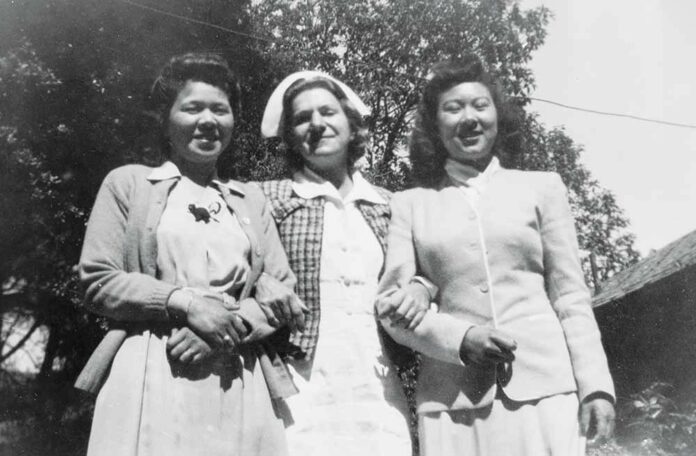
The Eastertide story Mary Magdalene has an underpowered Rooney Mara in the title role as a girl of the lonely fisher-village of Magdala. She isn’t actually a harlot—that was a Dark Ages slander, but she’s the next worst thing; a daughter who disobeyed her parents.

Mary has a part-time career as a midwife. Her father Daniel (Denis Menochet) wants her to marry an established widower. The unwanted marriage causes the girl such torment that the community decides she’s possessed, forcing her into a watery exorcism. Alone and despondent, Mary meets a wandering rabbi familiar to us all. He comforts her, telling her he knows she doesn’t harbor demons.

At 44 years old, Joaquin Phoenix may be one of the oldest actors to play Jesus, and the choice for a sadder, aged Christ may be justifiable in a time and place where working people got old very early on in life. In real life, Phoenix was raised in a religious cult, and he has a deep understanding of both the grounded and the mysterious qualities of the role.

Australian director Garth Davis (Lion) shot this in the rock-strewn parts of southern Italy and Sicily, in a blue-filtered twilight. Johann Johannsson’s looped strings and pianos mirror the melancholy. Chiwetel Ejiofor’s Peter is a lieutenant who never quite understands what Jesus is getting at. Judas (Tahar Rahim, very good) is the zealot, certain that it’s the time to strike against the Roman occupiers.

As always, one dreads how the story ends. Davis makes it bearable, as opposed to the way it went down in The Passion of the Christ, bypassing the trial of Jesus with the convenient action movie shortcut of knocking a character out and letting them come to later. The sadness of what follows outweighs the disgust.

Phoenix’s sensitivity overwhelms the callouses one has against the Greatest Story Ever etc., and the bruises one accumulates in a lifetime of dealing with hateful Christians. Against this mysterious poignancy, Mara seems a bit lost and underpowered. Despite this, there are intelligent and careful moments throughout, such as the suspiciousness with which the elder Mary (Irit Sheleg) looks at this traveling woman, and the way she confides about her son, “He was never really mine.”

‘Mary Magdalene’ is playing in select theaters.

Visions of Moderation

0

The good old days were good because you were young. As a rule, wherever you spent your 20s, the memories you made are precious and enduring. I was lucky. I made mine in the Bay Area in the 1990s: affordable rents, barbecued oysters on Drake’s Bay, biking over the bridge to the Marin Headlands or over to Sausalito for the ferry ride back to The City. A super beef-tongue burrito at La Cumbre cost less than $4 and Capp Street Project was on Capp Street. For a time, you could smoke in bars, restaurants and cafes. That was also the last time I took psychedelics—a magical day amidst the undulating redwoods of Muir Woods.

I thought I had left those days far behind me until a crisis loomed and I knew I needed to make some adjustments fast. My son was going off to college, my cannabis-addicted mother was going off the deep end, and I really had to quit smoking cigarettes. I had just finished Michael Pollan’s new book on the healing power of psychedelics, How to Change Your Mind.

I figured that a guided psychedelic experience could provide the quick jolt of therapy I needed, so I contacted a local shaman who worked with ayahuasca. The irony of scrambling my brains with a hallucinogenic DMT concoction from the Amazon to unscramble my comparatively cushy American life is not lost on me. But my insurance deductible puts regular therapy out of reach.

Alan Watts said this of the psychedelic experience: “If you get the message, hang up the phone.” I honestly don’t recall any message from my drug-induced 20s. I’m not sure if I even hung up or just hit “hold.” But I was about to pick up that phone again. Only now I wasn’t a carefree kid with most of his unexplored life ahead; I was a stressed-out 52-year-old single father with most of his unexamined life behind him.

Two weeks before my ayahuasca “sit,” I got instructions for how to prepare: “Rest, reflect on your intention, walk easily and eat whole foods—no red meat, alcohol, marijuana or other drugs. Consider lowering or avoiding coffee, sugar and salt.” The hardest thing for was to cut back to one cup of coffee a day.

I wasn’t surprised that marijuana was on the prohibited list. I started smoking marijuana in high school, but I’d stopped in college. The reason it took me even that long was that I was too intoxicated to notice how dull-witted, unproductively introspective, isolated and boring it made me. What’s surprising, in retrospect, is that I ever started smoking marijuana at all. I was raised by a “stoner,” which is to say, I raised myself. And, after a lifetime of smoking marijuana, my mother was the same emotionally stunted, rage-filled, paranoid narcissist she was when I was a kid.

So, as far as I’m concerned, there’s no message to be gotten from cannabis. There’s nothing on the other end of that line. That the shaman and “Grandma Ayahuasca” frowned on it made sense to me. If you’re looking for clarity, insight and growth from one drug, you should first step out of the paralyzing fog from another.

How my son turned out the way he did is beyond me. I was going to miss him when he left for college, but I was unprepared for exactly how much until I returned home unexpectedly one night recently, and found the aftermath of a teen party.

Popcorn and tortilla chips were scattered on the sofa and floor; two half empty bottles of Coke and ginger ale with their caps off sat on the coffee table, along with a half-eaten pan of brownies. Uh-oh. I took a bite.

It was pure brownie.

Who is this kid? When I was 16 I was climbing out my bedroom window to take LSD and drink and smoke anything and everything I could get my hands on. And now my own son wasn’t even having interesting parties when Dad was away. As I chewed on the brownie, it hit me how integral my son is to my identity. I’m going to miss the boy when he goes off to school in a way I hadn’t missed anyone since my father died.

Well then. After two weeks of minor deprivation and self-reflection, I arrived at the gathering place: a basement rec room in the basement in a subdivision. Most of the 15 other “sitters” seemed to be in their late 30s or early 40s. All were white. As we waited for the shaman we chatted. It seemed like half the group was in tech, the other half was in art. Half had money, but little meaning, and the other half had meaning, but little money. Only three of us seemed to have a profound need for healing: a recovering heroin addict, a man with obvious mental illness, and a woman who just got diagnosed with a death sentence in the form of Huntington’s Disease. The rest of the group was like me: the walking wounded.

When the shaman and his wife arrived they introduced themselves by their actual names and then by their shamanic names. We were in their home. They trusted us, we should trust them. He had taken ayahuasca more than 2,000 times. They explained what to expect with the “medicine,” how the visions were a gift from the plants’ spirit they called “Grandmother.”

The experience was visceral, physical and intellectual. It will connect you to your body in new ways. For the first 20 minutes after drinking the tea, there will be nothing.

Then the visions will begin, as if a switch was flipped. We were told, don’t fight it. Let Grandmother guide you and you will learn what you need to learn, though not necessarily what you thought you needed to learn.

A prayer was sung, sage and herbs were smudged, and the seekers, one by one, went before the shaman. Each sat or knelt and made some blessing while he stared into their eyes and measured out a portion of the ayahuasca, blew on it rapidly three times and then handed them the cup. When it was my turn I downed it without hesitation. It was viscous, thick and pulpy and tasted like licorice. Not unpleasant. I then returned to my spot and waited and watched.

The Shaman drank a big cup of tea and then his wife turned the overhead lights off. The room was candle-lit and the Shaman went around to each of us with his eagle feather. He touched the feather to our heads and shoulders, and waved them about our bodies. I noticed he spent a little extra time with the Huntington’s woman, the man with mental illness, and the heroin addict. When he returned to his seat, he began beating on a drum and singing. I guessed it was Quichua. It was rhythmic and powerful. His wife then joined in with harmonies, and it became so ethereally beautiful that I almost cried. Someone blew out the candles and we were left with only the moonlight, smoldering sage and the shamanic singing to guide us.

The purging started with the artist to my right. He doubled over, convulsed, and spewed a mighty torrent. I was worried the little bucket would overflow, but as quickly as he started, he stopped. I was surprised the sound didn’t gross me out. It didn’t even make me queasy. And there was no nausea-inducing smell. A benefit of the diet, no doubt. The vomiting then moved around the yurt like the fountains at the Bellagio. I stifled laughter, shut my eyes, and the visions began.

Geometric patterns shot across my eyelids until I was swimming in them. I felt a kindness welling up, some entity entering me. Grandmother! The visions were intense, but my ego, the “I” in my narrative, never completely dissolved. This was fine with me. Grandmother was kind. Her lessons had such a gentle wisdom that I spent much of the night softly laughing.

First she “looked” at me and gave me a quizzical smile: “You are fundamentally a happy person! Deep-down you are happy.”

“Really?” I thought.

And she smiled and shook her head in bemusement: “You seem to feel the need to pay for that happiness with being unhappy? That’s so funny! You don’t pay for happiness with misery! You pay by enjoying it! By sharing it!”

Then she took a tour around my body, racing like a child through a new house who opens up every door to peek inside each room. She would occasionally stop and I would notice—heart and beat; lungs and breath; she opened every door and bounced on every bed and sofa. When she was bouncing around my abdomen, I noticed a pain in my shoulder from my arthritis. She then bounded up to the pain, and as she explored my shoulder, the pain quickly and gently melted away. Same with my tortured knee. I recall wondering if DMT or the other chemicals in my body at the moment had anti-inflammatory properties. But even though I was making a more clinical evaluation than your typical mystic on potent drugs, I still said, “Thank you” to Grandmother. Whatever I chose to call it, this was powerful medicine.

“I am blessed!” was the next lesson from Grandmother. This message was, again, delivered with seeming wide-eyed wonderment and boundless love. This wasn’t guilt over my white, male privilege. It wasn’t nearly so rational or abstract as that. I actually felt these blessings: I had a comfortable home, a remarkable son, good friends, a creative and supportive community. My life was abundant with meaning. And again, gently, she pointed out the absurd calculus I made in paying for these blessings with guilt and self-loathing. Deserving or not deserving was not a part of the equation. You pay for your blessings by honoring them, by sharing them, by tending to them. But what does honoring your blessings look like? Is it as simple as keeping the house tidier? Unclogging the sink in a timely manner? Not chastising the boy when he spaces out and drops his wet towels on the floor eight inches from the laundry basket?

“That’s a start,” came her reply. “I think I could manage that,” I thought.

The final two lessons were simple and quick. They, too, involved reframing a problem that allowed the possibility for, if not resolution, then at least management. I saw my mother as a sad, confused, angry old woman who reflexively drove away the one thing she craved: love. “Have some pity on this old lady. She is powerless,” came the voice. “Yeah,” I agreed. And again, I felt it deeply. Seeing her in this light bypassed all my triggers and defenses and I was able for the first time ever to generate some sympathy for that woman.

Last came the smoking. “You can choose to have a cigarette, or to not have a cigarette. Just be sure it is you who is choosing. Say, ‘I am choosing to smoke this cigarette now, or I am choosing not to have this cigarette now.'” All of a sudden, I felt some agency in my relationship with tobacco. We actually practiced this a few times: “I choose not to smoke right now.” It seemed to work. A lot seemed to work with Grandmother holding your hand.

At some point Grandmother showed me a gate. It was of brown, twisted vines interwoven with hundreds of faces. Behind the gate was the real trial and transformation;, ego death and rebirth. I asked her if we were going through that gate. She smiled a compassionate smile and led me away: apparently not. Although I would have trusted the lesson that lay beyond it, I was relieved.

Throughout the evening the chanting and singing would come and go. It would pull us back, and refocus the visions, and remind us of our intentions, our “work.” At one point I sat up and opened my eyes. Sprawled all about the yurt were bodies; some prone, a few sitting upright, some twisting and heaving, some completely still. It occurred to me that if someone walked in here they would think this no different from a nineteenth century opium den. How would anybody know that this mass of shivering, twitching, writhing humanity was working on healing intentions and not just taking a holiday from the barely tolerable misery of modern life?

It’s hard to say if or when I awoke, because it’s hard to say if I ever slept. It seemed to me that the visions traversed both realms and blurred the distinction between my sleeping and waking self. At last I felt Grandmother had taken her leave of me and I sat up and looked around the yurt. It took me a moment to be sure that it was dawn coming through the opening in the center and not the moonlight. There were only two other bodies left Everybody else had gone back to the heated rec room.It was cold. So I bundled up my blanket and pillow and headed toward some warmth. In the rec room, I found a spot on the floor and promptly fell asleep.

Later when I was driving home, I felt like I was returning from summer camp. We had all hugged each other goodbye with a warmth that was astonishing considering we spent less than two days together and I couldn’t tell you a single one of their names. During the ride back home I chose to not have three cigarettes. I chose to have one. And I enjoyed the hell out of it.

Later that evening I found the boy reading in bed. He gave me a “Hey Dad,” without looking up from his book.

“You know, we are really fortunate.”

“Yeah.”

“We are, for lack of a better word, ‘blessed.'”

He cocked his head.

“We have a nice home, we have plenty to eat, we have an amazing community. And it’s not a question of whether we deserve these blessings or not, it’s our job to . . . honor them.”

“OK . . .

“Sometimes we feel like we have to pay for them by not acknowledging them or by not taking care of them properly, but that’s silly. We should tend to our blessings.”

Now his book was completely down, and he was looking at me as if there was some joke he wasn’t quite getting.

“We should, you know, tidy up more, do the dishes after dinner, put away our clothes.”

An audible sigh escaped from his lips.

“For a second, I thought you’d joined some Christian cult,” he said. We laughed, each honoring, in our way, the blessing of the other.

It’s been four weeks since my session with Grandmother. I still smoke, but I do it deliberately. I “choose” to have eight to 10 cigarettes a day. I drink one cup of coffee in the morning and I keep the house a bit tidier than before. I am grateful for a son who has not dulled himself with marijuana, and more forgiving toward a mother who has.

Henry the Great

0

For most mortals, a single major accomplishment can be satisfying enough for one lifetime.

eing an Academy Award–nominated producer, say; or a director-composer and cinematographer for multiple television series; or a university professor for nearly two decades; or a research diver with one of the highest numbers of dives under Antarctic sea ice; or creating your own record label still going strong in its fifth decade; or collaborating with an unprecedented array of artists across numerous genres from many different cultures—or, say, being one of the most outstanding guitarists of your generation—would be a laurel quite large enough to rest on.

Not so for Henry Kaiser, whose Promethean achievements encompass all of these and much more.

But let’s focus for the moment on Henry Kaiser, guitarist. Picking up the guitar at the comparatively late age of 20 and emerging as a cutting-edge improviser in the late seventies, Kaiser has continued to record an incomparably broad variety of music very much in keeping with his wide-ranging interests and influences. In a discography now north of 300 releases, one thing that becomes abundantly clear is how much this man loves to play, with an instantly recognizable, invigorating tone and sky (or is that sea?) diver’s fearlessness, and one who equally esteems the process of collaboration with many different kinds of artists.

That love of playing will be on full display during the weekend of April 20 as Kaiser performs in tributes to two major inspirational figures for him. First, on the exalted stoner holiday itself, Kaiser will join longtime friends and collaborators Rova Saxophone Quartet among many others for “Fly! Fly! Fly! Fly! Fly! A Tribute to Cecil Taylor” at CounterPulse in San Francisco. And the following day finds him once more joining drummer John Hanrahan’s ongoing project, performing the classic suite by the late saxophone titan John Coltrane, A Love Supreme, at Sweetwater Music Hall in Mill Valley.

Reached at his home near the Santa Cruz mountains, Kaiser recalled the memorable first time he heard Coltrane.

“Some girl played A Love Supreme for me in her dorm room while we made out on her bed! So, it made a strong impression,” he says.

Hanrahan has been leading the Coltrane project for several years with the work’s original instrumentation and recently decided to take the work in an electric direction. One of the first people he contacted was Kaiser.

“I said, ‘Let’s get some more electric players with us—let’s open it up and not do it all reverent,'” he recalls telling Hanrahan.

On April 21, Hanrahan and Kaiser will be joined at Sweetwater Music Hall by violinist Mads Tolling, keyboardist Scott Looney and bassist Murph Murphy. It’s one of several electric incarnations for this project, which has included such musicians as guitarist Steve Kimock as well as the legendary bassist for the iconic West Coast punk band the Minutemen, Mike Watt.

“Watt’s a super Coltrane freak and he was kinda terrified to do it,” Kaiser says. “And the big surprise about A Love Supreme is that it’s something that’s open. It’s a recipe and it makes different things every time. Like the Grateful Dead’s ‘Dark Star,’ it has a strong identity of its own that takes over and you don’t know what’s going to happen.”

That’s a telling reference both from Kaiser’s influences and his own discography, one that features several instances of him playing the Dead’s psychedelic anthem “Dark Star,” starting with a sidelong rendition on his 1988 album Those Who Know History Are Doomed To Repeat It, recorded for the Minutemen’s label SST Records. Kaiser has been effusive in his praise of the Dead over the years, extolling their pioneering blending of styles and their range of expression from the most familiar to the most avant of gardes, strikingly similar to Kaiser’s own musical journey.

His embrace of widely different musical approaches has resulted in a truly multicultural catalog, with Kaiser exploring music from Africa, India, Japan, Korea, Norway and elsewhere. Perhaps his most popular world music endeavor was his celebrated collaboration with fellow guitarist David Lindley and several musicians from Madagascar on the joyous two-volume A World Out Of Time.

“Lindley and I did not take any money for it,” Kaiser recalls. “All the money went to the Malagasy people.”

Alongside all this musical activity has been a parallel career as a research diver and educator. “I taught scientific diving at UC Berkeley since the mid-80s,” says Kaiser. “When our program went away in 2001, I became a diver in the U.S. Antarctic program and I’ve had 13 deployments. And I have the seventh-most dives in the program.”

This experience, in conjunction with his work in film and video, has served him well over the years, not least when he was nominated for an Academy Award as a producer while also serving as soundtrack artist and both land and underwater cinematographer for Encounters at the End of the World, one of several documentaries he has worked on for German director Werner Herzog.

Kaiser’s accomplishments seemingly know no bounds in yet another ideal metaphor for his music. One irony, sharper as we approach April 20, is that this self-described “psychedelic” guitarist has famously never taken drugs. When asked what “psychedelic” means for him in this context, Kaiser replies, “It means what Salvador Dalí said: I don’t need drugs, I am drugs!”

Kaiser expands on this thought in a follow-up email, writing, “I get the feeling that what my guitar has to say is psychedelic, rather than coming from psychedelics.

“When you were a preschool kid, did you–like me–lay in your dark bedroom at night and press on the lids of your eyes to generate phosphene patterns of internal light that danced in your head before going to sleep each night? Even though it may look like I’m smiling at the drummer or the audience, inside my mind, and without the addition of recreational chemicals, I’m drifting through glowing clouds of light; among coruscating fractal and geometric forms that shimmer in and out of existence. Rivers of light, like oceanic streams of phosphorescent plankton inflamed by the wakes of playful sea lions, dance in multi-colored time to the music before it happens; giving me my silent cues, like the clouds a glider pilot watches to catch updrafts.”

First Blush

0

If it doesn’t feel like spring has arrived by April 18, the team at Gravenstein Grill will darn well bring it when they host 24 Sonoma County wineries for a walk-around tasting of the season’s new crop of pink wines.

“When springtime comes, we think about freshness,” says Chris Sawyer, sommelier and partner at the Sebastopol restaurant. “And these are our greatest expressions of fresh wines we have.” Don’t date yourself by thinking rosés are sweet. These are not the simple, dulcet wines of decades past, he says.

Vintners are certainly not bashful about their blush. Hoping for a few representative samples of the April 18 tasting, we received an embarrassment of rosé riches:

Red Car 2018 Rosé of Pinot Noir ($28) This pale tea-rose-pink sipper treats the nose to a combo of creaminess and fruit that’s reminiscent of blanc de noirs—the sparkling wine that is also made with Pinot Noir—or baked strawberries nestled on a vanilla frosting-topped tartlet. The flavors balance the searing acidity. HHHHH

The Larsen Projekt 2017 Grenache Rosé ($20) Also pale pink, but tinted magenta, this is inspired by the Grenache-based rosés of Aix-en-Provence. I smell freeze-dried raspberries at an on-trend resto; I taste apricot, raspberry and vanilla. I like. HHHH

Acorn 2018 Russian River Valley Rosato ($29) Another style, also dry, this deep pink field blend of Sangiovese, Zinfandel and other grapes just crunches with cherry, strawberry, and even chile pepper. HHHH

Quivira 2018 Wine Creek Ranch Rosé ($22) This Rhône-style blend has a nose and a palate of juicy nectarine, that crazy stone fruit with shades of red and yellow fruit. HHHH

Balletto 2018 Russian River Valley Rosé of Pinot Noir ($20) From its red cherry perfume to its strawberry-lemonade palate, this is a pleasing quaff. HHHH

Claypool Cellars 2018 Sonoma Coast Pinot Noir Rosé ($35) Although this is the rosé version of the “Purple Pachyderm,” the nose says more about mollusks—sea shells, sea spray, and strawberry aromas. HHH

Friedeman 2018 Sonoma Coast Rosé of Pinot Noir ($30) Pinot Noir rosé 101: a pale salmon hue; light flavors of raspberry and strawberry. HHH

Talisman 2018 Dawson Vineyard Pinot Noir Rosé ($) Fermented with “feral” yeast in neutral oak barrels, this picks up a bit of caramel to accent the strawberries-and-cream flavor.

8050 Bodega Avenue, Sebastopol. Rosé tasting, appetizers and live band, Thursday, April 18, 5:30–7:30pm. $25. www.eventbrite.com/e/roses-of-sonoma-county-tasting-tickets-59422470208.

God, Complex

0

God takes center stage in two North Bay productions running through April 14. Sebastopol’s Main Stage West transports you to 1840 and an Appalachian Heathen Valley while Petaluma’s Cinnabar Theater takes you on a passage to India in search of A Perfect Ganesh.

Heathen Valley is referred to in the play as “the land that forgot God” and an Episcopal Bishop (John Craven) is determined to correct that by bringing God to the North Carolina mountain community.

The “violent, carnal and heathen” locals are represented by Juba (mollie boice), a midwife and a woman of unerring common sense, Harlan (Elijah Pinkham), a true mountain man who’s just buried his wife and sister (they are the same person), and Cora (Miranda Jane Williams), the mother to Harlan’s infant daughter who wishes to be Harlan’s wife.

The role of religion in society and the fuzzy line that separates superstition’s “charms and spells” from organized religion’s garments and practices makes for a very interesting drama under the co-direction of John and Elizabeth Craven with Bordi and Pinkham doing particularly fine character work among an excellent cast.

Rating (out of 5): ★★★★

The elephant-headed Hindu god of wisdom, success and good luck serves as the narrator in Terrence McNally’s A Perfect Ganesh. Director Michael Fontaine reteams with performers Elly Lichenstein and Laura Jorgensen to remount a production they first did at Cinnabar 19 years ago.

Margaret Civil (Jorgensen) and Katharine Byrne (Lichenstein) are best friends who don’t really like each other. Trading in their usual two weeks of shared vacation in the Caribbean for a tour of India, these two ladies have issues—issues with the world, issues with each other and issues with themselves. Ganesha (Heren Patel), the “remover of obstacles,” does his best to assist the ladies in overcoming their own.

Jorgensen and Lichenstein play well off of each other. John Browning’s work as every male character they meet along the way is quite entertaining and Patel’s Ganesha is a warm and welcoming figure, though his ornate headgear often led to muffled dialogue.

This play’s greatest obstacle is McNally’s script, which is overwritten and overlong.

Rating (out of 5): ★★★

‘Heathen Valley’ runs through April 14 at Main Stage West, 104 N. Main St., Sebastopol. Thu–Sat, 8pm; Sunday, 5pm. $15–$30. 707.823.0177. ‘A Perfect Ganesh’ runs through April 14 at Cinnabar Theater, 3333 Petaluma Blvd. N., Petaluma. Fri–Sat, 8pm; Sun, 2pm. $15–$30. 707.763.8920.

Fur Flies

Whether for meat or for fur (“Bunny Tale,” April 3), utilizing the byproduct normalizes the fur culture. The message of this bill is for the state to denounce support of this unethical industry and prevent reason for fur sales. Excluding rabbit fur from the bill would not be congruent with the values of the majority of California’s constituents. This statewide majority far outweighs the values of the one small Northern California district represented by Assemblyman Levine. Levin’s spokesperson states: “Assemblymember Levine supports maintaining the highest ethical standards for the production of legal animal products in California.” If it is agreed by the majority that the fur industry is unethical then Mr. Levin must acknowledge all animals regardless of how the byproducts are used.

via Bohemian.com

Rabbits are the most abused animals on the planet. Exploited not only for their flesh and fur, they are victimized in research, used as bait and live food for other animals, and even as “pets,” they are often neglected and abandoned resulting in them being the third most euthanized animal in American Shelters. Exempting them from the meager protection of not being skinned alive in order to take their fur is a slap in the face to those of us who value them as the clean quiet engaging and affectionate companions they are.

The photo in this article makes my heart bleed for those poor babies stuffed into wire bottom cages so small they can barely turn around without a piece of hay (which should make up 80 percent of their diet) or anything to do but await their gruesome fate. The only consolation is that they are killed very young; at about four months of age. Escaping their suffering only in a cruel and violent death.

As a regular shopper at the Marin County Farmers Market where Mr. Pasternak peddles his wares and I buy much of my food and the greens my bunnies enjoy daily, I refuse to go anywhere near his booth. Seeing the dead bodies, skins and other bits of of animals I regard as cherished family members breaks my heart. People who love their dogs and cats should be able to relate; just imagine seeing your German shepherd’s cousin turned into a fur bikini.

The evisceration of a bill that would make history for all fur-bearing animals being tortured and killed for their skins by Levine may very well die a painful death at his hands. The animal advocate community can see that the exclusion of rabbits will certainly lead to a monopoly on their skins as they will be the only fur available and have come out in mass in opposition to this exclusion. Even if the skins are supposed to be only from animals killed for their flesh, there is simply no way of regulating the origin of the pelts and will certainly result in an increase the number of rabbits raised and killed for either or both and be a boon for the people who produce them.

I wish everyone reading this would call member Levine’s office and ask him to represent his entire district, not just a single constituent and withdraw this ill fated request.

via Bohemian.com

If we want a ban on fur, we want a ban on fur. No exemption.

via Bohemian.com

Will Carruthers, thank you for taking the the time to interview me for this article. Much of what I said is not included in the article. It’s important that we provide accurate information about rabbits in general, and rabbit fur in specifics.

First, I would like to clarify that SaveABunny is not an animal rights group. We are a 501c3 nonprofit rescue and advocacy group that provides an invaluable, community service. While some individuals who volunteer for this group may be involved with animal rights groups, the majority of our supporters are families who have adopted rabbits as treasured members of their family.

We work with over 30 animal shelters and have rescued 5,000 rabbits since 1999.

We provide an invaluable, life-giving and positive service to California and receive no government funding. We are a grass-roots, primarily volunteer-based group. Unlike Mark Pasternack, we do not have a paid lobbyist or a politician working on our behalf.

The photo of rabbits in this article are living in painful, cruel conditions while they wait to die. They are the exact same breed and species you can adopt from your local shelter or a rescue group as a pet. Any rabbit can be called a meat rabbit for convenience. The rabbits in the photo are also babies and juveniles. What you see is the equivalent of immobilizing veal crates for rabbits.

Rabbits are as intelligent as cats and dogs. Their basic needs to be able to move freely and exercise is not given. Additionally, they are living on hard wire cages which routinely cut into their feet leaving deep, stabbing wounds that go untreated.

For whatever reason people do not understand rabbits. It is a romantic notion to them that a farmer wants to raise and slaughter baby bunnies for profit.

What is the benefit to the community at large of rabbit farming?

Pasternak himself exhibits how there will be increased rabbit farming when he says he sold a trio of breeder rabbits to someone. What is the business arrangement for this and who does it benefit?

If California truly wants to be a fur free state rabbits should be included and protected in the ban. Otherwise, it is hypocritical and serves a very small group of people who will make a lot of money.

We would appreciate the opportunity for you to do a follow up on rabbits as companions in the state of California. In the U.S., rabbits are the 4th most popular pet with over 3 million homes living with companion rabbits. Even Vice President Mike Pence lives with a pet rabbit, so rabbits as pets is hardly a fringe idea and lifestyle.

Thank you again for your time and consideration of the points I have raised.

Founder and Executive Director, SaveABunny

Rabbits are loved and cherished by so many people who have them as beloved pets in their homes. For Marc Levine to dismiss this for the sake of just one constituent who even admits he will not go broke if rabbits are included in the fur ban is absolutely ludicrous. Rabbits are considered pets by so many and live in peoples’ homes. They are so lovable and deserving of protection yet in 2019 are still being classified as poultry and livestock and given no protection whatsoever. Please do not let a few rabbit farmers’ greed for profit dictate the fate of these beautiful, gentle, loving animals.

Please include all breeds of rabbits in the California fur ban bill.

via Bohemian.com

Write to us at le*****@******an.com.

Lost and Found

0

In west Santa Rosa, just south of the Joe Rodota Trail on the way out to Sebastopol, lays a largely forgotten piece of local history.

“It’s surprising how many native Santa Rosans don’t know about it,” says Julian Billotte.

He’s talking about the former Santa Rosa Naval Air Station, built during WWII, that today consists of a pair of two-story barracks, a former ammunition bunker that once housed an infamous punk venue and has the remnants of an airstrip. From the outside, the two barracks look much like they did 60 years ago, but inside, art thrives. Building 32 has housed local artists as the Studio Santa Rosa since the 1980s, yet Building 33 went vacant for many years before Billotte and his wife, artist Anna Wiziarde, discovered, renovated and reopened the building five years ago under the name 33Arts.

This isn’t Billotte and Wiziarde’s first time running an art space. In fact, it’s not even the first time they’ve run a former military barrack-turned art building, as they’ve managed Arts Building 116 at Hunters Point Shipyard in San Francisco since 1997.

“The first time I brought my daughter up here, she said, ‘how did you find a shipyard in Santa Rosa?'” laughs Billotte. “It’s not on water, but this looks pretty much the same; same color paint, same smell, same ladder that goes up and down the building.”

Moving to Sonoma County six years ago, Billotte says he was looking for a studio when a friend sent him the floor plan of Building 33. “It was totally dilapidated,” he says. After a year of cleanup, 33Arts was born in 2014, and it is now the home of some 30-plus artists who work in every kind of medium.

While 33Arts typically does only one big show a year, it and Studio Santa Rosa will host one of the season’s biggest art outings when the Santa Rosa Out There Exposition takes over the grounds on Saturday, April 13, for a variety of arts and performance offerings. Among the highlights of the expo will be The Lost Church hosting a lineup of local musical acts, the North Bay Cabaret’s variety of performers, loads of local food trucks and many exhibiting artists.

“We’re happy to be working with the heart of the Santa Rosa art scene,” says Billotte.

One of the expo’s art shows will happen in 33Arts Map Room Gallery, named for the floor-to-ceiling map of 1940s Los Angeles hung on the wall by the military, once hidden under layers of paint. Several 33Arts studios will be open, and Billotte will display works from his gilding and frame restoration studio, Capricho Framing.

“It’s such a great community that’s sprouted up around us renting these spaces,” says Wiziarde. “We’ve encountered so many great artists and great people, and people are happy that they can have an affordable art studio.”

Small City, Big Dreams

0

Alexandro Lopez was attending elementary school in 2009 when his father introduced him to the music of the late rapper Tupac Shakur. Lopez was immediately drawn to Shakur and now the 21-year-old Santa Rosa native is a hip-hop artist himself who goes by Guapely. “English was always my strong suit in school” says Lopez, who graduated from a Santa Rosa High School. “I was into poetry before I started rapping.”

Guapely is part of a vibrant and Latino cultural scene that’s grounded in southwest Santa Rosa. After the 2017 wildfires it’s easy to notice the volume of people leaving for more affordable housing or better jobs (some 7,000 people are estimated to have the county after the fires), but what’s not so easy to see are the people who have chosen to stay—or who have no choice but to stay.

Guapely has put down roots in a county that’s not generally considered a beacon of upward mobility or a hub of cultural diversity. He channels the experiences of the 24 percent of Sonoma County who identify as Latino, and anyone else who might enjoy hip-hop music. But is Wine Country ready to enjoy Guapley’s brand of hip-hop?

“It’s a challenge to reach the market I want to reach,” says Lopez. “Sonoma County is very strict about working with hip-hop artists who want to reach out to local schools. I feel like the city is fearful that hip-hop will bring a negative image to the community. But when you look at the artists in Santa Rosa, a lot of the rappers are speaking about positivity.”

As a student, Lopez turned poetry into his first rap song, which he recorded on a flip-phone. His stepfather was impressed and bought some recording equipment for Lopez, who used the new gear to release his debut CD in 2012 while he was still a student.

“I started selling my music in middle school, and sold more at Elsie Allen in Santa Rosa. I made back all the money I spent on my CDs. That was a good feeling, and that’s when I started investing in myself with flyers and an in-home studio.”

Lopez says he reached out to the Santa Rosa City Schools district with the hopes of speaking to and performing for students, something he says he’s done for school’s in Fresno, Los Angeles and Richmond. The homegrown rapper says he was given the runaround by the city and the school district.

“The city kept sending me to the school district, and every time I reached out to them, they never responded back. I would walk into local schools and speak to the principals, who would send me over to the district,” he says.

This bureaucratic back-and-forth led Lopez to believe that hip-hop artists are viewed negatively in Sonoma County—and says it’s a factor that explains why local artists leave for greener pastures.

“I even see artists moving to Vallejo because they feel so limited in what they can accomplish here. It gives artists a helpless feeling when their community doesn’t back them,” he says. “Sonoma County is one of the hardest communities to realize your dreams.”

The school district says it has no record of conversations with Lopez about performing. “We have no information that any of our schools have told Alexandro Lopez anything about performing,” says district spokesperson Beth Berk. “If he had applied to use our school facilities, we would have that record at the district. We can tell you that Latino families are valued members of our school community, and Latino culture is embraced in countless ways in our schools.”

The sentiment is echoed by the city, which adds that it has been supportive of hip-hop events. “The city of Santa Rosa welcomes opportunities that bring diversity in arts and culture to our community,” says spokeswoman Adriane Mertens, “and through programs funded by the Santa Rosa Tourism Business Improvement Area, has consistently provided support to events and programs that include hip-hop artists, along with a range of other musical genres and art forms.”

But Guapely still feels shut out. He recently organized a free art show in southwest Santa Rosa, in part to counteract what he sees as the negative perception of the hip-hop scene. The rapper is planning more community events, as he invests his own money to create a space for artists to be seen and heard.

“Having a strong art and music culture will provide a financial boost for the city and even the wine industry because it will attract people who normally wouldn’t come here,” Lopez says.

He’d like to see the community create an easier path for local artists to express themselves by providing increased venue spaces at affordable rental rates.

“People ask me all the time what’s there to do [in Sonoma County] and all I can say is ‘go winetasting.’ I want to help change that,” he says. “I’m trying to build that here; that’s why I’m still here. [But] when I reach out to certain venues in Sonoma County, they shy away from it. They just say ‘we don’t do hip-hop events,'” he says.

Lopez says he thought he found a venue willing to work with him on a hip-hop festival he organized to take place at Santa Rosa’s House Of Rock. He says he invested his own money in securing a DJ and sound engineer, and says he booked the artists for the event only to be forced to cancel.

“At first, they were cool with it,” he says. “Then, all of the sudden the venue refunded my deposit and told me that it was going be too much of a headache and didn’t want to deal with it.”

Lopez believes pressure from the city forced the venue to change its mind about hosting the event, but offered no evidence.

Evan Alexander, general manager at the House of Rock, says the venue has never been pressured by the city over hip-hop acts, and that it’s called the House of Rock for a reason. He said Guapely’s crew wasn’t entirely up front about the show they were hoping to book there. The venue does not book hip-hop acts as a matter of policy, Alexander says. “We made our decision as a venue not to get into the hip-hop world because of issues we’ve seen in other places,” he says, adding that “we never took any money for a hip-hop show and then canceled.”

Guapely’s holding his ground. “Of course they would try and make it seem like it never happened and not look bad. We went there because the venue was really nice and we wanted to perform there. There was no secret about what we were trying to do. And just because it’s called House of Rock doesn’t mean they only have rock events.”

The city says it never intervened to get the proposed hip hop-show canceled. “House of Rock was issued a conditional use permit by the city of Santa Rosa for operation of an ‘entertainment assembly venue’ and music genre was not discussed during the permit approvals process,” says Mertens in a written statement. “Because the venue operator is the holder of an approved conditional use permit, additional city approvals are not needed to book individual events and performances, and city staff are not involved in those processes.”

Danny Chaparro is Roseland’s first Community Advisory Board appointee and the man behind the Street Soldier clothing brand. He’s focused on helping local youth find a passion, establish a goal and connect with locals who can serve as viable role models.

“The Street Soldier brand kept me community-based,” he says. “Kreative Living allows me to bring out the artistic outlet in the community’s talent.” The Roseland-based renaissance man wants to be part of a region that’s known for more than catastrophic wildfires and world-class wines.

“People think big city, big dreams,” he says. “They never think it could be small city, big dreams. I want to show people there are resources here that make the big dreams possible. You don’t need to be in big cities anymore. All you need is social media.”

Chaparro’s pushing local youth to embrace active roles in shaping the community, to avoid feeling trapped and limited in their environment. The Community Advisory Board and the city of Santa Rosa are working on strategies to motivate local, disengaged youth, who often place little value on their own self-worth.

“Younger people who move away to bigger cities are a little more privileged to afford to start over in those places,” he says. “People don’t realize how to find the right resources in their own city to accomplish what they want.”

This summer, the Community Advisory Board will start a series of “neighborhood fests,” featuring community-based block parties. Chaparro hopes these events can show local youth that instead of leaving to making moves elsewhere, they can stay in Santa Rosa and succeed here.

For a county in the midst of a massive rebuild, he says, the presence of an actively-engaged core of locals willing to help repair the foundation of the region is at a premium.

“It goes back to why I started Street Soldier,” he says. “To really be the change.”

Do Latino artists like Guapely face an uphill battle in Santa Rosa?

“I could see how a school wouldn’t want to take the blame for a kid going home and telling a parent about a hip-hop event,” Chaparro says, “and the parent asking: ‘Why they are letting the kids listen to that?’ I think it’s more real and authentic for schools to allow a local performer to come in and tell their story. We take the time to tell the kids what not to do, but we don’t take the time to understand why they are doing what they are doing.”

If schools are not allowing hip-hop events it’s because they are about protecting, instead of about understanding, he says. “We need to understand where they are coming from instead of where the kids are going. In order for this community to be more united, we need to involve the youth.”

The problem isn’t the Latino kids or hip-hop artists like Guapely, he says—it’s the perception that they deal with in Wine Country. “This county has a big problem with truancies and it isn’t because these kids are out there gangbanging or anything like that. It’s that they just aren’t motivated because they have no one that looks like them, that came from where they did, providing inspiration for a different way.”

Tom Gogola contributed reporting

Zero Hour

0

This winery has been in business for 50 years, but they just opened up. Opened up the back wall, that is, to a sweeping view of the Napa Valley.

Last week, ZD Wines celebrated their founding 50 years ago and the completion of a new look for their tasting room. The only thing I remembered about the last time I stopped in was the cavernous, gloomy tasting room, so I hadn’t been back in 10 years.

Glass of 50th Anniversary Cuvée sparkling wine ($75) in hand, I am drawn to what looks like a real, roaring fire. Yes it is, winery CEO and director of winemaking Robert deLeuze tells me. But it was there before the remodel, which split the space and brightened it up. And this isn’t even the real tasting room yet, says deLeuze, who left UC Davis in the middle of his studies in 1983 to help his father build the first incarnation of this winery on Silverado Trail. Soon we’re joined by his son, Brandon deLeuze, whose title is winemaker, although they’ve still got senior winemaker Chris Pisani, who’s been on the payroll here for 23 years. I think that’s all the winemakers, but there are more deLeuzes working here to be sure, and they seem like good folks to work for. They’re the “D” part of the equation. Back in 1969, Norman deLeuze and fellow engineer Gino Zepponi thought it would be fun to make two wines, calling their effort “ZD” for one obvious reason and one nerdy reason: “zero defects” in engineer jargon. And here we are.

And here’s that 1969 Pinot Noir, which the family is sharing thanks to some collectors with deep cellars. Sourced from Rene diRosa’s Winery Lake vineyard, it has the bouquet of dried orange blossoms pressed in an old book for a long time, and lingers not a moment on the tongue before it’s gone.

Sticking around a bit longer is the earthy, meaty 2017 Founder’s Reserve Pinot Noir ($90), from ZD’s certified organic estate vineyard in Carneros. And although the winery’s bread and butter is a lean and lemony style of California appellation Chardonnay, barrel fermented in American oak but without malolactic secondary fermentation—so, more bread than butter—the winery is upvalley, after all, so they make a 2015 Reserve Cabernet Sauvignon ($230) that’s big on juicy licorice flavor but soft on tannin. The remodel on the upstairs tasting room must also have been expensive, but the sweeping Napa Valley view is worth it—zero gloom.

That other wine made by Zepponi and deLeuze back in the day? Riesling, but alas, they haven’t had that spirit here since, well, a while.

ZD Wines, 8383 Silverado Trail, Napa. Daily, 10am–4pm. 707.963.5188.

Letters to the Editor: April 3, 2019

California Dreaming

What a fantastic idea (“Tow Hold,” March 20)! Now I can finally realize my dream of living in the most affluent neighborhoods of California. I’ll just ditch my house, buy a beat up RV and park in Beverly Hills, Atherton, Kentfield and Pacific Heights. Wait, I have an even better idea! Why don’t we establish free parking zones around the residences of our elected officials including Mr Chiu. Why we could even park outside of Gov. Newsom’s new gated (or should I say walled) home in Fair Oaks. Let’s hope AB 516 sails through our thoughtful legislative process.

Marin County

With the
Workers

Thanks for reporting on this (“With the Resisterhood,” March 27). Glad things are finally being done for these “invisible” workers, though nowhere near enough. Domestic workers and caregivers deserve benefits, overtime, and more respect.

Via bohemian.com

Clucked Up

Why does Sonoma County Sheriff Mark Essick and District Attorney Jill Ravitch get to decide which laws they want to enforce? (“Playing Chicken,” March 19) Are they not enforcing animal cruelty laws at farms just because they support their campaigns? This smells of corruption and needs to be investigated.

Santa Rosa

Dept. of
Corrections

Our annual Best of the North Bay issue from two weeks ago contained two errors. In the Best Of item, “Best Photo Shoot Gone Awry,” the CBD pre-roll product referenced was not from Marigold farms. Marigold will do just fine. And, the “Best Biodynamic Cannabis for All Sexes” item misidentified the Garden Society’s podcast as “Casually Baked.” The show is simply called, Garden Society: The Podcast. The Bohemian regrets the errors.

Write to us at le*****@******an.com.

Quite Contrary

The Eastertide story Mary Magdalene has an underpowered Rooney Mara in the title role as a girl of the lonely fisher-village of Magdala. She isn't actually a harlot—that was a Dark Ages slander, but she's the next worst thing; a daughter who disobeyed her parents. Mary has a part-time career as a midwife. Her father Daniel (Denis Menochet) wants her...

Visions of Moderation

The good old days were good because you were young. As a rule, wherever you spent your 20s, the memories you made are precious and enduring. I was lucky. I made mine in the Bay Area in the 1990s: affordable rents, barbecued oysters on Drake's Bay, biking over the bridge to the Marin Headlands or over to Sausalito...

Henry the Great

For most mortals, a single major accomplishment can be satisfying enough for one lifetime. eing an Academy Award–nominated producer, say; or a director-composer and cinematographer for multiple television series; or a university professor for nearly two decades; or a research diver with one of the highest numbers of dives under Antarctic sea ice; or creating your own record label...

First Blush

If it doesn't feel like spring has arrived by April 18, the team at Gravenstein Grill will darn well bring it when they host 24 Sonoma County wineries for a walk-around tasting of the season's new crop of pink wines. "When springtime comes, we think about freshness," says Chris Sawyer, sommelier and partner at the Sebastopol restaurant. "And these are...

God, Complex

God takes center stage in two North Bay productions running through April 14. Sebastopol's Main Stage West transports you to 1840 and an Appalachian Heathen Valley while Petaluma's Cinnabar Theater takes you on a passage to India in search of A Perfect Ganesh. Heathen Valley is referred to in the play as "the land that forgot God" and an Episcopal...

Fur Flies

Whether for meat or for fur ("Bunny Tale," April 3), utilizing the byproduct normalizes the fur culture. The message of this bill is for the state to denounce support of this unethical industry and prevent reason for fur sales. Excluding rabbit fur from the bill would not be congruent with the values of the majority of California's constituents. This...

Lost and Found

In west Santa Rosa, just south of the Joe Rodota Trail on the way out to Sebastopol, lays a largely forgotten piece of local history. "It's surprising how many native Santa Rosans don't know about it," says Julian Billotte. He's talking about the former Santa Rosa Naval Air Station, built during WWII, that today consists of a pair of two-story barracks,...

Small City, Big Dreams

Alexandro Lopez was attending elementary school in 2009 when his father introduced him to the music of the late rapper Tupac Shakur. Lopez was immediately drawn to Shakur and now the 21-year-old Santa Rosa native is a hip-hop artist himself who goes by Guapely. "English was always my strong suit in school" says Lopez, who graduated from a Santa...

Zero Hour

This winery has been in business for 50 years, but they just opened up. Opened up the back wall, that is, to a sweeping view of the Napa Valley. Last week, ZD Wines celebrated their founding 50 years ago and the completion of a new look for their tasting room. The only thing I remembered about the last time I...

Letters to the Editor: April 3, 2019

California Dreaming What a fantastic idea ("Tow Hold," March 20)! Now I can finally realize my dream of living in the most affluent neighborhoods of California. I'll just ditch my house, buy a beat up RV and park in Beverly Hills, Atherton, Kentfield and Pacific Heights. Wait, I have an even better idea! Why don't we establish free parking zones...
11,084FansLike
4,446FollowersFollow
6,928FollowersFollow