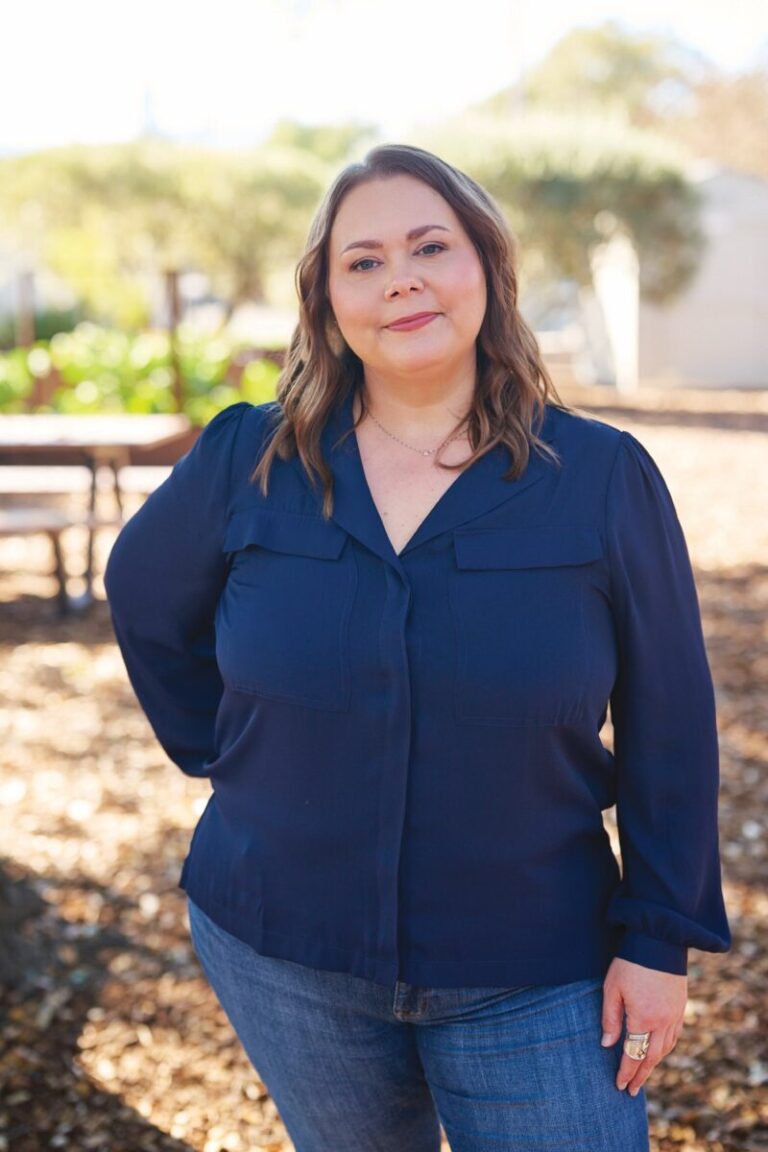
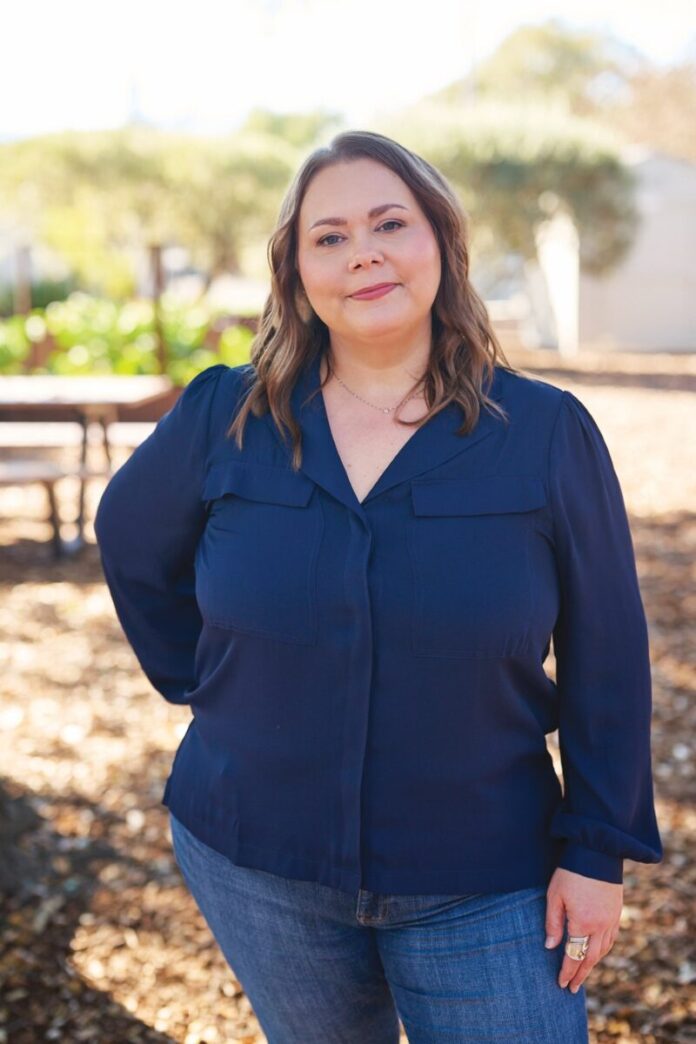
Kristen McMahan grew up in Atwater, in California’s Central Valley, where her proximity to Yosemite sparked a lifelong love of the outdoors.
While studying communications and journalism at the University of Arizona, a six-month exchange in Australia ignited her passion for wine.
In 2012, she relocated to Sonoma County, joining Korbel’s winemaking team, earning an enology degree from Santa Rosa Junior College and gaining cool-climate experience at Freestone Winery. Since joining Goldeneye in 2019 as winemaker, McMahan has become one of Anderson Valley’s most celebrated pinot noir specialists.
Amber Turpin: How did you get into this work?
Kristen McMahan: Like many in this industry, I had a circuitous route to winemaking driven by passion and curiosity. In college, I was fortunate to spend my last semester studying in Australia. While I was there, I did a fair amount of wine tasting and was bitten by the proverbial “bug.” Actually, I was stung by a Portuguese man o’ war—but that’s a story for another time.
Upon returning to the U.S., I began volunteering to help with bottlings and wine club pick-ups to get my foot in the door. In 2012, I moved to Sonoma County to seriously explore the idea of a career change to wine production. I enrolled in the viticulture and enology program at Santa Rosa Junior College (SRJC) and secured a harvest internship as a lab technician. After that first season, I knew this was the career path I wanted to pursue, as it’s my ideal blend of science and artistry.
Did you ever have an ‘aha’ moment with a certain beverage? If so, tell us about it.
I never really had an affinity for chenin blanc until I visited the Loire Valley. I attended a tasting event in the town square of Vouvray, hosted by local producers. Upon first sip, my eyes opened wide, and I immediately realized how beautiful these wines could be. I’ve been a fan ever since.
What is your favorite thing to drink at home?
Empress gin with Fever Tree tonic and a squeeze of lime or a vibrant glass of Txakoli.
Where do you like to go out for a drink?
For wine, Disco Ranch in Boonville. For cocktails, Bravas and Underwood have some of the best.
If you were stuck on a desert island, what would you want to be drinking (besides fresh water)?
Tough question. I would hope that some bottles of Goldeneye Pinot Noir washed ashore with me. I imagine myself savoring each sip while sitting by a campfire on the beach, watching the sunset.
Reader, I am convinced that the feeling of heaven is reunion. For what do we anticipate, day one on the streets of glory, but a blow-out reunion show with long-lost friends and family—those lost parts of ourselves—that missing strength.
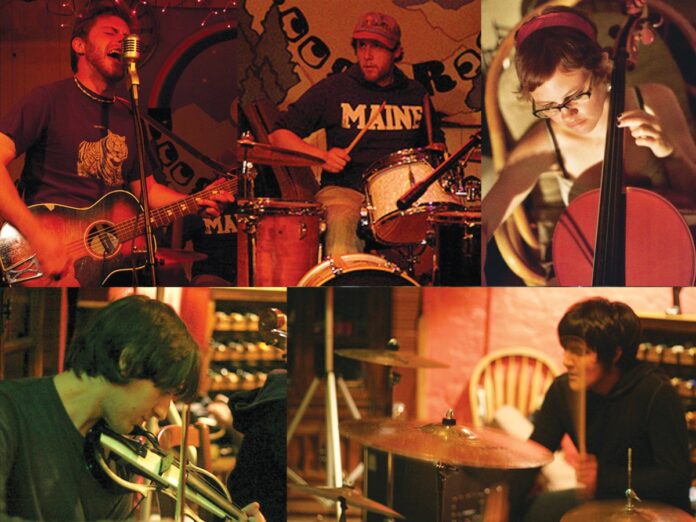
Discontent to wait on heaven, defunct proto-punkers The Highlands have reunited for a 20th anniversary show or two (at 40-something years old, they’re only half-way dead).
They have a bit**in’ show planned for us at the Arlene Francis Center on Friday, May 22, with support from OKOK (new garage rock), Passive Relentless (post-punk synth), Moon Sick (psychedelic space-punk) and Cherry Spit (rockstar noise-rockers out from Denver).
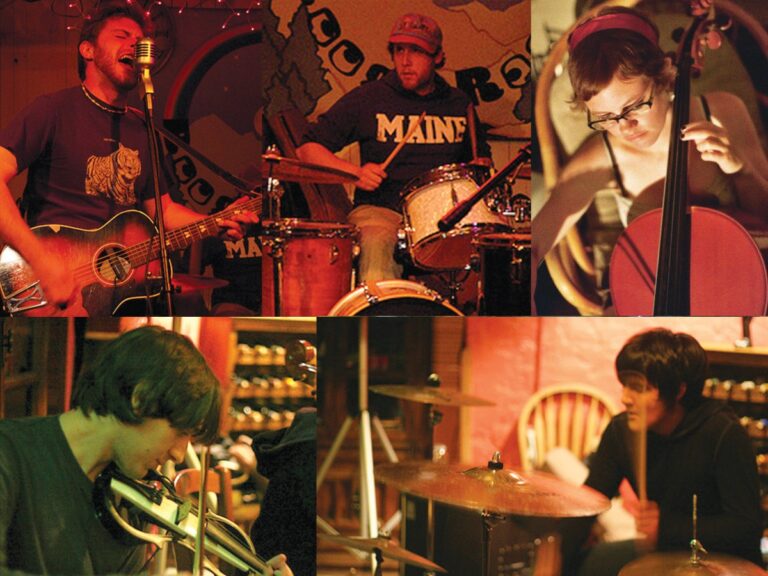
That’s a lot of talent. But with dues paid along with venue fees, Highlands deserve to top that vertiginous wall of sound. Theirs is primitive, chaotic proto-punk with two drum kits, cello and a violin revolving a pastiche of DC punk, K-Records, American folk and free jazz. So chinstrap that wig.
But all in all? The emotional core of the thing will be reunited friends getting one with sound, loving on each other. With the young punks, expect friends and fans from 2010’s contemporaries the Polar Bears, Iditarod, Santiago, New Trust, Velvet Teen, Chores, Moggs, The Crux! and all of Astronomy Club Ghost Story Records.
Cincinnatus Hibbard: Dean, you’re the primary song writer. This material is from the late aughts. Does that date it?
Dean Tisthammer: Most of our old music was written during the Bush era. But that means it was influenced by themes of corporate exploitation of nature and humanity, imperialism, war, the impact of technology on the human mind. Those themes feel even more relevant today. There is some element of nostalgia in reuniting, but the music and the themes of Highlands really started resonating with me again. It feels vital.
I think of your song, ‘General Displeasure of the Populous.’ That resonantes. In terms of sound—do you think the Highlands sound is still relevant 20 years on?
Anthony Jiminez:To this day, there is nothing else like The Highlands, especially locally. The variety of instruments, the quirkiness, the lot. We staked our spot.
Y’all are punk rock jazzers, so it’s natural for y’all to rework your old material. You have a lot—three albums of it. How have you been reworking your old songs?
Adam Erwin Martinetti: Yes. We are much better able to execute on the ideas and vision that we had in our 20s.
Anthony Jiminez: And there’s more maturity to our playing too—refinement. We’re not coming from that place of adrenaline and haphazard chaos because we’re not in our early 20s anymore… We’re grown-ass men (laughs).
Adam Erwin Martinetti:For me, I have always associated our old music with trauma—it’s been interesting because I’m coming to the same music more from a place of healing.
Dean Tisthammer: You can put those raw and visceral feelings you had into a context…
Tell me about reuniting with your bandmates.
Adam Erwin Martinetti: It’s been a lot of fun, but still it’s strange. I’m meeting people that I used to know very well but have changed so much. Meeting them on their own terms and learning more about the people they are now. It’s a lot different, but the same jokes still work (laughs).
Learn more: The Highlands top the bill at 7pm, Friday, May 22, at Arlene Francis Center, 99 6th St., Santa Rosa. $15 at the door. Old 4-track recordings from Dean Tisthammer’s parents’ garage can be sampled at acgs.bandcamp.com.
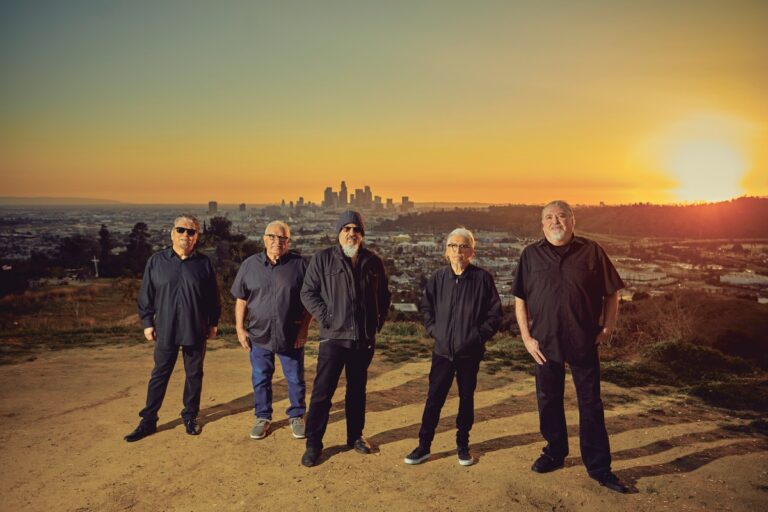
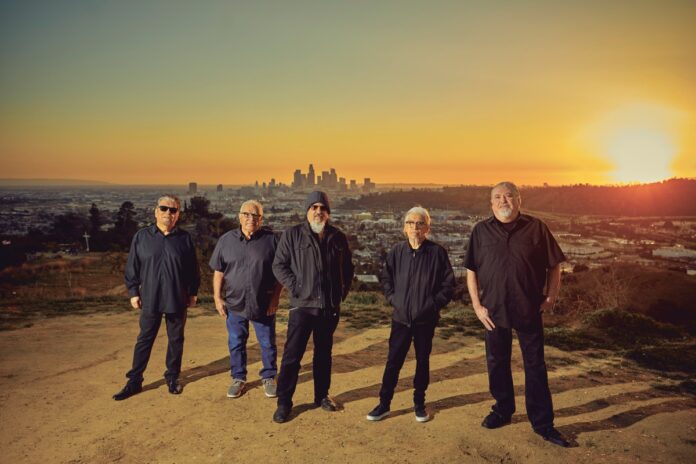
Founded in 1973 by high school classmates David Hidalgo and Louie Perez, Los Lobos has carved out quite a niche for themselves as a quintessential American heritage band.
Over the past half century-plus, the quintet has built a legacy with a unique sound that leans heavily into a mix of rock and roll, blues, country, Tex-Mex and soul spiced up by healthy doses of Latin flavors including cumbia, boleros and nortenos. The group plays at Rancho Nicasio this Saturday.
For Steve Berlin, the “new guy” in the group, who signed on in 1982, his journey started with him being a fan caught up in the buzz Los Lobos had after a legendarily disastrous experience opening for Public Image Limited in Los Angeles during the latter’s 1980 tour. Berlin remembers the story well.
“When they did the Public Image Limited show, it was infamous,” Berlin recalled in a recent interview. “During that era, they had long hair, long beards and were wearing serapes. These weren’t costumes—they wore what they would wear to a fancy folkloric show, so it was like waving a red flag at a bunch of bulls. People went crazy at that first show, throwing [crap] at them and spitting at them—you know, that whole wonderful punk rock experience.”
But it would be at a show Los Lobos played at The Whiskey A-Go-Go that really caught the scene and Berlin’s attention when he was still playing saxophone as a member of The Blasters.
“The first time Lobos played for real in front of people with electric instruments was opening for The Blasters in 1980 at the Whiskey,” Berlin explained. “They’d shaved, cut their hair and looked relatively like everyone else. It was kind of mind-boggling how amazing it was that there’s this band from 15 miles away. They may as well have been from 15 galaxies away for how unusual it was.”
Berlin added, “That night basically started my life in some respects. That was the first time I ever saw Los Lobos. It was kind of a big deal for The Blasters and was basically Los Lobos’ coming-out party, even though the band had been together for seven years playing in East L.A. At that point, I wasn’t in the band yet, but every opportunity to play with them, I would.”
“They very graciously let me produce a couple of things early on. I started with the By the Light of the Moon EP, and by the end of it, I was in the band. That’s why I’m not on the album cover picture because I was still in The Blasters at that moment. It happened pretty quickly,” he continued.
Fast forward to 2026, and Los Lobos had just spent the last quarter of 2025 on a long talked-about string of dates with longtime friends X dubbed the 99 Years of Rock n’ Roll tour. While this bill featuring these long-time stalwarts of the late ’70s/early ’80s Los Angeles punk/rock scene had played dates throughout California in recent years, this was the first time these gigs had gone beyond the borders of the Golden State.
Snafus with booking that Berlin was not at liberty to discuss wound up getting these non-California dates canceled. Nonetheless, Los Lobos are leaning into a super-power they’ve possessed throughout a career that’s found them topping the Billboard magazine charts, winning a handful of Grammys and getting inducted into the Austin City Limits Hall of Fame—playing live shows.
With a canon consisting of 17 full-length albums and counting, Berlin admits making setlists has become a good challenge given the amount of material the band has recorded over five-plus decades.
“We try to make it an overview as much as we can within the 75 to 90 minutes that we’re doing,” Berlin explained. “We’re not pretending to visit every album, but we’re trying to do something that speaks to all of it and hope that people are happy in the end. My favorite songs are ones where we stretch out and there’s room to screw around. Those are the most fun to me—‘The Neighborhood’ and ‘Mas y Mas.’”
“Depending on how we’re feeling, sometimes they’ll take an unexpected turn. For me, I always like when we venture off into the unknown, but we’re not Phish. It’s not built in. Sometimes it happens, and sometimes it doesn’t, and depends on how we’re feeling and so forth. I think that’s the stuff I really like,” he added.
As for what the future holds, there is a Native Sons documentary (named after the band’s 2021 all-covers album of the same name). Helmed by Doug Blush (who edited 2013’s Twenty Feet from Stardom) and director of photography Pierre Justy (who shot the last several Los Lobos album covers), the film was supposed to come out four years ago, but finding money to bring it across the finish line has been the challenge.
“It’s just hard to find funding for any art in the world right now,” Berlin said. “The way it goes with most documentaries, they started it without all the funding they needed, and now they’re trying to finish it. My hope is that it’ll see the light of day. It’s been the better part of four years that we’ve been waiting for it to happen.”
“Doug and Pierre’s bona fides are strong. It’s not like they are amateurs or have not done it before. It’s just really, really hard to find money. The editing and finishing are not cheap—it’s expensive. We’re hoping one day soon they say it’s done and we should come watch it,” Berlin noted.
Currently without a label, plans for recorded material from Los Lobos in 2026 are murky at best. In the meantime, the road beckons with U.S. shows on the books through the summer. The road is a place Berlin and his musical brothers are comfortable residing in for the time being.
“Obviously, every concert is a bit of a look back because we’re playing songs we’ve played before, but there is a bit of nostalgia,” he said. “But I think we’re operating at peak efficiency and a chance for folks to catch us at the top of our game. I just know we’re not planning to stop anytime soon.”
Los Lobos plays at 4pm, Saturday, May 23, at Rancho Nicasio, 1 Old Rancheria Rd. As of press time, this show is sold out. ranchonicasio.com.
Although Donald Trump has never been modest about his abilities or reluctant to exercise personal power, during his second term in office he has shown clear signs of megalomania.
One sign, of course, is his blatant demand for the territory of other nations. Since January 2025 alone, he has suggested annexing or seizing control of Greenland, Canada, Mexico, the Panama Canal, Gaza, Venezuela and Cuba. In addition, he has proclaimed the “Donroe Doctrine,” declaring that “American dominance in the Western Hemisphere will never be questioned again.”
Other actions, too, have underscored Trump’s decision to “go it alone” in world affairs. Like the foremost military conquerors of the past, Trump has been busy building up his nation’s armed forces and their weaponry. The United States is already the world’s biggest military spender, with about three times the military spending of the number two nation (China).
Nevertheless, this April, Trump proposed adoption of a record $1.5 trillion U.S. military budget, with the largest annual increase ever in Pentagon funding: 42%. This dramatic increase does not include an expected supplemental budget for the Iran war, which could cost an additional $200 billion.
Trump’s 2027 fiscal year military budget calls for $98 billion in nuclear weapons spending, most of it to build a new generation of U.S. nuclear weapons. Furthermore, like past U.S. presidents, Trump has assumed the power to launch a nuclear war totally on his own. And he has publicly and repeatedly threatened to do so.
Although it’s tempting to regard this behavior as reflecting an overheated nationalism, the remarkable degree to which Trump regards himself as the savior of the world suggests a more personal lust for supreme power.
This descent into megalomania is deeply disturbing, for the dangers to the world, and even to human survival, are sharply enhanced by one-man rule, and even by one-nation rule.
How long will it take to recognize that international security requires the sharing of power by all people and nations in the human community?
Dr. Lawrence Wittner is professor of history emeritus at SUNY/Albany and the author of ‘Confronting the Bomb.’
Efforts to restrict plant-based products from using the word “milk” are gaining traction again, despite little evidence that consumers are confused (Reuters, April 24, 2026). Most people know exactly what oat milk is—and choose it intentionally.
So why the push to regulate language? It’s hard not to see it as an attempt to shield one industry from growing competition.
Consumers benefit from clear labeling and diverse choices. Limiting how products are described doesn’t protect the public—it limits innovation and restricts access to alternatives many people prefer for health, environmental or ethical reasons.
What’s next? If the dairy lobby has their way, you soon might have to buy peanut spread instead of peanut butter.
Steven Alderson Santa Rosa
Merge Urge
Have you lost your freakin’ minds? There is no way merging Petaluma and Novato would work (‘Welcome to Novaluma: The Case for Merging Petaluma and Novato,’ May 13, 2026). First off, the traffic alone in your new mega-burb would create a Dantean level automotive purgatory. Also, the name sounds like a pharmaceutical for something embarrassing: “Ask your doctor if Novaluma is right for you.” No, thank you.
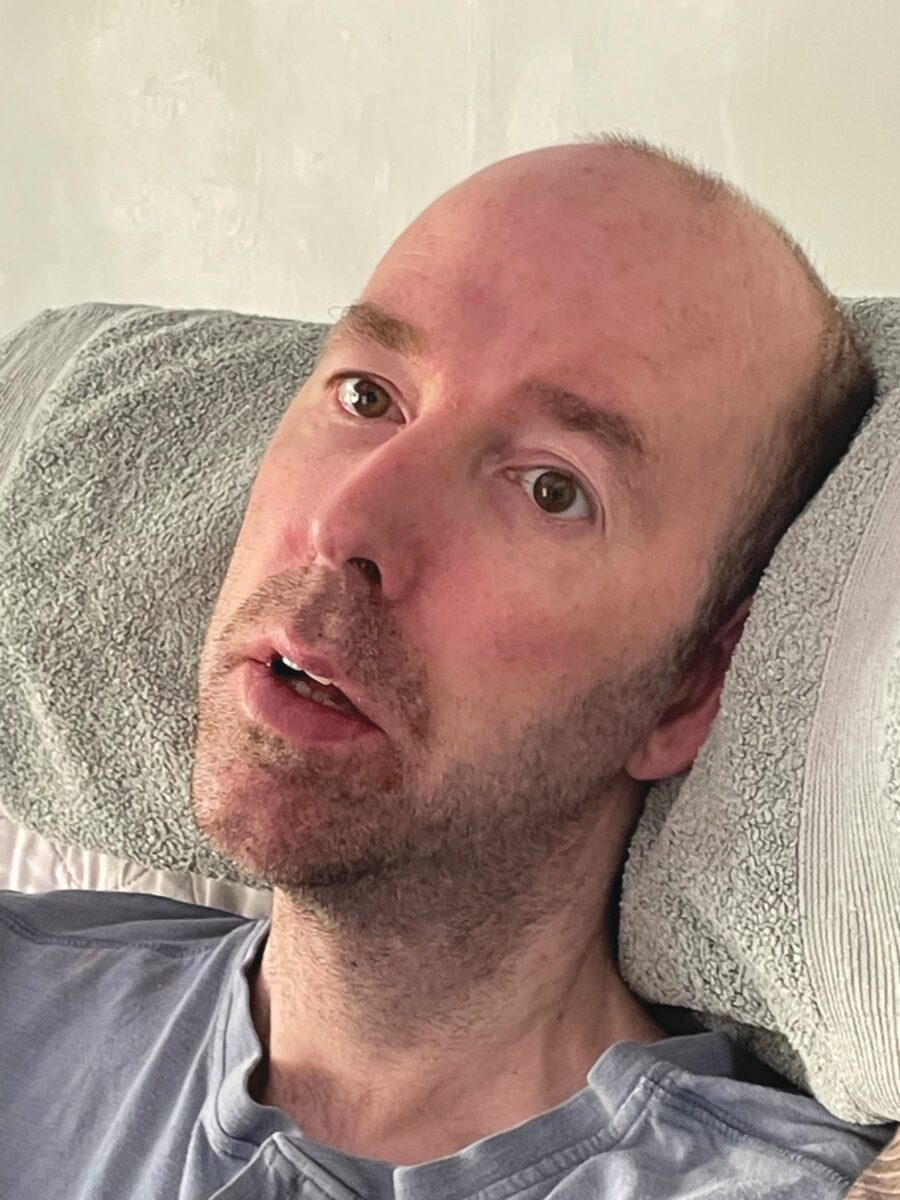
I have met James Freebury only twice. And both times after his accident. Our relationship was carried out over correspondence.
My first visit was along with local musician and impresario Josh Windmiller, who introduced us. We went to pantomime for James, a passage from the Scandinavian epic Beowulf of all things. We performed the scene where the hero confronts his monster.
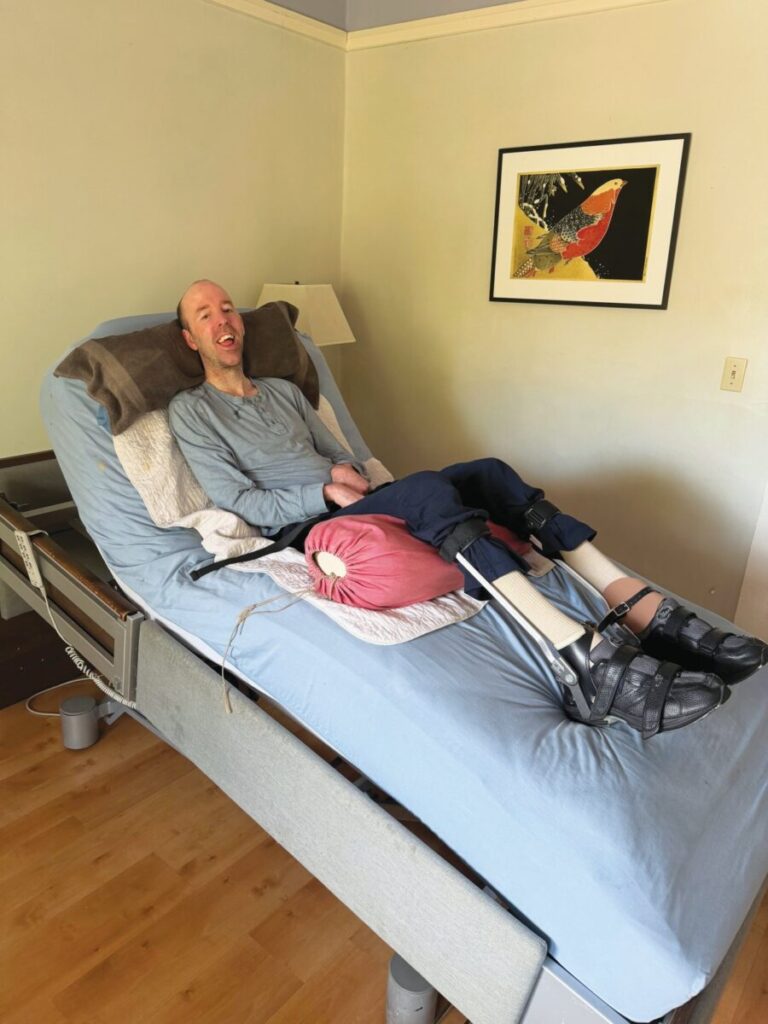
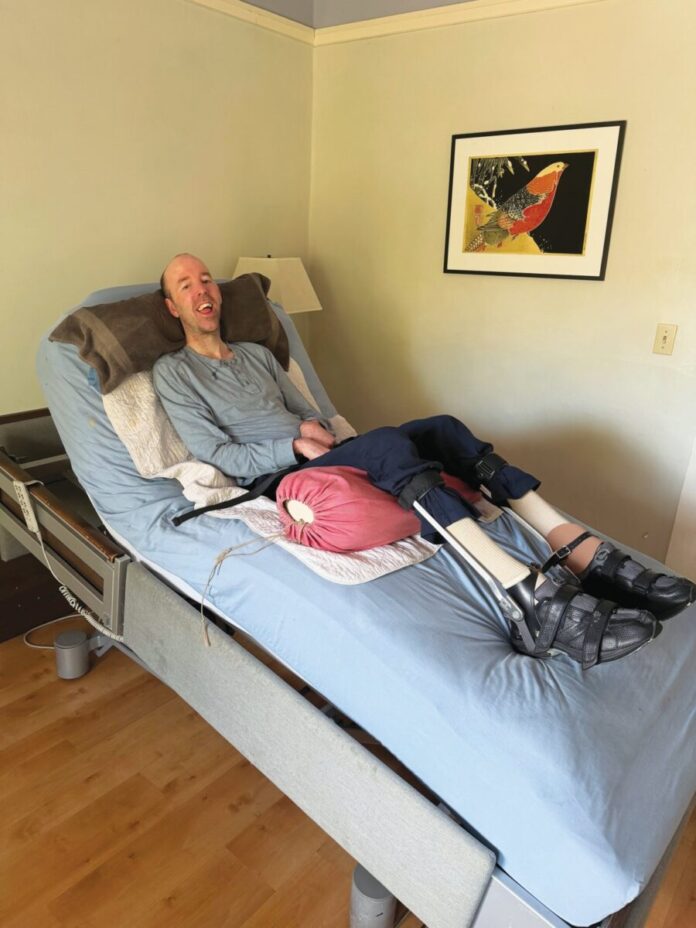
The second visit I went alone—to establish a personal trust. I remember his room—I imagine he is waiting there now. Except for his bed and two art prints, the room is quite bare. It faces away from the sea into a garden and beyond it, a slanting street. I remember Freebury’s stillness; I remember the long pauses between my questions and his replies. But what I remember best are his eyes. They alone express his inner life and freedom now. Yes, I remember his eyes…
A Man Falls Down
What James Freebury can remember of his aneurysm was a blinding headache. He had just finished working a shift at the museum. Before putting himself to bed, he happened to tell his parents. That saved his life. James Freebury has not risen from his bed since. It’s been four years.
He remembers waking up some days later in the high tower of a hospital. It was grey outside and dreamlike. It brought to his mind the pleasant association of fairy tales.
In the next moment, Freebury found he could not move. He could not shift in bed to relieve some pressure. He could not reach his arm for his phone or for water to relieve his burning thirst. He found he could not speak. He could not rise. He could not escape. He could not even scream. Freebury was helpless—helpless as a baby. But a baby without a future—his future was in flames. James Freebury, age 38, awoke paralyzed from the neck down.
It is impossible for me to imagine his devastation in those early days. James Freebury had woken up in my own personal nightmare. Is it unprofessional for me to write that? Maybe. It’s honest. Be honest—through James Freebury we confront one of our greatest fears. That’s why his story is gripping. And that’s why we need for it to have “a happy ending”—for ourselves more than him.
In his hospital bed, James Freebury made an inventory. He found that he could still move his eyes—and he could still blink. He could turn his head from right to left. James Freebury found that he could still weep. And he could still hold his head up. These are small but defining human expressions.
And James Freebury found that he could still smile. He still had his mind and his memory. And he smiled as he remembered the fifth book of TheOdyssey—it was the first part of that myth that he had set out to learn by heart. He had once performed it in epic style, striding the ruins of Sutro Baths like a hero. Reciting the fifth book to an audience as the crashing waves beat the rhythm and the white gulls screeched overhead, wheeling.
In the fifth book, Troy is a smoking ruin and Odysseus is sailing home after 10 long years. Caught in a storm of divine proportions, his ship—his vessel—is smashed to a thousand pieces and he washes to shore, alone. Odysseus awakes to find himself cast away on a desert island—with nothing to do but rage the gods that had forsaken him.
New strength flowed into Freebury at the recollection. In some sense, he was Odysseus now. Deviser of the Trojan horse. He of cunning and stratagem. Odysseus has escaped his island of solitude. Freebury too would escape, and like Odysseus make it home to Ithaca. Within himself, he discovered inner resources. He had a Proustian memory to mine (he likens himself to a tunneling white rabbit). And his imagination was as free as Jean-Do Bauby’s butterfly. Perhaps, fatefully, James Freebury had been unknowingly preparing for his trial…
Adaptation
And so it was that James Freebury learned to speak for the second time in his life. The first time, as a child, was with his mouth. The second time, as an adult, James Freebury learned to speak with his eyes. A miracle device called the Tobii Dynavox tracks his eye movements as they range over a keyboard. It synthesizes for him his new half-robotic voice. Freebury now has a wheelchair—and the future prospect of one that he himself can steer with only his eyes. He dreams and devises other adaptive technologies for people in his locked-in condition.
It’s hopeful. But these themselves define the hard limits to his personal autonomy against which he struggles. He wrote to me a few days after our cordial second meeting, describing a “rough day” he spent “shaking and weeping with the physical and psychological affront” of his situation. He had been stuck down by fate in the full flood tide of his life.
Escapism
Our inner faculties of memory and imagination combine in the defining human act—the creation of story.
Freebury had written before his paralysis. But he had never considered himself a writer—he confessed that he lacked the discipline. But now, he notes with wry irony, “All I can do is write.”
James Freebury had first conceived of A Man Comes Down after he graduated college (with a degree in medieval lit). Inspiration came as he was reading Peter Carey’s novel, The True History of the Kelly Gang.The setting was Old West, but through the fundamentally Celtic quality of the Irish-immigrant Kelly, Freebury discerned deeper roots in Icelandic sagas. From there, tendrils stretched back to Greece and to Homer.
He loved the idea of playing up this connection in an original story. He had tried to write it before the paralysis. In his struggle with writer’s block, he had gradually grown to hate the project.
Why Freebury chose to take up this project during his convalescence he didn’t quite say—many of my questions went unanswered in our large but incomplete correspondence. I can guess that it was in part to mend the back broken continuity of his professional life. He would re-enter the arts with a major literary accomplishment. And in the long process of writing the novel, escape his paralysis into an imagined world in which he was a dangerous man of action. And, I can’t but think that in accomplishing what he was unable to when he was able-bodied but blocked, James Freebury would prove that in some narrow sense it was his old self that was paralyzed and himself the free man.
MOMENT What James Freebury can remember of his aneurysm was a blinding headache—he has not risen from his bed since. Photo by Asha Eden McElhaney.
A Man Comes Down
A Man Comes Down was published as a 20-part Substack serial over one year. Each letter of it held his gaze the one second required for the Tobii to register a keystroke.
As one reads the novel, Freebury names the camera shots that frame his scenes. And he embeds a contemporary folk and rock soundtrack to amplify key dramatic moments.
The setting is “The Coast,” a mythologized California of the lawless 1850s. As the story opens, a wounded gunfighter named Ezekiel rides down from the mountains with his ex-gang in pursuit. Fatefully, he collapses at the gate of Rowena, a lonely lighthouse keeper whose outlaw husband, Ned (think Kelly), has been Ezekiel’s employer and best friend for years.
Something compels Rowena to take him in during his convalescence. Set across three days and eight years, the story moves between intimate interior drama and wide landscape cinema. Its two central characters are people of unusual intelligence and restraint, whose slow-burning recognition of one another is the story’s engine. Oh… And it has a happy ending for Ezekiel.
A Man Comes Down is a novel that yearns to be a screenplay. With the right producer, it could be a new American classic. As a film, imagine McCabe and Mrs. Miller meets Secret of Roan Inish. As a cinematic TV series, imagine Poldark meets The Proposition. I would pair the adaptation with a documentary about Freebury himself—think The Diving Bell and the Butterfly meets The Burden of Dreams.
If he sold it into film, A Man Comes Down could carry James Freebury sailing into realms unknown.
Myth
Entertainments provide escapism, worlds and lives we can project ourselves into when we need to escape (the rooms where we live locked with our trauma). Escapism is important. But story elevated to myth is more than simple escapism.
My mentor once told me that with higher literature and film—like the myths and folktales they superseded—we return to our lives with a new understanding of how to be a human. Freebury has written a fine story. But has he achieved mythogenesis?
My question for him was what does his story teach us about life—how to survive the
trials of life—how to thrive?
He had this to say, “The point or the lesson, is that the person or the thing you most need, may not come from the direction that you expect, hopefully, you can be yourself three dimensionally enough that you can pivot to meet the positive chances to come your way, that is true in my very difficult circumstances as well…”
I would add, with some poignancy, that I detected the theme of escaping the stories others impose on us. It is the plight of both the central characters.
Ithaca
James could see me from his window as I left through the garden gate. Then I turned and disappeared from his fixed view.
I was newly mindful of each step I took as I climbed his hill to the VA hospital to take in the view of Ocean Beach. I needed to clear my head. It had been taxing for him to write his answers. It was taxing for me to wait for his replies in that close room.
His answers touched my questions but often flew off on his own flights of fancy. Had I seen him? Or was I mythologizing him with this article? Was I trapping him, or was I setting him free? I was in a black mood. Dark clouds raced across the dome of the sky as I climbed higher. I stood on his peak and watched the waves wash ashore.
There I remembered his answer to my last question: “James, if this story is your Odyssey, what is your Ithaca? What is your happy ending?”
He answered severally, ruefully mindful that one of the lessons of The Odyssey is that one can never go home again. He answered: His Ithaca was to lift himself from his hospital bed and “go upstairs to my old apartment and have a cup of tea in solitude again, with a view of the sea from above.” So small a journey and yet, so impossibly vast. Twenty thousand leagues for Odysseus and 20 steps for James are but the same.
A white butterfly flashed by, tumbling on the currents of wind that stung my eyes. How can we survive? The answer is surely in our myths.
Learn more: James Freebury has published ‘A Man Comes Down’ on his Substack, ‘Analysis by Paralysis,’ at analysisbyparalysis.substack.com. He hopes to have it made into a movie. Between the chapters, he has published autobiographical reflections dating from his aneurism. He welcomes collaborators to facilitate his adaptations.
The spirit of Terrapin Crossroads rolls back into Sonoma County when the Terrapin Roadshow returns for a two-night stand at the Monte Rio Amphitheater. Led in part by Grahame Lesh, the traveling series revives the communal, improvisational ethos long associated with the extended Grateful Dead universe, gathering an expansive roster of musicians for marathon evenings of jam-band exploration beneath the redwoods. The lineup shifts throughout the run but includes familiar names from the broader Dead-adjacent orbit, with equal emphasis placed on musicianship and the loose-knit fellowship that tends to form around this music. In Monte Rio, that combination of river-town atmosphere, outdoor amphitheater and persistent countercultural glow is especially well matched. 5pm, Saturday, May 30, and 2pm, Sunday, May 31, at Monte Rio Amphitheater, 9925 Main St. $81 general admission; $151 VIP. More information at terrapincrossroads.net.
Petaluma ART/WORK
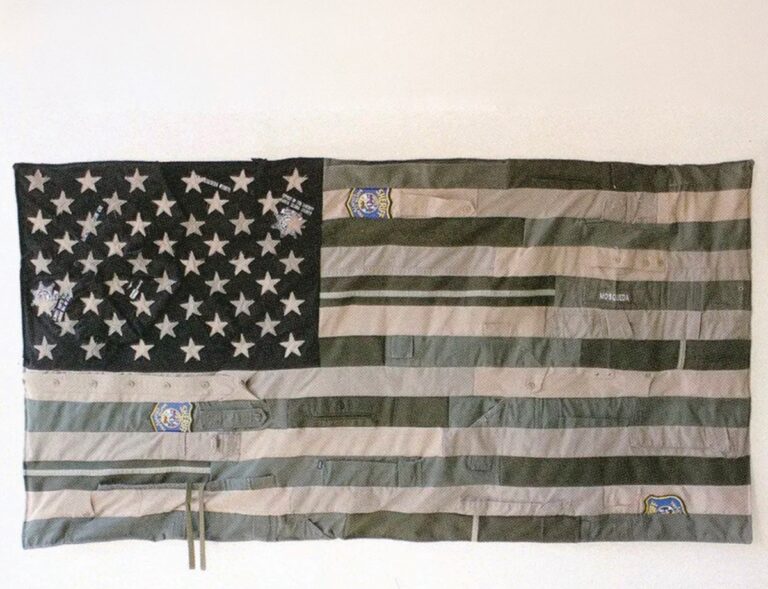
Labor gets the gallery treatment in ART/WORK, a group exhibition at IceHouse Gallery featuring artists Cat Alden, Ryan Carrington and Emma Logan, curated by Carin Jacobs. The show examines work wear, labor tools and the broader social meanings attached to work itself, using unexpected materials and interdisciplinary ideas pulled from sociology, politics, economics and gender studies. Set inside the industrial bones of the Burdell Building—once tied to Petaluma’s poultry and dairy economy—the exhibition gains an added layer of resonance, turning the gallery into a meditation on what societies value, produce and wear down in the process. Thoughtful, tactile and occasionally sly, it’s an art show with dirt under its fingernails. Exhibition continues through June 5 at IceHouse Gallery, 405 East D St., Petaluma. Gallery hours 11am–5pm Monday–Friday, 11am–4pm Saturday. Free admission. More information at digitalgrange.com/icehouse-gallery.
Novato Saxsquatch
Somewhere between cryptid folklore, EDM spectacle and late-night jam-band fever dream lurks Saxsquatch, the seven-foot-tall saxophone-wielding creature bringing his “Bigfoot Rave” energy to the HopMonk Novato Cookout Concert Series. Equal parts electronic producer, philosopher and genuinely skilled multi-instrumentalist, Saxsquatch has built a massive online following through absurdist charm, laser-heavy live shows and collaborations that veer from John Oates to Billy Ray Cyrus. DJ Zack Darling opens. 6pm, Friday, May 22, at HopMonk Novato, 224 Vintage Way. Tickets required. More information at hopmonk.com.
Sausalito Authors Among Us
Sausalito’s long-running reputation as a haven for bohemians, poets and colorful literary types gets a proper airing when the Sausalito Historical Society hosts an evening devoted to the town’s writerly past. Part of the society’s new Authors exhibit, the program features readings from the works of late Sausalito authors including Shel Silverstein, Maya Angelou and others whose lives and careers intersected with the famously eccentric waterfront community. The broader exhibit highlights the published works of 40 writers connected to Sausalito, spanning poets, playwrights, screenwriters, adventurers and assorted intellectual mischief-makers. Literary history, in other words, with a sea breeze attached. 6–7:30pm, Friday, May 22, at Sausalito Library, 420 Litho St. Free admission. More information at sausalitohistoricalsociety.com.
ARIES (March 21-April 19): If you’re a professional photographer, now is an ideal moment to invest in the higher-end lens you know would expand your best work. If you’re a committed chef, it’s a perfect time to spring for a precision knife set that elevates your craft. If you’re a devoted yoga or meditation teacher preparing a new series, you might decide to purchase an upgraded sound system to share your vocal offerings more crisply. And if you are none of the above, consider this your sign to obtain a key instrument or tool that will help you move to the next level of professionalism in the work you’re called to do.
TAURUS (April 20-May 20): When we hear people described as having fertile imaginations, we may assume they are artists, writers or musicians. But the truth is that many creative visualizers are engineers, city planners, inventors and the like: those who design and build functional wonders. Of this group, you Tauruses make up a disproportionately high percentage. Your tribe is often most imaginative when vitalizing concrete details and transforming practical matters. In the coming weeks, this will be a vibrant X-factor in your relationship with the world.
GEMINI (May 21-June 20): When many people reflect on their early years, they focus on the alienation and wounds they endured. Few recall, in vivid detail, the moments of joy, triumph and breakthrough. It’s a symptom, I suppose, of our era’s compulsive cynicism, and not necessarily an accurate account of the past. So many good things happened, too. This isn’t to dismiss the real pain that shaped us in our tender years. Still, I want you to know that you are in a season when it’s essential to recognize and celebrate the blessings of your beginnings—the fun, guidance and grace that helped you flourish. Update your gratitude.
CANCER (June 21-July 22): Of all the zodiac signs, you have the most potential to cultivate robust emotional intelligence that’s helpful in practical situations. More than everyone else, your feelings are less likely to render you vulnerable and fragile and more likely to make you a powerhouse. The coming weeks will be prime time to deploy these talents to the max. I encourage you to summon gleeful exuberance as you provide your sensitive, heartful nurturing. Practice the ingenious art of keeping the world emotionally literate and spiritually alert.
LEO (July 23-Aug. 22): I am pleased to predict that you will be less egotistical and narcissistic in the coming weeks than you have ever been in your life. In saying that, I don’t mean to imply that you’re any more egotistical and narcissistic than the rest of us. I’m simply saying you can get a liberating reprieve from the excessive pride and selfishness that regularly debilitates us all. Congratulations, Leo. This grace period should enable you to deepen your attunement with your soul’s blueprint, the design of destiny you chose before birth. I bet you will enjoy a period of vibrant, exciting tranquility.
VIRGO (Aug. 23-Sept. 22): Consider this a friendly heads-up to your inner critic, your gloomy side and any voice in your head that expects too little from life. Upcoming astrological omens are influencing me to predict a stream of auspicious omens and fortunate events. So if you’d rather cling to tired stories about not being good enough or strong enough, you might want to skip my forecasts for a while. But if you’re ready to vivify your faith in your power to eagerly create what you desire, stay tuned. Karmic blessings are coming.
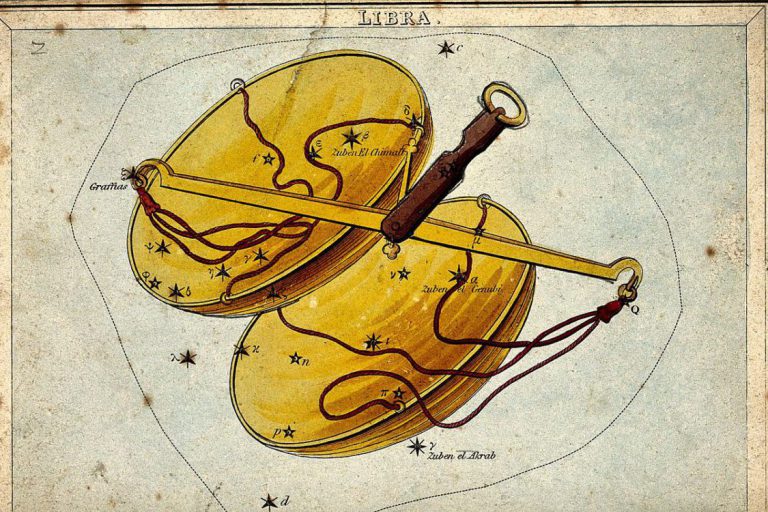
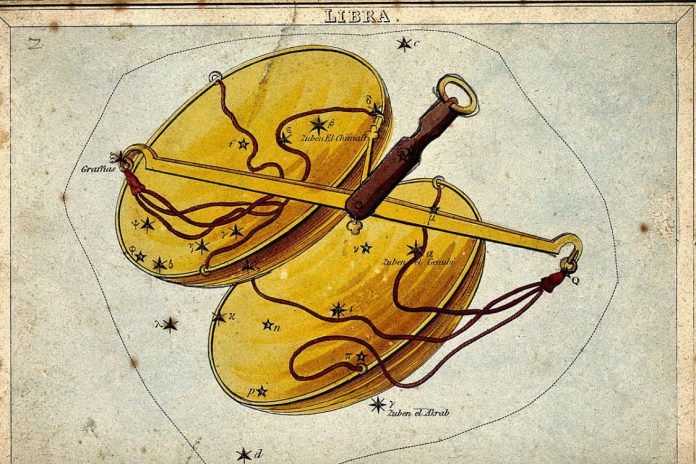
LIBRA (Sept. 23-Oct. 22): To be blunt, dear Libra, I think you need soul medicine that’s most available in frontiers, borderlands and thresholds. Some of these might be bright, shiny places, and others may be akin to mazes and tunnels. Please keep in mind that your main motivation, as you seek adventures in the outskirts, should be the quest to have fun as you blow your own mind. For the sake of your lust for life and joie de vivre, you really must explore power spots untouched by trivia and pettiness: sanctuaries where vastness, freedom and raw vitality can wash away at least some of your fixations and habits.
SCORPIO (Oct. 23-Nov. 21): Giant Pacific octopus dens are identifiable by the “gardens” of debris outside. They include shells and bones, arranged like ornamentation around the entrance. Are the creatures trying to decorate? Scientists don’t know. But it’s clear they are leaving evidence of their appetites. The result is distinctive, artistic and revealing. With this scenario as your metaphorical meditation, Scorpio, I invite you to look at what you have been pursuing and consuming in recent months. Contemplate the stuff piling up in your sphere. What do your finished experiences reveal about your quest for meaning? Does this pattern reflect your deepest intentions? Is this who you want to be? Make sure the story you’re telling about yourself is the right one.
SAGITTARIUS (Nov. 22-Dec. 21): Advising a Sagittarius to be patient is like asking a bonfire to burn slowly and politely. Still, I will give it a try. Because I love you, I will dare to be frank. So here goes: If you want to align yourself with astrological currents, practice being reverently at ease with life’s madness as you watch and wait. See if you can take genuine pleasure in resting within a field of calm trust. Imagine, with fearless delight, the rewards that will find you as you nurture a steady, unhurried confidence in your intuition, which will ultimately tell you exactly what you need to do.
CAPRICORN (Dec. 22-Jan. 19): In 1994, immunologist Polly Matzinger revolutionized her field with a radical theory. She discovered that our immune systems don’t focus on distinguishing “self” from “non-self,” but rather responding to threats. The body puts less emphasis on asking, “Is this me?” and more on “Is this harmful?” Her breakthrough transformed our understanding of immunity, autoimmune disease and transplant rejection. According to my analysis of the astrological riddles, you Capricorns could benefit from a similar adjustment. Don’t worry about whether any particular influence harmonizes with your identity or aligns with your history. Instead, ask, “Is it nourishing or harmful? Supportive or useless?” As you refresh your approach to guarding and protecting your precious self, new options will become visible.
AQUARIUS (Jan. 20-Feb. 18): According to my interpretation of the astrological signals, you have run into an obstacle to your creative flow, or may soon do so. Though this could feel discouraging at first, I think it’s a promising sign. It indicates that a hidden bug is surfacing. An inner saboteur is no longer operating in the shadows. You’re being given the opportunity to repair an unseen energy leak that has been sapping your vitality. To illuminate this process, consider the wisdom of author Joyce Carol Oates. She says that writer’s block arises when a writer subconsciously believes that what they’re trying to create is false, misguided or harmful to themselves, which results in a temporary creative paralysis. Be brave and relentless in hunting down the glitch in your self-love, Aquarius.
PISCES (Feb. 19-March 20): Maybe you’ve been having thoughts like this: “I’m too scrambled to do what’s necessary to get unscrambled.” Here’s another snag that may be tangling your mind: “I’m too mixed up to know what questions to ask to sort out my confusion.” If this is true, Pisces, I’m here to offer advice. Imagine calling a timeout on the whole noisy world and slipping free of the habitual trance. Consider retreating to a sanctuary where time doesn’t oppress you and complications subside. Let your mind be empty, give your ambitions a rest and immerse your tender attention in the deepest part of yourself you can find.
Homework: The most beautiful thing you’ve done? The most beautiful thing you’ll do? https://tinyurl.com/333×999
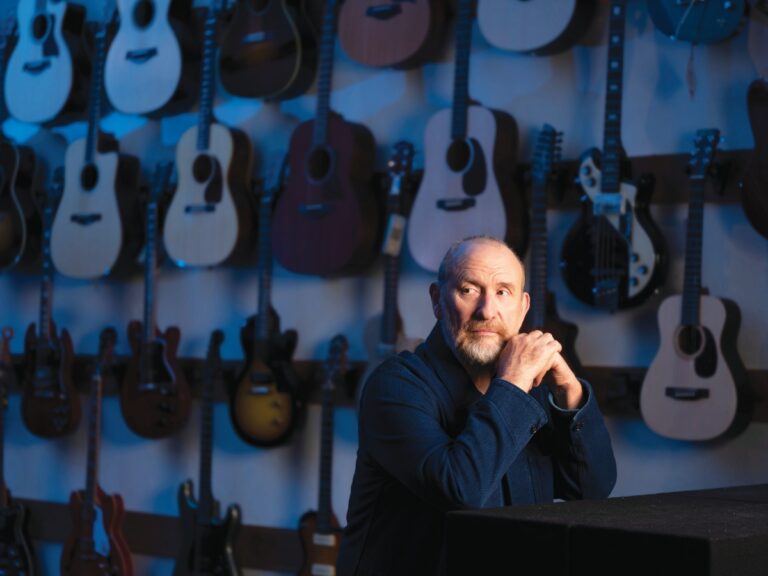
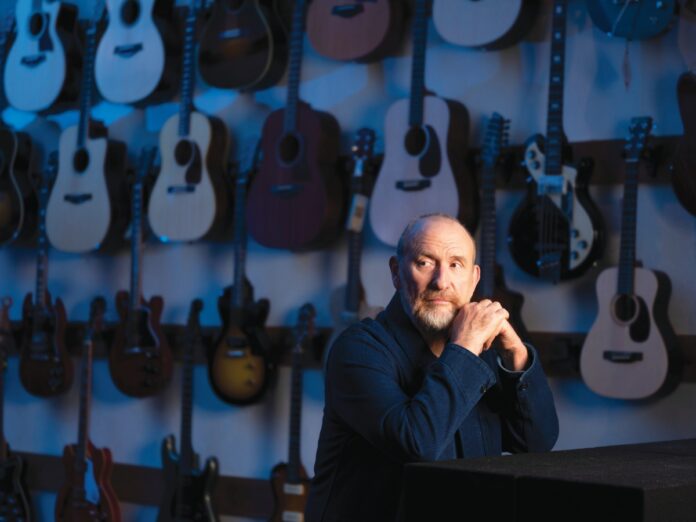
For most music fans, Colin Hay will be forever known as a founding member of Men at Work, a group he spent six years in during its original run from 1978 to 1986.
During that time, the original quintet released three studio albums and won the 1983 Grammy for Best New Artist. In the four decades since the band’s first breakup, Hay has carved out a solid solo career for himself, releasing 16 solo albums.
He’s also worked with the likes of actor Zach Braff, who extensively used Hay’s music in the former’s 2004 cinematic debut, Garden State, and also invited the Scottish-born singer-songwriter to appear as himself in Braff’s sitcom, Scrubs. Through it all, Men at Work has never been far afield, as Hay has periodically reformed the group, at one point with his former bandmate, the late Greg Ham.
Hay will appear with a reformulated Men at Work tour lineup at BottleRock Napa Valley this Friday, May 22.
Meanwhile, Hay most recently released Men @ Work Volume 2, the sequel to his eighth studio album, Man @ Work. Like that collection, Volume 2 features reworkings of Hay’s group and solo work. For the 72-year-old rocker, the timing was right.
“After 23 years, it turns out (Man @ Work) sold 100,000 copies,” Hay said. “The label I’ve been working with all that time, Compass Records, sent me a little plaque (marking that milestone). It’s not bad for an independent release, in light of what was possible in the past. It’s still relatively humble in a way because it’s hard to get from zero to that amount in 23 years. The label said we should really do another one, and (I agreed) since I didn’t really have a new album of original material ready to go.”
He added, “I’d been doing some Men at Work material live, so they think there are tracks I could redo and reimagine. When I started to think about it, there were some songs I really liked that I wouldn’t mind doing again. It seemed to be the thing to do. Then we had the idea of re-photographing the cover to make it exactly the same cover, except it’s many odd years later.”
“I think there are some interesting takes on the songs and some acoustic ones that came out well. I enjoyed making it because of all the time I was in the studio by myself, and I can mess around. I’d just have a microphone and guitar and have another bite at the cherry, so to speak,” Hay continued.
Highlights on Volume 2 range from “Into My Life,” a pop nugget wrapped in chiming mandolin runs and layered vocal choruses that first appeared on Hay’s 1990 sophomore bow, Wayfaring Sons; the reggae-flavored “Blue for You” from the 1983 Men at Work album, Cargo; and closer “Next Year People,” an acoustic Dylanesque anthem of hope from the 2015 solo album of the same name.
Songs from the “Men at Work” albums will, of course, be included in the shows Hay is playing this summer, as he takes the current version of Men at Work on the road on a bill that also includes Toad The Wet Sprocket and Shonen Knife. The band is rounded out by bassist Yosmel Montejo, drummer Jimmy Branly, multi-instrumentalist Rachel Mazer, guitarist San Miguel Pérez and Hay’s spouse, Cecilia Noël, on harmony vocals and percussion.
When asked what fans can expect him to play for these shows, Hay responded with a clever analogy.
“It’s like when you walk into a party and think, ‘So and so will be there. It’ll be good to see him or her.’ You want to see these friends you’ve known for years,” he explained. “But, at the same time, it would be nice to have a conversation with a couple of strangers. You don’t want to be overwhelmed by the strangers, but sometimes, if there are too many old friends, you think that you’re sick of these people.”
Hay’s love of music dates back to a childhood growing up in Scotland, with memories of his mother vacuuming the house to the sounds of British big band stars like Al Bowlly and the Ray Noble Orchestra on a big Gramophone radio as her son lay there with his head against the speaker.
A major inflection point came when his father opened a record shop when his son was five and ran it until Hay was 14, at which point the entire family immigrated to Australia. Hay is quick to point out how much of his musical passions and influences were shaped by that particular time period.
“That was extraordinary, more so when I grew up and was an adult realizing that the most [remarkable] music was made during that time period, between 1958 and 1967, when we had the shop,” he recalled.
“You had the birth of everything and the discovery of everything. I was of course mad for The Beatles, The Kinks, The Rolling Stones, The Who, and then my brother turned me onto Booker T and the MGs, Otis Redding, Sam Cooke and all that stuff. That was a whole other deal. It was a rarified way to grow up,” added Hay.
Landing in another continent halfway around the world also proved to be fairly earth shattering for the young Scot, who quickly found a bubbling music scene to which he could relate.
“At that age, you are so impressionable,” Hay said. “By the time I went, I was almost who I was, but I got very much affected by my new environment. Although I had dreams about my Scottish homeland.”
“The curious thing was that there were a lot of bands made up of immigrants like me. AC/DC was from Scotland, and The Bee Gees were from England,” he noted. “The Little River Band was also made up of people from England. There were so many bands made up of immigrants in Australia during the ’60s and ’70s.”
Fast forward to the present, and Hay’s musical journey has taken him from early multi-platinum success with Men at Work to a steady solo career and being recruited to be a member of Ringo Starr’s All Starr Band back in 2003 that led to his being a regular member starting in 2018. He’s doing a run of dates with the former Beatle in late May and June, just ahead of the Men at Work U.S. tour. Even with so much history under his belt, the man from Down Under has plenty of unfinished business.
Said Hay, “I realize I don’t have as much time as I think I have, so I just need to get on with it.”
Men at Work performs at 8:45pm Friday, May 22 at the HelloFresh Stage at BottleRock Napa Valley. For more information, visit bottlerocknapavalley.com.
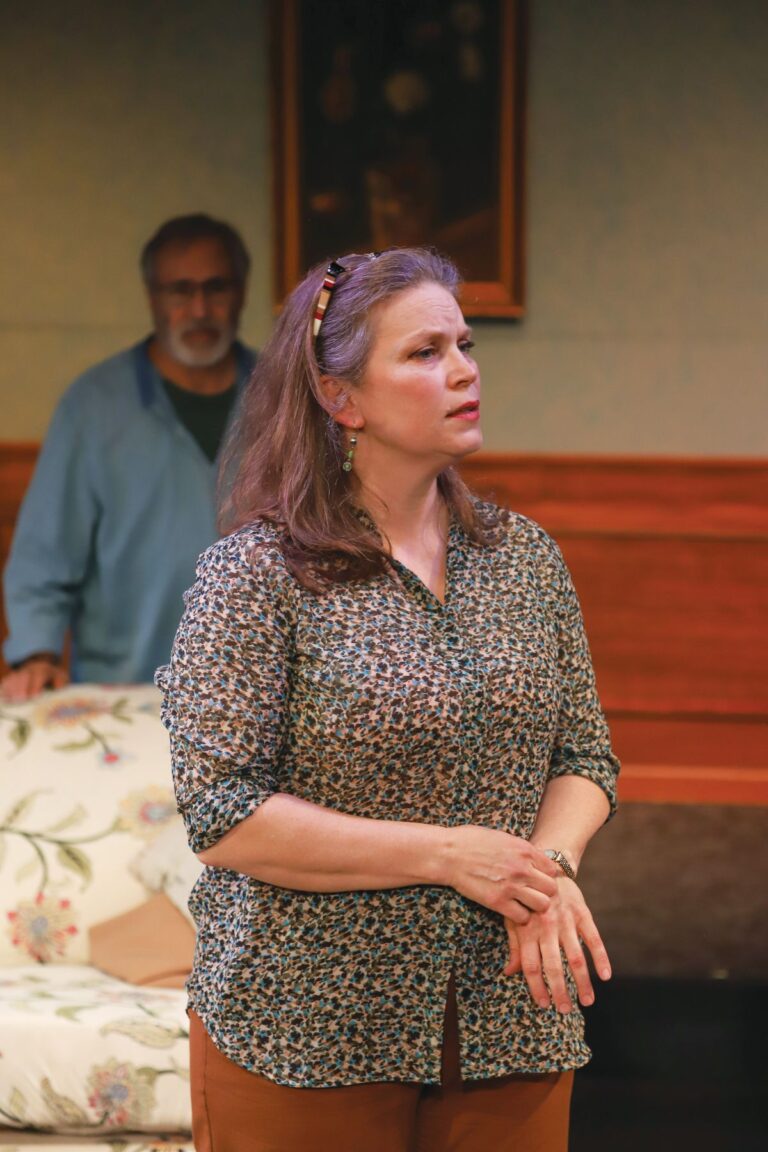
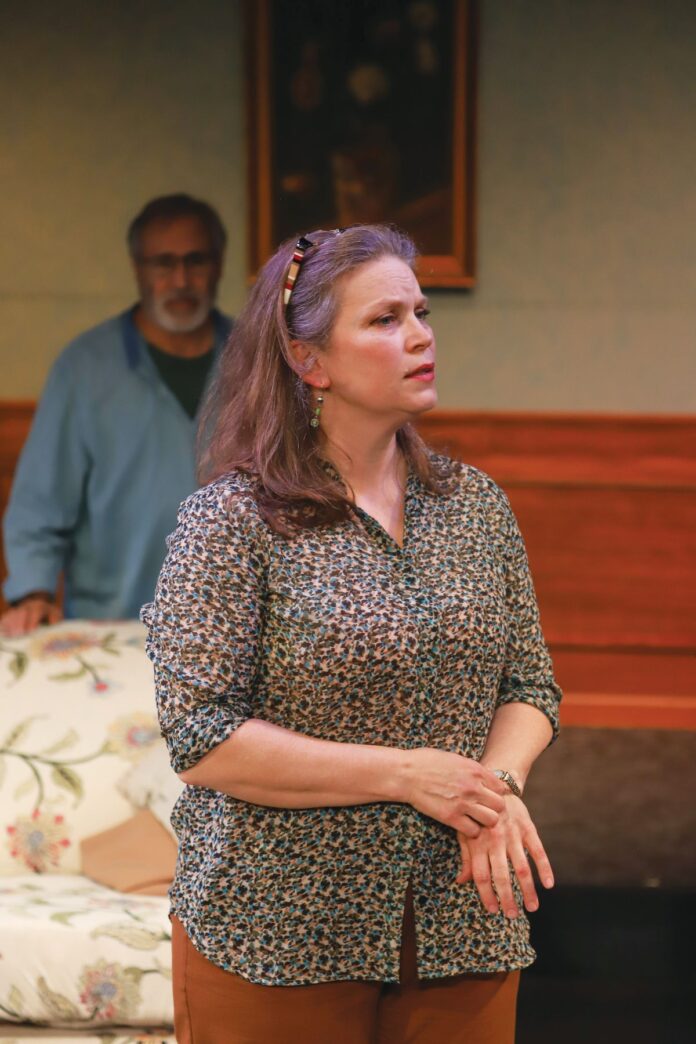
Philosophy, obsession and integrity are themes at the forefront of 6th Street Playhouse’s latest offering, The Lifespan of a Fact, directed by Libby Oberlin, now playing on their Monroe Stage in Santa Rosa through May 24.
The production is an actors’ showcase about human behavior. Some very grounded interactions are on full display here, as three characters grapple with the fact-checking process of a literary essay that takes myriad creative liberties in the name of emotional “truth.”
Jim Fingal (a subtle, persuasive Noah Vondralee-Sternhill, who excels at his comedic bits) is an eager up-and-coming writer assigned by his editor, Emily (Emily Lynn Cornelius, wielding her character’s high status with truth and unfussy humanity), to fact-check an essay by an aggressive author, John D’Agata (Marty Pistone, relishing the outlandish nature of this subversive character), who doesn’t take kindly to being dictated to. Egos and tension flare between the men, mediated by level-headed Emily, as they find themselves dissecting the very meaning of truth.
Though the characters aren’t given a ton of backstory, the time we spend with them reveals their nature organically. Their motivations are apparent without the obvious drama that can be tempting for a less experienced group of actors to ham it up.
The writing by Jeremy Kareken, David Murrell and Gordon Farrell is razor sharp without being artificial. Each actor had a few shaky moments as well as a number of instances of great believability too. Cornelius is particularly compelling as the harried editor, who recognizes the need for both airy poetry and dirty truth in a nonfiction piece of prose.
Lauryn Malilay continues her impressive scenic design streak with a clean, thoughtfully decorated set, aided with props by Ben Harper and Rachel Anderson. Projections, also by Malilay, are crisply executed. Noah Hewitt’s light design is both expansive and insular and darkens as the characters go more inward in their reflection.
The pacing was at times labored, with a few noticeable lulls in energy. But when it was firing on all cylinders, the action was riveting. Oberlin has an intelligent cast working hard to bring a very intellectual story to life. Those seeking a thought-provoking piece of theater will no doubt appreciate these efforts.
If that’s the kind of theater that sounds intriguing, one may consider grabbing a ticket to this original and unique story.
‘The Lifespan of a Fact’ runs through May 24 on the Monroe Stage at 6th Street Playhouse, 52 W. 6th Street, Santa Rosa. Fri–Sat, 7:30pm; Sat & Sun, 2pm. $27–$48. 707.523.4185. 6thstreetplayhouse.com.
Kristen McMahan grew up in Atwater, in California’s Central Valley, where her proximity to Yosemite sparked a lifelong love of the outdoors.
While studying communications and journalism at the University of Arizona, a six-month exchange in Australia ignited her passion for wine.
In 2012, she relocated to Sonoma County, joining Korbel’s winemaking team, earning an enology degree from Santa Rosa Junior...
Reader, I am convinced that the feeling of heaven is reunion. For what do we anticipate, day one on the streets of glory, but a blow-out reunion show with long-lost friends and family—those lost parts of ourselves—that missing strength.
Discontent to wait on heaven, defunct proto-punkers The Highlands have reunited for a 20th anniversary show or two (at 40-something years...
Founded in 1973 by high school classmates David Hidalgo and Louie Perez, Los Lobos has carved out quite a niche for themselves as a quintessential American heritage band.
Over the past half century-plus, the quintet has built a legacy with a unique sound that leans heavily into a mix of rock and roll, blues, country, Tex-Mex and soul spiced up...
Although Donald Trump has never been modest about his abilities or reluctant to exercise personal power, during his second term in office he has shown clear signs of megalomania.
One sign, of course, is his blatant demand for the territory of other nations. Since January 2025 alone, he has suggested annexing or seizing control of Greenland, Canada, Mexico, the Panama...
Milk Cops
Efforts to restrict plant-based products from using the word “milk” are gaining traction again, despite little evidence that consumers are confused (Reuters, April 24, 2026). Most people know exactly what oat milk is—and choose it intentionally.
So why the push to regulate language? It’s hard not to see it as an attempt to shield one industry from growing competition.
Consumers...
I have met James Freebury only twice. And both times after his accident. Our relationship was carried out over correspondence.
My first visit was along with local musician and impresario Josh Windmiller, who introduced us. We went to pantomime for James, a passage from the Scandinavian epic Beowulf of all things. We performed the scene where the hero confronts his...
Monte RioKeep on Truckin’
The spirit of Terrapin Crossroads rolls back into Sonoma County when the Terrapin Roadshow returns for a two-night stand at the Monte Rio Amphitheater. Led in part by Grahame Lesh, the traveling series revives the communal, improvisational ethos long associated with the extended Grateful Dead universe, gathering an expansive roster of musicians for marathon evenings of...
ARIES (March 21-April 19): If you’re a professional photographer, now is an ideal moment to invest in the higher-end lens you know would expand your best work. If you’re a committed chef, it’s a perfect time to spring for a precision knife set that elevates your craft. If you’re a devoted yoga or meditation teacher preparing a new series,...
For most music fans, Colin Hay will be forever known as a founding member of Men at Work, a group he spent six years in during its original run from 1978 to 1986.
During that time, the original quintet released three studio albums and won the 1983 Grammy for Best New Artist. In the four decades since the band’s first...
Philosophy, obsession and integrity are themes at the forefront of 6th Street Playhouse’s latest offering, The Lifespan of a Fact, directed by Libby Oberlin, now playing on their Monroe Stage in Santa Rosa through May 24.
The production is an actors’ showcase about human behavior. Some very grounded interactions are on full display here, as three characters grapple with the...