I’m not going to lie: IMHO the Emerald Cup is a hub of a wheel of the machine crushing small cannabis farmers in California right now.
This column has detailed elsewhere how prices have dropped off a cliff here in Northern California. The growth was out of whack. That’s why the fabled Emerald Cup moved to L.A., for the growth that limelight brings—and the national press.
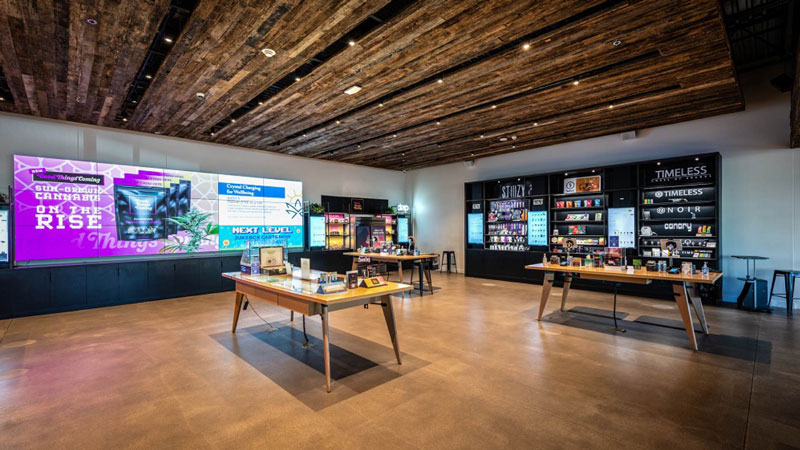
Still, Santa Rosa’s consolation Emerald Cup Harvest Ball is not a bad deal. The music program is solid, and the stoner-business vibe feels posh like a trade show should.
But are we just glorifying the Big Money beasts? The growth-hungry entities again run amuck, capturing all the attention with their neon-lit geodesic booths?
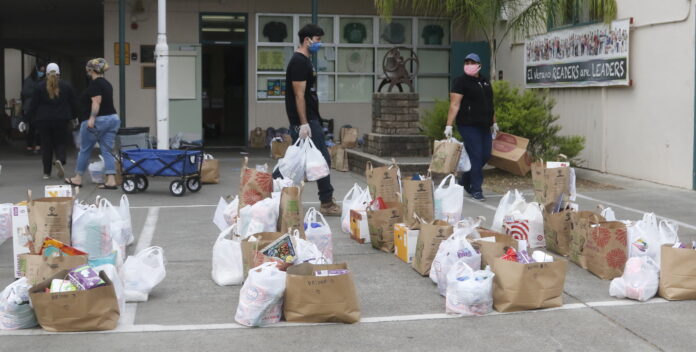
Having emerged from the sacred grounds of the Emerald Triangle, Cup head Tim Blake and the Emerald Cup team know the importance of the farmer. They want to honor those community members and to do so, they launched the Emerald Cup Small Farms Initiative with a variety of events at the Emerald Cup Harvest Ball as well as the 18th Annual Emerald Cup Awards.
“The Emerald Cup began as a celebration of small-batch Northern California farmers,” says Michael Katz, executive director of the Mendocino Cannabis Alliance. “Tim Blake and his daughter Taylor … made sure that this year they would put their resources into providing free access to small farmers because of the incredible challenges that the small-farming community is facing.”
I’m not going to pretend that this initiative is enough to set things straight, because truthfully, I don’t think anyone knows what to do to fix this.
But it is something big for these 27 farmers: Bella Farms, Briceland Forest Farm, Bud Farm, First Cut Farms, Flower Lady Farms, Flying Tiger Farm, Frogville Farms, Hash and Flowers, Higher Heights, Lovingly & Legally, Magic Meadow Farm, Mendocino Family Farm, Mendocino Producers Guild, Native Humboldt Farms, Neukom Family Farm, Noble Gardens, OG Gardens, River Txai Farms/Arcanna Flowers, Sol Spirit Farm, Sovereign 707, Spring Creek Farm, Sunnabis: Humboldt’s Full Sun Farms, Sweet Creek Farm, WAMM Phytotherapies, Whitehorn Valley Farm, Woodnote Farms and Yuba River Organics.
Frankly, many of these farmers aren’t going to have much of a web presence. But if you think you recognize a brand, or its name implies it’s from your area, look into the farmers above. Many of these growers will gain traction and start to “grow” into statewide names, like the champions of cannabis so boldly on display at the Ball.
Others, thankful for the boost to help stabilize their business, will be happy to go on “growing” as they always have, attentive to the earth and the plant it brings, bringing from their farm the gift of cannabis to their community.
Do not doubt the mesmerizing power of cards. For centuries people have assigned their fate to the outcome of a game of poker, blackjack or chemin-de-fer. So vital is the card game to the plot of the James Bond movie Casino Royale that the film devotes some 40 minutes to dramatizing it.
A colleague of this newspaper recently gave me my first tarot reading, and it was illuminating. As with any occult art there are different methods, but this is the one I experienced: From the tarot deck I drew five cards, which served as something like plot points in the story of my life. There was the establishment of present concerns, then barriers and finally a sacrifice to be made to reach the resolution. The cards provided archetypal images, and my imagination did the rest.
By imagination I do not mean simple daydreams, of course, but a power of realization that mirrors by analogy the act of divine creation. The “magic” of tarot lies in the power conferred by the user. The cards are imbued with divinatory power, and to the tarot reader one attributes arcane insight. The session is experienced as a moment outside profane everyday life, a sojourn into sacred time that reveals the workings of Providence upon destiny. The imagination serves as the bridge between the physical world and the metaphysical realm of potentials and possibilities, and crafts a story for the reader and only the reader.
“The tarot is one of the most wonderful of human inventions,” writes occult historian Emile Grillot de Givry. “This pack of pictures, in which destiny is reflected as in a mirror with multiple facets, exercises so irresistible an attraction on imaginative minds that it is hardly possible austere critics should ever succeed in abolishing its employment.”
A warning: One should use the power of one’s will to keep imagination in check, as one’s first interpretation of the card spread may be only what their lower consciousness or ego wants to see. One should employ the method of initiatic science and test one’s interpretation until intuition confirms the interpretation that resonates the most deeply; that may not be the interpretation one wanted, as the challenges it presents may seem impossible. Then again, what is possible is merely a matter of opinion.
Those fascinated by the kings and queens, knights and fools in a standard deck of playing cards will find that the tarot will take them from poker to the Kabbalah, and from blackjack to the sacred science of Hermeticism and the powers of the soul to transform itself and create the life it envisions based on their highest potential.
As TV regularly demonstrates, A Christmas Carol can be adapted into just about any scenario. For theater, just take the plot and characters, plop them into a modern-day situation and locale, add some songs and—voila!—instant Christmas show!
That’s what Lucky Penny’s Barry Martin and Rob Broadhurst have done with A Napa Valley Christmas Carol, running in Napa through Dec. 19.
Skinflint Winery-owner Alexander Scroo …, er, Yuge (Tim Setzer) works his nephew Joe Patchett (Matt Davis) and marketing staff (Dennis O’Brien, Daniela Innocenti Beem) mercilessly on Christmas Eve. They have to come up with 10 new wine labels before Joe can head home to his practical wife (Kirstin Pieschke), angst-ridden teen Goldie (Cecilia Brenner) and cute-but-sickly child Frankie (Dakota Dwyer). After they come up with a few ideas, they all call it a day and head for the Patchett Christmas Eve gathering.
Yuge arrives at the office to discover their absence and is soon swimming in a bottle of whiskey. Faster than you can say “Jacob Marley,” Yuge is visited by the spirit of his ex-wife (Karen Pinomaki) and told to expect some visitors. Note that it’s just the spirit of his ex, as she’s not dead.
The Ghost of Christmas Past (O’Brien) arrives in the person of a grunge-band refugee, Christmas Present (Beem) shows up to belt a few tunes and Christmas Future (Brenner) appears in the person of a mouthy teen to explain how Yuge’s generation has ruined everything. Faster than you can say “Bah, humbug!,” Yuge sees the error of his ways, and Frankie is off to see a specialist. God bless us, everyone.
Thematically and tonally, the show is kind of all over the place as it lurches from serious drama to silly comedy. Traditional Christmas songs, like “O Holy Night,” are mixed in amongst Broadhurst’s amusingly irreverent originals like “Schlock” and the uplifting, soon-to-be-Christmas-classic “Death Comes for Us All.” Credit Broadhurst for taking on the annual “Is Die Hard a Christmas movie?” debate with “The Movies That Make It Christmas.” It isn’t.
Local and topical references brought chuckles from the audience, and the talented cast sells the show. There’s a lot to like here, but it’s the theatrical equivalent of a fruitcake—a confection with bits and pieces of things that are sweet, gooey, nutty and best soaked in spirits. If ya like fruitcake …
“A Napa Valley Christmas Carol” runs through Dec. 19 at the Lucky Penny Community Arts Center. 1758 Industrial Way, Napa. Thurs–Sat, 7pm; Sun, 2pm. $25–$42. 707.266.6305. Proof of vaccination and masking are required to attend. luckypennynapa.com
Fashion—a human triumph. Since we stood upright and decided to get dressed, we’ve been dripping. Clothing, jewelry, bags and shoes are some of the more exciting and utilitarian examples of human creativity. Our clothing is a huge part of how we express our character, desires and attractions—fashion, from haute couture to wearables, is as pertinent as any art form.
And for as long as I’ve been alive, I’ve been a hound for it. From battling to get my ears pierced at age 9, to buying my first pair of sparkle jellies, to slaying summer in denim halter dresses with patchwork flowers. As a teenager I combed through thrift stores in Berlin and bought wrap pants in Granada, and now, in my late 20s, dedicated to the Nike blazer, a chunky platform boot and monochromatic sets—among other things—I’m a well-curated amalgam of travel, research and ongoing personal inspiration, which comes from my exposure to everything from Picasso paintings to Russian literature.
“Look” is my chichi baby, where weekly I will share the visual dream worth wearing, from the highest-quality Japanese denim, to an L.A. crushed-velvet smocked minidress, and where to get it locally. Expect to hear from local designers, clothing-store owners, clothing makers, fashion photographers and more. Looking to ancient Egyptian eye makeup, Rococo frills, Byzantine gem settings and cowboy cuffs, “Look” keeps style vital, vivid and within reach.
Welcome to “Look”!
Love,
Jane
This week—puffer jackets, please. Preferably neon orange, but beige and black are never wrong, nor is a geometric, floral or animal print.
PUFFED UP Puffers have been in style since their 1936 advent. Photo provided by Majestic Lukas
First iterated in 1936 by Eddie Bauer after a near-fatal exposure to hypothermia, the puffer is now highest of high fashion, while still preventing a chill. Over the years designers have experimented with palette and lines, from Norma Kamali’s 1970 sleeping-bag coat to the Farm Rio striped puffer fleece hybrid in lurid technicolor. Puffers aren’t going everywhere, and a cold front just moved in. Zip up.
Where to get them locally:
Oakland—Standard and Strange
Sonoma—G’s General Store
Santa Rosa—Punch Clothing
Jane Vick is a painter, writer and journalist who has spent time in Europe, New York and New Mexico. She is currently based in Sonoma County. View her work at janevick.com.
The Petaluma City Council recently took a step towards establishing community oversight of the city’s police department during a discussion of recommendations compiled by a community committee during the past year.
The Ad Hoc Community Advisory Committee, originally made up of 28 Petaluma community members, met six times between May and October. Last year, the city hired Tracey Elizabeth Webb Associates, a diversity, equity and inclusion consultant, to facilitate a community listening process, which later led to the formation of the committee. Known as the AHCAC, the group was tasked with preparing recommendations for the City Council to improve race relations and police accountability as part of Petaluma’s reaction to the racial justice protests which swept the nation last summer.
The group’s 31 final recommendations, completed in October, fall into four categories: Police and the Community; Increased Diversity in Schools; Creation of Multicultural Center/Restorative Justice; and Diversity in City Hiring.
At a Dec. 13 meeting, after a presentation by AHCAC-facilitator Webb, the council discussed which recommendations they would like to prioritize, but largely avoided diving into specific actions. Several council members said that creating civilian oversight of the Petaluma Police Department stuck out as a top priority.
The AHCAC recommended that the council “Establish [an] Independent, Adequately Funded, Empowered, Civilian / Community (not city staff) Police Oversight Body.”
At their meeting, the council did not finalize the details of how the oversight body would look, but did agree to hire a consultant to advise the city on the various oversight models. City manager Peggy Flynn estimated that staff would return with more details on police oversight and the AHCAC’s other recommendations in the first quarter of 2022.
“I think the idea of civilian oversight of the police is something that we should adopt. And I think this is an excellent time to do that, because we’re not in a crisis situation. This is the time when we can install a new community group where we are looking at the police as a group that wants to be better,” Mayor Teresa Barrett said during the meeting. Barrett echoed comments from Vice-Mayor Brian Barnacle, that the oversight discussion could also be a time to discuss methods of caring for police officers’ mental health.
Towards the end of the meeting, Petaluma Police Chief Ken Savano responded to the council’s support of increasing oversight with a statement.
“I want to thank Mayor Barrett, for your comments about understanding that support for oversight does not mean that our staff, specifically your police officers and support staff, have been bad… . We do support and understand the importance of oversight to build even more trust and confidence,” Savano said.
Members of the AHCAC seemed to agree that the oversight should not be seen as punishing the department for bad behavior. One of the group’s policing recommendations specifically mentions finding ways to “identify ways to increase dialogue, build relationships, humanize police/community, and embrace restorative justice.”
During a public comment period, AHCAC-member Eric Leland highlighted the same point, saying that the committee favored an oversight process which was “restorative” and “in partnership” between the community and police.
“The whole point [of the AHCAC’s discussions] was that we really need to work together as a community with a strong body of citizens, working together with police to not only daylight some of the problems and see them for what they are, but handle them in a collaborative way,” Leland said.
Last year’s protests reinvigorated calls for increased oversight of local law enforcement agencies, as well as calls to shift some duties and resources from the police departments to other agencies.
Petaluma, Santa Rosa and Rohnert Park have all taken steps towards diverting some emergency calls for mental-health crises away from the police. For their part, Petaluma contracts with the nonprofit Petaluma People Services Center to operate the recently-formed SAFE program.
However, progress on increasing law enforcement oversight in Sonoma County since the nationwide protests has been slower and more limited than many advocates would have liked.
Last November, Sonoma County voters approved Measure P, a ballot item which sought to increase the funding and powers of the county’s Independent Office of Law Enforcement Review and Outreach, an agency tasked with auditing internal reviews completed by the Sonoma County Sheriff’s Office.
More than a year later, the implementation of Measure P has been delayed because of legal challenges by law-enforcement unions. The rollout may be further bogged down in months to come as the county seeks a new director for IOLERO, since the agency’s previous director, Karlene Navarro, was appointed as a judge at the Sonoma County Superior Court last month.
At least one other Sonoma County city is taking steps towards increased law-enforcement oversight.
Last month, the Santa Rosa City Council agreed to hire the OIR Group, a Los Angeles-based firm, to review the police department’s internal reviews and policies. The decision comes nearly three years after the city parted ways with attorney Bob Arronson, who served as the police department’s outside auditor until he criticized Santa Rosa’s handling of homelessness.
In hiring the OIR Group, the council declined to create a community-oversight component, a step which many law enforcement oversight advocates have called for.
Wildfires, floods and drought—it’s been a rough stretch for Northern California, even before the arrival of a pandemic. In Knight’s Valley outside of Calistoga, Cheryl LaFranchi of Oak Ridge Angus Ranch has seen it all, most notably the Kincaide Fire that left her house and several barns in ashes just two years ago.
“I swear to God, if I didn’t have a ranch, I’d be somewhere decent, that’s for damn sure,” she says. LaFranchi is kidding, of course—there’s no place she’d rather be, she admits with a smile, than on her resurrected ranch with her herd of cows, in the community where her family has lived and worked for more than three generations.
LaFranchi and her husband, Frank Mongini, a large-animal veterinarian, charged right into rebuilding their ranch shortly after the fire. With plenty of help from friends, family and local agriculture organizations, the two co-owners are back in the business of raising premium, pasture-fed and grain-finished cattle under their Oak Ridge brand.
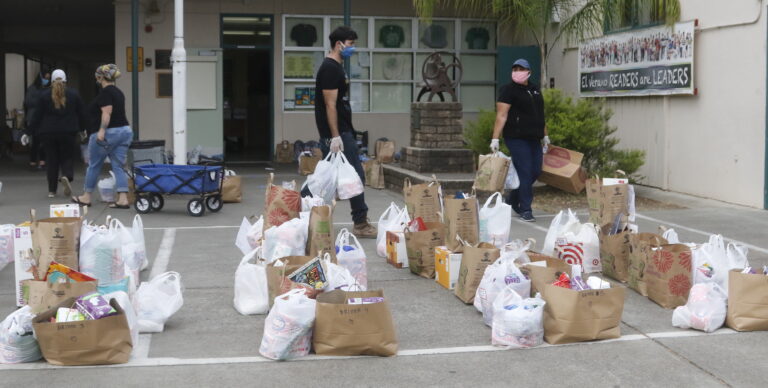
But LaFranchi knows that beyond the ranch, the region’s successive challenges have overstretched the resilience of many communities—and their food security. For nearly a decade, she and her husband have spearheaded the Range to Table program, a barn-raising effort to beef up hunger relief through the Redwood Empire Food Bank. They corral local ranchers to donate cattle, fattening them up alongside their own herd on pasture grass and spent grain from a nearby brewery. Since 2012, the program has produced thousands of pounds of beef annually for low-income households throughout the North Coast.
“It’s a really innovative program,” ostensibly a first and one of a kind, says Food Bank CEO David Goodman. “Cheryl and Frank are bridging the world of ranching and hunger relief. They see the connection between their work and making sure that this high-quality food makes it to as many people as possible.” And they’re tightening the loop between ranchers, their land and their community by putting beef sourced locally and sustainably on a wide range of local tables.
Oak Ridge’s herd of 350 cattle spend most of the year grazing the rolling 1,200-acre ranch. “The Angus are an extremely hardy breed,” says LaFranchi, thumping the smooth rump of an ebony brown heifer, which bats its long eyelashes while giving her a sideways glance. “They’re tough in cold weather, they make great mothers and these cows love the hills,” she adds. And with ample range to roam, the low-stress environment keeps them healthy without antibiotics or hormones.
“It’s just a great cow ranch,” she says. There’s not enough water for crops, but the pastures get enough rain to grow native forage—hardy, drought-tolerant perennials like rye and clover—for a good part of the year. As the cows graze and trample the ground, they enrich the soil with organic waste, building nutrients and retaining more moisture. And they reseed the grass and clear away brush, creating a regenerative relationship between herd and pasture.
HERD MENTALITY Besides fires, floods and droughts, cattle also have to contend with coyotes. Photo by Rachel LaFranchi
During the arid months when the land is parched, the cattle head down to the newly rebuilt, open-air barn, where they feed on haylage—bales of grass harvested in the spring. There beneath the shade, the troughs hold another incentive for them to descend the hills: freshly spent beer grain, courtesy of the Bear Republic Brewing Company, located in nearby Cloverdale.
The cows relish the moist mash of malted barley and wheat. “It’s a significant part of our operation,” LaFranchi says, holding up a hay-colored handful resembling rough, steel-cut oats. High in protein, amino acids and fiber, it supplements about a third of the herd’s feed, fattening them up while imparting rich flavor and deep marbling to the beef. She’s been hauling it in by the truckload several days a week since the brewery opened in 1996.
“We have a wonderful partnership,” says Bear Republic co-owner Tami Norgrove. Spent grain is their most abundant by-product, so the brew-moo symbiosis is “a sustainable way of making sure that we’re putting as little into the waste stream as possible.” By donating it to the ranch, she says, “we’ve never had to put it into landfill.”
LaFranchi usually picks up the grain just hours after it’s been brewed. It’s often still a bit warm, she notes, and the cows love the residual sweetness. As she pulls her truck up to the barn’s hangar-like canopy, there seems to be enough excitement over the day’s delivery to incite a minor stampede.
In an interior portion of the barn marked by a few remaining burnt posts, calves and mothers chew quietly, safely buffered from the hooves, hustle and occasional mooing of the larger group. There, some of the youngsters, including a pint-sized newborn with a soft auburn shag, duck under udders to nurse. But the older ones get a hefty share of brewers mash along with their haylage; packed with 22% protein, the supplemental feed gives the junior cows a healthy nutritional boost—and bulk.
LaFranchi has a soft spot for the “cute little pennies,” as she calls them, often taking in calves with special needs from other ranches. “If anybody has problems, whether the mom dies, they’re twins or they’ve been kind of chewed up by the coyotes,” she says, “they send them to us, and we give them a little extra love.”
Enter Sparky, who lost part of his nose and his tail back in the spring, in a gruesome nighttime attack. “I don’t know how Frank kept him alive, but he did,” LaFranchi says of her husband’s heroic veterinary intervention. Sparky is now a spry, seven-month-old calf, but the accident left him unable to nurse properly and consequently smaller and scrawnier than his peers.
For small-scale ranchers, outliers like Sparky—injured cattle, runts, orphans and calves with congenital defects—can impact their bottom line. “If you get cows that don’t fit your branded-beef program, you can’t sell them with your herd,” LaFranchi says. With premium cattle commanding premium prices at auction, it could devalue a cow by half, she notes, making the raising of misfits a costly proposition.
But “if you have cows that aren’t going to get you top dollar,” she says, “people can send them here, and they have a great life.” With beer grain defraying the cost of feed, those calves can bulk up alongside the herd while roaming the hilly pastures. And in a year or so, each head of cattle can provide the Redwood Empire Food Bank with up to 1,000 pounds of high-quality, locally sourced USDA beef.
That’s the premise of Range to Table: ranchers donate their undervalued cows to the program, receive a tax write-off from the Food Bank and maximize their impact on hunger relief in the local community.
Since its inception in 2012, nearly 40 regional ranchers have participated in the program, either through calves raised by LaFranchi—which she donates in their name—or through older cattle which have lost market value. “Everybody is beyond nice and very community-minded,” she says. Many have grown up locally, she adds, “and want to give back just a little.”
Contributions have steadily increased over the years, with large boosts during the Wine Country fires in 2017 and flooding in 2018, hitting an all-time record of 22,000 pounds of beef in 2019. Bottlenecks in meat processing during the pandemic brought donations down to a respectable 8,500 pounds last year, but LaFranchi is hoping for a bullish rebound as the industry normalizes.
Meanwhile, the need for food assistance has doubled since 2020, states the Food Bank’s Goodman, whose organization serves Sonoma, Lake, Mendocino, Humboldt and Del Norte counties. And each calamity, he adds, leaves a long wake of economic uncertainty in the region. “But whether it’s natural disasters—fires or floods—or human disasters like a federal shutdown or a global pandemic, it’s all the same,” he says. “Hunger doesn’t really care what the reason is.”
For Goodman, being able to offer nutritious protein—what he calls “center of plate” foods—is invaluable. “Beef is highly prized and very expensive, so it’s tremendous when we [can] provide that.” In the spirit of equality, the whole cow, prime cuts and all, is churned into ground beef. “It just stretches so much further,” he says. “You don’t want hamburger while the other person gets filet mignon, so this makes everybody happy.”
It’s a novel program, he notes, one that builds local resilience through a full circle of locally sourced resources. “I have this vision that this should be in every community, every state where there’s ranching,” he says. But in a profession that’s particularly vulnerable to uncertainty, Goodman recognizes that it takes dedication and a tough resolve to keep up the effort.
“Gratitude isn’t what fuels them,” he says of LaFranchi and Mongini. “Their fuel comes from within, just doing community good.” And, he emphasizes, “they continued to keep Range to Table alive after the [Kincaide] fire, when most people would have just folded up shop.”
Back at the ranch, “around here, there’s always something,” LaFranchi says. This year, she’s been trucking in 90,000 gallons of water a week since her ponds and springs dried up over the summer. “So much depends on what happens,” she says, “and you end up having to do things that you’d never, ever thought you’d have to do.”
But the pragmatic rancher isn’t one to ruminate on adversity. “[Ranching] isn’t exactly monetarily rewarding,” she says, “but it’s a great way of life, I’m not going to lie to you.” And with her herd of cattle, endless rolling pastures and a supportive community, she adds, “we’re just in a very fortunate situation to be able to make an impact.”
Naoki Nitta is a food and sustainability writer based in San Francisco.
“Who is the slayer, who the victim? Speak.” —Sophocles
Please don’t respond again with the outworn phrase, “This is not who we are.” This is exactly who we have been and have become. Once again, we, as a nation, are faced with murder—multiple murders and woundings of our children and staff, while attending and working at school—the most vulnerable of populations in our society.
A few years ago, the American College of Physicians, representing more than 150,000 internal medicine specialists nationwide, issued a position paper imploring stricter gun-control legislation. The National Rifle Association “cautioned,” in a letter to that physicians’ organization, to “stay in their own lane.” Perhaps the NRA might like to join us now, in our lane following the hearses—and to watch as the victims are laid to rest!
A few years ago, the last words of Sandra Parks, a 13-year-old Afro-American girl, may have been, “Mama, I’ve been shot!” as a “stray bullet” came through her bedroom window, killing her. This was another incident resulting from our country’s love affair with firearms, especially to “settle” disputes. What is especially tragic, was that Ms. Parks received an award two years prior, for her essay regarding the toll that violence had been taking in this country, specifically against children, in which she wrote:
“Little children are victims of senseless gun violence … I sit back and I have to escape from what I see and hear every day. When I do; I come to the same conclusion … we are in a state of chaos.”
“Our first truth is that we must start caring about each other. We need to be empathetic and try to walk in each other’s shoes … . We shall overcome, when we love ourselves and the people around us. Then, we become our brothers’ keeper.”
Truer words were never spoken … and from the mouths of babes! Amen!
And now, the question remains: Can we stop talking politics, and start listening to one another as if our childrens’ lives mattered?
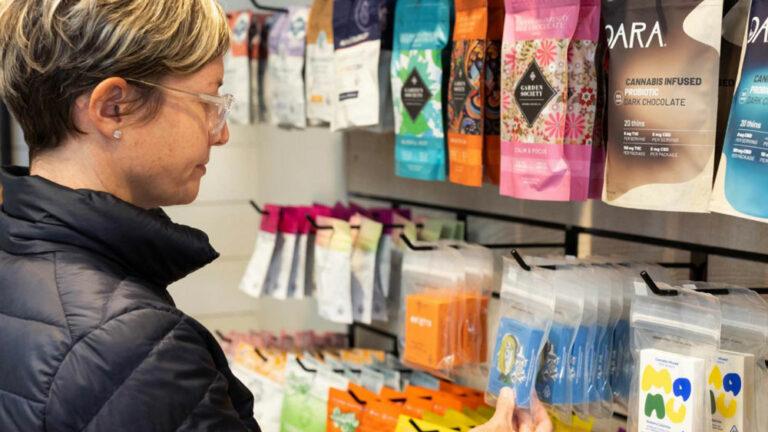
Cannabis use is evolving in two directions, microdose and maxidose. OK, I made up the word maxidose, but “microdose” is on everyone’s lips these days. I’ll cover the maxidosing phenomenon another time.
It seems as if every week I find myself listening to someone extol the virtues of a little bit of a good thing. Especially us older folks, sitting here at the end of our 40s, slowly realizing that if we want to keep dosing, it’s got to be micro.
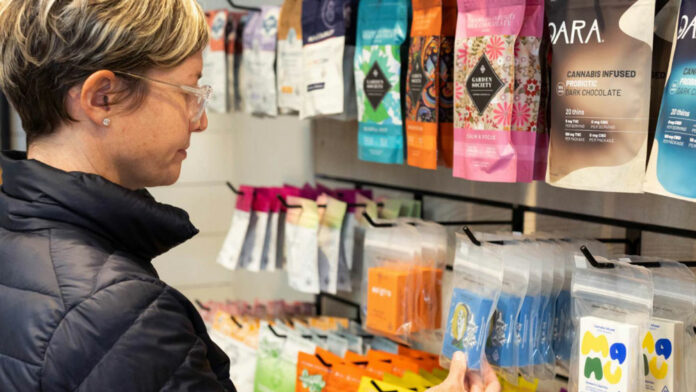
The popular CBD:THC 1:1 formulations are often low dosage. One of my personal favorites, the 2.5-milligram THC mints from Petra, sit in many a purse, according to first-hand testimonies told to me. It’s the substitute for an afternoon cup of coffee, without the jitters.
Many chemicals seem to work in microdoses. Psychedelics are being increasingly consumed in micro-amounts. That hit of chocolate that perfectly gets you through the afternoon? Microdose of caffeine, yo.
A recent article in the U.K.’s Guardian: “People ‘microdosing’ on psychedelics to improve wellbeing during pandemic.” The most exciting thing about this article is the survey that suggests “small doses of drugs being taken to treat health issues.” People are doing it for themselves while legalization catches up.
Psychedelics receive a lot of the coverage, and with good reason. More and more studies and patient-work in MFT practice demonstrate the mind-changing value of MDMA, mushrooms and more.
BTW, FYI, JSUK, what used to be “magic mushrooms” are now most commonly called “medicinal mushrooms” among the faithful. See what we did there? It worked with weed. No wonder Oakland and other governments feel emboldened to decriminalize the fungus. There is a whole world of entrepreneurs out there, ready to bust out amazing product innovations. They are working on them right now.
Popular methods of microdosing for mushrooms include the fungus dried, ground and measured into a glycerin pill for a classic rainbow-colored, apocalypse-of-love ’shroom trip. I’m, uh, just guessing.
Others use psilocybin tea bags to start off their day. Others, chocolate—perhaps Burning Man’s second greatest gift to the world, after the Leave No Trace ethos.
For me, too little of a dose actually peaks my anxiety and holds it up for the duration. Which sucks. So tea is out. But the pills evaporate all anxiety. What follows is 3–6 hours of brighter sunlight, deeper connections and greater wonder.
Our last Spirit column (Dec. 1) examined the concept of “pure action,” especially as a means of finding our way out of crisis.
We noted how in modern life almost all of our activity is spent not in acting but in re-acting to external events: information that may or may not be true, entertainment that is passively consumed, and fulfilling the tasks of work and home life that feel more like putting out fires than kindling the embers of creation.
In contrast to reaction to external circumstances, pure action comes from deep within, from the soul’s realm of will and imagination. It is characterized by two modes that make it an imitation of that form of action attributed to the gods. First, it is done without desire—or any other human passion, such as anger or ego gratification. It’s been said that in order to sculpt David, Michaelangelo simply looked at a block of marble, saw the figure in his mind’s eye and freed it from its stone encasing, with the artist’s hands merely the instruments of divine inspiration. Second, pure action is done for its own sake, without concern—certainly not worry—about what the outcome will be.
A closely related concept that helps us understand how pure action feels is the difference between doing and being. Modern life makes us a cross between intelligent apes and robots, always engaged in some task and completely shut off from the sense of being, that feeling-state that carries within it the sense of eternity. Tradition, on the other hand, teaches us that humans are a microcosm of the universe, and that an intuitive sense of freedom beyond the barriers of space and time is built into our consciousness.
The reason spirit-seekers spend so much time in meditation, contemplation and reflection is that their default mode is this sense of being, and it is from this space that they live and act. When we’re in crisis, the being-state becomes closed off, and the easiest way to escape from identifying with one’s depressed state is the pure act of simply going outside and sitting on a park bench with no intended purpose other than to simply sit and be. Here, by doing nothing, we actually rise to a higher level of existence by simply being, by partaking in all of creation itself. Then we’ll begin to de-identify with our negative emotions, seeing them as mere clouds passing through the sky of consciousness, wholly separate from the being of light at our deepest core, which longs to live and act in liberation.
Remember when Nirvana played live on MTV Unplugged, but bassist Krist Novoselic looked like he was playing an electric bass? Yeah, that irked me too—for the past 27 years.
I finally looked it up today—the internet is still a marvel in this regard—and learned Novoselic was actually playing a Guild B3OE semi-acoustic bass rented for the occasion.
“Semi-acoustic.” Isn’t that just another way of saying “semi-electric?” Music geeks can musician-splain the difference to me later. Right now, I’m fixated on the fact that Nirvana’s semi-unplugged performance set a precedent for life as we’ve known it since. Few of us are ever completely unplugged these days.
Case in point, I recently turned on the vacation autoresponder for my work email but found myself still checking it like a voyeur peeping into my own inbox.
More to the point, people who have received my robot response persist in emailing follow-ups. How did they know I was actually checking my email? Is this compulsion mine alone, or do they share it? I think the pandemic has given us all a rabid case of FOMO on our own lives.
To wit, if I could impart any advice this season, it would be to truly unplug—at least for a moment. And also—stop emailing me.
I finally figured out how to remove my work email from my phone and later learned how to remove my phone from me. Performing my own appendectomy would have been easier. And less bloody.
But once I overcame the withdrawal symptoms of this digital detox—panic, boredom and worse, panic about boredom—I finally arrived at a kind of psychic quietude. Sure, I still heard voices—turns out it wasn’t the earbuds—but at least they were from my own head. I bet.
Since I’m an unabashed workaholic, unplugging from the newspaper biz was only the first phase of attempting to take a break. Like most micro-media-moguls, my professional life is an ever-extending constellation of side hustles—less bright lights, big city; more small town, dim bulb. Unplugging from them en masse would cause the local utility to assume the grid went down.
Despite my misgivings, I finally ginned up the courage and pulled the plug. And you know what happened? Not a damn thing. The world didn’t end, and my empire was no nearer imploding than usual. Sure, some publicists were flummoxed—but they would be anyway—but on the whole, everything was fine. So do it—unplug—if only for an hour. It may not be the way of our hyper-productive culture, but it will get you that much closer to Nirvana.
I’m not going to lie: IMHO the Emerald Cup is a hub of a wheel of the machine crushing small cannabis farmers in California right now.
This column has detailed elsewhere how prices have dropped off a cliff here in Northern California. The growth was out of whack. That’s why the fabled Emerald Cup moved to L.A., for the growth...
Do not doubt the mesmerizing power of cards. For centuries people have assigned their fate to the outcome of a game of poker, blackjack or chemin-de-fer. So vital is the card game to the plot of the James Bond movie Casino Royale that the film devotes some 40 minutes to dramatizing it.
A colleague of this newspaper recently gave me...
As TV regularly demonstrates, A Christmas Carol can be adapted into just about any scenario. For theater, just take the plot and characters, plop them into a modern-day situation and locale, add some songs and—voila!—instant Christmas show!
That’s what Lucky Penny’s Barry Martin and Rob Broadhurst have done with A Napa Valley Christmas Carol, running in Napa through Dec. 19.
Skinflint...
Fashion—a human triumph. Since we stood upright and decided to get dressed, we’ve been dripping. Clothing, jewelry, bags and shoes are some of the more exciting and utilitarian examples of human creativity. Our clothing is a huge part of how we express our character, desires and attractions—fashion, from haute couture to wearables, is as pertinent as any art form.
And...
The Petaluma City Council recently took a step towards establishing community oversight of the city’s police department during a discussion of recommendations compiled by a community committee during the past year.
The Ad Hoc Community Advisory Committee, originally made up of 28 Petaluma community members, met six times between May and October. Last year, the city hired Tracey Elizabeth Webb...
Innovative organization provides hunger relief
Wildfires, floods and drought—it’s been a rough stretch for Northern California, even before the arrival of a pandemic. In Knight’s Valley outside of Calistoga, Cheryl LaFranchi of Oak Ridge Angus Ranch has seen it all, most notably the Kincaide Fire that left her house and several barns in ashes just two years ago.
“I swear to...
“Who is the slayer, who the victim? Speak.” —Sophocles
Please don’t respond again with the outworn phrase, “This is not who we are.” This is exactly who we have been and have become. Once again, we, as a nation, are faced with murder—multiple murders and woundings of our children and staff, while attending and working at school—the most vulnerable of...
Cannabis use is evolving in two directions, microdose and maxidose. OK, I made up the word maxidose, but “microdose” is on everyone’s lips these days. I’ll cover the maxidosing phenomenon another time.
It seems as if every week I find myself listening to someone extol the virtues of a little bit of a good thing. Especially us older folks, sitting...
Our last Spirit column (Dec. 1) examined the concept of “pure action,” especially as a means of finding our way out of crisis.
We noted how in modern life almost all of our activity is spent not in acting but in re-acting to external events: information that may or may not be true, entertainment that is passively consumed, and fulfilling...
Thinking outside the inbox
Remember when Nirvana played live on MTV Unplugged, but bassist Krist Novoselic looked like he was playing an electric bass? Yeah, that irked me too—for the past 27 years.
I finally looked it up today—the internet is still a marvel in this regard—and learned Novoselic was actually playing a Guild B3OE semi-acoustic bass rented for the occasion.
“Semi-acoustic.”...