Culture Crush

0

Penngrove

Honkytonk Revival

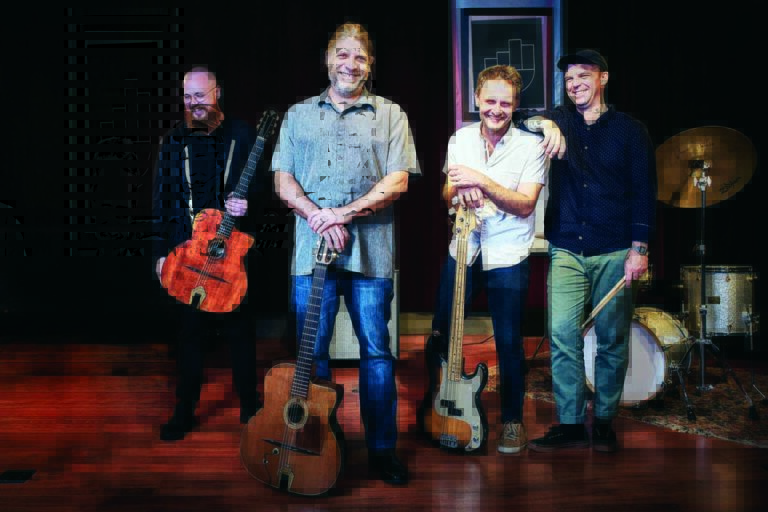
Get ready to shed a tear into a pint of beer at Twin Oaks Roadhouse with Crying Time. A honkytonk revivalist band out of Oakland, Crying Time plays straight-up country and western music, from the likes of Bob Wills to Glen Campbell, and interweaves their own compositions into the mix, with sounds so classic itโ€™s hard to tell the two apart. Lead singer Jill Rogers brings a โ€™70s voice full of story and emotion, Myles Boisen pulls heartstrings on a lap steel guitar and a six string, and Tony Marcusโ€”a veteran of the Bay Area music sceneโ€”rounds it out on the fiddle, foot stomping included. Tim Rowe on drums and Smilinโ€™ Pete Garellick on bass make this a group for the ages. Come get in the Hank Williams spirit of the thing! Crying Time plays Saturday, June 4, at Twin Oaks Roadhouse, 5475 Old Redwood Highway, Penngrove. Show starts at 8pm. www.hopmonk.com

Petaluma

Dada and Dancing

This Saturday, get ready for the hybrid literary salon/dance party we all didnโ€™t know we needed, Da Salon #7! Hosted at Vibe Gallery, join a Dada-esque literary arts salon group for their seventh salon, including readings from local writers and poets including Michael Giotis, Shugri Salh reading from her book The Last Nomad, Alia Curchack-Beetonโ€”who will co-MC the event along with our very own Pacific Sun and North Bay Bohemian editor Daedalus Howell, and share a story of the worst massage of her lifeโ€”and Jessica Jacobsen reading from her memoir/cookbook, and Kary Hess reads from her new book 1912. The night promises libation, liberation and lots of fun. There will be art on display, curios for sale and a dance party to physically express the inspiration of the evening. Think contemporary Andre Breton, Dorothea Tanning and Max Ernst. We are living in the โ€™20s after all. Da Salon is Saturday, June 4 at Vibe Gallery, 1 Petaluma Boulevard North, Petaluma. 6pm-8:30pm. Tickets $25. www.eventbrite.com

Santa Rosa

Lavender Daze

Itโ€™s lavender seasonโ€”the nose knowsโ€”and Bees N Blooms organic farm in Santa Rosa is hosting weekend open farm days for the whole family! Bees N Blooms is an 11-acre organic farm that produces lavender and a variety of lavender products including honey and wax from 19 colonies of honey bees. Lavender Daze includes live music, food trucks and one acre of fresh, blooming lavender through which to wander. The next Lavender Daze is this Sunday, featuring Dinoโ€™s Greek Food Truck, and Mike Z on guitar and vocals. Mike Z was born and raised in San Francisco and has backed such bands as The Whispers, The Pointer Sisters and Johnny Taylor. Enjoy sun, smells and the sweetness of lavender! Lavender Daze, Sunday, June 5 from 10am-4pm at Bees N Blooms, 3883 Petaluma Hill Rd, Santa Rosa. Tickets $20. www.beesnblooms.com

Novato

Family Arts

If arts are of interest, spend Sunday at MarinMOCA for Free Family Day! This Sundayโ€™s activities are inspired by internationally-renowned sculptor and artist Masako Miki, who along with having work in MarinMOCAโ€™s current exhibition, The Potential of Objects, has monumental outdoor installations on view at Uber headquarters in San Francisco and OH Bay cultural coastal park in Shenzhen, China. Come learn some of Mikiโ€™s techniques and favorite fabrics, and create a Yลkai, an object which will come to life after 100 years! All materials and instruction will be provided. Each workshop is an hour long, and all participating families receive free admission to the museum. Free Family Day is held at MarinMOCA, 500 Palm Dr, Novato. 11am-4pm. Reservations are required. www.marinmoca.org

โ€”Jane Vick

Astrology Week of June 1st, 2022

ARIES (March 21-April 19): Who loves the truth better than you Aries people? Who has the greatest potential to speak the real story in every situation, even when it requires extra courage? Who has more fun than you in discovering, defining and expressing the raw facts? In my Book of Life, you Rams are radiant beacons of candorโ€”the people I go to when I need accuracy and honesty. And all I’m saying here will be especially crucial in the coming weeks. The whole world needs concentrated doses of your authenticity. Now read this pep talk from Aries philosopher St. Catherine of Siena: โ€œLet the truth be your delight; let it always be in your mouth, and proclaim it when it is needed. Proclaim it lovingly and to everyone, especially those you love with a special loveโ€”but with a certain congeniality.โ€

TAURUS (April 20-May 20): Before the 20th century, you couldn’t buy a loaf of bread that was already sliced into thin pieces. Then in 1912, the American inventor Otto Frederick Rohwedder developed a slicing machine. But all his work, including the blueprints and the machine prototypes, was destroyed in a fire. He had to seek new funding and begin again. Sixteen years later, his innovation was finally ready for broad public use. Within five years, most of the bread in the U.S. was sold sliced. What does this have to do with you? I am picking up an Otto Frederick Rohwedder vibe when I turn my visions to you, Taurus. I suspect that in the coming months, you, too, will fulfill a postponed dream.

GEMINI (May 21-June 20): A blogger named Sweetlikeacherry reminds us, โ€œSome epiphanies are only possible when you put away your phone and go completely offline for a while.โ€ She adds that sometimes you also need to at least partially avoid your phone and the internet if you hope to incubate new visions of the future, unlock important discoveries in your creative work and summon your untamed genius. According to my astrological analysis, all these possibilities are especially likely and necessary for you in the coming weeks. I trust you will carry out the necessary liberations to take full advantage.

CANCER (June 21-July 22): Poet Carolyn Kizer (1925โ€“2014) won a Pulitzer Prize for her poetry. She was smart! But when she was young and still studying her craft in college, a professor objected to one of her poems. He said, โ€œYou have pigs in this poem; pigs are not poetic.โ€ Kizer was incensed at such ignorance. She testified, โ€œI got up and walked out of that class and never went back.โ€ Judging from the astrological omens, I suspect you may have comparable showdowns headed your way. I advise you to be like Kizer. You are the only one who truly knows the proper subjects of your quest. No one else has the right or the insight to tell you what your work (or play) should be about.

LEO (July 23-Aug. 22): Leo author James Baldwin said it wasn’t often โ€œthat two people can laugh and make love, tooโ€”make love because they are laughing and laugh because they’re making love. The love and the laughter come from the same place: but not many people go there.โ€ Your assignment, Leo, is to be the exception to Baldwin’s rule during the coming weeks. According to my analysis of the astrological omens, there’s a high possibility that interesting eros can converge with humorous fun in a glorious synergy. You will have a knack for conjuring up ribald encounters and jovial orgasms. Your intuition will guide you to shed the solemnity from your bliss and replace it with sunny, carefree cheer.

VIRGO (Aug. 23-Sept. 22): I’m worried you will over-indulge in your pursuit of perfection during the coming weeks. It’s fine to be exquisitely skillful and masterful; I hope you do that. But if you get obsessed with flawlessness, you will risk undoing your good intentions. As an antidote, I offer you two pieces of advice. The first is from actor and activist Jane Fonda. She said, โ€œWe are not meant to be perfect; we are meant to be whole.โ€ The second counsel is from philosopher and psychologist William James, who wrote, โ€œPerfection is not attainable, but if we chase perfection, we can catch excellence.โ€

LIBRA (Sept. 23-Oct. 22): Author Mustafa Mahmoud described the signs of love between two people: 1. feeling a comfortable familiarity; 2. having no urge or need to lie; 3. being natural, not trying to be different from whom one is; 4. having little or no possibility of being embarrassed in front of the other person; 5. experiencing silence as delicious, not alienating; 6. enjoying the act of listening to the other person. I bring these pointers to your attention, Libra, because the coming months will be a favorable time to define and redefine your understanding about the signs of love. How do you feel about Mahmoud’s ideas? Are there any more you would like to add?

SCORPIO (Oct. 23-Nov. 21): โ€œWe do not love each other without changing each other,โ€ wrote author Madeleine L’Engle. Meditate on that gem, Scorpio. Now is a perfect time for you and your loved ones to acknowledge, honor and celebrate the ways your love has changed each other. It may be true that some transformations have been less than ideal. If that’s the case, the coming weeks will be a favorable time to correct those trends. As for the positive changes that you and your allies have stimulated in each other: I hope you will name them and pledge to keep doing more of that good work.

SAGITTARIUS (Nov. 22-Dec. 21): โ€œI always deserve the best treatment, because I never put up with any other,โ€ wrote Sagittarian novelist Jane Austen. Sagittarian politician Stacey Abrams said, โ€œFrom the moment I enter a room, I am clear about how I intend to be treated and how I intend to engage.โ€ You’ll be wise to cultivate those attitudes in the next seven weeks, Sagittarius. It’s high time for you to raise your self-respect in ways that inspire others to elevate their appreciation and regard for you.

CAPRICORN (Dec. 22-Jan. 19): In 1963, Jim Munro and Alice Munro founded Munro’s Books, a store in Victoria, British Columbia. After being on the job for a few months, Alice found she was not impressed with many of the products they sold. โ€œI can write better books than this,โ€ she told Jim. Five years later, she published her first collection of short stories, Dance of the Happy Shades. Fourteen books later, she won the Nobel Prize in Literature. Will the coming months bring your equivalent of Alice Munro’s pivotal resolution? I suspect they could.

AQUARIUS (Jan. 20-Feb. 18): โ€œTrue love for whatever you are doing is the answer to everything,โ€ proclaimed performance artist Marina Abramovic. Amen to that righteous attitude! I hope you will embrace it in the coming weeks. I hope your heart and imagination will reveal all you need to know to bring tender fresh streams of true love to the essential activities of your life. Now is an excellent time to redefine the meaning of the word โ€œloveโ€ so it applies to all your relationships and pursuits.

PISCES (Feb. 19-March 20): A homeless woman in a wheelchair stopped where I was sitting outside a cafรฉ. She was pushing her belongings in a small shopping cart. โ€œWould you like to go dancing?โ€ she asked me. โ€œThere’s a nearby park that has a great grassy dance floor.โ€ โ€œMaybe another day,โ€ I told her. โ€œMy energy is low. I’ve had a lot of personal challenges lately.โ€ I’m sure the expression on my face was less-than-ebullient. โ€œCheer up, mister,โ€ she told me. โ€œI’m psychic, and I can tell you for sure that you will live a long life and have many more fine adventures. I’ll be in the park if you change your mind.โ€ My mood instantly brightened. โ€œThanks!โ€ I yelled toward her as she rolled away. Now I predict that you, Pisces, will have comparable experiences in the coming days. Are you willing to welcome uplifting surprises?

Sentinels: Tree Sitters Star in Local Director’s New Film

Longtime northern California residents will remember the โ€œRedwood Wars,โ€ but younger readers may not.

The decades-long effort by environmental activists to slow or stop the mass-felling of some of the countryโ€™s oldest, most awe-inspiring trees, arguably reached its peak around 1990, the year of the Redwood Summer. That year, activists staged a series of demonstrations and sometimes escalating conflicts with their corporate opponents, in turn drawing media attention.

Over 30 years later, the world still consumes trees while some environmentalists, frustrated with the lack of response from elected officials, continue to scale towering Redwoods in protest. However, the ongoing conflict doesnโ€™t generate news coverage like in the past.

A new documentary, Sentinels, co-directed by Derek Knowles and Lawrence Lerew, is an exception to this. The short โ€œimmersive observational filmโ€ takes viewers from the forest floor, into an activistโ€™s tent on a platform 100 feet above the ground, and back down again several times as supporters arrive every so often with supplies and gifts.

Sentinels primarily follows Lupine, one of two full-time activists engaged in a years-long tree-sit protest intended to save the last 18.5 acres of a 100-acre tract Humboldt County forest from the extraction plans of the Green Diamond Resource Company. The area Lupine and their colleagues are defending is predominantly second-growth. In 2014, Green Diamond owned and managed nearly 380,000 acres of land in Humboldt and Del Norte counties, according to a forest management report from that year.

Knowles, a part-time Sonoma County resident, says that his focus was bringing the publicโ€™s attention back to the often-unseen costs of making some of the the products American consumers take for granted every day.

โ€œWe wanted to create an immersive experience for viewers, much like we had ourselves in the forest, and force us to confront the consequences of our decadent and destructive lifestyles,โ€ Knowles says.

Unlike a fleeting newspaper headline, the documentary allows viewers to be temporarily absorbed in the grandeur of Humboldt County’s forests and then soak in the brutal scene created by a harvesting operation.

โ€œButchering forests might have built this country, but it’s also pushing us to the edge of an unlivable climate with less than three percent of American old-growth forests still standing. These are some of our best defenses against a rapidly warming planet, with coastal redwoods storing more than seven times more carbon than Amazon forests. And when you see our tallest living trees and the ecosystems they supportโ€”understories of ferns, huckleberries and alders; flying squirrels; stellar jays; and foxesโ€”undone in seconds with cold, mechanical precision, it hits you on a level that goes beyond the rational and scientific,โ€ Knowles says.

When Knowles and Lerew started filming Sentinels in 2020, the tree-sit they were following was the only active protest of its kind in the western United States. Now, according to the filmmakers, โ€œmore than a half-dozen other tree-sits have emerged, mostly youth-led campaigns in timber parcels across the Pacific Northwest.โ€

So, with the world spiraling out of control and meaningful climate change action by the government still as distant as ever, it seems that some young people are going back to basics: connecting with and endeavoring to protect the only Earth weโ€™ll ever have.

โ€œI suppose when you have this emotional connection with living things, and see that our conventional systemsโ€”writing letters to elected officials, publicly commenting on timber harvest plansโ€”do little to prevent their destruction, the appeal of non-violent direct action, of sitting in a tree, becomes appealing,โ€ Knowles says.

โ€˜Sentinelsโ€™ will be shown at 4:15pm on Saturday, June 4 at San Franciscoโ€™s Roxie Theater as part of this yearโ€™s San Francisco Doc Fest. Find more information about showtimes and streaming options at www.sfdocfest2022.eventive.org.

It also streaming on the Los Angeles Times’ website here.

Outside Candidate

0

Tennenbaum promises reforms if elected sheriff

The election for Sonoma County sheriff provides voters with the power to bring meaningful and long overdue change to our sheriffโ€™s office.

Listening to people in every corner of our diverse county, Iโ€™ve heard your concerns: Stopping excessive force incidents involving the deputies; maintaining full staffing for adequate public safety; and arresting and prosecuting people who prey on seniors, commit thefts, and who stage dangerous โ€œsideshowsโ€ on our streets.  We must also be prepared to deal with critical incidents like wildfires, floods and earthquakes.

Gatekeepers of the status quo think the embattled current sheriffโ€™s chosen successor will address the historic problems in the countyโ€™s largest law enforcement agency. I disagree.

Assistant Sheriff Eddie Engram claims heโ€™s the only candidate with the โ€œmanagement experienceโ€ to take on the top job. His โ€œmanagement experienceโ€ includes being the direct commander of Charles Blount, a deputy with a history of excessive force, whose brutal tactics led to the death of David Ward in 2019.  

Engram has been Sheriff Essickโ€™s point man in the ongoing obstruction of public oversight. When confronted about his failure to comply with the Independent Office of Law Enforcement Review and Outreachโ€™s (IOLERO) Community Advisory Council, Engram replied that he was โ€œjust doing what he was told to do.โ€ 

Currently, Engram โ€œmanagesโ€ our jails, which have seen fatal drug overdoses, suicides, suspicious deaths, missing video evidence and deputy misconduct resulting in millions of dollars in settlements and skyrocketing insurance premiums.

My opponents have over 50 years combined as department insiders, yet their lackluster law enforcement careers show no effort to implement new or creative policies and programs. Engram is supported by the Deputy Sheriffโ€™s Association, who want to continue โ€œbusiness as usualโ€ and not be held accountable or make the changes necessary to repair the broken trust between the sheriffโ€™s office and the community. 

We need new leadership with a fresh perspective, someone who will effectively create a more diverse, community oriented sheriffโ€™s office. I will conduct a full audit of the jails, and immediately address problems with staffing, policies and training.

As the outsider, Iโ€™m asking for your vote for change.

Carl Tennenbaum

Sonoma County

We welcome your contribution. To have your topical essay of 350 words considered for publication, write op*****@******an.com.

Weed Weekend on the Cannabis Trail

As the weather warms up and our coastal forest is blanketed in that summer smell of redwoods, have I got an idea for you. Go west, young human, for an afternoon of cannabis consumption at one of the sweetest, most historically significant spots in the new world of cannabis.

Weโ€™re talking about Riverside Wellness Collective in Guerneville, one of the cultural landmarks along the Cannabis Trail, a non-profit project commemorating the people and places that helped to establish the legal cannabis we know and love today. 

I spoke with the Cannabis Trail founder, Brain Applegarth, about the legacy of Riverside Wellness and the Cannabis Trail Project.

โ€œCurrently there are 10 cultural landmarks along the Cannabis Trail that are installed and ready for visitors โ€ฆ all the way from San Francisco up to Humboldt County,โ€ Applegarth told me during a recent phone chat. So far, Sonoma County is home to two of those landmarksโ€”one is Riverside Wellness. 

โ€œRiverside Wellness is a cultural landmark that honors [not just the dispensaryโ€™s importance in] cannabis history,โ€ he said, but also the story of Brownie Mary and what they call โ€œthe bust heard around the world.โ€ This occurred when the medicinal activist Mary Jane Rathbun, already famous for providing cannabis to AIDS patients in the Castro, was arrested at the home of a pot grower in Cazadero.

The national attention given to the bust โ€œopened up a huge dialogue around medicinal cannabis, and lo and behold four or five years later, [the bust] led to Proposition 215,โ€ said Applegarth, referring to Californiaโ€™s Compassionate Use Act of 1996, which legalized the sale and use of cannabis for medical purposes. 

To get to Riverside Wellness, drive west along River Road from Santa Rosa. Just as you enter Guerneville, the dispensary is on your left. Youโ€™ll find that Riverside Wellness is situated in one of the most beautiful places in the world, right along the Russian River, in the little resort town known for a mix of hippy counter culture, farm-to-table foodie-ism and queer chill.

โ€œThey have a beautiful location with all kinds of sitting areas by the river. You canโ€™t get a much better environment to be relaxed and enjoy nature,โ€ Applegarth said. Right next door youโ€™ll find the lovely Farmhand Cafe for bites and bevies. 

Ah yes, I think soon Iโ€™ll go get a half gram pre-roll and walk into town for some ice cream in Guerneville. Sounds perfect. I canโ€™t imagine a more fitting tribute to the work of the pioneers celebrated by the Cannabis Trail than for buying a joint on a summer afternoon to be the most normal thing in the world.

Hot Summer Guide 2022

It’s summertime and the living is easyโ€”at least for those whose privilege it is to enjoy the attractions of this wine country wonderland we call home.

For many of the season’s offerings, your daddy need not be rich nor your mama good looking. For othersโ€”to borrow from another classic lyricโ€”same as it ever was. Except that thereโ€™s now so much more.

What follows is a highly subjective and necessarily incomplete list of local summer offerings happening within the first month or so of a hot summer season brimming with options (including the โ€œnuclear option,โ€ if weโ€™re to pay any mind to geopolitical saber rattlingโ€”which weโ€™re not). So hush little baby, don’t you cryโ€ฆ

Windsor Summer Nights on the Green

Windsorโ€™s annual spate of musical programming kicks off Thursday, June 2 with Foreverland, which is billed as โ€œThe Electrifying Tribute to Michael Jackson.โ€ Whatโ€™s germane is that the band isnโ€™t a tribute or impersonation actโ€”itโ€™s just a straight up cover band interpreting the music of the King of Pop (which, frankly, is a relief for those still overcoming โ€™80s zipper-fatigue). The gig is sponsored by Friends of the Windsor Library. 

For more information, visit foreverland.com or townofwindsor.com/342/Summer-Nights-on-the-Green.

Orsi Winery Summer Concert Series

Located just two minutes from downtown Healdsburg and surrounded by 70 acres of vineyard, Orsi Family Vineyards is known for bringing its Italian sensibilities to local environsโ€”at least in the wine department. In the music department, however, thereโ€™s an apparent penchant for tribute bands with clever namesโ€”Fleetwood Mask and Petty Theft, each of which are playing the winery in June and July, respectively. The gigs are part of the Orsi Winery Summer Concert Series, which pairs a bevy of acts with their award-winning wine throughout the season. For more information, orsifamilyvineyards.com/calendar.html.

Sonoma County Pride Presents โ€˜Love, Simonโ€™

Sonoma County Pride, whose mission is to promote equality for all while preserving and educating the community about the LGBTQIA+ history of Sonoma County, has put together a bevy of events during the annual June Pride Month celebration. Among the many, many highlights are โ€œPride Movie Nightโ€ featuring Love, Simon, hosted by Pride master of ceremonies Jan Wahl, the beloved film critic, Hollywood historian and fashionable hat fanatic. Fans are encouraged to โ€œgrab a blanket and your low-back lawn chairs, and order dinner from one of our downtown favorite restaurants for an evening of family timeโ€ฆโ€ The festivities commence at 5pm, June 2 at Old Courthouse Square in downtown Santa Rosa. The event is free and for all ages. 

For more information, visit sonomacountypride.org.

Beer Fest: The Good One

Before there was Vineburg, there was Hopland, which is another way of saying that we might reevaluate Sonoma Countyโ€™s identity as a wine capital and recall that its beer scene has gone longer and perhaps stronger than their vintner colleagues might admit. Proving the point is Beer Fest: The Good One, which returns to the lawn of the Luther Burbank Center for the Arts and promises โ€œmouth-puckering sour beers, hop bombs, barrel-aged brews, and a wide range of other cool libations that make Northern California one of the best beer-producing regions in the world.โ€ With more than 40 breweries and cideries pouring samples, this brew-haha is a must for those with grain on the brain. The flow commences at 1pm and lasts until 4:30pm, June 12 at the Luther Burbank Center for the Arts, 50 Mark West Springs Rd., Santa Rosa. Tickets are $50โ€“$65, and net proceeds benefit Face to Face, whose mission is โ€œโ€ฆending HIV in Sonoma County while supporting the health and well-being of people living with HIV/AIDS.โ€

For more information, visit beerfestthegoodone.f2f.org.

Railroad Square Music Festival

The Sixth Annual Railroad Square Music Festival welcomes all aboard June 12. Voted Sonoma Countyโ€™s โ€œBest Music Festivalโ€ all six of its years by readers of the Bohemian, the line up is a whirlwind of styles on multiple stages, including local luminaries like โ€œgritty local rockers Kingsborough, powerhouse funk stalwarts Burrows & Dilbeck, Oakland/Guerneville hip hop artist Kayatta, indie rock salty pals Bad Thoughts, Petalumaโ€™s surf pop-punkers The Happys, 5 piece norteรฑo group La Agencia, indie jazz act Echolyptus, Petaluma R&B artist Simonรฉ Mosely, railroading songstress Jade Brodieโ€ฆโ€ The list goes on and is as impressive as it is blissfully long. The multi-genre event commences at noon and continues to 7:30pm, Sunday, June 12, at Santa Rosaโ€™s historic Railroad Square.

For more information, including the full line up, visit railroadsquaremusicfestival.com.

Get Booked

Billed as an โ€œintimate fundraising eventโ€ for the Sebastopol Community Cultural Center, fans of former host of KQEDโ€™s Forum and author Michael Krazny and novelist, non-fiction writer, activist and writing teacher Annie Lammot are in for a double dose of literary love at this June 12 event. The author talk includes a book signing, live music and libations (of varying degrees, depending on your ticket preference). 

For more information, including times and price, visit seb.org/special-events.

Healdsburg Jazz Festival

Jazz and wine are a natural pairingโ€”both are expressive of their particular environs, both take a level of mastery to get right and both tend to get better with age. Now in its 24th vintage, the Healdsburg Jazz Festival proves all the above and more. Beginning June 13 and lasting through June 19, this yearโ€™s fest promises a thrilling week of music drawing from an array of influences. From National Endowment for the Arts (NEA) jazz master Dave Holland and blues legend Charlie Musselwhite to San Francisco vocal star Bobi Cรฉspedes, the week-long event offers Healdsburg’s most enduring and celebrated soundtrack.

For more information, visit healdsburgjazz.org.

Fair Play

A couple of local traditions bookend Sonomaโ€™s summersโ€”the Sonoma-Marin Fair in June and the Sonoma County Fair in August. Both offer an array of festivities, vendors and attractions galore and both promise family-friendly fun and best of allโ€”fair food. Deep-fried and delicious, the authentic stuff can only be gotten at local and county fairsโ€”and you know you want it. Indulge! The Sonoma-Marin Fair runs from June 22โ€“26, which gives you enough time to recover from the rush of salts, fats, sugars and umami to take on the Sonoma County Fair, which runs from Aug. 4โ€“14. 

To plan your gustatory gluttony, visit sonoma-marinfair.org and sonomacountyfair.com/fair/sonoma-county-fair.php.

Rock the Ride

We need look no further than the fatal shooting of 10 Black people by a white supremacist gunman in Buffalo, NY, to understand that gun violence is a real and present danger in America. Rock the Ride, pedal-powered protest and fundraiser against gun violence, encourages bicyclists at all levels to help raise awareness and monies for local and national nonprofit organizations that are addressing what is one of the most pressing issues of our time. Rock the Ride begins at various times throughout Saturday, June 25, in Napa Valley. 

For specific times and location, visit raceroster.com/events/2022/57493/rock-the-ride-napa-ca.

Freshtival 2022

Who could resist a portmanteau that combines the concept of fresh beer (no older than a week) and festival at which to enjoy? HenHouse Brewing Company, in collaboration with the Bay Area Brewers Guild, Somo Arts Village and Fat Dogg Productions, returns to present the largest variety of brewery-fresh beer ever poured in a single location. All 150 of the beers poured at this event will be less than seven days old, meaning they will be in perfect, brewery-fresh condition, having suffered none of the taste-tolling effects of time, temperature and travel. The Freshtival commences on June 25 at SOMO Village Event Center, 1400 Valley House Dr., Rohnert Park. For times and tickets, visit somovillage.com/event/the-freshtival-2022.

Fireworks at Green Music Center

Instead of potentially igniting the burbs with an errantly deployed Whistling Pete, consider watching some professional pyrotechnics, with the added bonus of the Santa Rosa Symphony and Transcendence Theatre Company providing a soundtrack of show tunes and patriotic classics. The 4th of July Fireworks Spectacular at the Green Music Center is the biggest fireworks display in Sonoma County and a fine way to celebrate American independence from the Brits. Thereโ€™s also a โ€œKids Zoneโ€ that opens at 4:30pm and features carnival games, bounce houses and face painting. Indoor and outdoor seating options are available (indoor guests will be given time to relocate outside prior to the start of the fireworks display). Michael Berkowitz conducts. 

July 4. Tickets are $30โ€“$60. More information at gmc.sonoma.edu/4th-of-july-fireworks-spectacular.

Paradise Cost: The Price of Supporting Private Ranching With a Sales Tax

Chief Marin, Leader, Rebel, and Legend by Betty Goerke traces how European settlers drove Indigenous peoples out of Marin County with guns, crosses and cows. Without irony, the colonizers named the territory after the Miwok rebel leader Marino.

The forests and wetlands of these coastal landsโ€”tended since time immemorial by humans, elk, lions, birds, insects and plantsโ€”were transformed by the spread of extractive industries, cattle ranching, freeways and suburbs, and the old ways were overwhelmed.

In Chief Marin, we read the words of an unnamed Wintu woman, recorded by a 20th century anthropologist, โ€œThe white people never cared for land or deer or bear. When we Indians kill meat we eat it all up. When we dig roots we make little holes. When we build houses we make little holes. When we burn grass for grasshoppers we donโ€™t ruin things. We shake down acorns and pine nuts. We donโ€™t chop down trees. We use only dead wood. But the white people plow up the ground, pull up the trees, kill everything. โ€ฆ The spirit of the land hates them.โ€ 

Indeed, global heating and rising seas may be construed as warnings from the spirit of the land to Petroleum Man; change or die.

The populace of Marin largely supports sequestering rural lands from urban development and reducing climate harms. Funded by private donations and government grants and sales tax revenues, the Marin Agricultural Land Trust (MALT) and the Marin Resource Conservation District (MRCD) are examples of county conservation efforts. However, these two organizations are limited by design to primarily serving the interests of commercial ranching. Members of cattle and dairy ranching families have long formed majorities on both boards of directors.

On June 7, Marin will vote on renewing Measure A, a $16 million per year sales tax supporting county parks and dairy and beef ranching enterprises. The ordinance is written to ensure that 14% of the sales tax revenue will continue to fund MALT and MRCD.

In the official election guide, prominent environmentalists, such as Dr. Martin Griffin and Kenneth Brower, urge the public to vote against Measure A. They claim that the sales tax โ€œbankrolls the private businesses of Marin Countyโ€™s largest landowners.โ€ They suggest that  Measure A be rewritten to fund only parks and be re-voted upon in the fall.

Proponents of renewing the sales tax, including MALT co-founder Phyllis Faber, retort, โ€œThese grants are not gifts to private landowners, but an opportunity to purchase development rights on private parcels so that natural ecosystems can flourish and be sustained.โ€

Public records show, however, that MALT and the MRCD often use sales tax revenue intended for conservation purposes to capitalize ranching enterprises which, in some cases, are operated by board members and their families.

MALT and Measure A

Since 2012, MALT has expended $13.3 million in Measure A monies to purchase conservation easements from ranching families. Easements prohibit the selling of conserved lands for non-agricultural developmentโ€”such as freeways, malls, or housing.

โ€œMaltedโ€ ranchers often use the cash to buy more land and pay off mortgages and business debts and to erect barbed wire fences. In 2020, Pacific Sun-Bohemian reported that MALTโ€™s board of directors had purchased $50 million in easements from two dozen board members and their families since 1980. The investigation related how MALT was compelled by the county to return $833,000 in Measure A funds after it was revealed that executives had not disclosed an appraisal for the purchase of an easement from a board member that was less than the amount paid by the county. Subsequently revamped MALT policies now prohibit the buying of easements from current, but not former, board members and staff.

Public opinion has soured on using county funds to pay for private ranching easements, according to a poll conducted last year by Marin County Parks. MALT is campaigning hard in support of Measure A, proclaiming that without more MALT easements, West Marin will turn into Malibu. That may have been the case 50 years ago. But since then Marin has insulated rural areas from urban development with a combination of zoning and property tax restrictions and scores of MALT easements, all prohibiting nonagricultural development.

MALT is not hurting for money. Its audited financials through June 2021 reveal assets of $30 million, much of it invested in securities. Last fiscal year, MALT received $7.6 million in grants and private donations and investment earnings. The non-profit corporation spent $5.8 million and posted a $1.8 million surplus. MALT is flush without Measure A funds, yet its 20-member board, largely composed of West Marin ranchers, is pushing for more sales tax money to finance buying more private easements. MALT stands to pull about $15 million in Measure A funds during the next decade, if the controversial sales tax is approved.

Measure A and the MRCD

If the 0.25% point of sales tax is renewed by two-thirds of the voters, MRCD is slated to harvest 4% of the projected revenues, $640,000 a year, nearly $6 million through 2031.

According to the MRCDโ€™s audit for the year ending June 30, 2020, about 40% of its $1.3 million budget was sourced from Measure A, the Marin County General Fund, MALT and donations. The balance was filled by federal and state conservation grants.

Since 2011, MALT has granted $1.3 million to the MRCD for improving specified ranches. And since 2000, MRCD has expended $22 million in public monies on ranching infrastructure and habitat restoration. Records show that the underlying purpose of most of these projects is to protect ranching environments from the degrading impacts of ranching, including greenhouse gas emissions and water and soil pollution.

According to a MRCD report published in 2009, โ€œA Half Century of Stewardship,โ€ the district had serviced West Marin ranchers by procuring funds for 173 miles of barbed wire fencing, 60 miles of irrigation pipelines, 24 stock ponds and 592 livestock watering facilities. MRCD supported the construction of miles of ranch access roads, a score of loafing barns and more than 100 โ€œlagoonsโ€ holding liquified manure for use as fertilizer on pastures.

It turns out that from 2014-2021, MRCD expended $664,850 in Measure A funds on construction and restoration projects on West Marin ranches and dairiesโ€”including for projects benefiting its own board members.

Photo by Marin Resource Conservation District
FENCES Ranchers have used Measure A funds from MALT and MRCD to construct fences on their properties, although fences donโ€™t improve carbon sequestration. Photo by Marin Resource Conservation District

How it all began

Shortly before he died in 2012, Gary Giacomini, 76, taped an interview archived at the Marin County Library. As a teenager, he sailed the Bay and hunted on ranching lands owned by his many relatives. Law school was a necessary bummer, he recalled.

After earning six figures as a land use lawyer, Giacomini sat on the board of supervisors from 1972-1996, representing West Marin, salary: $14,000. When he returned to private practice, Giacomini bragged that he earned several million dollars in his first year. Money and politics are synergistic, of course. And in no small part, the geography and ecology of Marin County was shaped by Giacomini as a supervisor, and as the go-to attorney for the ranching families who own or lease most of West Marin and a third of Point Reyes National Seashore.

โ€œThey came from a place called Chiavenna, which is up near the Swiss border. … All the ranchers are either Portuguese or Italian. Theyโ€™re all hopelessly intermarried,โ€ Giacomini mused.

In the 1970s, allied with local environmentalists, such as Griffin, and Rep. Phil Burton, Giacomini moved to kill developer plans to build freeways and suburbs in rural Marin. Funded by local philanthropists and government programs, a coalition of Marin environmental interests bought up land for parks and open spaces and passed a zoning law that prohibited more than one dwelling per 60 acres.

Alongside ranchers Ralph Grossi and Ellen Straus and Phyllis Faber, Giacomini co-founded MALT in 1980. Sitting on MALTโ€™s board, while still serving as a county supervisor, Giacomini oversaw the dispensation of millions of MALT easement dollars to his friends and relations. In the interview, he admitted misgivings, โ€œThereโ€™s a ghost that haunts me. โ€ฆ We saved the place. But there were collateral effects. โ€ฆ Itโ€™s one of the big reasons Marin is so expensive. Thereโ€™s hardly any place for the kids to grow up and live here. The seniors canโ€™t afford to stay here. So one of the unintended consequences of all thatโ€”having open space and agriculture zoningโ€”has been to really run up the prices and values. … It would wreck affordable housing, because youโ€™re not going to have any affordable housing on one unit on 60 acres, right?โ€

And it was racist in effect. โ€œThe effect of the zoning excluded minorities โ€ฆ We did it with a big, broad brush. And we were heroes. We painted everything green. โ€ฆ Well, really, a lot of that land wasnโ€™t good ag lands, we just did it because we could. โ€ฆ And I think thatโ€™s one thing in hindsight I would have been more careful. โ€ฆ We could have had some development on the margins.โ€

Resources for whom?

Founded in 1959, the MRCD is a member of the California Association of Resource Conservation Districts which lobbies on behalf of 96 local districts. That organization is supported by state and federal agencies, farm bureaus, corporate-sponsored conservation groups and PG&E. It partners with industry-led organizations, such as National Grazing Coalition, which itself partners with the National Cattlemen’s Beef Association, a โ€œfree marketโ€ trade group dedicated to promoting beef worldwide as โ€œthe protein of choice.โ€

Over the decades, the MRCD has restored some salmon spawning habitats that were desiccated by 150 years of the ranching industry. It has fenced off streams from herds of defecating cows, often curtailing the freedom of wildlife to roam the lands in search of food and drink unimpeded by artificial obstacles. The districtโ€™s official mission statement combines mutually exclusive goals: โ€œTo conserve and enhance Marinโ€™s natural resources, including its soil, water, vegetation and wildlife. It is our belief that the health of the countyโ€™s natural landscape is dependent upon a robust agricultural economy and the active preservation of our agricultural heritage.โ€

In practice, the MRCDโ€™s historical mission may be more accurately described as protecting the profitability of ranching operations impacted by the rising costs of complying with increasingly stringent environmental regulations.

MRCD is required to hold regular elections for its five seat board of directors, but it is not democraticโ€”only local landowners are eligible for office. And candidates must be nominated by five other land owners. The law allows the board of supervisors to appoint candidates as directors if there are not more than five declared candidates, and board seats are rarely contested. The director of the California Association of Resource Conservation Districts, Karen Buhr, told the Pacific Sun-Bohemian that, typically, conservation district boards โ€œpass their seats down generation after generation, for better or worse.โ€

Buhr also confirmed that the MRCD board is governed by the California conflict of interest laws which prohibit its directors from receiving district grants.

Photo by Marin Resource Conservation District
POND The MRCDโ€™s Pine Gulch Creek Enhancement and Pond Project spent $3.2 million building a series of massive, landscape-altering, water storage reservoirs on the three organic farms.

Fair political practices

This investigation analyzes MRCD records produced to Pacific Sun-Bohemian in March by executive director, Nancy Scolari, and Marin deputy county counsel, Tarisha Bal. In response to a request for records providing more details on transactions with board members, Bal wrote that those records would be produced on May 2. On May 2, she wrote that the records will not be produced until June 9, which is two days after the referendum on Measure A.

This investigation also utilized MRCD project reports available online from the California Association of Resource Conservation Districts. Scolari told Pacific Sun-Bohemian that some of those reports contain serious data entry errorsโ€”as much as $9 million in one instance, and she provided some corrections. Notwithstanding, the available records demonstrate a pattern of board members receiving MRCD grants during decades of service.

According to the Californiaโ€™s Fair Political Practices Commissionโ€™s A Quick Guide to Section 1090, all governmental agencies and districts are bound by California Government Code Section 1090:

“When members of a public board, commission or similar body have the power to  execute contracts, each member is conclusively presumed to be involved in the making of all contracts by his or her agency regardless of whether the member participates in the making of the contract. In most cases, this presumption cannot be avoided by having the interested board member abstain from the decision. Rather, the entire governing body is precluded from entering the contract.”

Furthermore,

“Apart from voiding the contract, where a prohibited interest is found, the official who engaged in its making is subject to a host of civil and (if the violation was willful) criminal penalties, including imprisonment and disqualification from holding public office in perpetuity. The FPPC also may impose administrative penalties for violations of Section 1090.”

When asked if the MRCD is subject to state conflict of interest laws, Scolari confirmed that the district is covered by Section 1090, but, she wrote, โ€œSection 9412 of the Public Resource Code authorizes โ€ฆ. MRCD to provide assistance to private landowners who are directors of the district. It states, โ€˜Notwithstanding the fact that the landowner or land occupant is also a director, any landowner is qualified to and may receive assistance or loans under this program.โ€™โ€ County counsel Brian Washington concurred.

After being informed of Scolariโ€™s claim, Fair Political Practices Commission spokesperson, Jay Wierenga, stated without equivocation, โ€œ1090 applies to all district officers and employees.โ€ Notably, the FPPC Guide cites a California state appeals court opinion, โ€œAn important, prophylactic statute such as a Section 1090 should be construed broadly to close loopholes. It should not be constricted and enfeebled.โ€ According to the FPPC Guide, even the โ€œappearance of a conflict of interestโ€ is prohibited. State law requires MRCD board members to periodically take a refresher course in Public Service Ethics Education authorized by the California attorney general. Four current MRCD board members and Scolari are recorded as doing so.

Note that as a non-profit corporation, MALT is not covered by state conflict of interest laws that apply to governmental institutions such as the MRCD. It is covered by state and federal rules and regulations applying to non-profits, which are somewhat more permissive than state regulation of governmental institutions.

Giacomini, Giacomini & Giacomini

Waldo Giacomini was the founding president of the MRCD board. His son, Robert Giacomini, joined the MRCD board in 1997 and there he sits. Robert and four daughters operate the Point Reyes Farmstead Cheese Company. The familyโ€™s fortunes have long been affected by the synergies of MRCD and MALT.

Robert served on the MALT board from 1983-1994. In January 2005, the agricultural land trust purchased a $1.86 million easement on Robert Giacomini Dairyโ€™s 714 acre cattle ranch on Tomales Bay.

Robertโ€™s daughter, Lynn Giacomini Stray, joined the MALT board in May 2005, serving until 2013. Daughter Diana Giacomini Hagan has served on the MALT board since 2018; she is the treasurer.

While Robert was on the MRCD board in 2020, district โ€œcost shareโ€ grants to Giacomini dairy included $33,271 from Measure A, $17,425 from MALT and $31,300 in state funds to build a sediment basin to comply with state water quality mandates.

In past years, MRCD has funded Giacomini Dairy with $9,000 for โ€œgutter and roof replacements,โ€ $12,000 for a โ€œmanure irrigation gun,โ€ $15,000 for a โ€œcompost turnerโ€ and $6,870 for a โ€œProp 13 reimbursement.โ€

In 2018, Giacomini was awarded a MALTโ€”and MRCDโ€”supported Carbon Farm Plan, but it is not currently funded.

MRCD board minutes show that Giacomini and other board members have abstained on voting to approve certain projects funding their businesses. Giacomini confirmed receiving the MRCD grants, but he did not respond to a Pacific Sun-Bohemian query about his possible conflicts of interest under Section 1090 as a member of the MRCD board. 

Point Reyes Farmstead Cheese Company executive Jill Giacomini Basch told Pacific Sun-Bohemian that โ€œthere are no ethical issues surrounding receipt of [MALT] fundsโ€ for MALT and MRCD projects while Ms. Hagan has served on the MALT board, pointing to MALTโ€™s bylaws and conflict of interest policy. MALT, of course, is a nonprofit corporation and not subject to Section 1090, as is MRCD, a governmental body.

Gale enterprises

The president of the MRCD board, Sally Gale, was appointed by the board of supervisors in 1996. Gale and her husband, Mike Gale, own the 586-acre Chileno Valley Ranch โ€œsettledโ€ by her Swiss immigrant great-great-grandfather.

In 2000, MALT bought a $586,000 easement from the Gales. According to MALT, the Gales โ€œleveraged the capital from the conservation easement to restore the barn and purchase their first herd of beef cattle.โ€ Mike served on the MALT board from 2008 until 2018.

With funding from MRCD and the MALT Stewardship Assistance Program, the Gales have controlled invading thistles and installed fencing to exclude cattle from creeks.

MRCD board minutes show that when the board voted to approve a Carbon Farming Plan for Chileno Valley Ranch in 2021, Sally Gale abstained. Gale told Pacific Sun-Bohemian, โ€œThe carbon plan is in process.โ€ Its budget is under development.

Responding to a Pacific Sun-Bohemian query about possible conflicts of interest, Gale replied that the MRCD board is allowed to award grants to directors, citing Scolariโ€™s response.

Gale confirmed that her property tax is reduced by 35% in return for agreeing that the land only be used for agricultural purposes.

According to the California Department of Conservation, the Williamson Act and Farmland Security Zone programs โ€œenable local governments to enter into contracts with private landowners for the purpose of restricting specific parcels of land to agricultural or related open space useโ€ in return for tax reductions of up to 65%.

Chileno Valley Ranch does not appear to be just a farm. According to its website, the ranch โ€œis an authentic California farm wedding venue with a 150-year-old redwood barn and beautifully restored Victorian farmhouse.โ€ For a $8,000 fee, โ€œMike and Sallyโ€ will plan your wedding and a banquet in the barn. Tables and chairs, โ€œvintage wedding props,โ€ catering, food, liquor, photographers and porta potties are extra.

Gale told Pacific Sun-Bohemian that, contra the website, they stopped doing weddings and events three years ago. After this inquiry, the websiteโ€™s wedding and events section disappeared.

Asked if MALT easements that prohibit non-agricultural uses allow for hoteling and the hosting of commercial events, MALT executive director Jenifer Carlin replied, โ€œThe purpose of MALT easements is to enable properties to remain in agricultural use for the production of food and fiber, and we interpret all easements with that purpose in mind. If limited events, lodging and related activities are not interfering with agricultural use and can help allow property owners to financially support agriculture, we believe they are generally consistent with our easements. At the time some of MALTโ€™s earlier agricultural conservation easements were written, many agritourism-based events were not envisioned, and thus are not explicitly addressed.โ€

Martinelli & Quince

At Michelin-starred Quince restaurant in San Francisco, the course tasting with wine pairing is $655 before tax and tip. The organic chow is local, seasonal, sustainable and curated by Peter Martinelli, who operates Fresh Run Farms at his Paradise Valley Ranch in Bolinas.

Martinelli was on the MALT board from 2008 to September 2017. In 2014, while he was on the board, MALT purchased a $2.5 million easement on his coastal ranch which requires the land to be used for agriculture in perpetuity. Martinelli said he recused himself from voting to approve his own easement.

Four years later, the county lowered Martinelliโ€™s property tax exposure in return for him agreeing, again, to keep the land in agriculture.

In August 2017, Martinelli was appointed to the MRCD board, where he still serves and MRCD supports his business.

Pine Gulch Creek runs through Martinelliโ€™s ranch into Bolinas Lagoon. In 1997, the National Park Service determined that drawing water out of Pine Gulch Creek for agricultural use was draining the summer habitat of Coho salmon spawn. According to MRCD reports, Martinelliโ€™s and two adjacent organic farms, Paradise Valley Produce and Star Route Farms, were pumping large amounts of water from Pine Gulch Creek to irrigate their crops. Thus began years of searching for an ecological solution.

From 2015-2018, the MRCDโ€™s Pine Gulch Creek Enhancement and Pond Project spent $3.2 million building a series of massive, landscape-altering, water storage reservoirs on the three organic farmsโ€”including $78,133 from Measure A and $12,702 from MALT. In return, the ranchers voluntarily agreed to only draw water from the creek during the wet season when it was recharging the water table.

It turns out that the construction of the reservoirs required extensive excavation and installing pumping machinery and thousands of feet of pipe. Marin County records reveal that the project was slated to cause substantial changes to its arboreal and wetland surrounds and to the many sites where Indigenous peoples had inhabited the watershed. After intensive lobbying by the MRCD, the Marin County Community Development Agency ruled that a scientific study of the ecological and archeological consequences of constructing the industrial reservoirs would not be necessary under the California Environmental Quality Act. According to the county, there would be โ€œno significant impact to the environmentโ€ due to proposed โ€œmitigationsโ€ of the effects of construction and the impacts of operating the irrigation system. Ultimately, the reservoirs fundamentally altered the landscape and the natural hydrology system.

Photo by Marin Resource Conservation District
RANCH PROJECTS According to a 2009 MRCD report, the agency has supported the construction of miles of ranch access roads, a score of loafing barns and more than 100 โ€œlagoonsโ€ holding liquified manure for use as fertilizer on pastures. Photo by Marin Resource Conservation District

Problems with carbon farming

Henry Corda was appointed to the MRCD board in 1990 and stayed for 26 years. 

In 1994, MALT bought an easement on Corda Ranch near Petaluma for $1 million. Corda told Pacific Sun-Bohemian that he is the trustee of the entity that owns the ranch.

Along with MALT and the Carbon Cycle Institute, MRCD is a core member of the Marin Carbon Project. In 2013, the district implemented a Carbon Demonstration Farm on Cordaโ€™s ranch. The district secured $30,000 to spread compostโ€”an oxygenated churn of cow manure and organic wasteโ€”upon 20 acres of Cordaโ€™s grazing land in an attempt to sequester carbon.

Corda said the project brought him no monetary gain, and it was the only MRCD project he participated in during his tenure on the board.

Composting is a main component of the Marin Carbon Projectโ€™s carbon farming plans, and it is expensive. MRCD calculates the cost of composting an acre at more than $600.

Field studies on a composted West Marin test site performed by University of California scientists from 2008-2011 reveal that improvements in carbon sequestration rates are generally short-lived, and are often canceled out by a range of unwanted side-effects. For example, compost itself contains carbon dioxide and nitrous oxide that floats into the atmosphere as planet heating gasses, and nitrogen that leaches into the soil, feeding invasive plant species. Fossil-fueled trucks haul raw materials distances to production sites and then truck the compost to farms. Oil-driven machinery mixes and spreads the fertilizer on fields. Cows ruminate the super-charged grasses into methane, which is 25-80 times more harmful greenhouse gas than carbon dioxide. Composting grazing lands may have some positive effects as part of a more comprehensive carbon reduction strategy, but deployed by itself, composting is a largely ineffective carbon-reduction strategy, experts say.

The districtโ€™s carbon farming plans utilize a software application designed by the U.S. Department of Agriculture called Comet-Planner. MRCD claims as a โ€œreported performance measureโ€ that the Corda project sequestered 32 metric tons of greenhouse gasses. But Comet-Planner does not measure performance results. According to the U.S. Department of Agriculture, the program only estimates the potential greenhouse gas impacts of conservation practices, and should be used for planning purposes only.

Scientifically testing soil to measure the impacts of carbon farming requires high-tech instruments and years of experiments. Carbon farming in general is not a magic tool, far from it, observe many studies. Scolari agreed that Comet Planner does not empirically measure the performance of carbon sequestration; she did not explain why MRCD uses it as a performance measure.

Got bucks?

A 2003 University of California study reported that 63% of the dairy and beef operations in Marin were unprofitable. The study concluded that public and private subsidies of โ€œgrass-fedโ€ and โ€œorganic, sustainableโ€ boutique products for rich consumers was the best option for promoting survival of the ailing dairy and cattle businesses.

One of the biggest names in Marinโ€™s organic dairying industry receives MALT, MRCD and Measure A monies, the Straus family.

The late Ellen Straus co-founded MALT in 1980 and served either as a director of the corporation or on its โ€œadvisory boardโ€ until 2003.

In 2016, Robert McGee, who is the president of Straus Family Creamery, joined the board. This year, Vivien Straus, Ellenโ€™s daughter, signed on. Siblings Vivien, Miriam and Michael Straus own Straus Home Ranch. 

Brother Albert Straus owns Blakes Landing Farms and Straus Family Creamery, where Vivien served as the marketing vice president.

In 1992, MALT approved two deals on Straus family properties while Ellen sat on the advisory board. It paid $223,768 for an easement on Straus Home Ranch, and $664,564 for an easement on Blakes Landing Farms.

The Marin County assessor has granted both properties tax breaks in return for restricting the land to agricultural and open space uses.

According to its website, Straus Home Ranch is available for โ€œmagicalโ€ weddings for a minimum fee of $9,500. The cost for a stay in the four-bedroom ranch houseโ€”complete with chefโ€™s kitchen and โ€œsustainableโ€ bed linensโ€”is $1,782 per night. Corporate retreats at the Straus Home Ranch can be customized to the cost of oneโ€™s tastes and guests are invited to โ€œmeet the heifers.โ€

In response to a Pacific Sun-Bohemian query about the propriety of these non-agricultural uses, the Home Ranch Strauses replied, โ€œThe farm stays, agritourism and private events which we host are, to our understanding, compatible with our MALT easement. Our understanding is that the reduced property tax assessments were set up as a mechanism for protecting agricultural and open space land from premature and unnecessary urban development and, as we have been engaged in agriculture on our contracted lands and have not added any new structures, we are in complete compliance.โ€ Albert Straus and McGee did not respond to requests for comment.

MRCD records indicate that in the last two decades, MRCD has overseen more than $300,000 in grants for Straus family projects. According to Scolari, Straus Dairy has received $29,810 in Measure A and MALT cost share funds. Straus Home Ranch has received $33,419 in Measure A and MALT cost share funds. Here are a few examples.

At Blakes Landing in 2012, MRCD constructed โ€œa permanent barbed wire fence [to] exclude livestock from the creek โ€ฆ while a fence does not directly increase biological carbon sequestration, this fencing practice is a necessary supporting practice โ€ฆโ€

In 2013, Albert Straus was awarded Carbon Farm Plan #2, budgeted at $1 million. MRCD reports securing $30,000 of the projected cost, and โ€œno accomplishments to report.โ€

In 2018 at Blakes Landing, a quarter mile of fence was replaced. A quarter mile of livestock pipeline and a cattle watering trough were installed on a pasture. Noting that the project does not sequester carbon, MRCD explained, โ€œProviding cost-share to help ranchers be proactive stewards of the land empowers them and ultimately benefits their operation in the long run.โ€

In 2013, MRCD supported Straus Home Ranch with two conservation grants to install fencing and a hedgerow and to support โ€œagri-tourism.โ€ MRCD explained that the โ€œranch promotes agritourism by renting the historical home. Landowner goals include: continuing the family legacy โ€ฆ. sustainable organic agriculture โ€ฆ carbon sequestration.โ€ A few hundred feet of hedgerow were planted in 2014 and 14 acres were โ€œmulchedโ€ in 2019.  MRCD used Comet-Planner hypotheticals to claim that 51 tons of greenhouse gasses were sequestered by these activities.

Records show that in 2014/15, MRCD paid Straus Home Ranch LLC a $6,280 โ€œconsulting feeโ€ to repair a washed out dirt road and build water diversion ditches on the ranch. 

Back to the future

If Measure A did not include millions of dollars for MALT and the MRCD, environmentalist-led opposition to renewing the sales tax would likely evaporate, as parks are protected public spaces enjoyed by all. And in contrast to MALT and MRCD practices, there are climate-conscious land conservation methods in play in rural Northern California that do not capitalize commercial ranching operations.

For example, the Sonoma County Land Trust often purchases agricultural lands to remove them from agriculture and urban development and generating greenhouse gasses.

There is a growing, world-wide, Indigenous-led movement to protect open spaces, forests, lakes, oceans and the atmosphere by titrating down on the breeding of our animal relatives as food and the practice of consigning cows to endless pregnancy, calf-removal and lactation.

In truth, we can farm our foods without depending on fossil fuels. We can meet our need for sustenance without degrading the lands and watersโ€”and even โ€œgrass-fedโ€ and โ€œsustainableโ€ dairy and cattle ranching are fountains of pollution. Using modern permaculture methods and the lessons of Indigenous science, we can provide the millions of acres of healthy carbon sinks our planet needs to ameliorate or partly  reverse the disastrous impact of atmospheric heatingโ€”which threatens to eclipse the planetary hegemony of the sapiens species.

Or perhaps we will continue to fail to meet the existential challenge. If we cannot do it in โ€œprogressiveโ€  Marin County, where can we do it?

In the early 1930s, Miwok elder Tom Smith told Isabelle Kelly a story. โ€œCoyote lost his people once. After a while he made another kind of people.โ€

All is not lost.


This story is supported by the Fund for Investigative Journalism and the Reporterโ€™s Committee for Freedom of the Press. Support investigative journalism: www.peterbyrne.info

Eclectic Arts: Downtown Santa Rosaโ€™s Calabi Gallery

Sometimes thereโ€™s more to a story than meets the eye. Dennis Calabi is a shining example. 

His unassuming storefront, Calabi Gallery, sits on Tenth Street in downtown Santa Rosa, where its simple exterior belies both its contents and Calabi himself. 

The Calabi Gallery is extending its current โ€œcontemporaryโ€ exhibition for another few weeks, through June 4. In order to understand the galleryโ€™s present, however, one must understand Calabi himself and the path that led him here.

Calabi grew up on a farm in rural New York state, the son of two Holocaust refugees. His parents, city folk who missed the art and culture of their former metropolitan European lives, exposed him to both from an early age, instilling in him a lifelong interest in art and artists. He moved to the West Coast to attend UC Berkeley in the 1960s, dropped out after a year, and then opened an art gallery with his father and began voraciously reading histories of American painting, ultimately specializing in 19th century American landscapes.

He also began visiting museums and galleries, but quickly concluded they were part of a corrupt, dog-eat-dog world that would eat him and his father alive. Still wanting to work with fine art in some capacity, though, in 1968 he found a mentor and entered into an โ€œOld Worldโ€ apprenticeship, where he worked six days a week for free, and learned his lifeโ€™s trade as an art restorer in a mere two years, without putting his parents into debt or going into debt himself. Since 1970, he has been in private practice as a conservator of paintings.

In the ensuing years, he stayed mostly in the Bay Area, eventually moving north from San Francisco in search of a slower-paced life. While he initially opened Calabi Gallery in Petaluma 13 years ago with hopes he could find โ€œa more sedentary and less stressful way of working with art,โ€ he found that in reality heโ€™s โ€œin the studio day and night trying to pay for the gallery, which has never even broken even, let alone made a profit.โ€ He says his clientele includes โ€œanyone who callsโ€”museums, dealers, collectors, people who own a few pieces, whatever.โ€

Having found that shipping paintings is an expensive and risky proposition, he tends to keep local Bay Area clients, sometimes even picking up and delivering paintings himself. In fact, more than once heโ€™s weighed shipping costs and odds, and driven all the way to Los Angeles to hand-deliver restored paintings to their owners. After four years in Petaluma, he moved his gallery to its current Santa Rosa location, and still restores paintings in his home studio.

The Calabi Gallery is set up such that the first little room to the right upon entering has a more static, traditionalโ€”that is, either antique or modern contemporary works in the old styleโ€”inventory, while the main room and the other side room show more movement with their inventory as exhibitions with various themes come and go. 

The galleryโ€™s last show was a solo exhibition of a local artist, Christian Quintin. Calabi writes on his website: โ€œ[Quintinโ€™s] fantastic visionary scenes derive much of their power from his remarkable technical skills and his use of the best materials available. While the conceptual compositions are of paramount importance to the art, his technical prowess is extremely rare in contemporary art.โ€

The show prior to that was part of the international art effort called โ€œExtraction,โ€ a project, organized by the Codex Foundation in Berkeley, which included multiple exhibitions with work by artists who are concerned with humankindโ€™s over-extraction of natural resources and the resulting climate change humans and the planet now experience. Calabi kept the exhibition open for five months, by far the longest he has ever shown one, partly due to โ€œCovid inertiaโ€ and partly because it โ€œmade an important political statement at a time when few people were coming in.โ€

Covid hit the gallery hard. โ€œBeing mostly closed during that timeโ€”except by appointmentโ€”had a devastating effect on sales,โ€ Calabi says. โ€œWe survived due to much-appreciated government loans and grants, as well as heavily discounted sales to better-heeled dealers.โ€

The current exhibition, in Calabiโ€™s own words, โ€œrepresents the eclectic nature of my galleryโ€ and โ€œcontains a little bit of everythingโ€”some antique, some modern, some contemporary, some totally abstract, some photographic realismโ€”in every conceivable medium.โ€ He adds, โ€œMost [artists] are from the Bay Area, but we show work from all around the country and the world. We also do shows on specific themes, as well as 1- or 2-person shows, but this is clearly not one of them.โ€ When I ask him about the public response to this exhibition, he says, โ€œWe havenโ€™t had much traffic โ€ฆ but most visitors were enthusiastic about the experience.โ€

I know little of art, and expected only paintings when I stepped into Calabiโ€™s gallery. So the delightful, colorful sculptures dotting the floor caught me entirely unaware, and had me smiling ear to ear. When I expressed my surprise, Calabi assured me his gallery contains art of all typesโ€”paintings and sculptures among them.

Calabiโ€™s decision to extend the current exhibition through June 4 is informed by his desire to get more people in the gallery, viewing art. Sales tend to be made in-person, not online. With Covid on the wane, he hopes to promote more foot traffic, which is good for the whole downtown area.

What of the future? โ€œOur next show, opening June 11, will feature local artist Alejandro Salazar,โ€ Calabi tells me. โ€œLater this year, we will be showing works by prominent artists working shortly after World War II. We tend to make show decisions spontaneously rather than planning way in advance, but that entails marathon work sessions to accomplish the goal in a reasonably timely fashion. We often display art dealing with social issues and politics during election season. Most shows run for about two months.โ€

Long ago, Calabi made a conscious choice of lifestyle over professional laurels, eschewing greed for his love of art itself. Still, heโ€™d like to see business pick up, and with Covid on the wane, now is as good a time as any.

His advice to anyone whoโ€™d like to know more about his gallery?

โ€œAll of our past shows are archived on our website,โ€ he says. โ€œYou may wish to glance through them to get a better idea of the breadth of our program.โ€

Calabi Gallery, 456 Tenth St., Santa Rosa. Hours: Thuโ€“Sat, 11am to 5pm. 707.781.7070 www.calabigallery.com

Faithful Friends: Gundersonโ€™s โ€˜Bookโ€™ opens in Healdsburg

William Shakespeare never had a play actually published in his lifetime. They existed, often in pieces, in hand-scrawled scripts and in the memories of the actors who performed them. If not for Shakespeareโ€™s friends and colleaguesโ€™ efforts to preserve his work, high school drama students would have a lot of free time on their hands and community theaters would have big holes in their season schedules.  

Playwright Lauren Gunderson (the Christmas in Pemberley series) won the 2018 ATCA/Steinberg New Play Award for The Book of Will, her historically-based look at the long-shot effort to keep Shakespeareโ€™s work available for the ages. Healdsburgโ€™s Raven Players has a production of the play running through May 29.

After being exposed to a butchered version of Hamlet (โ€œTo be, or not to be, ay, thereโ€™s the pointโ€ฆโ€), members of Shakespeareโ€™s theatrical troupe, under the leadership of Richard Burbage (Robert Bauer), decide something must be done. Burbageโ€™s untimely death leaves it to John Heminges (Steven David Martin) and Henry Condell (Craig Peoples) to come up with a preservation plan. They decide to do something never before doneโ€”publish a book of plays. All theyโ€™ll need is money, a publisher and a written record of all the plays. They lack all three.

How they accomplish this seemingly impossible feat makes for a very entertaining evening of theatre. Director Diane Bailey (with a Covid-necessitated assist from Martin) gathered many of the Raven regulars, added a few newcomers, placed them on a simple set thatโ€™s evocative of the time and let Gundersonโ€™s amusing and oft-emotional script do the talking. 

That script was well-delivered by leads Bauer, Martin and Peoples. Bauer does double duty as Burbage and William Jaggard, the less-than-honorable publisher with whom they must deal.  Solid support was provided by Nicholas Augusta as Shakespeare rival/friend, Ben Jonson; Bill Garcia as the more honorable son of Jaggard; and Aimee Drew as Hemingeโ€™s daughter, Alice.   

Bailey makes effective use of the Raven space, but transitions between scenes were inconsistent and could be tightened, as there are no set changes of which to speak. The play runs two-and-a-half hours, inclusive of an intermission.

Fans of Shakespeare (or Shakespeare in Love) will find The Book of Will a nice addition to the folio of Bard-related popular entertainments.

โ€˜The Book of Willโ€™ runs through May 29 at the Raven Performing Arts Theater, 115 North St., Healdsburg. Thursdayโ€“Saturday, 7:30pm; Sunday, 2pm. $10โ€“$25. Proof of vaccination required. Masks recommended. 707.433.6335. raventheater.org

On the Sculpture Trail: Public Art in Cloverdale

Public art in Cloverdale

For many, knowledge of sculpture starts with Rodinโ€™s โ€œThe Thinkerโ€ and ends somewhere near Davidโ€™s fig leaf. Fortunately, for nearly two decades, the Cloverdale Sculpture Trail has expanded local appreciation for the discipline with its biannual public art exhibit. 

The Sculpture Trailโ€™s 2022-24 season, which was installed in late April, brings nine new pieces installed along and nearby Cloverdale Boulevard.

โ€œBeing an artist, but especially a sculptor, venues are hard to come by,โ€ says artist Bryan Tedrick, who has participated in the event since its inception 19 years ago. โ€œThe logistics of moving heavy objects, preparing sites to place them, and maintaining public safety are not simple tasks.โ€

Over the years, the event has seen an increase in funding, publicity and access to heavy equipment to aid in transporting and installing the artwork, which Tedrick credits to local arts maven Joyce Mann, who retires from her tenure with the Sculpture Trail this year. 

โ€œThe satisfaction for me of the Sculpture Trail is seeing families walking down the streets and stopping to admire and discuss the sculptures,โ€ says Janet Howell, who runs J. Howell Fine Art in Healdsburg and is taking over as lead chair for Mann. โ€œNineteen years ago, Joyce Mann had the vision of bringing public art to our small community, and I hope Cloverdale can continue with this tradition for many years to come.โ€

Among this yearโ€™s new works are Tedrickโ€™s โ€œThistle,โ€ โ€œSalvaged Horseโ€ by Pierre Riche, โ€œLipsโ€ by Beth Hartmann, โ€˜The Discโ€ by David Mudgett (which took โ€œBest of Showโ€), โ€œIcarus,โ€ a joint piece by Hector Ortega and Taryn Moore, Peter Hassenโ€™s โ€œCycles2: Scienceโ€ (which garnered an honorable mention), โ€œHekateโ€ by Stan Huncilman, Peter and Robyn Cromptonโ€™s โ€œCelestial Poodle,โ€ and first place winner โ€œBeingโ€ by Diego Harris.

The works were judged by gallery owner Danielle Elins and Todd Barricklow, a lauded Sonoma County artist.   

โ€œAs a Sonoma artist, it is particularly gratifying to share my work locally. The public exposure guarantees many will see my work,โ€ says Tedrick. โ€œWhile actual sales of work may be limited, it is at least an opportunity that wouldnโ€™t exist otherwise, and hope springs eternal.โ€

The Sculpture Trail was made possible by a grant from Creative Sonoma and a bevy of local โ€œsculpture sponsors,โ€ from local businesses to individuals. A โ€œPeopleโ€™s Choice Award,โ€ sponsored by the Cloverdale Nursery, will be announced at a reception June 4. The public is invited to vote for their favorite works at cloverdalesculpturetrail.org.   

โ€œThe impact that public art has is not always immediately recognizable, but has a way of imprinting on one’s environment and mind like an old majestic tree,โ€ says Hector Ortega, one of the artists behind โ€œIcarus.โ€ โ€œNormalizing the arts and making a visual impact to better our built world is something that the Sculpture Trail does for its community.โ€ 

A reception for the artists is scheduled from 5 to 7:30pm, Saturday, June 4 at Cloverdale Performing Arts Center, 209 N. Cloverdale Blvd., Cloverdale. cloverdalesculpturetrail.org

Culture Crush

Photo by Pat Mazzerra ART IN NOVATO MarinMOCAโ€™s Free Family Day Sunday, June 5 is inspired by the works of internationally-renowned artist Masako Miki.
Penngrove Honkytonk Revival Get ready to shed a tear into a pint of beer at Twin Oaks Roadhouse with Crying Time. A honkytonk revivalist band out of Oakland, Crying Time plays straight-up country and western music, from the likes of Bob Wills to Glen Campbell, and interweaves their own compositions into the mix, with sounds so classic itโ€™s hard to tell...

Astrology Week of June 1st, 2022

ARIES (March 21-April 19): Who loves the truth better than you Aries people? Who has the greatest potential to speak the real story in every situation, even when it requires extra courage? Who has more fun than you in discovering, defining and expressing the raw facts? In my Book of Life, you Rams are radiant beacons of candorโ€”the people...

Sentinels: Tree Sitters Star in Local Director’s New Film

Derek Knowles CLEAR CUT A still image from a new documentary shows the aftermath of a companyโ€™s timber harvesting techniques.
Longtime northern California residents will remember the โ€œRedwood Wars,โ€ but younger readers may not. The decades-long effort by environmental activists to slow or stop the mass-felling of some of the countryโ€™s oldest, most awe-inspiring trees, arguably reached its peak around 1990, the year of the Redwood Summer. That year, activists staged a series of demonstrations and sometimes escalating conflicts with...

Outside Candidate

Tennenbaum promises reforms if elected sheriff The election for Sonoma County sheriff provides voters with the power to bring meaningful and long overdue change to our sheriffโ€™s office. Listening to people in every corner of our diverse county, Iโ€™ve heard your concerns: Stopping excessive force incidents involving the deputies; maintaining full staffing for adequate public safety; and arresting and prosecuting people who...

Weed Weekend on the Cannabis Trail

As the weather warms up and our coastal forest is blanketed in that summer smell of redwoods, have I got an idea for you. Go west, young human, for an afternoon of cannabis consumption at one of the sweetest, most historically significant spots in the new world of cannabis. Weโ€™re talking about Riverside Wellness Collective in Guerneville, one of the...

Hot Summer Guide 2022

It's summertime and the living is easyโ€”at least for those whose privilege it is to enjoy the attractions of this wine country wonderland we call home. For many of the season's offerings, your daddy need not be rich nor your mama good looking. For othersโ€”to borrow from another classic lyricโ€”same as it ever was. Except that thereโ€™s now so much...

Paradise Cost: The Price of Supporting Private Ranching With a Sales Tax

Photo by Marin Resource Conservation District
Chief Marin, Leader, Rebel, and Legend by Betty Goerke traces how European settlers drove Indigenous peoples out of Marin County with guns, crosses and cows. Without irony, the colonizers named the territory after the Miwok rebel leader Marino. The forests and wetlands of these coastal landsโ€”tended since time immemorial by humans, elk, lions, birds, insects and plantsโ€”were transformed by the...

Eclectic Arts: Downtown Santa Rosaโ€™s Calabi Gallery

Sometimes thereโ€™s more to a story than meets the eye. Dennis Calabi is a shining example.  His unassuming storefront, Calabi Gallery, sits on Tenth Street in downtown Santa Rosa, where its simple exterior belies both its contents and Calabi himself.  The Calabi Gallery is extending its current โ€œcontemporaryโ€ exhibition for another few weeks, through June 4. In order to understand the...

Faithful Friends: Gundersonโ€™s โ€˜Bookโ€™ opens in Healdsburg

William Shakespeare never had a play actually published in his lifetime. They existed, often in pieces, in hand-scrawled scripts and in the memories of the actors who performed them. If not for Shakespeareโ€™s friends and colleaguesโ€™ efforts to preserve his work, high school drama students would have a lot of free time on their hands and community theaters would...

On the Sculpture Trail: Public Art in Cloverdale

Public art in Cloverdale For many, knowledge of sculpture starts with Rodinโ€™s โ€œThe Thinkerโ€ and ends somewhere near Davidโ€™s fig leaf. Fortunately, for nearly two decades, the Cloverdale Sculpture Trail has expanded local appreciation for the discipline with its biannual public art exhibit.  The Sculpture Trailโ€™s 2022-24 season, which was installed in late April, brings nine new pieces installed along and...
11,084FansLike
4,606FollowersFollow
6,928FollowersFollow