The General’s Daughter

0

Sit up Straight


Michael Amsler

General’s Son: Executive chef Joseph Vitale Jr. serves up stylish, succulent elegance at the General’s Daughter.

The General’s Daughter gets our attention

By Paula Harris

ADMIT IT: This is the time of year when “gift” becomes a four-letter word, and any tolerance for holiday hordes (and, God knows, Sonoma County draws its share) begins an insidious journey toward the breaking point. One remedy is to pry frantic holiday visitors (and yourself) out of the stores and away from the QVC shopping channel for a couple of hours of good food and conversation in a graceful setting.

A few blocks from the tourist-driven bustle of Sonoma Plaza rises a stately yellow Victorian mansion, set on one and a half acres of landscaped gardens, complete with patios, porches, and century-old climbing roses. The General’s Daughter, built in 1864 by General Vallejo Mariano for his daughter Natalia (their likenesses now adorn the restroom doors), is a restaurant that celebrates the convergence of old and new Sonoma–with a generous portion of France’s rustic Provence thrown in.

Completely refurbished in 1993, the old building has blossomed in its second incarnation as an upscale eatery. Indeed, next June, the restaurant will open Ramekins, a Mediterranean-style adobe building on the premises, that will house a non-professional cooking school, a five-room bed-and-breakfast hostelry, and a special-events facility.

The General’s Daughter’s gracious dining room, which consists of several beautifully appointed parlors, has a feeling of elegance, but not ostentation. The irregularly placed tables are well spaced to give a sense of intimacy–not so uniformly close that you unwittingly eavesdrop on (and sometimes even bond with) other diners.

The restaurant boasts muted pastel walls, warm-toned hardwood floors, soft lighting from candles and lamps, high ceilings, and lovely old bay windows. Touches like fully stocked bookshelves and paintings commissioned by San Francisco artist Rod Knutson, depicting French Provençal country scenes, add coziness. Outside, there’s a dining patio and a porch for cigar smoking.

WE BEGAN with homemade infused vodkas, the restaurant’s popular, potent icebreakers. There is a rotating selection, all made with Bay Area Skyy vodka. This night’s choices included a winter spice cinnamon-clove and a grapefruit–but we opted for a vanilla bean and a Thai pepper-ginger (both $4). Served straight up in frosty martini glasses, the vanilla bean was as smooth and creamy-tasting as a clear, distilled milkshake, and the Thai pepper-ginger was an icy concoction with a blast of tongue-curling heat that had good Bloody Mary potential.

The restaurant was fairly quiet on this midweek evening, but felt understaffed. Our server was harried and distracted and seemed keen to rush us out at the end of the meal while we would have liked to linger. (On another recent visit, service was more accommodating, but still strangely unfocused for such a classy establishment.)

The extensive wine list includes more than 100 wines, the majority hailing from Sonoma County. Fifteen wines are available by the glass, several by the half-bottle. We selected a Roche 1994 Carneros unfiltered pinot noir ($28). This was a gutsy, deep ruby pinot with a concentrated strawberry bouquet.

To start, we ordered crisp buttermilk-and-cornmeal onion rings with lemon-pepper aioli ($3.95). A mountain of shoestring-style onions was heaped clumsily onto a plate–a dinerlike presentation that countered the genteel ambiance. The only evidence of the promised aioli were some oily patches seeping through the middle of the onion pile. We could not detect any lemon-pepper flavor, but the onions, though too greasy, were hot and tasty.

The Sonoma mixed green salad was a fresh and pleasing assortment of greens, dressed with balsamic vinaigrette, plus roasted garlic, sun-dried tomatoes, and toasted hazelnuts ($6.95), punctuated by pungent crumbles of Laura Chenel’s chèvre.

Next, we tried the wild mushroom risotto with white truffle oil ($14.95), a triumphant blend of perfectly plump grains of arborio rice studded with three types of mushrooms and mixed with caramelized onions, baby spinach, and pecorino-romano cheese. The whole thing was drizzled with white truffle oil and garnished with a jaunty fresh rosemary sprig. The tones of truffles and mushrooms imparted a wonderful earthy, nutty flavor that well matched the unfiltered wine, while the tender baby spinach gave the dish a clean symmetry. A basket of warm whole-wheat rolls, fresh from the kitchen, enhanced the experience.

The grilled Pacific salmon with a ginger and black pepper beurre blanc ($16.95) was a bright, Asian-inspired composition. The deftly cooked salmon was crisp-topped and moist beneath. Rosy-hued pickled ginger and snippets of scallions heightened the flavor. The dish was served with prawn-fried rice (although we couldn’t locate any prawns) and slightly overcooked grilled baby bok choy.

The white chocolate mousse topped with passion fruit purée and tropical fruit ($4.95) came served in a martini glass, garnished with blackberries, melon, and kiwi. We expected a light consistency, but it was ultra-dense, and the topping tasted more of orange than passion fruit.

Citrus-scented and served warm, the orange bread pudding ($4.95), on the other hand, looked heavy but had a surprisingly airy texture with a good orange flavor and was popping with tiny delicate currants. A fitting finale.

The General’s Daughter is an enjoyable and elegant place to entertain guests (or give yourself a well-earned breather) during these trying seasonal times.

The General’s Daughter
400 W. Spain St., Sonoma; 938-4004
Hours: Open daily. Lunch, 11:30 a.m. to 2:30 p.m.; Sunday brunch, 11 a.m. to 2:30 p.m.; dinner, 5:30 to 9:30 p.m. (10 p.m. Fridays and Saturdays)
Food: Wine country cuisine with Oriental and Southwest influences
Service: Inconsistent
Ambiance: Elegant, romantic
Price: Moderate to expensive
Wine list: Stellar selection of over 100 wines, the majority from Sonoma County. Fifteen wines available by the glass, several by the half bottle.
Overall: *** (out of four stars)

From the Dec. 4-10, 1997 issue of the Sonoma County Independent.

© Metro Publishing Inc.

Seals and Sea Lions

0

Easy Target


Michael Amsler

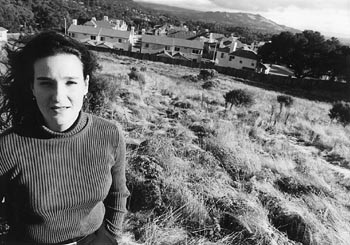
Eye on the Prize: For the past seven years, Elinor Twohy has kept daily watch on California sea lions and Pacific harbor seals basking near her Jenner home. Now federal wildlife officials blame the peaceful pinnipeds for dwindling fisheries.

Federal wildlife report proposes selective slaughter of local seals and sea lions

By Paula Harris

AFTER A NIGHT of hunting in cold deep waters, several Pacific harbor seals haul their hefty mottled bodies onto the sandbars at the mouth of the Russian River to rest awhile. Visitors may be attracted to their doglike, whiskered faces and large liquid eyes, but few onlookers are aware that these pinnipeds, along with local sea lions, are facing a possible culling next year.

A draft Report to Congress on the Impacts of California Sea Lions and Pacific Harbor Seals on Salmonids and West Coast Ecosystems headed for Capitol Hill next year seeks to reauthorize the Marine Mammal Protection Act and give authorities permission to shoot troublesome seals and sea lions. If sanctioned, the cull–which raises the spectre of marksmen sniping the peaceful sea mammals reclining near Jenner–could cover 52 river systems in Washington, Oregon, and California, including the Russian River, where coho salmon and steelhead trout have been placed on the threatened-species list.

According to some beleaguered fishermen, the Pacific harbor seals and California sea lions are largely responsible for the demise of the fish species. Activists disagree.

Federal fisheries managers claim that evidence supports the long-held contention of local fishermen, since sea lion and seal populations are thriving while endangered/threatened salmon populations are diminishing. The feds say that the burgeoning numbers of seals and sea lions are indeed partly to blame.

If the recommendations of the report are approved by Congress, by this time next year state Fish and Game and federal Fish and Wildlife officials could be stationed at the overlook on Highway 1 above the Russian River to observe the winter run of steelhead salmon. If they see seals or sea lions preying on the fish, they could be authorized to shoot to kill. “The implications are enormous,” says Dian Hardy, founder of the Seal Watch program, which guards resting seals against onlookers north and south of the Russian River in cooperation with the state Department of Parks and Recreation. “It will be the first time the Marine Mammal Protection Act will be breached to allow government intervention.”

SEALS AND SEA LIONS are currently protected under the federal Marine Mammal Protection Act of 1972. “Before that, they were hunted with impunity, and it looks like we’re on the road to return to that bloody time,” laments Hardy.

But Chuck Wise, president of the Fishermen’s Marketing Association in Bodega Bay, says something has to be done to control the animals. “They are growing 5 to 10 percent on a yearly basis, and they can’t continue to do so unchecked,” he says. “Otherwise there’s not going to be a fish left in the ocean and the beach will be littered with sick sea lions.”

Wise says that he encounters the large sea mammals, especially sea lions, more now than at any other time in 25 years of fishing. “I realize [sea lions] are doing what comes naturally, but they go around in packs now and we’re lucky to get 50 percent of the fish that get attached to our gear before [the sea lions] get them.”

Environmentalists say a 1991 scat analysis study at Russian River showed that salmon is not the primary food source for seals, which mostly eat flat fish, octopus, hake, and hagfish. Sea lions are known to consume a similar diet of squid, octopus, herring, rockfish, mackerel, anchovy, hake, and lamprey. Environmentalists say the pinnipeds are being scapegoated for other, more damaging factors, such as the recent human impact of clear-cutting, dredging, damming, and pollution that have caused the decline of the state’s fisheries.

Elyssa Rosen, California regional representative of the Sierra Club, says the destruction of habitats is caused by landowners upstream, not by sea mammals at the mouth of the river. “If they’re going to be taking it out on the sea lions, it’s misguided–the real problem is the industrial timber practices and the practices from water development and from agriculture, mainly wineries,” says Rosen. “Timber practices may be the No. 1 impact on salmon fishing. It’s a big, nasty business that continues to operate without restrictions. Sea lions certainly aren’t the culprit.”

Tom Okey, marine biologist and Pacific fisheries project manager for the Center for Marine Conservation in San Francisco, agrees. “The real reason is it’s our modification and they are the scapegoat–seals and sea lions are potentially having an effect on the salmon population because we’ve modified habitats. It’s our fault,” he observes. “We’ve changed rivers, whole watersheds, and forests. If you change temperatures, sedimentation of rivers from grazing, or agricultural activities, or pollution runoff, then agricultural or industrial areas will all contribute to the habitual degradation of salmon.”


Michael Amsler

Wet & Wild: Salmon not on the menu.

THE HUMANE SOCIETY is strongly opposing the recommendations for site-specific lethal management of California sea lions and Pacific harbor seals. After reviewing the data, Toni Frohoff of the Humane Society notes: “We strongly believe that sea lion predation is not responsible for the decline of fisheries along Washington, Oregon, and California and that it is crucial that managing agencies mitigate the true sources of the declines.

“We believe that this [culling] proposal will do nothing to improve or enhance the salmon population, but will further its demise by diverting attention from the actual causes: habitat loss and mismanagement of the fishery. Pinnipeds and salmon have co-existed on the West Coast for millions of years. This proposal is unable to cite any scientific studies to support its thesis because there are none. Therefore it is irrelevant and should be abandoned in favor of meaningful solutions based on solid scientific evidence.”

Irma Lagomarsino, fishery biologist for the National Marine Fisheries Service, southwest region, who helped write the controversial report, says that although the NMFS has concluded that sea lions and harbor seals have not caused salmon to become depleted or endangered, they may inhibit growth of the salmon population.

She admits that several factors have contributed to the decline in salmon, and that although seals and sea lions are not a major contributing factor, “they could contribute to [salmon] populations not recovering.”

The report recommends that state or federal workers could be authorized under strict guidelines to “lethally take” seals and sea lions in cases where the pinnipeds are preying on salmon; impeding passage of salmon; or in cases where certain individual seals or sea lions are not responding to non-lethal deterrents and are becoming a burden to fisheries, causing a significant economic impact.

Lagomarsino says all these “management strategies” would restrict the number of “lethally taken” pinnipeds annually. “The PBR [potential biological removal] idea is to remove a few animals every year, and we would not allow more to be taken over the PBR,” says Lagomarsino, adding that the combined PBR for Washington, Oregon, and California would be 6,410 “lethally removed” pinnipeds per year. “But maybe only a dozen or two dozen would be removed. We don’t anticipate it would come close to the PBR–it just won’t happen.”

When asked whether sea lions and seals are being scapegoated, Lagomarsino pauses for a few moments before answering. “The agency’s perspective is that’s not the case,” she finally says. “That’s why we came up with those recommendations.” The NMFS is looking into more non-lethal deterrents–such as seal bombs, barriers, and blunt arrows–but environmentalists say a lot more research needs to be done in that area. The NMFS is wading through 3,000 public responses about the draft report, and the final version won’t go to Congress for a couple more months.

Meanwhile, Hardy says that in the 13 years she has worked closely to harbor seals she has never felt so threatened as by the proposed culling policy. “An unnatural predator will have a license to kill,” she says, shaking her head. “Natural order will be turned on its head by this.”

If the proposal goes through, she adds, Seal Watch plans to continue protecting the pinnipeds. “If necessary, we will put our bodies on the line,” says Hardy. “Because the empathy you develop for these animals, so awkward on land, is strong. In their vulnerability, I see an echo of our own selves–we’re also awkward land creatures.”

From the Dec. 4-10, 1997 issue of the Sonoma County Independent.

© Metro Publishing Inc.

Talking Pictures

0

Waiting to Inhale


Peter C. Cook

Icky Brain Pox: Author Richard Preston often travels with an anthrax nozzle. If stopped at an airport security check, Preston explains it as a plumbing device. The simple horror of this ruse should give pause.

Anthrax, bio-weapons, and ‘The Jackal’

By David Templeton

Writer David Templeton takes interesting people to interesting movies in his ongoing quest for the ultimate post-film conversation. This time out, he discusses The Jackal with best-selling bio-weapons spookmeister Richard Preston.

THERE IS A CERTAIN undeniable thrill in having lunch at the Ritz-Carlton while a weapon of mass destruction sits on the linen-covered tabletop.

Called an “anthrax nozzle,” the weapon is all gleaming metal and plumbing. Manufactured at Fort Dietrich, Md., by the United States in the 1960s, this nozzle is designed to blast an invisible puff of lethal biological agents into the air and has just been pulled from the briefcase of author Richard Preston, a pleasant, soft-spoken man with an unexpectedly wicked edge of humor; he clearly enjoys the delicate perversity of this unlikely little show-and-tell session.

“I guarantee you,” Preston grins, as I disassemble the harmless-looking object and peer into the golf-ball-sized loading chamber (where dried bacilli containing anthrax spores are thankfully not waiting), “this is the first time an anthrax nozzle has ever been brought out in the dining room at the Ritz.”

And with any luck it will be the last.

Biological weapons–such as the one now casting a shadow over Preston’s ahi ahi tuna salad–have been much in the news lately. Preston has been in the news as well, the result of the uncanny timing of his latest book, The Cobra Event (Random House; $25.95).

With a chunk of its action taking place in Iraq, the frightening, fast-paced, fact-filled novel follows a motley crew of FBI agents and bio-weapons specialists attempting to thwart a creepy terrorist who’s developed a deadly virus–a genetically engineered “brain pox”–and has been testing it on unfortunate New Yorkers while planning to unleash it on the world at large.

Preston’s previous non-fiction work, The Hot Zone (Anchor, 1995), was similarly well timed; its nightmarish depiction of an Ebola virus outbreak coincided with reports of a similar epidemic overseas.

Preston’s interest in terrorist activity has led to a discussion of the new thriller The Jackal. The film, a remake of the classic Day of the Jackal, stars Bruce Willis and Richard Gere as, respectively, a bad terrorist and a good terrorist, duking it out with weapons of small destruction: really big guns.

Unfortunately, compared to Cobra’s icky brain pox–which spreads like the common cold and causes its victims to eat themselves alive–Willis’ high-tech cannon and Gere’s various sidearms seem rather tame. Just like Preston’s killer virus, however, it’s the very coldness, the unfeeling relentlessness of the killer, that makes the story truly disturbing.

“It’s very scary,” Preston agrees. “And that is what scares us about biological weapons, the one weapon of mass destruction that is alive and can replicate itself and spread. Plutonium released into the air, or a chemical gas released into the air, can kill, and there will be casualties, but the casualties won’t multiply because chemicals cannot spread as living diseases.

“They won’t go out of control. They can’t assume a life of their own like a biological agent will.

“One case of human smallpox,” he continues, “could easily give rise to 20 more. You could get this exponential growth in cases from one relatively small terrorist attack.”

He pauses, as I place the nozzle back on the table. “You want to hear something really scary?” he asks.

“Everyone thinks we are immune to smallpox because of the smallpox vaccine. But the human population is no longer immune, because the vaccine shots wear off after 10 to 20 years. A release of a biological weapon or an accidental laboratory escape, especially if the thing has had some genetic engineering done on it that would make it resistant to drugs or vaccines, could end up being a major public health problem all over the world.”

One scene in The Jackal shows a group of FBI administrators who laugh off the notion that the terrorists pose any real threat. I ask Preston if this cavalier attitude is similar to our country’s real-life perspective on our vulnerability to attack.

“Sure,” he replies. “What I hear is that the CIA does not know anything about biological weapons, that they don’t have people in the CIA with degrees in biology or medical training.”

He goes on to explain that the biological weapons program that developed the device now decorating our lunch table was officially disbanded years ago, and that apparently no similar program has arisen to take its place.

“If we did have a secret bio-weapons program,” he says, “I think the CIA would have at least some experts who know about this stuff. They don’t.”

The Cobra Event has been optioned to be made into a big-screen fright fest. “That’s something very old in the human psyche,” Preston muses. “The public nightmare. It’s much better to confront a nightmare while you’re asleep, to make mental adjustments to it when it isn’t really real, than it is to see it in reality. Hollywood is feeding that same need with disaster stories. It’s so much better to experience bio-terror–or any kind of terror–[in a movie theater] than it is on the streets of a city.”

He picks up the anthrax nozzle and quietly slips it into his bag.

“Perhaps,” he smiles, “we’ll be even better prepared should such things ever actually take place.”

From the Dec. 4-10, 1997 issue of the Sonoma County Independent.

© Metro Publishing Inc.

The Scoop

Moon Beams

By Bob Harris

HEY, DID YOU HEAR the one about how President Clinton allegedly sold spots in Arlington National Cemetery to the highest bidder? Insight magazine, owned by the Washington Times, said it was true. It was a big scandal, at least if you listen to talk radio. The Washington Times is the one newspaper that Rush, Ollie, and G. Gordon repeatedly call the most reputable in Washington. So predictably, all three lathered up about ethics and military honor. Which is ballsy as hell, given that Limbaugh, North, and Liddy, in order, are a draft-dodger, an admitted perjurer, and a convicted felon.

And then, shockingly, it turned out the Arlington story wasn’t true. Not even slightly. Totally false.

Edward R. Murrow is way dead. These same good folks have also brought you, along with a lot of other baloney: five years of Whitewater, without ever mentioning the apparent influence-buying of toxic waste-dumper International Paper at the heart of the original deal; the Vince Foster “murder,” which five investigations have confirmed was a suicide; and the Paula Jones story, which even her own lawyers are fleeing like rats from a sinking ship.

Think for a second about the kind of imaginative disregard for reality required to make Bill Clinton look positively reputable by comparison.

So with all the genuine bribery going on in Congress and the White House, who exactly publishes this diversionary crap in the first place and why? Insight and the Washington Times are both owned by Sun-Myung Moon, the convicted tax swindler who–with a straight face–claims to be holier than Jesus. Moon calls the United States “Satan’s harvest” and publicly opposes the very idea of democracy, preferring instead to dream about an absolute religious dictatorship with himself on the throne.

Moon’s mind-control tactics over his followers became an object of pop humor when he first became well known, so a lot of folks take his influence lightly. Don’t. Even though U.S. membership in his Unification Church is in severe decline, Moon has vastly more money and power than most Americans realize.

Financially, Moon’s in the same league as Warren Buffett. Since it’s all mixed up in a byzantine array of multinational companies, foundations, and non-profits, nobody knows how much the whole empire is worth. Yet public records confirm that Moon controls over $200 million in real estate just in the Washington, D.C., area alone. The total Moonie haul is well into the billions.

Where does all the money come from? Again, no one really knows for sure. Cheap Moonie labor must be pretty handy. Non-profit status for a lot of the operation probably doesn’t hurt much, either. Then again, a ’70s-era congressional report bluntly accused Moon of bank fraud and arms smuggling, much of which apparently received sanction from various intelligence agencies. We’d probably know more by now, but the probes ended with the election of Ronald Reagan and former CIA director George Bush, whose circle of contacts in Asia and Latin America overlapped with Moon’s closely enough that Moon was even invited to the 1980 inaugural.

Thanks largely to the work of investigative journalist Robert Parry–who first blew the whistle on an unknown Marine illegally running guns from the White House basement (hi, Ollie)–we now know that Moon’s financial influence over the Republican Party spans at least two decades. Parry has discovered millions of dollars flowing via various conduits from Moon to the GOP.

A few examples:

When the Iran-Contra scandal broke, Moon supplied at least $5 million to PR efforts on behalf of North, whose later Senate campaign received personnel and financial assistance from several Moonie organizations.

When Jerry Falwell’s Liberty University was on the verge of bankruptcy, Moon became his personal savior, sacrificing $3.5 million to pay for Falwell’s financial sins. (Some of this money is now financing Paula Jones’ ongoing goofiness via a conduit called the Rutherford Foundation.)

More recently, Moon has given a seven-figure series of payments to none other than George and Barbara Bush, in return for a series of little-reported speeches on behalf of Moonie businesses and newspapers in Asia and South America.

Speaking of Moon’s newspapers–which were founded for the sole purpose of influencing the U.S. political system on behalf of Moon’s larger agenda–the Washington Times loses enormous amounts of money every year. How much, exactly? Moon admitted several months ago than the total for the last 15 years is over a billion dollars. Which means neither the Times nor Insight would even exist without Moon’s massive cash flow, almost all of which originates overseas. And these are the publications howling about Asian money influencing the Democrats. Which nicely diverts attention from Moon’s own activities.

These are the folks who push any Clinton-bashing allegation whatsoever, thereby currying favor with political allies who, like Moon himself, are more concerned about power than truth, reform, or even democracy.

Follow the money. There’s a hell of a lot buried in D.C. these days, on both sides of the aisle. But Arlington’s the last place to dig.

From the Dec. 4-10, 1997 issue of Metro Santa Cruz.

© Metro Publishing Inc.

American White Horse Pictures

0

Rough Cut


Michael Amsler

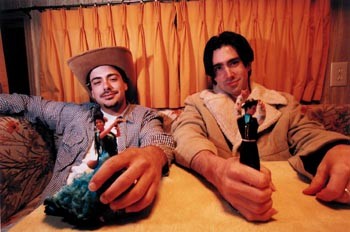
Long Shot: Filmmakers Mitchell Altieri and Phil Flores are preparing to shoot their first feature-length film, Long Cut.

Young Petaluma filmmakers are serious about making honest pictures

By David Templeton

THAT’S WHERE we write,” filmmaker Mitchell Altieri nods, smiles, and shrugs all at once. “If one of us needs to get away and just focus on being creative, on writing the script or whatever, that’s where we stay, pretty much for as long as necessary.”

A fine gray mist has begun to fall, quietly drenching the tidy, nondescript house that headquarters the fledgling American White Horse Pictures offices near downtown Petaluma. Altieri, standing out on the slick steps, is pointing to a small camping trailer parked uphill from the garage. Perched several yards up the glistening green hillside, the lonely, inconsequential-looking edifice is, in fact, a vital piece of American White Horse’s filmmaking operation.

Inside the garage, an enormous sign stands leaning against the wall. Only half-painted, it bears the lightly sketched outline of what Altieri hopes will become a symbol of cinematic integrity, the American White Horse logo, along with the whimsical but sincere motto, “Honest Pictures Made.”

Inside the house stands a two-man reception line–Altieri’s partners Phil Flores and Jerry Moore. They’ve set out coffee and cookies in the spacious, wood-floored living room, with walls displaying posters from past film projects, primarily docudramas.

Just finishing production on a fictional documentary of the late jazz trumpeter Chet Baker titled Porches of the Industrial City, this trio are now in pre-production on their first feature-length film–a low-budget, independently produced drama titled Long Cut, set to begin shooting next May. Altieri’s first film, King’s River, based on a short story he penned and produced for public television when he was just 19, earned him a Bay Area Cable Excellence award.

A writer with a firm commitment to chronicling the tough streets of his childhood, Altieri supports his filmmaking endeavors through a text and photographic collaboration with another artist, the two scouring South San Francisco’s mean streets to capture the stories and faces of the youth living there. Their work has caused Levi’s to offer an option on the images to sell jeans, and San Francisco’s Museum of Modern Art is meeting with the two to discuss exhibiting the visual and written work.

Though their ages place them firmly within the so-called Generation-X demographic, Altieri, Flores, and Moore stand counter to the stereotype of nihilistic, cynical youths yammering about the death of optimism. As they describe their upcoming project, it becomes clear that they see themselves at ground zero in the battle against pessimism, with American White Horse functioning as Idealism Central.

“We’d like to be successful, sure,” explains Flores, who is living off savings while he writes. “But that’s not as important, really, as just telling stories that are honest. There’s not a good supply of honesty in the world these days, and certainly not in Hollywood. We intend to change the way films are made in this country.”

A co-author of Long Cut‘s script, Flores will direct the film side by side with Altieri, in the style of the successful Coen brothers collaboration (Blood Simple, Raising Arizona). Moore, who works as a bartender in his nocturnal “day job,” is clearly the producer. Clad in a crisp white shirt and snappy tie, he is handling the administrative tasks of lining up investors, developing a budget, and arranging shooting locations and casting sessions, and he’ll work to place the finished product in indie film festivals around the country. He also serves as a liaison between his partner’s creative ideals and more mundane, cash-driven concerns.

“We do plan on being picked up by Miramax,” Moore says, rising to answer the telephone. “Art is important, telling honest stories is important, but we intend for the movie to be seen. We want it to make money.”

“There’s no way it’s not going to make money,” Flores asserts. “I think you have to have your roots and your foundation right. If you do that, there’s no way it’s not going to be successful.”

UNLIKE INDIE LEGENDS Kevin Smith (the writer and director of Clerks and Chasing Amy) and Richard Linklater (creator of Slackers and Dazed and Confused), whose early films were all dark, urban comedies crammed with references to television and comic books, the American White Horse team plan to make their feature debut with a deeply emotional, distinctly rural drama.

Long Cut chronicles an unlikely friendship between a mute, traumatized young girl and the gentle, monosyllabic ex-convict who tends the horses on her grandfather’s once-thriving ranch.

Subplots involve the grandfather’s fight to save his land from developers, and the arrival of the ranch hand’s one-time prison buddies, heavily tattooed brothers named Dreamboat and Curly.

“We’re going for a Hemingway, Faulkner kind of feel,” grins Altieri, who wrote the story on which the script is based.

“There’s some Steinbeck there, too,” adds Flores, who goes on to describe the film as being “very Latino-based in its imagery, with faint, faint touches of magical realism, though, you know, not with flute music behind it or anything.

“We grew up in a rough neighborhood in South San Francisco,” Flores continues, referring to himself and Altieri, friends who met in high school.

“Half of the place was Hispanic and the other half were jailbirds.”

“We grew up on the wrong side of the tracks,” Altieri says. “But the guys that I hung out with were very honest. That was very important to us. And if you had a chance to help a young girl [as in Long Cut], you’d damn well better do it. And we’ve always talked about making a story where the hero isn’t a hero, but still does good things. But we didn’t want to glorify him,” Altieri stresses. “He’s still a loser.

“We’re certainly not unfamiliar with the characters in the film,” he laughs. “We got into a lot of fights, growing up. Fortunately for us, art directed us away from that kind of lifestyle.”

The film, whose current budget is in what Altieri cautiously terms the “low six-figures,” will be financed through a combination of the trio’s own savings, bank loans, and an assortment of local investors led by Petaluma businessman Tom Baker, owner of the Baker Street Bar & Grill.

The lead male has tentatively been cast with an L.A.-based actor, Altieri says, though they’d prefer to use local talent for the rest of the parts. According to Moore, offers have been pouring in from businesses and property owners eager to help, and they’ve already found most of their shooting locations.

“We could shoot it now,” Altieri says. “But we’re still looking for investors. Obviously, the more money we raise, the better the film will look.”

But the American White Horse business plan extends beyond merely making films. There’s also that part about changing the way films are made.

“Our plan is to someday have a film school, right here,” Altieri explains. “As the business grows, we’ll abandon sleeping quarters to install editing rooms and classrooms. We want a place where people like us, people with no money but a desire to make good films, can go and learn. A place where the excitement of making films can thrive.”

“I’ve taken enough film classes in college to know that filmmakers must avoid traditional film schools,” Flores adds. “They teach theory. They teach math. They’re not teaching passion. They’re not teaching creativity. It’s what’s in your heart that ends up on the screen. That’s what we want people to get.”

“I’m not content to have people look at back at us someday and say, ‘They made some pretty good movies,'” concludes Altieri, glancing out toward the trailer, perhaps envisioning the sprawling operation that may some day take its place.

“I want them to say, ‘That was a perfect movie, flawless, no mistakes. They never sold out.'”

Actors are invited to audition for Long Cut. Send a head shot and résumé to Mitchell Altieri, American White Horse Pictures, 1877 Petaluma Blvd. N., Petaluma, CA 94952. Deadline is Jan. 15.

From the Dec. 4-10, 1997 issue of the Sonoma County Independent.

© Metro Publishing Inc.

Talking Pictures

0

White Lies

By David Templeton

Writer David Templeton takes interesting people to interesting movies in his ongoing quest for the ultimate post-film conversation. This time out, he meets globetrotting author Bill Barich to take in the offbeat crime-drama Midnight in the Garden of Good and Evil.

The bar is nearly deserted, in direct contrast to the teeming parade of eccentric humanity just outside the door on San Francisco’s busy Market Street. “So,” I ask my guest, author and journalist Bill Barich, “have you ever broken into a morgue while working on a story?”

It is a reference to the film we’ve just seen, Midnight in the Garden of Good and Evil–director Clint Eastwood’s distressingly flat translation of the best-selling John Berendt non-fiction potboiler–in which an eager young journalist (John Cusack) finds himself losing all professional objectivity and ethical restraint while covering a murder trial in languorous Savannah, Ga.

Having befriended the defendant, a rich, smooth-talking antiques dealer (Kevin Spacey) accused of killing his bad-tempered male lover, the reporter goes to great lengths to uncover the truth. At one point he does invade the city morgue, aided by the local drag queen (the Lady Chablis, playing herself) and a smitten southern belle (Alison Eastwood).

“I’ve never broken into a morgue,” Barich admits with a laugh. “And I never wound up with the girl at the end, either. That was even more preposterous.”

Barich, a former writer for The New Yorker, has made a name for himself as a keen-eyed chronicler of the offbeat, an observer of those cultures that exist beneath the radar of most people’s gaze. His books include Laughing in the Hills, a look into the world of horseracing; and Big Dreams–a powerful, engaging tale of the author’s own journey of self-exploration while traversing California. He recently covered a murder trial of his own for Outside Magazine, reporting the bizarre events surrounding a rich white couple accused of murdering their black boatman while vacationing in the Caribbean.

“The thing that the movie did get right,” he says, “was that when you get into a situation like that, the truth is very slippery. And everyone has something at stake, so you have to take every story with a grain of salt.”

“And try to remain as objective as possible,” I suggest.

Barich rolls his eyes.

“There is no objectivity,” he replies matter-of-factly. “There’s truthfulness, but that’s not the same thing. I remember reading a wonderful interview with the director Werner Herzog where he was criticized because his movie was so biased. And he said, ‘I’m sick of this myth of objectivity! Of course it’s biased. That’s what I wanted it to be!’ It’s a base canard that any kind of objectivity exists.”

Hmmm. That just happens to be a canard I’m rather fond of.

“But as a journalist,” I respond, “isn’t there an attempt to create at least a semblance of objectivity?”

“Well, I gave up on it long ago,” Barich laughs. “I do think you want fairness. The people you come across while you’re working a story really just want to be treated fairly, honestly, aboveboard. And they’ll even take a knock, if they deserve it. They may not like what you say but they will at least respect you.

“People are ready for the truth,” he grins. “Though I prefer what the Austrian writer Thomas Berendhart used to call it, ‘The truth-content of a lie.’ He used to say that the truth-content of his lies was very high.”

“I’ve heard that when Midnight was published,” I relate, “Berendt returned to Savannah for book signings, and he was treated like a hero.”

“Sure, and that book was generally unflattering,” Barich nods. “It painted Savannah as a creepy and ghoulish place. I think part of what’s going on is that Berendt published what people had saying in the streets about this wealthy guy and his secret life. There’s a kind of titillation in a writer saying in public what everyone is saying in private.”

“And everyone was eager to see if their name had been mentioned,” I add.

“Of course,” Barich laughs. “When my racetrack book came out, I was told by some of the stores that they couldn’t believe the people that were coming into the bookstore, grooms and jockeys who’d never read a book in their lives. And of course they’d not have my name right, and they’d have the title wrong … but they’d buy six copies.

“At the cash register, having no idea what I’d written, they’d say, ‘Hey, I’m in this book.'”

He tells about receiving a message from a woman after he’d been interviewed on a radio program. “I called her, and it turned out that she was the daughter of a guy who’d been the mayor in a little desert town way down near Palm Springs. This guy is mentioned in Big Dreams, but only in one sentence. And this woman said that she had gone out–her father had died since the book came out–and bought like 18 copies of the book to give to all her nephews. It was an emotional connection. But also it’s posterity.

“He will always be in that book as long as that book is around. The grandkids can turn to page 432, and there he is,” Barich smiles, slapping the table gently. “Forever the mayor.”

From the Nov. 26-Dec. 3, 1997 issue of the Sonoma County Independent.

© Metro Publishing Inc.

Urban Growth Boundaries

0

Sprawl Brawl


Janet Orsi

Sprawl Buster: Christa Shaw of Greenbelt Alliance, standing near the Skyhawk project on Highway 12, has campaigned for urban growth boundaries.

Last year voters approved a series of landmark urban growth limits. More are on their way. But are UGBs really a magic bullet?

By Janet Wells

QUAIL RIDGE. Skyhawk. Pine Creek. Harvest Meadow. Sonoma County parks? Wineries? Restaurants? Nope. Housing subdivisions. Given the influx of cookie-cutter residential developments, big-box superstores, tacky strip malls, and seemingly endless miles of traffic congestion, those bucolic-sounding names offer a rather optimistic view of Sonoma County’s current state of development.

No doubt stellar views and wildlife still exist here, but quails in a walled Rohnert Park subdivision? It’s no secret that a growing population and burgeoning development have changed the face of Sonoma County. For many residents, it hasn’t been a change for the better. “You end up destroying what the housing projects are named after,” says Rohnert Park Councilman Jake Mackenzie. “The original environment vanishes.”

A year ago, Mackenzie, along with a majority of Sonoma County voters, approved five unprecedented urban-boundary measures in Santa Rosa, Healdsburg, Rohnert Park, Sebastopol, and unincorporated parts of the county, with the idea of containing development and the hope of recapturing the county’s pastoral heritage.

One year is hardly enough time to discern major quantitative or qualitative impacts. But that hasn’t stopped the UGB trend: On Jan. 6, voters in Windsor will decide whether to adopt a UGB, and the issue is at the forefront in Cotati, Petaluma, and Sonoma, as well as a half-dozen other Bay Area communities.

Proponents of UGBs–both environmentalists and homeowners–tout them as the way to protect open space and farmland, decrease traffic congestion, contain sprawling development, even help maintain air quality. Homebuilders and developers, on the other hand, call UGBs “Great Walls” or “Iron Curtains,” and say such growth limits will have the opposite effect, resulting in escalating housing prices, leapfrog development, and more commute nightmares as people, looking for affordable places to live, move farther and farther from their jobs.

At their most simplistic, UGBs sound like a great idea: Keep sprawl contained and encourage investment in the city core, where roads, sewers, schools, transportation, and police and fire services already exist. But do growth restrictions work?

There’s the rub. In between the polarized rhetoric lies the less tidy gray zone of UGBs: All of the above may happen or none of the above. One thing is certain: California’s newest planning tool is young and untested. “In the short term, growth boundaries may have the benefits the environmentalists say they will,” says Santa Rosa planner Jeff Schwob. “In the long term, no one knows.”

Even in Oregon, where all communities were mandated by the state nearly 20 years ago to implement UGBs, the results are inconclusive. Housing prices in Portland have skyrocketed–as they have in many cities without growth restrictions. Portland’s downtown has been lauded as a model for redevelopment, but traffic is becoming increasingly congested. And more tellingly, after 20 years, development is bursting the boundary at its seam. Will Portland extend the boundary to accommodate increased population or try to contain growth within the existing boundaries? It’s a question most of Sonoma County will face in 2016.

A YEAR AGO Sonoma County became the first in the nation to establish comprehensive growth boundaries by voter approval. Santa Rosa passed a 20-year boundary, as did Sebastopol, Healdsburg, and the county (Measure A decreed that the county establish a green belt around any incorporated city that adopted a UGB); Rohnert Park’s four-year boundary squeaked by with a 350-vote margin.

And Sonoma County wasn’t alone for long on the UGB bandwagon: San Jose, Morgan Hill, Cupertino, and Pleasanton adopted 20-year boundaries in 1996. Novato came into the fold on Nov. 4. The only city in Northern California where a UGB on the ballot faltered in November’s election was Fairfield in neighboring Solano County, where the measure failed to pass by just 48 of more than 6,000 votes.

“Sonoma County often seems pastoral, but it’s a very desirable place to live, and land is less expensive than in other places in the Bay Area. This place is a target for developers,” says Christa Shaw, North Bay field representative for the Greenbelt Alliance, a non-profit Bay Area land conservation group. “Urban growth boundaries finally give people a tool to say, ‘Enough is enough. This is the boundary for the next 20 years. Let’s live within it.'”

Northern California’s UGBs seem to pass handily at the ballot box, but the measures are far from a shoo-in. At the grassroots level, residents must gather thousands of signatures to place measures on the ballot. Builders and developers pony up hundreds of thousands of dollars for opposition campaigns. City councils grapple with the growth issue, striving to compromise among dwindling revenue, population growth, environmental resources, and the demands of powerful local landowners.

Emotions over the proposed Windsor UGB are so strong that Mayor Sam Salmon, Mayor pro-tem Lynn Morehouse, and Councilwoman Debora Fudge are up for recall on Jan. 6. Although the recall is couched in different terms, it’s clear that growth is at its heart. “What we’re talking about is opposing political opinions,” says Morehouse. “When we started talking urban growth boundary, [opponents] started talking recall.

“An urban growth boundary gives voters a voice in the future of Windsor, and it’s locked in until voters see a need to make a change,” she says. “In Windsor, over 70 percent of the people own their homes. They have made that financial investment in Windsor, and they are going to be here awhile. They are voting what they feel is best for the community, as opposed to political officials interested in their careers, looking for who is going to fund the next campaign.

“People value Sonoma County for what it is,” she adds. “They have seen what has happened in Southern California and Santa Clara County. It’s like the Joni Mitchell song … ‘Pave paradise, you don’t know what you’ve got ’til it’s gone.'”

URBAN GROWTH boundaries are not contiguous with city boundaries. Many are separated by acres of land, leaving room for cities to accommodate growing populations with housing, commercial, and industrial projects. For now, growth is business as usual. The crux will come down the road, when, as in Oregon, development reaches the edge of the designated urban boundary line.

“An urban growth boundary is not a ‘No growth’; it’s a ‘Where are you going to grow?'” says Sonoma County Supervisor Mike Reilly, who represents the west county. “Cities entertaining and approving projects of greater densities within the boundaries, that’s what it’s going to take to make it work.

“If we can’t come up with a livable and sustainable design of increased density, and be comfortable with that, I don’t know if the ballot measures are going to work,” Reilly adds. “Twenty years go by awfully quick, from a planning standpoint.”

Residential developers benefit from high-density development, says Tim Coyle, a senior vice president of the California Building Industry Association. “That will always be a goal. But at the moment, we have political opposition to higher-density development.

“To say theoretically that homeownership will take the form of stacked housing is to mistake what the public is demanding. Most Americans prefer a detached single-family home. If the market suddenly changes and they suddenly want higher-density, multifamily housing, then we’ll build it.”

Coyle, along with local builders and developers, cautions that UGBs will price people out of a housing market that is already one of the tightest and most expensive in the country. “In light of the tremendous job growth we’ve seen in the state of California and lackluster housing production, we know the situation is getting worse,” he says.

According to Coyle, the same number of homes were built in California in 1992–when the state was losing 1,000 jobs a day–as in 1997, when 1,000 jobs a day are being created.

“The Department of Housing says, ‘Keep pace with population growth,’ and that’s 200,000 units of housing a year. For the last seven years it’s been roughly half that,” Coyle says. “[As a result], people are pushed further and further and further out. They can’t afford the prices because of a hot economy and limited supply as a result of urban lines. People are going to go where the prices are cheaper, which will mean they can’t take their child to the dentist without taking half a day off because they have to drive so far. Then the builders and developers get blamed for sprawl.

“[UGBs] transfer problems from one area to another.”

During a recent segment of a KQED-FM Forum program devoted to UGBs, Clark Blasdell, president and CEO of Northbay Ecumenical Homes, was even more emphatic: “People want to live, and these kinds of policies say that people must live somewhere else. That’s the basic message of an urban growth boundary, that we’re not asking you to die, we’re just asking you to move further away,” he said.

“We will pull permits and build the homes, the 100,000 a year that Californians want, as far down the road as the people are willing to drive. They tell us what kind of house they will buy and where they will buy it. And we will only build it where they will buy it,” Blasdell continued. “If they won’t let us build here, we have to build it somewhere down the road, and they’ll have to complain about the fact that they’re driving back from Healdsburg or Cloverdale through Sebastopol to get to their job.”

A UGB “takes away the basic foundation of American government, which is representative government,” Blasdell concluded. “The two most defining characteristics of being an American are the right to own private property and the right to have choice. This is an attack on choice.”

SHAW of the Greenbelt Alliance, which has either spearheaded or supported every UGB measure in Northern California, says that developers have resorted to scare tactics in their rhetoric against growth boundaries.

“Developers are trying to scare people, [saying] that everyone is going to have to start living in 12 units per acre,” she says. “We’re talking the difference between three to four units per acre and five to six. That’s still single-family detached.”

Shaw–who also has suggested that downtown Santa Rosa could be revitalized if the city encouraged more apartment dwellers in the flagging urban core–agrees that higher-density housing has a less than stellar reputation. “It’s hard to convince neighborhood groups. People freak out because they think density means ghetto. It’s understandable. There aren’t many good examples of fabulous high-density housing.”

But that problem could be solved with a little creativity, she adds. “Developers buy agricultural land at the fringe of the city. It’s cheap, there are no neighbors, and they sit on it for 5 to 10 years. When the city gets close enough, they ask for annexation and make millions of dollars. Now they have to buy within the boundary because they can’t afford to buy outside and wait 20 years. It changes the whole dynamic of how developers do business.”

UGBs are a method of curtailing land speculation, Petaluma Councilwoman Jane Hamilton agrees, as well as using land more efficiently. “New development doesn’t pay for itself. It’s very expensive to do urban sprawl. New projects do not pay for upkeep of parks or the impact on schools, parks, streets,” she says. “Infill is utilizing what’s already existing and improving it.

“You could fit so many more homes in Petaluma with infill. There are lots of empty spaces; it just takes creativity to use them. It’s just not so easy for developers. Developers like the edges because they are starting fresh on nice flat land. It’s a breeze.”

Petaluma residents and city officials have been sniffing around the issue of urban growth boundaries for a couple of years, and Hamilton hopes that residents soon will voice strong support for a long-term UGB. “If you don’t have 20-year [UGBs] that can only be changed by vote from the public, your limit line is up for sale every time there’s an election,” she says. “This county will be gone in a heartbeat if people don’t do this kind of thing now. It’s almost too late.”

GROWTH and development are marching along status quo–at least for now. For example, by the year 2020 Santa Rosa’s current population of 132,996 is expected to grow to 200,000 within the UGB line approved by voters last year. The state Department of Housing mandates that cities have enough housing to accommodate growth, so Santa Rosa has annexed 1,482 acres in the southwest area of the city since August 1995, along with 300 acres in the Roseland area in July. An annexation of 28 acres in the city’s southwest area is in the works, as are a few annexations in the northwest area.

While voters may have assumed annexations were a thing of the past after adopting the UGBs, city planners point out that they are within the growth boundary and done at the request of the residents or the county and to meet state housing mandates.

“Yes, we are growing, and growing into previously undeveloped areas, but that was planned growth,” says Wayne Goldberg, Santa Rosa’s director of community development. “When people see growth in undeveloped areas, they tend to label it ‘sprawl.’ It depends on how you define sprawl.”

Goldberg defines it as development that reaches beyond the city’s service capabilities or invades other communities. In Santa Rosa, he says, development “has been consistent with infrastructure investment,” but “it is more growth than most people would like to see.”

Rohnert Park city officials garnered criticism recently from the Local Agency Formation Commission, a county commission that controls annexations, for too much sprawl in the wake of its UGB. “The people of Rohnert Park last year approved a five-year urban growth boundary,” Supervisor Reilly says. “No sooner did they do that than the City Council was looking for land to annex. It’s not the most coherent urban planning. It seems that the council, if not ignoring, is going against the will of the people.”

Rohnert Park, a city incorporated in 1962, has a history of shifting politics and a reputation for aggressively pursuing development. In 1996 the City Council failed to agree on where to draw the line for a 20-year boundary. Two of the five council members, Linda Spiro and Armando Flores, were spooked at the thought of handing such power over to the voters, says Jake Mackenzie, who ran for City Council that year on a slow-growth platform. Mackenzie then proposed Measure N, establishing a four-year boundary to coincide with a major general plan update in 2000. The council agreed to put it on the ballot, and the measure won, as did Mackenzie.

“The question is what happens next,” he says.

“It depends on the politics on the council in four years and if a 20-year measure gets passed,” says Mark Green, executive director of Sonoma County Conservation Action. “An urban growth boundary of only four years will not discourage the kind of land speculation that a 20-year [UGB] will. It’s easy to sit on a parcel for four years, but not for 20 years.”

That’s why Mackenzie hopes to have a 20-year UGB measure on the ballot within the next four years. “There’s no reason that all the land between Snyder Lane and Petaluma Hill Road should be covered in houses,” he says. “A lot of money came into town to try to defeat Measure N. These are people who control larger acreages of land. They have an interest in realizing their investment.

“Others of us would like the citizens to have ultimate control in the way in which and the rate at which it grows.”

UGB PROPONENTS vaunt their planning tool as a way to give residents control over development within the city–and a way to protect scenic agricultural acres outside the boundaries. The only snag in the scenario is that some farmers feel used by the tactic.

“Anti-growth people used agriculture to further their message,” says dairy farmer John Bucher, a board member of the Sonoma County Farm Bureau. “The whole campaign for UGBs was packaged, designed to grab at the emotions of the city voter. A feel-good thing. It made it sound like it was going to put a boundary around the city, development would happen in the city, and it would be open space outside. That absolutely is not true.”

What urban residents object to, says Bucher, are condo developments and acres of tract homes. But stricter boundaries for cities mean that there will be more pressure to develop agricultural land into the country estates that people want–environmentally correct or not. Twenty acres of berries split into five ranchettes may be lovely for the new country residents, but it is no longer viable agricultural land.

“Voters were really deceived,” says Bucher, whose family owns a 360-acre ranch in Healdsburg. “[UGBs] are not going to save agriculture. Strong farm prices are going to save agriculture.

“If push came to shove and we couldn’t cut it here and my folks wanted to sell, they could split this up into six home sites. There’s nothing that anybody could do to stop them,” he says. “Agriculture’s biggest asset is the land. A UGB is messing with our asset. … We didn’t even get a say on potential change in land and valuation. We weren’t even allowed to vote on the UGBs. It’s almost like someone living in town and all of a sudden those of us out in the country say we want to see their lot split in half and a condo built next to them.”

UGBs may be necessary, Bucher says, in places like the Central Valley and Silicon Valley, but not Sonoma County, where more than 50 percent of the county’s 1 million acres are in agriculture and 6 percent in housing.

In Sonoma County, Bucher concludes, “Urban growth boundaries are a solution looking for a problem.”

Or as Santa Rosa’s Goldberg says, “Everybody’s searching for some solution to what they perceive is the problem.”

People want to live in pretty places, work where they can make money, and drive whenever and wherever they want. Add in population growth, booming economy, traffic, housing shortages, two-worker households, inefficient public transportation, and the mix combusts. While UGBs may be a partial or temporary bucket of cold water, many agree, it seems unlikely that they will quench the firestorm of frustration.

“We have a lot of people who are refugees from San Francisco or the East Bay or Los Angeles,” says Santa Rosa community development director Goldberg. “Their fear is that we will repeat the growth scenario of where they came from. When they see development or growth in traffic, they think their fears are being realized.

“Everywhere in California is going to grow if it’s desirable. Sonoma County has an awful lot to offer in terms of living accommodations and lifestyle. … You can’t say, ‘We will not allow growth.'”

From the Nov. 26-Dec. 3, 1997 issue of the Sonoma County Independent.

© Metro Publishing Inc.

Petaluma Voter Fraud

0

No Confidence


Janet Orsi

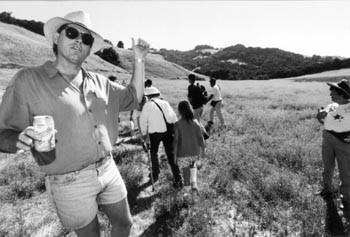
King of the Hill: During the debate over the fate of Lafferty Ranch, City Councilman Matt Maguire conducted tours to the area.

Questions linger despite charges in Petaluma voter-fraud case

By Paula Harris

AFTER A 16-MONTH probe into what state investigators call one of the biggest voter-fraud scandals in California, the Sonoma County District Attorney’s Office and the state Election Board have wrapped up investigations of the Petaluma voter-fraud case, in which some 2,000 signatures were forged to help a controversial land-swap measure get on the 1996 ballot.

Five people have been charged on various counts of fraud and forgery in connection with the scandal. Yet the collective sigh of relief from the community has not been forthcoming. On the contrary, many are angry because so many troubling questions remain unanswered. “We’re adamant the public needs to know exactly what went on in this attempt to deceive them,” says Hank Zucker, spokesman for Citizens for Lafferty. “Any arrangement that doesn’t lead to a full disclosure is not acceptable.”

Moreover, the fact that three of those five suspects charged have close ties to two Sonoma County supervisors, and county District Attorney Mike Mullins has not pursued that link further, does not sit well with many local political observers.

The investigation so far “is only part of the story. I’m sure there’s a very extensive story about leaders in the community,” says Petaluma City Councilwoman Jane Hamilton. “What disturbs me is the blanket of silence people in key positions have laid over the issue. Instead of leadership, all we’re hearing is denials. They should be insisting on a full prosecution, charging for every one of those forgeries because each one has a victim.”

Petition supporters backed an ill-fated attempt to place an initiative on the 1996 ballot that would have approved the swap of city-owned Lafferty Ranch, atop Sonoma Mountain, to millionaire rancher Peter Pfendler in exchange for $1.4 million and Moon Ranch, an old dude ranch at the base of the mountain.

The Independent has requested from county officials a public records act to obtain a full list of all those whose names were forged.

Two weeks ago, Mullins filed felony fraud charges against several local political movers and shakers in connection with the case. Those charged include Martin McClure, a Santa Rosa political consultant, who worked as Supervisor Paul Kelley’s aide from 1994 until February 1997. McClure is active in county Republican circles and ran unsuccessfully for state Assembly in 1986. He is accused of six felony counts of forging signatures on the petitions and two counts of circulating the petitions with forged signatures.

Steve Henricksen, a candidate for the state Legislature last year and a member of the Sonoma County Republican Party Central Committee, is accused of four felony counts of forging signatures, and two counts of circulating the petitions with forged signatures. A close friend of Kelley, who assigned him a post on the Sonoma County Fair Board in 1995, Henricksen recently resigned from that post, citing “negative publicity.” His wife, Donna, also stepped down from her position as an administrative aide to Kelley.

Marion Hodge, a 12-year aide to Sonoma County Supervisor Jim Harberson–who represents the Petaluma district–has been accused of a single misdemeanor: filing petitions she knew weren’t circulated by Petaluma residents, as required by state law. Hodge recently resigned her position with Harberson.

Craig and Shelly Arthur, a former Petaluma couple who were arrested in May, have accepted plea bargains. The couple will be sentenced Jan. 13. Transcripts of investigator interviews with the Arthurs reveal that, as the deadline to file the petitions loomed, there was panic that they wouldn’t gather enough signatures. “About a week to 10 days before the, ah, petitions were due back in, Martin [McClure] and I sat down [and decided] we weren’t gonna make it, and he mentioned that we might forge some signatures and I asked him what’s gonna happen when we get caught,” Craig Arthur testified, according to the court transcript. “Martin, of course, working for the county as an aide to one of the supervisors, ah, represented that he knew how, how things were done and that the chances of getting caught were slim. I believed him and we went on and did that.”

Hodge hired McClure, and the Committee for Choice paid him $1,200 to get signatures.

The Lafferty swap revisited.

MEANWHILE, Supervisors Harberson and Kelley are rushing to proclaim their innocence, saying they had no role in the scandal. “I had nothing to do with it. I was gone on vacation and came home and discovered it,” says Harberson. “I asked Marion Hodge specifically if she had anything to do with this. She said no and I believed her. I was extremely disappointed and devastated she was charged with a misdemeanor. … She was someone who never gave any indication of breaking any law.”

Harberson knew Hodge was collecting signatures, and told her she had to do it on her own time. He told Hodge that he thought the initiative was “a loser,” he says.

“It was obvious the people of Petaluma did not want to get rid of Lafferty,” says Harberson. “While there’s a presumption of innocence, I’m sure people ended up forging signatures because there was so little public support for getting rid of Lafferty.”

Harberson is not surprised he’s now under suspicion. “This is politics and you’re going to be a target,” he comments. “If you’re looking for fairness in politics, you’re going to be disappointed. You’re not going to find it.”

Meanwhile, Kelley hurriedly sent out a press release two weeks ago, after the resignations of Steve and Donna Henricksen, noting he is “shocked and surprised at the allegations around this issue.”

YET ONE OF THE MAJOR unanswered questions in the probe is why certain individuals, some from outside Petaluma, and not all avid hikers and park enthusiasts, were so interested in swapping one ranch for another in Petaluma.

“Some people held the minority belief that Moon was better for Petaluma, but it’s stretching the imagination to think of holding that belief to the degree they were willing to commit felonies to get that result,” reasons Zucker. “A lot of people are acting as if they were bought and paid for, but there’s no evidence.”

Hamilton has her own theory: “People were interested because it was a county network, a small network that wanted to help Peter Pfendler with his agenda. They were willing to risk their careers,” she claims.

Pfendler did not return calls last week for comment.

According to county election records, in 1993 Harberson received $1,500 in campaign contributions from Peter and Connie Pfendler. Between 1985 and 1994, Harberson also received $700 from Matt Hudson, Pfendler’s attorney, and $450 from Donald Smith, who filed the failed initiatives for the Committee for Choice.

In 1994, Kelley received $550 in contributions from campaign manager Martin McClure, and $130 from Stephen Henricksen, who also loaned him $500. Also, in 1994, he received $400 from Craig Arthur.

Meanwhile, Harberson is under fire from Petaluma City Council members and others who charge that on the county level he’s obstructing plans to turn Lafferty into a wilderness park, as opponents of the swap desired. “[Harberson] certainly isn’t helping either to move Lafferty along or to get any other regional park, though a year ago he said he’d look for another site for a park with more family facilities,” says Zucker. “[Access to Lafferty Ranch] is being fought every step of the way–Harberson is certainly listening to his friends on the mountain more than his neighbors in Petaluma.”

Harberson disagrees, saying the delays are necessary to fulfill EIR requirements. “The city has to do an EIR because of state law–it’s unbelievable the City Council would not want to have a full EIR–and I can’t move this along legally,” he says.

He’s asked Pfendler to dedicate the remainder of Moon Ranch as a regional park. Since Moon is more accessible, says Harberson, most people would go there, it would be used more than Lafferty, and Pfendler would have his privacy. Pfendler, says Harberson, has not yet responded to the request. Harberson adds that the open space district has already paid $1.2 million to Pfendler for development rights on Moon.

This week, Petaluma Police Chief Pat Parks told the Independent that the department intends to review the entire voter-fraud case and will ask the District Attorney’s Office to investigate further if it sees a need. Meanwhile, City Council members and community activists are left to guessing games. “No one is coming forward. Why are the people who sponsored the initiatives not coming forward?” asks Hamilton. “The people who are silent are still holding out on the public and are still planning to run for office and do other things in the community. Lafferty cost us our innocence.

“It almost makes you wonder if there’s buried treasure up there.”

From the Nov. 26-Dec. 3, 1997 issue of the Sonoma County Independent.

© Metro Publishing Inc.

The Scoop

Dangerous Myth

By Bob Harris

WHEN I WAS in first grade, we never spent a day talking about the “meaning” of Halloween or Memorial Day. We spent a whole week on the Thanksgiving story.

Plymouth Rock, 1621: Pilgrims escaping religious persecution and settling an empty continent shared their bounty with primitive Indians with whom they shared the land.

(Aside to uptight liberals: Most actual American Indians really don’t care much if we call them “Indians,” “Native Americans,” or “Constantin-ople.” As if a polite term could undo 500 years. You should hear what they call us.) Thanksgiving is really a creation myth for white America, a capsule of what cheap politicians consider traditional values: manifest destiny, the Protestant work ethic, cultural superiority, etc. Our ritual re-enactment of the feast is nothing less than a civil sacrament.

It’s also almost completely phony.

To begin with, the word settler is deceptive. The Indians had long before “settled” most of the east coast, and fairly comfortably at that. (Are Mexicans moving to L.A. “settlers?” Potato, potahto.)

America was not empty. Archeologists have found Indian communities of 30,000 or more all over America; the current consensus is that around 12-15 million folks were living north of the Rio Grande when Europeans got off the boat. Other explorers soon followed Columbus, but colonies were another deal entirely. Providing homes for dozens of people, thousands of miles from the nearest supplies–using only 16th-century tools you could fit on a boat–was a heck of a trick.

Spanish colonists gave it a shot in 1526, but faced with new crops, strange animals, dwindling supplies, and no cable, they bagged it right away. The first English colony was established on Roanoke Island in 1585. It was gone by 1590. Nice try.

Finally, in 1607, the Brits founded Jamestown. Good news, bad news. By the end of the first winter, two thirds had died of disease and starvation. The remainder received handouts from the Powhatan Indians–welfare for illegal immigrants, in modern terms–and survived.

To the Powhatans, Europeans looked pretty goofy: far from home for no visible reason, unable to grow crops, short-lived, and sick all the time. Boy, were they sick. Sanitation wasn’t exactly a European strong point. Remember, London and Paris still had raw sewage running in the streets. For many, religious modesty forbade routine bathing. And the newcomers had been living on a boat for months. In short, Europeans were pretty skanky.

Skip ahead a few years.

Shortly before the Mayflower landed, the area around Plymouth was ravaged by an epidemic, probably smallpox brought to shore by French and British fishermen. Europeans often survived the disease, since it was their funk in the first place, but 90 percent of the local Indians died between 1617 and 1620.

We’re not talking European Black Death rates of 30 percent, which was enough to mess things up for hundreds of years. We’re talking Ebola mortality here, albeit at a slower speed. This pattern was repeated in the Americas for centuries. It’s one of the main reasons the thriving Indian civilizations are gone. Europeans had major cooties.

Imagine the impact of anthrax, cholera, influenza, and assorted plagues and poxes on communities with no resistance. Over and over again, the first white folks into an Indian village found three or four times as many inhabitants as expeditions just a generation or two later. That’s why later Europeans were sometimes able to “settle” right in the middle of former Indian towns, growing crops on fields cleared by Indians, using the very tools the Indians left behind, using the survivors as teachers and servants.

Cutting some slack, most colonists didn’t run around infecting Indians intentionally. Many were too busy bleeding and throwing up to be bothered. Think of it as a (mostly) unintentional form of biological warfare, with the front moving west at an average of 10-15 miles per year, and you’re not far off.

Then remember that over three quarters of the federal budget in Washington’s time was spent on various methods of killing Indians and taking their land–intentional genocide is a whole other subject for another time–and you can see how, at the dawn of the 20th century, those 12-15 million Indians were reduced to just 250,000. That’s why the most famous Indian storytellers in America are Kevin Costner and Walt Disney. It’s why so much of our history–which until this century was mostly a series of European/Indian interactions–is largely white stories of white glories.

Like the Mayflower Thanksgiving myth, for example …

From the Nov. 26-Dec. 3, 1997 issue of the Sonoma County Independent.

© Metro Publishing Inc.
Santa Rosa Junior College

0

SRJC Hijinx

By Bruce Robinson

DON’T BE DECEIVED by the silence. Things may have seemed quiet under the oaks since March, when the Santa Rosa Junior College faculty heatedly passed a resolution of censure and “no confidence” in the school’s president and board of trustees, but that does not mean the hard feelings have abated.

The deep-seated and apparently mutual distrust between the college’s workforce and its administration has smoldered for several years, and the passions that erupted last spring have now been channeled into grievances and lawsuits, cases that could ultimately resonate through institutions of higher education across the country.

The legal pivot point for many of the interlocking cases will come early next month, when a federal court in San Francisco is due to rule on a question that strikes to the heart of two years of campus controversy. This issue revolves around five letters and a flier–all critical of SRJC President Robert Agrella and the board of trustees, and all written and distributed anonymously between August 1995 and October 1996.

Although some of the letters–attributed by the administration to SRJC instructor Sylvia Wasson–claimed to have originated from such sources as “Eight Concerned Members of This College Community,” “Concerned Faculty and Administrators of Santa Rosa Junior College,” and “Students Against the President,” no members of any of these groups have come forward or been otherwise identified. The administration has spent tens of thousands of dollars investigating faculty members in an attempt to confirm its suspicion and to hang the deed on Wasson, who has denied any connection to the letters.

The core issue, as framed by Santa Rosa attorney Martin Reilley, who is representing Wasson, is whether the letters are protected free speech under the First and 14th amendments. If they are, he argues, the SRJC administration had no legal grounds to investigate who wrote them.

“The administration took umbrage that someone would write these things and publish these things and then went on the attack to try and find out who did this,” Reilley explains, as the late fall sunlight pours into his Fountain Grove office. “The only reason to find out who did it is to punish.

“Now, if it’s constitutionally protected, which we believe it is, then there was no reason to expend any public funds to investigate or to seek out for purposes of punishment or retaliation. But they did, and they came to the conclusion that it was Sylvia Wasson.”

Wasson, a languages instructor at the college for the past 22 years, has consistently and vehemently denied having any role in the creation or circulation of the letters. She is being scapegoated, Wasson says, because of a prior incident in which she ran afoul of the Agrella administration.

The administration’s accusations against her are “false and slanderous,” Wasson told the Independent shortly after she was summarily fired by the board of trustees last January. “All letters I have written to this administration I have proudly signed.”

After an extensive internal inquiry–an effort that involved at least three attorneys, a private investigator, and a handwriting expert and “questioned-document examiner”–the administration branded Wasson the author of the mystery writings. Wasson was fired and never given a chance to rebut the accusations leveled against her. Her dismissal provoked a wave of protest from her colleagues, erupting into outrage when it was subsequently revealed that the investigation had also involved the clandestine removal of confidential personnel files of 10 SRJC employees, as well as searches of 49 computers in 13 campus offices.

“I think for many people, that was adding insult to injury,” says instructor Johanna James, one of those whose files were rifled. “Why wasn’t our permission asked? Why was the whole thing done in secret?”

Through the teachers’ union, the All-Faculty Association, James has filed an invasion-of-privacy grievance, one of five such complaints working their way through the internal grievance process. Asked why she thinks she was included in the search, James remains perplexed. “Bob Agrella has looked me in the eye and told me to my face that I was just a name that popped into his mind,” she replies, “and I find it hard to disbelieve someone when they look me in the face and tell me something.

“But I also find it hard to believe that this particular group of people was chosen at random. Although I have been told my office was not entered, I do believe my office was entered and some documents were removed. But when you can’t find something in your office, it’s hard to prove it was ever there.”

Funding of new SRJC building raises budget questions.

IN AN ANGRY RESPONSE to the revelations about the extent of the investigation, the college’s 22-member Academic Senate, which represents the 275 faculty members, voted overwhelmingly March 12 to censure and express no confidence in Agrella and the board of trustees. “That was a milestone in the history of the college,” says history professor and Academic Senate member Dean Frazer, who has taught at SRJC for almost 30 years. “It suggests how general and how genuine the outrage was on campus.”

In May, the senate conducted a campuswide survey to gauge faculty attitudes toward Agrella. In 12 of the survey’s 13 questions, well over half the 125 respondents rated Agrella’s performance as poor or unsatisfactory. Negative responses to the question “Overall, how would you rate your confidence in the leadership of the president?” totaled more than 80 percent. That was two months after Agrella’s March 25 public apology to the campus community, in which he conceded, “Whether an investigation should ever have been initiated is now highly questionable.”

In an effort to mollify the faculty, the board also reinstated Wasson, but did so “without prejudice,” reserving the option to renew actions against her in the future.

But Wasson received no apology. “No one has ever said, ‘We blew it, we’re wrong,’ that she is indeed a good professor. They don’t admit they did wrong by firing her and calling her all these despicable things. In fact, they insist that they’re right, and they reserve the right to fire her again at any time,” says attorney Reilley.

“If the administration really wants to get past this, they should admit that they were wrong, that it was unconstitutional, that they have no basis to conclude she was the author, and that whoever the author is, [that person] is not, just because of authoring these letters, immoral, unbalanced, or unfit to serve–and then this case would probably be over.”

EVEN NOW, the internal justification for the probe remains disputed. It is clear that Agrella and the trustees were angered by the charges raised in the unsigned letters, but there appears to have been no consideration that any of those documents might have contained even the slightest kernel of truth.

“Wasn’t there anybody who said, wait a minute, what are we doing here?” wonders veteran economics professor Ron Schuelke. “A seven-member board, a college president, and two vice presidents–I find it almost incomprehensible that not one of them said, wait a minute, look at what we’re doing with respect to the First Amendment, academic freedom, rights to due process and tenure, and rights to privacy.”

Yet several of the recurring points in the letters seem to be easily verifiable. The earliest documents allege that Agrella carried on an adulterous affair with a junior member of his administration; he has since married the woman. Other letters charge that the Agrella administration has repeatedly mishandled personnel matters and routinely engaged in “intimidation, character assassination and threats of dismissal” against “employees who dared to oppose him,” creating a climate in which dissent could not be expressed openly without fear of reprisals.

Another recurring theme, Reilley says, is the contention that the district has “squandered vast amounts of taxpayers’ money, more than any other administration, in pursuing vendettas and defending lawsuits and claims filed by employees for violations of employee rights,” and been sued more than any previous administration.

“Now, when you ask the question, which of those are true, they’re all very easily determinable,” Reilley continues. “Certainly the board of trustees ought to know [whether it’s] true this administration has been sued more than any other. And the answer is yes. There’ve been 32 lawsuits filed in state court over the last nine years, when Agrella [has been] there. And let’s get an accounting–how much money has been spent? Logic would tell you, if you’ve been sued more than any other administration, you’ve spent more money on lawyers.

“As to [whether] the Agrella administration created an atmosphere of fear and intimidation, I think that was answered by the faculty survey that was conducted over the summer. Over 62 percent of the faculty gave him an F for ethics, caring about academic freedoms.” A report by Michael O’Donnell, a Santa Rosa attorney hired by the district to review the investigation, offered some revealing insights into the previously confidential process when it was made public by the board last spring. Even before initiating any kind of inquiry, the trustees felt that “the nature of these anonymous writings . . . caused grave doubt as to the fitness of whoever was responsible in terms of moral character” and “seemed to the Board to indicate a lack of emotional stability so severe as to call into doubt the author’s fitness to continue as an employee of SRJC,” wrote O’Donnell.

Those were the precise reasons cited for Wasson’s eventual dismissal, after the administration asserted that the anonymous writings were “false and defamatory,” though their veracity has never been examined.

The O’Donnell report also laid bare the slim chain of analysis by which Wasson’s supposed guilt was determined. The supposedly ultimate “evidence” was in the reports of Oakland document examiner Patricia Fisher, who was hired by the administration. She focused on two hand-addressed envelopes, one of which was directed to board of trustees president Rick Call and contained a copy of an anonymous letters. Fisher’s analysis centered on the handwriting samples. She found no “unexplainable differences” between the writing on the two envelopes, and attributed any differences to “an attempt to disguise the writing,” even though “several variations on letter configurations were not part of the known writing” of Wasson.

Using a computer to analyze both the anonymous letters and documents known to have been written by Wasson–including papers allegedly taken from her personnel file–Fisher reported finding general similarities.

“I think it’s incredible that anyone would believe that Sylvia Wasson was the author of these letters, based on this analysis,” scoffs Reilley. “We are certainly prepared to present evidence that these were not authored by the same person.”

Meanwhile, the case has caught the attention of educators across the country. “It seems like a threat to tenure and academic freedom,” says Cal State Hayward history professor Terry Jones, president of the California Teachers Association. “That’s unconscionable in an educational setting. Stuff like that puts a chill on the whole academic environment.

“What goes on in an educational setting is the ability to think, argue, express ideas, even unpopular ideas. If you cut off that ability to freely express one’s feelings and opinions, then you stifle creativity and the things that have made this country so great.”

SAYS LAW PROFESSOR Robert O’Neil, director of the Thomas Jefferson Center for the Protection of Free Expression at the University of Virginia, “The question of how far a faculty member may go in conveying views of a certain administration, that is certainly of interest broadly.”

But the aspect of the SRJC dispute that “may attract more attention than the pro and con is the invasion of the faculty member’s privacy, electronic and otherwise. That will certainly be of great interest,” he adds.

However, O’Neil does not expect the Wasson suit to establish any significant legal precedents. “It will have limited impact because the circumstances are so extraordinary.”

Still, the unusual nature of the face-off has caught the attention of the New York Times and other media. On April 18, the Times described the “near open revolt” of the faculty that “left the administration fending off accusations that they approved a witch hunt.”

Yet for all the furor that has surrounded the letters and Wasson’s precarious status at the college over the past year, it is almost universally acknowledged that the fundamental problems within the campus community run much deeper.

“We’re all very focused on this particular incident, but in a lot of ways it is part of what I see as a pattern, of an administrative approach at the college,” says Johanna James. “In all fairness, I don’t think it’s just Bob Agrella as being some sort of master villain–his personality and behavior are just another piece in the puzzle. I think the board should be very accountable, too.”

Critics say that the expansion of the college administration to include more deans and associate deans in recent years has narrowed the opportunities for direct communication between the top levels of the administration. When combined with the high-handed and unpopular actions of the president and his staff, those changes have fostered a widespread view that the administration disdains the faculty. “The organizational structure of this college has evolved to the point where there is clearly a dichotomy between the administration and the faculty and staff,” agrees economics professor Schuelke. “Instead of being on the same team, it’s like two teams playing against each other. The line seems to be drawn right at the department chair level.”

Put another way, “There has been a great reduction in the spirit of mutuality, reciprocity, and collegiality” that was formerly present at the school, observes history professor Frazer. “I feel very much that the high reputation of the college has been sullied, that the growing ill will and adversary relationship seems almost on the verge of becoming permanent.”

EVEN NOW, a committee of Academic Senate members is preparing a series of resolutions–some call them demands–calling on the administration to fully disclose what was taken from files and offices during the letter investigation.

Faculty members want administrators to return documents and any copies; to make public quarterly reports on the cumulative costs of the investigation and related lawsuits; and to meet regularly with a senate committee to review “substantiated” claims of “retribution by the administration against faculty who have been critical of the college.”

These steps are necessary, social sciences instructor Marty Bennett told the senate Nov. 5, to counter “a continuing pattern of retribution against faculty who would speak out on this case and others. We really do have a climate of fear, a very chilly atmosphere. Morale has bottomed out.”

But amidst all the conflict and controversy of recent months, a group of employees has been working to build a campuswide consensus around a new document intended to affirm the highest ideals of the institution. On Nov. 11, Agrella and the trustees officially adopted the SRJC “Magna Carta.”

It now hangs where much of the recent animosity has been generated–the board of trustees’ meeting room.

The college Magna Carta specifies four “values and principles” as imperatives for the campus community: freedom of speech, due process, human respect and dignity, and a condemnation of abuse of power.

SRJC staffer Carole Wolfe, one of the prime movers of the charter, recognizes that these are precisely the issues over which Agrella and the board have been repeatedly criticized, and has encountered considerable skepticism from others on campus who doubt that the administration will live up to the lofty ideas the Magna Carta spells out. Some even suggest that Agrella’s endorsement is a cynical bit of face-saving to counter all the negative publicity that has surrounded the Wasson suit.

“This is a big fear of mine,” Wolfe admits, “but I don’t think this is a bad thing, even if they don’t live up to it. It aims for change in the way the organization works. It aims for more shared governance and consensus.

“If we all live by the principles, change will occur.”

From the Nov. 20-26, 1997 issue of the Sonoma County Independent.

© Metro Publishing Inc.

The General’s Daughter

Sit up StraightMichael AmslerGeneral's Son: Executive chef Joseph Vitale Jr. serves up stylish, succulent elegance at the General's Daughter. The General's Daughter gets our attentionBy Paula HarrisADMIT IT: This is the time of year when "gift" becomes a four-letter word, and any tolerance for holiday hordes (and, God knows, Sonoma County draws its share) begins an insidious journey...

Seals and Sea Lions

Easy TargetMichael AmslerEye on the Prize: For the past seven years, Elinor Twohy has kept daily watch on California sea lions and Pacific harbor seals basking near her Jenner home. Now federal wildlife officials blame the peaceful pinnipeds for dwindling fisheries. Federal wildlife report proposes selective slaughter of local seals and sea lionsBy Paula HarrisAFTER A NIGHT of...

Talking Pictures

Waiting to InhalePeter C. CookIcky Brain Pox: Author Richard Preston often travels with an anthrax nozzle. If stopped at an airport security check, Preston explains it as a plumbing device. The simple horror of this ruse should give pause.Anthrax, bio-weapons, and 'The Jackal'By David TempletonWriter David Templeton takes interesting people to interesting movies in his ongoing quest for the...

The Scoop

Moon BeamsBy Bob HarrisHEY, DID YOU HEAR the one about how President Clinton allegedly sold spots in Arlington National Cemetery to the highest bidder? Insight magazine, owned by the Washington Times, said it was true. It was a big scandal, at least if you listen to talk radio. The Washington Times is the one newspaper that Rush, Ollie,...

American White Horse Pictures

Rough CutMichael AmslerLong Shot: Filmmakers Mitchell Altieri and Phil Flores are preparing to shoot their first feature-length film, Long Cut.Young Petaluma filmmakers are serious about making honest picturesBy David TempletonTHAT'S WHERE we write," filmmaker Mitchell Altieri nods, smiles, and shrugs all at once. "If one of us needs to get away and just focus on being creative, on writing...

Talking Pictures

White LiesBy David TempletonWriter David Templeton takes interesting people to interesting movies in his ongoing quest for the ultimate post-film conversation. This time out, he meets globetrotting author Bill Barich to take in the offbeat crime-drama Midnight in the Garden of Good and Evil.The bar is nearly deserted, in direct contrast to the teeming parade of eccentric humanity just...

Urban Growth Boundaries

Sprawl BrawlJanet OrsiSprawl Buster: Christa Shaw of Greenbelt Alliance, standing near the Skyhawk project on Highway 12, has campaigned for urban growth boundaries.Last year voters approved a series of landmark urban growth limits. More are on their way. But are UGBs really a magic bullet?By Janet WellsQUAIL RIDGE. Skyhawk. Pine Creek. Harvest Meadow. Sonoma County parks? Wineries? Restaurants? Nope....

Petaluma Voter Fraud

No Confidence Janet OrsiKing of the Hill: During the debate over the fate of Lafferty Ranch, City Councilman Matt Maguire conducted tours to the area.Questions linger despite charges in Petaluma voter-fraud caseBy Paula HarrisAFTER A 16-MONTH probe into what state investigators call one of the biggest voter-fraud scandals in California, the Sonoma County District Attorney's Office and the state...

The Scoop

Dangerous Myth By Bob HarrisWHEN I WAS in first grade, we never spent a day talking about the "meaning" of Halloween or Memorial Day. We spent a whole week on the Thanksgiving story. Plymouth Rock, 1621: Pilgrims escaping religious persecution and settling an empty continent shared their bounty with primitive Indians with whom they shared the land. (Aside to...

Santa Rosa Junior College

SRJC HijinxBy Bruce RobinsonDON'T BE DECEIVED by the silence. Things may have seemed quiet under the oaks since March, when the Santa Rosa Junior College faculty heatedly passed a resolution of censure and "no confidence" in the school's president and board of trustees, but that does not mean the hard feelings have abated. The deep-seated and apparently mutual distrust...
11,084FansLike
4,606FollowersFollow
6,928FollowersFollow