
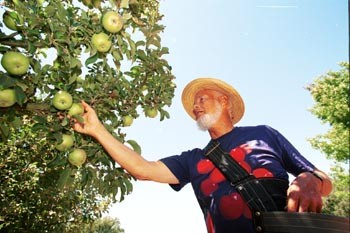
David Sweetman

‘Explosive Acts’ captures the debauched atmosphere of 1890s Paris

By Christine Brenneman

IF ONE PERSON serves as an emblem of the turbulent, debauched atmosphere of 1890s Paris, it’s artist Henri de Toulouse-Lautrec. He may have been a cripple, an alcoholic, and a syphilitic, but Toulouse-Lautrec was enormously connected to both the important figures of the arts community and the sleazy entertainers and prostitutes of fin-de-siècle Paris.

In David Sweetman’s Explosive Acts: Toulouse-Lautrec, Oscar Wilde, Félix Fénéon, and the Art and Anarchy of the Fin de Siècle (Simon & Schuster; $35), we gain entry into this swirling world of anarchists, artists, and whores.

But don’t be fooled by the expanse of the title: Toulouse-Lautrec is the hobbling axle around whom all the action revolves.

Sweetman traces the arc of Toulouse-Lautrec’s short existence, starting with his odd family life as a semi-aristocratic youth in the French countryside.

His parents were first cousins, which was most likely the cause of his health problems from the start. A doting mother couldn’t compensate for his estranged father, who wanted nothing to do with his small, crippled son. Thankfully, they had the foresight to send him off to Paris when he displayed enormous artistic potential.

This, of course, is when the story gets interesting. Toulouse-Lautrec studied art at a number of notable ateliers, but he also quickly fell in with a rambunctious, liberated crowd that included other artists and writers.

His family considered these rapscallions far too louche for their supposedly well-bred son, but this mattered little to Toulouse-Lautrec. He and his newfound friends embraced the dark underbelly of city life, much as reckless children far from home have always done.

At this point he encountered two things that he would love all his life, but that would ultimately prove to be his undoing: alcohol and prostitutes.

He hung out at bars and in maisons closes (whorehouses) and found that he felt quite comfortable in these lower-class environments.

His art began to reflect this fascination with working-class Paris, depicting real-life views of it. He created portrayals of entertainers and prostitutes from this point forward, all rendered with his signature empathy and candor.

This style and subject matter–which was considered entirely radical and subversive at the end of the 19th century–drew the attention of others who were hell-bent on upsetting the social and artistic status quos of this time, namely Oscar Wilde and Félix Fénéon.

In an intriguing interweaving of these three individuals, Toulouse-Lautrec made art, critic Fénéon wrote about this art, and Wilde read what Fénéon had written.

Wilde and Fénéon pop up intermittently throughout Explosive Acts, rounding out Sweetman’s idea that Toulouse-Lautrec was surrounded by like-minded, anarchist types.

Unfortunately, what begins as an exceedingly well-researched chronicle of Toulouse-Lautrec soon becomes an attempt to squeeze this entire era into one book. We are given detailed accounts of Toulouse-Lautrec’s every acquaintance, Wilde’s numerous paramours, and Fénéon’s writing career.

Although interesting, this wealth of information sometimes feels overwhelming.

Sweetman’s knowledge is clearly extensive, but too many tangents take away from his earnest campaign: that people should take Toulouse-Lautrec’s art seriously. But don’t we already consider him a truly great, if notorious, figure?

Whatever your opinion about Toulouse-Lautrec’s art, the story of the man and his compatriots, Wilde and Fénéon (and the myriad cast of characters from this epoch), still makes for an entertaining read when told by Sweetman.

It’s impossible to deny that these often outrageous and always brilliant individuals had personality in excess. Maybe that’s why, 100 years after their deaths, their tales are still riveting .

From the April 20-26, 2000 issue of the Sonoma County Independent.

© Metro Publishing Inc.
Brava Terrace

0

Photograph by Michael Amsler

Brava Bravura

St. Helena restaurant serves a vibrant mix

By Paula Harris

IN THE SUMMER months Brava Terrace’s romantic garden patio with its cheery canvas umbrellas and leafy trees is the optimum place to dine, but today we request a table by the striking oversize stone fireplace. It’s surely the coziest section of the main dining room.

As we enter, the savory aroma of grilling food wafts toward us, but in an appealing, appetizing way. This venerable wine country restaurant is a far cry from a greasy spoon.

Brava Terrace, open since 1990, is a Californian-Mediterranean bistro with a casual elegance. It has a snug lodge-type feel incorporating rustic decor in comfortable warm colors. The walls are alternately deep red and sun-drenched yellow. There’s a vaulted ceiling with low beams and track lighting to augment the glow from several pretty metal lamps.

The menu here emphasizes the wine country cooking of France, Italy, and America, using local ingredients. In addition to the regular menu offerings, Brava Terrace serves up different specialty dishes for each night of the week.

For instance, Mondays feature a seafood special from the fish market, Fridays offer sautéed Sonoma rabbit with lentils du pays and sage mustard; and classic coq au vin is served on Sundays.

One of the best features is the intelligent wine list, which helps immensely with food and wine pairings. Each varietal is categorized from lighter, fruitier, and milder to fuller, oakier, and stronger, in a wide range of prices.

Another highlight is the wonderful crusty bread baked daily for the restaurant by sister establishment Napa Ovens in Calistoga.

WE BEGIN with fried calamari and rock shrimp ($7.95), piled in a crisp white linen napkin with folded sides. This comes with a spicy marinara sauce and a house tartar sauce with a hint of lemon. The seafood is delicately prepared and has a light, nonoily crunchiness.

Endive and pear salad ($8.95) features paper-thin slices of pear and fine slivers of fresh chopped endive paired with candied walnuts (which have a great toasted-buttery flavor), all bathed in a light sherry vinaigrette.

It makes a very pleasing starter.

The fried homemade chips ($4.75) are not so welcome. They’re covered with melted Danish blue cheese and dark-colored basil pesto–two additions that take the flavor way past merely tangy to unpleasant overkill.

Instead, try the steamed Manila clams, smoked mussels, and pieces of fish of the day ($10.95). This particular day we’re blessed with flaky white sea bass and moist pink salmon. The dish comes with tomato cubes, fennel fronds, snipped chives, and a lemon slice, in a pale, delicate chardonnay broth with grilled herb bread on the side.

Add a green salad and you could make a light meal of this steamy fragrant bowlful.

So often the only entrée choice for vegetarians dining out is a feeble-flavored pasta, so it’s with some trepidation that we order the penne pasta ($12.50), with “positively no oil or butter,” according to the menu description. We’re delighted to discover the dish is not bland at all. In fact, the sauce–chock-full of tomatoes reduced in balsamic vinegar and garlic–is zesty and intense with a smattering of fresh sweet basil.

Note: Full-blown vegetarians may be unsettled to discover that both the white bean and vegetable soup and the creamy polenta offered are prepared with chicken stock, so be forewarned.

THE CHICKEN HALF ($15.95) is rather pricy for chicken, even though it’s a generous and tasty portion. The bird is roasted with a sweet honey glaze, and it comes with braised leeks and red peppers and extra-smooth mashed potatoes.

The grilled pork chop ($15.75) is unfortunately tough, thick, and chewy. It’s studded with tart cranberry halves and napped in a port wine sauce. The accompanying coarse golden polenta and gorgeous roasted root vegetables are the saving graces here.

Brava Terrace offers a rich but simple rendition of coq au vin ($15.95). Two large chicken pieces, potatoes, and mushrooms are stewed in a thick red wine sauce with a sprig of fresh thyme. It’s a luscious casserole, but we missed the pearl onions and bacon pieces that often are part of this dish.

For dessert we go chocolate. A bittersweet chocolate mouse cake with raspberry sauce ($5.95)–an impressive chocolate half dome with a soft trufflelike center–hits the mark. As does the chocolate-chip crème brûlée ($5.95), which has a layer of chocolate on the bottom rather than chips throughout and is garnished with fresh slices of citrusy-sweet kumquat.

A glass of plum- and violet-scented Rosenblum 1996 black muscat ($6/glass) offered on the dessert menu is wonderful paired with any of the chocolate desserts.

It’s a fitting conclusion to a mostly satisfying meal.

Brava Terrace Address: 3010 St. Helena Hwy. N., St. Helena; 963-9300 Hours: Thursdays-Tuesdays, noon to 3:30 p.m.; 5:30 to 9 p.m. Food: Rustic but refined French, Italian, and American influences Service: Attentive and knowledgeable Ambiance: Casual-chic bistro Price: Moderately expensive to expensive Wine list: Extensive, wine list well designed to help pair food and wine Overall: 3 stars (out of 4)

From the April 20-26, 2000 issue of the Sonoma County Independent.

© Metro Publishing Inc.
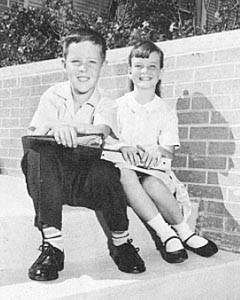
Vietnam Memories

0

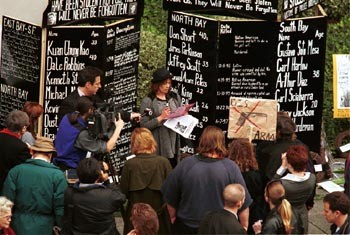
Twenty-five years after the fall of Saigon, the Vietnam War still lingers in the lives of three North Bay veterans

Hours later, North Vietnamese forces would be in control of the city, the last American military personnel would be evacuated, and the United States would suffer the most humiliating defeat in its history.

The fall of Saigon–April, 30, 1975.

Twenty-five years later, the Vietnam War is still prevalent in the American psyche–though Hollywood no longer has much of a fascination with the topic. As a former prisoner of war, ex-fighter pilot-turned-U.S. Sen. John McCain recently made an unsuccessful bid to ride his warrior status to the White House. The specter of the Vietnam War cast a long shadow over last year’s NATO air campaign in Yugoslavia, causing a major policy shake-up at the Pentagon by military leaders who vowed never again to send American troops into combat without overriding force behind them (good news for U.S. soldiers; bad news for civilians killed in the intensive bombing raids).

Meanwhile, U.S. corporations, intent on promoting American business interests, are actively courting the Vietnamese. And Secretary of Defense William Cohen last month paid a visit to the Southeast Asian nation in a gesture of goodwill intended to help normalize relations–and send a warning to neighboring China.

Closer to home, hundreds of thousands of Vietnam veterans still suffer from the ravages of the war, which claimed the lives of 58,148 Americans. Of the 2.5 million men and women who served there, 300,000 were wounded, including 75,000 who suffered permanent disabilities. By some estimates, Vietnam vets compose one-third of the nation’s homeless–the Vietnam Veterans of America in Santa Rosa still hosts annual “stand-downs” in which homeless vets receive food, clothing, and counseling in the hopes of getting them off the streets. And the San Francisco-based organization Swords into Ploughshares is building a veterans’ service center in the former Presidio Army Base to provide transitional housing for homeless vets. “After all these years, it’s the last chance to get them to come out of the woods,” one activist said. One web site (www.suicide wall.com) suggests that between 20,000 and 200,000 Viet vets have committed suicide since the war; other studies claim that the suicide rate is lower than that among non-vets. And many veterans (and Vietnamese civilians) still contend with the debilitating effects of post-traumatic stress syndrome, or the symptoms of exposure to Agent Orange, the dioxin-based defoliant sprayed on Vietnam’s jungles to expose Communist forces.

Meanwhile, more than a million South Vietnamese fled the country. Many have acclimated to life in other nations, but interest in the war and its consequences runs high: a recent speech hosted by the Vietnam Speakers Alliance drew a standing-room-only crowd of 2,000 in Fairfield, including disabled South Vietnamese vets who received no governmental benefits after their nation surrendered to the Communist-led North.

Here are the stories of three North Bay residents who, 25 years later, discussed their experiences and their efforts to move on with their lives after the fall.

Lily Adams: Honoring the Dead and the Living Patrick McGregor: Still Haunted by the Past Vinh Luu: Letting Go

From the April 20-26, 2000 issue of the Sonoma County Independent.

© Metro Publishing Inc.
Fashion: Hats

0

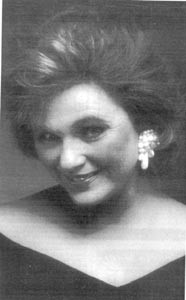
Retro style: The always fashionable Sheila Brownlee knows the art of the hat.

Put a Lid on It

A few heady thoughts on women’s hats

By Kelly Boler

DESPITE anything that fashion maven Emily Post might have said on the subject, by the time most baby boomers were out of the sandbox, the day of the mandatory hat was all but over. Today, headlines regularly ballyhoo the return of the hat, but it never really seems to happen. Pretty amazing, considering that for most of this century and several preceding it, it was unthinkable to leave the house bareheaded.

Then came the late ’50s and early ’60s, and hairspray and the hairdo made the hat an endangered species.

Still, hats never quite disappeared. They remain the fashion accessory that attracts and scares women the most. Even those who are otherwise eager to walk out on outrageous sartorial limbs are unwilling to dare a hat. I wear hats often, and almost every time I go out I get comments.

“You look so good in hats. I wish I could wear hats.”

“Hats don’t look good on me.”

“I can’t wear hats.”

Saying you don’t look good in hats is like saying you don’t look good in shoes. Every woman looks good in some hat; you just have to find it and wear it. And when you do, men will desire and women will envy, and you’ll wonder why the heck you never did it before.

First, though, you may need to conquer Hat Anxiety. This is the impulse that overwhelms a woman when she’s about to go out in a hat. Having placed her chapeau carefully on her head, she starts out for a party or a wedding–often the only events at which a woman will still try to wear a hat. As she approaches her destination, she becomes increasingly uneasy. She is sure that people are looking at her. In this vulnerable moment, she panics and suffers an attack of Hat Anxiety and leaves her hat in the car.

For those who can’t afford therapy (it’s just good money you should be spending on hats, anyway), here are some tips on overcoming this fear of making a commitment to headgear.

Tip 1: Visit a hat maker

As fashion goes, no one is ever going to confuse this area with New York (the hat capital of the United States), but many areas do have several terrific local milliners creating their own hats. By going directly to their studios, you spend no more money than you would spend in one of the big hat stores. More important, you get a perfect fit, personal attention, advice, and feedback from someone infinitely more knowledgeable and concerned than a salesclerk. You get luxury.

Tip 2: Buy a well-made hat

Most clothes-conscious women know when a skirt or pair of shoes is poorly made–buttons are loose, seams are crooked, or something doesn’t lie flat. Use the same common sense, rather than price, as a guide to quality in headgear. (You can find well-crafted $30 pieces, and $200 hats that show all the tacky evidence of skimping.) Trims should be sewn on, not glued. For hats of sewn fabric, materials should be natural, and seams should line up. Straw hats should be pliant, not hard and unforgiving. Wools should be velour felt or fur felt and should get their style from being shaped on a block, not from artificial stiffener. If a hat is stiff, it is probably full of “sizing,” which does not feel good, look good, or last.

Tip 3: Put it on as if you mean it

Women often use a mystifying approach when trying on a hat: they hold it at arm’s length, contemplate it, and then, at last, with uncertainty, lay it on the back of the head like a yarmulke. Inevitably the hat comes off with “See? I told you, hats don’t look good on me.” Well, a hat wouldn’t look good on Rita Hayworth worn that way. Be confident. Do not be afraid to bring a hat down around your ears. Dip it over one eye or tilt it slightly to one side. Also, consider your hair. You might need to push it back or bring it forward. If you wear bangs, try tucking them under the hat, so there are fewer forehead issues in your overall look.

Tip 4: Make sure it fits right

A hat should feel snug but not tight. Although there are tricks to adjusting sizes slightly, I can almost guarantee that if you buy a hat that doesn’t fit, you will rarely wear it.

Tip 5: Think old hat

New, well-made hats can be very affordable, and they are great fashion investments. But what if they are still out of your price range? For $20, you can get a new, horrible, worthlesss hat, or you can get a vintage hat worth 10 times its price, lovingly made in gorgeous materials. The wool or straw in an old hat is often superior, and there is just no comparing the workmanship. In the glory years of the ’30s, ’40s, and ’50s, even an over-the-counter chapeau had quality and style. I found a cocoa-brown velour wool Borsalino beret at a flea market for $2. I’ve also had good luck in the $4 range, but it is more realistic to expect to find a good vintage piece in the $15-to-$35 range. It might be a tiny “doll’s” hat covered with cabbage roses that just barely hangs on over one eye, or a straw “pilgrim” with a rhinestone buckle and a flowing veil in the back. A brown wool fez covered with black mesh; a saucy porkpie with an ostrich plume. Of course, you sometimes give up certain things for economy. Your selection is limited to what’s at hand, and there is no guarantee that the frothy concoction in the antique-store window is your size. Or sometimes they are smushed or not quite clean–these things happen after 50 years or so. This is more likely to be a problem if you scrounge at flea markets and thrift stores, and can be avoided by going to a vintage-clothing store that takes care of its merchandise. If you don’t mind scavenging (and it’s a career for some of us), you can always try to repair your diamond in the rough. Trial and error and common sense are rules of thumb here. If something is in questionable shape, the price should reflect that. If you find a squashed bargain, take it home and press it with a very steamy iron or teakettle, and reshape it by hand. Clean with a stiff clothes brush or spot-clean with a damp cloth. Cover a spot or hole with a brooch or flower. Be fearless, and use your imagination. This is why the Almighty gave us safety pins.

Tip 6: Ease into it

Trick yourself into wearing hats, like so:

* Winter is a good time to start, because you have the perfect reason for wearing a hat. This is a good chance to try something more daring, with gorgeous ribbons or flowers, and still not feel outrageous.

* Wear the most simple, subtle hat you can find–a beret, perhaps. “A beret really looks good on almost everyone,” says hat expert Jean O’Hara. The important part is to keep it on as part of your ensemble when you get to where you are going.

* Wear a hat with something very, very simple, like a black dress or a gray suit. An understated look with a hat will help you avoid the sensation that you’re wearing a costume and making an entrance.

* Start while you are on vacation, or somewhere else where people don’t know you don’t wear hats all the time.

* Try wearing men’s hats. For some ironic reason, fedoras, boaters, and derbies look great with everything from baggy pants to pencil skirts. Try pinning a brooch or some cloth flowers on the band; make it look more “you.” Get people used to seeing you in hats, and, more important, get yourself used to people seeing you in hats.

Tip 7: Jump

Just do it. Find a hat that makes you happy and stop thinking about it. Once you overcome Hat Anxiety, you’ll never go back to being bareheaded again. Your friends will take courage and they’ll start to wear hats. Pretty soon there will be a revolution of hat wearing, designing, and making, and all those headlines about the return of the hat will at last come true.

This article originally appeared in the Boston Phoenix.

From the April 20-26, 2000 issue of the Sonoma County Independent.

© Metro Publishing Inc.

Local Literary Reviews

Local authors spring into the book biz

By Greg Cahill, Liesel Hofmann, Shelley Lawrence, and Patrick Sullivan

THE RAIN has stopped, the beach is beckoning, and life quickens in the sweet spring breezes. But before you leave the indoors behind for the season, step into your local bookstore to check out something else spring has to offer: a fresh crop of books by local authors, who have a bit of everything to offer this time out, from children’s books to novels to poetry and beyond.

Rob Brezsny The Televisionary Oracle (North Atlantic Books; $16.95)

FOR YEARS NOW, stargazer Rob Brezsny has used his Real Astrology column to provide offbeat advice about life and love in newspapers across the country, including the one you’re holding in your hands. Brezsny’s many starstruck fans will be delighted to learn that the San Rafael author has just published his first novel. Employing the column’s familiar mix of sexy banter and audacious astrological insights, The Televisionary Oracle tells the story of a peculiar man on a strange spiritual quest in Santa Cruz. (Catch Breszny live on Saturday, April 22, when he reads at Borders Books in Santa Rosa.)–P.S.

Geoffrey B. Cain The Wards of St. Dymphna (SoCo Arts & Media; $13.95)

IN HIS FIRST NOVEL, the local author takes the reader on a surreal trip, chronicling the exploits of protagonist Brian McCorley in the streets of a small Northern California town and in the depths of his own mind. The novel details Brian’s spiritual quest through his “mad third eye” and gives an interesting spin on his return to small-town life. The book is definitely interesting, but at times a little hard to follow.–S.L.

Jabez W. Churchill Sleeping with Ghosts (Kulupi Press; $8.95)

IN THIS NEW collection of work from local poet Jabez Churchill, the best lines jump across the page like oil skipping on a hot skillet. For example, take these lines from a poem called “Love’s Threshing Floor”: “This floor is hard./ It does not smell of ripened wheat,/ chaff and dust,/ or perfumed feet./ It smacks of tears and blood,/ the shit love beats from the heart.” Nothing else in Sleeping with Ghosts quite measures up to that high standard, but the other poems don’t fall far below it, either. The book also features wonderful cover art by Barbara Jacobsen and evocative black-and-white illustrations by Connie Butler.–P.S.

Jim Dreaver The Way of Harmony: Walking the Inner Path to Balance, Happiness, and Success (Avon Books; $12.50)

SELF-HELPMEISTER Jim Dreaver of Sebastopol tells his readers in simple and concise language how to walk the path to spiritual, emotional, physical, and material prosperity. The Way of Harmony is an easy guide for today’s busy person seeking spiritual truths without too much effort. The book is peppered with personal anecdotes, guided meditations, and step-by-step instructions on topics like “The Secret to Great Relationships” and “Dealing with Intense Feelings and Emotions.” Dreaver helps you unlock the secrets of abundance, expand your awareness by embracing your spirit, and connect with your inner wisdom. Ommmmm . . . –S.L.

Armando Garcia-Davila Out of My Heart/De Mi Corazon (Thumbprint Press; $10.95)

“POETRY BARGED through my door one day,” writes Armando Garcia-Davila in his poem “The Muse.” “There was no stealth in her movements, no cloak to hide her red hair, red lips, and red attitude. She caressed, cuddled, and had her way with me.” This newly published collection of the Sonoma County poet’s work offers some 20 poems rendered in both English and Spanish. That bilingual presentation provides a fascinating illustration of the fact that Romance languages usually make for better poetry.–P.S.

Terri Leonard, Editor In the Women’s Clubhouse: The Greatest Women Golfers in Their Own Words (Contemporary Books; $22.95)

EVERYONE KNOWS of Tiger Woods, but hardly anybody can name a professional woman golfer. While women have made major inroads in other male-dominated sports–think of soccer star Brandi Chastain or basketball hero Cheryl Miller–the history of women golfers remains as cloaked in mystery as the back nine at the fog-shrouded Pebble Beach golf course. Petaluman Terri Leonard goes a long way toward rectifying that situation with this intriguing collection of revealing personal stories spotlighting a century of golf tradition from the female perspective. In chapter after chapter, women describe in their own words the sense of power they felt from the hard swing of the club, the freedom of the links, the challenge of competition, the thrill of victory. From pioneer golfer Mabel Stringer to seven-time Swedish national champion Helen Alfredsson (and including my old high school hygiene teacher, Jane Blalock, one of the most consistent players on the LPGA tour), Leonard has opened the door for a new generation of women to discover the joys of the clubhouse.–G.C.

Jonathan London

BEST KNOWN for his hugely popular Froggy series, Graton’s most prolific children’s author returns with two new books about animals.

Snuggle Wuggle (Silver Whistle; $13)

YOUNGER CHILDREN learn how animal parents hug their kids in this new bedtime book: “How does a chick hug? Fluffy duffy, fluffy duffy”; “How does a kangaroo hug? Pouchety boing! boing! boing!” Michael Rex provides the warm and fuzzy illustrations.–P.S.

Who Bop? (HarperCollins Children’s Books; $14.89)

THE ANIMALS BOP to the smooth sax sounds of a cool cat named Jazz-Bo in this musical story about doodle-wopping frogs and swooping looping loons. London’s musical text–perfect for reading aloud–is paired with illustrations of dancing animals by Henry Cole.–P.S.

C. W. Meisterfeld Dog Whisper: Intuitive Communication (M-R-K Publishing; $21.95)

THE PETALUMA AUTHOR, a dog psychologist, relates over 30 engaging, informative tales about dogs whose behavior problems he has solved through mutual respect. By training humanely, “a responsible dog owner demonstrates to others, especially children, values such as kindness and compassion towards all life.” But since Meisterfeld trains hunting dogs and serves as a hunting guide, he apparently does not extend this view to all sentient creatures, causing some readers to perhaps be turned off by an otherwise appealing book.–L.H.

Shane Mooney Useless Sexual Trivia: Tastefully Prurient Facts about Everyone’s Favorite Subject (Simon & Schuster; $12)

IN MIDDLE EASTERN Islamic countries, it’s a sin and a crime to eat a lamb that you’ve had sex with . . . really. The Santa Rosa author’s collection of hilarious sexual factoids keeps the reader riveted through every chapter. “Sexual History” was this reader’s favorite chapter, offering such morsels as how many children Ramses the Great fathered (160, which is, ironically, why Ramses-brand condoms are named after him), how many prostitutes served at the parties hosted by Pope Alexander VI (50, and a prize was given to the one with the most stamina), and the sexual beliefs of ancient Chinese Taoists (immortality could be achieved by having sex with 20 different women each day). Sure to make any reader the life of the party.–S.L.

Holly J. Pierce, Editor High Tea with Jesus (Self-published; $15)

IT’S NO EASY task finding this book: local clerks eagerly refer you to the nearest Christian bookstore. But don’t be fooled. High Tea with Jesus is not chock-full of Bible stories. It’s actually a collection of poetry, stories, and essays by local writers under the tutelage of Sonoma County literary figure and writing teacher Sara Spaulding-Phillips. Between its covers, you’ll find poetry about soldier’s wives and a Chicago childhood, as well as dozens of stories and essays about a wide variety of subjects, including divorce, a girl’s first period, loneliness, a woman who has a husband in a burn center, and the title piece, a brief but pointed recollection by Spaulding-Phillips of a childhood ritual involving her grandmother, English bone china, and relentless Bible readings. (Hint: the best place–perhaps the only place–to find High Tea is at Copperfield’s Books in Montgomery Village.)–P.S.

Pamela Raphael, with Libby Colman and Lynn Loar Teaching Compassion: A Guide for Humane Educators, Teachers, and Parents (Latham Foundation for the Promotion of Humane Education; $19.95)

WITH GENTLE PASSION, the local authors explain how they’ve elicited often startling poems and drawings–scattered throughout the book–that enable young children to express compassion, love, pain, anger, outrage. Even kids who have witnessed or inflicted animal abuse have been led to discover that animals have emotions and communicate with humans. The book’s heartfelt lessons cover pet care, pet overpopulation, habitat loss, the question of hunting, and coping with neglect and abuse–all based on the authors’ realization of the remarkable affinity between children and animals.–L.H.

Eugene Shapiro Upright Man (Pir Press; $11.95)

“OUR RELATIONSHIP to our penis defines the kind of men we are,” asserts the local author of this book, which aims to help reconnect men to the “psychic power and sexual pleasure” of their sexual organs. Shapiro’s deeply personal anecdotes about his problems with impotence are impressive for their honesty. Eager to resurrect his sex life, the author experimented with everything from vacuum pumps to penile injections before finally finding a solution in Viagra. Readers may be dubious about the author’s sweeping pronouncements on male psychology, and Shapiro doesn’t help us out by citing much scientific evidence to support his view that men are virtually incapable of being anything but ultra-competitive, predatory beasts. But the book does close on a more hopeful note, arguing (in what almost seems an about-face) that emotional honesty plus Viagra can help older men create a new life as caring and giving lovers.–P.S.

Jack Withington (text); Ron Parenti (photographs) Historical Buildings of Sonoma County: A Pictorial Story of Yesterday’s Rural Structures (3rd Wing Press; $18.95)

THINK TWICE the next time you drive down Highway 116 past a dilapidated old building: It may be one of the oldest structures in this county. Parenti’s photographs and Santa Rosan Withington’s quirky, highly informative text put a new spin on old stuff. A good addition to anyone’s coffee table collection, Historical Buildings provides the reader with excellent and readable background information about our county (did you know that Sonoma County had the only chicken pharmacy in the United States?). It’s fun going through the pages and finding pictures of buildings that are everyday sights, then learning what’s happened there in years past.–S. L.

From the April 13-19, 2000 issue of the Sonoma County Independent.

© Metro Publishing Inc.

Matthew Gollub

0

Jazzing up children’s books: Santa Rosa author and publisher Matthew Gollub draws on his love of music and his talent for languages to create a globetrotting new breed of children’s books.

Speaking in Tongues

Author and publisher Matthew Gollub introduces kids to a wide world of culture

MATTHEW GOLLUB was living in Japan when it all started. His job–teaching English to Japanese businessmen–was less than satisfying, and the trilingual Gollub had been working to make a transition from teacher to writer. Then, in the early 1990s, an old friend called with an invitation to team up for a vacation in Oaxaca, Mexico. The friend had an acquaintance, a Mexican artist named Leovigildo Martinez, who had offered to be their guide around Oaxaca.

Gollub, keenly interested in the languages and folktales of different cultures, jumped at the chance to visit Mexico.

“I thought I’d be a good little chronicler of folklore,” explains the 39-year-old children’s author, publisher, and musician, sitting at the dining room table in his Santa Rosa home. “I decided I’d be a collector of stories.”

Tape recorder in hand, Gollub arrived in Oaxaca determined to become a “cultural informant,” vigorously pursuing his quest to capture traditional Mexican folktales on tape. With Martinez’s help, he approached everyone from downtown fruit vendors to pueblo-dwelling herbalists and spiritual healers. All seemed eager to share their tales.

He collected dozens of “authentic” stories before realizing that something wasn’t quite right.

“It soon became obvious that the old stories I was being told were more than a little bit, um, spontaneous,” Gollub recalls. “In other words, they were making this stuff up. Or at least they were retelling stories according to what they thought I wanted to hear.

“So I thought, ‘I’ll do the same thing. I’ll tell Mexican folktales that will hold water for an American audience.'”

Martinez offered to help. Explains Gollub, “Leo said to me, ‘You’re a writer. I am an artist. Why don’t we make books together?'”

Picture This: The Sebastopol Library hosts an exhibition of work by three prominent Sonoma County illustrators.

THEIR FIRST collaboration was The Twenty-Five Mixtec Cats, a children’s tale about a battle between two Mexican magicians, one of whom has adopted 25 mysterious and very clever cats. The story–a loose adaptation of the tales that Gollub heard during his stay in Mexico–was beautifully supported by Martinez’s colorful, remarkably complex illustrations. Even so, publishers rejected the book 25 times–once for every one of those cats.

“The book was kind of out there,” Gollub admits. “When your work is offbeat, it’s harder to sell, but I think it has a better chance of making a big splash when it does come out.”

Indeed, when William Morrow finally took a chance and published The Twenty-Five Mixtec Cats, the book met with resounding critical praise and success, quickly amassing a suitcase-full of awards.

“At that time, the children’s market was only accustomed to books about barn animals and fuzzy bedtime stories,” Gollub says.

There soon followed a second collaboration between Gollub and Martinez: The Moon Was at a Fiesta, a whimsical tale that explained why the moon sometimes appears in the daytime sky. The new effort received a similar outpouring of critical acclaim and honors.

AT THIS POINT, however, something happened that changed the course of Gollub’s career: William Morrow began phasing out its children’s book division. Gollub’s books were in danger of going out of print. After buying the rights back from Morrow, he decided to start his own publishing house in 1997.

By this time, Gollub had relocated from Japan to California and was beginning to build a successful side-career as a public speaker, musician, and storyteller, capitalizing on the name recognition his books were bringing. Gollub named his publishing company Tortuga Press, adopting the Spanish name for turtle.

“The turtle is allowed to move slowly,” explains Gollub with a soft chuckle. “When I was a brand-new publisher, just beginning to learn the ropes, the turtle was a very comforting image to me.”

Determined to avoid the low-quality standards set by many do-it-yourself publishers, Gollub spent months researching book manufacturers that could guarantee the same quality as a major publishing house. He finally chose a manufacturer based in Hong Kong.

“If you do your homework, it doesn’t have to cost all that much,” Gollub insists. “Most do-it-yourselfers aren’t all that well informed about their options.”

Along with re-releases of his previous books, he published a third collaboration with Martinez, the eerie and delightful Uncle Snake, about a boy who is half-reptile. It became a huge hit with Gollub’s young audiences.

Through Tortuga, Gollub now supplies books to more than 150 vendors. He’s released paperback versions of all his stories, Spanish-language versions of Mixtec Cats and Fiesta, and three videos, two featuring Gollub reading bilingual stories and the other offering teachers tips for dynamic storytelling to young people.

But despite his growing distribution network, Gollub still sells the lion’s share of books at his live appearances. He’s performed at schools and bookstores in 10 states and is now preparing to visit Indiana and Utah for the first time.

These visits are a way for Gollub to spread his passionate opinions about kids and books. He believes parents should read to their children daily, a practice he follows with his 4-year-old son, Jacob, to whom Gollub reads a bedtime story every night from a stack of library books by the boy’s bed.

“If he’s poking along or being fussy, we just say, ‘You’d better brush your teeth and wash your face or you won’t get your story,'” Gollub says. “That’s the only discipline we use. He always hops to because he never wants to miss his bedtime stories.”

Jacob–who knows the titles of all his father’s books by heart–is the main reason Gollub runs Tortuga from his home.

“If I had an office I’d probably be more productive overall, but I’d miss a lot of time around him,” Gollub says.

IRONICALLY, with the success of the children’s books, Leo Martinez found his fine-art work increasingly sought after around the world, and now has little time to devote to illustration, though he and Gollub are talking about doing another book soon.

With Martinez tied up, Gollub has begun collaborating with other artists. Cool Melons–Turn to Frogs!, a translation of several magical Japanese haiku, was illustrated by Kazuko Stone of New York.

Gollub’s latest, The Jazz Fly–the story of a bebopping bug who learns the value of knowing more than one language–was handsomely computer-illustrated (a Tortuga Press first) by Sonoma County artist Karen Hanke. The very funny book also includes a CD of Gollub performing The Jazz Fly on drums, exuberantly backed up by local musicians Aida de Arteaga, Cliff Zyskowski, and Ylonda Nickell. Since its release last month, the book has been outselling all of Gollub’s other titles 5 to 1.

“The effect on schoolkids has been magical,” Gollub says.

His next effort is a second collaboration with Kazuko Stone, a book titled Ten Oni Drummers. After that, Gollub plans to do Gobble Quack Moon, a fanciful tale about the residents of a barnyard, due out next spring.

“I’m finally doing a ‘barn animal’ book,” he says with a laugh. “But I promise you, I’m doing it my way.”

From the April 13-19, 2000 issue of the Sonoma County Independent.

© Metro Publishing Inc.

Tawni O’Dell

Family Values

‘Back Roads’ unwraps the dark riddle of a troubled household

By Patrick Sullivan

EVERYBODY makes mistakes, but some people make more than others. Case in point: Oprah’s Book Club, which has, it’s true, selected a few really wonderful novels over the past few years, but which has also used the bone-crushing power of its founder’s name to hammer home some truly terrible books, driving them like a stake through America’s literary heart.

Therefore, if you’ve wandered into your local book emporium lately, you might be tempted to instantly dismiss Tawni O’Dell’s Back Roads (Viking; $24.95). Copies of the new novel–selected by Oprah in March–confront you at every turn, stacked in towering displays that cry out for a seismic retrofit. It makes you feel, frankly, as if you’ve wandered into a bookstore run by McDonald’s, with dozens of literary happy meals served up lukewarm for speedy consumption.

But suspend your judgment. Back Roads is no masterpiece, but it deserves–and rewards–a careful read.

The book’s narrator, Harley Altmeyer, is a boy with a few problems. Let’s start with the big stuff: after suffering years of abuse, his mom recently blew his dad’s head off with a rifle and then went to prison, leaving the 20-year-old Harley alone to raise his three younger sisters in their poverty-ridden Pennsylvania mining town.

Those three siblings are each a problem in their own right. More focused on getting laid than being a good parent, Harley has to hold down two jobs and keep track of the 6-year-old Jody, the 12-year-old Misty, and the far-too-old-for-her-age Amber, a 16-old dangerously mired in the muck of adolescence.

Women, it seems, bedevil the narrator at every turn. His sisters confound him with their mercurial personalities and strange passions. Callie Mercer, his sexy 30-something neighbor and the mother of one of Jody’s little friends, attracts and frustrates him. His court-appointed shrink disgusts, provokes, and annoys as she tries to get to the heart of his brooding anger.

By now the danger here should be obvious. This book, full of dark family secrets and youthful tragedy, has all the elements of a daytime soap opera.

But O’Dell sidesteps melodrama (mostly, anyway) by giving her narrator a hard, nasty voice. To paraphrase George Bernard Shaw, if tragedy made people nice we wouldn’t hate it so much. Just when you start to feel really sorry for Harley, he says or does something outrageous enough–like setting the family’s couch on fire because his sister was making out with her boyfriend on it–to make those jerked-out tears dry right up.

Early in the book, Harley recalls the time he told a friend how attracted he was to Callie: “Skip thought I was joking. He said I was sick. He said wanting to nail somebody’s mother was like wanting to nail your cousin. And I told him if she walked over and pressed her wet shorts against him and whispered in his ear that she wanted to fuck him, he would shoot off in his pants before he could say anything back.”

Which is, I’m sorry to report, exactly how teenage boys tend to talk–in a sort of ugly poetry that’s one part Walt Whitman and two parts the stuff you find on the bathroom walls at the gas station. O’Dell captures that language almost perfectly. Indeed, the author is at her strongest when she’s crafting characters and putting dialogue in their mouths.

But, alas, she has her few weak spots too, mostly in the vital area of plot. It takes far too long to realize that a mystery lies at the heart of this book, a thorny question of what really happened on the night Harley’s father died. Before that riddle surfaces, the book just treads water.

There are other problems. Ironically, O’Dell seems to write male characters better than female ones. The women here don’t seem quite real. Perhaps you can chalk it up to the limited view of her male narrator that most of the book’s women remain enigmatic right up to the last page. But it’s a bit daunting how frequently Harley’s suspicions that women are deceiving him turn out to be right on target.

Ultimately, though, it’s Harley himself who keeps the reader coming back for more. Carved out in blunt, spare language, he’s an undated Holden Caulfield, trapped in a violent hurricane of a family that rages across these pages. By the end, despite his dirty little mind, he’s won your sympathy–if only because you’d like to see at least one ship survive this storm.


From the April 13-19, 2000 issue of the Sonoma County Independent.

© Metro Publishing Inc.
Spins

0

Great Grooves

New CD reissue series spotlights Afro-beat innovator Fela Kuti

By Greg Cahill

HE’S BEEN CALLED Africa’s James Brown. At a time when Afro-beat continues to drench Paris dance floors in throbbing beats and hypnotic rhythms, often in the hands of white Europeans, it’s easy to forget the origins of this influential sound. Yet it’s almost impossible to overstate the impact and importance of Nigerian producer, arranger, musician, saxophonist, political radical, and outlaw Fela Ransome Anikulapo-Kuti in the global music village, the All Music Guide has opined, noting that “[Fela] was all that, as well as showman par excellence, inventor of Afro-beat, an unredeemable sexist, and a moody megalomaniac.”

Indeed, Red Hot Chili Peppers bassist Flea has heralded Fela’s music as “a bottomless pit of groove.”

While most Americans were introduced to the ’70s world-beat craze by the ebullient high life of fellow Nigerian King Sunny Ade (a much tamer musician), it was Fela who first concocted the unique blend of jazz, funk, high life, and traditional African rhythms and melodies that continues to electrify the European pop music scene.

Repeated jailings of this musician-cum-civil-rights-activist by a repressive Nigerian regime, upset by Fela’s calling attention to missing oil money and other improprieties, kept Fela out of the limelight stateside until the mid-’80s. Indeed, Fela never let the authorities off the hook. For his efforts, he was hounded, jailed, harassed, and nearly killed. In 1977, his compound was attacked by 1,000 soldiers; his 82-year-old mother was thrown from a window, suffering injuries that later would prove fatal.

Over the years, like Bob Marley, Fela became a cultural rebel and an outspoken voice for the have-nots.

Complications from AIDS finally silenced this masterful innovator in 1997.

Now a new and highly ambitious CD-reissue program promises to give Fela his due.

On Feb. 1, MCA Records launched this in-depth reissue campaign with the release of a newly compiled two-CD set, The Best Best of Fela Kuti. Through May, the label will issue 20 original albums of Afro-beat’s greatest grooves on 10 CDs, a virtually unprecedented African music retrospective spanning 17 years.

The CDs coincide with the release of Shoki Shoki, the label debut by Femi Kuti and Positive Force, featuring Fela’s oldest son, and with a U.S. tour that brought the band to San Francisco earlier this month.

For the uninitiated, the Best Best certainly offers a groove-laden overview of Fela’s musical ideas and political convictions. Dig deeper with the just issued V.I.P./Authority Stealing, two long, live tracks recorded in Berlin and featuring that phenomenal Afrika 70 band–a high-water mark in Afro-beat.

Though, frankly, you really can’t go wrong with any of these recordings. A press release from the United Democratic Front of Nigeria on the occasion of Fela’s death noted: “Those who knew you well were insistent that you could never compromise with the evil you had fought all your life. Even though made weak by time and fate, you remained strong in will and never abandoned your goal of a free, democratic, socialist Africa.”

These remarkable discs bear rhythmic testimony to his musical power.

From the April 13-19, 2000 issue of the Sonoma County Independent.

© Metro Publishing Inc.

Gerald and Janice Haslam

California’s diversity shines in ‘Manuel and the Madman’

By Patrick Sullivan

DON’T JUDGE a book by its cover, we’re often told, so maybe it’s not quite fair that the first thing some folks will notice about Manuel and the Madman is the name of one of the book’s two authors.

Still, it’s a hard name to ignore. Gerald Haslam has been called the quintessential California writer, and a quick look at his body of work tells you why. Among other things, the hugely prolific Penngrove author has published one novel, eight collections of short fiction, and several works of nonfiction, including the critically acclaimed Coming of Age in California: Personal Essays. Most of this native son’s work, like his life, is a thoughtful exploration of life in the Golden State.

This time around, Haslam has teamed up with his wife, Janice Haslam, who teaches at a Petaluma high school, to write something a bit different–a novel for teenagers.

Set in a modern-day Bakersfield barrio, Manuel and the Madman (Devil Mountain Books; $9.95) follows the adventures of its adolescent narrator, Manuel Ryan, as he tries to adjust to a new life with his grandmother after his parents separate and go off looking for work.

Half Chicano and half Anglo, Manuel soon discovers that being a blonde kid puts him distinctly in the minority in seventh grade at Our Lady of Guadalupe School. His new friends speak Spanish, wear their baseball caps backwards, and tease him about being white. Manuel begins to hate his blond Anglo looks so much that he tries to dye his hair with shoe polish.

But the neighborhood is changing fast. The racial picture grows more complex as kids with names like Tran and Phuc enroll in school, and gangs and guns begin to draw Manuel’s buddies into their deadly orbit. All the while, the narrator is struggling with typical adolescent questions about sex and God and his parents’ separation.

Unfortunately, most of the adults in his life aren’t much help in these matters. His absent father is mysteriously incommunicado. His priest is content to warn him against the grim crime of self-abuse. Worst of all, his abuelita, his grandmother, is highly traditional and deeply superstitious, and she despises the newcomers to the neighborhood–“los otros,” as she calls them.

But Manuel does find a sympathetic ear and a kindly voice in his wise but eccentric neighbor, Mr. Samuelian, an Armenian immigrant who is the madman of the book’s title. With the old man’s help, the boy comes to terms with the kids in his neighborhood and with his own multicultural identity.

This novel’s greatest strength lies in its presentation of life in the barrio. Kids of all races come together to curse, fight, and make friends in a fairly realistic fashion on the neighborhood’s colorful streets. The authors also bring California’s rich history alive as Manuel encounters aging vaqueros who tell him stories of cowboy shootouts in old-time Bakersfield.

Now for the tough part. It’s no fun to criticize a book this well intentioned. But there are, it must be said, a few problems with Manuel and the Madman.

The plot has a wandering, accidental feel to it, with too little dramatic tension and not enough clues about where we’re going next. For instance, the book makes much of the fact that Manuel misses his parents. But then his mom just pops up without any fanfare as a casual aside.

Then, too, many young readers will grow tired of Mr. Samuelian, who offers endless lectures about tolerance, compassion, and other virtues. Using a novel to teach moral lessons to teenagers is fine, but a more subtle approach might work better.

Far more entertaining is Mr. Samuelian’s hilarious brother Haig, who wears an eye patch over a perfectly good eye just so he can tell kids tall tales about how he lost his vision.

Here’s Haig discussing an epic battle of his youth: “I had saved my final strength. With it, I threw the ruthless Nizibian from me and broke everything on him that could be broken. I broke several things that could not be broken. He never fought again. . . .”

And therein lies Manuel and the Madman’s ace up the sleeve. From Haig to the vaqueros, the book offers a cast of richly realized minor characters, an array of personalities as colorful and diverse as California itself. And if you’ve taken a good look around lately, you’ll realize how significant an accomplishment that really is.

From the April 13-19, 2000 issue of the Sonoma County Independent.

© Metro Publishing Inc.

Sonoma County Illustrators Exhibit

0

By

JavaScript must be enabled to display this email address.

PICTURE BOOK illustrators usually take a back seat–and second billing–to the authors that write children’s books. But the Sebastopol Library is turning the tables on this trend with its current exhibition of illustrations by three prominent Sonoma County illustrators.

On display will be Santa Rosa resident Karen Hanke’s clever computer illustrations from Matthew Gollub’s brand-new The Jazz Fly. But there will also be works by two other artists who have illustrated more than a hundred books between them.

Sebastopol resident Teri Sloat will be represented by illustrations from Barbara Winslow’s The Hungry Giant of the Tundra and Dance on a Seal Skin. The exhibit also features a sample of work by Stacey Schuett of Sonoma, including the author-illustrator’s drawings from Somewhere in the World Right Now; illustrations from Outside the Window by Anna Egan Smucker; and the lush Purple Mountain Majesties by Barbara Younger.

The gorgeous artworks–stunning to behold even outside the context of the stories they illustrate–are displayed along with copies of each book, forming a kind of before-and-after demonstration of the illustrator’s craft.

The exhibition runs through April 22 at the library, 7140 Bodega Ave., Sebastopol. For more information, call 823-7691.

From the April 13-19, 2000 issue of the Sonoma County Independent.

© Metro Publishing Inc.

David Sweetman

'Explosive Acts' captures the debauched atmosphere of 1890s Paris By Christine Brenneman IF ONE PERSON serves as an emblem of the turbulent, debauched atmosphere of 1890s Paris, it's artist Henri de Toulouse-Lautrec. He may have been a cripple, an alcoholic, and a syphilitic, but Toulouse-Lautrec was enormously connected to both the important figures...

Brava Terrace

Photograph by Michael Amsler Brava Bravura St. Helena restaurant serves a vibrant mix By Paula Harris IN THE SUMMER months Brava Terrace's romantic garden patio with its cheery canvas umbrellas and leafy trees is the optimum place to dine, but today we request a table by the striking oversize...

Vietnam Memories

Twenty-five years after the fall of Saigon, the Vietnam War still lingers in the lives of three North Bay veterans Hours later, North Vietnamese forces would be in control of the city, the last American military personnel would be evacuated, and the United States would suffer the most humiliating defeat in its history. The...

Fashion: Hats

Retro style: The always fashionable Sheila Brownlee knows the art of the hat. Put a Lid on It A few heady thoughts on women's hats By Kelly Boler DESPITE anything that fashion maven Emily Post might have said on the subject, by the time most baby boomers were...

Local Literary Reviews

Local authors spring into the book biz By Greg Cahill, Liesel Hofmann, Shelley Lawrence, and Patrick Sullivan THE RAIN has stopped, the beach is beckoning, and life quickens in the sweet spring breezes. But before you leave the indoors behind for the season, step into your local bookstore to check out something else spring...

Matthew Gollub

Jazzing up children's books: Santa Rosa author and publisher Matthew Gollub draws on his love of music and his talent for languages to create a globetrotting new breed of children's books. Speaking in Tongues Author and publisher Matthew Gollub introduces kids to a wide world of culture ...

Tawni O’Dell

Family Values 'Back Roads' unwraps the dark riddle of a troubled household By Patrick Sullivan EVERYBODY makes mistakes, but some people make more than others. Case in point: Oprah's Book Club, which has, it's true, selected a few really wonderful novels over the past few years, but which has also used...

Spins

Great Grooves New CD reissue series spotlights Afro-beat innovator Fela Kuti By Greg Cahill HE'S BEEN CALLED Africa's James Brown. At a time when Afro-beat continues to drench Paris dance floors in throbbing beats and hypnotic rhythms, often in the hands of white Europeans, it's easy to forget the origins of...

Gerald and Janice Haslam

California's diversity shines in 'Manuel and the Madman' By Patrick Sullivan DON'T JUDGE a book by its cover, we're often told, so maybe it's not quite fair that the first thing some folks will notice about Manuel and the Madman is the name of one of the book's two authors. ...

Sonoma County Illustrators Exhibit

By JavaScript must be enabled to display this email address. PICTURE BOOK illustrators usually take a back seat--and second billing--to the authors that write children's books. But the Sebastopol Library is turning the tables on this trend with its current exhibition of illustrations by three prominent Sonoma County illustrators. ...
11,084FansLike
4,606FollowersFollow
6,928FollowersFollow