Night Driving on the Coastal Highway

Midnight Rider

Taking the long way home– driving the coastal highway after dark

By Stephen Kessler

FINISHING DINNER with friends in San Francisco, I consider whether to spend the night in the city or make the long drive home to Gualala Ridge–some 120 miles, two and a half hours or so on a normal day but usually less than that after dark, when fewer cars are on the coast road. If I set out no later than 10 o’clock and cruise north across the Golden Gate into a clear night–no ferocious storms or fog to obscure the stars or the highway, and no sneaky California Highway Patrol parked in the dark on Valley Ford Road to cite me for doing a safe but illegal speed–I can be in my own bed by 1 a.m. and have a whole day ahead of me in which, who knows, I might even get something done. Otherwise it means a morning in the car and losing the most productive part of the day. Doing it now, in the dark, when I wouldn’t be sleeping anyway, seems like a sound idea.

My dinner companions give me that you-must-be-out-of-your-mind- to-want-to-drive-that-nauseating-road-this-time-of-night look, and maybe I am, but they haven’t mastered those 10,000 curves as I have over the years, and they don’t appreciate the meditative solitude of moving smoothly by moonlit headlights through country that smells of grass, of stinky herds, of oak or eucalyptus smoke, of skunk, but finally of crashing surf and the fresh shock of ocean air and the oxygen-rich infusion of redwoods’ breath. A decaf espresso is all the stimulant I need to keep me perky for the trip. The night is wide, the bridge glows golden in its orangey light, and quicker than you can say San Quentin I’m streaming into Marin.

Beyond the neon of the car dealerships, fast-food franchises, cheap motels, and upscale shopping malls; past the streamlined architecture of the industrial parks and office complexes and retail outlets and the rosy arches and funny blue domes of Frank Lloyd Wright’s great Dr. Seuss­like space-age Civic Center; skirting the landfill and zooming into the rustic darkness of Sonoma County and taking one of the Petaluma exits through the ranchlands of west Sonoma toward Bodega Bay, you know you’re beyond the suburbs by the pungent stench of cow dung that, even with the windows up, is more intense at night, the cool dark air conducting that funky aroma into the car as surely as essence of crushed skunk and making you grateful, by the time you get there, for the salty tonic of Bodega’s fishing harbor and the increasingly bracing ocean-and-mountain freshness above Jenner.

Yes, you still have to watch for those random cattle out for a sleepwalk, but the highway from the Russian River north has a cosmic desolation at these hours that induces a heightened sense of perception. You can reduce the loneliness a little by playing your favorite tapes or tuning in some radio show beamed over the water from Berkeley or San Francisco, but sometimes it’s best to let the sound of the motor be your mantra, or to open a window, if it’s not too cold, and hear what the wind is singing.

It’s true that in the dark you don’t see the ospreys, redtails, kites, and kestrels lacing their gorgeous predatory choreographies through the sky, and if the moon’s not up, you may miss most of that oceanic expansiveness to the west. But even if you can’t see it, you can sense the immensity out there; even if fog is forcing you to creep along following the line with your low beams, grateful for those little reflectors, you can feel the vastness of the space you’re traversing, and it humbles you in a different way from the awe you may feel when faced with the view in daylight.

So maybe you’re visually stymied or deprived as you climb the switchbacks of the Jenner Grade, or maybe over your shoulder you catch a glimpse of the Pacific reflecting the splendor of the heavens, and maybe the hour of strenuous cornering ahead to Mendocino County is a little daunting this time of night, but look, there’s scarcely a trace of traffic–hardly a log truck or lumbering Winnebago or flabbergasted tourist turned incompetent by the vistas; at worst perhaps some hot-rodding mountain man roaring up behind you in a monster pickup, so you pull over at the first chance and let him pass, or the headlights of some tanker truck coming the other way on the run down the coast from Fort Bragg. But mainly it’s just you and the hardcore, frequently washed-out, cracked-in-places, rock-strewn, cliff-skirting, gravity-testing, giddily dangerous pavement, and you get into a groove and you drive.

Alert for deer, which are constantly appearing when you least want to see them, you may be surprised by creatures you seldom meet in the light of day: waggling raccoons, those stealthy black-masked bandits; the occasional owl that swoops out of nowhere just to give your adrenaline a jump; the tawny, compact, long-legged bobcat; a silver fox with its elegant tapered snout and feline quickness of foot and fluffy tail. Or once in a while, if you’re really lucky, late, a certain unmistakable sinewy shape bounding with confidence across the road, long tail trailing a loping gait–the puma, cougar, California panther, a mountain lion by any other name is equally magnificent: one such sighting is a lifetime gift.

Sometimes you can smell the eucalyptus spice as you pass that huge grove at Kruse Ranch, or redwoods’ oxygen refreshes you as you take the hairpins over various gulches and around the public campsites. Benny Bufano’s moonlit totem pole is always good for a gasp at Timber Cove. And even the charred snags of cypresses and pines at Salt Point Park as you pass them in the dark seem to exude a spooky perfume you’d seldom get a whiff of during the day; although their crispy Giacometti skeletons may be more visible in the daytime, the other cars and the long spectacular views and the brilliant light distract from those ghostly figures, signature of the wildfire of ’93.

I remember vividly the night of that fire because I was driving back from SFO after a weekend away and had to take a detour via Healdsburg and over Skaggs Springs Road to Stewart’s Point–a route about whose blind curves and shoulderless, tortuous twists I have no romantic illusions.

But the Shoreline Highway is another story, practically civilized by comparison, full of sensory subtleties, nocturnal mysteries, midnight nuances, a drive that is more like dozens of different drives, depending on the weather and your mood and your state of responsiveness and your stamina. It’s grueling in a way, exhausting. You can’t relax, your arms and legs are constantly in play, especially if you’re driving a stick, but it’s a vigorous workout. And by the time you reach the Sea Ranch and its straightaways, a few lights glimmering in the windows of that discreetly subdivided countryside, you’re elated and relieved to be nearing home.

The silhouette of the ridge above the Gualala River as you cross the bridge into Mendocino is like the profile of a lover awaiting your return, coolly reliable, keeping the fire alive.

From the November 2-8, 2000 issue of the Northern California Bohemian.

© Metro Publishing Inc.

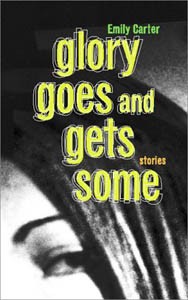
Emily Carter

An HIV-positive woman goes looking for love in Emily Carter’s new book

By Patrick Sullivan

LIFE, as no less a philosopher than Pauly Shore once observed, is like a box of needles. It’s full of little pricks. Unfortunately for Glory B., the heroin-using heroine of Glory Goes and Gets Some, one of those little pricks–either a hypodermic needle or a penis; she’s not sure which–packed an extra-special punch. Before it slid back out of her body, it flooded her bloodstream with the AIDS virus.

On the one hand, Glory Goes and Gets Some (Coffee House Press; $20.95) is a collection of 21 interlinked tales about (and almost all narrated by) a sardonic New York hipster going through her own private apocalypse. Imagine the worst thing that could happen, and it might look like what happens to Glory: she becomes a drug addict, she becomes a prostitute, she becomes infected with HIV.

After things can’t get any worse, she somehow frees herself from the dope and the booze and the habit of trading her body for dope and booze. Exiled from the streets of Manhattan, Glory winds up in Minnesota, emerging from a rehab center to lead a semi-normal life. Only she’s not normal at all.

But, on the other hand, Glory Goes and Get Some is less about sex and drugs and the search for redemption than it is about words–about what they can do in the extraordinarily talented hands of author Emily Carter.

The magic starts with the very first sentence of the opening tale, “East on Houston,” a prologue of sorts: “There was this one summer that began in June and ended quite some time later, when I could hear the voices of men in traffic, while I was walking east on Houston. They honked and squealed, barked, drawled, groaned, purred, hissed, whispered, and raggedly begged at me as I twitched down the street in a borrowed dress that was as red as the stoplights, the stoplights gleaming in the black air like costume jewelry from a sunken Spanish galleon, gleaming from the bottom of the sea: the night on Houston like a black tropical shipwreck ocean, fathoms deep and full of trinkets for a young girl like yours-ever-true.”

It’s as good a beginning for a book as it is a bad beginning for a life. Over time, Glory gets smarter about men–though not by much for quite a while. But her voice continues to crackle with sardonic wit and effortless poetry, which combine perfectly in the best story here. The title piece, “Glory Goes and Gets Some” (selected by Garrison Keillor for inclusion in Best American Short Stories 1997), is set in the period after Glory’s rehab and AIDS diagnosis. After a prolonged period of the three Ms (“meetings, meditation, masturbation”), Glory goes looking for a boyfriend.

After enduring a slew of unsuitable suitors and fighting hard against her own self-destructive impulses, she finds the right guy: “Apparently the man in question feels the same, because after our second night together, he told me he had never thought this was going to be a part of his life again, and he’d answered my ad out of sheer desperation, which, out of all human motivations, is, in my opinion, the only one you can absolutely trust.”

The dust jacket on Glory features a laudatory quote from Erica Jong describing the author’s voice as “sassy.” Sassy? That’s the name of a now defunct magazine that existed to sell makeup and panty liners to teenage girls. There’s a better word to describe Glory Goes and Gets Some: masterpiece.

From the November 2-8, 2000 issue of the Northern California Bohemian.

© Metro Publishing Inc.

The Wide-Eyed Gourmet

A square marshmallow is not a square deal

By Marina Wolf

CALL IT THE CASE of the nonround marshmallows. I wasn’t looking for them, but there they were, tucked into a corner shelf at a local natural-foods emporium, where such “all-natural” atrocities tend to gather. Before I even picked up the unassuming plastic bag to look at the list of ingredients, I knew something was wrong: these so-called marshmallows were square.

Now, I’m no food cop, but if I were, you bet I’d be enforcing some ordinances around here. Pepper must be freshly ground. Nuts must be toasted before being added to recipes. And marshmallows must be round. In an ideal world, that last little law would be a redundant statement of fact. But as I was reminded that day in the store, we live in an imperfect world with people who are ever tempted to take a good thing and fuck with it.

Reading the label, I had even more questions. These were touted as handcrafted. But it’s not as if cutting a sheet of sugary goo into squares is particularly artful. Handcrafted marshmallows ought to be more, well, round, patted lovingly into shape by a studio full of smiling older women whose hair is white from the cornstarch.

These squares are about as mass-produced-looking as you can get.

And you’d think “natural marshmallows” would be vegan, right? I mean, if you’re going to tamper with the basic molecular structure of marshmallows for the sake of some groovy, good-for-body-and-planet ideal, powdered cow hooves–aka gelatin–would be the first thing to go. But no: the manufacturers left in gelatin, and also sugar and corn syrup–two ways of saying the same thing.

They did remove dextrose, water, artificial color, Blue No. 1, and tetrasodium pyrophosphate, which probably was their real mistake. One of those items must be the active ingredient in marshmallows, the thing that makes them melt in so many fabulous ways: in crisp brown little cobblestones on top of yams, in a thin wash of foam on cocoa. Most important, marshmallows must be sturdy enough to fit on a stick and stay there through repeated toastings, forming layer after layer of browned outer crust, each one to be slipped off and eaten before the gradually shrinking confection is thrust back over the fire again.

It’s not too much to ask, but by these standards the “natural” marshmallow is not a marshmallow, but some kind of fancy-shmancy Turkish nougat that overrefined ladies might once have offered to visitors in their salons. Such a delicacy should never go anywhere near a vulgar source of heat such as cocoa or a campfire. In one field trial, my square marshmallow set a world speed record for sliding off into the flames: five seconds.

So why are these mushy misnomers still made and marketed? Either shoppers at natural-foods stores are complete dupes, or else we’re losing our collective sense of proportion. A few chemical-filled marshmallows once or twice a year on a camping trip isn’t going to kill you, no matter how much tetrasodium pyrophosphate they have in them.

Unfortunately, it’s all part of a trend toward the total healthification of our food supply. Sundae toppings are “naturally fat free.” Sour cream is low fat. Milk is skim-to-none. Bread has no preservatives and tastes great until the next day. Healthy cheese puffs are an oxymoron, and they taste like it, too. The low-salt V-8 has so much less oomph that they should call it V-6. Of course, the original sodium-fueled formula burned the hell out of the roof of my mouth, which is why I usually do drink V-6, in spite of its complete lack of flavor.

We all make our compromises. I’m resigned to that, as long as the unabashedly unnatural foods are offered alongside the “natural” versions–as long as we still have a choice about round or (shudder) square.

From the November 2-8, 2000 issue of the Northern California Bohemian.

© Metro Publishing Inc.

Pacifica Foundation

0

Pacifica Foundation chokes on own gag

By Norman Solomon

A CENSOR’S work is never done. For several decades, the Pacifica Foundation–which owns five radio stations and operates a small national network–nurtured precious experiments in the arid terrain of radioland. Pacifica has provided listeners with wide-ranging discussion, progressive analysis, and independent news coverage, in acute contrast to America’s usual corporate-backed media fare.

But during the past few years, Pacifica’s board of directors made itself a self-selecting body with an increasingly mainstream agenda. The more highhanded the new hierarchy became–and the more it deserved strong criticism–the more determined it became to prevent criticism of itself from getting onto Pacifica airwaves.

Defenders of the “gag rule” argued that it’s best not to air dirty laundry in public. But when Pacifica’s top executives turned into zealous censors, the network began to self-destruct. Distinctive for its vigorous advocacy of freedom and democracy at home and abroad, Pacifica foundered as it brandished the implements of censorship. In the summer of 1999, the foundation’s board of directors made headlines with outrageous actions against KPFA, the trail-blazing Pacifica station that has been on the FM dial in the San Francisco area for half a century. Journalists were arrested in the KPFA studios–even in the station’s newsroom–where they had worked for many years. The crux of the matter was that they had refused to lie to listeners with silence. Pacifica management swiftly responded with a lockout.

Massive support for KPFA in Northern California–including a march of 10,000 people past the station’s Berkeley headquarters–showed that Pacifica “leaders” had miscalculated. Pacifica backed off, and the station reopened. But the underlying issues have remained.

Pacifica’s current national board–dominated by an array of corporate executives, business professionals, investors, and political people aligned with the Clinton administration–is hostile to the strongly progressive content that had been integral to the network’s strength. The latest target of Pacifica’s ideological housecleaning is award-winning journalist Amy Goodman, host of the finest national daily radio program in the United States, “Democracy Now!”

From prisons, picket lines and forums in America to fast-breaking events in East Timor, Nigeria, Yugoslavia, and many other countries, the hourlong syndicated “Democracy Now!” show has informed and challenged listeners across the USA. Despite the program’s successes–or perhaps because of them–the Pacifica board majority is now attempting to push Goodman out.

Longtime broadcast journalist Danny Schechter (executive editor of Media Channel) commented days ago: “That Pacifica would seek to undercut the one national show that is building audience and generating attention showcases some of the crippling contradictions within the network.” A lot of factors are involved in management’s dispute with Amy Goodman. But here’s the crucial point: Pacifica is moving into a new stage of an ideological purge.

RECOGNIZING that grim fact, hundreds of people have mobilized to defend “Democracy Now!” as part of ongoing efforts to reverse the ominous trends at the Pacifica network. Demonstrations occurred Oct. 25 in front of KPFA and the four other Pacifica-owned stations, located in Los Angeles, Houston, New York City, and Washington, D.C.

“Despite meeting and exceeding every stated objective for the show–i.e., audience growth, fundraising, new listeners, groundbreaking programming–‘Democracy Now!’ is being subjected to a withering assault by Pacifica management,” Goodman wrote in an Oct. 18 memo. “The motivation is blatantly political.”

A quarter of a century ago, the American historian C. Vann Woodward chaired a committee that issued a major report on free speech. His words now help illuminate why it is so important to support journalists who face the kind of incessant pressure that Amy Goodman is now withstanding. “The history of intellectual growth and discovery clearly demonstrates the need for unfettered freedom, the right to think the unthinkable, discuss the unmentionable, and challenge the unchallengeable,” Woodward wrote. “To curtail free expression strikes twice at intellectual freedom, for whoever deprives another of the right to state unpopular views necessarily deprives others of the right to listen to those views.”

From the November 2-8, 2000 issue of the Northern California Bohemian.

© Metro Publishing Inc.

Newsgrinder

0

Important events as reported by daily newspapers and summarized by Daedalus Howell.

Friday 10.27.00

A Marin Superior Court judge has dismissed charges against Henry John Krajewski, who was accused of marketing a knockoff form of rave drug fave GHB from his Fairfax home, reports the Marin Independent Journal. Krajewski, an artist who has painted album covers for such rock groups as Iron Butterfly, claimed he didn’t know the substance was illegal. Okey-dokey. He was also booked for possession of hashish. No word on whether he claimed the hash was an herbal supplement. The Food and Drug Administration warns that GHB, short for gamma-hydroxybutyratesupercalifragilisticexpialidocious, causes dangerously low respiratory rates, coma, and seizures, and can kill actors when near the Viper Room.

Thursday 10.26.00

Police said a man walked into Bank of Marin carrying a box on which he had written, “This is an explosive, give me all your money.” The box, vacant of all but avarice, was the objet d’art in an elaborate ruse the robber abandoned upon discovering $3,000 stacked unattended on the counter. The robber grabbed the dough but ditched his criminal masterpiece–a stunning example of neo-Fluxus conceptual art that evokes both the textual reference in René Magritte’s “Ceci n’est pas une pipe” and the “ready-mades” of Marcel Duchamp. The same suspect is sought in a string of “ring and run” incidents in which matchbooks and bags of dog shit bearing the inscription “Light here” were left on Marin County doorsteps.

Thursday 10.26.00

Ye olde East-West battle continues in Petaluma. Candidates for the school board heard complaints from angry Eastsiders who believe that their Casa Grande High School is less attractive than the west side’s Petaluma High School, reports the Argus-Courier. Candidate Mike Derby recalled that when Casa Grande opened in 1972, “it was something to behold.” Sure, like a large, shingled prison: hence the name Casa Grande–Spanish for “Big House.”

Monday 10.23.00

Scholarships worth more than $3,000 will be awarded in the Miss Napa County Pageant, scheduled next January. Pageant contestants will be judged on talent, poise, personality, appearance, and intelligence, according to the Napa Valley Register. The Register also reports that “women 17 to 24 who will graduate from high school before September 2001 are eligible.” Contestants who are 24 and have yet to graduate from high school are encouraged to focus on the talent, poise, personality, and appearance aspects of the judging.

Saturday 10.28.00

The Santa Rosa daily reports that a House vote on a bill to restore federal recognition to the Coast Miwok Indians has split the hands of local Democrats Sen. Barbara Boxer and Rep. Lynn Woolsey. House approval followed Boxer’s move to discard a clause in the bill preventing the tribe from opening a casino in its Marin and southern Sonoma county territory. Rolling the dice on her career, Woolsey insisted on the gambling ban and refused to fold despite strident opposition from the Clinton administration. “I’ll just have to respectfully disagree with her on this,” said a poker-faced Woolsey of Boxer, who saw Woolsey’s bid and raised her two by maintaining the provision. Drawing to an inside straight, tribal chairman Greg Sarris, an author and filmmaker who recruited Hollywood high rollers to lobby for Coast Miwok recognition, remarked, “The issue here is restoration of our rights, not gaming,” But tribal vice chairman Gene Buvelot (emphasis on “vice”) anted,”If we did gaming, we’d be big.” Now, now, Gene, never count your money when sitting at the table–there’ll be time enough for counting when the dealing’s done.

Thursday 10.26.00

The Sonoma County Commission on Human Rights recommended Wednesday that a new YWCA brochure outlining domestic violence services should be more inclusive of male victims, after receiving a complaint from the local men’s advocate (guess who?), reports the Santa Rosa daily. Joe Manthey claimed the language in the YWCA’s brochure is discriminatory because it portrays men as the primary batterers. It was not reported whether or not Manthey believes male bakers are characterized differently than female bakers–both are known for batter, and both beat eggs and whip cream. Bah-dum-bum.

Tuesday 10.31.00

Stop the presses! The Press Democrat–a longtime mouth organ for the local development community–published a two-part series this week on the high cost of housing in Sonoma County and made an amazing discovery: The lack of affordable housing is due, in part, to the fact that city governments coddle developers. Big surprise–not! Housing advocates and this publication have complained long and hard that the lack of political will is a major factor in skyrocketing housing costs. In fact, voters in Santa Rosa–where a slate of four pro-development candidates led by City Council member Sharon Wright is on the ballot–have a chance to do something about that situation on Nov. 7 (see election endorsements on page 13). Send the development community and its cronies the message that people come first. Or start packing your bags–Willits is still relatively affordable.

From the November 2-8, 2000 issue of the Northern California Bohemian.

© Metro Publishing Inc.

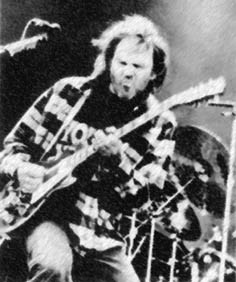
Neil Young

0

Broken Arrow

Neil Young’s biographer goes to court

By Jonny Whiteside

WHEN NEW YORK writer Jimmy McDonough interviewed Neil Young for the 1989 Village Voice feature “Too Far Gone: Fucking Up with Neil Young,” McDonough had no idea what his subject had in store for him.

In an auspicious moment of candor, Young announced, “The farther you go into this abyss called ‘obsession,’ the more dangerous it becomes. It’s like a drug. You can completely lose touch with your family, the people who count on you, people who would do anything to help you.”

Young was so impressed with McDonough’s resulting article that he asked the journalist to pen liner notes for a forthcoming 25th-anniversary CD anthology. That project was so successful that Young invited McDonough to serve as his authorized biographer.

At that point in his career, McDonough was one of the best music writers in the nation. Almost single-handedly responsible for reintroducing the public to presumed-dead R&B-jazz balladeer Jimmy Scott via his groundbreaking Voice cover story, McDonough characteristically used the money from the story to pay for a Scott demo session; not long after, the singer had a Warner Bros. contract and a chart-topping album.

McDonough’s writing is tough, probing, full of street-hustler style, yet hits with a cerebral impact. He was ready for a challenge, and Young magnanimously offered him a free hand with the biography, typical of the singer’s renowned image as an unfettered, purely creative force. Young consented to sit for five consecutive days of interviews and would have no approval over McDonough’s work, save for passages dealing with specific members of his immediate family.

With this assurance, McDonough committed himself to “devote his exclusive services and full time” to the book, and a lucrative deal was struck with Random House in August 1991. The contract was a $350,000 deal; the initial advance topped $100,000, with $85,000 going to McDonough and $20,000 to Young. McDonough relocated to the West Coast in 1991 to begin research, which is when I first met him. Although Jimmy left California in 1993, as a fellow biographer, fan, and pal, I watched his blunt style and relentless technique with no small fascination.

“Jimmy’s a wild man, and he obsessed on [the book],” says attorney George Hedges, who helped finalize McDonough’s initial agreement with Young.

After years of painstaking work and exhaustive research fleshed out by no less than 300 interviews–and supported by a loan of some $50,000 from Young–McDonough produced Shaky: The Authorized Biography of Neil Young, personally handing the nearly 800-page manuscript over to a seemingly pleased Young in 1998.

“The day Jimmy delivered the manuscript to Neil,” Hedges says, “he called me and said, ‘I feel good about it, it’s really gonna happen. I feel so relieved.’ ”

Random House, too, was eager to publish, but soon found that matters would not go exactly as planned.

In December of the same year, Young’s representatives, without explanation, abruptly announced that he would block publication. No one saw it coming. Random House spent the next year trying to reconcile subject and manuscript, but eventually chose to capitulate, citing in an April letter to McDonough both Young’s “sabotage” and the fact that the biography was contracted as an authorized–not unauthorized–project. Then the publishing house asked for the return of the nearly $200,000 it had by then already paid McDonough and Young.

On May 1 of this year, McDonough’s attorneys filed a $1.8 million suit against Young, seeking publication of the book and charging the rock star with, among other things, fraud and breach of contract.

The suit McDonough vs. Young, filed in Los Angeles County Superior Court, alleges that over a period of several years, “McDonough devoted himself to writing the biography. While doing so, he was repeatedly assured by Young that the musician would abide by his agreements with McDonough, and that McDonough should trust that Young would allow the biography to be published. Young repeated these assurances to McDonough . . . even on the day the manuscript was delivered to Young.

“In December 1998, however, Young revealed himself to be a contradiction in terms, using the wealth and power he had accumulated from his musical and business success to squelch publication of the Biography. Unilaterally and without contacting McDonough, Young, through his handlers, repudiated his agreements with McDonough and with Random House Inc. . . . without ever stating a single specific objection to any material in the Biography. But for Young’s actions, Random House Inc. would have published the Biography.”

THOROUGHLY weird stuff, but from the start, the entire project was unusual. Young not only insisted that McDonough agree to donate 25 percent of his earnings to the Bridge School in the Bay Area (which Young founded), but also insisted that McDonough submit to physical examinations so Young could take out a $350,000 life-insurance policy–with Young (or his designee) as beneficiary.

Merely negotiating the 13-page agreement was difficult–and McDonough, a notorious hard-nose, didn’t make it any easier. At one point, wrangling over a detail with Young’s representative, Irwin Spiegal Osher, McDonough admits he cried, “Go ahead! Do it–and I’ll blow my goddamn brains out all over your cheap fucking white shoes.” Calls to Osher were not returned.

It is perhaps McDonough’s very doggedness, his refusal to be intimidated (by Young’s chronic rescheduling of agreed-to interviews and by numerous clashes with the singer’s unctuous handlers), that led to this mess.

While the nature of Young’s role is mystifying, it’s not completely out of character. As longtime personal manager Elliot Roberts (recalling the occasion when Young quit Buffalo Springfield, excoriated Roberts as inept, and then almost immediately rehired him to oversee his solo career) told The New York Times, “I thought, ‘Wow, cool–this guy is as devious as I am.’ ”

The manuscript of Shaky is under lock and key, but Hedges, to whom McDonough supplied a copy, describes it as “a real serious effort to get inside what makes Neil Neil. It’s not a puff piece, which is apparently what he wanted but never said–I sat at the table and looked Neil right square in the eye. Outside of the fact that Neil’s been involved in some pretty juicy things in his life, no, this is not a Kitty Kelly kind of a deal; it’s a legitimate biography, the product of a lot of very hard work. As I understand it, the response from Random House on the book was very, very positive.”

In a January 1999 letter Random House attorney Diana Frost wrote to Young attorney Osher, she called the book “an important and artistic biographical work that they expect will receive a positive reception from a wide audience.” (Frost refused comment, and calls to the book’s editor, Bruce Tracy, were not returned.)

Young’s reasons for rejecting the manuscript, according to McDonough’s attorney Henry Gradstein, were that Jimmy delivered the manuscript in “an untimely fashion”; that he had delivered it to Random House without Young’s personal approval; and, finally, that he was simply not going to give his approval.

Gradstein counters that the manuscript’s lateness was in fact owing to delays caused by Young’s own refusal to schedule promised interviews. And, he continues, in any case Random House had previously granted McDonough’s requests for extensions of delivery deadlines. Finally, he says, Young had no approval rights (save over passages dealing with the aforementioned immediate family).

Barring a settlement (active discussions are ongoing), the case should go to trial in spring of 2001. Gradstein is “absolutely certain” McDonough will prevail, while Young’s attorney Lee Phillips insists that Young has “appropriate defenses and possible counterclaims.”

MUCH of the dispute revolves around the following clause in Young’s agreement with McDonough: “Notwithstanding anything to the contrary herein, if Neil prevents Jimmy from completing and delivering the manuscript to the Publisher, then the entire Indebtedness will be Neil’s obligation and he shall discharge the same and hold Jimmy free and harmless therefrom. This shall be Jimmy’s exclusive remedy from Neil.”

Young contends that this, in conjunction with the language granting him approval over passages relating to members of his family, gives him “the right to prevent release.” As Phillips explains it, “You can see that [the clause] indicates that it’s . . . his exclusive remedy against Neil, so in other words . . . he can’t complain if the end result is that the book doesn’t get published. He can keep the money, and Neil’s got the liability with Random House.

“If there’s one comment about the family and Neil disapproved it, that comment then has already been delivered to Random House. Why have an approval right to prevent it from going out to the public . . . if that person has delivered it to the public?

“I mean, the fact is, it was done,” Phillips continues. “If it said some terrible thing, and you said, ‘I disapprove,’ and he said, ‘OK, I’ll take it out,’ then it would only be known to Neil and Jimmy. But if you deliver it to Random House and then deliver it to Neil the next day, Random House and all their editors and everybody else . . . that sentence is in there. And that’s the reason why I think a lot of this problem came up.”

Wait, there’s more: Young’s attorneys are also claiming that he has approval rights by alleging that McDonough failed to meet the already-extended Random House deadlines, creating a breach “frustrating the purpose and intent of the agreement” and “independently granting Young the right to prevent” publication. So, it’s a back-and-forth exchange of legal interpretation, the deviltry of language on the one hand so clear, yet on the other so ambiguous–depending on which side one favors–that it is apparently best left for Judge Richard C. Hubbell to reconcile.

Still, to some, the situation couldn’t be clearer. “It’s horrible what Jimmy’s been through,” says Hedges. “It’s so kind of insanely arrogant and malicious–it’s unthinkable. The whole situation is just mind-numbing, the way Neil led him on; he was just playing with him–playing with a life, his trust, everything. I mean, Neil is notorious, but this is crazy–it’s like being in the belly of the beast. There’s a kind of arrogance to celebrity, and this is just a very raw, vivid example of it.”

This article originally appeared in the L.A. Weekly.

From the November 2-8, 2000 issue of the Northern California Bohemian.

© Metro Publishing Inc.

Election Guide

0

By Greg Cahill

Here is a list of select endorsements in local, state, and national races:

President: Al Gore Vice President: Joe Lieberman U.S. Senate: Dianne Feinstein State Senator: John Burton U.S. Representative: Lynn Woolsey (6th District) State Assembly: Anna Nevenic (6th District) State Assembly: Pat Wiggins (7th District)

Proposition 32: Yes Proposition 33: No Proposition 34: No Proposition 35: Yes Proposition 36: No Proposition 37: No Proposition 38: No Proposition 39: Yes

Cotati City Council: Janet Orchard, Janet Kurvers, and Will McAfee. Petaluma City Council: Pamela Torliatt, David Glass, and Jim Mobley. Rohnert Park City Council: Jake Mackenzie, Shawn Kilat, and Paul Stutrud. Santa Rosa City Council: Noreen Evans, Carol Dean, Susan Gorin, and Rick Meechan. Sebastopol City Council: Craig Litwin and Sam Spooner. Sonoma City Council: Joseph Costello and just about anyone other than Jim Ghilotti. Windsor Town Council: Debora Fudge and Bill Patterson.

Measure I: Rural Heritage Initiative–Yes. Measure M: Healdsburg Growth Management Ordinance–Yes. Measure N: Rohnert Park UGB–Yes. Measure S: Sonoma UGB– Yes.

From the November 2-8, 2000 issue of the Northern California Bohemian.

© Metro Publishing Inc.

Election Coverage

0

Stars & Strikes

Come hither: Our Election 2000 voter guide

THE PRESIDENTIAL election is expected to be the closest in 40 years, thanks to a shootout between the left and the far left of the Democratic Party. So don’t be sitting on your keister and complaining that this election is irrelevent when the fate of the environment and the U.S. Supreme Court is hanging in the balance.

Fortunately, the initiative gods have given California voters a reprieve this election cycle by asking us to weigh in on only eight state propositions. During the March primary, voters had to study more than 20 propositions, some of which required a yes if you really wanted to vote no, and some which nullified others on the same ballot.

There is no such madness on the Nov. 7 ballot. Yes means yes, and no means no on all eight items in question. How quaint!

Not only are the state props refreshingly simple this go-round, but they’re also relatively free of controversy. In the recent past, California has served as a testing ground for homophobic, xenophobic, or racist initiatives. This time, we’re dealing with more mundane things like bonds, engineering contracts, and perks for the state Legislature.

Sure, the school vouchers (Prop. 38) initiative is kind of controversial. But didn’t we already vote on that in the ’90s?

Despite the seeming lack of sexy topics on the state initiatives ballot, voters shouldn’t be lulled into a sense of complacency. They still need to get to the polls and prevent school vouchers from crippling public education. They also need to vote yes and make it easier to pass bonds to upgrade crumbling schools (Prop. 39).

To paraphrase Woody Allen, half of life is just showing up. Here’s a guide for what you should do after showing up at your designated polling place:

The Hot List: The Bohemian’s handy guide to select endorsements in local, state, and national races.

U.S. President Al Gore

Picture this with your eyes wide open: A Republican in the White House. A Republican-controlled House. A Republican-controlled Senate. A Republican-led Congress rubber-stamping the GOP president’s anti-abortion Supreme Court nominees.

And this is no campy Halloween horror flick–it’s closer to reality than many voters think. If nationwide polls are to be believed, George W. Bush will soon be the nation’s Fratboy-in-chief. Meanwhile, the GOP will, according to most predictions, easily retain its majority in the U.S. Senate. Only the House of Representatives is potentially up for grabs, but only if Democrats can win six seats nationally.

Vice President Al Gore, wife-kissing aside, has been unable to whip voters into any kind of impassioned frenzy. Here in California, where Gore once held a double-digit lead, the latest polls show Green Party nominee Ralph Nader siphoning support from the vice president, who now leads Bush by only five points.

An apathetic electorate, a dull Democratic nominee, and an insurgent third-party candidate–it’s a recipe for imbalance and disaster.

To those contemplating voting for Nader, we think this is too close an election to throw away a vote on a symbolic candidate. We can already hear Naderites preaching the lefty party line: It doesn’t matter if you vote for Gore or Bush because they are both from the same party–the Party of Big Business. While there’s plenty of truth to that, Bush and Gore have very different positions on a woman’s right to choose, the environment, school vouchers, healthcare, tax policy, Social Security, and campaign finance reform, which Gore has promised to make his top priority if elected.

Eight years–and more, counting lifetime Supreme Court appointments–is a long time to endure the fallout of a “protest” vote, especially when Republicans want to maintain the surplus by returning money to the rich rather than paying down the nation’s debt.

We think voters should pay close attention to this election and make every attempt to balance the branches of government at the national level. At the state, regional, and local levels, they should vote for those who will safeguard the environment and protect the interests of the North Bay. Vote for Al Gore.

U.S. Senate Dianne Feinstein

During the Democratic National Convention in Los Angeles, Rep. Tom Campbell, R­San Jose–who was shut out by his own party at the Republican convention–had a prominent speaking role. Not at the “real” convention in La La Land, but at Arianna Huffington’s alternative Shadow Convention. To a crowd of professional protesters and malcontents, Campbell spoke passionately about the country’s misguided war against drugs.

South Bay voters already know Tom Campbell as an enigma. In 1997, he defied his party’s leaders by voting to oust then House Speaker Newt Gingrich. The following year, he toed the party line by voting to impeach President Clinton, angering many of his Starr-fatigued constituents.

For a Republican, Campbell’s run an unorthodox campaign against Democratic incumbent Dianne Feinstein–he has, to a great extent, run to her political left.

The top question in our minds is (assuming Campbell gets elected), which Campbell will show up at the Senate confirmation hearings for a new Supreme Court Justice: the party boy who impeached Clinton or the party pooper who told Newt to get lost? Hard to say. In typical Tom fashion, he refuses to prejudge nominees or apply a litmus test. While we think Campbell will raise controversial issues worthy of debate that an inside-the-box politician like Feinstein would never touch, he may be a little too quirky, even in an age of empty, blow-dried politics and politicians.

While we wish Feinstein would have the guts to raise the issue of the failed drug war, we like her record on gun control and the environment. Stick with Feinstein.

U.S. Congress Sixth District

Lynn Woolsey, D-Petaluma, has a lock on this race–the Republicans are unable to field a strong candidate in this overwhelmingly Democratic district that includes parts of Marin and Sonoma counties. But Woolsey hasn’t squandered her support–the former Petaluma mayor has taken strong positions on everything from nuclear disarmament to the need to stop federal support of the homophobic Boy Scouts of America, stances that often put her at odds with Bill Clinton and in face-to-face confrontations with the good ol’ boys in the U.S. Senate. Vote for Lynn Woolsey.

State Assembly Sixth District

Maybe it’s his name, but Joe Nation seems destined for higher office (or at least for a career as a political fundraiser, having amassed a $300,000 war chest)–he’s now on the Marin Municipal Water District board of trustees. Unfortunately, this New Democrat has shown little to inspire confidence that he’s fit to represent a progressive district in the state Legislature. Most notably, last spring he won and then lost Sonoma County Conservation Action’s coveted environmental endorsement after it was determined that, as an MMWD board member, Nation has supported pro-development water policies that could endanger the Eel and Russian rivers. Vote for Anna Nevenic, a nurse who promises to focus on health-care issues.

State Assembly Seventh District

Democratic incumbent Pat Wiggins, a former Santa Rosa City Councilmember, has done a great job in her first term. Send her back to Sacramento. Vote for Pat Wiggins.

Proposition 32 Housing Assistance for Vets

The so-called Veterans Bond Act of 2000, put on the ballot by the Legislature, asks for voter approval to–for the 29th time in the program’s history–renew funding for the state-run program that helps California veterans of the Vietnam War and earlier conflicts get first-time home buyer home loans at a special low-interest rate. The Office of Veterans Affairs says that the $500 million that the bond raises will help about 2,400 Vietnam veterans purchase new homes or farms–none of which, one can only presume, will be in the vastly inflated Bay Area, where $250,000 won’t get you a one-room hovel. And therein lies the core of our argument in favor of the bill: in today’s ridiculous real estate market, we feel that everyone deserves a break toward owning their first home. The bill’s opponents do not agree. But they err in the voter pamphlet when they say, disapprovingly, that under this bill, “even someone who stayed home in the National Guard is a qualified ‘veteran’ under the Cal-Vet loan program.” According to the experts, such a person does qualify for some Cal-Vet loan programs, but not for the particular program these bonds will go toward, which requires that the vets in question saw wartime service abroad before the end of the Vietnam conflict (the last U.S. conflict that qualifies vets for participation in this program). Theoretically, taxpayers could end up paying off some of the debt that will be incurred herein, but only if all the veterans who take advantage of it default on their loans. That has never happened in this loan program’s 88-year history, so what Prop. 32 really comes down to is how generous we feel toward veterans as a group. Vote yes on 32.

Proposition 33 Pensions for State Legislators

Prop. 33 would allow members of the state Legislature to receive retirement benefits from the Public Employees Retirement System, like all other public employees. It would counteract part of Prop. 140, an amendment voters enacted in 1990 to eliminate pensions for legislators. According to the ballot summary, PERS costs would come out of a fixed annual amount provided in support of the Legislature. Supporters say it’s only fair that legislators, who serve six to 14 years, should have access to the same retirement benefits that most other state workers get. “We want to have the same retirement benefits as the guy who cuts the grass, the guy who maintains the vehicles,” says Assemblyman Bret Granlund, R-Yucaipa. Supporters argue that the lack of additional benefits discourages low-income candidates from running for office, and the availability of a retirement plan would encourage diversity. But the proposition’s opponents call it an unnecessary perk, called for by the legislators who would receive the benefits. “This is not for the benefit of the public,” said Lewis Uhler, the president of the National Tax-Limitation Committee. “This is crass self-interest.” We agree. Legislators already earn $99,000 per year and are eligible for about $25,000 per year more in tax-free reimbursement for living expenses. That’s plenty of dough to invest in their own retirement. Vote no on Prop. 33.

Proposition 34 Campaign Donation Limits

Prop. 34 is a cynical attempt by state politicians to sell voters a package of positive campaign finance reform. Voters shouldn’t buy into it. Proposition 34 would allow for almost unlimited campaign donations and undo the work of Proposition 208, the 1996 campaign reform initiative passed by 61.3 percent of voters. A year after it was enacted, a federal court suspended the proposition. But this year the U.S. Supreme Court ruled favorably in a Missouri case with provisions similar to 208. Legal experts believe that, based on this case, Prop. 208 will be reinstated. If Prop. 34 passes, however, the chances of reviving Prop. 208 may diminish, if not be killed. Even more suspect than the politicians’ cheap ruse is the way in which Prop. 34 was fast-tracked through the Legislature, without public input. Gov. Gray Davis, a Prop. 34 supporter, has even said that the bill was “devised largely in secret, without input from the public or knowledgeable sources.” Under Prop. 34–which does almost nothing to curb the influence of soft money–politicians and big parties win, not the voters. Vote no on Prop. 34.

Proposition 35 Caltrans Private Contracting

We Bay Area folk know all too well just how long Caltrans can take to finish anything. Almost all the major regional highways–880, 17, 280, 101, 680–are in disarray and in need of repair and maintenance. Traffic congestion plagues the Bay Area as well as the rest of the state, which makes voting yes on Prop. 35 a wise decision. The California Department of Transportation–Caltrans–has a backlog of public works projects that are completed largely by in-house engineers and architects. Current California law allows the state to contract outside services, but only under limited circumstances. Under Prop. 35, state agencies such as Caltrans would be able to use qualified private engineers and architects to simply get the jobs done safely and efficiently. And maybe even more cheaply. According to the Yes on Prop. 35 campaign, an economic study of the proposition showed that the use of private sector services would save California taxpayers $2.5 billion annually and create 40,000 additional private sector jobs. Opponents of the proposition say that the initiative is only following a trend toward privatization, and in doing so, public employee unions lose out on pay and work. They argue that public works projects should be completed by public employees. But we’re going along with the countless supporters of the proposition–sponsor Taxpayers for Fair Competition, the California chapter of the American Institute of Architects, and the California Minority and Women’s Business Coalition–who say spread the wealth and the work. With more people working on the job, long-term projects are accomplished sooner–on time and on budget. Vote yes on Prop. 35.

Proposition 36 Diversion of Drug Offenders

Proposition 36, backed by the same sponsors that helped pass the Medical Marijuana initiative, presents a sticky situation. Since the war on drugs has been waged, federal and state measures combating drugs have focused on criminal-law enforcement over prevention and treatment. In California, where prisons have become a boom industry, that effort has largely failed, and the public seems itching to enact more liberal drug policies. At first glance, Prop. 36, which seeks to put most first- and second-time drug offenders in treatment programs instead of in jail, seems to fit that growing sentiment. If passed, the proposition would divert approximately 37,000 nonviolent drug offenders from California’s prisons, which have the highest rate of admissions for drug-related offenses in the United States. So what’s not to like? Couched in decriminalizing terms, the proposition is cleverly misleading. Prop. 36 does not push for any real accountability, excluding what drug-court judges regard as crucial court sanctions–the “carrot and stick” approach–used to get addicts to clean up. Prop. 36 also prohibits spending any of the money allocated in the initiative for drug testing, which, according to judges, is the only tried-and-true method to determine if someone is using drugs. When drug-court graduates were asked what kept them in treatment, 91 percent said jail sanctions and 87 percent said frequent drug testing, according to a study done by American University. The lack of treatment opportunities for offenders has important implications, and, if anything, Prop. 36 accurately pinpoints California’s growing interest in doing more about it. But the oddly worded initiative undermines the work currently being done by California’s drug-treatment courts and provides no satisfactory solution. Vote no, and let’s wait for more precise and forward-looking legislation on drugs.

Proposition 37 Hazardous Businesses Fees

Let’s pretend we don’t give a damn about reading through lengthy and complicated propositions. Let’s just say that all we want to do is show up at the polls and choose the vote that will least embarrass us when we discover what the proposition was really all about. There’s actually a way to cut through the mumbo-jumbo–a Cliff Notes for schooling ourselves on which way to vote. Just follow the money. Take Prop. 37, for example. Philip Morris ponied up $350,000, the Distilled Spirits Council of the United States kicked in $200,000, and Chevron sweetened the pot with another $200,000 to push it through. With this much information, do we even need to know what Prop. 37 is before making an educated guess on which way to vote? For the record, companies that create hazards to our health have to pay a fee to the state to monitor and then clean up their messes. Proposition 37 would redefine these fees as taxes, therefore subjecting the fees to a two-thirds vote for approval. In other words, we–not the polluter–would be footing the cleanup bill. Who’s against Prop. 37? The American Cancer Society, the American Heart Association, the Sierra Club, the League of Women Voters–and the Bohemian. Vote no on Prop. 37.

Proposition 38 School Vouchers

The theory behind Prop. 38, venture capitalist Tim Draper’s school voucher initiative, appears to be that since California’s public schools are in need of some help, we should just take their funding away and give it to privately funded educational institutions. This logic is a little like attempting to cure the homeless problem by taking away people’s cardboard boxes. The initiative proposes to hand out vouchers in the amount of $4,000 per child, funds that would be used to enroll children in private schools. According to state budget analysts, this initiative, if passed, would cost around $3 billion, money that would be unloaded from the state’s coffers, and certainly from the already inadequate public school budget. While the parents of children already enrolled in private schools would no doubt welcome a publicly funded reduction in tuition payments, this action would indisputably jeopardize the futures of our children still remaining in public schools. Vote no on Prop. 38.

Proposition 39 Easier Passage of School Bonds

You know we’re in trouble when a numbskull like George W. Bush can pass himself off as an education candidate. Closer to home, California has its own problems–namely, overcrowded schools and, in some cases, students who are forced to attend classes in Third World conditions characterized by portable trailers, minimal libraries and computer labs, broken heaters, crumbling plaster, and poor plumbing. If passed, Prop. 39 would overhaul the way school bond money is spent. It would amend the state constitution (which now requires a two-thirds vote of the electorate) to allow school districts to authorize by a two-thirds vote the sale of bonds not exceeding $100 per average household. The bond issue must then be approved by 55 percent of the voters. The proposition offers greater safeguards than those guaranteed under Prop. 13, which set no limit on the amount of bonds that can be issued. At the same time, Prop. 39 makes it easier for struggling school districts to order the kind of capital improvements sorely needed in California, which ranks second in the nation in class size (only Utah averages more students per classroom). We urge a yes vote on Prop. 39.

From the November 2-8, 2000 issue of the Northern California Bohemian.

© Metro Publishing Inc.

‘The Contender’

0

Political writing team talks about women in politics, the mysteries of PMS, and ‘The Contender’

“Well, I thought it was cute,” states author Dana K. Drenkowski. “Very cute.” We are seated at a sun-drenched table at a Marin County coffee shop, where we’ve parked ourselves this afternoon to discuss The Contender, a brand-new political drama from Dreamworks Pictures.

Drenkowski, a San Francisco lawyer and writer, is referring to the scene in which we, the audience, are first introduced to our heroine, Senator Laine Hansen, played by the great Joan Allen.

“I loved that scene,” says my guest. “Here the President of the United States is on the phone, calling her up to offer her the Vice Presidency, and there she is with her pants off.”

What makes it even cuter is that when the President calls (he’s Jeff Bridges, by the way), Hansen and her husband are happily doing the not-so-nasty right on top of the Senator’s desk.

“Of course, we don’t know it’s her husband at first, do we?” points out J. Michael Reidenbach, Drenkowski’s Oakland-based writing-partner and co-author of the duo’s own new Washington thriller Legacy & Destiny (Corinthian Books; $24.95). “We kind of think we’ve caught her in the middle of a scandal.”

Indeed. And there’s plenty of scandal in The Contender, a sometimes-riveting, sometimes-merely-silly saga of what happens when a woman is chosen to become the Vice President after the former V.P. dies in office.

It is not an easy transition, as her confirmation is challenged by a rabid right-wing Senator (Gary Oldman), an ornery fellow with bad-hair and, even worse, a file full of photos that seem to show a young Ms. Hansen having group sex with a house full of frisky fratboys. This is all decidedly uncute, as is the organized character assassination that seems certain to keep Hansen from becoming the first woman to serve in the White House.

Reidenbach and Drenkowski have also imagined how a woman might make a run for the White House, but in Legacy & Destiny, Governor Elisabeth Armstrong is running for the Presidency itself. That their book, a fast-paced “beach read” that is also crammed with intrigue and scandal, should hit the stands at the same time The Contender lands on movie screens, is a testament to the timeliness of the subject matter.

“It just shows how ready our society is to finally have a woman as our president,” says Drenkowski.

“And if Bill Clinton had the guts to ask Ann Richards to be his Vice President instead of Gore,” adds Reidenbach, “we’d probably have a female president this January.”

But let’s get back to that sex-on-the-desk scene.

“In your book you have a seduction scenario between Governor Armstrong and a reporter,” I mention. “The Contender showed the Senator being intimate. Why do you think it’s necessary to demonstrate that these female candidates are sexual beings?”

“Oh, I don’t agree that we were trying to present her as a sexual being,” argues Reidenbach. “We were just presenting her as a human being. We were giving people a chance to see her in her private life as well as her public life. Personally, I think the kind of problems a woman presidential candidate will probably encounter won’t be related at all to sex.”

“Really?” says Drenkowski. “By sex, do you mean her problems won’t be related to gender or won’t be related to sexual activity.”

“Sexual activity,” confirms Reidenbach. “I mean, there will be issues where, because of her gender, people won’t have confidence in her, and that kind of thing. But her past-and-present sexual activity probably won’t even be an issue.”

Hmmmm.

“The whole theme of The Contender is that a woman candidate’s sexual activity would be under scrutiny, while a man’s sexual history wouldn’t,” I toss out. “Joan Allen makes a speech, ‘You have no right to ask me these questions. And if I had been a man, you wouldn’t care about my sexual history.'”

“If there is a double standard,” adds Reidenbach, “then it’s wrong, and I would hope we could draw lines between what is public and what is private, with either a man or a woman.”

Another issue brought up by the movie is the old myth of a woman’s raging hormones. In response to one politician’s criticism of Hansen’s unrepressed sexuality, she retorts, “Believe me, you don’t want a woman with her finger on the nuclear button who isn’t getting laid.” In Legacy & Destiny, there’s even a passing joke about the dangers of Presidential PMS.

“It’s really an irrelevant issue,” insists Drenkowski. “For one thing, most of the women I know aren’t getting laid, and they don’t seem to be any more or less cranky than anyone else I know. For another thing, most of the women who would be eligible for the presidency will be past the childbearing age. They’ll be in their 50s and 60s and menopause will probably have stepped in–so you can’t get away with that old raging hormones slur. Indira Gandhi was post-menopausal. Golda Meir was post-menopausal.”

Cleopatra was post-meno . . .wait. Forget that.

But hey, Margaret Thatcher was definitely post-menopausal.

“Because I’m a man,” adds Reidenbach, “I can’t really speak authoritatively to whether it’s even a true thesis, that women act differently while experiencing PMS. I deal with women all the time in the workplace, and hey, I can’t tell when they’re having their period or not. There’s no noticeable change in their level of competence.

“I don’t even know why this is a subject of discussion,” says Drenkowski, “because we already have so many women in key positions around the world. I mean, obviously women can control their emotions and their moods.”

Though, you know, really bad PMS might have explained some elements of Thatcherism, which poor old England still hasn’t recovered from.

“One of the reasons we’d like to see a woman become president,” says Reidenbach, “is so that we can stop talking about this stuff once and for all. Sure, the first woman candidate will run the gauntlet, there will be a lot of insane questions asked, and maybe the sexual issues will be brought up–but the key question will be, ‘Is this woman tough enough for the job?’ And once a woman convinces the country that she is tough enough, then all the stereotypes will be removed, and we can finally put all that nonsense behind us.”

“We’ll know for once and for all that a woman,” concludes Drenkowski, “can be just as good, or just as bad, a president as any man.”

From the October 26-November 1, 2000 issue of the Northern California Bohemian.

© Metro Publishing Inc.
Santi

0

Get the buzz: Santi chef/co-owner Thomas Oden presides over a lively procession of diners at his popular Geyserville restaurant.

Saints Alive!

Seasonal Italian cuisine reigns at Santi

By Paula Harris

“MAIN STREET” at night seems dismally deserted as we wander along the silent sidewalk and cross the trafficless street. There are a few metal-fronted buildings and an old-fashioned general store specializing in saddles, tack, and western apparel. All is shadowy, just a patch of electric light on the corner spilling from the open post office door. Dead.

It’s Geyserville on a Thursday night.

This sleepy old place makes Graton look downright cosmopolitan by comparison. One could almost be forgiven for assuming Geyserville is located elsewhere–in Napa County or Mendocino County perhaps. But the teeny town snoozes in Sonoma County, located between the Alexander and the Dry Creek valleys, ringed by wineries, and a mere nine minutes’ drive north on Highway 101 from downtown Healdsburg. It’s actually a quiet respite from the now burgeoning Healdsburg plaza, transformed in recent years into a wine-tourist mecca.

Just as we conclude we’re meandering through a ghost town, someone throws open a door to a large building marked “Taverna,” there’s a burst of noise, and we glimpse a throng of people bellying up to a long bar, while others crowd the elegantly rustic restaurant beyond. Even on a Thursday night, Geyserville is teeming with life–and a lot of the teeming is at Santi restaurant.

The 6-month-old Santi (which means “saints” in Italian) is buzzing. Housed in the historic 1902 landmark building that was formerly Catelli the Rex restaurant, Santi is a gathering place for local vintners, growers, ranchers, and the occasional intrepid tourist who dares to venture beyond the Disneyesque charm of Healdsburg.

This night, the owners of nearby Trentadue Winery luxuriate over their pasta in a comfy oversize booth, while at a nearby table an older couple vacationing from New Orleans study the ample wine list.

The renovated restaurant features two comfortable dining rooms. Design details include buttery-lemon walls, a large stone fireplace, rich wood furniture, exposed brick, and ornate iron shutters. Out back is a romantic patio for warm-weather dining. And inside, the fully stocked bar is clearly a popular retreat. Former winery chefs Franco Dunn and Thomas Oden, of Jordan Vineyard and Winery, have created a menu that reflects Italian regional cuisine, evolves with the seasons, and enhances the local wines (their wine list is great).

The terrina di Anitra ($8.25), duck terrine with cress salad and 20-year-old balsamico, is a substantial appetizer special. A generous rose-brown slab of tasty terrine, a coarse paté, is drizzled with a touch of balsamic vinegar, although not enough to make any real impression flavorwise.

Crespelle di mais, zucchini e cippolini ($7.25), crepes with roasted corn, spinach, summer squash, and scallions, make a pleasing fall appetizer. Two delicate crepes are served hot, folded over crunchy fresh corn kernels that pop sweetly in the mouth and napped with a hot, creamy sauce.

The hit of the evening is the risotto de gamberi, zucchini e cippolini ($11.25/small and $14.25/large). A risotto with rock shrimp, summer squash, and chives, it’s a lovely bowlful. Perfectly separated grains of arborio rice are studded with green zucchini, chives, parsley, and–best of all–plump spirals of moist, flavorful rock shrimp. In fact, shrimp in every forkful. The whole effect is a comforting light creaminess enlivened by the seafood. De-lish.

While the galletto al mattone ($14.75), young chicken cooked under a brick with sautéed sweet peppers, red onion, herbs, and roasted potatoes, is fine, it’s not spectacular. A nightly pasta special, tortelli di zucca ($9.25), floors us. It’s described as “home-made pasta filled with purée of winter squash, amaretti cookies, mostarda, and Parmigiano with brown butter sauce.” But the dish is overly heady and cloyingly sweet with amaretto flavor. There’s nothing else on the plate to counterbalance the teeth-jarring effect. We end up scraping out the awful filling and just eating the pasta half moons.

Maybe this dish would be better on the dessert menu?

As for desserts, we sample a spuma di limone con frutti di bosco ($5.25), lemon mousse with mixed berries that has the required sweet-tart flavor, but unfortunately has a fallen texture like runny custard; and a luscious panna cotta ($5.75), a cool cream with a slight gelatinous texture and a pleasing vanilla finish.

All in all, Santi is a popular place and worth a trip to the hushed, nostalgia-filled Geyserville. Just think twice about the cookie-crammed pasta.

Santi Address: 21047 Geyserville Ave., Geyserville; 707. 857.1790. Hours: Daily, lunch, 11:30 a.m. to 2 p.m.; dinner, 5:30 to around 8:30 p.m. Food: Italian, emphasizing wine-friendly seasonal delicacies Service: Good Ambiance: Warm , rustic elegance Price: Moderate to expensive. Wine list: Very ample selection, loads of local favorites Overall: 2 1/2 stars (out of 4)

From the October 26-November 1, 2000 issue of the Northern California Bohemian.

© Metro Publishing Inc.
Night Driving on the Coastal Highway

Midnight Rider Taking the long way home-- driving the coastal highway after dark By Stephen Kessler FINISHING DINNER with friends in San Francisco, I consider whether to spend the night in the city or make the long drive home to Gualala Ridge--some 120 miles, two and a half hours or so...

Emily Carter

An HIV-positive woman goes looking for love in Emily Carter's new book By Patrick Sullivan LIFE, as no less a philosopher than Pauly Shore once observed, is like a box of needles. It's full of little pricks. Unfortunately for Glory B., the heroin-using heroine of Glory Goes and Gets Some, one of those...

The Wide-Eyed Gourmet

A square marshmallow is not a square deal By Marina Wolf CALL IT THE CASE of the nonround marshmallows. I wasn't looking for them, but there they were, tucked into a corner shelf at a local natural-foods emporium, where such "all-natural" atrocities tend to gather. Before I even picked up the unassuming plastic bag to...

Pacifica Foundation

Pacifica Foundation chokes on own gag By Norman Solomon A CENSOR'S work is never done. For several decades, the Pacifica Foundation--which owns five radio stations and operates a small national network--nurtured precious experiments in the arid terrain of radioland. Pacifica has provided listeners with wide-ranging discussion, progressive analysis, and independent news coverage, in acute contrast...

Newsgrinder

Important events as reported by daily newspapers and summarized by Daedalus Howell. Friday 10.27.00 A Marin Superior Court judge has dismissed charges against Henry John Krajewski, who was accused of marketing a knockoff form of rave drug fave GHB from his Fairfax home, reports the Marin Independent Journal. Krajewski, an artist who has painted...

Neil Young

Broken Arrow Neil Young's biographer goes to court By Jonny Whiteside WHEN NEW YORK writer Jimmy McDonough interviewed Neil Young for the 1989 Village Voice feature "Too Far Gone: Fucking Up with Neil Young," McDonough had no idea what his subject had in store for him. In an...

Election Guide

By Greg Cahill Here is a list of select endorsements in local, state, and national races: President: Al Gore Vice President: Joe Lieberman U.S. Senate: Dianne Feinstein State Senator: John Burton U.S. Representative: Lynn Woolsey (6th District) State Assembly: Anna Nevenic (6th District) ...

Election Coverage

Stars & Strikes Come hither: Our Election 2000 voter guide THE PRESIDENTIAL election is expected to be the closest in 40 years, thanks to a shootout between the left and the far left of the Democratic Party. So don't be sitting on your keister and complaining that this election is irrelevent when the...

‘The Contender’

Political writing team talks about women in politics, the mysteries of PMS, and 'The Contender' "Well, I thought it was cute," states author Dana K. Drenkowski. "Very cute." We are seated at a sun-drenched table at a Marin County coffee shop, where we've parked ourselves this afternoon to discuss The Contender, a brand-new political...

Santi

Get the buzz: Santi chef/co-owner Thomas Oden presides over a lively procession of diners at his popular Geyserville restaurant. Saints Alive! Seasonal Italian cuisine reigns at Santi By Paula Harris "MAIN STREET" at night seems dismally deserted as we wander along the silent sidewalk and...
11,084FansLike
4,606FollowersFollow
6,928FollowersFollow