Humbug: Musical ‘Scrooge’ in Sonoma 

What’s Christmas without a production of Charles Dickens’ A Christmas Carol (or a reasonable facsimile thereof) on a local stage? Sonoma Arts Live fills the bill with their production of Scrooge! The Musical. The SAL production runs at the Sonoma Community Center through Dec. 21.

The stage version, which Leslie Bricusse adapted himself from his 1970 movie musical starring Albert Finney, adheres pretty closely to the film, as it tells Dickens’ tale of redemption of cold-hearted miser Ebenezer Scrooge through song and dance. 

It’s a pretty solid production of the ol’ chestnut. Projections (by Gene Abravaya) help expand the confines of the small Rotary stage and transport the cast to various scenes and structures in Victorian England. Colorful costumes by cast member Barbara McFadden also provide great support in establishing the period. 

Director Larry Williams leads the cast of 18 as Scrooge, with Owen Hardisty as Bob Cratchit, David Shirk as Jacob Marley, McFadden and Cat Smith as the Christmas ghosts, and Kathryn Arisman as Tiny Tim.

It’s a good mixture of veteran performers and relative newcomers. Scrooge is a good role for Williams, and he does a fine job with the character’s journey from heartless skinflint to loving member of the community.

Shirk as the Ghost of Jacob Marley (in another excellent costume) shakes things up with his warning to Scrooge to straighten up or be doomed to his fate. McFadden and Smith have fun with the Ghosts of Christmas Past and Present, and Thaddeus Louviere does very well leading the rousing “Thank You Very Much” number.

Among the younger cast, the performances of Andrew Herold as nephew Fred and Addie Lowe as Scrooge’s fiancé Belle stood out, as did the vocals of Autumn Terradista. 

This production uses musical tracks. And while the depth and heart that live music brings to a show was missing, the vocal work by the cast (under Sherrill Peterson’s musical direction) does a lot to compensate for the loss. The choreography by Bridget Codoni, though limited in nature by the relatively small space, was well executed by the cast.  

Director Williams made a few odd blocking choices, and the first act’s conclusion and exit was a bit of a mess. But he kept things moving, and the show came in under two hours, including an intermission. 

All in all, SAL’s Scrooge! The Musical is a well-delivered version of the quintessential holiday show.

‘Scrooge! The Musical’ runs through Dec. 21 on the Rotary Stage at Andrews Hall in the Sonoma Community Center, 276 E. Napa St., Sonoma. Thurs–Sat, 7:30pm. Sat & Sun, 2pm. $30–$45. 866.710.8942. sonomaartslive.org.

Frankenstein’s Miss, Guillermo del Toro Blew His Chance 

Guillermo del Toro, the director of the latest of many Hollywood adaptations of Mary Shelley’s groundbreaking novel, Frankenstein, has said that his movie is not about artificial intelligence. Wait, the story was about human created intelligence 200 years ago, but not now? At this moment, it has to be. 

Frankenstein is a luscious gorefest showcasing the Mexican director’s unmatched ability to humanize a monster on film. The creature is sensitive, emotional and engaged with the world. 

The movie succeeds in many ways, but it fails in two. Del Toro ignores the feminist themes of the book—instead focusing on the father/son story—and he neglects to explore the domination of tech in today’s culture, led in no small part by the very masters of technology that Shelley warned us about. 

Shelley used her strength as an artist to ask the most pressing questions of her time, as great art must. Despite his protestations, comparisons to the current state of technological development, the dawn of the AI Age, are unavoidable for del Toro’s movie. 

“I did want to have the arrogance of Victor be similar in some ways to the tech bros,” del Toro admitted recently on Fresh Air. “He’s … creating something without considering the consequences.”

This comparison must be understood as more than just a model for the character, a crafty way to anchor the actor in a modern arrogance that the audience is familiar with. It cannot be arbitrary because “tech bros” are the exact people in charge of the exact technology that, of all technologies yet to be developed, is the one most likely to run rampant like Shelley’s creature across the face of the Earth. 

So when—SPOILER ALERT on a centuries old story—the creature in the movie forgives the man who defied all efforts to regulate his obsessive pursuit of a technology to overcome death and unleashed it into the world with disastrous results, this artist gives tech bros a pass. After an act of forgiveness not in the book, the creature calls the doctor “Father.” This is loaded. The doctor is the father of a new age, of an everliving monster that wrecks humanity—he’s a man whose name will last forever (even if he cannot), only to be forgiven his transgressions, which include the death of his brother and wife, and broken men thrown across the cinematic landscapes.

Shelley’s story was not about her own age, that time when the first experiments with electricity were just taking off, but was about THIS moment, the other end of the technology arc, when the creatures we create surpass us. 

Two centuries of innovation lead right here—now. AI is the creature she warned us about. And despite the cultural ubiquity of Shelley’s harrowing masterwork, tech CEOs are behaving just like the doctor did, as self-assured geniuses above society’s guardrails, because men have not learned and they are still in charge. For now.

As if to emphasize the director’s rejection of any critique of patriarchy found in the book, and missing a chance to celebrate this historic artistic triumph of a woman, the film ends with a quote from Shelley—oops, the other Shelley, her husband—and not the author herself, who, as a 18 year old girl in the presence of some of the most famous men of her time, had the audacity to tell a story that would outshine them all.

‘Frankenstein’ by Guillermo del Toro is currently streaming on Netflix.

’90s Three-Way, Ezra Ray Hart Does X-Mas at Graton

0

The three high-profile frontmen who comprise Ezra Ray Hart have played holiday-themed performances in the past, but their current 90s Hits & Xmas Riffs tour marks the first time they’ve taken the show out on the road—let alone to Graton Resort and Casino this Friday, Dec. 19.

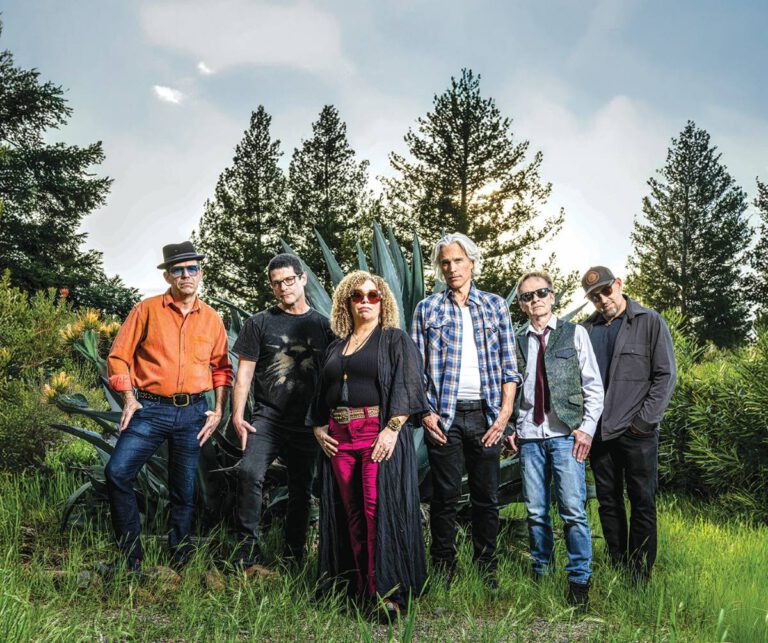
The superstar trio, which consists of Better Than Ezra’s Kevin Griffin, Sugar Ray’s Mark McGrath and Tonic’s Emerson Hart, will be playing their respective bands’ best-known hit songs, along with holiday favorites, and several cover songs.

Together, the three artists have impressive musical resumes.

Better Than Ezra’s 1995 single, “Good,” topped the charts, paving the way for subsequent hits like “Desperately Wanting,” “In the Blood” and “King of New Orleans.” Griffin has also gone on to become a successful songwriter, collaborating with artists ranging from Taylor Swift and Molly Tuttle to Sugarland and Train.

Mark McGrath, meanwhile, is the driving force behind Sugar Ray, whose mega-hit, “Fly,” elevated their Floored album to double platinum status. The group followed up with hit singles like “Every Morning” and “Someday.” McGrath has also hosted television shows like Extra and Don’t Forget the Lyrics!

Rounding out the trio is Emerson Hart, whose band, Tonic, scored one of the ’90s most successful alt-rock hits with “If You Could Only See,” which was alt-rock radio’s most-played song in 1997. Their debut album, Lemon Parade, went platinum, and Hart has also gone on to be a Grammy-nominated solo artist and successful producer.

We caught up with Griffin to talk about the hits of the ’90s, the encounter that opened the doors to collaboration and the fun of sharing the spotlight with two of his best friends.

Bill Forman: Is it a relief to take a break from being the frontman of a band for the whole night and share the spotlight with two other frontmen?

Kevin Griffin: We love it. All three of us are used to being kind of the benevolent dictator in our respective bands, but this band is a true democracy. You gotta check your ego at the door and be a team player. 

So I get to be the frontman for the four or five songs in the set that I’m singing lead on. And then while Mark McGrath runs around being Mark McGrath, I get to be a sideman. So it’s a blast. Emerson Hart and I were talking about it and just how much we enjoy it. We’re all like, ‘Man, in a perfect world, this is the only band we’d do.’

In your book, ‘The Greatest Song,’ you write about the importance of collaboration, which you’re obviously doing here. But you’ve also collaborated with a wide range of other artists. How did that all get started for you?

Well, you know, we’ve always kept the band (Better Than Ezra) going. But as far as the collaboration, I wasn’t seeking it out. It just kind of happened. Back in 2001, we were recording at Conway Studio in Los Angeles, and there were two other artists who were working there at the time. Justin Timberlake was in Studio A, we were in Studio B and Meat Loaf was in Studio C. 

And when Meat Loaf walked past our studio one morning, he heard a song that I’d written called ‘Closer.’ Then later, his manager, Alan Kovac, sought me out in the studio and asked if I would write a song with Meat Loaf. It was just crazy. My initial reaction in my head was fear, which is why I’d never collaborated before. But then I was like, wait a second, this is one of my favorite artists as a child, and he’s a legend. And so I went and wrote a song with him.

So that was the beginning?

It was. And then Meat Loaf’s manager, who also managed Blondie, got me to write a single for her (Deborah Harry’s band), and Barry Gibb, and all these different people. So suddenly I was collaborating, and I saw how much more productive I could be, how many more doors it opened for me as a songwriter in my career. And I’ve always really been about options, and irons in the fire. And that always keeps me excited, like, what’s next?

You’ve also written about drawing inspiration from other artists and reverse-engineering songs. Can you give me an early example of that, where you heard a song and you thought, ‘This is amazing,’ and then figured out why it was amazing?

Yeah, we did a song called ‘In the Blood,’ which was the second Better Than Ezra single we ever released. I was really into a song called ‘Black Metallic’ by a ’90s band from England called Catherine Wheel. And there’s this little note it hits that I just love, and I thought, ‘They should have made that a bigger part of the song.’ 

So I knew the melody and I learned the chords underneath it, and I used that as a jumping off point for my own song. So if you listen to ‘Black Metallic’ and ‘In the Blood,’ you can hear where I got that chorus from and what the starting note was.

Your Pilgrimage Festival has been going on for a decade now. Given that New Orleans is your former stomping ground, was Jazz Fest a big part of the inspiration for it?

The DNA of Pilgrimage definitely comes from Jazz Fest in New Orleans, which is 50-plus years old now. I’ve been going to it my whole life, and it made a huge impression. I love the idea of a multi-genre music festival that’s family friendly, but still cool and challenging, and celebrates an entire region. So that’s what I wanted Pilgrimage to be as well.

Getting back to the tour. What are some of the Christmas songs that fans can expect to hear at one of your shows?

There will be classics like ‘Little Saint Nick’ by The Beach Boys and ‘Last Christmas’ by Wham! We’re also going to play an original song that Mark McGrath and I wrote called ‘Must Be Christmas.’ We played it as part of a super group, if you will, called Band of Merry Makers with Fitz & The Tantrums, Tyler Glenn from Neon Trees, Natasha Bedingfield and Nick (Hexum) from 311. And then a few other Christmas songs that will be surprises.

And the rest of the setlist?

We’ll be playing the best of your favorite ’90s bands. So not only do we play Sugar Ray, Better Than Ezra and Tonic hits; we’ll also play hits from other ’90s bands, whether it’s Blur or Chumbawamba. So it’s a party from start to finish.

Ezra Ray Hart performs from 8 to 11pm, Friday, Dec. 19, at Graton Resort & Casino, 288 Golf Course Dr. West, Rohnert Park. Tickets are $49.50 to $79.50. 21+. More info at bit.ly/never-ending-90s.

Duke Ellington’s Nutcracker Suite Adaption by New World Ballet Director Victor Temple

And so it was that he, a b-boy, was discovered by she, a prima ballerina, on the streets of Chicago. 

The year was 1980. Breaking was just then breaking through as the next big thing in dance, and Victor Temple and his crew were dancing for dollars on cardboard flats along Chicago’s “Miracle Mile.” Dame Sonia Arova was an international star touring the dance world, performing in a run of shows with The Chicago School of Ballet, one of America’s premiere ballet companies.

Though worlds apart, Arova saw something familiar in Temple’s dance and directed him to visit the ballet company’s development school the next day. He knew that she was opening doors for him—and even openly tasking instructors with irresistible, imperious ways to look after the young Black dancer as he began the exacting rigors of ballet training.

Flash forward. When, many years later, he learned that the prima ballerina died on a return from ballet dancing to acclaim in China, Temple called her widower from an airport phone, asking and begging him what could he possibly do to repay Arova for all that she had done for him. “You can’t pay it back,” he told Temple, “but you can pay it forward.”

That was how I met Victor Temple, as he paid it forward at his Santa Rosa dance school, where he has raised new generations of dancers into the world of ballet.

He stood, dressed in all-black, his dreadlocks up in a colorful wrap, an outsized scarf around his neck, in the fashion of theatrical performance directors the world over. On his black T-shirt was printed the iconic image of boxer Muhammed Ali standing defiant and triumphant over an opponent knocked flat (“float like a butterfly, sting like a bee”). 

Temple was prominent amid a gaggle of playful young dancers (his age 10-13-year-old ballet group) in dance costume, surrounded by a smattering of middle-aged parents in civvies. He was directing them—all of them, dancers and non-dancing parents alike—in a party scene set to the song, “It Don’t Mean a Thing (If It Ain’t Got That Swing).” 

The scene is part of his upcoming adaptation of Duke Elington’s Nutcracker Suite—a showcase for the school, featuring junior and senior ballet companies, and all levels of instruction below them, including the six year olds. It is a new North Bay tradition.

Cincinnatus Hibbard: Anchoring the show are top adult dancers from the likes of SF Ballet. But these ringers are in some sense representative of your school’s output…

Victor Temple: I place 100% of my graduating students in top schools and companies—even if I have to drive or fly them to auditions myself.

What other classes do you have?

Hip-hop, breakdancing, modern, West African drum. And my ballet graduates can dance them all.

What beautiful cultural hybridity. I understand the famous Dance Theater of Harlem offered to give you its name to establish a sister school right here in Santa Rosa.

Santa Rosa would be a dance hub on the West Coast. I can’t do it because my studio’s too small. We need a warehouse with space for at least three full-sized studios.

Lean more: Duke Ellington’s ‘Nutcracker Suite’ will be performed at Santa Rosa’s Finley Center Dec. 20 at 3 and 6pm. Tickets are $40, and free for those under two years old. newworldballet.com. Full interview with Temple and me at buzzsprout.com/2033926.

Ouch, the Wisdom of Pain

Can I turn pain into wisdom? I suppose that’s what I’m trying to do right now, as I sit with a notebook on my lap. I’m not feeling optimistic that I’ll succeed.

One of the inconveniences in my life these days is called gout, a condition, in my right knee, that absolutely lives up to the negativity of its name. Ongoing ouch. Indeed, getting around with the help of a cane—whom I had named Citizen Cane—no longer felt sufficiently safe. I started using a walker.

I also wound up getting a cortisone shot in the knee, which had significantly eased the pain in the past. But this time, oh my God, that’s not what happened. This time, my initial reaction was something the doctor called “transient steroid flare”—the pain, rather than easing up, increased with a unique intensity, unlike anything I could ever remember experiencing. Whenever I bent my knee, yikes, all the lights went out in Georgia, or something like that. 

Here at the retirement community where I now live, I had to switch from independent living to temporary assisted living—ouch, indeed. Sitting in a chair, at a desk, in front of my computer, felt no more doable than climbing Mt. Kilimanjaro. Eventually, the steroid flare started to ebb and, wow, I could sit at my desk again. I could do stuff again. The gout is still there, of course. I still use the walker to get around and hardly trust my physical situation.

What comes next? Who knows? Am I suddenly appreciative of my ability to walk again, my ability to function? I’d like to cry yes, but I don’t really think so; certainly not appreciative enough. Maybe, as I return to my prior life—as I return to absorbing the news of the day, as I gape at the hell we inflict on one another—I can at least note with intensified wonder how lucky I have it compared to someone living in a war zone.

Robert Koehler is the author of ‘Courage Grows Strong at the Wound.’

Free Will Astrology, Dec. 17-23

0

ARIES (March 21-April 19): Nine hundred years ago, Sufi philosopher Al-Ghazali provided rigorous advice that’s not very popular these days. “To understand the stars,” he said, “one must polish the mirror of the soul.” Here’s my interpretation: To fathom the truth about reality, you must be a strong character who treasures clarity and integrity. It’s highly unlikely you can gather a profound grasp of how life works if your inner depths are a mess. Conversely, your capacity to comprehend the Great Mystery increases as you work on purifying and strengthening your character. Everything I just said is good advice for all of us all the time, but it will be especially potent and poignant for you in the coming months.

TAURUS (April 20-May 20): The sound of a whip cracking is a small sonic boom. The tip breaks the sound barrier, creating that distinctive snap. In my astrological reckoning, Taurus, life has provided you with the equivalent of a whip. During the coming months, you will have access to a simple asset that can create breakthrough force when wielded with precision and good timing. I’m not referring to aggression or violence. Your secret superpower will be understanding how to use small treasures that can generate disproportionate impacts. What’s your whip?

GEMINI (May 21-June 20): Some Japanese potters practice yohen tenmoku. It’s a technique used to create a rare type of tea bowl with shifting, star-like iridescence on deep, dark glaze. The sublime effect results from a process that’s unusually demanding, highly unpredictable and hard to control. Legend says that only one in a thousand bowls achieves the intended iridescence. The rest, according to the masters, are “lessons in humility.” I believe you can flourish by adopting this experimental mindset in the coming months. Treat your creative experiments as offerings to the unknown, as sources of wonder, whether or not your efforts yield stellar results. Be bold in trying new techniques and gentle in self-judgment. Delight in your apprenticeship to mystery. Some apparent “failures” may bring useful novelty.

CANCER (June 21-July 22): A fair-weather cumulus cloud typically weighs more than a million pounds and yet floats effortlessly. Let’s make that one of your prime power symbols for 2026, Cancerian. It signifies that you will harbor an immense emotional cargo that’s suspended with grace. You will carry complex truths, layered desires and lyrical ambitions, but you will manage it all with aplomb and even delight. For best results, don’t overdramatize the heaviness; appreciate and marvel at the buoyancy.

LEO (July 23-Aug. 22): Every 11 years, the sun reverses its magnetic polarity. North becomes south, and south becomes north. The last switch was completed earlier this year. Let’s use this natural phenomenon as your metaphorical omen for the coming months, Leo. Imagine that a kind of magnetic reversal will transpire in your psyche. Your inner poles will flip position. As the intriguing process unfolds, you may be surprised at how many new ideas and feelings come rumbling into your imagination. Rather than resist the cosmic acrobatics, I advise you to welcome and collaborate with them.

VIRGO (Aug. 23-Sept. 22): The sculptor Louise Bourgeois was asked why she worked so often with the image of the spider. She said it was a tribute to her mother, who was deliberate, clever, patient, soothing, helpful and useful—just like a spider. In the coming months, I invite you to embody her vision of the spider. You will have the wherewithal to weave hardy networks that could support you for years to come. Be creative and thoughtful as you craft your network of care. Your precision will be a form of devotion. Every strand, even fragile ones, will enhance your long-term resilience.

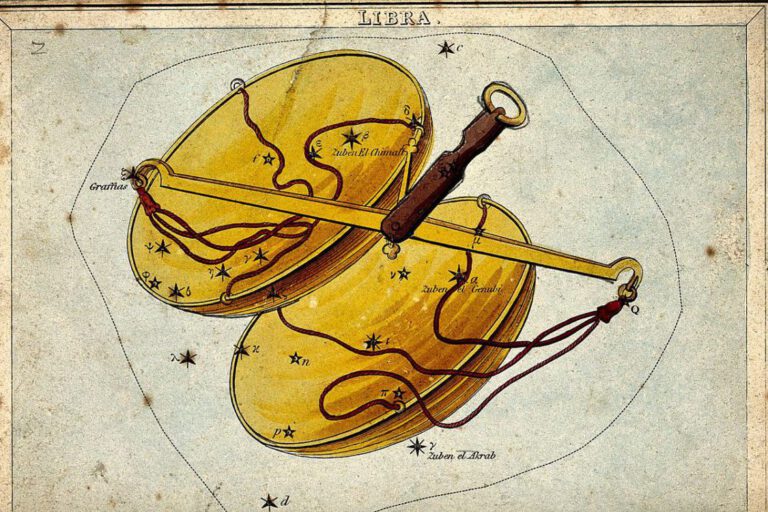
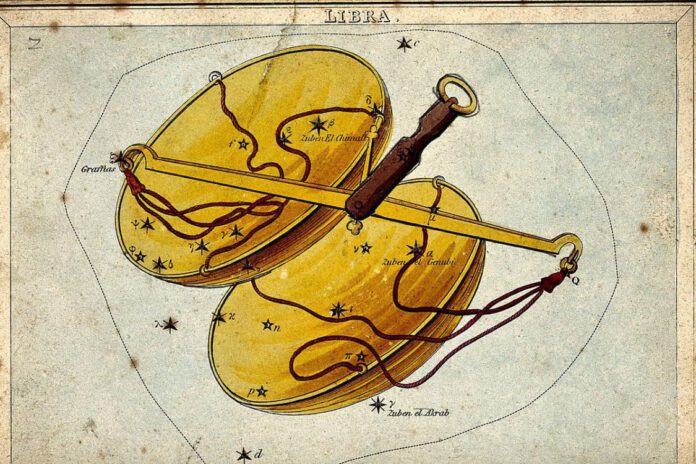
LIBRA (Sept. 23-Oct. 22): Researchers studying music theory know that dissonance—sounds that feel “wrong” or create tension—is in part culturally determined. Indonesia’s gamelan music and Arabic maqam scales are beautiful to audiences that have learned to appreciate them. But they might seem off-kilter to Westerners accustomed to music filled with major thirds and triads. Let’s use this as our starting point as we contemplate your future in 2026, Libra. Life may disrupt your assumptions about what constitutes balance and harmony. You will be invited to consider the possibility that what seems like discord from one perspective is attractive and valuable from another. My advice: Open your mind to other ways of evaluating what’s meaningful and attractive.

SCORPIO (Oct. 23-Nov. 21): In the Sonoran Desert of the southwestern United States, Arizona bark scorpions are hard to see at night. Scientists who want to study them can find them only by searching with flashlights that emit ultraviolet light. This causes the scorpions’ exoskeletons to fluoresce and glow a distinct blue-green or turquoise color, making them highly visible. Let’s use this scenario as a metaphor for you. In the coming months, you may reveal your best brilliance under uncommon conditions. Circumstances that seem unusual or challenging will highlight your true beauty and power. What feels extreme may be a good teacher and helper. I urge you to trust that the right people will recognize your unique beauty.

SAGITTARIUS (Nov. 22-Dec. 21): According to legend, the genius composer Mozart heard entire symphonies in his imagination before he wrote down any notes. That’s a slight exaggeration. The full truth is that he often worked hard and made revisions. His inspiration was enhanced by effort and craft. However, it’s also true that Mozart wrote at least five masterful works in rapid succession, sometimes with remarkably few corrections on the manuscript. They included his last three symphonies (Nos. 39, 40 and 41). I predict you will have a Mozart-like aptitude in the coming months: the ability to perceive whole patterns before the pieces align. Trust your big visions.

CAPRICORN (Dec. 22-Jan. 19): In Greek mythology, Proteus was a sea god famed for his ability to change his shape endlessly to evade capture. But now and then, a persistent hero was able to hold on to Proteus through all his transformations, whether he became a lion, serpent, tree or flame. Then the god would bestow the gift of prophecy on the successful daredevil. I suspect that in the coming months, you will have an exceptional power to snag and grasp Proteus-like things, Capricorn. As a result, you could claim help and revelations that seem almost magical.

AQUARIUS (Jan. 20-Feb. 18): In Florence, Italy, the Accademia Gallery houses several of Michelangelo’s sculptures that depict human figures partially emerging from rough blocks of marble. They seem to be caught in the process of birth or liberation. These works showcase the technique Michelangelo called non-finito (unfinished), in which the forms appear to struggle to escape from the stone. In the coming months, Aquarius, I foresee you undergoing a passage that initially resembles these figures. The good news is that unlike Michelangelo’s eternally trapped characters, you will eventually break free.

PISCES (Feb. 19-March 20): To prepare you for 2026, I’ve gathered three quotes that address your most pressing need and urgent mandate. I recommend you tape this horoscope to your bathroom mirror. 1. “We cannot live in a world interpreted for us by others. An interpreted world is not a hope. Part of the terror is to take back our listening, to use our own voice, to see our own light.” —author Elaine Bellezza. 2. “To be yourself in a world that is constantly trying to make you something else is the greatest accomplishment.” — Ralph Waldo Emerson. 3. “The ability to tell your own story, in words or images, is already a victory, already a revolt.” —Rebecca Solnit.

The Blue Road: Author Norman Solomon Warns of Democrats’ Missteps in New Book

Norman Solomon has spent decades watching American politics unfold through the vigilant lens of a media watchdog and journalist. 

Throughout his career, the West Marin-based author has documented the ways what he terms “corporate media” have degraded the political landscape, as well as how the priorities of establishment Democrats have helped shape the country’s current political moment. In his new book, The Blue Road to Trump Hell: How Corporate Democrats Paved the Way for Autocracy, released this month, Solomon compiles nearly a decade of writings and reflections on the willful missteps of Democratic Party leadership—and is making his work available to readers completely free of charge.

Solomon is the national director of RootsAction and executive director of the Institute for Public Accuracy. He is the author of more than a dozen books, including War Made Easy: How Presidents and Pundits Keep Spinning Us to Death (2005), which was adapted into a 2007 documentary narrated by actor Sean Penn. 

He has written for publications including The Washington Post, Los Angeles Times and The New York Times, and has focused throughout his career on media interests and corporate influence in politics. In The Blue Road to Trump Hell, Solomon draws on this depth of experience as a media critic and progressive to chronicle, in real time, the forces that led Democrats to consequential losses in 2016 and 2024.

The book is structured as a series of essays, capturing Solomon’s real-time reflections on the news of the day. “I just kept writing as events unfolded,” he says, “mainly to push back against a culture of political passivity…” Over time, however, he began to recognize that what he—and Democrats across the political spectrum—feared most, another Trump presidency, was becoming increasingly likely, due in large part to the Democratic Party establishment’s failure to learn from previous mistakes. 

“When 2024 turned into a kind of Groundhog Year, with Trump’s second win, and 2025 became ever more terrible,” Solomon says, “the potential value of a book about how this happened came into focus.”

In shaping his contemporaneous writings into a book, Solomon chose to preserve their integrity by presenting them as they were originally written, as individual, chronologically dated articles, rather than reworking them into a single retrospective narrative. As he explains, “In politics, we easily forget important details and subtexts. The spin cycle is nonstop—if we’re paying close attention, it can make us dizzy.” 

To avoid incorporating media spin or altering his perspectives in light of subsequent events, Solomon deliberately left the essays intact, noting in the introduction that “nothing has been revised for hindsight.” Even so, the book functions as something of an autopsy of two elections the Democratic Party fumbled. As Solomon puts it, “The Blue Road to Trump Hell exhumes history that’s been buried in avalanches of later events.”

This dysfunction is inseparable, in Solomon’s telling, from the structure of American media. Throughout the book, he critiques what he calls “corporate media,” saying “Media outlets owned by huge companies are dedicated most of all to maximizing profits,” a priority that shapes coverage in ways that undermine public understanding. In contrast, he points to smaller, often independent outlets operating outside that system as evidence that another media model remains possible.

Even within this dysfunctional media landscape however, some turning points appear with clarity. As he reflects on how certain events and perpectives—both his own and those of the figures he was chronicling—aged over time, Solomon notes, “We didn’t really need hindsight to realize that the corporatized politicians like Hillary Clinton, Joe Biden and Kamala Harris were giving ground to—and, in effect, often enabling—the monstrous politics of Donald Trump and his cronies.” 

On the other hand, one figure continues to stand out to him as a progressive sage: “Looking back at the history presented in this book, I’m intensely reminded of how prophetic Bernie Sanders has been and continues to be,” Solomon says.

Solomon chronicled the descent into the “real-life Shakespearean tragedy of President Biden” as he made his choice to run for reelection in 2024. He points to Democratic Party leadership as Biden’s “enablers,” arguing that they worked to suppress primary challenges while pushing the narrative that Biden—who had defeated Trump in 2020—was the strongest candidate to do so again, despite polling that suggested otherwise. 

“A gap has grown vast,” he writes in late 2023, “between current assessments from media, largely based on voter opinion data, and current public claims from congressional Democrats who keep their nose to the talking-points grindstone.”

He extends his critiques of the current political landscape to the concentration of wealth and power more broadly, frequently using the term “American oligarchs” to describe U.S. elites. Billionaires, he argues, now exert enormous influence over mass media, technology platforms and electoral politics. 

Figures like Elon Musk, Jeff Bezos and Mark Zuckerberg wield “colossal undemocratic, actually anti-democratic, power,” Solomon says, a reality he believes the language of oligarchy captures more accurately than euphemisms about elites or donors. “The extreme concentrations of wealth and economic power are extreme concentrations of political power,” he writes.

While the subject matter of The Blue Road to Trump Hell is often weighty, the book’s tone is lightened by Solomon’s collaboration with political cartoonist Matt Wuerker, whose illustrations appear on the cover and at the beginning of each section. Solomon and Wuerker first became collaborators in the 1990s, when Wuerker illustrated the covers of several books Solomon co-wrote with media critic Jeff Cohen. 

Wuerker, a founding member of Politico, was awarded the Pulitzer Prize for Editorial Cartooning in 2012 and continues to satirize the increasingly absurd excesses of Washington’s elite as the outlet’s editorial cartoonist. “Matt is one of the great political cartoonists of our era, or any era,” Solomon says. “In vivid colors, Matt brilliantly draws the absurdity and tragedy of current events,” offering readers moments of levity and catharsis amid relentless political disappointments.

True to his critique of corporate media greed, Solomon chose to make The Blue Road to Trump Hell freely available online. “I’m excited that the book is free for everyone from the start, via BlueRoad.info, as an e-book or PDF,” he says. “The media world has far too many paywalls.” The decision was both ideological and practical. “As a practical matter,” he adds, “the book will reach far more people because anyone can read it without charge.” 

The book’s reception suggests it has found an audience among activists and progressive leaders alike. U.S. Rep. Ro Khanna praised the book on X in November, calling it “a must read” for its analysis of “the bad trade deals, financial deregulation, bad wars, & offshoring that created the anger and resentment for a populist revolt.” For Solomon, such responses affirm the book’s core goal: not merely to document political failure, but to interrupt it.

Ultimately, The Blue Road to Trump Hell is both a memorialization and a warning: a chronicle of Democratic Party leadership’s mistakes and the political and economic conditions that produced them. The book stands as an act of resistance to complacency and collective amnesia, offering a moment of accountability, while being in and of itself an artifact of cautious optimism about a party’s ability to learn from its failures. Despite setbacks, Solomon, a lifelong activist, remains hopeful and focused on what he believes truly matters, saying, “I figure that I should keep adding my voice to outcries for a much better world.”

‘The Blue Road to Trump Hell: How Corporate Democrats Paved the Way for Autocracy’ can be downloaded for free at BlueRoad.info.

East to West, Peter Merriam Hits the Slopes and the Vineyard

Peter Merriam and his wife, Diana, purchased their Sonoma County vineyard estate in 2000, as a next chapter for his 20-year retail wine career. 

Today, they run the label with their son, Evan, and family continues to be a core tenant to their business. This is especially true during the holidays, when their Greek heritage shines through even more. Wine and food are central to the Merriams, highlighted at Christmas time with dishes like fasolakia (green beans in tomato sauce), grilled lamb and koulourakia cookies, which are actually traditional for Easter. But the crunchy, buttery texture and bright citrus flavors make them suitable for a special Christmas sweet bite as well. 

As an oenophile and French wine lover from his days in retail, Merriam likes to choose a special bottle to open from his French wine collection, a nod to the wines that first inspired his journey as a vintner. They also pair their holiday meal with cherished selections from Merriam’s own cellar, like the Rockpile Cabernet Sauvignon, perfect with hearty winter meals and festive celebrations.

When not celebrating over food and wine, Merriam is an avid skier and fly fisherman, finding that the discipline, dedication and focus required for both activities have served him well in the vineyard. A natural conservationist, he is the driving force behind the sustainable and organic philosophy at Merriam as well. 

He and Diana split their time between Sonoma County and their home in Maine. As native New Englanders, they return there every winter to ski and enjoy the New Year over bowls of clam chowder and their Merriam Blanc de Noirs.

Amber Turpin: How did you get into this work?

Peter Merriam: Years in the beverage industry, starting with a wine shop outside of Boston, Massachusetts.

Did you ever have an ‘aha’ moment with a certain beverage? If so, tell us about it.

Yes, my first tasting of a French Burgundy wine back in the ’80s: Morey Saint Denis.

What is your favorite thing to drink at home?

Pinot noir.

Where do you like to go out for a drink?

Local family-owned restaurants.

If you were stuck on a desert island, what would you want to be drinking (besides fresh water)?

French Burgundy wines.

Merriam Vineyards, 11650 Los Amigos Rd., Healdsburg, 707.433.4032. merriamvineyards.com.

Your Letters, Dec. 17

White Noise

Thanks for your recent article about the—insert adjective here: embarrassing, stupid, wimpy or whatever other word one might add—Pantone “Color of the Year” (“Color Me Meh: The Coming ‘Color of the Year’ Is, Um, White.” Dec. 10, 2025).

In my opinion, as a colorist, architectural color consultant and artist, I found it both laughable and disappointing, to say the least.

Some years ago, I was a member of the Color Marketing Group—not because I “market colors,” per se, but because it was interesting, as a color professional in my own way, to connect with those who rely on creating trend-based colors and to see what their processes and approaches were.

Yet I might also add: not surprising.

It turns out many designers agree, which is really neither “here nor there” to me, but I do find it interesting.

I’ve been doing this color work since the mid-1980s, so I’m not a newbie to the concepts of how we can—and must—use color intentionally.

In any case, I just wanted to say thanks for the article. If you’re interested, I invite you to visit these two websites: bjacobscolordesign.com and barbarajacobsfineart.com.

Barbara Jacobs
Sebastopol

Museum Matters: Carnegie’s Gift Keeps Giving

There was a time not so long ago when the wealthy class of Americans gave back for the greater good of us all rather than hoarding billions for the sake of themselves.

Surely, steel baron Andrew Carnegie (who started his path to billions in the 19th century—his worth would’ve been $309 billion in today’s dollars) has some skeletons in the proverbial closet, but by the 20th century he had evolved into a philanthropist who gave out grants to more than 1,600 communities across the country to help build free public libraries. 

Two of those library buildings are still standing in Sonoma County and are now the Petaluma Historical Library & Museum and the Healdsburg Museum and Historical Society, each of which will soon receive a $10,000 gift from Carnegie Corporation of New York. Not only did Carnegie give away millions; he also established a way to keep on giving well beyond his death.

The awards are part of “Carnegie Libraries 250,” a special initiative celebrating the upcoming 250th anniversary of the signing of the Declaration of Independence and honoring the roughly 1,280 Carnegie libraries still serving their communities across the United States. 

Sonoma County Library director Erika Thibault said, “The grant will be added to the library’s general fund, helping us continue to provide welcoming spaces and valuable resources for all of our community members.”

Located at 221 Matheson St., just off the square in Healdsburg, the Healdsburg Museum and Historical Society exists to “collect, protect, preserve and interpret the artifacts, documents and photographs that trace the rich history of Healdsburg and surrounding area.”

The space served as the town’s library from 1911-1987, when some local shuffling moved organizations around and a new library was built. The Carnegie library—designed by Petaluma architect Brainerd Jones and built by Santa Rosa contractor Frank Sullivan—was slated for demolition, but the Healdsburg Historical Society joined forces with locals and saved the building. It opened as the Healdsburg Museum and Historical Society in 1990 and is now listed on the National Register of Historic Places.

The museum houses a permanent collection of rich, local history. Their current exhibition is “Our Favorite Toys.” Curated by Lauren Villacorte and Frances Schierenbeck, the exhibition features classic toys, games and crafty activities to engage visitors. The exhibit runs through Jan. 4.

Located at 20 Fourth St., the Petaluma Historical Library & Museum’s history is a bit different. It  took the initiative of the Petaluma Ladies Improvement Club, whose members wrote letters to Carnegie asking for funds to build the library.

In 1901, Carnegie offered $12,500, conditional upon site donation. Addie Atwater, president of the Ladies Improvement Club, owned property at the corner of Fourth and B streets. She sold it to the city for much less than market value, under the terms that it must be used for a library and if that changed, it would be returned to her or her heirs.

Jones was brought in to design the building. The crown jewel of the design is a gorgeous stained-glass dome that to this day remains one of the largest free-standing stained-glass domes in Northern California. It even survived the 1906 earthquake with minimal damage.

The Petaluma Museum is also having a toy related exhibition, titled “Toys Through Time: From Machine Age to Space Age.” Featuring a collection of antique mechanical toys on loan from a local collector, alongside Star Wars toys from Rancho Obi-Wan, the exhibition traces a journey from the ingenuity of clockwork mechanisms to the imagination of cinematic spaceflight. It runs until Feb. 1.

For more information, visit petalumamuseum.com and healdsburgmuseum.org.

Humbug: Musical ‘Scrooge’ in Sonoma 

Sonoma Arts Live's production of Scrooge! The Musical.
What’s Christmas without a production of Charles Dickens’ A Christmas Carol (or a reasonable facsimile thereof) on a local stage? Sonoma Arts Live fills the bill with their production of Scrooge! The Musical. The SAL production runs at the Sonoma Community Center through Dec. 21. The stage version, which Leslie Bricusse adapted himself from his 1970 movie musical starring Albert...

Frankenstein’s Miss, Guillermo del Toro Blew His Chance 

Guillermo del Toro directs the latest film adaptation of Frankenstein.
Guillermo del Toro, the director of the latest of many Hollywood adaptations of Mary Shelley’s groundbreaking novel, Frankenstein, has said that his movie is not about artificial intelligence. Wait, the story was about human created intelligence 200 years ago, but not now? At this moment, it has to be.  Frankenstein is a luscious gorefest showcasing the Mexican director’s unmatched ability...

’90s Three-Way, Ezra Ray Hart Does X-Mas at Graton

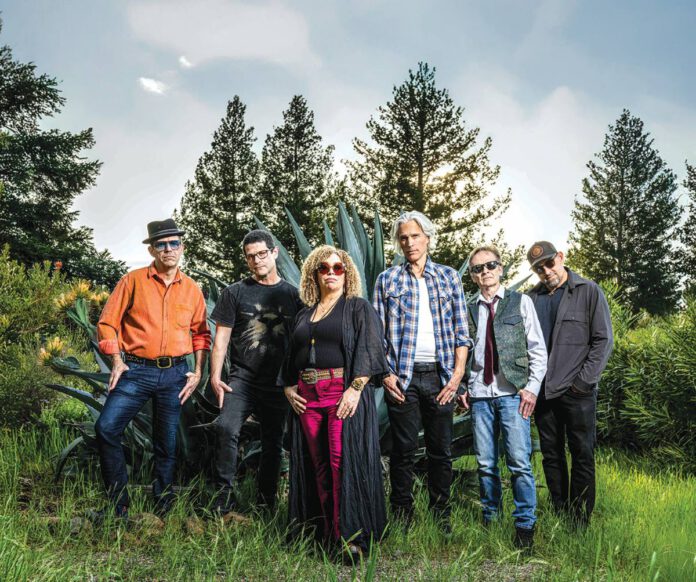
Ezra Ray Hart's superstar trio consists of Better Than Ezra’s Kevin Griffin, Sugar Ray’s Mark McGrath and Tonic’s Emerson Hart.
The three high-profile frontmen who comprise Ezra Ray Hart have played holiday-themed performances in the past, but their current 90s Hits & Xmas Riffs tour marks the first time they’ve taken the show out on the road—let alone to Graton Resort and Casino this Friday, Dec. 19. The superstar trio, which consists of Better Than Ezra’s Kevin Griffin, Sugar Ray’s...

Duke Ellington’s Nutcracker Suite Adaption by New World Ballet Director Victor Temple

Victor Temple's adaption of Duke Elington’s Nutcracker Suite will be performed in Santa Rosa.
And so it was that he, a b-boy, was discovered by she, a prima ballerina, on the streets of Chicago.  The year was 1980. Breaking was just then breaking through as the next big thing in dance, and Victor Temple and his crew were dancing for dollars on cardboard flats along Chicago’s “Miracle Mile.” Dame Sonia Arova was an international...

Ouch, the Wisdom of Pain

Open Mic writers express their perspectives on a variety of topics.
Can I turn pain into wisdom? I suppose that’s what I’m trying to do right now, as I sit with a notebook on my lap. I’m not feeling optimistic that I’ll succeed. One of the inconveniences in my life these days is called gout, a condition, in my right knee, that absolutely lives up to the negativity of its name....

Free Will Astrology, Dec. 17-23

Free Will Astrology
ARIES (March 21-April 19): Nine hundred years ago, Sufi philosopher Al-Ghazali provided rigorous advice that’s not very popular these days. “To understand the stars,” he said, “one must polish the mirror of the soul.” Here’s my interpretation: To fathom the truth about reality, you must be a strong character who treasures clarity and integrity. It’s highly unlikely you can...

The Blue Road: Author Norman Solomon Warns of Democrats’ Missteps in New Book

'The Blue Road to Trump Hell’
Norman Solomon has spent decades watching American politics unfold through the vigilant lens of a media watchdog and journalist.  Throughout his career, the West Marin-based author has documented the ways what he terms “corporate media” have degraded the political landscape, as well as how the priorities of establishment Democrats have helped shape the country’s current political moment. In his new...

East to West, Peter Merriam Hits the Slopes and the Vineyard

Merriam Vineyards in Healdsburg
Peter Merriam and his wife, Diana, purchased their Sonoma County vineyard estate in 2000, as a next chapter for his 20-year retail wine career.  Today, they run the label with their son, Evan, and family continues to be a core tenant to their business. This is especially true during the holidays, when their Greek heritage shines through even more. Wine...

Your Letters, Dec. 17

White Noise Thanks for your recent article about the—insert adjective here: embarrassing, stupid, wimpy or whatever other word one might add—Pantone “Color of the Year” (“Color Me Meh: The Coming ‘Color of the Year’ Is, Um, White.” Dec. 10, 2025). In my opinion, as a colorist, architectural color consultant and artist, I found it both laughable and disappointing, to say the...

Museum Matters: Carnegie’s Gift Keeps Giving

The Petaluma Historical Library & Museum and the Healdsburg Museum and Historical Society will each soon receive a $10,000 gift from Carnegie Corporation of New York
There was a time not so long ago when the wealthy class of Americans gave back for the greater good of us all rather than hoarding billions for the sake of themselves. Surely, steel baron Andrew Carnegie (who started his path to billions in the 19th century—his worth would’ve been $309 billion in today’s dollars) has some skeletons in the...
11,084FansLike
4,446FollowersFollow
6,928FollowersFollow