
Jakob Dylan and the Wallflowers

0

Jakob Dylan gets personal on latest CD

By Alan Sculley

When Jakob Dylan and his band, the Wallflowers, were making their second CD, Bringing Down The Horse (Interscope), they weren’t thinking about hitting it big. Instead, the goal was much more modest. “When you’re a band that’s not successful, you’re always looking for the next break, you’re looking for the next step,” Dylan said. “That doesn’t mean massive success as much as it means you’re fighting to keep your job, you’re fighting to pay your bills or you’re fighting to do a little better than you did the last time so you can stay on a record label. You’re fighting to keep your band together because people leave when you’re not successful. They’ve got to move on. And it was a struggle.”

Dylan’s not being dramatic in putting Bringing Down The Horse into this perspective. The fact is, the Wallflowers’ self-titled 1992 CD had been a fairly spectacular flop, topping out at about 40,000 in sales. Seeking a new start, Dylan and the Wallflowers asked out of their contract with Virgin Records–a request the label was more than happy to honor. But offers from other labels didn’t pour in, and by the time the Wallflowers eventually got a new deal with Interscope Records, three of the band members had left the group, leaving guitarist/singer Dylan and keyboardist Rami Jaffee as the only original Wallflowers. Even Dylan admits Interscope’s expectations for Bringing Down The Horse were not that high.

“When I made that record, I was concerned with getting 12 more songs on a CD and doing a little better, or getting further, than I had the time before,” Dylan said, further explaining his mindset heading into that album. “My idea was not to conquer the world. It never has been. I want to achieve more each time I do these things than I had last time. And that doesn’t necessarily mean sales or exposure. I was interested in making a much more complete record last time around than I had on my first record.”

Dylan and the Wallflowers not only took a step forward artistically, they took a huge leap in popularity. By the time Bringing Down The Horse finished its run, it had spawned four hit singles–“6th Avenue Heartache,” “One Headlight,” The Difference” and “Three Marlenas”–and worldwide sales had hit six million. So obviously, Dylan, Jaffee and the other members of the Wallflowers–bassist Greg Richling, guitarist Michael Ward and drummer Mario Calire–approached their new CD, Breach, in a completely different situation than the one that preceded Bringing Down The Horse. But Dylan’s comments suggest that the focus he brought to the new CD had not shifted much from where it had been four years earlier when the Wallflowers were virtually unknown and Dylan’s chief claim to fame was that he was the son of music legend Bob Dylan.

“My main concern was just in the songs,” Dylan said, noting how the Wallflowers sought to keep any thoughts of following up to the success of Bringing Down The Horse out of the equation while writing and recording “Breach.” “I wanted to explore different styles of songwriting that I hadn’t really done before. And that involved actually being simpler than I had been before and I wrote more direct.”

Indeed, the lyrics to certain songs on Breach may provide the greatest contrast to “Bringing Down The Horse.” On a musical level, the new CD retains much of the rootsy pop feel of the previous CD. And like Bringing Down The Horse, Breach has its share of songs that reveal Dylan’s notable talent for memorable melodies.

For instance, the opening song, “Letters From The Wasteland” catches its spark from a short moody guitar lick that infiltrates the verses. Rockers like “Sleepwalker” and “Some Flowers Bloom Dead” have hooks as insistent as their tempos, while “Murder 101” echoes the punky pop of the Replacements, as Dylan shares vocals with Elvis Costello.

When the Wallflowers settle into a mid-tempo groove, the results are just as satisfying, whether the group is flavoring a tune like “Witness” with some winsome horns or spicing the Tom Petty-ish “Hand Me Down” with some tasty slide guitar. Lyrically, though, there are notable contrasts. While Dylan said he has always invested plenty of feeling into his songs (“I don’t think the (new) record’s any more personal than I’ve been before, he said), the shift toward more of a direct, first-person perspective heightens the emotional tension of several songs.

This is bound to raise the curiosity of fans who have always searched Wallflowers’ lyrics for clues about Dylan’s relationship with his famous father. On past records, any such references were tenuous at best. But Breach has a pair of songs–“Hand Me Down” and “I’ve Been Delivered”–that could easily be interpreted as chronicles of the challenges that can come with living in the shadow of someone whose impact has been as profound as Bob Dylan’s.

“Hand Me Down” is a stinging look at trying to live up to the expectations of others. With lines like “You feel good and you look like you should/but you won’t ever make us proud,” or “Living proof that evolution is through/We’re stuck with you,” the song invites speculation about Dylan’s relationship with his father. Of course, the song could just as easily be about the demands of any parent or friend, or the failures of any public figure to live up to expectations of others. And it should be noted that in various interviews, Dylan has praised the parenting skills of his father and his mother, Sara. The couple divorced in 1977, but both spent time raising Jakob, now 30, and his four older siblings.

“I’ve Been Delivered,” could be seen as Dylan tracing the struggle to be seen as his own man and judged with no regard to his father’s accomplishments and legacy.

For his part, Dylan doesn’t want to reveal the intent or context behind either song. He spoke of “Hand Me Down” in particular.

“To be honest, I haven’t confirmed or denied that that song is about me or anybody that I know,” he said. “But I think that writers have had an easy time assuming that it is because they’re looking for it. If someone else had written the song, they may not make the connection that it was personal at all. But I put all the songs out there for interpretation. I got very exhausted on my other records trying to stay clear of anything that could be interpreted as personal.

“But I suppose with me, if you’re looking for those connections in songs, then it’s easy to find them right there,” Dylan said. “It’s not interesting to me to correct people. I think songs are for interpreting. That’s kind of what’s entertaining about songs and that’s what’s interesting to me when I listen to other peoples’ songs. I really like the process of trying to figure out what the point is. And I’m not necessarily trying to figure out what his point is or her point is as much as what I can get out of peoples’ songs.

“That’s what’s important to me, that the songs relate to people in any fashion. It doesn’t have to be my point.”

The Wallfowers perform Monday., Nov. 13, at the Luther Burbank Center, 50 Mark West Springs Road, Santa Rosa. The show is sold out.

From the November 9-15, 2000 issue of the Northern California Bohemian.

© Metro Publishing Inc.

Modern Feminism

0

A manifesta for Third Wave feminism

By Tamara Straus

IT IS EASY to be cynical about feminist activism today. The quest for equality–in the workplace, at home, on the street, and particularly in the corridors of power–is far from what advocates of the 1970s women’s movement, the so-called Second Wave, fought for. There are few women in government; a glass ceiling in the workplace, although wearing thin, still looms overhead; and perhaps most important of all, American women–though mostly free of the centuries’ long economic dependence on men–are now hamstrung between the pressures of making money or pursuing a profession and raising children.

Go to the magazine shelves, pick up any glossy rag–Redbook, Mademoiselle, Cosmo–and there you will read one benumbing article after another in reaction to (though rarely insightful about) the hackneyed belief that “you can’t have it all”; that Second Wave feminism, with its derogation of marriage and emphasis on social and economic justice, has sold out a whole generation of women, who can’t get hitched in the booming marketplace of sexual liberation.

It’s no wonder that people aren’t even familiar with the term “Third Wave feminism.” The more general assumption is that feminism is dead, that the Second Wavers did their work –and not particularly well–and now we’re stuck with a bucket-load of unsolvable problems.

But hark! Feminism is not dead, nor has it ever found itself in the throes of final expiration. It just, like all movements, has mutated and transformed.

Girl, You’ll Be a Woman Soon: ‘Girlies’ create a feminism of their own.

JENNIFER Baumgardner and Amy Richards know this implicitly, which is one of the reasons they wrote Manifesta: Young Women, Feminism, and the Future (Farrar, Straus & Giroux, 2000), a book that argues for the continued importance of feminism in politics, education, and culture. The other reason they spent five years dissecting the state of the women’s movement is to define the controversial ascendance of “girlie culture,” a phenomenon of female self-empowerment that emerged in the 1990s with movies like Buffy the Vampire Slayer, activist groups like Riot Grrrl, and books like Elizabeth Wurtzel’s Bitch.

Baumgardner and Richards advocate girlie culture. They have done so as journalists (both 30-year-olds got their start at Ms. magazine) and as activists (both are leaders of the Third Wave, an activist group for young women). But their main problem is that Second Wave feminists, and especially Second Wave politicians and journalists, are largely against their advocation. Women like former New York Times columnist Anna Quindlen have argued that equating lipstick with empowerment, however playful or ironic, and reclaiming such words as bitch and slut make a mockery of feminism’s longtime and still unachieved goals of social and economic equality.

So it seems an intergenerational struggle has sprung forth between mothers and daughters. On the one side are Second Wavers who lashed out against their sexually limiting roles as wives and mothers in exchange for equal pay and egalitarian partnerships. And on the other are Third Wavers who, perhaps dismissive of the battles fought and often won by their mothers, aspire to be Madonna, the woman who rose to fame as the ultimate virgin whore. Third Wavers, say Baumgardner and Richards, want to continue the fight for equal rights, but not to the detriment of their sexuality. They want to be both subject and object.

As the following interview and accompanying excerpt disclose, Baumgardner and Richards believe the generational struggle over feminism marks a new era: the tapering off of the Second Wave and the growing pains of Third.

The question you must ask yourself as a reader is: Can a Third Wave that tries to push forward urgent feminist issues–such as national heath care and child care as well as the passage of the Equal Rights Amendment–also champion girlie power with its penchant for adolescent role playing and baby-doll T-shirts? Can Baumgardner and Richards’ Third Wave manifesto be taken seriously not only by the Second Wave but also by young American women in general?

Bohemian: Why is sex or sexual self-esteem so important for this generation rather than issues of economic and social equality? Why has so-called lipstick or girlie feminism emerged?

Richards: What people don’t understand is that talking about sex and sexual self-esteem is talking about equality. When I meet with high school students and they want to discuss sex, I realize we are talking about equality. It’s just a different path to the same goal. In our book, we put emphasis on the “Do-Mes,” the lipstick feminists, because that’s been our culture. I think we’ve seen women in our generation–Bust magazine is a great example of this–who say, adamantly, “I’m going to be female, and being female is just as valuable as being male.” I don’t think these women are saying, “I’m going to be female, going to be objectified, going to wear sexy clothes and so on, and be part of the backlash against feminism.” I think they’re saying, “I’m going to do all these things because I want to embrace my femininity.”

Baumgardner: They’re also not saying, “I am inherently female. I am essentially female.” They’re saying, “I am not going to put on this female dress, role, what have you, because I do not want this thing that’s called female to be considered stupid. And I like it!” What we were responding to [in Second Wavers’ accusations that girlie culture is not real feminism] is that they are doing to younger women what men have done to them. Second Wavers are saying to us, “You’re silly. That isn’t an important issue. What you talk about is dumb. Let me tell you what real feminism is. It’s what we talk about.” We focus on the intergenerational issue because we think it has gone unexamined.

Bohemian: You embrace several new, and for some, outrageous feminist epithets: girl, bitch, slut, and cunt. What does the use of these words by Third Wave feminists mean?

Richards: Well, I think it stems from the perception that the discussion of sex was shut off to feminists, except if it involved violent or invasive sex. But I think there’s also a question of who is in control of those words. For so long those words were used against women. Now using them is women’s attempt to reclaim them and to say, “Yes, I am difficult. I am a bitch. Call me a bitch. I’m going to reclaim bitch and make it my own word, because the word has more hostility when it’s being used against me than when it’s being used by me.” Slut, too. Slut is just a girl with a libido, whereas a boy with a libido is just a boy.

Baumgardner: You also have to remember that the word feminist is used against us and is entirely different when we use it ourselves. Often women, younger women especially, refuse to use the term “feminist” to describe themselves. They do this for really good, self-protective reasons, because they see the term being used against women and perhaps they see it as too confining. In our chapter on girlie culture, “Barbie vs. the Menstrual Kit,” we argue that young women’s primary expression these days is a joy and ownership of sexuality and that’s a form of power, a type of energy.

Bohemian: Why is competition so difficult for women who see themselves as feminists? And is the recent focus on preadolescent girls’ self-esteem–by Harvard psychologist Carol Gilligan in particular–a way for feminists to address the issue of female power, to teach girls to be competitive and not feel uncomfortable about it?

Richards: What’s difficult for feminists is that competition implies a winner and a loser. Since for so long women have been the losers in society, the notion of competition is very threatening. But I think young women are giving older women an alternative. We do not say, “Get over your differences,” but we show them that there can be disagreement that’s productive. I was on a panel recently for a documentary called The Strength to Resist, based on Jean Kilbourne’s book on women and advertising, and the question posed to me was: “What would your advice be to girls to help them find their strength?” I said, “Play sports. Be athletic.” And all of these older women jumped on me because they thought I implied competitive sports and that’s not what we should be teaching girls. So there’s fear of competition.

Baumgardner: I don’t think feminists talk about self-esteem in terms of competition, and maybe that’s a mistake because girls should know what we really mean. Competition would be a very good word for the struggle for self-esteem. But Amy is right: competition isn’t so much a feminist word, because it implies a winner and a loser, and so it runs counter to feminist cooperation. I’m in an intergenerational feminist activist group, and the women in it, many of whom are prominent writers, fight constantly, and competition is one of the issues that comes up. They say, “God, we never had these conversations in front of each other.” And even though these fights are hard for me to watch, I can appreciate that they’re trying to work out demons from 30 years ago. What used to happen in feminist activism was that there was a fight and women would form different groups and keep dividing because it was too painful to disagree.

Bohemian: In this way, do you think Second Wavers did not come to grips with the power of their sexuality, that since it had been practically the only source of their power, they had to repress it in order to fight for economic and social justice–and now what has been repressed is resurfacing?

Richards: Yes, I think it’s also that we realize there’s more than one way to be sexual. Historically, there was only one way, at least it was perceived that way, and that’s what people were resisting. And I think now there are many ways to be sexual–athleticism is sexy, different body types are sexy, androgyny is sexy.

Bohemian: Does defining Third Wave feminism raise problems?

Baumgardner: Yes. If we had defined Third Wave activism in strict terms in the book, we would have been criticized for it. People always ask us what the most important issue is, and my response is: “Name an issue. If that’s what you’re interested in, then it’s the most important, whether it’s eating disorders, sexual harassment, child care, etc.” This insistence on definitions is really frustrating because feminism gets backed into a corner. People keep insisting on defining and defining and defining and making a smaller and smaller definition–and it’s just lazy thinking on their part. Feminism is something individual to each feminist.

Bohemian: Does the Third Wave movement need a leader, someone like Gloria Steinem?

Richards: Steinem didn’t make herself a leader, the media did, which is more and more the case. We live in a culture dominated by a cult of celebrity, in which leadership is based on who gets the most face time and who gets the most PR time. But a leader is made because she or he does something different. This is muddied now–leadership is dependent on who gets the most press. Hollywood actors are treated like leaders because they get the most PR. I’m constantly screaming: “What did Leonardo DiCaprio ever do?” And so while it’s wonderful that certain celebrities put their money and personality behind a certain cause, it masks who really is fighting for that cause.

Baumgardner: The other way I’ve always read the quote Amy mentions is: The people who in one generation are totally singular because they were brave enough to challenge the system, in the next inherit their victories. We are all Gloria Steinems now–without the fame, of course–because we all have the rights that she fought for: to be single and financially independent and so on. So we are the private citizens who have the same rights as yesterday’s public heroines.

From the November 9-15, 2000 issue of the Northern California Bohemian.

© Metro Publishing Inc.

Open Mic

0

Open Mic

Dog Wars

By C. D. Payne

IT’S NOT EXACTLY Bosnia, but I live in the middle of a war zone. In my neighborhood, windows are flung open at 3 a.m. and anguished voices can be heard screaming, “Stop that damn barking!” In dog language this must mean, “Yes, do add your vigorous voice to the nighttime chorus that is so pleasing to the sleeping humans.”

It used to be that when people bought a home in the country, real estate agents would leave a celebratory bottle of champagne in the frig. Now I think they must chain several large and vociferous canines in the backyard.

Dogs out here are like sex lives. Even the most unlikely people have one.

Down the road, two of my neighbors–formerly friendly–are now warring over their pets. Threats have been hurled and allusions to guns have been made. Curiously, both have throngs of yap-happy canines. You’d think having so much in common would bring them together.

Another neighbor, when confronted with noise complaints, responds in three ways: (1) She denies that her dogs bark; (2) she states they bark to protect her property; and (3) she informs other neighbors that the complainant has pepper-sprayed her dogs. She obviously believes that the best defense is a strong offense.

The good news is that there’s an easy solution to this problem. And no, it doesn’t involve any pie-in-the-sky strategy like requiring pet owners to act responsibly.

My solution: we can all have as many dogs as we want, but we’d be limited to one breed–Boston terriers.

Scooter, my Boston, doesn’t bark. Oh, he may give out with a feeble yelp when the doorbell rings. And he may voice his objections if a cat dares to jump on a car he’s occupying. But other than those provocations, he’s as silent as a goldfish.

Boston terriers are intelligent, ecological (they eat less than big dogs), loyal, and cute. They’re also 100 percent all-American, being the only breed that originated in the United States. They do have a shortish intestine, so you may want to open a window when confined with your Boston to a small room.

But that’s a small price to pay for all that peace and quiet.

Sebastopol novelist and dog lover C. D. Payne recently published ‘Frisco Pigeon Mambo,’ hailed by the author’s agent as “the great American pigeon novel.”

From the November 9-15, 2000 issue of the Northern California Bohemian.
© Metro Publishing Inc.

Bill Evans

0

Agony & Ecstasy

New CD box set chronicles pianist Bill Evans’ final days

By GREG CAHILL

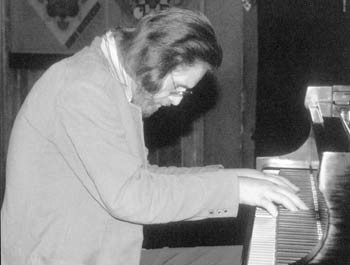
BIOGRAPHER Peter Pettinger once described the life of jazz pianist Bill Evans as “a slow suicide.” Racked by drug abuse and weakened by liver disease, Evans–renowned for his long lyrical lines and introspective style–displayed an unmistakable sense of urgency during the sessions heard on the newly released Bill Evans Trio: The Last Waltz (Fantasy), recorded just a week before his death in 1980 at age 51.

The eight-CD set, recorded over a nine-night engagement at the now-defunct North Beach jazz spot Keystone Korner, shows that Evans never gave up on his music, never lost his creative spark.

The box set is testimony that, as liner-note writer Derk Richardson points out in quoting Pettinger’s biography Bill Evans: How My Heart Sings, Evans’ personal “agony was defied to the end by his artistic ecstasy.”

There is little doubt that Evans knew he was dying when he performed these sessions. After the San Francisco dates, he returned to New York for a planned weeklong run at Fat Tuesdays. Evans managed just two nights onstage, staying home for three more and then succumbing to a hemorrhaging ulcer and bronchial pneumonia.

His death marked the end of a short but illustrious career that began in the early ’50s. Starting as a sideman for Charles Mingus, Miles Davis, and other notable jazz players, he established himself as a solo artist with the 1956 album New Jazz Conceptions. He went on to lead two celebrated trios under his own name and to record on several landmark jazz albums, including Davis’ Kind of Blue, Mingus’ East Coasting, George Russell’s Jazz in the Space Age, and Oliver Nelson’s The Blues and the Abstract Truth.

A quiet, somewhat nerdish figure, Evans didn’t integrate easily in the hip jazz world. In his 1989 autobiography, Miles Davis recalled the hazing he inflicted on Evans when the pianist took over Red Garland’s coveted spot at the keyboards in Davis’ band. One day, just to mess with his head, Davis told Evans that to stay in the band he would have to sleep with all the other band members, all males. Evans gave it serious consideration for 15 minutes before returning to Davis to say that he’d like to please everyone but that was something he couldn’t bring himself to do.

“I looked at him and smiled and said, ‘My man!’ And then he knew I was teasing.”

One thing Evans couldn’t resist at that time was heroin, a habit he picked up while playing in Davis’ band. Yet Evans left an indelible mark on Davis and the trumpeter’s influential work. Davis credited Evans with bringing the classical influences that underscored much of Davis’ finest work, including what Marin jazz writer Grover Sales once characterized as Davis’ “Debussy-like lyricism and reflective romantic delicacy.”

And despite the demons that dogged him throughout his troubled life, the artfulness of Evans’ improvisational work–so apparent in The Last Waltz sessions–was a driving force throughout his career. “There is a Japanese visual art in which the artist is forced to be spontaneous,” he once wrote in an essay on improvisation. “He must paint on a thin stretched parchment with a special brush and black water paint in such a way that an unnatural or interrupted stroke will destroy the line or break the parchment. Erasures or changes are impossible. These artists must practice a particular discipline, that of allowing an idea to express itself in communication with their hands in such a direct way that deliberation cannot interfere.

“The resulting pictures lack the complex composition and textures of ordinary painting,” he concluded, “but it is said that those who see will find something captured that escapes explanation.”

From the November 2-8, 2000 issue of the Northern California Bohemian.
© Metro Publishing Inc.

Open Mic

0

Yes on I

By Mark Green

IT IS A SAD TRUTH that in 13 years of working professionally to advance environmental protection, I have never seen as nakedly dishonest a campaign as the one being conducted by the opposition to Measure I, the Rural Heritage Initiative.

The No on I campaign is led by the Sonoma County Farm Bureau, which has fought strenuously against the creation of parks in the lands affected by Measure I for over 30 years. Yet it has erected signs throughout the county reading “Save Our Parks.” Measure I is, of course, supported by every major parks group and parks advocate in the county.

Measure I, which would impose a 30-year limit on sprawl, exempts farm family and farmworker housing, and it allows farmers to change crops, build structures, and do all the things they need to do to continue farming. If economic conditions changed, Measure I allows the Board of Supervisors to change the permitted activities within the land-use categories affected by Measure I to permit new uses and keep the land in farming–just not to allow increased development and subdivision. Yet the Farm Bureau’s campaign has asserted that these uses would not be allowed and has claimed that Measure I “would destroy farming in Sonoma County” . . . just as the bureau claimed four years ago that urban growth boundaries would “destroy farming.”

Measure I is supported by every environmental organization in Sonoma County and crafted by local citizens who have led the fight against sprawl. Yet the opposition campaign has claimed, quixotically, that the measure would “increase sprawl.”

Meanwhile, hundreds of Yes on I signs have been systematically stolen by teams of people working by night out of a pickup truck. In many cases, No on I signs have been put in exactly the same places that the Yes on I signs used to be–and they go up the same night that our signs disappear.

So voting for Measure I is now about more than protecting Sonoma County from the voracious economic pressures that have destroyed so many other wonderful places in the American West. Voting for Measure I is a statement that you believe that truth in politics means something, that the kind of cynical tactics that the leaders of the No on I campaign have embraced have no place in our local politics.

Vote for our future. Vote for the qualities we love about Sonoma County. Vote for integrity. Vote yes on Measure I.

Mark Green is executive director of Sonoma County Conservation Action, the county’s largest environmental organization.

From the November 2-8, 2000 issue of the Northern California Bohemian.
© Metro Publishing Inc.

Thanksgiving Wines

0

What a Turkey!

The annual vino conundrum of the Thanksgiving holiday feast

By Bob Johnson

COLUMBUS discovered America, Nixon was not a crook, and Clinton did not have sexual relations with “that woman.” Myths abound in American history, and they are perpetuated early in our lower institutes of learning. What grade school kid hasn’t been exposed to the image of Pilgrim settlers and Native Americans sitting down to a bountiful and harmonious feast billed as “the first Thanksgiving dinner”?

If you find it difficult to picture 17th-century Native Americans welcoming newcomers to their shores with open arms, you’re not alone. Well-documented accounts indicate that initial encounters between the two groups were far from friendly, and the Western range wars that would follow decades hence weren’t exactly symbols of a successful melting pot.

Still, the “first Thanksgiving” image lingered, and as the 20th century dawned, it was perpetuated through patriotic murals in town squares, calendar drawings, and illustrations in Saturday Evening Post­esque publications.

In 1920, when the 300th anniversary of the Pilgrims’ alleged philanthropy was celebrated, their place in history–erroneously depicted as it may have been–became permanently etched in the American psyche . . . and in the schoolbooks of America’s children.

While “the first Thanksgiving” may be a myth, the occurrence of harvest celebrations in colonial New England was not at all unusual. Sourcing an array of historical documents and family letters, a Massachusetts restaurant once attempted to replicate a “typical” harvest feast and included unnamed “wine, beer and cider” on the bill of fare.

Among the delicacies it concocted were bread of Indian corn, seethed fish, roast fowl (goose, swan, or turkey) with sauce, boiled sallet, dish of Jerusalem artichokes, boiled onions, furmenty, and, for dessert, a prune tart.

In other words, in at least one way, it was much like a modern Thanksgiving feast: it was a wine-matching nightmare.

The most talented vintner in the world, working with the most expressive clonal selections grown in the most ideally situated and meticulously tended vineyard, would not be able to craft a wine, be it purely varietal or a blend, that would match both seethed fish and a prune tart. Ain’t gonna happen.

However, clever Thanksgiving hosts have learned how to deal with the annual vino conundrum of the holiday feast. Rather than seeking that one unattainable bottle that would go sublimely with every dish–be it Jerusalem artichokes or green beans, furmenty or candied yams–they extend the bountiful theme to the beverage tray as well.

And rather than sticking to “safe” staples such as chardonnay or pinot noir, they push the culinary envelope by uncorking lesser-known and underappreciated varietals.

Fortunately, there is no shortage of such bottlings in the Y2K wine marketplace, especially for those who live so close to the source: the region generically referred to as “North Coast Wine Country.”

By uncorking these five bottles on the fourth Thursday of this month, one can accommodate virtually every flavor-matching challenge that the typical holiday feast–circa the 17th century or the 21st–could present.

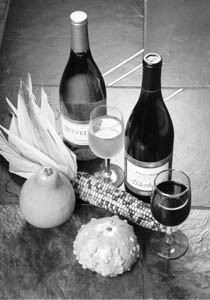
Windsor Vineyards 1999 Private Reserve Semillon, Mendocino County ($15). Barely a semillon by definition, this blend also includes generous dollops of muscat canelli, sauvignon blanc, and chardonnay. With so many ingredients, its complexity is no surprise; vanilla, pear, smoky oak, and various baking spices jump out of the glass and linger in the after-flavor. This is a wine that will engage those who don’t normally drink vino, and at the same time won’t disappoint the chardonnay groupies. Rating: 3.5 corks (out of 4).

Shenandoah Vineyards 1998 Barbera, Amador County ($14.95). This “Cal-Ital” bottling is fruity from start to finish, with a distinct berry character and hints of coffee beans and coconut. A wine that should keep the pinot-philes satisfied. Rating: 3 corks.

Haywood Estate 1997 Zinfandel, Los Chamizal Vineyard, Sonoma Valley ($25). Some zins are big, some are enormous, and some are elegant. This one falls in the last category, with a subtle pepper aroma leading to flavors of blackberry jam, cedar, and cherry. Because it defies the in-your-face style of bigger zins, this is an extremely versatile food wine –ideal for the holiday table. Rating: 4 corks.

Fife 1998 “Redhead” Carignane, Redwood Valley ($18.50). The perfect companion to game meats or fowl, this smooth yet powerful wine is not at all subtle. Its aroma and flavor spectrum includes leather, white pepper, and various fruit flavors (plum, cherry, citrus), and its deep purple color is stunning against the backdrop of a white tablecloth. A wine that tastes good and looks good. Rating: 3.5 corks.

Husch Vineyards 1998 Postre, Mendocino ($20 per 375-ml. bottle). En español, postre means dessert, and this late-harvest sauvignon blanc would be a wonderful way to wrap up the Thanksgiving feast–with pumpkin or mincemeat pie, or solo. Nearly as much fun to smell as it is to drink, it conjures violets, orange peel, exotic spices, and even bananas Foster. Rating: 3.5 corks.

When historians summarize the wines available for Thanksgiving meals in the year 2000, they’ll likely do so with heaping helpings of praise.

And that assessment will be no myth.

From the November 2-8, 2000 issue of the Northern California Bohemian.
© Metro Publishing Inc.

Night Driving on the Coastal Highway

0

Midnight Rider

Taking the long way home– driving the coastal highway after dark

By Stephen Kessler

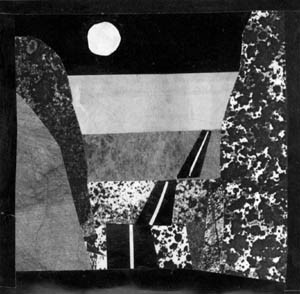
FINISHING DINNER with friends in San Francisco, I consider whether to spend the night in the city or make the long drive home to Gualala Ridge–some 120 miles, two and a half hours or so on a normal day but usually less than that after dark, when fewer cars are on the coast road. If I set out no later than 10 o’clock and cruise north across the Golden Gate into a clear night–no ferocious storms or fog to obscure the stars or the highway, and no sneaky California Highway Patrol parked in the dark on Valley Ford Road to cite me for doing a safe but illegal speed–I can be in my own bed by 1 a.m. and have a whole day ahead of me in which, who knows, I might even get something done. Otherwise it means a morning in the car and losing the most productive part of the day. Doing it now, in the dark, when I wouldn’t be sleeping anyway, seems like a sound idea.

My dinner companions give me that you-must-be-out-of-your-mind- to-want-to-drive-that-nauseating-road-this-time-of-night look, and maybe I am, but they haven’t mastered those 10,000 curves as I have over the years, and they don’t appreciate the meditative solitude of moving smoothly by moonlit headlights through country that smells of grass, of stinky herds, of oak or eucalyptus smoke, of skunk, but finally of crashing surf and the fresh shock of ocean air and the oxygen-rich infusion of redwoods’ breath. A decaf espresso is all the stimulant I need to keep me perky for the trip. The night is wide, the bridge glows golden in its orangey light, and quicker than you can say San Quentin I’m streaming into Marin.

Beyond the neon of the car dealerships, fast-food franchises, cheap motels, and upscale shopping malls; past the streamlined architecture of the industrial parks and office complexes and retail outlets and the rosy arches and funny blue domes of Frank Lloyd Wright’s great Dr. Seuss­like space-age Civic Center; skirting the landfill and zooming into the rustic darkness of Sonoma County and taking one of the Petaluma exits through the ranchlands of west Sonoma toward Bodega Bay, you know you’re beyond the suburbs by the pungent stench of cow dung that, even with the windows up, is more intense at night, the cool dark air conducting that funky aroma into the car as surely as essence of crushed skunk and making you grateful, by the time you get there, for the salty tonic of Bodega’s fishing harbor and the increasingly bracing ocean-and-mountain freshness above Jenner.

Yes, you still have to watch for those random cattle out for a sleepwalk, but the highway from the Russian River north has a cosmic desolation at these hours that induces a heightened sense of perception. You can reduce the loneliness a little by playing your favorite tapes or tuning in some radio show beamed over the water from Berkeley or San Francisco, but sometimes it’s best to let the sound of the motor be your mantra, or to open a window, if it’s not too cold, and hear what the wind is singing.

It’s true that in the dark you don’t see the ospreys, redtails, kites, and kestrels lacing their gorgeous predatory choreographies through the sky, and if the moon’s not up, you may miss most of that oceanic expansiveness to the west. But even if you can’t see it, you can sense the immensity out there; even if fog is forcing you to creep along following the line with your low beams, grateful for those little reflectors, you can feel the vastness of the space you’re traversing, and it humbles you in a different way from the awe you may feel when faced with the view in daylight.

So maybe you’re visually stymied or deprived as you climb the switchbacks of the Jenner Grade, or maybe over your shoulder you catch a glimpse of the Pacific reflecting the splendor of the heavens, and maybe the hour of strenuous cornering ahead to Mendocino County is a little daunting this time of night, but look, there’s scarcely a trace of traffic–hardly a log truck or lumbering Winnebago or flabbergasted tourist turned incompetent by the vistas; at worst perhaps some hot-rodding mountain man roaring up behind you in a monster pickup, so you pull over at the first chance and let him pass, or the headlights of some tanker truck coming the other way on the run down the coast from Fort Bragg. But mainly it’s just you and the hardcore, frequently washed-out, cracked-in-places, rock-strewn, cliff-skirting, gravity-testing, giddily dangerous pavement, and you get into a groove and you drive.

Alert for deer, which are constantly appearing when you least want to see them, you may be surprised by creatures you seldom meet in the light of day: waggling raccoons, those stealthy black-masked bandits; the occasional owl that swoops out of nowhere just to give your adrenaline a jump; the tawny, compact, long-legged bobcat; a silver fox with its elegant tapered snout and feline quickness of foot and fluffy tail. Or once in a while, if you’re really lucky, late, a certain unmistakable sinewy shape bounding with confidence across the road, long tail trailing a loping gait–the puma, cougar, California panther, a mountain lion by any other name is equally magnificent: one such sighting is a lifetime gift.

Sometimes you can smell the eucalyptus spice as you pass that huge grove at Kruse Ranch, or redwoods’ oxygen refreshes you as you take the hairpins over various gulches and around the public campsites. Benny Bufano’s moonlit totem pole is always good for a gasp at Timber Cove. And even the charred snags of cypresses and pines at Salt Point Park as you pass them in the dark seem to exude a spooky perfume you’d seldom get a whiff of during the day; although their crispy Giacometti skeletons may be more visible in the daytime, the other cars and the long spectacular views and the brilliant light distract from those ghostly figures, signature of the wildfire of ’93.

I remember vividly the night of that fire because I was driving back from SFO after a weekend away and had to take a detour via Healdsburg and over Skaggs Springs Road to Stewart’s Point–a route about whose blind curves and shoulderless, tortuous twists I have no romantic illusions.

But the Shoreline Highway is another story, practically civilized by comparison, full of sensory subtleties, nocturnal mysteries, midnight nuances, a drive that is more like dozens of different drives, depending on the weather and your mood and your state of responsiveness and your stamina. It’s grueling in a way, exhausting. You can’t relax, your arms and legs are constantly in play, especially if you’re driving a stick, but it’s a vigorous workout. And by the time you reach the Sea Ranch and its straightaways, a few lights glimmering in the windows of that discreetly subdivided countryside, you’re elated and relieved to be nearing home.

The silhouette of the ridge above the Gualala River as you cross the bridge into Mendocino is like the profile of a lover awaiting your return, coolly reliable, keeping the fire alive.

From the November 2-8, 2000 issue of the Northern California Bohemian.

© Metro Publishing Inc.

Emily Carter

0

An HIV-positive woman goes looking for love in Emily Carter’s new book

By Patrick Sullivan

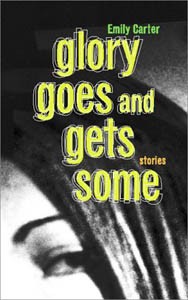
LIFE, as no less a philosopher than Pauly Shore once observed, is like a box of needles. It’s full of little pricks. Unfortunately for Glory B., the heroin-using heroine of Glory Goes and Gets Some, one of those little pricks–either a hypodermic needle or a penis; she’s not sure which–packed an extra-special punch. Before it slid back out of her body, it flooded her bloodstream with the AIDS virus.

On the one hand, Glory Goes and Gets Some (Coffee House Press; $20.95) is a collection of 21 interlinked tales about (and almost all narrated by) a sardonic New York hipster going through her own private apocalypse. Imagine the worst thing that could happen, and it might look like what happens to Glory: she becomes a drug addict, she becomes a prostitute, she becomes infected with HIV.

After things can’t get any worse, she somehow frees herself from the dope and the booze and the habit of trading her body for dope and booze. Exiled from the streets of Manhattan, Glory winds up in Minnesota, emerging from a rehab center to lead a semi-normal life. Only she’s not normal at all.

But, on the other hand, Glory Goes and Get Some is less about sex and drugs and the search for redemption than it is about words–about what they can do in the extraordinarily talented hands of author Emily Carter.

The magic starts with the very first sentence of the opening tale, “East on Houston,” a prologue of sorts: “There was this one summer that began in June and ended quite some time later, when I could hear the voices of men in traffic, while I was walking east on Houston. They honked and squealed, barked, drawled, groaned, purred, hissed, whispered, and raggedly begged at me as I twitched down the street in a borrowed dress that was as red as the stoplights, the stoplights gleaming in the black air like costume jewelry from a sunken Spanish galleon, gleaming from the bottom of the sea: the night on Houston like a black tropical shipwreck ocean, fathoms deep and full of trinkets for a young girl like yours-ever-true.”

It’s as good a beginning for a book as it is a bad beginning for a life. Over time, Glory gets smarter about men–though not by much for quite a while. But her voice continues to crackle with sardonic wit and effortless poetry, which combine perfectly in the best story here. The title piece, “Glory Goes and Gets Some” (selected by Garrison Keillor for inclusion in Best American Short Stories 1997), is set in the period after Glory’s rehab and AIDS diagnosis. After a prolonged period of the three Ms (“meetings, meditation, masturbation”), Glory goes looking for a boyfriend.

After enduring a slew of unsuitable suitors and fighting hard against her own self-destructive impulses, she finds the right guy: “Apparently the man in question feels the same, because after our second night together, he told me he had never thought this was going to be a part of his life again, and he’d answered my ad out of sheer desperation, which, out of all human motivations, is, in my opinion, the only one you can absolutely trust.”

The dust jacket on Glory features a laudatory quote from Erica Jong describing the author’s voice as “sassy.” Sassy? That’s the name of a now defunct magazine that existed to sell makeup and panty liners to teenage girls. There’s a better word to describe Glory Goes and Gets Some: masterpiece.

From the November 2-8, 2000 issue of the Northern California Bohemian.

© Metro Publishing Inc.

The Wide-Eyed Gourmet

0

A square marshmallow is not a square deal

By Marina Wolf

CALL IT THE CASE of the nonround marshmallows. I wasn’t looking for them, but there they were, tucked into a corner shelf at a local natural-foods emporium, where such “all-natural” atrocities tend to gather. Before I even picked up the unassuming plastic bag to look at the list of ingredients, I knew something was wrong: these so-called marshmallows were square.

Now, I’m no food cop, but if I were, you bet I’d be enforcing some ordinances around here. Pepper must be freshly ground. Nuts must be toasted before being added to recipes. And marshmallows must be round. In an ideal world, that last little law would be a redundant statement of fact. But as I was reminded that day in the store, we live in an imperfect world with people who are ever tempted to take a good thing and fuck with it.

Reading the label, I had even more questions. These were touted as handcrafted. But it’s not as if cutting a sheet of sugary goo into squares is particularly artful. Handcrafted marshmallows ought to be more, well, round, patted lovingly into shape by a studio full of smiling older women whose hair is white from the cornstarch.

These squares are about as mass-produced-looking as you can get.

And you’d think “natural marshmallows” would be vegan, right? I mean, if you’re going to tamper with the basic molecular structure of marshmallows for the sake of some groovy, good-for-body-and-planet ideal, powdered cow hooves–aka gelatin–would be the first thing to go. But no: the manufacturers left in gelatin, and also sugar and corn syrup–two ways of saying the same thing.

They did remove dextrose, water, artificial color, Blue No. 1, and tetrasodium pyrophosphate, which probably was their real mistake. One of those items must be the active ingredient in marshmallows, the thing that makes them melt in so many fabulous ways: in crisp brown little cobblestones on top of yams, in a thin wash of foam on cocoa. Most important, marshmallows must be sturdy enough to fit on a stick and stay there through repeated toastings, forming layer after layer of browned outer crust, each one to be slipped off and eaten before the gradually shrinking confection is thrust back over the fire again.

It’s not too much to ask, but by these standards the “natural” marshmallow is not a marshmallow, but some kind of fancy-shmancy Turkish nougat that overrefined ladies might once have offered to visitors in their salons. Such a delicacy should never go anywhere near a vulgar source of heat such as cocoa or a campfire. In one field trial, my square marshmallow set a world speed record for sliding off into the flames: five seconds.

So why are these mushy misnomers still made and marketed? Either shoppers at natural-foods stores are complete dupes, or else we’re losing our collective sense of proportion. A few chemical-filled marshmallows once or twice a year on a camping trip isn’t going to kill you, no matter how much tetrasodium pyrophosphate they have in them.

Unfortunately, it’s all part of a trend toward the total healthification of our food supply. Sundae toppings are “naturally fat free.” Sour cream is low fat. Milk is skim-to-none. Bread has no preservatives and tastes great until the next day. Healthy cheese puffs are an oxymoron, and they taste like it, too. The low-salt V-8 has so much less oomph that they should call it V-6. Of course, the original sodium-fueled formula burned the hell out of the roof of my mouth, which is why I usually do drink V-6, in spite of its complete lack of flavor.

We all make our compromises. I’m resigned to that, as long as the unabashedly unnatural foods are offered alongside the “natural” versions–as long as we still have a choice about round or (shudder) square.

From the November 2-8, 2000 issue of the Northern California Bohemian.

© Metro Publishing Inc.

Pacifica Foundation

0

Pacifica Foundation chokes on own gag

By Norman Solomon

A CENSOR’S work is never done. For several decades, the Pacifica Foundation–which owns five radio stations and operates a small national network–nurtured precious experiments in the arid terrain of radioland. Pacifica has provided listeners with wide-ranging discussion, progressive analysis, and independent news coverage, in acute contrast to America’s usual corporate-backed media fare.

But during the past few years, Pacifica’s board of directors made itself a self-selecting body with an increasingly mainstream agenda. The more highhanded the new hierarchy became–and the more it deserved strong criticism–the more determined it became to prevent criticism of itself from getting onto Pacifica airwaves.

Defenders of the “gag rule” argued that it’s best not to air dirty laundry in public. But when Pacifica’s top executives turned into zealous censors, the network began to self-destruct. Distinctive for its vigorous advocacy of freedom and democracy at home and abroad, Pacifica foundered as it brandished the implements of censorship. In the summer of 1999, the foundation’s board of directors made headlines with outrageous actions against KPFA, the trail-blazing Pacifica station that has been on the FM dial in the San Francisco area for half a century. Journalists were arrested in the KPFA studios–even in the station’s newsroom–where they had worked for many years. The crux of the matter was that they had refused to lie to listeners with silence. Pacifica management swiftly responded with a lockout.

Massive support for KPFA in Northern California–including a march of 10,000 people past the station’s Berkeley headquarters–showed that Pacifica “leaders” had miscalculated. Pacifica backed off, and the station reopened. But the underlying issues have remained.

Pacifica’s current national board–dominated by an array of corporate executives, business professionals, investors, and political people aligned with the Clinton administration–is hostile to the strongly progressive content that had been integral to the network’s strength. The latest target of Pacifica’s ideological housecleaning is award-winning journalist Amy Goodman, host of the finest national daily radio program in the United States, “Democracy Now!”

From prisons, picket lines and forums in America to fast-breaking events in East Timor, Nigeria, Yugoslavia, and many other countries, the hourlong syndicated “Democracy Now!” show has informed and challenged listeners across the USA. Despite the program’s successes–or perhaps because of them–the Pacifica board majority is now attempting to push Goodman out.

Longtime broadcast journalist Danny Schechter (executive editor of Media Channel) commented days ago: “That Pacifica would seek to undercut the one national show that is building audience and generating attention showcases some of the crippling contradictions within the network.” A lot of factors are involved in management’s dispute with Amy Goodman. But here’s the crucial point: Pacifica is moving into a new stage of an ideological purge.

RECOGNIZING that grim fact, hundreds of people have mobilized to defend “Democracy Now!” as part of ongoing efforts to reverse the ominous trends at the Pacifica network. Demonstrations occurred Oct. 25 in front of KPFA and the four other Pacifica-owned stations, located in Los Angeles, Houston, New York City, and Washington, D.C.

“Despite meeting and exceeding every stated objective for the show–i.e., audience growth, fundraising, new listeners, groundbreaking programming–‘Democracy Now!’ is being subjected to a withering assault by Pacifica management,” Goodman wrote in an Oct. 18 memo. “The motivation is blatantly political.”

A quarter of a century ago, the American historian C. Vann Woodward chaired a committee that issued a major report on free speech. His words now help illuminate why it is so important to support journalists who face the kind of incessant pressure that Amy Goodman is now withstanding. “The history of intellectual growth and discovery clearly demonstrates the need for unfettered freedom, the right to think the unthinkable, discuss the unmentionable, and challenge the unchallengeable,” Woodward wrote. “To curtail free expression strikes twice at intellectual freedom, for whoever deprives another of the right to state unpopular views necessarily deprives others of the right to listen to those views.”

From the November 2-8, 2000 issue of the Northern California Bohemian.

© Metro Publishing Inc.

Jakob Dylan and the Wallflowers

Jakob Dylan gets personal on latest CD By Alan Sculley When Jakob Dylan and his band, the Wallflowers, were making their second CD, Bringing Down The Horse (Interscope), they weren't thinking about hitting it big. Instead, the goal was much more modest. "When you're a band that's not successful, you're always looking for the ...

Modern Feminism

A manifesta for Third Wave feminism By Tamara Straus IT IS EASY to be cynical about feminist activism today. The quest for equality--in the workplace, at home, on the street, and particularly in the corridors of power--is far from what advocates of the 1970s women's movement, the so-called Second Wave, fought for. There...

Open Mic

Open Mic Dog Wars By C. D. Payne IT'S NOT EXACTLY Bosnia, but I live in the middle of a war zone. In my neighborhood, windows are flung open at 3 a.m. and anguished voices can be heard screaming, "Stop that damn barking!" In dog language this must mean, "Yes, do...

Bill Evans

Agony & Ecstasy New CD box set chronicles pianist Bill Evans' final days By GREG CAHILL BIOGRAPHER Peter Pettinger once described the life of jazz pianist Bill Evans as "a slow suicide." Racked by drug abuse and weakened by liver disease, Evans--renowned for his long lyrical lines and introspective style--displayed an...

Open Mic

Yes on I By Mark Green IT IS A SAD TRUTH that in 13 years of working professionally to advance environmental protection, I have never seen as nakedly dishonest a campaign as the one being conducted by the opposition to Measure I, the Rural Heritage Initiative. The No on I campaign is...

Thanksgiving Wines

What a Turkey! The annual vino conundrum of the Thanksgiving holiday feast By Bob Johnson COLUMBUS discovered America, Nixon was not a crook, and Clinton did not have sexual relations with "that woman." Myths abound in American history, and they are perpetuated early in our lower institutes of learning. What...

Night Driving on the Coastal Highway

Midnight Rider Taking the long way home-- driving the coastal highway after dark By Stephen Kessler FINISHING DINNER with friends in San Francisco, I consider whether to spend the night in the city or make the long drive home to Gualala Ridge--some 120 miles, two and a half hours or so...

Emily Carter

An HIV-positive woman goes looking for love in Emily Carter's new book By Patrick Sullivan LIFE, as no less a philosopher than Pauly Shore once observed, is like a box of needles. It's full of little pricks. Unfortunately for Glory B., the heroin-using heroine of Glory Goes and Gets Some, one of those...

The Wide-Eyed Gourmet

A square marshmallow is not a square deal By Marina Wolf CALL IT THE CASE of the nonround marshmallows. I wasn't looking for them, but there they were, tucked into a corner shelf at a local natural-foods emporium, where such "all-natural" atrocities tend to gather. Before I even picked up the unassuming plastic bag to...

Pacifica Foundation

Pacifica Foundation chokes on own gag By Norman Solomon A CENSOR'S work is never done. For several decades, the Pacifica Foundation--which owns five radio stations and operates a small national network--nurtured precious experiments in the arid terrain of radioland. Pacifica has provided listeners with wide-ranging discussion, progressive analysis, and independent news coverage, in acute contrast...
11,084FansLike
4,606FollowersFollow
6,928FollowersFollow