Petaluma Installation Celebrates People of Color at Burning Man

0

For the past three decades, people have ventured into Nevada’s Black Rock Desert in late August to build, run and then disassemble a functioning city on a remote and dusty piece of land.

With a population of roughly 70,000, the temporary city is the 10th largest in Nevada for one week of the year.

Burning Man, as the gathering is called, produces life-changing experiences for many of its participants, known as “Burners.” However, the event has received criticism over the years for a range of issues, including a lack of diversity.

The 2019 Burning Man Census found that only 16 percent of attendees identified as a person of color, a rate that has remained relatively flat since at least 2013 despite public criticism and organizers’ pledges to improve. The “average Burner” that year, the last festival before a two-year Covid-enduced break, was a 35-year-old white man making $64,700 per year, the website SFist reported. Only 1.1 percent of attendees identified as Black in 2019, according to the census.

Responding to this challenge, Erin Douglas, a Black photographer and founder of the Black Burner Project, has made it her mission to make the festival more diverse since her own awakening at Burning Man in 2017.

The Black Burner Project uses visual representation to document people of color at Burning Man “to encourage the curious.” In other words, the project creates art using photographs taken at Black Rock City to help people of color imagine themselves at Burning Man.

The idea behind the project is that photos of half-dressed white people in the desert, the most common representation of the event in the media, serve as a barrier to entry for Black folks who don’t see themselves represented as a part of Burning Man’s culture.

Douglas recognizes that it can be difficult to go out to the playa for people of color. In fact, if it were not for a free ticket from a friend, she may have never overcome her own initial personal and cultural barriers to experiencing the desert festival.

I met Douglas at Marco Cochrane’s studio in Petaluma—notable for the 47-foot-tall wire-frame woman visible from the street—where Douglas is assembling her new piece with the help of Kyle Mimms.

While we spoke, a small army of volunteers worked on a structure of metal and billboard-sized photographs of Black Burners.

The final artwork, called “Black! Asé,” will consist of two 30-foot-tall interactive installations at the edge of Black Rock City, serving as a beacon of welcome and celebration for Burners of color.

The pieces will be large metal structures bookended by a massive picture of Douglas’ friend and fellow Burner, “Anisette,” dancing on one end, and a picture of “Ken,” another Burner wearing a colorful neck gaiter, on the other. In between the photos will be climbable metalwork with stairs and platforms allowing visitors several opportunities for experience and reflection, driven by unique audio tracks playing throughout the piece.

Despite being an experienced solo world traveler, Douglas recalled that her first visit to Burning Man was “so drastically different [than any previous experience], and we are surrounded by white people. In the middle of nowhere. I can’t go anywhere. I can’t even call my mom and parents.” Suddenly, Douglas found herself without access to anyone who understood her experience of otherness.

The harm in this case is that Burning Man really transforms lives, and if people of color do not feel welcome and do not come, the opportunity for that expansive consciousness is lost to the same demographics that have always been excluded.

Let’s take a step back. What is so amazing about Burning Man? “You have a lot of time with yourself internally,” Douglas said. “You’re asking yourself questions that, for some reason, you just don’t get that same time or space to explore these questions in everyday life.”

“I always say, like, whatever you have pushed aside, whether you know it or not, the playa is gonna like put it in your face. Just gonna shove it all up in there and you might not be ready,” she added, laughing. “It’s just about, like, accepting that [it] might need tears.”

In describing the impact that Burning Man can have, Douglas’ indispensable build lead, Mimms, put it another way: “You can be free to be yourself without consequences.”

Those words capture the intent of Douglas’ project perfectly. Knowing that many Black folks will not feel comfortable with the idea of coming to Burning Man until they begin to see people like themselves there, Douglas understands that a whole segment of society has been effectively cut off from the opportunity to experience the rich cultural space the festival offers.

For a time, the founders and organizers seemed to minimize the problem. Burning Man co-founder Larry Harvey infamously said that, “Black folks don’t like to camp as much as white folks,” later attempting to justify the statement in the historical context of slavery and the dangers of travel for Black Americans during the Jim Crow Era.

Thankfully, Burning Man culture has begun to respond to the problems inherent in that out-of-date sentiment. Efforts for inclusion have received an increased level of focus, including a reevaluation of “Radical Inclusion,” one of the festival’s guiding 10 Principles.

Douglas is the recipient of a Black Rock City 2022 Honorarium Art Grant, one of the first given to a Black woman Burner. The Grant amounts vary project by project. In Douglas’ case, the award covered about 20 percent of the submitted project budget, making it much easier to complete the project with help from other funding sources.

As we talked, new volunteers to the project wandered in and were put to work. Douglas, a photographer by trade and new to installations, emphasized the collaborative nature of the massive pieces. 

“Kyle [Mimms] came out and has been working non-stop on the structure of the builds,” Douglas said. “[Mimms and his wife] have been beyond supportive, they’ve helped me get the photos [from Maryland where they were printed] to New York for fundraisers” to help pay for the  project.

Douglas had been weighing the costs and environmental impact of building the structure on the East or West Coast and transporting it out to the desert. However, with Cochrane’s offer of studio space in Petaluma to build the installation, Mimms joined Cochrane out West.

Burning Man’s reputation seems to have both grown and wavered in recent years. Many around the country who had likely never heard of the event now know it as the summer destination of celebrity CEOs and reality-TV moguls.

However, Douglas’ work is a reminder of the potential of the annual gathering in the desert: A space of radical inclusion where the work of being better and doing better is both personal and communal.

Follow “Black! Asé” and Erin Douglas on Instagram @blackburnerproject.

Culture Crush—KingLung, Debussy, Hollywood and More

Healdsburg

Brazilian Guitar 

This Saturday, spend the evening transported by Brazilian jazz guitar. Renowned guitarists Romero Lubambo and Chico Pinheiro come to Healdsburg’s intimate music space The 222. Lubambo has been described as “perhaps” the best practitioner in his day, bringing the rhythm and sensuality of his Brazilian heritage and a mastery of the instrument to jazz guitar, creating an inimitable sound. Pinheiro is a composer and bandleader, and one of the most widely acclaimed guitarists to emerge in the past two decades, collaborating with artists such as Placido Domingo and Chris Potter. The two promise a night of adventurous, boundary-breaking guitar playing. 7pm, Saturday, Aug. 20 at 222 Healdsburg Ave., Healdsburg. Tickets range from $35–$75. www.the222.org  

Ross

Outdoor Chamber Music 

For those moved to tears or elation by Debussy’s lilting flutes or Francaix’s resonant harps, look no further. This Tuesday, the Marin Art and Garden Center will host Eos Ensemble in the Redwood Amphitheater, serenading the audience with dreamy, musing, passionate music in a beautiful outdoor setting. The program includes Claude Debussy’s Sonata for Flute, Viola and Harp, Jean Francaix’s Quintet for Flute, Harp and String Trio, and Beethoven’s String Trio Op. 9 No. 1. Craig Reiss plays the violin, Caroline Lee the viola and Thalia Morre the cello, with special guests Meredith Clark on harp and Katrina Walter on flute. Clark has played with the San Francisco and Oakland Symphonies, among others. Walter is a member of the Marin Symphony. The Eos Ensemble plays Tuesday, Aug. 23, from 5:30–7pm at the Marin Art and Garden Center, 30 Sir Francis Drake Blvd., Ross. Tickets $20, beverage of choice included. www.maringarden.org

Occidental

Movie Night

Join Occidental filmmaker C.M. Conway this weekend for a screening of her new film, How to Successfully Fail in Hollywood, at the Occidental Center of the Arts. Filmed in various locations in the North Bay, Oakland and Los Angeles, this is a recognizable and exciting film. Produced by women, the film explores themes including love, triumph over personal failure and pursuing a dream against all odds. This special screening event will include photo ops, a raffle with prizes donated by local businesses and a Q&A with the filmmaker. Conway is thrilled to show How to Successfully Fail in Hollywood at OCA, where she had cheerleading tryouts as a young girl in the room that now serves as the Center’s state-of-the-art auditorium. How to Successfully Fail in Hollywood screens 5:30–8pm Saturday, Aug. 20, at Occidental Center for the Arts, 3850 Doris Murphy Court, Occidental. Tickets are $12. www.funnyfailurefilm.com

Sebastopol

Hip-Hop Series 

Come hear the beat and move your feet this Saturday at the first night of Manifest Your Destiny, a North Bay hip-hop concert series bringing a diverse range of musical talent together to perform. Hip-hop artist and promoter Damion Square was inspired to organize the series after performing at Santa Rosa’s Railroad Square Music Festival this June and feeling the community’s desire for quality, meaningful hip-hop music. Longtime North Bay concert organizer and musician Josh Windmiller is collaborating with Square on the series. Get familiar with the local hip-hop talent, including artists KingLung, Simoné Mosely, Erica Ambrin, Kayatta and Damion, under his stage name D.square, at Manifest Your Destiny’s first event, on Saturday, Aug. 20, at Jasper’s at 6957 Sebastopol Ave., Sebastopol. Show starts at 9pm. $5 suggested donation. www.jasperspub.com

—Jane Vick 

Flamingo Resort Brings Nightlife to Santa Rosa

The long wait for a dance space is over, Santa Rosa. 

No longer will we comb the streets after 10pm searching for a spot with a DJ and a dance floor. No longer will we make our party plans in San Francisco.

Moving forward, North Bay revelers need look no further than the towering, pink neon sign on Fourth Street, announcing the historic Flamingo Resort which, last weekend, launched the retro-galactic nightclub Vintage Space, paying homage to the Flamingo’s early history and elevating Santa Rosa nightlife in one astronomical swoop. Peep the details.

Remember the Space Race? That miraculous—albeit fraught—time in global and American history when truly anything seemed possible? The Allies had just won World War II, and America was in a renaissance of socio-political change and revolution. Racing Russia to get to the moon, long hair and go-go boots. James Baldwin. Bobby Lewis. Mod living room sets. And everywhere the promise of space. That incredible new frontier of infinite potential.

Enter the Flamingo. In 1957, while Russia launched Sputnik 1 into space and America fervently worked on Explorer 1, an architect, widely believed to be Homer A. Rissman, designed a resort nestled in the Valley of the Moon. When completed, the mid-century modern style building sporting 156 beds, a pool and a whole lot of pink quickly became a Sonoma County landmark, its signature “Flamingo” sign, with a neon bird at the top, leg gracefully raised, illuminating the night in pink.

The likes of Jane Mansfield and Frankie Avalon were quickly spotted poolside. In 1994, yours truly, as a small girl moving with her family from Tucson, Ariz., lived in two rooms while her parents finalized the purchase of a Northern California home. In 1997, Santa Rosa declared the Flamingo sign a historic landmark. In short, the Flamingo Resort is iconic and central to the Santa Rosa experience.

In spite of all this, the time came for the Flamingo to evolve, in an effort to ensure its relevance into the next several decades.

Enter the new owners. In 2019, Anderson Pugash, Steve Yang, Rebecca Bunya and Benson Wang purchased the Flamingo from previous owner Pierre Ehret and family, quickly launching into a $20 million renovation.

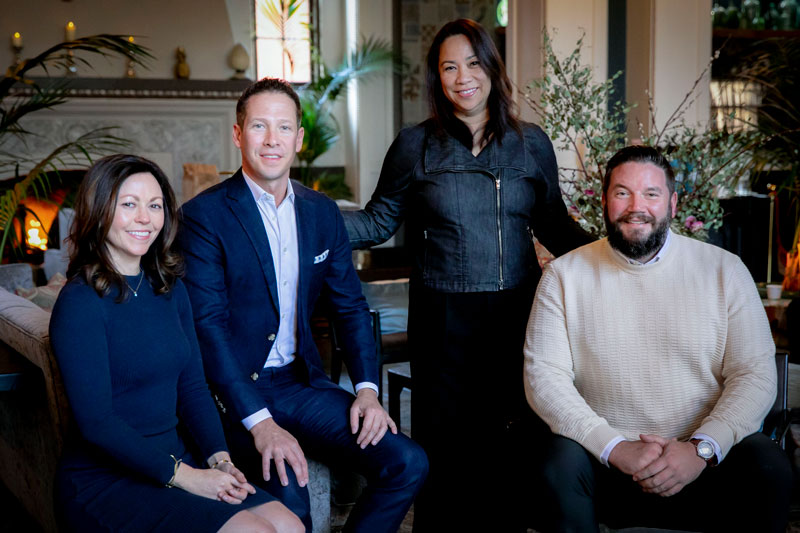
(from left to right) Stephen Yang, Anderson Pugash and Benson Wang purchased the Flamingo Resort in 2019 with Rebecca Bunya (not pictured). Photo by Deb Leal.

Three years and one global pandemic later, the Flamingo has a new lease on life, reimagined with a wooden-and-glass porte-cochere entry and white wicker furniture that showcases the pool’s glittering, aqua-colored water. 

The lobby is quintessential mod mixed with jungley, tropical wallpaper and features art from Serge Gay Jr. and HYBYCOZO. It’s finished with triangle pillows, low couches and gold light fixtures. Tres vibe. While true to the Flamingo’s origins—the new owners worked closely with Ehret while reimagining the hotel vibe—there is an evident modern twist.

The desire to strike a balance between history and contemporary styles is what inspired Pugash and Benson Wang to reimagine what used to be The Lounge at the Flamingo Resort into Vintage Space. Those who spent time in The Lounge will be pleased to find the bone structure of the space largely unchanged, with dark walls, a curved bar, ample dancefloor, and booths for cozy conversation and dance breaks.


But it’s clearly a new venue, and the space theme is fully evident. Starry collages featuring astronauts and old automobiles hang on the walls. The drinks menu offers a delightful assortment of “Cosmic Cocktails” including drinks such as the M.A.S.A., featuring tequila, mezcal, peach, habanero shrub and sparkling wine; the Liftoff Espresso Martini, featuring cold-brew coffee liqueur, vodka, espresso, chocolate bitters and mint foam; and the E.TEA, a non-alcoholic option with ice tea, lemon, peach and habanero shrub. The feel is playful, exploratory, cosmic—keeping the sense of exploring new frontiers very much alive.

The retro feel has a surprising innocence, and it’s refreshing. The mystery of life and our sense of humanity’s boundless exploration have been temporarily compromised by the hyper-developments of technology in the last three years, contributing to a general lack of wonder and curiosity in the current world. Kicking back in all that joyful exploration of the late 1950s is a fun mini-time travel experience and a good perspective refresh. Let’s keep that curiosity alive, people!

The nightclub will be open until 1 or 2am—depending on the show and the crowd—with doors opening at a reasonable 8pm. The lineups will be versatile. Friday night shows will feature cover bands, jam bands, funk, reggae, soul, disco and more. Saturdays are DJ nights, with disco house, trap house, deep house and so on.

“We’re going for a vibe. What brings fun, what makes people happy,” Pugash said during a Thursday morning conversation just before Vintage Space’s maiden voyage. “1957 was such a cool time. It was a time of American possibility and ingenuity—this feeling of a limitless horizon. That’s the kind of energy we’ve tried to tap into. That exploratory, fun feeling.”

Pugash and Benson Wang—who spear-headed Vintage Space—are no strangers to creating an exploratory, fun feeling. Bay Area natives and EDM lovers may not be surprised to learn that these two are the masterminds behind the San Francisco establishments Bergerac, a bar with an impromptu house party feel; Audio, a music-driven nightclub; Palm House, a tropical restaurant with vacation drinks; and The Dorian, a neighborhood supper club. Combined, the two are a recipe for nightlife.

Though I’ve long been chomping at the bit for a hot club presence in Sonoma County, I asked Pugash if he thought Santa Rosa’s demographic was ready for this type of socializing.

“The median age in Sonoma County is 38 now, which kind of blew my mind,” Pugash said. “I think people are ready for it. Do people like good music? They do. Do they like having fun? They do. Even though we’re space-themed, we’re not doing any rocket science here. We’re just trying to give people a good time.” 

And Vintage Space, as with the Flamingo Resort in its entirety, really isn’t just for the visiting guests; the goal is that Santa Rosans will enjoy it just as much as out-of-towners. Pugash, a North Bay local himself, born in San Francisco and raised in both Marin and Sonoma, is excited to provide locals with more opportunities to get out and have fun.

“With the music program, the concepting and everything, I want to create something that’s harmonious to both locals and hotel guests,” he said. “It’s always about bringing people together in these kinds of spaces. I do think that locals will like this place.”

Though music is Vintage Space’s primary focus, comedy nights, Sunday salsa nights and other events are also on the docket. While staying focused and bringing in Bay Area musical talent, Vintage Space looks forward to giving local artists space to explore. *Cough cough*. 

Last weekend, Vintage Space held two inaugural shows. This Friday the five-piece “roots-reggae” band the Bloodstones takes the stage. On Saturday, All Good Funk Alliance kicks things off before DJ Malarkey spins some dusty electro swing. The lineup is stacked through the end of the month with no signs of slowing. 

Get ready to blast off, Santa Rosa.
For more information on Vintage Space visit www.vintagespacesr.com.

Sonoma County Publishes Report on Impacts of Development at Former State Hospital Site

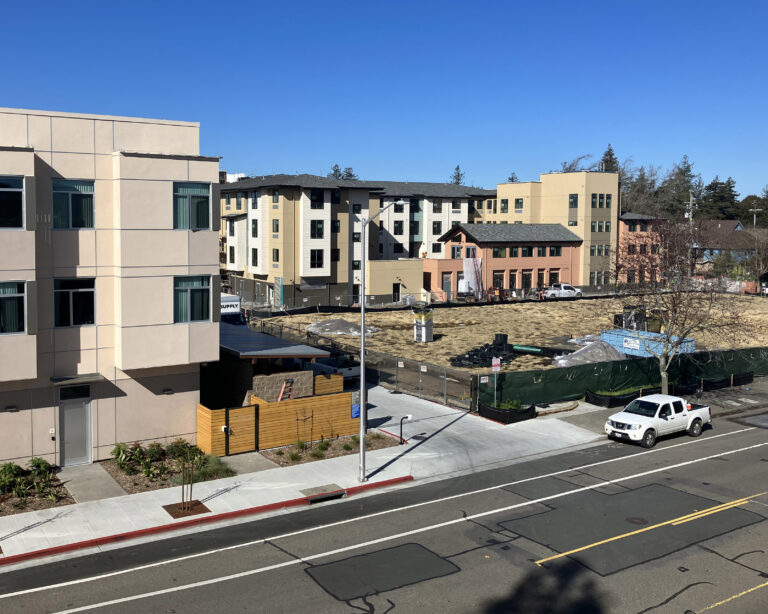
Sonoma County moved closer to developing a plan for the former site of the Sonoma Developmental Center as Permit Sonoma released a draft environmental impact report on Wednesday, Aug. 10.

The county has been grappling with how to develop and preserve the 945-acre property in Glen Ellen that formerly housed a state hospital and shut its doors in 2018.

Proposed designs combine housing and infrastructure while at the same time enhancing the site’s historical character and natural beauty, according to the county. It is what Sonoma County policy manager Bradley Dunn calls an “intentional community,” with walking and bike paths, eateries, a grocery store and housing.

“It’s somewhere that is a vibrant community that people want to live in, where they can walk, where they can interact with their neighbors,” Dunn said in January.

That doesn’t mean that the entire acreage will be turned into a quaint-yet-bustling village. According to Dunn, only 180 acres of the site will be developed, leaving more than 700 acres as a preserve.

The state has taken the unusual step of allowing Sonoma County to determine how the land will be used before the state cedes the property, Dunn said.

“The state created a partnership with us, but really allowed us to work with the community to program the land use,” he said. “As long as we protect open space, prioritize housing and affordable housing, and focus on economic development, they will let the county program the land use.”

Preliminary ideas for the site were presented at a Board of Supervisors meeting on Nov. 1, 2021, and the county has sought input from the community through workshops, meetings and an online survey. The county’s plan would include preservation of Sonoma Creek; 1,000 housing units with 283 reserved as affordable housing, especially for adults with developmental disabilities; a walkable core with transit, pedestrian and bike paths; institutional uses to drive research and education and employment; and commercial, recreational and civic uses for residents.
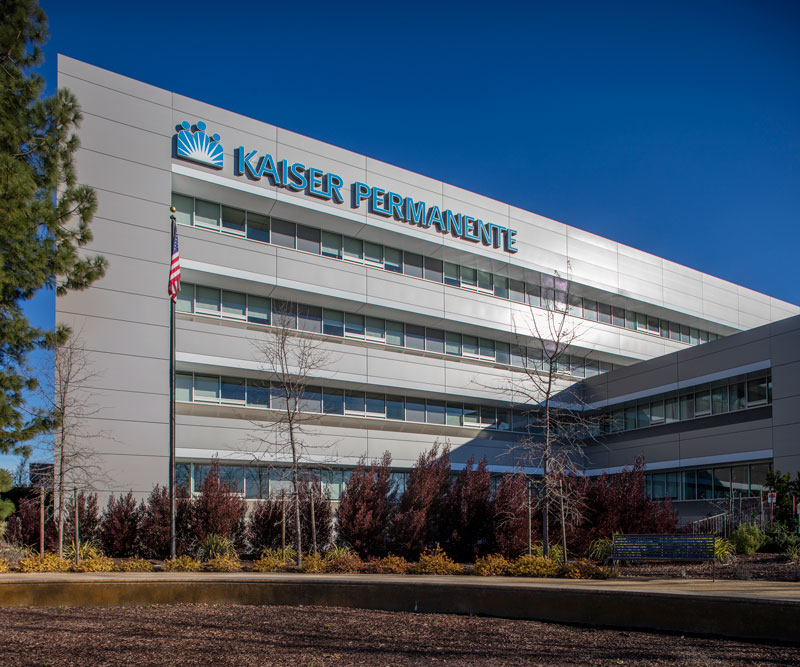
The environmental impact report has determined that three key things important to surveyed residents will not be impacted with the current development plan: preserving open space and wildlife, water issues, and wildfire risk and evacuation routes.

The plan includes a fire station and a new connection to Route 12, for example. As for water, the EIR determined that onsite water sources will be able to meet all demands through 2045, whether years are normal or dry.

The EIR did find some hiccups involving historical preservation and vehicle miles-traveled rates, the county said. Though the historic Main House and Sonoma House will both be protected, other historical structures will suffer “unavoidable impacts” as a result of the development.

The state gave Sonoma County until the end of the year to figure out its priorities for the site and create a timeline. Completing the EIR was a big part of that goal.

As to what ultimately happens to the land, Dunn said a developer will most likely buy it from the state, though they will have to respect the “blueprint” laid down by the county. Whoever ends up purchasing the property will also have to invest at least $100 million in new infrastructure, Dunn said.

The county is enthusiastic about the possibilities.

“For now, we are really thinking about the type of development we want done and how that will impact the environment,” he said. “At the end of the day, it is both a guiding principle for the development and required under state law that we preserve the open space, and that is really important to us. We’re really proud of the work that we’ve been doing.”

The draft EIR and other related documents are available at www.sdcspecificplan.com.

Sonoma Sheriff’s Office Releases 11-Minute Edited Video of Fatal Shooting

The Sonoma County Sheriff’s Office on Sunday, Aug. 14, released an 11-minute, edited video on Facebook showing a portion of the final moments of David Pelaez-Chavez’s life

The Sheriff’s Office says the video was created in accordance with a state law, requiring law enforcement agencies to release videos 45 days after a “critical incident” in most cases. On Aug. 15, the Press Democrat reported that Critical Incident Videos, a Vacaville-based company which specializes in creating videos for law enforcement following high-profile incidents, helped make the video.

Critics argue that such videos offer agencies an opportunity to craft a narrative before releasing full, unedited footage. However, by releasing the edited video, the Sheriff’s Office has effectively waived its ability to withhold raw footage on the grounds that releasing it would interfere with an investigation. Multiple news organizations, including the Bohemian, have requested unedited footage of the events leading up to Pelaez-Chavez’s death. 

The edited video was published two weeks after a Sheriff’s deputy shot and killed Pelaez-Chavez, a 36-year-old farmworker, on the morning of July 29, hours after law enforcement received several calls from homeowners in the Geyserville area.

One caller told authorities that a man had thrown a rock through a window of their home and then stolen an employee’s truck, dragging the employee 20 feet without injuring him. He drove the car through several fences and left it after crashing. A second nearby homeowner, armed with a gun, told dispatchers that Pelaez-Chavez had been on his property carrying rocks and “asking me to kill him.”

According to the Sheriff’s video, Pelaez-Chavez later took an ATV, crashed it and fled by foot. After pursuing him through the countryside for approximately a mile, two deputies confronted Paleaz-Chavez in a creekbed, where Pelaez-Chavez held two tools—a hammer and a hand tiller—and a rock.

The video shows that, when he leaned down and picked up another rock, deputy Anthony Powers fired a taser at Pelaez-Chavez and, almost simultaneously, the second deputy, Michael Dietrick, shot him three times with a gun from about 10–15 feet away at approximately 10:03am. Pelaez-Chavez was declared dead at 10:29am.

During the final interaction, the Sheriff’s Office’s helicopter can be heard hovering above and, shortly before his death, Pelaez-Chavez raises his arms and yells at the helicopter, reportedly saying in Spanish that the officers want to kill him.

Localuma Workshop Offers More Inclusive Approach to Sustainability

Last Friday I sat down with a couple of hundred other bright-eyed optimists at Petaluma’s much-loved Sonoma Marin Fairgrounds to talk about “the creation of strong, vibrant and connected neighborhoods.”

The event was part of the Sustainable Design Assessment Team grant from the American Institute of Architects. The goal of the project, known as Localuma, was put most simply by AIA team-lead Mike Davis: “We’re gonna try to get our arms around what having Petaluma be a 15-minute walkable city looks like.”

The idea behind this type of walkable city is the 15-minute neighborhood. Such a city is designed around neighborhood hubs that include retail, grocery, parks and other basic needs that, too often, people have to jump in their car and drive to reach. An example of such a hub in Petaluma that was noted by the team is Leghorn shopping center on the northeast side of town.

Dozens of volunteers from the community organized the application and hosted the Friday night dinner, where participants were asked how they would like to see the city transformed to meet carbon-neutrality goals.

In addition to the community gathering and other stakeholder events over the weekend, there was specific direct outreach to the Latinx community. Getting participation from the Latinx community has long been a goal for local sustainability activists, and one that has not yet been successfully attained.

The SDAT team took the time to build relationships with Spanish-speaking leaders and then, when the AIA consultants were here in town, by going to the Spanish-speaking community where they are … in this case to St. Vincent’s Catholic Church’s Spanish mass, and to Lolita’s Market on Lakeville. 

Speaking about this novel approach, Iliana Madrigal-Hooper said, “It is something different I haven’t seen before. I have been telling all these nonprofit organizations, ‘If you want the Latino community to participate, [then] you have to go to the laundromat, you have to go to Lolita’s Market, there are a few key places in Petaluma that you have to show up. You have to be persistent.’” It is a credit to the SDAT team that they established a connection to the Latinx community here in town in a way not attempted before.

Another concern that was raised in conversations on Friday was the ever-present danger of overlap of activities with similar activist initiatives. Indeed, among the volunteers were local climate action leaders from Cool Petaluma, Daily Acts, 350 Petaluma and many more, all groups that have run their own similar activities, possibly running the risk of diluting their efforts.

SDAT committee co-chair Veronica Olsen agreed that there is a history of this problem. “We’re all guilty of being in our little zones,” she said, “and we don’t always look at how everything is impacting everything else.”

Natasha Juliana, Cool Petaluma’s campaign director, assured me that in her organization’s case there was an “intentional synergy” with SDAT’s work. The block-by-cool-block initiative will use the SDAT findings “to create a second phase going beyond the block program,” making changes on the neighborhood level.

According to SDAT’s findings, as presented to the city council, these changes could look like tree-lined major arterials, mini-downtowns throughout the cit, and interconnected green corridors, allowing for easy and inviting biking and walking throughout our fair city.

Family, Activists Hold Vigil After Sheriff’s Deputy Shoots, Kills Man

On Saturday, July 29, the Sonoma County Sheriff’s Office issued a public statement revealing that a deputy had shot a man in a creekbed east of Healdsburg at 10:03am that morning. The man, later identified as 36-year-old David Pelaez Chavez, was pronounced dead by a paramedic at 10:29am.

In the week after the event, a little more information trickled out in statements from law enforcement agencies. However, no body-worn camera footage from the shooting or the deputies’ prolonged search leading up to it has been released, leading some to call for more transparency and outside investigations.

At a Friday, Aug. 5, vigil hosted by the North Bay Organizing Project, Chavez’s older brother accused authorities of “murdering who [David] was” in public statements about his death.

“My brother did not deserve to die like this. He was a good man, a joyous, happy man. We have many questions in regard to the investigation and what they are saying happened. What we want is justice,” Jose Pelaez said in Spanish, addressing dozens of people gathered in Santa Rosa’s Old Courthouse Square through a translator.

According to the Sheriff’s original statement and a subsequent Aug. 1 statement from the Santa Rosa Police Department, the Sheriff’s Office received a call at 8:20am from a Geyserville resident who said that a man had “threw a rock thru a house window.” The statements allege Chavez interacted with multiple residents, asking one to shoot him, and then stole a truck, breaking several gates and a fence before crashing the vehicle and fleeing barefoot.

After chasing him through rural, hilly terrain for approximately 45 minutes, the deputies stopped Chavez in a creekbed. According to the Sheriff’s original July 29 statement, they ordered him to drop what “appeared to be … a weapon.” After “he refused” to drop the item, the man “initially appeared to charge at one of the deputies but stopped.” The first deputy shot him with a taser and, when that “appeared ineffective,” the second deputy shot him with a gun.

The Sheriff’s original statement drew criticism from longtime law enforcement oversight advocates for its vague language, including using the word “appeared” three times in a paragraph describing the events leading up to Chavez’s death.

The Aug. 1 statement released by the Santa Rosa Police Department, which is conducting an investigation into the events leading to Chavez’s death with the Sonoma County District Attorney’s Office, offered a more detailed description of what allegedly occurred. According to SRPD’s statement, Chavez held a claw hammer, a hand tiller farming tool and a “cantaloupe-sized river rock” during the final interaction. Chavez then dropped the rock, bent over to pick up another rock and “made a movement that indicated he was threatening to hurl the rock at the deputy,” according to the SRPD statement. The deputies were 10–15 feet away from Chavez when Deputy Michael Dietrick, a five-year employee of the Sheriff’s Office, shot Chavez three times, the Press Democrat has reported.

Dietrick and Anthony Powers, the other deputy pursuing Chavez, have been placed on paid administrative leave.

On Aug. 3, the Press Democrat reported that Dietrick shot and killed a 45-year-old man in 2016 while working for the Clearlake Police Department. The Lake County District Attorney’s Office decided in 2017 that Dietrick was justified in the killing, the Press Democrat reported. The same year, Dietrick was hired by the Sonoma County Sheriff’s Office.

On Aug. 4, the Committee for Law Enforcement Accountability Now (CLEAN), a Sonoma County law enforcement oversight advocacy group, released a statement calling for the California Attorney General’s Office to investigate Chavez’s death instead of local agencies.

Under state law, the AG’s office can investigate killings by law enforcement officers when the victim was “unarmed or if there is a reasonable dispute as to whether the civilian was armed,” according to CLEAN. The AG’s office has reportedly already told the Sheriff’s Office it will not investigate Chavez’s death.

Chavez’s family is gathering funds through GoFundMe to hold a funeral for him in Mexico.

Dreamgirl Comes to Sonoma Community Center

The ongoing COVID-19 pandemic forced the theater community to be even more creative than usual to survive, a struggle for many companies even in the best of times. 

As theaters dealt with dwindling audiences, theater artists dealt with dwindling opportunities.  Theaters have postponed or canceled performances or worse, shut their doors completely. Streaming theater was an outlet for some, but most agree it’s a less than ideal replacement for the communal experience of an in-person show.

But streaming theater gave Emerson Collins and Blake McIver, two performers with decades of experience between them, the opportunity to work together. What they developed as a streaming piece for the Public Theatre of San Antonio has now transmogrified into a full-fledged touring production.

Sonoma Arts Live will host I Dreamed a Dreamgirl, Collins and McIver’s two-man tour de force based on their life experiences and careers—from Star Search to Ragtime to Full House to Rent—for one weekend of performances in August. The two describe the show as “showtunes, duets, Disney favs (and deep cuts), mashups and medleys that (probably) shouldn’t exist.” The title itself is a mashup of Collins’ love of Les Miz and McIver’s love of Dreamgirls.

Audiences have responded positively so far. “It’s been overwhelming,” said Collins. “We opened the tour in Palm Springs, and there was a standing ovation at the end of the first act, and that was the first time I truly thought, ‘Okay, we’ve made something people really enjoy.’ Also, we did a test run of it in LA for the harshest critics among our friends. My best friend, a standup comedian who hates musicals, said, ‘I actually loved the whole thing.’ In Dallas, an audience member said, ‘I didn’t know any song you sang, and I had an absolute blast,’ so it seems to be playing well for people.”

This is what Collins and McIver hope for their Sonoma County audiences. “There is so much darkness right now; our goal here is truly to just provide a silly, fun and joyful evening,” concluded Collins. “We sing all or part of 49 different songs in 90 minutes from Aida and Chess, a Disney villains’ medley, standards and things from Britney to Barbra. So truly, we just want you to leave smiling a little more than when you came in.”

‘I Dreamed a Dreamgirl’ runs Friday, Aug. 19 and Saturday, Aug. 20 at Andrews Hall in the Sonoma Community Center, 276 E. Napa St., Sonoma. 7:30pm. $30–$45. 866.710.8942. Proof of vaccination with ID and masking are required to attend. sonomaartslive.org

Bohemian Interviews Former SF DA Chesa Boudin

On Sunday, Aug. 14, former San Francisco District Attorney Chesa Boudin will visit Sonoma for a talk hosted by local nonprofit Praxis Peace Institute. 

Boudin, who was elected in 2019, ran on a progressive platform which emphasized expanding diversion programs, ending cash bail and decriminalizing poverty and homelessness by declining to prosecute quality-of-life crimes such as public camping, soliciting sex and public urination. 


In June, Boudin was recalled in a campaign in which his detractors raised $7.1 million. Days ago, Boudin announced he will not run in the special election this November, citing an intention to prioritize his family.

The talk is one in an ongoing series by Praxis Peace Institute.

Established 22 years ago, the organization is “dedicated to systemic peace, social and economic justice, environmental sustainability and informed civic participation.” Founder and executive director Georgia Kelly began the organization to learn and teach peace-building skills in opposition to wars.

In addition to their talk series, Praxis hosts an annual seminar—opening next month—at the Mondragón Cooperatives in the Basque region of Spain. Founded in 1956, Mondragón Corporation is a federation of hundreds of worker cooperatives and the leading business group in the Basque region.

The North Bay Bohemian interviewed Boudin prior to his visit to Sonoma. This interview has been edited for length and clarity.

North Bay Bohemian: Will you share your definition of what it means to be a progressive prosecutor?

Chesa Boudin: Being a progressive prosecutor is really being a decarceral prosecutor. It’s an understanding that we need to proactively reduce the number of people in jails and prisons. It doesn’t mean you’re an abolitionist, necessarily, but it means you recognize that more incarceration is not the solution in the country that locks up more people than any other country in the history of the world.

There are a lot of people in blue states or jurisdictions who call themselves progressive, but who are fundamentally committed to the status quo.

You have to be committed, as I was, to expanding diversion programs, declining to prosecute juveniles as adults, refusing to participate in the criminalization of reproductive choices, abolishing the death penalty and increasing upstream interventions like mental health care and drug treatment. These are not only more cost-effective and more likely to reduce the likelihood of future arrests, but are also more humane than waiting for a crime to be committed and then putting people in cages for longer and longer periods of time.

NBB: A 2018 study by Cornell University estimated that 45 percent of Americans are closely related to someone who has been incarcerated. The statistics vary depending on race and socioeconomic status, but it’s a really substantial percentage of the population across all categories. It seems like that often doesn’t translate into progressive attitudes about policing and incarceration, that it doesn’t necessarily create empathy for people living behind bars. What do you make of that?

CB: It’s a staggering statistic. I think you’re right that there are some high profile examples of people who have loved ones who have been incarcerated, who lack the compassion or the creativity to think—literally—outside the box about how to respond to public safety issues, or what have become defined as public safety issues.

But more than that, the almost 50 percent of Americans who have an immediate family member currently or formerly incarcerated mostly don’t look like me and they don’t have the kinds of professional or academic opportunities that I’ve had.

For the most part, the half of America that’s directly connected to the lived experience of incarceration are Black and Brown, immigrants, poor, working class, under-housed or suffering from addiction or mental illness. Because of the confluence of those sorts of factors, they tend to be really underrepresented both in political spaces and in mainstream media discourse. More than a lack of empathy amongst that community, I think it’s a systemic exclusion from the conversation about what sorts of solutions to public safety issues we can be advancing.

NBB: Even though you lost, thousands more people voted against recalling you than voted to elect you in the first place. How does that feel?

CB: I’m proud of the work we accomplished and the movement that we’re a part of.

Look at the primary race in Tennessee last week for District Attorney in Shelby County—Amy Weirich was voted out of office in favor of a reform-minded, Democratic progressive prosecutor. [Weirich] was a Republican, conservative, a classic example of the failed approach this country has taken to criminal justice. She had been in office for over a decade, had crime spiral upwards during her tenure and prosecuted Black women for trying to register to vote.

It didn’t get any national news coverage at all, and yet, in San Francisco, when we got about 15,000 more votes than we did to be elected in 2019—before the votes were even counted, there were news stories all across the country interpreting it as the death of the criminal justice reform movement. That is simply not true. Our movement is strong. It’s growing.

What happened in San Francisco is an aberration, and it’s a result of a truly unique confluence of factors including the fact that we have among the most lenient recall rules of any jurisdiction in the country. It deprives the elected official being recalled even of an opponent to run against and makes it possible to give unlimited contributions to support a recall. We had some individuals giving upwards of $600,000 to support the recall. By contrast, traditional elections have an individual contribution limit of $500.

NBB: How can the people push the legal justice system in a more progressive direction here in Sonoma County or anywhere else in California?

CB: We need to hold our elected officials and appointed officials accountable—our Public Defender, our District Attorney, our police chiefs, our mayors. We’re not going to simply achieve the changes that we’re fighting for by electing progressive prosecutors. We need to also elect progressive supervisors and mayors. We need to make sure that they’re investing in drug treatment and mental healthcare and housing—the things that actually prevent crime, that build safe and vibrant communities, that make people feel safe when they walk around. Investing in social services is a critical thing that can happen outside the criminal legal system and can fundamentally change the nature of policing and who police interact with.

I don’t want to live in a society where police are the first line of response to drug overdoses. It’s not effective. It’s not efficient. It distracts police from working on violent crimes.
We can also make sure that, as consumers of news media, we’re staying informed but also pushing back against the “If it bleeds, it leads” approach that is so dominant in coverage of public safety issues in this country. [That news approach] is designed to increase resources and power for police unions, without any connection to data, evidence or alternatives that actually address root causes.”

The event will be held outdoors at the Sonoma Community Center, located at 276 E. Napa St., Sonoma. Proof of Covid-19 vaccination and booster are required. Tickets are $25 general admission. To register, visit praxispeace.org/event_registration

The Praxis trip to Mondragón is Sept. 11–17. Register at praxispeace.org/mondragon.php. Praxis executive director Georgia Kelly calls the program, “a unique opportunity to learn cooperative models of business organization and to see firsthand how they work over a long period of time. It is also an opportunity to experience the values, culture, and ethics that support cooperatives.” 

Studying at California Virtual Academy

At the end of my junior year in high school, I was looking to get a head start on my college degree. However, when my school prevented me taking classes at the local junior college, I knew it was time to explore other options. Here are three reasons online school worked for me:
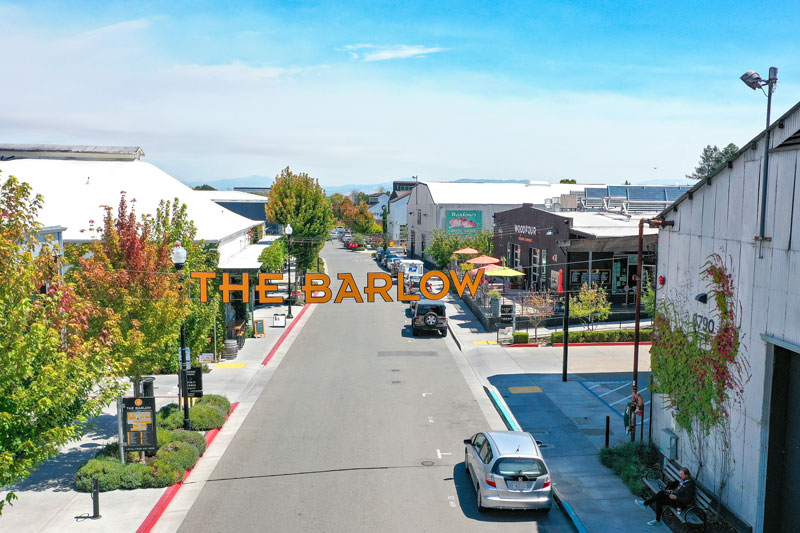
1) I received support. Going into my senior year, I decided to enroll in California Virtual Academy (CAVA) so I could work and study from home. This enabled me to not only study on my own time, but also made it easier to enroll in part-time classes at my local college.

2) My schedule was up to me. Working my school responsibilities into a schedule that worked for me allowed more time for my outside hobbies. I pursued art, baking and cooking, as well as making dinner for my family in the evenings. Previously, I had spent over an hour commuting each way. In online school, I found free time to not only make dinner and participate in hobbies, but also to finish homework and go to bed earlier.

3) My career was jumpstarted. I transferred last fall to a college where I won an award for my student leadership and community involvement. I worked as a peer career coach on-campus and am excited to take my experiences from these opportunities as I finish my bachelor’s degree in Creative Writing and pursue my master’s.

Overall, I found an environment that worked incredibly well for me. I encourage students in a similar position to explore online schools, and hope they have the same support and success that I did.

Abigail Selby 

Santa Rosa

DEPARTMENT OF CORRECTIONS: The headline of an article in last week’s Bohemian (“Going Natural,” Aug. 3) referred to pét-nat wines as “natural,” however some of the wines mentioned in the article are not considered natural wines.

Petaluma Installation Celebrates People of Color at Burning Man

For the past three decades, people have ventured into Nevada’s Black Rock Desert in late August to build, run and then disassemble a functioning city on a remote and dusty piece of land. With a population of roughly 70,000, the temporary city is the 10th largest in Nevada for one week of the year. Burning Man, as the gathering is called,...

Culture Crush—KingLung, Debussy, Hollywood and More

Healdsburg Brazilian Guitar  This Saturday, spend the evening transported by Brazilian jazz guitar. Renowned guitarists Romero Lubambo and Chico Pinheiro come to Healdsburg’s intimate music space The 222. Lubambo has been described as “perhaps” the best practitioner in his day, bringing the rhythm and sensuality of his Brazilian heritage and a mastery of the instrument to jazz guitar, creating an inimitable...

Flamingo Resort Brings Nightlife to Santa Rosa

The long wait for a dance space is over, Santa Rosa.  No longer will we comb the streets after 10pm searching for a spot with a DJ and a dance floor. No longer will we make our party plans in San Francisco. Moving forward, North Bay revelers need look no further than the towering, pink neon sign on Fourth Street, announcing...

Sonoma County Publishes Report on Impacts of Development at Former State Hospital Site

Sonoma Developmental Center - California
Sonoma County moved closer to developing a plan for the former site of the Sonoma Developmental Center, releasing a draft environmental impact report on Aug. 10.

Sonoma Sheriff’s Office Releases 11-Minute Edited Video of Fatal Shooting

Sonoma County Sheriff's Office - Aug. 14, 2022
The Sonoma County Sheriff’s Office on Sunday, Aug. 14, released an 11-minute, edited video on Facebook showing a portion of the final moments of David Pelaez-Chavez’s life.  The Sheriff’s Office says the video was created in accordance with a state law, requiring law enforcement agencies to release videos 45 days after a “critical incident” in most cases. On Aug. 15,...

Localuma Workshop Offers More Inclusive Approach to Sustainability

ByLorena Photography - Localuma
Last Friday I sat down with a couple of hundred other bright-eyed optimists at Petaluma’s much-loved Sonoma Marin Fairgrounds to talk about “the creation of strong, vibrant and connected neighborhoods.” The event was part of the Sustainable Design Assessment Team grant from the American Institute of Architects. The goal of the project, known as Localuma, was put most simply by...

Family, Activists Hold Vigil After Sheriff’s Deputy Shoots, Kills Man

Aug. 5 Vigil - Santa Rosa, California
On Saturday, July 29, the Sonoma County Sheriff’s Office issued a public statement revealing that a deputy had shot a man in a creekbed east of Healdsburg at 10:03am that morning. The man, later identified as 36-year-old David Pelaez Chavez, was pronounced dead by a paramedic at 10:29am. In the week after the event, a little more information trickled out...

Dreamgirl Comes to Sonoma Community Center

Dreamgirl - Sonoma Community Center
The ongoing COVID-19 pandemic forced the theater community to be even more creative than usual to survive, a struggle for many companies even in the best of times.  As theaters dealt with dwindling audiences, theater artists dealt with dwindling opportunities.  Theaters have postponed or canceled performances or worse, shut their doors completely. Streaming theater was an outlet for some, but...

Bohemian Interviews Former SF DA Chesa Boudin

Chesa Boudin - Praxis Peace Institute - Sonoma, California
On Sunday, Aug. 14, former San Francisco District Attorney Chesa Boudin will visit Sonoma for a talk hosted by local nonprofit Praxis Peace Institute.  Boudin, who was elected in 2019, ran on a progressive platform which emphasized expanding diversion programs, ending cash bail and decriminalizing poverty and homelessness by declining to prosecute quality-of-life crimes such as public camping, soliciting sex...

Studying at California Virtual Academy

At the end of my junior year in high school, I was looking to get a head start on my college degree. However, when my school prevented me taking classes at the local junior college, I knew it was time to explore other options. Here are three reasons online school worked for me: 1) I received support. Going into my...
11,084FansLike
4,446FollowersFollow
6,928FollowersFollow