Wide-Eyed Gourmet

Americans fed up with diet research

By Marina Wolf

THIS IS NEWS? Apparently it was to the researchers at the Fred Hutchinson Cancer Research Center who surveyed 1,751 adults on their eating habits and attitudes about nutritional guidelines. Hell, I would have taken 100 bucks and saved them the trouble and expense. Anybody who ever was a teenager could tell you that you push on people hard enough, they’re going to turn around and do the opposite.

The researchers called the most rebellious of the eaters “nutrition skeptics,” and attributed their attitudes to the confusion that surrounds much of nutrition and food science. Who wouldn’t be confused? Even the scientists are confused. Sure, they call it “progress” or “advances in scientific understanding,” but that’s just so they won’t be embarrassed when, six months down the road, somebody else comes up with contradictory research results. It all boils down to a seemingly never-ending series of public flip-flops and flimflammery that doesn’t wind up doing a lot for public health or morale.

For example, did you know that saccharin is actually not a hazardous material? Although my local coffeehouse is still putting out Sweet and Low with that old-timey, alarmist fine print, any day now those pink packets should be lookin’ a bit less crowded on the back, now that federal researchers have determined that saccharin is not a carcinogen.

Turns out that in order to develop cancer at lab-rat rates, you’d have to eat a mug of saccharin every day for a couple of years. Now, a teenage boy could do that at the drop of a double dare, but not even the most calorie-conscious coffee drinker would consider that level of intake. This seems like something that would be a fairly obvious element in a study protocol. News reports of the declassification of saccharin were almost giddy, which is odd, when you think about it. I mean, it’s not as though the nation was holding its breath. (If you were, you can stop now and drink your damned diet soda without the paranoia.)

Or how about that whole margarine debacle? You’ve been scrupulously avoiding butter and eating that nasty fake stuff for years, and now it turns out that stick margarine can increase the risk of heart disease. Or how about Olestra? Now that is argument and rebuttal all rolled into one package of low-fat, high-flatulence potato chips.

FORGIVE ME if I sound a little cynical. Call me a “nutrition skeptic” and develop patronizing government programs to instruct me in really simple, one-syllable words about how fat is bad, fruit is good. Run, Jane, run. Run from fat. Here’s a data point for you: I’m not stupid, and I’m not particularly frustrated by the nutrition pronouncements. I just ignore them and listen to what my body wants to eat.

Sometimes, when the announcements are really flying, I’ll go into this snarly little “Futurama” fugue state of dystopic daydreams. In the future, the stuff that isn’t high-fat will have been decalorified, vitaminized, bioengineered, or otherwise retrofitted to keep up with the latest in nutritional food science. It’ll be a given that there are side effects for everything we eat, and then at last the labels will have to focus on real issues, things that we want to know in order to take an informed gamble.

Exactly what percentage of people developed flatulence while eating these chips? How many people would rather gnaw off their own limbs than eat this? How many food stylists were employed to make the picture on the label more appealing?

Warning: Objects within are grosser than they appear.

From the February 1-7, 2001 issue of the Northern California Bohemian.

© Metro Publishing Inc.

Winter Roots

0

Root Awakening

Discovering the earthy pleasure of winter roots

By Marina Wolf

WINTER-MENU malaise. It’s that feeling that you get when the produce aisle has gone monochrome. Fortunately, there are several courses of treatment. You can buy frozen veggies, those icy but green ghosts of harvests past. You can drop great wads of cash on produce from other lands. Or you can dig deeper and get into the earthy, undersung root vegetables.

Even the names carry a smell of cold earth and guttering fireplaces: turnip, rutabaga, parsnip. And their knobby, hairy appearance somehow does little to inspire confidence in their culinary properties. But these three roots remain regulars on menus of savvy chefs who recognize the economic and gastronomic merit of choosing seasonal produce.

“Right now, especially in Chicago, there’s not much available to us without turning to Argentina, Chile, for stuff that is expensive,” says Heather Terhune, chef/owner in Chicago’s Atwood Cafe, where the root-vegetable chicken pot-pie is a customer favorite during the winter months. “It makes my life a lot easier, not paying a lot of money to get pencil asparagus and Guatemalan green beans.”

Beyond the financial savings, chefs are also beginning to realize the creative potential of these roots, which provide a perfect playing field for flavors from curry to cinnamon, and can be incorporated into soups, into side dishes, and, with very young vegetables, even into raw salads. A database search through Foodwatch, a firm that provides trend research and consulting to the restaurant industry, unearths several pages of dishes using these utilitarian roots. We find parsnip pommes Anna siding with roasted spring pig and rhubarb chutney at Hamersley Bistro in Boston and vanilla-scented carrots and turnips with roasted Maine lobster at Masa’s in San Francisco. Brix in Napa Valley presents turnips along with English pea purée, pea vines, and pomelo as an accompaniment to grilled rare ahi tuna, and mashed, puréed, and/or caramelized parsnips are everywhere.

Most often, these underappreciated vegetables simply wind up on the menu under the more poetic heading of winter vegetables. “We say purée of winter vegetables. If we listed it as purée of rutabaga, people would want to switch that out,” says Cory Schreiber, chef/owner of Wildwood Restaurant in Portland, Ore. “I feel sorry for the rutabaga commodity commission because they’re kind of a hard sell.”

Both turnips and rutabagas (the latter a cross between a wild cabbage and a turnip) bear the additional burden of being from the cruciferae family (that’s the cabbage and mustard group). As cruciferae, their nutritional value is fairly high, with both turnip roots and greens being significant sources of vitamin C. But they also inherit the family tendency to be bitter unless prepared correctly. Parsnips are actually sweet, much like carrots, and become even sweeter after winter frosts. They were candied and used in cakes by the Greeks and Romans, but lost out in medieval Europe when that other root vegetable, the potato, was imported from America.

MOST CHEFS smooth out the flavors of these vegetables by roasting them. In Terhune’s potpie, the vegetables are roasted whole, then diced into the pie filling. Soothing soups in cool-weather flavor combinations, such as parsnip and pear or rutabaga and turnip, are created after the roots have been roasted. “It gives them a nutty sweetness by bringing out natural sugars and caramelizing them,” says Terhune. “Then we can add other elements, like butter and bacon. Rutabaga and bacon actually go really well together; the smokiness of the bacon complements the rutabaga well.”

Schreiber agrees that whole roasting is, in general, the way to go if you want to emphasize the full flavor of the vegetable (this holds true for other roots such as sweet potato or beets as well). He suggests puréeing rutabaga and turnips with cream, butter, and a potato to thicken them–the roots have some starch in them, but not enough to hold together on their own–and then matching them with meats that are a little on the heartier side of things, such as braised lamb shank or brisket.

When creating more exotic fare, Schreiber finds that any of these roots are a suitable base for stronger flavors. For past menus, he has created an unusual sweet side dish from turnips, in which pieces of turnip are cooked down in a little water and honey. The turnips develop a nice glaze, which is then seasoned with black pepper, cinnamon stick, and juniper berries. “Turnips can absorb some pretty pungent flavors because they’re a neutral vegetable,” says Schreiber.

Of course, the best way to influence the final flavor of any root vegetable dish is to make sure that you’ve properly selected and stored the vegetables in the first place. In Roots: The Underground Cookbook, authors Barbara Grunes and Anne Elise Hunt recommend buying firm, small-to-medium roots, no more than three inches in diameter for turnips and rutabagas, and carrot-sized for parsnips (smaller, when you can find them). If you’ve never cooked or eaten these roots, just buy a few to start. You don’t have to rush out and build a root cellar or dirt storage to keep piles of roots through winter. Just store them well in a plastic bag in the refrigerator (parsnips and turnips) or in a cool dry place (rutabagas).

Anyway, you may decide you’re more of a Guatemalan-bean person.

From the February 1-7, 2001 issue of the Northern California Bohemian.

© Metro Publishing Inc.

Anniversary Reflections

0

By Susan Bono

I WANT TO BE in love again. It is my most exalted state. When my heart is held captive, my long, slumped spine lifts straight, my walk goes willowy. I am dazzled by my very breathing. Love sharpens my wits, but softens my tongue. I become an expert interpreter of gesture and glance. I can read secrets in my beloved’s eyes, gauge the intensity of his desire as he leans close, inhaling my perfume. With love, every moment is a dance whose intricate movements I have somehow anticipated and stepped into with unstudied grace. Lately, I long to hear the music that would accompany a new passion.

I am thinking about this as I walk with my husband in the coastal hills of Marin County. I have been married 11 years today to a man I love, but that, as we all know, is not the same as being in love with him. I follow behind as we walk a steep trail through live oak and manzanita. A strong breeze twirls the leaves like green lassos overheard. It rushes in the dry grass with the pulse of beating blood. We are alone under the violent red manzanitas thrusting huge and arterial from the spongy earth. We gawk at moss-covered oaks twisted into fetal forms. It’s as if the two of us are wandering in the womb of the world. But somehow all this primordial splendor serves only to make me long for those early days of courtship, when even a ride in an elevator could feel like a deliciously feral adventure.

We climb on without speaking, and I try to imagine what this journey would have felt like 18 years ago when we first met. I would have paced softly, almost stealthily, behind him on this narrow track, feasting on the movements of his slender hands, his sure but surprisingly delicate feet. The natural beauty of the scene would have served only to magnify his glory. Everything about him would have been perfect.

Today, I notice he needs a haircut. He breaks the silence only to ask me the time. A lone butterfly appears, drifts daintily earthward, and is crushed under my true love’s athletic shoe. A short while later, I am temporarily blinded by a branch he has let spring back across the path. He soon picks up his pace, engrossed in the uphill challenge, forgetting me entirely as he disappears in the distant foliage. I have to shout for him to wait.

As I struggle to catch up, I observe his still-handsome profile silhouetted in the slanting afternoon light. I am disappointed to note that the sunstar, captured for an instant between his slightly parted lips, fails to engender even a prickle of response in the dark, secret places of my being. The swirling wind that catches at us both does not send my spirit flying forward to seek his. As I approach my partner in life on this windswept hillside, my primary emotion is annoyance, for now that I’m finally able to stand beside him, he is already turning to continue on.

We eventually do pause on a promontory to consider the view. “Look,” he says, pointing, but for the life of me I can’t figure out what he wants me to see. So much for the days when I could practically read his mind. When he moves to give me a lukewarm kiss, we falter and bump noses. I get the feeling the party’s over. The orchestra has packed up and headed home.

BACK IN THE CAR, we settle into our seats without touching, unable to maintain a conversation that engages either of us. It’s so much easier to slip into what could be called a companionable silence and let the stereo fill in the gaps. I remember when we used to travel this same stretch of highway in his battered VW, my hand resting on his neck or knee, the music buzzing in the tinny radio speakers a perfect soundtrack to our romance. The songs that accompany this evening’s summer sunset speak of love, but put me in mind of all the aerobics classes I’ve been missing. This is music I do sit-ups and leg lifts to. My husband heads to the gym with a Walkman tucked in his duffel bag. I suspect we have both come to value a torch song primarily for its power to stir a desire for firmer stomachs and thighs.

The romantic restaurant has misplaced our reservation. When we arrive, the only available seating is at the long counter overlooking its famous grill. As we study our menus, I feel somewhat indifferent to what’s offered, for without the tender pangs of sexual appetite, I know the food, however excellent, will never enter the realm of culinary foreplay. I do not worry about my intake of garlic or the amount of daintiness required to eat my selection. Maybe the champagne we order will liven my palate.

As we sip from narrow flutes, I am startled to feel my husband’s arm around the back of my chair. I am drawn into the warm circle of his regard. At the same time, I compare this sensation of quiet pleasure to my long-ago cravings for his touch. We don’t hold our faces close as we once did, reading the secret signs of lips and eyes, but remain focused on the antics of the four men working behind the counter. Do those men like the feel of our eyes on their backs? Does our curiosity spur them on to perform more gracefully, just as I might under the watchful gaze of a new lover?

Three chefs command the grill area, whisking delicate sauces and searing bite-sized morsels of beef over sudden eruptions of flame. As they juggle hot pans and sharp blades in their cramped work area, they are, by necessity, rather like newly smitten lovers in their awareness of one another’s movements. I think of how seldom my husband works with me in the kitchen now, in spite of his inventiveness with food and my yearnings for assistance. We no longer view such cooperative endeavors as potential romantic opportunities. Reaching for the vegetable peeler at the same moment, we are irritated rather than thrilled by the touch of the other’s hand. We collide so often, so obviously in each other’s way, we both feel clumsy, out of step.

The fourth cook, tall, blond, a bit gawky, works in isolation off to the left. He is in charge of salads and desserts, creating abstract designs with crudités and sweet sauces on chilled plates. I have rarely even glanced in his direction, but as the check arrives, he turns and looks directly into my eyes. His angular face breaks open into a radiant smile, while his arms, loaded with salad plates, open in a gesture of embrace.

I am instantly flooded with heat, pinned helpless in the glare of this unsolicited flattery. Suddenly, I feel like I do sometimes when we are with another couple and I want my husband and woman friend to disappear for just a few moments so I might throw myself into the other man’s arms. It’s as if I’m afraid I’ll die if I have to look one more time into my husband’s all-too-familiar face and see my all-too-familiar self reflected in his eyes. I want to slide my arms around another’s warm neck. I want his whisper in my ear. I want to be caught in a cloud of scent and excitement. Surely the press of a different body against mine would allow the sense of my own mystery to come back to me. I seem to have lost the ability to bewitch my mate. Perhaps in the embrace of another, I could find that power again.

Under the influence of that intoxicating attention, I visit the ladies’ lounge. There, I am confronted by the ordinariness of my reflection in the beveled mirror. Dark circles haunt my eyes, and my hairdo and clothing seem frowsy and worse for wear after our trek in the hilly wilderness. I half expected to find myself gazing into the eyes of a newly awakened goddess. I suppose it will take more than the passing acknowledgment of a flirtatious man in a chef’s toque to transform me.

I take a deep breath before leaving the restroom. In order to rejoin my husband, I’ll have to pass that man in the tall starched hat. Will he see me and beam again? Will I trip on the carpet or collide with a hurrying waiter under his amused stare? As I make my way toward the man who has learned to wait so patiently after all these years, I feel as awkward as the teenager whose greatest thrill and dread is walking past that certain boy on the way to her seat in Algebra. But as I totter down the length of the restaurant, no one pays me any mind, neither my spouse nor the fickle man behind the counter.

When I stumble up against the edge of my husband’s shoe, I get his practiced hand under my elbow to steady me. I think of the times he puts gas in my car, watches the kids so I can go out, gets up first on winter mornings and turns on the heater. His capacity for maintaining the machinery of daily existence seemed sexy to me once. I am grateful for his touch now and follow him blindly toward the exit.

THE NIGHT air is surprisingly sultry as we step into the lively darkness and make our way among the weekend crowds. Afraid I’ll be left behind, I grab my protector’s hand, which, as usual, simply hangs from his wrist, warm, but wooden. I experience the sensation of carrying an object, a medium-sized book or clutch bag. Before I release my hold, I draw his attention to the music booming from an open nightclub door, knowing he will never suggest that we go inside and dance. I make do with imagining his fingertips on the small of my back, lightly guiding me through the smoky clamor of the bar onto a crowded dance floor. We could dance to the tune we’re hearing now, laughing and replaying the dance steps of our early adolescence–the Twist, Jerk, Pony, Swim. If the next number turned out to be a slow one, we could always duck out, since he has never really learned to lead, and I seem to have misplaced my ability to follow.

I look up at the bold-faced moon, languid on a blanket of luminous clouds, and wonder what it would be like to follow someone into the fragrant park across the way. Would our kisses become the velvet of rose petals open to the night air, or would my companion and I go hard and sharp as the pair I now observe emerging from a dark side street to join the other revelers? The volume of this man’s banter is turned up too loud, his cologne nearly overpowering. His date is pretty and young, but her eyes glitter in the darkness. As they pass us, I watch her snake a bold hand into one of his back pockets as she catches the glance of another prowling man.

More likely, I would find myself re-enacting my own version of the next scene we encounter. A woman my age leans against a whitewashed wall, arms crossed, shoulders hunched. She is trying to discourage the attentions of a slightly swaying man who leans too close and breathes blurred words at her averted face. Her reluctance is clear in her downcast gaze, but even now she is lifting her head and going into the bar with him.

More eyes and long teeth flash predatory in the moonlight. More loutish shouts and shrieking laughter, boozy clouds of scent and smoke. I had forgotten that being in love first requires the hunt for a lover. Even the capture of a sitting duck takes place in a wilderness of uncertainty. I remember those long ago days spent half sick with impatience and fear, waiting for calls or letters that could never have come often enough. I recall being mortified by a man’s indifference, humiliated by rejection. I remember dishing out my own helpings of dismissal.

Just before we reach the car, a couple steps out of a doorway ahead of us. They have obviously survived the initial hazards of the hunt and are frolicking in the phase of love I have been fantasizing about. As they walk side by side, the air between them seems charged, like the particles found in textbook diagrams illustrating magnetic flow. The two of them are generating an energy field that holds them close in a humming intensity nearly audible to passersby.

“Should we do something tomorrow?” the young woman asks sweetly, with a smile that suggests doing nothing would be equally delicious. When her small, playful hand brushes her lover’s bare forearm, he temporarily forgets how to walk. I nearly laugh out loud as she swiftly takes advantage of the pause, rising on tiptoe to taste the point of his chin as if it were an exquisite chocolate. He falls back a little, somewhat stupefied by his good fortune, then sweeps her joyously into his arms. He waltzes his pony-tailed Cinderella down the uneven sidewalk, confident that the toll of midnight will never strike.

I watch them disappear, and feel the smile lingering on my face. I imagine that wherever they go, this arduous pair is met with expressions as indulgent as mine. I think back to my tall, blond angel of the grill and wonder if his extraordinary grin was actually intended to include my husband. Did we present a picture of intimacy that gladdened his heart, triggering his blessing? In that man’s eyes, we, too, may have appeared to be dancing, not the bright, hot mambo of early courtship, but the slow sarabande of the undeniably coupled.

THIS POSSIBILITY does not dissipate my longing for those dances of a younger time. I still yearn to be lifted out of plodding predictability into the spellbinding rhythms of desire. I already have a partner, but I wonder what music is playing in his head.

We drive home on deserted country roads, looking out at strange glowing columns of clouds, lurid in the moonlight. “Crawling Eye weather,” my mate remarks. He mimics a few bars of soundtrack from one of the cheap horror movies we used to watch on the portable black-and-white TV in his apartment bedroom. I tentatively slip my fingers under the warm curls at the back of his neck, remembering a time they flowed past his shoulders. He keeps his eyes on the road, the earth maintains its steady spin, but we both know why the other is laughing.

Susan Bono is a local writer and teacher who edits and publishes ‘Tiny Lights,’ a journal of personal essays. This essay, written a decade ago, finally made it out of her files to win the creative nonfiction award in Copperfield’s Books ‘The Dickens’ this year. She is wondering what she might write about her 21st anniversary, now that she and her husband have figured a few things out.

From the February 1-7, 2001 issue of the Northern California Bohemian.

© Metro Publishing Inc.

Usual Suspects

0

Cotati business park sparks criticism

By Greg Cahill

DOES Sharon Wright always get what she wants? A few years ago, the current City Councilwoman and then mayor of Santa Rosa told a gaggle of local media types gathered at an informal City Council luncheon that she wanted to give the city a cool new moniker to lure high-tech firms away from the burgeoning telecom valley nestled on the outskirts of nearby Petaluma.

That might also help to entice Nordstrom and Pottery Barn to Santa Rosa as well, said Wright, slipping into her best Chamber of Commerce-booster mode. It didn’t matter that the city had no major high-tech firms at the time.

Well, Nordstrom and Pottery Barn aren’t on the horizon, but it looks like Finland-based telecom giant Nokia Corp. might be headed for the City of Roses. In a major coup, published reports predict that Nokia is bailing out of the controversial South Sonoma Business Park in Cotati, a major development slated for 35 acres in the heart of Sonoma County’s smallest city–and may be headed for the proposed Santa Rosa Corporate Center on Sebastopol Road near Stony Point.

Nokia, the world’s largest manufacturer of cellular phones, is searching for a new home for its world headquarters with an eye on Sonoma County. But opposition to the Cotati business park–planned by San Rafael developer Tom Monahan in the wake of a massive hi-tech expansion out of Marin County and by far the largest project ever proposed for the small city with the reputation for the county’s most rancorous politics–is growing with the recent release of the project’s environmental impact report.

“If you think traffic is outrageous now, consider what it will be like to have thousands more cars on the road in this small area,” opined former Cotati City Councilwoman Pia Jensen in a recent letter to this newspaper. “If you think housing and land prices are outrageous now, consider what it will be like when all the new people come into your neighborhood, outbidding one another for the few homes existing currently and the few new ones slated for construction in Cotati. If you think energy, water, and sewer rates are outrageous now, consider what your rates will be like when demand skyrockets for industrial activities and increased population density.”

Cotati residents will get their first chance to respond to those concerns next week during a pair of planning workshops designed to inform the public about the potential impacts.

According to the hefty EIR, the proposed business park will result in 2,510 new jobs and increase demand for up to 1,476 new housing units–this in a city of slightly more than 6,000. The project would contribute to “a significant and unavoidable” increase in traffic on the already congested Highway 101 corridor, notes the EIR. In addition, the report states that the cumulative effects of the business park, coupled with 16 other approved or planned developments in the immediate area, would have “considerable and significant” impacts on the rural character of the city.

On Monday, Feb. 5, at 6 p.m. a workshop on the project’s possible impact on wetlands will be held at Cotati City Hall (201 W. Sierra Ave.). A Planning Commission meeting will follow at 7 p.m.

In a related matter, John King of the South County Resource Preservation Committee last week addressed the Cotati City Council about that organization’s pending California Environmental Quality Act lawsuit against the city of Rohnert Park. King told the council and onlookers that Cotati, as well as other communities in and around Rohnert Park, are at “ground zero” in respect to the impacts resulting from Rohnert Park’s own ambitious expansion proposals for 4,500 new homes and 5 million square feet of commercial and industrial space.

Attorney Susan Brandt-Hawley, who is representing the SCRPS, is reviewing documentation supplied by Rohnert Park officials in response to the lawsuit.

Just rewards

Sonoma County library chief Roger Pearson will receive the ACLU’s 2001 Civil Liberties Award for his work resisting pressure to censor the library system’s Internet access. The event will be held Saturday, Feb. 3, at 6 p.m. Call 707/765-5505 for details. . . . Brock Dolman, director of the permaculture program at the Occidental Arts and Ecology Center, is the recipient of the Occidental Chamber of Commerce annual Environmental Achievement Award, selected by public balloting.

Usual suspects likes tips. E-mail your item to su******@******an.com.

From the February 1-7, 2001 issue of the Northern California Bohemian.

© Metro Publishing Inc.

Newsgrinder

0

Tuesday 01.30.01

Coach Craig Brennan may have answered the age-old question of how wrestling coaches get their veins to pop from their necks, reports the Marin Independent Journal. The Marin Catholic High School mat wrangler was arraigned in Marin Superior Court on drug charges stemming from his mid-January arrest, when authorities said they found him with a baggie of methamphetamine on the school campus. “Stoned Cold” Coach Brennan is charged with possession of methamphetamine, being under the influence of drugs, and most likely to be played by Harvey Keitel in a made-for-TV drama. Brennan, who is free on his own recognizance, says optimistically, “I think these charges will be dismissed.”

Monday 01.29.01

Extra! Extra! Read all about it: Bat Boy and the Samurai Kid strike again! The Press Democrat reports that the devious duo stormed a Santa Rosa 7-Eleven on Sunday and proceeded to chase the clerk away by wielding a baseball bat and a Samurai sword before emptying the cash register. No word if the would-be yakuza was shamed by this low-ball heist and sliced off his own pinky.

Saturday 01.27.01

Donald Breckwoldt, citizen hero, found a live bomb in his Terra Linda yard and brought it into the San Rafael police station’s front lobby, prompting closure of the station and adjacent City Hall, reports the IJ. Breckwoldt nailed it when asked why he took the explosive device to the police instead of calling 911: “I don’t know. I just did it. It was a stupid idea.” Always chivalrous, Breckwoldt brought his girlfriend, Vickie, along for the perilous ride. “We go everywhere together,” he said. “We had to go to San Rafael anyway to get lunch, so we dropped this off.” According to the hero, the police station staff summarily “freaked.” Breckwoldt, who says he has no known enemies other than Lex Luther, said he is “a little ticked off” about the incident. “It worries me that some lunatic is out there blowing up things and scaring people to death,” he said. “If I catch him, there ain’t going to be no fingerprints left. I want this mother caught quick because he deserves to spend life in prison.” Word.

Wednesday 01.24.01

Petaluma’s ArgusCourier.com reports that a vandal who etches a bizarre epitaph into downtown Petaluma store windows has racked up an estimated $10,000 karmic debt. Most of the damage was caused by the etching, but there has also been some spray painting as well, said Sgt. Mark Hunter (who apparently found his name on a crumpled piece of paper in the writers’ lounge of cable network). The police department is working with the city’s graffiti abatement team, however, officials are mystified by the culprit’s tag, which reads “Got windows? Call Morty’s Window and Glass Co.”

From the February 1-7, 2001 issue of the Northern California Bohemian.

© Metro Publishing Inc.
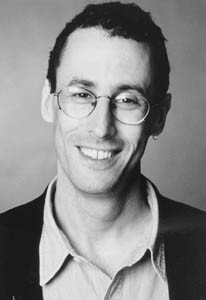
Playwright Tony Kushner

0

Earth Angel

Tony Kushner speaks on art and politics

By Greg Cahill

“I DIDN’T SET OUT to write a play about AIDS,” playwright Tony Kushner once said. “I set out to write a play about what it was like to be a gay, Jewish, leftist man in New York City in mid-’80s Reagan America.”

For his effort, Kushner won the Pulitzer Prize and two Tony Awards for his two-part seven-hour 1993 Broadway masterwork, Angels in America: A Gay Fantasia on National Themes. The production made Kushner something of a lightning rod in the post-Reagan era and also set the playwright up as a highly sought-after lecturer on human sexuality, society, and politics.

That last role brings Kushner, 44, to the Luther Burbank Center in Santa Rosa on Feb. 5 when he will be interviewed onstage by KQED radio host Michael Krasny. In addition, Kushner may read from Henry Box Brown, an as-yet-unproduced play about a Virginia slave who shipped himself to freedom inside a custom-made crate.

The appearance is a benefit for Actors Theatre, the Santa Rosa-based theater company that is staging Angels in America (Part II runs through Feb. 10). Expect a lively conversation focused on the nexus of art and politics.

Kushner’s works–including 1994’s Slavs (Thinking about the Longstanding Problems of Virtue and Happiness), a short play about the USSR under former president Mikhail Gorbachev–reflect an interest in political activism and the writings of German political philosopher Karl Marx, Austrian psychoanalyst Sigmund Freud, and German dramatist Bertolt Brecht.

Like Angels in America, his other plays–including 1985’s A Bright Room Called Day, 1987’s Hydrotaphia, and 1990’s The Illusion, the tragicomic adaptation of 17th-century neo-French classical dramatist Pierre Corneille’s L’Illusion Comique, staged last month at the Marin Theatre Company by foolsFURY–are also concerned with the moral responsibilities of people in politically repressive times.

FOR HIS PART, Kushner sees his plays as part of a political movement.

“What I found in the audience response is a huge hunger for political issues and political discussion,” Kushner once told Mother Jones. “So I always wonder: Is it that Americans don’t like politics, or is it that so much theater that is political isn’t well-done?

“. . . I would hate to write anything that wasn’t [political]. I would like my plays to be of use to progressive people. I think preaching to the converted is exactly what art ought to do.

“I am happiest,” he continued, “when people who are politically engaged in the world say, ‘Your play meant a lot to me; it helped me think about something, or made me feel like I wasn’t the only person who felt this way.’

“It’s the way you feel when you go to a demo, which is the only way to keep sane a lot of the time. You need to remind yourself there are many bodies who are as angry about something as you are.

“When I teach writing, I always tell my students you should assume that the audience you’re writing for is smarter than you. You can’t write if you don’t think they’re on your side, because then you start to yell at them or preach down to them.”

Tony Kushner will speak Monday, Feb. 5, at 8 p.m. at the Luther Burbank Center, 50 Mark West Springs Road, Santa Rosa. Tickets are $25/general, $20/balcony, and $16/students. 707/546-3600.

From the February 1-7, 2001 issue of the Northern California Bohemian.

© Metro Publishing Inc.
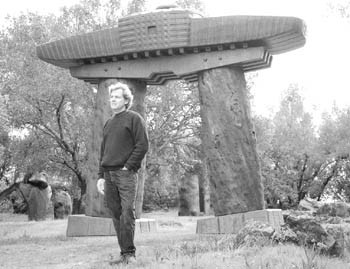
Bruce Johnson

0

Chain-Saw Magic

Sculptor Bruce Johnson creates art from salvaged old-growth redwoods

By Paula Harris

SCULPTOR Bruce Johnson isn’t interested in lounging inside, huddled in front of the television set this chilly Super Bowl Sunday afternoon. He’s where he loves to be–outside in the bracing January air roaming among the living oak trees and the giant chunks and columns of redwood that form his bold art pieces.

Striding in his blue jeans and work boots across the mossy rocks at the sculpture garden at Santa Rosa’s Paradise Ridge Winery, Johnson, 53, is the quintessential outdoorsman with his rosy-tanned face and unruly fair hair. He bends to remove some leaves from one sculpture and runs his weathered hand along the deeply ridged monolith.

“These ancient chunks of wood contain spirit and bear centuries’ witness,” he says. “I peel away the dirt and rot and look to the mass, form, and texture to inspire and inform the sculpture.”

Johnson is an artist and craftsman who uses a chain saw and other tools to create sculptures from salvaged old-growth redwood stumps abandoned by loggers decades ago. His work can be found at the Oakland Museum and in private collections from Italy to Taiwan. But this afternoon he’s inspecting his “Old Growth–New Life” exhibition at Paradise Wood Sculpture Grove.

The outdoor exhibit is the culmination of 25 years of experience, 18 months of labor, and 200 tons of raw materials. Described as an interplay of the forces of art and nature, it features a trickling fountain, a Zen garden, an Asian-inspired gate, a round bell tower, and more–all fashioned from redwood and copper.

This month Johnson will participate in a three-day artist-in-residence program at Santa Rosa Junior College. During all three days, he will use his chain saw to sculpt a huge piece of redwood in front of Analy Hall, the college’s art building. The artist will present two lectures: “The Chain-saw Lecture” and a slide-show presentation titled “Discussion on Redwood Aesthetics and Ethics.” And he will lead a tour of the Sculpture Grove exhibit.

For the SRJC demo, Johnson will employ a number of different tools. “There’s one just right for each move,” he enthuses, rattling off names of various trimmers and sanders–names like “Log Wizard.”

Chain-saw art has its dangers. With a wry grin, Johnson holds up his left hand–half of the left pinkie finger is missing. The bloody result of a run-in with a joiner in Fort Ross, he explains with a shrug. To him the end result is worth any physical pain.

Johnson says his sculptures are “small acts of preservation,” because he salvages the large scraps and chunks of old growth that aren’t of much value. “The logs really aren’t worth anything,” he says. “Some have too much rot in the middle or have too many knots.” For the bulk of this show he has used pieces from 200 blocks of redwood salvaged from Crescent City.

The Timber Cove-based artist adds he has no set design in mind when he begins to work on a piece of redwood. “Part of the process is cleaning up the material,” he explains. “You don’t know what you have until it’s cleaned up.”

He describes his work as a cross between Shinto shrines and Stonehenge–metaphors for man’s impulse to mark a place and for the human being’s mystical connection with nature.

Indeed, the looming wooden sculptures here with their happily married tones of redwood and copper seem to radiate a strange combination of pagan and futuristic energy that resonates with their outdoor setting.

There’s a curved monolith crowned with copperlike fish scales along its top and water trickling below. Another large piece is reminiscent of an ancient flying machine with a seat from which you can peer through a hole and view the North Star. And there’s a bell tower carved from a burned-out tree truck.

The pieces–which sell for around $50,000–have already attracted some buyers. A 16-foot-tall sculpture titled Wood Henge will be going to a private collection in Italy. And local Telecom Valley millionaire Don Green has bought Understanding Matter–a Map of the Cosmos, a modern redwood sculpture entirely encased in hammered copper, for his Santa Rosa home.

In addition, Johnson says, the Asian-inspired Sacred Portal may be eventually donated to the $43 million Don and Maureen Green Music Center at Sonoma State University, currently under construction.

Johnson says his work is ultimately about natural instinct. “I need to measure with my arms as well as with my mind,” he explains, “and ask myself how I feel about a piece rather than how I think about it.”

From the February 1-7, 2001 issue of the Northern California Bohemian.

© Metro Publishing Inc.
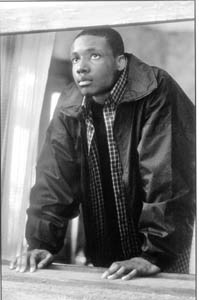
‘Finding Forrester’

0

Finding Forrester.

Write Turn

North Bay poet Terry Ehret critiques ‘Finding Forrester’

Writer David Templeton takes interesting people to interesting movies in his ongoing quest for the ultimate post-film conversation. This is not a review; rather, it’s a freewheeling, tangential discussion of art, alternative ideas, and popular culture.

“I HAVE THIS very superstitious notion that talent doesn’t really belong to people,” states the talented Terry Ehret, her elbows resting on my dining room table, a cup of hot tea cradled in her hands. “I don’t think we own our talent,” she says. “I think we only borrow it.”

Ehret speaks these words in a soft, expressive voice that only rarely rises above a murmur–though it always does so whenever she laughs. And she’s laughing now.

“This all sounds silly,” she continues. “But I truly think talent is something that only comes along for the ride during a person’s life. If you’re talented, then you are merely the chosen vehicle for that talent for as long as you live, and your only job as an artist is to be a good steward of that talent, to nurture it and make it bigger. Just a little bit. Then you die, and the talent is reborn into somebody else so they can get a running start. This is how we end up with child prodigies, people like Mozart.

“This is how you get Jamal Wallace,” she continues, “a brilliant writer who’s only 16 years old.”

Jamal–the brilliant writer of whom Ehret speaks–is the fictional star of director Gus Van Sant’s inspiring new film Finding Forrester. Played by Robert Brown, he’s an African-American high-schooler who hides his desire to write from his friends, but accidentally becomes the pupil of a reclusive writer named William Forrester (Sean Connery). A cranky, agoraphobic author who once wrote the Great American Novel, Forrester long ago dropped out of sight, never to publish again.

When Jamal, acting on a dare, breaks into Forrester’s prisonlike Bronx apartment, the boy accidentally drops the backpack that contains a number of his personal writing journals.

When Jamal finally retrieves his books, he finds that the mysterious old man has proofread every word, filling the books with corrections and underlinings and pithy critical notations like “This is constipated writing!” and “What do you want me to feel by this sentence?” and “Great passage! You should write more like this!” Before long, the boy is back in Forrester’s home, on the receiving end of a first-rate writer’s education.

Ehret enjoyed the movie. To put it mildly.

“It was thrilling,” she says. “I’m thrilled anytime a movie happens to be about writing.”

Ehret is the author of two poetry collections: Lost Body (Copper Canyon Press, 1993) and Suspensions (now out of print). In 1995, she won the coveted Pablo Neruda Prize for poetry for her poem series The Thought She Might: Picasso Portraits, selected out of hundreds of entries by the prestigious literary journal Nimrod.

Ehret is also a founding member of the 16 Rivers writers’ collective, a small group of women writers who have taught themselves the ins and outs of publishing with the goal of producing their own high-quality volumes of poetry and short stories. The first two volumes–including a collection of poems by Ehret–are due out this fall.

She teaches, too. For several years, Ehret had worked with California’s Poets in the Schools program, bringing her expertise to budding elementary-school poets throughout the North Bay. After teaching at the high school level for many years, Ehret now teaches her craft at both Sonoma State University and Santa Rosa Junior College.

Which brings us back to Finding Forrester.

“I loved the scenes where Jamal was sitting on his bed, hearing the next-door neighbors going at it, writing in his journal with his back against the wall,” Ehret says. “That was so much like my own high school years: my back against my bedroom wall, my journal in my lap, writing, writing, writing.

“I identified with his sense that there just has to be something more than what he had,” she continues, “that writing was the way to bring something better into being, to invent a world where he’d be more at home than the one he was physically stuck in. That was me.”

So how would Ehret, as a writer who teaches writing, rate the teaching style of William Forrester? Was he any good?

“He kept telling Jamal, ‘No thinking! No thinking! Just write!’ ” I mention. “Is this good advice?”

“It’s dead-on,” she replies. “Absolutely the right thing to say. I used those same words this morning, talking to a bunch of fifth graders. I was teaching them to warm up by ‘free writing,’ where you write as fast as your thoughts, faster if possible, with no censoring, no editing, no stopping, and no going back.”

Forrester demonstrates that technique in the film when he sits down at a typewriter and pounds out a page in a minute flat.

“I was sitting there thinking, ‘Yes! yes! Good advice, Forrester,’ ” Ehret says. “Don’t think. That part comes later.”

“What about the little remarks he wrote in Jamal’s journal?” I interject. “What exactly is ‘constipated writing’?”

“Oh. Well. constipated writing,” Ehret explains with a grin, “is labored, self-indulgent writing, writing that is almost masturbatory. Writing that doesn’t go anywhere.”

“Have you ever written that on some poor kid’s work?”

Ehret laughs. “Oh God, yes.”

A few seconds tick by before Ehret makes another observation.

“What I saw going on between Jamal and Forrester was not the way my mentors worked with me,” she says. “My mentors have mostly been women. They never messed with my writing like Forrester did. Instead, they’d talk to me. They’d talk about the things that matter in writing, and then they’d trust me to figure out what should stay and what should go.”

Ehret’s mentors did share another trait with Forrester: they believed in their protégé’s writing.

“That’s a very powerful thing,” Ehret says. “To know that someone out there in the world has absolute faith in you, has absolutely faith that you will write something good.

“That,” Ehret says, “is how you help someone to make their talent grow.”

From the February 1-7, 2001 issue of the Northern California Bohemian.

© Metro Publishing Inc.

Virtual Insanity

0

Head Case

Exploring the virtual-reality shrink

By Damien Cave

I’M EXPERIENCING schizophrenia for the first time. While spiders climb all over the room, the psychiatrist leans over his desk and shoves his face close to mine, his eyes squinty, red, and evil. He keeps asking me questions, but it’s impossible to pay attention. The voices won’t let me. “Loser, loser, loser,” screams one. “You’ll never make anything of yourself,” says another. A third goads me to “run, run away.”

Instead of taking the voices’ advice to flee, I simply stop the madness. I remove the virtual-reality goggles and place them by the Apple PowerBook running the simulation. My tour is over. I don’t necessarily feel more empathy for schizophrenics–the five-minute program’s goal, according to its sponsor Janssen, a pharmaceutical company–but it’s hard not to be a bit intrigued by the unexpectedness of virtual insanity.

Virtual reality’s original prophets saw their technology as a holodeck of pleasure, not pain. Pioneers like Jaron Lanier and Char Davies aimed for beauty, art, and emotional rapture. They created computer-generated amusement parks where people floated through objects and lost track of time. Even now, during an era when virtual reality no longer commands the regular headlines it did in the early ’90s, veteran visionaries like novelist Richard Powers remain obsessed with the ecstatic promise of the unreal world.

The virtual-schizophrenia booth looks nothing like such dreams. It’s a nightmare–only the latest example of a much larger trend toward building environments that frighten rather than fascinate. Call it real therapy through virtual means: In the name of mental health, scientists are exposing people to virtual Vietnam battles, tarantulas, and, for those who fear public speaking, raucous crowds. Hell on earth has been transferred to hell in a head mount. And with 20 million Americans suffering from mental problems that some therapists believe could be solved with VR–now cheaper and more accessible than ever before–many researchers believe that psychiatry will soon do what the VR pioneers have not, and introduce virtual reality to the masses.

“It’s going to go beyond the university to private practice and to the arena of public health,” says Ken Graap, CEO of VirtuallyBetter, an Atlanta company spun out of research at Georgia Tech that sells VR therapy tools. “This could be one of the first applications that brings low-cost VR to a broad base of users.”

Not everyone agrees that VR’s technological sleight of hand is the answer to mental illness, but proponents are increasingly enthusiastic. VR therapy should be welcomed, they say, because it’s safer and cheaper than “in vivo” options–and because it works. Patients overcome their fears, moving on to mental health in part because they experience the computer-generated world as completely real. Isn’t that what VR was supposed to be all about to begin with?

VIRTUAL REALITY and mental health first started to merge about seven years ago. Inspired by the possibility of creating a new therapeutic and technological tool, two researchers –Larry Hodges, a computer science professor at Georgia Tech, and Dr. Barbara Rothbaum, a psychiatry professor at Emory–joined forces. First, they built a virtual elevator shaft for use with people who have a fear of heights.

“It was a perfect problem for virtual reality to solve,” says Albert Rizzo, a VR therapy expert who teaches at the University of Southern California’s Integrated Media Systems Center and School of Gerontology. “At the time, VR was new and tended to work best with straight lines–perfect for simulating heights. And all the patients require is exposure. Over time, they see that nothing bad happens, so they get over [their fear].”

Experimentation didn’t stop with the fear of falling, though. Indeed, after Rothbaum and Hodges published a groundbreaking study in 1995, arguing that VR therapy was effective, research sprouted all over the world. In Italy, Giuseppe Riva, a communications psychologist, began using VR to assess neurobiological activity, such as eye movement after a stroke. Hunter Hoffman at the University of Washington’s Human Interface Technology Laboratory cured a woman of her phobia of spiders in 1997 with VR therapy.

And Rizzo–after spending 1994 and 1995 writing papers about the potential for psychological simulations–became a hands-on developer in the mid-’90s, beginning work on a virtual classroom in 1997 that now studies and diagnoses attention-deficit disorder.

And Rothbaum and Hodges have extended their work to new areas, including Virtual Vietnam, a Huey-filled Platoon for veterans with post-traumatic stress disorder.

Yet, even as VR therapy was gaining scientific legitimacy, VR technology remained primitive. Experts argue that the VR hype of the early ’90s deserves part of the blame. By the time psychiatry transformed VR “from an expensive toy to a useful tool,” Rizzo says, users had fallen into “a trough of disillusionment” with the technology. Scientists, the press, and everyday users turned off and tuned out, wanting nothing more to do with what Newsweek called “the most barfogenic invention since the tilt-a-whirl.”

CRUSHING costs didn’t help the cause either. The initial environments run by Rothbaum, Hodges, Rizzo, and others ran on $250,000 Silicon Graphics workstations and often used $50,000 head mounts and tracking sensors. Even as recently as two years ago, prices remained prohibitively high, says Graap of VirtuallyBetter. The PCs needed to run a simulation cost at least $5,000, and the head-mount tracking systems cost about the same. “We didn’t even bother trying to convince therapists to buy them,” he says. “We only did research.”

Then, about a year ago, price declines accelerated to a turning point. With the rollout of Pentium III processors, generic PCs became capable of running VR applications, and dropping prices for optical equipment cut head-mount costs by more than half. The result is that therapists can now start treating patients after laying out only about $3,500: $1,500 for a run-of-the-mill PC and $2,000 for a head-mount tracking combo like the VFX3D.

As is the case with most technologies, the lower prices have inspired rising interest. Janssen, for example, introduced a second virtual-schizophrenia experience this year. The company aims to demonstrate it to hundreds of doctors and law enforcement officials in an attempt to heighten their empathy for the mentally ill. And when VirtuallyBetter brought its suite of applications–for treating the fear of heights, audiences, airplanes, storms, and Vietnam–to the American Psychological Association’s conference this year, lines snaked around its booth all four days. Graap gave more than 700 demonstrations and says that more than 200 clinics have since called to inquire about buying the necessary equipment and software.

The “novelty factor” may have played a role, Graap concedes, but therapists are generally not a techno-friendly lot. Give them a couch and a patient and that’s all they usually need. But the promise of VR has stirred them from their Freudian slumber, says Page Anderson, a therapist who has treated more than 100 patients using VR. The technology isn’t just cool, it’s therapeutically compelling, she says. And it gives therapists almost complete control. They can heighten or minimize exposure to heights or other mental catalysts, repeating experiences that work, discarding those that fail.

They can track eye movements and heart rates while preserving confidentiality because patients remain in the office. There are some health concerns–Rothbaum warns that patients and therapists must not rely on technology at the expense of real-world, human interaction–but overall, “the advantages far outweigh the disadvantages,” Rizzo says.

What’s more, many patients prefer VR therapy, which lets them simultaneously avoid and overcome their greatest fears. When Anderson started a phobia study recently, she asked 15 people whether they’d prefer real-life exposure or VR therapy. All but one chose the latter. “It’s a new, useful tool,” says Anderson. “It’s a steppingstone to helping people.”

But VR therapy is also a weak application of a revolutionary advance, says VR pioneer Lanier, a longtime Sausalito resident. Using immersion techniques to frighten people–especially phobics–requires far less idealism, innovation, and passion than just about any other type of VR in use or imagined, he says.

GRAAP ADMITS that phobics are already “programmed” to react. And Janssen’s hallucination-filled schizophrenia program doesn’t just increase empathy; it also advertises the company’s latest schizophrenia medication in bold letters at both the beginning and the end.

Of course, the push toward fear and marketing in virtual reality “shouldn’t come as a surprise,” Lanier says. “Our art and culture are always trying to evoke primal fears.”

But the trend remains disappointing to Lanier–a sign, he says, of “our society’s weird take on life right now, where our higher priority is coming up with some way to deal with our primal fears, instead of a way to improve life and art. Maybe it’s the cult of victimhood, but what a curious priority to set.”

Perhaps there’s room for VR therapy and the aesthetics that Lanier longs for to coexist. Anderson and Graap contend that VR therapy may not be the escape that its pioneers initially envisioned, and that their applications represent a transition. The virtual-schizophrenia booth may not feel real to people without the disease–I sure wasn’t all that impressed–but the sweats and high heart rates of phobics show that full psychological immersion is possible. With ever-improving technologies, the lessons learned in therapy–about what works and what doesn’t, for example-could open up new avenues of VR research and reveal new models for immersion. Soon people may be helping themselves to over-the-counter VR devices at pharmacies while the dreamers and pioneers code cultural epiphanies that reach the masses.

With the mix of psychology and more advanced, cheaper processing power, “the sky’s the limit,” Rizzo says. “The only limitation is software. Whatever we can code, we’ll be able to do.”

From the February 1-7, 2001 issue of the Northern California Bohemian.

© Metro Publishing Inc.

Geek Girl

A glossary for those in and out of the loop

By Annalee Newitz

FOR YOUR edification, consternation, and bathroom reading, I’ve compiled a list of the most egregiously overused phrases and concepts in the tech industry. Drink information–things go better with a cliché.

Bricks and Mortar: A phrase often used in the multimedia biz to designate anything that isn’t virtual. “People used to build businesses out of bricks and mortar,” an overexcited sales rep will say, “but now they use websites.” What’s weird is the idea that everyday life is actually made out of bricks and mortar–it’s as if everywhere outside of cyberspace is supposed to look like a New England town full of quaint old building materials. Personally, I live in the corrugated iron and drywall world.

Skill Set: All the abilities a particular job requires or all the abilities a person possesses. “Skill set” is often used euphemistically to explain why someone hasn’t gotten a job: “Her skill set didn’t entirely overlap with the position of engineer.” Also can be used comically: “My skill set includes UNIX administration, Perl scripting, and interior design with empty Coke cans.”

Sticky: Of course you want your website to be sticky, just like the Macromedia ads say. Why? Because you want eyeballs to stick to them, to stay awhile. I understand the concept perfectly, but not the metaphor. Why combine eyeballs with the idea of stickiness? It’s too Sam Raimi, as if your company’s goal were to suck people’s faces off instead of merely selling them something. But maybe that’s the point.

IT: Like the word “cool,” IT describes so much that it has become meaningless. I saw a company website the other day which actually advertised itself as dealing in “IT products,” possibly the vaguest business plan in the history of creation. I’m ready for a wave of IT jokes, in which IT is said to stand for Incarcerated Testicles, Internet Torture, or Information Trash.

Robert Cringely: Robert Cringely popularized the stereotype of the valley’s heroic, virginal nerd with his book Accidental Empires. The whole nerd-boy thing is prehistoric in our era of webgrrls, immigrant entrepreneurs, and shagadelic, pierced geeks who code by day and go to San Francisco sex parties at night. Let’s get with the program here: The story of the late ’90s isn’t celibate nerds who strike it rich, but the astronomical number of geeks who blow their giant salaries on call girls.

Suck.com: Everybody knows that Wired‘s little e-zine Suck.com used to be the shit with its jangly prose, retro graphics, and up-to-the-nanosecond ironic commentary. But reading it today is like hearing yet another David Letterman monologue. It’s comfortingly familiar but not really funny anymore. Anyone who claims Suck.com is the only online content they read needs to be taken out and re-skilled. Try these URLs instead: Slashdot, Salon, and The Onion.

e: Remember when “e” meant something that made you feel like doing the happy dance? And for those who didn’t pop pills, e was a prefix for e-mail and nothing else. Now we have companies like eTrade, TrustE, and eBay; and hundreds of firms have come to specialize in e-whatever: e-commerce, e-business, e-publishing, e-schooling. Since e stands for electronic, we might as well rename everything. Could you turn on the e-lights so I can find the e-coffeemaker and get some milk out of the e-refrigerator? Every action can be an e-transaction!

The Internet Index: Why are Microsoft, Amazon.com, and Sun all listed in the same index? Because Wall Streeters can’t wrap their minds around the idea that the Internet is a medium, not a type of commodity or product.

Company T-shirts: Company T-shirts are a combination of two high school impulses that never should have been combined: the urge to wear school colors patriotically and the desire to wear Marilyn Manson T-shirts that say “I am the God of fuck.” Sorry, but you can’t be a zippy little code monster and still wear T-shirts that advertise tech companies (especially ones where you work). The only T-shirts worth having are those that promote ephemera: companies that died, products no one remembers, and obscure conferences held in places other than Las Vegas. It pains me to say this, because I yearn tragically for an Inktomi T-shirt. But do you really want to hear the “It’s not just a company, it’s a wardrobe” joke one more time?

Yes, I’m sure there are a bazillion things I’ve left out. f

This nostalgia column originally ran in 1999 as a handy Internet primer.

From the February 1-7, 2001 issue of the Northern California Bohemian.

© Metro Publishing Inc.

Wide-Eyed Gourmet

Americans fed up with diet research By Marina Wolf THIS IS NEWS? Apparently it was to the researchers at the Fred Hutchinson Cancer Research Center who surveyed 1,751 adults on their eating habits and attitudes about nutritional guidelines. Hell, I would have taken 100 bucks and saved them the trouble and expense. Anybody who ever...

Winter Roots

Root Awakening Discovering the earthy pleasure of winter roots By Marina Wolf WINTER-MENU malaise. It's that feeling that you get when the produce aisle has gone monochrome. Fortunately, there are several courses of treatment. You can buy frozen veggies, those icy but green ghosts of harvests past. You can drop great...

Anniversary Reflections

By Susan Bono I WANT TO BE in love again. It is my most exalted state. When my heart is held captive, my long, slumped spine lifts straight, my walk goes willowy. I am dazzled by my very breathing. Love sharpens my wits, but softens my tongue. I become an expert interpreter of gesture and glance. I...

Usual Suspects

Cotati business park sparks criticism By Greg Cahill DOES Sharon Wright always get what she wants? A few years ago, the current City Councilwoman and then mayor of Santa Rosa told a gaggle of local media types gathered at an informal City Council luncheon that she wanted to give the city a cool new moniker to...

Newsgrinder

Tuesday 01.30.01 Coach Craig Brennan may have answered the age-old question of how wrestling coaches get their veins to pop from their necks, reports the Marin Independent Journal. The Marin Catholic High School mat wrangler was arraigned in Marin Superior Court on drug charges stemming from his mid-January arrest, when authorities said they found him with a...

Playwright Tony Kushner

Earth Angel Tony Kushner speaks on art and politics By Greg Cahill "I DIDN'T SET OUT to write a play about AIDS," playwright Tony Kushner once said. "I set out to write a play about what it was like to be a gay, Jewish, leftist man in New York City in mid-'80s...

Bruce Johnson

Chain-Saw Magic Sculptor Bruce Johnson creates art from salvaged old-growth redwoods By Paula Harris SCULPTOR Bruce Johnson isn't interested in lounging inside, huddled in front of the television set this chilly Super Bowl Sunday afternoon. He's where he loves to be--outside in the bracing January air roaming among the living oak...

‘Finding Forrester’

Finding Forrester. Write Turn North Bay poet Terry Ehret critiques 'Finding Forrester' Writer David Templeton takes interesting people to interesting movies in his ongoing quest for the ultimate post-film conversation. This is not a review; rather, it's a freewheeling, tangential discussion of art, alternative ideas, and popular culture. ...

Virtual Insanity

Head Case Exploring the virtual-reality shrink By Damien Cave I'M EXPERIENCING schizophrenia for the first time. While spiders climb all over the room, the psychiatrist leans over his desk and shoves his face close to mine, his eyes squinty, red, and evil. He keeps asking me questions, but it's impossible to...

Geek Girl

A glossary for those in and out of the loop By Annalee Newitz FOR YOUR edification, consternation, and bathroom reading, I've compiled a list of the most egregiously overused phrases and concepts in the tech industry. Drink information--things go better with a cliché. Bricks and Mortar: A phrase often used in the...
11,084FansLike
4,606FollowersFollow
6,928FollowersFollow
