Confessions of Oakmont’s Nadine Condon

In the early 1970s, Nadine Condon found herself alone on a street in St. Louis, not far from her hometown. 

She stopped in her tracks and listened to a stranger warble the lyrics to Jefferson Airplane’s hit single, “Someone to Love.” 

“I was already a big fan,” Condon says at her Oakmont home, where she lives with husband and heartthrob, Mark, otherwise known as “Honey.” 

“That day in St. Louis, I told myself, ‘I want to be with that tribe. I want to be in San Francisco.’”                                                               

Listening to Condon talk about the glory days of rock ‘n’ roll feels like going on a magical musical tour. It’s perhaps ironic that she no longer lives in SF, which she describes as “a place that’s especially for the young.” 

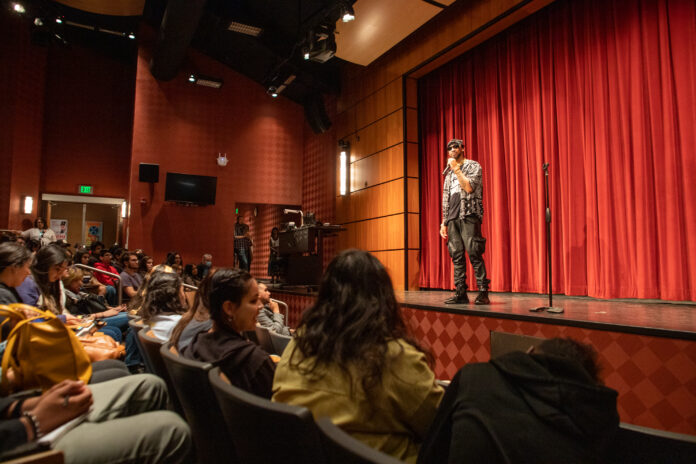
But on Oct. 21, she’s at San Francisco’s famed Make Out Room on Valencia Street with some of the aging giants of the Bay Area music scene: Ben Fong-Torres, Michael Goldberg, Greil Marcus, Joel Selvin and Berkeley’s maven of funk, Ricky Vincent, plus British born critic, singer and songwriter Sylvie Simmons. The event, “The Only Truth is Music,” is part of Litquake’s Litcrawl 2022 program. “I feel once again that my life has come full circle,” Condon gushes.

In a review of Confessions, long time Marin Independent Journal writer Paul Liberatore says that what makes the book unique is the author’s “mid-life rediscovery of religion and spirituality.” As they have aged, boomers have turned increasingly to churches and synagogues, though back in the day, many of them balanced the demands of rock with the call of ashrams, gurus and chanting. The Beatles, at least some of them, rejected Chairman Mao for the Maharishi and meditation, as did Mike Love of the Beach Boys.

From St. Louis, Condon didn’t make a beeline for “Baghdad by the Bay,” as Herb Caen, the “oracle of the city,” dubbed SF. She had a serious case of wanderlust that took her to New England. “I wanted to be a famous writer,” she says. “I was afraid of New York, so I went to Boston, instead, took a lowly administrative job at a newspaper, hid my desire to be a writer and heard all the great blues singers.” Now, with her memoir, Confessions, Condon’s writing is no longer under wraps or on a back burner.

After Boston, she hit the road, arrived in California, soaked in a hot tub in Big Sur, took in the spectacle of the full moon and sniffed the scent of marijuana in the air. “It was the first time I was naked in mixed company,” she says. “It was the first time I felt really free.” Not long after that immersion, she moved to San Francisco, met famed guitarist and bluesman, Nick “The Greek” Gravenites, a longtime Sonoma County music maven, and became his “girlfriend” and his manager. By then, Gravenites had produced Brewer and Shipley’s “One Toke Over the Line,” a song that captured the cannabis habit of a generation.

“I knew I was not musically inclined when I got together with Nick, but I was a huge music fan,” Condon says. The two were a duo. As a girl, Condon had listened to rock ‘n’ roll at night on a transistor radio in her bedroom in Louisville, KY, where she was born in 1951. She grew up with the soundtrack to Hair—a gift from her parents—and graduated to the Beatles and the Stones, belting out the words, “I can’t get no satisfaction.” No, no, no. Yes, yes, yes. Satisfaction came her way big time. Hey, it was the ’60s.

Hunkered down in Baghdad by the Bay, Condon recognized that the real buzz in the music biz was behind the stage, and that it went on 24/7. 

“I wanted to be part of the action,” she says. It wasn’t a slam-dunk. The managers of the bands were, she learned, mostly male; the executives at the recording companies were mostly male; the concert promoters were mostly male; and the directors at the radio stations were mostly male.

“The men made the money and the women, who were employed by the companies, did the real work,” she says. “They were unsung.” Condon sings their praises and her own in Confessions and observes that she was “vastly underpaid” and that she contented herself with “the glam and the glitter.”

Fortunately, San Francisco hosted and boasted history-making women singers and songwriters such as Janis Joplin and Grace Slick. “I wanted to be like Janis,” Condon says. “A woman who was with the men in Big Brother and the Holding Company, but who was the star of the show, Grace stood out, but she was always part of the band, and not by herself on stage.” Nadine adds that “Janis was probably not the best role model, but I was inspired by her example as a woman who did it largely on her own.”

Condon slipped away from Gravenites and his high-powered studio, where she played backup, so to speak, and eased into a productive relationship with Starship and Slick. She toured the world with the band, and, when Slick left Starship in 1989, Condon started her own company, dubbed herself “The Godmother of Rock“ and launched “Nadine’s Wild Weekends,” a time she animates so loudly in Confessions that you can feel the beat bounce of the pages.

From 1998 to 2002, her increasingly wild “Wild Weekends” attracted superstars, as well as not so famous talents. They showcased 130 bands that stormed 20 venues. Condon had successfully branded herself and worked with Melissa Etheridge and Elton John’s Rocket Records. After that climb to the top of the rock pyramid, there was really only one thing to do, and that was to take a bow, say goodbye and exit the music scene.

“Grace offered me a template,” Condon says. “I thought that rock ‘n’ roll would be my whole life, but I watched Grace and saw that I could bring out a softer side of myself. She became an artist and painted wonderful portraits of people and whimsical rabbits, lots of rabbits.” No surprise that from the woman who gave audiences “White Rabbit,” that boasts the words, “Feed your head,” which recreates the Alice in Wonderland story and that Slick sang at Woodstock in 1969.

As a girl, Condon imagined herself wearing a habit, becoming a nun and devoting herself to the service of others. So, it wasn’t a huge shift to go from rock ‘n’ roll, sex and drugs to helping the homeless and working with people in hospice who were near the end of their time on the Earth. In one of the last sections of Confessions, Condon describes her current vocation as a spiritual helpmate to the dying and the severely ill. In the chapter called “Wisdom Keepers,” she says her life is one of “Practicing kindness.” She adds, “Kindness is my motto.” Her stellar work, which linked her to Grace Slick, has taken her, she says, “into a state of grace.”

Condon doesn’t miss the biz. Well, maybe “the expense accounts and the excitement.” Nor does she bemoan the loss of a Golden Age of Rock, which she says existed from about 1960 to the early 2000s when tech took over the city.

“Yes, San Francisco is different today than it was when I was in the thick of it,” she says. “It’s always morphing, and it’s always a city of opportunity. Right now, it’s in a chrysalis stage. The city that gave the world the wealth of the Gold Rush, the tycoons, Jack London, the dockworkers, Harry Bridges, the Beats, the hippies and the techies has something under its sleeve.”

How does she read Starship’s infectious words, “We built this city on rock ‘n’ roll”? “I take them metaphorically,” Condon says, her feet keeping the beat of a tune on her turntable. “San Francisco attracts people on the cutting edge. Always has and always will. Every time I come back here after traveling elsewhere, I kiss the ground.”

The city’s rock hasn’t been the same since the glory days, but there are rumors of a rock revival. Drummers, guitarists, harmonica players and more haven’t vanished. During the week, they’re at work making money so they can pay the bills. On weekends and on weekday evenings, they make music in garages, cafes and clubs, reminding themselves and audiences that rock ‘n’ roll is here to stay, though perhaps not to pay the way it once did.

‘The Only Truth is Music: Readings From Music Writers,’ 7:30pm, Friday, Oct. 21, The Make-Out Room, 3225 22nd St., San Francisco.

Professor Harold Hill Comes to Rohnert Park

American musical theater doesn’t get any more old-fashioned than it does with The Music Man. Broadway is currently hosting a revival of Meredith Willson’s melodic tale of con man Harold Hill and Marian the Librarian, but North Bay audiences looking to travel back to turn-of-the-century River City, IA need only head to Rohnert Park. The Spreckels Performing Arts Center is hosting a production through Oct. 2.  

Con man “Professor” Harold Hill (Benjamin Ball) barely escapes a train full of angry traveling salespersons whose reputations he has sullied with a variety of scams and swindles. He finds himself in River City, where the residents are ripe for the picking with his latest confidence game of forming a town band. 

Prim librarian Marian Paroo (Julianne Bretan) sees through him. But when she witnesses the positive changes brought about by Hill’s machinations in her shy and withdrawn little brother, Winthrop (Dakota Dwyer), she starts to see Hill in a different light. Will it be tar and feathers for one or wedding bells for two?

It’s tough not to smile through the big slice of Americana served up here by director Michael Ross. The show is bright, the score is bouncy, the costumes are colorful, and the cast is a great mix of North Bay veterans and energetic young performers.

Marian is the perfect role for Bretan, as she brings one of the Bay Area’s best voices back to the Spreckels stage. Ball makes for a solid Hill in his North Bay debut, though I do wish he brought a little bit more bombast to the character.

Veteran performers like Jill Wagoner (Marian’s mother) and Mike Schaeffer (Mayor Shinn) nicely fill out supporting roles, and there’s a great quartet (Michael Arbitter, Sean O’Brien, Tim Setzer, Cordell Wesselink) singing harmony throughout the show.  

A multi-generational ensemble of performers brings energetic support to the show that’s especially entertaining in the larger, Bridget Codoni-choreographed musical numbers.  

Janis Dunson Wilson expertly leads the live orchestra through such classics as “Ya Got Trouble,” “Wells Fargo Wagon,” “Til There Was You” and, of course, “76 Trombones.”

There’s an on-going debate over whether shows like The Music Man and their portraits of idyllic, small-town America are relevant in today’s world. There’s little debate, though, that at its heart, The Music Man is a very entertaining show.   

‘The Music Man’ runs through Oct. 2 in the Codding Theatre at Spreckels Performing Arts Center, 5409 Snyder La., Rohnert Park. Thurs-Sat, 7:30pm; Sun, 2pm. $12–$36. 707.588.3400. spreckelsonline.com

Free Will Astrology

ARIES (March 21-April 19): Poet Susan Howe describes poetry as an “amorous search under the sign of love for a remembered time at the pitch-dark fringes of evening when we gathered together to bless and believe.” I’d like to use that lyrical assessment to describe your life in the coming days—or at least what I hope will be your life. In my astrological opinion, it’s a favorable time to intensify your quest for interesting adventures in intimacy, to seek out new ways to imagine and create togetherness, to collaborate with allies in creating brave excursions into synergy.

TAURUS (April 20-May 20): Social reformer Frederick Douglass (1817-1895) had a growlery. It was a one-room stone cabin where he escaped to think deep thoughts, work on his books and literally growl. As a genius who escaped enslavement and spent the rest of his life fighting for the rights of his fellow Black people, he had lots of reasons to snarl, howl and bellow as well as growl. The coming weeks would be an excellent time for you to find or create your own growlery, Taurus. The anger you feel will be especially likely to lead to constructive changes. The same is true about the deep thoughts you summon in your growlery: They will be extra potent in helping you reach wise practical decisions.

GEMINI (May 21-June 20): “Conduct your blooming in the noise and whip of the whirlwind,” wrote Gemini poet Gwendolyn Brooks. I love that advice! The whirlwind is her metaphor for the chaos of everyday life. She was telling us that we shouldn’t wait to ripen ourselves until the daily rhythm is calm and smooth. Live wild and free right now! That’s always good advice, in my opinion, but it will be especially apropos for you in the coming weeks. Now is your time to “endorse the splendor splashes” and “sway in wicked grace,” as Brooks would say.

CANCER (June 21-July 22): “Don’t look away,” advised novelist Henry Miller in a letter to his lover. “Look straight at everything. Look it all in the eye, good and bad.” While that advice is appealing, I don’t endorse it unconditionally. I’m a Cancerian, and I sometimes find value in gazing at things sideways, or catching reflections in mirrors, or even turning my attention away for a while. In my view, we Crabs have a special need to be self-protective and self-nurturing. And to accomplish that, we may need to be evasive and elusive. In my astrological opinion, the next two weeks will be one of these times. I urge you to gaze directly and engage point-blank only with what’s good for you.

LEO (July 23-Aug. 22): Tips to get the most out of the next three weeks: 1. Play at least as hard as you work. 2. Give yourself permission to do anything that has integrity and is fueled by compassion. 3. Assume there is no limit to how much generous joie de vivre you can summon and express. 4. Fondle and nuzzle with eager partners as much as possible. And tell them EXACTLY where and how it feels good. 5. Be magnanimous in every gesture, no matter how large or small. 6. Even if you don’t regard yourself as a skillful singer, use singing to transform yourself out of any mood you don’t want to stay in.

VIRGO (Aug. 23-Sept. 22): In the coming weeks, you should refrain from wrestling with problems that resist your solutions. Be discerning about how you use your superior analytical abilities. Devote yourself solely to manageable dilemmas that are truly responsive to your intelligent probing. P.S.: I feel sorry for people who aren’t receptive to your input, but you can’t force them to give up their ignorance or suffering. Go where you’re wanted. Take power where it’s offered. Meditate on the wisdom of Anaïs Nin: “You cannot save people. You can only love them.”

LIBRA (Sept. 23-Oct. 22): Buddhist monk Thich Nhat Hanh was born under the sign of Libra. He said, “The root-word ‘Buddha’ means to wake up, to know, to understand; and he or she who wakes up and understands is called a Buddha.” So according to him, the spiritual teacher Siddhartha Gautama who lived in ancient India was just one of many Buddhas. And by my astrological reckoning, you will have a much higher chance than usual to be like one of these Buddhas yourself in the coming weeks. Waking up will be your specialty. You will have an extraordinary capacity to burst free of dreamy illusions and murky misapprehensions. I hope you take full advantage. Deeper understandings are nigh.

SCORPIO (Oct. 23-Nov. 21): I invite you to be the sexiest, most intriguing, most mysterious Scorpio you can be in the coming weeks. Here are ideas to get you started. 1. Sprinkle the phrase “in accordance with prophecy” into your conversations. 2. Find an image that symbolizes rebirth and revitalization arising out of disruption. Meditate on it daily until you actually experience rebirth and revitalization arising out of disruption. 3. Be kind and merciful to the young souls you know who are living their first lifetimes. 4. Collect deep, dark secrets from the interesting people you know. Employ this information to plan how you will avoid the trouble they endured. 5. Buy two deluxe squirt guns and two knives made of foam rubber. Use them to wage playful fights with those you love.

SAGITTARIUS (Nov. 22-Dec. 21): There’s an ancient Greek saying, “I seek the truth, by which no one ever was truly harmed.” I regard that as a fine motto for you Sagittarians. When you are at your best and brightest, you are in quest of the truth. And while your quests may sometimes disturb the status quo, they often bring healthy transformations. The truths you discover may rattle routines and disturb habits, but they ultimately lead to greater clarity and authenticity. Now is an excellent time to emphasize this aspect of your nature.

CAPRICORN (Dec. 22-Jan. 19): Let’s imagine you are in your office or on the job or sitting at your kitchen table. With focused diligence, you’re working on solving a problem or improving a situation that involves a number of people. You think to yourself, “No one seems to be aware that I am quietly toiling here behind the scenes to make the magic happen.” A few days or a few weeks later, your efforts have been successful. The problem is resolved or the situation has improved. But then you hear the people involved say, “Wow, I wonder what happened? It’s like things got fixed all by themselves.” If a scenario like this happens, Capricorn, I urge you to speak up and tell everyone what actually transpired.

AQUARIUS (Jan. 20-Feb. 18): To honor your entrance into the most expansive phase of your astrological cycle, I’m calling on the counsel of an intuitive guide named Nensi the Mercury Priestess. She offers the following advice. 1. Cultivate a mindset where you expect something unexpected to happen. 2. Fantasize about the possibility of a surprising blessing or unplanned-for miracle. 3. Imagine that a beguiling breakthrough will erupt into your rhythm. 4. Shed a few preconceptions about how your life story will unfold in the next two years. 5. Boost your trust in your deep self’s innate wisdom. 6. Open yourself more to receiving help and gifts.

PISCES (Feb. 19-March 20): Author Colin Wilson describes sex as “a craving for the mingling of consciousness, whose symbol is the mingling of bodies. Every time partners slake their thirst in the strange waters of the other’s identity, they glimpse the immensity of their freedom.” I love this way of understanding the erotic urge, and recommend you try it out for a while. You’re entering a phase when you will have extra power to refine and expand the way you experience blending and merging. If you’re fuzzy about the meaning of the words “synergy” and “symbiosis,” I suggest you look them up in the dictionary. They should be featured themes for you in the coming weeks.

Culture Crush—Indigenous Voices, Farm Trails Fall and More

Occidental 

Arts Literary Series 

Join the Occidental Center for the Arts for their Arts Literary Series, featuring Glen Ellen author Elisa Stancil Levine and former Sonoma County poet laureate and biologist Maya Khosla, as they share work in recognition of the five-year anniversary of the 2017 fires. Both writers will read from their recent works, This or Something Better, A Memoir of Resilience by Levine, and All the Fires of the Wind and Light by Khosla. After the reading, a conversation built around coping with fear, the relentless nature of change and the broader impacts of fire, beyond even our human experiences, will be held, with invitation to the audience for open discussion. The event is Sunday, Oct. 16 at the Occidental Center for the Arts, 3850 Doris Murphy Way. 4-6pm. Free. www.occidentalcenterforthearts.org 

Healdsburg

Indiginous Voices 

Join The 222 in Healdsburg for Indiginous Voices, literary events celebrating the work of two award-winning Indigenous American poets, poet Jennifer Foerster, and poet, writer and small press publisher Lucille Lang Day. The first event of the series will feature Foerster, reading from her latest book and joining prize-winning Healdsburg poet Denise Low—European and Lenape/Munsee—in a dialogue about the inner workings of the poetry world, and the Indiginous experience. Foerster, an enrolled member of the Muscogee (Creek) Nation of Oklahoma, explores the language and culture of her heritage in her writings. Other themes include ecology, history and the human capacity for violence.“Merging the poetic with the prophetic, Foerster offers a startling vision of how to navigate this broken world and its resilient beauty,” said Rigoberto González, Rutgers MFA director. The first night of Indiginous Voices is Sunday, Oct. 9 at 222 Healdsburg Ave., Healdsburg. 7pm. Tickets $20. www.the222.org 

Petaluma

Honoring Life Exhibition 

In the midst of this spooky season, and the beauty of celebrating those who have moved on, Petaluma Arts Center is taking a slightly different approach with their event, Honoring Life: Love and Remembrance. The new event uses the process of artmaking to address and appreciate how different cultures and communities pay homage to those who have passed away. Though practices of honoring our departed may differ, the common ground of expressing through art ties us together. Petaluma Arts Center hopes to provide a supportive, creative and respectful environment, inviting a spiritual, historical and socio-culturally inclusive experience.  Honoring Life: Love and Remembrance opening reception is Oct. 6 at Petaluma Arts Center, 230 Lakeville St. 5:30-7:30pm. Free. www.petalumaartscenter.org 

Sebastopol

Farm Trails

One of the best features of fall in Sonoma County is the Farm Trails Fall Tour. Sonoma Farm Trails’ member ranches, farms and agricultural producers will be open to the public for tours, demonstrations, tastings, workshops and more. This is an incredible way to appreciate all that SoCo agriculture has to offer! “Autumn in Sonoma County is a bountiful time of year, and we’re thrilled to be able to share the season’s agricultural splendor with the public,” said Farm Trails program manager and tour coordinator Ellen Cavalli. “All ages are welcome to learn more about where their food, drink and flowers come from, and to forge a stronger connection with their local farmers and producers.” Attendees will be able to choose their own agrarian adventure from nearly two dozen farms and artisan producers. The Fall Trails Fall Tour is Saturday and Sunday, Oct. 8 and 9, all day. Registration is free, and required. www.farmtrails.org 

—Jane Vick 

The Folklore of Teri Sloat

A familiar face amongst the West County art scene, artist Teri Sloat’s work is included in this year’s Sonoma County Art Trails.  

Community members can see Art Trails Oct. 1 and 2 at the Sebastopol Center for the Arts. Sloat’s work covers a range of subject matter; she’s a talented landscape painter who masterfully renders color and light in pastel, and she also paints a great deal of folk art. 

Though traditional in style, the stories of Sloat’s folk art are her own. 

Sloat paints her own mythos, adding it to the annals of folklore and inviting viewers of her work to translate what they see for themselves—to mine meaning the way one would from an Aesop fable. 

Sloat didn’t go to art school and was never classically trained. Her career as an artist came as the result of her passion, gumption and willingness to take the opportunities life presented her, even if she didn’t feel ready for them. 

Her creativity iterated in early childhood, where she found an outlet for her creative impulses in drawing greeting cards for her family and friends, as early as when she was four years old. 

“For some reason, my mother, though we had absolutely no supplemental money, bought me a year of art lessons with a painter. I became totally addicted to the smell of paint, the color, the work hanging up on the walls; it gave me a real boost,” Sloat recalled.

She began to notice too, the intricate backdrops of Walt Disney animated movies; the moody backgrounds evoked a sense of marvel at the power and mood-bringing capacity of color. She continued drawing and illustrating, on her own time. 

In the 1960s, Sloat met and married her husband, and together they moved to Alaska, to teach in Yup’ik villages at the mouth of the Yukon River. Sloat became fascinated with picture book illustrations, and which images her primarily Yupik-speaking students would respond to, while still learning English. Then, opportunity struck. 

“After five years of teaching, I was considering making my own book, with my illustration. Then in 1976, a bilingual center was opened in Bethel, and a job opened up to create books and reading materials and posters for the classrooms of Yu’pik schools all along the Yukon Delta. I turned in all the greeting cards I’d been making, and my idea for a book, and there wasn’t another person for 400 miles around who could do the job. So I got it.” 

This stroke of opportunity catapulted Sloat’s career. Though she felt her work atrocious at the time, she was utterly content with her new role. She created readers, picture books and posters, all based around the Yu’pik culture’s folklore. This exposure to intimate cultural story served to awaken Sloat’s imagination and inform her own folkloric paintings. 

After seven years in the job, she had illustrated 250 books, alphabets and readers, and felt ready to pursue her artistic goals. Sloat’s first illustrated book, an alphabet book titled Letter to Letter, came out in 1989. She now has 22 illustrated children’s books under her belt. 

Along with her impressive career as a children’s book author and illustrator, Sloat’s love of the natural world, deeply enhanced by her time living in the awe-inducing magnitude of the Alaskan tundra—she and her family traveled by sea plane and sled, and listened to local stories on long nights—and her ongoing exposure to Yu’pik folklore, shaped her visual work into the two-sided body of paintings it is today. Both in her landscapes and her folkloric work, she seeks to convey the interconnectedness between humans and the natural world—finding in the process of painting a sense of connectedness herself. 

“I’ve had to learn to pay attention to where my imagination is going, and honor those stories. More and more, I realize that we all have thoughts, stories, about how connected we are. Catching those stories and putting them down visually can connect to another person. It can inspire their own stories.” 

Though she is always careful to attribute her inspirations to their original sources and otherwise avoid appropriation—Sloat feels anyone can craft and create folklore. And she feels that her paintings offer an invitation to create our own stories, our own folklore. Often a speaker in schools, at conferences and in various art programs, Sloat teaches that all folklore starts somewhere, and there’s no reason that it can’t start with us. 

“I have pieces with imagery—one example is a piece called The Last Sliver of the Moon, and one of the birds has the last sliver in its beak. And it’s up to you to create the rest of the story! It’s not a folktale in a standard sense; it’s just mine. And the picture is a thought that produces a story in someone else. I so enjoy that. Unless someone asks me, I don’t tell them the whole story, because I want to know what they’re thinking.” 

One such inspirational image is Sloat’s painting, Who Needs Wings, which depicts a jackrabbit leaping over birds. For Sloat, the image was born from her processing of accepting her validity as an artist without ever having been classically trained. 

Astounding though it may seem while reading about her long and successful career, Sloat experienced something that can be common among “outside artists”—artists not classically trained—and artists in general: a sense of guilt, or apology for making her work, a general imposter syndrome, and a need to justify and improve, constantly. 

Now in the later years of her life as an artist, Sloat has found her way through and out of that feeling of guilt, and into a sense of certainty about her work, and herself as an artist. Creating, in Who Needs Wings a story, a piece of folklore, helped her to find closure with the process, and also a way to represent it to others perhaps experiencing the same thing. 

Image provided by Teri Sloat.

Who Needs Wings for me was a last remark to the part of myself that didn’t feel good enough. I think for a long time it was a struggle. Even quitting teaching—I felt such tremendous pressure to prove that had been a good decision. I think I’ve always been an apologetic artist, until lately. For the first time, in the last two or three years, after all this time, I’ve found my own message. I am able to create my own folklore, my own narrative, and that’s all I have to do.”

Now, in an unbarred way, Sloat protects and cultivates her craft, knowing that the side-eye modern culture might give those choosing their own path is one that can be met with a full, confident gaze.

“It’s very important, in those moments when someone looks at you with doubt, to look straight back at them and say this is my job.” 

Even, and especially when that person is the one looking back at us in the mirror. 

Sloat’s work, and Sloat herself, can be found Oct. 1 and 2 at the Sebastopol Center for the Arts, 282 S High St., Sebastopol. www.sonomacountyarttrails.org.  For more of her work, visit www.terisloatfineart.com.

Sonoma County homeless count shows increase since start of pandemic

Sonoma County on Tuesday published its first report since the start of the Covid-19 pandemic estimating the number of people experiencing homelessness.

The report, based on data collected from a point-in-time (PIT) count conducted this February, found that the number of people living on the street, in cars or vehicles, or in otherwise precarious situations, increased 5% since February 2020. That year, the total number experiencing homelessness was estimated at 2,745. In 2022, the figure increased to 2,893.

Though the overall increase is smaller than some expected, the report shows a startling 43% increase in the number of people struggling with long term homelessness in Sonoma County.

“The pandemic, which led to personal economic challenges for many people, clearly contributed to an increase in the homeless population, as reflected in the 2022 Homeless PIT Count,” Supervisor Gore, chair of the Sonoma County Board of Supervisors, said in the statement released Tuesday. “At the same time, we recognize that the numbers would have been far worse if not for the historic investments we have made toward providing shelter and services.

PIT counts, conducted by every county in the country, offer a snapshot of an ever-evolving issue.

To complete the count, volunteers and county officials spread out across the county early one morning in late February, attempting to count the number of people visibly living outside, in a makeshift shelter or in a vehicle. That information is later combined with other available data, including the number of people staying in shelters the night of the count, to calculate the final estimate.

However, because some people only experience homelessness for a few days, weeks or months, they may have been on the streets for a period of the past year, but not during the count itself. Furthermore, those conducting the count may not spot everyone during living outside or in vehicles.

This year, the county included “annualized” data in the report, an effort to calculate how many people experienced homelessness throughout the year, not just at the time of the PIT count. The annualized numbers show a 29% decrease from 2020 (9,097) to 2022 (6,464). However, the report notes that the annualized “calculation can also be volatile due to survey sampling” and other variables, including the difficulty of measuring how many experienced short-term homelessness.

The two snapshot reports span a tumultuous time. Shortly after the 2020 count, millions of Americans were thrown into unemployment in the early months of the pandemic. Then, Sonoma County, using millions of dollars in state funds, began offering space in local hotels and sanctioned outdoor encampments for temporary shelter, but cut occupancy at congregate shelters due to Covid concerns.

Despite the relatively small increase in Sonoma County—by comparison, Contra Costa saw a 35% increase in homelessness between 2019 and 2022— the report includes some other notable trends:

–       The number of people considered “chronically homeless,” defined as individuals who have been homeless for more than a year and are unable to hold work or housing due to a disability, increased by 43% from 2020 to 2022. Between 2018 and 2020, that rate had dropped considerably.

–       The number of people experiencing homeless considered “sheltered” decreased by 23%, while the number considered “unsheltered” grew by 23% between the 2020 and 2022 counts. “Sheltered” is defined as those living in a shelter or other form of temporary housing, while those considered “unsheltered” are living outside, in vehicles or in a tent.

–       In response to the survey, 23% of respondents said that they became homeless after losing a job. More than three fifths of respondents  (63%) said the main barrier preventing them from finding permanent housing was unaffordable rents.

–       The number of people experiencing homeless who are new to Sonoma County has increased considerably since the last count. In 2020, 88% reported living in Sonoma County prior to becoming homeless. That number dropped to 68% in the 2022 report.

Full reports from this year and past years are available here.

Kaiser Therapists’ Strike Over Staffing Levels Continues

Mental healthcare workers across northern California have been on strike for over a month, pushing Kaiser Permanente to staff up, relieving overworked employees and improving care for patients.

On Aug. 15, over 2,000 Kaiser employees represented by the National Union of Healthcare Workers (NUHW) started an open-ended strike. About 100 of the workers are located in Sonoma County. The union has said that Kaiser patients around the state seeking follow-up therapy appointments routinely face one to three month delays, potentially in violation of a new state law.

The Department of Managed Health Care (DMHC), the state agency which regulates healthcare providers, is investigating complaints about illegal service delays at Kaiser after receiving complaints before and after the strike began. 

Workers picketing outside of Kaiser’s Bicentennial Way hospital in Santa Rosa last week said that understaffing is their main concern.

“We’re frequently told by Kaiser that they’re urgently and really intently trying to hire more people, but that expression never really reflects what we see in our clinics,” said Ray Messinger, a four-year Kaiser employee. “Understaffing is really bad right now; it’s worse than I think it’s ever been.”

“Being understaffed creates a return ratio that is really not adequate for psychological treatment. As a child psychologist, my patients are seen every six weeks,” said Daniela De Vasques, who has worked for Kaiser since October 2015.

“Kaiser members are paying for premiums to receive psychological services, and they are receiving the first appointment. So, they are getting in the system, but they are not adequately maintained in the system. That’s the main reason I am standing here,” De Vasques added.

In Sonoma County, wildfires and the pandemic-fueled growth of telehealth have increased the workload even more, according to Nohemi Lopez-Klinck, who has worked as a child psychologist at Kaiser since 2018.

“Every year, usually around September or October, you have an influx of patients who come back because they are experiencing PTSD from the fires,” Lopez-Klinck said.

In a statement, Kaiser claimed the union had “deliberately tried to create a crisis in access to mental health care for Kaiser Permanente and its members” by going on strike when the two sides were “very close to reaching an agreement in bargaining.” The company added that it has “a track record of successfully and steadily hiring” new therapists at the Santa Rosa facilities despite a “relatively small” applicant pool in Sonoma County.

“All communities and health care providers, not only Kaiser Permanente, are massively affected by the crisis created by the surge in demand for mental health care in our county and across the country, combined with workforce shortages,” the statement said.

For now, there’s no end in sight for the disagreement. On Sept. 15, Kaiser reportedly left the bargaining table with no plans to return. 

According to a report by KQED, the company agreed to pay increases, but would not consider other union proposals, including increased staffing levels, giving employees more time for administrative work, and caseload caps.

These complaints about levels of service and workers’ strikes are nothing new for the healthcare giant. In 2014, Kaiser agreed to pay a $4 million fine levied by California’s DMHC for failing to meet state regulations on scheduling times.

State lawmakers are trying to address follow-up appointment delays at Kaiser and other healthcare providers.

Last October, Gov. Gavin Newsom signed Senate Bill 221, which requires health insurers to provide return therapy appointments within 10 business days of an initial visit, unless their therapist determines a longer delay would not impact a patient’s care. However, at a June 30 press conference, NUHW officials said that Kaiser had not prepared for the new requirements, which went into effect the next day.

“This law has the potential to help so many Californians, and that’s why it’s so disappointing that Kaiser, as the provider for more than a third of all insured Califorians, has not taken any concrete steps to comply with it [SB 221],” NUHW president Sal Rosselli said. 

The union disputes Kaiser’s worker shortage claims and says that clinicians, citing unsustainable workloads, are leaving the company faster than it is replacing them. Between June 2021 and May 2022, 668 clinicians left Kaiser statewide, a rate nearly double the 335 who left the year before, according to the union.

Kaiser’s statement to the Bohemian did not directly address compliance with SB 221, but did state that practitioners not involved in the strike and outside mental health providers are helping to meet patients’ needs during the strike.

An outside observer may weigh in soon. In May, the DMHC, the state agency in charge of regulating Kaiser and other health care providers, announced it was conducting a “non-routine survey” to ensure Kaiser was offering patients adequate services. In August, DMHC said it is continuing to monitor Kaiser’s service levels during the strike.

NUHW in early September raised specific concerns about the emergency care services being offered at Kaiser’s Santa Rosa Medical Center. The union filed a complaint with the state alleging that Kaiser had “ceased providing emergency psychiatric services to enrollees seeking care in the hospital’s Emergency Department” from midnight to 6am “due to the inadequacy of Kaiser’s provider network.” 

Last week, the Press Democrat reported that an anonymous employee said that two patients had attempted suicide at Kaiser’s Santa Rosa hospital during those early-morning hours. 

Kaiser said in its statement that officials from the California Department of Public Health recently spent a day reviewing the Santa Rosa Emergency Department’s processes, deeming them “thorough and compliant.” The state agency will complete a final report in 30-60 days, according to Kaiser.

The company no doubt doesn’t like the bad press it’s receiving, but union officials claim that, historically, the company has seemed willing to pay fines and weather strikes rather than invest in staffing to deal with structural issues.

“Fines for violations have not been increased since the ’70s so, unfortunately, organizations like Kaiser Permanente see the fines as the cost of doing business,” Rosselli said at the June press conference.

Kaiser, with facilities in eight states, reported a record $8.1 billion in net profits in 2021, a figure that certainly makes multi-million dollar fines seem insignificant.

A new California bill would increase the penalty for violating scheduling regulations. In August, the state legislature passed Senate Bill 858, which would increase the current fines healthcare providers face for failing to comply with scheduling requirements and other regulations from $2,500 to $25,000. Gov. Newsom reportedly has until Sept. 30 to sign the bill.

Geyserville Bannister Wines

Downtown Geyserville’s transformation keeps getting better.

New businesses are moving in to renovate and occupy spaces that have been dormant. The most recent to join the tightly-knit community of local businesses is Bannister Wines, which opened the doors to their new tasting room in the historic vault space formerly occupied by Meeker wines in late June.

Among the many interesting things about this opening is the fact that though Bannister Wines has been around since the late ’80s, and is run by a fourth generation Sonoma County family, the winery has remained almost unknown to the general public, due to never having a tasting room and focusing almost exclusively on wholesale. This changed shortly after Marty Bannister handed the reins to son Brook Bannister, who retired from his artisan furniture making career to keep the family business alive. 

After taking the reins, Brook Bannister realized that having a place to connect with customers and pour the wines was going to be an essential part of Bannister’s business moving forward. He started by meeting with customers for tastings in a tent at his vineyards, while saving to open a space. 

While the brand has historically produced and been known for elegant, balanced pinot noirs and chardonnays from Sonoma County, Brook Bannister has brought his own style and taste to it. He has added unique, rarely seen varietals and wines to the portfolio, including Scheurebe, skin-contact (orange) Riesling, Sagrantino and Ribolla Gialla. The current wine list also includes five pinot noirs from different vineyard sites.

Bannister and his wife, Morgania, have also brought their passion for natural materials and handcrafted art to the new tasting room, working with the original architectural elements and incorporating their own design. From the hand-crafted, modern furniture made with salvaged wood and custom fabric, to the giant paper-maché light fixtures (designed by Morgania) and the historic bank teller counter and vault (built over a century ago), the new space is open and modern while still maintaining an historic charm. The business will also feature artwork and host artist shows spotlighting a series of different artists throughout the year.

Bannister offers guests a number of tasting options, including wines by the glass, wine flights and guided tastings paired with cheese and charcuterie. Reservations are recommended. but walk-ins are welcome. The tasting room’s hours are 12pm to 7pm Thursday through Monday, though staff regularly stay open later when the space is full.
Bannister Wines, 21035 Geyserville Ave., Geyserville. bannisterwines.com

Learning To Get By in Strange Times

A recent study revealed that a majority of Americans think our best days are behind us.

This confirms the view of metaphysicians a hundred years ago, who warned that our civilization was in the throes of the Kali Yuga, or era of dissolution. In the Hindu tradition, Kali is a female deity of destruction, who goes around chopping off heads while sticking out her tongue.

What is there to do for the individual who finds themself living in such an era? Contemporary nomenclature provides the answer with the catchphrase, “Surf the Kali Yuga,” indicating that you can no more halt the forces in motion than you can stop the onset of winter. So, learn to surf or you’ll drown in the tsunami, which is hell-bent on turning you into more of a soulless cyborg drone peasant than you already are.

It’s been said that in the Kali Yuga, the only paths of transcendence that remain open are sex and breathing. Faced with the dehumanizing technological powers in play, one embarks on Hermetic and Tantric paths by withdrawing into the body, that great microcosm of the universe, “surfing” the cosmic currents, which are materialist-descending mode rather than a spiritual-ascending one. 

Commit to the undertaking and you may successfully awaken Kundalini, the primordial life energy that lies latent in the body, but which can be found and harnessed through pranayama, or sacred breathing, and by transmuting the erotic energies into spiritual ones. Here, instead of flowing down and outward into the material realm through the generative act of human reproduction, sexual energy is redirected up the spinal column through the chakras, towards the celestial realm and states of consciousness unconditioned by the merely human part of ourselves.

In the Tantric doctrine, the goal of the so-called Left Hand Path is taking “dangerous” experiences, such as sexual intoxication, and bringing them them under strict dominion to serve a spiritual purpose. Riding the wave of this present age can open up possibilities for self-transformation we’d never have considered during those halcyon days not long ago when we could still fool ourselves into believing everything was okay.

Surfing is easier than it may look. First, assess the conditions, then summon the courage to enter the water and orient yourself to shore. You don’t have to worry about catching the tidal wave of the Kali Yuga, as it will catch you. 

Applied to life in these strange times, it’s what we might call a feel thing. Somehow you must escape the vortex of the times by whatever it takes—such as breathing your way to mystic ecstasy and the realization of your true self as a spirit being.

The Ales of Autumn

Like Lloyd Bridges quipped in 1980’s Airplane!, “I picked the wrong week to quit sniffing glue,” and I picked the wrong week to quit drinking beer.

I quote the line because I was mulling a rollback in my consumption of ice cold beer as a coping mechanism for the heat now that the “heat dome” has subsided. Then I looked at this week’s editorial calendar. This is how I found myself sipping beer at 11:30am, Friday morning. Call it journalistic integrity. Or high-functioning alcoholism (which some might argue is one and the same). I mean, why drink coffee when your “morning brew” can have an ABV of 7.5%?

So, I’ll indulge another week before taking a semi-permanent vacation from what is rapidly proving to be “Beer Country,” thanks to the Cambrian explosion of quality brews in the tri-county area. When you live in Marin, Sonoma or Napa counties, with its growing bevy of excellent craft brew offers, it begs the question, “Is it ever a good idea to quit drinking beer?” The answer (barring doctor’s orders) is a resounding “No!” 

What follows is a highly subjective, unscientific, completely arbitrary, in fact, admittedly random assessment of brews I selected to represent my personal and necessarily narrow experience with each county’s offerings. Let’s just call it my “creative process,” born of limited resources of time, personnel, money and liver.

“How dare you not feature my favorite beer?” you protest. To which I respond, “When’s the last time you took me out for a beer? You assumed that accredited members of the media get free beer. Sometimes, not this time, but enjoy this free article in this free newspaper, freeloader,” I crisply retort. Speaking of crisp…

The Honest Work Fresh Hop IPA will put our local Gravenstein apples to shame with its crisp, bright flavors and aromatic bouquet with just the right hint of forest florals. Made by Crooked Goat Brewing—a Bohemian Best of the North Bay 2021 winner—the beer is a wet hop IPA that’s brewed with 100% fresh Chinook hops from Alexander Valley Hops. Last May, Crooked  Goat opened its new Petaluma-based tap room, a fine, modern and airy complement to its sibling in The Barlow in Sebastopol. 

I don’t know how the goat is “crooked” (or why, for that matter, it’s wearing an eyepatch), but I do know that it reminds me of the Satanic “Black Phillip” in the film The Witch, starring doe-eyed Anya Taylor-Joy, who (spoiler alert) stands on his hind legs and beseeches the actress with “What do you want?” She apparently wanted to levitate nude in cultic revel with other witches. Me too, which I’m sure I could accomplish with enough Honest Work.

Hearkening back to the Capra hircus family, check out the Mountain Goat IPA. It’s a West Coast style IPA due to its use of Mosaic and Citra hops, which tend to be more pine-y, with refreshing bitter notes. Earthy elements also emerge on the palate, underscoring a complex and robust flavor profile that goes down easily. The Ibex IPA also has Citra hops, but pivots to Simcoe and Amarillo, resulting in an understated and smooth IPA experience.

Very soon, an Acme Burger will be opening up adjacent to Crooked Goat’s Petaluma premises, making for a perfect beer and burger partnership.

Here’s your German lesson for the day: “hefe” means yeast and “weizen” means wheat. Though the language snaps together like Legos, the resulting “hefeweizen” is way greater than the sum of its parts. It’s an unfiltered, honey-colored brew, often with effervescent esters, bearing fruit notes like banana and spices like clove. Often associated with Bavaria, hefeweizens have long been making inroads in the States, with many local producers heeding their call with regional variations. 

One such brew is Marin Brewing Company’s Marin Hefe Weiss, which is back in production and available in 22 ounce bottles from Moylan’s Brewing Company in Novato. (Though it recently shuttered its Larkspur location, Marin Brewing continues its signature brews at its Novato-based sibling company.) 

Marin Brewing Company promises, via its Facebook page, that the Marin Hefe Weiss “classic unfiltered American-style wheat beer is a perfect treat to take with you to anything you have going on this weekend.” I believe them.

Santa Rosa-based Old Possum Brewing Co.’s owner and brewer, Sandro Tamburin, is a man who knows how to be in the right place at the right time. Not only are his brews now topping shelves in markets throughout the area (I found him in the epic beer aisle of the Petaluma Market), he knows how to make the most of a chance encounter with the media (see photo evidence on page 14).

Old Possum’s Garibaldi IPA (featuring a handsome image of California’s orange-hued state fish) is a juicy and hazy West Coast-style IPA that one will either take to like a fish to water or at least drink like a fish. Both are wins in my book. Keeping with the West Coast spirit, Petaluma Market also stocks Tamburin’s High Octane, an IPA with the fabled Idaho 7 hops, which is redolent of tropical fruits from ruby grapefruit to papaya.

“We do a lot of Comet Hops and a little bit of Citra,” says Tamburin. “As a brewery, we’re focused on dry fermentations, so the beer will be dry— it will be bitter [thanks to] the expression of the Idaho 7, which is a beautiful hop, and we love it.”

Meanwhile, Napa, long known for its fruit bomb cabernet sauignons and blistering price points, has an antidote for the Wine Country blues with its legendary Stone Brewing Hazy IPA. Don’t let the psychedelic can art fool you—coming in with a relatively low (for local craft brews) 6.7% ABV, the easy drinking IPA rolls back on the bitter and lets its El Dorado and Azacca hops frontline their buoyant fruit and citrus notes with tropical notes of pineapple and mango, courtesy of the Sabro hops.

As always, I encourage readers to never imbibe and drive, but I’ll happily ride shotgun with you, bellied-up at the brew pub bar. Email dh*****@*****ys.com. 

Confessions of Oakmont’s Nadine Condon

In the early 1970s, Nadine Condon found herself alone on a street in St. Louis, not far from her hometown.  She stopped in her tracks and listened to a stranger warble the lyrics to Jefferson Airplane's hit single, "Someone to Love."  “I was already a big fan,” Condon says at her Oakmont home, where she lives with husband and heartthrob, Mark,...

Professor Harold Hill Comes to Rohnert Park

American musical theater doesn’t get any more old-fashioned than it does with The Music Man. Broadway is currently hosting a revival of Meredith Willson’s melodic tale of con man Harold Hill and Marian the Librarian, but North Bay audiences looking to travel back to turn-of-the-century River City, IA need only head to Rohnert Park. The Spreckels Performing Arts Center...

Free Will Astrology

ARIES (March 21-April 19): Poet Susan Howe describes poetry as an "amorous search under the sign of love for a remembered time at the pitch-dark fringes of evening when we gathered together to bless and believe." I'd like to use that lyrical assessment to describe your life in the coming days—or at least what I hope will be your...

Culture Crush—Indigenous Voices, Farm Trails Fall and More

Occidental  Arts Literary Series  Join the Occidental Center for the Arts for their Arts Literary Series, featuring Glen Ellen author Elisa Stancil Levine and former Sonoma County poet laureate and biologist Maya Khosla, as they share work in recognition of the five-year anniversary of the 2017 fires. Both writers will read from their recent works, This or Something Better, A Memoir...

The Folklore of Teri Sloat

A familiar face amongst the West County art scene, artist Teri Sloat’s work is included in this year’s Sonoma County Art Trails.   Community members can see Art Trails Oct. 1 and 2 at the Sebastopol Center for the Arts. Sloat’s work covers a range of subject matter; she’s a talented landscape painter who masterfully renders color and light in pastel,...

Sonoma County homeless count shows increase since start of pandemic

Sonoma County on Tuesday published its first report since the start of the Covid-19 pandemic estimating the number of people experiencing homelessness. The report, based on data collected from a point-in-time (PIT) count conducted this February, found that the number of people living on the street, in cars or vehicles, or in otherwise precarious situations, increased 5% since February 2020....

Kaiser Therapists’ Strike Over Staffing Levels Continues

National Union of Healthcare Workers - Sept. 2022 - Will Carruthers
Mental healthcare workers across northern California have been on strike for over a month, pushing Kaiser Permanente to staff up, relieving overworked employees and improving care for patients. On Aug. 15, over 2,000 Kaiser employees represented by the National Union of Healthcare Workers (NUHW) started an open-ended strike. About 100 of the workers are located in Sonoma County. The union...

Geyserville Bannister Wines

Downtown Geyserville’s transformation keeps getting better. New businesses are moving in to renovate and occupy spaces that have been dormant. The most recent to join the tightly-knit community of local businesses is Bannister Wines, which opened the doors to their new tasting room in the historic vault space formerly occupied by Meeker wines in late June.Among the many interesting things...

Learning To Get By in Strange Times

A recent study revealed that a majority of Americans think our best days are behind us. This confirms the view of metaphysicians a hundred years ago, who warned that our civilization was in the throes of the Kali Yuga, or era of dissolution. In the Hindu tradition, Kali is a female deity of destruction, who goes around chopping off heads...

The Ales of Autumn

Like Lloyd Bridges quipped in 1980’s Airplane!, “I picked the wrong week to quit sniffing glue,” and I picked the wrong week to quit drinking beer. I quote the line because I was mulling a rollback in my consumption of ice cold beer as a coping mechanism for the heat now that the “heat dome” has subsided. Then I looked...
11,084FansLike
4,446FollowersFollow
6,928FollowersFollow