Napa Valley Film Festival event delivers wine, food and films
Cinephiles, oenophiles and foodies have reason to rejoice—particularly if their proclivities include all the above—as the Napa Valley Film Festival (NVFF) returns to the Valley with the 2022 Film, Food and Wine Showcase.
Featuring a curated group of film screenings and honoree tributes that reflect some of this year’s most talked about films and performances, the four-day event foreshadows the fest’s return to in-person programming after celebrating film virtually for two years.
In addition to the film programming, the fest has partnered with the Culinary Institute of America (CIA) at Copia, which will provide culinary experiences designed to complement the screenings and celebrate the food and wine culture evoked in each film.
“Food has long played a central role in film,” said Thomas Bensel, managing director for the CIA’s California campuses. “Teaming up with the NVFF for the 2022 Film, Food and Wine Showcase gives us an opportunity to celebrate these incredible stories and artists with meals inspired by them. Each event will have its own unique flavor, and guests are in for something truly special.”
Beyond the films, food and wine, the showcase also features enough star wattage to avert an energy crisis. Laura Dern, who is perhaps best known for portraying Dr. Ellie Sattler in the Jurassic Park film franchise, will be honored with the fest’s Legend Award on Friday, Nov. 11.
Other showcase honorees include actor Frank Grillo, who will be presented with the Spotlight Award acknowledging his body of work that includes turns in Warrior, Zero Dark Thirty and Donnybrook.
Luis Guzmán will receive the Trailblazer Award in tribute to his over 30 years in the movie business with roles in Out of Sight, The Limey, Traffic, Boogie Nights, Magnolia and Punch-Drunk Love. Eight-time Grammy-nominated singer, songwriter, producer, performer and fashion icon Janelle Monáe also will receive a Trailblazer Award for her copious contributions to the entertainment world.
Regina Hall is the recipient of this year’s Maverick Award. Hall has numerous film and television credits to her name, including co-hosting the 94th Annual Academy Awards. Likewise, Rising Star Awards go to Stephanie Hsu, who can be seen in Everything Everywhere All At Once, and multi-hyphenate Cooper Raiff, who wrote, directed, produced and acted in Cha Cha Real Smooth, which premiered at the Sundance Film Festival in January 2022.
Film screenings and Q&As with the filmmakers include Cha Cha Real Smooth, Corsage, Everything Everywhere All at Once, Glass Onion: A Knives Out Mystery, Lamborghini: The Man Behind the Legend, The Son and finally, Honk for Jesus. Save Your Soul.
“I couldn’t be more thrilled about the 2022 NVFF Film, Food and Wine Showcase nor prouder of our team of dedicated board directors, our partners at The CIA at Copia and our showcase team,” said Cinema Napa Valley chair Rick Garber. “We’ve worked extremely hard to curate a diverse program that will undoubtedly deliver an exciting and fun-filled weekend of amazing films, food, wine and actor honorees,”
For more information, including a schedule of events, ticket prices and passes for NVFF 2022 Film, Food and Wine Showcase, visit www.napavalleyfilmfest.org.
All proceeds from the event will go to Cinema Napa Valley, a registered 501c3 non-profit organization.
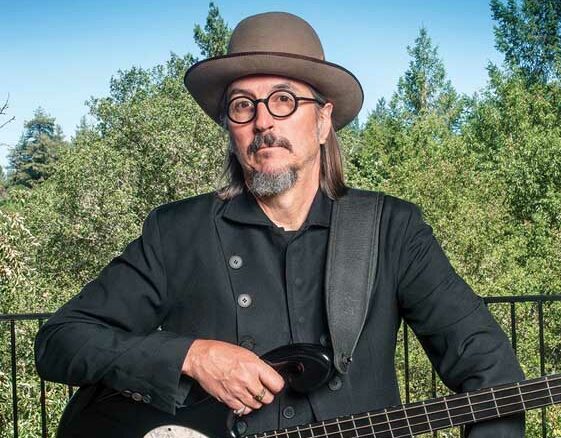
On This Week’s Cover: The artist known by the single moniker Feldsott is something of a hidden secret and a living legend, writes Jane Vick in her profile of the artist currently showing at Healdsburg’s Paul Mahder Gallery. Meanwhile, news editor Will Carruthers reports that rising food and gas prices spell trouble for North Bay nonprofits; the Mommyheads tune up for two Bay Area gigs in Michael Gioits’ profile; and editor Daedalus Howell interviews the baker who put the “carb” in carbonite with her doughy depiction of space cowboy Han Solo.
In 1979, around the time horror rock legends The Misfits were singing “I remember Halloween” while dressed in skeleton suits, I was rattled by anticipation tremors leading up to Oct. 31.
Aged nine, I had my monster mask, ripped clothes and fake blood, and was in the backyard at twilight “playing” with friends, as we called it back then.
I became inspired—which means “in spirited”—to play a game called Skeleton that would lead us into the magical world of Hallow’s Eve. The only problem was I couldn’t figure out what the game should be, beyond simply hide-and-seek in costume. I’ve clearly filed the episode in my long-term memory as an epic fail of the imagination.
There’s not a ghost of a chance of such a failure now, of course, since everyday life increasingly resembles a dystopian horror flick through which we’re all forced to live. And you don’t even need your imagination, which has anyway been bludgeoned into passive submission by every aspect of digital life.
All you have to do is go outside and witness the ragged clothes and soulless stares of the walking dead zombie automatons whose consciousness is no longer anchored in the here and now of physical reality. Nor is it connected to higher realms via the divine gifts of reason, will and imagination.
Instead, it has been sucked into the netherworld of their smartphone, a device whose ironic moniker never fails to elicit a hearty laugh from the Prince of Darkness himself, who loves spreading stupidity. This is especially true concerning his own existence, since the devil’s greatest ruse, noted Baudelaire, is convincing you he doesn’t exist.
In 1979, we didn’t go quite so overboard with Halloween decorations. Pumpkins on the porch was it, and only on the 31st, not three-and-a-half weeks beforehand.
We who live on the razor’s edge between this world and the other have been forced to conclude that the rise of Halloween mania is a phenomenon of the past two decades, and therefore a reaction to the rise of digital culture, which, in the spirit of the season, is so deliciously dehumanizing. So once a year, we take a month to cosplay the supernatural, hanging ghosts over our front steps and crafting mock graves on our lawns, from which skeletal ancestors seem to rise and shriek, “What have you done?”
It is perfectly in keeping, in fact, with the ersatz and counterfeit nature of modern life that we prefer to ironically play-act supernatural reality rather than face it head on in the dark caverns of the psyche. Modern life has so body-snatched us that a 2014 study—that’s before Donald Trump, COVID, war and inflation—that was recently discovered and went briefly viral, revealed that two-thirds of adults would rather endure 15 minutes of electric shocks than have to sit along with their thoughts.
Before the past three centuries, when the rise of scientific reason joined Christianity as a strange bedfellow to gradually exterminate all sense of metaphysical reality, the supernatural was felt as a real and living presence capable of being experienced and understood by anyone with the proper qualifications, which simply meant the intelligence and will to embark on the path of initiation, or awakening of higher consciousness.
But our predecessors actively sought out times of reflection, like watching the sky grow slowly dark on a cloudy autumn evening, and their divine gifts of reason, will and imagination were not atrophied, but instead virile and fertile. And these are the very faculties the Supreme Principle bestowed upon human beings that they might come to know their creator.
And so the mind boggles, as if replaced through some sinister Frankenstein experiment, why anyone would settle for horror movies and monster toys when you can actually live supernatural reality, when you can read Paracelsus by candlelight rather than Stephen King, and make legitimate tears in the veil between worlds.
The traditions of alchemy and Hermeticism sought to unravel the principles that govern the universe, one of which is the law of equilibrium, which we know as “every action has an equal and opposite reaction.” This is precisely why Halloween mania strikes adepts like a desperate compensating hunger for a loss of connection with higher reality.
Following the “death of God,” Dostoyevsky famously wrote, the concern is not that people will believe in nothing but that they’ll believe in anything, and, if given enough time, will eventually be so demoralized that their sole connection to the sacred is once a year dressing their yard with plastic totems of supernatural forces they suspect are real but can’t be bothered to actually understand.
So let this be your first lesson in the occult sciences: The universe balances itself through invisible, magnetic forces subject to divine law, whose social manifestation we call the zeitgeist. This means the creeping breed of soulless phone-drones will eventually be opposed by a new race of metaphysical action heroes, who’ll start out by LARPing (that stands for Live Action Role Play), then eventually come to realize that they are indeed the priestesses and wizards of the apocalypse.
“Be careful what you wish for” is another chilling bit of folk wisdom trotted out by some toothless oldster from a creaking rocking chair. I finally got my childhood dream, in which every day feels like Halloween. But to paraphrase those great punk-goth rockers The Misfits, you think you’re a zombie? You think this is a scene from some monster magazine?
Adaptations of the works of Stephen King for film and television have been hit or miss over the years. For every The Shining or Salem’s Lot, there’s a Firestarter or The Langoliers.
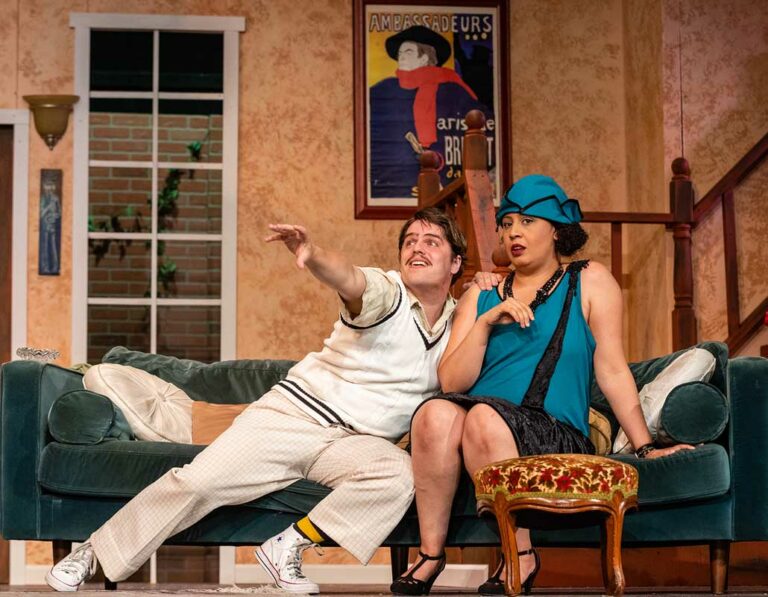
Mainstream theatrical adaptations have been limited to a 2018 musical version of Carrie (a major Broadway flop but cult hit) and Misery, which had a short Broadway run in 2015 and featured Bruce Willis’ Broadway debut alongside Roseanne’s Laurie Metcalf. Petaluma’s Cinnabar Theatre has a production running through Oct. 30.
The stage adaptation, like the 1990 film version, was done by playwright William Goldman, so it resembles the film more so than King’s novel.
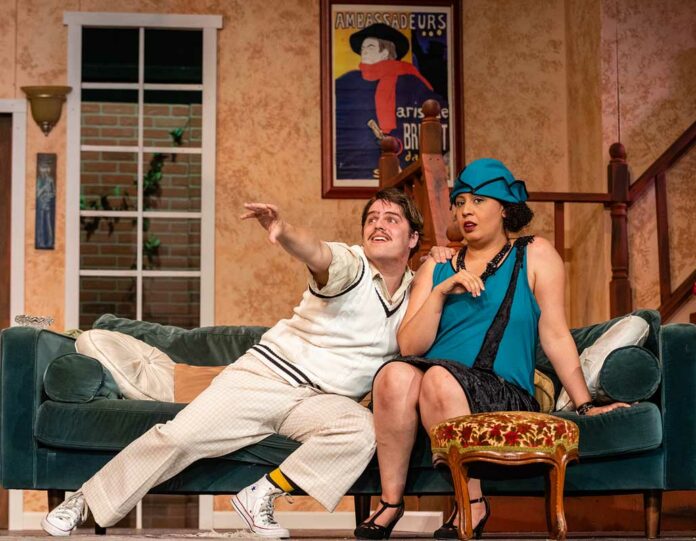
Author Paul Sheldon (Edward McCloud) wakes up severely injured and bedridden. He has been in the care of Annie Wilkes (Mary Gannon Graham), a former nurse who happened to witness his snow-driven automobile accident and brought him back to her somewhat-isolated cabin to recuperate. Luckily for Sheldon, Wilkes is his number one fan and a passionate devotee to his Misery Chastain novels. When she discovers his latest novel will be Misery’s last, she gets a little upset. And then she gets a lot upset.
Adapting a well-known thriller for the stage can often be difficult, as audience familiarity with the material often robs a show of its suspense and “gotcha” moments, but director Tim Kniffin and his cast do a grand job of setting and maintaining a mood of great discomfort throughout the show while delivering a few jolts.
McCloud renders a very convincing portrayal of Sheldon’s physical and mental anguish, which is impressive, as the majority of the performance is delivered from a bed. Gannon Graham is the type of performer who can communicate as much with her eyes as most other performers can with 30 pages of dialogue, but Goldman’s script makes it apparent she’s batshit crazy from the get-go. It’s almost as if he made the assumption that since you’d already read the book or seen the movie, why bother wasting time building that up? Let’s get right to the hobbling!
The story’s most famous scene is well handled, but the show’s denouement is missing some of the excitement and energy that film can accomplish with quick-cuts and close-ups.
Lovers of Stephen King’s work and those seeking out (former Parisian horror theater) Grand Guignol-ish entertainment this Halloween season will find Misery more than fits the bill.
‘Misery’ runs through Oct. 30 at Cinnabar Theater, 3333 Petaluma Blvd. N., Petaluma. Fri–Sat, 7:30pm; Sun, 2pm. $25–$40. Masking is encouraged. 707.763.8920. cinnabartheater.org
A veritable vampire weekend awaits local Halloween celebrants with a taste for blood (and beyond) as the veil thins this week.
It stands to reason—according to recent analysis by the fine folks at Lawn Love—San Francisco (and by extension the greater Bay Area) is among the researcher’s “Best and Worst Cities for Vampires.”
Their criteria for ranking metro centers was simple: “cities with plenty of warm bodies, blood centers, and vampire-friendly dwellings (a.k.a., casket suppliers and homes with basements).” They also tallied “deterrents like garlic festivals and sunshine, as well as community and entertainment factors, such as vampire groups, nightlife options, and vampire tours.”
So, how did we rank in the San Francisco Bay Area? We were fifth behind New York, Chicago, Philadelphia and Los Angeles, in that order, which I attribute to our relative lack of basements (it’s earthquake country after all) and a relatively low ebb—at least in recent years—of nightlife. That said, it does have plenty of blood centers and, wait for it…vampire groups.
Of course it does. And even if you don’t identify as a sanguisugent member of the undead, there are many ways to get your fix of Halloween, if not hemoglobin.
Nestled riverside at the edge of Guerneville, Dawn Ranch offers a “Blood Tasting” in lieu of the Russian River Valley’s usual oenophilic offerings. Wine partner Arista Winery is the “blood” donor in this case, providing a variety of, um, blood “types.” Additionally, Agriculture Public House, the rustic lodge’s eatery, offers anyone who dresses up in costume 10% off their meal during dinner service.
The tasting commences at 4pm, Saturday, Oct. 29, Dawn Ranch, 16467 California 116, Guerneville. dawnranch.com.
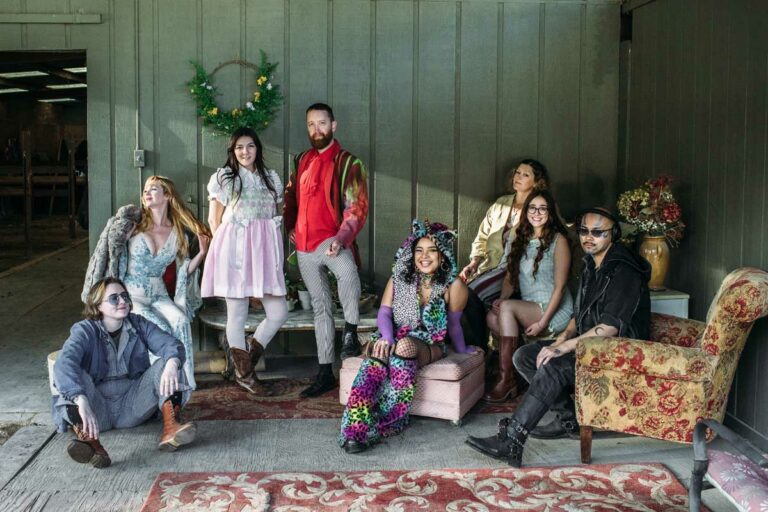
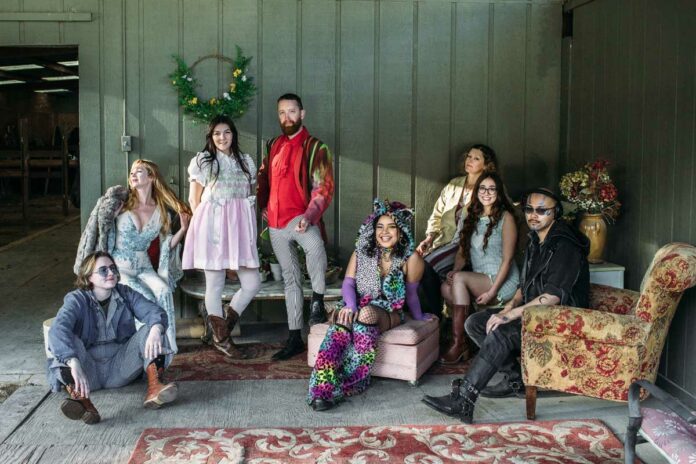
As the autumn chill falls down upon Sonoma County, a collection of freaks and performing ghouls will rise up seemingly from nowhere to take over the Whiskey Tips in the true wild spirit of Halloween. That’s right; it is again time for Halloweird, A North Bay Cabaret Experience.
Just how weird? How about body modification performance, loop pedal accordion beat box, arthouse cello, dueling silent discos and live punk swing?
Halloweird is a costume party, variety show, date night, drinking bash held annually at Santa Rosa’s Whiskey Tip, every local artist’s favorite bar for abandon.
Max Madame, renowned “pussy artist,” and partner Charlie Thargic have a reputation for performing incomprehensibly intimate body modification acts together. “They’ll actually be sewing their bodies together,” event organizer Jake Ward told me when we discussed the night’s festivities. Using needles, you understand.
Ward is the proprietor of North Bay Events, which hosts the North Bay Cabaret. The formally monthly cabaret has been largely shuttered since COVID, with the most recent show being last Halloween’s Halloweird. The event is a labor of love for Ward. “I want to book the types of performers and put together the type of show that I would want to see, you know?” he said.
“It is a Halloween party, and people kind of go all out. [In the past], we’ve had strong attendance of people in really great costumes,” said Ward.
There will be prizes for best costumes and a photobooth to share the wackiness on social media. Printed photostrips will be given out on the spot for free as keepsakes.
The evening starts with a variety show running from 7 to 10pm and including the body art of Madame and Thargic. More than a dozen acts will inspire and thrill, including death-defying acts of pole dancing and spoken word.
Cellista will play the cello during the variety show in a way you have never, ever heard, with samples and post-punk sensibility rooted in the deep-to-squeak range of what remains the coolest of stringed instruments.
Jet Black Pearl is a comedic accordion and flute player from Amsterdam who uses loops and beatboxing to mesmerize audiences.
When the variety show ends at 10, live music and the silent disco kick off. Inside the bar, East Bay swing punks Van Goat, described as both upbeat and gritty like their home town of Oakland, are followed by local legends The Crux, a folk punk gospel outfit known for changing lives with their theatrical audacity.
A neighborhood vendor will be selling pupusas, tacos and the like, while, outside, three different DJs will be holding silent discos. Dancers can check out headphones, dial up the DJ they like—funk, EMD, hip-hop—and boogie in blissful connection with other dancers, often to the bewildered amusement of onlookers. The headphones will have color-coded lights, so revelers can find others on their same wavelength. Literally.
Halloweird commences Saturday, Oct 29 at the Whiskey Tip in Santa Rosa. Tickets are $40 at the door or $30 for presale at the Whiskey Tip, the Next Record Store and NorthBayEvents.com.
Seeking to uphold the city’s reputation as a leader on environmental policy, Petaluma residents watched local political candidates discuss how the city should respond to one of the most pressing issues of the day: climate change.
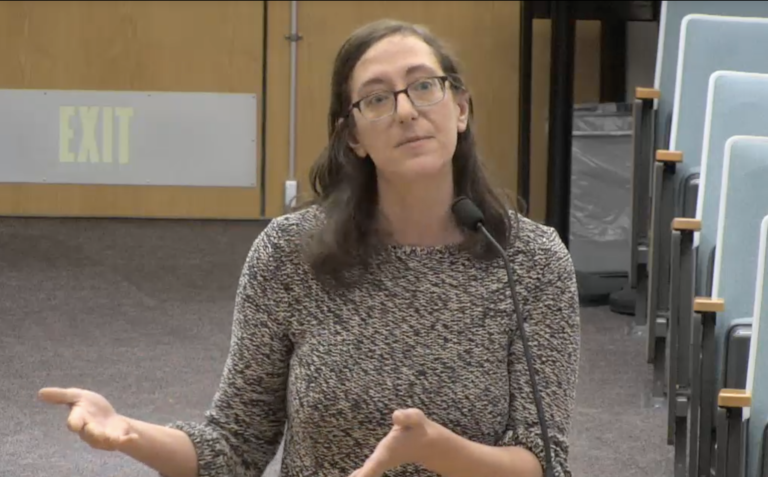
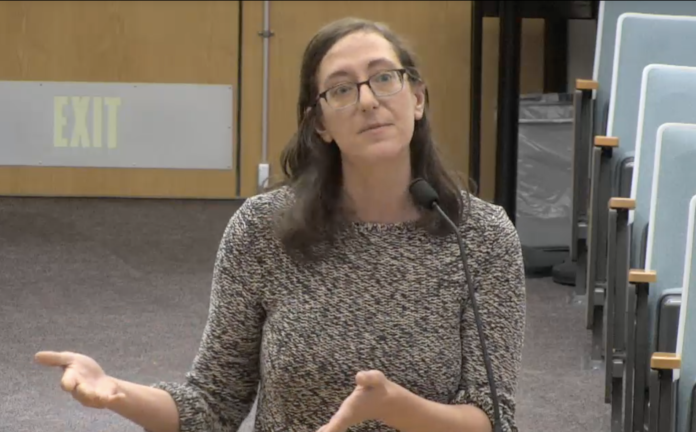
The Petaluma City Council Mayoral and District Candidates Forum on the Climate and the Environment, held online on Oct. 12 by Aqus, a community-building nonprofit, gave the voting public an opportunity to hear city candidates share their intentions for local action to address the unfolding crisis.
While many who are concerned about pollution and climate change have long expected environmental degradation to be a primary voting issue, the issues have been largely absent from past candidates’ debates.
That is starting to change. A 2020 Politico survey found 69% of registered American voters, including 55% of Republicans, are in favor of transitioning from fossil fuels to renewable energy. The climate emergency was raised in both Biden-Trump presidential debates.
In the locally framed issues featured in the Zoom forum, three of the four Petaluma mayoral candidates identified transportation, housing and inclusion as key themes when addressing the climate crisis. The participating candidates were D’Lynda Fischer, Susan Kirks and Kevin McDonnell.
A fourth mayoral candidate, Patrick Flower, did not participate in the forum. He did not respond to a request for comment by the Bohemian.
A recording of the Oct. 12 virtual forum.
Transportation
While climate change and pollution are driven by the effects of many different human activities, many of which have been made possible by the burning of fossil fuels, the candidates agreed that the most important area for improvement at the municipal level is transportation. In 2020, transportation accounted for approximately 58% of Sonoma County’s greenhouse gas emissions.
The candidates each endorsed improvements to public transportation and bike infrastructure. They also called for environmentally responsible crosstown connectors, like the new bike path between Southpoint and Payran which opened last weekend.
Switching to electric vehicles (EVs) charged from clean energy could reduce local emissions significantly. However, electrification does not address the burden of infrastructure development that comes hand in hand with private vehicle ownership.
One of the most interesting ideas presented in the meeting was a microtransit fleet. Raised first by Kirks and independently by Fischer, such a fleet would work like a city funded rideshare.
Fischer described a small fleet of electric vehicles, allowing Petalumas who prioritize biking, walking and public transit to have access to a car when needed. Kirks’ vision was similar but included the possibility of using hybrid SUVs.
This proposed service could help to address the concern raised by McDonnell that EVs are often not realistic for car owners in the multifamily housing that is meant to be the majority of future housing development in Petaluma.
Housing
Rising rents and home prices have forced many community members out of Petaluma. Essential workers such as nurses and food service workers, vital community members while at work whether they live in town or not, often commute in from other, more affordable cities, increasing carbon emissions.
Fischer says that housing development and cutting emissions need to go hand in hand. “With the state requirement for the housing we need to build, there is no question that we need to be building just around our transit centers,” she said.
New multifamily housing is much more water efficient because it is built with the latest fixtures and does not have the same landscape watering requirements, Fischer pointed out. The average single family home resident uses 60% of their water on landscaping, she said.
McDonnell stated that he has focused his political efforts on championing solutions to homelessness and housing. “For me, housing policy is everything; it’s climate policy, it’s education, it’s health outcomes, it’s everything,” he said. With housing prices and rents continuing to increase, new development is needed to keep our workforce from being priced out of the city, he added.
McDonnell noted the city is already taking steps in the right direction. In 2022, of the 300 new units being built in Petaluma, 100 will qualify as affordable housing. The city used California state Project Homekey funds to create The Studios at Montero, which, when at full capacity, will house 60 “chronically homeless” individuals in self-contained units with private bathrooms in a repurposed two-building site.
Kirks raised concerns that Petaluma has very little wildlife habitat left. “We have to look for prioritizing and identifying greenspaces and in addition to that, wildlife corridors,” Kirks said. In housing development, she supports “looking in existing areas that can be rezoned, mixed use, near neighborhoods, near amenities, creating amenities for those, affordable housing and middle income housing as well.”
Inclusion
Understanding how climate change impacts some communities more than others is imperative to good climate policy. Including the voices of leaders in those communities in discussions of city actions allows for municipal projects which are more response to the needs of those communities.
Kirks raised concerns about the relatability of current climate policy proposals, saying that local climate activism needs to “add more environmental elements so that people are more connected and more interested.”
McDonnell said “all of our climate action needs to be out of its silo.” He expressed a desire for the city’s climate commission—the committee of volunteers that makes, reviews and recommends proposals on climate action to the city council—to be more supportive of other commissions when they are ready to take action, such as the pedestrian and bicycle advisory committee, on which McDonnell serves as city council liaison.
Fischer asserted that community engagement was “the most critical element of our [Climate Emergency Framework],” referring to the policy guide adopted by the city in 2021, adding “it is a matter of educating our community.”
There are recent engagement examples in Petaluma. In 2020, Fischer was part of the action committee that brought the Cool Cities program to Petaluma, securing a $1 million grant from the national nonprofit the Empowerment Institute to facilitate community resilience efforts on a block by block scale. “Block leaders” engage their immediate neighbors to help one another prepare for the impacts of climate change and fire. More than 100 blocks around Petaluma are actively organizing and reporting.
The Bohemian recently reported on efforts to include Spanish speakers and BIPOC citizens in an independently run sustainable development workshop whose findings, facilitated by green architects and civil engineers, were presented to the city council earlier this year. Engaging with the local Spanish speaking population, who are much more likely to be on the front line of the climate emergency, has been one of the most difficult and important hurdles in recent years.
While climate justice was a talking point for each of the participating candidates and Kirks voiced a desire for more BIPOC representation on the city’s climate committee, none identified a need for new strategies to bridge racial and cultural barriers to participation in climate action, as in the example of directly engaging Spanish speakers.
Sadly, “pay to play” is a too-familiar concept in Petaluma. For too many years, campaign-contributing real estate developers have been given undue city council influence, resulting in problematic land use, traffic, flood-impact, tree clear-cutting and millions in taxpayer money losses. Petaluma is substantially overdeveloped: 525% of the state’s quota—all luxury-market rate homes.
Recently, a new special interest showed up: AT&T.
On July 27, Dylan Lloyd, a broadband consultant who is chair of the city’s Technology Advisory Committee (TAC), played a role in AT&T’s attempted co-opting of the City of Petaluma to lobby for AT&T by writing a letter to the California Public Utilities Commission supporting AT&T’s preferred terms for a broadband-related fine. AT&T enjoyed unchallenged access to TAC with no opposing public or consumer viewpoint represented. Only AT&T’s information was presented.
Despite city staff warning this was murky, potentially a conflict of interest, and outside proper jurisdiction, Chair Lloyd pushed forward—even past a committee member’s challenge (“we don’t have to write a letter”), continuing his dictation of the letter before a vote was taken. Further, Chair Lloyd limited comments by the public to just one-third of usual city committee-allowed time.
At the following week’s city council meeting (Aug. 1), an outraged public called out TAC’s multiple violations, which included the Brown Act (only one day public notice of AT&T support letter); violation of TAC authority; outside TAC’s jurisdiction.
At the next TAC meeting (Aug. 24), it was announced the Petaluma city attorney had taken action and called TAC to withdraw the letter. Sharp-eyed Petalumans demanded and got accountability.
The Nov. 8 election is critical for Petaluma. Petaluma’s next city council will decide whether Petaluma becomes sprawl by allowing the pushing out of its Urban Growth Boundary.
Keeping a sharp eye out for which candidates are funded by special interests as well as which candidates have a record of prioritizing the benefit of those interests is crucial.
Dylan Lloyd has announced he is running for Petaluma City Council… and his website lists he is supported by multiple real estate development industry interests.
Almost two years ago, 65% of Sonoma County voters cast their votes for Measure P. It was a clear reflection of a desire for stronger oversight of county law enforcement.
The sheriff, the Deputy Sheriff’s Association (DSA) and their conservative allies fought against it. Writing a measure is difficult. Most end up with wiggle room for different interpretations. That happened with Measure P.
But through the campaign, the framers, its endorsers and the voters were clear. They wanted independent investigations of death and serious injury at the hands of a deputy or while in custody to be independently investigated from Day One. They wanted the Independent Office of Law Enforcement Review and Outreach to have subpoena power. They wanted change.
The interpretation of the conservative groups which opposed Measure P guts much of the measure. So, when the Board of Supervisors proudly announced the implementation of Measure P through Letters of Understanding with the deputies, which interpretation did they implement? The interpretation of the opposition.
Recently, Supervisor James Gore claimed that “we all worked to pass Measure P.” Despite having supported the opposition, Mr. Gore claims that citizen complaints are “complete crap.”
And when the California Supreme Court supported the voters’ interpretation of Measure P, not the DSA’s, there was no proud announcement. There was silence.
Now that the courts have spoken, it is time for the board to rescind the Letters. If they fail to act, it will be difficult to miss understanding which side the board is on.
1 America’s first computerized and fully automated rapid transit system, established in the Bay Area, is known by what four-letter abbreviation, which stands for what four-word phrase?
2 When did the phrase, “In God We Trust,” first appear on U.S. coins: 1864 or 1964?
3 The 2.4 million baseballs used in the Major League are produced each year at the Rawlings’ company factory, located in what central American country, which has produced very few, if any, major league players?
4 Three of Henry VIII’s eight wives had the same first name. What was it?
5 In the early 1790s, French architect and engineer Pierre L’Enfant laid out his design of what North American city?
5.
6 The Grateful Dead’s highest charting song of all time hit #15 on the Billboard charts in September 1987. What was this song with a color in the title?
7 If the eastern end of the Earth is called the Orient, what is the western end called?
8 No human being has ever celebrated the sesquicentennial of their birthday. How many years are celebrated at a sesquicentennial event?
9 The historical region known as Transylvania, home of Count Dracula, is located in what modern-day country?
10
10 In 1874, C.F. Bennett, a designer of the Sharp & Smith sportswear company, invented what wearable item, to provide a more comfortable ride to bicycle jockeys working the cobblestone streets of Boston?
BONUS QUESTION: Among the five least populated U.S. states, which two of them border each other?
Want more trivia? Contact ho*****@********fe.com. Have a great question? Send it in with your name and hometown and if we use it, we’ll give you credit!
ANSWERS:
1 BART (Bay Area Rapid Transit)
2 On the two-cent coin in 1864 (printed on some stamps in 1954 and on paper money in 1957)
3 The Rawlings company is located in Turrialba, Costa Rica. Thanks for the question to Michael Vogel from Mill Valley.
Napa Valley Film Festival event delivers wine, food and films
Cinephiles, oenophiles and foodies have reason to rejoice—particularly if their proclivities include all the above—as the Napa Valley Film Festival (NVFF) returns to the Valley with the 2022 Film, Food and Wine Showcase.
Featuring a curated group of film screenings and honoree tributes that reflect some of this year's most talked...
On This Week's Cover: The artist known by the single moniker Feldsott is something of a hidden secret and a living legend, writes Jane Vick in her profile of the artist currently showing at Healdsburg's Paul Mahder Gallery. Meanwhile, news editor Will Carruthers reports that rising food and gas prices spell trouble for North Bay nonprofits; the Mommyheads tune...
In 1979, around the time horror rock legends The Misfits were singing “I remember Halloween” while dressed in skeleton suits, I was rattled by anticipation tremors leading up to Oct. 31.
Aged nine, I had my monster mask, ripped clothes and fake blood, and was in the backyard at twilight “playing” with friends, as we called it back then.
I became...
Adaptations of the works of Stephen King for film and television have been hit or miss over the years. For every The Shining or Salem’s Lot, there’s a Firestarter or The Langoliers.
Mainstream theatrical adaptations have been limited to a 2018 musical version of Carrie (a major Broadway flop but cult hit) and Misery, which had a short Broadway run...
A veritable vampire weekend awaits local Halloween celebrants with a taste for blood (and beyond) as the veil thins this week.
It stands to reason—according to recent analysis by the fine folks at Lawn Love—San Francisco (and by extension the greater Bay Area) is among the researcher’s “Best and Worst Cities for Vampires.”
Their criteria for ranking metro centers was simple:...
As the autumn chill falls down upon Sonoma County, a collection of freaks and performing ghouls will rise up seemingly from nowhere to take over the Whiskey Tips in the true wild spirit of Halloween. That’s right; it is again time for Halloweird, A North Bay Cabaret Experience.
Just how weird? How about body modification performance, loop pedal accordion beat...
Seeking to uphold the city’s reputation as a leader on environmental policy, Petaluma residents watched local political candidates discuss how the city should respond to one of the most pressing issues of the day: climate change.
The Petaluma City Council Mayoral and District Candidates Forum on the Climate and the Environment, held online on Oct. 12 by Aqus, a community-building...
Sadly, “pay to play” is a too-familiar concept in Petaluma. For too many years, campaign-contributing real estate developers have been given undue city council influence, resulting in problematic land use, traffic, flood-impact, tree clear-cutting and millions in taxpayer money losses. Petaluma is substantially overdeveloped: 525% of the state’s quota—all luxury-market rate homes.
Recently, a new special interest showed up: AT&T.
On...
Almost two years ago, 65% of Sonoma County voters cast their votes for Measure P. It was a clear reflection of a desire for stronger oversight of county law enforcement.
The sheriff, the Deputy Sheriff’s Association (DSA) and their conservative allies fought against it. Writing a measure is difficult. Most end up with wiggle room for different interpretations. That happened...
1 America’s first computerized and fully automated rapid transit system, established in the Bay Area, is known by what four-letter abbreviation, which stands for what four-word phrase?
2 When did the phrase, “In God We Trust,” first appear on U.S. coins: 1864 or 1964?
3 The 2.4 million baseballs used in the Major League are produced each year at the Rawlings’...