Films, fine wine, movie stars and race cars—Are we in Hollywood? Cannes? Nope. Geyserville, where enthusiasts of James Dean are putting a new spin on celebrating the onscreen icon—literally.
Fans of the original rebel without a cause, are invited to celebrate the cinematic legacy of James Dean (and his love of Porsches) at the 1st Annual Drive to Eden Vintage Car Show at the Francis Ford Coppola Winery in Geyserville this Saturday.
Present at the event will be champion racer and Porsche Hall of Fame alum Lew Bracker, a friend of Dean’s and author of Jimmy & Me: A Personal Memoir Of A Great Friendship. Likewise, Sputnik the New York City-based band will perform from their recently released concept album inspired by the actor’s legacy.
“I would say he was kind of a creative muse to me when I was younger,” says Sputnik vocalist and multi-instrumentalist Genie Morrow. She first became aware of Dean thanks to a picture of the actor that roused her curiosity as a teen. She thought he looked cool and her mother affirmed that observation.
“I liked that he did his own thing and didn’t really follow the trends of the time, and he kind of forged his own way in Hollywood,” she says. “And I always just thought he was really innovative.”
Having become acquainted with Dean’s pal Bracker and pouring through his book, “…It sort of opened this whole portal back to James Dean again. And it’s just kind of a blur of creativity from there. I would say he’s very much, he’s influenced me a lot creatively.”
Morrow channeled the lauded method actor’s innovative approach while translating her inspiration into music. After meeting some of Dean’s friends and relatives at different events throughout the country.
“That was kind of floating around in my consciousness. And because we had more time, because we were shut in [due to the pandemic], I started just getting songs. Songs were coming through about Jimmy, about Jimmy and Lew racing cars, about Jimmy going back to his hometown in Fairmount, Indiana, and it was almost like a lot of dreams coming through music,” she recalls.
Working with her collaborators in Sputnik—Nigel Rawles (drums), Mic Rains (guitar), Pemberton Roach (bass), and Joe Drew (trumpet/keyboards)—the album began to coalesce. Word got out about the project and soon the band was invited to perform at an annual James Dean memorial in Fairmount.
“So I ended up singing in this church that James Dean went to on his memorial last September, and his cousin was in the front row,” Morrow recalls.
Since then, Sputnik has honed their James Dean-themed material at a variety of events, though Drive to Eden promises to be extra special as it kicks off a classic car cruise to Mendocino where portions of Dean’s star turn in East of Eden was shot. Music lovers will be happy to know that Sputnik will return to Dean’s orbit there and other venues to come.
The 1st Annual Drive To Eden Vintage Car Show begins at 10 am, Saturday, May 20 at Francis Ford Coppola Winery, 300 Via Archimedes, Geyserville.
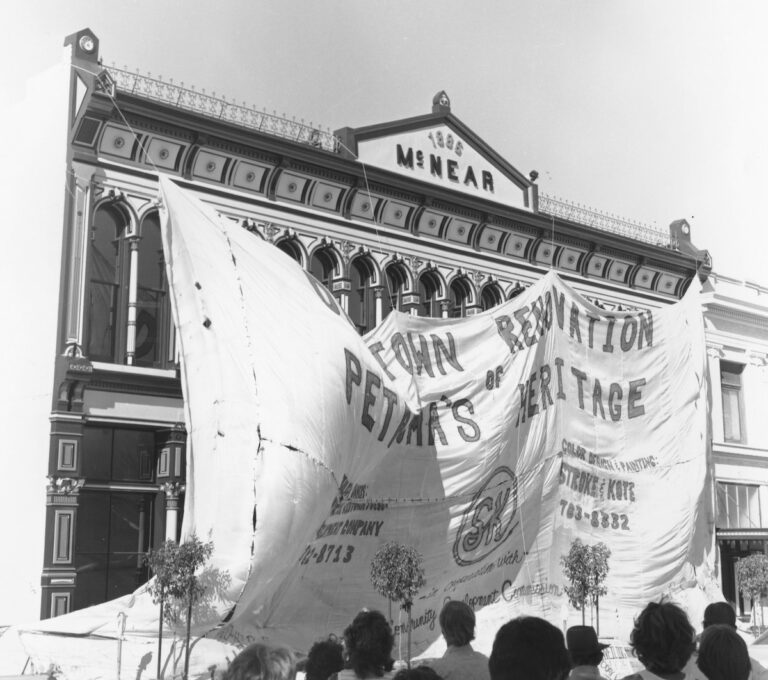
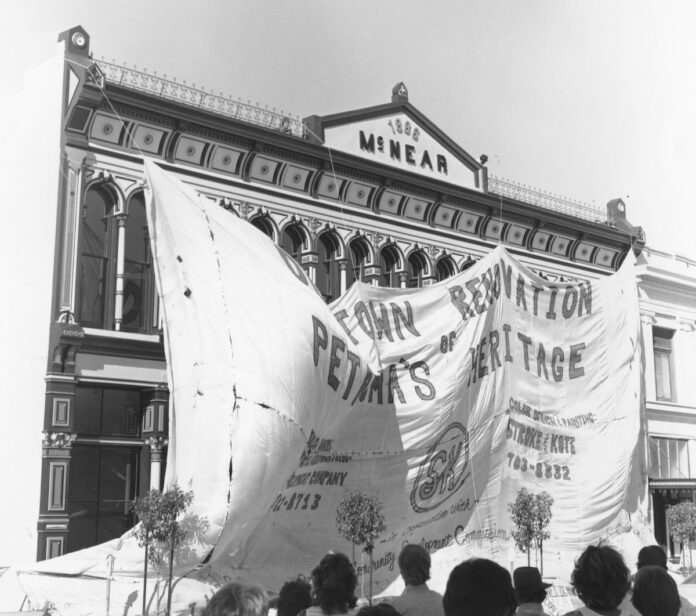
May is National Historic Preservation Month and the city of Petaluma is celebrating. The event is recognized across the county to celebrate each community’s cultural heritage and the importance of preserving local history and historical places.
This year, various local organizations are collaborating to provide a month’s worth of events and activities to celebrate Petaluma’s past.
“The Petaluma Museum Association is delighted to collaborate with the City of Petaluma, the Library, and our local State Historic Park to present a diverse menu of activities to celebrate National Historic Preservation Month. This strong collective effort underscores Petaluma’s commitment to preserving our past while we live in the present,” said the Petaluma Museum Association President, Debbie Countouritos.
Scheduled events include walking tours of historic downtown, heritage homes, local churches, and historic districts. Local historian Katherine Rinehart will present on Petaluma’s Historic Commercial District, and preservation architect, Jerri Nolan, will speak about historic surveying. Petaluma Adobe State Historic Park will host Living History Day, and the Petaluma Regional Library will feature “Petaluma in Images, Then and Now.”
Petaluma has a rich history dating back to the mid-1800s, and the city takes pride in preserving its unique character and charm. Petaluma has a vibrant local history museum, a State Historic Park, a Petaluma history room at the local library, and a community supportive of historic preservation.
“Petaluma is a city that recognizes and values the rich history that created the city that we see today. We strive to protect and educate ourselves regarding what makes us a community. We have benefited from beautiful architecture in our residential and downtown business buildings. I see no better way to continue to have a vibrant, caring community today than to preserve, respect, and utilize the legacy of generations of Petalumans who built lives and structures long before us.” said the Mayor of Petaluma, Kevin McDonnell.
“An essential part of what gives Petaluma its unique character and a sense of community is its history. History is conveyed to visitors and residents through its rich and varied collection of architectural treasures. These treasures reflect the character and aspirations of the people responsible for their construction and design and provide a visual timeline of Petaluma’s history,” said Petaluma Historian Katherine Rinehart.
The Petaluma Historical Library and Museum(PHL&M)is a local history museum housed in a historic Carnegie Library building built in 1904. The museum building and artifacts are owned by the City of Petaluma and managed by the Petaluma Museum Association (PMA), a private nonprofit organization.
The Historic and Cultural Preservation Committee (HCPC) is a five-member body appointed by City Council to promote and preserve the city’s historical, architectural, and cultural resources.
Large-scale, family-friendly musical theater returns to the North Bay with the Spreckels Theatre Company’s production of Tuck Everlasting.
The stage adaptation of Natalie Babbitt’s 1975 children’s novel about immortality had a very brief life on Broadway in 2016. If the Spreckels production—running in Rohnert Park through May 21—is any indication, the show should find great favor among regional and community theater audiences.
Purists of the Babbitt original may take issue with some of the changes made by Claudia Shear and Tim Federle to the book, but the heart of the story is still there.
Plucky young Winnie Foster (Molly Belle Hart) runs away from home and comes across a boy (Nico Alva) who, with his family (Tika Moon, Larry Williams, Samuel J. Gleason), harbors a secret. A villainous carnival barker (Tim Setzer) pursues the family and their secret while an earnest constable (Chris Schloemp) and his hapless deputy (Chase Thompson) pursue Winnie. Trouble ensues.
While the cast’s stage veterans perform strongly, a show like this sinks or swims on the talent of its young leads. Thankfully, director Emily Cornelius has two very talented performers at the helm.
The simply outstanding Hart finds the right balance of charm and rebelliousness for her character, and possesses a terrific singing voice. She is matched well with the personable Alva. In supporting roles, Gleason continues to demonstrate why he’s one of the best young performers working on North Bay stages today while Thompson also scores as the junior deputy.
The large ensemble shines throughout the show, principally in choreography that was a collaborative effort between Cornelius, Karen Miles and the cast. Dancing and movement are a very strong part of this production, culminating in a 10-minute ballet representing the entirety of Winnie’s life that may go a little over the head of younger audience members.
An on-stage, 10-piece orchestra under the leadership of music director Janis Dunson Wilson deftly handles Chris Miller’s score, and the set design by Eddy Hansen and Elizabeth Bazzano works well in conjunction with an effective use of projections by Chris Schloemp in transporting the audience to rural 19th-century New Hampshire. Costume designer Donnie Frank has dressed the cast well and come up with a helluva yellow suit.
Tuck Everlasting is a great show by which to introduce the wonder and joy of live theater to younger audiences that should keep more seasoned theater-goers engaged as well.
“Tuck Everlasting” runs through May 21 in the Codding Theater at the Spreckels Performing Arts Center, 5409 Snyder Lane, Rohnert Park. Thur–Sat, 7:30pm; Sun, 2pm. Tickets $12–$36. 707.588.3400. spreckelsonline.com
“Petaluma” is a Miwok word that means “flat back,” referring to the shape of the hills surrounding the valley that 60,000-plus people call home.
But for those who live and work in the bustling city, it might as well mean “change.”
The go-to metric to assess that change are area home prices. Nearly a decade ago, the Bohemian reported that “Homes on Petaluma’s tonier, older west side start at the mid-$300,000s but can reach a cool million in the prestige neighborhoods in the ‘number and letter’ streets.”
According to the Zillow Home Value Index, the average home price in Petaluma is currently a smidge over $885,000, and homes regularly sell for well over a million dollars. Case in point: a five-bedroom home on rural Thompson Lane is currently listed at $2,875,000.
What accounts for the rapid ascent in home prices is manifold. Petaluma has always been known for its charming downtown area and its historic architecture, not to mention its Any Town, USA movie-friendly aesthetic which frequently draws local productions—most recently for the Petaluma-set limited series Casa Grande, now streaming on Amazon’s Freevee. But in recent years, the city has evolved into a destination for foodies, wine lovers and tourists, which local businesses have generally greeted with open arms.
Tasting rooms, bottle shops and one entire winery have sprouted on a boulevard that was once the main drag for Friday night cruising a la American Graffiti—another cinematic touchstone and half-century legacy the town has long celebrated with auto-themed events (see the “Car’pe Diem” item in Culture Crush, page 18).
The rapid changes have not been without their growing pains. Besides spikes in housing costs, some local businesses are still reeling from the effects of past fire seasons, the pandemic and changing consumer-purchasing habits while maintaining pricey leases for desirable downtown square footage.
“We’re very foot traffic-dependent in this town,” says Greta Youngblood, a scientist and writer
who ventured into retailing shoes and high-end leather goods at Passeggiata Shoes on Western Avenue. “But what I found started happening for me—instead of being able to plan two years ahead for my business, I was starting to look at ‘Can I get through the next quarter?’ And that’s not a place a business person wants to be.”
Youngblood has elected to liquidate her inventory with a discounted sale and close Passeggiata Shoes for other pursuits. The transition is bittersweet but not entirely uncommon as the face of local commerce evolves.
The turnover in Petaluma’s commercial real estate is unusual for Sonoma County in that vacancies don’t last long. Where empty storefronts may line Santa Rosa’s Fourth Street corridor for years, Petaluma fills its storefronts within months. For example, when local eatery Cafe Zazzle shuttered on Kentucky Street last December the space became the home of Quiote, a gourmet taqueria, by April.
And when there isn’t space to fill, Petaluma builds it. Celebrity chef and hotelier Charlie Palmer, known for his ventures in Healdsburg and his James Beard Awards, has proposed a 93-room hotel replete with rooftop dining in a grassy lot that was formerly a gas station on Petaluma Boulevard and B Street. This luxe addition to downtown is dubbed “Appellation Petaluma,” reinforcing the city’s burgeoning Identity as the “Gateway to Wine Country.”
The play is a smart one for Palmer, who perhaps perceived that an ascending Petaluma might siphon San Francisco and Marin tourist dollars before they made it to his Hotel Healdsburg or his steakhouse in Napa.
Indeed, Petaluma’s relative ease of access from Highway 101 has long been a selling point; first with San Francisco-bound commuters in the ’80s and ’90s seeking suburban housing that was less expensive than Marin County’s—at least at the time—and now, in the co- and remote-working 2020s, with travel in the opposite direction to local attractions.
The city has become a popular destination for travelers seeking a quaint, small-town experience with access to the many amenities of the North Bay, but all within a 10-block radius. This time last year, the San Francisco Chronicle published its guide, “How to eat your way through Petaluma, Wine Country’s best-kept secret.”
The word is out, as anyone who ever tried to visit the popular Stellina Pronto! bakery on a Saturday morning could tell you.
Sure, visitors come for the charming downtown area, but they also come because the town is “hot” right now. Instagram influencers swoon over the picturesque riverfront, the epicurean offerings and the free parking, but will the interest last beyond the moment?
Some local merchants think that Petaluma’s diverse ordering beyond Wine Country culture are what will help sustain it.
“I hope that Petaluma becomes known for the river and the rich farming history. I don’t think we need to compete with Sonoma, Napa or Healdsburg as a wine destination,” says April Frederick, founder of Estuary, an artisanal homewares and clothing store named for the tidal Estuary that weaves through the heart of town. “We are Petaluma and we have other things going for us.”
Looking ahead, it is clear that Petaluma will continue to evolve and change over the next few years. The city’s growing popularity and reputation as a destination for food, wine and culture will likely continue to drive development and investment. Petaluma, a city with a rich history and a bright future, is poised to become an even more dynamic and exciting place to live, work and visit in the years to come.
“I would like to see a downtown that serves both tourism and locals alike,” Frederick says.
When asked what she hopes for Petaluma, she adds, “I hope that Petaluma can show other towns it can do better by having commerce and people that support one another and the planet. I hope Petaluma can be a place where people continue to be kind and accepting of everyone. I hope everyone who moves here loves and cherishes it as much as everyone who has lived here for years.”
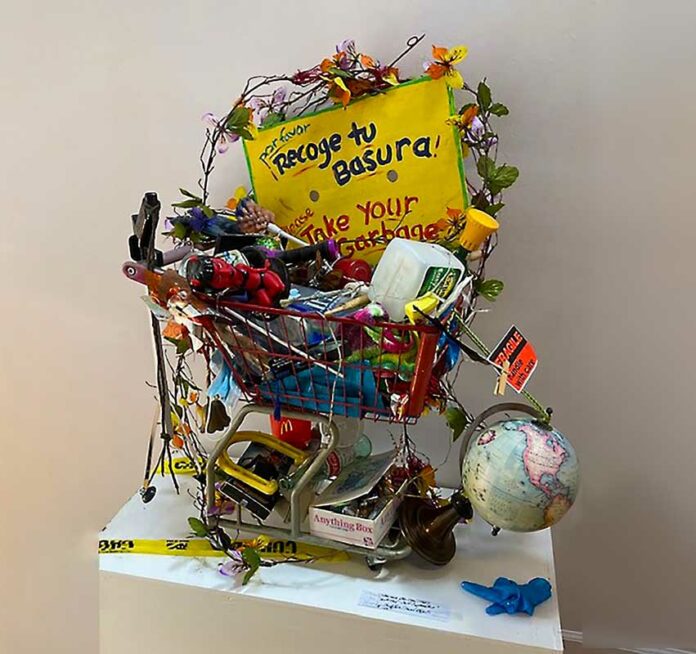
The Santa Rosa Arts Center is currently hosting a gallery of complete garbage, but in the best possible way.
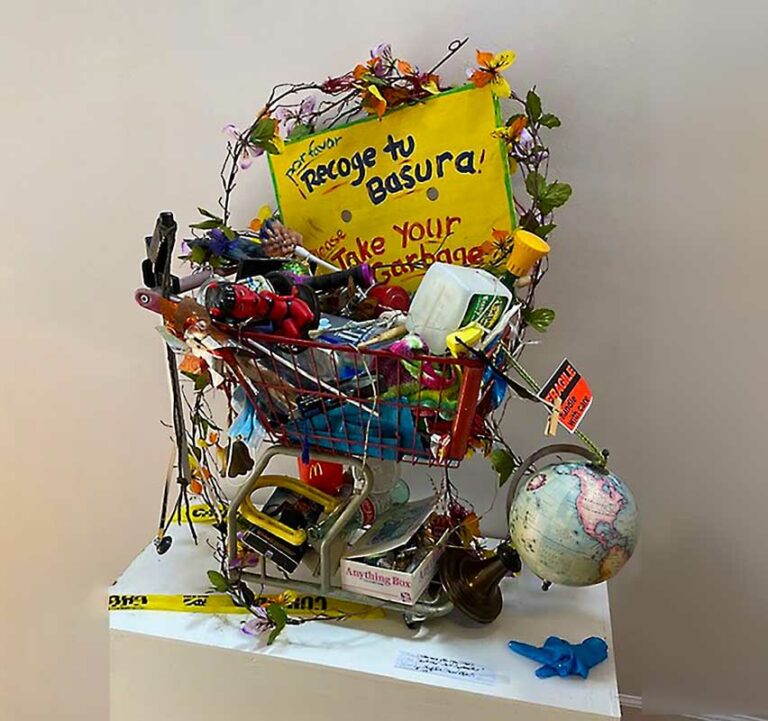
Culturally, we live in a world that’s largely viewed as disposable. Innovations in recent years have sought to challenge and correct that attitude, but the convenience of easy-made trash persists. SRAC, a strong local voice, is joining the good fight with its exhibit, “Transformations: Recycled Art,” a showcase for locally made assemblage art.
“The idea for this exhibit was hatched at a meeting of the Santa Rosa Arts Center Advisory Committee,” said Simmon Factor, local artist and director of SRAC. “Several committee members do collage and assemblage. I, for one, have been making assemblages from found, bought or otherwise recycled objects since the early 1980s, and recycled-magazine collages even earlier.”
For the uninitiated, assemblage art is the practice of taking unrelated or disparate, discarded objects and bringing them together to form an entirely new expression. But its meaning can reach beyond artistry and into the realm of practicality.
“Recology Sonoma, who are one of the sponsors of the event, gave me a tour of the facility where they separate the trash,” Factor said. “There is an enormous amount of objects which could be useful for art. It is our hope that ‘Transformations: Recycled Art’ might inspire more people to reuse and reinvent rather than [discard] objects [and] dispose of them.”
This exhibit isn’t SRAC’s first foray into improving the local community through artistic outreach. Founded in September of 2017, SRAC took over what was previously the Chroma Gallery with a mission statement to, according to the SRAC website, “enrich the cultural experience of [their] community by providing arts education, classes for all ages and abilities, exhibit space for locals artists, and offering a venue for performances, literary arts, and events.”
Founded just a month prior to the October Tubbs Fire, SRAC’s show the following February was very topical and important at the time. It was called “Healing By Art: After the Fires.”
The center followed that initial show with another later in the summer, “Healing by Writing: After the Fires,” and continues that important trend of community-strengthening events through to today.
In fact, “Transformations” isn’t SRAC’s first show devoted to the art of assemblage. The first show, “Wonder and Whimsy: An Exhibit of Collage and Assemblage,” was held in late 2018. Factor and the Center’s other artists recognize the recurring message of these programs as important and worth the investment of talent and attention. But there’s more to it than that.
“Besides the obvious message about recycling expressed by this art exhibit,” Factor said, “it can also be viewed within the broader history of assemblage and other art created from discarded objects. I recall a baboon Picasso once made from his son’s toy car, and Louise Nevelson’s constructions made from discarded wood.”
Creativity abounds, and there’s a home for it at SRAC. As mentioned, beyond its community outreach and shows, the center hosts a variety of classes, workshops and its own Speakeasy, an open-mic night for musicians, poets and expressive souls alike. Participation is warmly encouraged, an enduring attitude for their many programs.
“This was an open, not juried show,” Factor said of the “Transformations” artist-selection process. “Although many of the artists are SRAC members, this wasn’t a requirement. The invitation went out to the North Bay arts community via social media and our email list.”
“Transformations: Recycled Art” is open until May 28 at the Santa Rosa Arts Center, 312 S A St., Santa Rosa. santarosaartscenter.org.
The January 6th Committee made it clear that the attack on our Capitol was an insurrection.
Yet when insurrectionists continue to hold government office, we’re told that voting them out is the only choice we have to prevent the dismantling of our democracy. But this is false; Congress also has the choice to enforce Section Three of the 14th Amendment, called the Disqualification Clause. It bans any person who took an oath to support the United States Constitution from holding federal or state office if they “engaged in insurrection or rebellion” or gave “aid or comfort” to insurrectionists.
Clearly, extremists holding government office who participated in, and/or supported the insurrection at the Capitol on January 6, including the six Republican senators and 121 Republicans in the House who voted not to certify the results of the 2020 presidential election on that very day—are constitutionally unqualified and should never be given a place on the ballot. Instead, they must be held accountable and removed from office—not by vote, but by enforcement of our constitutional rule of law.
In light of the Disqualification Clause, the question is, why haven’t the insurrectionists holding government office been disqualified and expelled? Waiting for them to be voted out flies in the face of reason when the law clearly provides the grounds for their removal. We know this can work because on Aug. 6, 2022, a judge in New Mexico ordered Otero County Commissioner Couy Griffin to be removed from office under the 14th Amendment after being convicted of participating in the January 6th insurrection.
We the people don’t need to make a choice between authoritarianism and democracy; we chose democracy a long time ago. Section Three of the 14th Amendment is there to protect our democratic values from brutal assault in order to keep them safe and intact for generations to come. That is why I implore voters to research the 14th Amendment for themselves and then tell their representatives in Congress to enforce the Disqualification Clause—now, while they still can.
ARIES (March 21-April 19): All of us are always telling ourselves stories—in essence, making movies in our minds. We are the producer, the director, the special effects team, the voice-over narrator and all the actors in these inner dramas. Are their themes repetitious and negative or creative and life-affirming? The coming weeks will be a favorable time to work on emphasizing the latter. If the tales unfolding in your imagination are veering off in a direction that provokes anxiety, reassert your directorial authority. Firmly and playfully reroute them so they uplift and enchant you.
TAURUS (April 20-May 20): A famous football coach once said his main method was to manipulate, coax and even bully his players into doing things they didn’t like to do. Why? So they could build their toughness and willpower, making it more likely they would accomplish formidable feats. While this may be an approach that works for some tasks, it’s not right for many others. Here’s a further nuance: The grind-it-out-doing-unpleasant-things may be apt for certain phases of a journey to success, but not for other phases. Here’s the good news, Taurus: For now, you have mostly completed doing what you don’t love to do. In the coming weeks, your freedom to focus on doing fun things will expand dramatically.
GEMINI (May 21-June 20): Most of us have an area of our lives where futility is a primary emotion. This may be a once-exciting dream that never got much traction. It could be a skill we possess that we’ve never found a satisfying way to express. The epicenter of our futility could be a relationship that has never lived up to its promise or a potential we haven’t been able to ripen. Wherever this sense of fruitlessness resides in your own life, Gemini, I have an interesting prediction: During the next 12 months, you will either finally garner some meaningful fulfillment through it or else find a way to outgrow it.
CANCER (June 21-July 22): Many of us Cancerians have high levels of perseverance. Our resoluteness and doggedness may be uncanny. But we often practice these subtle superpowers with such sensitive grace that they’re virtually invisible to casual observers. We appear modest and gentle, not fierce and driven. For instance, this is the first time I have bragged about the fact that I have composed over 2,000 consecutive horoscope columns without ever missing a deadline. Anyway, my fellow Crabs, I have a really good feeling about how much grit and determination you will be able to marshal in the coming months. You may break your own personal records for tenacity.
LEO (July 23-Aug. 22): Why do migrating geese fly in a V formation? For one thing, it conserves their energy. Every bird except the leader enjoys a reduction in wind resistance. As the flight progresses, the geese take turns being the guide in front. Soaring along in this shape also seems to aid the birds’ communication and coordination. I suggest you consider making this scenario your inspiration, dear Leo. You are entering a phase when synergetic cooperation with others is even more important than usual. If you feel called to lead, be ready and willing to exert yourself—and be open to letting your associates serve as leaders. For extra credit: Do a web search for an image of migrating geese and keep it in a prominent place for the next four weeks.
VIRGO (Aug. 23-Sept. 22): I boldly predict that you will soon locate a missing magic key. Hooray! It hasn’t been easy. There has been luck involved, but your Virgo-style diligence and ingenuity has been crucial. I also predict that you will locate the door that the magic key will unlock. Now here’s my challenge: Please fulfill my two predictions no later than the solstice. To aid your search, meditate on this question: “What is the most important breakthrough for me to accomplish in the next six weeks?”
LIBRA (Sept. 23-Oct. 22): Losing something we value may make us sad. It can cause us to doubt ourselves and wonder if we have fallen out of favor with the Fates or are somehow being punished by God. I’ve experienced deflations and demoralizations like that on far more occasions than I want to remember. And yet, I have noticed that when these apparent misfortunes have happened, they have often opened up space for new possibilities that would not otherwise have come my way. They have emptied out a corner of my imagination that becomes receptive to a fresh dispensation. I predict such a development for you, Libra.
SCORPIO (Oct. 23-Nov. 21): Kissing is always a worthy way to spend your leisure time, but I foresee an even finer opportunity in the coming weeks: magnificent kissing sprees that spur you to explore previously unplumbed depths of wild tenderness. On a related theme, it’s always a wise self-blessing to experiment with rich new shades and tones of intimacy. But you are now eligible for an unusually profound excursion into these mysteries. Are you bold and free enough to glide further into the frontiers of fascinating togetherness?
SAGITTARIUS (Nov. 22-Dec. 21): Antonie van Leeuwenhoek (1632–1723) worked at a variety of jobs. He sold cloth. He was a land surveyor and bookkeeper. He managed the household affairs of his city’s sheriffs, and he supervised the city’s wine imports and taxation. Oh, by the way, he also had a hobby on the side: lens making. This ultimately led to a spectacular outcome. Leeuwenhoek created the world’s first high-powered microscope and was instrumental in transforming microbiology into a scientific discipline. In accordance with astrological omens, I propose we make him your inspirational role model in the coming months, Sagittarius. What hobby, pastime or amusement could you turn into a central passion?
CAPRICORN (Dec. 22-Jan. 19): I wonder if you weren’t listened to attentively when you were a kid. And is it possible you weren’t hugged enough or consistently treated with the tender kindness you deserved and needed? I’m worried there weren’t enough adults who recognized your potential strengths and helped nurture them. But if you did indeed endure any of this mistreatment, dear Capricorn, I have good news. During the next 12 months, you will have unprecedented opportunities to overcome at least some of the neglect you experienced while young. Here’s the motto you can aspire to: “It’s never too late to have a fruitful childhood and creative adolescence.”
AQUARIUS (Jan. 20-Feb. 18): As I’ve explored the mysteries of healing my traumas and disturbances over the past 20 years, I’ve concluded that the single most effective healer I can work with is my own body. Expert health practitioners are crucial, too, but their work requires my body’s full, purposeful, collaborative engagement. The soft warm animal home I inhabit has great wisdom about what it needs and how to get what it needs and how to work with the help it receives from other healers. The key is to refine the art of listening to its counsel. It has taken me a while to learn its language, but I’m making good progress. Dear Aquarius, in the coming weeks, you can make great strides in developing such a robust relationship with your body.
PISCES (Feb. 19-March 20): Can we surmise what your life might be like as the expansive planet Jupiter rumbles through your astrological House of Connections and Communications during the coming months? I expect you will be even more articulate and persuasive than usual. Your ability to create new alliances and nurture old ones will be at a peak. By the way, the House of Communications and Connections is also the House of Education and Acumen. So I suspect you will learn a lot during this time. It’s likely you will be brainier and more perceptive than ever before. Important advice: Call on your waxing intelligence to make you wiser as well as smarter.
Stanford researchers report they reviewed 82 studies trying to find a link between videogames and violence. They found little to none. That’s the good news. (“Stanford researchers scoured every reputable study,” May 2, 2023, Fortune) The bad news is that Stanford, Fortune and politicians who argue one way or the other about videogames all miss the point. They are standing in the middle of a dense forest and cannot see the full reach of the tall trees.
The problem with videogames is that they sap the discretionary time of young and old alike, time that arguably should be spent on any of a myriad of other more productive endeavors, like face-to-face social life, raising kids and participating in democracy.
I have a theory. Addiction to videogames, porn, on-line shopping, substances, food . . . makes folks vulnerable to any crackpot political dictator who comes along promising to make things right for them. Study that, Stanford.
Kimball Shinkoskey
Marin County
Gift Keeps Giving
When Judge Clarence Thomas and “Adolf” Crow discussed the most recent “contribution” to the judge’s burgeoning estate, Crow told Thomas, “This gift has no family. No one knows this gift works here. It will be as if this gift never existed. All that’s left is our friendship.”
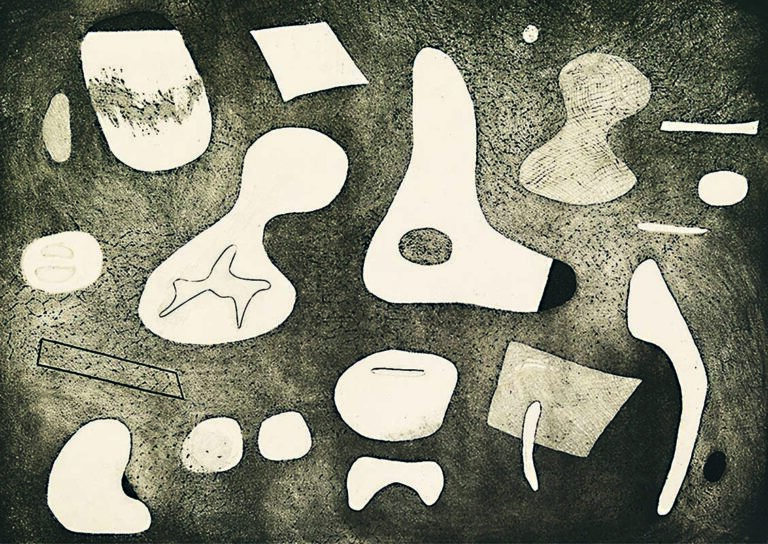
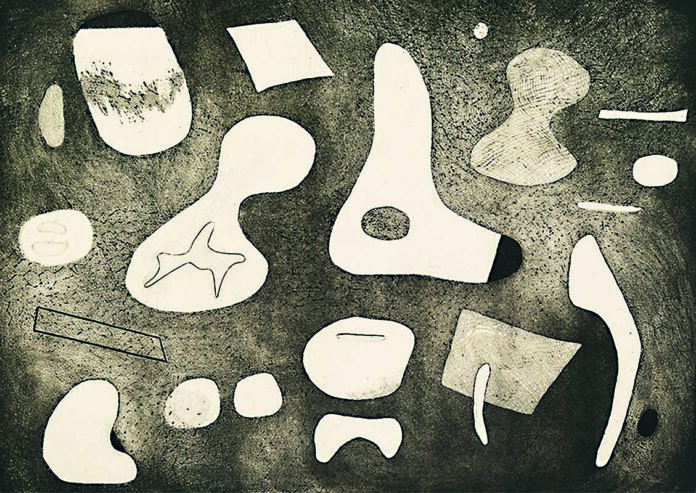
The Sonoma Valley Museum of Art presents “Labyrinth of Forms: Women and Abstraction, 1930-1950,” opening with a reception at 5pm, Saturday, May 13. Organized by the Whitney Museum of Art, New York, the exhibit celebrates the groundbreaking abstract art made by women in the first half of the 20th century. A significant number of American abstractionists were women, and their efforts propelled the formal, technical and conceptual evolution of abstract art in this country. A few, such as Lee Krasner and Louise Nevelson, have been duly recognized, but most remain overlooked despite their contributions. This exhibit helps correct that oversight. The event is free for museum members and $10 for non-members. Registration is required and can be made at bit.ly/svma-lab. The museum is located at 551 Broadway, Sonoma. Visit svma.org for more information.
Petaluma
‘Car’pe Diem
Centered on themes of community and cultural identity, the Petaluma Arts Center’s latest local artists-driven exhibit revs up with a creative response to—and love of—the automobile. Dubbed “Auto-Mobility: Cars and Culture in Sonoma County,” the exhibit jumpstarts with an opening at 5:30pm, Thursday, May 18, at the Center’s 230 Lakeville St., Petaluma, location. Attendees can expect wines from Adobe Road Winery, a race car display from race car driver Kevin Buckler and classic car appearances from local collectors. Continuing through May there will be a “Cruisin’ the Boulevard” wall painting event at 4pm, Saturday, May 20, with other related events through the summer. Visit petalumaartscenter.org for more information.
Sebastopol
Home on the Grange
Live music comes to the Sebastopol Grange at 7pm, Thursday, May 11, in a lineup that features the Towne Dandies, the Undone, the Roast Ranchers and a band that promises to ensure headaches to local copy editors for the typographical travesty that is its name, ?!Interrobang?!. Enough already. All are welcome (ditto donations) to the free gig. The venue is located at 6000 Sebastopol Ave., Sebastopol.
Novato
Earth Mama Vigil
PeaceNovato will hold a vigil honoring mothers and Mother Earth at 5:30pm, Friday, May 12, at Novato City Hall, 901 Sherman Ave. “With this vigil, we decided to go for a more celebratory tone, timing it to coincide with Mother’s Day weekend,” says PeaceNovato chair Julie Manson. “We are also acknowledging Mother Earth, our collective mother, a planet under siege. In these disturbed and disturbing times, it’s important to remember, celebrate and be nourished by the good, and then return to the work of repairing and redressing the world’s many ills.” Attendees are encouraged to bring their own signs to display to passing vehicles. For more information about PeaceNovato, call 415.883.8324.
Celebrating 10 years of indoor-outdoor concerts and movies, Summer at the Green 2023 includes performances from R&B superstars Kool & The Gang; platinum-selling roots trio Nickel Creek in its first tour since 2014; Latin music icons Los Huracanes del Norte; the genre-crossing ensemble Pink Martini with its signature blend of classical, jazz and old-fashioned pop; Rock & Roll Hall of Fame inductee and blues guitar legend Buddy Guy in his Damn Right Farewell Tour; the Texican rock & roll of Los Lonely Boys and much more!
Concerts take place in Weill Hall, with seating in the hall and on the outdoor grass and terraces of Weill Lawn. Lawn tickets for most performances are $30 (kids 12 and under are half off).
New to Summer at the Green is Global Roots Sonoma—a two-day festival with multiple stages, music and food from around the globe, and a VIP area with an after party. Artists scheduled to perform include Las Cafeteras, Mariachi Herencia de México with La Marisoul, San Salvador, Tia Leah’s Neighborhood, Paula Fuga, Balsa de Fuego, and Alasdair Fraser & Natalie Haas. Global Roots Sonoma will have multiple indoor and outdoor stages with tickets starting at $65 for adults and $20 for youth.
View the full Summer at the Green lineup, and buy tickets at gmc.sonoma.edu
Don’t miss the best 4th of July fireworks display in Sonoma County. Featuring performances by Santa Rosa Symphony.
Santa Rosa Symphony Michael Berkowitz, conductor Transcendence Theatre Company Tue, July 4 at 7:30 p.m. Tickets $40-$75
The biggest fireworks display in Sonoma County returns with a bang! Join us for a family-friendly celebration featuring Sonoma County’s own Transcendence Theatre Company and Santa Rosa Symphony in an evening of show tunes and patriotic classics, followed by a spectacular post-concert fireworks show! Bring the whole family—lawn tickets for kids 12 and under are half price! Families. Make sure to arrive early and check out our Kids Zone beginning at 4:30 p.m., complete with carnival games and bounce houses, plus food, music and more!
Supported in part by Clover Sonoma, Exchange Bank, and Sonoma-Cutrer Vineyards
Grammy-winning band Nickel Creek will be at Summer at the Green 2023.
Sunday, July 9 at 7 p.m. Tickets $30-$105 Tickets on sale now
Nickel Creek is the platinum-selling, internationally renowned roots trio of mandolinist Chris Thile, violinist Sara Watkins, and guitarist Sean Watkins. The Grammy-winning band has revolutionized folk and roots music since it broke through in 2000 with its Grammy-nominated self-titled LP, which showcased not just members’ instrumental virtuosity but their burgeoning songwriting prowess.
The tour—the band’s first as a group since 2014—adds to a landmark year for Nickel Creek, which recently released Celebrants, its first new album in nine years. Across the 18 tracks, the trio addresses love, friendship, and time with lyrics both poetic and plain-spoken, as they see bridges built, crossed, burned and rebuilt.
With special guest Thomas Lauderdale Meets the Pilgrims Thurs, July 27 at 7:30 p.m. Tickets $30-$105
Drawing inspiration from music from all over the world—crossing genres of classical, jazz, and old-fashioned pop—Thomas Lauderdale founded Pink Martini in 1994 to provide more beautiful and inclusive musical soundtracks for political fundraisers for causes such as civil rights, affordable housing, the environment, libraries, public broadcasting, education, and parks.
Lauderdale called China Forbes, a Harvard classmate who was living in New York City, and asked her to join Pink Martini. She has since written many of the band’s most beloved songs with Lauderdale, including “Sympathique,” “Lilly,” “Clementine,” “Let’s Never Stop Falling in Love,” and “Over the Valley” to name a few.
Thirty years later, Pink Martini continues to tour the world, singing in 22 languages at opera houses, concert halls, film festivals, museums, and fashion shows. In 2014, Pink Martini was inducted into both the Hollywood Bowl Hall of Fame and the Oregon Music Hall of Fame.
Supported in part by The Press Democrat, Redwood Credit Union, Sonoma-Cutrer Vineyards and Willow Creek Wealth Management
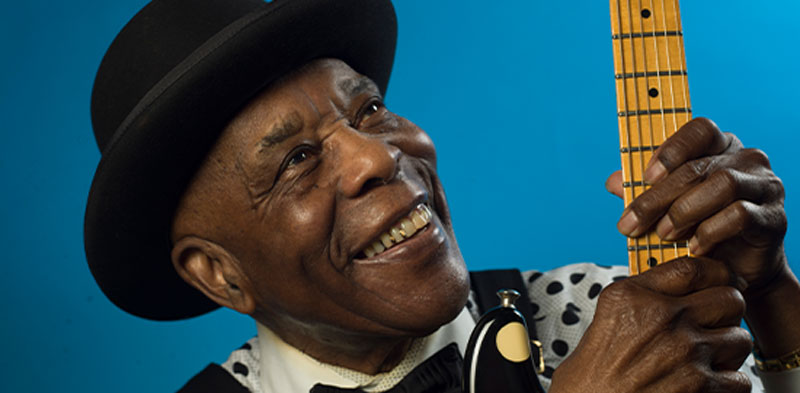
Come see the legendary Buddy Guy perform in Sonoma County this summer.
With special guest Eric Gales Friday, August 4 at 7:30 p.m. Tickets $30–$105 Tickets on sale now
A genuine American treasure and one of the final surviving connections to an historic era in the country’s musical evolution, Buddy Guy is a Rock & Roll Hall of Fame inductee, a major influence on rock titans like Jimi Hendrix, Eric Clapton, and Stevie Ray Vaughan, a pioneer of Chicago’s fabled West Side sound, and a living link to the city’s halcyon days of electric blues.
Buddy Guy has received 8 Grammy Awards, a 2015 Lifetime Achievement Grammy Award, 38 Blues Music Awards (the most any artist has received), the Billboard Magazine Century Award for distinguished artistic achievement, a Kennedy Center Honor, and the Presidential National Medal of Arts. Rolling Stone magazine ranked him #23 in its “100 Greatest Guitarists of All Time.”
Saturday, September 9 at 7:30 p.m. Tickets $30–$105
https://youtu.be/d4YM8whd4ng
Kool & the Gang has influenced the music of three generations and, at the age of 53, the band is a true recording industry legend.
Thanks to iconic songs like “Celebration,” “Cherish,” “Jungle Boogie,” “Summer Madness,” and “Open Sesame,” it has earned two Grammy Awards, seven American Music Awards, 25 Top Ten R&B hits, 9 Top Ten Pop hits and 31 gold and platinum albums.
From Nairobi to Newark, Kool & the Gang has performed continuously longer than any R&B group in history and its bulletproof funk and jazzy arrangements have also made it the most sampled R&B band of all time. A reviewer recently called their performance “a 24-karat show” and every year, even after a half-century on the road, yields a non-stop schedule of shows across the globe.
Supported in part by Redwood Credit Union and Sonoma-Cutrer Vineyards.
Movies at the Green
Supported in part by Sonoma State University Involvement and Sonoma State Alumni Association Lawn tickets only $5 per person | 12 and under free
View the full listing of performances including Los Lonely Boys, Mountain Stage with Kathy Mattea and more at gmc.sonoma.edu or call 707.664.4246.
About the Green Music Center
Nestled in the foothills of Northern California’s esteemed Wine Country, the Green Music Center (GMC) at Sonoma State University is a focal point for arts in the region. It is comprised of the spectacular 1,400-seat Weill Hall, an acoustically exceptional venue with a modular rear wall that opens to terraced lawn seating, providing picturesque views of the surrounding countryside, and the 240-seat Schroeder Hall, a cathedral-like recital hall designed specifically to accentuate instruments, organ and voice in a small, intimate setting. The Green Music Center presents year-round programming of top classical, contemporary, jazz, and world music artists and is home to the Santa Rosa Symphony.
View a complete listing of the Green Music Center’s upcoming events at gmc.sonoma.edu. Weill Hall | Schroeder Hall Green Music Center | Sonoma State University 1801 East Cotati Ave, Rohnert Park, CA 94928
NYC’s Sputnik plays James Dean event
Films, fine wine, movie stars and race cars—Are we in Hollywood? Cannes? Nope. Geyserville, where enthusiasts of James Dean are putting a new spin on celebrating the onscreen icon—literally.
Fans of the original rebel without a cause, are invited to celebrate the cinematic legacy of James Dean (and his love of Porsches) at the 1st...
May is National Historic Preservation Month and the city of Petaluma is celebrating. The event is recognized across the county to celebrate each community’s cultural heritage and the importance of preserving local history and historical places.
This year, various local organizations are collaborating to provide a month’s worth of events and activities to celebrate Petaluma’s past.
“The Petaluma Museum Association...
Large-scale, family-friendly musical theater returns to the North Bay with the Spreckels Theatre Company’s production of Tuck Everlasting.
The stage adaptation of Natalie Babbitt’s 1975 children’s novel about immortality had a very brief life on Broadway in 2016. If the Spreckels production—running in Rohnert Park through May 21—is any indication, the show should find great favor among regional and community...
“Petaluma” is a Miwok word that means “flat back,” referring to the shape of the hills surrounding the valley that 60,000-plus people call home.
But for those who live and work in the bustling city, it might as well mean “change.”
The go-to metric to assess that change are area home prices. Nearly a decade ago, the Bohemian reported that “Homes...
The Santa Rosa Arts Center is currently hosting a gallery of complete garbage, but in the best possible way.
Culturally, we live in a world that’s largely viewed as disposable. Innovations in recent years have sought to challenge and correct that attitude, but the convenience of easy-made trash persists. SRAC, a strong local voice, is joining the good fight with...
The January 6th Committee made it clear that the attack on our Capitol was an insurrection.
Yet when insurrectionists continue to hold government office, we’re told that voting them out is the only choice we have to prevent the dismantling of our democracy. But this is false; Congress also has the choice to enforce Section Three of the 14th Amendment,...
ARIES (March 21-April 19): All of us are always telling ourselves stories—in essence, making movies in our minds. We are the producer, the director, the special effects team, the voice-over narrator and all the actors in these inner dramas. Are their themes repetitious and negative or creative and life-affirming? The coming weeks will be a favorable time to work...
Playing Games
Stanford researchers report they reviewed 82 studies trying to find a link between videogames and violence. They found little to none. That’s the good news. (“Stanford researchers scoured every reputable study,” May 2, 2023, Fortune) The bad news is that Stanford, Fortune and politicians who argue one way or the other about videogames all miss the point. They...
Sonoma
Women and Abstraction
The Sonoma Valley Museum of Art presents “Labyrinth of Forms: Women and Abstraction, 1930-1950,” opening with a reception at 5pm, Saturday, May 13. Organized by the Whitney Museum of Art, New York, the exhibit celebrates the groundbreaking abstract art made by women in the first half of the 20th century. A significant number of American abstractionists were...
Sponsored content by The Green Music Center
Celebrating 10 years of indoor-outdoor concerts and movies, Summer at the Green 2023 includes performances from R&B superstars Kool & The Gang; platinum-selling roots trio Nickel Creek in its first tour since 2014; Latin music icons Los Huracanes del Norte; the genre-crossing ensemble Pink Martini with its signature blend of...